Shownotes
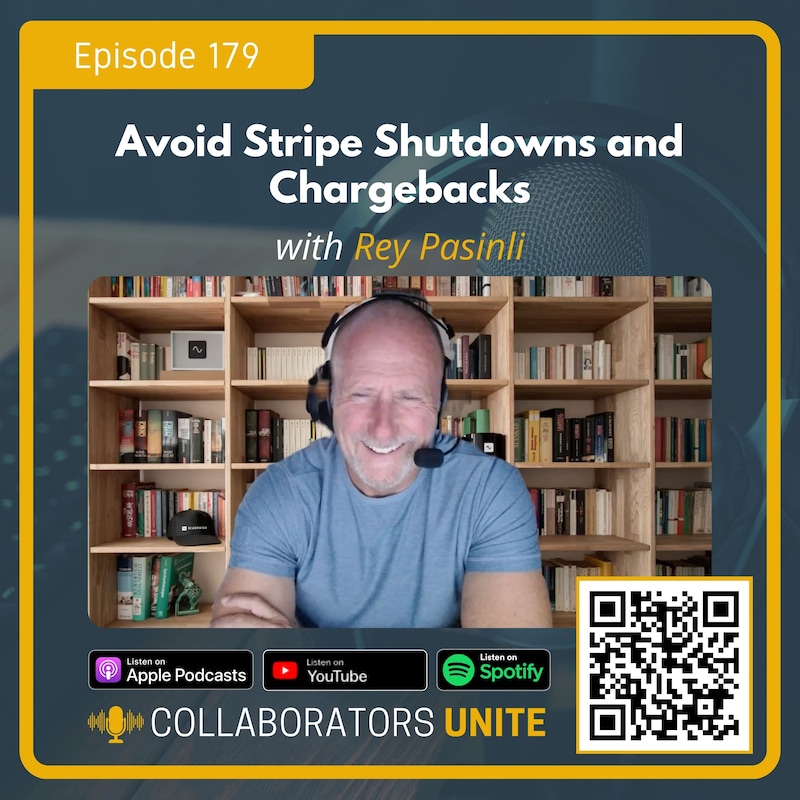
If you're a coach, consultant, or high-ticket seller who relies on Stripe or PayPal to collect payments — you may be one bad month away from a frozen account and held funds. In this episode, 27-year payment processing veteran Rey Pasinli joins host Chuck Anderson to explain exactly why platforms like Stripe were not built for high-ticket or high-volume coaching businesses, what triggers their automated shutdown systems, and how to protect your revenue before disaster strikes. Rey breaks down the difference between aggregated payment platforms and traditional merchant accounts, explains what chargeback ratios and refund thresholds actually mean for your account health, and outlines when and how to make the move to a more stable, scalable payment infrastructure. Whether you're searching for high-risk merchant account solutions, trying to understand how to prevent chargebacks, or wondering if your business qualifies as high risk, this episode gives you clear, actionable answers from someone who has helped thousands of merchants find safe, long-term payment processing homes.
Q&A SECTION:
Q: Why did Stripe freeze my account and hold my money?
A: Stripe's automated algorithm flags accounts that spike outside normal patterns — large transactions, sudden volume increases, or high refund and chargeback ratios. When triggered, your account is frozen and funds held while you attempt to resolve the issue, often with a chatbot rather than a real person.
Q: What is considered a high-risk merchant account in payment processing?
A: High-risk accounts typically involve large ticket sizes (over $500), continuity or subscription billing, coaching or consulting services, or businesses with revenue spikes from live events or webinars. Less than 10% of all merchants fall into this category, but they're the ones most likely to encounter Stripe or PayPal shutdowns.
Q: When should I stop using Stripe and get a traditional merchant account?
A: Consider switching when you're consistently processing over $25,000/month, selling packages above $500, running subscription billing, or experiencing revenue spikes from launches or webinars. These patterns trigger Stripe's risk algorithm and make a traditional underwritten merchant account far more stable.
Q: What is the difference between Stripe and a traditional merchant account?
A: Stripe is an aggregated platform — fast to set up but governed by automated AI risk systems with limited human support. A traditional merchant account involves manual underwriting, a real relationship with a bank, and more stability for businesses with higher volume, larger tickets, or non-standard business models.
Q: How do chargebacks affect my payment processing account?
A: Chargebacks raise your chargeback ratio, which payment processors monitor closely. If your ratio exceeds acceptable thresholds, your account can be flagged, frozen, or terminated. For high-ticket businesses, even a small number of chargebacks can push you into the danger zone quickly.
Q: Can coaches and online course creators get a high-risk merchant account?
A: Yes. Working with a payment specialist who understands your business model and has relationships with multiple banks gives you access to merchant accounts specifically structured for coaching, consulting, and online education — with far more protection and longevity than Stripe alone.
Q: Is PayPal safer than Stripe for high-ticket coaching businesses?
A: Not significantly. PayPal operates similarly to Stripe as an aggregated platform with automated risk systems. Both can freeze funds without warning. For businesses processing large-ticket or high-volume sales, a dedicated merchant account provides more reliable, long-term payment infrastructure.
QUOTES:
"Anything under twenty-five thousand dollars, especially if your transaction sizes are well below five hundred dollars — I call that the safe zone." — Rey Pasinli
"When you start dealing with continuity subscriptions and bigger ticket packages, you're really outside of what Stripe was built for. It'll be much more reliable to be structured in a traditional merchant account." — Rey Pasinli
"I see problems and I can't stop until I fix and solve them. Once you remove friction from the engine, clients typically grow ten, twenty, thirty percent." — Rey Pasinli
"Less than ten percent of clients encounter a problem with Stripe — but less than ten percent of all merchants would be considered high risk or medium risk. The overlap is almost everyone in the coaching space." — Rey Pasinli
LINKS:
Free 30 Minute Consultation and Evaluation
How do you know your business is fully optimized? I'm happy to share the mistakes made, lessons learned and secrets of success gained from interacting with 85,000 ecommerce merchants.
https://www.total-apps.com/contact-us/
Was this episode helpful?
Please leave us a review and subscribe to the show to be notified of future episodes.
Until next time, keep moving forward!
Chuck Anderson,
Transcripts
Hello, everybody.
2
:Welcome back to the show.
3
:This is the Collaborators Unite podcast.
4
:Chuck Anderson here, your host.
5
:And this is the show where we serve big impact experts.
6
:And that would be you if you are not only in business to make money, but you also want to
make a big positive impact in the lives of others, possibly even the community, possibly
7
:even the world.
8
:Depends on how big your vision is, how big your scope is.
9
:Uh, and along the way.
10
:Inevitably, you have to collect money from your clients.
11
:And there's lots of different solutions out there for collecting payments.
12
:Uh we're gonna talk about uh collecting payments, we're gonna talk about credit cards,
we're gonna talk about fraud prevention, uh chargeback prevention, and whatever else we
13
:feel like talking about here today.
14
:I have a 27-year-old or 27, not 27-year-old, 27, right?
15
:uh
16
:27 year veteran of uh payment processing.
17
:Uh Rey Ray Pasin Lee with me today.
18
:Ray, second time on the show.
19
:Welcome back.
20
:Chuck, such a pleasure and really appreciate the opportunity.
21
:It's all about helping the community and helping people grow and continue to be successful
so they can pass it on to the people around them.
22
:Exactly.
23
:And you know, I know a a couple years ago we we had a conversation about payment
processing.
24
:It continues to evolve.
25
:Um AI wasn't as big of a thing back then.
26
:It's taking over now and it's uh the rate of change as it greatly accelerated.
27
:Everyone's trying to keep up.
28
:They're wondering, what should we be doing?
29
:Uh should I be doing the same things I've always been doing?
30
:Uh at what point do I consider doing something different?
31
:and and maybe they some of them uh occasionally have had problems with their payment
processing and need to figure something new out.
32
:So we can kind of cover all of the above and whatever else we feel like talking about,
right?
33
:Um I'm not I'm not strict here, but our main thing is to serve the audience.
34
:And I think you know, refresh them everyone's memory.
35
:They may not have seen the other or heard the other episode.
36
:Tell everybody a little bit more about you, the work that you do, and uh we will we will
start from there.
37
:Yeah, I'll just keep it super brief.
38
:I'm kind of this weird platypus in the payment space.
39
:It's kinda hard to describe me.
40
:my former career literally used to be a rocket scientist, mechanical engineer, work for
NASA, helped put the space station in orbit.
41
:I see problems and I can't stop until I fix and solve the problem.
42
:Uh just out of a weird, strange fluke, I ended up becoming a an e commerce engineer.
43
:And so today I s I'm semi retired, but really passionate about
44
:helping fix and solve e-commerce problems because once those get eliminated, typically we
see clients grow ten, twenty, thirty percent because we've removed friction from the
45
:engine.
46
:And so today work with a network of uh about seventeen different banks and help clients
that are non traditional find good long term homes.
47
:Amazing.
48
:Well, there's so much to know about e-commerce, uh, in particular processing payments
online.
49
:It has changed so many times.
50
:Uh I started my first online business in 1998.
51
:Uh I don't even remember what the the solution was, but I remember there was a whole lot
of hoops we had to jump through.
52
:Today there's a lot more choice.
53
:Some things are easy, some things are not.
54
:and so you know I think now.
55
:in a time where there's so much choice, um, is that people often ask like, well, what
should I be using?
56
:Uh we've talked a lot about Stripe before.
57
:I think by default, uh a lot of people do use Stripe.
58
:I use Stripe with a side order of PayPal.
59
:Um other and and I've I've avoided I've managed to avoid the PayPal jail and all that kind
of stuff that you know um
60
:And so there's different issues that come along.
61
:And of course, there's different phases of business.
62
:I mean, we tend to get people here who are early six figures all the way up into their
first million or two.
63
:And of course, you know, what should I be using when I'm when I'm when I'm at that um six
figure stage?
64
:At what point should I consider changing?
65
:So why don't we start at the beginning?
66
:What is what you know what uh what are you hearing from people in terms of their questions
about
67
:payment processing, what are you recommending?
68
:And you know, we'll go from there.
69
:Yeah, I mean kind of an engineer, you know, I I I really kind of take a crawl, walk, run,
sprint approach, right?
70
:When you're first getting started and you're just getting online and you're just making
getting starting to take some revenue and payments and customers, where you get set up
71
:isn't as critical as versus where you may be uh when you're, you know, consistently
processing twenty five or fifty thousand dollars a month.
72
:Um
73
:You know, in very beginning, Stripe's a terrific opportunity.
74
:They have a terrific platform.
75
:It's got a ton of features.
76
:It's super easy to get set up.
77
:They got integrations and plugins for shopping carts and all that kind of stuff, right?
78
:what I generally tell people is is there's certain thresholds that you want to be kind of
cognizant of.
79
:Anything under twenty-five thousand dollars, especially if your transaction sizes are well
below five hundred dollars, you know, I call that the safe zone.
80
:Um
81
:you know, AI and algorithms kind of rule uh how Stripe operates.
82
:If you go outside of certain thresholds or or certain ranges, that's kind of when it
starts to wake up and starts to look at your business.
83
:Uh it'll start looking at your refund ratios and your chargeback ratios.
84
:So, you know, for a low risk business, maybe you have a twenty nine ninety five a month
newsletter, and you're just providing stock advice or or marketing tips or something like
85
:that.
86
:I would consider that a relatively low risk business model where Stripe could last you a
lifetime.
87
:you know, there are other business models which may be, for example, coaching, large
ticket, maybe there's big spikes.
88
:Hey, we have a big webinar coming up this weekend, we got 500 people showing up gonna sign
up.
89
:you know, that's gonna create a huge spike.
90
:And those are kind of numbers that the algorithm and looks for for patterns.
91
:And so if you end up flagging in the Stripes automated system, you get you get locked
down.
92
:All right.
93
:They hold your account, they freeze your money, uh, and then you're now dealing with a
chat bot trying to explain your position and what's going on and why you should not be in
94
:in stripe jail or whatever the case is.
95
:And, you know, from a from the lay of the land and and the thousands of merchants that
I've dealt with in my career, you know, I would say
96
:Less than ten percent of clients encounter a problem with Stripe, um, but less than ten
percent of all merchants would be considered high risk or medium risk, you know.
97
:They're selling like Etsy type products and they're selling children's bible books and
makeups and and onesie twosy things.
98
:when you start dealing with continuity subscriptions, you're dealing with bigger ticket,
you know, thousand dollar, five thousand, twenty-five thousand dollar packages.
99
:you're really outside of what Stripe was built for and you're gonna it'll be much more uh
reliable to be structured in a traditional merchant account, which is probably what you
100
:did way back in nineteen ninety eight.
101
:You know, you spent two weeks going through underwriting and here's a integration that you
don't understand how it works and connects to your shopping cart and trying to you know,
102
:uh bubblegum and band gate band aid the whole situation.
103
:It's changed a lot since then.
104
:But the the the process for
105
:traditional merchant account is lot more manual, right?
106
:Uh you wanna make sure you're work talking to somebody who understands your business, they
speak your language.
107
:Um what are they gonna do for you?
108
:Are they just gonna toss you the keys, pat you on the back and wish you good luck or are
they gonna actually contribute to the success of your business?
109
:you know, so for for for general guidelines, I would say look, if you're under twenty five
thousand and under a five hundred dollar max transaction side, Stripe is a I think a very
110
:solid starting point when you start growing rapidly um or maybe you have like a weekend
event which could cause a spike then you really should be looking at having uh either a
111
:backup or a replacement traditional merchant account that's going to be provided by one of
dozens and dozens of providers out there similar to me.
112
:There's lots of monkeys out there trying to sell merchant accounts.
113
:ah But you know having somebody who understands the business model, speaks your language
is an easy way to see if it's a good fit.
114
:You know, you can go to Costco and they'll sell you a merchant account at Costco.com.
115
:They just farm it out to a company called Elevon, which is owned by US Bank.
116
:And you know, US Bank gets thousands of people showing up on their w uh doorstep asking
for merchant accounts.
117
:But if you're a a higher risk business model, and you can just easily ask Chat GPT, hey,
here's my business model, would credit card processing be considered high risk?
118
:it's r you wanna have something that's gonna be a little bit more specialized or somebody
who has uh experience and expertise in your in your vertical.
119
:It just eliminates misunderstanding and miscommunication.
120
:so that's kind of like a baseline and then for bigger clients, you know, I've helped
clients scale to a billion a year and you know, obviously they're not gonna get one single
121
:merchant account.
122
:At that point you wanna be talking about compartmentalization, um
123
:you know, for clients that are a couple of million dollars a year, five hundred thousand.
124
:I look at it mostly in terms of monthly volume.
125
:When you start getting to about a hundred, hundred and fifty thousand a month in in gross
sales, it may make sense to have a second second merchant account added.
126
:And it'll cost you an extra forty bucks, maybe fifty bucks a month, but man, that's real
cheap insurance in case something goes wrong and you're done and you can't process, right?
127
:So, and you know, technically it's super easy to configure and
128
:send transactions and route it.
129
:So I think generally a hundred, hundred fifty thousand is where you might be wanting to
start building some redundancy.
130
:And of course we've seen explosive sales guys doing millions of dollars and then you gotta
keep bolting on more and more.
131
:So it can get really complicated.
132
:I know in the coaching industry that would be very on the high end of of of their volume
and and you know if you have a continuity program or whatnot that gets you to the hundred
133
:K a month or a greater recurring, definitely and and I've we've been there where y you
know you you you inadvertently have a payment processor that goes down.
134
:And uh now you're stuck um either with money held or uh or or or you can't process at all.
135
:Um even at the lower volumes, I mean we had an issue once with PayPal where we had a
client pay us three thousand dollars and it was I guess what they called a non-typical
136
:transaction and and so they uh froze the funds and
137
:Ask for all this documentation and all of that kind of stuff.
138
:And that's why I say we use a side order of PayPal where we we went we jumped through all
the hoops and it still works for us and we only use it um when uh Stripe won't work for
139
:someone else or if they have a credit card decline or whatever they can try.
140
:Some people just have a lot of money in their PayPal, so they can, you know, that's a nice
easy one to do.
141
:Um let's talk about coaching for a moment because that's an interesting
142
:and we get we we serve a lot of coaches and B2B service providers where look on the low
end you might be charging someone a thousand dollars for something.
143
:But on the high end, you you you know, five, ten, fifteen, even twenty-five thousand
dollars for a retainer.
144
:Uh, and so A, you need to be able to process that.
145
:and B, you want to be able to process that without trigger.
146
:Well, yes, without because cause after they've
147
:you've collected the twenty five thousand and it's now triggered something and they freeze
the the funds, you know, it's not like you can reverse the transaction and go process it
148
:somewhere else.
149
:It's kind of locked up.
150
:So um what are you ad what are you noticing with coaches?
151
:What are you advising coaches to do?
152
:Because again, they might be lower volume.
153
:They might just, you know, be selling a a a ten thousand dollar package or two or clusters
of if they're doing events.
154
:Um what's the right solution?
155
:Should they be
156
:getting multiple point payment processors early or is there a better option for those
price points?
157
:What do you what are you seeing?
158
:So like I said, like the multiple merchant account is really designed if you're doing a
larger volume, right?
159
:A guy doing twenty K a month, thirty K a month, probably not an I not really it'll be
overkill.
160
:You can do it, but it's gonna add a layer of complexity and cost that there's not gonna be
such a huge benefit.
161
:What I tell my coaching clients is consistent processing equals consistent payments.
162
:Okay.
163
:What I see is I get guys that are like, hey, we're
164
:Promoting this big event for month after month after month after month, and then they do
the big rah-rah.
165
:You know, they may have a ballroom at a hotel where everybody comes in and sits down in
front of the guy, and all of a sudden in one weekend, they're gonna do three hundred
166
:thousand dollars in one day.
167
:That is that means that you're not consistently processing, you're doing zero zero zero
zero zero three hundred thousand, right?
168
:So consistent processing equals consistent payments.
169
:So
170
:In those types of situations, um I've pre negotiated before the event.
171
:Okay, this is gonna be a one time situation.
172
:We're gonna do this event once a year, once every six co six months, once a quarter.
173
:And we may set up a special merchant account just for that big event, right?
174
:And then in that situation then I'd say, Well, we're gonna we're gonna hold back twenty
five percent
175
:Because we know people are gonna freak out, the wife is gonna find out about it, she's
gonna wanna get a refund.
176
:The guy forgot his mortgage payment and property taxes due.
177
:You know, they get cold feet.
178
:You see it all the time, right?
179
:So you wanna you wanna ha you you you have to earmark that money for the returns and and
and possible chargebacks, right?
180
:So what I tell clients in the coaching business is look, you're the coach, you know when
the show is going on.
181
:Before you go on stage, you need to let us know.
182
:What is coming down?
183
:What's your expectations?
184
:And by being proactive and being up front saying, look, we got this big event coming up,
the volume of your projections are forecasting to do this, it takes away the surprise
185
:element.
186
:If you spook or you freak out your processor, they're gonna freak out and they're gonna
react.
187
:And that reaction is typically, hey, we're gonna freeze the account, we're gonna hold the
money, we're gonna terminate you, we're gonna put you on the blacklist, like
188
:Like if you don't surprise and shock and awe everybody, they're gonna wanna work with you
a little bit less uh with their gut with their fists up, you know, ready to fight all the
189
:time.
190
:So in my business where I am you know the representative for my clients, there have been
times where I'm like, okay, we got a big deal coming up, they got this influencer coming
191
:on, this is gonna be a big event.
192
:We expect $200,000 to happen over a three-day period.
193
:Mr.
194
:Bank, Mr.
195
:Processor, how do you want to handle it?
196
:And so by being proactive, we we deflate the this the surprise bomb uh and and and allows
us to kind of glide through that process uh a little bit easier.
197
:I'll give you another example.
198
:We've had clients that will pre-sell tickets, right?
199
:They'll the the event is gonna be, you know, in November, they're gonna everybody's gonna
go to Cancun for the big powwow, they're gonna link learn the secret to happiness, and
200
:they're spending ten thousand dollars up front, right?
201
:And so we will structure things with the client.
202
:to either help them get cash flow on the front end 'cause they gotta pay for the resort,
they gotta pay for the people flying in for speakers, they gotta pay for the food and the
203
:catering and the events and the entertainment and all this kind of stuff.
204
:And then obviously if the event doesn't even happen because a hurricane comes in, I mean
there's there's all sorts of things that can go sideways.
205
:So we may structure a deal with the Bank of the Processor where fifty percent is held and
fifty percent is released over time.
206
:So it's
207
:It's a little bit of give take, but if you're proactive and communicate with your
processing partners involved that are upstream, because they got they got their skin in
208
:the game too.
209
:If you completely screw the pooch and blow up and don't show up for your own webinar or
whatever it is that you promised, you're gonna have a lot of ticked off customers and
210
:everybody's gonna charge back.
211
:And that hurts you, that hurts the bank, that hurts everybody.
212
:So communication I think is the number one free tool you can take advantage of.
213
:to mitigate and proactively position your position yourself to not be surprised.
214
:I love this message of being proactive, and I work with a lot of people who sell through
the exact type of events that you are.
215
:You know, um, you know, you I think the the key takeaway for me from what you just said
is, you know, anytime you're gonna do something out of the norm, and anytime you're you're
216
:doing something consistency.
217
:I said it earlier with what PayPal did to us, even though it was a small dollar
transaction, it wasn't a typical transaction.
218
:Meaning we weren't doing a three thousand dollar transaction every single day, or we
weren't doing multiple a month.
219
:It was our first one.
220
:In a while, and they're like, whoa, where did this come from?
221
:Um, and so so what I'm hearing is okay, so Stripe might be great, like you you're you're
plugging along whatever your consistent stuff is, but if you're gonna do a big campaign,
222
:communicate with them, maybe even have a backup solution earlier.
223
:And I I don't know anyone who's ever done that, to be honest.
224
:uh
225
:see and this is the difference between working with an automated solution like a PayPal
where you're not really you just kinda toss the keys and they pat you on the back and wish
226
:you good luck.
227
:You know, from my perspective that's sort of like giving a loaded handgun to a child.
228
:Like there should be some adult supervision.
229
:But like i in in that situation because you did not have any like real communication with
anybody at PayPal, nobody told you.
230
:Like you had to learn through trial and error, you know.
231
:Obviously l in hindsight, had you called PayPal before running the three thousand dollar
transaction, here's a copy of the contracted, here's a copy of our bank statement, here's
232
:a DNA sample from the customer showing it's a real I mean, that would have probably
eliminated the the the bottleneck and the hold, but nobody took the time to teach you and
233
:you, like every single person listening on t on the podcast, they're all learning through
trial and error.
234
:They're all making mistakes.
235
:They're all taking two steps forward, one step back.
236
:So that's that's kind of like the difference that that I try and bring.
237
:I try and close that knowledge gap.
238
:Hey, I've had eighty-five thousand merchants, I've seen this before, this is what you
gotta do, this is how it works, this is what we can do for you.
239
:This don't cross this line because you're gonna tick off a bunch of people and like put
the training wheels on.
240
:You know, and it's and it goes so much smoother for everybody from from the consumer
241
:To the operator and the merchant, to the banking people, it's just communication.
242
:I really like this from a risk mitigation point of view of if you know that something is
big coming up, if you're planning something big, or if you're planning something that is
243
:outside of your normal processing routine, communicate in advance.
244
:And again, I don't know anyone who's ever done that, and that is really good advice.
245
:I'm definitely gonna take that on because we are working on some campaigns.
246
:Uh and and it sounds like if you communicate ahead of time and let them know this is
coming.
247
:They're much more relaxed about it.
248
:And I mean, obviously, what are they worried about?
249
:They're worried about chargebacks, right?
250
:You know, the hey, there's this big thing, or fraud, right?
251
:And so, hey, was this a fraud thing or was this uh or was this a a chargeback thing?
252
:Um, so let's touch on both of those.
253
:First first and foremost, how do we do this in a way where we can avoid chargebacks?
254
:Because it seems like when someone wants to refund back in the day.
255
:It was a bigger process, you know, you actually did have to contact the the person who
sold you the thing and try to process a a chargeback that way.
256
:Now it seems like you can anyone and everyone can just process a chargeback anytime.
257
:Yeah.
258
:app they just click deny and boom you got a chargeback, right?
259
:So I I look at it in terms of like chargebacks are sort are like an invading horde trying
to steal your treasure inside the castle.
260
:Okay?
261
:And so if you can va envision a a medieval castle, they had all sorts of different
262
:types of countermeasures.
263
:They had the moat, they had the drawbridge, they had the walls, the turrets, the archers,
the sword guy, the guy on the horseback, you know, the guy throwing the pitch and the oil
264
:and the fire.
265
:You know, so so there are all these types of tools that are available to help thwart
chargebacks.
266
:ah I look at them in terms of like process and systems.
267
:Okay?
268
:Process.
269
:This is just being a good merchant.
270
:Communicate with the customer.
271
:This is your refund policy.
272
:This is your refund window.
273
:this is what you you're gonna receive accurately and precisely.
274
:This is how the business works, this is what you know.
275
:That communication engenders trust, right?
276
:But more importantly, it cultivates a relationship with you and that consumer, right?
277
:You don't want them to think of you as some random guy that they don't care about, like,
my god.
278
:I don't care.
279
:I need my money.
280
:I'm gonna charge back, right?
281
:Versus like, well, Terry was really helpful with me, but I gotta I gotta pay my property
taxes or my wife found the charges.
282
:Like how they interact with you is gonna determine if they're gonna interact with you if
they want to refund or charge back.
283
:So I think maintaining really good communication, professional relationship with every
customer to the best of your ability.
284
:I mean, in some of these campaigns, you get a thousand sign-ups.
285
:You're not gonna be hand holding and talking to everybody.
286
:But it that that email communication, text message, you know, positive, positive.
287
:Hey, we're here, we support you, we love you, thank you for joining us.
288
:Like those kinds of affirmations go a long way in terms of programming the human psyche to
call you instead of calling the bank.
289
:So that's that's process.
290
:systems, there are really sophisticated systems out.
291
:And I've been doing this almost 30 years.
292
:When the f when the internet first lit up, nobody even cared about what chargebacks were.
293
:I mean, you get five percent chargeback ratio, like the guys that were doing adult
websites are like, I'm not canceling you, you agreed to pay me nineteen ninety-five a
294
:month.
295
:Why would I cancel you?
296
:Ha ha ha.
297
:And they would force the customer to charge back to can I mean it was absolute wild west.
298
:Obviously, today, chargebacks are the Achilles heel of every single chargebacks and
refunds.
299
:There's a new thing called a TC40.
300
:I'm not gonna go into the technical weeds about all of that, but but the more your
customers complain, the more likely you're gonna get shut down.
301
:It's simple, the simplest explanation for that.
302
:But over the years there have been a uh evolution in transformative tools that have become
available that help to act as sort of like uh think of it as a missile defense system,
303
:okay.
304
:So if you've got a cruise missile, an ICBM, a a a surface to surface, an air to air, an
air to surface, depending on the threat, your missile defense system is going to fire off
305
:countermeasures designed specifically to stop, block, and prevent that threat from hurting
your and and taking the treasure from your castle.
306
:A chargeback.
307
:I look at these in terms of generations.
308
:Uh you know, the first generation is your basic A uh A V S, C B V type type.
309
:stuff you know if you can show that this wasn't a stolen credit card you can probably
fight and win a chargeback.
310
:Um the next evolution that came around about 15 years ago are are three technologies and
I'm going to go through a lot of these so don't don't take notes just contact me if you
311
:want to know more but the first branch came out is ethica verify rdr and c dr and these
four tools basically allows the merchant to say hey I've got an incoming chargeback if I
312
:issue a refund the chargeback
313
:goes away.
314
:So you you got the threat, you've got the countermeasure, and you got no chargeback.
315
:But you know what?
316
:Giving away a five thousand, ten thousand dollar refund sucks.
317
:So there are there were a next generation of tools that came along called at uh order
insight, consumer clarity and and uh compelling evidence version three, C E three.
318
:So these are much more sophisticated tools and they actually can prevent somebody from
319
:initiating a chargeback in the first place.
320
:The the most current generation, which is proprietary and stuff like that, um, is next
level.
321
:And this is the first time that I've seen merchants are actually able to go on offense
instead of just playing on defense, waiting for some chargeback to get thrown at them.
322
:And let me give you an example.
323
:The problem that we see is that a consumer can chart call their bank,
324
:And they can claim I don't recognize, I didn't authorize, that wasn't me, they could they
can just lie.
325
:On the opposite end is a low-wage customer service phone monkey.
326
:And they say, Well, let me let me look up that transaction.
327
:They only get four pieces of data date, dollar amount, descriptor, and a phone number.
328
:Now, if you just ran a five thousand dollar charge and it says ampub fund.
329
:eight hundred, it's not anything that that customer service agent is going to be able to
recognize and go, hey, that's a legitimate order.
330
:So what do they do?
331
:They give the money back to the consumer without a fight.
332
:They take the money out of your bank account, you pay a chargeback fee, and now you're
hoping your merchant account doesn't get closed.
333
:That's defenseless.
334
:The newest tech is able to capture a huge amount of data and instead of having those four
data points, we can inject a huge amount of data.
335
:So when that customer calls, the customer service agent goes, let me look it up.
336
:my God, I've got a ton of information.
337
:Sally, it looks like you ordered this on your iPhone 14.
338
:It was biometrically unlocked with your face.
339
:You were 3.2 miles away from your billing address.
340
:You ordered three gray t-shirts, size medium, short sleeve.
341
:They were UPS delivered with a tracking number.
342
:And we've got a picture of this package sitting on your porch.
343
:Does that order sound familiar?
344
:Wow.
345
:Yeah.
346
:Game changer.
347
:Now obviously in the coaching space that's not you know, we don't do shipping and product
delivery and all of that kind of stuff.
348
:But being able to say you logged into the system seventeen times in a row, here's a copy
of the digital contract that you signed, like that's game changer.
349
:Especially in the type of chargeback which is considered friendly fraud.
350
:When we look at chargebacks for the for the coaching industry, do we actually get stolen
credit cards?
351
:Zero.
352
:If I've got a stolen credit card, I'm gonna go try and buy an iPad.
353
:I'm not gonna buy Terry's magical course on on how to start a business, right?
354
:So the chargebacks are 80% friendly fraud.
355
:10% of them are operational fraud.
356
:Yeah, the guy called, you didn't give him the refund, he's gonna call his bank.
357
:Or you overpromise and you underdelivered, like operator error.
358
:And another ten percent is just customer stupidity.
359
:I did buy it, I don't remember it.
360
:yeah.
361
:Now that I you talk about it, I remember, yeah, yeah, yeah.
362
:That's a good order.
363
:I like it.
364
:Right?
365
:So the vast major
366
:my name as the descriptor on my products so that they re they they're not gonna recognize
my company name, but they'll recognize me.
367
:Yeah.
368
:The descriptor system was built in the nineteen seventies.
369
:And so the first descriptors have remained the same.
370
:It's locked at twenty four characters.
371
:You got ten characters for your phone number.
372
:So the lack of data and the frivolous refunds that these customers are asking for really
has hurt the bottom line of a lot of merchants.
373
:And so now we get to go on offense.
374
:And these and these products are very reasonable.
375
:They're, you know, twenty dollars, thirty dollars, maybe thirty-five dollars, which is
about the cost of a chargeback fee anyway.
376
:But if you can stop a guy from charging back a ten thousand dollar transaction, you're
printing money.
377
:Right?
378
:And so this is this is the next evolutionary step that we're seeing.
379
:And this is the kind of stuff that the more sophisticated marketers, the bigger the
volume.
380
:It's a no brainer.
381
:You put on a seatbelt when you go in a car, you know, you make sure the brakes work, the
turn signals you u I mean, it's just basic safety.
382
:Why wouldn't you put this if there's no monthly cost, no long term contract?
383
:It's
384
:Plug it and play.
385
:Yeah.
386
:We're almost out of time, but I I wanna just reiterate that what you just said about that
person who that coach who's uh got a ten thousand dollar package.
387
:I mean, this is the kind of thing that they're worried about.
388
:Am I processing this right?
389
:Am I protecting myself from a chargeback?
390
:Some people can go their whole career and never have a chargeback.
391
:Others they've they've had issues with it.
392
:Depends on a lot of different factors.
393
:Um, I wanna say to our audience, you know, if you
394
:Are not sure if you are using the right solution.
395
:If you are not sure if you have safeguarded yourself about some of the things that we're
talking about, I want to highly encourage you to reach out to Ray and have a conversation.
396
:And Ray, I know you have a a way to do that.
397
:You you want to talk a little bit more about uh where do we send them?
398
:How do they connect with you?
399
:How do they learn more from you?
400
:It's really easy.
401
:my main w my sole website is www.total dash apps a pps dot com.
402
:Advanced payment processing solutions.
403
:Just make sure to mention Chuck, because I get a lot of people hitting our website, uh a
lot of international people.
404
:We had to block all of that stuff.
405
:But um, you know, I'm super passionate about teaching, educating, hand holding.
406
:You know, everybody in the industry knows me as Uncle Ray Ray.
407
:Uh so if I can make a difference and help people out.
408
:You know, it and I'm and I'm a even if I I don't set up the merchant account, you'll at
least have somebody who genuinely wants to help fix your problem and hopefully get you on
409
:the down the road working better.
410
:Yeah, make sure you're doing the right thing.
411
:You might be, but maybe there's a better solution and n nobody better to talk to than Ray.
412
:And to make this really easy for you to connect with Ray, I have put his URL, his links
right beneath this video.
413
:And if you're w listening to this on a podcast, of course, just open up your phone.
414
:Everything is all right there uh in the player.
415
:and yeah, for sure.
416
:If you have questions, go ahead and and you want to learn more.
417
:Go ahead and connect with Ray.
418
:Ray, I can see so you know, so many podcasts that I listen to, a lot of them are an hour,
hour and a half, two hours.
419
:You and I have just barely scratched the surface.
420
:We could have very much so, very much so.
421
:But at least if we can connect the dots and point um people to a resource.
422
:Cause, you know, if you ask me, I'm just going to direct you to Ray.
423
:And uh
424
:interesting that you bring that up because we just completely redid our entire website and
we're currently in the process of turning it into the Wikipedia of high risk merchant
425
:accounts.
426
:So we've got an AI based FAQ, we're gonna have about a thousand topics on there.
427
:Why did my merchant account get declined?
428
:W is this transaction fraud?
429
:So it's we're trying to become the knowledge base for the entire industry.
430
:That sounds like a great resource.
431
:Well, definitely let me know as that progresses.
432
:We have your links beneath this video so people can connect with you.
433
:And I highly recommend that they do.
434
:Um, so before I let you go, first of all, I want to say thank you, Ray.
435
:Um second time on the show.
436
:There will probably be a third sometime uh in the future.
437
:And and we have lots of events and things that we're doing to serve the coaching industry,
of course.
438
:So we'll we'll let you know about those.
439
:I wanna ask you before we sign off, if you have a a favorite quote or piece of advice or
words of wisdom that you wanna leave our audience here with today.
440
:Yeah.
441
:You know, one of the hardest parts about being an entrepreneur is not knowing how many
times you're gonna get knocked down.
442
:I've had so many businesses fail.
443
:And one of my favorite quotes is you can never lose if you never quit.
444
:And so I've had to pick myself up and start over too many times to count.
445
:But I can tell you as long as you're out there pushing, struggling you know, struggling,
getting back up and swinging.
446
:You'll eventually win.
447
:I love that.
448
:Great words to end this episode by.
449
:And it aligns so well with the way I close every episode.
450
:And that is that the only way to fail is to quit.
451
:So keep moving forward.
452
:And so we're on the same, we're on the same page with that.
453
:Well, um, so Ray, thank you.
454
:To our audience, thank you as well.
455
:If you're listen still listening to my voice, that means this resonated with you.
456
:And uh no better next step than connecting with Ray.
457
:Getting your questions answered, or maybe we had you think about something.
458
:Maybe you have a big campaign coming up and you didn't think, maybe I should let my credit
card processor know that this abnormal thing is happening.
459
:You can really prevent an issue that you really it's really hard to go backwards uh after
the fact.
460
:Believe me, you've been there.
461
:Ray could probably tell you lots of stories as well.
462
:Be proactive.
463
:That's the message we want to live leave here with today.
464
:And if you are having an issue with your process processing,
465
:Look, you might just be that one collaboration away from a breakthrough.
466
:And perhaps Ray is that person to work with that can help you uh with whatever you need.
467
:And I'll leave you with this.
468
:And I've already said it, but I'll say it because this is my standard sign-off.
469
:there's no big no problem too big to be overcome.
470
:Uh sometimes it's just those collaborators that have the solutions we need.
471
:And remember that your big impact that you want to make is worth it.
472
:So
473
:I'll leave you with this and that is the only way to fail is to quit.
474
:Keep moving forward and we'll see you on the next one.
475
:Thank you.
