Shownotes
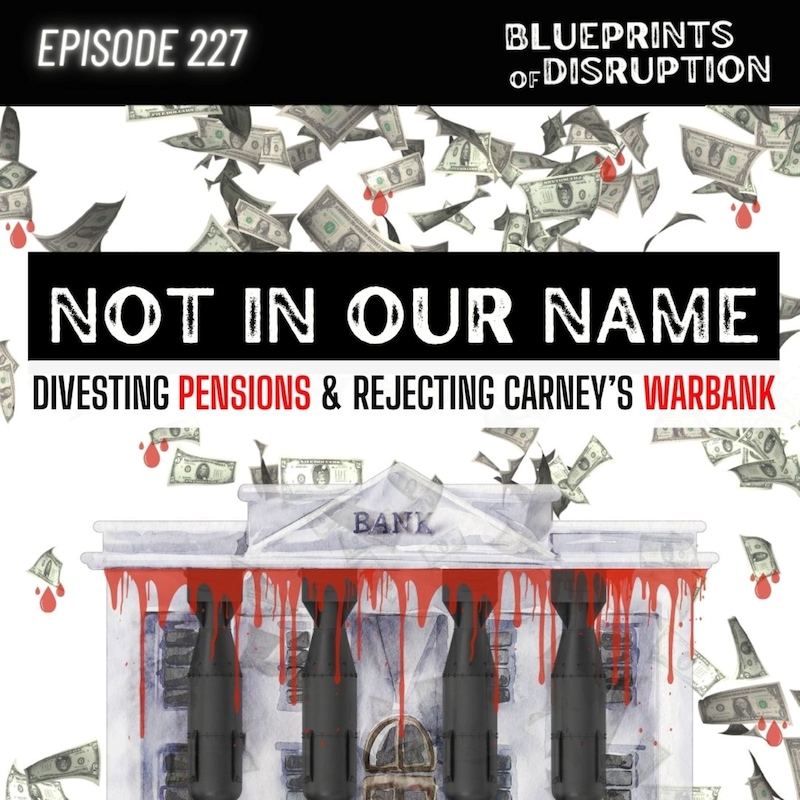
How is Carney's War Bank and the Ontario Teachers Pension Plan (OTPP) connected? Through investments in weapons and genocide, as well as the activists and organizations fighting for a Free Palestine.
Teacher and organizer with OTPP Divest, James Campbell gives an overview of the movement to get the OTPP to divest from weapons manufacturers.
With a collection of success stories, it is clear the campaign resonates with teachers in the Province - with two of the largest unions overwhelmingly voting YES to divestment when given the chance.
So where does the resistance come from? Where it usually does - Capital. But also from the CEO of the $300 billion OTPP, Joe Taylor, who has refused calls from the ranks to stop using their name to line the pockets of war profiteers.
As it turns out, OTTP CEO Taylor is also a big supporter of the Defence, Security and Resilience Initiative (DSRB), or as second guest Tyler and his fellow activists with Stop the DSRB call it - the War Bank.
What is it? Its a project of Carney's to get the G7 nations to sign on to this slush fund for the weapons industry. Its clearly stated purpose is to bypass popular (democratic) demands for social service spending and basic rights, in order to secure an endless supply of 'defence' funding. Its all being sold alongside Carney's Canadian militarism narratives, which has made it easier for him to line up supportive politicians from across the spectrum.
This makes the job of activists harder, but not impossible. James and Tyler talk about the tactics they've deployed, and the alliances they are building along the way. There are accessible pressure points to be pushed, tarnishing the reputation of unethical investments being one of them. Another is opposing the pitch for Toronto to serve as the headquarters for the DSRB.
Be sure to stay until the end to hear what else these activists have up their sleeve and learn more about the impacts divestment campaigns are having on the economic and political landscapes.
Hosted by: Jessa McLean
Call to Action: SIGN ON TO STOP THE WARBANK
Related Episodes:
- UNIFOR's Hot Cargo: Labour Internationalism (Aug 2025) Labour for Palestine on their campaign to have any goods or services coming from, or going to Israel, declared 'hot cargo'.
- Nationalism and the Working Class (Mar 2023) Chris Fairweather, academic, activist and labour organizer, talks about the pervasiveness of nationalism and the impact is has on the working class
- No Arms in the Arts (Aug 2024) Hear how the successful campaign to pressure Scotiabank and the Giller Prize to do the right thing.
More Resources:
- Pension Divestment FAQ - Google Drive
- PACBI: Palestinian Campaign for the Academic and Cultural Boycott of Israel | BDS Movement
- Referenced Report: Special Rapporteur Report on Gaza
- VIDEO: World Beyond War Action Reel (IG)
- Ontario Government's Statement on Bid for DSRB HQ
- Top 100 arms-producing and military services companies in the world, 2024 | SIPRI
- Our Call to Workers Everywhere – Stop the Genocide — Workers in Palestine
For more content from these creators, be sure to subscribe to the Blueprints SUBSTACK.
All of our content is free - made possible by the generous sponsorships of our Patrons. If you would like to support our work through monthly contributions: Patreon
Transcripts
Greetings, friends. My name is Jess McLean, and I'm here to provide you with some blueprints
Speaker:of disruption. This weekly podcast is dedicated to amplifying the work of activists, examining
Speaker:power structures, and sharing the success stories from the grassroots. Through these discussions,
Speaker:we hope to provide folks with the tools and the inspiration they need to start to dismantle
Speaker:capitalism, decolonize our spaces, and bring about the political revolution that we know
Speaker:we need. Okay, good morning. Gentlemen, welcome to Blueprints. Can we get you to introduce
Speaker:yourself to the audience first? Hi, I'm James Campbell. I'm a high school teacher in Toronto,
Speaker:a member of the Ontario Secondary Schools Teachers Federation, um involved in the OTPP Divest
Speaker:campaign and a bunch of other things, but here primarily to speak about the OTPP Divest work.
Speaker:Hey, Jessa. Hey, James. um I do some organizing in West Toronto through uh my Palestine Solidarity
Speaker:Group, through a parent group, through a union and so on. And I'm here as part of the Stop
Speaker:the DSRB campaign, which is sort of a coalition of some, they happen to be local Toronto groups
Speaker:um who are opposing this DSRB war. War Bank. I think that best describes it. Acronyms are
Speaker:my downfall. So we will get into exactly what that is and what it has to do with divesting
Speaker:from pension plans. Trust me, it's connected very closely. And that's why these two folks
Speaker:are working together. This is the act of divesting from pension plans from war specifically.
Speaker:We know climate justice activists do a lot of divestment work as well. But Let's be a
Speaker:little bit more specific in terms of the OTPP here in Ontario. Who all is working to divest
Speaker:that massive pension plan from weapons? So we, the OTPP divest campaign emerged um in
Speaker:the winter of 2023. A bunch of teachers just absolutely horrified about what was going
Speaker:on. with the genocide in Gaza and trying to figure out how to be addressing this in our
Speaker:schools, how to support Palestinian students and their families, trying to figure out a
Speaker:way to have, take on a role as educators, as caregivers of children to find a space to
Speaker:speak and talk about this and just confronting all sorts of the profound anti-Palestinian
Speaker:racism, cultures of silence in our schools about addressing this just started meeting almost
Speaker:on a weekly, bi-weekly basis, just trying to support each other and figure out what work
Speaker:we could be doing around this. Teachers who have been organizing for years around a whole
Speaker:bunch of issues. And out of that, we created a group called Educators for Palestine. A bunch
Speaker:of us had been involved years ago with Teachers for Palestine. And then from that group, a
Speaker:smaller sort of subcommittee developed around uh focusing on the pension plan and focusing
Speaker:on the pension plan precisely because, and you did a great episode on this maybe almost
Speaker:a year ago, because it was, so many teachers were finding it absolutely impossible to speak
Speaker:and talk about this in our schools. There was such a culture of repression, uh colleagues
Speaker:getting targeted for even. saying the word Palestine, right? So there was a real feeling
Speaker:of focusing on our pension plan. This is a way for us to break the silence about the genocide,
Speaker:break the silence about the war crimes being committed in our names, that this could be
Speaker:a way to start having this conversation. So we just emerged as uh almost a subcommittee
Speaker:of educators for Palestine, um focusing on the pension as a place to do education among members.
Speaker:as well as trying to heed the call of the General Union of Palestinian Teachers from
Speaker:October 2023 of asking us to do everything we can to restrict and the transfer of arms
Speaker:to Israel and that includes uh divestment. And I can get into more about how the campaign
Speaker:has sort of evolved from there, but it emerged from just a group of teachers. uh deeply concerned
Speaker:about what was going on in the world and therefore in our classrooms and with our students. 2023,
Speaker:we're three years in almost. What's the response been like from teachers finding out how their
Speaker:pension plan is invested? Because that's tough, right? Like they need their pension plans.
Speaker:They want their pension plans to do well. Lord knows weapons make money, right? But they've
Speaker:also witnessed what at least some of them have been witnessing what we've seen. And generally
Speaker:weapons manufacturing, they're not too hard to cast as villains, right? Some folks will
Speaker:offer, know, Carney is pushing and as we'll talk about the war bank, he is pushing that
Speaker:industry as the answer to absolutely everything. But generally anti-war divestment campaigns
Speaker:have resonated with people. Have you found that's the case with teachers in Ontario? 100%. I
Speaker:mean, we can get into this later, but the structure of our plan is uh pretty inside baseball. uh
Speaker:teachers, our unions have fought uh for years to ensure that we have this incredible pension.
Speaker:And I think teachers are quite rightly proud of it and see this as a key part of our deferred
Speaker:salary. This is what is... part of the work of our union and of our labor movement to create
Speaker:this for education workers, for teachers in particular. um And yet when we find out that
Speaker:our pension plan is using our name to invest in companies that build products that literally
Speaker:murder teachers and destroy schools, it is hard. And so in so many ways, once teachers
Speaker:find out about it, it's been very easy to get teachers on board. There's of course
Speaker:resistance. Our unions are big tent organizations and there's a lot of different politics within
Speaker:them. But once we've got motions to the floor, they pass with huge majority. So once, uh
Speaker:you know, local unions in both our provincial unions, the motion to divest from weapons.
Speaker:manufacturers and impose a screen on all future investments in war is a pretty no brainer for
Speaker:the vast majority of teachers that we know that all wars are essentially wars against
Speaker:children, uh wars against civilians and teachers just know that's a fundamental uh fundamentally
Speaker:not in line with what our profession is fundamentally about, which is about, you know, care, care
Speaker:and well being of kids and trying to create more fair futures for those kids. So um it
Speaker:really does resonate once teachers find out. It's such an uh obvious uh abuse of our name
Speaker:and our reputation to be investing in war. The contradiction is evident to everybody. It's
Speaker:hard to untangle as well, right? You don't always know where the investments are going. Is this
Speaker:a transparent pension plan? know like the university pension plan, there's a piece in the maple
Speaker:that we'll link. They're doing some work around the students and the workers of post-secondary,
Speaker:their pension plans. They're sometimes disclosing, getting the institutions to disclose the divestment
Speaker:is half the battle. How is it with the OTPP? Similar uh and it can be a slippery fish.
Speaker:we've got the plan does publicly list all its investments over 250 million dollars. So on
Speaker:the website, they list major investments. It's uh overall, it's about a 300 billion dollar
Speaker:plan. So it's huge. um And then we've we know about other investments, uh at least in publicly
Speaker:listed American companies through going through it. uh the Securities and Exchange Commission
Speaker:filings every quarter. And yet those can be challenging because in one quarter the plan
Speaker:might be invested in something and then another quarter they might and they use the time lag
Speaker:very effectively. So when we show up at our annual meetings and sometimes name specific
Speaker:companies that we know the plan has been invested in, uh we will hear some answers along the
Speaker:lines of, we're invested in a lot of different companies and Those filings are only a momentary
Speaker:glimpse of any company that were invested in at any time. there is a certain level of transparency
Speaker:and yet ah it's not entirely transparent. And so for example, we know the plan has some
Speaker:investments in Israel, but only because they told us when we were able to get a meeting
Speaker:with them. But uh those are not publicly listed. uh Those are not available. And so it's the...
Speaker:Many of most of our information is based on those, the research of just peace advocates.
Speaker:There's been all sorts of the climate campaign that's being run by uh Shift Action has been
Speaker:amazing in terms of their research and getting information about the climate, dangerous climate
Speaker:investments uh of the plan. So there is, we're often using research of others, but uh yeah,
Speaker:it's not always transparent. I love to hear that you're able to lean on others' reachers.
Speaker:mean, if someone is going through all of the investments and they find anything, know, send
Speaker:it our way. um We've done a million episodes on how these movements are actually interconnected
Speaker:as well. But um it's gaining traction right across Canada, right? There's moves to divest
Speaker:and divest from really big pension plans, like $300 billion, the politics that must surround.
Speaker:this $300 billion must be intense. ah Where is the resistance if teachers are on board
Speaker:and it seems like a no brainer, right? Where is the resistance coming from then to clean
Speaker:up these pension plans? It's a great question. the resistance unsurprisingly is from the
Speaker:plan itself. Essentially these plans have been set up Tom Fraser and Kevin Skerritt have
Speaker:done some really interesting research about this. In the 90s, the plans were set up specifically,
Speaker:essentially to take uh this huge bucket of money that was essentially from a bunch of public
Speaker:sector workers and make it available to financial capitalism. So these are huge buckets of
Speaker:money that... don't necessarily rely on the amount that they take off my paycheck every
Speaker:month to fund it. So they actually don't need teachers' uh monthly contributions to
Speaker:fund the plan. It's a huge bucket of money. And so the resistance comes from the plan itself
Speaker:of uh saying, we think we've heard this many times from the stage, both on climate and on
Speaker:war. We think there is money to be made in war. We think there is money to be made in climate
Speaker:destruction. so they're not wrong. They're not wrong. We will continue to invest in it
Speaker:because we see there uh being profit to be made there. I mean, it's almost quite literally
Speaker:the main enemy is capitalism and finance capitalism itself. um But thus the core contradiction
Speaker:here. You know, workers have worked hard to make this pension plan possible for us. oh
Speaker:Workers work hard throughout their career and we all deserve, every worker deserves
Speaker:a healthy wage in retirement, right? This is a fundamental social benefit that everyone
Speaker:deserves. And yet there's this core contradiction of once we give this up to the market, the
Speaker:market is gonna do what it wants. or at least try to do what it wants. I know the enemy is
Speaker:capitalism, but someone got up on a stage and who is articulating this on behalf of the
Speaker:plan? plan is here. We can name some names. No, like, is there a board? Is it not created
Speaker:of teachers? Can you explain to the listener how who is managing this plan and has the
Speaker:goal to say, I don't care really what it's invested in. It's making. us money. That sounds
Speaker:like Mr. Burns. this is all I'll try it. It's almost I'll try and keep it quick. And then
Speaker:there's a lovely segue to Tyler to talk about war bank pieces. So essentially the plan was
Speaker:set up. There's two main sponsors. There's the Ontario Teachers Federation, which is made
Speaker:up of all the major uh teachers unions. We appoint uh half of the board members through
Speaker:the Ontario Teachers Federation, and then there's the Government of Ontario, which appoints the
Speaker:other four board members, and then there's a chair of the board. So that's at the board
Speaker:level. And then we've got the pension executive itself, the board hires the pension executive.
Speaker:And so all of this has been set up so, as they've told us, so that plan investment decisions
Speaker:cannot be influenced by politics. And yet... We have a CEO named Joe Taylor who has heard
Speaker:loud and clear from the labor side of the plant sponsors that we don't want to be invested
Speaker:in war. We don't want to be invested in war crimes. We don't want to be invested in products
Speaker:that are used to murder children and teachers and involved in what the UN has called the
Speaker:scholastic side. or the bombing of the uh school in Iran. That's not in our best interest,
Speaker:if that's what we're saying fiduciary duty is. And Joe Taylor, the CEO of Ontario Teachers
Speaker:Pension Plan, has heard that loud and clear. He's known it for three years. He's gotten
Speaker:hundreds of letters about this. He knows it loud and clear. And yet, from the stage at
Speaker:this year's pension plan, we heard him say explicitly that The plan is committed to investing in
Speaker:defense because and I'm quoting him here. We've been asked to do it by our governments to
Speaker:help them build national security and the defense of Canada. So there's this we're being told
Speaker:on one hand, no, no, no, we have to be independent. We can't be influenced by any by any of the
Speaker:the plan sponsors. And yet here he is saying the government wants us to be invested in
Speaker:war. And so we're going to invest in war. And after hearing for two years directly from
Speaker:teachers, having the two largest uh teachers unions in the province, the Elementary Teachers
Speaker:Federation of Ontario, Ontario Secondary Schools Teachers Federation, both voting overwhelmingly
Speaker:and writing to the plan formally, officially, please divest from any weapons manufacturers
Speaker:and please impose a screen on a future investments in weapons. He's heard that loud and clear.
Speaker:He then comes out and this is a handoff to Taylor as a public booster of this war bank
Speaker:and saying uh that he is very excited to be a public face and using his name and using
Speaker:the name of Ontario Teachers as a sponsor of the war bank. Ontario Teachers pension plan
Speaker:is literally called Ontario Teachers in the finance world. It's known as Teachers. um
Speaker:So it's kind of galling for him to have heard loud and clear from Ontario teachers and then
Speaker:turn around and use our name to say, uh we want to create this very shady, shadowy, non-transparent
Speaker:bank, which is essentially going to go to uh the weapons industry. uh And Tyler, I'll hand
Speaker:it off to you to hear more about this uh war bank. Yeah, I mean, I think I can pick up
Speaker:both of that handoff from James and then the question from Jessa about where the resistance
Speaker:is to this, of course, finance capital on one level. um Because one thing that's remarkable,
Speaker:and this is sort of like the motivating problem that the war bank takes itself to have its
Speaker:directors and founders, um is that there is more of a reticence these days and it will
Speaker:quite explicitly say this, that people are less comfortable uh having their money, whether
Speaker:it's just in their savings account or whether it's in their pension plan, uh going to climate
Speaker:catastrophe pipelines, private prisons, uh and weapons. uh And the interesting thing is,
Speaker:and they're like remarkably transparent, they're remarkably frank in their conversations with
Speaker:one another, even in the literature they put out, that This like huge to them, the impediment
Speaker:is ESG and James will have much more to say about this, is like environmental social governance
Speaker:regulations, which I guess is this recent requirement that has like maybe five, 10 years at most
Speaker:has become a problem for them. And they blame this for declining investment in the weapons
Speaker:industry. They will sometimes, I mean, this is so crass. They will sometimes say the two
Speaker:problems are ESG and DEI, you know, so like diversity, equity and inclusion and these other
Speaker:regulations. So anything getting in the way of capital, um these impediments. they really
Speaker:are just like acting out the forces, the deeper forces. So I'm just going to, they openly
Speaker:acknowledge the huge drive, right, to fund the important things like healthcare and education
Speaker:and the infrastructure that we actually use. I don't mean weapons. facilities, you know,
Speaker:and they're like, I know you're feeling a lot of pressure from your population to do the
Speaker:right thing. We're here to help you make sure you can keep those dollars in defense spending.
Speaker:that did I paraphrase that pretty well? Absolutely. Yeah. So I mean, on the one hand, they've got
Speaker:like the active, the active, the activists, the people who are actually, you know, using
Speaker:the ESG regulations that have been taken on. And on the other hand, they, they acknowledged
Speaker:that the population much more widely has seen, for some reason, has this concern about housing,
Speaker:social spending, and so on, and it's gonna be tough to wrench the money away from them at
Speaker:this point, they say. And they will just explicitly say this, like the Atlantic Council released
Speaker:this report where they will, you know, I have a quote somewhere, where yeah, they will just
Speaker:actually talk about groceries being this concern that the population has. James. Can I read
Speaker:it out? The quote, I mean, it's just, so this is, it, It's been the idea of it has been
Speaker:around forever. So originally in internal circles, it was called the NATO bank. So it emerges
Speaker:out of NATO emerges from the Atlantic Council. This is the document. It's in like the opening
Speaker:page of the Atlantic Council. It says this issue, which was the inability of national
Speaker:governance to spend more on military largely stems from political rather than economic factors.
Speaker:Despite Russia's invasion of Ukraine and rising geopolitical tensions with China, the public
Speaker:in many European nations in Canada prioritized spending on healthcare, education, and public
Speaker:infrastructure over defense. The report posits that expecting a drastic shift in these domestic
Speaker:spending priorities remains unlikely. They are explicit about needing to create this bank
Speaker:to get around democracy and get around the impulse of people to say, we want our government
Speaker:spending money on preserving and promoting life, not destroying it. Is a lot of this under
Speaker:the premise that the fucking weapons industry is short on cash? Like, like I've read some
Speaker:of the literature around the war bank and it's like, oh, they're small and medium sized. Is
Speaker:this this mom and pop shit that they're trying to, there's mom and pop weapons manufacturers
Speaker:that just can't get off the ground. And we're here to stimulate that economy. Like I. They
Speaker:have lost their minds trying to frame it like this. cannot believe ah that would get any
Speaker:traction with people. Like, I don't think anybody thinks of that industry as not being already
Speaker:immensely uh profitable. And we know capital is insatiable, but it's not a struggling industry.
Speaker:Right? There's other motivations there, right? Like, why are we beefing up our dispense and
Speaker:military spending? This goes beyond the kind of capital. question, but Tyler, like how does
Speaker:this then, how do you end up starting to work with the same folks that are divesting from
Speaker:pensions? Like, did you feel like you had to bring the bank in this issue of the war bank
Speaker:into it? Well, yeah, you know, so we have sort of a little bit of a ragtag team here of local
Speaker:activists who've been working on this, researching it in some sense, hoping some academic would
Speaker:show up. who would just like do the thing, do the thing for us, um did not happen. So we've
Speaker:sort of like bootstrapped our little organization and then we had World Beyond War uh national
Speaker:sort of come in and do some of that for us. m And so I in the process, yes, thank you,
Speaker:Rachel. So in the process of sort of like having conversations, really hoping that some savior
Speaker:would come in, um I think we had enough conversations. And I think James and the OTPP divest people
Speaker:sort of like independently landed on the war bank, this DSRB being a problem for one thing,
Speaker:because Joe Taylor is just an explicit backer of it. um One of two pension plan presidents
Speaker:who are just like revealing the grift, maybe, I'm not sure how they thought they could get
Speaker:away with this, but it's Joe Taylor and then the head of OMERS are backing that Toronto
Speaker:should be the headquarters of this Global War Bank, where the global headquarters would be
Speaker:here in Toronto. And the thing that they pointed to is look at all of this pension money. James
Speaker:can maybe correct me on this as well. think it's $2.3 trillion of public pension money
Speaker:is here in Toronto, this huge pot of money. uh And the way that they're trying to entice
Speaker:European nations, Indo-Pacific nations, which seems to be like South Korea, Australia, Japan
Speaker:at the very least. to locate themselves here is in significant part because of this big
Speaker:pot of pension money, which is like a world, you know, one of the world's biggest sort of
Speaker:pots of that sort of finance capital. And so Toronto is relevant, pension plans are relevant.
Speaker:The Atlantic council themselves will also say, not only are commercial banks becoming reticent
Speaker:because of this ESG problem to invest in weapons, but so are pension plans. And it's because
Speaker:of people like James in this group who are actively trying to divest and certainly resist
Speaker:any further divestment. So there's an obvious uh illus sort of pension plan sort of fall
Speaker:out of this quite naturally. And actually also this is important, a point of resistance against
Speaker:the bank. Because if we can have enough pension plans, raise enough of a racket, promise enough
Speaker:of a fight. You know, the big eight pension plans in Toronto, for example, public pension
Speaker:plans, if they can promise that they're going to raise a fight, if the war bank actually
Speaker:ends up here, that might make the worldwide directors say, wait, Toronto's maybe not the
Speaker:place for us. Taking Toronto off their map as a potential location is significant because
Speaker:to your more general point, Kearney is backing this bank hard. uh He may be, in fact, like
Speaker:the biggest backer of this bank in the world right now. At one point, I think there was
Speaker:a lot more appetite from many different countries. But I think European countries have founded
Speaker:their own little coalitions to have their smaller scale banks. Geographically, Canada is a little
Speaker:bit more isolated. uh And so Carney is really the one left flying himself out to Luxembourg.
Speaker:to try to have these conversations, seemingly try to keep other countries on board. So
Speaker:there's all this motivation anywhere here in Toronto, here in Canada, to really land hard
Speaker:blows against the bank worldwide. That really sucks though that they're able to point to
Speaker:these investments that for three years you've been trying to remove as proof that there's
Speaker:even appetite for weapons investment, not just a lot of pension plan money here. But look,
Speaker:these teachers, love investing in weapons. Look at how much money we have invested in
Speaker:weapons. They're looking at the dollars and not listening to the voices that are coming
Speaker:out of these conventions and all these AGMs that are making these declarations. Yeah,
Speaker:I was just going to say on the first part of that, mean, the connection is very much through
Speaker:the incredible work of World Beyond War who from the jump, from the beginning, have been
Speaker:supporting the teachers divestment campaign. We're all full-time classroom teachers. Some
Speaker:of us are retired, but everyone is busy. And the work of World Beyond War Canada in terms
Speaker:of supporting our work for the past two years and then through that, raising the issue
Speaker:of and connecting us to the issue of the war bank. um has been, that's been a really key
Speaker:vector and supporter, including um labor against the arms trade and um labor for Palestine.
Speaker:the all, everyone trying to work on all of these different things all at the same time,
Speaker:it's been incredibly inspiring really in moments where it's hard to find beauty. It's felt like
Speaker:quite. beautiful solidarity of everyone sharing information, supporting each other's work,
Speaker:uh yeah, trying to lift each other's work up. And back to the point about the reputation,
Speaker:they're called the Maple Eight, the sort of Canadian public pension, and they trade on
Speaker:that reputation of... sort of Canada being this nice responsible country and we have a uh
Speaker:competent leader like Mark Carney, we don't have the irresponsible, erratic Donald Trump,
Speaker:right? It really is trying to frame this as, hey, we're the good, stable, responsible actors
Speaker:here, invest here, when the reality is this is all invested in the highest crimes in the
Speaker:world, right? genocide, uh wars of aggression, um the most financially irresponsible in so
Speaker:many ways, decisions to invest in war and destruction and annihilation or uh annihilation through
Speaker:uh fossil fuel investment. That's what the maple later are heavily invested in. And
Speaker:what's interesting for us is that when we were able to get a meeting with the plan early
Speaker:in our campaign, They were explicit with us that their reputational concerns are central
Speaker:to many of their investment decisions. They were explicit about, look, we may or may not
Speaker:be interested in um abiding by international law. We may or may not be interested in, even
Speaker:though we've signed on to the principles for responsible investment for the UN that says
Speaker:fiduciary duty can't just be. maximizing quarterly profits for your trustees. has to be investing
Speaker:in their best interests, which includes following international law. um To violate that opens
Speaker:you up to all sorts of risks. They've told us that a real significant investment consideration
Speaker:is reputational damage. And that while they tend not to like to use the word divestment,
Speaker:they will divest from something that they use the phrase severe controversies. about 20 years
Speaker:ago, no, not 20 years ago, 2018. So eight, 10 years ago, the plan divested from tobacco,
Speaker:very proudly divested from tobacco. And not incidental to that was this Rick Mercer rant
Speaker:that he did about how crazy it was that Ontario teachers were making money from this harmful
Speaker:product like tobacco. And so this idea of trying to remove the social license to operate became
Speaker:very clear to us as an essential way to apply pressure on these organizations that are not
Speaker:open to democratic control. Like we can't, even though our members have voted to divest from
Speaker:war and war crimes, that vote is meaningless to a $300 billion pension plan. And yet...
Speaker:the way they are pressureable and movable um is this branding that they have of being thoughtful,
Speaker:responsible investors is central to their ability to operate. And so just one of the key strategies
Speaker:of our campaign is to try and burst that bubble. and trying to name explicitly that these are
Speaker:some of the most dangerous, life-threatening investments on the planet and that to be invested
Speaker:in them is as irresponsible as it gets. And when these organizations are explicit, right?
Speaker:It's in the Atlantic Council memo. People want to invest in the healthcare and infrastructure,
Speaker:right? And they're saying, we need a way to get around that because there's so much money
Speaker:for us to be made here. Um, and, and so the hope is I, I, I only heard about this, you
Speaker:know, within the last six months I had, but it's been an idea that's been around for a
Speaker:long time. And so back to, to Tyler's point of trying to get the word out about what this
Speaker:is, um, and, trying to force a conversation about this, um, is going to be central to trying
Speaker:to stop it. Yeah. So if I can just jump in, I don't want to get too into the weeds of what
Speaker:the DSRB is doing to sort of try to brand itself, to try to entice that money back in, back
Speaker:into the weapons industry, but even to like accelerate the flow like never before in line
Speaker:with, know, Carney's goals of this 5 % GDP towards NATO, NATO spending. But they make
Speaker:it pretty clear that they're sort of, they are going to directly try to take the reputational
Speaker:harm of investing in weapons out of investing in weapons. So exactly to James's point, they're
Speaker:completely sensitive to these exact same topics as the DSRB. And so their like, SAV, their
Speaker:like way of way of addressing it is going to be the same way Carney has been doing it. This
Speaker:is about national sovereignty. This is about national security. This is about independence.
Speaker:You know, a little bit of abatance, which they're going to like allude to the US, even though
Speaker:the US is going to be directly involved in the bank. So this is clearly not going to be a
Speaker:significant amount of independence. So, but you know, the Omers president in a particularly
Speaker:vile quote that he gave to the Ford government talks about uh Western democracy. Like this
Speaker:is a win-win for Western democracy and investor profits is the DSRB. So the way that the point
Speaker:here is that the reputation here is because Jesse, you alluded to earlier, like there is
Speaker:a stigma in arms dealing, obviously, right? This is not something that anyone wants to
Speaker:put their good name But least it used to be, right? Carney's trying to change all that.
Speaker:But if you can rebrand it in these other ways. So it's not like I'm just meeting on an airport
Speaker:runway with someone with a bunch of cargo boxes. No, in fact, this is going to this very specific
Speaker:campaign that is going to be rearming NATO and allied countries and other G7 countries. really
Speaker:tightly binding to this particular campaign of democracy, the West, the EU, G7 and so
Speaker:on, and the sovereignty that we need against some unnamed uh actor, which can't be the US.
Speaker:So then the second point is to take the financial risk out of this as well by actually having
Speaker:our governments underwrite the financial risk of investing in weapons. Because once you have
Speaker:these particularly ornate complicated uh machines of war, like an F-16 or an F-35 that require
Speaker:all of these different little components, supply chains that are across many different countries,
Speaker:it's actually a serious financial risk to invest in. You're going to have some little bit of
Speaker:optic technology because you require all of these other things to sort of like also uh
Speaker:arrive uh on the tarmac for this plane. logistical nightmare. Exactly. It's a logistical nightmare.
Speaker:And it's a financial one too, because things can go wrong in that supply chain and then
Speaker:all of a sudden you're out of luck. And so all of the member governments here are going to
Speaker:put forward public money, massive amounts of public money in order to underwrite those investments.
Speaker:So insofar as there are losses, that is going to be eaten by the public. They are quite explicit
Speaker:about this, that there are going to be risk guarantees against losses so that these more
Speaker:complicated machines of war are not as much of a financial risk. So reputational risk
Speaker:and financial risk, they've diagnosed these as the two concerns that pension plans and
Speaker:commercial banks have. So they're directly going to try to take the bite out of them. And these
Speaker:are the two paths that we take, right? We try to interrupt the finances and some of us,
Speaker:the supply chain. Right that we saw this with pipelines right the government was like, oh
Speaker:look everyone's shutting down these pipelines It's getting longer to build. Oh land claims
Speaker:will will buy the pipeline. Well, we'll don't worry No one's gonna take any losses on this
Speaker:come invest your money here If you read the budget like Carney's budget if you read the
Speaker:awful texts that comes with it This has been this is his plan, right? He has he campaigned
Speaker:on this and the scary part is all the parties actually campaigned on this to a degree where
Speaker:they feel like if we just made the weapons here in Canada for Canadian workers, then that
Speaker:would be the solution to buying jets from the United States. Like there was no real objection
Speaker:to boosting Canadian businesses. And that's how Carney's framing this. Even though the
Speaker:components will come from everywhere and war profiteers will profit right across the globe.
Speaker:To your average Canadian, they are hearing that this is going to create jobs. This is going
Speaker:to stimulate the economy. And on top of it all, the bonus is it will keep us safe. And
Speaker:you have progressives eating this up to a degree, right? Even though they've witnessed war and
Speaker:they have all the reasons why they would hate war profiteering, they also see Trump as
Speaker:a threat and, they're falling into some of the pitfalls that they were meant to fall in.
Speaker:Do you find you've got to navigate that as well, right across the political spectrum? Absolutely.
Speaker:mean, I think important, correct me if I'm wrong, Tyler. Olivia Chow was there at the public
Speaker:announcement of the bid to have the war bank in Toronto. this is, so right there on stage
Speaker:with Ford and Joe Taylor. This is a, this is a, they have a big tent coalition as well.
Speaker:uh for war. So we often have it came up at the last pension meeting and it comes up often
Speaker:in conversations. We will hear from from members and from folks in our pension leadership
Speaker:saying, well, of course, we don't want to be invested in war crimes and genocide. Of course,
Speaker:we don't want that. But surely, surely it's OK to be invested in weapons in general. don't
Speaker:have a problem with the whole category, do we? And so there is that leap that is sometimes
Speaker:hard for many people to say, all war is a war crime. There is no such thing as a war that
Speaker:doesn't involve the murder of children and civilians.
Speaker:Hundreds of years of war has shown us that always, it's kids who are, uh you know, victims of
Speaker:war. And so that is a big jump. And yet I take great hope from the fact that when presented
Speaker:with the motion of, hey, do you want to be invested in weapons industry, the vast majority
Speaker:of teachers say absolutely not. mean, these are and even politically, these are um the
Speaker:what is it 60 70 % of Canadians, you know, very clearly against this illegal attack on
Speaker:Iran ah and Lebanon, right? So these are I think increasingly in this moment. um The mask
Speaker:is off in many ways. about what it means to be invested in war industries. m But it comes
Speaker:up. This is why for me, you talked about not liking acronyms earlier, right? I think if
Speaker:we call it the Defense and Security Resilience Bank, well, let's name this for what it is.
Speaker:It's a war bank. It's a bank that is gonna be primarily interested in funding's war profiteering,
Speaker:right? And so I think even in our... uh when Joe Taylor got up on the stage and spent a
Speaker:minute of his presentation talking about his interest in defense, there were teachers
Speaker:sort of unaffiliated with our group, just teachers who were at that meeting saying, this isn't
Speaker:defense, these are offensive weapons. That language opens up this whole idea that we
Speaker:are just defending ourselves from some unnamed enemy. Or others, Canada loves to defend
Speaker:others. If we get engaged, it's always as the benevolent saviors of some other people suppressed
Speaker:by a regime. It's so interesting to hear how quickly the Carney framing breaks down or
Speaker:the framing of this as um these are weapons because of course we need to defend ourselves.
Speaker:But James, you're suggesting it does not take a long time for people to note that perceptibly
Speaker:that's not what a huge number of these weapons are in any way involved in. And I mean, the
Speaker:Carney government just voted down, you know, with the No More Loopholes Act, an actual
Speaker:regulation that would have helped ensure what the end user actually might be so that uh
Speaker:weapons don't actually end up just in anyone's hands. But to Jess's earlier point about this
Speaker:being across the spectrum issue, yes, Mayor Chao, was There was this press conference
Speaker:in November to announce the DSRB bid to be in Toronto. And Chow was there with Premier Ford,
Speaker:with representatives from the Karni government, Julie Dzieravitz and Kareem Bardisi. And so
Speaker:they were all standing on the stage together. I would also note that like, why am I forgetting,
Speaker:Merit Styles is the Ontario, yes, Merit Styles. So she, she, There is massive amount of
Speaker:defense manufacturing in Ontario and she has quite clearly had a very difficult time of
Speaker:not giving explicit support of it. So when Rochelle in Brampton was found to be supplying
Speaker:armored vehicles used by ICE in Minneapolis, that to my knowledge is the only time she
Speaker:has stepped up and had any issue with Ontario weapons manufacturing. that same company has
Speaker:been supplying uh those same armored vehicles to Israeli police in the West Bank did not
Speaker:raise that as an issue. She has not raised an issue that another Ontario company is uh supplying
Speaker:uh armored vehicles to the UAE who are using them uh in Sudan to commit horrifying genocide.
Speaker:So the only time her sort of like political conscience was piqued. was when it was ICE,
Speaker:when it was Minneapolis. Other than that... When it was very popular and safe to do so.
Speaker:Yes. Exactly. One, like, just all of the pieces were in place. we, you know, it was literally
Speaker:just within two days of... um I'm forgetting the guy's... the person's name, but one of
Speaker:the people murdered by ICE. Preti, Alex Preti. Sorry. Yes, Alex Preti. It was just sort of
Speaker:like very, very clearly tied to that particular... act. But other than that, she just does not
Speaker:have the will to engage with this issue at all, despite, of course, being an NDP. I think a
Speaker:lot of, not to let her off the hook, I would never do that. But when you get involved
Speaker:with labor, then it gets a little tricky, right? Because these are, some of them are labor
Speaker:shops that are making these weapons and there is uh great uh rank and file movements to declare
Speaker:hot cargo, to get tools down in these shops, and we applaud those efforts. But we know
Speaker:that the leadership isn't 100 % there. The CLC, Canadian Labour Congress, see I'm using
Speaker:acronyms when I know I shouldn't do that. They are really weak sauce in terms of this issue
Speaker:and adopting a hot cargo kind of mentality. Yes, this is where then the progressive politics
Speaker:get really kind of dirty. So I imagine you're focusing on the grassroots and building momentum.
Speaker:Let's shift into you had an action last week and where you let's talk a little bit how
Speaker:that went, who came together for it and where you're going from there. This is the third
Speaker:annual meeting that we've had teachers show. Well, we've been going to these for years,
Speaker:but the third annual meeting that we've shown up at. and made a confrontation with the
Speaker:moral crimes of our investments impossible to ignore. We've uh stood up, asked the questions
Speaker:that needed to be asked, and disrupted the meeting to make sure that everyone in the room is
Speaker:aware of what's happening. and can't be the three monkeys about it. So what does this
Speaker:mean for the campaign? we have been, I think, energized by the direct action that we've
Speaker:taken and are trying to use that as sort of one of the pieces of using it to try and get
Speaker:the word out. This year, it was really exciting. had relationships with and done work with
Speaker:Toronto Palestinian families, Toronto Jewish families, World Beyond War, uh Labour for Palestine,
Speaker:a whole bunch of groups. We did a public vigil um in February 2025 um for all of the 20,000
Speaker:murdered children in Gaza. We did it outside the Ontario teachers uh pension plan head
Speaker:office. This year we had an outside demonstration. We had an inside action going on and that felt
Speaker:very powerful to have both happening at the same time. And we got some very exciting
Speaker:information from the stage, which suggests that the campaign has had some significant
Speaker:impact. We are waiting to get some detailed confirmations, um but we are hoping that in
Speaker:the coming weeks, we're gonna have an exciting. announcement to share. um We need to get our
Speaker:ducks in the row on that and confirm a few things. um And for us, the campaign uh goes on um
Speaker:and wanting to turn to using from the beginning, the campaign has been focused not just on
Speaker:trying to get the plan to divest, but using the campaign as a chance to break the silence
Speaker:in our schools and in our unions um about the genocide in Gaza. about apartheid and illegal
Speaker:occupation, about the American empire, the illegal invasion of Iran and Lebanon. For
Speaker:us, uh it's a way that we can break those silences and remind teachers that this isn't an abstraction.
Speaker:These are issues that for some of us might feel far away. For many of our students and their
Speaker:families, these are... These are as close as it gets um and that we have skin in the game.
Speaker:We have some moral responsibilities here because we're directly profiting from these things.
Speaker:This is not uh an abstract piece. So the hope is that part of the campaign continues, that
Speaker:we use these outward facing actions to then be able to come back and have these conversations
Speaker:within our workplaces and within our unions. We've done... phones, apps, we've put out educational
Speaker:videos. Some of us have used those for doing lunch and learns within our workplaces. So
Speaker:that work will will continue. And for us, the ultimate goal is divestment. And that that
Speaker:will continue until everything is out. We've heard sometimes from the plan and from others
Speaker:saying, well, three hundred billion dollars, you know, we've only got We've only got a
Speaker:tiny percentage invested in this company that's operating in the illegal settlements uh Airbnb
Speaker:or bookings.com. We've only got a tiny little bit of money invested in right this this
Speaker:top three weapons manufacturers. So it you know, don't worry. We don't have that much
Speaker:invested for us the the the Our unions have democratically said we don't want any investments
Speaker:in weapons and this is an ethical bottom line. So for us, we keep pushing this forward and
Speaker:the beauty of it is we have this, you asked about transparency earlier, there is this
Speaker:annual meeting every year where the plan directors have to get up and uh face members and answer
Speaker:some questions. And so that will continue to be an opportunity to bring public eyes and
Speaker:attention. on trying to remove that social license of the plan and also a chance to engage
Speaker:with our colleagues and other members. I imagine there's just so many teachers out there that
Speaker:feel a bit stuck, a bit helpless. Maybe they're not tuned into like local Pali groups. So they
Speaker:just feel like every day at work, they're really, what they can do about it is curtailed and
Speaker:finding an avenue that is still. organizing in the workplace, but maybe not radicalizing
Speaker:your students. Where they found a medium where there absolutely is a lever of power to be
Speaker:pulling on there. And yeah, not a penny, not a dime. There's a whole other chant that comes
Speaker:after that, but ah they don't understand. the end goal is ending an occupation of war across
Speaker:the planet is, you know, but when we're talking about Palestine and we still even with all
Speaker:of that divested, we just then need to move on to another revenue source for the occupation,
Speaker:right? So it's like, no, no, we're not done here. The Giller folks organizing around Scotiabank
Speaker:and the Giller, they were great at that. They tried to be appeased with tens of millions
Speaker:of dollars at a time. You know, we took X percent out. Aren't you happy yet? And they're like,
Speaker:no, more, all of it. We are not relenting. And they were then successful in a lot of
Speaker:that. Right. Giller cut ties, Scotiabank cut much of his Elbit investments. It works.
Speaker:It works, Tyler. What do you got up your sleeve moving forward? How are we going to up the
Speaker:pressure, especially around the World Bank that, know, Kearney's got a lot of sympathetic ears
Speaker:right now with the narratives that he's using to sell this. And he's got Ford lined up. You
Speaker:mentioned Chow. That doesn't surprise me. You know, it's bad because when I Googled it, like
Speaker:to learn more about it. All the banks have statements on how excited they are. Every defense magazine
Speaker:out there has a piece on it. They're salivating. So uphill battle, how are you going to stop
Speaker:it? You know, the levers of power that we have, James sort of alluded to the fact that the
Speaker:pension plan, how it's managed is not democratically governed in a certain way. And yet we've just
Speaker:seen with our legislators in Canada that that's a dead end. Anyways, at least, you know, we're
Speaker:just simply not going to move them at this point in time because there's so much buy-in to the
Speaker:Carney vision of this. You know, one of the Toronto writings here just had a by-election
Speaker:last weekend. Carney still crushed it. uh So there's simply not that out there. But the
Speaker:mechanisms of pension plans in terms of disruption, in terms of playing on the reputational damage
Speaker:that can be made in terms of the villains who are leading these plans, putting their faces
Speaker:on the placards, putting their quotes that they've made about the war bank on these placards,
Speaker:and both the Omers president and the OTP president have collaborated with the Ford government.
Speaker:With the OTPP, this is like a particular betrayal, uh where he works for fucking teachers and
Speaker:he's then um showing up arm in arm with Ford. to promote this war bank. So like double
Speaker:betrayal there. For folks listening, just Ford has gutted education here in Ontario. He's
Speaker:a conservative. No teacher should go anywhere near him. That's just like the backstory that
Speaker:maybe some, sorry, continued. If you know, know. Yeah, right. Fair. So, yeah, eight years
Speaker:of this Ford government of just like constant attacks, not only in education system, but
Speaker:teachers, just so much deliberate attacks on the character of teachers. um so putting these,
Speaker:think pension plans are actually a very, very good avenue because there are those sensitive
Speaker:points that James just pointed out earlier about reputation, about presenting their executives
Speaker:as doing harm to the good standing of the Maple Eight, right? know, maple is like this
Speaker:nice, nice soothing image now. Sweet. Exactly. And that these, they're not actually answering
Speaker:to the actual mandate of their people or even finance uh that they have gone rogue. Like,
Speaker:why the heck are Hutchison, who's the Omer's guy and Taylor, the OTPP guy, why are they
Speaker:off on this uh path with the Ford government and the Carney government about a war bank?
Speaker:They're there to manage a fund. And so I think those are two sensitive points. With pension
Speaker:funds specifically, if we pull those off the table as a source of funds, I think that's
Speaker:huge. If we just promise that Hutchison and Taylor, we're going to go after you, this is
Speaker:going to look bad. If we pull some of those funds off the table and that money out of Toronto,
Speaker:all of a sudden, I think that can have serious effects on just making the war bank less of
Speaker:a viable project. Because again, Carney seems to really be one of the last figures standing
Speaker:and wanting to back this. I think we can have serious effect in Toronto with pension plans
Speaker:specifically. with motivating the activists within those plans. There's sort of conversations
Speaker:with some almost people right now, I can tell you, as well as with some, is it UPP, university
Speaker:pension? So conversations with those pension plans, I think that can actually be an excellent
Speaker:avenue to agitate, to promise a fight, and to really take Toronto off of the map and thereby
Speaker:really start to unravel the very viability of the plan. Absolutely. And a couple of
Speaker:challenges, complications for us. think one, precisely because we have uh a Ford government
Speaker:that is explicitly interested in coming directly at teachers, right? Like he has something,
Speaker:Paul Kalander, the Minister of Education, these are people who are trying to destroy the public
Speaker:education system. And one of the ways they are doing that is, is coming at teachers unions
Speaker:and trying to set up teachers unions as the bad guys. um And I think what that's often
Speaker:meant with the teachers pension in particular, think for very real reasons, there's been
Speaker:at times reticence of drawing any negative attention to our pension plan because the reality is
Speaker:the vast majority of workers don't have this kind of defined benefit. pension plan, right?
Speaker:And that is something that education workers fought tooth and nail for, went on illegal
Speaker:strikes for, right? Years ago, really fought hard for. And yet, Ford will on one side
Speaker:of his mouth try and point at something like that uh and trying to paint uh teachers and
Speaker:teachers unions as somehow, know, elitist when the reality is these are things we have fought
Speaker:for and are trying to. fight for our students and their families to have in some way, or
Speaker:form, right? That's what our unions are trying to build a society where everyone has those.
Speaker:And yet there is a sensitivity to, hey, if we're drawing negative attention to this,
Speaker:is that going to be weaponized against us? And I think that's real. The thing that I think
Speaker:has been remarkable and it's been exciting for, I think, all of us involved in the campaign
Speaker:to see is that Now that we have passed these motions at local levels and at provincial levels,
Speaker:there's a clear sense that we can, we don't control our pension and we can fight for it
Speaker:to do the right thing because we don't want those funds to be weaponized against us or
Speaker:our students. It was a very clear call from the General Union of Palestinian Teachers.
Speaker:in October 18th, 2023 of we need everybody to do everything they can to end the supply
Speaker:of arms. between that and the Albanese report, it's so clear that this is not just right.
Speaker:The hot cargo motion is essential, but also we have a role in getting our pension plans
Speaker:to divest from these as well. That becomes another way to end the flow of weapons to the actors
Speaker:that are going to be using these to commit crimes, right? The Canadian rifles that are being
Speaker:supplied by the UAE and the armored vehicles that are going through the UAE into Sudan,
Speaker:one of the ways that we can try and end that is by uh trying to hold uh the weapons manufacturers,
Speaker:the war profiteers to account. And one of the ways we might be able to do that uh is
Speaker:through these uh through these divestment campaigns. I'll just lastly, Jess, when when we started
Speaker:this, I think we didn't think it was winnable in some real ways. Right. People have been
Speaker:doing members of our group have been trying to do, you know, we've been fliering at Ontario
Speaker:Teacher Pension Plan meetings. since the 90s around uh Caterpillar and all sorts of
Speaker:investments in apartheid and BDS for climate and we know how slow this uh is. So when we
Speaker:started that the tactic was very much. Hey, look, let's use this as a place to break the
Speaker:silence within our unions within our schools. Let's use this as an organizing space. And
Speaker:yet, you know, inspired by the student encampments, inspired by the No Arms in the Arts campaign,
Speaker:the work around Scotiabank. And we now think we can win this, right? We've had real wins
Speaker:in all of these campaigns. oh And I think that's something that we are excited about and energized
Speaker:by almost unexpectedly. um there are, while the challenges are big, there's real wins at
Speaker:hand. That makes me feel good when I know like people see these victories and then try
Speaker:to replicate them or at least believe that what they're doing is possible. I mean, it's why
Speaker:we do the show, right? If we don't get to hear about some of these victories or these battles,
Speaker:um we know why we need to do them, but a lot of us just don't know how or where to start.
Speaker:yeah, It looks like there are battles that have been won, battles that we're in the midst
Speaker:of, and then upcoming ones. So universities are about to start PACB. PACB is in, what's
Speaker:that, Academic and Cultural Boycott of Israel. So it's the academic and cultural- Part of
Speaker:BDS. First of BDS, yes. uh think UBC has already started theirs. I think U of T and some other
Speaker:Toronto schools are about to get them going. All of these moving in unison, think are
Speaker:pretty key. And there's momentum behind us from Giller, from Scotiabank. OTPP are like
Speaker:right in the middle of the fight. And then there are more ahead of us. Some of these will have
Speaker:incredible material effect. Like PACB would be massive. um If all of a sudden those ties
Speaker:with Israel started to get broken at universities, it would have a serious material effect.
Speaker:Just thinking about the... South African apartheid. And what really caused disruption there,
Speaker:uh discomfort there, was being cut off from being able to move freely throughout the
Speaker:world. So anyways, this is part of a really, really large BDS campaign, BD campaigns specifically,
Speaker:Boycott and Divest aspects of this, that I think is massive and will have really, really important
Speaker:material effects at whatever pace it moves. I think you're already seeing the federal government
Speaker:and global governments having to adjust, right? You could argue that in part the war bank
Speaker:is being sold as a necessity because of the work that's being done on the ground, right?
Speaker:Like they're trying to find ways to go around democracy, our form of democracy, people's
Speaker:democracy. And so, you know it's working. It just seems you might have to pivot a few times
Speaker:as they do, um but that's okay. We will also do that. Gentlemen, is there anything that
Speaker:you didn't get to say before we sign off? I'll try and keep it succinct. Three things that
Speaker:I want to make sure to get to that I didn't get to before. One, um we've just launched
Speaker:our own website at otppdivest.ca. So we're encouraging anyone and everyone who is upset.
Speaker:and horrified at the idea of Ontario teachers financing uh war and war crimes. That's another
Speaker:way to think about it. When we're invested in these companies, when we're invested in warmongering
Speaker:and we're profiteering, we're financing it. We are giving them money to fuel this. So if
Speaker:you're horrified by that, you can go to otppdivest.ca. ah If you're uh an OTPP member, a pension plan
Speaker:member, you can sign a letter that will go to the pension plan and your... uh union leadership.
Speaker:If you're a member of the public, you are also a co-sponsor of the plan through the Ontario
Speaker:government. So you can make sure to send your own letter as well. So that's one thing we're
Speaker:wanting to plug. Two other things just for I think in this moment, I think for many people
Speaker:with the supposed um ceasefire in Gaza that is just being one way to perpetuate the ongoing
Speaker:genocide. think there's for many teachers sort of questioning or despair about like, well,
Speaker:what do we do now? And I think one thing that's been another way for us to think about the
Speaker:rule of divestment and Albanese is clear about this in her report. We're not going to get
Speaker:accountability at any moment from our government. Our governments are not going to, I don't think
Speaker:anytime soon, going to be throwing Trump or Netanyahu in jail. And yet, divestment is
Speaker:one way that we can um provide some form of accountability for these crimes and these crimes
Speaker:that have been done by our governments and done by our pension plans in our names. I think
Speaker:this is the very least we can do to try and seek some form of accountability. And I think
Speaker:that's a way to think about the ongoing relevance of these campaigns that the ask from Palestinian
Speaker:teachers in our case that is still there. The demand is still there. And I think this is
Speaker:one way to think about the ongoing relevance. It's a form of accountability. eh And then
Speaker:lastly, I think one of the big learnings from us teachers are often rule followers. We
Speaker:like to follow rules. We like to know what the rules are and Not necessarily. It's not necessarily
Speaker:in our nature to be disruptive uh and to break rules. And that can sometimes be really scary.
Speaker:um I think for not just teachers, but for a lot of people. And I think what's been really
Speaker:instructive for us, we have spent years playing by all of the polite rules of procedure in
Speaker:terms of asking nicely for divestment and sending the letters and going through the processes
Speaker:that are there. I think what's been really energizing for us and effective is the disruptive
Speaker:actions. That is what has increased the level of pressure and cognitive dissonance on pension
Speaker:leaders, on the pension plans themselves. And that's just been such a clarifying thing
Speaker:for many of us who... are coming to our labor activism, are coming to our uh social justice
Speaker:pedagogy through a bunch of different ways. It really has been the disruptive action and
Speaker:trying to make it accessible for people who haven't necessarily taken that kind of disruptive
Speaker:action before to take that step into a new place that's a little bit scary and a little bit
Speaker:uncomfortable, but it's been, I think, profoundly energizing for us in terms of keeping moving
Speaker:this ball forward. And it has been the thing that has been the most effective. Well, blueprints
Speaker:of disruption. I'm nodding along with you. I can understand that completely. m Every
Speaker:tactic kind of has its value, but I think people are starting to realize that. the rules that
Speaker:were made and the avenues that were set for us through a lot of these institutions were
Speaker:so that we were as ineffective as possible. And I think you just kind of need to go through
Speaker:it to know for yourself that that is the truth. And then you can break free or you can take
Speaker:James's word for it and just join him at the next action. Right. Just step right in. But
Speaker:sometimes you got to get him to sign a petition first. Right. That's the first step. the take
Speaker:in action and then we can give them the megaphone and whatever kind of tricks we have up our
Speaker:sleeves to get into some of these meetings where we should be heard but are not being heard.
Speaker:um Yes. Thank you, James. So that was a valuable add on there. So I'm glad you put your hand
Speaker:up. Such a teacher, right? James has put his hand up to speak. think throughout the interview,
Speaker:you can't see this, but he's very well behaved despite what he's telling you. Um, so, uh,
Speaker:thank you both for coming in and sharing what's working, what might not have worked, who your
Speaker:villains are, uh, Joe Taylor. And I very much appreciate the efforts that you're going
Speaker:through to mobilize wherever you can. Um, again, yeah, we will share everything that you shared
Speaker:in the show notes so people can learn even more about. the pension plan and the war bank and
Speaker:the work that you're doing to uh change it all. Thank you very much. So grateful, Jess, it
Speaker:truly for this chance to talk to you and for the podcast. It really is, I think, an important
Speaker:anchor for a lot of us and really vital political and movement education. Grateful. Thanks, Jess.
Speaker:That is a wrap on another episode of Blueprints of Disruption. Thank you for joining us. Also,
Speaker:a very big thank you to the producer of our show, Santiago Helu Quintero. Blueprints of
Speaker:Disruption is an independent production operated cooperatively. You can follow us on Twitter
Speaker:at BPofDisruption. If you'd like to help us continue disrupting the status quo, please
Speaker:share our content. And if you have the means, consider becoming a patron. Not only does our
Speaker:support come from the progressive community, so does our content. So reach out to us and
Speaker:let us know what or who we should be amplifying. So until next time, keep disrupting.
