Shownotes
Getting an ADHD diagnosis isn’t always a straightforward path, and for many, it can feel confusing, overwhelming, or simply out of reach.
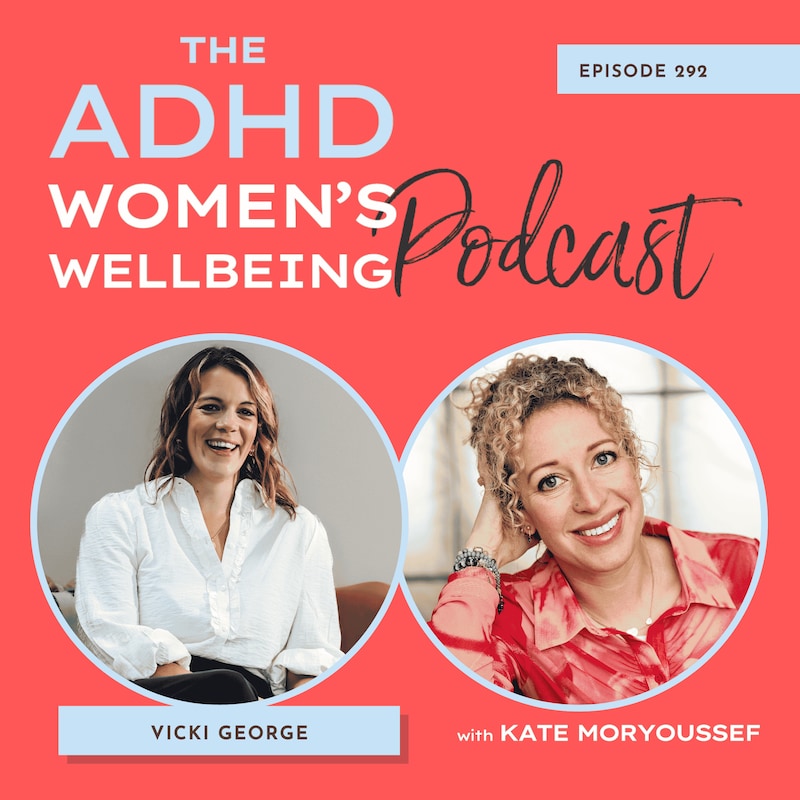
In this week's episode of The ADHD Women’s Wellbeing Podcast, I’m joined by Vicki George, specialist nurse and founder of The ADHD Nurse, who’s working to make ADHD assessments more accessible, inclusive and compassionate, especially for women and adolescents.
This is a practical, myth‑busting and empowering episode for anyone who feels stuck or confused by the ADHD assessment process, is unsure who can assess them or whether their past diagnosis was thorough enough, feels uncomfortable being asked to involve family, is exploring non‑medication approaches, or is navigating perimenopause and wondering how hormonal changes affect ADHD and treatment.
Grab the last few tickets to our first LIVE ADHD Women's Wellbeing Event!
Click here to book your ticket for a full day of community, connection, awareness and growth.
Key Takeaways:
- Why psychiatrists aren't the only professionals who can assess and diagnose ADHD
- What it means to be an “appropriately trained” ADHD assessor under NICE guidelines
- Why the current system can feel inconsistent or subjective
- The need for neurodevelopmental assessments, not just standalone ADHD or autism
- How ADHD assessments should ideally be carried out using tools like the DIVA
- Why family input is requested in assessments, despite sometimes complicating the process
- A deeper look at the role of hormones in ADHD, especially for women in midlife
- Clarifying the confusion around medication and how it needs to consider hormonal shifts
- Exploring non-medication pathways (e.g. nutrition, mindfulness, exercise, nervous system support)
- How stigma and misunderstanding still shape people’s experience of diagnosis and treatment
Timestamps:
- 04:30 - Navigating ADHD Assessments: Evolving Perspectives
- 17:56 - Understanding ADHD Diagnosis and Stigma
- 22:54 - Navigating ADHD Diagnosis and Advocacy
- 25:29 - Exploring Hormonal Interventions for ADHD in Women
- 36:56 - The Beginning of a New Understanding
Today's episode sponsors: The ADHD Weasel
The ADHD Weasel is a weekly email delivering support straight to your inbox for just $10/month at adhdweasel.com.
Join 20,000+ adults with ADHD who’ve finally found strategies that actually work, written by people who actually get ADHD.
ADHD Women's Wellbeing Live Event
We're excited to offer you a full day of real-life connection, calm, and community for women diagnosed late in life who are ready to feel understood, supported, and seen.
Kate will be joined by two ADHD expert guest speakers, Hannah Miller and Dr Hannah Cullen!
You can expect:
- Honest, thoughtful, informative conversations
- Connection with like-minded, late-diagnosed ADHD women
- Information on hormones, energy levels and nervous system regulation
- A space to come back to yourself, with women who truly get it
Event details: Friday, March 6th 2026, 10:00 am – 3:30 pm in Wilmslow (near Manchester).
Book your ticket or find out more information here!
Join the More Yourself Community
More Yourself is a compassionate space for late-diagnosed ADHD women to connect, reflect, and come home to who they really are. Sign up here!
Inside the More Yourself Membership, you’ll be able to:
- Connect with like-minded women who understand you
- Learn from guest experts and practical tools
- Receive compassionate prompts & gentle reminders
- Enjoy voice-note encouragement from Kate
- Join flexible meet-ups and mentoring sessions
- Access on-demand workshops and quarterly guest expert sessions
To join for £26 a month, click here. To join for £286 for a year (a whole month free!), click here.
We’ll also be walking through The ADHD Women’s Wellbeing Toolkit together, exploring nervous system regulation, burnout recovery, RSD, joy, hormones, and self-trust, so the book comes alive in a supportive community setting.
Links and Resources:
- Find my popular ADHD workshops and resources on my website [here].
- Buy a copy of The ADHD Women's Wellbeing Toolkit [here].
- Follow the podcast on Instagram: @adhd_womenswellbeing_pod
- Visit Vicky's website: www.theadhdnurse.co.uk
- Follow Vicky on Instagram @adhdnurse.uk
Kate Moryoussef is a women's ADHD lifestyle and wellbeing coach and EFT practitioner who helps overwhelmed and unfulfilled newly diagnosed ADHD women find more calm, balance, hope, health, compassion, creativity and clarity.
Transcripts
Welcome to the ADHD Women's Wellbeing Podcast.
Speaker A:I'm Kate Moore Youssef and I'm a wellbeing and lifestyle coach, EFT practitioner, mum to four kids and passionate about helping more women to understand and accept their amazing ADHD brains.
Speaker A:After speaking to many women just like me and probably you, I know there is a need for more health and lifestyle support for women newly diagnosed with adhd.
Speaker A:In these conversations, you'll learn from insightful guests, hear new findings and discover powerful perspectives and lifestyle tools to enable you to live your most fulfilled, calm and purposeful life wherever you are on your ADHD journey.
Speaker A:Here's today's episode.
Speaker A:Hi, everyone.
Speaker A:Welcome back to another episode of the ADHD Women's Wellbeing Podcast.
Speaker A:I'm Kate Moore Youssef and I'm here with a past guest, actually, someone I'm really excited to, to bring back in after quite a few years.
Speaker A:Now, her name is Vicky George and she is the founder of the ADHD Nurse and a clinical nurse specialist.
Speaker A:And she has now got a team of assessors and clinicians who are working with adults or I guess people 14 plus.
Speaker A:And you are helping, I guess, bring down those wait lists for people and, you know, find a more accessible place to get an ADHD diagnosis that, that perhaps they're not finding on the nhs.
Speaker A:And I know that you're not a psychiatrist and then that has brought lots of kind of confusion thinking, oh, do I not need to be assessed by a psychiatrist?
Speaker A:And that's what I'd actually like to lead in that because it's, we talked about that last time, but I think, you know, things have changed and people are starting to recognize that actually there's other pathways towards an ADHD diagnosis.
Speaker A:So first of all, Vicky, welcome and tell us a little bit about what, what you do within the ADHD nurse.
Speaker B:So my background prior to setting up the ADHD nurse was working as a clinical nurse specialist in the ADHD team in Gloucestershire.
Speaker B:So assessing adults for ADHD and prescribing treatment.
Speaker B:I know that there's often a lot of confusion around who can, or who can diagnose ADHD and who can prescribe treatment for ADHD as well, because I think historically it would have been predominantly psychiatrists, but this was when ADHD was kind of very under recognized and it was a very sort of niche speciality then in terms of healthcare.
Speaker B:But over the years other healthcare professionals have been trained in the assessment for adhd, but there's still, it is a bit of a gray area.
Speaker B:I mean, Nice guidelines state along the lines of either diagnosed by a psychiatrist or other appropriately trained professionals in the assessment and treatment of adhd.
Speaker B:So it's the, I think the gray area is that other appropriately trained because that could mean so many different things.
Speaker B:And maybe about two years ago now, ucan, the Adult ADHD Network in the uk, which is a group of specialists in ADHD that do a lot of research and so on and offer training for clinicians, they issued a study that they had done like a quality assurance in terms of assessments and what is considered a valid assessment and what is the absolute must and what is recommended.
Speaker B:So that was actually really helpful and I quite often signpost other clinicians that are asking the questions around, can I, you know, train in assessing for adhd?
Speaker B:I assign post to them to that so they can have a look at whether they would be considered appropriately trained even prior to learning how to assess for adhd.
Speaker B:Because there's lots of things that you would need as a professional.
Speaker B:So in terms of experience, so you wouldn't come out of university as.
Speaker B:So in my situation, my background is mental health nursing.
Speaker B:It's not something that I would have been able to do when I was newly qualified because obviously over the years I built up a bank of experience around other conditions, not just adhd.
Speaker B:Because it is equally as important to be able to recognize when it isn't adhd.
Speaker B:If you can't do that, then actually the risk that that's where the huge risk of over diagnosing is or misdiagnosing ADHD or even other conditions.
Speaker A:That's so interesting because I think, I think a lot of us get very triggered when people talk about this over diagnosis epidemic.
Speaker A:And it is interesting to really understand that because like you say, if you're only looking for ADHD and you've kind of got like blinkers on for other conditions, but what we also know is that so many of the conditions live within the ADHD sort of profile.
Speaker A:And that is why people aren't getting that ADHD diagnosis, which is often the root to the things like addiction or depression or ocd, anxiety, you know, all of that.
Speaker A:I mean, I've spoken to Quite a few GPs and one GP in particular is, is wanting to go down that route of being able to assess and diagnose.
Speaker A:But it makes so much sense, doesn't it, to be able to open it up to other clinicians, psychologists, GPs, pediatricians.
Speaker A:Because it's not that, I mean, I'm not belittling your job, but it's not that difficult I mean, I can spot it in about five minutes, but I know that's not the clinical way of, of doing it.
Speaker B:Well, no, but you're right.
Speaker B:But it seems to be a very unique way of assessing something in comparison to, say, mental health disorders, for example.
Speaker B:So I used to run clinics out of GP surgeries when I worked as a mental health nurse and, you know, on a daily basis give, like, a working diagnosis of certain mental health conditions.
Speaker B:And that would quite often happen within a 20 minute to half an hour appointment, because when you have a level of experience, you're expected to be able to recognize the signs of certain conditions.
Speaker B:But when it's neurodevelopmental conditions, it seems to be a completely different.
Speaker B:And there are reasons behind that.
Speaker B:Obviously there are a lot more complexities to see in somebody who might have, say, a generalized anxiety disorder.
Speaker B:And also it's knowing the overlap of the symptoms with other conditions and having time to unpick that as well, to make sure the diagnosis is right.
Speaker B:But I do feel that in terms of adhd, not just ADHD actually, but as well, you know, autism assessments, there's just such this big thing about it, who should be doing, how it should be done.
Speaker B:It's very subjective as well.
Speaker B:I think that causes a lot of difficulty.
Speaker B:So every person that goes for an ADHD assessment has a completely different experience.
Speaker A:Yeah, I've heard that a lot.
Speaker A:And, you know, as time's going on, when I was diagnosed, the autism was never part of that diagnosis.
Speaker A:It was always a completely separate assessment, another few thousand pounds, another wait list.
Speaker A:And, you know, it always made sense to me.
Speaker A:It's like, why are we not checking and screening together?
Speaker A:Because so many of overlapping.
Speaker A:Is that what's happening now is that more of a kind of what we're seeing is that it's an assessment for both.
Speaker A:And I guess the spectrum of where you lie on those two different kind.
Speaker B:Of neurodivergent paths, I think it's going that way.
Speaker B:Obviously, we are having to move with the times and how things are changing.
Speaker B:So my role and the service has kind of evolved and had to go with that.
Speaker B:And I think it will continue to change.
Speaker B:I believe that it should be a neurodevelopmental assessment, not just adhd, not just autism, but I don't think it's anywhere near that yet.
Speaker B:From what I think some private services definitely offer dual assessments and it makes perfect sense.
Speaker B:But I think in the nhs, I don't know if that's happening.
Speaker B:It might be in some areas, but I Think it's still quite separate, which is so frustrating.
Speaker B:Like, I remember when I worked in the NHS and we would see somebody for a lengthy ADHD assessment, identify that they clearly need to have an assessment for autism as well.
Speaker B:And they.
Speaker B:There was no transition pathway.
Speaker B:So even though we were one team in the same office.
Speaker B:Yeah.
Speaker B:We would literally place that person on another waiting list within the same service, which.
Speaker B:It just makes no sense.
Speaker B:And I think that's like.
Speaker B:I try not to get too frustrated about it because I don't necessarily need to not working in the NHS anymore, but sometimes I just think.
Speaker B:Because it seems like really simple solutions.
Speaker A:Yeah.
Speaker A:I mean, unfortunately, that's why there's been so much disillusionment with the NHS in this particular area.
Speaker A:I know that it does amazing work in lots of other areas, but for.
Speaker A:This felt very sort of behind.
Speaker A:There's been so much sort of stigma around it.
Speaker A:I know there's been documentaries going out over the past year or so and it's still got.
Speaker A:This is still being tainted with a brush of kind of like, maybe your time wasting.
Speaker A:Are you looking for excuses?
Speaker A:Are you just looking to take stimulant meds?
Speaker A:Like, it still feels like quite shady a little bit.
Speaker A:And a lot of people are really, from a mental health perspective, you know, really suffering from that, because I think of the hangover of the way the NHS has treated this diagnostic pathway and I agree with you, to then sort of be like, go through that whole rigmarole of an ADHD diagnosis.
Speaker A:Wait for it.
Speaker A:And there's that shame.
Speaker A:I hear that a lot of like, well, maybe I've been making this up or like, gaslighting yourself of like, am I just causing a scene?
Speaker A:And something I want to talk a little bit about is how the assessment process is and how we're still being asked by assessors to provide family members to give their feedback or reflection.
Speaker A:And I was saying before I put this on social media and it's gone wild, because I would say 95% of the people that commented on the post have all had a really awful, traumatic story behind that, whether it's with regards to.
Speaker A:They speak to their family anymore.
Speaker A:The parents were neurodiver divergent themselves.
Speaker A:Absolutely had no idea.
Speaker A:Or they've got dementia or they've died, or they had a really dysfunctional, chaotic childhood and the last thing they want to do is start talking about it to their parents.
Speaker A:So I'd be interested to know what you think about that as an assessor.
Speaker B:And do you include that these conversations crop up all the time.
Speaker B:So even at point of referral, some people will contact us and ask, do I, you know, do I need to, or do I have to have a family member involved?
Speaker B:Obviously, we encourage it if it's possible, and we put that as well on our referral form, that if you do know somebody well, if you do have somebody that's known you since you were a child that you're comfortable of sending an informant questionnaire to, then that's great, because it's really good to get other people's perspectives, but especially the early childhood things, because for all of us, it's all a bit of a blur, isn't it?
Speaker B:So it's really helpful to have those conversations if it's possible.
Speaker B:But I meet loads of people and all the examples that you've just given, there's so many different reasons why somebody either just doesn't have the option, sadly, to ask a parent, especially because it depends at what point in their life they're coming for an assessment themselves.
Speaker B:And if they have, you know, parents that are from a certain generation or the elderly, why would they want to unsettle things and ask those questions?
Speaker B:Now, for starters, and it's encouraged, it doesn't mean that it should put up a barrier to somebody being assessed.
Speaker B:So there's scenarios where, you know, somebody might say, well, you can send an informant questionnaire, but I don't think it will be particularly helpful because the conversations I've had with my.
Speaker B:My parents, you know, they don't see that there was a problem, which makes sense.
Speaker B:Again, it's a generation thing.
Speaker B:There was a lack of understanding about adhd.
Speaker B:And most people's parents at a particular age just go and see that kind of naughty boy at school and think, no, there was never a problem.
Speaker B:You were actually really quiet and reserved and not picking up on those differences.
Speaker A:And that is, again, there's also that normalization of behavior.
Speaker A:So say if there's ADHD in the family and it's like, well, that's just.
Speaker A:We're all like that.
Speaker A:Or, you know, that's how.
Speaker A:That's how all families are.
Speaker A:And it's like, well, no, actually that's.
Speaker A:That's not normal.
Speaker A:And.
Speaker A:But because we've not had the information, and like you say, it's a generational thing, these gaps in knowledge and the stigma behind adhd, it's a very difficult thing to process.
Speaker A:And that just adds another layer of, like, you know, fear or shame or, you know, like, it does bring up lots of old childhood things as well.
Speaker B:Yeah, definitely.
Speaker B:It's a shame that it puts those barriers up.
Speaker B:And I know in some scenarios people are actually denied an assessment or told that they can't confirm a diagnosis either way because there's not enough or there isn't an informant involved, which shouldn't be the case.
Speaker B:And I don't know what guidelines these professionals are going by because that is not guidelines, it is a recommendation.
Speaker B:So in terms of the diva, which is obviously probably the most widely used diagnostic tool to assess for adhd and basically it's a semi structured interview, it's not a questionnaire that I think a lot of services do send it out to the client to complete beforehand, which shouldn't be happening because it's supposed to be very sort of open ended questions to guide the clinician to lead that discussion and the areas that they need to cover.
Speaker B:So it's something should be used in that appointment.
Speaker B:But yeah, obviously it's, I guess it's a time saving exercise when they send it out to the person.
Speaker B:But it's not doing anyone any justice because it's not, you're not getting any context.
Speaker B:It's just, you know, somebody ticking, oh yeah, I do that, I do that.
Speaker B:But we need to understand more.
Speaker B:But thinking about the diva in a scenario where say a parent is involved in their adult child's assessment and says there was no problems with all these things and they sort of, yeah, basically gave no indication to symptoms when that person was a child.
Speaker B:But the person you're assessing or the adult you're assessing disagrees and says, well actually no, I was really disorganized, I was really forgetful or I was quite often in a world of my own at school.
Speaker B:And there's that kind of conflict in terms of, well, between the parent and the adult being assessed.
Speaker B:The rule is we go with the person that is being assessed and what they say, not the other way around.
Speaker B:And I've seen scenarios where that has happened, but the clinician that's done the assessment has said, well actually your parents have said that that wasn't the case, so therefore it can't possibly be adhd.
Speaker A:Yeah, and that is, I, I have heard that.
Speaker A:And it's just like really, really, really sickening and disheartening to hear because I can't think of any other mental health condition or struggle.
Speaker A:You know, I'm thinking anxiety, depression, ocd, addiction, all of those can happen and you can go to your GP and you won't need to be, no one else will be questioned.
Speaker A:And most of the time those four Things you could very easily hide, mask, pretend to everyone else that you're absolutely fine and you're still given medication for it.
Speaker A:I'm trying to work out why it still feels like asking for an ADHD diagnosis is shady.
Speaker A:I don't know how else to call it.
Speaker B:No, and I know what you mean.
Speaker B:Yeah, it does feel like that.
Speaker B:And actually, even for me, working as a professional in ADHD and assessing people and.
Speaker B:And.
Speaker B:But also from a personal perspective, I was diagnosed with ADHD six, seven years ago now.
Speaker B:And I still, even though I encourage my clients to talk openly about it and, you know, kind of move away from that shame, I'm not practicing what I preach because there's scenarios where I don't talk about it openly.
Speaker B:I mean, I don't need to.
Speaker B:There's no need to go around just telling everybody that I've got adhd.
Speaker B:But there are scenarios where I have been in a situation where it felt appropriate to disclose that and felt uncomfortable.
Speaker A:Yeah.
Speaker A:So interesting.
Speaker B:We all feel it is.
Speaker B:It's.
Speaker B:Yeah.
Speaker B:And there's no straight answer to it, is there?
Speaker B:But I think.
Speaker B:I think the media.
Speaker B:It doesn't help.
Speaker A:Yeah.
Speaker B:Because there's been some really, really unhelpful headlines that have fed into that, and people do believe that people that don't have ADHD and don't live with that and battle, you know, these things day to day, they do believe those headlines.
Speaker A:So especially when the headlines are, you know, whether you're trying to access government money or you're trying to get accommodations, or children are trying to get extra time on exams, it's all like this negative stigma is like.
Speaker A:It's just constant, like, stigma on repeat.
Speaker A:And it feels like every other mental health condition has kind of been like, talked about.
Speaker A:The taboo's gone.
Speaker A:People can talk about all sorts, and ADHD might be one of those last ones.
Speaker A:And, you know, like you say, further down the line, I hope that we just kind of seen this as more of a neurodevelopmental difference and we're able to understand it better.
Speaker A:But still, you know, for me, working in this space for over five years, still hearing the fact that there's stigmas and there's taboos and the shame and there's still kind of, like, dismissals and all sorts.
Speaker A:It is sad.
Speaker A:But what I want to do, I want to be able to encourage and empower the audience who are listening here who have experienced this maybe, or worried.
Speaker A:You know, there's a lot of people who kind of get, oh, I'm worried.
Speaker A:I'm going to go to my GP and they're going to laugh in my face, or they're going to say, oh, not another one, or I'm going to tell my family and they're going to be like, oh, everyone's got adhd.
Speaker A:Like, all of this happens all the time, every day I'm hearing about it.
Speaker A:But how can people advocate for themselves if they are listening to and kind of thinking, you know what, I really do want this diagnosis because it can help me, you know, maybe with therapy, coaching, medication, it can help me at work.
Speaker A:How can people kind of begin that empowerment journey to advocate for themselves, despite all of what we've been talking about?
Speaker B:I guess it depends, doesn't it, on where they need to advocate as well?
Speaker B:So if it's a case of somebody literally at starting point but wanting to seek an assessment, which obviously isn't easy in itself because of waiting times, but generally the starting point is the gp, which I think for most people that can feel like a really negative experience, but some people do have a really lovely experience as well.
Speaker B:One thing that I think it's definitely worth people doing, if they're at that point in the.
Speaker B:Are thinking about going to see the GP as a starting point, to either be referred, you know, by the.
Speaker B:By the NHS right to choose, then maybe looking.
Speaker B:It isn't the case in every GP surgery, but it is worth looking on the GP website rather than just ringing and booking with, you know, the next GP that's available and having a look if they do have anyone that specializes in either neurodevelopmental conditions or even mental health, because quite often their specialities or their areas of interest are listed.
Speaker B:And the same goes for menopause and might have to wait a bit longer to get an appointment with that particular GP in the practice, but you're better off doing that because they are saying that this is my.
Speaker B:What I'm interested in, and they're probably going to be a little bit more, I don't want to say synthetic, but empathetic is probably the right word and open to having those discussions.
Speaker B:So that's one thing.
Speaker B:That's what I would be be doing.
Speaker B:And also it's.
Speaker B:I know it's easier said than done, but sometimes you almost have to numb yourself to the reaction of the GP and just see it as like a task.
Speaker B:It's, you know, I need to just go say, this is what I need and want, and request that referral, rather than trying to over explain yourself.
Speaker B:Especially if.
Speaker B:If you don't Feel heard or listened to.
Speaker A:Yeah, 100%.
Speaker B:The more you try and explain yourself to that person, it's not going to change their opinion on adhd.
Speaker B:So you almost have to focus on the task in hand.
Speaker B:It's like, right, I just need a referral.
Speaker B:It doesn't matter what their opinion is.
Speaker B:And they, they don't really have the right to deny you a referral either.
Speaker A:Yeah, they can't, they can't turn around and say, I don't think you've got adhd.
Speaker A:You know, I'm not referring you.
Speaker A:That's not a possibility.
Speaker B:No, no.
Speaker A:Okay, that's good to know.
Speaker B:I mean, they can kind of try and deter people and talk them out of there.
Speaker B:And I think that's where a lot of people fall at that point as well, because I've, like, heard scenarios where they've, you know, the GPS maybe said, well, actually it sounds like it's, it's maybe anxiety.
Speaker B:Let's refer you for some therapy first and go for some CBT or try some antidepressants and then come back to me, you know, in a couple of months and we'll review it then and have a think about it.
Speaker B:But then, you know, that person might have already been on antidepressants on and off throughout their life, but even if they haven't and they feel strongly that actually, no, this is.
Speaker B:Yeah, I think it's just about standing, which isn't easy for a lot of people, being assertive in a situation like that.
Speaker B:But you do need to almost like flip it into, this is what the task is, this is what I need to achieve in this appointment and just keep it very direct like that.
Speaker A:Okay.
Speaker A:And talk to me a little bit about something I hear a lot about in my community is that titration.
Speaker A:So I hear a lot experienced it myself, where you get the diagnosis, you get put on the medication.
Speaker A:The medication doesn't feel right and there's a lot of confusion and complexity around trying it.
Speaker A:Waiting, going back for an appointment.
Speaker A:Why is this still so complicated?
Speaker A:And why are we still not finding the right medication for the way it presents in that person?
Speaker A:Sort of more individualized care.
Speaker B:It is tricky because it all depends on where somebody has gone for assessment and titration.
Speaker B:I think that's the biggest thing is so much variation, isn't there?
Speaker B:So whether they have gone directly through the NHS route and, you know, that's very dependent on the service in that locality and how big the service is.
Speaker B:Whereas I think a lot of NHS services are very assessment focused because of the waiting list, which doesn't give any capacity to provide a very holistic or person centered service in terms of after diagnosis.
Speaker B:That makes it tricky.
Speaker B:But also the same with right to choose.
Speaker B:I hear quite often again it's very dependent on the provider, but that titration can be limited to a certain amount of appointments and people then getting discharged even when they didn't actually feel stabilized on medication or feel that they've actually found something that really works.
Speaker B:So it's felt very kind of rushed, like oh, you've only got, you know, two appointments left so you need to make a decision.
Speaker B:And then having to go back to the GP to get re referred.
Speaker B:I think it's like requesting more funding maybe to extend titration.
Speaker B:And again it all depends on the service provider I think.
Speaker B:But once somebody is considered stabilized on medication in, in that scenario it kind of feels like, and this is, you know, my interpretation from, well, stories I hear from people, things that I read from people that have been through those scenarios.
Speaker B:But it feels like it's like a tick box, that's it, they're done, then we move on to the next.
Speaker B:So which things never stay the same?
Speaker B:So when we see somebody full titration, we generally would see somebody, I'll say an average of maybe five to six months in terms of, and catching up with them on a regular basis.
Speaker B:But that varies between different people and that's never the end of it.
Speaker B:So I have people, even now we do annual reviews as well.
Speaker B:But those people that I saw four years ago for assessment and titration still have that open access to the service and will come back to me maybe 18 months down the line and say, I don't know if this needs tweaking or maybe try something else.
Speaker B:Just so I've got a comparison or a good example is yesterday seeing somebody for their annual review and actually she wanted to reduce the dose because she felt that her medication was.
Speaker B:The dose was actually slightly overstimulating.
Speaker B:It wasn't before.
Speaker B:And so I asked her, you know, about any kind of changes and we identified that it was likely to do with the fact that her HRT had been adjusted and actually an increase in estrogen.
Speaker B:The likelihood was that it was sort of overstimulating her in terms of the medication because she was probably getting a little bit too much dopamine regulation going on, causing that slight sort of agitation.
Speaker B:But it was all around that time, so it made sense.
Speaker B:But even just her knowing that was really helpful because it made sense.
Speaker B:And it's, you Know, it's simple, just a case of let's lower the dose, see how you go and we can alter it again in the future if needed.
Speaker A:Yeah, that's a great example which kind of leads me into, into that sort of question around if you're seeing, well, I think you said what about 60% women who are coming in and we know that ADHD is sort of hormone driven, hormone led, it's reactive to hormones.
Speaker A:And do you think that perhaps hormone treatment could be like that first line for, for some women with ADHD where instead of directly going to the stimulants and it's saying right, well what could be hormone driven?
Speaker A:And what can we help from that perspective?
Speaker A:Because I am seeing that a lot.
Speaker A:That's something I've experienced and I do wonder if that is going to be more of a protocol that people are going to be taking.
Speaker B:Yeah, yeah, definitely.
Speaker B:It's something that again crops up all the time, to be honest with you.
Speaker B:And sometimes it can be dependent on the person.
Speaker B:But the conversations I have with women that are maybe approaching that kind of peri.
Speaker B:Possible perimenopausal age or even maybe they've been having symptoms that could indicate towards perimenopause for years and they have been toying with the idea of HRT and I'm talking, this is kind of post diagnostic conversations that are happening and they're thinking about ADHD treatment.
Speaker B:If they are thinking about commencing HRT and the signs are there, that is, you know, quite possible they are perimenopausal.
Speaker B:I usually signpost to do that first is not to say that ADHD medication isn't needed or wouldn't be effective.
Speaker B:But actually things could be potentially still really unsettled and there's things that ADHD medication isn't necessarily going to target in terms of the hormones.
Speaker B:So I feel like settling things hormonally first actually they're probably going to benefit from ADHD medication even more if they need it in the future.
Speaker A:Yeah, it would be amazing for, to see ADHD trick treat treatment in teenage girls, you know, women perimenopausal, postnatally, all of that to almost be kind of like hormone affirming as well.
Speaker A:So you kind of going in and it's like, right, how do we treat hormonally with or without stimulants or any medication and try and blend it together so it's not just a this or a that.
Speaker A:I mean I, I created something called the ADHD Women's well being hormone series two years ago.
Speaker A:And that was, you know, me just being curious and getting, pulling together my experts because essentially it's the conversations around hormones and ADHD and how, how much it's interplaying in all of that.
Speaker A:And it's still not a conversation I think enough psychiatrists are having with their female patients.
Speaker A:And I do wonder if that is going to be the future for women especially.
Speaker A:Is that, you know, within your clinic, have you got someone coming in and talking to some of the women about that?
Speaker A:Because I know you've got different clinicians now.
Speaker A:Is that part of what you're doing?
Speaker B:It's conversations that we would have every day anyway, including Alice and Sara, the other specialist nurses that work with me.
Speaker B:And obviously we frequently sign up to anything that is not just hormone related but any professional development, you know, training and keeping in the loop, you know, and also up to date with things both.
Speaker B:So me and Sara have completed specialist menopause training.
Speaker B:Although it's not something we're not planning at this stage to bring in, prescribing HRT within the service.
Speaker B:It's definitely been on our minds and the topic of conversation just so that it's not so disjointed because it's, you know, the conversations we're having all the time.
Speaker B:And I would say our knowledge base is, is pretty good in comparison to, I'm not an expert that's, you know, not what I do.
Speaker B:But I have enough knowledge to be able to guide and advise patients and even, you know, make suggestions to GPs about HRT and make recommendations for them to consider just to bring it to their attention sometimes.
Speaker B:Also I think it's kind of reassuring and more consistent for somebody to have everything they need under one roof.
Speaker B:So it's certainly something that we have considered and thought about and might be in the pipeline for the future for people that we see.
Speaker B:So they've got access to everything they need under one roof.
Speaker A:That sounds like a good plan.
Speaker A:And I wanted to ask, just to sort of finish up, if people are wanting a diagnosis or they've had a diagnosis, but actually medication isn't something they want to go down or they've tried it and they really, you know, realize it's just not for them right now.
Speaker A:What are you seeing as the best outcomes from your patients who are not taking medication?
Speaker B:Yes, range of things really.
Speaker B:Some people much, they do much prefer to go down a more kind of holistic route of managing their symptoms, which can to some extent work really well for some people, but it does require a lot of consistency and self Discipline, doesn't it?
Speaker B:And that can be a combination of different things.
Speaker B:Some people are really, really good at focusing on nutrition, for example, and you know, it becomes sort of like an area of interest for them and they enjoy doing that and that's great.
Speaker B:But obviously again, it requires all that like planning and, and also self discipline.
Speaker B:And so for somebody who is quite impulsive, that might be quite difficult because, you know, controlling their eating habits.
Speaker B:But it's not to say these things don't help, but also things like getting into practicing yoga, mindfulness, which there's some people that would be sat in front of me and there would be an eye roll and thinking there was no way that I'd be able to do that.
Speaker B:And actually they could.
Speaker B:They convince themselves they can't.
Speaker B:But they might be somebody that maybe does require a period of time on medication to actually then help them.
Speaker B:It's almost like giving them that calmness to enable them to then focus on the other things that are really helpful and getting their self into a good routine and forming habits when it comes to, to any form of exercise and yeah.
Speaker B:Altering their eating habits.
Speaker A:Do you think that the medication helps people when they are trying to change sort of like in a narrative.
Speaker A:So if you are going to go down the therapy or the CBT route, do you think the medication can help kind of almost with the neuroplasticity of the brain to reframe the way we've always spoken to ourselves?
Speaker A:Because I'm interested in that, in how we can rewire our brains after an ADHD diagnosis.
Speaker B:Yeah, definitely, without a doubt.
Speaker B:And that's, you know, something that I quite often talk to people about when people worry about the kind of, the long term risks and benefits, especially in younger people actually.
Speaker B:Because obviously as a parent, if you thinking about a child or you know, an adolescent child going on medication, it feels more scary than making that decision for yourself, doesn't it?
Speaker B:It's like, am I doing the right thing?
Speaker B:Because you're almost like guiding.
Speaker B:Well, sometimes making that decision for them to some extent.
Speaker B:But actually because a younger person, their brain is still in that developmental phase, there's going to be an even bigger impact in terms of like from a positive point of view from medication on that person.
Speaker B:Because obviously for somebody whose brain is fully developed, yes, it is possible to alter those kind of neuropathways and through CBT and medication will help with that because it's almost like helping with the kind of wiring of your brain that is, you know, slightly faulty in a way.
Speaker B:Yeah, it definitely helps longer term.
Speaker B:But that doesn't mean to say that you would need to continue to be on medication for those benefits to be sustained.
Speaker B:So it's like possible for that to happen over a period of time.
Speaker B:And this is something that happens at annual reviews, having those conversations about is it worth trying trialing a period of time without medication to see how you function without and reassess the need for it.
Speaker B:Yeah, because some people over time will.
Speaker B:Will.
Speaker B:Yeah, those pathways will change in the brain and actually they will start to form like new habits.
Speaker B:And life could look quite different without medication at a certain stage, but it's always worth reassessing.
Speaker B:It doesn't need to be seen for life.
Speaker A:Yeah.
Speaker A:And I think it's like the medication is amazing for building that scaffolding or bridging the gap, like you say, to help with, you know, structure routines or self talk or all of that.
Speaker A:But it's also then creating that trust around yourself because there's been this sort of pattern of like, well, I'm inconsistent or I'm impulsive or I can't follow through or I can't get my work done or I, you know, I'm always changing and swapping jobs and once the medications kicked in and maybe those neural pathways have sort of changed and adapted a little bit.
Speaker A:It's then saying is trusting.
Speaker A:But also I do believe that when we get the diagnosis, it is, it's like almost a beginning of a new chapter because we get, we're getting understanding explanations, answers, we're recognizing what's been going on.
Speaker A:And that in itself, you know, it's almost like, okay, this is an evolution now.
Speaker A:I'm not stuck here.
Speaker A:That's why I love talking about any of this because it is so different, it's so individualized for so many different people.
Speaker A:And you know, one person listening right now be like, definitely want to take medication.
Speaker A:Another person is like, it's not for me.
Speaker A:And that's why it's so important to have these conversations.
Speaker A:What are you hoping to see evolve and change in this area?
Speaker A:Because, you know, you've been working it for quite a long time as I have now.
Speaker A:What would you like to see, you know, as a clinician working this space further down the line in terms of.
Speaker B:What would make things a lot easier and would make so much more sense, is more joined up working, sorry, between NHS and private, Because I think that causes so many problems for people accessing services.
Speaker B:It just would make so much more sense for gps.
Speaker B:So if we're talking in the context of Medications.
Speaker B:There lies the biggest problem for people that need that.
Speaker B:And it is sometimes, you know, what somebody needs to be able to go on and work on their styles and do the other things, but it just feels impossible for people.
Speaker B:But actually it's a really, it could be a really simple solution and would also free up waiting, you know, list well for people that can't or don't have access to go private.
Speaker B:It would bring that weightiness down.
Speaker B:Also, I think in terms of the way the assessments are done, like we talked about at the start, and it not just being an ADHD assessment or an autism assessment or, you know, other neurodevelopmental conditions, we move towards a neurodevelopmental assessment because ADHD rarely exists on its own.
Speaker B:The same with autism.
Speaker B:So you need to look at the kind of whole picture.
Speaker A:Yeah, 100%.
Speaker B:That is really important.
Speaker A:Yeah.
Speaker A:I mean, thank you so much for sort of giving us your insights.
Speaker A:I know you're working on the ground, helping lots of people.
Speaker A:Tell me a little bit about how people can find you, what your wait list is like at the moment and, you know, who do you see, really?
Speaker B:We assess ages 14 upwards, so adolescents and adults and we see people in person.
Speaker B:We're based in Gloucestershire but also online, so we have clients from all across the country that can access the service.
Speaker B:We also prescribe treatment for adhd.
Speaker B:We have an ADHD CBT therapist coach as well within the team and we offer post diagnostic support that is non medication related, obviously.
Speaker B:We have a website where there is a contact form where you can get in touch, ask any questions.
Speaker B:Our referral forms on there, but if you just have queries and aren't sure, kind of what you need at this stage, we're always happy to answer any questions.
Speaker A:Brilliant.
Speaker A:Thank you so much, Vicky George.
Speaker A:Been really great catching up again.
Speaker B:Thank you for having me.
Speaker A:Thanks.
Speaker A:If this episode has been helpful for you and you're looking for more tools and more guidance, my brand new book, the ADHD Women's Wellbeing Toolkit, is out now.
Speaker A:You can find it wherever you buy your books from.
Speaker A:You can also check out the audiobook if you do prefer to listen to me.
Speaker A:I have narrated it all myself.
Speaker A:Thank you so much for being here and I will see you for the next episode.
Speaker A:It.


