Shownotes
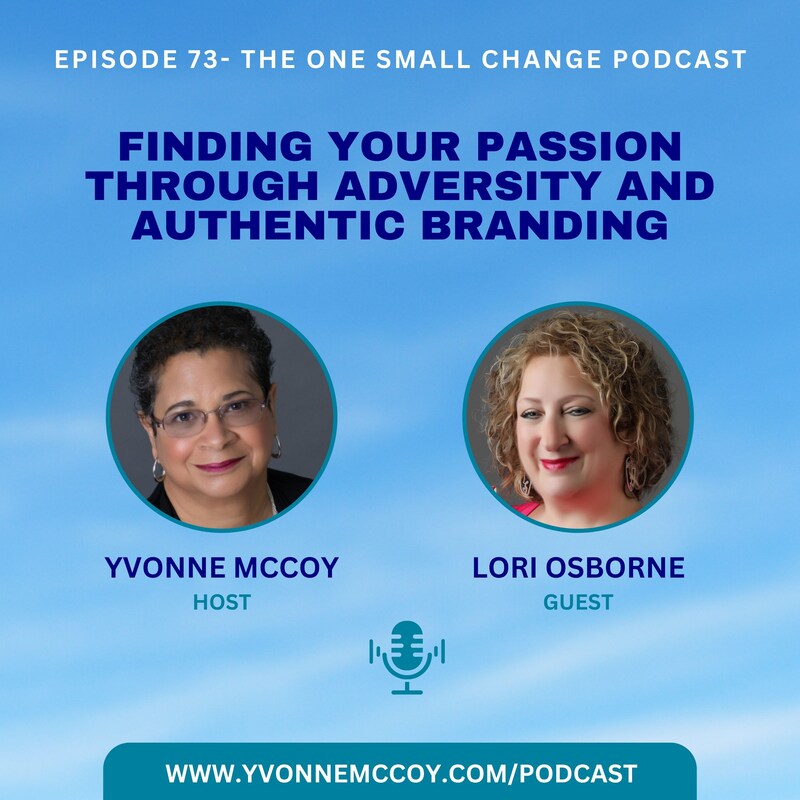
In this episode of The One Small Change Podcast, host Yvonne McCoy welcomes Lori Osborne to share her powerful story of resilience and transformation after a life-changing health diagnosis. Lori Osborne discusses how surviving a brain tumor helped her uncover her true talent and passion for building authentic websites and branding for entrepreneurs. She dives into the importance of self-advocacy, brand clarity, and showing up online as your truest self. Together, Yvonne McCoy and Lori Osborne explore how pivotal challenges can lead to self-discovery and career fulfillment, and offer actionable advice for entrepreneurs looking to build authority and connection through their digital presence.
Guest Bio:
Lori Osborne is a seasoned technology expert with over twenty years of experience in the industry. After overcoming a brain tumor and discovering a new passion for website development and branding, she founded her own business dedicated to helping entrepreneurs create online platforms that truly reflect their unique voice, values, and expertise. Today, Lori Osborne blends creativity, technical skill, and brand strategy to empower others to showcase their authority and authenticity online.
Chapters:
00:00 "Finding Purpose After Health Struggles"
05:08 Medical Bias and Online Authority
07:35 "Be Found, Not Fixed"
11:52 "Evaluate Your Brand Effectively"
14:26 "Show Up as Yourself"
17:44 "Live Your Passion, Now"
Quote from the Guest:
"I am grateful for this brain tumor because I found my passion and I am so grateful for that.”
Link:
Free Authority Visibility Audit and a free self-assessment - 5 Steps to Evaluate Your Brand & Authority Online: https://offers.bizbolster.com/5-ways-self-assessment
Transcripts
Welcome to the One Small Change. As always, I am so excited that
Speaker:you're here with me on this journey of experiment, exploration
Speaker:and transformation. And I'm Your host, Yvonne McCoy and I bring almost 30
Speaker:years of entrepreneurial experience and a passion
Speaker:for discovering growth through the power of seemingly small change.
Speaker:You know, every week we have somebody who's giving us
Speaker:their time and their insights. And this week we have Lori
Speaker:Osborne. And Lori is going to talk to us
Speaker:about what made her change and tell her story about
Speaker:why she's good at what she does. Lori, thank you for coming.
Speaker:Thank you so much, Yvonne. I am so thrilled to be here and to just
Speaker:share my story with everybody. Well, do it.
Speaker:Let's just jump in because we know it will be going. We're running out of
Speaker:car. No problem. Well,
Speaker:you know, my story begins 10 years ago,
Speaker:almost to the day. As of last week,
Speaker:I, I have been in technology for 20 plus years.
Speaker:I was in a new position as a project
Speaker:manager. And first I started falling asleep at my
Speaker:desk. Then I started, my left eye just
Speaker:started drooping like crazy. And after
Speaker:pushing the doctors because, you know you have to push doctors these days,
Speaker:they want, they want me to go get eye surgery to fix my eye and
Speaker:I'm like, but why is my eye drooping? So after
Speaker:pushing, found out that I had a brain tumor.
Speaker:And yeah.
Speaker:And then I, it's a meningioma, It's a benign brain tumor. The
Speaker:most common form, the problem with mine is it's part of,
Speaker:part of my carotid artery, so it sits on my pituitary. It
Speaker:was pushing on my optical nerve and it has wrapped around the carotid
Speaker:artery so they can't remove it, but they wanted to get it off the optical
Speaker:nerve. So when they did, they went in, they
Speaker:nicked the carotid, caused a brain bleed, caused that
Speaker:drooping eye to be mostly blind, resulting
Speaker:in double blind or double vision for a year straight.
Speaker:Still have bouts of double vision. It's still, you know,
Speaker:I just, I see weird things in this eye.
Speaker:And I also found out when they did all of this that I
Speaker:previously had a stroke and I was struggling with words. And I
Speaker:didn't know that that's why I had been struggling with words.
Speaker:So after all of this, I just did not feel
Speaker:like I could go back to a high stress, full
Speaker:time job. And honestly, I didn't know if I
Speaker:could work at all. You know, I, I'm a computer geek. How am
Speaker:I going to stare at a computer all day when everything's Double vision and
Speaker:I've got these chronic headaches from, you know, all the trauma.
Speaker:So I sat down and went, well, I,
Speaker:I don't do nothing. I'm a productive based person,
Speaker:so what am, what can I do in, if I'm able to work
Speaker:again? So I started looking at my talents and looking at
Speaker:what I could do and I decided to build a website on
Speaker:Squarespace and I called it Health Net, like grandma,
Speaker:because prior to this, a year prior to this, I lost my mother
Speaker:to cancer at 63 and I lost my grandmother to cancer
Speaker:at 63. And then I had this brain tumor. I just wanted to talk about
Speaker:health. And you know, my grandmother died of cancer,
Speaker:but she was truly a health nut. Like, you know, they didn't even
Speaker:have health nets in the 50s. But boy, she, she was.
Speaker:And in doing this I went, holy cow,
Speaker:why have I not been building websites my entire career? What have I been
Speaker:doing? This is what I'm supposed to be doing.
Speaker:It was the first time in my career I was able to be
Speaker:creative and use my analytical and
Speaker:technical skills. And I honestly had
Speaker:no clue that I even had that talent in
Speaker:me. And from there it's just been
Speaker:non stop because I, and I say I am grateful
Speaker:for this brain tumor because I found my passion and I
Speaker:am so grateful for that. You said two things that to me
Speaker:are amazing. So the first thing is,
Speaker:I guess kind of going into what I do about people using their unique power.
Speaker:We, a lot of times we don't even know what it is that we're good
Speaker:at, right? Until we stop doing like the
Speaker:routine thing that we're doing. You know, we have to be someplace different
Speaker:for it to surface. And a lot of times we don't realize that somebody else
Speaker:realizes it. But the other thing that you said that I think is so
Speaker:important is, has to do with being an advocate
Speaker:for yourself. You know, our whole educational system is kind of
Speaker:like, you know, follow the rules, follow the dots, you know, obey
Speaker:authority. Right. And you know,
Speaker:I think, and particularly for women, I think the
Speaker:medical establishment doesn't listen to us.
Speaker:No, you know, it's like tough it out, you know, whatever, you know,
Speaker:and, and so I just, first of all, I want to congratulate you for doing
Speaker:that because, you know, I had a couple of situations where, you
Speaker:know, in this case it was my father who was older, who had a stroke.
Speaker:And I was like, please do not just treat him like an old
Speaker:man, because this is a person that's walking three miles a day,
Speaker:who's a Productive member of society, you know, whatever, right?
Speaker:Bring your bias with you. And so know,
Speaker:part of what we're talking about, about being online, I'm sure, is that people bring
Speaker:their bias with them, you know, whether it's in their own creation,
Speaker:creative process, or whether it's when they're looking at somebody
Speaker:else's, you know, website. And so, you know, you talk
Speaker:about the power of being a, you know, an authority online.
Speaker:So where do those things come together, if at all?
Speaker:Well, you know, as well I have, I have to say,
Speaker:when I first started building websites, I actually said to myself, I
Speaker:don't want to know marketing. I just want to build pretty websites. And now
Speaker:10 years later, I preach, you don't need a pretty website. You
Speaker:need a website that is actually built to your brand.
Speaker:You know, I've also become a branding expert in all of this.
Speaker:And, and really, because as I was building websites, I was
Speaker:realizing they don't do. Do any good if, if they
Speaker:don't represent you and they don't speak to your
Speaker:audience. And I realized about two years
Speaker:ago I was building on brand websites and didn't realize that that's what I
Speaker:was doing because
Speaker:there's so many people that just build the same website over and over and over
Speaker:again and just tweak it to your look.
Speaker:That, that doesn't, to me, that doesn't represent the person. And that,
Speaker:that, that's part of what I love about it is actually establishing
Speaker:someone's authority through their brand
Speaker:online. Like, that's the, that's the funnest part of what I do.
Speaker:Digging in and figuring out their brand, figuring out what makes them unique,
Speaker:what is their voice, who do they talk to, and then translating that
Speaker:into something that looks amazing but also
Speaker:communicates what they need to communicate. I have no idea
Speaker:if I answered your question. I mean, here's the thing
Speaker:that I think is important and that I think that we both
Speaker:share and that is, you know, my, my
Speaker:tagline is, you don't need to be fixed, you need to be found. And it's
Speaker:if your website looks exactly like every other website
Speaker:person and there's nothing in it that, you know,
Speaker:says, this is the kind of person I am. Like, like, a friend of mine
Speaker:sent me somebody's website and she's like, like just the
Speaker:maniac. And the colors are like, to know if. For me, it's like,
Speaker:you know, but you want that because you want to attract the people who are
Speaker:attracted to the same thing that you are so that, you know, so
Speaker:that can Be like the first level of kind of self selection.
Speaker:So I have a kind of a crazy question because I am not very
Speaker:techy at all. And so the question, one
Speaker:of the things that I see a lot when I'm talking to people is,
Speaker:you know, they, they, they just want it to be done. They want it to
Speaker:be done and they don't want to take the time to figure out
Speaker:what it is or who they are. And so I think it's
Speaker:so important to figure that out before you, you start moving.
Speaker:Because you know, the other thing I say is it doesn't matter how fast you're
Speaker:going if you're going in the wrong direction. So can you talk about that a
Speaker:little bit? You know, I, I love that you asked that, but because
Speaker:that's where I start in my process. I
Speaker:built a program last year,
Speaker:I call it the Authority Blueprint. And the very first thing I
Speaker:do with my website clients is we spend an hour and a half on the
Speaker:phone and I interview them in depth and I
Speaker:really draw out from them what they may not even know. You know, if
Speaker:I just say, tell me your brand, tell me what differentiates you, tell me about
Speaker:your ideal client, I'll get an answer maybe. But it's
Speaker:not to the depth that, that I'm going to get them to. I'm going to
Speaker:really drill down and get them to open up. And
Speaker:when we finish that, I take that and build a custom
Speaker:GPT that they can then use for their marketing
Speaker:and I use for their website. So I never have to ask them for much
Speaker:of anything for their website. And we obviously go into their programs and all of
Speaker:that. But it has to start with that brand
Speaker:clarity. Because just like you said, it does no
Speaker:good to build a website fast and in that direction if
Speaker:it's not correct. And I live by the
Speaker:motto, if you try to sell to everyone, you sell to no one. So
Speaker:I really encourage helping them get to that
Speaker:niche. If they say, I support all small business
Speaker:owners, which I used to say, I am totally guilty of this, I support all
Speaker:small business owners. Well, all small business
Speaker:owners don't speak the same language. You know, there are so many levels
Speaker:within that and the more we niche down, the better
Speaker:we can speak to the people we're really trying to attract.
Speaker:And I think the other thing that's interesting is, you know, because I
Speaker:know a lot of people when we start out as entrepreneurs, we want everybody.
Speaker:You know, I'll take, you know, I jokingly call it
Speaker:entrepreneurial prostitution. If the price is right. I'LL do it. Right.
Speaker:So. So, you know, because you have a cash flow problem. Right, right.
Speaker:So, you know, the idea that, you know, I would say no,
Speaker:I'm, you know, but what happens that people don't
Speaker:realize, and I went through this myself, is that when
Speaker:you niche, niche down, you become
Speaker:much more credible and much more of an art, you know, an
Speaker:authority. And you get so much deeper
Speaker:and you connect with your people on such a deeper level.
Speaker:And for that they're willing to pay, they're willing to pay more. You
Speaker:don't have to undercharge because your solution is the
Speaker:solution that they need. Yes. All right, so
Speaker:there are a lot of things that we definitely could like, talk a long time
Speaker:about. One of the things I believe
Speaker:in is that people have some action steps that they don't just
Speaker:hear you, but they also, you know, are able to say,
Speaker:oh, I need to do more. Right? I want to do more. What
Speaker:are three things that entrepreneurs can do?
Speaker:Well, I'm going to give you a link for a free
Speaker:opportunity to go out and do a self assessment.
Speaker:So it's a quick two minute self assessment of
Speaker:is your brand hurting or helping your business? So I would start
Speaker:there because it's looking at your overall presence, not just your website,
Speaker:everything. Because your brand isn't just your website. Your brand
Speaker:is you, even when you're not in the room. So this
Speaker:is to help you evaluate that. And then I would take that and go
Speaker:a step further and just, you know, dig a little into your online
Speaker:presence. And I would ask yourself, am I
Speaker:clearly communicating who I serve? Am I clearly communicating
Speaker:what problem I solve? And am I clearly communicating how
Speaker:I'm different in solving this problem? And that needs to
Speaker:be clear across every single place that you
Speaker:want to show up online. And then the other thing I would do
Speaker:is go on Google and Google yourself and Google your business
Speaker:and see if that consistency is there as well. Because
Speaker:there that you've probably, if you've been in business for any amount of time, you've
Speaker:done a lot of different things, hopefully to show up.
Speaker:And that would be my other tip. If you're not doing a lot of things
Speaker:to show up, go do a lot of things to show up online, be
Speaker:part of magazines, be part of podcasts, be, you know, all of those things. But
Speaker:check your Google and make sure, like, is it consistent? Are
Speaker:there some things I need to go out and update? Are there some directories that
Speaker:I'm part of that are, you know, that bio is 10 years old and it's
Speaker:not even appropriate anymore, which, you know, we've all been guilty
Speaker:of. So I, I did
Speaker:not want to go on, you know, social media. And so
Speaker:a friend of mine put in, you know, a profile for me, and I
Speaker:was someplace. And she was in the same meeting with me, and they were like,
Speaker:what's your LinkedIn thing? And I was like, I don't have a LinkedIn thing.
Speaker:And. And she's like, you too? You know, and then it was like, oh, I
Speaker:do, right? And then, you know, you go in and you go, oh, this is
Speaker:what I was doing like two years ago. Yes,
Speaker:that, you know, and not only should you do it, you know, you should do
Speaker:it on a fairly regular basis. And. And I think, you know,
Speaker:one of the things that you said that I think is so important
Speaker:is that you.
Speaker:What. Whatever it is that you. Okay,
Speaker:it needs to show up every place that you show up. And so,
Speaker:you know, when I go into chat, GPT is one of the few things I
Speaker:really love. And so, you know, I've got a place where I
Speaker:do a lot of my posts and I put lots of information in. And I'll
Speaker:always say, am I showing up with these strengths? Am I showing up in
Speaker:my true voice? How can you make this different so that it comes
Speaker:across stronger? And that way, regardless what I'm saying or
Speaker:where I'm saying it, it comes up. And, you know, so
Speaker:one of the things for me is being energetic. Right? And
Speaker:so, you know, people that I now talk to after
Speaker:my workshop say, I love your energy. Which means
Speaker:that the people that don't love my energy are no longer, you know,
Speaker:booking calls with me. So it is a wonderful thing to show
Speaker:up as yourself. It will make you more productive because
Speaker:you will spend time with the people who really want to be
Speaker:with you and what you have to offer. And so I think, I think
Speaker:what you are saying is amazing. You've got that link and
Speaker:you want to put it in the chat for me. I don't know if I
Speaker:got it with the rest of your information, but I want to make sure that
Speaker:everybody gets what you've got because that is a great way to
Speaker:get started. And you owe yourself this. I mean, if it's only
Speaker:two minutes, you owe yourself if it. If it's going to help you to build
Speaker:your business much, much faster. Okay, so let me put
Speaker:you in the hot seat for just a quick minute. Okay. Let me ask
Speaker:you, when was the last time you did something new for the first time?
Speaker:You know, I do new things often.
Speaker:I'M always challenging myself, especially with this brain tumor. I'm. I'm
Speaker:so afraid that my brain is gonna deteriorate that I'm always
Speaker:challenging it. But I would say
Speaker:eight, 18 months ago, when I built my first GPT,
Speaker:you know, getting into AI and actually going, okay, how can I make
Speaker:this really work for me? That,
Speaker:that's, that, you know, that's 18 months ago is a long time ago. I'm
Speaker:sure there's more because I said I do new things all the time, but that's
Speaker:the first thing that comes to mind. And you know, the other thing that happens
Speaker:too, that sometimes we don't recognize is when we get an unusual client,
Speaker:somebody that we never thought that would be a client because of the
Speaker:industry or something like that. That makes you. That's like, that's like gold.
Speaker:It's like, oh, my God. This works in this whole different way. So
Speaker:I'm sure that with, with what you're doing, you've come across a lot of new
Speaker:things. Okay. So don't forget to put that into the,
Speaker:the chat for me. And I gotta give the commercial guys.
Speaker:So if you take a few minutes, right, make sure
Speaker:that you subscribe or share and engage, you know, on social media. About the
Speaker:podcast and the reason I started this is I wanted to
Speaker:expose you to as many different people and their thoughts and what they were doing
Speaker:so that you could grow your business and have ideas that will fuel
Speaker:your, your journey. And so I hope you will continue to join us
Speaker:for these podcasts. I hope you will tell your friends, and if not,
Speaker:you know, and also to listen to the first episode where I, you know, I
Speaker:dive into why I'm doing this. And also I just,
Speaker:at the beginning of each quarter, I do a court, a quarterly
Speaker:clarity check in so that you might want to check out. So. All right,
Speaker:Lori, give us your, your words of wisdom. What do
Speaker:you want people to take away? You know, I said
Speaker:that this tumor helped me find my purpose and my passion, and
Speaker:that has literally changed my entire life. And I really
Speaker:encourage people to take the time and spend
Speaker:the energy asking yourself, am I doing what
Speaker:I'm passionate about? Am I living my purpose? And if not,
Speaker:find it. Don't wait for a medical emergency,
Speaker:don't wait for a brain tumor. Take the time, because
Speaker:it is so different living your passion and loving,
Speaker:getting up every day to do what you love versus the grueling.
Speaker:I have to do this every day and just waiting for the five
Speaker:o' clock bell. Oh, absolutely, absolutely. I
Speaker:couldn't agree with you more and more. And I think the
Speaker:other part to that, just to jump on, is you're never too
Speaker:old. You're never too old, you're never too young. You know, I mean,
Speaker:amen. You know, you. You do it when you feel
Speaker:like doing it, and your life will be so much better because
Speaker:of it. Oh, we could keep talking, and I hope that we
Speaker:do, and I hope that everybody, you know, downloads what you have, because
Speaker:it's so important. But we have run out of time.
Speaker:So I would say to everyone,
Speaker:remember, change is simple, but it's not always easy. And it
Speaker:requires courage and resilience and a willingness to step out of your
Speaker:comfort zone. If you are comfortable, then it means you are not growing,
Speaker:you are not changing. You are actually stagnating.
Speaker:So here's what I want you to do. I want you to continue to join
Speaker:me on the one small change as we embark on a journey and try
Speaker:to make our vision bolder and look for innovative possibilities.
Speaker:And until the next time, stay very curious. Lori, thank
Speaker:you so much. Thank you. I love being here. This
Speaker:was great. Thank you.