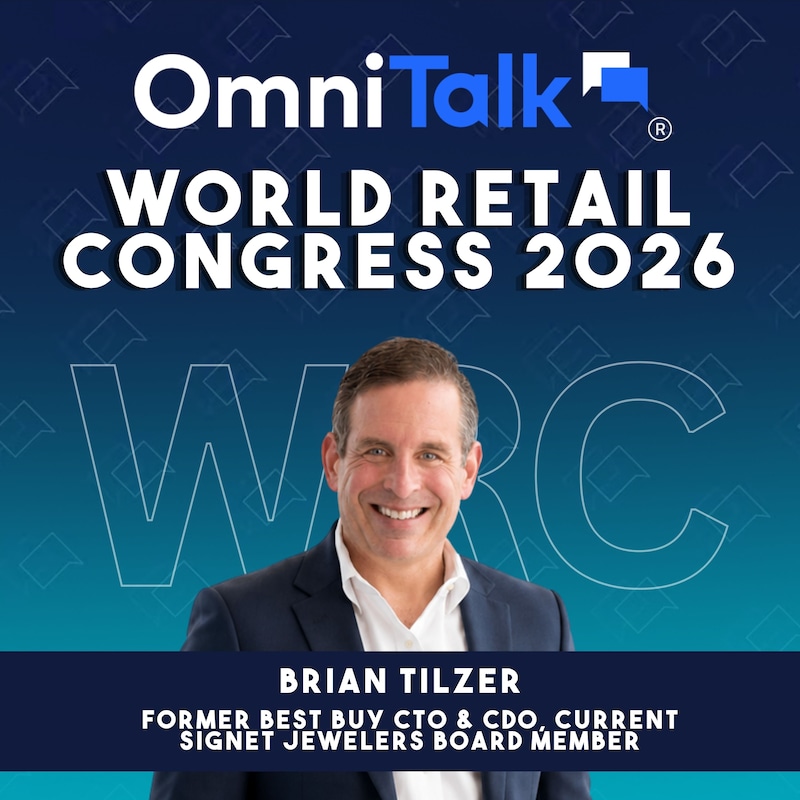
Shownotes
In this Omni Talk Retail interview, recorded live from World Retail Congress 2026 in Berlin, Chris Walton speaks with Brian Tilzer, former CTO and CDO of Best Buy and current Board Member at Signet Jewelers, about why AI represents retail’s “third major technology wave” and what retailers can learn from the ecommerce and mobile revolutions that came before it.
Drawing on leadership experience across Best Buy, CVS Health, Staples, and now Signet Jewelers, Brian explains why the retailers that win with AI won’t simply use it to drive efficiency, but instead to create more human, personalized, and responsive customer experiences. The conversation explores how AI can help retailers better understand customer intent, empower frontline employees with richer information, and accelerate decision-making across the organization.
Chris and Brian also discuss why traditional retail planning cycles may no longer move fast enough for the pace of AI innovation, how adaptive cross-functional operating models are becoming essential, and why testing, learning, and iteration will define the next generation of retail leaders. Throughout the conversation, one theme remains clear: AI may transform retail operations, but human connection will remain the industry’s greatest differentiator.
Key Topics Covered:
• Why AI represents retail’s “third major technology wave”
• Lessons retailers can learn from ecommerce and mobile transformation
• How AI can create more human customer experiences
• Why frontline employees become even more important in an AI-driven world
• The role of AI in understanding customer intent and personalization
• Why retailers need faster planning and decision-making cycles
• How adaptive operating models will shape future retail organizations
• Why testing, learning, and iteration matter more than ever
• The importance of combining digital, physical, and human retail experiences
• How AI can help retailers solve long-standing operational challenges
Thank you to Vusion for supporting Omni Talk Retail’s live coverage from Berlin.
#WorldRetailCongress #WRC2026 #OmniTalkRetail #AIinRetail #RetailInnovation #RetailTechnology #CustomerExperience #FutureOfRetail #DigitalTransformation #RetailLeadership
This podcast uses the following third-party services for analysis:
Podcorn - https://podcorn.com/privacy
Transcripts
Hello, everyone.
Speaker A:This is Omnitalk Retail.
Speaker A:I'm Chris Walton, and I am coming to you live once again from the World Retail Congress in Berlin from the Fusion Podcast Studio.
Speaker A:And joining me is a man that I interviewed yesterday on stage at the conference.
Speaker A:I should say Brian Tilzer, the former Best Buy CTO and CDO and now a board member at Signet.
Speaker A:Brian, how are you doing?
Speaker B:Great.
Speaker A:Yeah.
Speaker B:Good to see you again.
Speaker A:Yeah, you too.
Speaker A:It hasn't been that long.
Speaker B:No, no.
Speaker B:Yeah.
Speaker B:You're looking happy.
Speaker A:Yeah.
Speaker B:Smiling.
Speaker A:I am.
Speaker A:I've had two cups of coffee.
Speaker A:I'm about ready for my.
Speaker B:Okay.
Speaker A:It's probably what I'm gonna do as soon as I get done with this conversation, but.
Speaker A:Yeah.
Speaker A:So, first of all, I think your background's really interesting, so tell our audience about, you know, all that you've done in your career in retail.
Speaker B:Yeah.
Speaker B:So I'd say retail and technology have been with me for a long time.
Speaker A:Okay.
Speaker B:My mom was my original tech hero.
Speaker B:She taught me how to program when I was very young.
Speaker B:Really, like, single digits.
Speaker B:And that led to my first retail job when I was about 10 or 11 in a computer store.
Speaker B:The first computer store in my county, really.
Speaker B:So I was sort of like the whiz kid who could show parents why they should spend $3,000 then on an Apple II plus computer.
Speaker B:And.
Speaker B:Yeah, so I've had this opportunity to sort of be at that intersection for a long time.
Speaker B:You know, brought that to life and lived it initially as a consultant and then at some point had the chance to join companies and be within the companies, helping grow, improve customer experience, et cetera, and got to work with some great companies at critical moments.
Speaker B:So Best Buy, CVS Health, I was first Chief Digital Officer.
Speaker B:Oh, really?
Speaker B:And then at Staples as well, when Staples was the second largest E tailer running sort of a global e commerce team.
Speaker B:Yeah.
Speaker A:Now, did you grow up on the east coast, too?
Speaker B:Yeah, I am from the New York area originally and lived most of my adult life in the Boston area.
Speaker B:And I'd like to say my greatest accomplishment in life is I raised three boys in suburban Boston to be Giants Yankees fans.
Speaker A:Oh, wow.
Speaker A:Oh, my God.
Speaker B:Yeah.
Speaker B:And, yeah, I let them choose.
Speaker B:And those were some years when the Giants beat the Patriots a couple of times in the Super Bowl.
Speaker B:So that was fun.
Speaker B:But ever since I moved, I'm in Minnesota now, as you know, and ever since I moved out there, it's been much leaner.
Speaker A:Yeah, right, right.
Speaker B:In sports.
Speaker A:Wow, that's a.
Speaker A:That's quite the.
Speaker A:That might Be the biggest accomplishment of your life.
Speaker B:Yeah, I think I'm done.
Speaker A: in Boston during the time in: Speaker A:That is pretty impressive.
Speaker B:Yeah.
Speaker A:All right, so WRC World Retail Congress.
Speaker A:Have you been here before?
Speaker B:No, no, this is my first time.
Speaker B:I've heard great things about this conference and so when the opportunity came to come this year, I was super excited about it.
Speaker B:I think the depth of the discussions here is really different from any other conference I've been.
Speaker A:I agree.
Speaker A:Both in the conference rooms, in the actual, like programmed sessions as well as outside the sessions too, right?
Speaker B:Yeah, yeah, it's.
Speaker B:It's a really thoughtful, slightly smaller, you know, sort of group of people and you know, you just get to.
Speaker B:You get to know less new people.
Speaker B:But I think some really deep conversations, interest in dialogue, diverse perspectives, deeper conversations.
Speaker A:What's your big takeaway from the conference?
Speaker A:Do you have any big takeaways from the conference thus far?
Speaker B:Yeah, I would say two things.
Speaker B:You know, obviously AI is on everybody's mind, but it's.
Speaker B:I think there's a clarity in retail.
Speaker B:The question is, to what end?
Speaker B:And there's been so much talk about AI as an efficiency driver.
Speaker B:How do you actually create organizational efficiency?
Speaker B:You've had some companies in the name of AI eliminating roles, but I think the clarity here is this is a moment in time when you have an amazing new tool to actually create experiences and create growth in ways that wasn't possible before.
Speaker B:And the retailers that are going to win are going to use AI as part of their formula to make an even better human experience to serve customers better, to enable your employees on the front line to serve them better.
Speaker B:That's going to really matter.
Speaker B:So I think thing one is that that is a big theme and a big level of energy.
Speaker B:Second thing is then how do you do it?
Speaker B:The solutions to make that happen are unknown.
Speaker B:And they're only going to actually come by testing, learning and iterating.
Speaker B:And you know, this is again where AI can help.
Speaker B:In a world where AI should be able to streamline the path to getting new experiences to market.
Speaker B:The ones who can do that better, the retailers who can actually do that better are going to win.
Speaker B:You're going to have more at bats.
Speaker B:And more at bats means you can actually advance faster.
Speaker B:So I think for me, those two things are really the intersection.
Speaker A:Yeah, right.
Speaker A:That's my big takeaway too, which I give you credit for, because actually you're the first person that opened my eyes to it yesterday on stage, which I want to talk to you a little bit about too, and share some, share with the audience some of what we discussed.
Speaker A:But I think you're right.
Speaker A:Like the way, the way I always think about retail is like it's the combination of three elements.
Speaker A:The physical, the digital and the human.
Speaker A:And what's really interesting about AI that I've never thought about until speaking with you and then speaking to others at this conference is the human element actually gets amplified by AI if it's deployed in the right way.
Speaker A:That's not something that you ever have thought about before because human has been so much more about like the speaking to somebody.
Speaker A:But AI can understand us in a different dimension.
Speaker B:Yeah, 100%.
Speaker B:I mean, AI can first of all create capacity for humans to do things only humans can do.
Speaker B:AI can also help you understand what your customers want.
Speaker B:So a more human experience starts not with your people, but the people you're serving.
Speaker B:So your ability to actually understand at a more granular level at the right point in time, what is that unmet need and now the solutions to actually address it are much more varied.
Speaker B:That is amazing.
Speaker B:New opportunity.
Speaker A:Yeah.
Speaker A:I had EY on earlier today.
Speaker A:Some of the consultants from EY and they brought up the point of like, yeah, the way our consumers can now talk to us because of the language models is very different.
Speaker A:And so that enables us to shape our relationship with them very differently to that point.
Speaker B:Yeah.
Speaker B:And you know, the best conversations with humans, the interaction has sort of bridged some of that gap.
Speaker B:So the good news is the humans have had the ability to really understand customer intent in a way that you haven't been able to.
Speaker B:At the same time though, humans on the front line don't always have all the information on how best to meet it.
Speaker B:So the other thing that can be true is now you can also assemble everything you know about your customers, about your products, about the solutions of the market and put that in the hands of humans as well to bring better solutions to market.
Speaker B:More fact based ones, more relevant ones.
Speaker A:Yeah.
Speaker A:Right.
Speaker A:All right, so let me get you out of here on this.
Speaker A:I was curious.
Speaker A:I always love to give some insight into stage conversations that I have for those people that aren't there and my listeners that are curious.
Speaker A:You did a great job yesterday putting AI in a historical perspective.
Speaker A:I'd love for you to do that again.
Speaker B:Yeah.
Speaker B:So if you think about web one, so E commerce and then mobility is the other two waves.
Speaker B:I think we should learn from the retailers that won in both of those I think did two things.
Speaker B:Well, first thing is they actually figure out ways to up their game in how they serve their customers.
Speaker B:And not like just incremental changes, but fundamentally how do you bring more customer value than was ever before possible?
Speaker B:So it used to be retail, of course was about convenience and it was about having the store closest to the customer.
Speaker B:And in a world of actually same day delivery in store pickup, that was changed.
Speaker B:So how do you actually add more customer value not just with digital, but it's with digital in combination with your physical assets and your people.
Speaker B:Thing one and the second thing the winning retailers have done is they've evolved, they've adapted how they actually connect with customers based upon the surfaces that exist.
Speaker B:Right, good point.
Speaker B:So it was back in the day you used to do that with a circular, right?
Speaker B:And those winners actually started pivoting to a digital circular.
Speaker B:They also then mastered this thing that was really hard to figure out at first, which is called SEO.
Speaker B:Right?
Speaker B:How you rank if that's where a lot of journeys started.
Speaker B:So those kinds of fundamental things, how do you actually really push the bar and raise the bar on what's possible in terms of the customer value you can give?
Speaker B:And then how do you connect differently with your customers?
Speaker B:Giving the tools, Those are the same thematic things to work on right now.
Speaker B:Right?
Speaker B:It was just what we were talking about.
Speaker B:There are so many new ways you can humanize the experience and you can address things that were never addressable.
Speaker B:Every industry has unacceptable things in the customer experience that can now be solved for for the first time.
Speaker B:And the winners are the ones that do that.
Speaker B:Not for everything, but they're going to decide where can they add the most value, where will they be most differentiated and lean in.
Speaker B:And at the same time you also then have the opportunity to tackle the good old retail basics of like right assortment in stock, clearly communicated.
Speaker B:Those things that retailers have struggled for forever.
Speaker B:There are such new ways to actually get better at those things.
Speaker B:So I think going forward those things really matter.
Speaker B:In addition, of course to then how are you connected with customers and mastering how you expose your product data and making sure they're machine readable and a whole bunch of other things that are going to be important in this AI world in which the agent is going to play a huge role in deciding is really important.
Speaker B:That said, don't forget about improving your value proposition because the best way for the agent to not steer towards someone else is to hear from you, to understand you as the customer, that you have a preference under certain circumstances towards one Retailer versus another.
Speaker A:Right, well said.
Speaker A:I mean my big takeaway from what you just said, encapsulated, wrap it on a ball and then I'll let you go, is we're in that third wave.
Speaker A:We're in that third wave of technology and we've somewhat been here before.
Speaker A:That's the thing to keep in mind as an executive.
Speaker A:You've been here before, you know, the playbook that has worked.
Speaker A:The playbook's going to change slightly.
Speaker A:But make sure you understand what worked before, before you start experimenting with and trying to understand what to do in the third wave.
Speaker A:Because you can learn something from how you approach those first two waves of innovation.
Speaker B:Yeah, 100%.
Speaker B:And the pace of change is faster.
Speaker B:This is a more complex problem.
Speaker B:So the and is and really focus on being able to adapt, test, learn and iterate better faster than you ever have across your entire organization.
Speaker B:Not in everything, but on the things that matter.
Speaker A:Well, that was the other thing that I took away from our conversation on stage yesterday too because I asked you point blank, I said, do our planning processes inside of organizations need to change?
Speaker A:Do they need to get faster?
Speaker A:And your answer was unequivocally, yes, they do.
Speaker B:Yeah.
Speaker B:And we heard that a lot today from some very senior leaders running transformations as well.
Speaker B:Like you do need a North Star.
Speaker B:You need to be clear on how you're trying to create more value in serving your customers.
Speaker B:There's certain things you have to anchor on.
Speaker B:But to your point, the planning cycles, how you get there, you need to actually be adaptive, respond to the market, respond to your customers and iterate.
Speaker B:So the ability to actually have a vision, an annual plan, great.
Speaker B:But to make sure every quarter you're actually revisiting and actually focusing on what matters the most and also fueling the tactics underneath those that are making the biggest difference.
Speaker B:That's going to be a huge determinant of success.
Speaker A:Yeah.
Speaker A:It's funny, I can remember back to my time in retail, you know, thinking like, God, if we could just get everyone on the product management mindset throughout the organization with the digital push.
Speaker A:And it was tough to get the traditional retailers on that.
Speaker A:Now with AI, it's almost even more imperative.
Speaker B:Yeah.
Speaker B:And the opportunity is in those early days we all focused.
Speaker B:Oh, it was hard enough just to get products, UX and engineering to do that, the three legs.
Speaker B:But what we're really talking about is true enterprise cross functional teams.
Speaker B:Like how do you get that kind of level adaptability all the way down to your stores where the associate on the front line is actually focusing on what matters this quarter and doing so with the benefit of actually the best insights on what's working.
Speaker A:Yeah.
Speaker A:And the infrastructure is fixed in a lot of ways in those stores, too, with concrete and walls as well.
Speaker B:Yeah, well, that too.
Speaker B:Yeah.
Speaker A:It's always a tough challenge.
Speaker B:Yeah.
Speaker B:Retail is hard.
Speaker A:Yeah.
Speaker A:But, hey, man, thanks for that.
Speaker A:It was a great conversation and it's been great meeting you, too.
Speaker A:We just got to meet at this conference for the first time, even though we've been in Minnesota together for a while.
Speaker A:So, Brian, thanks for joining me.
Speaker A:Thanks for taking time out of your busy schedule.
Speaker A:Thanks to Vuzion for sponsoring all of our coverage at World Retail Congress and giving me the opportunity to bring you all these wonderful interviews.
Speaker A:And on behalf of all of us at Omni Talk, as always, be careful out there.