Shownotes
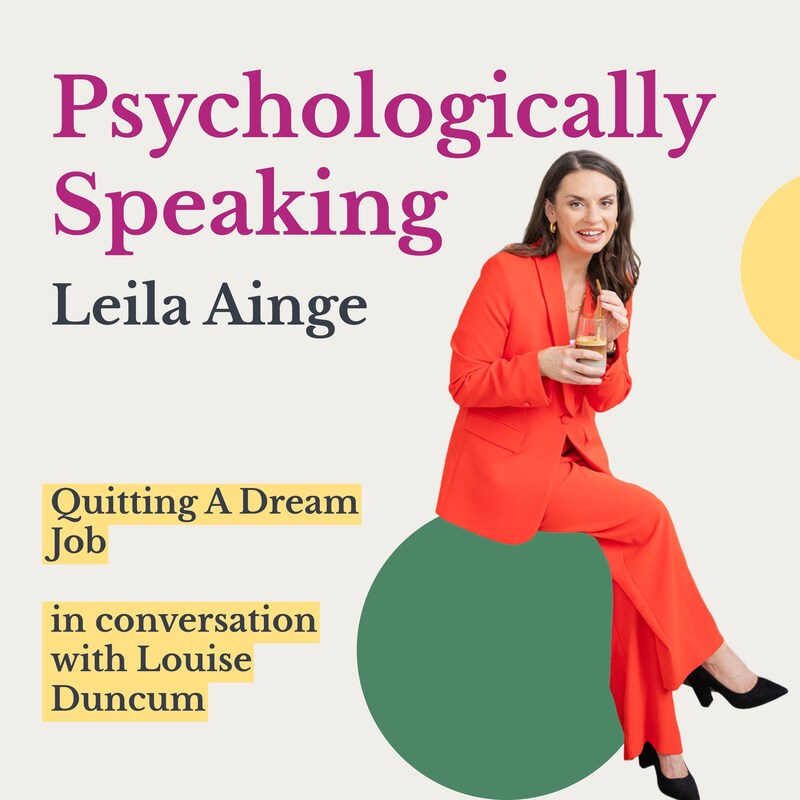
Louise Duncum spent nearly a decade designing for major high street fashion brands before realising she'd become successful at something that no longer felt like her.
In this episode we talk about leaving, comparison, taking on debt to grow a business, multiple identities, and why building a business that reflects who you are is riskier, but far more rewarding, than staying where you no longer fit.
https://weizstyles.com/
https://www.linkedin.com/in/weizstylespersonalstylistlondon/
https://www.instagram.com/weizstyles
Transcripts
I didn't know that on the whole,
Speaker:most people react very positively to blue and red.
Speaker:So that's that context and cultural
Speaker:Yeah, from my side, a lot of people want to know which red suits them.
Speaker:I always ask a questionnaire that says what colour would you love to wear,
Speaker:but you don't know why you're not wearing it or if it suits you.
Speaker:Most of the time, the answer for that is red.
Speaker:And most of the time, the answer of what colour do you wear all the time now,
Speaker:it's blue.
Speaker:Ooh.
Speaker:So
Speaker:that's bringing both of those in,
Speaker:it's exactly one safe and one risky.
Speaker:One's safe and one's risky, potentially.
Speaker:So they're already in the blue.
Speaker:They just want clarity of which works for them.
Speaker:Yeah.
Speaker:And then they want to wear the red,
Speaker:but they don't want to take the risk and wear the wrong red.
Speaker:Welcome to Psychologically Speaking with me,
Speaker:Leila Ainge. This season, we're exploring imposter phenomenon through
Speaker:the lens of risk taking. And we're going to be hearing from women
Speaker:who are no strangers to navigating risk through their business activities.
Speaker:The question that I really want you to sit with this season is this.
Speaker:Do imposter experiences make us more aware of risk and is that a good
Speaker:or a bad thing?
Speaker:Today to help us in this conversation,
Speaker:I'm joined by Louise Duncum of Weiz a London-based personal stylist
Speaker:and a colour consultant. She helps ambitious women elevate their confidence through
Speaker:personal style. Louise has got over 10 years of experience as
Speaker:a clothing designer for major high street brands,
Speaker:but she combines that expertise into empowering
Speaker:and approachable styling experiences.
Speaker:We want to hear from Louise because she recently opened up a Battersea style studio
Speaker:and in the process she had to take on a business loan which is quite
Speaker:a risky thing right? So we're going to hear from Louise about how that felt
Speaker:and also I am just very excited to have this conversation because
Speaker:in the original Impostor podcast episodes we dedicated an entire episode
Speaker:to clothing and the imposter experience but I am curious to know
Speaker:What risk taking takes place behind the scenes in the fashion world when
Speaker:you go from working with well-known brands to doing your own thing.
Speaker:So Louise, welcome to the podcast.
Speaker:hello. Thank you so much for having me.
Speaker:It's lovely to be here and I'm really excited to chat about this very important
Speaker:topic, I think.
Speaker:It is,
Speaker:it is. that you've recently expanded your business and you've got
Speaker:a studio in Battersea, and when did you make the switch from working like high
Speaker:street brands to doing your own thing?
Speaker:Yeah, so at the start of 2023,
Speaker:I got a brand new job, a senior role in a fashion,
Speaker:and they call it a supplier. So essentially I was designing for lots
Speaker:of different brands under one supplier and I was like,
Speaker:oh, amazing. I've worked so hard to get to this senior role,
Speaker:but I always had this kind of feeling in the back of my mind that I wanted
Speaker:to do my own thing. And unfortunately,
Speaker:Couple of months into that new role I knew it wasn't the right thing for
Speaker:me and I thought now is the time to just take that leap take that risk
Speaker:you
Speaker:and dive in so slightly abruptly and We can talk about this in more depth
Speaker:if you'd like to but slightly abruptly I went in on the tube one day Decided
Speaker:to hand my notice in and I knew that there was a course in personal style that
Speaker:I really wanted to do that I've been eyeing up for a little while
Speaker:and I thought okay, I'm gonna book
Speaker:that quit my job and off we go.
Speaker:So I have all this background,
Speaker:Wow.
Speaker:yeah, slight risk, but yeah.
Speaker:you
Speaker:had the background in fashion design from my degree and then my career
Speaker:for nearly 10 years and then I thought,
Speaker:well, surely that's a good, it's a good thing to have before I head into personal
Speaker:styling. that's how it all started.
Speaker:Then I did my training and then in October,
Speaker:2023, I launched WeStyle. So that's how it all came about.
Speaker:And yeah, I think one of the biggest things for me having been
Speaker:in the fashion industry for so long in this different
Speaker:capacity was thinking more about the women that actually wear those clothes rather
Speaker:than, you know, in the design side it was very much how do we use this trend,
Speaker:how do I hit this target, how do I do this,
Speaker:this and this, but there was never the,
Speaker:well there was to an extent but definitely not enough thinking about
Speaker:the actual woman that's wearing those clothes and how they feel when they're
Speaker:in them or trying them on and that whole experience it kind of was...
Speaker:a second thought. So now in what I do in my business,
Speaker:it feels really lovely to put them at the front of that.
Speaker:not really considered that because I suppose when we think about
Speaker:you know couture fashion that is all about you know the aesthetic
Speaker:and that aesthetic usually comes from that vision or the visionary
Speaker:of the designer doesn't it and it was less about how comfortable clothes
Speaker:are and we see all these things about catwalks and you know
Speaker:how uncomfortable clothes can be for the models but I haven't really thought about
Speaker:that.
Speaker:I am very interested in your decision making here,
Speaker:you
Speaker:especially that moment on the tube,
Speaker:but you said, you you,
Speaker:you realised it wasn't for you,
Speaker:this, this kind of this promotion that you'd got this new role.
Speaker:Take us back. What, what signs or signals?
Speaker:How did you know it wasn't for you?
Speaker:I'm very interested in this.
Speaker:Yeah,
Speaker:~ I guess you could take it back right to the beginning of my career
Speaker:and I think after graduating I was really lucky to get a graduate role straight
Speaker:in Next Head Office which was my absolute dream job and I absolutely loved
Speaker:it and it was very much they kind of taught me everything I knew in terms
Speaker:of like how to design commercially for high street brands and I couldn't
Speaker:be more grateful for that experience because it really was amazing and then
Speaker:you kind of
Speaker:And I know that the fashion industry isn't the only industry that this happens in,
Speaker:but unfortunately as you kind of hone in and you become more of an expert
Speaker:in your area of expertise, unfortunately the way you move up the ladder,
Speaker:perhaps the management styles and the way you've got to behave isn't actually
Speaker:aligned with who I actually am.
Speaker:And there's a lot of toxic behavior that happens.
Speaker:There's a lot of...
Speaker:unfortunate conversations that happen behind people's backs and things that
Speaker:I really just don't like at all.
Speaker:And having worked again and again to get all these new roles and really loved,
Speaker:I actually loved the job. It's just the culture within that that really didn't
Speaker:sit well for me. ~ excuse me. So yeah,
Speaker:sorry, it didn't sit very well for me.
Speaker:So,
Speaker:I just thought, gosh, I'm at this now stage where I'm getting more
Speaker:and more wrapped up in this. And I just felt more and more distant from
Speaker:who I actually was and what I wanted to achieve in life.
Speaker:And actually one of the biggest things that it came down to is that
Speaker:I feel very grateful to have a lovely partner and he is very supportive
Speaker:of everything I'm doing. But I was thinking,
Speaker:my gosh, one day, we're lucky enough to have children and get to that stage,
Speaker:do I want to be this type of person?
Speaker:as a mother and without a doubt I did not want that to happen.
Speaker:But I also knew that my energy was so much better put
Speaker:in different places so in the end it kind of got to a stage where unfortunately
Speaker:it was toxic after toxic after toxic and I was like I knew that that pattern wasn't
Speaker:going to change and the only way I could change it was by doing something on my own.
Speaker:And it was a tube journey then,
Speaker:so you were literally on the tube.
Speaker:It wasn't quite, it was Achieve
Speaker:Journey. I was reading a book on Achieve Journey ~ and I feel like it's perhaps,
Speaker:I will tell you the book if you'd like to know,
Speaker:but it was, think it's called Happy Sexy Millionaire or something
Speaker:Peace.
Speaker:by Stephen Bartlett, his first book.
Speaker:Yeah.
Speaker:~ And I was reading that and this was...
Speaker:was several years ago now and at the time I was I think it was when Diary
Speaker:of a CEO was very much kind of getting into it it was just starting
Speaker:Yeah.
Speaker:to propel into something huge and so I got really interested in that podcast
Speaker:and I think the way that where I was at the time reading that book it just felt very
Speaker:much like my gosh I just need to do it and there was a part in it that
Speaker:was very much like nothing's gonna change if you don't leave a situation that isn't
Speaker:serving you or something
Speaker:along those lines and I was like you're right so I went.
Speaker:What I love about these ~ kind of management tools,
Speaker:that kind of self-help books.
Speaker:is that they often echo things that we are thinking ourselves,
Speaker:but there's something really powerful when it's written down or you hear
Speaker:Yeah.
Speaker:it on a podcast where it just resonates,
Speaker:doesn't it? And I think sometimes it takes hearing it in somebody else's voice
Speaker:for you to go, that is me, that's where I am right now.
Speaker:Yes, I do just need to go for it.
Speaker:And I think, you know, these kinds of books have that really powerful place
Speaker:in business for women, especially women who are thinking something doesn't feel
Speaker:right.
Speaker:and I've got to go and do my own thing.
Speaker:Yeah, 100%. And I think sometimes all it takes is,
Speaker:you know, someone that is completely outside of your world,
Speaker:some, you know, that you can talk to your friends and family,
Speaker:but they always have that element of protection,
Speaker:which is fully understandable.
Speaker:Like, what are you going to do next?
Speaker:What is your plan? How are you going to achieve this?
Speaker:But in a book, they're not holding your hand.
Speaker:They're just they're saying, like,
Speaker:if you feel like this, maybe you should think about this.
Speaker:So I was like, it's then up to me
Speaker:to decide and I was like what I'd lost so far in this journey was my
Speaker:own ability to think and my ability to make decisions without having to
Speaker:go through a hundred different people for someone to say yes and I was like
Speaker:Yeah.
Speaker:by doing this I'm actually taking back control of my life and so yeah it
Speaker:all felt at that time like it was the perfect perfect decision
Speaker:Let me ask you a question then.
Speaker:Before this, before you took that step and handed in your notice and said
Speaker:I'm going to go off and do this course and do my own thing,
Speaker:would you have called yourself a risk taker up to that point?
Speaker:I was thinking about this earlier and I was thinking,
Speaker:~ you know, that was a pretty big risk at the time and I've just taken
Speaker:on another pretty big risk, but I was reflecting back and thinking about risks
Speaker:you
Speaker:as a whole.
Speaker:and I think I have always been a risk taker.
Speaker:A couple that I just thought about recently were I had a great
Speaker:job in Belgium working for a huge brand,
Speaker:a huge high street brand, and I decided because I was in Belgium and
Speaker:I'd got a little bit of a taste of life outside the UK,
Speaker:I was like I'm going to quit my job again and go traveling for a year.
Speaker:I was like, and again, to move to Belgium in the first place,
Speaker:I was actually at Next at the time and it was
Speaker:I had everything could have been a completely different trajectory
Speaker:if I'd stayed there and carried on in that line.
Speaker:But I was like, oh, there's something better over here potentially that looks shiny
Speaker:and I want to go and give it a go.
Speaker:And I think the me of my early 20s and actually my whole 20s was very much,
Speaker:know, what's the worst that can happen?
Speaker:I can go back and do another job.
Speaker:So I've very much taken a lot of risks throughout my career and life,
Speaker:I'd say.
Speaker:It's definitely not the first one.
Speaker:really
Speaker:curious isn't it and I wonder if there is something about being protected
Speaker:you talked about you know family and friends protecting us
Speaker:but maybe there's something about when we're in that corporate place part
Speaker:of the culture and everything else is about keeping us protected from
Speaker:our own ambitions sometimes and perhaps
Speaker:that risk taking is something that we do need to step outside
Speaker:of another organisation to be able to do.
Speaker:I find that absolutely fascinating.
Speaker:And then psychologically, we would say that we are better at taking risks when we're
Speaker:younger.
Speaker:there's this thing that happens over your life course where you know you're exposed
Speaker:to more so you become a little bit more risk-averse as you become older
Speaker:Yeah.
Speaker:so I found that I've had to really kind of dig deep and go why am I
Speaker:not taking risks anymore where I used to be a more riskier person
Speaker:so that that's interesting again isn't it.
Speaker:So you launched your business in 2023 and you said you went on of course
Speaker:to to kind of become a stylist so tell me a little bit because I mean I
Speaker:I've probably only got impressions from things like The Devil Wears Prada
Speaker:as a film and, you know, like watching America's Next Top Model,
Speaker:Mm-hmm.
Speaker:which I've just watched the Netflix series and my God,
Speaker:~ no. Yeah.
Speaker:I can't believe how toxic it used to be.
Speaker:my view of the fashion industry is just as an outsider looking in.
Speaker:So when you say you were in fashion and you were working for these big high streets,
Speaker:were you actually designing the clothes I would have bought and put on,
Speaker:for example?
Speaker:Yeah,
Speaker:yeah, potentially. So, yeah,
Speaker:I did a mixture between women's wear and kids wear.
Speaker:~ And I started out in kids wear,
Speaker:which I absolutely loved. And for my side,
Speaker:was slightly again, that was in my early twenties that role.
Speaker:So I wasn't really around a lot of children.
Speaker:So I couldn't really see the things that I was designing.
Speaker:Yeah.
Speaker:But I remember going on holiday once and we were around the swimming pool.
Speaker:And then all of a sudden there was a lovely little trickle of like,
Speaker:little friends playing, like their families were at the side of the pool
Speaker:and all the little girls were playing and I was like,
Speaker:my gosh, I designed those swimming costumes.
Speaker:And all of a sudden I was like,
Speaker:~ I never got to see that having not really been around children.
Speaker:And then it was such a lovely thing to see the clothes being worn.
Speaker:And then as I adapted into women's wear and progressed my career in that way,
Speaker:was like, it was again, like that was,
Speaker:it was more opportunities for me to see the women wearing the clothes,
Speaker:which is
Speaker:great. So yeah, was definitely the things that you would have potentially picked up.
Speaker:I love that, I love that so much.
Speaker:And so then you started your business and you said right at the beginning,
Speaker:part of it was, you know, really wanting to be at that end point where you
Speaker:got to be part of that journey of how it makes women feel,
Speaker:you know, and be more,
Speaker:well, suppose closer to the client,
Speaker:if you like. So how did that transition into setting your
Speaker:own business actually unfold for you?
Speaker:Yeah,
Speaker:so again, having been in the fashion design side of things,
Speaker:which I'd already explained, there was another moment that happened in lockdown.
Speaker:I think lots of people had life changing moments in lockdown.
Speaker:But I started an Instagram which is called Weez Wears.
Speaker:And it was me posting a different outfit every single day for a year and a half.
Speaker:that spurred me on to realize the impact of how I pieced my outfits together,
Speaker:I have on other people. And I had all these like messages flooding in
Speaker:all the time about, my gosh, I'm gonna buy this and I feel so much more confident
Speaker:having seen you style this like this.
Speaker:And I was like, this is amazing.
Speaker:And then I realized the impact of personal style and the people wearing the clothes.
Speaker:So that's when it all kind of changed for me.
Speaker:And that's when I thought about personal
Speaker:styling but it took a couple of years of going back into these roles
Speaker:Yeah.
Speaker:to then suddenly take that leap but it really is very much about the women
Speaker:and the people rather than like I said before like the targets or
Speaker:the money or anything like that it's about empowering others.
Speaker:I it really intriguing that you'd found that creative outlet for where
Speaker:you would eventually be, while during lockdown and you were exploring that.
Speaker:So there's definitely a trajectory here,
Speaker:isn't there, of like, you know,
Speaker:that risk taking was based on you already trialling or stepping into that kind
Speaker:of identity as somebody who's,
Speaker:you know, let me show you how I dress and can I share that
Speaker:and getting that feedback. So sounds amazing.
Speaker:Tell me then.
Speaker:what led you to create almost like your studio and what the difference is
Speaker:for you in your business now that you've done that risk and then we'll come back
Speaker:and talk about the risk at the time of taking out the loaners.
Speaker:Yeah.
Speaker:So I had been running my business for about two and a half years from home.
Speaker:My partner and I rent in London and unfortunately we've had to keep moving around
Speaker:and my business is very much like it's in our front room.
Speaker:So I was like, well, we have to move to a place that has natural light flooding
Speaker:in here and it has to look nice like this.
Speaker:And I was like, my gosh, really putting like with the rentals keep moving.
Speaker:I'm really putting a lot of pressure
Speaker:on this constant move situation.
Speaker:And then in the place we're in now,
Speaker:the light would come in from one room and then it would be nicer in the other room.
Speaker:And I was like, I just have to move them from the kitchen to the sitting room.
Speaker:And then I was like, this is so clunky.
Speaker:It's not working. And then I had the idea about having the studio space
Speaker:for a couple of months. And I thought,
Speaker:no, it's not possible. It's just a big expense and I can't really do that.
Speaker:And then I realized
Speaker:that actually the level of service I want to provide for my clients isn't clunky.
Speaker:It isn't in my front room with a little PlayStation tucked under the TV on show.
Speaker:That isn't the type of vibe I wanted to give for my business.
Speaker:was like, actually, if I want to attract people into an actual room and
Speaker:a space that feels empowering and it feels like you're going to level
Speaker:up when you walk in, not just when you leave,
Speaker:I have to create that space.
Speaker:is now what I've been able to create,
Speaker:which I'm loving. But yeah, I just knew that it wasn't serving my clients
Speaker:as much as I wanted it to.
Speaker:I love
Speaker:that. I mean, the thought for me of like,
Speaker:you know, investing in a studio space,
Speaker:that's huge for any business.
Speaker:And we've been going for a couple of years.
Speaker:I...
Speaker:do lots of research with women who are entrepreneurs
Speaker:and freelancers and have lots of conversation about money and risk
Speaker:and how it's really difficult as a woman to get finance and to
Speaker:get investment and all of those kinds of things but I am really intrigued what
Speaker:was your actual journey like how did it feel was it easy to get that finance and
Speaker:How does that sit with you? Are you comfortable with the risk that you took?
Speaker:Or is there something that you can share with us that is a lesson that you've
Speaker:learned, for example?
Speaker:Yeah, so I think from the very beginning I had a little pot of money that
Speaker:I was going to put towards my business at the very start.
Speaker:But I soon realised that I needed a little bit more than that.
Speaker:So my parents, and I'm completely happy to chat about the fact that
Speaker:my parents were very kind and supportive of me in that time
Speaker:and really trusted me to make the best of the situation I was in.
Speaker:So they supported me through that first time when I needed it most.
Speaker:which I'm very grateful for. And I know a lot of other people don't get,
Speaker:but it also meant that everything I did up until recently has been completely like,
Speaker:I haven't needed to raise any investment.
Speaker:It's been very much like the business has grown from my own,
Speaker:like I've literally, when something comes in,
Speaker:I'm like, how can I put this back into the business and still survive?
Speaker:Yeah.
Speaker:So, and to a certain extent,
Speaker:I've just leveled that up again now because the out,
Speaker:the outs are so high, but
Speaker:Thank
Speaker:I got, I knew that when I got to the stage of feeling super confident
Speaker:in everything I'm delivering and I knew that I'd crafted my services
Speaker:and made them how I'm happy for them to be over the past two and a half years,
Speaker:that when it came to this next stage,
Speaker:that I was super confident that I didn't need to have my parents give me that money.
Speaker:I knew that I needed more cashflow to be able to do what I'm doing now,
Speaker:but I wanted to take the risk again to do it on my own because
Speaker:there's only so much. Again, it's really lovely that my parents gave me
Speaker:all this and I am so grateful for that.
Speaker:Thank
Speaker:But at the same time, I wanted to feel like this is my thing now.
Speaker:And the risks I'm taking is not going to affect them in any way,
Speaker:Yeah, yeah.
Speaker:it's affecting me. And it's so,
Speaker:in a way, it's so easy to be like,
Speaker:can you give me another 500 pounds because I need to do this thing and that would
Speaker:be really great. But for me, outsourcing that
Speaker:from something that I know I'm going to be paying back in a big system
Speaker:of things that could put me in a huge amount of debt,
Speaker:then actually it drives, it's like,
Speaker:it's a different type of drive,
Speaker:if that makes sense.
Speaker:Yeah, it does
Speaker:and I think it's relatable as well,
Speaker:you know, there are so many routes into having our own businesses
Speaker:or setting up businesses and more often than not people do.
Speaker:get to the stage of being a business owner by borrowing off family,
Speaker:friends or you know, what we call like bootstrapping is you know,
Speaker:Yeah.
Speaker:you start from nothing or you,
Speaker:a lot of women over the last couple of years,
Speaker:know, were starting businesses on redundancy pots,
Speaker:you know, something they would have traditionally perhaps sunk into
Speaker:a pension were taking the risk not to do that.
Speaker:So I think it's really important to talk about where money does come from
Speaker:and how we use it.
Speaker:And if you've got the opportunity to borrow money or have money from family,
Speaker:that's not a negative thing, is it?
Speaker:It's very normal for that to happen.
Speaker:Some people don't have that, but if you've got it and you've used it,
Speaker:but it's really interesting that you're then saying,
Speaker:there comes a point where I needed to take a bigger risk and I needed that bigger
Speaker:Thank
Speaker:investment. So how did you go about exploring what your options were then?
Speaker:So I joined the Virgin Startup community,
Speaker:which my partner, who was also running a separate business,
Speaker:he had been part of for a year previously.
Speaker:And he was like, I think with what your dreams are and what your goals are,
Speaker:it would be a really great community for you to be a part of.
Speaker:Yeah.
Speaker:And I was like, OK, I'll give it a go.
Speaker:They were doing a special offer of something for a year.
Speaker:And I was like, I'll join it. And then within that,
Speaker:they offer Virgin Startup loads.
Speaker:which is through the British Business Bank,
Speaker:but they kind of guide you through making the most out of your application
Speaker:so you can get the best results essentially.
Speaker:Yeah.
Speaker:And I'd got to this stage in January when I knew that this is what I wanted
Speaker:to do 100%. So I kind of started going through that process
Speaker:and they literally every step of the way,
Speaker:they went over my business plan with me,
Speaker:they told me what to tweak, they helped me make.
Speaker:the best application because if you don't have that kind of support it's very much
Speaker:a one and done. Your application if it's not successful they don't tell
Speaker:you you can come back and tweak it it's a no or yes.
Speaker:All right, okay,
Speaker:yeah.
Speaker:So
Speaker:with that support from them, I knew not only what I needed to slightly tweak,
Speaker:but also I had a clear roadmap going forward of how I'm going to achieve that.
Speaker:And they also have been super encouraging with everything I'm doing.
Speaker:So yeah, it just felt like the yeah,
Speaker:the perfect opportunity arose at the perfect time.
Speaker:And then I felt confident that it was going to be possible.
Speaker:And can ask you a question? So this is something I've been asking as part
Speaker:of my research recently is, you know,
Speaker:people have all sorts of ways in which they describe themselves.
Speaker:some of the women I speak to will call themselves freelancers,
Speaker:others will call themselves business owners.
Speaker:Founders is a very popular term,
Speaker:and it's an American term that's come over.
Speaker:An entrepreneur. What...
Speaker:term do you use when you describe yourself to people?
Speaker:How are you describing yourself?
Speaker:that's so interesting.
Speaker:I feel like I use a mixture of four things.
Speaker:Yeah. ~
Speaker:Yeah I say...
Speaker:I often say that I am a female founder because the goals I have for
Speaker:my business will not just be me in the future.
Speaker:won't just be me as a one-man band,
Speaker:which I definitely always say as well.
Speaker:I'm a one-man band, I wear all these hats ~ and I do say self-employed,
Speaker:yeah, business owner, all of these things,
Speaker:but I also feel like...
Speaker:It depends as well who I'm speaking to because a lot of the time,
Speaker:if I'm networking with other founders,
Speaker:I will say I'm also a founder.
Speaker:And if I'm networking with more people that call themselves freelancers
Speaker:or self-employed, I'll probably call myself that because I feel like I
Speaker:fit into all these brackets really.
Speaker:So don't think at the moment there's one thing that defines what I'm doing.
Speaker:And
Speaker:would you say that you've got an entrepreneurial spirit?
Speaker:without a doubt I've got an entrepreneurial spirit I think.
Speaker:You
Speaker:I don't think this is something that's new to me either.
Speaker:Just because I feel like I've always had something that...
Speaker:~
Speaker:I guess the motivation to succeed and be the best but not in what everyone else
Speaker:is doing. I'm super happy to take charge and do something a little bit differently.
Speaker:Because I don't know where that's come from but I definitely have always been like
Speaker:that.
Speaker:And I have to credit both my parents here who were both self-employed their entire
Speaker:careers. And yeah, I feel like when you've got two people that are like,
Speaker:we are doing this so we know that you can do it.
Speaker:I think that makes a massive difference.
Speaker:They know that the ins and outs,
Speaker:and downs that come with being self-employed or being freelance.
Speaker:And they very much made me aware of those risks before I started,
Speaker:but they also
Speaker:have been great successes for them so you know why not give it a go myself.
Speaker:just answer my next question so I about to
Speaker:ask you. I had this kind of, I don't know,
Speaker:this sense that who has shown you?
Speaker:what the possibility is because it isn't always obvious for women to set
Speaker:up and be entrepreneurial and have that kind of entrepreneurial spirit.
Speaker:And yet, of course, some of that is going to be completely your personality
Speaker:or trait, who you are. But when I did research with Nikki Denton Elliott,
Speaker:we had these in-depth conversations with women who were talking about perhaps their
Speaker:formative years. The role modeling they had was to stay small,
Speaker:to be too big for the boots you know they were coming from families where maybe
Speaker:mum was not working actually because it wasn't always that
Speaker:Thank
Speaker:way but you've sounds like you've had a very different kind of role modeling from
Speaker:both parents because you've seen that unfold you know and
Speaker:and that is interesting can i ask you a question about confidence
Speaker:and imposter then i am interested what
Speaker:Yeah.
Speaker:What imposter experiences do you think you've had during your career?
Speaker:I think, especially in business,
Speaker:it's very much thinking. It's kind of when you look at other people's success,
Speaker:and I am very much, I would love,
Speaker:and I still do, I want everyone to win.
Speaker:I'm cheering everyone on from the sidelines.
Speaker:My time is limited at the moment,
Speaker:especially in this new chapter,
Speaker:so I don't get to do as much cheering as I'd like to be doing,
Speaker:but now I'm settling into my space.
Speaker:I feel like that's something I want to do more and more,
Speaker:but I it's looking, it's that kind of thing.
Speaker:when you look at someone else's success,
Speaker:that I'm very much like, oh, that's amazing.
Speaker:And then you think, oh my, why is that not coming to me?
Speaker:Like, how did that happen? What am I doing wrong?
Speaker:you
Speaker:Am I saying the wrong things? Am I in positions the wrong way?
Speaker:Like, should I be doing all this at the other that I'm not doing?
Speaker:And then it's kind of that imposter syndrome of like,
Speaker:how has that happened? But not for me.
Speaker:But I think it really, the more and more that happens,
Speaker:the more I'm like, actually the things that are aligned
Speaker:with me are going to come for me and I will get the things that are right
Speaker:for me and those other people are going to be able to thrive in their lane
Speaker:and I will thrive in mine. But it does suddenly kind of stop you
Speaker:in your tracks sometimes and there have been opportunities that I've been approached
Speaker:for that then I haven't got and then it's someone else I know that has
Speaker:got it and then it's at those times that you're like oh it's amazing that you've
Speaker:got it but also it's like was there something wrong with me that I didn't
Speaker:Yeah? Yeah?
Speaker:get that or did I say something?
Speaker:incorrectly
Speaker:or did they just not like me or was it like there's things that spiral
Speaker:in your head at those times that make you feel like you're doing something wrong
Speaker:but at the same time it's that pivot of the mindset where you're like actually
Speaker:no that's perfect for them something else is perfect for me but it does
Speaker:at the time it feels like a funny five minutes when you're like
Speaker:And it's really interesting because then ~ you've just described to
Speaker:us over two examples, two different ways in which social comparison unfolds
Speaker:psychologically. in the first instance,
Speaker:you've got that social comparison of living with parents who have been business
Speaker:owners.
Speaker:and being able to compare yourself to them and say well that is possible,
Speaker:that's something I can do, I know about that and then you've got the ~ more
Speaker:of the like brooding side of social comparison which is that but why am I...
Speaker:Why, you know, what's different about me to that person?
Speaker:And we think, you know, social comparison is quite central
Speaker:to that imposter experience. But the bit that I suppose I'm noticing
Speaker:is that confidence in yourself that,
Speaker:well, I'm happy for them. And in more of a case of it sounds like you're trying
Speaker:to figure out something for yourself rather than sitting
Speaker:and dwelling with unfairness of it.
Speaker:So that's quite an interesting coping mechanism.
Speaker:Yeah.
Speaker:that you're ~ suppose hinting at though,
Speaker:I can say.
Speaker:Yeah.
Speaker:Yeah.
Speaker:And I think as well, another big part of like the imposter syndrome
Speaker:is actually with the clients because you're,
Speaker:again, you've got past that hurdle of them choosing you,
Speaker:which I'm very grateful for. And I always am very touched by the fact that people
Speaker:trust me on this journey because it is such a personal one.
Speaker:then it's that, my gosh, are they having a good time?
Speaker:Are they listening? Am I giving them the right information?
Speaker:Like, is this what they thought that they were going to have?
Speaker:Have they gotten away with this stuff and feeling great afterwards?
Speaker:Are they just thinking my gosh,
Speaker:that was a wasted investment like there's so much imposter syndrome
Speaker:And I guess self-doubt that could happen but I think that's also what
Speaker:as time goes on and as you Keep honing in on your skills and
Speaker:you keep delivering things like I make tweaks after every single session Someone
Speaker:might say something to me and I'm like,
Speaker:~ I never thought about that I'm gonna add it into the next one but it's
Speaker:I'm to
Speaker:so it's like the learning piece that you get as you move along and I think that
Speaker:and
Speaker:Unfortunately, so many people don't give themselves the grace of time to
Speaker:be able to keep going and keep learning as they go.
Speaker:But that imposter syndrome, especially when I first started,
Speaker:was very much like, oh God, they must have had a rubbish time.
Speaker:But actually, it's not that at all.
Speaker:And people don't know what an experience is going to be like until they've had it.
Speaker:you
Speaker:So I think we put a lot of pressure on ourselves to go above
Speaker:and beyond when actually we do amazing jobs.
Speaker:anyway.
Speaker:It's so important isn't it that imposter experience can lead us into over delivery,
Speaker:over commitment, over striving and certainly like the feminist psychology
Speaker:we would say that that is you know kind of this internalised misogyny it's that idea
Speaker:that we have to do hard work harder be better just to to kind of
Speaker:be even for example. Would you?
Speaker:describe yourself as a confident person.
Speaker:This is a funny one. think so generally when it comes to my business
Speaker:and showing up for my business,
Speaker:I feel like I am really confident in that.
Speaker:It's really weird in social situations.
Speaker:I always step back. I am never the one to,
Speaker:I'm quite quiet. I listen and then I react,
Speaker:especially if it's a group of people that I potentially don't know or,
Speaker:you know, I find I'd
Speaker:rather not be the one in the centre stage unless it's like,
Speaker:unless it's a group that I'm extremely close to.
Speaker:And my partner always says like,
Speaker:you know, you can speak like, and I'm like,
Speaker:I know I can speak, but I, you know,
Speaker:there's certain situations in that outside of my business where I feel like I don't,
Speaker:I don't feel like I have to be like at the forefront of everything.
Speaker:And listening to others,
Speaker:not saying that I don't listen to others in my business,
Speaker:but I don't feel like I need to be centre stage
Speaker:in the socials as much and I feel like that confidence is more of
Speaker:me like sitting back and like I guess being a part of a situation rather than being
Speaker:at the front of it. Whereas I know...
Speaker:Yeah, it's really interesting
Speaker:that isn't it? I think one thing that struck me is like you've got this studio and
Speaker:You know, even it being called a studio,
Speaker:a studio is a place usually where a performance takes place,
Speaker:right? And it sounds to me like when you're in the studio and you're with your
Speaker:client, that's your performance.
Speaker:You're performing for your client with,
Speaker:you know, your knowledge, your experience,
Speaker:your sounds like you're listening and reacting to them.
Speaker:So it sounds like it would be very cognitively demanding that that kind
Speaker:of one-to-one work that you're doing.
Speaker:So it's quite curious then, isn't it?
Speaker:when you're in other situations you're like well I'm not the performer here
Speaker:I can step back and say
Speaker:Yeah,
Speaker:100%. Yeah, and even when it comes to kind of talking,
Speaker:like public speaking or anything,
Speaker:I had my launch event last week and everyone was arriving,
Speaker:it was really lovely and I was very much like that kind of lower version of myself.
Speaker:And then as soon as I had to speak and you know.
Speaker:talk about my story and everything that I was planning,
Speaker:my partner and my mum both said,
Speaker:you just switched into a completely different person.
Speaker:And I was like, that must be the version of me that has to,
Speaker:sorry, excuse me, that has to do the,
Speaker:yeah, that has to be like the forefront of my business.
Speaker:That's me, that's what I'm talking about,
Speaker:that's my passion. And I guess it kind of does come down to that passion.
Speaker:Yeah, yeah.
Speaker:that
Speaker:has to come out of me at that stage,
Speaker:but when, as soon as that's finished,
Speaker:I'm very much like, ~ back to a bit more mellow version.
Speaker:I don't think we talk about this enough,
Speaker:this idea that we have multiple identities and that...
Speaker:I think it was on the podcast I was speaking to Rachel Cashman about this
Speaker:and authenticity and how difficult that is as a concept because it's almost like
Speaker:if we're telling people to be like women especially to be your authentic self then
Speaker:we're putting quite a lot of pressure on people to perform a lot of
Speaker:the time maybe and authenticity doesn't necessarily mean that you need
Speaker:Mm.
Speaker:to be one thing all of the time and none of us are really that kind of person
Speaker:I mean you're just
Speaker:shows you know you're very versatile and adaptable and flexible and
Speaker:you want to experience different things in different countries and
Speaker:all sorts of stuff so it would stand to reason wouldn't it that your identity
Speaker:has been shaped by all of those different experiences and how can any of
Speaker:us just be one thing to one person.
Speaker:I think about this a lot because I work and I study so I'm
Speaker:in struggling these different worlds of like academia
Speaker:Yeah.
Speaker:and my own business. And I think about how we have these multiple identities
Speaker:Yeah, yeah.
Speaker:and how they're a bit like a Venn diagram,
Speaker:you know, they overlap. Sometimes we're dialing one up and dialing another
Speaker:Yeah.
Speaker:one down and how that's quite helpful for us actually is we kind of discover
Speaker:who we are or step into certain roles at certain times.
Speaker:Yeah.
Speaker:So yeah, I do worry that we sell this idea of being just one thing to women.
Speaker:Let me ask you a question then.
Speaker:Yeah.
Speaker:women step into your studio space and they're coming
Speaker:Yeah.
Speaker:in for stylists support and design.
Speaker:What is it that you're seeing about their concerns and worries?
Speaker:How do you navigate all of the different things that we hold about
Speaker:our bodies and you use the word empowerment so you're certainly thinking about that.
Speaker:Yeah, I think the biggest thing in that time is to listen.
Speaker:Everyone has their ups and downs or the things that's going on for their life that
Speaker:feel like they are all consuming.
Speaker:they're not feeling like the best version of themselves or they feel trapped
Speaker:in a certain space or they're navigating a new chapter or whatever it might
Speaker:be for each individual. It really is about listening to them,
Speaker:how they're feeling and how they want to feel and then facilitating that change
Speaker:for them. Even though it's one aspect,
Speaker:it can have such a huge ripple effect on everything else.
Speaker:you know, just like everyone needs to eat every day and drink water every
Speaker:See you.
Speaker:day.
Speaker:We all get dressed every day and I think it's such a task that has become
Speaker:so mundane for so many people and they just do it like brushing their teeth,
Speaker:it's ticked a box and off we go.
Speaker:But when you realize the impact of how that makes you feel and
Speaker:how it will impact the other things that happen in your day,
Speaker:it's then making sure that you're listening to how they're feeling
Speaker:but then facilitating it so it works for them and their goals.
Speaker:I 100 % want every woman to come and again,
Speaker:it's not an instant fix. It's not an overnight,
Speaker:you've done a color analysis and now all of a sudden you're gonna feel like
Speaker:you can walk down the catwalk because that's not how it works,
Speaker:but it is a journey, but it's unlocking the parts and giving them
Speaker:the clarity that then means that they can start on that journey
Speaker:and get that confidence and empowerment and navigate those
Speaker:new chapters. So yeah, I always want them to feel like they're in a safe space,
Speaker:super important to listen to them,
Speaker:but also to help them for their lifestyle and their challenges to feel that next
Speaker:level of confidence.
Speaker:What's your impression on how industry meets the challenge of supporting women
Speaker:to feel empowered in clothing?
Speaker:Because you mentioned earlier,
Speaker:you know, there probably is this disconnect between clothes being designed
Speaker:to hit targets and an aesthetic versus the individual.
Speaker:So where does it all come together for you?
Speaker:I think that's such a tricky one because I think there's so far that we have
Speaker:to go in as in the fashion industry as a whole.
Speaker:It there's some bits which are really working towards making positive changes.
Speaker:There's some things which are going to stay stuck because I don't think,
Speaker:you know, it's a it's probably a financial risk for them to take,
Speaker:like make things change.
Speaker:The fashion industry has so many negative points to
Speaker:it but there's also such an empowering part that it can have.
Speaker:~ And I think that's also what being a stylist is about
Speaker:for me especially is that positive side to the fashion industry
Speaker:and showing that clothes can be a tool for empowerment and positivity
Speaker:and confidence and they don't always have to be a stereotype of you know
Speaker:if you're not this this and this then you can't be this.
Speaker:I think, again, I see brands now being more inclusive with body shapes
Speaker:and skin tones and all these different things,
Speaker:which is amazing. But there's still so many other factors,
Speaker:like, are we saying, you know,
Speaker:this is the perfect item if you are doing the school run and then running your
Speaker:business in from the six till nine or whatever it is.
Speaker:you
Speaker:like, are you like, there's so many aspects that make each woman's life
Speaker:so different, that aren't really thought about.
Speaker:spoken about. ~ So I think there's so many things that need to change
Speaker:but that's why I love what I do because it kind of facilitates that a bit more.
Speaker:I'm probably a collector of narratives around clothing.
Speaker:And by that, mean, in the same way you listen to your clients,
Speaker:I'm probably listening to what people are saying about clothing and imposter quite
Speaker:a lot. So.
Speaker:There's a couple of things for framing.
Speaker:One, there was a psychologist called Amy Cuddy and she did this like famous study
Speaker:about power posing, which said,
Speaker:you know, if you stand tall and hold yourself,
Speaker:Okay.
Speaker:then you'll feel more confident.
Speaker:And on the whole, we think that's broadly right.
Speaker:You've then got this idea of like enclosed cognition.
Speaker:And this is the idea that if you put on a white ~ lab coat and sit a test,
Speaker:you might do better because you see yourself as being a scientist or something.
Speaker:You know, so there were definitely some psychological quirks.
Speaker:Yeah.
Speaker:about things that happen. Then there's the narratives I hear in media.
Speaker:So women who will say, well you must have a style
Speaker:or you must...
Speaker:and think about how you dress because why wouldn't you?
Speaker:That's really helpful for you.
Speaker:And then there's the other narratives which is we'll just wear what feels
Speaker:comfortable and I sit between these two places because I get up early
Speaker:in the morning to go walk my dog and I genuinely just roll out of bed
Speaker:at that point and I'm going down the road but it is actually probably
Speaker:Yeah.
Speaker:the one point of the day where I've got time to record a video if I want
Speaker:to do something for my socials and so recently I've recorded
Speaker:when I'm not at my best. And I felt very relaxed saying what I wanted to say,
Speaker:but there was this real dissonance between how...
Speaker:I perceive myself but then how I look because I'm like well I didn't look
Speaker:as polished as I normally do and that felt really important to me but then
Speaker:I start to think but is that right shouldn't I just be allowed to be
Speaker:out there and dog walking and look like I've literally rolled out of
Speaker:Yeah. Yeah.
Speaker:bed because I just haven't rolled out of bed and then I'm seeing a
Speaker:lot especially on LinkedIn around
Speaker:performative visuals such as getting the right brand shoot or getting
Speaker:the right headshots and dressing up for the occasion.
Speaker:And I do look at them and go, but how many of those women are actually spending
Speaker:all day dressed like that? there's so many contradictions,
Speaker:I suppose, is what I'm saying here,
Speaker:Yeah.
Speaker:that I collect these and I'm thinking it's quite difficult to navigate at all.
Speaker:Yeah, 100%. And I think there's so many,
Speaker:like you've just said, there's so many different factors that make each
Speaker:day different, but also so many different signals and signs that give
Speaker:off different things, not only in how you feel,
Speaker:but how others perceive you. And I fully,
Speaker:one of the biggest things is to feel comfortable while you're doing
Speaker:all of this stuff. Because if you're there pulling at your dress or your buttons
Speaker:or whatever it might be, then people are going to watch you do that.
Speaker:And they'll be like, ~ she's
Speaker:feel as comfortable but you're going to show that as well.
Speaker:again today I'm wearing a jumper that's very simple,
Speaker:I can pop it in the wash if I want to but also it's comfy,
Speaker:I love it, it goes with so many different things but at the same time.
Speaker:It's in a bright colour that's going to make me feel confident.
Speaker:it just, that's that one tweak that then makes me feel like empowered
Speaker:and that makes me feel great along with the other bit.
Speaker:So it's practical, it's comfy,
Speaker:but also it's a bold colour. again,
Speaker:Yeah.
Speaker:that's how it works for me and makes it practical and makes it a piece that
Speaker:I know I'm going to wear again and again,
Speaker:but also everyone will always be like,
Speaker:that jumper's great. So it's like,
Speaker:it doesn't have to be anything like
Speaker:ball gown each day, like to make it feel like that's the only thing
Speaker:Yeah, something interesting.
Speaker:you can wear that will make you look amazing.
Speaker:It can hit all those boxes and be great.
Speaker:Yeah.
Speaker:It's just finding those things.
Speaker:I think there's
Speaker:a lot to be said about how we react to other people's reactions.
Speaker:So the jumper that I've chosen to wear today,
Speaker:I've also got a splash of red in here,
Speaker:but it's a jumper that is from a supermarket.
Speaker:Yeah.
Speaker:And I picked it up as a bit of a joke.
Speaker:Yeah.
Speaker:because I thought it was quite funny.
Speaker:But then everybody comments about it says how nice it is and I love that jumper,
Speaker:Okay.
Speaker:I saw that and I didn't buy it but I wish I had.
Speaker:And so this morning I thought I'm gonna put that on because I feel good when
Speaker:Yep.
Speaker:I wear this one and it's a bit chilly today.
Speaker:But there is this kind of like,
Speaker:kind of thing in between I think when you are,
Speaker:definitely when you have your own business.
Speaker:I think more than ever, you are representing a brand as well sometimes.
Speaker:there is all of those thoughts that kind of go along there.
Speaker:But I'm interested because...
Speaker:You went down the route of training in like colour and looking at
Speaker:the colour stuff and that's been really well researched.
Speaker:You psychologically most of it stands up in terms of we know that part
Speaker:of what happens with colour is that it's all to do like with the melanin levels
Speaker:in skin and skin tones and whether you've got a blue skin tone or
Speaker:an orange skin tone depends which colours but what is it that fascinates
Speaker:you about colour? What?
Speaker:surprised you about colour and other people's reactions to it.
Speaker:The biggest thing about colour for me is obviously,
Speaker:again, it does have such a psychological impact that most people are very passive,
Speaker:like they don't realise it's happening,
Speaker:it is just happening. But it's then giving them that knowledge,
Speaker:whether that's like a tiny bit of colour psychology knowledge or the biggest part
Speaker:is showing them the difference between the different seasons,
Speaker:like the warm and the cool for instance,
Speaker:and then describing what's happening on their face,
Speaker:what's happening in their complexion,
Speaker:and then
Speaker:them physically seeing the changes happen in a split second and then it's then that
Speaker:it's very much like gosh I didn't realize this is happening when I
Speaker:was wearing this or a lot of people tend to wear darker colors like black
Speaker:for instance which is part of the cool seasons and so
Speaker:a lot of those colors feel like safe colors like we feel like we're hiding
Speaker:in black or a dark color and it feels like we're kind of cocooned away
Speaker:and we've got that safety net that means that we don't have to feel vulnerable.
Speaker:Whereas as soon as you wear a lovely bright colour,
Speaker:which of course those cool seasons still have,
Speaker:it's like all of a sudden you're opening yourself up for other people to
Speaker:see you and you're a bit more vulnerable,
Speaker:but it's given that clarity of knowing what does work.
Speaker:So when you're putting those colours on that are right for your complexion,
Speaker:then you've got that confidence.
Speaker:Again, feels like there's obviously there's a lot to it,
Speaker:but also it's such a simple thing when you know that can make such a difference.
Speaker:And that's why I love colour so much.
Speaker:And again, there's so much that I feel like I could talk about colour for hours.
Speaker:I feel like there's so many different signals that different colours can make,
Speaker:whether you want to make a big impact or whether you just want to
Speaker:get through your day feeling a bit more calm.
Speaker:Yeah.
Speaker:I
Speaker:should maybe do a whole episode about colour.
Speaker:My good friend Lisa is an interior designer and she loves colour.
Speaker:nice.
Speaker:Maybe we do like the stylist and the interior designer colour episode of Cycle.
Speaker:That would be amazing.
Speaker:Yeah, we can turn it all out, turn it through.
Speaker:We can work.
Speaker:I think years ago when the colour swatching first came in and the whole autumns
Speaker:and winter stuff and summer, I think I was quite sceptical at the beginning
Speaker:but the psychology really backs it up.
Speaker:It is nuanced because nobody's skin tone is just in one of four categories
Speaker:but it does hold up. But the other thing that sits behind the science on
Speaker:Hmm.
Speaker:it and the psychology is this idea of colour context theory.
Speaker:So the color context theory is just all the other stuff,
Speaker:all the other baggage we bring to the color.
Speaker:Okay.
Speaker:So depending on obviously where you grow up.
Speaker:I mean, obviously we know in China red is a very significant colour.
Speaker:Yeah.
Speaker:In other areas of the world, purple is very significant and gold.
Speaker:But there's always the contextual stuff as well.
Speaker:So yes, we think it's possibly less to do with the visual,
Speaker:the optics and how we process it cognitively,
Speaker:but how we're processing it emotionally.
Speaker:Yeah.
Speaker:makes a lot of sense doesn't it when we think about how personal style is to us.
Speaker:100 % Yeah,
Speaker:without a doubt. always get, and this happens,
Speaker:I'd say 90 % of the sessions that I do in colour.
Speaker:Someone will say, oh no, I can't wear that colour,
Speaker:it's the colour of my school uniform.
Speaker:And I'm like, oh, okay, we need to just change this slightly because I
Speaker:you
Speaker:am sure that the colour that is suiting you,
Speaker:it's a slim chance it's gonna be the exact colour of your school uniform.
Speaker:So I'm always like, OK, let's find that shade that is going to be the right
Speaker:you
Speaker:one and hopefully change that mindset a little bit.
Speaker:And very often, it's the color that really does suit them that I'm like,
Speaker:Yeah, the framework.
Speaker:well, we're to have to try and see if we can introduce pops of this into your
Speaker:wardrobe because it looks great.
Speaker:But it is that the preconception of what a color is,
Speaker:Yeah.
Speaker:whether that's from a school uniform or something else,
Speaker:it does have such a huge impact.
Speaker:Yeah.
Speaker:I think those types of stories,
Speaker:those moments, I'd just be like,
Speaker:if I was in front of a client and they were telling me that,
Speaker:I'd be like, tell me more about your school days.
Speaker:I really want to know.
Speaker:I can imagine and I'm sure you've heard a lot of different things in your line
Speaker:of work.
Speaker:Yeah,
Speaker:you hear all sorts. mean, I think one of the most interesting things
Speaker:for me recently was the work we did on Money Mindset and just how it is so that...
Speaker:in those early experiences, those formative experiences we have of children
Speaker:and how people could remember conversations they'd had with adults and
Speaker:so the same must be true for things like colours,
Speaker:we must associate you know our early...
Speaker:Yeah.
Speaker:I still remember like particular clothes that made me feel scratchy or itchy when
Speaker:I was a child and there were probably whole...
Speaker:Yep.
Speaker:outfits that I can't remember from my twenties,
Speaker:you know, that I've gone and bought at some point.
Speaker:Yeah.
Speaker:But there's definitely like a dress that I really loved wearing when
Speaker:I was little that I remember exactly how it sounded when it moved
Speaker:Thank
Speaker:and what the colour of it was.
Speaker:Thank
Speaker:And our memory is such an amazing kind of wardrobe,
Speaker:I suppose, for all of these things.
Speaker:It is,
Speaker:it is. 100%. And it's again, it's evoking those feelings that make
Speaker:you feel that like even from being younger or a child or a teen or whatever
Speaker:it might be, those things kind of stick with you and then you kind of
Speaker:go back to them again and again.
Speaker:I've got several of those,
Speaker:but one of them for me was this lovely fluffy leopard coat that I would never stop
Speaker:wearing. I'd eat in it, I would wear it all the time as a child.
Speaker:But now I guess
Speaker:that kind of, it's that piece of my personality that then can come
Speaker:out through this flamboyant, slightly flamboyant piece.
Speaker:~ And it's those bits that then kind of you never forget as you carry
Speaker:on through your, yeah, I feel like you said a really good thing there,
Speaker:like your wardrobe memories or something.
Speaker:Yeah.
Speaker:Yeah,
Speaker:yeah. I feel like there's a whole thing in there.
Speaker:Yeah, what are your wardrobe memories?
Speaker:And then working with your clients who kind of unravel the wardrobe memories
Speaker:All right.
Speaker:or put them back on the hanger or discard them or something.
Speaker:Yeah, exactly.
Speaker:Yeah, there's so much.
Speaker:And there in the original season on imposter phenomenon,
Speaker:I brought Samantha, who's a style editor,
Speaker:on. We talked about clothing and clothes cognition.
Speaker:Mm.
Speaker:And she's got really interesting views
Speaker:and opinions about feminism and misogyny and how
Speaker:we think about clothing and stuff.
Speaker:But there is all of this stuff,
Speaker:which is like the unraveling of it,
Speaker:which
Speaker:just like you say listening and sitting and spending time with someone
Speaker:and trying to understand well why do you think that way and you know where
Speaker:No, it's not green.
Speaker:did that come from and why is that.
Speaker:Something that's I've just been like kind of percolating on as we've been chatting.
Speaker:It's just like the idea that you know this ~ confidence that you've
Speaker:got around your business that knowing when you're abroad right no I'm going
Speaker:to stop and I'm going to go and do something else or yeah no this isn't working
Speaker:for me I'm going to quit I'm going to go and do this course and I thought
Speaker:you might be interested because there was I was looking at before
Speaker:we we start speaking today about you know the decisions that women make about
Speaker:finance and taking financial risks
Speaker:because there is such a narrative that women don't get investment,
Speaker:women don't go for investment.
Speaker:But the one thing I thought you might find really interesting is that...
Speaker:psychological research shows that people who have moderate optimism,
Speaker:so a bit of overconfidence if you like,
Speaker:Yeah.
Speaker:very plain English, is really useful for taking financial risks
Speaker:and they're saying that the people who have that moderate optimism
Speaker:are more likely to be successful with the financial risks that they take.
Speaker:So I thought I'd share that with you.
Speaker:So definitely continue being very optimistic because confidence is the thing here.
Speaker:no, I love that!
Speaker:I will, I will.
Speaker:I always think every time I'm feeling a slight wobble or there's different seasons
Speaker:within my business where I know things are going to be quieter,
Speaker:but it's always racing for that time.
Speaker:I'm always like, no, the money will come,
Speaker:the money will come. And it's that constant repeating to myself,
Speaker:even if it's not here yet, or if it feels scary,
Speaker:like it's running out, no, the money will come.
Speaker:It always comes back. yeah, I might be slightly delusional,
Speaker:but that's what I tell myself.
Speaker:you ~
Speaker:Also,
Speaker:there's a version of the world which encourages people not to be delusional.
Speaker:It encourages people to keep small and stay small.
Speaker:you know, throughout all of the conversations I've had on Impostor
Speaker:and on the Psychologically Speaking podcast,
Speaker:I'm forever going on about how,
Speaker:you know, feminism and misogyny talks about how we try to keep women small.
Speaker:So it is so refreshing to have somebody on.
Speaker:It's like, no, I've had some really good role models actually growing up,
Speaker:people who have business.
Speaker:Yep.
Speaker:I've had investment
Speaker:from them and their investment comes from self-employment and
Speaker:Yeah.
Speaker:I'm investing in myself and I'm taking risks in myself and yeah I've
Speaker:got this belief that the money will come and I'll find a way.
Speaker:It's so refreshing, I'm really,
Speaker:I'm inspired.
Speaker:I'm glad
Speaker:to hear it. Again, like I said,
Speaker:it could just be delusion, but I'm very much happy to stay
Speaker:in that wavelength otherwise.
Speaker:It's working at the moment, so if
Speaker:it's not broken, don't fix it.
Speaker:Exactly, yeah.
Speaker:Just going back to colour. One thing that I did find,
Speaker:Yeah.
Speaker:and I didn't know this until I read it yesterday,
Speaker:was because I knew all the stuff about,
Speaker:you know, blue hues for fair skin,
Speaker:orange hues for tan skin, whatever.
Speaker:I didn't know that on the whole,
Speaker:most people react very positively to blue and red.
Speaker:just as colours and I didn't know that.
Speaker:So that's that context thing, that's that kind of social and cultural thing that
Speaker:apparently most people generally like,
Speaker:blue and red.
Speaker:Yeah, from my side, a lot of the people want to know which red suits them.
Speaker:That's, again, it's that if I get one thing,
Speaker:I always ask a questionnaire that says what colour would you love to wear,
Speaker:but you don't know why you're not wearing it or if it suits you.
Speaker:Most of the time, the answer for that is red.
Speaker:And most of the time, the answer of what colour do you wear all the time now,
Speaker:it's blue.
Speaker:Ooh.
Speaker:So
Speaker:that's bringing both of those in,
Speaker:but I feel like it's exactly one safe and one risky.
Speaker:It's amazing. One's safe and one's risky,
Speaker:potentially.
Speaker:So they're already in the blue.
Speaker:They just want clarity of which works for them.
Speaker:Yeah.
Speaker:And then they want to wear the red,
Speaker:but they don't want to take the risk and wear the wrong red.
Speaker:But then culturally, know, like psychologically,
Speaker:red is hot, blue is cold. So hot,
Speaker:dangerous, danger, blue, safe.
Speaker:Yep.
Speaker:But also corporately, that corporate blues was,
Speaker:can't do this 10.
Speaker:you know, it still sits, doesn't it?
Speaker:You know, there's a lot of blue navy suits.
Speaker:I got rid of my last blue navy suit last year.
Speaker:I was like, don't have to do this anymore.
Speaker:~ And how did
Speaker:you feel when that happened?
Speaker:You
Speaker:know, it felt like a real weight had lifted.
Speaker:I went through my wardrobe last year and I got rid of so much stuff.
Speaker:I'm really fortunate that I had a really long career and I've bought some really
Speaker:training.
Speaker:nice pieces, but most of them just don't fit.
Speaker:I'm not the 20 year old I used to be.
Speaker:I'm now nearly 50.
Speaker:and yeah they just weren't working for me so I've chucked a lot of stuff out.
Speaker:Yeah.
Speaker:I wear brighter colours now, I wear a lot of green,
Speaker:I love green. ~ I like red,
Speaker:Amazing.
Speaker:I love a red lip but I'm more dressed down these days,
Speaker:Yeah.
Speaker:I don't dress up but...
Speaker:For me, dressing down is dressing up sometimes.
Speaker:So I think I've managed to find a more casual place where for me,
Speaker:Yeah.
Speaker:dressing up used to be very about a persona of being a management consultant.
Speaker:And I am definitely in my research psychology years now.
Speaker:And I like the fact that I can be a little bit more,
Speaker:okay, yeah, I probably do spend most of my days either in a field with the
Speaker:dog or at my desk, deep in research.
Speaker:I'm cool with that.
Speaker:Yeah, yeah, that's
Speaker:great. And again, you've already said about that lipstick that makes you like that.
Speaker:It doesn't need to be in your clothes necessarily.
Speaker:It could be that pop of lipstick that then is like even a simple outfit that feels
Speaker:casual can be made for more polished or more like confidence with that
Speaker:Yeah.
Speaker:pop of lipstick.
Speaker:Yeah
Speaker:and it is really curious I've got
Speaker:Somebody who came onto the podcast last season,
Speaker:Karen, she's a photographer. And she takes,
Speaker:Yeah.
Speaker:she's got like a networking photography group.
Speaker:So I go along and get photos taken very regularly because I like to change
Speaker:my hair color a lot. And the first lot of pictures I had taken with her,
Speaker:Amazing.
Speaker:the brief was basically I've got these pair of blue bright,
Speaker:like electric blue trousers and pink heels.
Speaker:And I want to wear both of them in a photo,
Speaker:Bye!
Speaker:not.
Speaker:for any other reason that I just really wanted to wear them.
Speaker:So that was interesting, that's how it started.
Speaker:Amazing.
Speaker:And then the last photo I had taken with her,
Speaker:I was wearing a denim dress that I just,
Speaker:I love wearing, I just feel so comfortable in it.
Speaker:And it's been quite interesting for me to see over the 18 months I've been working
Speaker:Yeah.
Speaker:with her, that I've gone from wanting to perform an image to being this is who I am.
Speaker:And both are valid pictures and I'll use both of them in different settings.
Speaker:Yeah.
Speaker:But again, it's this, we were talking earlier about how we have
Speaker:identities and how perhaps you perform in one area and you sit back
Speaker:Yeah.
Speaker:in another and that's very interesting isn't it.
Speaker:100%. And
Speaker:it doesn't mean that either one is invalid or that the other one shouldn't exist.
Speaker:Yeah.
Speaker:It just means that they both coexist.
Speaker:Yeah,
Speaker:yeah, is. It's very interesting.
Speaker:I do think a lot about how we perform and our visuals as business owners,
Speaker:especially because places like Instagram and LinkedIn encourage it.
Speaker:Yeah.
Speaker:But then...
Speaker:When you said, you know, I had this thing where I shared my outfit each day,
Speaker:I love following people who do that because I'm like,
Speaker:you
Speaker:I find it really difficult to go into a shop and look at something
Speaker:and use my imagination and go,
Speaker:how would that look? But then if I see somebody else wearing it,
Speaker:I'm like, oh, okay, yeah, can see how that would look.
Speaker:Yeah, yeah, pieces
Speaker:together. Yeah, I think again,
Speaker:one of the biggest things that I've had transitioning from that kind of,
Speaker:I guess, more influence-y side of sharing my outfits each day to becoming
Speaker:a the business that I have now is what works for me isn't necessarily going
Speaker:to work for everyone else. And this is one of the biggest things when
Speaker:Yes.
Speaker:I have that initial call with clients is they might see someone wearing something
Speaker:and then they feel like, gosh,
Speaker:I've tried that, but it doesn't work for me.
Speaker:I don't understand why.
Speaker:And I think one thing that I would love to do is start that Instagram
Speaker:up again and share, but also be very clear with why things work for me,
Speaker:not just posting. Be like, buy this.
Speaker:you
Speaker:I want it to be very much like,
Speaker:this is my body shape. This is why it works for me,
Speaker:but it might not work for you.
Speaker:So, but to still share that journey,
Speaker:Yeah.
Speaker:but with the less of the kind of,
Speaker:I guess.
Speaker:that affiliate side. It's more just to share a journey.
Speaker:And it encourages
Speaker:comparison, which we know, social comparison is what we do every day,
Speaker:every single moment of every hour,
Speaker:we are all doing comparison. Social comparison,
Speaker:we are looking at other people and other things to say,
Speaker:am I more or less like this person?
Speaker:It's part of our social identity to kind of go,
Speaker:am I part of this group? Am I not part of this group?
Speaker:It's just part of our psyche that we do all of that.
Speaker:Yeah.
Speaker:Let me ask you then.
Speaker:Yeah.
Speaker:Okay.
Speaker:~
Speaker:Thinking about the next couple of years,
Speaker:because I you've got ambitious plans and you have this drive with your business.
Speaker:What do you think is going to be the biggest risk in your business over
Speaker:the next couple of years?
Speaker:I think my biggest risk but also my biggest excitement is going to
Speaker:be hiring someone because I know I'm not at that stage yet.
Speaker:No.
Speaker:I very much need to find my feet in this new chapter of the studio
Speaker:but the studio will also facilitate that space.
Speaker:And as we've already discussed,
Speaker:I can't wear all the hats all the time.
Speaker:Bye. Bye.
Speaker:And I'd love to be able to share more of what I'm doing for more people.
Speaker:And I can't do that on my own.
Speaker:the risk will be, I think from my side is trusting someone else with what I've
Speaker:built, but also it's going to be one of the most exciting things
Speaker:you
Speaker:to help more people. And also provide a job for someone that comes from my business,
Speaker:which also blows my mind that that could happen.
Speaker:Bye.
Speaker:I love that,
Speaker:So
Speaker:it. I can't wait to see where your business takes you.
Speaker:And I'll pop all of your links into the podcast notes so people can come
Speaker:and find you and follow you on Instagram,
Speaker:you.
Speaker:especially if you're going to start doing outfits of the day again.
Speaker:Yeah, I know.
Speaker:I've just added to the list of things,
Speaker:but I feel like now I've got the perfect mirror in the studio.
Speaker:It's going to be a lot easier.
Speaker:So yeah, but thank you so much for having me.
Speaker:Yeah.
Speaker:I love chatting with you.
Speaker:It's been amazing, thank you.
Speaker:thanks.
Speaker:What are you doing on Tuesday the 15th of September,
Speaker:2026? I'm running an adult inset day in London.
Speaker:We'll meet for coffee and pastries in Hyde Park before taking a gentle walk
Speaker:to visit the 2026 Serpentine Pavilion.
Speaker:We're going to talk, we'll notice things,
Speaker:and perhaps we'll borrow a little bit of perspective from architecture
Speaker:to enjoy the first hints of autumn.
Speaker:It will be a low effort event,
Speaker:so I'll email you a list of who is going beforehand with all of their social handles
Speaker:so you don't have to remember on the day.
Speaker:Just coffee, maybe a book, architecture conversation and a few hours carved
Speaker:out just for you. I'm going to pop details on the Adult Inset Day in the show notes.
Speaker:See you there.


