Shownotes
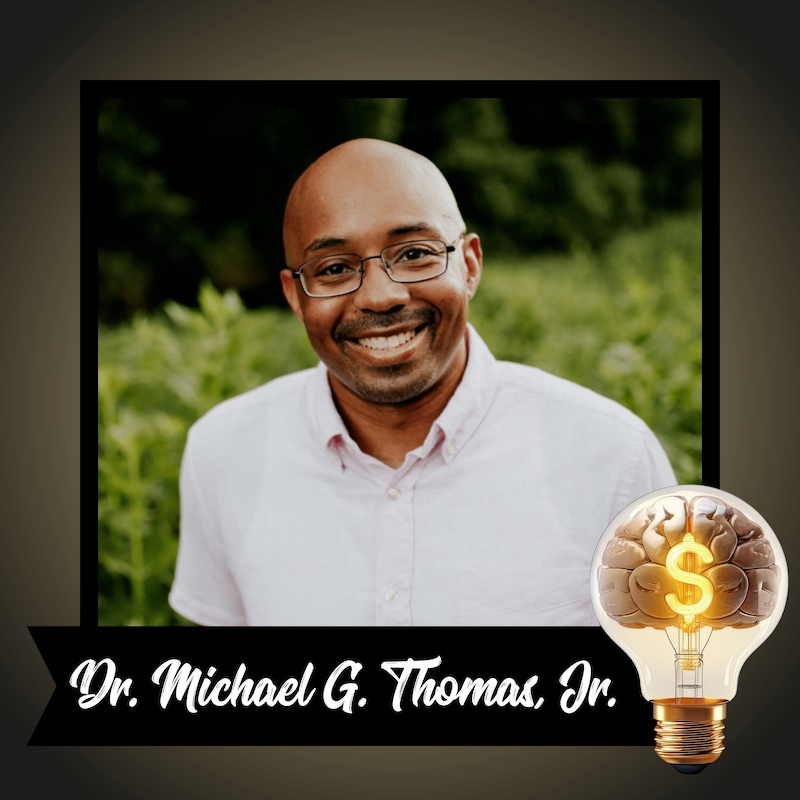
On this episode of Financial Behavior Thought Leaders, host Dr. Mary Bell Carlson welcomes Dr. Michael G. Thomas, Jr., one of the Financial Behavior Keynote Group’s exclusive speakers renowned for blending behavioral finance, empathy, and real-world insights into transformative keynote experiences. Michael shares the journey that brought him to the stage, beginning with early public speaking experiences in his youth, and traces his evolution from a natural storyteller to a highly sought-after speaker and lecturer. The conversation dives deep into what sets an unforgettable keynote apart, underscores the power of intentional communication, and unpacks the essential role of empathy in financial advising.
Together, Mary and Michael explore the substance behind Michael’s acclaimed keynote, “Maybe It’s the System,” which challenges advisors to look beyond surface-level client behaviors and examine the systems—personal, societal, and economic—that impact financial decision-making. Michael discusses how his classroom experience serves as both a laboratory for testing ideas and a crucible for developing inclusive, resonant messaging. The episode also touches on the intersections of equity, financial empathy, and compassion, while sharing behind-the-scenes stories about customizing keynotes for different audiences, especially during sensitive political and cultural moments.
About Dr. Michael Thomas
Michael G. Thomas Jr., Ph.D., is an Accredited Financial Counselor (AFC®) and a lecturer at the University of Georgia. His research focuses on financial empathy and self-compassion, data visualization's effects on financial behavior, and the connection between brain function and money. Dr. Thomas's philosophy on how to effectively interact with money can be summed up in his Ted Talk: Financial Empathy: Understanding the Story Beneath the Numbers. Utilizing financial empathy as a process for active listening and the creation of client-focused financial recommendations are reflected in two financial literacy and capability programs he helped co-create: Money Dawgs and Discovering Money Solutions. Dr. Thomas is also the founder of Modom Solutions - a virtual financial coaching service he has been providing since 2015. He will soon be an author as he expects to release his forthcoming book, Black Financial Culture: Building Wealth from the Inside Out, in 2023.
Key Takeaways:
- The Power of Intentionality in Keynote Speaking: Michael highlights that the most memorable keynotes are the result of meticulous intentionality. Every word, concept, and story is carefully crafted to resonate with the audience. This level of preparation often gives the illusion of spontaneity while ensuring that the message is cohesive and impactful, no matter how many times it's been delivered before. He emphasizes the importance of researching the audience, aligning messaging with organizational values, and iterating talks based on feedback to make lasting connections.
- Empathy is an Essential (Not Soft) Skill: Moving beyond the notion of empathy as a “soft skill,” Michael reframes it as an essential, indispensable part of effective advising and communication. True empathy, he explains, requires understanding your inner systems—emotions, triggers, social background—and then using that awareness to comprehend the unique experiences of others. This empathy isn’t just about surface-level identification but involves deep, compassionate engagement that can drive real client progress and trust.
- Systems Shape Financial Behavior: A core message from Michael’s keynote is that individual choices don’t exist in a vacuum; they are profoundly influenced by broader systems—cultural, socioeconomic, digital, and familial. Blaming clients for poor financial decisions often overlooks the structural barriers and incentives that drive “bad” behaviors. By recognizing and unpacking these systems (like addictive food marketing or digital platform algorithms), advisors can replace shame-based approaches with more compassionate, objective guidance.
- Navigating Difficult Conversations with Humanity: Michael recounts experiences presenting to divided or polarized audiences, especially during challenging social and political climates. He attributes his success in uniting audiences across divides to his ability to frame even the most sensitive topics through a shared lens of humanity—validating varied experiences without fueling division. By focusing on universal emotions and the idea that everyone navigates systems, he offers models for having hard discussions that bring people together rather than driving them apart.
- Growth Comes from Sharing, Feedback, and Community: Michael’s journey underscores the value of testing ideas in “safe” spaces like classrooms, actively soliciting feedback, and being part of strong professional communities. He draws an analogy between perfecting a pie crust (with hidden, hard-learned tricks) and refining a keynote: real mastery requires mentorship, openness to input, and a willingness to adapt. This collaborative, learner’s mindset benefits both speakers and the audiences they serve.
This episode is a rich listen for financial professionals, event planners, and anyone interested in behavioral finance, communication mastery, or the art of public speaking. Dr. Michael G. Thomas, Jr.’s insights are both practical and deeply human, offering a powerful reminder that real change—on stage or in advising—starts with empathy, reflection, and a commitment to understanding the systems at play.
Transcripts
Welcome to Financial Behavior Thought Leaders. I'm Mary and this podcast takes you behind the scenes with top speakers and financial services. So whether you're a financial advisor booking a client event, an event planner looking for the perfect keynote, or a financial professional wanting to learn from industry thought leaders, you're in the right place. Today we're so excited to welcome Michael Thomas. Michael is one of the Financial Behavior Keynotes group's exclusive speakers and he's known for weaving behavioral finance empathy and real world insight into transformative experiences for advisors and clients alike. Today we're going to explore the system beneath the surface, the one that might be holding your clients back and how his keynote maybe it's the system and is helping advisors shift their perspective and drive long lasting change. Welcome Michael. We're glad to have you.
Michael Thomas [:Thank you, thank you. I appreciate you. You're doing good work, Mary, so thank you.
Mary Bell Carlson [:Well, Michael, before we dive into your keynote, I want to back up for a minute and find out how did you get started in your speaking journey?
Michael Thomas [:Yeah, actually I've been thinking about this and to be honest, I've actually been doing public speaking for a very long time. I remember one of the first things that I did as a speaking event was in middle school. I was selected for the Martin Luther King speech. And so I'm from the city of Gary and there were roughly there were hundreds of people who were present. And I'm sitting here and I'm giving this speech to all these amazing and esteemed individuals and I didn't really think anything of it. And there were other opportunities where I would speak. There were events that we would have with the particular class. In high school, I literally had everybody bawling and crying and laughing at all the different things.
Michael Thomas [:And the more and more I've thought about this, my teacher or my English teacher at that time said that you have a gift for speaking. Again, one of those moments where you don't really kind of think about it and then from there actually doing a lot of stuff for free for a very long time, whether that was in college, whether that was post college, speaking at schools, speaking in libraries, speaking in closed rooms. So a lot of what maybe people may see of me today is actually and an honestly, honestly, years and years of engaging and speaking in different spaces. And so I've, the more I think about it, I was like, man, I've actually been doing this for a long time. But I never really considered it a gift until I started navigating the financial services space and individuals and more and More individuals had reached out to me to come and speak for this, that or the other. And I've started to realize that maybe there is something to this. And then also with your nudging and saying, hey, Mike, you could do more. You do have a gift.
Michael Thomas [:I don't think about it that way, but I think that it is a gift, and it's one that I'm trying to do a better job of honoring instead of hiding it, I guess, if that makes sense.
Mary Bell Carlson [:Yeah. And let me put a little more context around this, because I remember seeing you speak for the first time. Oh, gosh, it's probably eight plus years ago now at an AFCPE conference. You had keynoted, and I really didn't know you. You went to University of Georgia, but our paths had never crossed. And I remember watching her keynote in a room of, I don't know, roughly 700 people and literally could hear a pin drop like, it was phenomenal, because usually at conferences, people are typing on phones. You know, there's little conversations going here and left and I. And I'm probably part of the problem, but I was amazed.
Mary Bell Carlson [:You not only kept everyone's attention, you kept my attention, you kept everyone just riveted in the palm of your hand. And I remember walking up to you after that speech and saying, I don't know who you are, but I want to follow in your. Your trail. Because you. I agree. I think there's that natural gift that you have, but also that just amazing work ethic. And so let me add another piece of that context, too. For those that don't know, you actually speak and lecture every semester to thousands of students every single semester, which is part of that training platform that you were talking about.
Mary Bell Carlson [:Right. Like, this is not new material for you. You have honed this skill to precision. Tell us more about what you do.
Michael Thomas [:Yeah, I think actually that's a really good point because my. My class or my classes actually do serve as a testing realm. And so you're. It's. It's a really cool way, if you're comfortable with it, to try things and to see how it lands and how it resonates. How do. What do people take away from it? Was it meaty? Was it memorable? Or was it something where it's like, hey, I thought that was funny, but nobody else thought it was funny. Let's check that off the list.
Michael Thomas [:Right. Because if it. If it doesn't fly here, it's very likely that it's not going to fly in other spaces. Right. And so it is a really cool space to see how far you can push things as it relates to sensibility. There are a lot of dynamics in the United States right now, unfortunately, that are colorized. And so when we're speaking to audiences, we're speaking with a. To a diverse group of individuals.
Michael Thomas [:And we always want to be able to drive a narrative and to drive a message, but we also don't want to shut people down, even if they have different viewpoints. So it's also this cool space of saying, like, how can I. How can I craft a message and speak to what authentically I want to speak to? But also doing it in a loving and compassionate way so individuals can hear you. And does it drive division? Right. But actually creates a space for. Huh, I never thought about it that way. And I trust you to engage further where I may have differences, because I know that you're not going to judge me or shame me or make me out to be this bad actor, because I believe the way that I believe. But the thoughtfulness of what you spoke to kind of allowed for me to let my guards down a little bit.
Michael Thomas [:And honestly, that's the only way that we can grow. And it works both ways, not just for the people that we're speaking to, but also for the person who's on the stage once they're in a winner off stage, to listen to these things and hear these things and think about creative ways to explore ideas or even pivot from ideas. And I've done that before because I realized that, hey, I'm not approaching this in the right way. And at the end of the day, I think that the work that we do is about impact. And always. And I have the same. All right, this is my vetting phrase. Is this about your ego, or is this about the goal? Right.
Michael Thomas [:And if it's about the goal, then it's not about me. And if it's not about me, then there's. You can play, you can do all these different things, because at the end of the day, it's just about serving other people. But if it's about ego, it's about serving yourself and wanting yourself to be right, even in the face of people saying that you may be wrong. So one of the things that I've been very intentional about when I play and I do different things, I test things out, is that I always remind myself, this is not about ego. This is about the goal. And the goal is, hopefully, to have a lasting impact and to leave a legacy that lives beyond you. And so in everything that I do, I try to honor someone from the past.
Michael Thomas [:So whether it's my sister, whether it's my mother, whether it's my children, whether it's. So I try to bring them into these things as well. Like these sticky moments. Right? To kind of create these spaces for legacy for them. But even more importantly, though, use their stories and our stories to hopefully have an impact that I will never benefit from and any tangible way. But I know that in a small way, it may have made the world a better place. I know that kind of sounds cliche, because I don't think that in any other means I can make the world a better place because there's just so much you have to get through. But when you're doing a keynote and you have 700 people and a thousand people and 500 people, right, you have an opportunity for touch in a very intimate way that I'm starting to recognize and realize that this isn't normal.
Michael Thomas [:Everybody doesn't get the space to be entrusted with those spaces. And it's weighty the more and more I think about it. So I may need to stop thinking about it, but I'm starting to embrace the space and to actually think bigger in terms of what type of impact we can have in these spaces. But I get a lot of opportunities to play before I ever get to the stage.
Mary Bell Carlson [:Well, let me add one more piece of this. You're very intentional with the words you use and in how you use. I think that's one of my favorite things. I saw you just a couple of months ago speak at an event here in Washington, D.C. and you. I'm just gonna bring it up. You had this word that you use, and you said agent. And I remember afterwards having conversations with people in the room, and they said, you know, it took me a hot second to figure out, was he talking about an FBI agent, a CIA agent? Like, we are a D.C.
Mary Bell Carlson [:crowd here. And so we were, like, trying to figure out. And I. We kind of laughed about that. You and I had shared that moment afterwards, and we laughed about it. But I think there's so much there of. You are so careful to know that audience and to know the intentionality. I think that's what I want this audience to hear is keynote speeches.
Mary Bell Carlson [:Great keynotes are intentional. They are very honed to the point that it looks like it comes off the cuff, that it is rehearsed hundreds, if not thousands of times of hours and work that goes in to every word in.
Michael Thomas [:In that particular speech. Even like with. With the agent thing. Yeah, because. Because one of The. Because, like, there's a. There's a thread in the talk that's kind of connecting this idea of agent agency and then kind of systems and all that jazz and then. And when you do these things, sometimes things can also become like, it's almost when you.
Michael Thomas [:When something becomes rote and it becomes so memorized, you kind of. It's so easy to forget that that's just normal for you and know that in some spaces, it lands better than other spaces. And when you said that, I was like, you know what? You're. You're absolutely right. And when you made that comment, one of the things that I did is I immediately went back to that particular talk and I said, all right, the narrative, the thread still makes sense, but where do I just spend a little bit, a little bit of time to clearly identify agent system and any integration of the two? And because of that feedback, which I think is incredibly helpful, I've been able to make that talk even better. And that's the beautiful thing about this process, is that we play. Sometimes things land the way that we want, but just because it lands the way that we want. Right.
Michael Thomas [:Doesn't mean that we should never stop. Because that same speech at AFRPE, standing ovation, nobody really questioned it. Oh, yeah, it's good, right? But then. But again, this is not about either ego. It's about V goal. And I could easily step back and say, you know, I appreciate that insight, Mary, but, you know, I don't see why they didn't get it, because I was very, very clear. I've done this before, and, yeah, I'm not going to change anything, but in receiving that feedback, because if it, if it comes up for multiple people, especially in that setting, then there's an opportunity to make it better, to drive it home better. And if you do that in that situation, then it makes it even better for the people who are already in a.
Michael Thomas [:No, it's like, you can't go wrong doing it. And when you spoke to, like, intentionality for that particular talk, I went and I researched your organization. I reviewed their mission and their vision statement. I used themes and threads of their language in that talk. So there are some slight moving parts. And I ended it with their mission in terms of how do we think about an agent and a system and the way that they're collaborating to make a significant or have a significant impact on the multiple constituencies that they're serving, so to speak. And to your point that intentionality goes into doing your research, talking to the event organizer, asking tons of Questions. I call it the thread.
Michael Thomas [:Like, once I see it, then it's like, all right, I can thread. Thread it, right? You get the spirit of the thing, and you start threading the spirit of the thing through your talk. That resonates with what the event organizer is trying to achieve. And it also being mindful of the sensibility of the individuals who are in the audience. And yeah, it's a fun process. I like to play.
Mary Bell Carlson [:You can tell why you are a fan favorite and why you connect so with audiences. Is that intentionality and really working through it. So let's go into the next thing. I really. You're really well known for this idea of financial empathy, financial therapy systems. You're really bringing that strong lens of equity and really social understanding into room. So tell us more about what you specialize in and really, why does it matter right now?
Michael Thomas [:Yeah, I think big picture I specialize in is thinking about. In a process of empathy and not just empathy in and of itself. So you'll hear a very similar thread. I'm going to use threading again through. Through all my talks, because the core of what I want to do is that I want to make empathy, compassion, self compassion a mainstream way of thinking about how you engage with your clients, self compassion, how you engage with self, family, so on and so forth. And not think about this as being boundaryless, not think about this as being soft, because we use soft skill. But when we use soft skill, and I'm speaking to a room full of men, that doesn't. That doesn't resonate.
Michael Thomas [:So I don't use soft skill for empathy. I use an ascent. It's an essential skill. It's a necessary skill. And so again, that kind of gets back to sensibility and language and how we use it. Because again, if you speak to an audience, I need to know if am I motivating you with my words, my presentation, or am I demotivating you? And so in order to do this, I have to understand the sensibility of audiences and why there may be barriers. So empathy is just not. What can another person choose? Because if, and for instance, for those of you who are listening right now, if the shoes I was wearing were wet or grungy, there was dirt, there were different types of things that were on the shoes that you kind of like, ooh, what is that? What did you just get finished walking through? Would anybody rationally say that, you know what, I'm going to engage in empathy, Take off your shoes, I want to walk in them? No, let's just from A very human level.
Michael Thomas [:Nobody's going to say, take off your shoes and let me walk in them. What we want to do is that we want to imagine us experiencing your situation, but comfortably in the shoes that I'm already in, right? So that's a barrier when we start thinking about empathy and what it actually means to engage this process of empathy, to get to compassionate empathy. So in order to do that, we need to think about systems, right? We need to think about internal. Internal systems. For myself as an individual, my emotional state, physiology, neurochemicals that are produced or not produced, what triggers, what are my cues for things and how. What's my automated or my. My, my. My response to.
Michael Thomas [:My adaptive response to these cues that kind of come up? What is that for me? Where did that come from? Why is it there? Did I even know that it was there? Right? And going into that deep exploration of self, because I feel like if I can get someone to be aware about their own self and experience, then it has to be posited that other person across the table from me has their own unique experience, has their own unique circuitry, has their own. So now we're getting to, okay, I see what empathy is now, right? But it's also very much so rooted in self, at least initially. And then I can begin to say, all right, I see the reason why I need to unpack this. And for a lot of people when it comes to empathy, it's because they don't see the reason why they struggle with it is because they don't see the reason for it because they're only living in existence. But when you can actually take their existence and have them rationalize that another person has experiences, but they're separate from yours, but they have experiences too, you justify your own reasons for responding the way that you responded or honking at that person who you thought cut you off, but maybe you just weren't paying attention, that was your response, right? So the people that we navigate in the world and space around us actually have very similar things that we can actually connect to. So I kind of think about, let's find the shoe that we can connect to as being an African American male. I've had tons of people come to you say, I don't know what it means to be black or what it means to navigate certain experiences to be black. And I say, you know what? Rightfully so, there are certain things that I don't know what it means to navigate white culture, in some instances, it's mutually, like, beneficial in a way that ram this conversation.
Michael Thomas [:But what I will say is that. But do you know fear? Do you know emotions of shame? Do you know emotions of feeling like you're. You're left out and not being embraced and being brought into and you're the person outside? Because guess what, those are human emotions. So the experience in and of itself is one thing, but the emotions that undergird it are universal. So we understand and connect so we can find the right shoe to connect once we found the right shoe of connection. And someone says, I know what fear fears like fear feels like. And for a daughter who is going out at night and it's not well lit and I'm concerned about her safety, yeah, I know what that fear feels like now because I'm a daughter, I know what it feels like generally speaking. So when we understand fear, we understand emotions and we can contextualize it cognitively and just our understanding of it, we can then begin to move to compassion.
Michael Thomas [:Is how do we respond in such a way with kindness and care that takes into consideration the experience of this person where them achieving what it is that they hope to achieve or they desire to achieve or the life that they live for. The solutions that I provide are not going to be based on my context, my shoes, my social capital, my resources, my access, my solutions are compassionately going to be rooted in, well, maybe how can I utilize what I have to give to this person so they can actually step in my shoes to actually navigate things because I'm lending those in this process while also thinking about the barriers that they face that I don't and how I advocate for or help that person see around some hurdles that they don't have the capacity to see because they're triggered emotionally. So the benefit that I bring here is that now I can see it, but I'm not emotionally driven by it, but I understand the emotion. So I can use my prefrontal cortex to then to begin to help this individual engage in a process of taking meaningful action while we're trying to mitigate their amygdala and their flight and fight response and so that they can begin to trust this action. Because historically in the systems that they navigate, I've been here before, this doesn't work. Now we're talking about the parietal lobe of the brain, like history, like the Rolodex of things. And it was like, I want to do this, but I don't trust it. Right.
Michael Thomas [:And so there's all these different elements. It can be societal, it can be family dynamics, it can be a Husband and spouse, like, I want to invest, I want to do all these different things. But there's tension in a household. That's a system. So if somebody comes to me and they're not investing, I just can't say that they don't care. And we, we used to see this a lot before the pandemic hit, because shame was a way in which we engage and try to nudge people, whether we'll admit it now or not. But it was a very powerful narrative that people were utilizing in our space. And then if people didn't do what we told them to do, we would basically just absolve ourselves and say that they didn't care.
Michael Thomas [:Right. So you wouldn't have compassion, you wouldn't have empathy. There was no need to, because that was the paradigm, which is why I did the TED talk on financial empathy. Not because empathy hadn't already exist and people weren't already expressing empathy in a financial services space. It's just that we weren't tethering empathy to the financial circumstances of the people we were serving. So I was like, we need to just put these together to help people recognize that we need to be empathetic here too. And these are the reasons why. And so the.
Michael Thomas [:Maybe it's the system. It's just a me building out this notion of ways in which we can put ourselves in other people's shoes. Right. Or think about things in different ways that we may not have thought about them before so that we can engage in a process to get to compassion, empathy. And I think that systems is one way to think about it, but not from a black and white lens and perspective, which I think is equally important as well. Because when we think about systems, oftentimes we think about them from racially divides. But systems are abundant everywhere when utilizing technology. People are online right now.
Michael Thomas [:People are on their phones. Guess what? There are big companies that have spent a lot of money a b testing what types of systems they can curate to keep you on your phone. That's a system. So if you can't stay off your phone and you can't stop shopping and buying, should I just shame you as an individual and say you just don't have willpower?
Mary Bell Carlson [:Or maybe it's the system.
Michael Thomas [:Maybe it's the system and the integration of the two. Right. Because systems are created in such a way understanding human behavior. So people understand your human behavior better than you do. How can you win? How can you win? Right.
Mary Bell Carlson [:Yeah. And Michael, we are deep into your keynote. The. Maybe it's the System. I feel like this is such a core message in this day and age. And I want to share a story, not necessarily that comes from your speech, but one that you have shared with me that has left lasting impact. And I think you shared this years ago. I remember walking out the door, I said, hey, I'm running to go get my kids.
Mary Bell Carlson [:I got to grab my shoes. And you said something in passing you probably don't even remember. You said, don't wear your good shoes. And I said, what in the world are you talking about? Why does it matter what shoes I'm wearing to go pick up my kids at the park? It's with this. I was like, wait, what is going on here? Because I never had thought for once in my life about what shoes I wear to go to the park. And yet for you, the system in which you grew up in that was a matter of life or death. And I had never put it in that perspective. I thought was just a beautiful way to share your system and how I had been blessed blind to some of the systems that you have grown up under.
Mary Bell Carlson [:Tell me more about that.
Michael Thomas [:Yeah, yeah, it's. It's one of those things where. So I. In the 90s, very clearly the 90s was riddled with gang culture. And so if you were growing up during that time, especially where I come from, which is near Chicagoland area, the two primary gangs were Vice Lords and Gangster Disciples. So wearing blue and red was a thing. So you had to be mindful of if you went to Chicago or if you came to Gary, what side of town you were on and what colors you were wearing, because that would attract attention. And if you were in the wrong area, you were wearing the wrong colors, that could be a very significant situation, and you needed to be aware of that.
Michael Thomas [:And if you had shoes like some, like, special, like Jordans or whatever it may be, you have to understand that in these communities, Jordans, even though from the outside looking in, you won't see it, but from the inside, Jordans have a lot of value. And I think that's indicative now of sheep culture and how this has kind of permeated. And when you have somebody who has J's, like, you're not only taking something that's sought after and hard to get, but you also have something that has economic value within that system. Because if I need money, I. I can sell these Js and get a significant amount for it. I can pawn these Js and get a decent amount for it because it has currency. And then there's a cool element to it. There's all these other different nuances that matter within that system.
Michael Thomas [:And we're also talking about individuals who they've only known the block or a few blocks and don't really venture outside of even knack system of where I was from in, in Gary, Indiana. And so I've always had to be keenly aware of these things and be intentional in terms of how to navigate them. Now let's flip it. That's just one system of any systems. There are political systems, there are corporate systems. Right. In terms of. And it's almost like when you're navigating these spaces, regardless of who you are, you have to understand the system, social codes to navigate the systems.
Michael Thomas [:There's affluent systems, right, that if you're navigating affluence, but you don't approach it in a way that other affluent people do, then guess what, you're going to stick out like a sore thumb, right? And so, yeah, there's the Gary system, but it's just one of a whole host of systems. So my experience, again tethering it to the main point here is that it's a different system, but once we understand that, oh yeah, there are systems at work that you got to navigate. There's politics and all these other different things you like. It's. You want to be visible for these things, but it doesn't matter if you're visible for these things. You want to make sure that you're here for this or doing this and it's okay if you don't do this. Like somebody has to tell you the lay of the land. It's no different to me than if we were in Gary, Indiana or, or in a.
Michael Thomas [:A system at work in terms of how do you position yourself to get reward and recognition. So for me, the thread is that the system and having to navigate something to survive it is a universal thing and we can all connect to that very underlying thing. Now, how it happens in the context of my life could be different, but you understand that I've had to learn how to navigate systems. Everybody can relate to that. So my goal always is, is to have difficult conversations, but to have difficult conversations that bring people together as opposed to utilizing difficult conversations to create further divides. And if that's my legacy, then I'm good.
Mary Bell Carlson [:Well, let me add to that legacy because I remember you gave this exact speaker speech in November of last year. So that would have been November 2024. It was weeks, literally days after a very tumultuous presidential election. And you presented in front of a room that was very split politically. And I remember being a little nervous. I'm not going to lie. I knew this was the speech you're giving. And I was like, oh, my goodness, it's going to depend a lot about where this lands and how it lands.
Mary Bell Carlson [:And, Michael, I was blown away with how you navigated this delicate topic, because it can go one side or another really quick. And the way you navigated that topic with a very divided audience, and I have to tell everyone at the end of it, received a standing ovation from everyone in the room. Didn't matter what political line, economic line, racial line, standing ovation. Because you were able to navigate difficult conversations about these systems in a beautiful way that allowed everybody to feel and connect, to be a part of it. Just what you said earlier, the humanity of it versus the divisiveness of it all.
Michael Thomas [:Absolutely. And the only thing I would say there is that oftentimes when we have these conversations about systems, sometimes what we do is that it's like it's either the agent completely or it's the system completely. So the way that I engage with this is that we still have agency, we still have to make choices, we still have to be aware and all these other different things. But what we can't do is to say that there are factors that are happening beyond us and around us that are interacting, that could actually be causing us to behave in a certain way or think away or get. Like if somebody is just spending all of their time on Twitter.
Mary Bell Carlson [:Yeah.
Michael Thomas [:And Twitter is gathering a lot of their data and information, and Twitter wants them to stay on the platform. Guess what? The algorithm for Twitter, any other algorithm is going to keep pumping stuff at this individual that keeps them either enraged or whatever it may be to stay on the platform. It's a system. Now, as an agent, it could be that I should know better. But what I've realized is that many people don't even understand the systems that they're navigating. Many people don't understand economic systems. Right. There's been more conversations around the Fed and federal fund rates than ever before.
Michael Thomas [:There's been more conversations around bond markets and how different things are influenced as it relates to the federal funds rate. There have been more conversations around tariffs and whether or not this is going to do this. So there are more conversations that are happening now. But generally speaking, if we go back just five years ago and we just randomly walk in Atlanta, Chicago, D.C. or whatever it may be, and tell me about the economic system that we navigate. Most people wouldn't be able to tell you you. So you have people who are expressing agency but don't understand the very nature of the systems that they're navigating and the influence that those systems have. But yet what we'll say is, well, it's still all that person's fault.
Michael Thomas [:Even though they don't know what they're navigating, they don't know food systems. Food is designed in many instances to be addictive. They call it craveable, but it's addictive. So if I can't stop eating fast food food or this sugary sweet that was designed for me to eat more of it, because what's the business model? You got to go back to the store and buy more of it. So our revenue and profitability go up. If you don't know that the food that you're consuming is designed in a certain way, then what happens? We shame and blame the individual, the agent, and say, why can't you do better? Don't you think it would help that person to say that, well, let's actually look at what you're consuming, right? Let's do an audit. Let's do an audit of what your daily diet is. I'm not asking you to change your daily diet.
Michael Thomas [:Let's just do an audit of it. And we go through and have them list what they ate throughout the day and eat multiple times throughout the day. And we say, did you not notice during your day that when you ate this, you were still craving more? And as you can see as we go down and we look at your purchases, it only happened once you started eating, eating, and you started eating more and more and more and more. Let's go back and look at that thing. And what would happen if we take that one thing, not changing your entire diet, but that one thing out of your system? And then here's another question. Why is that a habit at that time of day, Right? Are you energy, Are you. Do you not have any other options or whatever it may be? Because there's another system right there in terms of what's available to you, what's not available to you in your system? So people can say, eat something healthy, but if the only thing that's available to me is the corner shop where the cheap stuff is the only stuff that I could really afford, and I want to buy like this other stuff, but it's so crazy expensive, I'm just going to buy the cheap stuff. That's a system dynamic.
Michael Thomas [:So if we can, if we can take shame out of it by helping the agent understand the system, not removing accountability, because that's still there, but then also helping them understand the system that they're navigating, then maybe we're in a place to have compassionate conversations that aren't rooted in judgment and shame. Maybe even as we think about the system and why it's designed the way that it's designed, maybe it's not a space to judge it, but understand that there's a reason why it was established that way, that it was, but now in a more sensible way, not in a combative way. Say that, hey, well, what if we chose to just make these subtle differences in the system that can allow for still profitability in all these other different areas, but also create a space for agents, human beings and individuals to actually have a real chance at having good health and having wealth and all these different things? And this would be the last thing I say. Mary, I teach the intro to personal finance class. Have over 1200 students, as you very well know.
Mary Bell Carlson [:Yeah.
Michael Thomas [:How many. How many conversations do you think that they're hearing after they leave my class about saving and investing compared to the litany of messages that they're receiving to buy this? Feeling sad, feeling unhappy, Go on this trip, you feeling this way, not connected with friends, Come join this and pay. X, Y, Z. Right. Like everything that they're getting outside of the class is spin, spin, spin.
Mary Bell Carlson [:Yeah. And that makes you happy.
Michael Thomas [:All right, so it's kind of like, hey, so there is a system that they're navigating. If I only meet with you for three hours out of the week and the rest of your hours of being inundated to buy stuff, like, right. The. The average.
Mary Bell Carlson [:There's an off balance there.
Michael Thomas [:There's an off balance. But. And so one of the things that I speak to with my students, which is why I do the talk, is that we've been talking about systems for years, and every section of our class we talk about. All right, so what's the system here? Because I need you to see it. Now, if you choose to still buy the thing because you desire the thing, that's one thing. But are you buying it because you've fallen into a system that's nudged you towards a course of action that you didn't realize you were nudged towards, that's a different decision. And I just need you to be able to differentiate between the two.
Mary Bell Carlson [:Well, Michael, this at the end is probably my favorite part. The audience wants to know and what I'd love to know something that we don't know. What do we not know about Michael, even after seeing you on stage? What's something unique about.
Michael Thomas [:What's something unique about me? I love to bake, so I like to make a number of different things from, from, from scratch, like apple pies and pound cake and stuff like that. I just don't like the artificial taste of buying these things store bought. And I grew up with a grandmother that made everything from scratch. So when I eat certain things at certain times, I'm like, man, this doesn't taste like my grandmother's pound cake. This doesn't taste like my grandmother's apple pieces. This doesn't taste like. And what I've realized is that if, if I want that taste, I have to do the work. Which I think threads back to if you want to be successful in speaking, you can't shortcut it, right? You, you literally, you have to do the work.
Michael Thomas [:You have to be willing to, to fail. Like me making my first pie crust, right? Because then you realize that, because grandma might tell you or you might have the recipe. But there's always the tricks of the trade that you don't really realize. Like, oh, you got to keep the, the, the dough cool and on a cool surface as you're rolling it out so you can actually fold it and get it into the pie plate, right? I was doing it on a warm surface with warm hands and I'm trying to roll it out. It's getting stuck to the roller and I'm getting frustrated that I pounded it, added more flour to it, and now the consistency is off and I got a sprinkle more water. And this would be the shout out that I would kind of bring this back to you in terms of, of the financial behavioral keynote group. And I think where there's elegance and there's power, there is that, like I just said, if you can work with a group of individuals who've kind of been there and done that, you don't have to go through that painful process of learning how to roll out the dough and do all that good stuff that takes, it takes time and wasted time and wasted opportunities through. So for like this and collaborating with other people in this space, what it does is you don't just get the recipe, you also get the added other things.
Michael Thomas [:Just, just a small solo things that you don't realize that make a huge difference. And you're like, if I would have known that two years ago, I would.
Mary Bell Carlson [:Have been saved a lot of heartache.
Michael Thomas [:And I would have been much further along in doing my speaking and commanding the, the, the money that maybe I would like to command in that space. So there are a lot of lessons learned there. But again, I like to bake and do all these other different things as well.
Mary Bell Carlson [:Oh, that's fun. I like the food connections here. We got a lot of food connections going on.
Michael Thomas [:Yeah, I'm definitely a foodie.
Mary Bell Carlson [:I love it. Well, Michael, thank you so much for your time. And if you're looking to book a speaker who can help your audience rethink about how systems, social capital and behavioral insight come together and to create good financial outcomes, Dr. Michael Thomas brings heart research and powerful frameworks to the stage. You can learn more and book. Michael at keynote.Financial. Thanks so much for joining us on financial Behavior Thought Leaders. We'll be back soon with more conversations that bring you closer to the leading voices in financial services.
