Shownotes
Ever felt like you’ve spent your whole life trying to fit in — only to realize it’s draining your spirit?
In this conversation, yoga and meditation teacher Kira Michelle shares why “fitting out” can be the most liberating move you’ll ever make. She opens up about her own journey through anxiety, depression, and self-discovery, and how embracing scars — both physical and emotional — can become your gold-filled superpower.
You’ll discover:
- How to take your yoga or meditation practice off the mat and into your everyday life.
- Ways to turn your most uncomfortable traits into your greatest strengths.
- How listening to your body’s cues can help you heal faster and more authentically.
Take a deep breath and learn how to embrace your true self, celebrate your scars, and create a life rooted in resilience and authenticity.
Receive my free text messages by texting Whole Again to 866-612-4604
Did you know that stickers are wonderful visual cues to help you create healthy habits? You can get one of my free Pause Breathe Reflect stickers by clicking sticker.
To discover more and sign up for My RIPPLE EFFECT newsletter by clicking Ripple Effect.
We can also connect on LinkedIn. or at [email protected]
Subscribe to be sure you don’t miss any of the micro-meditations, wellness tips, and guidance that I publish every Monday, Wednesday, and Friday at 7:11 am.
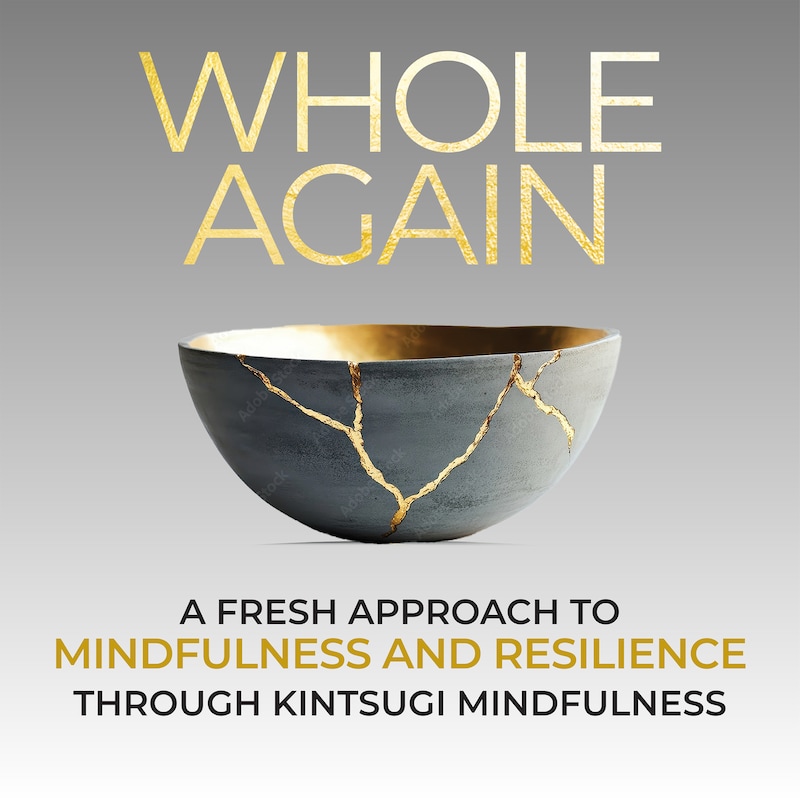
With Whole Again: A Fresh Approach to Healing, Growth & Resilience after Physical Trauma through Kintsugi Mindfulness, listeners explore resilience through personal stories of trauma, scars, and injury while learning to overcome PTSD, imposter syndrome, self-doubt, and perfectionism with self-compassion, self-love, and self-worth. Through insightful discussions on building resilience, resilience building, resilience and fitness, fitness and resilience, stress management, mindfulness practices, and digital wellness, the show offers practical tools like breathwork, micro-dose meditation, grounding techniques, visualization, and daily affirmations for anxiety relief and stress relief. Inspired by the art of kintsugi, the podcast embraces healing as a process of transformation, encouraging a shift in perspective from worry and being overwhelmed to gratitude and personal growth. By exploring the mind-body connection, micro-dosing strategies for emotional well-being, and holistic approaches to self-care, this podcast empowers listeners to cultivate emotional resilience and live with greater balance and intention.
Transcripts
In this episode, you'll discover why fitting out instead of fitting in could be the most powerful shift you can make. Hey there, it's Michael. During the early days of my recovery when I was still in the hospital, my wife would bring me lemonade with lunch. Besides being super delicious, it was a reminder that we can take lemons and.
Make lemonade, and we are gonna do just that. Over the next seven weeks on our Friday episodes. During this period, I'm going to be helping one of my family members recover to help them feel whole again. That's the lemon part of it. The lemonade is, it gives me an opportunity to reintroduce to you some of the amazing guests I had on the podcast when it was known as the Kintsugi Podcast.
And in this episode, I'm so happy to share one of them with you. But before we get to the episode, I first wanna say thank you for being here, and thank you for being a survivor. And as I've mentioned over the last couple weeks, if you wish to receive those great text messages that are just the right message at the right time, and they're all free.
get into our conversation. In:Now I will say, full disclosure, my coaching company is called Peloton Executive Coaching, which is separate and distinct from one Peloton, but I do believe in the power of yoga as a way to build a mind, body, breath connection. And since the body keeps score, as we know going through what we're going through.
Practicing yoga and meditation can be very meaningful and therapeutic to so many people as we try to recover. At least that's been my personal experience in our conversation. Kira is honest and raw and vulnerable, and she shares how embracing our scars is a pathway forward that we can embrace, and the real value of meditation and yoga, as well as how not fitting in can be so liberating.
So if you're ready to get to know Kira Michelle a bit better, take a healthy breath in and a slow releasing breath out and get to know Kira Michelle.
Hey Kira, how's it going? Hi,
I'm good. How are you doing?
Good. I'm so glad to, in this capacity, 'cause usually I see you via an app, so it's really cool that I get to see you here on video. So I can't wait for this conversation.
It's definitely a pleasure to be here and it's really nice to have a student in front of me instead of me just being in a room by myself.
So this is great for me.
That's awesome. So how, how does your central nervous system feel at this moment?
That's a good question. A little better. Since you asked me that question. I always get a little nervous. I deal with a lot of anxiousness and nervousness. So it's really one of the reasons why I love teaching yoga and meditation is because I get to breathe with you all.
So as soon as you ask me that question, there's, it's like grounding and settling and you can just take a deep breath in. Exhale. Exhale. And you just already feel like, just bring an awareness to that.
Yeah.
Starts to shift it. So it's much better now. Thank you.
Awesome. And thanks for doing that by the way.
I was going to invite you to do a little bit of, so everyone listening can do that too, just to, yeah. Because here we have, I know you're more of an introvert, um, more of an vert, but we both get anxious.
Wait, what is an amni vet?
Oh, Amni Vert is someone that can go like a little bit of all directions.
Okay.
So one of the things I missed desperately during the pandemic was live music.
Oh yeah. Yeah.
So live music, you go to Madison Square Garden or a club that collective effervescence of like, when everyone comes together and then everyone knows every word, every song, like that moment is magic. So I miss that.
And if you think of introvert, extrovert, it's really around how we refuel our energy as Yeah. So I get totally jazzed after a concert. Like it takes me a while to like
wind down,
bring it down so I can go to sleep. 'cause usually it's late at night and we just saw Madonna at the Garden.
Magic.
Yeah. Magic.
Like I've spent more money on that woman besides my wife. Like my wife, I spent more, but I've spent more money on Madonna tickets than anything.
Yeah. Wow, that's amazing.
But it took a while to, yeah, bring it down. When we got home
really quickly, I wanna jump in there because yoga and so many people think it's so woo, which I did for a long time and I wanted nothing to do with it.
And we can get into that later.
Yeah.
But energy, when people talk about energy and I'm like, what? What is this fluff you're talking about? But then you go to see live music and you see everyone, everyone's nodding their heads or stamping their foot to the beat, and everyone is just in this vibrational frequency.
I know. I throw these words out and it goes, woo. But there's, it's science.
Oh, totally.
It's a physical energy that's like palpitating. So I just love that we can already bring that word energy in to something that so many people have experienced.
Yeah. And it's really quite fascinating people's relationship with the word, because it's everywhere.
Yeah. It's everything.
It's everything Einstein said, and he was this pretty smart guy.
I would say so.
Yeah. He said everything is energy. Yeah. But what's really funny, in my other part of my world, I talk to corporate leaders. So the minute you start talking about energy, they break out in hives in a rash.
They're like, oh, it's to your point, to Wooey. And I'm like, but it's all about vibe. If you're in a Zoom or you're in a big conference center and you're presenting, you're picking up on the energy. And so on one hand you're talking about it. On the other hand you're judging. It is. So
yeah, I think it's the language that we have behind things and then the preconceived notions that we have behind things.
I thought every, everything yoga was very like granola and very hippie-ish, and you had to not wear shoes and like dance in the like I thought that's what yoga was. I thought that's what these words had to be associated with. And realizing that that's just a preconceived notion that can be yoga, but it's not the totality of yoga.
Yoga allows it all to play in essence, but I think that we have such pinpointed views sometimes that actually keep us very closed off and glass ceiling, and it doesn't allow us to be, to explore. It keeps us really contracted and small rather than expansive.
I totally agree. Yeah,
and that's, that's something that I really try to do with my teaching is how do I make this relatable to someone who doesn't want the, I keep saying like fluff or the woowoo ness and I don't get me wrong, I love all of it now, but there still is that I can still feel resistance when someone is very woowoo.
I'm like, I, it has to be digestible and that's why there's thousands of yoga teachers.
One thing I did, I was meditating for 13 years, Kira
amazing
before I told a soul.
I just love that in general, doing good things for yourself or others without telling anyone.
I was just doing it and I was like, this is my little secret.
y meditation practice back in:Yeah. That's so good. That's such a weird state statement.
It was such a weird statement. It's like that
was time before internet. What?
Yeah. Like how old are you? Like before colored television and before the internet.
So that's when I started. But I didn't wanna tell anyone I was doing it because back then it was really, it was grape nuts, granola, hippie dippy flower child kind of thing. And again, I love that all now, but back then I was like, I don't know about this. So back to the question about Amni Vert.
Okay,
so this is gonna be great.
We're gonna go all these different places. So one part of me gets like fuel, that extroverted fuel of a concert, and another part of me just wants to be with like just a group of people or by myself. I also fuel up that way. And however I'm showing up, different moments require different fueling. So that's what a ambivert is.
So it's like someone in the middle or someone that can go both ways.
Yeah, maybe I'm a little bit of that too. I like to think of myself as an introvert, extrovert. Like I'm an introvert until I'm comfortable and then you're like, oh, she's weird.
Maybe. Maybe you are a little ambivert. Who knows?
Yeah.
All right.
So this gets me to the next question. So if you take your profession as a meditation teacher, as a yogi off to the side, so no professional thing, how would you describe yourself?
I don't want labels. I don't like labels. Okay. Can I just be a free spirit? I'm a seeker. I've always been a seeker since I was a young child.
I'm a creative and that shifts and changes like it's always been through like movement, dance, gymnastics, surfing, boxing. I like the element of creativity through my body and that's how I like to process a lot of things. Or it's also how I like to avoid a lot of things. I think I'm just a seeker and I wanna just continuously grow and become a kinder, more evolved, more conscious soul who's less and less attached to the physical that like the 3D realm.
Curious. I'm a curious seeker.
Yeah, I like that. I also like the fact that you're just like trying to stay away from the labels.
I have a hard time with labels. I think it, it puts us in boxes, which it's easier to categorize things, which is, it has its time and place and its purpose, but without going too deeply into it, I was a vegetarian.
I've been a vegetarian since I was 11. And I'm 37 now and I now eat fish. And that was a hard transition to go from and I was a vegan for a while and like we just clinging to these, the terminology for it. And sometimes we forget why we did the thing we did originally or sometimes we forget that, oh, currently I'm chewing with the idea of starting to eat meat again.
And it would only be red meat, it would probably be steak and it had to be sourced really well, like a humane kill if there's such thing like an animal that's had a good life. Because if I clinging to the idea that I have to be vegetarian or pescatarian or vegan, what about my health is telling me that I might actually need some red meat in my life and I don't have to go all the way out and become a carnival, but maybe sometimes we lose the train of thought of why we've actually done the thing and is it the best thing for me currently?
So I try to release the concept of labeling and they just be a little bit more, I don't know. Again, it's about coming, like it's presence. What is it that I need currently? Does that label still agree with me or not? So we don't get so caught there.
What I hear is trying to live life with some fluidity.
Yeah.
And also again, going back to meditation, yoga, listening to what your body is asking for you or from you. 'cause the body will whisper before it screams. And I would have to say like the vegetarian community, which I'm a part of, and my daughter was vegan, my youngest daughter was vegan for a while.
Those communities can be so rigid and so harsh of What kind of vegan are you or what kind of vegetarian are you? So growing up I did the whole like Irish red meat and potatoes. Life went plant-based and then. Coming back from my big trip across America, started to incorporate more fish in my diet. I have no idea what I am.
All I'm trying to do is I'm just trying to eat in a way that I think my body best responds to, however I'm fueling it.
Absolutely.
And being okay with that and not worried about not fitting into a certain community or not.
I, I speak about this in class a decent amount. I think I've taught a few classes in the last month or so where it's like I spent so much of my life trying to figure out how to fit in and felt really disingenuous to myself and really inauthentic to myself whenever I tried to do that.
And then just realize that it fitting out is the way to do it. But like when you're a teenager and someone says, just fit out, it's like, it's survival, man. Like, I can't not fit in as a teenager. And then we, we continue on with that concept and that idea that like, you have to fit in. But if you look at anyone successful and like successful is a very loose term, okay?
It's very hyper individual. Anyone who has achieved anything, usually they're a little weird and they do the things on their own, and everyone is, that person is strange, but they're the ones that create the shifts in the change in the world. Like you are an individual human, you're an individual soul. You have different life lessons, you have different experiences.
That is your superpower. But if you try to fit in with everyone else, I don't feel like this, but I almost feel like it's a life wasted 'cause it's like you just tried to fit in, right? And you had all these powers, you had all these gifts that you, you turned away from. There's lessons within itself. So it's not a life wasted, but it's just who are you not to, who are you not to take up space?
Who are you not to stand out? Who are you not to speak? Because guess what, if I didn't speak, if I listened to the voices, I just fit in. Don't be loud, don't be strange. Don't talk the way you're talking. I wouldn't have ended up as a yoga teacher, I wouldn't have ended up on pein and I wouldn't be speaking to thousands and thousands of humans every single day.
They're like, you inspire me so much. And I'm like, I'm just talking, man. But you also could be inspiring people if you had the courage to stand out. And it takes courage. It's scary.
It's, it's super scary. There's so much of what you just shared that's just like, I was like, yes. It was like so awesome. It really is.
It embodies our Kintsugi spirit. So what we're trying to do with the podcast is to celebrate our weirdness, to celebrate our blemishes and our wrinkles and our gray hairs.
Let your freak flag fry.
Absolutely. Just like the scars, our tattoos, all of it that doesn't quote unquote fit in. We celebrate that as like a way to come back together in a different form of beauty and resilience and grit and tenacity and all that.
And I so appreciate your approach to teaching because that Kazuki spirit, the Wabi-sabi of it all really shines through. So as a student of yours, a huge thank you
when you reached out to me and I saw the name of the podcast member very fitting. I don't know when I found these concepts and the terminology, I have no idea how I found it, but it's been with me for a long time.
It's one of those reoccurring dharma talks that I'll come back to over and over again, and it's a struggle again. It takes courage to be different and to see your trauma, capital t little t traumas as some of the biggest skiffs you'll ever get. And I think that's really hard for people to accept sometimes and they'll resist it and they'll push it away.
But learning how to take accountability, like it's not your responsibility what happens to you, but it's your responsibility about how you move forward with it. So you might have been dealt a really terrible hand of cards and multiple times over throughout your life and it's what you do with them and that's the kintsugi of can you fill the cracks with gold and, and then the roomy quote, cracks are where the light gets in.
I always feel like the things that make me fit the most uncomfortable parts of myself are usually the parts that don't fit in with anyone else. As much like sensitive. I'm so sensitive and I'm so emotional. And it was like, it was told, it was like a bad thing. You're so sensitive, you're so emotional, like over and over, and slammed into my brain like by so many people.
And it's why I'm a good teacher. It's the empathy, it's the things that we go through. It's like choosing not to be a victim. It's choosing to stand in your power, choosing to take accountability for what you can take accountability for. And once you have that and you start to paint your cracks with gold, that's a part of, as the ceramics become so much stronger because it's gold filled.
And I just, I think about this beautiful handcrafted ceramic bowl or plate that's been broken and then repaired with gold and it's just stunning. And then I think there's nothing wrong with ikea. Okay. I'm sure I've got some Ikea around here somewhere.
We have a couple pieces around here, so yeah, no, ikea's not a sponsor of this show, but we No, no judgment towards,
we love Ikea.
Okay. To a degree.
And we love Sweden. True. We do. We love it all.
And like I see that, I see the beautiful pottery, and then I see the plates that are the same factory made. They didn't have the grit and the heart and the soul that got poured into there's no soul.
There's no soul.
The art has been pulled out of it.
It's a manufacturing thing versus an artistic creation. And I think that we are artistic creations. We shouldn't be manufactured like it shouldn't be. We shouldn't be the same.
Yeah. And it changes art going back to what we talked about a couple minutes ago. It changes the energy of it.
Totally. And there's a time and a place for both.
Yeah. You got a guest house, Ikea, but your main house, you gotta get some katsuga in it.
Yeah, exactly.
So let's talk about your journey towards meditation and yoga. I learned something as I prepared for this interview. You were born in the US so I'm American. So I was like, lies. This is my Australian yoga teacher.
Look at how cool she is. And then it was like, yeah, America. She was born in America. She's no longer
that cool. Not that. She was very cool.
And then I heard you speaking with another Aussie and she said, yeah, I hear a twang. And obviously I grew up here in the us. I'm like, I don't hear a twang. So can you bring us into the early stages?
And I'd love for you to talk about what I thought was your Eat, pray, love world tour.
Oh, I'm glad you thought that's what it was.
I don't know what it was, but when I think of a world tour, I think e Pray love and that's what I first went to.
Okay. Okay. Okay. Okay. So my parents, my dad is from New York. My mom is from Delaware.
My dad's a surfer, so they traveled all around the states and the seventies and they had a V dub van and would just travel through Mexico surfing. They ended up in Cali, in Santa Cruz and San Diego and love those. And you're like in the seventies. They're little hippie places now. They're still ish, but they were like very hippie places then.
So California was just, it was their vibe. They loved it. So they had my brother there. They actually lived on a boat. So for the first three years of my brother's life, he grew up on a boat in Ventura. Is Ventura on the beach?
It could be. I have no idea, but it does sound very like hippie seventies. It's really cool.
So my, that's my parents, but they both had long blonde hair down to their butts. My dad. Still to this day doesn't really wear t-shirts or shoes, like unless he's at the job site. So you were saying that like meditation was a very much thing for you? Meditation was a very like normal thing for us and our family.
But yeah, so they had me, I was in Santa Cruz, I was three months old when my dad was like, all right, we're moving to Australia. So they packed up my older brother myself as a three month old, and they moved to Australia where they didn't know a soul. Wow. And why Australia dad had traveled over there. He'd hitchhiked around Australia.
He's a surfer. I'm named after a beach in Australia. Kira Point, Kira Beach. And so Byron Bay is where he landed. And to me, I think of it as like the yoga capital of Australia. It's very different now. Everything has changed a lot. Same with New York, but back then it was just really artsy and very yoga and very wellness health.
Health food shops. You didn't have to have money to live there back then. You do now. So yeah, I was, I claim that I'm Australian. I was there from three months until 18, and then I've lived there again for I think another five years. But my parents are American and I was born in the States.
I have an identity crisis.
Okay.
No. Hey, no labels. And maybe again, you're like right in the middle, like in ambivert. You're like a little bit, you got a little American. You are a little Aussie. We took our honeymoon to Australia.
Oh wow. How long ago?
30 years. Come May. So long time ago when we first arrived, we landed in Sydney. Of course we took a walk because our hotel room wasn't ready yet and there was a fruit stand, a guy selling fruit outta a cart.
And my wife went up to him and said, I'm gonna exaggerate for a fact. I would like a banana. And he is, I will only sell it to you if you ask it properly. So you cannot ask for a banana. You have to ask for a banana. That was our first experience. But we had a great trip. We said we'd go back, but we haven't gone back yet.
Now is the time.
Now is the time. Yes. So you're 18, you're in Australia and then you decide to take a world tour. I'm labeling it now as Irai Love Kira style.
So I was, I'm, I moved outta home when I was 16. Some family stuff. It just wasn't safe for me to be at home. So did my own thing for a while. I, I think I worked two jobs and went to high school, saved enough money to leave.
I literally don't know how I did it. 'cause I was, it was my money. I was paying for everything. But yeah. So by the time I was 18, it's world tour. Yes. Eat, pray, love. Sure. Running away from my life. Yes. And everyone sees it as, and it's beautiful, right? Everyone's like, oh my God, you're so brave. You're so this.
And I'm like, brave would be stain. I'm getting the out. Sorry, I'm a yo. Swear I'm Australian. That's
okay. But you were like, yeah, I gotta leave this place. So in the whole like fight flight, you're like, you're fleeing. You gotta get away from this stuff.
Yeah. I also, it's really popular in Australia to have a gap year.
It's like I didn't know what I wanted to do with my life. I barely finished high school. I didn't wanna finish high school, so I didn't know what I was ready for. And I just remember the pressure. It's so crazy that they put this much pressure on kids. But like in year 10, 11, 12, what are you gonna do with the rest of your life?
You need to know. So you study it now, so you're prepped for uni. 'cause in Australia, for college, for uni, we go straight into the degree. We don't have the gen eds for a couple of years. We go straight into, so I studied architecture, so straight into architecture. So I was like, I have no idea what I wanna do with my life.
At that point in time, I had really bad depression. I was suffering from depression and was suffering from eating disorders and body dysmorphia, and I was like. I'm struggling just to exist on this planet right now. I'd like to leave. I'd like to check out at any point in time. So the last thing I could envision doing is going to uni and then to stay at home and do stay at home as in like the town that I grew up in and just work as like at a restaurant or something.
It just didn't sit right with me. So I was like, I need to explore. Small talent mentality is just, I needed an out, and don't get me wrong, it's Lennox Head. It's the next town south of Byron, and I still love it. I still consider it home. But it's just not where I needed to be at that point in time. So bought around the world ticket as an 18-year-old with not very much money.
Went to the states, traveled all around, that's a lie. Traveled like the coastlines. And then Germany, London. I was supposed to go to Thailand and back to Australia, but instead I came back to the States and lived in San Diego for another year or so.
Oh, so you came back. You came back to your birthplace.
I was born in Santa Cruz, but yeah.
Okay. California, but
Cali. Yeah.
But this is a part of your like seeking spirit. You felt discomfort, you felt pain, suffering, however you wanna describe it. I was like, I need to get away. I need to go find myself. And let's be honest, the feelings that you are having. Around what do you wanna be when you grow up at that age?
Everyone,
it's insane.
It is more messed up, so insane. It's okay, what do you wanna be? It's just like, and oh, by the way, of course here in the States, you gotta decide what you wanna be and then you gotta spend about $300,000 on uni and woe the pressure. And then we wonder why we're in the shape that we're in.
Yeah. It's not great for mental health. It's not great for, it's so insane. And the amount of people that go to university and study something and then don't actually end up doing anything to do with that. I am one of them, but the amount of people, it's, oh, maybe the system doesn't work as well as, and they're in half a million dollars worth of debt or whatever.
And it's like maybe, I don't know. I'm not saying not to go to university, my friend, I'm just saying I ended up going back home and I still didn't know what I was doing. The apple doesn't fall far from the tree and my dad is a builder. So I grew up on work sites, job sites, and I was like, I really like drawing.
I've always liked drawing. I remember dad just sitting at the drawing board, sketching and drawing our homes, and I would help him. I would help him design our homes when I was a kid and I loved that. So I went for architecture.
You wanna be an architect? You know the show Seinfeld?
Yeah. I'd say my favorite show.
Yeah.
Like George Costanza always wanted to be an architect, so I was like, I wanna be an A art, art van. Yeah.
All right, so how did you end up in New York?
Okay, so I was studying, putting myself through uni, working one or two jobs. There was just like when you study something creative, there's no end, right? There's, and if you're a perfectionist, there literally is no end ever, and like Allnighters after Allnighters.
And I'm good at most things that I put my effort to, but it doesn't come naturally. I really struggled with architecture. I was good, I got good grades, but the level of work that I had to put in was a lot. And it was just, it drained me. I had nothing left, and I was just starting to question like, is this what I should be doing?
Is this what I wanna be doing? I started working in the field while I was studying and just, I kept moving lines of toilet blocks around, and I'm like, oh, it's not as glamorous as they all say it is. But I just, honestly, I burnt out. I burnt out. I remember I, it was a Saturday night, yeah, Saturday night or maybe a Sunday morning.
I'd gone to work all day Saturday, came home. Working on my assignment until 2:00 AM, finish my assignment, shut the computer, and I'm like, I'm done. I'm done. Went to work the next day and I just said, guys, I'm leaving. And they're like, what? Yesterday you were here and today you're leaving. And I'm like, yeah, I'm, I'm done.
I went to uni on Monday and I put in my, I said, I'm deferring, which you can do for a year. And I picked up and I moved, I left. So I moved to Melbourne for a very short stint. I was working in hospitality and retail, and I'm just like, I still don't have purpose. I can't just do this. So the day after I signed my, the contract, I just moved in with a roommate.
So I'd just signed saying that I'd lived there for a year and then I came home the next day and I just said, Hey, I just bought a round the world ticket. And he's what? And I'm like, I dunno. I, I sold everything. I had a suitcase worth of stuff and I went to Indonesia, India, Singapore, guitar, New York, and, uh, yeah.
Never left
the city where people who feel burnt out go New York. It's like the city for introverts, right. So
it was, well, okay, so it wasn't, so growing up in, in yoga, meditation Central with a dad who is also yoga teacher and meditates every single morning. And Ram does constantly in the background and Krishna does, my dad has like a, a spiritual name.
Like all of his friends have spiritual names. I was like, Ugh, gross. I want none of this. He'd give me books, I'd be like, Ugh, get away. Dealing with really bad depression as a 16-year-old, Kira, you just need to meditate. Okay, you can right off. So it wasn't the spiritual community that I grew up in that brought me to spirituality.
It was New York and the stark like contrast, the coldness, the busyness, the fact that I was around millions of humans and I knew no one, the fact that there was no nature I'd surfed pretty much majority of my life. So like I realized that I meditated throughout my life just by surfing, like being in the present moment, being in nature, listening to my breath.
There's just such a beauty. I don't know, there's just such a beauty to surfing that it can be a very meditative kind of thing.
Oh yeah, no, I think what I share with people all the time, the whole concept of equanimity, which you know of, I look at a surfer as the example, right? So she's, there's a saying like, you can't stop the waves in the ocean, but you can learn how to surf, right?
So the stress keeps coming to shore. But while you're riding that wave, you're making all these like micro adjustments to stay in harmony. To stay in balance. You're not leaning too far over the board, you're not leaning too far back. 'cause if you do, you fall into the water. You fall into the, and so this whole sense of that, you're riding it and it's just, yeah, you're connected to the body and your breath and your mind, and there's flow.
And of course with water there's fluidity. So no, it makes perfect sense.
Totally. And I speak about that so much in my classes. It's what tools do you have? Everything in nature is cyclical. Sometimes it's chaotic. Sometimes you just get like a washing machine being thrashed, and if you're close to the reef, you end up with like scratches all over, you scrapes all over you.
And it's, but that doesn't last forever. And what tools do you have when it is chaotic? When it is a, like washing machine thrown you around? Do you have good duck diving skills? Can you, total term, can you es, can you do the skills that make the chaos less intense? Can you be with your breath? Have you learned how to like to hold your breath without freaking out?
If you're in a riptide, like with or without a board, like without a board, if you freak out in a riptide, it's gonna get the better of you. You have to learn how to surrender in the chaos and eventually it'll suck you out. And but learning how to stay calm within the elements and nature is just such, we are nature.
It's just such a mirror.
Yeah, we are nature and as I like to say, mother Earth wins a hundred percent of her arguments every time. Every time. She always wins. So does reality. And so the more we can be in our nature and you step outside, there are so many wonderful life lessons that we can apply. It's everywhere.
So now you're in New York, the city that never sleeps. Yeah. This meditation thing, dad like, yeah. Crazy. I ain't doing it.
Yeah.
Then you're meditating and you didn't know it, but then you come into a community that you found called Dharma Punks, right?
Yeah. So Noah Levine, Levine, Levi, oof. Anyway, moving on.
I'm sorry, Noah, his dad is actually really big in the Western Buddhist world, and my dad would read his books, would listen to his talks and stuff like that. So Noah had written a book called Dharma Punks and Noah grew up in Santa Cruz, which is where I was born. Punk kid, he's older than me, I would assume like 10 or so years older than me, but like punk kid, tattooed, head to toe, dealt with a lot of addiction.
I haven't dealt with substance abuse, but I've dealt with addiction around eating disorders and other things like that. So a misfit, an outcast, got himself into trouble. Hi, it's someone I could relate to. He ended up incarcerated and in prison, he ended up learning how to meditate. His dad helped him learn how to meditate, and from there he started to transition his life into, he's now sober and he's a Dharma teacher.
He's a Buddhist Dharma teacher. So. I read that book and that book was given to me probably when I was 16, but I don't know if I read it when I was 16, but I definitely read it when I got here, about a year or so in, and then I found that there was a meditation group, Dharma Punks, the New York chapter of it.
So my teacher here, Josh Cord, also tattooed head to toe, literally, and it's all, I'm a misfit. I don't fit in. I need community, I need sunga. So I'd go, and it was around the corner, actually, that's a lie. I would trek to it and I'd go a couple times a week, and I'm an introvert, so I wouldn't talk to anyone for three, three years, but it was my place where I would just go and I would sit.
I would listen to Josh talk and Josh is like, Ugh. Josh has been one of the biggest teachers to me, and I don't know if he even knew I existed for a long time. Like I'm sure he saw there's Dharma punks. It would be like you had to get there 15 minutes early because there would be nowhere for you to sit.
And we're doing a half hour sit, we're doing a half hour meditation and a half hour q and a, and he has the talk and it's, so first of all, I could relate to Noah and I could relate to Josh. I couldn't relate to the yogis or the monks sitting in somewhere in India. The Himalayas, I don't know, or I couldn't relate to my dad's teachers.
You guys are old. I don't know what you're talking about. I don't care. But I could relate to these, like Josh grew up in LES Lower East side in this, he's a little bit older, so he grew up, I think probably in like the eighties, maybe in the lower East side and was rough and
yeah,
also ended up with addiction stuff like just like real life stuff.
And that you have to find a place for you to kazuki. Yeah, exactly. They're
kazuki.
And so Josh would share his talks in a sense that like I also, I need. A little bit of science behind it. I need to understand the hows and the whys. If you tell me the spiritual thing, I'm gonna be like, really? I'm a little bit less like that now a little bit.
But Josh is, he's very schooled and read in psychology, neuroscience, and Buddhism. So he would blend the three together. And so it's actually funny 'cause some of the things that I talk about are actually his lessons that I've learned through him. And I would just go to the same lessons over and over again and I would love them.
And now I see him at the gym and we sit and we talk all the time. And I'm like, you realize that I'm the teacher that I am because of you? He's like, no, he's, it's, I love it. But seriously, I would take any of my friends there, I'd be like, just come. Just come. And we'd all work out. And my friend would be like, does he know exactly what's going on in my life?
And I'm like, we're human. And I think, I like to think that's how I teach as well. It's like I don't have to tell you the details of what's happening in my life, but I'll tell you the feeling and what typically ends up happening. We're human. We all have emotions. We all have ego. We all have, we all wanna be loved.
We all wanna love, but we're all afraid of it. And I don't wanna say all, I don't wanna throw everyone under that blanket, but like most of us, so that just got me hooked. So I'd meditate every single a couple times a week. I'd go there a couple times a week for years. And then from there, one of my friends, distant friend, I saw her post on Facebook at the time.
Oh, I'm doing my very first teacher yoga class. I just finished my teacher training. Anyone who wants to come, it's at this spot at this time. And I'm like, oh, that's in 20 minutes around the corner from my house. Sure. I like her. She's a friend. I'll go support. I don't like yoga, but I'll go. And she really knows how to hold space.
I would say if it was any other human teaching, their very first yoga class outside of training, it's usually not a very good class.
Okay. No, it's usually not so good.
There's growing pains and that's, and for all the people who wanna teach, it's not to not do it. Please do it. But the growing pains are real and it's wonderful 'cause you get to live and learn and figure out what works and what doesn't.
I was just, it's Meredith, if it was anyone else, she knows she's an actress. She knows how to hold space. She would do women's circles. So she knew how to hold space. And so for the first time, like I took class, it was beautiful. I realized that, oh my gosh, I'm not replacing fitness. And that's how I always tried to see yoga previously.
It's like, it's boring. It's not, I'm not sweating enough. I'm not like, it's not getting my heart rate up. I hate this. I come from rhythmic gymnastics, so like I'm quote unquote good at the postures, but I hate it. I'm bored. So that was my mindset before when I tried yoga this time, it was like, oh, I love meditating.
And this is just moving meditation, huh? I like this. So it, I think I did my teacher training like maybe two months after. And again, coming from, I came from a Buddhist background, so a lot of the philosophy ties in makes sense. There's crossovers, it's different. One is it's yogic, a little bit Hindu, and then Buddhism is a little bit different, but there's it's eastern philosophy that is similar.
And so it just resonated, it made sense. And then I did my teacher training and never wanted to teach 'cause I am not good enough and I don't know enough and who am I to do that. And so
the voice in your head takes over and Yeah, I do all the training, but I'm not really ready yet.
Yeah.
When I first was introduced to meditation, I would do my meditation and I would do mindful movement.
And I never thought I could do yoga. Yeah, because what I thought yoga was postures where you would have to take the form of a pretzel,
put your leg behind your head.
Yeah. Like all those things and, and questioning why they come up with some of these names and the whole thing. I eventually came into it when I realized how much of the practice was moving meditation, but also really around balance.
Yeah.
And so one of my favorite moments with you as a teacher is when you're trying to stand in balance in a particular posture and you lose your balance. And I think that's what makes you so relatable as a teacher. 'cause okay, there's something inner no and happening at that particular time. 'cause there is some type of distraction, whether you're conscious of it or not.
And it's, oh yeah, you too. I can't hold this posture. I can't hold this balance. And we're all trying to figure out how to hold our balance as we go forward. And I think I mentioned in the note that I sent to you to set this up was that you were instrumental, your teaching was instrumental as I prepared for my total knee replacement a few years ago because going through my accident.
I one lucky to be alive, but never thought I could do half the postures.
Yeah,
they were like so difficult and I had a huge mindset block until I realized I can do some of the postures and I can do the other ones in my own way. I can make the yoga my yoga.
Okay, so coming from rhythmic gymnastics, for anyone who doesn't know rhythmic is different than the gymnastics you're probably thinking of.
There's artistic, which is the beam, the bars, the vault, the flipping. It's the strong, really strong girls and women. And then there's rhythmic gymnastics, which is ribbons, hoops, clubs, the rope balls. And it's more flexibility. I would even say it leans towards contortion. The strength isn't necessarily there, or at least it wasn't for me because we focus so much on flexibility.
Again, balance. There's a reason why I strength train now, but, so I would go to classes and we'd be in dances and I'm like, I can do this. My leg is all the way up. My balance is fine. I'm used to balancing on my toes. So like balance in my foot is easy peasy. Like it's just easy, right? And then I would realize that it doesn't matter how good you are at the postures.
If you're not present, if you're not here with what is actually happening, if there's no mindfulness, if there's no compassion, self-compassion, external compassion, if there's no awareness, and if the breath isn't related to it as well. So it's said that like without the awareness and without the breath, it's just gymnastics, it's just movement.
So cool. You might be great at the movement, but that isn't an advanced practitioner an an advanced practitioner. It's more, it's the correlation. You hear me talking about the kosher? I'm sure the koshas are the different layers to ourselves. We have the physical kosher, we have the prana, the energy, the qi, the life force, the breath kosher, and then we have the manama, which is your mind.
And then you have Aya kosher, which is your intuition. It's your wisdom. And then you have an under Maya Kosha, which is Bliss Body. It's like a Buddhist state. It's samati. It's full blown conscious awareness. And we like transition through all of them from time to time. And we get stuck in one over the other.
Like we get stuck in the physicality, like, how do I look? Is it good enough? We get stuck in the mind that the might is loud. And what I recommend anyone to do if you haven't done this before, is to get a pen and a piece of paper and set the time of two minutes and just write down every single little thing that pops in your brain.
And the conclusion is that you're insane. Like you're crazy. And we all are crazy. So like we learn to like disassociate or not disassociate, but to remove yourself a little bit from the chi, the churnings of the mind, which says, oh my God, you're the best, you're the greatest. And then when you go outside, you're like, oh, you should not be here.
You don't belong here. You're not good enough. You're not smart enough. It like tells you they're posing things. Yoga, it's like the arsana, the physical arsenal practice, the physical exercise practice of yoga, which is what we've labeled it in the West as like that's the totality of yoga is not what the totality of yoga is.
So if you have a knee replacement or if you have a hip replacement, or if you have whatever you have going on, if you have a cold, right? What is it that your body needs right now, physically and mentally, emotionally, spiritually? Like how can you modify it so it makes sense in your body today? Let's not jump to stage 10 if you can't do stage one or two or three.
Let's be really present with a lot of awareness, a lot of compassion with stage one, with stage two, with stage three and like patience. And I suck at patience sometimes, but you notice the frustrations come up. Oh, why can't I do that? Why can't you do that? Why is she so good? I started dancing when I was three years old.
I've been working on balance since I was three years old. There's a reason why I'm good at balance and then when I fall out, my brain is, I can't believe you fell out. You're on camera right now. People are watching you. And then I have to be like, it's all shits and giggles. It's not that serious.
It's just yoga.
It's just yoga. It's just life. You're just human.
So with that, I wanted to ask you in our circle as meditator, you're a meditator and a yogi. The practice can get quite transactional, I think, for many, where we don't necessarily take the practice off the mat or off the cushion sometimes. So I didn't know if you had advice for folks that may have a practice.
They struggle with taking the practice and weaving it into their lives. So yoga becomes a way of life, or mindfulness becomes a way of living, if that makes sense.
Okay. So the very first sutra in Patan yoga sutures is ATAR yoga an shaana. So now is the time for yoga. However old you are, whatever weight you are, whatever flexibility range you have, however strong a weight you are, whatever mental or emotional health conditions you're going through, now is the time for yoga.
It's not tomorrow. It's not yesterday. It's not. When you're flexible, it's not. When you have a yoga body, it's, that's bs. And then the second sutra is yoga. The rha, which is yoga, is a ceasing of the chattering of the mind. That's what yoga is in Patanjali's Yoga Sutra, which is one of the ancient texts.
Yoga was around long before Patanjali put the text together, but he's just really good at structuring things to make it really simple. So if you understand that, then you don't need to read past the first two aphorisms of the sutures. That's what it is. But then he goes through a step by step guide of how to do it.
So the eight limbs of yoga, it's not arsana, it's not exercise. That's not number one, right? It's the yammers and the the yas. And these are ethical codes of conduct about how you present yourself and integrate yourself into the world. And then also how you present yourself and what are your morals and values towards yourself.
And that's, that's more so like that. Stuff like truthfulness, non-violence, non stealing. Non-attachment is are things like tapas fir us. What is your direction? What is your passion? Sia is self-study, and that can be through like books or teachers or podcasts or just like really diving into yourself and figuring out what it is that you want, what you're after.
Who you are. I don't think many of us actually know who we are. I think we're on such a habitual mode of, oh, we get up in the morning, we do this, we do that, we do this, we then we go to sleep and we do it all again tomorrow. I don't think many of us check in and be like, how am I? And even someone as a mover, I said earlier in this podcast, yeah, I've used movement as self-exploration, but I've also used movement as avoidance.
It's really interesting when you're a dancer or a rhythmic gymnast and gymnastics is very militant. So like I was taught how to ignore my body. If it hurts, you go harder. Anyway, so I realized how disassociated I am from my body, which is interesting as someone who is a mover for a living, but like really checking in.
So how do you move about this world? How do you interact with people? How do you deal with the chaos of life? Putting you through the washing machine? And it's not to sit there and judge and to tell you're doing a bad job, but it's to sit there and be like, cool. You fell out. You didn't handle that well.
You yelled at that person. You're human. And what are you gonna do about it? Like how can you come back to self-compassion? I really like the saying, hurt people. Hurt people and heal people. Heal people. I was that hurt girl for a very long time. I was that angry girl for a really long time, and it's through this practice of learning how to soften and surrender and take accountability.
Honestly, this practice has allowed me to take my power back to no longer be the victim, to no longer be. Life is happening to me. It's all unfair. Cool? Yep. Life is unfair. Some people are born in poverty. Some people are born with millions of dollars. Some people are born with health concerns, some people aren't.
Some people have traumatic accidents and some it is unfair. Yes. Can we move forward with what we have and what you have from there? And use these ethical codes of conducts these, how you integrate through the world. The arsana practice helps us because tangibility like we like things to be tangible. We like to feel them, so it helps us move through.
And if we can start to exhaust the body, we can get closer and closer to the mind at the same time as well. So then we use the breath to help downregulate to come back home. So downregulating is, but just, it's to start to slow things down, to let your body know that it is in a safe space, that it doesn't have to be full of cortisol, stress, adrenaline, that it can.
Take some really deep, full breaths.
Yeah.
And you communicate with the body, I'm safe right here, baby girl, I'm safe. And then the first four limbs of the sutures are more of this external ish thing. So Yama, the ni yama is the ethical code of conduct, the Asana and Yama. And then we work into more of the meditative states.
So it's pr, yahara, single pointed focus, ana concentration, Deana, meditation, and Samati. Many people will never go down that route and that's totally fine. But if you work with nonviolence and that's externally and internally, the internal one is like the one that gets me the most. I'm like,
it's brutal.
Yeah,
brutal. Like how we talk to ourselves. We wanna ripple kindness to everyone else. And compassion and empathy. But gosh, we can be so harsh with ourselves. How we talk to ourselves can be, to your point, Kira. So violent.
Yeah. And I find that's challenging. I still teeter on the edge of, I don't wanna give myself like, oh, rest and relax all the time.
'cause that's not gonna get me anywhere. And I also don't wanna be like, you're not good enough. You suck. Who are you? But I did have that mindset for such a long time, and I was really successful with that mindset. So it's hard to let this one go if that's what you're inclined to do. But sometimes I think about it, it's like this is, I've climbed this massive mountain with a backpack full of bricks all on my own.
And every single time I stumble, I like whipped myself. Every single time I made a mistake, I whipped myself. And then like whenever someone came up to help me, no, get away from me. I don't need your help. I don't need your help. I can do it on my own. And I spiritually bypassed myself because it was also like everything you need is within, you don't need anyone else.
Whereas imagine taking those bricks out, letting your friends carry some of those bricks. Because SGA community is really important. Imagine how much faster you get up that hill.
Oh, absolutely. I have a meditation around the theme of empty your backpack. So when I was early in my professional life, I never really learned how to deal with stress.
Yeah, we're It's not, we're not taught how to deal with it.
No. And guys, for us guys, it's even worse.
Yeah. Man up.
Man up, baby, don't
cry.
Toughen it up. Don't cry. Don't be a girl. Only girls cry. Suck it up. Get in the game. And so I would just put a little rock in my backpack and some rocks were bigger and some were pebbles.
And then you just carry that backpack around and then it becomes, it feels normal. You get used to the weight. The weight,
yeah.
Because it's now, this is just how it's always been. And then the way I look at my accident is that SUV blew apart my backpack. It forced me to empty it.
Do you ever think that was the best thing that ever happened to you?
Yes. That's how I view it. So a lot of people, like after the accident, they would say, oh, God was looking out for you. And I was like, really? Because like right before the SUV hit me, that's when I really needed a God intervention.
That's, God was like on course correction. He was like, Michael, what the hell are you doing?
I've been poking, I've been poking. I'm gonna, I'm gonna punch, man.
So there, there was so many different emotions when people would say that, and it was all like really well intended. Like people were coming towards me and having conversations with me, and it was all really, it was loving. So I, no judgment.
They're like, God's looking out, was looking out for you. They're a person of faith, a strong faith, very religious. And I was like, I all due respect. I think God was having a scone and a latte right before the truck hit me. So I don't know about that, but if that's what you wanna believe or like someone would say, everything happens.
And I'm like, I think a lot of things happen. And then we give it reason because we love to tell stories. And I also believe that the universe, mother Earth, God higher power, was giving me hints along the way and I was too busy on my little hamster wheel trying to get after it. Type A personality, making things happen, working your way up the corporate ladder, collecting all your stuff that I missed.
All those little hints.
Yeah.
The billboard and Times Square. A little person that comes into my life. Yeah, whatever. I don't have time for that. Get stuff.
Stuff, yeah.
I gotta get my merit, I gotta get my badges, and then let's call it, God said, oh, that's how you're gonna play it. I'm gonna give you something you cannot ignore.
We're gonna just shut it all down for a bit and you're gonna try to figure this out. So that's how I view it.
When I asked you, I said it with like this, look on my face. 'cause it's, if you're not ready yet, that can be a really offensive question because some of the worst things that ever happened to me, and I can, like, there's stories that I haven't told people, many people and when I tell them, they're like, oh my God.
And I'm like, the best thing that ever happened to me. Oh
yeah.
Because it was the life slammed body slam me and I had nowhere to go. But life had also source creation. God. Had been poking me. Okay. And it's not until humans are just such creatures of habits, we don't like to change things until there's not, until it almost gets bad.
Like really bad. It's like Alcoholics Anonymous, aa, na, it works, but the success rate is super, super low. 'cause someone might go 'cause a family member or is told them they should go, or it's not bad enough yet to do anything about it. So people go and then drop out and then go and then drop out and go and drop out.
And then when it's like life or death, that's when it works where creatures of habits. And until it gets so bad that we can't live with ourselves in that state anymore, we'll continue to do it. Typically.
Yeah. The dissatisfaction has to be, there's a change formula that I often reference. It's D as in dog times V as in Victor, times F as in Frank.
Is greater than r resistance equals change. So the D is dissatisfaction with the current state. The V in Victor is your vision for your future, a better state. The F is the first step. So those have to be there. They have to be greater than the resistance that keeps us in our status quo in order for change to happen.
So for me, that accident created the dissatisfaction, but some really well intended questions or conversations that I received were like, Hey, did this happen? Not to you, Michael, but for you. And I was like, too soon. Too soon for that question.
Yeah, exactly. I
get it. Like I get the question. But to your point, there's gotta be a proper timing, like right speech, like right message at the right time in the right way.
And again, people were really well intended. I receive it today with a whole bunch of love and kindness, but there are certain moments where, yeah, I got really angry. I got revengeful. I just thought life was completely unfair. Totally, until I knew I had to calm things down and come back to my breath.
Something I've learned as an athlete, and that was the start of my practice.
I think it's also really important, again, not just spiritually bypass, like the hard stuff is hard and it doesn't, like the lesson doesn't emerge as soon as you're, when you're in it, like there's a grieving period of whatever it is you're going through, like whether, whether it's a breakup, whether it's a death, whether it's your whole life has just been a massive accident.
There's even a grieving period with my wrist. I, I told Lehman's in my wrist and I couldn't do the things. And it's like, yeah, cool. Maybe I've just been burning the candle at both ends and I just need a break. But there's also frustration and there's pain, and there's the grief of it's not gonna be the way it was.
It's gonna be different. I'm grieving a life that I, the future that I can't have anymore, like whatever it is. And I think that's a really important part of this too. It's like you look at the ying and the young sign and it's not all light. You can't have one without the other. It's two different sides of the same coin.
So if I sit here and say everything's great, oh my gosh, that's the best thing that happened for you. Congratulations. The that I went through, it's the best thing for me. Oh my God, it's wonderful. No, it's sucks. It's unfair. It feels, it tests you physically, mentally, emotionally, spiritually, especially something like that.
It's like it tests you and everything is perception. How do you wanna look at it when you're ready to start, when you've grieved enough or like, it doesn't have to be like you're grieving and now it's fixed. Like you can continuously grieve, but like through the grief, can you start to integrate some perspective shifts?
And resistance is hard. Resistance is, it's good. Our brain is like really clever.
Yeah, we're pretty amazing. We are pretty amazing creatures. Although we are like effed up at times and crazy. Yeah, and nuts and insane, but pretty amazing how all this hard wiring works. And sometimes it gets a little off kilter and we need to come back to it.
But
I think it has to. It has to. I think for most people it has to, again, I dunno. Darkness without light or light without darkness. I dunno. One without the other. So if I can experience that, then I can experience the opposite. Or if I experience darkness, then neutral becomes a beautiful place to be.
Yes.
Yeah. No mud, no lotus. You need some of the muddy moments.
You do.
So I have a few other questions for you as we wrap up. Now. You find yourself on Peloton, as you mentioned earlier. You're a sensitive person. Yeah. And you have to be, imagine part of the job is that you have to be on social media.
Oh, that's my favorite thing to do.
Yeah. But I do imagine as a teacher you get an outpouring of feedback and dms of people that you've really touched and you've helped them start a healing process so they can become their own cons, Sugi. And I imagine there's a lot sharing lot that goes on that can be really heavy. So as a human receiving that, how do you process that all knowing that you're the type of person that you are?
I have a really hard time with it. Here I am getting emotional. It's beautiful. It's so beautiful. And it's, this is what I'm doing, you know? And this is what some of my, I didn't make these lessons, these teachings, these, this dharma, this way of thinking up. I'm just sharing it with people through my lens, through my filter.
And for some reason or another, it's connected with certain people for certain reasons. And people, some people share the most heartfelt, deep. Gut wrenching, beautiful, traumatic, all like the most wonderful and the most heart wrenching things with me. And I would read a lot of them when I first got started.
And it's this really big emotional overload for me. So I think in time I can't open all the messages. There's so many of them. And can you tell that this is an internal struggle for me? This is something that like I have to sit with?
Yes.
I've got a, yeah, I've got a spiritual healer. I know that sounds incredibly weird.
And I love her. I sit with her.
I think it sounds fantastic. Yeah. We
do def different meditations. There's, and I sometimes bring these meditations into my classes too, where it's like grounding down, really working through these deep like envisioning roots, rooting into the earth. Yeah, and just like the creating that stability, that foundation, getting energy from source, from Mother Nature, really like having Mother Nature hold me in a sense and creating that stability within me.
And also I'm super, I take things on, I'm very, it's anus word, but it was just very empathetic. I don't know how to disengage, so I try to, it's an overwhelm. There's so many people that reach out to me, and if I had, I wanna give everyone all of my time. And there just isn't that much time. And it's also hard because it's, I hate my phone.
I'm on it all the time, but I hate it. Like I want face-to-face, I want human connection. I don't want a text or a message, but that is what we have access to. I'm not teaching to humans face-to-face. So it is one thing that I really miss about teaching. In person classes is that we could connect after and I could give them my time.
And it's hard, like if someone shares a message with me, it's hard just to be like, oh my gosh, I'm so grateful that my classes have helped. Good luck with everything. Like I dunno how to shut it down. And then I'll end up having like hundreds or thousands of these really deep, heartfelt conversations that it's just spiritual, emotional, cognitive overload.
So if and when I do see those messages, like it touches my soul so deeply. But I think one thing that I've really learned, uh, during my lifetime so far, and it's taken me a long time to learn this is boundaries. And it's not as a way to keep people out, but it's a way to keep me. You guys want me to keep coming back to the map.
You guys want me to keep teaching. If I am depleted, I can't continue to show up to my best for you. I do ask every single morning. There's a prayer that I ask just to be like connected to source in order to. Deliver whatever it is that is needed through my words, through my actions, how can I be of service to the whole of the greater good?
And Instagram is a struggle that I am still trying to work on to find a better relationship with it. And anyone who has reached out to me, thank you so much. And I apologize that I don't get back to everyone, but yeah, in order for me to be the best I can be, I also can't take on It's heavy.
It is heavy.
And as you mentioned, boundaries, it's a form of loving kindness. Yeah. Of just being able to pour into yourself. And I so appreciate you sharing that, Kira, and just your share the vulnerability. What was one of the best parts of your share?
What
you didn't say? Sorry for getting emotional.
Yeah,
because that's just being human and so many of us, when we have emotions that bubble up, when we get choked up or we might get angry or whatever it may be, one of the first things we say is, oh, I'm sorry.
I'm sort of on a mission to say, you know what that is? That's what makes you human. There's no need to apologize for that. That's life. That's living a full life that we experience all these different emotions. They say something and we're not going to apologize for being human. So is there anything that I didn't ask you that I should have asked you?
No, I think that was a really nice kind of, I think that was a really nice convo.
Yeah, I think it was. All right. So here's the last question. So there is a show called Inside the Actor Studio. I don't think it's on the air anymore, but James Lipton was the host who was filmed in New York City. And it was all about acting.
And he would invite famous actresses and actors on the show and he would do rapid fire questions with them, which we're not gonna do here.
We spoke about this. We will not do rapid
fire. We'll not do rapid fire.
We agreed to not do rapid fire. 'cause my brain does not work like that. Yes,
that is my commitment to you.
No rapid fire. But there was one question he would ask that I do. So it's this assumption that God exists, or source exists higher power, however you wanna look at it. So when you get to the end of your life and you meet this source, this higher power, or God, what would you want them to say to you when you first meet up with them again?
Nico Sani is another yoga teacher at Peloton and she is one of my best friends in the world. And sometimes we just joke around how it's, we chose this. They gave us a warning. They said, do you wanna go back down and do you like, are you ready to start to be an advocate for change, to help bring compassion and love and self-regulation and is this something you're willing to do?
And we put our hands up and we said, yes, we're willing to do this. And so like when I think about that, it's just like we get to the wherever source is there, God is there. Just pats me on the back like, you did a good kid.
That's what I was thinking.
Yeah, I, that was harder. I agreed to that. Yeah, that was messed up in such a good way.
That's a great answer. Kira, thanks for joining. I love your energy and I think you, you embody the KSU spirit and I wanted to bring you on.
I try.
Yeah. Well, I think we all try. You make a difference for so many humans out there. You put a beautiful ripple into the world. I know personally, you've impacted my life.
I thank you and have a lot of gratitude for what you're putting out there. Oh God,
I'm gonna cry.
We're gonna finish up here before we start both bawling, but thanks for coming on.
Thank you. And I just wanna say I do this because I love this. 'cause I have no other choice but to do this. This is what I do, but it's for people like you, it's for everyone.
Like the people that connect with me. And if I can help, if where my words can resonate in some way that help you, I think of it like I plant seeds. That's what I do. I'm a gardener. I like plant seeds and then I just water. But you're in charge and it's so beautiful. I, I just love, it's not one way. Right.
Thank you for sharing that with me. But like you guys, water me just as much as I water you. So thank you so much.
Awesome.
I just love Kira Michelle, I hope you enjoyed this conversation from our archives. When the podcast was known as the Kazuki Podcast, in it you discovered why embracing our scars, our golden symbols of our strength and resilience is a pathway forward for our healing and the true benefit of practicing yoga and meditation.
So we can take the practice off the mat and weave it into our days. That's why I recommend our micro practices at pause, breathe, reflect. It makes it easy for meditation to become part of how you live. And she also shared, and I just love this, how fitting out instead of fitting in can be the most powerful shift you make.
Lemme know what else you took away from the interview. And if you wanna receive those amazing text messages that I send out that are free and it's the perfect message, just when you need it most, send me a text to 8 6 6 6 1 2 4 6 0 4 and I'll set you up. And as always, thank you for being here and being a member of our whole, again, community and especially thank you for being a survivor.
And if you wish to further enhance your digital health, I'll invite you to take my smartphone wellness check and you can access it through the link in the show notes. Or you can visit my website, which is Michael O'Brien shift.com, and it's absolutely free. And it'll help you scroll less and live more.
And of course, I hope you'll join us here on whole again every Monday, Wednesday, and Friday, and discover how to heal, grow, and become more resilient and celebrate our scars as golden symbols of strength and resilience. Until then, remember, you can always come back to your breath. You've got this and we've got you.