Shownotes
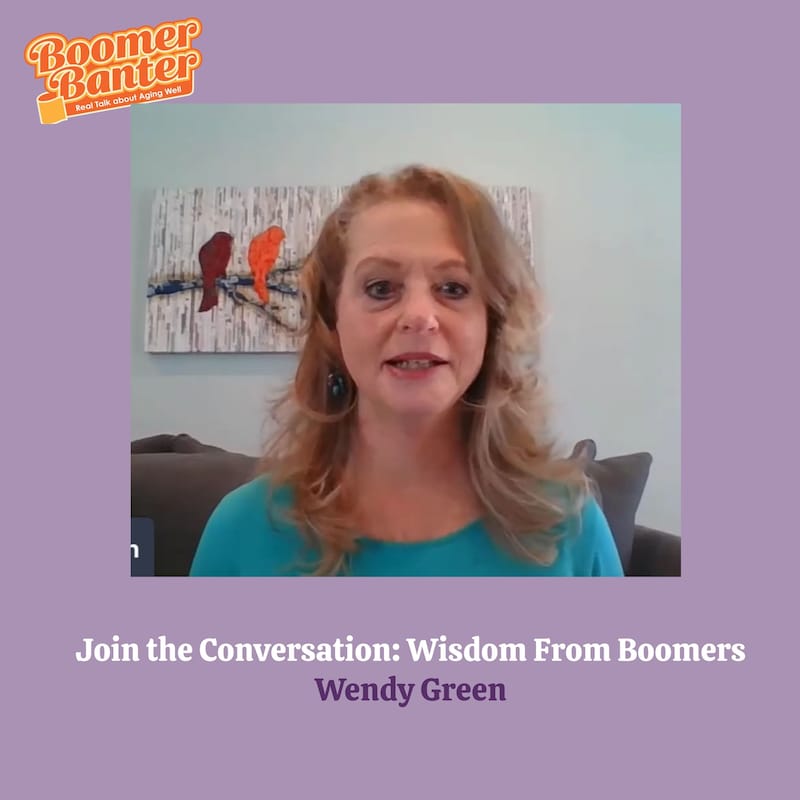
Hey there, folks! Today, we’re diving deep into the heart of what it means to be a boomer and why sharing our stories matters now more than ever. Wendy Green kicks things off by introducing her vision for the podcast, where we chat across generations to build understanding and connection. She shares her own journey—from navigating a tough divorce to finding purpose in going back to school—and how the support of her community helped her rise above challenges. We’re all about learning from each other, so stick around as we explore the wisdom of experience and the zest of youth. Let’s get this conversation rolling because every story counts!
I got the idea for Hey, Boomer after being laid off from my job at the start of the pandemic. The name is a play on the derogatory "Ok, Boomer" and the intent is to build a bridge between generations, featuring stories told by members of the Baby Boom generation. I look to start meaningful conversations across generations. ---
This podcast uses the following third-party services for analysis:
OP3 - https://op3.dev/privacy
Transcripts
Foreign.
Speaker A:So I'm really excited about introducing hey Boomer.
Speaker A:And I think that I want to try and follow the format that I want to do with each one of these video blogs, and that is that, of course, we would start with an introduction of my guest.
Speaker A:And so normally there would be somebody else here as my guest, not physically here because of our social distancing.
Speaker A:But so let me introduce myself as though I am the first guest.
Speaker A:My name is Wendy Green, and I have two children, two grown, wonderful children, and they have wonderful spouses, and I have four grandchildren who I adore.
Speaker A:I have a lovely extended family.
Speaker A:We've been having some wonderful zoom conferences with them.
Speaker A:I have a degree in computer science and quickly learned that programming was not my thing.
Speaker A:But teaching and offering presale support and helping people get excited about how the technology could help them was really my forte.
Speaker A:So I spent most of my professional career in corporate training.
Speaker A:Then I moved into more of the HR side of training, doing leadership development, performance appraisal training, online onboarding kinds of things.
Speaker A:And I developed a online, what we called a university for the last company that I worked for.
Speaker A:I also have had my own businesses.
Speaker A:I had totally different from technology.
Speaker A:I had a business called Kids Art, which won some awards when I was running that company in Northern Virginia.
Speaker A:I had a coaching practice, and I am currently the president of my Rotary Club, which is a big passion for me.
Speaker A:So that's just a little bit about who I am now.
Speaker A:Why am I doing hey Boomer?
Speaker A:I think what will help people understand is if I explain what my vision for hey Boomer is.
Speaker A:So my vision is that we start conversations across generations with stories that are being told by boomers.
Speaker A:But the point is to build understanding between all of the different generations that we are now living with.
Speaker A:So each episode will be a conversation.
Speaker A:I will have a guest, and I will moderate the conversation by asking a few questions as they're telling their story.
Speaker A:And then we'll try to figure out and pull out from the story what was meaningful to them and how does that impact them today, and how do they see that apply to today's world?
Speaker A:Not just with the coronavirus, but with everything that's.
Speaker A:You know, we are experiencing so much change in this world.
Speaker A:But the question, the obvious question is, well, why just Boomer stories?
Speaker A:And the easy answer is, because I'm a baby boomer.
Speaker A:And so those are the stories that I know and I relate to.
Speaker A:But there's another reason that I think is important for that.
Speaker A:If we look at the history of the Baby boomers.
Speaker A: y baby boomers were born from: Speaker A:I was right in the middle of that.
Speaker A:And my first really big impactful memory started when I was nine years old.
Speaker A:And that was, that was during the Cuban Missile Crisis.
Speaker A:There were, they were teaching, I was living in Miami, and they were teaching us to duck and cover so that if the nuclear bombs came over from Cuba, we were going to be safe hiding under our desks.
Speaker A:But you can imagine at 9 years old, starting to think about a bomb falling on your head that probably wasn't very settling the next year.
Speaker A: ,: Speaker A:I was 10 years old.
Speaker A:I was in my class, we were having a movie, sitting, watching a movie, and somebody came in to speak to our teacher.
Speaker A:And the next thing I knew, the teacher was crying.
Speaker A:But she didn't explain it.
Speaker A:We didn't know why she was crying.
Speaker A:And then when class was dismissed and my mother was in the car line to pick me up, she was crying.
Speaker A:And so I had no idea what that was about.
Speaker A:And finally she explained to me that President Kennedy had been shot.
Speaker A:We got home, the TV was on.
Speaker A:All you saw, reel after real of the shooting, the Secret Servicemen jumping in the car.
Speaker A:And then I remember Walter Cronkite coming on the air to let us know that the President had, had died.
Speaker A:And I remember feeling like so scared, you know, that that's not supposed to happen here in the United States.
Speaker A:And I, like you, couldn't make sense of it.
Speaker A:Shortly after that, two big things started happening.
Speaker A:The Civil Rights movement really started to take off during the Lyndon Johnson presidency.
Speaker A:And the Vietnam War started to expand.
Speaker A: And so in: Speaker A:Not too many months after that, Bobby Kennedy was assassinated.
Speaker A:There were riots in the streets, in neighborhoods not too far from where I lived.
Speaker A:There were riots in my high school.
Speaker A:My high school was one of the first high school students started as an integrated high school in Miami.
Speaker A:There was so much turmoil.
Speaker A:And then you put on top of that the Vietnam war.
Speaker A: And in: Speaker A:So they had not had a draft since World War II.
Speaker A:They, we united States had not had a draft since World War II.
Speaker A:And all of a sudden, young boys, my classmates, were in a lottery and their numbers were called.
Speaker A:And if they were a low number, we all knew that they were Going to go to Vietnam and many of them were not going to come home.
Speaker A:And the ones that did come home, came home potentially maimed or you know, drug, drug problems.
Speaker A:A lot of emotional issues.
Speaker A:It was a, it was a really difficult time.
Speaker A:And so the students who were the most effective affected decided to really start to organize and have demonstrations on their college campuses.
Speaker A:And eventually some of those demonstrations became violent.
Speaker A:Students were killed on the campuses by National Guard troops.
Speaker A: the Democratic convention in: Speaker A:So it was a very tough, tumultuous time.
Speaker A:President Nixon was elected that year and he eventually was able to de.
Speaker A:Escalate the war in Vietnam and a lot of people started coming home.
Speaker A:And then there was the re election campaign and during that time there was a break in, into the Democratic National, Democratic national office.
Speaker A:And it turns out that the President and some of his men were involved in that.
Speaker A:So we had the Watergate trials and Nixon ended up having to leave office.
Speaker A:So in 12 years, in 12 years from when I was nine years old and the Cuban Missile Crisis through three assassinations, riots, anti war protests, drafts, presidential resignations, we had been raised on this fairy tale of Leave it to Beaver and Lassie and My three sons and we came to know there was not a lot of reality to that.
Speaker A:So why boomers?
Speaker A:I'm not trying to say that other generations haven't lived through many life changing situations.
Speaker A:Certainly 911 was a big one.
Speaker A:I think though that one of the things about the boomer generation is that we have always had this obsession with staying forever young.
Speaker A:And I think, at least for me, it's time now to say I'm ready to take the role of being one of the elders for whatever that means.
Speaker A:And I know some of my young friends on this call might laugh at that.
Speaker A:But you know, there is a perspective that you start to get.
Speaker A:There's this passion that youth have and it's fabulous and I love it and I had it and I still have a lot of passion for a lot of things that are important to me.
Speaker A:But there's also a perspective that comes as you get older that helps you to see more sides.
Speaker A:Everything is not just black and white, as sometimes it seems to youth.
Speaker A:And so my goal with having boomers tell stories is that we help with the conversation.
Speaker A:We want the passion, we want the positive changes that can come from all of us working together with some sense of what's realistic.
Speaker A:So anyway, so why is this a good time for this?
Speaker A:Well, I Think also this is a good time to launch this because we're home now and things have slowed down a little bit for us and now is a good time to start to think about our lives and what has been meaningful to us and what we want to continue to what, what value we want to continue to put back out into the world.
Speaker A:Because I have to tell you, most of the people that I know in my generation are still so vibrant and so active and so alive.
Speaker A:And yes, we may have a few more aches and pains, but we are very excited about participating and being relevant.
Speaker A:And we have the time now to.
Speaker A:And everybody does because we've slowed down.
Speaker A:All right, so now, that's why.
Speaker A:Now if I was doing this with a guest, I would say, so tell me your story.
Speaker A:And it assumes.
Speaker A:It occurred to me that I should probably tell a story, which of course is difficult because at 66 years old you start to think about lots of stories that you could tell.
Speaker A:So I picked one.
Speaker A:And if you will give me the opportunity to share that with you, I would love to.
Speaker A:My story starts, I was 28, going through a divorce.
Speaker A:I had two small children, they were 2 and 4 years old.
Speaker A:And I got a job as a computer operator in a bicycle brake manufacturing company.
Speaker A:The computer room.
Speaker A:Now remember in those days, early 80s, that computers were room size, they weren't little small on your desktop.
Speaker A:So the computer room that I worked in was inside of the manufacturing plant.
Speaker A:And in that computer room was myself and my boss, who was also the purchasing agent.
Speaker A:And my job was basically, you know, run the jobs for the day, print everything off, disseminate it, do the backups, do any kind of maintenance that needed to be done that could be done without calling in IBM and prepare things for the next day.
Speaker A:So I had time in between that I was reading.
Speaker A:IBM was fabulous in having all kinds of manuals and stuff in the area in the room.
Speaker A:And so I was reading a lot of the programming manuals there to try and teach myself since I, at that time I only had one year of college.
Speaker A:Going through a divorce is a very emotionally wrenching and mind numbing experience.
Speaker A:Whether you want a divorce or you don't want the divorce.
Speaker A:And I would go to work in kind of a fog, you know, thinking, are my kids all right?
Speaker A:Are they going to be all right?
Speaker A:Can we stay in our house?
Speaker A:What am I going to feed them tonight?
Speaker A:How come I couldn't fix this?
Speaker A:I mean, all that stuff is filling your head at that time.
Speaker A:And I'm walking through the motions of Doing my work, but I'm kind of in this fog.
Speaker A:And one day my boss, who was a married man with a family, came up to me and he said, I know you have needs, if I can help in any way.
Speaker A:And I was just stunned.
Speaker A:I didn't know what to say.
Speaker A:I needed that job.
Speaker A:I mean, I had kids to support and we, you know, wasn't.
Speaker A:You didn't take that to hr.
Speaker A:We didn't have the sexual harassment vocabulary at that point in time.
Speaker A:And I think I probably just kind of smiled because that's what you did and said, no, that's.
Speaker A:I'm okay, thanks, I'm okay.
Speaker A:And then worried like, what was this going to do?
Speaker A:How was this going to affect my job?
Speaker A:So I, we went back to work.
Speaker A:A couple weeks later he said to me, we're going to hire a programmer.
Speaker A:And I said, no, no, no, wait, I, I can do this.
Speaker A:I've been studying the books.
Speaker A:IBM has wonderful training, you know, if you will just send me to training, I can do this.
Speaker A:And he said to me, you were hired to be a clerk.
Speaker A:So there you go.
Speaker A:That was the result of my saying, no thanks, I'm okay.
Speaker A:So I decided it was time for me to take care of me and I needed that college degree.
Speaker A:So I applied.
Speaker A:I was living in Asheville.
Speaker A:I applied to UNC Asheville and got accepted to the computer science department.
Speaker A:Spent the summer in the financial aid office applying for every loan, grant, scholarship, anything I could get to help me pay for school.
Speaker A:Did some occasional part time jobs during the time I was in school, and three years later graduated with departmental distinction with a degree in computer science.
Speaker A:I almost felt like sending a letter to my old boss and saying, thank you for being such a jerk because that helped me go back to school.
Speaker A:But I didn't.
Speaker A:One of the nice things about going back to school though, was that at UNCA I developed a tremendous community of support.
Speaker A:And there were, I mean, they pulled me through so many things.
Speaker A:So the obvious question is, how does that story apply to today?
Speaker A:And I think that one way we could take it is let's talk about the MeToo movement.
Speaker A:Let's talk about time's up.
Speaker A:Let's talk about how far women have come.
Speaker A:But there's still more to do.
Speaker A:But what I want to talk about is how being out of work and being in that scared, frightened place where so many people are right now because of this coronavirus.
Speaker A:I want to talk about that.
Speaker A:And what got me through some of those scared, frightened times when I had left that job.
Speaker A:I had gone back to school.
Speaker A:I had two children to support.
Speaker A:It was hard.
Speaker A:And so I think that the two things that got me through that continue to get me through when I face hard things.
Speaker A:One was to have a sense of purpose.
Speaker A:And at that point in time, my purpose was to get that degree.
Speaker A:I wanted that so badly so that I could provide a good life for my children.
Speaker A:And there were times that we were eating peanut butter and jelly sandwiches because that's all I could afford.
Speaker A:The children went to Head Start because I could not afford daycare.
Speaker A:There were times that the purpose wasn't strong enough to get me past those fears.
Speaker A:And I would find myself crying in the office of the.
Speaker A:The dean of the department.
Speaker A:I'm like, I can't be in the computer lab tonight.
Speaker A:I have babies in the bed.
Speaker A:But between him and some of the other friends that I made, I had this connection.
Speaker A:I had this community of people that when I got to that point, I can't do this anymore.
Speaker A:Those people were there for me.
Speaker A:And so I think those are the two things that I would want to share with people now.
Speaker A:When things seem hard, reach out to others.
Speaker A:We are not islands.
Speaker A:We have connections.
Speaker A:And they.
Speaker A:More times than you know, people are willing to help and try to find a purpose, try to find a reason to get up in the morning.
Speaker A:It could be simply cleaning out your cabinets because you have time to do it now, or you might think about taking a class or starting a business.
Speaker A:So there's lots of things that can get you through.
Speaker A:I'm hopeful that as I.
Speaker A:That as other people share their stories on hey Boomer, we all start to understand that we have a shared humanity.
Speaker A:We all have struggles.
Speaker A:We all want to be loved.
Speaker A:We all have things that we care about, deeply about, and we can all learn from each other.
Speaker A:So hey Boomer is going to be a place for people from my generation to tell their stories.
Speaker A:But my vision is that we're going to start conversations and we're going to listen to these stories, and there's going to be different perspectives.
Speaker A:Everybody has different life experience, and they're going to bring that into their stories, and we're going to develop a deep understanding of different perspectives and be able to listen.
Speaker A:Right?
Speaker A:We don't always have to have the answer.
Speaker A:We're going to learn to listen and then share.
Speaker A:And as I get more comments and get better with this so that I'm not just distracted by the comments, I'll be able to share some of your questions with the person who's doing the speaking at that time.
Speaker A:So please, I need your help.
Speaker A:I need to know if any of you on this call today are interested in being a guest and sharing a story, because that's going to make this thing so awesome.
Speaker A:I also would love for you to share this with other people, share the hey Boomer Facebook page and so we can start to grow the audience.
Speaker A:I want to tell you about who's coming on next week.
Speaker A:Next Monday at 1 o', clock, I'm going to have Doris McClellan as my first guest.
Speaker A:I'm so excited to have Doris and so appreciative that she's going to do this for us.
Speaker A:I'm going to tell you just as much about her because I'll introduce her more next week.
Speaker A:But Doris is a retired public school administrator from Watertown, New York.
Speaker A:Very involved in multiple different things which we'll talk about.
Speaker A:And she's going to talk about activism and working on things that you are really passionate about and why you would do that and how to do that.
Speaker A:So I'm really excited to hear about what Doris has to say, and I'm excited about this first launch.
Speaker A:Thank you all so much for coming.
Speaker A:We all have stories to tell, and so let's build connection one story at a time.
Speaker A:Thank you.



