Shownotes
Episode Summary
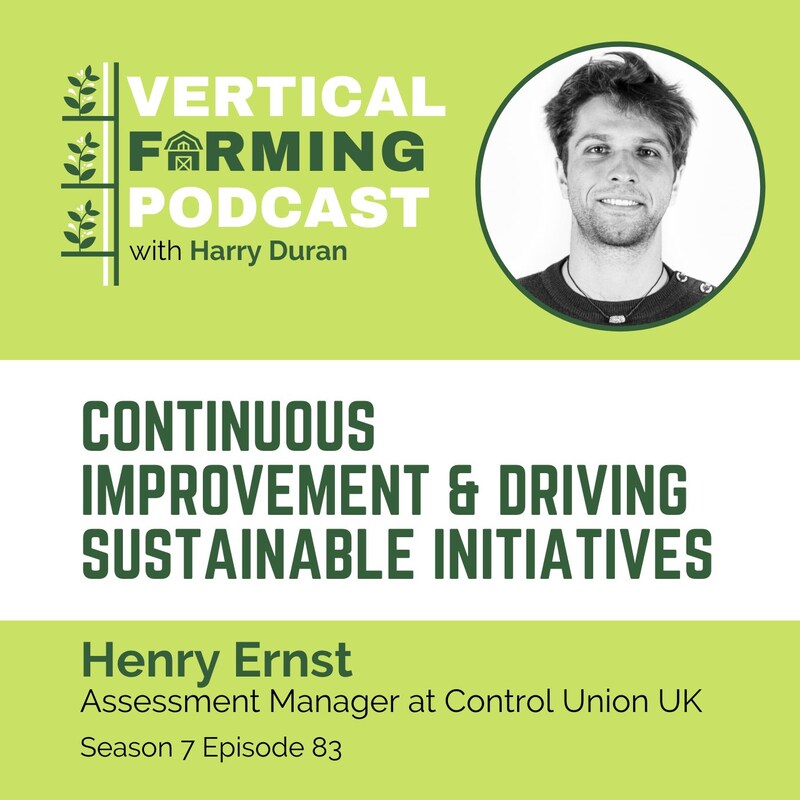
Henry Ernst currently occupies the role of Assessment Manager at Control Union UK Ltd, an organization that specializes in sustainability in agriculture, fisheries, textiles, plastics, timber, biofuels, and food safety. He is the Team Lead for MSC Fisheries Assessments and is passionate about sustainable food production. Today, Henry and Harry discuss plant protection, renewable energy use, sustainability, and the importance of educating consumers on vertical farming.
Thanks to Our Sponsors
CEA Summit East - https://indoor.ag/cea-summit-east-2025/
Indoor AgCon - https://indoor.ag/
Key Takeaways
07:13 – Henry Ernst joins the show to share his passion for travel, how he ended up in Bilbao, Spain, and his background in Marine Biology
13:04 – Food and sustainability
18:02 – The origins of vertical farming at Control Union
22:21 – Energy use, plant protection, and other vertical farming requirements
30:38 – Learning a completely new industry and the importance of educating consumers on vertical farming
34:49 – Upcoming projects for Control Union
38:30 – A specific ask Henry has for his colleagues in the vertical farming industry
39:24 – Harry thanks Henry for joining the show and lets listeners know where they can go to connect with him and learn more about Control Union
Tweetable Quotes
“It’s what vertical farming allows, right? It’s this plasticity that you can find where you have to adapt to all these external realities and that kind of informs the production realities. I couldn’t agree with you more. I find that to be one of the most fascinating parts of this whole sector.” (12:50) (Henry)
“I’ve found that things just work better when people are all pulling in the same direction and people are all pushing for the same thing.” (14:51) (Henry)
“This was absolutely hammered into us that plant protection is an essential part of sustainability when it comes to vertical farming.” (24:34) (Henry)
“In order for us to begin that work, we need to start from a point of data collection and continuous improvement to drive sustainable initiatives and practices.” (26:29) (Henry)
“The goal really is to just push this forward as much as we possibly can. The feedback that we’ve had is that this has been needed and that this has a place within the industry. We’ve tried our very best to create something that reflects the needs and wants of a wide range of stakeholders. So the job now is to actually implement it, see how it works in action, tweak it as necessary, and grow the program with the industry.” (34:57) (Henry)
Resources Mentioned
Henry’s LinkedIn – https://www.linkedin.com/in/henry-ernst-ba7260147/?originalSubdomain=es
Control Union – https://uk.controlunion.com/
Henry’s Email – [email protected]
Connect With Us
VFP LinkedIn - https://www.linkedin.com/company/verticalfarmingpodcast
VFP Twitter - https://twitter.com/VerticalFarmPod
VFP Instagram - https://www.instagram.com/direct/inbox/
VFP Facebook - https://www.facebook.com/VerticalFarmPod
Subscribe to our newsletters!
AgTech Digest - https://agtechdigest.com
The Indoor Farmer - https://www.indoorverticalfarm.com/
Horti-Gen Insights - https://www.hortigeninsights.com/
Sponsor Links
Cultivatd’s Website – https://cultivatd.com/
Cultivatd’s Instagram – https://www.instagram.com/cultivatdco/
Cultivatd’s Twitter – https://twitter.com/cultivatd
Cultivatd’s Facebook – https://www.facebook.com/cultivatd/
🎙️🎙️🎙️
Podcast Production and Marketing by FullCast
Discover the best podcast services in the world at The Podosphere: https://www.thepodosphere.com/
Mentioned in this episode:
2025 Precision Ag Report by iGrowNews
2025 Precision Ag Report by iGrowNews
Transcripts
$680 million poured into precision ag last year.
Speaker:Autonomous weeding robots dominated, and John Deere made 2 acquisitions in 3
Speaker:months. A food company, not an equipment maker, bought a
Speaker:robotics startup to protect its own supply chain. The deals are
Speaker:accelerating, the money is moving, and the winners are already separating from the
Speaker:pack. If you're investing, building, or buying in this space,
Speaker:you need the full picture before your competitors get it. The 2025
Speaker:Precision Agriculture Intelligence Report From iGrow News is now
Speaker:available. Get your copy today at
Speaker:igrownews.com/precision. If you are starting a vertical
Speaker:farm and don't know where to begin or which technology would suit your needs,
Speaker:then reach out to the experts at Cultivated. As indoor farm brokers, they
Speaker:help connect you to the right technology and ensure your project is successful.
Speaker:Best of all, their service is free because they work on behalf of their
Speaker:partners. Visit cultivated.com to learn more. And
Speaker:that's spelled C-U-L-T-I-V-A-T-D.com,
Speaker:or click the link in the show notes. It really is to just push this
Speaker:forward as much as we possibly can. Well, the feedback that we've had is that
Speaker:this has been needed. And the feedback that we've had is that this has a
Speaker:place within the industry. We've tried our very best to create something
Speaker:that reflects the needs and wants of a wide range of stakeholders. So the
Speaker:job now is to actually implement it, see how it works in action,
Speaker:tweak it as necessary, and grow the program with the industry.
Speaker:Welcome to the Vertical Farming Podcast, weekly conversations with
Speaker:fascinating CEOs, founders, and agtech visionaries.
Speaker:Join us every week as we dive deep into the world of vertical
Speaker:farming with your host, Harry Duran. Vertical Farming
Speaker:Podcast, Season 7. Regular listeners, welcome
Speaker:back. I really appreciate you. Checking in week in and week
Speaker:out. And I hope to meet some of you at the
Speaker:upcoming Indoor AgCon conference. More on that later. If you are a
Speaker:new listener, then I'd love to meet you as well, and thank you for giving
Speaker:us a shot and checking out this show. And hopefully you'll keep coming back.
Speaker:This is the one where we speak to fascinating CEOs and founders of the leading
Speaker:vertical farming companies from around the world, and I'm your host, Harry Duran.
Speaker:In case you missed last week's episode, a really great conversation with Tristan
Speaker:Fisher, the CEO of Fisher Farms. He's been involved in sustainable
Speaker:energy for over 20 years, and we had
Speaker:a great conversation talking about the benefits of, uh, CEA
Speaker:over field-grown crops, the looming food security crisis,
Speaker:and the importance of being a kind and empathetic leader, which I thought was really
Speaker:important. This week we speak with Henry Ernst. He's the
Speaker:assessment manager at Control Union UK. And I know you may be thinking
Speaker:to yourself, it doesn't sound like a founder or a CEO, but I felt this
Speaker:was a very important topic because in his current role,
Speaker:what they're working on is specializing in
Speaker:sustainability. And they do it for everything— agriculture, fisheries,
Speaker:textiles, plastics, timber, biofuels, food safety. But
Speaker:in this current role as team lead, he's really
Speaker:passionate about sustainable food production, and they talk about all
Speaker:the things that have been put in place to create
Speaker:this certification for CEA. We talk about plant protection,
Speaker:renewable energy use, sustainability, and the importance of educating consumers
Speaker:on vertical farming. It's a really interesting conversation when you think about how
Speaker:this industry grows and some of the, the need for
Speaker:certifications like this that are going to be important, and how he ended
Speaker:up there of all places, because he's not originally from the UK, which is interesting.
Speaker:So I think you'll really enjoy this conversation. If you are enjoying this
Speaker:episode or past episodes, I'd love it if you leave a rating and a review
Speaker:at ratethispodcast.com/vfp, and I'll be sure to read yours
Speaker:out next. Okay, before we jump into this conversation with
Speaker:Henry, a few words from the folks that support this show. This episode is brought
Speaker:to you by Indoor AgCon 2023. I'm so happy
Speaker:to have been working with the team last year. Indoor AgCon
Speaker:2022 was my very first indoor farming
Speaker:conference, so it was really eye-opening for me. So I'll always be grateful to the
Speaker:team there for rolling out that carpet for me. And I really had a good
Speaker:time meeting a lot of past guests and excited to join them again this year.
Speaker:Entering its 10th year in a row, it's the largest trade show and conference for
Speaker:vertical farming and CEA, and it's returning to Caesars Forum Conference
Speaker:Center in Las Vegas on February 27th and 28th of
Speaker:2023. Once again, they'll be co-located with the National Growers Association
Speaker:Show as well, which is a really good fit for them. The conference keeps growing,
Speaker:and this year it's doubled in size. The expo floor now has more than
Speaker:170 booths filled with new product resources and solutions
Speaker:to explore. You'll hear from experts, including CEOs, growers,
Speaker:investors, and others in the field during this full-scale
Speaker:educational conference. As always, you'll be able to connect with peers, grocers, and other
Speaker:potential new business partners at their great networking events. I haven't even
Speaker:gotten to the best part. The team at Indoor AgCon has
Speaker:given listeners of this show 20% off their full
Speaker:access conference pass. All you have to do is use promo code
Speaker:VFP, as in Vertical Farming Podcast, and sign up at
Speaker:indoor.agcon.com. See you there. This year, Vertifarm takes
Speaker:place from September 26th through September 28th at the Exhibition
Speaker:Center in Dortmund, Germany. For those new to Vertifarm, it's the
Speaker:most significant trade fair for next-level farming and new food systems.
Speaker:Their international platform is set to showcase the latest developments in
Speaker:innovative controlled production systems for vegetables, salad crops, herbs,
Speaker:and microgreens, as well as sustainable fish, insect breeding, fruit
Speaker:cultivation, and medicinal plants. Vertifarm is shaping the future of
Speaker:vertical farming and new food systems. Reserve your ticket and learn more at
Speaker:vertifarm.de. That's
Speaker:V-E-R-T-I-F-A-R-M dot D-E. So,
Speaker:Henry Ernst, Assistant Manager at Control Union UK, thank you for joining me on the
Speaker:Vertical Farming Podcast. Thanks for having me. One of
Speaker:the things that stands out for me is the fact that you don't have an
Speaker:English accent, but you're with the Control Union UK,
Speaker:so I imagine there's a story there. I certainly am. Not a
Speaker:huge story. I went to university in England, went to school there, and
Speaker:coming out of there, I just kind of wasn't really too ready for the
Speaker:working world and panicked and looked online and sure enough found a job in the
Speaker:field that interested me nearby. And I kind of stuck around there and I've been
Speaker:with them ever since. I'm currently based in Spain, in Bilbao, but
Speaker:still working for Control Union UK. That's right. Okay. And so
Speaker:how much time do you spend in the States, if any? Very little. I mean,
Speaker:my mom's American, hence the accent, and I was born in New York, and I
Speaker:try to go back as often as possible really, but having family out there and
Speaker:whatnot. But most of my life has been Europe-based, a couple of little
Speaker:forays in and out of Europe as well, but certainly not US-based. How
Speaker:about you? Actually, I was born in El Salvador, but my parents brought me here
Speaker:when I was a year old. I was raised in New York actually, because New
Speaker:York, just outside the city, and I've lived in Upper East Side,
Speaker:East Village, Brooklyn. That's really where my heart is now, but home is Minneapolis now.
Speaker:And how'd you end up in Bilbao? Curiosity. I'd had
Speaker:my eye on it for a little while. The Basque Country and the
Speaker:whole mysticism surrounding it's always really interested. I desperately wanted to learn to
Speaker:speak Spanish. And at the time, my portfolio,
Speaker:I had a fair amount of French clients. So it took a little bit of
Speaker:convincing. This was pre-COVID that I made the move down here. So it did take
Speaker:a little bit of convincing and I tried to present as many arguments to keep
Speaker:me in this region. And sure enough, it worked out. A couple of months after
Speaker:moving down here, the world stopped. We went into lockdown. So it was kind of
Speaker:a happy accident that I was able to get down here before that. Otherwise, I
Speaker:think it would've been a little trickier for me. I think what's fascinating is
Speaker:people's mindset and companies' mindset and businesses' mindset and business owners'
Speaker:mindsets about what's possible remotely when
Speaker:the whole world is forced into the experiment and coming out of it, you
Speaker:know, we realize that there is a lot you can do remotely and
Speaker:also that people enjoy working remotely. And when they realize
Speaker:they don't have to, it feels like some of that power now has shifted to
Speaker:workers who appreciate that freedom. No, big time. And I think we
Speaker:might get to this later, but even for me, a lot of my work has
Speaker:been in auditing and something that you wouldn't necessarily expect to be able to do
Speaker:remotely. And auditing practice is usually— granted, we prefer it as auditors as well
Speaker:to be on site, but it turns out that you still can do it remotely.
Speaker:And that's kind of what this whole— these past few years have shown us. And
Speaker:there's personal preference. I think maybe a balance of the two, of in and out
Speaker:of the office, is maybe the most ideal situation. But I'm quite content to work
Speaker:from home, especially with how interconnected connected things are right now. You know, we're having
Speaker:a call where, you know, time zones apart. Yeah, it's amazing what you can do
Speaker:with technology like this nowadays. And I think the hardest part for me, because I
Speaker:was in corporate for like 20 years and so— Oh, right. Yeah, I was at—
Speaker:I worked at the JPMorgan Chase and E-Trade in like marketing, but now I own
Speaker:my own production agency. We do produce podcasts, but
Speaker:the mindset of being at your desk, it's hard to shake in the beginning because
Speaker:you have that 9 o'clock because all your coworkers are there on time, right? So
Speaker:you don't want to be the person coming in at 9:15. So that was one
Speaker:of the hardest things, I think, as an entrepreneur to kind of like get into
Speaker:your own rhythm, but also like not feel like you're beholden to like a certain
Speaker:timeframe. And finding that balance. Absolutely. I really— I
Speaker:did struggle with that at first. And then lockdown was kind of like, okay, I
Speaker:can't leave my house now anyways. So it's that kind of threw me for another
Speaker:curveball. But I think over time you kind of find what works for you. And
Speaker:thankfully the company's been quite flexible. And with regards to times, it's not one of
Speaker:those like punch-in, punch-out situations. So that's, I think, quite a positive development in this
Speaker:whole So I saw that a
Speaker:lot of your studies were focused on marine
Speaker:biology, is that correct? Yeah, I've kind of parachuted
Speaker:into the vertical farming world, to be honest with you. I studied marine biology,
Speaker:I've been a fisheries guy traditionally for the vast majority of my career,
Speaker:and yeah, what happened was I was working for, and I
Speaker:still do technically, for Control Union UK. At the time we were called
Speaker:Control Union Pesca, very small regional office focused purely
Speaker:on fisheries. And Control Union UK, the London-based office,
Speaker:was merged to us, or we were merged to them, and we essentially formed one
Speaker:big company now. And I learned about the R&D department that they had
Speaker:for researching standards, developing programs, finding technical
Speaker:partners, and working on program development with them. And
Speaker:having been interested in vertical farming for a really long time and controlled environment
Speaker:agriculture, I think, yeah, there was some one aquaponics
Speaker:seminar that we had at university, and a couple of my friends actually since then
Speaker:are now working in the aquaponics industry. And since then, without that kind of,
Speaker:you know, piqued the interest a little bit. And so once the R&D department became
Speaker:clear to me, that kind of put two and two together and tried to promote
Speaker:or tried to get this whole program to happen. So I'm certainly not
Speaker:a vertical farming expert.
Speaker:My expertise lies much more in standards and certifications and auditing, things
Speaker:of that nature. But being able to mesh the two has been really, really fun
Speaker:and really enjoyable. And I can relate to that as well because
Speaker:this podcast was born out of a passion for understanding this
Speaker:industry. And I've told the story several times, but I was given a
Speaker:book called Abundance by Peter Diamandis, which led me to Dickson
Speaker:Despommiers' book on vertical farming, which led me to kind of
Speaker:dive deep. And I said, I want to talk to the founders and the CEOs
Speaker:of these companies and see what their story is because I'm curious because it's still
Speaker:a young industry and it's so fascinating how many different paths people have taken
Speaker:to come in to this industry and how fast it's growing as well.
Speaker:It's what vertical farming allows, right? It's this plasticity that you can find
Speaker:within vertical farming where you have to adapt to all these external realities, and that
Speaker:kind of informs the production realities. I couldn't agree with you more. I find that
Speaker:to be one of the most fascinating parts of this whole sector. So how does
Speaker:one develop a passion for auditing and standards?
Speaker:Well, a passion for auditing and standards, I think
Speaker:that's an oxymoron somehow. My interest is in food and
Speaker:in sustainability. And I kind of— I
Speaker:wouldn't say grew up, but I would say my early adult life has
Speaker:been in the era of eco-labels and in the era of
Speaker:sustainable certifications. And as a result,
Speaker:coming out of university, I heard about the MSC, of course, which is the
Speaker:eco-label that I have most experience with, I should say. I heard about the MSC,
Speaker:I knew about it, and I was curious to see what that
Speaker:looked like from the inside. You know, at the age of 5, I didn't decide
Speaker:I wanted to be an auditor, right? This is kind of a byproduct of the
Speaker:situation. My interests lie in food and in sustainability, and I like speaking to
Speaker:people. I like speaking to people with all different backgrounds, kind of like you in
Speaker:that sense, where I like learning all the different facets that make up a whole.
Speaker:And the MSC is an incredible school for that because you speak to
Speaker:science, you speak to management, you speak to the fishermen, you speak to the NGOs,
Speaker:you get this incredibly holistic view. Of that
Speaker:microcosm, of that world. And in that sense, that's what I like about auditing
Speaker:and certifications. It's not, you know, going through a set of requirements and seeing
Speaker:if things match up. That teaches you wonderful things, you know, strictness,
Speaker:kind of a weird legal angle where you kind of should, shalls, you will
Speaker:learn how clauses work and that type of stuff. Clauses work, you learn how to
Speaker:apply a set of clauses, I should say. So you do learn, I suppose, more
Speaker:technical skills that are interesting in that sense as well. But really what it comes
Speaker:down to is that The fields of auditing that I've been in have always
Speaker:involved a multitude of stakeholders, and that's what I'm more passionate for,
Speaker:I would say. What were some of your takeaways in your time spent with the
Speaker:fisheries and doing the auditing in that sector? I
Speaker:found that things just work better when people are all pulling in
Speaker:the same direction, when people are all pushing for the same thing. Through the different
Speaker:clients that I've had, I've seen different types of work atmospheres, if you will,
Speaker:where you're sitting around a table with the client and then maybe an NGO
Speaker:representative of a research facility who's involved with the fishery. And you can tell
Speaker:when everyone's pulling in the same direction towards, you know,
Speaker:sustainability-minded and working together, it just yields
Speaker:better results. Whereas when there's antagonism and
Speaker:when just when there's a more standoffish working
Speaker:relationship, I find that things just grind along, but
Speaker:it's not the way to create change. It's not the most efficient way to create
Speaker:change. I would certainly say that. Another point that I learned is just, I suppose,
Speaker:coming back to what I said earlier, is just how many people are involved in
Speaker:this stuff. And I was looking at fisheries from a sustainability angle for the most
Speaker:part, but I also did some social audits. So with regard to labor rights, things
Speaker:of that nature, and that is a whole other field. And it's just unbelievable
Speaker:just how many different skills are needed to drive sustainability or
Speaker:to drive improvements in a world like this. And that's something that
Speaker:I think I kind of carry with me when looking at vertical farming or any
Speaker:other kind of agricultural fields is Everyone has to bring, you know,
Speaker:that you will not find a Swiss Army knife person who knows everything about everything.
Speaker:You really need to bring a wider group of stakeholders together, and
Speaker:that causes challenges, obviously, to reach agreement and to keep everybody happy.
Speaker:But that's kind of the fun part, in my opinion. And as an auditor, that's
Speaker:not your job. You don't need to get everyone to agree. You're just there to
Speaker:collect information and analyze it against the requirements. But you do see what
Speaker:these forums end up looking like, right? So that to me was a very interesting
Speaker:part of the job. What's the state of our oceans now? State of our
Speaker:oceans, it's not the best. It's not what it was like before we came along,
Speaker:certainly. But there's a lot of examples of really
Speaker:good work and of massive improvements. The issue is
Speaker:when politics gets meddled into it, and that's perhaps a rabbit hole for
Speaker:another day. That ends up being a huge, huge barrier to progress.
Speaker:You know, you speak to a fisherman, they want to be able to continue to
Speaker:fish their whole life. They want to be able to potentially pass this on to
Speaker:their children. We're talking families and generations, right, of fishermen, right?
Speaker:Yeah, absolutely. And they're not the bad guys. They're playing in a
Speaker:very, very, very ever-changing field and
Speaker:ever-increasing restrictions being put upon them and requirements
Speaker:being put upon them. So the state of our oceans, to come back to actually
Speaker:answer your question, is not as good as it could be, but hopefully we're going
Speaker:in the right direction. It seems like you've always had a passion for the water.
Speaker:You're part of a group called the Wild Swimming Cornwall. Did I see that on
Speaker:your LinkedIn? Or something that you're a fan of? LinkedIn is a
Speaker:funny one. I'm just starting to get into it. I'm not a big social
Speaker:media guy and I need to do better. Some of that
Speaker:information might be obsolete on LinkedIn. So I just took a quick look. It's
Speaker:a group that likes to get in the cold water and stuff like that. I
Speaker:thought it was interesting because I took my first cold water lake plunge
Speaker:here in Minneapolis. So that was an interesting experience. That's another
Speaker:level. That is pretty hardcore. I can't say that that's what I'm into.
Speaker:But yeah, Wild Swim, that's put on by my friend Max. Really cool initiative to
Speaker:basically get people closer to nature, and that's something I absolutely stand behind. Yeah,
Speaker:for sure. When did you start working with the Control Union
Speaker:on the vertical farm initiative? If you could tell like a little bit of the
Speaker:origin story, like how that started and where that came from.
Speaker:Yeah, for sure. This is not an idea that— I don't want for this to
Speaker:come across as something that I came up with. There had been many initiatives looking
Speaker:at certifications within vertical farming, especially with the sustainability
Speaker:angle. The AVF, our partner, had actually published a white paper on this
Speaker:back in 2015, so this is by no means, you know, an original idea.
Speaker:But upon hearing about that R&D department, this must have
Speaker:been, what, maybe 2 years ago now? How long have I been living here? 3
Speaker:years ago. I went to Franco, who is our director, and said, look,
Speaker:I think that there's a really good opportunity in the vertical farming space.
Speaker:You know, in Europe there just isn't currently a certification that even
Speaker:really applies to them because the organic, EU organic, through its
Speaker:scope bars vertical farming and soilless farming.
Speaker:So I don't think that's the case. In fact, I know that that's not the
Speaker:case in the US, however. But in Europe, for example, it was the case. And
Speaker:I just said, you know, there is the need for this, it seems, you know,
Speaker:knowing very little, just kind of going on intuition and on the little
Speaker:bit of research that I had done. He then got the R&D team to kind
Speaker:of look into it a little bit further. We did a market analysis and realized
Speaker:that there is actually a need, and the fact that the industry has shown such
Speaker:incredible growth means that, you know, if there's not a need maybe today—
Speaker:this would have been 3 years ago— there's going to be a need for this
Speaker:pretty soon. So got the green light from them, and then
Speaker:we had a look at technical partners because that's
Speaker:the way that these things have tended to go, that we supply the
Speaker:expertise when it comes to developing requirements and auditing and process and that stuff.
Speaker:And we rely on a technical partner who knows the field. And what we were
Speaker:looking for was a body or an organization or an
Speaker:institution which could get us a wide range of
Speaker:stakeholder opinions. What we didn't want to do was look through this under
Speaker:the lens of only research or of only industry or only of a technology
Speaker:provider. We really wanted to get as many different viewpoints as we could.
Speaker:And after looking at a couple of options, we saw that the Association for Vertical
Speaker:Farming has a massive network, very, very present. I think they're
Speaker:present on 3 continents, maybe more. And so we reached out to them.
Speaker:We agreed that this would be a good initiative for both, kind of
Speaker:agreed on the terms and signed a collaboration agreement. And then
Speaker:over, I would say, a period of maybe 18
Speaker:months, maybe even 2 years, conducted stakeholder interviews
Speaker:or stakeholder workshops, I guess you would call them, roundtables with, you know, 10,
Speaker:12 stakeholders at a time, wide range of backgrounds.
Speaker:And we put the question to them, we said, you know, what is sustainability for
Speaker:vertical farming? You know, what are the characteristics that should be
Speaker:taken into account when considering sustainability in vertical farming? And from
Speaker:that, we developed a set of about, I think the initial set was something like
Speaker:15 key metrics or key categories. And there was
Speaker:some back and forth on the role of quality in
Speaker:sustainability, the role of social aspects within
Speaker:sustainability. And so after some toing and froing, we settled on the 10
Speaker:that we have right now. And from that point onwards, then we kind of
Speaker:drilled into each metric. So without going into too much detail, we have, you know,
Speaker:energy. Well, actually, since this is the focus of this podcast, we
Speaker:can geek out as much as you want on it. I'm curious who you're working
Speaker:with in ABF, because I've actually had Christine on the podcast as well.
Speaker:And I got to spend some time with Tia in Dubai, of all places, at
Speaker:Agrami, like last month. Yeah. Right. She mentioned she was out there.
Speaker:Christine's a very busy person. A lot of our initial contact was with Christine, with
Speaker:Joel, but lately I've been working very closely with Ramin, who is a
Speaker:superstar. He's really, really strong. It's been great to work with him.
Speaker:He's kind of been the anchor for us on AVF side. He's been with the
Speaker:program since the very beginning and clearly knows it inside out. And so it's been
Speaker:good to have him on board for sure. Are you planning to be at the
Speaker:conference in Germany in September? I was there. Yeah, the one
Speaker:coming up. Sorry, next year. Oh, next year? Yeah. That's a long time
Speaker:from now. I would imagine so. To be honest with you, I would imagine so.
Speaker:Yes, I probably will be. So actually supposed to have a conversation with Tia today
Speaker:before this call, but I don't know if you could see through this window, but
Speaker:we've got some snow here, so I was out shoveling. Oh no, I can't
Speaker:see. It's a white glow. Yeah, yeah, yeah. We're chatting on Friday, so the
Speaker:timing is interesting. Yeah. So if you want to just maybe, you know, walk us
Speaker:through, you know, what those 10 points are, because I think it'd be helpful for
Speaker:this audience to understand You know, the level of detail that you've gone through in
Speaker:terms of putting this together. Yeah, for sure. So I should say
Speaker:perhaps a bit of background on these criteria. This is nothing that
Speaker:one person has come up with. So a lot of times when we talk about
Speaker:criteria and we talk about certification, it's like, why did you put that in there?
Speaker:It was absolutely a multi-stakeholder process and there was a whole lot of
Speaker:back and forth. We don't want Henry to be getting a bunch of emails after
Speaker:this. Hate mail. Yeah, no, that's fine.
Speaker:No, but honestly, all jokes aside, please do send in any queries
Speaker:or any issues that you do have. This is part of refining a standard and
Speaker:a set of requirements. And I suppose another kind of precursor to this is—
Speaker:or not even precursor— a word ahead of the presentation of these
Speaker:requirements is that this is version 1. This standard is
Speaker:meant to be kind of a living, breathing document. And that doesn't mean that
Speaker:we're going to be iterating every 2 weeks, but that does mean that We are
Speaker:mindful that this is kind of the first crack at this that someone has had,
Speaker:that an organization has taken. And so as a result, you know, this
Speaker:is version 1. We are absolutely looking to improve. We're looking to kind of move
Speaker:into different directions in the future, which I'm sure we'll get into with the questions
Speaker:as we go along. But for the time being, we've come up with a couple
Speaker:of criteria, the first being energy use. So
Speaker:that's why it's number 1, I suppose. That's really— I think,
Speaker:yeah, every single stakeholder really brought that one up. You know, it's the big one,
Speaker:is energy use. We also look at renewable
Speaker:energy use because that's geographically more
Speaker:applicable in some instances than others, but we recognize
Speaker:that that's kind of where energy is trending. So including that in
Speaker:at this early stage was definitely a desired component from the
Speaker:stakeholders. We've also got water use in there. So we got, we got
Speaker:nutrients. Water nutrients, substrate
Speaker:use. So that's the matrix in which the roots would grow. A
Speaker:plant protection plan. So that has to do with, well, what it
Speaker:says in the name, any type of protection measures that are in place for the
Speaker:plant. So this is kind of teetering on some quality
Speaker:aspects, but we really couldn't get this out of the program. I
Speaker:tried, but this was absolutely, you know, hammered into us that plant
Speaker:protection is an essential part of sustainability when it comes to vertical farming.
Speaker:How are they defining plant protection? So it's basically
Speaker:any measures, any management measures taken to
Speaker:ensure the protection of the crop. So one of the requirements is
Speaker:that no plant protection product can be applied directly on the plant,
Speaker:which is— I really don't have much background, but I felt that that was quite
Speaker:severe. But it was a pretty adamant sentiment that applying protection
Speaker:products directly to plants is below the bar that the stakeholders wish
Speaker:to set for sustainability. Beyond plant protection, we have the use of
Speaker:space, average distance traveled, otherwise known as food miles,
Speaker:0.9 is seeds and seedlings, and then finally waste
Speaker:and essentially kind of waste management. So this was our first
Speaker:stab at the criteria for sustainability within vertical farming. The
Speaker:general approach that we've taken has been
Speaker:data collection and continuous improvement.
Speaker:So Whereas for other fields of agriculture or
Speaker:wild capture, like fisheries, for example, you know, those are forms
Speaker:of agriculture that have been around for maybe 9,000 years, something like
Speaker:that. Vertical farming has been around for an infinitely small amount of
Speaker:time compared to the conventional. So the databases,
Speaker:benchmarks that exist for these other forms of agriculture and the
Speaker:vast pools of information just don't exist yet for vertical farming.
Speaker:So our desire is to basically take the first
Speaker:step on a road to a quantitative approach. Feedback that we've
Speaker:gotten is, you know, what are the benchmarks? What are the levels we're setting at?
Speaker:How many liters of water is sustainable? The answer
Speaker:is that any number that we would give you right now would not be well-founded
Speaker:due to, A, the different production realities that we mentioned earlier and the different
Speaker:systems that are in place, and B, just the lack of a
Speaker:wide database for us to be able to base those. benchmarks upon.
Speaker:And in order for us to begin that work, we need to start from a
Speaker:point of data collection and continuous improvement to drive sustainable
Speaker:initiatives and practices. So this was an approach that the
Speaker:stakeholders generally agreed with, that was achievable
Speaker:but not flimsy, but that at the same
Speaker:time, kind of at its core, will drive improvements within the industry.
Speaker:And that's what we hopefully set out to do. When was the first round published?
Speaker:So these documents all now belong to AVF. They're the program owners.
Speaker:Control Union UK are an auditing body. These were published,
Speaker:I want to say, just ahead of the summit in September this year.
Speaker:I'm not sure of the publication schedule. Yeah. And just for the benefit of listener,
Speaker:we're at end of November 2022. From the folks that were
Speaker:participating as stakeholders or even companies outside, I know it's
Speaker:still early days, relatively speaking, but what was some of the
Speaker:response and feedback that you were getting? So interestingly enough, some of the response was
Speaker:not quantitative enough. You know, tell us the number and we'll try and reach that.
Speaker:So that was a piece of feedback which is encouraging and that great sign for
Speaker:sustainability within the industry, but it's just not something that we can realistically
Speaker:achieve right now. And so that was one big piece of feedback.
Speaker:The other big piece of feedback, I suppose more question than anything, but
Speaker:it was inquiries on price and on process and on things of that nature.
Speaker:But generally, The feedback when we presented it in Dortmund, there were
Speaker:some challenges on the program, especially on the seeds component, which was really good
Speaker:to hear and absolutely has been noted. But generally, the thought
Speaker:was that it was a positive development. We've had a few
Speaker:inquiries from producers. We've had a fair few inquiries from
Speaker:consultancy agencies just looking to learn a little bit more about the
Speaker:program, about the accreditation behind it. So
Speaker:generally, I think the reception has been positive. But at least in
Speaker:Europe, and maybe in the US, I suppose you could tell me, the energy situation
Speaker:right now is certainly challenging to say the least. So we're looking at
Speaker:how we might be able to be mindful of that in the way we introduce
Speaker:the standard, in the way— because we know that costs are obviously quite a big
Speaker:issue. So we're trying to basically make uptake as easy as possible while,
Speaker:you know, remaining a viable business. And what is the cost? Is
Speaker:it something that gets renewed every year? What's the process look like? The
Speaker:current process has been designed to
Speaker:basically highlight as many red flags as possible from as far
Speaker:away from the audit as possible. Because we know that the audit burden and
Speaker:the cost burden of running such a program can be high, we've
Speaker:developed it to be basically a 2-part system. Part 1 of the audit is
Speaker:a desk-based review where the CAB, or the Certification
Speaker:Assessment Body— CAB, CAB, sorry, the jargon is baked into me now.
Speaker:We conduct a document review, confirm the scope of the audit,
Speaker:and essentially at that point, by collecting as much
Speaker:information as they're able to send remotely, we can rapidly appraise
Speaker:where they might stand against the checklist and say, okay, without
Speaker:providing consultancy, we just say this is where you'll find another nonconformity, etc.
Speaker:And at that point, we send those outputs back to the client
Speaker:or to the producer, and if they feel that
Speaker:Okay, no, there's too many nonconformities. There's no way we're going to be certified.
Speaker:Let's pump the brakes, implement changes, and then try again.
Speaker:That's possible rather than having to pay and having to organize the
Speaker:administrative burden of having a full audit, which can take— we estimate it'll
Speaker:take 4 months or so from start to finish. And so essentially
Speaker:by having this first step in place, that avoids A, costs, and B,
Speaker:administrative burden. So hopefully facilitating uptake. That's kind
Speaker:of a key thing that we saw the need to build in as quick as
Speaker:possible. And have the costs been finalized yet? Costs are
Speaker:situation and scope depending. In a multi-site farm,
Speaker:logically it'll take more time to go through it all, and so the costs will
Speaker:be higher. The licensing costs associated to using
Speaker:the eco-label and things of that nature, I believe have been finalized, but
Speaker:you might have to check that on your conversation on Friday. And all that will
Speaker:be found on the AVF site? Yeah, as far as I'm aware. There's also a
Speaker:site for the program, which I do not know off the top of my head.
Speaker:Yeah, you can just send it over to me and we'll make sure we put
Speaker:it in the show notes as well. Was this the first time for you going
Speaker:through this process with a new industry that you were still learning yourself?
Speaker:Yes. Thankfully, I didn't do it completely by myself. I had a
Speaker:whole team, a significant portion of the R&D team at Control Union
Speaker:UK backing me up, and I could rely on the boundless
Speaker:expertise from AVF and their members. But yeah, this was the first kind of
Speaker:step outside of the marine realm. Was there any
Speaker:parallels in the work you've done with the fisheries that you saw So when you're
Speaker:doing it with vertical farming? Yeah. So this mainly had to do
Speaker:with the auditing side, which is the most fun and wonderful side of
Speaker:the certifications program. But it's something that you notice is a degree of
Speaker:fatigue might set in during repeated audits. Either the frequency
Speaker:or the intensity of an audit is— becomes a burden. It eventually becomes very
Speaker:significant to the auditee. And a distraction, I would imagine, as
Speaker:well. Oh, absolutely. The successful labels that you kind
Speaker:of know and hear about, it's worth the while. Right? Because the label either achieves,
Speaker:you know, access to different markets, price differentiation, product
Speaker:differentiation, I think things of that nature. We're in the process, in the conversation
Speaker:of speaking with a couple of farms to kick off the first inspections and to
Speaker:kick off the first audits. So we're hoping to have those lined up
Speaker:for early 2023. There has been interest, particularly
Speaker:in the Middle East. There's been a fair amount of interest there. And we have
Speaker:a fair amount of conversations ongoing there, not only with farms, also with bodies
Speaker:looking to participate in certification and in the kind of wider program
Speaker:framework. But I would say, you know, the key tools that I took out from
Speaker:the marine into the vertical farming, granted, there's— you wouldn't imagine that there's so many
Speaker:applicable ones, is certainly to keep the burden as light as
Speaker:possible while making the standard as robust as you can
Speaker:within that constraint. I imagine this is something, as you know, we're
Speaker:hearing of farms closing in the news, you know, in the past year.
Speaker:And so I think anyone who's entering the industry and people
Speaker:thinking of starting new farms, this is probably something that they should have on their
Speaker:radar or even be considering because from a certification perspective, it's
Speaker:something that they most likely would want for their farm. And so I think anyone
Speaker:who's interested in getting started, I think it would behoove them to look at the
Speaker:work you guys have done and put into place. I think part of the reason
Speaker:is because vertical farming and the fact that it's kind of
Speaker:still in a nascent stage is not necessarily well
Speaker:known by the general consumer. It's starting to get there,
Speaker:but the justification for the difference in price points or
Speaker:factors like that might not be so clear to the average consumer. And this
Speaker:is part of what labels allow. Now you see that taken to the extreme at
Speaker:times with greenwashing and with false claims and things of that nature. And the
Speaker:legislation is starting to catch up to that. So thankfully, hopefully that won't be a
Speaker:problem for too much longer. But really, when it comes to setting a product apart
Speaker:and to also just acknowledge good practices, labels remain a
Speaker:really good tool for that, that the strong labels remain a really powerful tool. And
Speaker:eco-labels have come under significant criticism as of late, but I maintain that
Speaker:it remains a powerful tool for the consumers as long as the
Speaker:consumer is aware of what that eco-label represents.
Speaker:Yeah, it's almost like that's part of the education process as well, because, you know,
Speaker:the company is demonstrating through this process that they've,
Speaker:you know, met the standards you just outlined, but also
Speaker:for the consumer, just what does it mean to see a label that they've never
Speaker:seen before? And does it have any significance for them? And is it all for
Speaker:naught if they're looking at it? Does it sway them in a way where
Speaker:they can justify the higher price or the comfort level in knowing
Speaker:that their food is of a higher quality because of these standards? And I don't
Speaker:know where that falls in terms of control unions' purview or AVF,
Speaker:but I feel like there's a need for educating the consumer as well into
Speaker:what it is and where the benefits are. I couldn't agree more. And
Speaker:I suppose this isn't to kind of push the burden away from ourselves, but there's
Speaker:a fine line to tread when you're an auditing body kind of campaigning for a
Speaker:certification scheme, right? That raises questions of impartiality and independence
Speaker:and things of that nature. So we are, of course, we're not on mute. We
Speaker:are making our channels aware of the certification. You'll look to the
Speaker:AVF and to the certification body itself to Rather the certification owner,
Speaker:the standard owner itself, to conduct a lot of that outreach, certainly. Yeah.
Speaker:So what's next for you now that this process is completed?
Speaker:Get a client, get someone on board, get my boss off my
Speaker:back. But no, no, it really is to just push this forward as much as
Speaker:we possibly can. Well, the feedback that we've had is that this has been needed,
Speaker:and the feedback that we've had is that this has a place within the industry.
Speaker:We've tried our very best to create something that reflects the needs and wants of
Speaker:a wide range of stakeholders. So the job now is to actually implement it,
Speaker:see how it works in action, tweak it as necessary, and
Speaker:grow the program with the industry. Now this is starting to no longer
Speaker:become my responsibility in that I'm now just a certifier, but
Speaker:to support the AVF as much as possible within our role
Speaker:to help the program grow alongside the industry. So
Speaker:yeah, hopefully lots of work coming up. What's top of your
Speaker:list if you look out over the next 6 months of things you're looking to
Speaker:get done or you'd like to get done? Control Union internally, we've got the whole
Speaker:kind of arborescence, I suppose you could call it. We have the
Speaker:whole structure to house and to operate this assessment, but it's about training people
Speaker:and building capacity. So I know the standard, I helped write
Speaker:it. It's now about making use of Control Union, of course,
Speaker:only one small branch of Control Union in general, which is a
Speaker:global kind of certification entity. We're present in 98
Speaker:countries or 95 countries, 90 countries, a large number of countries.
Speaker:And my job is to build capacity within these different
Speaker:countries for auditors to be able to do this work. I don't want to fly
Speaker:around the world to do this. I would love to, but really that, A,
Speaker:defeats the purpose of sustainability a little bit, and B, would rack up a significant
Speaker:bill. The job for me is to build capacity with our offices and with our
Speaker:colleagues in the different countries and to promote the standard within our
Speaker:remit. That's my big one. Obviously, I'm still involved with fisheries, and there's
Speaker:another program that I'm involved with which I'm not allowed to talk about too much
Speaker:currently. that's public, just let us know and we'll be sure to
Speaker:promote your efforts there. So I want to thank you for coming on and
Speaker:sharing this. It's really fascinating to see how the industry is evolving and when
Speaker:things start to be put into place, it's a really
Speaker:positive sign that the industry is maturing and moving in the right direction.
Speaker:Yeah, and we've noticed that the industry is pretty fragmented still, and
Speaker:there's still a little bit of everyone kind of working in their own corner. And
Speaker:we hope that by creating this framework for A lot of data to feed
Speaker:into it, but of course data's protected, anonymized, the whole 9
Speaker:yards. We absolutely wouldn't want it to be involved in privacy or security breaches, but
Speaker:to create kind of an umbrella under which a cohesive
Speaker:unit can be formed. So whereas it's not necessarily under one company, but you'll
Speaker:have a certified consortium of companies, which I think would be really good for the
Speaker:industry. You know, you hear about the car manufacturing industry in the US in
Speaker:the 1920s, I think there were 50-odd companies or something like that. today there's 4.
Speaker:You know, that has yet to happen to vertical farming, but hopefully
Speaker:we can start with this program pushing it in that direction.
Speaker:Yeah. The other analogy which I thought was interesting, I had a conversation with this
Speaker:topic with a recent guest about how related to the automobile industry—
Speaker:oh, Planet Detroit, that's who I was speaking to. It's an interesting model because
Speaker:not only do they have the major car manufacturers, but they built this really great
Speaker:ecosystem of suppliers and partners and vendors and all working
Speaker:together in a cohesive way, a synergistic way. And I think we still have
Speaker:yet to see that. I can see where there's opportunities for that to happen in
Speaker:vertical farming as well. Yeah, for sure. You know, at that show in Dortmund, you
Speaker:start to see that the technology providers and things of that nature, and you can
Speaker:see, as you mentioned, the whole ecosystem around the actual end product. It's going to
Speaker:be fascinating to watch it grow in the coming years. Yeah. So given the
Speaker:audience, folks, Super interested in the world of vertical
Speaker:farming. A lot of the CEOs and founders listen to this show as well. So
Speaker:I'd like to leave a little time at the end of each conversation for you,
Speaker:if you have a message specifically for this audience, you know, if there's anything that
Speaker:comes to mind that you think would be helpful for folks in this space to
Speaker:hear. Sure. Well, check us out, the Sustainable
Speaker:Indoor Farming Program. If you have any questions on the program at all,
Speaker:feel free to reach out to me, Henry Ernst. I'm sure that the email will
Speaker:be provided somehow to some capacity with this podcast. We've been working
Speaker:really hard on it for a really long time, and we've really tried to
Speaker:create something that applies on a global scale without watering
Speaker:it down to the point where the requirements are not rigid or robust or
Speaker:maintain— uphold any standards. It's been a challenge, but it's been
Speaker:a lot of fun to do, and hopefully we've created something of value
Speaker:which serves to improve sustainability within the field. We look forward to hearing from you.
Speaker:Yeah, well, we'll make sure to include all those links. The main
Speaker:site is controlunion.com, is that right?
Speaker:uk.controlunion.com? That's the one. All right. I want to thank you for coming on and
Speaker:sharing a little bit of your backstory as well. That's always fun to hear how
Speaker:folks end up in this space. And make sure you keep us apprised. And if
Speaker:there's anything we can do to support the initiative, just let us know and we'll
Speaker:be sure to share those efforts as well. Yeah, tell your friends, you
Speaker:know. But thank you so much for having me on, for reaching out. It's always
Speaker:great to hear, and I could talk about this all day, so really appreciate you
Speaker:reaching Yeah, thanks for your time. Cheers. Thanks again to
Speaker:Henry for making it onto this show. It was really interesting to
Speaker:hear all the work that's being done for certification at Control
Speaker:Union. So it'll be interesting to see where this ends up and, and how it
Speaker:progresses as more and more people hear about it and support it. Special thanks to
Speaker:our Season 7 title sponsor, Cultivated. If you're looking into a vertical farm and don't
Speaker:know where to start or which technology would suit your needs, reach out to them
Speaker:today. Best of all, their service is free because they work on behalf of their
Speaker:partners. Learn more at cultivated.com, and that's spelled
Speaker:C-U-L-T-I-V-A-T-E-D.com. Just leave out that last E.
Speaker:This episode is brought to you by Indoor AgCon 2023. I'm
Speaker:so happy to have been working with the team last year. Indoor AgCon
Speaker:2022 was my very first indoor farming conference,
Speaker:so it was really eye-opening for me. So I'll always be grateful to the team
Speaker:there for rolling out that carpet for me, and I really had a good
Speaker:time meeting a lot of past guests and excited to join them again this year.
Speaker:Entering its 10th year in a row, it's the largest trade show and conference for
Speaker:vertical farming in CEA, and it's returning to Caesars Forum Conference Center
Speaker:in Las Vegas on February 27th and 28th of 2023.
Speaker:Once again, they'll be co-located with the National Growers Association Show as well, which
Speaker:is a really good fit for them. The conference keeps growing, and this year it's
Speaker:doubled in size. The expo floor now has more than 170
Speaker:booths filled with new product resources and solutions to explore.
Speaker:You'll hear from experts including CEOs, growers, investors, and
Speaker:others in the field during this full-scale educational conference.
Speaker:As always, you'll be able to connect with peers, grocers, and other potential new business
Speaker:partners at their great networking events. I haven't even gotten to the best
Speaker:part. The team at Indoor AgCon has given listeners
Speaker:of this show 20% off their full-access conference
Speaker:All you have to do is use promo code VFP, as in Vertical Farming Podcast,
Speaker:and sign up at indoor.ag. See you there. Podcast
Speaker:production and marketing provided by Fullcast. Learn more at
Speaker:fullcast.co and see if a podcast is right for
Speaker:you. As a reminder, if you're enjoying this show, please leave us a rating and
Speaker:a review at ratethispodcast.com/vfp. We'll be sure to
Speaker:read those out on future episodes. Tune in next week
Speaker:for for another conversation with yet another fascinating leader from the world of
Speaker:vertical farming. And this time, it's a round 2 visit from Tobias
Speaker:Peg of Square Roots. Until we meet again, here's to your health.
Speaker:Thanks for listening. To read the full show notes for this episode, which
Speaker:includes any links mentioned in the episode, as well as a full show
Speaker:transcription, visit verticalfarmingpodcast.com.
Speaker:There, you can sign up for our email list to be notified when New
Speaker:episodes are published.
Speaker:$680 million poured into precision ag last year.
Speaker:Autonomous weeding robots dominated, and John Deere made 2 acquisitions in 3
Speaker:months. A food company, not an equipment maker, bought a
Speaker:robotics startup to protect its own supply chain. The deals are
Speaker:accelerating, the money is moving, and the winners are already separating from the
Speaker:pack. If you're investing, building, or buying in this space,
Speaker:you need the full picture before your competitors get it. The 2025
Speaker:Precision Agriculture Intelligence Report from iGrow News is now
Speaker:available. Get your copy today at
Speaker:igrownews.com/precision.




