Shownotes
Lifestyle is a Plan podcast is for agency founders who are done with the growth hustle, and want profitability over pressure instead.
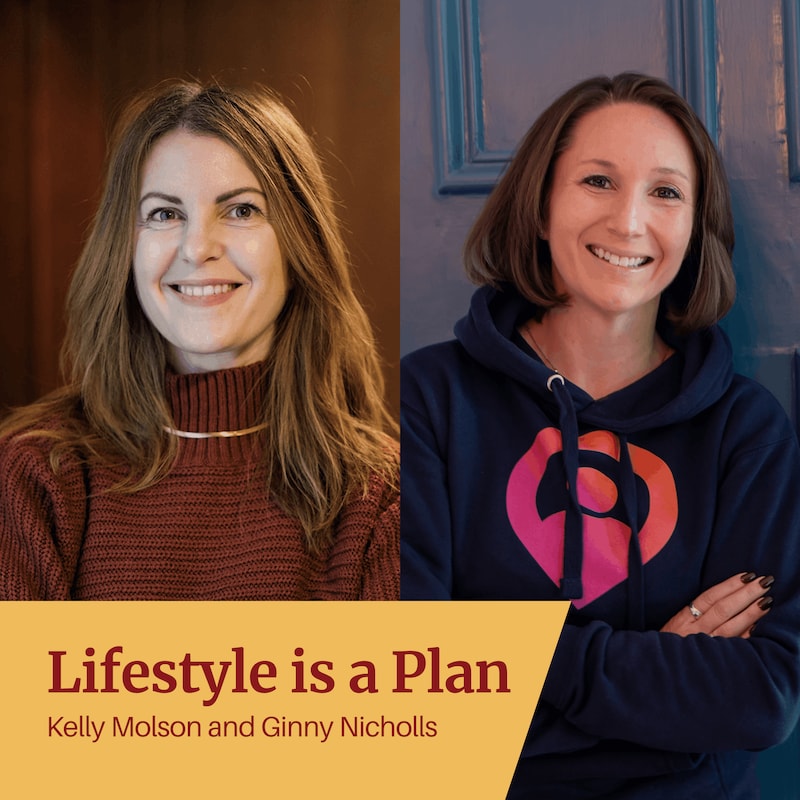
In this episode of Lifestyle is a Plan, Kelly Molson is joined by Ginny Nicholls, founder of Interim Digital, a collective of senior freelancers helping agencies and brands solve business challenges with speed and expertise.
After nearly a decade in agency roles and years as a freelancer herself, she built Interim to challenge the traditional agency model, offering businesses on-demand access to proven specialists without the overheads or lengthy recruitment lead times.
Ginny came into my world after I read in a Prolific North article that she’d recently hit the £1million t/t/0o with her business, Interim Digital. Now I know this podcast isn’t all about scale, but the fact she’s done this with zero employees really stood out to me!
You’ll discover:
- The unconventional way Interim has been built
- How to double down on natural strengths and outsourcing weaknesses
- Why avoiding traditional hiring and people management works for Ginny
- Ginny’s belief that people management is a major distraction from productivity
- Why value-driven team curation is so critical
- How to build a business exactly on your terms
Guest details
Website: www.interim.digital
LinkedIn: https://www.linkedin.com/in/ginnynicholls/
YouTube: https://www.youtube.com/@ginnynicholls
Spotify: Ginny Nicholls - The Action Effect
Brought to you by:
Lifestyle is a Plan is brought to you by me, Kelly Molson - an agency advisor on a mission to support solo founders build the agency they want. I’m here to show the agency world that ‘lifestyle agency’ is not a cop out. It’s the future of our industry’s sustainable growth.
You can join my Lifestyle is a Plan newsletter at kellymolson.co.uk
Subscribe wherever you get your podcasts, leave a glowing review and share it with your founder friends.
Edited by Steve Folland. stevefolland.com
Transcripts
Kelly Molson
Hey, I'm Kelly. How are you doing? Welcome to Lifestyle Is A Plan, a podcast for founders who are done with the Growth Hustle. I'll be chatting to creative founders, agency advisors, and all kinds of brilliant people sharing real stories and practical tools to help you design an agency that supports your life, not takes it over. You'll learn about unconventional agency models. Incredible lifestyle agencies and the choices that you have to build your agency exactly on your terms. Ginny came into my world after I read a Prolific North article that she'd recently hit the 1 million turnover with her business, Interim Digital. Now, I know this podcast isn't all about scale, but the fact that she's done this with zero employees really stood out to me. What I love about Ginny is her unwavering self-awareness. She's building her business exactly on her terms, really leaning into her own strengths rather than battling to do everything. I think you'll really enjoy her story. So let's go. Ginny, thank you so much for coming on to the podcast to talk to me today.
Ginny Nicholls
I'm so excited to be here. So thank you Kelly.
Kelly Molson
Most important question that I'm gonna ask you today though. Oh, cool. What was your last Netflix binge So that I can add to this, to my outgoing list of stuff that I need to listen, that I'm watched to.
Ginny Nicholls
You've picked the wrong person, I'm afraid. 'Cause I am utterly awful at binging anything on Netflix. I can't do it. I cannot do it. So the last thing I did was binge Wednesday, that Adams family one because I am a dork and I cannot let go of the Adams family. It was like my favorite family movie as a kid and I love it. And I watched that before Christmas. So it had already been on Netflix for about two years or three years, and that's what I jumped on. So ask me that question again in two years time, and I'll tell you what was out now that I'm now binging two years later.
Kelly Molson
Good. Yeah, in two years time we'll be current. It'll be like the LinkedIn delay on the posts that go out. Excellent.
Ginny Nicholls
If it's not Bake Off or some form of true crime drama, then that's it basically.
Kelly Molson
That's cool though. We could definitely be friends on the true crime drama. And my second question, which leads into what we're gonna talk about today is, can you remember when you were at school, what job did you think that you would end up doing when you were at school? What did you want to be?
Ginny Nicholls
A lawyer. I thought I was gonna be in law. I was obsessed with Ally Mcbeal It was lawyer slash be in business and you wanted to be a business woman, whatever that meant. I dunno if I ticked that box now, but instead of having, it was bizarre. Instead of having pictures of like sports people and stuff on my wall as a little person, I had ripped out pages from Vogue of women in business suits and stuff and high rise offices and things. So I knew I wanted to be in an office and I wanted to be in a high rise and I wanted to be Ally Mcbeal And that's ish happened. With the office. It's not high rise, but it's an office. I don't wear a power suit. I wear joggers most of the time and a hoodie. And I'm not a lawyer, but we're ish on the same path. That is for sure.
Kelly Molson
90% of that was achieved and you absolutely are an incredible business woman. So get that thought that you are not out of your head whatsoever. Okay. So we are gonna talk a lot about Interim Digital today. I'm absolutely fascinated with this story. I wanna know what you did. So you had the dream of lawyer Ally Mcbeal. You didn't go down that path. It's not where you've ended up Anyway, so what did you do prior to founding interim?
Ginny Nicholls
Yeah, so I think once I actually got out of, an 11-year-old and realized what becoming a lawyer actually meant, it was not gonna happen, not academic enough, not anywhere near the attention span required any of that stuff. But I knew I had this, I've always had this burning desire to work. I've always wanted to just be in amongst other people who are working. So before I went to uni, I went and did a double gap year in London and sold ad space for the Daily Express and got into sales that way. When people actually read paper papers as opposed to online papers. So that was amazing. And I got my first kind of taste of London life as a Northerner, working in a big newspaper building that was incredible. So that gave me a bit of a, like an insight into stuff that I really wanted to do. And then after uni I just, I fell into agency world, so I had a bit of a taste of what agencies were from the Daily Express 'cause even though I was selling the paper, my job was to speak to media agencies to try and sell in the paper. And I thought, I was thinking, geez, these agencies sound really cool and they always have such fun and they're always leathered and they're always having massive parties. And I was like, that's what I wanna do when I get out of uni. I wanna work in an agency. So I did, but more digital because as I was leaving uni, that transition from traditional media into online was very much the big thing. So I worked in agencies for 10 years. SEO digital strategy, commercial side of it. AD was my final post. And then I went freelance eight years ago and I freelanced for four years. And then I transitioned to the freelancer network model four years ago.
Kelly Molson
I'm very excited to hear more about this as well. The agency word, there's something quite, there is a real lure to it, isn't it? It does feel super, super exciting. and maybe the fast paceness of it as well is I've never really experienced anything that has been so fast paced and adrenaline driven.
Ginny Nicholls
Yeah.
Kelly Molson
Highs and lows with that, obviously. Yeah. So tell us, so you went into your freelance world. What was it that gave you the idea to start Interim Digital and tell our, listeners what it has become?
Ginny Nicholls
businesses growing. We're in:Kelly Molson
Wow. Wow, that's grown hugely, hasn't it?
Ginny Nicholls
Yeah, it's been intense.
Kelly Molson
That is phenomenal. So the role that you were assuming at that time was essentially, I guess the sales person. Yeah. So you were doing new biz dev and then bringing it in, finding the associates to work with you and thinking actually this is a model that I can grow into something much more robust. And that's what you've done. So let's fast forward to where you are now. 106 freelancers. What does that model look like? Because the one thing that I find incredibly fascinating about this whole story is it's just you, isn't it?
Ginny Nicholls
Yeah.
Kelly Molson
At the heart of it.
Ginny Nicholls
Yeah.
Kelly Molson
You're essentially a company of one that has built this incredible business that is now hitting a million pound turnover.
Ginny Nicholls
Yeah. So I have fractional support. So I have, I think when we met the first time, the way that I described it is I am aggressively un interested in hiring at all, but I am obsessive and love business stuff. So it was like, what? What can I do to pair those two together? And in the early days of Interim, literally, Interim as a network as opposed to kind of me freelancing, I was very much in that traditional mindset of I need to hire, I need to get to a, that, revenue per employee, ie, me as the first one. And then bring someone else on. And I was chatting to this mentor chap and bashing this out. And he said, Ginny, don't you know, like 25 freelancers? And I was like. Oh my God. What? I don't need to hire, I know 25 amazing people who are way better at the stuff that I need help with. So why am I, and he was, so matter of fact and helped me every single time I met him, I'd go in with what I thought I needed and come out with a whole different list of stuff.
Kelly Molson
Wow.
Ginny Nicholls
So that was the catalyst of, to forget the notion of needing to hire. You don't need to hire, you just need to find people. And I think as agency owners it's really easy to blend those two together and we get obsessed with people being connected to hiring and teams to be on the PAYE and, people within the four walls of your agency to create culture. None of that is required. And as soon as you break down those barriers. The freedom and the scalability, it like it... Interim's growth trajectory in my brain just exploded in that meeting. 'Cause I was like, oh my God, that opens everything. So now there's me obviously who's numero Uno employee, but I have a fractional mentor slash agency growth chap who's also a qualified CFO. So he helps me once a month with book stuff and growth. We've just signed the contract for our first fractional Client Strategy Director. So she's gonna help with client growth, nurturing, all of that kind of stuff. I have a freelance AI and automations guy who helps with systems and scaling. Freelance email person, freelance... So we are practicing what we preach. And that to me feels the perfect level of authenticity because what I can't stand and I've never, ever got on with throughout work is when people come in at a certain level and then preach to the people below them or behind them having not tread those paths before. So I feel like in a really good place now to having been agency side, been freelancer side and building Interim with freelancers to go... If we can do it, you guys totally can too. So that's where we are now. And yeah, we hit that, a total revenue figure of a million last year. And then we're projected to do one in one, three in three in five and five if we stick to where we're at. So yeah, it's good.,
Kelly Molson
That is incredibly impressive and congratulations on doing that. What I loved about this story is how unconventional it is because you, you said earlier, we, we were always... the message that was driven into us is that to grow, you have to hire, you could to grow, you have to hire, to get bigger you have to, and you have to have those people on payroll. And ultimately you can flex up and down with a freelance associate model, but you're gonna have to have a core employed team as well.
Ginny Nicholls
Yeah.
Kelly Molson
You've proved that you absolutely don't need to do it that way. What I'm really interested is to understand what were your drivers behind building that way? What was it that you really aligned with about not having to have a team?
Ginny Nicholls
world or digital world since:Kelly Molson
Marry them up!
Ginny Nicholls
Yeah. Why don't we just work together? And I think that was the bit for me and I think having that agency background and seeing... I think our real core essence is the fact that everybody is ex agency in the network. So we all empathize with those agency owners and those brand managers and head of acquisition, whatever their position is, because we've either been in their shoes or we've worked along those people's shoes, if that makes sense. We've worked alongside those people. So that gives us a competitive advantage to understand on like an emotional level what our clients are going through. So we know that could be catastrophic for an agency to lose their Head of PPC. But we've got an Ex-head of PPC, like here, who's already.been on pitches, managed teams, improved processes, worked up the rungs of a corporate ladder to allow them to go freelance. So why don't we borrow them for three months, get them in the door within 48 hours. Everybody at the agency goes, ah, okay. What do we actually need? And let's not make a knee jerk hire on what is a really privileged position within our agency. And it just, it slows everything down. It turns the heat down on the urgency to hire,
Kelly Molson
Right.
Ginny Nicholls
And it just gives everybody that breathing space and reassurance to make sure that the next hire is the right one. And we can't always get that obviously. But if you can slow down and put more thought into your next critical senior hire, than do it knee jerk because you've got an amazing freelancer looking after the ship. That's better.
Kelly Molson
That is a really interesting point, isn't it? 'Cause it is diffusing the situation so that the founder, senior leadership team, can actually make better decisions because they're not in a, they're not in firefighting and they're not in a reactive mode. They're actually taking that time to think through what that person needs to be, whilst also having an incredibly safe pair of hands doing the role that they need someone to do.
Ginny Nicholls
A hundred percent. And also a lot of our freelancers have then helped those SLTs hire. They've helped them with the job spec, right? They've helped them with the interviews. They've helped, because there's nothing harder than a say a CSD, trying to interview for a head of PPC, that's trying to, that's like getting your accountant to hire your next lawyer. You know, how are they supposed to, yes, they can judge them from a personality perspective, 100%. That's unequivocal. Unequivocal. But from a skillset perspective for that role, you need a PPC or to vet a Head of PPC is straight. And that's just critical in my opinion anyway. And it doesn't have to be an existing PPC or within your organization. It can be a freelancer. They come in no political agenda. They're not trying to climb your corporate ladder. They're not trying to people please anybody. They're in there to do a really good job very quickly and then leave. So use them for that.
Kelly Molson
It is such a good model, and one of the things that we talked about when we had a chat, prior to this interview is, the way that you've structured the business really leans into the strengths that you have as an individual because you mentioned that, actually managing people and being in that role was nothing that you ever wanted to do. It was actually, you felt like it was gonna be a quite a big distraction to you in terms of being able to grow your own business. So I'm really interested to hear a little bit more about that, what your kind of natural strengths are and how you've designed your business to fit those strengths rather than to work against them.
Ginny Nicholls
Yeah, it's really interesting actually. 'Cause until we actually spoke, I'd not thought about that at all. And I'd probably not even realized that I'd done that . But on reflection by your good self Kelly, thank you for that. I've actually thought that is true because I cannot stand people management and managing people, but I am absolutely obsessive and passionate about working with people You know the Dragons Den lady, Sara Davis?
Kelly Molson
Yes.
Ginny Nicholls
She talks about surrounding yourself with cup fillers. So people who are next level, generating energy. They don't have to be the life and soul, but they have to be passionate and interesting and diligent and ambitious. And those kinds of people, I steal my energy from, so I'm like a, a, I don't know, an uncharged Duracell bunny until I get myself around cup fillers, and then I speak to a handful of amazing freelancers and I'm like, oh, okay, let's go. And I can selfishly charge myself up via awesome freelancers permanently, but you get one bad apple of an employee and it is enough to drain and sap the energy out of an entire team and an entire agency if the agency is small enough, or brand team, wherever that person is. So the beauty of the freelancer model is you can go, they're not right, they are, within a half an hour chat. You've got the a the agility to go, oh yeah, I'm gonna speak to them today. I'm gonna speak to them today. And all of a sudden you have a 'team' in inverted commas of a hundred, but actually you probably only speak to about four or five a month, but they'll give you the energy you need to keep going.
Kelly Molson
Yeah. But that situation that you described just brought back some like really heavy feelings of knowing I've been in that exact situation before where, me and my co-founder had made a bad hire. I think we knew very quickly we had, we probably didn't act on it quickly enough. And also the challenge that it brought the team and the disruption that it brought the team and the kind of relationships that we'd built up really solidly was, oh my God, it was so anxiety ridden. It was ridiculous. If we had this option back then, that would've been so much smarter for us to go down because we were a small agency. Anyone that left or, a hire that we brought in made a huge difference. You play such an integral part in a smaller agency. And this is why I'm really enjoying this conversation because I think the picture that we've been painted over the years of what a traditional agency should look like is still very much ingrained in our heads. And I think there's a lot of founders out there like you. They don't want the pressure of managing people. It's not what they went into their business for. A lot of my clients are, crafts people, Yeah. They have a trade, they have something that they're really good at and they still really absolutely love doing it.
Ginny Nicholls
Yeah.
Kelly Molson
The idea of not doing that, to suddenly become the manager of all of these people that then come in and do the thing that you wanted to do. It's so far from what they imagined their business to be. And I think about the pressure, I think, particularly at this time where, we've got such political and economical change. The pressure of having a team and building that out is a lot for people. So I just think this model is so, interesting and it, I'm amazed that it's not more widespread. It obviously is you've got 106 fabulous people on your books and you've got brilliant clients that you're working with,
Ginny Nicholls
Yeah.
Kelly Molson
More of this, please.
Ginny Nicholls
Yeah. I think... the fractional model has given me an SLT for the fraction, excuse the pun, of the cost of hiring them. Because there's so many agencies, even chunky agencies who do not need a full-time CFO.A full-time CSD. A full-time CEO, MD, et cetera. So there's no reason to not pick and mix within SLT or within a delivery team. I think what's really important to say is that I'm not anti hiring, by the way. That's not what Interim is about. We are not about, bashing people about hiring. That's not the case. All Interim does now, and all Interim is doing, by the way we're growing, is demonstrating choice. If you want to go through that traditional route because you're brilliant with people management, oh my god, do it. If that's your comfort zone, do it. But I think there's a big difference between this whole getting comfortable with being uncomfortable stuff is there's certain things that you just have to get a handle on as a business owner. And they are uncomfortable 'cause they're boring and they're a bit rubbish. There are some things as a business owner that are uncomfortable and you are just naturally really not very good at, and you don't have to learn everything. So for me, that is the stuff that's uncomfortable and a bit rubbish, but I do need to know is finance, I have to get a handle on the figures. So my mentor is a qualified CFO, blah, blah, blah. And I sit there and I nod and go, this is really dull, Paul. And he, and he's you need to learn it, so stop being a toddler. So that stuff I need to get handle on, that's fine. I am uncomfortable and do not enjoy and never will be good at people and people management. So why push yourself to be uncomfortable in a discipline that you're not very good at? And I think that's the difference. I think if you find your comfort zone and then you do really hard stuff within your comfort zone, you'll just catapult yourself so far forward. It's unreal. And you'll accidentally outwork the competition because that's your comfort zone.
Kelly Molson
Yeah.
Ginny Nicholls
But don't force yourself to do stuff you're uncomfortable at and also just really bad at, because why? That's like getting David Beckham to go and compete in Wimbledon. He'd be uncomfortable and he'd just not be very good at it. So just because he's a sportsman doesn't mean he should be playing tennis and golf and everything. It's find your discipline with your niche within your discipline that makes you the most comfortable you're most naturally good at, and double down on that. And find other ways to do the stuff that you're not very good at. Simple as.
Kelly Molson
A really important message and I'm so glad that you've highlighted that today because I don't think that a lot of founders give themselves permission to do that. They take on more and assume that they should be good at all of these things because they have a business. I was dreadful at the finance side of things, so that's where we got the support. Other people are not good at project management. You get someone in to help you with that. You shouldn't naturally struggle to do something that is a critical part of your business if it really isn't your strength.
Ginny Nicholls
Yeah.
Kelly Molson
Something else that you said is that, it's about choice. The way that you've set up in Interim, it's not about one or the other. It's not about this is better or this is worse. And it is about choice. And I'm so glad that you said that word. 'Cause that is essentially what this whole podcast series is about. It's about having more choice about how we build our agencies around our core strengths, how we build our agencies around doing the things that we still love and bringing in the people to do the things that we don't love and don't enjoy and we are not good at as well. Thank you for saying that. I would love to know if anyone has ever challenged you on this model or told you that it's not gonna work because you've proved them wrong completely if they have.
Ginny Nicholls
It's not that we've had anyone say it won't work, but people either really get it. Or they really don't see it, the point of it. I don't try and force the people who don't see the point because there's no point in trying to convince people who are just, the heart's not in your model. So we've had a few freelancers that have been really skeptical about it. One guy said he doesn't entertain briefs like ours anymore, which was a delight. Had another who said joining networks or communities is too much like hard work. And so there's actually some freelancers out there who don't click into us. And on the flip side, we had some funny negativity around the press that we did. The article that you kindly cited at the top of the call. We had one guy who commented and in his exact words, said, I'm sure Ginny's a very clever lady. Patronizing. Patronizing. But she can't call that a million pound business because a million pounds over this amount of years is actually a such and such business and all this kind of stuff. And I was just like. I can call it what I want.
Kelly Molson
Always people out there trying to pull you down.
Ginny Nicholls
s our accounts were from like:Kelly Molson
yeah,
Ginny Nicholls
Imagine having that much time on your hands that you rifle through Prolific North and then go through someone's accounts to then try and demystify or debunk the success story.
Kelly Molson
It is wild.
Ginny Nicholls
I think that's just the nature of the beast, isn't it? Anyone who tries to do something a little bit different and tries to push themselves ahead, there will be others that want to tear them down. So I think the message in that is, if anyone's listening, just stay in the lane and build it anyway and ignore the idiots who have got way too much time on their hands.
Kelly Molson
That's very good advice. It's out of your control, isn't it? You can't exactly control how people react or, feel about the thing that you do. You can only control how you react and how you feel about the thing that you're building. And again, it comes back to choice, like what you said. Not everything that we do is gonna be the right fit for everybody as well. And as long as we understand that and we go into that with our eyes open, we can stay focused on what we wanna build and what's right for us. Which you've absolutely done.
Ginny Nicholls
But it can feel really hard to do that as well, especially as in your shoes as well, Kelly, when we're doing stuff that is our own, it can feel very personal. And I know in those early days I did take stuff personally and especially before I flipped to the network model, took stuff very personally. I say to a lot of freelancers and it's a narrative that's out there anyway, treat yourself like a business, not like an individual. And the second you can make that distinction, all of that silliness and noise and negativity just evaporates and is quite funny more than anything. And there's an opportunity to be found within it. And all you need is one paying client as being like a proof of concept. And if one person is prepared to part with their money for your services, then that's enough of a green shoot for you to crack on and ignore the rest of the noise. So yeah, don't take it personally kids.
Kelly Molson
Excellent advice again. I am so intrigued to know.... So one of the reasons that I have started this podcast is about the message of choice. So there's lots of people out there that don't wanna do things in the traditional way. They're trying to figure out how they build their business, build their agency around the lifestyle that they want, and yeah, I wanna try and highlight people that are doing that. So it's not necessarily, I don't wanna say that there's not gonna be people coming on this talking about growth, 'cause growth is really important. First thing that the people think about growth is size, scale, et cetera. But yeah, the growth messages might be slightly different, but I know that you have got growth goals in terms of scaling and selling. And my question to you is how, again, the traditional approach has always been you can sell your business if you've got your team, you've got your contracted clients, you've got XXX in place. Can you sell this? Can you sell what you are building, your model?
Ginny Nicholls
A hundred percent. Yeah. Yeah. Absolutely. And I think that's always been my dream from day one of doing anything. Before, even interim was what I was doing. I knew I wanted to build something that was valuable. What that something was, I, didn't know. So I was just testing and faffing and, that's a, big reason as to why I switched from freelancing because. I felt like glass ceilinged at freelancing. There was no room for me to go. Once you've scaled you, there's only so much time in the day, so you've gotta find something to keep growing it. And in the very early days, I spoke to a guy that I really respect in our industry who's grown a traditional agency, sold it a few years ago and he said, switch your mindset from growing something you want to sell to growing something someone else would want to buy. So it's all about that strategic fit. Who would Interim be so to the point where it's almost stupid for them not to owners. That is what we're building. So my dream is to... it's not about the exit right now. It's about building something that if someone came along and lifted the lid, they go, oh my God, that's a well-oiled machine. And it doesn't have to be a well-oiled machine in the traditional sense of here's your SLT and here your... It's a, does Ginny need to be part of running it? Absolutely not. So have we got systems, automations? Have we got fractional support? Have we got retained clients? Are we profitable? Is it scalable? Is it leverageable? All of these tick boxes that actually underpin the pillar of what someone else would want to buy is what I'm aiming for. And team is such a prevalent part, but it doesn't have to mean it's an employed part, and that's the critical thing. And so every single day. I have a to-do list that is anchored to exit metrics and exit objectives. Delivery, leverage revenue. That's it. And they're the overarching goals. And then within each delivery, leverage, revenue, there's more specific pillars. So it'll be things like automations and systems, sales and outreach, marketing, blah, blah. And every single day I sit down at my desk and I open my to-do list and all of my to-dos are anchored to those three top level exit pillars because whether you want to sell or not or want someone else to buy you or not building a business that is valuable and is being bought because it's in a good place as opposed to a panic sell is a fundamentally brilliant business. Like it doesn't matter if you wanna sell it or not, if you built something that is credible and can tick all of the sellable boxes, what an achievement. And it gives you, I think for me, because I know my brain will naturally distract permanently, I, struggle so hard to keep myself focused. Having a set of pillars and a set of foundations. It just brings me back into my, so as soon as I start drifting off and doing all sorts of random stuff, I'm like, whoa, Hang on. Does any of this align to the end goal in three to five years time? If no, sharpen up and stop it. If, yes, okay, fine. But where does it fit in today's to do. So, yeah, it is sellable to answer your question. But it's about how we position it, who we try and attract and what our future buyer would look like.
Kelly Molson
I love that perspective and, what you just said about positioning was making me think about something. 'cause the approach that you have taken by structuring the agency and thinking about that one person that would wanna buy it. That's how you build it. It's one who is this ultimately completely and utterly, they have to have it. It's, the approach that we take the positioning, isn't it? We, who is that one person that we're talking to? I've never heard anyone talk about agency sale in that way though. That's the first time I've ever heard anyone talk about it in the same essence as talking about positioning.
Ginny Nicholls
Yeah. Because I think if you don't know who you're gonna sell to, then what the heck are you creating? The type of business I see us being attracted to in a few years time are someone like Fiverr who want to reposition into a more luxury high-end, premium element of freelancing. It could be a network of agencies who just wants to lift up a vetted family of incredible freelancers and slot them into their own delivery team. And it's a turnkey team immediately, but also with the profitability and the retained clients. So they're buying a business and a team. And those are really the two-pronged attacks. So how can I get in front of Fiverr now? Who can I talk to at Fiverr immediately now and say, you'll be really interested in us in a few years time. And it's all about understanding. That and every single time I get another little bit of, I dunno, thought as to who I'd like or who would find us attractive. It just gives me another little focus point and it keeps me interested. And I think that's the whole big thing for me is keeping me interested. So every time I pick away at this kind of stuff, it's like another thing that I could find interesting and my big job for the next three to five years is to just not get bored. Do not get bored.
Kelly Molson
Keep going.
Ginny Nicholls
Yeah. Yeah. Whatever I can do. Whether that is. leverage to the hills on processes, automation, meeting, just do not get bored in the next three to five years.
Kelly Molson
Okay. we'll, try and keep you busy. I, like, that you put out in the world on this podcast, like who, the people that you wanna talk to as well. I think there's a real big thing about... I don't know. Manifestation all that is, I find that a bit woo woo, but I, do believe if there's something that you want to do and achieve, you should talk about it and put it openly out there. So you never know, someone from Fiverr might be listening to my tiny little podcast.
Ginny Nicholls
Yeah. That's the thing, and it's, I've always felt a bit nauseous about talking about this kind of stuff because it feels enormous. But at the same time, if you don't say stuff like this, and if you don't dream big, and I said to Paul, my mentor the other day, are we looking too small? How big could we go? Kind of thing. And you could see his eyes go well.... And he's right okay. And it's just, why not? What's the worst that can happen? So you say, yeah, we do have massive ambitions and why not? And I think when I've seen a scale from me, eight years later to, to now, I never envisaged us doing five figures, nevermind six, and then seven, and then having a hundred freelancers. So yeah, I'm quite open about what the ambitions are because why the hell not?
Kelly Molson
Yeah. Own it. Would you consider Interim to be a lifestyle business, considering how you have structured it around exactly the way that you want to work, the skills that you have, what you love doing, what you don't love doing. And I guess, it fulfills whatever lifestyle you have outside of your business too.
Ginny Nicholls
e in the AI world. We live in:Kelly Molson
I'll tell you what, that person got one thing didn't he? You are a very clever lady.
Ginny Nicholls
I'm gonna frame his comment and then when we sell to Fiverr in five years time, I'll send him the exit package to be like, yeah, there you go.
Kelly Molson
Please do that.
Ginny Nicholls
Stick that in your comment and smoke it. Geez, Louise,
Kelly Molson
ext year hold for you? What's:Ginny Nicholls
Interim related by the end of:Kelly Molson
Okay, good. I'll be vomiting towards Christmas time. It makes me happy that you've said that because I think I'm always really engaged with the posts that you put out and I think you talk so much sense and again... Thank you for coming on and sharing your story with us today. I have absolutely no doubt it's gonna inspire so many of the people that I interact with on a daily basis, and inspire so many founders out there and agency owners to go out and think about how they grow without adding more head count.
Ginny Nicholls
Yeah.
Kelly Molson
So yeah. Great. Thanks so much for coming on. I have got one final question for you.
Ginny Nicholls
Ooh, God.
Kelly Molson
I'd love to know a podcast recommendation. So something I think that keeps you either creatively inspired or something that our kind of agency audience would find really valuable. What, what's your podcast of choice?
Ginny Nicholls
High Performance with Jake Humphreys. They've got such a range of guests on there and I think there's so much transferrable stuff from people outside of our industry that we can bring in. And pockets of guests that have inspired me from their podcast are the sounds really bizarre, but the chefs that they get on there, Tom Kerridge, Marcus Waring, Gordon Ramsey. The chef's ability to combine absurd levels of work ethic with creativity and business acumen is like next level insanity. It's so inspiring. And when I listened to them, it's incredible. They had Dr. Steve Peters, which was another amazing episode, and if you've not listened, Kelly a Oh my God. It was a, it literally changed my perspective on everything. 'cause he talks about the chimp paradox. Brilliant. And summarizes that, understanding the difference between your emotional reactions and your logical reactions, which I absolutely loved. Sara Davis, who talked about cup fillers on there and proves that you don't have to be a complete douche bag to survive in business, which I really loved. But the one that really had the biggest impact on me in that whole series was a guy called Ben, his surname... I think it's Bergeron or Bergeron, I can't remember how you pronounce it, but he was a CrossFit trainer basically. And he talks about these five pillars of mindset, and it's from victim, pessimist, optimist, realist, warrior, and... Talks about the level of control that we have on our own mindset, because a few years ago, at the early start of Interim, I was in a really tricky place and on paper I was living my dream. Mentally, I was all over the shop and I was like, what? What's going on? I should be enjoying this, but this sucks, and why am I not, making any progress? When I heard that, it's because I was 100% putting myself into victim mindset, pessimist. I was like, this is so hard, my clients are awful. No one pays my invoices. No one reacts to my social media and unintentionally getting stuck in this tumbleweed of external factors. It's all everybody else's fault. It's not my fault. As soon as I heard that, I was like. What am I doing? What am I doing? I can control this, like I have complete control to go, my clients are a nightmare, but what can I learn from this?
Kelly Molson
Yeah.
Ginny Nicholls
And what can I take from that? And actually, this really sucks, but what's the joy in this moment? And I promise you, the second I heard that, that is integrated into my daily life now. So I've pushed myself for the last two to three years to get out of those victim pessimist into realist so that I know that I'm, I am living my dream. I and I can find opportunity and challenge. I can intentionally bring joy and all of that stuff because I have control over that. And that has been what has underpinned my last couple of years. And now I have, I've honestly never been happier. It's been the hardest and it is the hardest and the most challenging time of Interim, but I'm the most content and most comfortable I've ever been because I've pushed myself into realist as opposed to pessimist victim. So if there's any episode or anything that I can leave you and your listeners with, it's that mindset one. Because if we can't control our own brains and become realists, you'll never enjoy your dreams. Like you'll literally, they'll be there on paper. But if you are not looking after yourself and you're not getting yourself into the right level of mindset, you could just forget it. Game over.
Kelly Molson
Wow. Power of a podcast.
Ginny Nicholls
Yeah, and I think it's just, it's so important 'cause we can talk about structure, process, all of this kind of jazz till the cows come home. But if you are not invested in yourself. You're not, you're not looking after yourself from a mental and a physical perspective every single day and intentionally making impact on your own brain and choosing to be happy. Then you just, you're gonna get stuck. And I can speak about that because I've done it myself. I know I, I'm not just theorizing. I've been that person. I've whinged till the cows have come home and I tell you, whinging does not help. So be optimistic. Find comfort in challenge and that's best you can do really.
Kelly Molson
I think that is the perfect way to end this interview. I couldn't summarize any better myself. We all will find that episode and we'll link to that in the show notes. We'll also link to Ginny and you can go and find her on LinkedIn and we'll link to, Interim Digital's website as well, which is...
Ginny Nicholls
Just Interim.digital
Kelly Molson
There we go. But we'll link to all of that in the show notes so you can connect with Ginny and go and find out how absolutely brilliant she is. Thank you for coming on today and sharing your story. It's been an absolute delight. Thanks for listening. I'd really love to know what you think. If you've enjoyed this episode, then there's a few ways that you can support it. Subscribe wherever you get your podcasts. Leave a glowing review and share it with your founder friends. You can even sign up for my Lifestyle Is A Plan newsletter at kellymolson.co.uk. This podcast hosted by me, Kelly Molson, and edited by the excellent Steve Folland. Have a brilliant week.
