Shownotes
AI is transforming logistics—but where is it delivering real value?
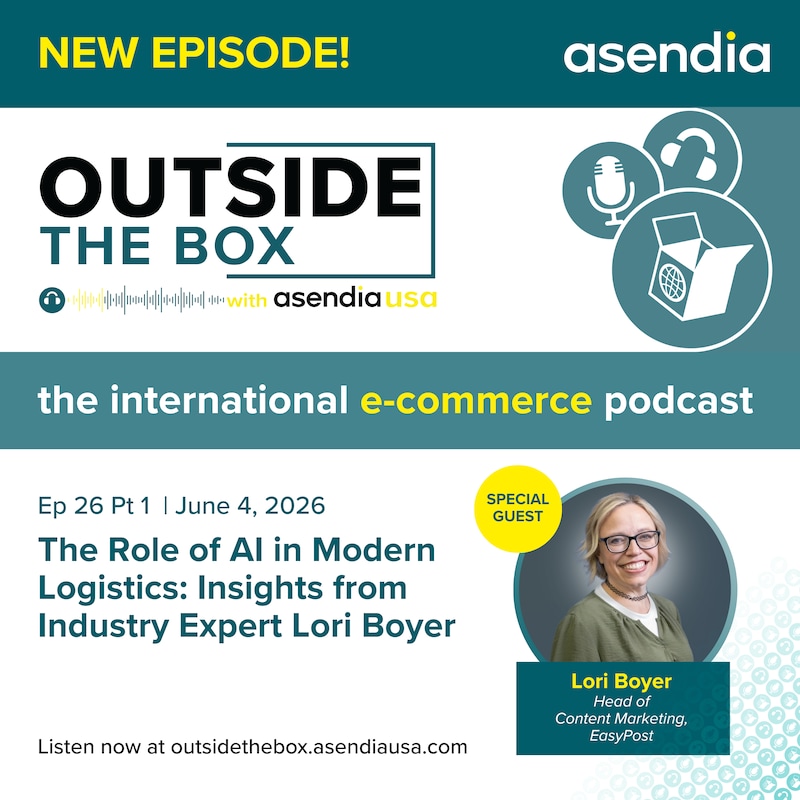
The Role of AI in Modern Logistics - Episode 26 - In the first of this 2-part episode, co-hosts Jason Rowland and Nick Agnetti we sit down with special guest Lori Boyer, Head of Content Marketing at EasyPost, to discuss how AI and Large Language Models (LLMs) are reshaping supply chain operations.
Key takeaways:
✅ Start with the problem, not the AI tool
✅ Logistics is primed for AI because of its vast data ecosystem
✅ AI is already improving route optimization, customer support, and decision-making
✅ Security and data privacy must remain top priorities
Plus, Lori Boyer shares her practical "ROCKS" framework for writing better AI prompts and getting more useful results.
Learn more about this topic:
- Asendia USA: Request a sales quotation
- Asendia USA - EasyPost
- Unboxing Logistics Podcast - EasyPost
- The Simple Shipping API - EasyPost
Lori Boyer | LinkedIn
Lori Boyer spends her days nerding out over shipping, storytelling, and the occasional SEO rabbit hole. As Head of Content Marketing at EasyPost, she leads the charge on all things content—from webinars and ebooks to case studies and the Unboxing Logistics podcast, where she chats with industry leaders about what’s next in logistics. She's a regular speaker on shipping trends, customer experience, and why logistics is way cooler than it gets credit for. Outside the office, Lori’s happiest on a crisp fall morning, wandering through historical sites, or mortifying one of her seven kids just for fun.
Transcripts
So logistics and supply chain is consistently listed as one of the industries that is most prime and most will see the most value from AI.
Speaker B:Step into the future with shipping smart.
Speaker B:Outside the box is where the journey starts.
Speaker B:From borders to buyers, we break it down fast.
Speaker B:Nick and Jason deliver knowledge that lasts.
Speaker B:Insight, innovation.
Speaker B:Wherever your brand goes, we'll guide your growth so your global reach flows.
Speaker B:Tune in, lean in, let's unlock the way.
Speaker B:Go outside the box with the senior usa.
Speaker C:All right, everybody, welcome back to Outside the Box with Ascendia USA podcast.
Speaker C:I've got my co host Jason Roland over there.
Speaker D:Welcome back.
Speaker C:And we've got a very special guest today.
Speaker C:We've got Lori Boyer from easypost.
Speaker C:She is the head of content marketing.
Speaker C:Thanks for joining, Lori.
Speaker A:Thanks.
Speaker A:I'm excited to be here.
Speaker A:Yeah.
Speaker C:All right, so the topic today is AI, Large language models and the impact in logistics and Supply chain.
Speaker C:So buckle up.
Speaker C:It sounds pretty heavy.
Speaker A:Get ready.
Speaker A:It's heavy, but fun.
Speaker C:Okay, I can't wait.
Speaker C:I can't wait.
Speaker C:Okay, so AI is everywhere.
Speaker C:I mean, you are attending Manifest, by the way.
Speaker C:We're coming to you from Manifest 2026 in Las Vegas.
Speaker C:And I don't know if you received or were inundated with invites to meet and talk about AI, but I mean, AI is everyone is the theme of this show, right?
Speaker C:Like, hey, can you meet to talk about AI?
Speaker C:It's like, man, I am not your guy.
Speaker C:Okay?
Speaker C:But yes, I, I appreciate your efforts.
Speaker C:So, okay, so it's the ultimate buzzword right now, I feel like.
Speaker C:So, so let's just get into it in our world.
Speaker C:So we're looking at logistics, e commerce, supply chain.
Speaker C:What is AI as it's being referred to and why is it important to know, you know, what a large language model is?
Speaker A:Okay, AI, obviously, everyone knows, is huge.
Speaker A:Most of us, if we're, we're talking LLMs, large language models, you know, think ChatGPT, think Copilot, think.
Speaker A:Some of those big ones that everybody knows and everybody's heard of in logistics and supply chain.
Speaker A:What's super interesting is that it's always been an industry full of data.
Speaker A:And really where AI is so sexy and plays so well is when you have a lot of unorganized data and these systems can take it and make sense of it.
Speaker A:So instead of having for all these years just one data scientist, one mega nerd who's digging in and looking at all these spreadsheets, we're able to have a normal person, an idiot like me, be able to kind of play with that and get some info.
Speaker A:So logistics and supply chain is consistently listed as one of the industries that is most prime and most will see the most value from AI.
Speaker A:So I think it makes a lot of sense that we're seeing AI everywhere.
Speaker A:That being said, I don't think everyone knows exactly where to use it, how to use it.
Speaker A:We can dive into that, but yeah.
Speaker D:So what would be your top three ways that companies in the logistics space can implement an AI?
Speaker A:Okay, AI.
Speaker A:First of all, one of the things that we're seeing across the board is that there is not yet an end all, be all AI tool in logistics.
Speaker C:Sure.
Speaker A:Right now you kind of got to pick what your pain is.
Speaker A:So I always recommend to people, if you're having a problem, then look for AI.
Speaker A:Don't find AI and try to fit it into your systems just for the purpose of using AI.
Speaker A:But if you are having an issue, look, you know, for AI as a solution, I would recommend starting with, you know, vendors and programs that you're already using a lot of systems, you know, and companies have adopted some AI.
Speaker A:So it could be that the people you're already using have AI tools and abilities that you can use without creating a lot of challenge.
Speaker A:One area, so really interesting stats and we're talking LLMs.
Speaker A:I feel like 2026, so we have not seen a lot of LLM specific stuff.
Speaker A:I think 2026 is the year that we're starting this really exciting.
Speaker A:So LLM think chat GPT, type in a question, you get a dance.
Speaker A:Right.
Speaker A:So the, the reason, so what stats show is I think the number is 23% but don't quote me on it.
Speaker A:23% Of supply chain and logistics companies have a dedicated AI system.
Speaker C:Really?
Speaker A:But 90% of employees, and that number can get higher say they're using AI on their own.
Speaker A:Yeah, it's called shadow AI and it's when it's not actually approved.
Speaker A:And that can bring up a lot of questions.
Speaker C:Sure.
Speaker A:In your area, right around security and issues like that.
Speaker A:But shadow AI is when anybody just hops in, they use chat tbt.
Speaker A:They use something like that to help them in their job.
Speaker C:And so I'm feeling very exposed right now, but yes, but all the time.
Speaker A:So I get it too.
Speaker A:But there are just some ways that you can do that and have safeguards as well.
Speaker A:So.
Speaker A:So I would say number one, people are using it in LLMs on their own shadows.
Speaker A:You asked for three.
Speaker A:Second one, using it within systems they've already got going.
Speaker A:And then the third way that people are really AI is taking off is things in like customer support, chatbots, things like that that are just really easy to use.
Speaker A:We haven't gotten them quite as well specifically in the warehouse.
Speaker C:It's beyond, I mean so we as an organization we're not going to name partners or anything but you know, for us in the cross border space, you know, you can imagine the amount of shippers we have over the last couple years that let's say they're small business, okay.
Speaker C:And they, they don't always come with the best descriptions, customs descriptions, HS codes or maybe just don't provide any of that data.
Speaker C:So we have some backend partners that we utilize that can comb through and AI based and they go through and they say hey here's the description.
Speaker C:Somebody says it's a cotton T shirt, country of origin, Mexico, whatever that is, they can go through and then assign the HS code, you know, before we can.
Speaker D:It's a value add for our customers and it stops them from having to do a lot of that legwork of figuring out HS codes.
Speaker D:Obviously there's, it's a different code for the country of destination, right.
Speaker D:So if you have to have a database of these codes for any possible product that you're going to sell internationally and having an AI there to leverage, that is already a value that we pass along.
Speaker C:So when we look at the industry as a whole, so we're at manifest right now.
Speaker C:You look at the industry and you've got, you've got carriers here, you've got final mile carriers, you've got some trucking over the road stuff, you have tons of fulfillment multi carrier integration tools, you've got your software platforms specifically there's AI vendors but where do we see, and I know you gave some good tips too, but where are we going to see, I guess in your prediction AI implemented first.
Speaker A:Okay, so already we're seeing a lot in terms of roads, right?
Speaker A:So with trucking, mapping out the routes that people should take simply based on past data of times of day and where you should go is already saving.
Speaker A:You know, I think that there are some massive amounts of money being saved by the large carriers, people doing that working AI in.
Speaker A:But yeah, I think that 2026 really is going to be the LLM year where we see it jumping into people being able to ask.
Speaker A:So we have so much data, right.
Speaker A:And being able to simply ask a question and be like what does this mean for me right now?
Speaker A:We've been using things like ChatGPT, but it doesn't necessarily have all our data.
Speaker A:We're starting to get the first.
Speaker A:And there's multiple coming out usages of LLMs that are specifically data for shipping.
Speaker A:Data.
Speaker A:Yeah.
Speaker A:So for your own data.
Speaker A:And then you can just ask questions and say, what does this mean?
Speaker A:Am I, you know, should I, should I change which route I'm using?
Speaker A:Should I change which carrier I'm using?
Speaker A:Should I, what, What should I do in order to save money?
Speaker A:That's pretty.
Speaker D:There's a lot of efficiencies you can have just by asking some simple questions.
Speaker A:So many, so many.
Speaker A:But I think we still have, I mean there's some issues.
Speaker A:I don't want to say that it's all easy.
Speaker A:I think right now because we're at the very cusp.
Speaker A:We're getting trust and you know, hallucinations you hear about.
Speaker A:We're not quite.
Speaker A:I think humans need to be involved 100% at this point.
Speaker A:Right.
Speaker C:Terminator.
Speaker C:Did we not see the MOV movie Terminator?
Speaker C:Come on, Skynet.
Speaker C:I mean let's go, Come on, right now.
Speaker A:It's why I always say please.
Speaker A:Thank you, thank you, thank you, thank you, Great Overlord, I will do your bidding.
Speaker D:So as companies in the E commerce and logistics space start to.
Speaker D:To your point, bring these things online and start to use them in more innovative and helpful and efficient ways, what are some stumbling blocks or what, what are some things that they're running into that are problems and what are things they shouldn't do?
Speaker A:Okay, I want to talk security to start and especially if you're using.
Speaker A:So you know, I mentioned that we're starting to see some shipping specific.
Speaker A:If you have a company specific or shipping specific LLM, you're going to be really safe with data.
Speaker A:However, I was speaking with, I was, I was on a roundtable recently with a group of CEOs who were discussing how they were using AI and one of them said, oh, I got this.
Speaker A:Great.
Speaker A:It was so amazing.
Speaker A:I had this huge contract that came in.
Speaker A:It was like 200 pages.
Speaker A:I ran it through ChatGPT and asked it to tell me what kind of issues it might see and it flagged like three issues and I was so excited.
Speaker A:That's great.
Speaker D:But don't replace your legal teams with it.
Speaker A:No.
Speaker A:If I.
Speaker A:So this is something that needs to be really clear.
Speaker A:If you're using something like Chat, GPT or Copilot or something, those technically are not private anyone.
Speaker A:So if you are using private data, one of the biggest stumbling boxes I see, people are sharing private data maybe where they shouldn't be.
Speaker A:So my rule of thumb is always if you would not put it in an email, if you would not put the data in a public Slack message.
Speaker A:I work in marketing, so it's like, if I wouldn't put it on the website, I'm not going to put it in something like ChatGPT, because technically that's exposing it to somebody else.
Speaker D:Especially when it comes to GDPR and regulations like that.
Speaker D:If you're putting a spreadsheet into ChatGPT and say, hey, find me the best way to get to these addresses and these people, because they're our, our customers.
Speaker A:Are they recipients customer data.
Speaker A:We should be never getting private information put out there.
Speaker A:That's just opening ourselves up.
Speaker A:That being said, there are ways to do it.
Speaker A:You can put in redacted data.
Speaker A:You could put in summaries of like, this is like the amount of time I'm seeing where you're not getting in specific info.
Speaker A:And there is still a way to use.
Speaker C:I'm feeling a little scared right now, but yeah, I'm just feeling a little nervous.
Speaker C:So.
Speaker C:Yeah.
Speaker A:Yeah.
Speaker A:And then.
Speaker A:And then another big issue I'm seeing, honestly is with our prompt engineering is what we call it.
Speaker A:And it's the way you ask questions so very politely.
Speaker A:Always, always, always, please, please.
Speaker D:When you take a good prompt versus a bad prompt, is there a way.
Speaker A:For sure, for sure.
Speaker A:Most of us go in and we're really generic.
Speaker A:So I kind of use this framework.
Speaker A:This is super nerdy R, O, C, K S. You give it a role.
Speaker A:So one of the best things I do, tell it to be something.
Speaker A:A lot of times if I'm writing something, so I'm a writer, I'll say, I want you to be a 1980s Russian gymnastics coach in the way you're responding.
Speaker A:I don't want you to pull punches.
Speaker A:I don't want you to tell me that this is good if it's garbage.
Speaker C:Like, I don't care that you broke your ankle.
Speaker C:Get back out there.
Speaker C:You know what I'm saying?
Speaker C:Yeah.
Speaker A:But generally you pick the role.
Speaker A:So I may be like, you are a senior warehouse operations person.
Speaker A:Your answer will be completely different than if you just put in the question.
Speaker A:You should ask for certain out.
Speaker C:I would have never thought of that.
Speaker A:Yeah, all so good.
Speaker A:Ask for certain outputs.
Speaker A:Like, I want it in this way.
Speaker A:Another thing I do is to ask it what assumptions did it make?
Speaker A:Because it makes its own assumption.
Speaker A:So maybe you're saying, like, what happened to this package?
Speaker A:You know, I had a package, it left from Chicago.
Speaker A:It may come back and Say I'm assuming the weather was falling, right?
Speaker A:And then you realize, oh no, we didn't have the weather was fine, it was a storm.
Speaker A:Right?
Speaker A:And so ask for what it's assuming.
Speaker A:I like to ask for its probability of how accurate it thinks it probably is.
Speaker A:But I've actually developed it so that if I put it in, I can even say I've said so.
Speaker A:Rocks stand for things like roll output, the context.
Speaker A:The what you should know.
Speaker A:So another really great one.
Speaker A:What else do you need to know from me?
Speaker A:What other information would make it easier for you to answer this question?
Speaker A:It'll give you so much better data.
Speaker A:Really, really good info.
Speaker A:And then S is when it comes down to like how sure are you about this?
Speaker A:I've developed it now so I can just say can you give me a prompt?
Speaker A:I'm like looking at this using my rocks format.
Speaker A:Can you give me a prompt?
Speaker A:And then it'll tell me all the things and fill it out and then I'll send it to it and it'll give you all the info.
Speaker A:So.
Speaker C:So R O C K S which.
Speaker A:Is roll roll output output.
Speaker A:So that's like what do you want to see?
Speaker A:Sure you list it in this way.
Speaker A:Context, context.
Speaker A:So like here's the context of the situation.
Speaker A:I have a really upset customer.
Speaker A:My my boss is asking to know what happened to this package.
Speaker A:It was supposed to arrive and I'm just not getting a flag on anything.
Speaker A:You know, any data.
Speaker A:Ooh, also with contact uploading any data you do have that is not private.
Speaker A:Right?
Speaker A:So adding in that kind of information.
Speaker A:K is asking it what else it needs to know.
Speaker A:So like what other things do you feel like you need to know?
Speaker A:And then S is like how sure are you like the.
Speaker C:If you are watching or listening, you just got a huge nugget of information on AI or.
Speaker A:Helps a ton share.
Speaker C:Subscribe and download our podcast to learn more about today's topic or for a free consultation, email us@ecommerce USAIA.com Come back for more insightful discussions on e commerce, shipping to Canada, Mexico and worldwide.


