Shownotes
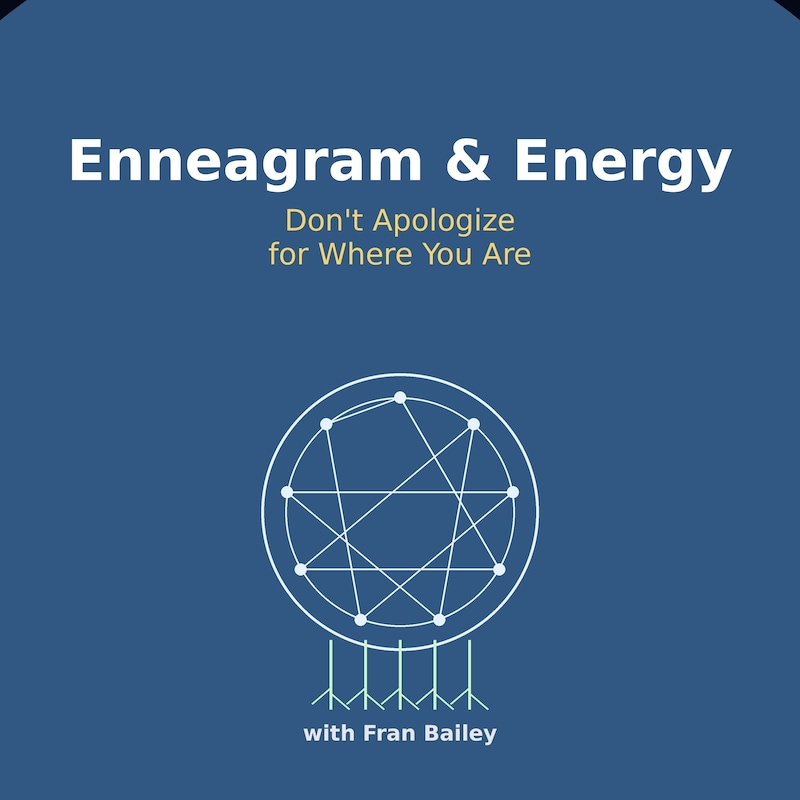
Dancer-turned-healer Fran Bailey joins hosts Anthony Wright and Adam Dietz to explore how the Enneagram, the chakra system, and energetic grounding can help us stop apologizing for where we are in life and come back into our bodies. She talks about working with head, heart, and body types, guiding clients to ground their energy, and why “encouragement without apology” is at the core of real healing.
In this follow-up conversation, Fran Bailey joins Anthony Wright and Adam Dietz on The Living Conversation to go deeper into her energetic work with individuals and groups. Drawing on the Enneagram, the chakra system, and her own intuitive seeing, Fran shares how she helps people move out of self-judgment and back into grounded presence.
We start with the Enneagram’s roots in Gurdjieff’s movement work and the idea of head, heart, and body types arranged in a circle. Fran explains how she uses this map in her healing practice—especially with “head types” whose energy and attention can get stuck in the sixth chakra, looping through anxiety and overthinking.
From there, she describes guiding people to move energy beyond the edge of the aura, then down through the chakra system to the first chakra to ground into the earth and come back into their bodies. In groups, she’ll invite everyone to “watch the energy” around one person so they can begin to see and feel for themselves, dissolving some of the “woo-woo factor” and recognizing that working with energy is another way of working with the emotional and mental patterns we all live inside.
A big theme of this segment is permission and non-judgment. Fran talks about telling clients, “Don’t apologize for where you are. I’m not judging you.” That simple stance creates a breath of space where people can begin to imagine actually loving themselves, instead of clinging to external expectations of who they “should” be.
In this episode, we explore:
- Gurdjieff’s movement work and the Enneagram as head/heart/body types
- How Fran uses the Enneagram and chakras together in her energy healing
- Guiding “head types” out of mental loops and back into embodied grounding
- Group work, collective energy, and teaching people to see and feel energy for themselves
- The importance of “encouragement without apology” and why self-judgment is a root of disconnection
- Grounding as a living relationship with a changing Earth, and Fran’s evolving sense of Mother Gaia’s energy
- Flow states, forgetting ourselves, and being at one with something larger than the isolated ego
- How Fran measures healing: clients becoming more upright, unapologetic, and simply okay with themselves
Along the way, Adam connects Fran’s work with Daoist emptying of the mind and the idea that forgetting ourselves allows a clearer, higher view of our own thoughts and energies, while Anthony reflects on validation, holding space, and inviting students and clients into their own highest vitality.
Connect with Fran Bailey:
- Website: franbaileyhealer.com (sessions, meditations, and more)
Transcripts
Foreign.
Speaker B:Anthony Wright.
Speaker B:And I am your co host on the Living Conversation with Adam Dietz.
Speaker C:Welcome to the conversation.
Speaker B:And we are here with our guest friend Bailey, who is a dancer turned healer.
Speaker B:And we were talking before the break.
Speaker A:About.
Speaker B:How to kind of come back to ourselves from COVID and from social media.
Speaker B:And I really appreciated what you had to say, Fran, about reconnecting with that child who found the dance in the barn.
Speaker B:And her wisdom is still present and still loving.
Speaker B:And one of the things that you have listed in your points of study is the Enneagram.
Speaker B:And you had studied with Deborah Uten.
Speaker B:And talk to us a bit about how the Enneagram has been useful for you.
Speaker B:And isn't the Enneagram also originally a Sufi construct about the Enneagram, please.
Speaker A:So that's.
Speaker A:His name is Gurtif, He's Russian.
Speaker A:What he did is studied movement all over the world, all these ethnic groups, and then choreographed one piece.
Speaker A:And it was like a Sufi.
Speaker A:So the unity of one, that we're all one.
Speaker A:There's one person in the middle of this circle or this choreography.
Speaker A:And everybody else is doing certain movements simultaneously.
Speaker A:But this one is spinning.
Speaker A:So the concept and the idea is that we are one.
Speaker A:We're either mind, heart, mind body types and that we all share all three of those.
Speaker A:And it has gone through many, you know, hands of change.
Speaker A:And it's now more of a psychological concept where you either are mind the three in each one.
Speaker A:So you've got the body, eight, nine, one.
Speaker A:It's a circle.
Speaker A:And then you've got the heart, which is 2, 3, 4.
Speaker A:And then the head is 5, 6 and 7.
Speaker B:And you're talking about Enneagram categories.
Speaker A:Yes, categories.
Speaker A:Which is.
Speaker A:It's in a circle and they're all diagrammed facing each or connected to each other.
Speaker A:But we tend to move into.
Speaker A:We navigate through one.
Speaker A:So I'm a heart.
Speaker A:So I navigate through my heart more than my head or my body.
Speaker A:So the idea is that it's a study.
Speaker A:Some people get really addicted to it, but it's a study.
Speaker A:And I did that actually for myself so that I could be a better healer.
Speaker B:Right.
Speaker A:And know the cues.
Speaker A:And then two.
Speaker A:It helped me understand the human condition that how.
Speaker A:How we navigate.
Speaker A:So how we navigate what we see is part of how we process.
Speaker A:So the.
Speaker A:The process is of interest to me because that tells me sort of the story of your body, everything.
Speaker A:And so my questions would be, tend to work in that understanding what type they are.
Speaker B:Or where they tend to reside.
Speaker B:I would imagine.
Speaker A:Yeah.
Speaker A:Where they tend to reside.
Speaker A:Right.
Speaker A:Like the example, like said about the head type, you don't ask them what they feel.
Speaker B:Right, right.
Speaker B:And then it comes to me to also ask.
Speaker B:You've done quite a bit of study with the chakra system of the Vedic chakra system.
Speaker B:How does that work together with the Enneagram?
Speaker B:Please.
Speaker A:Good question.
Speaker B:These are a set of tools.
Speaker A:Yeah, they're a set of tools.
Speaker B:So find utility through that.
Speaker A:Right.
Speaker A:So if.
Speaker A:Let's just take the head type again.
Speaker A:So of course you're.
Speaker A:You're up in the.
Speaker A:The intellectual six chakra, right?
Speaker A:You're.
Speaker A:You're in the.
Speaker A:The pattern of thought.
Speaker A:So a six will either go towards fear or away from fear.
Speaker A:Either going to have anxiety towards something or they're going to, you know, that kind of analogy.
Speaker A:Or they.
Speaker A:And they ask thousands of questions all the time.
Speaker A:So with the head type, I will make more emphasis on clearing the head of thought attachments to thought, ideas, anxiety or patterns of thought so that they start extrapolating the idea and the energy around their head.
Speaker A:And they, and I say move it past the edge of your aura.
Speaker A:That way the brain isn't going a thousand minutes.
Speaker A:So that way I can look.
Speaker A:I say, now you come down through the chakra system to your first chakra and ground to the center of the earth.
Speaker A:So they start beginning to get into their body rather than being out of their body and looking this way.
Speaker B:Yeah, that was a real important component for me.
Speaker B:I was taught a number of years ago about doing a grounding core to the center of the earth, and I do that with my students, and that's tremendously useful.
Speaker B:But I'm getting a sense that with your developed intuitive and visualization capacity, you're able to watch people in process and guide them from there.
Speaker B:Is that right?
Speaker A:Yeah, it's pretty wild.
Speaker C:Are you watching us right now?
Speaker A:Yeah, well, in.
Speaker B:In natural conversation, I think.
Speaker B:But yeah, with your clients.
Speaker B:I think this must be quite useful in guiding people across their developing energy field in a way that is not necessarily addressed by Western medicine.
Speaker A:So if you can think of that concept of like, for instance, if I'm teaching with a group of people, maybe there's six people there and I'll pinpoint one person.
Speaker A:I'll say, just watch this energy.
Speaker A:Watch where it's going.
Speaker A:You know, the attachment is here, or stay grounded and in your body, feel your sit bones.
Speaker A:And so in the group that everybody starts doing the same thing.
Speaker B:And I'm noticing that you are presupposing that people will be able to see it, whether they believe it or not.
Speaker B:And they start to.
Speaker B:That's quite powerful.
Speaker A:Yeah, it's pretty.
Speaker B:So continue please.
Speaker A:So.
Speaker A:When there's a group energy or when you expose something with that person, everybody will get the cue to do the same thing, right?
Speaker A:To, to ground themselves.
Speaker A:Then that's a collective energy in the room.
Speaker A:Then I will channel then the next, how do I say, the next phase of that hour that will bring in the energy that they all need.
Speaker B:Oh sure.
Speaker A:So then it becomes an expansion and expansion and expansion.
Speaker A:But they're not out of body, they're in body with the grounding.
Speaker A:With the grounding, the lessons come, you know, then they get information for themselves individually without attaching to anybody else, even though the.
Speaker A:So the group energy sets the tone for them to leave or see and then bring it in.
Speaker A:See, feel here.
Speaker A:No, that makes sense.
Speaker B:It does.
Speaker B:And I'm just getting a sense that in part of what you do as a facilitator is you hold a container and you structure the container with the presuppositions, but you stay the heck out of the way because that's, you know, more impactful than trying to think to impose on someone else what you think they ought to be doing.
Speaker B:You have any thoughts?
Speaker C:Yeah, I feel like that's really profound.
Speaker C:And two things come to mind.
Speaker C:One is that for people who are stuck on the woo woo factor still, like we.
Speaker C:Whether you're just in your own mind or you're in your feelings, you feel stuff like you're gonna be happy or angry or sad.
Speaker C:That's life.
Speaker C:You can't just get past that.
Speaker C:And I think anyone who's in the, you know, who's, who's keeping this at arm's length, you know, and who's, who's being turned off by how we're talking about energy, your body, your chakras and stuff like that, just needs to realize you are a human being, you exist.
Speaker C:You're going to be feeling certain things all the time.
Speaker C:That's life.
Speaker C:You can't get past that.
Speaker C:You have to be able to break through those patterns.
Speaker C:That's how you enhance your life.
Speaker C:That's how you live a good life.
Speaker C:So I'd like to open the door for everyone who might be a little hesitant on that to just realize that life is ups and downs, life is energies.
Speaker C:We do need to work through those.
Speaker C:That's, that's why we're here in a lot of ways.
Speaker A:Right?
Speaker C:That's, that's the one thing that comes to mind.
Speaker C:But the Other is that when you were talking about the collective, that was so interesting to me because.
Speaker A:I can.
Speaker C:Go many different directions with it.
Speaker C:But the main thing I want to think about is talking about the zeitgeist, talking about the collective consciousness of the world.
Speaker C:Anthony, before brought into this show that there's a lot of crap in the world right now and we need to be wastewater management people helping sift through the crap and helping purify.
Speaker C:I would wonder if you could say something to that as far as the overall zeitgeist.
Speaker C:And the last thing I just would want to point out to that is is we come from a lineage where we learn from.
Speaker C:Our school was founded by a student of Sri Aurobindo who taught integral yoga.
Speaker C:And his student who founded our grad school was named Haridas Chowdhury who taught integral philosophy.
Speaker C:But the integral yoga element felt like, as we're talking here, it feels like Sri Aurobindo type of vibes where he was trying to use yoga to help heal the world.
Speaker C:And when we're talking about zeitgeist and talking about your process, could you just say something about how.
Speaker C:I'm sorry to do so long winded.
Speaker C:I hate when, I hate, I hate when interviewers, when interviews, interviewers take over the interview.
Speaker C:But I would like, I would hope if you could say something about how, how your process, how you can imagine your process as healing the overall zeitgeist, maybe, or how we could take that, take that, take your process and kind of imagine how it could help in a larger scale.
Speaker A:Well, I think that.
Speaker A:Having faith in those that are on their path to some sort of consciousness.
Speaker A:So in my knowing, I know that there are many that are trying to get on a path.
Speaker A:I know that.
Speaker A:I can feel it.
Speaker A:So the level of encouragement without apology, that's huge.
Speaker B:See that again, please, and explain that a bit more.
Speaker A:So I think people in their self talk are apologizing for where they are in their life.
Speaker B:Okay.
Speaker A:So I think that is the, the root cause of disconnect.
Speaker B:And you're able to see that in the chakra system, I would imagine.
Speaker A:Immediately.
Speaker B:We have to take a short break.
Speaker B:I'm Anthony Wright and I am your co host today on the Living Conversation with Adam Dietz.
Speaker B:And we are talking with our guest friend, Bailey.
Speaker B:And how can people contact your friend?
Speaker A:My website, Fran baileyhealer.com you can message me.
Speaker A:We can, we could do a free session.
Speaker A:I do periodically, I do free meditations on Sundays like every couple months.
Speaker A:So keep a lookout for that.
Speaker A:And I'M on Facebook and Instagram and.
Speaker B:And that's spelled B, A, I, L, E, Y.
Speaker B:Is your last name correct?
Speaker B:Great.
Speaker B:We'll take a short break and be right back.
Speaker B:So stay tuned.
Speaker B:I'm Anthony Wright and I'm your co host today on the Living Conversation with Adam Dietz.
Speaker C:Welcome.
Speaker B:And we're talking with our guest Fran Bailey, who is a dancer turned healer.
Speaker B:And I'd like you to continue, if you would, Fran, from before the break about what's going on and how do we work.
Speaker B:And I appreciate, Adam, before the break, you gave a context of your and my education at the California Institute of Integral Studies from Sri Aurobindo.
Speaker A:And.
Speaker B:But Fran, I'd like to know more about your thoughts about healing the zeitgeist and how do we, where do we start?
Speaker B:Or so continue with that.
Speaker B:And you could see it in the people's chakra systems.
Speaker A:So you think about what's so important is that people are aware of not being judged.
Speaker A:So in this work, I always say don't apologize where you are.
Speaker A:I am not judging you for where you are.
Speaker A:The minute I say that, what happens, what happens to you when I say that?
Speaker A:It's like, oh, there's a breath, right?
Speaker C:It's like you're free.
Speaker B:Permission.
Speaker A:It's, it's, you have permission.
Speaker A:Exactly.
Speaker A:So that level of support and permission and not apologizing for who you are, who you were or your, your how you've navigated your life or working from this moment on.
Speaker A:So with that saying, there is that absence of judgment, right?
Speaker A:And so there's almost a breath to actually perceive of the idea that, wow, I think I can do that.
Speaker A:I think I can love myself.
Speaker A:Maybe if I learn more about what that looks like and when I put energy in what that looks like, I'm not putting my energy somewhere else seeking or trying to find or, you know, cling on to something else, that the clinging is, is what it's all about as well.
Speaker A:So if you take away the clinging of others, how you should be, ought to be and have to be, then there's another breath of, okay, there I am now, what am I going to do with that?
Speaker A:Am I going to love that person?
Speaker A:Am I going to begin to inquire about that person?
Speaker A:It's about inquiry.
Speaker A:I want to know where that creative person is, where do they live?
Speaker A:Where am I living in my own creation?
Speaker B:And what you're doing, I'm noticing, is completely holding a space for people so that they can begin to hold the space for themselves.
Speaker B:Is that.
Speaker A:Right, Correct.
Speaker B:And that's not a.
Speaker B:Not a usual thing.
Speaker A:No relationships.
Speaker B:And yet it makes such a difference.
Speaker B:But there's also something else that I notice when I'm working with my own students in teaching critical thinking of validation.
Speaker B:Validation is a huge component to say, yeah, I see you, and yeah, you have capability and you are this being that is more than you know.
Speaker A:And.
Speaker B:Where are you drawn with your clients in not only the group work, but individual work to invite them to their highest vitality.
Speaker A:Again, it depends on the client, but I think there's a level of submission, Submission for the actual healing to begin.
Speaker A:So it's actually.
Speaker A:If I get out of my way and they are able to get out of their way, then the submission is the actual healing that takes place and.
Speaker B:Opening to what is possible.
Speaker A:Whatever.
Speaker A:Whatever is possible.
Speaker A:Correct.
Speaker B:Yeah.
Speaker A:So the probability is.
Speaker A:The probability is the probability.
Speaker A:You know, it's.
Speaker A:It's there when it's.
Speaker A:The space is created to.
Speaker A:For it to come through.
Speaker A:Through.
Speaker A:It's like any kind.
Speaker A:It's like dance.
Speaker A:It's like choreography.
Speaker A:It's the same thing.
Speaker A:You have a piece of music and your body responds to the piece of music.
Speaker A:It's sometimes like that.
Speaker A:It sometimes takes forever.
Speaker A:But what happens is the collaboration and the zinger is just maybe one movement or one word or one note to the same principle.
Speaker A:And you ask for that gem to come forward that.
Speaker A:That the crystal will be there for that reflection.
Speaker B:In.
Speaker B:In the work that Adam and I have done in studying Chinese philosophy and other.
Speaker B:Other philosophies, and certainly to cite the work of Mihaly Csikszentmihalyi and also Vinnie Colatuta, I believe his name is.
Speaker B:Is a drummer.
Speaker B:Would you say what you're looking for is a flow state or we forget ourselves?
Speaker A:Yeah, right.
Speaker B:When.
Speaker B:When I forget their.
Speaker B:When I forget about Anthony, there's no separation then.
Speaker B:And, and that's a lot of what I've been doing and what Adam is doing and what I sense that you are doing is to invite people to forget themselves so that we can be at one with.
Speaker B:With the divine.
Speaker A:Exactly.
Speaker B:But I. I would like to come back because we're coming up to the.
Speaker B:You know, we've got a few minutes left.
Speaker B:In the interview, can you speak about the importance of grounding and where that makes all of this, all this other development possible?
Speaker A:Oh, yeah.
Speaker A:I.
Speaker A:Well, recently, and I've been sort of questioning this and why I. I kept seeing, okay, well, where.
Speaker A:Where's the grounding cord?
Speaker A:I can't find it.
Speaker A:I Can't find the access, I can't find the grounding cord.
Speaker A:So what is happening?
Speaker A:And I believe that the energy is shifting so quickly and that concept of grounding is something different.
Speaker A:So when I asked, and I'm just doing this new meditation now with all the.
Speaker A:Anyway, it's, it's opening up to something different.
Speaker A:So in other words, what I'm seeing as part of the center of the earth as Mother Gaim is shifting and changing so quickly.
Speaker A:How can I ask her to be what was.
Speaker B:Well, and maybe even staying in touch?
Speaker A:So it's.
Speaker A:So I've asked her Mother Gaia to show me this new energy constantly, every day.
Speaker A:So what comes up is this color blue and this rainbow and all the elementals, not necessarily in a cord, but in a column of energy coming up into the first and second chakras, which is so cool because what is above is below.
Speaker B:Right?
Speaker A:And now it's beginning to connect all the way through.
Speaker B:Oh yes.
Speaker B:And I'm just reflecting and I want to have your comments, Adam, but it, there's a German term called disgruntled and it translates to ungrounded.
Speaker B:If you are disgruntled, well then you're ungrounded.
Speaker B:That's reground.
Speaker A:I like that.
Speaker B:So what are you thinking, Adam?
Speaker C:The, the biggest thing is while we're talking here, I'm thinking about how emptying your mind in Taoist philosophy.
Speaker B:Emptying your mind.
Speaker C:When you empty your mind, then you can allow the most pure original energy, the most pure original part of yourself to come forth.
Speaker C:And I used to have my students would get really concerned.
Speaker C:Oh, professor, you're saying forget yourself?
Speaker C:Well, I like myself.
Speaker C:I don't want to forget myself.
Speaker C:And so of course I understand that the great.
Speaker C:I'm happy for you.
Speaker C:But when you forget yourself, when you purify your mind, when you empty your mind, then you can see everything about yourself more clearly at a higher level, including your chakras, including different energies.
Speaker C:However you're oriented, maybe you're.
Speaker C:Maybe you're thought oriented.
Speaker C:Okay, well, now you see your thought more clearly with more perspective.
Speaker C:You're not just stuck in the stream of consciousness.
Speaker C:Maybe you're really energy oriented.
Speaker C:You see energies, you feel like.
Speaker C:Well now you see them from a higher perspective as well.
Speaker C:So I just think it's so beautiful.
Speaker C:Again, another example of the living conversation where we come together from different walks of life and we come to see the path of high level spirituality, but also how it becomes manifest and how it makes our individual being, our person, more rich.
Speaker C:And so I guess my final question in that is it must be very satisfying for you when you see people that have, have, let's say in this term, forgotten themselves, maybe had some insight into their energy and come out and come out heal and more full, more full human being.
Speaker C:Could you just describe the process of, as a healer, when you see the process of healing and the end result, what it feels like for you?
Speaker A:It feels great.
Speaker A:It feels great when I do these sort of intensives, three sessions with one person, if they're going through like a traumatic crisis or they have a shift or divorce or whatever.
Speaker A:And so in those three sessions, the intensity and the speed in which I see the changes is very, very satisfying.
Speaker A:And you know, after the three, I said, oh, they're not going to, they'll call me in six months or something.
Speaker A:But what happens is, what I notice is they're happy.
Speaker A:They're actually happy and they don't apologize and their bodies are, you know, upright.
Speaker A:They aren't sunk in at the third and you know, they're just, they're okay with themselves.
Speaker A:And if I can do that, I'm pleased.
Speaker C:Can I, can I follow up on that?
Speaker C:Do we have time, Anthony?
Speaker C:Yeah, I just want to.
Speaker B:Just a couple minutes.
Speaker C:Yeah, I just want to.
Speaker C:The final thing is, I'm sure it wasn't easy for you from a four year old dancer who I think you described in some of your work, that you're feeling the metaphysical as you're dancing.
Speaker B:Right?
Speaker C:Is that right?
Speaker C:And I'm sure it wasn't easy for you to walk that path from a four year old dancer who's almost manifesting the metaphysical as an innocent child, to the satisfaction of a healer who's helping their clients heal.
Speaker C:In this, in your current work, could you say something for our listeners about that path, the challenges that come up and how, how, you know, staying true, let's say in a cliche way, staying true to yourself, but having a vocation and, and you know, seeing it through how, how that looked for you.
Speaker A:Well, I think again, everything that I sort of teach or I've done, I'm the guinea pig.
Speaker A:So I do it on myself first because I think that's, that I know it's valid.
Speaker A:You know, I asked the question again, I have to go through that process of going through it so that I can share it.
Speaker A:That's number one.
Speaker A:Number two, I think that my spiritual experience and my visions have encouraged me to stay on this path because there, there's any going back because it's just okay.
Speaker A:There's another, there's another, there's another.
Speaker A:And they've been very, very, you know, very dynamic.
Speaker A:And white elephant and white buffalo and you know, all these incredible.
Speaker A:Seeing Jesus and saying, okay, you can heal and you can dance.
Speaker A:And he put his hands on my hands and that was it.
Speaker A:Okay.
Speaker A:So you know, feeling his robe, seeing his feet, near death experience.
Speaker A:I mean these, all these accumulated things have helped me validate, you know, the work.
Speaker A:And I'm here to do that.
Speaker A:It's my mission.
Speaker A:So I think that that's, you know, I'm human too.
Speaker A:I make mistakes and do all those horrible things.
Speaker A:But then, you know what?
Speaker A:We all are.
Speaker A:So what the hell.
Speaker C:Confucius, Confucius, you know, the highest level is our humanity.
Speaker B:So I'm afraid we are out of time.
Speaker B:I'm Anthony Wright and I am your co host today on the Living Conversation with Adam Dietz.
Speaker B:And we have been talking with our guest dancer turned healer Fran Bailey, who is the developer of the Shiva method.
Speaker B:And how can people contact you?
Speaker A:Contact me on Fran baileyhealer.com Message me, we can have a consult.
Speaker A:There's a free meditation on my homepage, lots of other items.
Speaker A:I go through the website and that's.
Speaker B:B A I L E Y Fran Bailey dot com.
Speaker B:Well, thank you so much for being our guest and thanks for listening and we will see you next time.
