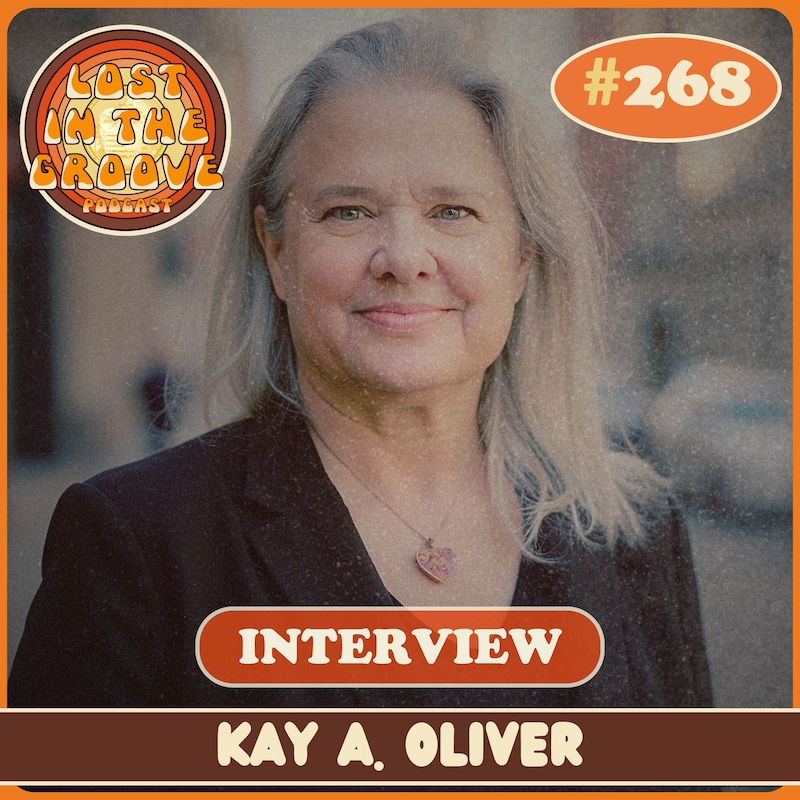
Shownotes
Talking with Kay A. Oliver felt like stepping behind the curtain of an industry. That seriously loves control more than creativity. Kay shares her path from Hollywood expectations to independent authorship. Seeing why walking away from traditional gatekeeping. Was the only way to write honestly, and freely. We get into what it really means to own your stories, your voice, and your pace. Within a business that constantly tries to rush and reshape you.
We talk about writing strong female characters without turning them into clichés. Why lived experience matters more than trends. How independence gives writers room to breathe, and break open. Kay opens up about creative freedom, discipline, and the quiet confidence it takes. To keep going when there’s no studio, no machine, and no one telling you what to do next.
This conversation is for writers and creatives who feel boxed in by expectations. Kay’s perspective reminds you that the work gets better. When you stop asking for permission and start trusting your instincts.
Where to Find Kay A. Oliver?
🌐 Website: https://kayaoliver.com/
Work: 📖 Independent novels and screen inspired fiction
📲 Social: @The_Hollywood_Gal
Transcripts
===
Kay A. Oliver: [: pen to paper, realize like, [:Kay A. Oliver: Yes,
Dave: else.
Kay A. Oliver: correct. Absolutely. Is your creativity, your voice, and your spin on it? For sure. And
Dave: It
Kay A. Oliver: one of the things I found in, huh, go ahead.
Dave: yeah, no, I was gonna say, that
Kay A. Oliver: Go ahead.
Dave: like Hollywood, but yes.
Kay A. Oliver: That's exactly it. That's exactly where I was going. Um, in Hollywood, when I'd write scripts and I had a first and last at one of the studios, it was great script. But women aren't marketable strong independent lead characters as women aren't marketable and realize this was, you know, roughly 10 years ago.
s, we are. There's a lot of, [:So I, I begged a different with them.
Dave: I,
Kay A. Oliver: Hollywood likes to prove.
Dave: be Oh, Yes, I, have noticed that. I have no, no. One thing I have noticed, especially, you know, with interviewing independent authors and independent filmmaking houses and things, there's a, there's a lot more. Of creativity and more free flow of how stories are developed the sense of we're Yeah, there's still marketing.
how, how much our actors are [: l strong women's characters, [:Like any women that I've ever known. So you're correct. And on top of that, you don't have to cater to the celebrities in your movie. You don't have to cater to, uh, the executives at the studios. Uh, you, you write it and it's between you and your editor, um, right. It's, it's, it's not where you make this movie and they come back and say, cut off 20 minutes and you have to go back and re-edit.
Um. So it's a lot more freedom. Absolutely. And a a lot of creativity out there. TikTok proves that.
Dave: oh, yes. And I have also noticed there are people that are still within the mainstream that, you know, one person that comes to mind that.
I've recently seen is like Kathy Bates. She's like
Kay A. Oliver: Yes.
rs that I can even think of. [:Kay A. Oliver: Yeah. Yeah. But there's very. Few of those, like you said, that's, yeah,
Dave: Very few.
Kay A. Oliver: that's the one you can think of. Um, you, you know, that's why they fight for equal pay as well, you know, uh, you, you might be second on the, you know, credits, but you're still leading, you know, role in the movie and you should be getting paid the same.
u come in and say, I'm gonna [:Correct. So, um, that is part of the reason why. You know, um, you know, the, the culture of Hollywood started off wrong to begin with, um, when they would hire women and, you know, they were more play things and not really actresses come to the party, entertain these actors and women started off technically with very few, um, who, you know, uh, would have power.
t. Chaplain, her and I can't [:Um, anyway, so, you know, it was a,
Dave: Well,
Kay A. Oliver: literally was called a cartel.
Dave: yeah, I mean, you also had people at that time, like Jane Crawford, you know, or Betty Davis. But you know, they were, they were. So much of their time based on their looks and their features, you know that the way that they represent them, like even Mae West is a great example of this too.
Like they had to present themselves a certain way for them to be successful. They couldn't necessarily tell their own narrative even if they wanted to.
Kay A. Oliver: I had agree with that. Marilyn Monroe will fall into that category. Absolutely.
t kind of has that worldview [:Kay A. Oliver: Absolutely. Um, it is free reign and the creativity is mine. Um, and, you know, that is unprecedented in Hollywood. They don't allow that for sure, especially from a female. But, uh, I mean, it's changing a little bit, so I don't wanna be too sarcastic here, but, you know, uh, again, I say I was in it. Earlier, but I still see those things.
e same jobs. So we shared an [:Dave: Remember who are the people that are still running these mainstream organizations, you know, like Warner Brothers and Universal Studios and Disney. It's like reason why a lot of these independent artists are being successful today is a lot to do with even people that are older. They have a younger mindset.
nd she struggled with mental [: film made money, they didn't [:So, uh, example within last year was Horizon by Kevin Cosman. It made money. But it didn't make the money they wanted or the the amount of money, you know, because not as many people are going to the theaters now, or you have to spend lots and lots of money in marketing to get people seats in the theaters.
'cause we all wait for it to come out on video. But when it came out on video streaming, it was number one for the whole month that it was on that streaming network. So the story's beautiful. There's leading ladies in there. Um, Kevin talks about that, and you know, when he talks about the movie, I've already seen two.
they're like, it's too long. [:Right. And it shows that the critics are wrong when it went to streaming because it was so loved. And now, you know, he's having difficulty getting saga two out, uh, distributed. And um, that's a shame. It's a, you know, and I It is. Okay. Yeah. There, he's trying to tell the real story of history, not the romantic story of history.
People don't wanna hear that. Uh, you know, is that why critics are so, you know, oh, and it's so ego and this and that. And I'm like, well, if he was so ego, you wouldn't wait 20 minutes for him to show up on screen. I mean, there's just, you know, there's just so many things. I hear them saying that's they tear things apart.
atching this? This movie is. [:I, you know, I, I'm, I've always been perplexed about that. All my years in Hollywood, I'd watch that and go, okay, this is a favorite child and this one is not a favorite child. This one plays. Hollywood politics. This one does not. This one does what they think is feel good that this one takes risks, right?
Dave: yeah, I mean we had that this
Kay A. Oliver: Yeah.
, okay, a movie just to sell [:And personally, I watched a little bit of the film and I stopped watching it because I found it to just. It's not a good movie. You know, you need a balance. You know, the same thing with a story. It's like if you have a a, a, you know, this super whatever, like this, celebrity, and it's like they're the whole premise of the story and everybody else is the sidekicks. You're not gonna have a good movie. You know, it's like go back, even like Devil's, Wear Prada is a great example of this. You have somebody like Meryl Streep, you have. Anne Hathaway. It's like Meryl Streep is obviously was more famous at the time than Anna Hathaway was, but the two of them together made I think by far one of the best fashion movies.
ic. It was a great story. It [:Kay A. Oliver: Yes, absolutely. And uh, and the, the other sidekick, the guy, he was famous, um, in that movie, but the story, you're right, the story is
Dave: what's his name? Um,
Kay A. Oliver: Yes. Stanley Tucci.
Dave: Yes.
Kay A. Oliver: Yeah, so he was wonderful in that as well. I mean, all the characters blended well, which casting should have an award? Um, they don't have that in the Oscars.
Um, yeah, the story, I mean, I was watching what everybody was saying was a fantastic television show and it had huge holes in the story. All of a sudden, you know, X would be happening and then for two seasons you didn't know about something and all of a sudden, you know, season four pop, something would pop up and I'd be like, I can't handle this.
I had to turn [:There's still outstanding stuff. Are you leaving it for a two? I'm not gonna watch two because you just disappointed me with one. So, uh, you know how you write a story and how you present it and who you cast, and then, you know, most people don't realize that the music behind it is huge to a movie. It sets the mood.
usic, it changes everything. [:Dave: it does, and I, I remember even like older films, and this is something that, you know, a lot of people today kind of get, a hard time watching older films for this reason. There was a point where you'd watch a film and for like a good few minutes, there's no dialogue. was just music. You know, they'd have the camera panning at the cars, you know, and you'd see like a skyline or you'd see a landscape and it was just music and then like down, a couple minutes. Then they get into the storyline and I felt like that just, I don't know, it just, it allowed you to like take a little bit of a breather. Allowed you to relax a little bit, even like the start of the movie or the middle of the film, maybe You can do a few things, kind of not paying too much attention to the screen until they get back. some of these movies today, it's like three hours of just nonstop script dialogue from start to finish.
ued to that screen listening [:Kay A. Oliver: You know, funny that you say that because I, I go to, uh, high schools and talk about filmmaking and et cetera, and I do say that you don't, the, you know, the problem with sub scripts that I see is either, you know, they, they have to fill in every screen. Then I talk about the movie Witness played by Harrison Ford and that little boy and his character John Book, and I said, there is this one scene and witness that you have to go watch.
And it is the little boy is in the uh, bullpen at the station. John gets on the phone, starts talking to the little boy, starts walking through the station. No dialogue. Goes by a, a criminal sitting in a seat who starts shaking his handcuffs and scares the boy. Then the boy continues to walk and he goes to a bookcase and he, you know, every once in a while we'll look back at John book and John will look at him and he's okay, and he is fine, and John's still on the phone.
And then he [:Not one word is utter and it speaks in volumes. So that's everybody's homework. Yeah.
ch we mentioned before, does [:Okay. I don't think of, I don't think anybody in history has ever gone through something like that and has actually been successful. Some people maybe. That's not why you watch the movie. You are not there to be like, well, I work in an office similar like that, should make sure that that office is similar to what an office like. It's like, no, it's a movie. It's a story. It's not supposed to be real unless it's like shakes. You know? Like's supposed to be like, you know, Alexander the Great, or I don't know, like some World War II movie. That's a whole different story, but. Generally speaking, we're not recreating history or real life.
We're just making stories.
Kay A. Oliver: Right. We're entertaining. That's why it's called the entertainment industry.
Dave: Yeah. Not the real world in industry.
Yeah,
soundtrack if that's the way.[:Dave: Can you imagine, can you imagine every single time you made a size like. Where did that come
Kay A. Oliver: Well, you'd know when you're walking into a dangerous sea. Yeah. You'd know when you're walking into a dangerous scene. Turn the lights on. Uh, yeah.
Dave: Lights are not working. Uh oh.
Kay A. Oliver: Hilarious. Yeah. So I absolutely, you know. And the difference in writing a book, obviously, is you don't have that visual connection that you can put in a movie. You can show somebody is strategic by, they're in their office, they have modern office equipment, they have a a three layered chest set next to them.
ally having the camera there.[: haracters are, who they are. [: So of course they think it's [:Um, you know, they're using something that they feel that they can just easily switch over, right? So,
Dave: Mm-hmm.
Kay A. Oliver: um, you know, so it's, it's kind of depressing actually. It's kind of depressing. I don't need to see it in. Yet another format television. I don't need to see it, you know, uh, you know, done over and over and over.
Which, you know, a lot of the, um, you know, I got to a point where I, my brother is into the Marvel characters in, you know, DC and I'm like, I can't watch him anymore. I,
Dave: done.
Kay A. Oliver: you know, I, I stopped a long time ago, you know, despite, I have some friends in the movie. It's like, I'm, I'm sorry, I just can't, um, I'm worn out, you know?
So, um, no.
Dave: it, it's, It's so disheartening
Kay A. Oliver: It's so disheartening because
Dave: when you look.
at [:Kay A. Oliver: I haven't seen that.
f you put it into like, like [:Kay A. Oliver: Like, uh, Godzilla meets Bambi. Have you seen that one where Godzilla just walks out and steps on Bambi? Bam. Yeah, exactly. Putting two together. Absolutely.
Dave: Oh, my God.
Kay A. Oliver: Oh, that's me. That's me. Yeah.
Dave: are
Kay A. Oliver: So,
Dave: please?
Kay A. Oliver: yes. Yeah, you can look that up. That's your homework assignment.
Dave: Are you serious?
Kay A. Oliver: Yeah. Yeah, they're,
Dave: Bambi.
Kay A. Oliver: yeah, it is not very long. 'cause he just steps on him.
So. But yeah, that's out there.
ike you've stepped away from [:Kay A. Oliver: I am happy where I ended up. Right now, though, one of my books wrote, toum has been requested by about five or six different studios, uh, the script requested, which I've provided them. So who knows? Um, that's a, a based on a true story, uh, the only one that I've done that's based on a true story and, um, I, I laugh at the fact that I could end up back in Hollywood.
is on the red carpet and you [:And that's. That's the glamor part of Hollywood, which is not glamorous at all as the person walking down the red carpet. So normally, you know, like we'd go to the Emmy Awards, it's three o'clock in LA when we do, you know, when we are walking the red carpet and you're sweating in la you know, and your makeup's coming off and you know, just so you can make the East Coast time slot.
So it's, you know, a lot of, uh, now Hollywood, I used to tell people I worked in a warehouse. I'd go somewhere and meet someone new and they're like, what do you do for a living? I work in a warehouse and, you know, I didn't wanna say I worked in Hollywood. 'cause people have these very wrong perceptions of what it's like to work in Hollywood.
people. They have, you know, [:Just like the rest of the crew that's working. So, um, some of them have more power than others. Some I would never work with.
Dave: No, and
Kay A. Oliver: So.
ean like there are novice on [:There's very few people that can do this years doing comedy films, and you put them in a horror movie. And you make it like one of those, like surreal, like dark, you are gonna be laughing your ass off. And it's not supposed to be funny because you took a comedian actor and you put them in a surreal horror film.
Like nobody's gonna take that seriously. It doesn't make them less of an actor, it just means they are good at what they're good at. It doesn't mean that they're God's gift to
Kay A. Oliver: Right.
Dave: or they're some superior being. It's they're trained professionals in a specific niche. it. That's all it is, Right.
use normally an actor is the [:They generally are the smallest part of making a film, but yet get the most credit for it. So, uh, you know, I just say they're well-known because people all over the world know them. They're, you know, to me celebrity is an interesting word. So. That's my take.
it's just, can you imagine a [:Kay A. Oliver: Right.
Dave: what would, that would, that's literally what would happen. You need those other pieces in order for them to be showcased in order for that story to actually work.
Kay A. Oliver: Yeah. And a couple of other things that you add to the story is real life things. So, you know, we could be walking somewhere and trip. I always use this example. Um, you know, so do I have a character in my book Walking and Trip? Well, yeah. Or his wife, you know, grabs his backside and gives him a squeeze in the middle of investigating a murder.
do, right, it, you know, uh, [:I like to add facts to my books. A lot of people say, I love reading your books 'cause I'm, I'm gonna learn something too. But you have to put it in, in such a way that it's part of the story, not them sitting there with dialogue, having a, you know, teaching session, uh, what this fact means and, you know, it has to be a conversational, or, you know, something shows up and they read or something.
But you know, it needs to flow with the story. And, you know, uh, a great example of course is Indiana Jones when, you know, he's kind of recounting when he's there and they're talking about the, you know, the arc and he is opening up that old Bible and talking about it. And he says, yeah, but Abner, you know this other character, you did research and da da da.
e someone turns on and goes, [:They don't know that how many crime scene says they vent to you. You're re-explaining everything. So we, the audience. Have a good idea of what's going on. We have a good idea, ladies and gentlemen. We've watched 20,000 of these and you know, do you have to do that every single time? And here's a, here's a pet peeve.
How come when I need to find a parking spot? The first parking spot's never open, but for everybody else who ever's running into something in a movie, they get the front parking spot and go inside the building. Anyway, that's just a fun thing that I like to tease about.
lly true because I remember, [: Kay A. Oliver: [: years, like, no. Okay. [:Kay A. Oliver: Yeah, so that I do that with my characters as well. Um, you know, the, the name you give them is important. I give some background, but I don't go in and, and talk about skin tones or. Nationalities or you know, a lot about my characters, you learn about them over time, but a lot of people have told me they really relate to my characters and so I've continued writing that way where I don't give these big, huge, you know, descriptions of my characters and what they've gone through their whole childhood and all this stuff.
, so, uh, you know, I'll put [:I like intelligent women. I like action. I, I've dabbled in romance. Not my thing. Not that my stories don't have romance, because real life does, has a lot of romance. Um, but. You know, I, the main thing is my, they call them hard-boiled, cozy mysteries. I love a mystery that doesn't foreshadow, I don't like foreshadowing.
Um, I think I got that from working with Steven Spielberg. I don't like a lot of foreshadowing. I don't want you to know what's coming. And I love it when you're laughing about one thing. And something happens and it changes. And you know, Spielberg's notorious for that, turning a scream into a laugh. And you know, I tend to do that in my books as well.
, that's, that could happen. [:Dave: You have that. Also though, with people, even like Qui Tarantino is a great, when he came out with Once Upon a Hollywood. And I'm one of the, do you know what the one scene that stuck in my head was the fact that put in Mama Cass. That was the
Kay A. Oliver: Right.
ace, supposedly took place in:Kay A. Oliver: Correct,
Dave: to showcase, well, it's memorable. Like even though a movie came on so many years ago, I remember that.
Kay A. Oliver: correct. I agree with that. Absolutely. And it's, it, uh, can catch a view or a little bit off guard, but it, it's an interesting off guard, right? You're like, oh, wow, what's going on? Why is this here? You know? And if you don't leave a hole and you explain it, then it's wonderful.
ou don't always need to know [:Kay A. Oliver: Yep.
Dave: happened in their life. Something that they struggle with, maybe, you know, they're possibly a little bit narcissistic and they're a little hard to, difficult to deal with, like, you know, Steve Jobs. But that is, I think, is okay. You don't, you don't have to have where the character needs to have, you know who their mother was, where they were born, where they've lived their whole life, what they drive, what they wear. It's like at that point you might as well just make Vogue Magazine. Why are you writing
Kay A. Oliver: Yeah.
Dave: Make Vogue Magazine. You know, a magazine is. a book is.
Kay A. Oliver: Yes. And, and
Dave: is.
ou know, meeting you while I [:Why are you this way or, you know, this happened, explain to me. You know, and they have a conversation and it's, it's revealed that way just like we would in real life. I, you know, I, I don't like putting all that up front. I like it to be part of the story as the story goes along. Absolutely. We learn about them and the other people in the book in the same fashion.
Dave: It allows, I, I think it also like allows a level, it kind of contradicts with what I was saying earlier, you know, where it's not supposed to be real life, but. It's not necessarily trying to be real life, it's trying, Correct me if I'm wrong. It's trying to be relatable because what you're trying to
Kay A. Oliver: Correct.
that that can, you know, if [:Kay A. Oliver: Yeah, there there's a difference. Relatable is a good word. And the fact is it's part of the story because that's how we learn. You know? That's, um. You know, if you come in and, and give all the details about the character upfront, then what's to learn, what's to read, what's the journey? It's a journey and it is still fictional by all means, because you've created this character and you've created their background and you've created who they are.
he book, because they're not [:Dave: It does you, because you, you said this before, you've written quite a number of books. Do you feel like you ever feel like you run out of ideas or you're just, you got so many ideas you just want to keep on writing?
Kay A. Oliver: Absolutely. In fact, the book that's coming out on the 17th, I promised myself, 'cause I promised myself the last time I released a book, I'm taking two weeks off of writing. It is very difficult not to write because in my head there's stories going around. So I'm already, my next book is releasing on the 17th of October, fear Struck, and I'm already two chapters in on my new book that I'm writing.
and do different twists and [:Dave: You, you know, I don't wanna be one of those people, but it, it's kind of true though, where a lot of the time experience really plays into the tools that you're able to utilize throughout your life. Um. I mean, in your case you, do you feel that Hollywood has allowed you to be able to pursue the writing career that you've been able to, to pave out for yourself? Or you feel like you could have done
my parents would know, they [:I have the story visually in my head, just so like when you're a director and you're directing something, it's visually in your head and you have to relay that to the actors and actresses portraying those characters or the cinematographer on how you want the shot set up, et cetera, et cetera. Right? So I don't plot, I can see where my story's gonna start.
I know where it's gonna end, and I have a feeling of the. Troubles and tribulations that are going to happen in the middle. So, um, and it plays out. I, I assume, kind of like a, uh, movie now. I don't remember if it was that way when before I went into Hollywood, but it certainly is now.
Dave: Yeah, It's, [:Kay A. Oliver: the most important thing is to do it right. The most you, you can say, well, a million what ifs. Yeah. Actually moving forward to do what it is you wanna do.
Dave: yeah. Um, okay. We've been talking about your books for this whole conversation. Where can, where can these people find your books? Um, where can they find your work? I know you have a website that makes it a lot easier for a lot
It is K-K-A-Y-A oliver.com. [:If you wanna join me on Facebook and see what's coming out, my newsletter, whatever. It's all right there on my website for you to go ahead and look up.
Dave: Yeah. And you said you also have a new book that's coming out in October.
Kay A. Oliver: It's called Fierce Struck. This is my author's copy. So Fierce struck. Um,
Dave: Look at that.
Kay A. Oliver: it's a, it's a, it's a, it's a, Hey,
Dave: cover.
Kay A. Oliver: say it's a gripping psychological thriller. I really love that picture. Yeah. So these are all Yeah. And it's about an author.
Dave: of books, really.
Kay A. Oliver: Yeah.
Dave: author,
It's about an author who's. [:Oh, meaning me too.
Dave: Know.
Kay A. Oliver: So, yeah. Could you imagine? Oh, scary.
Dave: Oh my God. I think that, honestly, I think that's really incredible. I mean, you, for sort of anybody that's listening, um, Kay has like a very large selection of books spanning from plethora of different genres. So if you get bored by one. Case got you covered with another, so you can never, you, you, if you get, if you're getting bored, then honey, you gotta figure out a different way how to read,
ction author of the Year for [:Dave: Yeah. God. And I'm gonna, I'm gonna make sure I'll put all the links and everything for you below, and then obviously with social media, I'll tag you along. once we get this episode out. And man, I have to say like really appreciate like you taking the time and really being able to be the type of person that, you know, you were in the mainstream environment and kind of stepped out of it and kind of has shaped and made something for yourself and. It's not belittling or anything, it's that sometimes in life we realize that want something more. We want something different. We sometimes want something better for ourselves, correct me.
if I'm wrong, I think freedom is sometimes a little bit better than restriction,
in charge of my creativity, [:Dave: They
Kay A. Oliver: They're probably, you know.
If they don't have to, and they might be doing something that they're not enjoying. Or, or they haven't tried something and find out they enjoy that more. So, like I said before, I've heard so many people tell me, oh, I wanna write a book. Well, great, sit down, start writing it 'cause it's not gonna write itself.
So, you know, even if you're putting in 15 minutes a day, do it. Learn something, do a small novella, learn all about it, you know, publishing and book covers and editors, and find yourself a good editor. And Novella is a smaller book, as you probably know, and take it from there. You don't have to jump in the deep end with both feet.
ou can do little things and, [:Dave: Yeah, being able to make your own journey. That simple, ah,
Kay A. Oliver: that simple.
Dave: Again, thank you so much for taking the time talking with us and opening up the world to Kay's incredible books. Um, for anybody that's listening, I urge you to check them out. I'm sure you're gonna have a fun journey and I want to definitely check out the psychological thriller one of these days. 'cause I like psychological thrillers
Kay A. Oliver: 17th. Yes.
Dave: October 17th. Um, I'll leave the links and everything below. If anybody wants to check out more of the podcast, you can find us at Lost in the Groove Pod. We are on Rumble and we are also on Substack. So with that mother, the fuck is we'll catch you the next one. All right. He's out.
