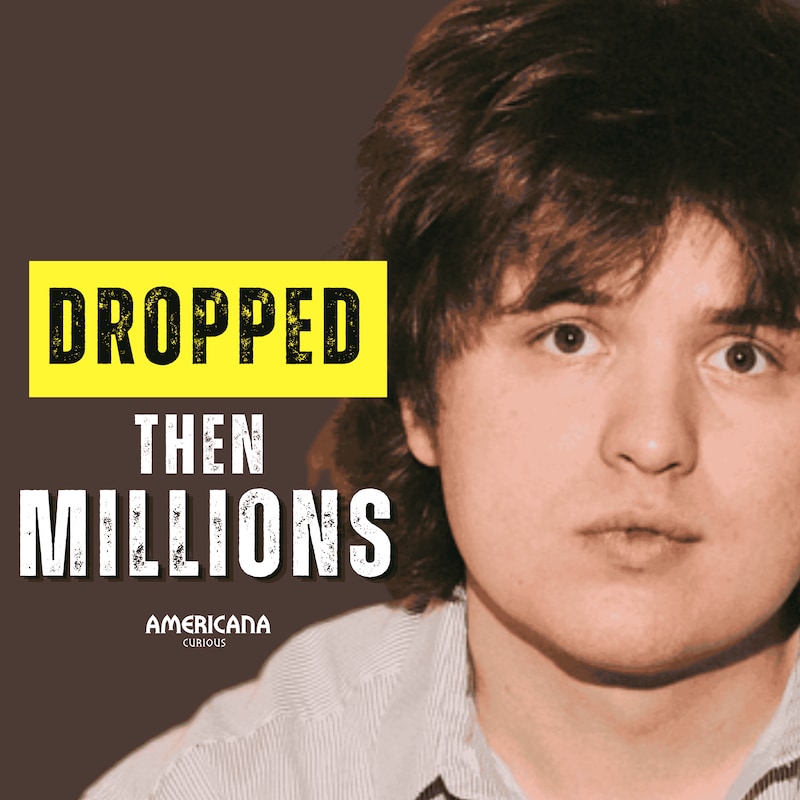
Shownotes
What happens when your dream falls apart… right in the middle of a pizza shift?
John-Robert was closing at work when he got the call…
he’d been dropped by his label.
Most artists don’t come back from that. He moved home to Virginia…
built a studio.
and started making music nonstop.
No label.
No plan B.
No guarantees.
Today, his music has millions of streams around the world.
But the real story isn’t just the success… it’s the life behind it.
And this one was just a BLAST!
John-Robert is hilarious, self-aware, and completely himself.
We laughed a lot.
We went off of fun tangents
And you can feel how much he genuinely loves music, people, and the ride he’s on.
That’s what makes this episode different.
In this episode of Americana Curious, John-Robert, Ben and Zach get into:
The moment everything fell apart
Why living life fully matters more than writing songs
The scrappy rebuild that changed everything
Opening for Liam Gallagher (OASIS) and playing a free show in the park right after
What it actually takes to make it as an independent artist
And a moment that just feel real, funny, and raw.
If you’ve ever chased something… lost it… and had to rebuild from scratch — this one’s for you.
🎧 Follow Americana Curious for more real stories from artists living the music.
Transcripts
Most artists think writing songs is the job, but John Robert says the real job is living a life worth writing about.
Speaker B:I think you need to live life in order to be able to write about it.
Speaker C:Explain what kind of music does he make?
Speaker C:And I said, how much time do you have?
Speaker A:It all started in a basement in Virginia where a teenager was teaching himself to make records.
Speaker B:My father would post me doing covers.
Speaker B:I got on Ellen and she gave me $5,000 in Guitar Center.
Speaker B:That's where I got the money to self produce.
Speaker D:What was it like the day that you got message from the label that they were going to be dropping you?
Speaker B:I was closing my shift at Domino's.
Speaker B:I got a personal phone call with just that, like, hey, you know you're being dropped.
Speaker B:And it was so he moved back.
Speaker A:To Virginia, built a studio in his parents basement and started making music non stop.
Speaker A:John Robert even opened for Liam Gallagher from Oasis.
Speaker A:But when the fans couldn't get tickets,.
Speaker B:I just went to the park and said, whoever wants to come can come.
Speaker B:I'd love to play.
Speaker B:Since being independent, you got nothing to lose.
Speaker A:Today his music has millions of downloads around the world.
Speaker A:But the songs came from Living the Story First.
Speaker A:I'm Ben Fanig and my co host is Zach Schultz.
Speaker A:It's time to get Americana curious.
Speaker A:Raw, real road worn.
Speaker A:The artists we feature aren't chasing fame, they're chasing truth.
Speaker A:Hi, I'm Ben Fanning with my co host Zach Schultz and this is Americana Curious where we spotlight the unsung heroes of Americana music.
Speaker A:You'll get new songs, hard earned lessons, stories behind the music and a big shot of inspiration.
Speaker A:Follow the show and rate us on Spotify and Apple and leave a review on Apple to help more people discover the power of Americana.
Speaker A:Let's get Americana curious.
Speaker D:John Robert, welcome to Americana Curious, my friend.
Speaker B:Yes, sir.
Speaker B:Thank you all for having me.
Speaker B:Much appreciated.
Speaker D:You have the distinction that a lot of artists will never have, which is being signed to a label and being dropped from a label.
Speaker D:Right.
Speaker D:You've got both.
Speaker D:What was Congrats, what was that like so people understand.
Speaker B:I was closing my shift at Domino's and I don't want to speak out of term, but I got a personal phone call which I really appreciate and just that like, hey, you know, you're, you're being dropped.
Speaker B:And it was, it was weirdly like a funny call, like we crack jokes, there's no ill will.
Speaker B:And also like situationally, I, I don't really buck things.
Speaker D:So.
Speaker B:If that's where it ended, I was like I was like, okay, like I got some feet on the ground and I'm, I got like other teammates.
Speaker B:But.
Speaker B:But yeah, it wasn't, it wasn't shocking news and it wasn't necessarily devastating, but it was melancholy.
Speaker B:As far as like I've known these people for a long time, I respect them and, and it's just like you know, just any closing of any chapter, it's very much like a bit remiss but also like looking ahead.
Speaker B:So just kind of caught in that, that feeling of in between.
Speaker D:So you leave la, right and you go back to Shenandoah and you immediately start creating and writing at that point.
Speaker B:Yeah, I left.
Speaker B:So I left LA when the Palisade fires happened and it was flurrying ash in Echo Park.
Speaker B:Very real moment for me of like I'm losing so much money.
Speaker B:I tour and I need to find sublets, subletters.
Speaker B:I'm basically paying for a glorified storage unit.
Speaker B:So I moved before being dropped by a label.
Speaker B:I think also being not in the mix in LA is also like a factor as far as like you need to be like a call away to show up to things.
Speaker B:So that's where LA is good.
Speaker B:Me, I needed, I needed space in a room to where I could be loud.
Speaker B:Otherwise I feel dead inside.
Speaker E:Baby, sweetheart, you're the only one that I love oh darling, sweet child how I'd long till I hit no each night in pain when you don't and.
Speaker B:So those were like the chain of events and as soon as I got home, yeah man, I just kind of like went for it.
Speaker B:I started making things non stop once I my I'm at my parents place.
Speaker B:It was an unfinished basement.
Speaker B:Built a room in here so that there's like also shout out mom and dad.
Speaker B:Thank you for hosting me.
Speaker B:It's so good to see you guys again.
Speaker B:And thank you for being in my corner forever and always.
Speaker B:Just as a thing put rock wool in the walls and just started making stuff like kind of non stop to where I couldn't sleep or eat.
Speaker B:Like just go for it because I, I just felt like it would help and also if it went nowhere, like I needed to get it off my chest and tell.
Speaker B:Feel like I told somebody or made something fun for myself.
Speaker B:So yeah, I just like went for it.
Speaker A:John Robert, let's rewind for a second because before the pizza deliveries, the label deal and rebuilding in your own parents basement, it all started back in the Shenandoah Valley.
Speaker D:Let's bring it all all the way back home.
Speaker D:You have the Distinction of growing up in the Shenandoah Valley, which has inspired so much great Americana music literally for generations.
Speaker D:From the traditional song O Shenandoah, which has been recorded by iconic Americana artists like Bruce Springsteen.
Speaker D:And yes, I consider Bruce Springsteen Americana.
Speaker D:Old Crow Medicine Show Trampled by Turtles has got a really cool version of that song.
Speaker D:And of course John Denver gave a huge shout out in to the Shenandoah river in Country Roads.
Speaker D:Now, no pressure for you, but what was it like growing up and what is it about the Shenandoah River Valley that inspires such music?
Speaker B:Just the scenery changes in the seasons.
Speaker B:The people here very much like, hi, how are you doing?
Speaker B:Oh, I had, I had your brother in, in my class.
Speaker B:That kind of, that kind of vibe.
Speaker B:So yeah, my parents are originally from Florida.
Speaker B:I moved here when I was like five and there's not a lot to do.
Speaker B:So you make your own fun.
Speaker B:A lot of driving and listening to music for fun.
Speaker B:So yeah, I don't know, it's just a beautiful place to grow up.
Speaker B:The scenery feels like a backdrop.
Speaker B:If I tap it, it'll fall over, but it's really bonafide.
Speaker B:It's really real and tangible.
Speaker D:Is there one of your songs or one of the ones that maybe you wrote early on where you could really kind of feel the Shenandoah River Valley coming through?
Speaker B:I think I wrote a song that's like unreleased called Shendo Appliance that people have been kind of taken to and it's very much in that fanciful finger picking style that I feel like really resonates with the area.
Speaker B:And also when I was coming back from la, I just dreamed of all the things I would do when I got back home.
Speaker B:So I mentioned like the seven bends is just the river close by.
Speaker B:Where the river bends seven times, you know, it's not rocket science.
Speaker B:I also mentioned, I also mentioned the yard crawl which is like a, like a valley wide thing where everyone just puts all their, all their junk like on the lawn and it runs through God, what's the name of the road?
Speaker B:It's a huge yard sale from like here to Strasbourg and further.
Speaker B:So yeah, just like those little niche cultural if you know, you know, like touchstones.
Speaker B:So yeah, that's where I think it shines the most.
Speaker C:So you're, you're part of this younger wave of folk artists let's say.
Speaker C:I mean your, your music we're going to get deep into it is not traditional folk.
Speaker C:But I would consider you a folk artist.
Speaker C:So what, what parts of like traditional folk Americana music Do you feel is important to keep alive?
Speaker B:Oh, God.
Speaker B:I. I'll start by saying I worked the late shift at a pizza joint, like, closing shift.
Speaker B:So I've.
Speaker B:I.
Speaker B:It feels incredibly disrespectful to butcher names.
Speaker B:Um, but primarily, like, when it comes to folk music, I like how they're so pro union.
Speaker B:I like how political it can be.
Speaker B:I like how.
Speaker B:How much storytelling and emphasis.
Speaker B:You use the same chords, but you can tell a new story.
Speaker B:And that's what I looked for in, like, artists like Blaze Foley and I really respect.
Speaker B:God.
Speaker B:Who's the guy who would round up Pete.
Speaker B:There's a dude who would round up a bunch of songs.
Speaker B:Pete Seeger.
Speaker B:Little boxes and.
Speaker B:And he would tell, like, children's stories and like.
Speaker B:And Coyote, he would do, like, yodeling.
Speaker B:I think I was just really inspired by, like, him respecting the heritage and sharing it and documenting it.
Speaker B:So, yeah, just being able, like, the finger picking and the chords anyone can get behind.
Speaker B:People are meant to sing.
Speaker B:Which side are you on?
Speaker B:It's supposed to be rally cries.
Speaker B:There's so.
Speaker B:It's such a giving form.
Speaker B:So that's why I resonate with it.
Speaker B:And I grew up, the places I would play would traditionally play, like, country music.
Speaker B:And I like how much wit is in country and folk music.
Speaker B:Like, the idea is like a strong theme and then in the verses you just like.
Speaker B:Not belabor, but, like, you explore it and you put it on its head.
Speaker B:I think it's a great form.
Speaker E:Get help.
Speaker E:Hope you find peace with yourself.
Speaker E:Get well Got a number that I think you should call and I hope you do Outside my house you look like hell you ask, can I come in?
Speaker D:You mentioned pizza.
Speaker D:Tell me about that pizza place.
Speaker B:I would love to at length cut me off when you're ready for it.
Speaker B:Yeah, it's nice off a tour, being able to come back to something like where people know you and they play music.
Speaker B:And I hear all my managers different taste.
Speaker B:They talk me in the best way.
Speaker B:It's very give and take and it's very loving.
Speaker B:And also I get to drive around the valley, listen to music, and nobody's mad at the pizza guy.
Speaker B:People are generally pretty happy to see me.
Speaker B:Yeah.
Speaker B:Yeah.
Speaker B:So driving music, pizza and good people, really.
Speaker B:And you're an outdoor cat.
Speaker B:I can be like, hey, I'm leaving for a month for tour.
Speaker B:And they're like, great, we'll see you when you get back.
Speaker B:It's so nice to have that third space or really that second space.
Speaker B:But just.
Speaker B:It's very Humbling.
Speaker B:And I feel like I have like feet on the ground and people who know me as myself instead of just solely by the music I've made.
Speaker C:Makes you feel grounded when you come back.
Speaker B:Yeah, it's like, it's.
Speaker B:I really, I really respect the people who I work with and I think there's some of the coolest people on the earth.
Speaker B:So.
Speaker B:Yeah, I have a lot of love for that.
Speaker B:It's like a little, I don't know.
Speaker B:They're cool.
Speaker D:Well, yeah.
Speaker D:John Prine delivered mail and you deliver pizzas.
Speaker D:Two greats.
Speaker B:Jim Croch was like a truck driver, I think for a time.
Speaker D:JIM CROCHET TRUCK DRIVER Is it easier to write songs sort of in the proverbial all season when you're working in a pizza place or is it easier when you're on the road, you know, doing your own headlining shows?
Speaker B:I think a mix of both because they bring different feelings.
Speaker B:It's nice to.
Speaker B:But I think primarily I think you need to live life in order to be able to write about it.
Speaker B:I think if like your whole identity is to make art, then you don't have a sense of.
Speaker B:I don't know, I like, I like to hear stories from different people in different places.
Speaker B:Like that's why I love the Moth Radio hour.
Speaker B:So I think it's important that you, I think it's important that you like, do something else, have another hobby, like have a different, another pursuit outside of music.
Speaker B:And I think they can like really lift each other up is how I feel.
Speaker D:Love that man.
Speaker D:That's why Taylor Swift is a lumberjack when she's not on the road.
Speaker B:10, 10%, Little known fact.
Speaker B:What.
Speaker C:So huge football fan, you've got a.
Speaker D:Story, super story career.
Speaker D:And thank you for sharing that because I think, I think a lot of people need to, you know, need to understand that and how it shines with your music.
Speaker D:You've gotten a moment where, right, you moved to la, you get to experience the music business full throttle.
Speaker D:What surprised you most when you originally moved to LA and stepped inside the music business?
Speaker B:It really takes a village.
Speaker B:No one can, no one does it on solely their own.
Speaker B:There has to be like you need business management, an agent manager.
Speaker B:Like those like team members and you making art is and like primarily like short form and social marketing and whatever.
Speaker B:Like you got to like, it's not just about the art you make.
Speaker B:It's.
Speaker B:You got to like package it.
Speaker B:Like you, you can make the best.
Speaker B:Like if a tree fall, like if a EP drops in the middle of the woods, you know what I'm saying?
Speaker B:And no one's around to hear it.
Speaker B:Did you drop music that year?
Speaker B:Yeah, but it's not just about.
Speaker B:It's not just about making the music.
Speaker B:You gotta tell people that you made something.
Speaker E:No, I shouldn't worry.
Speaker E:You care about it.
Speaker E:I'm gonna get Eva, Gonna get there.
Speaker E:With myself.
Speaker E:I don't do it for anyone.
Speaker E:Set it up, Set it all up.
Speaker B:And that was the part that I struggled with, with.
Speaker B:And I hated showing my face for the longest time.
Speaker B:And luckily people have been extremely kind to me and have been.
Speaker B:I. I've had so much, so many support systems and help with my head and with my community of.
Speaker B:Of people I know.
Speaker B:So, yeah, no social media.
Speaker B:It's one big humiliation ritual.
Speaker B:Hop on in.
Speaker B:But tell people you made something.
Speaker B:It's important.
Speaker B:I want to hear.
Speaker B:I want my friends to tell me they made something because I love them and I love the stuff they make.
Speaker C:When music.
Speaker C:When did it be.
Speaker C:Start becoming not so much a hobby as more something that, you know, defines you?
Speaker C:Or do you consider it maybe I'm a. I'm a musician part time.
Speaker C:I'm a pizza guy the other.
Speaker C:The other time.
Speaker B:Yeah, I mean like having totally different, like, physical spaces.
Speaker B:I like the idea of having physical spaces, that I be the person in those spaces.
Speaker B:You know what I mean?
Speaker B:So it helps.
Speaker B:Walking through a door frame helps me break those parts of my character, like into different fractions.
Speaker B:So I like that.
Speaker B:When did it stop becoming a hobby?
Speaker B:I got signed pretty young.
Speaker B:So I was like 19, three years of high school under my belt and booked it to.
Speaker B:To California.
Speaker B:And then, mind you, I was there for like six years.
Speaker B:And I would constantly visit Virginia just to touch grass and be home or people who know, you know me for myself.
Speaker B:So, yeah, that's when I was like starting to take it serious.
Speaker B:And then later, once I was my own manager for a time, understanding, like more so the business aspect helped me care more about promotion, about taking what I'm doing serious in the sense of being regimented and time budgeting.
Speaker B:And it's not just like.
Speaker B:It's not just about the art you make.
Speaker B:It's how you communicate with the people you work with.
Speaker B:It's about consistency with promotion.
Speaker B:It's about constantly being in practice of making stuff and producing your own stuff.
Speaker B:Like, artists have a lot of hats on their heads.
Speaker B:There's stuff outside the great out of music that you have to participate in.
Speaker B:And music makes me care about those things.
Speaker B:Like organizing stays on the Road and who I'm gonna tour with and how this all going to work.
Speaker B:So now I actually care about looking at P&Ls and stuff because it relates to music and the thing I want to do.
Speaker D:Music NBA with John Robert so somebody.
Speaker C:Was asking me, one of our.
Speaker C:I was going to say Ben, one of our fans of our show was asking me who we have coming up.
Speaker C:And I said, this guy, young man named John Robert.
Speaker C:And they said, explain what kind of music does he make?
Speaker C:And I said, how much time do you have?
Speaker C:Because I don't know if there is a genre that describes you, John, especially this new ep, which, I mean, you gotta.
Speaker C:Your voice goes in a million different directions.
Speaker C:And there are.
Speaker C:There's a. I think there's a dance song on there.
Speaker C:I mean, did it just because I think is.
Speaker C:You can move to that one.
Speaker D:Yeah.
Speaker C:And then you got Low Roller, which is.
Speaker C:Seems to be a biographical song about maybe growing up where you grew up.
Speaker C:So tell me about what people.
Speaker C:When they hear you, what.
Speaker C:What do you want people to expect?
Speaker B:I.
Speaker B:So I hate to belabor marketing, but it is like an important thing.
Speaker B:And I had had to like, learn to make my peace with it as far as like, it being a part of the job.
Speaker B:My rule of thumb.
Speaker B:The scary.
Speaker B:The scary thing is like, how do I. I'm stressing my manager and agent out as far as like, okay, if we pitch him for bills, who are we gonna pitch him for?
Speaker B:Because, like, sometimes the music like turns in different styles and directions and it'd be easier if I just like, picked a lane, I guess.
Speaker B:But for me, I have to genuinely be excited about what I'm making in the moment so that I. I feel empowered to scream a million times, hey, listen to this.
Speaker B:Because I actually, like, sucks when you promote stuff you don't like or are pigeonholed to like or behold it to.
Speaker B:So I make music that I'm into at the moment, things I want to, things I think are cool, and then I just let everyone else tell me what style it is.
Speaker B:I don't really care to put.
Speaker B:Tell them like what I've made.
Speaker B:That's like.
Speaker B:I put it in this medium so that you could describe it.
Speaker B:I'm not gonna like, make something and then tell you what it is.
Speaker B:I don't know.
Speaker B:That's up to you.
Speaker B:So, yeah, I just.
Speaker B:I move on very fast and I like.
Speaker B:I love.
Speaker B:I really love music.
Speaker B:And that's it.
Speaker B:Whatever I'm excited about, I'll make it.
Speaker C:That's what I like.
Speaker C:I Like to hear that though, that you're not, you're not just gonna pigeonhole yourself as a country artist or a folk artist or an indie artist.
Speaker E:You're.
Speaker C:You're making all kinds of different sound.
Speaker B:Because I love the styles.
Speaker B:Like it's like me doing a different style is no shade to another style.
Speaker B:I think they're all rad as fuck or rad as heck.
Speaker C:Could we get a. I would like some hip hop maybe written out of that pizza man one of these days.
Speaker B:No, it's a long storied art form.
Speaker B:That's not my bag.
Speaker B:With respect to all the, all the creators.
Speaker D:How do they find you in your basement before you continue?
Speaker D:How did they.
Speaker D:Because you're in your basement.
Speaker D:You're making music, you're writing music, you're getting Spire Bob, Shenandoah World there.
Speaker D:What.
Speaker D:How they find you.
Speaker B:My father would post me doing covers and then I got into, I got.
Speaker B:Okay, I don't bring it up all the time, but I got on Ellen and she gave me $5,000 in guitar center and through Guitar Center I could buy a laptop and also an interface, monitors.
Speaker B:So that's where I got the money to self produce and I got really into that.
Speaker D:Cool.
Speaker B:So and then I was just like pitching, pitching songs.
Speaker B:I was like following Instagram as far as like okay, this artist and who are the background players.
Speaker B:And then I would just cold DM be like, yo, check me out please.
Speaker B:And then by way of doing that, I was going to go to Berkeley College of Music and then met this guy and then he introduced me to Ricky and the Nice Life Crew.
Speaker B:Ricky is fabulous.
Speaker B:Still one of my all time idols.
Speaker B:Just someone I would like to model my life after.
Speaker B:Um, as far as like how he talks about people, how he operates.
Speaker B:He's just a very class act through and through.
Speaker B:Um, and so then I met them and.
Speaker B:And they like met my parents.
Speaker B:That's what I appreciate when people like meet my folks or meet me.
Speaker D:You're 19 years old.
Speaker D:Yeah.
Speaker D:You're teen.
Speaker B:Yeah, yeah.
Speaker B:Um, and so they put faith in me and I got to learn a lot through the label process.
Speaker B:And then since being independ, you got nothing to lose.
Speaker B:And so I make demos that I think my friends would think are cool and that I genuinely think are cool.
Speaker B:And so yeah, I don't have to be beholden to Elaine or anyone else's.
Speaker B:Like there's a lot of.
Speaker B:When you're signed because there's money involved, there's a lot of like whispering in your ear and A lot of pulling in different directions.
Speaker B:When you're independent and shit's not going great or stuff's not growing, going great, no one cares.
Speaker B:And also you're like, to your own devices, so that's been super liberating.
Speaker D:What's one thing you would like people to start doing when they come see you?
Speaker D:And what's one thing you would like them to stop doing when they come see you?
Speaker B:Something I would like as far as like a start and something I appreciate.
Speaker B:If you take a video, could you send it to me?
Speaker B:I gotta market every day and I'd love to chop it up and use that also.
Speaker B:Just me.
Speaker B:It's my name that all that, like, really helps.
Speaker B:Like on top of everything you did to get there and be there, that little extra thing genuinely means the world to me.
Speaker B:As far as, like, stop doing.
Speaker B:I'm thinking more so for the rest of the crowd's enjoyment.
Speaker B:Like, I think there's like seeing long parts, but sometimes it's like, no, do whatever I don't like.
Speaker B:I've.
Speaker C:You wanted to say sometimes they're not parts.
Speaker B:You said it.
Speaker B:But I think.
Speaker B:But yeah, if you like.
Speaker A:Oh,.
Speaker B:I appreciate like, like holding space and.
Speaker B:And quiet.
Speaker B:But also if there's something you like, like you can hoot and holler.
Speaker B:If you let me know you like something, it makes me that much more like, it should be like an interaction instead of like a sit and watch entirely.
Speaker B:So I think there's like a fine line.
Speaker B:Shout out.
Speaker B:I know.
Speaker B:Texas did it really well.
Speaker B:Louisiana did it really well.
Speaker B:There's like more of an interaction.
Speaker B:But I love all my cities equally and I love being a touring artist.
Speaker D:Right on.
Speaker B:So do not have a favorite child.
Speaker C:What's.
Speaker C:What's the weirdest compliment you've ever gotten after a show?
Speaker C:Do you have a.
Speaker C:Somebody said something that is just out there a little bit.
Speaker B:Trying to think of someone doing too much?
Speaker E:No, I.
Speaker B:For some reason, people who listen to my stuff are sometimes like, they're just like, super.
Speaker B:I'm fortunate enough to where people have been, like, extremely respectful and really kind.
Speaker B:I don't think anyone says something too crazy.
Speaker C:Nobody asked you to sign your shoe or a sock or something.
Speaker B:Oh, actually, you know what?
Speaker B:Okay.
Speaker B:Thank you.
Speaker B:Someone asked me to sign their EpiPen and I take that as the highest honor I've ever.
Speaker B:I've ever had.
Speaker D:Quick, give me the John Robert.
Speaker D:Thank you.
Speaker B:Quick, hand me my medical device.
Speaker B:I need his name on it.
Speaker D:Well, this is John Robert on it.
Speaker C:That definitely is weird.
Speaker B:No, but I Love it.
Speaker B:I think that's rad.
Speaker D:You so fact check me if this is wrong, John Robert, but you opened up for Liam Gallagher one time.
Speaker E:Yes, I did.
Speaker D:Is that correct?
Speaker D:And then you ended up and you were irritated because they sold out before you could get it to your people.
Speaker D:So you went across the park and performed.
Speaker D:Then you performed a free show across the street in the park afterwards.
Speaker E:I feel it in the air tonight.
Speaker E:Oh, well I see it in the look in your eyes oh, well done.
Speaker E:I hope it don't pop as a surprise.
Speaker E:I've been craving you, Anna.
Speaker E:You're all I fantasy.
Speaker B:Oh, I actually did do that.
Speaker B:So I wasn't.
Speaker B:I wasn't irritated.
Speaker B:I think it was more so like they could have chosen anybody.
Speaker B:I.
Speaker B:What a privileged position to be in, to be the opener.
Speaker B:I more of like on an imposter syndrome tip.
Speaker B:And also how that gig came about was there's this website, like, I got like some cold DMs and then I responded to that and then it led me to like a.
Speaker B:There were reps of a website and the website sounded fake.
Speaker B:I was like, yeah, right, but I'll like do my due diligence.
Speaker B:And then got on a call with them.
Speaker B:This while I was my own manager.
Speaker B:And then random, I was like, yeah, if anything comes up randomly got an email of like, hey, would you like to do this?
Speaker B:And then I forwarded it to my agent and the label.
Speaker B:I was like, hey, can I do this?
Speaker B:So I fished myself the gig, which is crazy.
Speaker B:And then.
Speaker B:Yes.
Speaker B:Yeah.
Speaker B:And I figured since I'm already in New York from LA and it was sold out and like, you know, I don't think you like, ticket, like tickets right now, especially for a show like that, wildly expensive.
Speaker B:How it works is wrong as far as like price gouging when it comes to tickets.
Speaker B:So I figured like, well, I'm.
Speaker B:I'm an.
Speaker B:I'm like able bodied and I'm free.
Speaker B:And so I just went to the park and said, whoever wants to come can come.
Speaker B:I'd love to play for anyone who cares.
Speaker B:And then, yeah, it was really nice to like meet people in person and I don't get to do that all the time sometimes with the Internet.
Speaker B:So actually being there in the flesh and seeing people who like music and they're in their flesh was really cool and felt like it didn't cost me nothing.
Speaker B:I was already there.
Speaker B:So, yeah, that was rad.
Speaker B:It would have been worse if no one showed up.
Speaker D:I'm doing a free show after Liam Gallagher.
Speaker D:No one.
Speaker D:No one comes this.
Speaker D:I guess, technically you're busking at that point.
Speaker B:Yeah.
Speaker B:For Pigeons or whatever.
Speaker D:Play Wonderwall.
Speaker B:No, I didn't.
Speaker B:I did think about opening.
Speaker B:He didn't play any Oasis stuff because it was him and Rose Stones.
Speaker B:I think their early stuff is killer.
Speaker B:I think they're kind of cutting edge for what they were doing with their sonic.
Speaker B:With their sonics.
Speaker D:You played with or you opened for tour with Leon Bridges.
Speaker D:Am I right on that?
Speaker B:Yeah, they're their opener.
Speaker B:Had like a family emergency or something and we had the same, like, management company at the time, so I teamed up with this band called King Garbage as a backing band.
Speaker B:They're rad as all get out.
Speaker B:They introduced me to Tom Waits and d' Angelo and we just.
Speaker C:Tom Waits, please.
Speaker C:That would be lovely.
Speaker B:Building in there.
Speaker B:He keeps getting mail, but he knows nobody.
Speaker B:What's he building in there?
Speaker D:What.
Speaker D:How do you get up for that when you're going to play for Open for Liam or you know, somebody of Leon Bridges, you know, Magnus, you just do your best.
Speaker D:Yeah, you just try your best.
Speaker D:Do you.
Speaker D:Do you freak out at all or you're like, no, this is just like, okay, it's cool.
Speaker B:No, I feel, like, pretty confident for, like, performance wise.
Speaker B:Like, it feels like an open notes test.
Speaker B:Like, I studied and like, we have, like, we have what we do in the bag.
Speaker B:So I feel pretty good when it comes to, like, like most performances.
Speaker B:Yeah.
Speaker B:The mental headspace.
Speaker B:I don't know.
Speaker B:You just literally get up and do it.
Speaker B:I don't know.
Speaker E:I don't.
Speaker B:I don't.
Speaker B:I don't know how to anticipate.
Speaker B:Yeah, I don't know.
Speaker B:You just try a lot of.
Speaker B:It's just trying.
Speaker C:Final one for me, Ben, I.
Speaker C:He seems like a student of music and loving to find new artists.
Speaker C:I'm curious, John Robert, who are some artists that you're listening to right now or some songs that we should have on our radar as lovers of finding new music?
Speaker B:Damn.
Speaker B:Without going into my Spotify.
Speaker B:Oh, this is more of a throwback.
Speaker B:But there's this dude, Latimore, who, like, made this funk project.
Speaker B:He's super rad.
Speaker B:It's really sultry.
Speaker B:Like, he had a song like, it ain't where you've been, it's where you're going.
Speaker B:It ain't what you did, it's what you're doing.
Speaker B:It ain't where you slept if it's where you're sleeping.
Speaker B:And like, I. I love that song.
Speaker B:Like, the whole mentality of it I really love and I keep coming back to Curtis Mayfield knocks out of the park for me time and time again trying to think who else we had feel in music.
Speaker C:Devin Allman on and he.
Speaker C:That's his all time favorite artist.
Speaker D:Yeah the only tattoo he has is of Curtis Mayfield on his arm.
Speaker D:Curtis.
Speaker D:Curtis May, bro.
Speaker B:Dude.
Speaker B:He's just one of those.
Speaker B:He's just one of those guys where like arrangements and.
Speaker B:And also themes that he writes to just great feel.
Speaker B:It never goes out of style.
Speaker B:Trying to think even like on a country tip.
Speaker B:Oh, Jake Fossil.
Speaker B:His middle name starts with an X. Fabulous guitar player.
Speaker B:Love his stuff.
Speaker B:What did the hen duck say?
Speaker B:What did the hen say to the God?
Speaker B:It's a doc.
Speaker B:It's a doc reference.
Speaker B:Anyways he has this album.
Speaker B:I think it's like frolic or something.
Speaker B:It's all green.
Speaker B:Keep coming back to that for the playing style.
Speaker B:Love it.
Speaker B:Oh and Jerry Reed.
Speaker B:Dude.
Speaker B:Amos Moses kicks.
Speaker B:Kicks butt.
Speaker B:It feels like funk in a sense.
Speaker B:It's nasty.
Speaker B:So that's.
Speaker B:That's what I would recommend.
Speaker B:Shout Out Billy rp.
Speaker B:She posts all the time.
Speaker B:I see her stuff always forever.
Speaker B:I love seeing her go at it.
Speaker B:Velcro is rad.
Speaker E:Yeah.
Speaker B:I. I'm so.
Speaker B:I'm so inspired by her.
Speaker B:So.
Speaker C:Yeah, that's cool.
Speaker D:John, you're.
Speaker D:I mean man, you like.
Speaker D:If the listeners don't love you now, I don't know what's wrong with them.
Speaker D:Even if you haven't love you before I even heard a single chord or.
Speaker D:Or lyric.
Speaker D:And man, what a career.
Speaker D:You're a young guy and you've already lived like three lifetimes, you know, as a musician which is so cool.
Speaker D:And I love how you really.
Speaker D:You just seem like you're you, you know, you're just like great to like hang out with.
Speaker D:I'm gonna ask you the legacy question.
Speaker B:Okay.
Speaker D:Which is interesting coming in from a younger artist here.
Speaker D:What looking.
Speaker D:Looking down the road, years down the road, what do you hope the impact of the John Robert legacy will be?
Speaker B:Tap in with your community.
Speaker B:That's extremely special.
Speaker B:Go throw house shows.
Speaker B:Like we need third spaces.
Speaker B:It's really important.
Speaker B:And also especially in like towns that might be politically like pro Trump or right wing and like it's nice to be with like.
Speaker B:No, you're not alone in general and in the pursuit of music and joy and all that is good.
Speaker B:So tap in with your community.
Speaker B:And there's talent and there's a lot of unrecognized talent.
Speaker B:Yeah, I hope that would be like a be a focus and also be yourself.
Speaker B:It's the most interesting is what I want to hear about.
Speaker B:Yeah, I, I think, I think that would be my hope.
Speaker D:Well, there's the gospel according to John Robert.
Speaker D:John Robert, thank you for joining us, sir, on Americana Curious.
Speaker D:Stay Curious.
Speaker B:Thank you for the vibes and the great questions.
Speaker B:This was a joy, like a joy of my day.
Speaker C:We appreciate you.
Speaker A:Thanks for joining Zach and I for this episode of Americana Curious.
Speaker C:Subscribe.
Speaker A:Subscribe where you listen to your podcast so you are notified when a new episode is released.
Speaker A:I'm Ben Fanning, and it's been great sharing these artists and music with you.
Speaker A:Until next time, stay Americana Curious.


