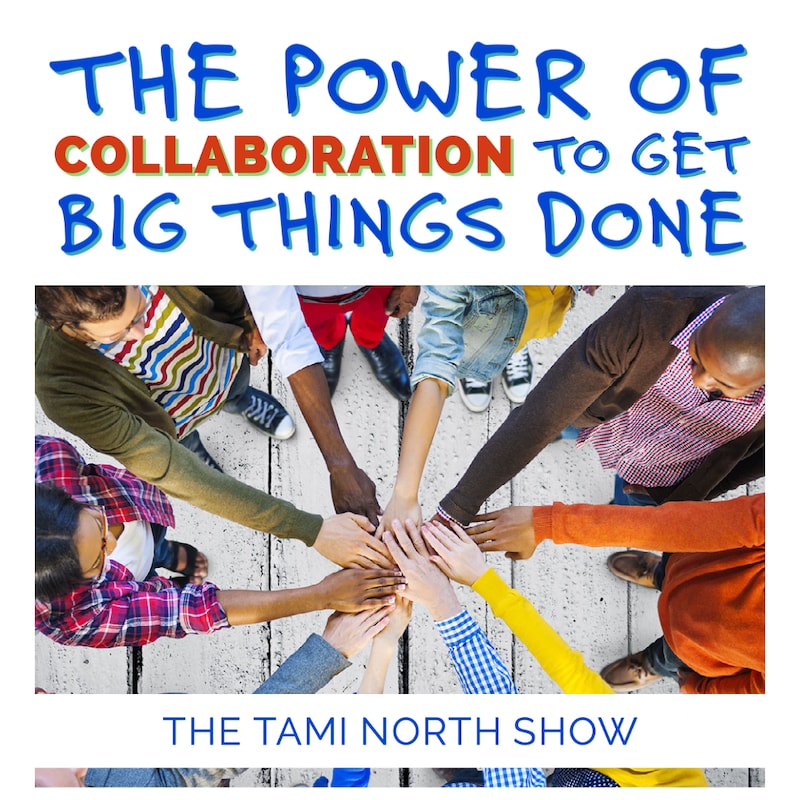
Shownotes
I want you to be THE ONE in your area of expertise, no matter where you sit in the organization, to notice opportunities where you can step up and decide to build a coalition of your own for a problem that YOU know should be fixed.
Resources mentioned in this episode:
- General Stanley McChrystal
- Liz Wiseman
---
Elevate Your Leadership Visibility
**[FREE COURSE] The Visibility Blueprint:** Step into the spotlight on your own terms. Get my free 3-day email course featuring daily bite-sized lessons and worksheets to increase your authority without changing who you are: https://join.introvertedexecutive.com/visibility
**Join the Weekly Newsletter:** Receive actionable strategies, short weekly activities, and direct insights to continually improve your career and life. Subscribe Here: https://newsletter.introvertedexecutive.com/riseandshine
**Inside the EVOLVE Membership (Coming January):** I'm building a brand new group coaching community designed for introverted leaders. Join the waitlist to secure early access and founding-member pricing when doors open. Join Here: https://coach.introvertedexecutive.com/
**Private 1:1 Coaching:** Are you ready for deep, personalized executive career coaching? Let’s ensure we are a perfect fit. Book a private 45-minute Discovery Call to discuss your goals and map out your path forward. Schedule a Strategic Visibility and Leadership Elevation call with me here: https://calendly.com/introvertedexecutive/strategic-visibility-call-1v1
**Leave a Review Here:**If something in this episode truly resonated with you... I have a little favor to ask: Please a review. Not for me, but for the next overlooked person who's about to scroll past this show, seven years into her career, wondering if there's a different way lead. If you take 30 seconds to leave a review (short, sweet and positive) it will make a huge difference in helping other people find the show. Thank you!! **CLICK HERE to Leave a review**
You can also follow me on Facebook at https://www.facebook.com/IntrovertedExecutive.
Transcript
Transcripts
Are you tired of feeling overlooked and underestimated? Hi, I'm Tammy north, the introverted executives coach.
If you're an introverted executive or you're ready to rise to senior leadership, but you're struggling to be seen as a high potential, this podcast is for you. Today's topic is one that is near and dear to my heart. The power of collaboration to get big things done.
And if there's been one thing that's been key to my personal success across my entire career, has an enlisted sailor in the Navy, has an active duty naval officer, and especially during my post Navy time as a civilian as I've grown to more senior ranks. And that is that I am huge on collaboration and building coalitions.
Not only the fact that I'm willing to collaborate in order to help other people solve problems, which I always am, but even more importantly, my willingness to get out of my own comfort zone and to be the one who makes the decision to get people talking and moving together toward a solution.
And if I have one goal for for today's episode, it would be to empower each and every person on this call to be the one in your own area of expertise, no matter where you sit in the organization, to notice opportunities where you can step up and decide to build a coalition of your own for a problem that you know should be fixed.
We'll talk about being the one who gets the ball rolling toward the end of the session today, but I think you'll find that the more you decide to take the lead and get other people working together to solve a problem, the more you'll be seen as a leader by your supervisors, peers, and other leadership within your organization.
Not only will you make a big positive impact on your own workforce and your own organization, but you'll also change the way that other people see you, which will put you on the radar for increased responsibility, new positions, and other high potential opportunities. Building a coalition is definitely a win win scenario for your own organization and for you.
Toward the end of this episode, I'm going to ask you to think of some ideas that you might have to build a coalition of your own for a problem that you want to solve. So, so get your thinking caps on. So think back over the last month.
Have you had even one moment where you thought somebody should do something about that?
Have you ever just been sitting around in your workspaces or in a conference room before a meeting when everybody's just chit chatting and, you know, maybe there's a lot of people talking and you might even hear Some people complaining and they're saying things like, well, that's not right. Has anybody sent you an email? Have you gotten a phone call?
Have you chatted on a conference, on a zoom or a conference call and somebody told you that they have a problem and they have no idea what to do? Well, there's a couple ways you can go with this. When it happens, you can join right in with them and complain as well.
Or if you're a go getter, if you're somebody who knows how to help, you might immediately be able to do something about it. You might be able to make one phone call and just solve their problem. That's awesome.
But sometimes the problems are a lot bigger and it might take multiple people, multiple divisions, departments, or even multiple organizations to solve a problem. You might need people at all different levels. You might need more junior people who really understand the details of what's going wrong.
And you might need very senior people because there might be funding or manpower decisions to be made.
And when this happens, the only way this issue will ever be resolved is if somebody decides to get the right stakeholders together to develop a possible solution. So pay attention.
Anytime you hear anybody say, or me say somebody or someone in the future, let these words trigger you to the question and think, who is someone? Is anybody working on that right now? Who is in charge of that? If nobody knows, this could be your opportunity to build a coalition of your own.
So when you hear about a problem, even a problem that many, many people already know about, what do you think it is that keeps people from taking action toward fixing those kinds of problems? Sometimes they might be afraid that nobody will help them.
Sometimes they might think, well, this isn't my job and if I do something about it, other people are going to tell me it's not my job. Sometimes people don't know what to do. So sometimes it seems overwhelming.
It just seems way too big, like, well, we'd probably need an admiral in Washington D.C. to solve this. Sometimes you realize the only way this is going to happen is if we get five organizations to work together. And that is hard.
So there's all kinds of reasons that keep people from starting in the first place. But being the person who actually decides to start getting people together like that actually makes you look like a leader. Why?
Because you are being a leader at that point. So let's talk about working with others to get to.
Yes, often, especially if you're more senior in your organization right now, that the problems you deal with are usually very complex. They span multiple technical organizations Multiple funding organizations.
You might need somebody who's really good at data science over here, and you might need somebody who's really good at mechanical engineering over there. It could take all types of things to solve these problems. And very often in this world, very complex issues also become global.
You find that, as I was saying, one organization has the expertise in this area and one organization has the expertise in this area. And then there's different authorities that are required, maybe even different legal, different laws in different states, all kinds of things.
And then by the time a problem gets to some of our levels, it's actually, you know, a national level issue or a global issue. So because of this, we have no choice but to ask other people for help.
The great news is all it takes is one person to decide to get people together and you can actually make a big difference in this world. Have you ever had an idea about how you might fix a problem? You thought, oh, this would be a great idea, this will solve it.
But then somebody else rains on your parade. There's always that one person who says, oh, it'll never work because of this. Oh, we tried that a million years ago. That'll never work.
Oh, that's not our job. Oh, it's too expensive, it's too hard. Well, just call that person Eeyore and keep on moving. So what do you do? Let's talk about some ways.
When you have those types of people blocking your progress, what can you do? In almost every big undertaking, in spite of all the momentum you have, There will be that one person who's a bit of a newer it'll never work.
Or the person who constantly spouts negative commentary peppered throughout every meeting. Those people definitely drain the energy from the room. And I often wonder if they can even hear themselves.
Do they know that that's how everybody else sees them?
The thing is, even though you might have the tendency to want to avoid these kinds of people, and in some cases they do tend to stop you in your tracks, I want you to fight that urge. Do not let these people stop you, especially not in the early stages. And more importantly, I want to offer you a different perspective.
Very often these people, these very negative people who seem to always be naysaying everything, they usually are the people who have a ton of experience. They might even have the most experience in the room. They know where all the skeletons are buried.
And if you can get them on your side, they could end up being your most valuable advocate. So here's some things that you might want to try to solve. Soften them up. The first thing is just listen to them. Try hearing them out.
What are they trying to tell you? Why are they so sure it won't work? Ask them this question. Okay, well what would it take to make this work? And let them start answering that question.
Because at that point they will officially be on their way to helping you develop possible new courses of action. So you're saying there's a chance. So then the next way to deal with these people is if they're really difficult at a separate time.
Meet with them one on one. Tell them you really want to understand where they're coming from. This is my go to technique. Technique.
I have used this technique so many times, especially when I was at my last position when I in a program office and I was dealing with engineers who had been there for 30 plus years. They can get pretty dug in at times and they're really great people and they're very, very smart.
So just by taking the time to have one on one conversations with these difficult personalities usually melted them like ice cream.
They just want to be heard and they have legitimate points if you listen to them and often if you start talking to them, you can have that conversation, like what? Okay, well what is possible? And then they will help you solve the problem. They'll, you'll actually get them on your side. Okay.
And then the third way to deal with these people is if you try all of this and they really aren't budging, or if it's getting worse, or if they are just becoming a huge roadblock, then sometimes you have to keep moving on without them. And that's okay. Some people really don't want to change. So some steps that you can use to build a coalition to solve your problems.
One is to decide what problem you are trying to solve. Get it very clear, kind of, you know, scope it. Here is our goal and here's our objective. Two, decide who needs to be involved to get to.
Yes, these become your stakeholders. And three, ensure that you get a very diverse group of people.
It doesn't have to be necessarily a huge group, it needs to be the right group, but make sure it's diverse. And I mean diverse in all the ways.
You know, women and men, different races, different experience levels, people that have different roles, you know, all the way from maybe some sort of a front end user, all the, like a UI UX kind of person, all the way to a mechanical engineer. Yeah, that's a pretty vast scope of differences.
You know, somebody who understands the hardware, somebody who understands the back end, somebody who understands the UI ux, somebody who understands E Commerce, somebody who understands marketing. Get all these people together, you know, that's just an example.
But depending on your problem, get all different perspectives working on the project plan the logistics to convene this new coalition. Where are you going to meet? How often are you going to meet? Are you going to meet in person?
Are you going to get everybody just in an all day conference and just bust it out? Are you going to send it? Somebody needs to send the invitations, the agendas and the slides.
I always say, say that this right here, these logistics get in the way of all kinds of problems. Somebody needs to decide, we're going to scope out this time, we're going to do it this location this time.
Somebody needs to send an agenda and an invitation. I mean somebody has got to do this stuff and if nobody does it, it'll never happen.
And then number five, at the very first meeting, clarify the goal, you know what you decided in number one, define the resources it would take to solve this. If you figure that out and then set a timeline. So it's basically like set a basic project management.
You have this budget, you have this much time and here's what we're trying to do. So in order to do this, and you can do this with any project, big or small, there's is a stakeholder analysis.
I'm going to talk about a very, very simple version of a stakeholder analysis here in this episode. But you can just Google stakeholder analysis or use the pmbok, the Project Management Book of knowledge.
There's very detailed ways to do stakeholder analysis depending on, depending on what you're trying to accomplish and how big your project is. But anytime you're going to even just start out trying to solve a problem, just do a very simple stakeholder analysis.
This is going to help you figure out who should be included and how you can best spend your energy.
So the more stakeholders you can identify early on, then the more you can tailor your communication to win approval and, and also support from various stakeholders and then the more likely your project is to succeed. So first, the first step is brainstorm all the people or organizations that could be necessary to help you solve this problem.
If it's a simple problem, maybe there's only three people and two organizations or something like that.
Or it could be three people inside of your own organization, but it could also be, if it's a big problem, it could be like seven organizations and 20 people. So just figure that out but try to keep it only to the size necessary because too many people usually bog things down.
Second, I have a simple matrix to discuss with you. Use this matrix to help you decide how to prioritize and communicate with each person.
So this matrix I'm talking about is just a matrix with two axis. One, the Y axis is the power, and on the X axis is interest. So if you just break it into four quadrants.
Within that axis you have people with low power and low interest. And those people are like you. Those are people who you just sort of like inform occasionally.
You have people with high power and low in and low interest. Those are people who might not care, but if they decide to care for any reason, they could derail your plan.
Then you have people with low power and high interest. So those are people who really want the change.
Often these are kind of like users and other people like that users might really care, but they don't really necessarily have the power to change things. Then you have people that are high power and high interest. So those are probably the people that you really need to engage with.
So those could be the people that are paying for the project. Those could be the people who are literally developing the project, um, the people who are sponsoring the projects, those kind of things.
Those are the people who really make the key decisions. Those would be the high power, high interest people. So that's it. Just, you know, those four groups are the people that could be your stakeholders.
So if you do a simple analysis like this, it will help you identify all your key stakeholders. You just do a brainstorming session with the matrix I was just describing, and then you can gain alignment on some key issues with your stakeholders.
And then, and if you do this, it will help you address conflicts later on by ensuring that you plan ahead for things that could go wrong.
I'm sure you've had this before, but when people find out late in the game about something they should have been included on from the beginning, then there's usually some ruffled feathers. So if you can get them engaged earlier, it will save you a lot of stress later.
And also if there's a decision maker who definitely 100% does not support your idea, it's better to find that out early as possible so any one person can decide to build a coalition.
My challenge is to you to be that person as often as you can and also collaborate with other people when you can help them solve their challenges as well. Because when we do this, we go forward with an abundant mindset and there's enough success for everybody.
So don't try to hold all of your own projects to yourself. Don't try to keep everything closed. Don't resist from helping other people for your own gain. That will backfire on you, I promise.
There are a lot of ways to succeed in this world and everybody will find their way if we all work together. And you can think when you go into the world within a abundant mindset.
You can imagine how that mindset will not only change the world, but it will constantly make your own workplace, division, department, and the entire organization a better place. Okay, so we talked about a lot of things today, but now it's time to decide.
Have you thought of something that you'd want to try to build a coalition to fix? Are any of you already leading a coalition right now?
I would really love if you'd send me an email today at Tammy North T a m I.north n o r t [email protected] if this episode inspired you, and if you'd like to share some information about coalitions that you're already working on, or how you went about starting a coalition in a case like this where you decided to be the one who started it, I would love to share your story if you would be willing to share it with me. Thank you. There's two books I want to recommend you to read on this topic. One is Team of teams by General Stanley McChrystal.
That's a great book and it'll get you in the right mindset. And the other is Multipliers by Liz Wiseman, how the Best Leaders Make Everybody Smarter.
So now get out there and be the one who makes a decision to get people talking and moving together toward a solution. You can connect with me at Introverted Executive on Facebook, Instagram, and LinkedIn.
If you're ready for executive coaching to help you achieve your biggest career goals, subscribe to my weekly Rise and Shine newsletter.
There you'll find out when my program opens for new clients, and you'll also receive weekly tips and activities to continue to make a bigger impact in your own powerful way. You'll find all the information and links down in the show notes. See you next week.