Shownotes
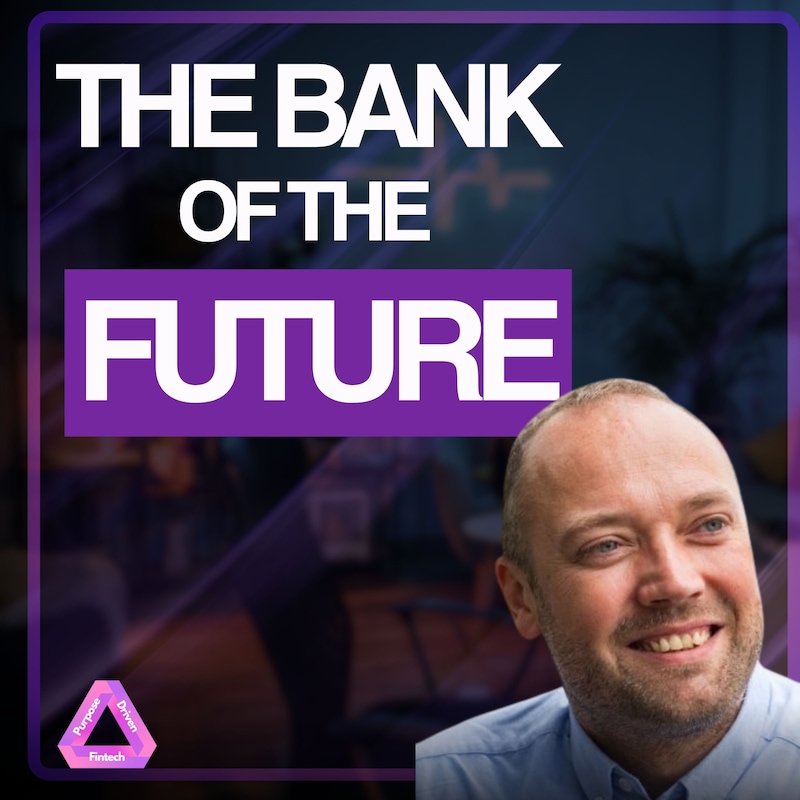
In today’s episode, Norris Koppel, Founder and CEO at Monese, shares his vision of hyper personalization and customer-centric financial services enabled by AI, and becoming 'the bank of the future.'
We discuss the impact of AI on the financial industry, understanding the current state of AI in FinTech, concerns regarding its implications, and practical usecases for AI to improve processes, prevent fraud, and offer highly personalized services to customers. Norris talks to us about Monese’s spin off, XYB by Monese, an end-to-end coreless banking platform and his partnership with Google for generative AI.
Let’s dive into it!
👉 You can find Norris here
- LinkedIn: https://www.linkedin.com/in/norriskoppel/
- LinkedIn Monese: https://www.linkedin.com/company/monese/
- Website Monese: https://monese.com/gb/en
- LinkedIn XYB by Monese: https://www.linkedin.com/company/xyb-ltd/?originalSubdomain=uk
- Website XYB: https://xyb.co/
👉 And you can find Monica here:
- LinkedIn: https://www.linkedin.com/in/monicamillares/
- YouTube: https://www.youtube.com/@moni_millares
- TikTok: https://www.tiktok.com/@moni_millares
- Website: https://moni-millares.mystrikingly.com/
If you enjoy this Purpose Driven FinTech pod, please subscribe in YouTube, follow and leave a 5 star rating on Spotify and a review on Apple podcasts. Remember to connect in YouTube or LinkedIn to keep the conversation going.
In this Purpose Driven FinTech episode we cover:
(01:10) The Evolution of Neobanks
(04:29) The Journey of Monese
(13:18) Hyper-Personalization in Banking
(17:39) The Bank of the Future
(18:38) Incorporating AI in Banking Operations
(25:51) Introducing XYB: The End-to-End Coreless Banking Platform
(28:41) Advantages of Coreless Banking
(29:42) Real-world Application of Coreless Banking
(30:47) The Revolution of Speed in Banking
(32:31) Partnership with Google and AI Integration
(35:23) The Impact of No-Code Solutions
(39:20) The Role of XYB in Hyper-Personalization
(45:09) The Importance of Culture in Innovation
Questions:
- How to build engagement banking for SMEs?
- What is value exchange in banking solutions?
- How to serve 5.5 million UK small businesses?
- What is beyond banking services concept?
- How to combine human interaction with AI in banking?
- What are SME banking challenges and solutions?
- How to build cashflow forecasting for businesses?
- What is digital and physical approach to customers?
- How to make banks' platforms into business operation centers?
- What are regulatory requirements for bank vendors?
- How to build great product in banking industry?
- What is entrepreneurship mindset in FinTech?
- How to understand domain expertise before building?
- What are phases of FinTech revolution?
- How to build banks and FinTechs partnerships?
- What is difference between FinTech and bank approach?
- How to solve real customer problems with technology?
- What are bank procurement and vendor requirements?
- How to build invoicing with payment capability?
- What is the importance of joining process dots?
Monese and XYB by Monese in the Press:
- XYB Partners with Google Cloud to Bring Generative AI to Coreless Banking Platform
- Exclusive: HSBC's new fintech app Zing built on Monese's platform
- Unveiling Coreless Banking - The Future of Banking
- The coreless banking revolution with XYB by Monese | FF News at Fintech Connect
—
Production and marketing by Monica Millares. For inquiries about being in the show, coaching, consulting, creative collabs, sponsoring the podcast or creating or editing your podcast email Monica at [email protected]
Disclaimer: This episode does not constitute professional nor financial advice and does not represent the opinion nor views of my current, past or future employers. The guest has agreed to record and release our conversation for the use of this podcast and promotion in social media.
Transcripts
Norris Morris: Hey, Monica. Glad to be here. Hi, everyone.
Monica Millares: Thank you. Yes, because we're going to have a very relevant and important conversation today that it's AI and financial services, basically, and all the difficult decisions and.
Questions that we need to think about as we incorporate AI in the industry as such. And I think of many of the players that we have in FinTech, Moniz, you're one of the ones that have been leading, so far when it comes to incorporating AI, not as an experiment, but as a leading proposition. So very looking forward to the conversation.
Excellent.
Norris Morris: Let's do this.
t is about how can we create [:Norris Morris: When we look at The beginning of neobanks, for example, so Moniz obviously itself as a neobank very much has been a purpose driven company and when we rewind and look at the phase of neobanks that we are currently observing and their successes.
n I look at the evolution of [:In order to interact with your bank, you needed to go to a bank branch, or you needed to call them up. And there was, yes, there were websites, you can log into your online bank using the website, but mobile app based banking didn't really exist. The world was heavily moving towards app based everything, but banking had not caught up.
ic centricity. And also when [:And again, when we look at the future now, I think we just barely touching the surface. This is this is an industry that is moving, it may seem like quite quickly, but 10 years, is it really quick? I think we have moved the needle, but this is just the beginning because, I would say again, when I'm coming from a neo banking space and I can see clearly.
That's 10 years in. Yes. Let's call it revolution because I guess that's what it is. Right? Revolution has started. It has moved the needle. It has changed the way incumbents are now treating their customers as well, but it's still so early days and AI, which we are going to be talking about today.
out this a little bit later, [:I think for the speed from the speed and cost perspective, definitely, but there are negatives as well, for sure.
Monica Millares: Definitely they are. So before we go into the positives and negatives of AI, can you tell us about Moniz? You were definitely one of the pioneers in the new banking industry. Why did you start?
What's your purpose?
, it was a huge insult. So I [:So, that, that was the driver. I guess and what we as a sort of a retail banking or neobanking brand Achieved I guess is apart from I believe changing the industry alongside other neobanks What we have achieved as our own brand Is that we have really made it much easier for people to access banking services.
uld work, including customer [:I think, yeah, specifically on monies. We have today millions of customers across Europe, so it's a truly pan Europe pan European proposition. It is an app based banking service in your pocket, and it's obviously built on incredibly modern, new foundations and technology. And we are going to obviously talk about XYB and our banking platform as well.
Yes.
Monica Millares: Just expanding on that, because like you've been around for a long time. Have you seen the customer pain points change over the years?
Norris Morris: I would say somewhat, yes, but still, over the past sort of a five to 10 years, I I see that fundamentally we, we still haven't actually done everything that we can.
een removed. So for example, [:So it's still very early days because the regulated industry is hard. It's not easy to change. So I think it's very much a work in progress.
Monica Millares: Awesome. Yeah, that's a very good point because basically we've given, we've had a big leap when it comes to accessibility. So everyone can now just download it, but yeah, but it's still not perfect and it has limitations.
So still a lot to do
and customers have, Now been [:But it's not necessarily the same in Europe or, beyond us, for example, and so on. It's still very much lagging behind. So I would like to think that yes, we have. Move the needle more in some countries than others. So there's so much work still to be done. And especially when it comes to cross border banking, it's still a huge mess so it's difficult.
Yes.
Monica Millares: Yes, And definitely, Oh, this is like the perfect product for me, especially now that you say cross border, the segment. Of international people is so underserved, it is just difficult to do your banking. Absolutely. Yeah. Absolutely. But anyways, okay. So moving on to the meaty bitty of the conversation.
initely. AI is here to stay, [:Norris Morris: I have fears too. So, when I and it's quite scary, basically, when you, when I open my social media in the morning, for example, it's very difficult. It starts to become quite difficult to understand what is true and what is not when you take any of the channels. Really? There's this Facebook, there is X and all these channels, and it's very difficult to understand what is being generated.
o you see images? It's very, [:And it's, getting. And this is just the beginning, right? So we are, seeing, again if we go to banking for a second, right? As as we are onboarding new customers to our consumer brands and retail customers are coming through the gates on a daily basis and thousands of them.
Technology is trying to understand whether people whose face we are seeing and voice we are seeing and measuring against our databases, are these people real? Or is AI basically has taken somebody else's face and is playing games with us? Criminals are always ones that have a step ahead, right?
again in the very early days [:New York. It's on the rise at the moment. So discrimination, as you mentioned, also all this and I see also that if we don't very carefully put rules in place and very, quickly. The chances are that information that comes to us is lower quality. We are seeing this already, so the quality has dropped, information quality.
some people are manipulating [:And if this goes on and it goes on, it accelerates very quickly until there is unless there is some rule set in place. I think this thing is going to go. Absolutely crazy.
Monica Millares: Yes, because yeah, I also have those fears. So for example I'm a lot of media and I'm like, Oh my God, like the robot will copy me.
see everywhere is improving [:Kind of all the back office, all the customer service, like all those processes, they will be disrupted. What's your opinion? On which other use cases will we have when it comes to not efficiency when it comes to processes, but more from a product design perspective and how we deliver better design better products for customers as such.
Norris Morris: To, to me, I think one word is hyper personalization, which which has been my dream for many years right now, and before AI really became became something that is in the news and I, really, again when, I started building monies, my dream was to make sure that a bank or a banking service is able to see each customer.
o has history, who is living [:In a hyper personalized way the bank of the future without manual human involvement, which is obviously time consuming and it's not really reducing efficiencies, but, or increasing efficiencies, but it's increasing, cost instead. So I think the dream was that, aI will, come to help, will able to understand customer's personal circumstances and not just onboarding but also when it comes to credit.
when you look at UK specific [:So they are getting pools and then the bank is applying their own little sort of a gold dust or magic dust on top and the decision is then born. But what if you are coming from abroad and you don't have any history in the UK? Maybe you have been in the country for a couple of months and you need. To buy let's say you are you're a driver.
can be brought from abroad, [:And right now I'm seeing that innovation is happening in this space, but it's a very, slow process. And my big dream basically is that hyper personalization and AI is able to finally make this a much better experience for people and like significantly beyond just offering customers better prices or based on that.
So I'm talking about some things that really move the needle, right?
e a pioneer building fintech [:So it seems like we're even seeing the evolution with you as a founder and kind of visionary that you were like, Hey, let's start new banking. Banking is broken. We're fixing it. And now we're like, Oh, this disruptor came in, AI. And it's even you're even disrupting yourself and you're thinking, saying, now let's build the bank of the future.
The bank of the future looks like that. So we stop even talking about AI because AI is just a tool. It's a technology. We start thinking about like the bank of the future. I love that as a concept. Within this conversation. Yeah, I was like, yeah, that is super cool.
Norris Morris: We, are, indeed with X, Y, B and platform technology.
We are disrupting Moniz, which also has been around for quite a few years now, right? So we are disrupting ourselves. Yeah.
appy that you brought it up. [:We have identified. Let's say several use cases for the use of AI, whether that is fraud is going to continue to go up. How do we stop it? Whether that's let's improve efficiency across all the bank operations, or how do we build better propositions and service for customers? Then the challenge is the leadership team, mid management, senior management, ex co's, boards, like all of the leadership team, then they have to go through this process of saying, who, what are we going to do now with AI?
ause none of these banks nor [:What's your view slash what did you do in Moniz to think through this journey? Like, how do you think about it as a leadership team?
Norris Morris: Frankly it's been, again if I rewind a little bit and I earlier had talked about my dream of hyper-personalization and this was, I didn't even know if I'm able to apply AI there, but I think our journey recently has massively accelerated with XYB and and now servicing other banks and financial services companies and so on.
tain things we haven't built [:So we have been actually using those tools and AI for years. But in terms of a specific intent on our board level or our company's board level, it needs to actually come from I think you have to have a specific use case. Does it make sense to just to do a tick box? Because yes, AI is cool right now.
Everybody's talking about it, but does it really make sense to, does it really make sense to deploy capital and use your scarce resources in order to do something just for tick box? I'm sure there are companies out there who are doing this, right? Not to. Fall off the train, basically, and so on.
, we announced a partnership [:Specific tools to fight fraud, for example, right? So I can give you a use case, which I think will be very beneficial for any, bank or any financial services company really that let's say fraud. Let's say there is a payment that has been flagged by internal systems as a fraudulent transaction or something like that, then at some point not all companies have completely automated everything.
with those stopped payments [:We're talking about, fully populated and AI driven sort of a office tool where an agent can very quickly grasp. What is the the background of this? What is the customer looking like? What is the normal for this customer? So it's everything nice and neat. So you can immediately.
easier. Financial crime and [:Or not. I think this acceleration, the speed and it decreases the cost. And of course, the amount of people you have to pay and have a payroll on a payroll and so on. I think that's very, powerful. And we are starting to deploy this.
Monica Millares: Yes. I like that thinking because it's like you say, there's two, two sides to this coin.
One side says, Hey, let's experiment, do AI experimentation. Just so that we get used to it. And then what you're telling us, it's, let's think of a very specific use case that if I step back a little bit to take, let's say a framework from what you said, it's a, let's take the use case for a challenge that we actually currently have, for example, for our KYC, like the operations team as such may have all these challenges.
is it that we can accelerate [:Our current processes ops rather than go and try to become an AI company when we are a financial services company.
Norris Morris: Yeah, exactly. So it's a concept. You have to search social market and you can understand what is, possible to buy them and what you need to do. And again, when we talk about X, Y, B, and how it serves the world's banks and gives them technology to replace some legacy infrastructure and, the cores and so on, this is exactly what we're effectively doing.
to build everything and put [:Monica Millares: Yes. And let me step back a little bit here because probably people fintechers know monies as a neobank for like consumer neobank as such, but actually back in May you launched XYB that it's an end to end cordless banking platform. And you have a very bold statement that it's we believe that it could revolutionize the banking industry.
n that statement. Why can it [:Norris Morris: Yeah, of course. Of course. So again there is a little bit of a history. So we need to rewind for a second and basically explain that when we launched Moniz, we were the early pioneers in the space and we did something.
Thanks to technology that not had not done before, basically, which was completely mobile based on boarding and bank bank in your pocket, so to speak. So in order to, do this, we needed to build our technology from scratch because there is, there was nothing that existed at the time. And, I think it's fair to say that we are, actually have always been a technology business that just happens to be in financial services sector, right?
And I think opportunity now [:X is us. Y is a client and if you put us and the client together, something awesome can be born a new bank perhaps. So it's basically a formula and a little bit of a workplace. So X, Y, B was basically a spin out from money's and it's a technology play and this technology we call this core less banking.
Platform. And what we mean by that is it enables others, other regulated companies and even non regulated companies to, to replace their systems, something that is legacy, something that could be when we look at big banks deploying hundreds of millions a year, you know, that to maintain legacy spaghetti.
X, Y, B is there to, make it [:So that's why we, think coreless is way better because you have tens if not hundreds of, yeah, modular, exactly. And that enables banks basically to do things and transformation in a careful way. So for example, a bank can choose to replace one piece of the puzzle, put our module there.
n underlying infrastructure. [:Again, I mentioned three to five year transformation for a bank to replace the technology. So because of this modular or coreless approach, a bank can take one piece, replace it very quickly, and one use case is one of the clients that we are currently working with. We enable them basically to, to build and replace one of the core modules in in only sort of seven months.
From start to finish, basically to launch. So that's that's been, I think, a game changer to, enable banks to move at that sort of a speed, which is, I think very,
we know that a migration is, [:Norris Morris: it's difficult,
Monica Millares: It is a fact, it is difficult. So if you can reduce and simplify, then it's Oh, that's really good. So just let me try to understand better why I think in my mind, I still haven't answered the question, why is this going to revolutionize?
Norris Morris: In terms of revolution here, I think the speed, is a key keyword here, and the second one is a core list as well. When I look at, again, the history of a banking core providers and so on, everybody has been always around this core. And it's, it's basically incredibly time consuming to to change anything.
There are millions, hundreds [:And when you want to change that provider. Three to five years basically to, to get this done. So I think this coreless approach enables, for example, us X YB to come in and you can replace a specific module. For example, you don't need to use XYB for everything, although it can be used for everything.
But you can also a plug and play a little bit here. So I think that approach reduces risk. It increases the speed to market. Let's say you're a bank. You want to also, you have a new idea, you have a new region, you have a new geography that you want to attack, new vertical, you go in, you deploy XYB module somewhere, you can test the market very quickly.
where the revolution really [:Monica Millares: Yeah, now I understand. And then you also partnered with Google and you're using AI Google's capabilities in this new brand proposition.
Can you expand on what you're doing?
Norris Morris: So with Google Cloud, we are using the generative AI machine learning tools, basically, and the idea is that we will Enable our bank and non bank customers to build cutting edge products and offerings at speed, basically again, speed to market, right? That I was talking about.
en for your agent to resolve [:And second, so two, two things that we are working on with Google Cloud is specifically about this, what we call assisted investigation, which is what I described earlier agents able to resolve complicated, block payments and so on matters very quickly. And second is very interesting is the natural language risk rules, which basically what it means is that right now, if your risk team wants to change something in a system that enables, to detect again, broad or move customers through the funnels and basically where systems are set up in a specific way that catches specific bad behavior or on the [00:34:00] identify as good behavior. Right now, this is all manually written basically. Risk rules, somebody needs to actually code this stuff that is going into the clockwork.
But if you want to change anything, you have to go to your engineers or people who can actually code and they will change the risk rules. And it takes time. And they're competing priorities and so on. So, imagine now, if somebody can use this no code approach, what if your risk people are able to.
Write it in a natural language, like English language, what they want the risk rule to be and AI changing it into code. And then it of course has to go through testing and whatnot, but you don't basically need developers at the end of the day to, to rewrite your risk rules all that stuff. So that's pretty cool with it.
Yes.
hat I hear the word no code. [:The second one, I had a guest in the podcast that she has a fintech on lending no code, and I was like, Oh, that is so smart. But now I'm like, yeah, it's pretty cool. Now we're saying, because I can relate to the pain point of the risk team and. Like writing the rules, now we're saying we can expedite efficiency of all the teams.
have to go to tech and then, [:We understand the layer, but not all of it. And once we understand what we need to do, then it's a matter of, Oh, and now we need to put it in the roadmap and prioritize and it takes all this time. But so what we're saying is that now with no code solutions. We as fintecher humans that do not work in the tech department, come up with our idea.
Like we say, we write it down in English and then AI goes and implements, quote unquote, this piece of code or this idea. Of course, tech people don't kill me for saying, Hey, I will go and implement it. There has to be like all this infrastructure behind them, process and this and the other. But basically that's the core of the transformation that could happen.
Yeah, and of course,
utcomes like thoroughly, and [:Sometimes these changes can be quite sort of a minor, but again, if it doesn't hit the roadmap in the right time things can take time. And again, time is everything, right? So time to market and adjusting risk rules when the nature of crime changes and fraudsters are always one step ahead when they change is very important that you are changing.
as a company, you will have [:And you also have to have more people on your payroll to do actual coding. This approach will hopefully, I believe, change quite a lot of the way we, do things and we, increasing efficiency and reduce the cost base, I think in many levels.
Monica Millares: Yeah, definitely. So then coming back to the beginning of the conversation.
se, what's the role of X, Y, [:Norris Morris: I think our job really is to, ultimately, what we want to do is we want to use the multiple things. Hyper personalization, ultimately, we are going to be. Providing X Y B will be providing this these tools and innovation. We were working on with Google Cloud. We're able to provide this to end users.
uld like to, I would like to [:So I would like to think that now through X, Y, B and X, Y, B working with, many banks who have millions of clients. That we can actually impact more end users than we can do as a, as our own consumer. So we will touch points. The end users will benefit. I think so. Enhancing this customer experience through hyper personalization and the AI activities and, AI innovation that they're doing.
So ultimately it's all about enhancing customer experience. And, I think this is all really about that. So that I would like to think that way. And obviously there will be companies who will not maybe consider this but I'm hoping that there are more that will those who don't.
Monica Millares: Yes. And [:That's the geeky me that's fun, but what's most interesting is that we started talking about AI and the bank of the future and how we've transformed the industry in the past 10 years, but it hasn't been fast enough. So probably solutions like yours and the many others that are probably coming to the market.
That's going to accelerate change even more. So these. World of accessibility, hyper personalization will become more real for all of us, for the the consumers across the, world. So it has a huge impact in terms of, helping people.
Norris Morris: Yeah. And again, coming back to the credit, right? So credit is still so broken and not in one country, but I would say globally.
es if you, don't have credit [:Monica Millares: Definitely. And as you say, more data points I was thinking, Ooh, and all the execs will be asking, Oh, what's the business case? Because today we cannot talk about just like growth. We need to talk about profitability. How do we, yeah.
f money and and chase chase, [:So how do you have this use case and make sure that your board is happy with with with, Amount you're putting into AI and so on so I think when you look at when you look at. The market, there is a UK energy company who recently announced that they deployed AI in the customer support and within I think one quarter or something that they already is.
company is saving. Thanks to [:The board will ask you, can you get it done sooner, please?
Monica Millares: Yeah, no, it's like the business case. It's very important. But yeah, you're right. It's if it's actually going to save that much. Yes, the board will be that's, a not the board, but that's a question I ask a lot, especially now that we're planning, how can we accelerate?
are worthless without a very [:People, even though like in FinTech, we have the innovative crowd, the young crowd, the used to change, this, the other, it's still a change. And we'll have to go through some sort of transformation, cultural transformation within the teams. What's your take? How do we do this smoothly? So
ds quite, thought through, a [:But at soon, at some point, quite soon, you will find that actually you need to write things down. So your culture, your approach, including your approach towards innovation needs to be written down. And and at some point when you exceed your team exceeds hundreds of people and you're constantly hiring people then it must become a process where.
ur colleagues, your approach [:So that when things don't go well, it all needs to be written down. And then we have to think also, how do you keep the culture of innovation, in, place. And how do you make sure that people are staying motivated? It is, it's number one. Process incredibly important second is rewarding people when they do something game changing, even if it's just a good word or recognition in front of the team members or publicly or even a warm word, basically, it it changes quite a lot.
And not punishing people when they make mistakes, because after all people are, if they're trying to do something that has never been done before, which is almost the definition of innovation, right? So mistakes will happen. You will get a lot of things wrong before you succeed. So embrace mistakes, no punishments, no blame game.
And again, [:Monica Millares: Yes. I like how you're making it very practical as in, because culture can be very vague, right?
But now we're like, no, culture is not vague. It has to
Norris Morris: be written down, it cannot be vague.
Monica Millares: Yeah. It's not vague. It is written down. There's processes. There is. What, how we work, that's what it means. That's how we're having impact. I love that. Yeah.
Norris Morris: Value, system. Yeah, exactly. Yeah.
Monica Millares: So as we approach to the end of the episode, it's been a fascinating conversation, by the way.
Where can we find more about you Moniz and XYB?
a bunch of stuff that comes [:X, y, b is a relatively new player, but it has 10 years of experience. We have built our own neobank monies. We have millions of customers on, that platform. So our technology is proven and we have some pretty big game changing banks in our client base already who are using our tech. So check it out.
And I, my details also are incredibly easy to find online. So give us give us give us a ring.
Monica Millares: Definitely because I'm like, I am not being paid to say that, but yeah, I loved it. It's I love the product that you are building and how it can impact. To the industry as such.
before we go, that it's one [:Norris Morris: be?
Take more risks, but not with customers money.
Monica Millares: Ooh, cool. Can you expand?
Norris Morris: Banks are very conservative organizations and rightly because I need to protect customers money, the integrity of the ecosystem and so on. But I do see that there must be some openness. You have to put your risks maybe in a box, but don't put that box, don't lock that box away.
ant, you have to be. Open to [:And this is where you innovate. This is where you break things in a safe and sound manner. But if you don't do anything at all, and you're basically applying the same. This is too risky. We're not doing this. This is not, then, there is no innovation, right? There cannot be innovation when there is no risks.
Innovation equals risks.
Monica Millares: Awesome. That will go into a short clip. So that's a great way to end this episode. Thank you, Norris. It's been an absolute pleasure chatting with you. Thank you, Monica.
Norris Morris: Thanks for inviting me. Have a good day. Bye bye.

