Shownotes
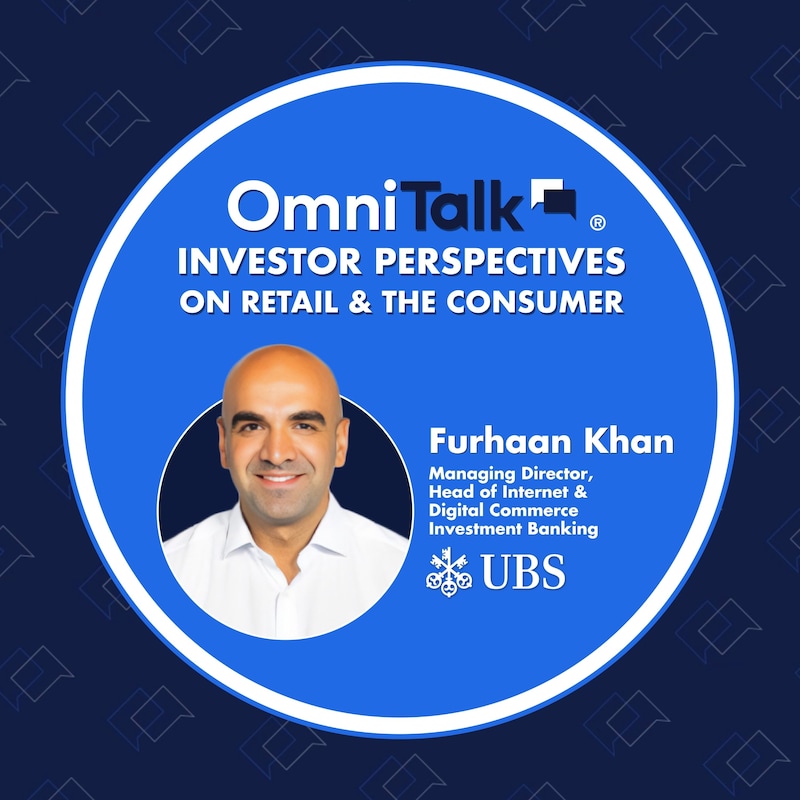
In this episode of Investor Perspectives on Retail & the Consumer, Chris Walton sits down with Furhaan Khan, Managing Director and Head of Internet & Digital Commerce Investment Banking at UBS, to explore one of the biggest questions facing retail and technology today: Who actually wins in an AI-driven future?
As AI rapidly transforms how consumers discover, shop for, and purchase products online, thousands of retail technology companies are racing to establish their place in the ecosystem. But according to Furhaan, many won't survive. Drawing on years of experience advising leading technology, internet, and digital commerce businesses, he shares the five-part framework he uses to identify which companies are truly defensible and which are most vulnerable to disruption.
From proprietary data and network effects to distribution, transactional control, and brand trust, Furhaan explains why AI is compressing the discovery layer of commerce and shifting value toward companies that own critical moments in the customer journey. He also breaks down what retail executives should prioritize as they evaluate technology investments in an increasingly AI-driven landscape.
Key topics covered:
• Why many retail technology companies may not survive the AI era
• How AI is reshaping product discovery and the customer journey
• The difference between point solutions and durable platforms
• Why proprietary data is becoming retail's most valuable asset
• The growing importance of distribution and customer access
• What "transactional intensity" means and why it matters
• How brand trust creates long-term competitive advantages
• The five-part framework for evaluating retail technology investments
• What retail leaders should prioritize when making technology bets
#RetailTechnology #ArtificialIntelligence #RetailAI #DigitalCommerce #Ecommerce #RetailInnovation #InvestorPerspectives #RetailLeadership #CustomerExperience #OmniTalk #RetailPodcast #TechnologyStrategy
*Sponsored Content*
This podcast uses the following third-party services for analysis:
Podcorn - https://podcorn.com/privacy
Transcripts
The winners become those who have access to the customer who are executing the transaction and those who have the data.
Speaker A:A lot of those companies that you and I sold aren't going to be there in a year's time because either they'll be acquired or the business model just won't work, or they're a point solution.
Speaker A:Platforms over tools.
Speaker A:So something that is embedded across the value chain, I think that's a good place to start.
Speaker A:The Internet did two things.
Speaker A:It's people buying things and people trying to get your attention.
Speaker A:There are only two or three companies that have real intense data.
Speaker A:Everybody else has been guessing.
Speaker A:The AI disintermediation of the shopping journey and the personalization that will bring, it's going to fundamentally change the way we interact with the Internet as a whole.
Speaker B:This Investor Perspectives on Retail and the Consumer Podcast is brought to you by the Omnitalk retail Podcast Network.
Speaker B:Hello, everyone.
Speaker B:I am Chris Walton, your host for today's interview, an interview in which you will hear from a gentleman I make a point to touch base with.
Speaker B:Every time we find ourselves together in Vegas for Shop Talk in March, he and I always seek each other out.
Speaker B:And this time this past March, he shared with me a framework for how he thinks about sizing up the technology investment landscape.
Speaker B:And upon speaking with him, I said.
Speaker B:I said, you have just.
Speaker B:You have just got to be on my podcast.
Speaker B:Some of you no doubt know of whom I'm speaking already, but I am of course talking about Ferhan Khan, the managing director and head of Internet and Digital commerce Investment banking at ubs.
Speaker B:Ferhan, welcome to omnitalk.
Speaker A:Great.
Speaker A:It's great to be here, and nice to see you again outside of the heat of Vegas.
Speaker B:Yeah, yeah.
Speaker B:How many years has it been that we've been connecting out at that show?
Speaker A:We always make sure we find each other.
Speaker A:And that show just gets bigger and bigger and more interesting and more exciting and more confusing, actually.
Speaker B:Yeah, yeah.
Speaker B:What, what bring.
Speaker B:What brings you out there?
Speaker B:So, yeah, talk about, like, talk about what you oversee in your job, in your role, and what, what, what, why that brings you out to Shop Duck every year or any retail conference, for that matter.
Speaker A:Yeah, absolutely.
Speaker A:So, look, I. I sit in our investment banking group within our technology business.
Speaker A:I'm usually based out of New York, but I'm traveling all over the place, as you can imagine.
Speaker A:And what we do is we really spend time around companies that are looking for M and A advice.
Speaker A:They're looking for IPOs, they're looking for leverage finance, they're looking for any sort of strategic transaction that might, that might occur in the life cycle of a business.
Speaker A:And within that, I specialize in Internet more broadly, but also digital commerce as a specific subsector of the Internet.
Speaker A:And what that means is anything that touches, from a tech perspective, the buyer's life cycle in and around buying something on the Internet.
Speaker A:The way we, I mean, if you drill down the Internet very, very quickly, it's folks buying stuff and folks wanting to get in front of those people buying stuff, it really is that.
Speaker A:And so the way I think about the value chain is if you start from the top of the funnel, you have how do you drive demand, how do you convert demand, how do you fulfill that demand, and then how do you ultimately keep the customer and bring them back to buying something again?
Speaker A:So in essence, very, very straightforward, technically and practically incredibly complicated.
Speaker A:Right.
Speaker A:So if you think about all of the companies that we see over at Shop Talk, there's just so many, everybody's trying to do some version of what I just described, but there are so many flavors of effectively the same thing.
Speaker A:When you drill it down to those few pillars that I just laid out, and I do there is meet these companies, stay current on what's going on, and make sure that we're there to help them as they go through that journey.
Speaker A:So typically UBS will get involved, as I said, when there's a, when there's a transaction of some sort.
Speaker A:But actually we love to support companies from an early stage all the way through to whatever it may be.
Speaker A:So we spend time with the largest in the space, as you can imagine, but also some of the startups, as well as they're looking at raising capital, etcetera, and whatever it takes to, to get them to, to fulfill their ambition.
Speaker A:And so that's what I do.
Speaker B:Yeah, yeah, well said, well said.
Speaker A:You know, it's funny.
Speaker B:Producer and I were having a conversation very similar to what you just described yesterday in terms of just talking about general, just how you think about general business and the processes that need to happen for any business to succeed, which I think is applicable there too.
Speaker B:And I tease at the outset that we're going to go into your framework for how you, how you think about everything, how you decide, like who's going to win, essentially.
Speaker B:But I want to warm our way into that first.
Speaker B:So, you know, and I do want to, I do want to, I want to legitimately go back to March because you and I were sitting on the couch in the speakers lounge.
Speaker B:There's hundreds of technology vendors around us And I wanted to, I wanted you to share with your audience what were your impressions at that time?
Speaker B:What were your, what were the thoughts going through your mind as you looked out on all that, that massive sea of technology vendors that inhabited the exhibit hall floor?
Speaker A:Well, what I can tell you is everybody's now an AI company, right?
Speaker B:Yes, without a doubt.
Speaker A:But I think that's, I think, I think that's important.
Speaker A:That's a paradigm shift in the way everything is, everything is going.
Speaker A:So as you can imagine as a tech banker, absolutely everything that we now talk about and the conversations we're having is around AI.
Speaker A:So it was good to see that kind of everybody was embracing that.
Speaker A:But I think the biggest thing for me was there's a sense of paralysis as I looked out on that going if I'm an investor or if I'm trying to figure out what's differentiated and what's not, it's really hard to figure out who's differentiated and who's not.
Speaker A:And I think that's where the sector expertise, that's where our knowledge, that's where our experience, all of those things really come to bear.
Speaker A:Because without putting too finite point on it, a lot of those companies that you and I saw aren't going to be there in eight years time or two years time or three years time, because either they'll be acquired or the business model just won't work, or they're a point solution.
Speaker A:And that point solution isn't going to be needed in an AI world.
Speaker A:Something is going to happen which means that that business may or may not exist in a year, two, three, four years time.
Speaker A:Trying to figure out where the value really lies is hard.
Speaker A:The way I think about it is AI is really compressing the discovery layer and what's easy and what's easy to disintermed.
Speaker A:So the value really lies somewhere downstream, I think.
Speaker A:Right.
Speaker A:It lies somewhere where there's execution, where there's a transaction, where there's trust.
Speaker A:And that's where some of that framework you and I discussed really comes into view.
Speaker A:Because if you believe that discovery gets easier and everybody is going to go and use some form of chatbot or LLM or to drive their decisioning process, which may or may not be true, by the way, but that's certainly prevailing right now.
Speaker A:The winners become those who have access to the customer or who have, who are executing the transaction and those who have the data.
Speaker A:Right.
Speaker A:So when you think about examples of who that looks like, obviously on the retail side, you've got the large Retailers, there's Amazon, Walmart, Target, et cetera.
Speaker A:You know, huge distribution, sometimes physical stores.
Speaker A:In the case of the Walmart and Target, et cetera, you've got Costco.
Speaker A:Right.
Speaker A:Brand and loyalty doing a lot of the work there as well.
Speaker A:Best Buy leaning into services.
Speaker A:They've got a lot to say in the broader ecosystem.
Speaker A:But then you've got some of the newer ways of distribution as well.
Speaker A:So you think about Roku.
Speaker A:Roku owns a screen, so they have their direct access to your living room.
Speaker A:What does that look like?
Speaker A:How do they position themselves?
Speaker A:You've got up and comers like Rokt who are monetizing the checkout moment.
Speaker A:You've got names like Narvar.
Speaker A:So there's just so much complexity in this whole ecosystem.
Speaker A:And when you and I were sitting there looking out at this sea going, it's our job to figure out what's hot and what's not.
Speaker A:It's actually quite complicated.
Speaker B:Yeah.
Speaker B:Yeah.
Speaker B:So, okay, so I want to.
Speaker B:So I played devil's advocate for a second because the devil's advocate in me listen to you, listening to you.
Speaker B:Listen to what you just said.
Speaker B:And even thinking back, like, you know what, you could probably say the same thing about the exhibit hall floor every year.
Speaker B:Right.
Speaker B:Like there's going to be a certain amount of these companies that aren't going to exist the next year.
Speaker B:But you're saying.
Speaker B:Which I agree with, but I just want to make sure we understand why.
Speaker B:But you're saying that the AI phenomenon has probably exacerbated that or will push that a step further, is that right?
Speaker A:I think that's right.
Speaker A:Let me take a step back because I don't think it's just in commerce or the Internet.
Speaker A:I think it's across society.
Speaker A:Right.
Speaker A:We wanted to get philosophical about it.
Speaker B:Yeah.
Speaker A:Right.
Speaker A:The way we operate, the way we interact with the world is fundamentally going to change given the way AI is affecting our lives.
Speaker A:And to me, that's exciting.
Speaker A:It's somewhat, somewhat scary because.
Speaker B:Terrifying.
Speaker B:You ahead and say it.
Speaker B:I'll say it if you don't want to say it.
Speaker B:Yeah.
Speaker A:It's going to have so many societal impacts.
Speaker A:But what I like about it is it keeps us on our toes.
Speaker A:Right.
Speaker A:Technology always keeps us on our toes.
Speaker A:And that's what's very exciting about the.
Speaker A:The job that I do.
Speaker A:But what it means is I sort of drilled it down a second ago to say the Internet is two things.
Speaker A:It's.
Speaker A:It's people buying things and people trying to get your attention.
Speaker A:And that changes because we have seen for a very long time the, that Google has effectively owned that channel.
Speaker A:So in other words, people go and Google something.
Speaker A:And our view has always been there are only two or three companies that have real intent data.
Speaker A:So intent data being that data that says, I know what you want to buy.
Speaker A:So you go to Google and you type in you want to buy.
Speaker A:You want to buy treadmill.
Speaker A:So you go to Google and you type in best treadmill, or what treadmill shall I buy?
Speaker A:Or something like that.
Speaker A:Amazon obviously has the same type of data because you go into Amazon and type the same thing.
Speaker A:And so Amazon knows exactly what you're after.
Speaker A:Everybody else has been guessing, right, Because Facebook guesses what you want as opposed to knows what you want.
Speaker A:Pinterest arguably has real intent data because you're pinning things, but the retailers have real data.
Speaker A:The retailers know what it is that you're buying.
Speaker A:But Internet names, real intent data is actually, is actually hard to come by.
Speaker A:Enter the LLMs.
Speaker A:The LLMs are now saying, well, I know everything about you and you're actually asking me very directly not just what's the best treadmill, it's what's the best treadmill for me.
Speaker A:Right?
Speaker A:You know me, you know that I'm going to use it twice and then it's going to become a clothes rack or whatever the case may be.
Speaker A:And so you start to see the AI disintermediation of the shopping journey and the personalization that that will bring and the innovation that that takes is going to be, is, is going to be fundamentally change.
Speaker A:It's going to fundamentally change the way we interact with the Internet as a whole.
Speaker A:And that has implications for brands, it has implications for retailers, it has implications for the technology providers and implications for you and I, because how much of our data do we really want out there and where's it going and what's it doing?
Speaker B:Right, right.
Speaker B:Okay, so let's get into it then, because, I mean, your job, in an essence, I mean, if I was to kind of wrap it up or simplify it in a lot of ways, which is probably an oversimplification, is to really help understand or decide who you think is going to win or lose, given everything you just said, if your impressions are true and the implications of what you just said come true.
Speaker B:So.
Speaker B:So, Ferran, how do you, how do you sort through it all?
Speaker B:What is the framework that you use to help you decide who likely will succeed versus others in this landscape?
Speaker A:As I laid out every minute ago, the journey for you, Right, so you sort of start in the, you start in the sort of pre purchase element of the value chain.
Speaker A:The pre purchase element typically dominated by advertising companies, marketing companies.
Speaker A:You then have, you know, product data and experience, which is important commerce and digital presence.
Speaker A:You know, the checkout, the checkout process, that's the purchase so journey.
Speaker A:Then there's the post purchase journey.
Speaker A:So actually the thing has to get to your house or whatever it is you're buying.
Speaker A:You have to be able to have easy returns.
Speaker A:You have to trust that it's going to show up at the right address at the right time.
Speaker A:And the thing is what as you wanted it to be, that's the customer experience aspect of it.
Speaker A:And then the loyalty piece.
Speaker A:So you know, I'm happy with my purchase, I'm going to come back and purchase something again.
Speaker A:Because having a customer that you have retained is significantly cheaper than a customer that you've had to acquire.
Speaker A:So that's the way I think about the flywheel.
Speaker A:So if that's a journey where companies operate from a customer life cycle perspective, that doesn't tell you if it's a good business or not.
Speaker A:That just tells you where in the value chain a company operates.
Speaker B:Right.
Speaker A:So what you and I discussed was how do you layer on a second lens which says what's going to be disintermediated and what's not going to be disintermediated in an AI world?
Speaker A:So I think there are five things that I look for which I think matter.
Speaker A:The first is data, real proprietary data.
Speaker A:This is something that somebody else doesn't have, I own it.
Speaker A:It's something that gets better the more people use my service or the more I operate.
Speaker A:And therefore this gets better over time and it's very hard for AI to replicate or they have to partner with me to get it.
Speaker A:That's the first piece.
Speaker A:And if you think about names like Syndigo, they have real product data.
Speaker A:You have names like Ibotta and Fetch, they have purchase data.
Speaker A:You think about retailers, they've got full funnel data, right?
Speaker A:So the real proprietary data, moats that are very hard to disintermediate in an AI world.
Speaker A:That's one.
Speaker A:Okay.
Speaker A:The second piece, and by the way, you don't have to have all of these.
Speaker A:Obviously if you have all of these, you're fantastic.
Speaker A:But you don't have to have all of these.
Speaker A:You just have to have some element of these.
Speaker B:You don't want to not have any of them.
Speaker A:That's why you don't want to not have any of them.
Speaker A:Because that's where you have a real issue.
Speaker A:The second is network effects.
Speaker A:Network effects.
Speaker A:We talk about it a lot.
Speaker A:It's pretty.
Speaker A:I think it's pretty obvious what that means.
Speaker A:You and I could probably create Facebook in a weekend, but, you know, we'd be missing a billion and a half users.
Speaker A:Right.
Speaker A:So that's, that's.
Speaker A:That.
Speaker B:There's just that.
Speaker B:Right.
Speaker A:There's just that simple thing.
Speaker A:So scale dramatically improves a product.
Speaker A:Right?
Speaker A:So Amazon, Uber, you know, Miracle, those sorts of names where real scale drives the product value.
Speaker A:And that's very hard to disintermediate.
Speaker A:Right.
Speaker A:That scale.
Speaker A:And that turns it into depensability.
Speaker A:The one that we didn't talk about so much, and I've been thinking about a lot more, is distribution.
Speaker A:Right.
Speaker A:So how do you get to the customer?
Speaker A:Right.
Speaker A:So retailers have distribution.
Speaker A:Roku is an example where there's real distribution in your living room or your bedroom or wherever you have a screen.
Speaker A:That's a way to get to a consumer.
Speaker A:That's very hard to disintermediate.
Speaker A:Pinterest, those sorts of names.
Speaker A:And increasingly, I'm thinking if you don't control the distribution, you're ultimately renting that demand.
Speaker A:If you, if you control the distribution, you're at the heart of the consumer journey.
Speaker A:And that's very hard to disintermediate.
Speaker A:That's the point.
Speaker B:So let me.
Speaker B:So, yeah, that.
Speaker B:So that is new because we.
Speaker B:I mean, I actually was gonna.
Speaker B:I was gonna joke with you.
Speaker B:Like when we talked, you said there were four and now there's five.
Speaker B:So.
Speaker B:And the.
Speaker A:Exactly.
Speaker B:This, this new element is.
Speaker A:We've gone back and forth on this a lot because, I mean, firstly, this isn't perfect.
Speaker A:It's a framework.
Speaker A:And all frameworks.
Speaker A:No.
Speaker A:Right.
Speaker A:No.
Speaker A:Frameworks are somehow falsified at some point.
Speaker A:Right.
Speaker A:So there's probably six, seven, eight things that you could argue.
Speaker A:But when trying to distill it down, this is how we've been thinking.
Speaker B:So to the point about distribution, because I want to ask you, this is my first time hearing it too.
Speaker B:So is controlling your distribution now more important than ever?
Speaker B:Because it's always been a factor.
Speaker B:But is it.
Speaker B:Is it.
Speaker B:Is that being exacerbated as well?
Speaker B:Because I think of moves like Walmart to control their distribution through the Vizio acquisition as an example of this.
Speaker A:It's more important than ever before because of the way consumers interact with brands and products and retailers.
Speaker A:If you believe that everybody is going to go to some sort of chatbot, and that's the way they're going to interact with the world.
Speaker A:If you have a different way for them to interact with the world, that's a moat.
Speaker A:And you can sort of zoom out a little bit and say, well, distribution matters in lots of other ways as well.
Speaker A:You know, if Apple, because I happen to have an iPhone in front of me, if Apple, which has great distribution to me directly decides to launch a product, that's a very easy thing for them to push on me than some other new entrant who wants to push that same product to me.
Speaker A:Right, That's a very clear example of how distribution wins.
Speaker B:Yeah.
Speaker B:And to your point, I think the other thing too I'd call out is distribution can be the physical substrate and, or the software too, right?
Speaker A:Yeah, that's right.
Speaker A:If you have access to retailers, if you're a technology provider and you have access to, you know, thousands of retailers and you, they already take your product, you releasing something new to them is substantially easier than somebody who wants to enter the market.
Speaker A:Of course.
Speaker B:Yeah.
Speaker B:Or even a physical store too.
Speaker B:To that point that, that falls in here too as well and also goes into some of the network effect and the scale too.
Speaker A:Exactly right.
Speaker B:Talked about before.
Speaker B:All right, so what's next?
Speaker A:The next piece.
Speaker A:And I think this is a term that we've made up, but you know, forgive me if I, if I borrowed it from somewhere.
Speaker A:It's what we call, what we call transactional intensity.
Speaker A:So this is the point of the workflow.
Speaker A:How much of the workflow do you actually control?
Speaker A:How much of the transaction do you actually control?
Speaker A:So the point being, if you are providing some form of trust or some sort of payment or some sort of insurance or something that, or delivery or something that sits at the heart of the transaction, that's not just pure software.
Speaker A:That's very hard to disintermediate in the AI world.
Speaker A:So you know, you think about cart.com they're fulfilling products and goods.
Speaker A:That's a good example.
Speaker A:You think about, you know, Narvar who sits, I know you've had them on your, on your show.
Speaker A:You think about them as a, as a post purchase machine who is sitting at the heart of the transaction.
Speaker A:You press the buy button, they know exactly what's happening at that point.
Speaker A:They're making sure that, you know, the delivery piece is properly, is properly orchestrated and that the, you know, when you're returning it is getting back to the right warehouse, et cetera, et cetera.
Speaker A:That's what we call transactional intensity.
Speaker A:And the point being, AI can't Replace all of that execution layer.
Speaker A:And that's hard.
Speaker A:So Shopify is the obvious example, if you wanted to go that far and say, well, look, merchants still need a stack and that stack is complex and they need to either put it all together themselves or they can use something like Shopify, which would provide them with, you know, store in a box type of, type of, type of value.
Speaker A:So execution is sort of where the value accrues in our mind.
Speaker B:That's interesting too, because there's also some linkage here.
Speaker B:Like let's go back to the Narvar example.
Speaker B:Like, you know, Narvar is providing that, that service for a number of retailers.
Speaker B:So they have the, the trust and the loyalty of the first of the groups that they're providing it for.
Speaker B:And then on top of that, the retailers are leveraging it to give that trust to their consumers.
Speaker B:So where those linkages are especially tight, I have to think that's a very strong value proposition.
Speaker A:Right.
Speaker A:And then I would argue they have.
Speaker A:So if you think about the different things that we've talked about, they have transactional intensity, they have very strong data moats because they know who's shopping and where and what and how, et cetera.
Speaker A:And they're able to link those things together and then they've got that linkage, as you said.
Speaker A:So, you know, the trust and the delivery of the whole thing.
Speaker A:So.
Speaker A:And they've got distribution by the way.
Speaker A:They've got a ton of retailers on their, on their ecosystem.
Speaker B:So yeah, pretty much, yeah.
Speaker B:Right.
Speaker A:So they're very defensible from an AI perspective.
Speaker A:And they're not the only ones.
Speaker A:Right.
Speaker A:There are a bunch of other companies who have that defensibility, but that's a good framework for me when I'm trying to drill down into, well, okay, if I believe this business is going to be durable, why do I believe it?
Speaker A:It's because I think it checks one or more of these boxes.
Speaker B:Okay, all right, what's the last?
Speaker A:And then the last one is brand and this is less sort of tech related and it's more broad, very simple.
Speaker A:Right.
Speaker A:I trust Apple with my, with my iPhone and I'll probably buy an iPhone till the day I die.
Speaker A:Right.
Speaker A:You know, I trust Nike with my sneakers.
Speaker A:I trust, you know, whoever it may be.
Speaker A:So it might be a, a subsect of trust, but you know, Costco is a good example.
Speaker A:I trust that Costco has curated things for me in a way that I will like and therefore trust drives my behavior.
Speaker A:And in a low, low, low switching cost world, Where I can, as a consumer pick and choose what I want.
Speaker A:Brand is an easy differentiator as a consumer to say, well, I know that this is a good brand, I trust it, and so I'm going to buy it.
Speaker A:Is it always the best product?
Speaker A:Probably not.
Speaker A:Right.
Speaker A:But is it the one I'm going to buy?
Speaker A:Yes.
Speaker B:Translate the brand idea into like the solutions provider space.
Speaker B:So again, as you're looking across that landscape, how do you decide if someone checks the box with brand?
Speaker A:We talked about Navar a second ago.
Speaker A:We'll talk about the retailers, we'll talk about Shopify.
Speaker A:So if somebody, you know, if as an example, somebody is working with Shopify, that helps me because it gives them a halo effect from, from, from Shopify.
Speaker A:If somebody's working with Nara, I trust that they've done a good job of selecting their partners and working with them.
Speaker A:You know, from a, from a, from a trust and loyalty space.
Speaker A:You know, take, take Rakuten as an example.
Speaker A:In the loyalty space, if I know that retailer is working with Rakuten, it's likely to have been vetted and I trust that it's not going to, you know, going to let me down at some point whenever I, whenever I buy something, if it's on, if it's unrecognizable.
Speaker A:So there's a curation element, there's a trust element to the brand.
Speaker A:The easiest way to understand brand is what I gave you a minute ago.
Speaker A:It's Apple, it's Nike, it's those things.
Speaker B:Yeah, yeah, yeah.
Speaker B:It's interesting though, because I've never, I've never thought about, like, as a former retail executive, I've never thought about, until you just said this, that the brand of the solutions provider plays into my decision making in terms of which solution I want to procure.
Speaker B:And I'm asking, I'm asking myself, how much does it really.
Speaker B:And so that's, you know, that and that.
Speaker B:And that's where I'm like, okay, maybe it does, it probably does psychologically, but.
Speaker A:I mean, it does completely.
Speaker A:I mean, you know, take.
Speaker A:There's a halo effect to trust, which I think you potentially take, take for granted.
Speaker A:If something is on the Apple app store, I am infinitely more likely to download it than if I just find something randomly on the Internet.
Speaker A:Because I trust that Apple's done the work to make sure that it's of good quality and isn't going to infect my phone with viruses.
Speaker A:I gave you the example of Costco a minute ago.
Speaker A:I trust that if something is in Costco, the brand of Costco is providing a halo effect to the thing that I'm buying.
Speaker A:The thing I may never have heard of before, but the fact that it exists in Costco, okay, I'm going to buy it.
Speaker A:So there is definitely a halo effect around brand from that perspective.
Speaker A:And then in technology.
Speaker A:Absolutely.
Speaker A:And this talks to distribution a little bit that we talked about a few minutes ago, which is if Microsoft releases a product or Apple releases a product or one of the named brands of Shopify releases a product, then I am more likely to use it or buy it because I trust that they've done the work.
Speaker B:Yeah, right.
Speaker B:Right.
Speaker B:Yeah.
Speaker B:I mean, I can think of, even for my own example, you know, like, you mentioned Miracle, I think, you know, 10 or 15 minutes ago.
Speaker B:That's a great example.
Speaker B:And full disclosure, I'm an advisor for them, for everyone listening.
Speaker B:But, like, you know, I see it firsthand in terms of the number of retailers that come to me and say, like, hey, I tried to get my marketplace off the ground.
Speaker B:I can't quite do it.
Speaker B:Like, Mark, you know, Miracle has that reputation of being able to do that and do it well and do it consistently over time.
Speaker B:So that, that plays into exactly what.
Speaker A:You're saying and bringing in.
Speaker A:Bringing in product and saying, you know, I know that this product is vetted from a marketplace perspective, so you're not going to have issues around.
Speaker B:Yeah.
Speaker B:And it also explains why so many solutions providers try to align themselves with the big companies for validation.
Speaker B:Like, you know, I'm a.
Speaker B:And, you know, Microsoft license or Microsoft Certified.
Speaker B:Right.
Speaker B:Yeah, certified.
Speaker B:Right.
Speaker B:All right, well, okay, so.
Speaker B:So before I let you go, this has been great.
Speaker B:This has been so much fun.
Speaker B:It's.
Speaker B:It's always fun getting to pick your brain.
Speaker B:And now we're getting to do it live in front of microphones, which is awesome.
Speaker B:Instead of doing it on a couch at a conference sweltering in Vegas.
Speaker B:All right, so based on everything you just said, if I'm a retail executive again.
Speaker A:Yeah.
Speaker B:What advice would you have for me as I try to determine where I should place my technology bets going forward?
Speaker A:So I think if you think about the discussion we've just had, where are you going to place your bet?
Speaker A:Platforms over tools.
Speaker A:Right.
Speaker A:So something that is embedded across the value chain, which is very hard to replace.
Speaker A:I think that's a good, good place to start.
Speaker A:Right.
Speaker A:So embedded, interesting.
Speaker A:Replaceable.
Speaker A:Follow the data.
Speaker A:Is this real proprietary data?
Speaker A:Is this valuable?
Speaker A:Does it get better with time?
Speaker A:And can I take advantage of that data advantage?
Speaker A:That I have.
Speaker A:And where's my data going?
Speaker A:Right.
Speaker A:Am I making sure that my data is not leaking everywhere?
Speaker A:And so, yes, it might be proprietary, but actually within some short period of time, it's actually not proprietary because it's leaked all over the place.
Speaker A:And then this point about owning the critical moments in the transaction, so owning the demand, owning the conversion, owning the fulfillment, owning the retention, owning the returns process, whatever it may be.
Speaker A:So I think control the journey means controlling the value.
Speaker A:And to me, that is where I would be placing my bets if I were a retail executive today.
Speaker B:To that point, like, we also, we have a lot of conversations on the show about whether I should build or buy my technology.
Speaker B:Would, would you then recommend, if I extrapolate what you just said, would you recommend that I should potentially be building my own at those critical juncture points that you just mentioned?
Speaker A:You know, buy and build is a conversation.
Speaker A:Buy or build, sorry, is a conversation that we have all the time.
Speaker A:Right.
Speaker A:You know, in a world where we're thinking about strategic options, should you acquire, should you buy, should you partner, what should you, what should you do?
Speaker A:It really is dependent on each situation.
Speaker A:And that's where, you know, working with, pardon the plug, right.
Speaker A:Working with someone like us can be hugely valuable because we can help you think through the pros and cons of acquiring, partnering, or, or just building it yourself.
Speaker A:There are instances where building it yourself makes a ton of sense.
Speaker A:There are instances where you don't need to buy, you can partner.
Speaker A:And of course, there are instances where buying makes the most sense.
Speaker A:And so, you know, each situation is very, very unique.
Speaker A:And that's where we can add value to those who are thinking about either selling their company or they're thinking about acquiring things, raising capital, they're thinking of partnerships, whatever it may be.
Speaker A:You know, that's, that's what we do for a living.
Speaker A:Yeah.
Speaker B:Wow, wow, wow.
Speaker B:Good stuff, man.
Speaker B:So, yeah, to that point, if people want to get in touch with you, what's the best way for them to do that?
Speaker A:Absolutely.
Speaker A:So feel free to look me up on LinkedIn or feel free to drop me an email.
Speaker A:It's just ferhan.khanbs.com awesome, awesome.
Speaker B:So where are your travels taking you next, my friend?
Speaker A:Oh, God.
Speaker A:So I'm out in.
Speaker A:I'm out on the west coast next week.
Speaker A:I'm in San Francisco.
Speaker A:I'm in la.
Speaker A:We actually run a large conference for the fintech, for the fintech ecosystem, which obviously touches a lot of what we've talked about.
Speaker A:So we've got that up in Napa.
Speaker A:We have a private conference in.
Speaker A:In Menlo later this year as well.
Speaker A:We do a large conference in.
Speaker A:In December time in Arizona for a global tech conference.
Speaker A:So, you know, we see lots and lots of companies at, you know, all over the.
Speaker A:All over the US and the world, candidly.
Speaker A:And it's.
Speaker A:It's exciting.
Speaker A:It's an exciting part time to be in tech, and it's an exciting system to be a part of.
Speaker B:Yeah, well, you had me at Napa.
Speaker B:You had me at Napa.
Speaker A:100%.
Speaker A:Yes.
Speaker B:Yes.
Speaker A:That's a lot of fun.
Speaker A:Yeah.
Speaker B:Yeah.
Speaker B:And I hope.
Speaker B:Well, I hope our paths cross again.
Speaker B: g forward to Shop Talk Spring: Speaker A:Love it.
Speaker A:Looking forward to it.
Speaker B:Awesome.
Speaker B:All right, well, that wraps us up.
Speaker B:Today's podcast was produced, of course, with the help of Ella Sirjord.
Speaker B:As always, on behalf of all of us here at omnitalk, be careful out there.