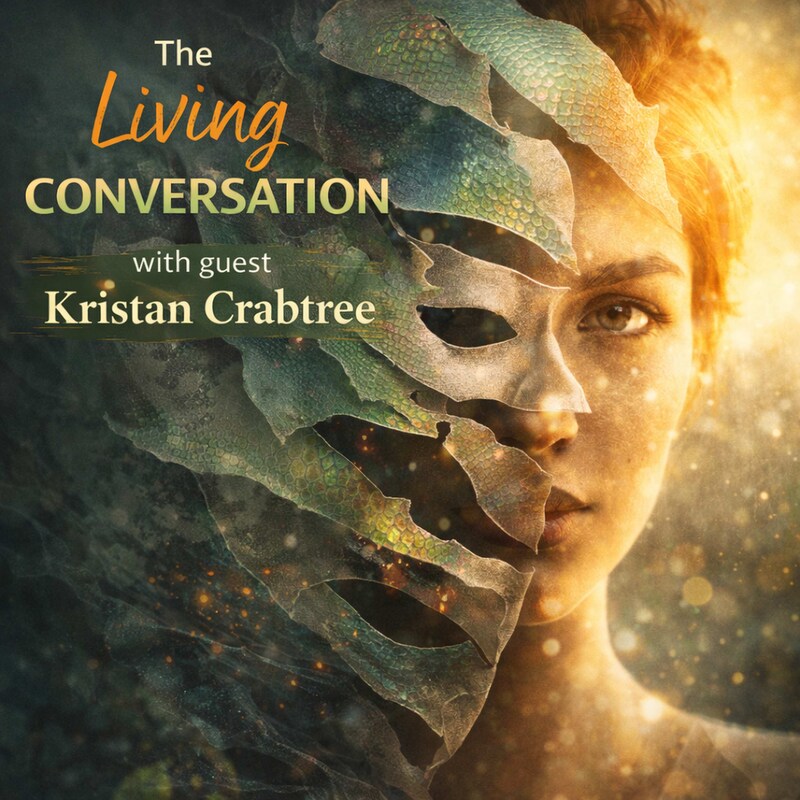
Shownotes
The discussion centers on the transformative journey individuals undergo in the aftermath of divorce, as articulated by our esteemed guest, Kristen Crabtree, a divorce coach and former hypnotherapist. She elucidates the essential process of self-discovery, emphasizing the profound question of identity that arises post-divorce. Crabtree advocates for the importance of peeling away societal masks and layers that inhibit one's true essence, suggesting that embracing vulnerability is vital for authentic relationships and personal growth. Her insights into the psychological and emotional ramifications of trauma shed light on the path toward healing and understanding one's true self. Through her work, she aims to guide individuals through the intricacies of their experiences, ultimately helping them to redefine their existence beyond their past relationships. Kristen Crabtree's insightful dialogue with Anthony Wright and Adam Dietz traverses the complex landscape of identity reconstruction following divorce. As a divorce coach, she brings a wealth of knowledge and experience to the conversation, emphasizing that the journey through divorce is not merely about ending a relationship, but rather embarking on a profound quest for self-understanding. Kristen articulates her belief that many individuals emerge from divorce questioning their very essence, leading to the pivotal inquiry: 'Who am I outside of my marriage?' Throughout the episode, Kristen delineates her approach to coaching, which integrates her background in hypnotherapy to facilitate deeper connections with clients' emotional states. She underscores the necessity of peeling away societal expectations and personal trauma to access one's true self, which she refers to as 'True You 2.0'. This process, she argues, is essential not only for healing from the emotional scars of divorce but also for fostering a renewed sense of purpose and direction in life. The discussion reveals how individuals often wear masks to navigate societal norms, and Kristen provides strategies to help listeners identify and dismantle these defenses. In a particularly poignant moment, the conversation touches on how the true self communicates through emotions, illustrating that ignoring these signals can lead to a cycle of discontent. Kristen notes that the journey is about cultivating awareness and understanding that one's emotional responses are vital indicators of alignment with one's true self. This episode is not only a guide for those grappling with divorce but also a broader commentary on the human experience of seeking authenticity in a world filled with expectations and societal pressures.
Takeaways:
- In this episode, we delve into the transformative journey of identifying one's true self post-divorce, emphasizing the importance of self-discovery.
- Kristen Crabtree shares her insights as a divorce coach, illustrating the necessity of understanding personal identity beyond relational labels.
- The discussion highlights the psychological mechanisms at play when individuals feel disconnected from their true selves, often manifesting in emotional turmoil.
- We explore the significance of peeling away societal layers and masks to reveal one's authentic self amid personal crises and transitions.
- The conversation addresses the vital role of vulnerability and authenticity in fostering meaningful relationships and personal growth.
- Listeners are encouraged to engage with their emotions as a compass for aligning with their true selves, facilitating a deeper understanding of their life purpose.
Transcripts
I'm Anthony Wright, and I am your co host today on the Living Conversation with Adam Deets.
Speaker B:Welcome.
Speaker A:And we're.
Speaker A:And we're here with our guest, Kristen Crabtree.
Speaker A:Crabtree.
Speaker A:And welcome, Kristen.
Speaker C:Thank you.
Speaker C:Thank you, Anthony.
Speaker A:And.
Speaker A:And you are.
Speaker A:You are a divorce coach and a former hypnotherapist, and you are a counselor teaching people how to get back to who they really are.
Speaker A:And how.
Speaker A:Where did you get your hypnotherapy training?
Speaker A:I'm just curious.
Speaker C:So, first of all, I'm not a counselor, but we can.
Speaker C:We can talk about that in a second.
Speaker C: training was actually back in: Speaker C:So it's not a current certification and they probably have, you know, changed, you know, how they teach by now.
Speaker C:But shockingly, it has been probably one of the most valuable pieces of education I've ever had.
Speaker C:I have a master's in international business and undergraduate degree and anthropology and Poli Sci.
Speaker C:But really, the hypnotherapy is what has helped me the most of my life.
Speaker A:So I started studying hypnotherapy when I was about 15 and literally got, you know, got a little pamphlet off the back of a comic book, hypnotize your friends.
Speaker A:And so I did, and I did and was able to get all the classic symptoms or hypnotherap, hypnotic displays of catalepsy and positive and negative hallucination.
Speaker A:And I just was really struck by how powerful languages.
Speaker C:Yep.
Speaker A:So.
Speaker A:And being a divorce coach, you.
Speaker A:You would have to know how to listen.
Speaker A:I've taken divorce mediation training myself, so I. I very much appreciate that.
Speaker A:So you've got a website or first of all, called a Paramore Paradox, but also something you call true you 2.0.
Speaker A:What's that?
Speaker C:So.
Speaker C:Excuse me.
Speaker C:So Paramore Paradox is really my mission project, and it came out of me doing the work that's in the book and that Paramore Paradox is based on.
Speaker C:So my true self wants me to do that for the world.
Speaker C:And it's not the place that I use to make my income.
Speaker C:That is the Divorce Coaching.
Speaker C:Um, but it is like, to me, the most meaningful work I could possibly provide on this planet.
Speaker C:The divorce coaching is the website for that is Destination True youe 2.0.
Speaker C:And it actually ties in with the Paramore Paradox work because my objective is to get people past the trauma of the divorce using practical steps and into a place where they can actually then Answer the question, who am I?
Speaker C:Which is what you start asking, you know, after a divorce.
Speaker C:So Paramore Paradox.
Speaker C:The mission of Paramore Paradox is to help people answer, who am I outside of divorce?
Speaker C:It has nothing to do with divorce.
Speaker C:It has to do with people going through transition or existential crisis.
Speaker C:You know, changing jobs, losing a spouse, losing a child, empty nest and divorce.
Speaker C:And it can even be people in their 30s I've had having that question because they've spent all this money and time getting an education.
Speaker C:Like I just said, I have a master's in international business that I've never used.
Speaker C:So.
Speaker C:So, you know, these 30 year olds come or 20 something year olds come out of their, their education, they get a job and all of a sudden they go, oh my God, is this all there is to life?
Speaker C:Is this who I am?
Speaker C:So whoever it is that is asking who I am, Paramore Paradox is built for you.
Speaker C:The divorce coaching.
Speaker C:So from that, from that work, my whole project is about helping you hear your truth, your true self.
Speaker C:And in doing so, the next step is creating what I call the true you 2.0, which is the embodiment of who you really are brought into who you want to manifest in this body, in this lifetime on earth.
Speaker C:Right now.
Speaker C:Destination True 2.0 is the divorce coaching website.
Speaker C:That again, it's, you know, my real niche client is a lesbian who has been in a psychologically abusive marriage.
Speaker C:That's because that's who I was.
Speaker C:And it's a, it's a group of people that I can speak to in a way that other people can't.
Speaker A:That doesn't mean experience.
Speaker C:Yes.
Speaker C:That doesn't mean that I don't work with straight men, straight women, you know, blah, blah, blah.
Speaker C:I do.
Speaker C:I actually probably work with more straight men and women than I do with lesbians.
Speaker C:But that's my specific niche.
Speaker C:And what I have found from doing the divorce work is that, you know, people come in a state of trauma, especially when there's psychological abuse as a component.
Speaker C:Once they dig through that, like when they come to you in the trauma, they're not thinking, who am I?
Speaker C:They're just thinking, what the heck has been going on and how do I make it stop?
Speaker C:But once they get through that, usually the veil starts to lift and they realize they've been in this fog and the fog starts to clear and that's when they start saying, oh, who am I?
Speaker C:Don't know.
Speaker C:I've been so separated from whoever I am that I didn't even know I was separated from from who I am.
Speaker A:You know, one of the things that I found is interesting is you've got a chameleon on the main part of your page and people feel like they have to adapt.
Speaker A:And one of the questions that I had come up with is, would you say.
Speaker A:There's a couple.
Speaker A:But would you say that your true self emerges from the unconscious mind?
Speaker A:And how do you know when you're out of touch with that?
Speaker C:So from your unconscious mind?
Speaker C:I don't know that I would say that.
Speaker C:But how do you know?
Speaker C:How do you know you're out of touch with it?
Speaker C:So my belief, like, I hate the concept of self, self help, and I don't even like the concept of personal development.
Speaker C:And it's because both of those imply that something's broken or that you can be improved or something like that.
Speaker C:And really what I believe, and this ties in with, like, how do you know that you're out of touch or disconnected?
Speaker C:What I believe is it is about peeling off those layers.
Speaker C:So that is why the chameleon is there.
Speaker C:So we all put these, even people born into healthy families, which there's not many of them out there, but even people born into healthy families have to put on layers to adapt, to fit in at work, to, you know, have the identity that their parent, you know, the doctor or whatever, that their parents wanted to be, you know, to be perceived as a good father or mother or whatever.
Speaker C:Like we, we put on masks, not just out of trauma.
Speaker C:And those masks are there to either keep us safe, help us get loved, or for acceptance.
Speaker C:So basically survival and love and it's totally normal.
Speaker C:A lot of times when people start to realize they've got masks, and that will get to your question.
Speaker C:A lot of times when people start to realize they have masks, they feel shame and guilt.
Speaker C:And the first thing to realize is, you know, you are just adapting in the way to get you safety and love.
Speaker C:And there's nothing wrong with that, right?
Speaker C:And we all do it.
Speaker C:So freeing yourself of that shame and guilt is a wonderful first step.
Speaker C:So the way I, I find that it is communicated to people that they're somehow out of touch with their truth is, well, one is their work is their life is work.
Speaker C:Because life isn't really supposed to be work.
Speaker C:So but the concept there is like, huh, so life isn't supposed to be work.
Speaker C:Relationships aren't supposed to be work, although we think they are.
Speaker C:So one thing is looking at that, but the other thing is one of the pieces that saved me when I was doing my work Post divorce was understanding that loop that a lot of, you know, psychologists and neuroscience and whatever talk about where you have a thought, the thought leads to an emotion.
Speaker C:The emotion is a feeling.
Speaker C:The feeling releases a chemical, the chemical you actually become addicted to that helps set a behavior.
Speaker C:The behavior then creates an experience and then the experience comes back to the thought, which then it builds on itself.
Speaker C:Right?
Speaker C:It's this loop that we get stuck in.
Speaker C:Part of what I strive to help people do is to break that loop.
Speaker C:And to do that you have to create awareness.
Speaker C:So there's a lot of different ways to do that.
Speaker C:And you can break the loop at thought, emotion, behavior or experience.
Speaker C:To get back to your question, See, I really am going to answer it.
Speaker C:To get back to your question of how you find out that you are disconnected is your true self can't text you.
Speaker C:Darn it.
Speaker C:And so the only way your true self can communicate with you is through emotion.
Speaker C:So you, you get a job offer and you feel this kind of like knot in your stomach and you're like, you know, I just didn't really click with the boss or the vibe in the office didn't feel right.
Speaker C:And so you kind of drag your feet on accepting it.
Speaker C:But then the money gets tight and you're like, okay, I need money, I'm going to take the job.
Speaker C:You take the job and you start to just, you don't want to get up in the morning, you hit your snooze button as many times as you can.
Speaker C:You get to work late, you're kind of grumpy.
Speaker C:It's like everybody pushes your but buttons.
Speaker C:You kind of have headaches and you're getting muscle tension, but you just work through it.
Speaker A:And then.
Speaker C:So that's true self's second message to you, right?
Speaker C:It's a little bit, a little bit more persistent.
Speaker C:You don't listen to true self.
Speaker C:So you keep your job, keep working.
Speaker C:And then all of a sudden you start to get sort of anxiety and panic attacks and, and you snap at people and maybe anger comes out.
Speaker C:You still ignore that.
Speaker C:So that was message number three.
Speaker C:So now true selves has to hit you over the head with a two by four.
Speaker C:So then you get cancer or your spouse leaves you, or you get so sick you get chronic fatigue syndrome or, you know, whatever.
Speaker C:But true self will find some way of screaming at you.
Speaker C:At that point you need to do something different.
Speaker C:So during those steps, the longer you don't listen, the louder the message is going to get.
Speaker C:And that's when people usually finally wake up.
Speaker C:And go, oh, I'm working in a broken loop here.
Speaker C:How do I fix this?
Speaker A:Yep.
Speaker A:You need to find a way out.
Speaker A:And we've got to take a, a way out ourselves right here, right now.
Speaker A:We've got to take a short break.
Speaker A:I'm Anthony Wright with my co host Adam Dietz.
Speaker A:And we are talking with our guest, Kristen Crabtree.
Speaker A:And how can people contact you, Kristen?
Speaker C:I love to just have chats with people.
Speaker C:Again, this is my mission.
Speaker C:So the website is u20.com y o u the number two the word point the number zero dot com.
Speaker A:Great.
Speaker A:All right, we're going to take a short break and be right back.
Speaker A:So stay tuned.
Speaker A:I'm Anthony Wright and I'm your co host today on the Living Conversation with Adam Dietz.
Speaker A:And before the, and our guest is Kristen Crabtree.
Speaker C:Yep.
Speaker A:Yeah.
Speaker A:And before the break, you were talking about how the true self tries to get your attention when you're not aligned.
Speaker A:And, and did you have anything, any.
Speaker A:Anything's come to mind, Adam?
Speaker A:From what Kristen was talking about before.
Speaker B:The break, a lot of different things for sure.
Speaker B:First thing that came to mind was this idea of who am I?
Speaker B:That is like one of the first questions of Western philosophy.
Speaker B:Who am I?
Speaker B:What is the universe made out of?
Speaker B:So I think it's very interesting and really appreciate that that's where you're going, you know, and that you feel really called to this question.
Speaker B:I appreciate that.
Speaker B:Another thing that two more, two more things that really came up for me.
Speaker B:One is, well, I guess I'll go with the, the last one first.
Speaker B:Like, how do you differentiate, like, just being spoiled and like, I really want this and I don't want that versus what your calling is like from, you know, and that leads to my, my other question is there is for, for a philosopher who's worked on philosophy for so long, there's a true stuff that is like, you know, metaphysical and universal and comes from the beginning of time and space and is like this links with the universal energy.
Speaker B:So I wonder if there's an element of that to your concept of true self as well.
Speaker B:So my one question is, is there like a higher self, so to speak?
Speaker B:And the other question is how do you know when your true self is calling to you and when you're just like being spoiled and like, I just like this, Right?
Speaker B:Yeah, I know, I know.
Speaker B:I struggle with that.
Speaker B:I struggle with it in the past and that kind of thing.
Speaker B:Right.
Speaker C:So which one do you want me to answer first?
Speaker C:You know what, I'll just Pick.
Speaker C:Yeah.
Speaker A:Yeah.
Speaker C:To answer the second one.
Speaker C:The.
Speaker C:How do you know if it's just this is what I want versus this is my calling?
Speaker C:If you.
Speaker C:If you need discipline and motivation to get whatever it is you think you want, it's not your true self.
Speaker C:If you're aligned with your true self, you live it, breathe it, talk it, think about it, dream about it, obsess about it, work.
Speaker C:As soon as you can get up in the morning, you're like, yes, I can't wait to get going.
Speaker C:And you stay up until 11 o' clock at night, not because you have to, but because you just have one more thing to do, one more page to write.
Speaker B:That's like a flow state.
Speaker C:Yeah.
Speaker C:And it's like a flow state all darn day.
Speaker C:I mean, it really is kind of amazing when you get aligned with your truth, how life changes.
Speaker C:Truly.
Speaker C:You know, three years ago, I was on my bathroom floor vomiting about this time of year from anxiety from being in a psychologically abusive marriage that I didn't know I was being psychologically abused in.
Speaker C:You know, and here I am today.
Speaker C:And it's funny, I told my therapist a couple months ago, I'm like, you know, I had this weird, like, calm happiness all the time.
Speaker C:Like, no matter what's happening, I just feel kind of calm happiness.
Speaker C:And he said, you know, that kind of sounds like peace to me.
Speaker C:Oh, my God, I feel peace.
Speaker C:That's amazing.
Speaker C:So, yeah, okay.
Speaker C:And then the other question was, oh, more the metaphysical components.
Speaker C:So, yes, my belief is we are not humans with a soul.
Speaker C:We are Source having a human experience.
Speaker C:And so for me, your true self is really source wanting to experience things.
Speaker C:The great thing about that perspective is that means all experience is created equal.
Speaker C:So pain, pleasure, happiness, fear, love, passion, trauma, like all of it is equal because it's just Source wanting to source doesn't get to experience any of that.
Speaker C:Source as source is everything and peace.
Speaker C:Right.
Speaker C:So source divides us up into little pieces of consciousness.
Speaker C:And some of us choose to come down here now.
Speaker C:You know, maybe we go somewhere else later, but we choose to come down here now because we want to experience things, emotions, whatever that is.
Speaker C:And I have had plenty of trauma in my life, like pretty awful stuff, as I'm sure other listeners have.
Speaker C:But I realize now, you know, and it took me a lot of work to get here.
Speaker C:So I'm not saying you can just make this jump by hearing me say it, but I can honestly say I get it.
Speaker C:Like, I get it.
Speaker C:I understand why those things had to happen to Me or, you know, how that was manifested into my life.
Speaker C:I get it.
Speaker B:So, anyways, I'm sorry that happened, but I'm really happy that you're here on the other side of it.
Speaker C:Me too.
Speaker C:Thank you.
Speaker A:Our mentor, Dr. Wu, used to talk about, or probably possibly still does, talked about heaven's destiny rather than fate.
Speaker A:And.
Speaker A:And the difference between fate and heaven's destiny is rather than fighting against what what you're calling is Source is laying out for us to be engaged with.
Speaker A:It's fighting that.
Speaker A:But to turn toward it and then embrace it is then following one's heaven's destiny.
Speaker A:And everything changes from there.
Speaker A:Is that.
Speaker A:Is that sound right, Adam?
Speaker B:Oh, yeah.
Speaker B:Yeah.
Speaker B:It's like there's certain things you can't change, and then so you're making your most out of it.
Speaker B:And when, if you're stuck in a situation, you can still cultivate yourself, you can cultivate your relationship with who you are, your understanding, your insight.
Speaker B:And then, you know, either you find a way to break out of it, or you're more powerful when you.
Speaker B:When the time comes where it falls away and you're ready to go to the next stage.
Speaker C:Really well, Yep, absolutely.
Speaker A:So.
Speaker A:I saw in some of your work about.
Speaker A:You talk about being vulnerable and generous.
Speaker A:Do you know the work of Brene Brown?
Speaker C:Yes, I do.
Speaker A:Oh, boy.
Speaker A:She's just top shelf.
Speaker A:Talk a little bit about how that work is woven into your.
Speaker A:Into your work with clients.
Speaker C:Well, so I definitely, you know, I. I enjoy her work.
Speaker C:There's so many people's work I enjoy.
Speaker C:And actually on Paramore Paradox, at the bottom, it says these are some of the, you know, wise souls that have influenced, you know, this.
Speaker C:This thing.
Speaker C:So I. I have to speak about it more in the big picture of the learnings that I've gathered from, from a lot of people and myself.
Speaker C:So for me about being authentic and vulnerable, life is really about relationships.
Speaker C:It's about relation to oneself and relationship to others.
Speaker C:And our relationships with others help mirror things to us and also help us have those emotions that Source wants us to have.
Speaker C:Right.
Speaker C:Like, it's pretty hard for us to have emotions without interacting with somebody else.
Speaker C:So the idea of authenticity and vulnerability to me that I've gotten from her work as well as other people's work is that knowing who I am truly at my core allows me to.
Speaker C:To make decisions that are in alignment with myself and be myself without the need of, call it acceptance.
Speaker C:Now, that being said, that doesn't mean that I don't ever put on A mask.
Speaker C:But I'm aware and conscious when I put on the mask.
Speaker C:So if I'm going to a business meeting or I'm going to do a lecture to a corporation, I'm not going to go in my hippie clothes.
Speaker C:I am a bit of a hippie.
Speaker C:Those of you who aren't, aren't watching.
Speaker C:I have this big Indian tapestry behind me.
Speaker C:So, you know, I'm not going to wear my hippie clothes.
Speaker C:I'm going to dress nice.
Speaker C:And that is a bit of a mess because it's not really who I am.
Speaker C:Right.
Speaker C:But I know that I'm doing that, and it's a conscious thing.
Speaker C:Yes.
Speaker C:And so I'm still authentic.
Speaker C:Now, if somebody asked me to do something that was not in alignment with my truth, I simply wouldn't do it.
Speaker C:You know, I may not make a. I wouldn't not.
Speaker C:May not.
Speaker C:I wouldn't make a scene about it.
Speaker C:So, for example, one of my, like, values that I've come to realize is super important to me is to honor living things.
Speaker C:So it started off as animals like to only eat happy animals.
Speaker C:You know, animals that have been humanely treated during their life and humanely killed and so forth.
Speaker C:Then I started connecting with plants, and I realized, oh, plants kind of.
Speaker C:Of have consciousness, too.
Speaker C:And so now my practice is more around, you know, recognizing and honoring all of that.
Speaker C:That being said, if I go to somebody's house and they've prepared a beautiful meal to me, I don't say, is this happy meat?
Speaker C:Was it humanely treated?
Speaker C:Because if it's not humanely treated, I'm not going to eat it.
Speaker C:So instead, in my head, privately, quietly, I will bless the animal, thank the animal for giving me its flesh that can nourish me and make me feel good.
Speaker C:I don't make a scene.
Speaker C:I don't tell other people.
Speaker C:So is that a mask?
Speaker C:Well, kind of, because, you know, I'm not dem.
Speaker C:I'm not being, you know, authentic outwards, but I am being authentic inwards, you know, and that's really what matters, is to have that kind of conscious intention and awareness.
Speaker A:Right.
Speaker A:You know.
Speaker A:You know what I mean by animism?
Speaker C:No.
Speaker A:It's like having the idea that everything is conscious.
Speaker C:Yes.
Speaker A:And there's an astrologer that's on KPFA out here in the Bay Area, Caroline Casey, and she said animism is more than a belief.
Speaker A:It's just good manners.
Speaker C:It's just good manners.
Speaker C:Yeah.
Speaker C:Yeah.
Speaker A:So, yeah.
Speaker A:Any.
Speaker A:Anyway.
Speaker A:Any thoughts, Adam?
Speaker B:Well, the last thing is I appreciate how you mentioned that is very personal and internal.
Speaker B:Right.
Speaker B:And you have your values, your integrity.
Speaker B:And, you know, so often in our culture, it's like a sales culture or evangelical culture, we're always pushing something on someone else.
Speaker B:Like Jesus said in the Bible, like, don't pray like the hypocrites out in the street.
Speaker B:You go into your back room, like into your own closet, and that's the way you pray.
Speaker B:And so it reminds me of that a lot where, you know, it's.
Speaker B:It's so personal and so deeply, you know, private.
Speaker B:Private.
Speaker B:I think that that's.
Speaker B:I really appreciate about what you're saying there that I just wanted to say that.
Speaker A:Yeah, yeah, that's right.
Speaker A:So.
Speaker A:Well, we're coming up on another break here, and you had said, Kristen, that you like to have a conversation with people.
Speaker C:I do.
Speaker C:It's a opportunity to have a free chat like this about, you know, whatever it is that will help put you on your path towards your truth.
Speaker C:It is u 2.0.
Speaker C:So y o u the number two, the word point the number zero dot com and you'll see a little video of me and an invitation to chat.
Speaker A:Great.
Speaker A:All right, well, we're going to take a short break and be right back, so stay tuned.
