Shownotes
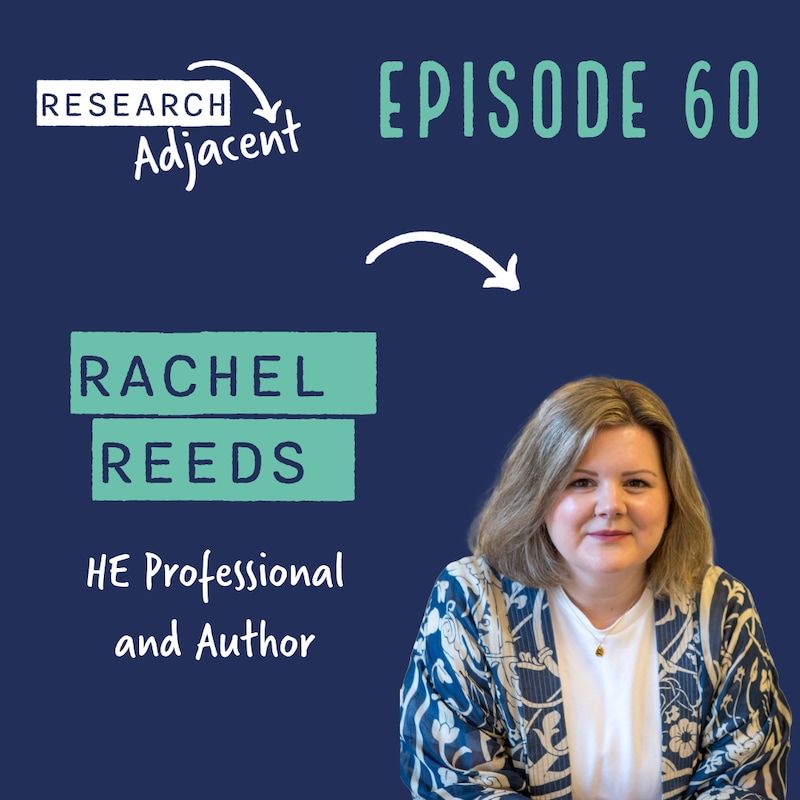
Rachel is the author of Surviving and Thriving in Higher Education Professional Services, founder of The Bold Collective, and Senior Admissions Manager at Anglia Ruskin University.
Sarah and Rachel talk about
- Being a positive disruptor in higher education
- Why HE professional roles are invisible by design
- The disparities between professional and academic contracts
- Her wish for HE professionals to speak up and speak out
Find out more
- Read the show notes and transcript on the podcast website
- Connect with Rachel on LinkedIn or via her website
- Read Rachel's book Surviving and Thriving in Higher Education Professional Services
- Join one of Rachel's monthly workshops
About Research Adjacent
- Fill out the research-adjacent careers quiz
- Sign up to the Research Adjacent newsletter
- Follow Research Adjacent on LinkedIn Instagram and BlueSky
- Email a comment, question or suggestion
- Leave Sarah a voice message
Mentioned in this episode:
Member of the Month: Duncan Yellowlees, DY Training
Let’s put rubbish presentations in the bin – where they belong. Get in touch with Duncan for specialist research presentation skills training www.duncanyellowlees.com
Come along to our Manchester networking event
Join host Sarah McLusky and fellow research-adjacent professionals on Thursday 12 March 2026 at 5.30pm. Find out more and register here https://researchadjacent.circle.so/c/open-events/manchester-research-adjacent-community-networking
Transcripts
Our roles are very much designed to be invisible.
Rachel Reeds:If we do a good job in professional roles, no one sees
Rachel Reeds:the work. If you do a small error, it becomes a giant drama.
Rachel Reeds:You literally are invisible. Because since 2019 it's not been
Rachel Reeds:mandatory to return the numbers of people on non-academic
Rachel Reeds:contracts to the HESA Higher Education Statistics Agency,
Rachel Reeds:which is the datacapture mechanism for higher education.
Rachel Reeds:Professional services quietly amongst ourselves are
Rachel Reeds:frustrated, but don't always speak up. And my call to action
Rachel Reeds:at the end of the book is very much a speak up, speak out,
Rachel Reeds:because we don't do it enough.
Sarah McLusky:Hello there. I'm Sarah McLusky, and this is
Sarah McLusky:Research Adjacent. Each episode, I talk to amazing research
Sarah McLusky:adjacent professionals about what they do and why it makes a
Sarah McLusky:difference. Keep listening to find out why we think the
Sarah McLusky:research adjacent space is where the real magic happens.
Sarah McLusky:Hello and welcome to episode 60 of Research Adjacent. Today my
Sarah McLusky:guest is Rachel Reeds. Rachel is slightly different to my usual
Sarah McLusky:guest, because although she has been research-adjacent in the
Sarah McLusky:past, strictly speaking, she's not research-adjacent now. But
Sarah McLusky:what Rachel does know a lot about are the challenges facing
Sarah McLusky:professionals, including research-adjacent ones, working
Sarah McLusky:in higher education. Describing herself as a positive disruptor,
Sarah McLusky:Rachel has recently published a book called Surviving and
Sarah McLusky:Thriving in Higher Education Professional Services. The book
Sarah McLusky:draws both on her own career, working mainly in university
Sarah McLusky:admissions, and interviews with other HE professionals in a wide
Sarah McLusky:variety of roles. In our conversation, we talk a lot
Sarah McLusky:about the disparities between academic and professional
Sarah McLusky:contracts, why professional roles are invisible by design,
Sarah McLusky:and why she wants to embolden us all to speak out more. We also
Sarah McLusky:talk about why Rachel is drawn towards work which supports the
Sarah McLusky:underdog and works to change the system from within. As well as
Sarah McLusky:the book, Rachel is developing a range of support for higher
Sarah McLusky:education professionals, including free monthly workshops
Sarah McLusky:if you're listening to this episode, when it comes out, the
Sarah McLusky:next workshop is going to be on this Friday, which is the 17th
Sarah McLusky:of January, 2025 so check the link in the show notes for
Sarah McLusky:details, and even if you've missed that one, as I say, she's
Sarah McLusky:doing the monthly so hopefully there will be another one coming
Sarah McLusky:up very soon. Before we get on to Rachel's story I want to
Sarah McLusky:remind you to sign up for the Research Adjacent newsletter.
Sarah McLusky:Every fortnight, I send subscribers my top takeaways
Sarah McLusky:from the most recent podcast episode. They are insights that
Sarah McLusky:you won't find anywhere else. So if you want to know my thoughts
Sarah McLusky:about this episode, then make sure that you're subscribed by
Sarah McLusky:Monday the 20th of January. If you're listening in a podcast
Sarah McLusky:app, you'll find the link in the show notes. And if you're
Sarah McLusky:listening on the website, then scroll down to the bottom of the
Sarah McLusky:web page for the sign up form. But for now, let's get back to
Sarah McLusky:the episode. Listen on to hear Rachel's story.
Sarah McLusky:Welcome along to the podcast, Rachel, thank you so much for
Sarah McLusky:joining us. I wonder if you could tell our listeners a
Sarah McLusky:little bit about what it is that you do. Well,
Rachel Reeds:Thanks for having me. So I have been surviving and
Rachel Reeds:thriving in higher education professional services since 2011
Rachel Reeds:and I came out of university and decided I want to work in the
Rachel Reeds:public sector. That was about as deep as my thinking got. So I
Rachel Reeds:started working in local government, and the politics was
Rachel Reeds:a bit too much for me. After a while, my politics did not align
Rachel Reeds:with the political party that was in, that dominated in this
Rachel Reeds:rural district council. So that's when I moved into higher
Rachel Reeds:education, and I have spent wonderful number of years now
Rachel Reeds:moving across different elements of the student journey, quality
Rachel Reeds:assurance. I've worked in research administration, taught
Rachel Reeds:course administration, and then laterally in admissions. And
Rachel Reeds:that journey has taught me a lot about some of the challenges of
Rachel Reeds:working in higher education as a professional and some of the
Rachel Reeds:disparities between academics and professionals, which led me
Rachel Reeds:in my frustration about the lack of development opportunities and
Rachel Reeds:training and empowerment of professional staff, who can feel
Rachel Reeds:very marginalized and quiet when our roles are very much designed
Rachel Reeds:to be invisible. If we do a good job in professional roles, no,
Rachel Reeds:no-one sees the work. If you do a small error, it becomes a
Rachel Reeds:giant drama. So that led me to write my book, which is also
Rachel Reeds:called Surviving and Thriving in Higher Education Professional
Rachel Reeds:Services, which came out this week.
Sarah McLusky:Yeah it's fantastic. It's a really
Sarah McLusky:exciting week to have you on the podcast, although, by the time
Sarah McLusky:this goes out, it will be, you know, slightly
Sarah McLusky:slightly in the past, but but still, people can
Rachel Reeds:I realized that
Rachel Reeds:still go and find the book and read it. And certainly it is, it
Rachel Reeds:is the book, hearing about the book that that led me to you. So
Rachel Reeds:you're not a typical guest we would have on Research Adjacent
Rachel Reeds:in the sense that at the moment, although you have previously
Rachel Reeds:worked alongside research students, you don't currently
Rachel Reeds:work in a research-adjacent role, but but certainly very
Rachel Reeds:familiar with this whole higher education professional services
Rachel Reeds:landscape, having moved around some different roles there. So
Rachel Reeds:you mentioned there briefly some of the different roles that
Rachel Reeds:you've had. Maybe you could tell us a little bit more about what
Rachel Reeds:you do now and what some of the other things that you've done
Rachel Reeds:Of course. So currently, I work in admissions.
Sarah McLusky:Yeah and they do feel like chasms, yes.
Sarah McLusky:over your career
Sarah McLusky:I lead a home admissions function. It's not really home
Sarah McLusky:admissions - it's everyone who doesn't need a visa - admissions
Sarah McLusky:department. So CPD, degree, apprenticeships, further
Sarah McLusky:education, undergraduate taught, post graduate taught, I don't
Sarah McLusky:currently have research admissions because that's such a
Sarah McLusky:specialist area that usually sits within the research
Sarah McLusky:graduate school or somewhere similar. I like working in
Sarah McLusky:admissions most particularly because you are at the start of
Sarah McLusky:the student journey. You are the gatekeepers and also the
Sarah McLusky:facilitators of bringing people into higher education and
Sarah McLusky:opening up opportunities. And I've always worked in new
Sarah McLusky:universities, post-92 universities as we call them. So
Sarah McLusky:for me, that's a very important part of my professional
Sarah McLusky:identity, is that I work in institutions that have central
Sarah McLusky:to their ethos widening participation and broadening
Sarah McLusky:access to higher education. So there's something very powerful
Sarah McLusky:to me about making sure that I'm part of the mechanisms and the
Sarah McLusky:processes and the environment that can enable people who
Sarah McLusky:probably spent a lot of their life thinking that university
Sarah McLusky:wasn't for them or that they couldn't necessarily achieve if
Sarah McLusky:they were in that space, that it wouldn't be suited to them
Sarah McLusky:culturally. So being in a position to break some of those
Sarah McLusky:barriers, for me is very powerful place to be. I enjoy
Sarah McLusky:all different parts of working on the student journey, but
Sarah McLusky:there is something very directly impactful about the work that
Sarah McLusky:you do in admissions where you can see that one conversation
Sarah McLusky:can absolutely adjust the trajectory of somebody's life,
Sarah McLusky:someone who thought there was a barrier that you can then help
Sarah McLusky:them dismantle is, yeah, it's really powerful. But I started
Sarah McLusky:in quality assurance with the structures of course approvals
Sarah McLusky:and and the academic side of things. So having experience in
Sarah McLusky:course approvals and course structures, in a business
Sarah McLusky:school, there's lots of academics who are very good at
Sarah McLusky:the theory and not so good at the accounting. Academics never
Sarah McLusky:could make their credit add up to 100, which was a bit
Sarah McLusky:frustrating, and going from that to then taught course
Sarah McLusky:administration. So the middle of the journey means that I come at
Sarah McLusky:all of the work I do in higher education in a more holistic
Sarah McLusky:way, thinking about how the different bits fit together.
Sarah McLusky:Particularly when I worked in the research graduate school,
Sarah McLusky:that was enlightening, because it's such a transitional space
Sarah McLusky:between academic and the professional, and you have to
Sarah McLusky:float across it. It's, you know, that some of the Celia
Sarah McLusky:Whitchurch's concepts about third space, this space between
Sarah McLusky:and among and in both spaces at once simultaneously, which I
Sarah McLusky:really felt when I worked in that space. But I also still
Sarah McLusky:think it, I think it permit permeates higher education
Sarah McLusky:altogether, you, you know, and that those who work in the
Sarah McLusky:research space have to transition across those
Sarah McLusky:boundaries and across those chasms.
Sarah McLusky:Sometimes, depending on the situation that you're in
Rachel Reeds:They do, because for all that we talk about,
Rachel Reeds:breaking down barriers and third space working and transitions
Rachel Reeds:between spaces, ultimately, there is an absolute binary in
Rachel Reeds:higher education and in the academic world that says you are
Rachel Reeds:either an academic or you are not an academic. And that's
Rachel Reeds:absolutely enshrined in the contractual differences. And I
Rachel Reeds:don't know that in any other industry or space, do you have
Rachel Reeds:such a binary contrast? Most contracts in the in the private
Rachel Reeds:sector space are focused around, you know, task, output,
Rachel Reeds:responsibilities, expectations and role, whereas you are either
Rachel Reeds:in the teaching, learning, research box or you're not. And
Rachel Reeds:it's very strange to work in a space, and I imagine you
Rachel Reeds:probably have this in the health service too, where you're
Rachel Reeds:define, defined by what you are not, so you're non-academic, or
Rachel Reeds:you're non-clinical, or anything like that. So and it's when
Rachel Reeds:you're already defined by a negative and by a by exception
Rachel Reeds:or by not being part of something that's really quite a
Rachel Reeds:negative or outside space to come from. So it doesn't really
Rachel Reeds:empower people in that space to to speak up and speak with
Rachel Reeds:confidence. And then there's that primacy that comes from
Rachel Reeds:that academic space and the freedoms they have enshrined in
Rachel Reeds:their contracts. Academic freedom is enshrined in a
Rachel Reeds:contract, whereas my professional contract says I
Rachel Reeds:need to please keep quiet and carry on. Thank you. No opinions
Rachel Reeds:required.
Sarah McLusky:There's definitely things there I want
Sarah McLusky:to pick up on. So just that, well, let's, let's just go with
Sarah McLusky:that first one about some of the differences in the contracts
Sarah McLusky:between, because that's something that you talk a bit
Sarah McLusky:about in your book, the differences between. It's, it's
Sarah McLusky:everything from the expectations to the actual, you know, terms
Sarah McLusky:and conditions of employment. Tell us a bit more about some of
Sarah McLusky:those disparities. For those who are not aware.
Rachel Reeds:The fundamental distinction is around this, what
Rachel Reeds:starts with this concept of academic freedom. So in a in an
Rachel Reeds:academic, in a teaching, learning or pure research
Rachel Reeds:contract for an academic role, there is an enshrined protection
Rachel Reeds:for of freedom of speech, which goes beyond the traditional
Rachel Reeds:concepts of freedom of speech and into the realm of academic
Rachel Reeds:freedom, where they are in a space where they are encouraged
Rachel Reeds:to and empowered to challenge, and they can speak to both
Rachel Reeds:challenge in terms of their subject and their particular
Rachel Reeds:area of research, but also think some of those institutional
Rachel Reeds:structures within which they're operating, they can speak more
Rachel Reeds:comfortably. They have an enshrined expectation that they
Rachel Reeds:will enter into contract with other organizations, so they
Rachel Reeds:will be an external examiner, for example, at another
Rachel Reeds:institution, or they will do a consultancy project, or they
Rachel Reeds:will be part of a research project. And that's encouraged
Rachel Reeds:actively and seen as a real strength from their work, and it
Rachel Reeds:really betters their work to be part of those other things, and
Rachel Reeds:there is very minimal understanding, or total lack of
Rachel Reeds:reference, to any kind of potential commercial conflict of
Rachel Reeds:interest that might bring. So there'll be, there'll be
Rachel Reeds:consideration of the ethical implications and those kinds of
Rachel Reeds:conflicts of interest. But there is no concern that an academic
Rachel Reeds:might go and tell someone another institution about I
Rachel Reeds:don't know our like offer-making a strategy or something, but for
Rachel Reeds:professional staff, we are contractually tied to that one
Rachel Reeds:employer. Our contracts usually say that we're not allowed to
Rachel Reeds:enter into contract with anyone else. So I was in breach of my
Rachel Reeds:contract by entering into contract with Routledge to
Rachel Reeds:publish my book. But, you know, that's a very small example of
Rachel Reeds:it, but that's the that is, technically what happened. And
Rachel Reeds:also, there is no expectation or no space for any teaching,
Rachel Reeds:learning or research work on a professional services contract,
Rachel Reeds:which is ridiculous when you consider that an academic
Rachel Reeds:librarian is on a professional contract, and they are quite
Rachel Reeds:actively straddling those two spaces. Or when you consider
Rachel Reeds:someone who might teach academic skills, they're not an academic,
Rachel Reeds:because an academic is a very conceptual space to be in,
Rachel Reeds:because it is, it's about teaching and learning, but it's
Rachel Reeds:not just teaching and learning. It's a specific kind of teaching
Rachel Reeds:and learning and a specific framework around which, within
Rachel Reeds:which teaching and learning should be done that's different
Rachel Reeds:from academic skills or the work librarians in particular do, or
Rachel Reeds:researcher development training that can often can be done by
Rachel Reeds:academic staff, but it also can be done by professional staff,
Rachel Reeds:and yet it's sits directly within, you know, one space.
Sarah McLusky:Yeah it starts to fall apart. There's so many
Sarah McLusky:roles. As you say, research librarians being one of them. I
Sarah McLusky:used to be in a fairly strategic role in a research institute as
Sarah McLusky:a manager, helping to direct the research and make decisions
Sarah McLusky:about what funding applications were put in. So again, it's that
Sarah McLusky:idea of of falling through the cracks between what's considered
Sarah McLusky:professional services and what's considered academia, and the
Sarah McLusky:more you pick at it, the less it makes sense.
Rachel Reeds:Yeah, absolutely. And I have colleagues. There's a
Rachel Reeds:colleague represented in the book, one of the 11
Rachel Reeds:contributors, who shared their stories and their journeys
Rachel Reeds:through higher education with me for the book, Dr Joanne
Rachel Reeds:Caldwell, who has published work around professional services
Rachel Reeds:identity. That's what she did her doctorate focus on and she
Rachel Reeds:grapples, and she talks openly about grappling with people
Rachel Reeds:constantly asking her when she's going to transition to the
Rachel Reeds:academic space, because it's seen as an elevated space that,
Rachel Reeds:of course, she must want to move into, which she doesn't. But
Rachel Reeds:simultaneously, she works in a in a in a business school that
Rachel Reeds:are willing to support her research interests, but
Rachel Reeds:contractually can't give her time to do that, because there
Rachel Reeds:is no space in a professional contract for research because
Rachel Reeds:it's not seen as something that professional staff would do. And
Rachel Reeds:yet, you have people working in partnership, academic staff and
Rachel Reeds:professional staff. And if we want to engage in research or
Rachel Reeds:write, like I did all of my book on my own time, that's what we
Rachel Reeds:have to do. The MA education course leader might say, I'd
Rachel Reeds:really like to hear from senior professional staff for helping,
Rachel Reeds:you know, do a webinar or a seminar, sorry, for students on
Rachel Reeds:MA education practice. We can do it on our own time.
Sarah McLusky:Yeah
Rachel Reeds:We might get a release from our time. to do it.
Rachel Reeds:But we also, if you were a staff member that maybe wasn't earning
Rachel Reeds:a salary at a lecturer level, you've got, they can't pay you
Rachel Reeds:for the work at that level. So there's a, I don't know, lack of
Rachel Reeds:recognition of of that knowledge as well.
Sarah McLusky:Yeah. And also it's, it's sometimes I frustrate
Sarah McLusky:myself because I'm like, sometimes we don't necessarily
Sarah McLusky:have to play by the same rules. But if you look at the academic
Sarah McLusky:model in the sense of how you advance subject area, is that
Sarah McLusky:you do research on it, and you publish on that research, and
Sarah McLusky:there are aspects of the work that is classed as professional
Sarah McLusky:services. So for example, some of the ones I think of
Sarah McLusky:particularly, are things like public engagement and researcher
Sarah McLusky:development, where people are being encouraged to do research
Sarah McLusky:and publish on that topic, you know, on do research, on public
Sarah McLusky:engagement and what's best practice, and talking about
Sarah McLusky:that, but still being considered professional services. And and
Sarah McLusky:it's this, it's it's like a bind that that just stifles some of
Sarah McLusky:that progress.
Rachel Reeds:It stifles progress innovation, and is
Rachel Reeds:inherently discomforting to be working in a teaching, learning
Rachel Reeds:and research institution, and that be for the students, but
Rachel Reeds:not for us. Yeah. And accessing that is quite challenging. But
Rachel Reeds:then on the flip side, it must be very, very frustrating
Rachel Reeds:working in a higher education setting, working in something
Rachel Reeds:like marketing or for example, and not being able to influence
Rachel Reeds:or contribute to the institutional marketing
Rachel Reeds:strategies and plans and success. So there is a weird
Rachel Reeds:disconnect. Yeah, it's quite an uncomfortable space to be in.
Rachel Reeds:And just, you know, by publishing this book from for
Rachel Reeds:me, there are people that are, I mean, a lot of professional
Rachel Reeds:services community are like, Ah, this is amazing. We are we feel
Rachel Reeds:unheard, we feel unseen. And they but they haven't been able
Rachel Reeds:to rationalize or understand necessarily why they feel that
Rachel Reeds:way. So it's giving a framework, but also giving them the
Rachel Reeds:information data that backs it up. So when I explain to
Rachel Reeds:professional staff that you literally are invisible, because
Rachel Reeds:since 2019 it's not been mandatory to return the numbers
Rachel Reeds:of people on non-academic contracts to the HESA Higher
Rachel Reeds:Education Statistics Agency, which is the, the data capture
Rachel Reeds:mechanism for higher education. So you literally don't exist,
Rachel Reeds:because if you're not counted, you don't feature in the
Rachel Reeds:research. And so when you see something like Advance HE last
Rachel Reeds:week or so published some work around progression. I think it
Rachel Reeds:was about the gender pay gap and thinking about women progressing
Rachel Reeds:in higher education. And they unfortunately fell into that
Rachel Reeds:trap of talking about the data says that in higher education.
Rachel Reeds:And I had to say, I went back to them and said, I think you've
Rachel Reeds:missed the word academic out a few times here, because you
Rachel Reeds:can't make these generalizations, because some
Rachel Reeds:institutions do return data on their people who aren't on
Rachel Reeds:academic contracts, but they're going to distort the picture,
Rachel Reeds:because unfortunately the 97 or so institutions that don't
Rachel Reeds:bother you know, what does that say about them as an
Rachel Reeds:institution, that they're not doing it and are the ones that
Rachel Reeds:contribute it are? They're probably just carrying on with
Rachel Reeds:what they did before, and it's sort of straightforward to do
Rachel Reeds:so, but when you're not in the data, you literally don't exist
Rachel Reeds:in the research. Then how can people do research and analysis
Rachel Reeds:when there is no data about the the other half?
Sarah McLusky:And that's an astonishing statistic. I
Sarah McLusky:remember seeing you posting about it on on LinkedIn a couple
Sarah McLusky:of months ago. I think it was and I didn't quite believe it,
Sarah McLusky:and I went away and checked.
Rachel Reeds:You have to check
Sarah McLusky:because I didn't quite believe it, and it's
Sarah McLusky:absolutely remarkable. But as you say, not only I mean, part
Sarah McLusky:of why I started doing this podcast was because I read, I'm
Sarah McLusky:sure I've talked about it before, but I read a new
Sarah McLusky:strategy from UKRI, which talked about public engagement, and it
Sarah McLusky:talked about the academics, and it talked about the communities
Sarah McLusky:that they wanted to work with. At no point in the entire
Sarah McLusky:document did it reference the people who would be in the
Sarah McLusky:middle, who would actually be doing the work of pulling all of
Sarah McLusky:this strategy together and actually delivering on this
Sarah McLusky:strategy. And so the fact that people were invisible, even in a
Sarah McLusky:document which was about their job, I found absolutely
Sarah McLusky:astonishing. And I think you said to me when we were talking
Sarah McLusky:beforehand, that it's almost like being invisible. If you're
Sarah McLusky:good at your job, that's invisible and that's quite it's,
Sarah McLusky:it's frustrating. It makes a lot of sense to me
Rachel Reeds:Yeah, so professionals roles generally,
Rachel Reeds:are invisible by design. So they are because of this traditional
Rachel Reeds:concept of them as sort of support roles, especially when
Rachel Reeds:you're thinking about the very traditional professional
Rachel Reeds:services role. So for example, course administration, looking
Rachel Reeds:after enrolled students, data and processing their results and
Rachel Reeds:exam boards and everything. It's silent. You know, no one as a
Rachel Reeds:student has any idea that someone is like doing that work.
Rachel Reeds:They don't know really about exam boards and who's writing
Rachel Reeds:minutes and things like that. No one thinks about that kind of
Rachel Reeds:thing, and all of the process that go through to get a course
Rachel Reeds:approved or to design some teaching and learning. What they
Rachel Reeds:see is the face. They see the lecturer. They see the
Rachel Reeds:materials. They see the output at the end of it. So when an
Rachel Reeds:academic is doing their job really, really well, it's
Rachel Reeds:visible because there's output, there's there's there's things
Rachel Reeds:in the REF, they've got good NSS scores, that's the National
Rachel Reeds:Student Survey about, you know, how good your course is and how
Rachel Reeds:good your university is. They're getting good unit, module, you
Rachel Reeds:know, output, things like that. They're getting good grades.
Rachel Reeds:They're getting lots of first class and second, two one
Rachel Reeds:degrees coming out the end. If you do your job perfectly in
Rachel Reeds:course administration, everyone gets their grades processed on
Rachel Reeds:time. Everything hits the deadlines. There are no
Rachel Reeds:mistakes. There are no errors. Everyone thinks it just happens
Rachel Reeds:by magic, and yet, when it goes wrong, it becomes this big, big
Rachel Reeds:drama, and it's and it's often not resourced, because it's not
Rachel Reeds:recognized, because it's done so quietly and so well that
Rachel Reeds:therefore it's easy to overlook it. The analogy someone came up
Rachel Reeds:with shared with me a couple weeks ago is you have to think
Rachel Reeds:of it like plankton, utterly foundational and fundamental to
Rachel Reeds:the ecosystem of the of the environment, but because you
Rachel Reeds:can't see it, you might not think it's there or that you
Rachel Reeds:need it. Yeah, and that's sometimes what it can be -
Rachel Reeds:professional services plankton,
Sarah McLusky:I'm not sure, I'm not sure people will want to be
Sarah McLusky:compared to plankton
Rachel Reeds:Well it's fundamental, but it's really
Rachel Reeds:important, because I think sometimes there's dialog,
Rachel Reeds:particularly in the press, particularly in the sort of like
Rachel Reeds:Times Higher Education space, or in Government speak, where,
Rachel Reeds:where there's this weird concept that universities in that
Rachel Reeds:abstract concept and could exist if you took away all this, you
Rachel Reeds:know, managerialisation is the death of HE. But let's be blunt,
Rachel Reeds:if you took all the academics out of an institution, or
Rachel Reeds:everyone on academic contract, between everyone who's on a
Rachel Reeds:professional contract, who actually does do teaching and
Rachel Reeds:learning, between all the knowledge that we have across
Rachel Reeds:the board, we probably get manage all right? We could
Rachel Reeds:probably rustle up quite a few courses between us. We could
Rachel Reeds:cover subject knowledge. We could, there's lots of research
Rachel Reeds:going on, there's lots of academic writing going on,
Rachel Reeds:there's output there. We could probably muddle along for a
Rachel Reeds:while, okay? If you took an institution, took all the
Rachel Reeds:professional services staff out, it would all collapse. Yeah, who
Rachel Reeds:would they ring if there was audio visual emergency, who, who
Rachel Reeds:was going to build the learning, the virtual learning
Rachel Reeds:environment, who's going to populate things, who's going to
Rachel Reeds:process the result? It would just all collapse. So it really
Rachel Reeds:is symbiotic relationship, and that's just totally not
Rachel Reeds:acknowledged to the degree it should be.
Sarah McLusky:I think a lot of people as well talk about as
Sarah McLusky:being like, like the glue. And you know, when glue dries, it
Sarah McLusky:dries clear. You know, you don't want to see glue. You don't want
Sarah McLusky:glue oozing down the edge of something. I want it to be
Sarah McLusky:invisible, but it's there holding everything together.
Sarah McLusky:And, yeah, I think you're absolutely right. I've certainly
Sarah McLusky:been in places where a really key member of staff has has
Sarah McLusky:moved on to a new opportunity, and suddenly it's like, oh, what
Sarah McLusky:do we do? Who knows how to do all this stuff?
Sarah McLusky:Are you listening to this podcast for career inspiration?
Sarah McLusky:Even though research-adjacent roles are pretty niche there are
Sarah McLusky:still so many different paths that you could take. For a bit
Sarah McLusky:of a nudge in the right direction try the
Sarah McLusky:research-adjacent careers quiz at researchadjacent.com/quiz.
Sarah McLusky:Based on your strengths and interests, it will suggest a job
Sarah McLusky:category to explore further with some recommendations for podcast
Sarah McLusky:episodes from the Research Adjacent back catalogue to give
Sarah McLusky:you some more inspiration. Complete the quiz at research
Sarah McLusky:adjacent.com or click the link in the show notes.
Sarah McLusky:I think though, from hearing you talk, and then even just from
Sarah McLusky:the career choices that you've made, I get the impression
Sarah McLusky:you're somebody who likes to challenge things, perhaps.
Rachel Reeds:Oh yes, I like to be a positive disruptor. That's
Rachel Reeds:what I call it. Yes. I mean, I have done that right from the
Rachel Reeds:start of my career, in some ways. Going back a little bit in
Rachel Reeds:my career. I so I went to a small, independent, all girls
Rachel Reeds:school, very white and middle class in kind of a medium sized
Rachel Reeds:town in the the East Anglia. I went to, I did history at York,
Rachel Reeds:traditional choice of subject for a traditional kind of
Rachel Reeds:university, lovely city to do medieval history in, but again,
Rachel Reeds:quite small in terms of the grand scheme of cities and towns
Rachel Reeds:and the campus university. Quite lots of people who were quite
Rachel Reeds:like me, but with more accents, because I was up north, lots of
Rachel Reeds:beautiful accents and and then I worked in a rural council in
Rachel Reeds:East Northamptonshire District Council. So it was very sort of
Rachel Reeds:samey. Everyone was quite similar. And then I, when I
Rachel Reeds:started working in higher education, I worked at the
Rachel Reeds:University of Bedfordshire in Luton, and it's quite sad in a
Rachel Reeds:way, I suppose, but at the age of 24 I suddenly realized I did
Rachel Reeds:not understand how the world worked, and that actually things
Rachel Reeds:I understood like and believed in, like a meritocracy, for
Rachel Reeds:example, if you just work hard, you'll get somewhere. I just
Rachel Reeds:suddenly thought this, this doesn't mesh with what I'm
Rachel Reeds:seeing. I'm seeing profiling of students based on race and
Rachel Reeds:ethnicity. I'm seeing profiling of staff. And see I mean, and
Rachel Reeds:this is back in the days before the UKVI audit, when the
Rachel Reeds:international recruitment was king, and no one followed any
Rachel Reeds:rules, because no one was keeping check on it. And so I
Rachel Reeds:then start. I studied my masters, part time at Birkbeck
Rachel Reeds:College, because it was the only place I could do Twilight
Rachel Reeds:teaching, and I really wanted the classroom based experience.
Rachel Reeds:And I did a Masters in culture, ethnicity and diaspora, and it
Rachel Reeds:was my unlearning moment. So for me, it that masters that journey
Rachel Reeds:those two years, and that starting to work in Luton was
Rachel Reeds:the opening up of my eyes as to how dysfunctional the world is
Rachel Reeds:and how but also, on the same hand, how government and
Rachel Reeds:establishment and certain things can just carry on, oblivious to
Rachel Reeds:how dysfunctional the world is and community is and how
Rachel Reeds:disadvantaged some groups are. So what went into being, I want
Rachel Reeds:to do something in public service with that really
Rachel Reeds:galvanized me, and it made me think I don't want I want to be
Rachel Reeds:part of the change, part of the positivity, not perpetuating it.
Rachel Reeds:So I feel very strongly about my values working in higher
Rachel Reeds:education, that I will always want to work in university that
Rachel Reeds:needs my sort of expertise or my challenge and push that will
Rachel Reeds:treat it, will understand that money is tight, that we haven't
Rachel Reeds:got much, that we can't sit and complain. We've just got to get
Rachel Reeds:on with it. And, you know, find our cowboy way through which we
Rachel Reeds:did a lot at Bedfordshire, because it's a small university,
Rachel Reeds:you've got to get things done. You've got to make it happen
Rachel Reeds:yourself. So that's really embedded in a weird way. It's
Rachel Reeds:like a second journey of learning or unlearning and then
Rachel Reeds:relearning. That now is central to everything. And I am terribly
Rachel Reeds:conscious of my own privilege, and always want to make sure
Rachel Reeds:that everything I'm doing is, in short, is elevating somebody
Rachel Reeds:else, whether that's one of my team members that report to me,
Rachel Reeds:that's my approach to kind of leadership, management, whether
Rachel Reeds:it's writing this book. You know, that was about like,
Rachel Reeds:here's the crib sheet, guys, here's the stuff that people
Rachel Reeds:aren't going to tell you. No, no one who's been here 20 years
Rachel Reeds:really understands it either. So here's a quick history of why
Rachel Reeds:we're here. Here's what a vice chancellor is. Here's what a
Rachel Reeds:post-92 is. These things we bandy around that no one knows
Rachel Reeds:what they mean. And for those that don't know what post-92 is,
Rachel Reeds:it's a university. It's a polytechnic that became
Rachel Reeds:University in 1992 when the divide between polytechnics and
Rachel Reeds:universities was removed, structurally, but not
Rachel Reeds:culturally.
Sarah McLusky:No, indeed.
Rachel Reeds:Yeah. So I do like to disrupt, but I try to make it
Rachel Reeds:from a place of positivity.
Sarah McLusky:Yeah. It certainly sounds like, as you
Sarah McLusky:see, the things that you've done are looking at how you can help
Sarah McLusky:other people to to get on, navigate the system. And, yeah,
Sarah McLusky:Yeah, I think it's easy, isn't it, to kind of
Rachel Reeds:Yeah, make the system work or subvert the
Rachel Reeds:system as far as you can. Yes, yeah. And that person, when,
Rachel Reeds:when I worked a course administration academic, would
Rachel Reeds:be like, Oh, but the regulations say we can't do this. Like,
Rachel Reeds:fetishize that if only the system was different than
Rachel Reeds:there's no wiggle room. I'm like, there is always wiggle
Rachel Reeds:room. We will find a way. I'd say with applicants, you know,
Rachel Reeds:they think I haven't got the grades to get in. I can't go to
Rachel Reeds:university. Yeah, maybe not right now, yeah, but with
Rachel Reeds:information, advice and guidance, and I'm never just
Rachel Reeds:everything would be fixed. But in reality, it's about what
Rachel Reeds:going to turn someone away and say, No, you can't. It's always
Rachel Reeds:not now. Yeah, I think admissions should never be a no.
Rachel Reeds:It's always a not now, but this is what you can do to get where
Rachel Reeds:you want to go.
Rachel Reeds:yeah, definitely
Rachel Reeds:individuals can do within the system. You know, yes, working
Rachel Reeds:to change it, but also working the best you can with what it is
Sarah McLusky:Fantastic. Oh, well, to get maybe to some of
Sarah McLusky:the more conventional questions. I like to ask
Rachel Reeds:Oh, sorry
Sarah McLusky:my guests no, no, is this is fascinating. I could
Sarah McLusky:now. Yeah,
Sarah McLusky:rant on about this kind of stuff for hours. So yeah. Tell us
Sarah McLusky:about I mean, maybe, maybe it's the book, but maybe there are
Sarah McLusky:other examples, but, um, some things that you've done in your
Sarah McLusky:career that you're really proud of.
Rachel Reeds:Yes, I'm proud of the book, but I am proud of the
Rachel Reeds:journey that I went on, and the confidence that I've built, and
Rachel Reeds:the self belief that I've built that meant I could do it. So for
Rachel Reeds:me, it was a very empowering experience, despite the constant
Rachel Reeds:self doubt and imposter syndrome. Yeah. That represents
Rachel Reeds:a journey that I've been on and represents my way of, I suppose,
Rachel Reeds:articulating in a very substantial way and in a
Rachel Reeds:physical way, my belief in authentic leadership and
Rachel Reeds:breaking down barriers and making things as transparent as
Rachel Reeds:possible. So I'm proud of the book, not for it in and of
Rachel Reeds:itself, but for what it represents very much so. And as
Rachel Reeds:a leader and a manager, I'm very proud of seeing team members and
Rachel Reeds:people I've mentored go off and fly. I think that's that's the
Rachel Reeds:most rewarding, and bizarrely, the bit I love most about my job
Rachel Reeds:is not anything to do with HE or the actual work, that my
Rachel Reeds:greatest joy is mentoring others and supporting them to go on. So
Rachel Reeds:it was a way of, well, of spreading that. But I'm also
Rachel Reeds:very proud of some of the, I suppose, the things I've done in
Rachel Reeds:my career that are evidence of the resilience of our sector and
Rachel Reeds:the resilience of the people that work in our sector. So my I
Rachel Reeds:did exactly one calendar year in taught admissions before my
Rachel Reeds:manager went on maternity leave, and they and left me in charge,
Rachel Reeds:and they didn't backfill my post. I was doing my job and her
Rachel Reeds:job, and I didn't know what I was doing. So making it up as I
Rachel Reeds:went along. And it was leaning into the team and leaning into
Rachel Reeds:their knowledge. And just start, you know, my I've always come
Rachel Reeds:back to this. Just start, just get on with it. That taught me
Rachel Reeds:that within myself, I have a huge amount that can get me
Rachel Reeds:through most things, so I am not and it taught me that there is
Rachel Reeds:never, never a barrier that can't be shifted a little bit or
Rachel Reeds:negotiated with or shuffled, but also that you have to protect
Rachel Reeds:yourself, otherwise no one else will do it for you. My anxiety
Rachel Reeds:during that time went through the roof because of the pressure
Rachel Reeds:and everyone was I was always maybe a bit too proficient.
Rachel Reeds:Probably should have dropped a few more balls so they might
Rachel Reeds:have got a bit more support. But yes, it was a journey of
Rachel Reeds:resilience. But yeah, so I don't think I'm proud of very specific
Rachel Reeds:achievements. For me, it's more about the journey, and the book
Rachel Reeds:has been a really nice marker of that.
Sarah McLusky:And I think from what you've said there about
Sarah McLusky:that sense of mentoring others. It's almost like that's the
Sarah McLusky:intention behind the book, isn't it? So it's almost that's more
Sarah McLusky:important than the physical your journey, and then the intention
Sarah McLusky:behind it, yeah,
Rachel Reeds:Yes. And I say quite early on the book that I
Rachel Reeds:think that one of the biggest frustrations I have is there is
Rachel Reeds:so much knowledge in higher education, particularly in
Rachel Reeds:professional services, and it is just not handed on, because
Rachel Reeds:there are no or very limited mechanisms to do so. So whereas
Rachel Reeds:if you've become go and get your first like junior lecturer job
Rachel Reeds:or become a you know researcher, there's, there's so much,
Rachel Reeds:there's so much resource out there, because your professional
Rachel Reeds:community that are surrounding you are structured, is
Rachel Reeds:structured in a way that encourages that knowledge to be
Rachel Reeds:quantified, to be perpetuated. There's probably someone
Rachel Reeds:actually paid someone to write some of that stuff, you know, or
Rachel Reeds:it came out of a research project and one of the
Rachel Reeds:associated like public engagement elements, was that
Rachel Reeds:there needs to be, you know, something built on this that's
Rachel Reeds:about passing on the the project side of the work, rather than
Rachel Reeds:just the actual content and output. So it's about breaking
Rachel Reeds:down that barriers. But I also think silence is what impact
Rachel Reeds:what I was gonna say, something I was kind of saying silence is
Rachel Reeds:what keeps us down, which this is not a revolution, but it it
Rachel Reeds:is true that we professional services, quietly amongst
Rachel Reeds:ourselves, are frustrated, but don't always speak up. And my
Rachel Reeds:call to action at the end of the book is very much to speak up,
Rachel Reeds:speak out. Because we don't do it enough. We let things happen.
Rachel Reeds:I think we can be guilty of that too. So there is a need for us
Rachel Reeds:not to just sit and be frustrated, but to speak up and
Rachel Reeds:to challenge some of those, those norms around knowledge
Rachel Reeds:creation and dissemination.
Sarah McLusky:I think certainly you might say it's not a
Sarah McLusky:revolution, but I can't help think we need a little bit of
Sarah McLusky:revolution, and that's definitely part of what I'm in
Sarah McLusky:this this for, as well
Rachel Reeds:Positive disruption.
Sarah McLusky:Absolutely. Well, I think that's a really nice
Sarah McLusky:place to lead on to question I like to ask all of my guests,
Sarah McLusky:which is, if you had a magic wand. How would this world look
Sarah McLusky:different?
Rachel Reeds:Well
Sarah McLusky:It is a magic wand.
Rachel Reeds:A magic wand. It can do anything. Yeah. So, I
Rachel Reeds:mean, I would ditch the binary about an academic and a
Rachel Reeds:professional, and think about structuring an entire, the
Rachel Reeds:higher entire, HE sector around much more agile, so that we
Rachel Reeds:could draw strengths from people, so people could have
Rachel Reeds:predominantly more in the professional space, or
Rachel Reeds:predominantly more in teaching, learning space. But there is far
Rachel Reeds:too much lost in the inbetween and in those binaries that that
Rachel Reeds:could really make it the most wonderful sector. And when you
Rachel Reeds:see what's happening in Australia in terms of the way
Rachel Reeds:they. The the professionalization of higher
Rachel Reeds:education professionals is about, I don't know, 10-20 years
Rachel Reeds:ahead of in the UK. One Australian university just
Rachel Reeds:appointed their first vice chancellor, female vice
Rachel Reeds:chancellor that came through a professional route. Not
Rachel Reeds:something you can even envisage happening in the UK. I can't
Rachel Reeds:even imagine there being a professional services Vice
Rachel Reeds:Chancellor, let alone a female one. It. It's really distant
Rachel Reeds:from what we can think about. And I would ditch the league
Rachel Reeds:tables,
Sarah McLusky:Yeah
Rachel Reeds:and it would, it would all be about distance
Rachel Reeds:traveled, because the entire league tables would then be
Rachel Reeds:inverted, because the applicants that I work with come in with
Rachel Reeds:very small aspirations and life chances, and the what they go
Rachel Reeds:out with is so much more of a journey than what you know a 3
Rachel Reeds:As student from a grammar school comes in with and goes out with,
Rachel Reeds:the distance traveled and the impact on their life is so much
Rachel Reeds:more substantial. So we I would invert them all together, but
Rachel Reeds:also I would reverse some of the narrowing of academic divisions.
Rachel Reeds:So even my masters was in interdisciplinary space, and I
Rachel Reeds:did a module in the Department of History, and I got my my
Rachel Reeds:assignment for that downgraded by the external examiner because
Rachel Reeds:there was too much theory in it. And I thought, Well, that's all.
Rachel Reeds:That's what's wrong with your discipline, sir. But anyway,
Rachel Reeds:didn't say that totally, but it made me, you know what these
Rachel Reeds:they're so artificial, all of these boundaries. So I would,
Rachel Reeds:yeah, disrupt them all together and think about more as
Rachel Reeds:assemblages of expertise, rather than divisions, departments,
Rachel Reeds:schools and boundaries in the same way,
Sarah McLusky:Nice. I like the idea of that vision for the
Sarah McLusky:future. Fantastic. Well, I think we should think about wrapping
Sarah McLusky:up our conversation, but just remind people again, the name of
Sarah McLusky:your book, and we'll put a link in the show notes where they can
Sarah McLusky:find it.
Rachel Reeds:Yeah, it's Surviving and Thriving in Higher
Rachel Reeds:Education Professional Services A Guide to Success, which makes
Rachel Reeds:it sound even more distinguished. It's basically a
Rachel Reeds:guide to, it's a call to action to stop waiting for unicorn to
Rachel Reeds:land in your lap and that no one is going to hand you career
Rachel Reeds:opportunities that you necessarily might be waiting
Rachel Reeds:for. You have to get up, go and do them for yourself. It's all
Rachel Reeds:things that you can do for yourself, to take the reins and
Rachel Reeds:to be bold and speak up.
Sarah McLusky:That's a fantastic message. And where can
Sarah McLusky:people track you down?
Rachel Reeds:I'm always talking too much on LinkedIn, so I'm
Rachel Reeds:quite keen to engage there. But I also have a website which is
Rachel Reeds:just my name, rachelreeds.co.uk, which has got my contact details
Rachel Reeds:of someone wants to contact and I've committed myself for 2025
Rachel Reeds:to do like a monthly free webinar and workshop on
Rachel Reeds:different sort of skills and things, because CPD so hard to
Rachel Reeds:access. So I like doing anything where I can talk and use a few
Rachel Reeds:unicorns or astronauts or something fun. I like a theme.
Sarah McLusky:Excellent and well, as I say, we'll put links
Sarah McLusky:to all of those things in the show notes. So thank you so much
Sarah McLusky:Rachel for coming along.
Rachel Reeds:Thank you
Sarah McLusky:Thanks for listening to Research Adjacent.
Sarah McLusky:If you're listening in a podcast app, please check your
Sarah McLusky:subscribed and then use the links in the episode description
Sarah McLusky:to find full show notes and follow the podcast on LinkedIn
Sarah McLusky:or Instagram. You can also find all the links and other episodes
Sarah McLusky:at www.researchadjacent.com. Research Adjacent is presented
Sarah McLusky:and produced by Sarah McLusky, and the theme music is by Lemon
Sarah McLusky:Music Studios on Pixabay. And you, yes you, get a big gold
Sarah McLusky:star for listening right to the end. See you next time.
