Shownotes
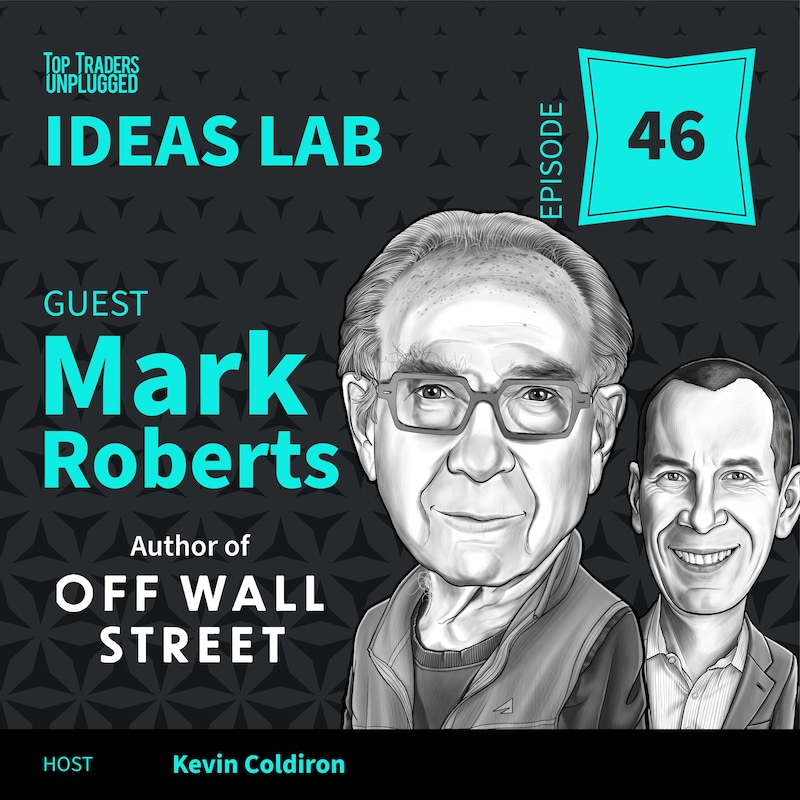
In today’s episode we talk to Mark Roberts, founder of Off Wall Street, a legendary provider of short selling research to hedge funds. Seven months before Enron became the biggest bankruptcy in US corporate history, Off Wall Street published a report recommending the shares be sold. The success of this call made Mark and Off Wall Street synonymous with original and rigorous research. We talk to Mark about his unusual personal background, how being a hippie in Berkeley in the 1960s prepared him for identifying overvalued companies two decades later. He explains why questionable accounting and high valuations are the “symptoms, not the disease” and compares today’s markets with those of the Dotcom era. His new book, Off Wall Street How To Win At Short Selling By Betting Against The Crowd was just released in February 2026.
-----
50 YEARS OF TREND FOLLOWING BOOK AND BEHIND-THE-SCENES VIDEO FOR ACCREDITED INVESTORS - CLICK HERE
-----
Follow Niels on Twitter, LinkedIn, YouTube or via the TTU website.
IT’s TRUE ? – most CIO’s read 50+ books each year – get your FREE copy of the Ultimate Guide to the Best Investment Books ever written here.
And you can get a free copy of my latest book “Ten Reasons to Add Trend Following to Your Portfolio” here.
Learn more about the Trend Barometer here.
Send your questions to info@toptradersunplugged.com
And please share this episode with a like-minded friend and leave an honest Rating & Review on iTunes or Spotify so more people can discover the podcast.
Follow Kevin on SubStack & read his Book.
Follow Mark on LinkedIn and read his book.
Episode TimeStamps:
01:41 - Introducing Mark Roberts, Off Wall Street, Enron, and the book
03:35 - An unconventional path: French literature, skepticism, and early life choices
07:40 - The first “short sale”: selling a failing steel business and learning risk firsthand
11:10 - Fidelity, Peter Lynch, and the origins of independent short research
16:48 - Founding Off Wall Street and the first major short thesis (TCBY)
27:34 - How short ideas are built, tested, and abandoned without sunk-cost bias
30:56 - Business models vs accounting: why accounting issues are symptoms, not causes
40:11 - Timing, crowd psychology, and surviving being early on a short
47:08 - Why short selling is dangerous for individuals and crowded trades fail
52:44 - Markets today vs the dot-com era, passive flows, and portfolio construction
Copyright © 2025 – CMC AG – All Rights Reserved
----
PLUS: Whenever you're ready... here are 3 ways I can help you in your investment Journey:
1. eBooks that cover key topics that you need to know about
In my eBooks, I put together some key discoveries and things I have learnt during the more than 3 decades I have worked in the Trend Following industry, which I hope you will find useful. Click Here
2. Daily Trend Barometer and Market Score
One of the things I’m really proud of, is the fact that I have managed to published the Trend Barometer and Market Score each day for more than a decade...as these tools are really good at describing the environment for trend following managers as well as giving insights into the general positioning of a trend following strategy! Click Here
3. Other Resources that can help you
And if you are hungry for more useful resources from the trend following world...check out some precious resources that I have found over the years to be really valuable. Click Here
Transcripts
So it's one of the core issues if you're a short seller and you want to be able to analyze the actual business prospects. So if you understand the business model, you really have to understand the business itself.
You have to understand the competition, you have to understand the customers. We always had somebody on the ground, we knocked on doors, we talked to customers, we talked to competitors.
We were trying to understand what the real market was and whether it approached what the bulls in a certain idea thought.
Intro:Imagine spending an hour with the world's greatest traders. Imagine learning from their experiences, their successes and their failures. Imagine no more. Welcome to Top Trader Unplugged, the place where you can learn from the best hedge fund managers in the world so you can take your manager, due diligence or investment career to the next level.
Before we begin today's conversation, remember to keep two things in mind. All the discussion we'll have about investment performance is about the past. And past performance does not guarantee or even infer anything about future performance. Also understand that there's a significant risk of financial loss with all investment strategies. And you need to request and understand the specific risks from the investment manager about their product before you make investment decisions.
Here's your host, veteran hedge fund manager, Niels Kaastrup-Larsen.
Mark:For me, the best part of my podcasting journey has been the opportunity to speak to a huge range of extraordinary people from all around the world. In this series, I have invited one of them, namely Kevin Coldiron, to host a series of in depth conversations to help uncover and explain new ideas to make you a better investor.
In the series, Kevin will be speaking to authors of new books and research papers to better understand the global economy and the dynamics that shape it so that we can all successfully navigate the challenges within it. And with that, please welcome Kevin Coldiron.
Kevin:Okay, thanks Niels and welcome everyone to the Ideas Lab podcast series here on Top Traders Unplugged. Our guest today is Mark Roberts. Mark is the founder of Off Wall Street Consulting Group where he was a pioneer in providing short selling research to hedge funds.
,:Enron was far from a one off though. Over off Wall Street's 30 plus year history, they put out over 600 recommendations with over 70% of them being successful. And that, I can tell you, is an absolutely phenomenal record.
business to his colleagues in: Mark:Thank you for having me, Kevin.
Kevin:So your path to Wall street was pretty unconventional.
You have a master's degree in French literature, and at the age of 39, you were living in New York City, I believe, clutching, collecting, photography, and never had never owned a stock or a bond.
And so I know it's probably a bit unfair to ask you to condense 39 years of your life into a short description, but I could you tell us, start off by telling us a little bit about your pre investment life?
Mark:Sure.
I went to high school in Cambridge, Massachusetts, and I had already early on in high school I had gotten interested in, in, in French, the French language and, and literature. My, my parents never went to college.
My dad was a sergeant in the army during the Second World War, and my mom's family couldn't afford to send her to college, so they were very interested in getting me a great education. So I got interested in French in high school.
And one of my classmates fathers was a professor at Harvard University, and he taught French civilization. And he kind of took me under his wing and brought me to France with a study group from Harvard when I was still in high school.
And I became very interested in France and French literature.
And when I went to college at Swarthmore, the year that John Kennedy was assassinated, actually, I started studying French literature and art history mainly. I had a wonderful mentor at, at Swarthmore named David Kuhn, who was an amazing poet himself.
And I graduated from Swarthmore and went on to University of California, Berkeley, where I studied art history for a year and then took a master's degree in French literature and was offered a. I positioned as an associate professor at the University of British Columbia to teach and work on a PhD. I turned that down. I enjoyed some hippie years until I couldn't figure out what I really wanted to do.
I made my way back to Boston and joined a family business, one that had been started by my grandfather. And after a very short period of time, I found myself running that business. It was very unsophisticated.
s. By:We owed the bank a lot of money, and we started to lose money. And I sold the. The steel business and walked away before it would. It would turn into a bankruptcy. And that was my first short sale.
I think I saw that in your book.
Kevin:I had to chuckle. How did you. How did you convince someone to buy the business from you if it was failing?
Mark:Well, we had a. We had a lot of very valuable assets. And so it was really an asset sale, not a sale of the business itself. We had a very valuable piece of property.
We had a fleet of trucks. We even had a locomotive. We had a big inventory of steel, and all of that was quite valuable.
So it was really an asset sale, not a sale of the business operation.
Kevin:Just a quick question about your experience at Berkeley before. Before we go on. You said you.
In the book, you said you lived the life of a hippie, and I wondered if that gave you a kind of, I don't know, skepticism about stories you were being told. Because, I mean, that's kind of like the ethos of that time, right?
Is that, hey, we're not buying into the conventional narrative about State of the Country. And it just struck me that in some sense that skepticism is kind of necessary to be a successful short seller. So I was kind of curious if you.
If you thought that kind of way of thinking in Berkeley translated later to your. To your Wall street career.
Mark:Yeah, absolutely. I think actually my skepticism started when I was in college. It was during the Vietnam War.
And I think a lot of us who were in college during the Vietnam War were questioning a lot of things about what was going on in the country. I wasn't particularly political. I was always more of an outside observer. But a lot of my friends were in the sds.
The Students for Democratic Society were quite radical. I think it was actually started there, where I started to question things about what the future might hold for me.
And then I think it continued on at Berkeley. In fact, it's why I went to California. I really wanted to be part of the scene in San Francisco.
I wanted to see what was going on, and that's why I went out there, as opposed to, like, going to NYU or something like that. So it was really a journey for me, as start of a journey to figure out who I was. It took me a very long time, and I think it's a lifelong search.
I did find a career that I loved. And that really suited my personality perfectly. I was very lucky.
I think luck and perseverance and looking around, experiencing different things is really a necessary thing for most people, not for everybody.
Kevin:Maybe we can fast forward a little bit. So you sold the family business and I know you went on to get involved in selling franchises.
And then later after that you were actually hired by Fidelity's broker Jarm to do research. And eventually you I guess got fired by that from that job or, or the, the, the, that side of the business was closed down.
It was closed down because of people lynch didn't, didn't want to, didn't want it going on.
And for those of younger listeners, Peter lynch is, you know, certainly from our generation, probably the most famous or one of the most famous and successful mutual fund managers out there. He ran the Magellan Fund at Fidelity. Very, very, very influential person on Wall Street.
So wondering if maybe you could tell us a little bit about that experience at Fidelity, because I believe that ended up kind of was the beginning of the step toward founding off Wall Street.
Mark:Right. Well, my first job was in New York City. I convinced Mark Boyer at Boyer Asset Management to hire me as an analyst.
Even though I had absolutely no business education and I had never done a job like that. I wasn't asking for a lot of money. I was looking for the experience.
So I did spend a year at Boyer Asset Management writing up sort of asset heavy long ideas. And then I, I left New York and moved back to Boston and I was, I was attempting to manage my own money.
hen the, and, and that was in:I was very lucky. I met a guy at Fidelity, John o', Brien, who took a chance and hired me.
Fidelity was starting as part of National Financial, the brokerage arm of Fidelity. They were trying to create some sell side research to sell to institutional investors.
And I was the first analyst hired to sort of start that research department.
And so what happened was that I was building a research department and we were using the label Fidelity, but it was really under the aegis of National Financial, which is part of Fidelity. And I was calling companies and doing research, all Wong ideas.
And Peter lynch got, got wind of it and was afraid that I would call companies that he wanted to talk to and they would not give me the information that he could ordinarily get in it. But Then they wouldn't give it to him either because they were afraid that I might publish something that they didn't want published.
So, so he shut that, he shut down that effort. He just, you know, he said, well, you know, we just aren't going to do that. And so I was out of a job.
But while I was there, I had started to sell ideas to hedge funds. I didn't write anything up, but I had some short ideas.
I'm sure your listeners will probably not remember Silk Warehouse, which sold most of its silk flowers at Michael's. It was kind of a great short idea that I developed while I was at Fidelity, sort of for the hedge funds.
So what happened was I realized then that it was a whole new market. The FESPEC brothers were very active and getting well known and nobody was providing research to short sellers.
Fidelity was a great place to sell research to short sellers because the national financial arm of Fidelity did 30 or 40% of Fidelity's trading. So the stock borrow was very, very good. So it was very convenient. And today Fidelity has a great stock borrow program.
So when that effort ended and Peter lynch terminated it, I had already been thinking about this new development that I was seeing. Hedge funds. In those days, a big hedge fund was 300 million in assets. Essex, for example, in Boston, run by Joe McNay, had about 300 million.
And the Clintons were invested there. And that was a big hedge fund. So it was a different world.
Kevin:What are we talking about here? Is this early 90s or late 80s?
Mark: This is in: Kevin:1990.
Mark: ,:At that time, Seth Klarman was alone with only two analysts operating out of a. A building in, on Brattle street in Cambridge. And I went and went to work for Seth Klarman as a. On a contract basis.
And while I was there, I was trying to figure out how to start my own business providing short ideas to hedge funds. Somehow I came up with the name off Wall street, which I thought was very snappy. And I also came up with my first idea.
I had earlier in the early 80s, built the largest chain of software retail franchises in the country under contract with Ashton Tate, the founders of DB2, the database program. And so I had a lot of experience with franchising. And I noticed that TCBY Enterprises was doing very well, but I had my doubts about it.
I started to do some research and I found that there was a whole army of very, very unhappy franchisees who were being dealt with very unfairly by the franchisor. And I became very.
Kevin:That's the yogurt, right? The country's best yogurt. Frozen yogurt.
Mark:Exactly. Out of. Out of Little Rock, Arkansas.
Just as an aside, Hillary Clinton was on the board of TCBY at the time when she was a lawyer at Rose Partners and she was drawing about a million dollars a year from the company. But anyway, I started to pursue TCBY as an idea. I was very friendly with the franchisees.
I went to the weddings of franchisees in Kalamazoo, Michigan. You know, I showed up unwelcome at the franchise at the franchise convention in Texas. And finally I wrote up.
,: published that first piece in:I soon realized that my business model wasn't going to work. I was trying to sell copies for $5,000 or whatever. I could get $10,000, but I had to spend too much time at marketing.
So I, I was fortunate enough to convince two hedge fund managers to put me on a retainer that had $36,000 a year each. And so I was in the black right away. And that was the start of off Wall Street.
Kevin: und that would have been late:And at the time there were hedge fund managers that were called dedicated short sellers. So they literally just own, they only short sold stocks. And they were typically a small part of an investor's portfolio.
But they were there, they played a role. Why didn't you set yourself up in that capacity? You know, why not start a fund? Why start a research business?
Mark:Well, the reason, the main reason was that there was nobody selling research and there were a lot of very good fund managers who had a lot more experience than I did investing. I, I had, I had definitely not proven myself to be a great investor. I lost money in the crash of 87. I was kind of lucky.
I lost a lot of my equity portfolio. But I happened to be long New Zealand bonds. I made a lot of money being long New Zealand bonds because the dollar crashed. But that was Just by luck.
So I definitely was not in any position to manage money. I actually am managing money now for the first time, some of my own money, but I never managed money.
You know, when you go into business, you, I mean, you'd rather be alone, have no competition, and fill a need that you see that nobody else has filled. The research model is a very different kind of business model.
It's a discounted cash flow kind of model where you don't live every year by your P and L. So I think I enjoyed that kind of business model for a long time. I had a very stable client base and very steady and growing income.
So I think that kind of model is a lot more stable if you produce good work than actual hedge fund model.
Kevin:Do you think that, I mean, there were a good explanation, I think in chapter eight about the logic of your business model.
The fact that the compensation arrangements for analysts at hedge funds were tied to the profits generated by the analyst ideas, which meant that most analysts would prefer to be on the long side.
You know, the long side analysts actually have an easier job because, you know, all the research on the street is really geared, or almost all of it's geared toward, toward longs. And so that there was a rule, you know, like you said, I guess a niche, an opportunity for short research.
And I'm curious, do you think that still the case or has there been a structural change such that, you know, you know, off Wall street, you know, if you were starting today, wouldn't. It wouldn't get off the ground as easily.
Mark:I don't think it's changed at all.
The I still am in touch with a lot of people in hedge fund land and, and the dedicated short sellers in funds are generally the least well rewarded and many of them would like to move on and be able to do long and short. Some of them get stuck in the position and actually leave the industry. I know several people who've done that.
So no, I don't think the situation has changed at all.
Kevin:We could talk a little bit about just different aspects of short selling, but one thing I really enjoyed about your book was throughout it, you have comments from people that have worked for you or that you've worked with, and they talk about the experience of interviewing with you and working with you and what they liked about Off Wall street, what they Learned. And Britt McLoy was one that I noted.
And you know, what he talked about was the fact that in his previous roles he had very little time to do the kind of deep level of thinking that was necessary.
Whereas at Off Wall street, basically, he required the analyst to produce four short ideas per year and that they could spend many months working on a company. And I thought about that, and we've had Annie Duke on the show, the former world broker champion, and she's written a book called Quit.
And her view is that some of the best investors are good quitters. And it's very difficult for people to get around this kind of sunk cost fallacy.
I've already spent so much time and resources on something, I got to keep going. So I thought about that. With your for short ideas, you have analysts working for months and months and months on an idea.
How did you come up with, you know, how. How would you decide whether to pull the plug on one of those ideas? And was there resistance from the analysts?
You know, just give me another couple of weeks and I'll. I'll, I'll find out more information. How would you manage that?
Mark:Well, it's a good question.
Of course, when you're given three months to publish one idea, you also have the opportunity to cycle through several ideas before you finally land on one. So we might cycle through several ideas and then decide that we were hitting a proverbial brick wall and abandon it and go on.
But basically all these research projects were collaborations.
And so every step of the way, I would collaborate with the analyst on an idea that I had mostly generated, although as the analysts themselves matured, they would start to develop their own ideas.
So, of course, we would try to make a decision as soon as possible because we didn't want to waste too much time on an idea that wasn't going to work out.
But I think starting off with the right parameters and having a good instinct about what businesses work and what business models work and what business models won't work is a good starting point. So you sort of start off with your gut, you know, with your instinct. And I developed a very good instinct. You know, I had been in business.
Most analysts have never run businesses.
I had run several businesses by then, and I kind of, I knew to expect the unexpected, which is, I think, something that people who go into finance are not prepared for. The unexpected. I always expected the unexpected. So that's how it worked. We would work on an idea.
We would decide as quickly as we could whether we had a go or a no go. And if it was a go, we spent a lot of time to make sure it was right before we published. And if it was a no go, we'd go on to the next thing.
Kevin:You mentioned business model. And that comes up a couple times in your book.
One of your former employees talks about that you don't short a stock because they have questionable accounting. They have questionable accounting because the business model isn't sustainable, and it's forcing them to do that.
And I think that played out in the Enron case. Perhaps maybe you could illustrate that idea with Enron.
Talk about how, because other people had talked about Enron's kind of questionable accounting, but it was really you guys that pointed out the, you know, the fact that the business model wasn't gonna. Wasn't sustainable.
Mark:Right. Well, I will say that accounting problems are a symptom. They're not a disease. They're the symptoms of a. Of a problem.
Usually they're used to hide the inadequacy of the business model.
So the real secret to understanding a business is not to be able to identify accounting problems, which, by the way, have gotten nothing but worse over the years. Now people look at adjusted EBITDA as if it were GAP ebitda. They don't even talk about GAP EBITDA anymore.
So things have progressed to a kind of an absurd stage. But it's always business model problems that bring a company down.
Generally speaking, many investors are led to believe that the horizon and the available market for a business is much greater than it is in reality. That's one thing that is very important to understand when you're doing research.
Companies that have very, very high valuations and have high multiples are predicting a very long Runway of sales growth, which also implies a very big market. Usually in some cases, that's obviously true, and in many cases it's not.
But it takes a lot of work to discover that the market is actually much smaller than the street analysts and the company would lead you to believe. So it's one of the core issues if you're a short seller and you want to be able to analyze the actual business prospects.
So if you understand the business model, you really have to understand the business itself. You have to understand the competition, you have to understand the customers. We always had somebody on the ground.
We knocked on doors, we talked to our customers, we talked to competitors. We were trying to understand what the real market was and whether it approached what the bulls in a certain idea thought.
Kevin:You do talk a lot about that in the book, about having field researchers who drove all around the country. Is that still important? Is that even possible for some of the tech companies that are trading on these extraordinary valuations?
Can you do field research on those guys? There's a And if so, how is it maybe different than you know, on kind of older economy type of companies?
Mark:Yeah, well, it is quite different.
And of course the sources of information have exploded with AI and satellites looking at parking lots and credit card data being sold and things like that, which never, which didn't exist for most of my career. Those things, those things didn't exist. So yes, there is a lot of data that are available to analysts now that they can pay for.
You know, there's these professional interviewing services that sell interviews, there's satellite parking lot readers, there's data readers, there's all kinds of things that didn't exist. But I still think that you can't replace talking to customers. If you can talk to them, you can't always talk to them.
Kevin:So when, when you thought about a short, did you start with the accounting and valuation and say, okay, hey this is, you know, like you say, a symptom, let's go see if there's disease and then kind of work your way down? Or did you, was it just kind of noticing, you know, a business model and thinking oh that, that's, that's questionable.
Mark:It's a, kind of a, kind of a top down thing.
For me, my preferred way is to look at companies that are very expensive, have very high multiples, where expectations are very high and where the business model just on a gut basis, you think maybe it won't be able to produce those kinds of results. So there are certain kinds of companies that make more sense than others.
I mean biotech and software companies are certainly a lot harder to analyze than companies with field operations. Industrial companies, retailers, those are the companies that are easier to do the research on.
So I think you start by finding companies that are highly valued, whose business model is analyzable and where you think maybe that business model may not be able to produce the kind of results that are built in to the valuation. That's kind of where you start.
As you work down, you'll find most often you'll find a lot of accounting tricks and problems that are also meant to support that idea that there's a vast market out there that this company can take advantage of. So in the early stages it makes the profits look much higher with questionable accounting. And that's what excites the crowd.
You always are looking for an excited crowd out there driving these valuations and not too many and not too many skeptics.
Kevin:Amy Wilson was another person that you quote in the book and she, she said, you know, you short bad management teams and that you Know if they will either use sports analogies or quote Yorgi Berra, then that's on their earnings calls. That's initially a short that made me laugh. But how much research do you do? The, the actual people that are running it and the.
I don't know, how do I put this? Maybe the. Their assessment of their integrity, their background, etc.
So you know, you've got the business model, but then you also have the people who are executing the business model. You know, are both those equally weighted or how did you think about that?
Mark:Of course you're very interested in management and the language that they use. I think I talk about the use of language in the book, analyzing conference calls. How much hyperbole is there in the presentation.
Also, you do want to look at the background of the managers. It matters whether they're founders or whether they're hired hands.
Usually the hired hands are very professional marketers and presenters and more prone to be presenting a false narrative than the founder, I think, although some founders are also very clever. So yes, you certainly want to do everything possible to understand the integrity of the management.
Many managers and especially of overvalued companies are aligned. I think it's pretty obvious. And their presentations are hyperbolic and I think that's always a red flag.
Kevin:How much does timing come into your thinking process? Right, so okay, we can go, we can do the check, checklist. They go Dodger accounting. Their high valuation business model is not sustainable.
Their management is, you know, suspect. And all that stuff can go on for years. And you know, so how, how can you figure that out?
I mean, you, you talk about, in the, in your book, you say that one of your favorite books was written by a friend of yours, David Einhorn. His. A very famous and successful hedge fund manager.
And I, I had to chuckle because that's also his book, which I believe is foring some of the people all the time. And that's if, if I have a student recommend or ask for a recommendation, I always recommend that book.
And the reason I recommend it is because it shows the absolute level of persistence and diligence that you have to go through to be successful. And he describes this kind of position that he had in a financial company that went on for years.
And you know, obviously he could, I guess, do that as someone running his own firm. But for someone like you, or for most of us being short of stock for years until it finally works out and it is pretty tricky.
So how did timing kind of feature into your thought process?
Mark:Picking a top is really Almost impossible. You can get lucky. But when a valuation is extremely stretched, we know that it can get more stretched.
So I do think that you are trying to short stocks at what you think are maximum valuations. It doesn't always work out that way. So you have two choices.
You can either stick with it for a very long time, as I have done on many occasions, or you can cut your losses and you probably never come back. But at least you put the idea out there and other people might follow it.
So it's certainly one of the hardest things in short selling is trying to get the timing right.
So hopefully, since as a research company, we're not managing money, our customers are portfolio managers and they understand how to size these kinds of things. And hopefully when a stock is very high, but can still go a lot higher, they have sized appropriately so that they won't get too burned.
But yes, it's certainly a problem and one that I face managing my own portfolio, which has a lot of short ideas in it.
tive book on short selling in:And so, yeah, I mean, it goes along with the territory.
Kevin:The markets can stay, what does it stay, irrational longer than you can stay solvent? I think some version of that is. Is the famous quote, do you think that issue has become more.
Do you think that's become more of a problem recently with the flood of money coming into passive funds? So there's just this kind of fire hose of liquidity that you're going into the long side that you're fighting against.
And then layered on top of that, you've had some of these almost like there's always been short squeezes. That's always been part of every market.
But you've got these kind of coordinated attacks that we saw with, you know, game stocks, some of these men's stocks, where even retail investors look for stocks with high short interest and then try to squeeze them out of positions and did so successfully. Do you see that as, you know, making life for short sellers even more challenging now than say, you know, 20 years ago?
Mark:I, I think that the passive funds and the volatility dampening strategies that are being used today by quant funds have dampened the volatility in the short ideas. And so you're very dependent on events, earnings calls, earnings events, generally speaking, as catalysts.
So yes, I do think that the volatility is less. There's more liquidity that drives these things, but really there are more opportunities as a result.
Also, there are more stocks that are outrageously valued. I think so. I think there are, there are more possibilities, but it has become a harder game.
So I think now you have to take into account the fundamentals, technicals, and the market mood and what's going on in the market before you really want to enter a short position. And then I think you really have to be careful about sizing.
Kevin:Is short selling something that, you know, people are listening to this podcast, A lot of them manage their own money.
Is that something that individuals can do or is it something that is best loved to professionals given the fact that, you know, obviously there's potential for infinite loss? But not only that, there's just, you know, the timing is so. Is so tricky. How do you think about that?
Mark:I don't advise individuals to do short selling unless they have plenty of time on their hands and can do a lot of research on their own.
Generally speaking, individuals who are in the market because they aren't professionals, they're professionals at doing something else and they don't have the time to really understand the companies that they might be interested in selling short. It takes a really deep knowledge, a deep understanding, and a. And a great deal of watching and waiting to be a good short seller.
So I do think it's best left to professionals unless you have a lot of time on your hands and you know what you're doing. So I do not recommend short selling for unsophisticated individuals.
On the other issue that you raised about these meme stocks and stocks that get manipulated, that's the danger of not being a sophisticated short seller. Retail shorts get into crowded shorts. It's all they hear about. It's all they know. It's what you know.
So they, so they go after the stocks that everybody is going after. And, and it's a, you know, makes them obvious prey, you know, or sophisticated operators. I never get involved with names that people are. Are short.
Generally speaking, anything as popular as a short, I advise people to avoid like the plague. You don't want to follow the crowd that is short. You want to follow the crowd that is long.
Kevin:You say a couple times, I think in the book that sometimes the best place to look for future, I think you say 10 baggers or stocks that are Going to do great on the long side is by looking for short sale candidates. And can you give us an example of that? If you can explain what you mean and give us an example of that.
Mark:Since one of the ways to find shorts is to look at very, very highly valued stocks, you may discover that a stock that you would consider as a short actually that the price is justified. And especially if that stock has a, has a slip and gets hammered and declines substantially, which happens when a stock has a very high valuation.
It'll be very volatile. I mean, if you're right about a stock fundamentally that's what you're looking for as a short.
But if you're wrong fundamentally, it also gives you an opportunity, if that happens to a good long idea, to buy it.
Kevin:Is there an example? I think you talked about Priceline in the book. Can you maybe just give us a little more color on how that might work?
Mark:I don't remember Priceline so well. I remember aol, for example. We got short AOL in the early days based on valuation and accounting. We didn't understand how big the market really was.
When the accounting did get questioned, basically for the same reason that we were short, which was the, which was the amortization of customer acquisition costs. The stock did have a good decline, but it was actually a buying opportunity.
Kevin:And it was a buying opportunity because you realized that the market was actually much bigger than you kind of had thought when you started the research.
Mark:Yes, exactly.
Kevin:I got you, I got you.
s now to you versus the early:And a lot of that's being driven by a capex cycle or Capex spending by tech companies, which was very much the case in the dot com era. We've just had Michael Burry of the big short fame close his hedge fund in November, kind of throw up his hands.
And in:I'm not asking for any predictions or anything like that, but I'm just like, when you sit back, look at your experience, look at the markets, how do you think of the two? How do you compare the two situations?
Mark:I think on a valuation basis you're quite right, they are very similar. We're in very similar ranges on valuation and enthusiasm. I think the big difference is the role of passive.
Number one, the constant flows into passive funds which are kind of coming on a steady basis and support the market.
The other big change I think is the government is a much more liable to intervene in markets because in the United States especially, the market is the economy. So the government can't allow the market to cycle as easily on its own as it used to. There's a lot of government innovation intervention.
The government has hurt the buyer of last resort, the provider of liquidity of last resort. They don't want the market to go down.
different from about the year: Kevin:One last question, just kind of following up from that.
You have a website where you give an overview of your personal investment strategy and you talk about that having three components, basically a market neutral basket of stocks. So by market neutral, the dollar value of the longs and the shorts are roughly in syn.
The second is a kind of a long term position in natural resources, agricultural commodities, using futures and options. And then the third strategy is a long volatility portfolio, basically a hedge against a big market decline.
So when I kind of look through those three things, what I don't see in any of that is a long position in equities, any exposure to equities.
And so my question is, given what you just said about the, you know, the fact that the market, the government's likely to support the market, that there's passive funds supporting the market, why don't you have any net long exposure to equities or do you have that somewhere else and this is just more of a tactical approach?
Mark:No, actually the, the hedge fund that I manage, my own macro long short hedge fund, for most of this year it was 2 to 1 long to short equities. It also had some ETFs and some rates, but mostly US and foreign equities.
So for about two thirds of the year I ran it at 2 to 1 long to short and then the last third of the year I ran it at a 3 to 2 ratio. So it was not a market neutral fund. I do invest in long ideas. Some of them are pretty high flyers.
And I think it was a large part of the reason that the portfolio performed very well this year, even though it was also extremely defensive and unlevered. So that's actually something that I've enjoyed a great deal because when I published research I never could take positions.
My position was always that I didn't want to have any conflict of interest. And so I never managed money. So this is a great experience for me. It's something I always wanted to do.
So it was not market neutral as far as the other two components are concerned. The long volatility strategy is discretionary in that it's not always on.
It's only on when I think that we have an opportunity to get a, at least a 5% decline in the market. So that's pretty hard to predict. But, but that's what that particular strategy is for. And we use, we use options on the s and P500.
And then the, the third strategy that I'm, that I'm, that I'm working on is very interesting because I believe that over time that commodities have not attracted recently the amount of capital that they have traditionally attracted as a part of the investment landscape. And I do think that if the market struggles and I believe it will struggle to go higher, I don't expect the market to go much higher.
I'm not going to predict that it's going to crash, but I do think it'll struggle quite a bit to provide long term returns. I do think more money will flow into commodities which have been very undervalued and which have been very depressed.
So the commodity strategy is what I call a warehousing strategy where we use a combination of options and options on futures. When we trade around positions, we try to lower the cost of carry of these futures positions.
I'm aided in this by a fellow named Hari Krishnan who's a wonderful smart options trader and who advises me on structuring these trades. And actually we've been very successful this year in particular with this strategy.
The hedge funds I ran this last year was up about 26% and on a risk adjusted basis. That was really good. And then. And the commodity strategy I think is up about 20%.
Kevin:Oh, that's excellent results. And I know Hari as well. He's a very smart guy and he's written a couple books and he's been a guest speaker in my class.
So if you're out there, Hari Krishna, look him up. He's smart, interesting and always kind of challenging. A challenging guy has challenging investment ideas.
Well, Mark, I think that's a good place to wrap it up for today. Thanks so much for joining us, taking the time and good luck with the film going forward and good luck with the book.
Mark:Thank you very much. Kevin. I appreciate your having me on. This is my first podcast ever. I've made very few appearances.
I always believed in letting the work speak for itself and I didn't have to go out and tout my work. So I appreciate having a platform now to speak a bit and also to present the book that comes out in February.
Kevin:Well, it's been our honor to have you and this is a great book. Hopefully this conversation has given you a taste for it, but it really is just a taste. So there's a lot of great stories.
There's Wall street history in there. There's lessons that we can all, whether we're short sellers or not.
So it's just, it's just a fun, challenging and challenging route and we can learn a lot. So it's called Off Wall street how to Win at Short Selling by Putting against the Crowd.
It's just been released, so please make sure go out and get a copy because I think you can tell from what we've been discussing here a lot of the ideas you won't find on mainstream. So with that, thank you all for listening and for all of us here at Top Traders Unplugged, we'll see you next time.
Ending:Thanks for listening to Top Traders Unplugged.
If you feel you learned something of value from today's episode, the best way to stay updated is to go on over to itunes and subscribe to the show so that you'll be sure to get all the new episodes as they're released. We have some amazing guests lined up for for you. And to ensure our show continues to grow, please leave us an honest rating and review in itunes.
It only takes a minute and it's the best way to show us you love the podcast. We'll see you next time on Top Traders Unplugged.




