Shownotes
Audio • Season 1 • Episode 10 • Series 1 Episode 10 - Norwich, Robert Browne & Congregationalism.
© 20 26 The Rise of the Protestants., Author, Shaughan Holt.
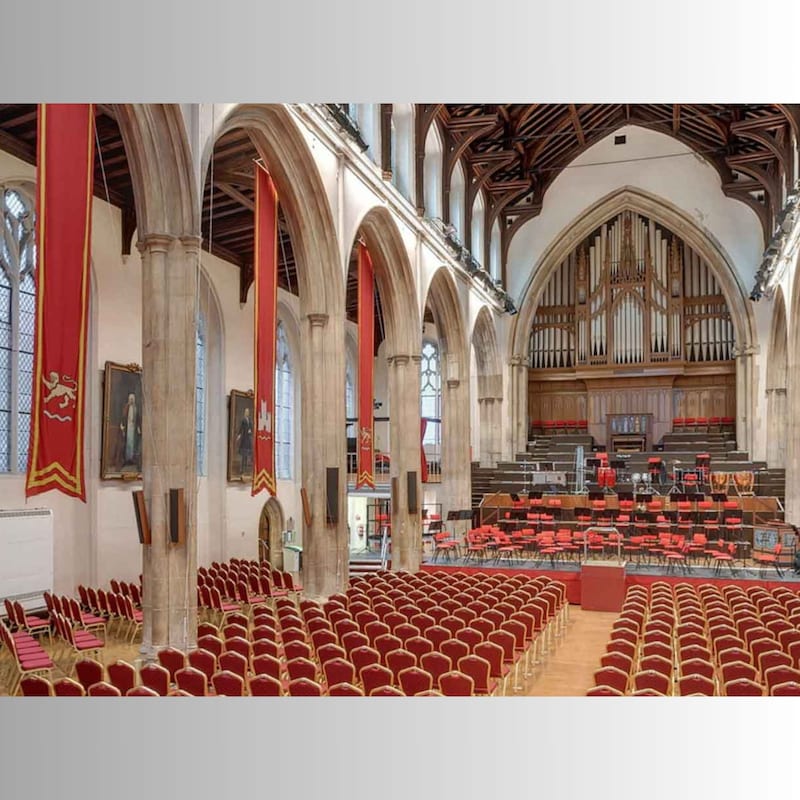
The artwork is The St Andrew's and Blackfriars' Halls, together with their crypt and cloister, and is known collectively as The Halls Norwich.
Grade 1 listed they form the most complete medieval friary complex still surviving in England.
The first piece of music is Greensleeves, a traditional English folk song.
Its roots can be traced back to a broadsheet ballad, officially registered by Richard Jones with the London Stationers' Company in September 1580.
The second music played at the end is The Old Hundred, a hymn melody from the second edition of the Genevan Psalter. It is credited to L. Bourgeous (1510-1561).
This tune is frequently used to accompany the lyrics that commence with "All People That on Earth Do Dwell," a version that originated in the Anglo-Genevan Psalter of 1561 and which is attributed to the Scottish clergyman William Kethe.
Although the melody was initially associated with Psalm 134 in the Genevan Psalter, it acquired its current name from its connection to the 100th Psalm, as translated by William Kethe and titled "All People that on Earth do Dwell."
The melody is also employed with other lyrics, including commonly sung praises and German Lutheran chorales. Johann Sebastian Bach utilized this melody in his chorale cantata "Herr Gott, dich loben alle wir", Lord God, we all praise you.
The city of Norwich played a crucial role in the emergence of Congregationalism, and Robert Browne would experience a defining moment in his career, during his visit to this ancient city. Unaware of the chaos looming on the horizon, Browne continued to focus on delivering his separatist sermons in the Bury Saint Edmund area.
The clergy began to express their concerns to the Bishop about Browne's unauthorised preaching, and its impact on their congregations. Browne was charged with preaching without a licence, a bold act that defied established conventions. This incident marked the beginning of Browne's thirty-two imprisonments.
While in Norwich, Browne attempted to establish a Congregational Church, likely influenced by local Dutch woolworkers who held Anabaptist beliefs. In 1581, he established the first Congregational Church in England, close to the cathedral and the bishop's palace.
© 20 26 The Rise of the Protestants., Author, Shaughan Holt.
"All rights reserved. No part of this podcast may be reproduced, translated, distributed, or transmitted in any form or by any means, including photocopying, recording, or other electronic or mechanical methods, without the prior written permission of the copyright holder, except in the case of brief quotations embodied in critical reviews and certain other non-commercial uses permitted by copyright law".
Requests regarding translation, licensing, or republication should be directed to: [email protected]
Your feedback matters, send me an email at [email protected], with any comments, suggestions, or criticisms.I read every message.
Transcripts
© 20 26 The Rise of the Protestants., Author, Shaughan Holt.
"All rights reserved. No part of this podcast may be reproduced, translated, distributed, or transmitted in any form or by any means, including photocopying, recording, or other electronic or mechanical methods, without the prior written permission of the copyright holder, except in the case of brief quotations embodied in critical reviews and certain other non-commercial uses permitted by copyright law".
Requests regarding translation, licensing, or republication should be directed to: [email protected]
Your feedback matters, send me an email at [email protected], with any comments, suggestions, or criticisms.I read every message.
Series 1.
Episode 10.
Norwich, Robert Browne & Congregationalism.
East Anglia is a region located in eastern England, primarily consisting of Norfolk and Suffolk, along with parts of Cambridgeshire and Essex.
The name "East Anglia" originates from an ancient Anglo-Saxon kingdom.
During the Iron Age, the Iceni tribe, led by Queen Boudicca, famously resisted Roman occupation around 60-61 AD.
Following the settlement of the Saxons in the 5th and 6th centuries, Norfolk and Suffolk developed into the Kingdom of East Anglia, which was later integrated into England.
Historically, Norfolk and Suffolk had an agriculture-based economy. During the middle Ages, wool became a significant export, alongside a thriving fishing industry.
Norwich, the capital of Norfolk, is recognized as the best preserved medieval city in the UK.
The Dominican Blackfriars arrived in Norwich in 12 26, and moved to their current site at Blackfriars Hall in 13 07.
Several early brick structures, dating from 12 70 to 13 07, still exist today.
These include the Crypt and the remains of the Thomas à Becket Chapel, which was intentionally destroyed in 18 76.
The Friary church, dedicated to St. John the Baptist, was the largest of the four city friaries.
Construction began in 13 26, but it was not completed until 14 70, after a fire in 14 13 destroyed most of the building.
Five of the original windows from St. Andrews Hall, and the great east window from Blackfriars, were incorporated into the new structure.
During the Reformation, the city petitioned King Henry VIII in 15 38 to acquire the friary, transforming the church into a spacious paved hall for the mayor and his colleagues to conduct their common assemblies.
The main area of St. Andrews Hall was renovated, and is now referred to, as the New Hall.
The first recorded event there, took place in 15 44, when a celebration was held for Mayor Henry Fuller.
The St. Andrew's and Blackfriars' Halls, along with their enchanting crypt and tranquil cloister, are collectively celebrated as The Halls in Norwich and are designated as Grade One listed buildings.
These architectural marvels stand as a testament to history, representing the most complete and well preserved Medieval Monastery complex in England.
The Halls, constructed primarily of resilient local flint, date back to the 14th century, and showcase the craftsmanship of the era.
Visitors and locals alike, fondly refer to this magnificent complex, as St. Andrew's Hall.
This hall serves as the primary attraction within The Halls, enticing those eager to uncover its rich history.
Additionally, Blackfriars' Hall, the second-largest space within the complex, offers its own distinctive charm, enriching the overall experience of this historic site.
In 15 65, the city welcomed Dutch and French-speaking Huguenots and Walloons who were fleeing religious persecution, following an invitation from Queen Elizabeth.
These so-called ‘Strangers’, contributed to the production, of some of the finest woollen exports, particularly worsted cloth, which is named after the local village of Worstead.
At that time, Spanish Jews, Danes, Huguenots, and Flemish migrants, fleeing the Catholic Church, made up as much as one-third of the city’s population.
The city's remote location, beyond the marshy Fens, enabled stronger connections with the Low Countries, than with the rest of the region.
Additionally, crossing the North Sea was often quicker than travelling cross-country to London.
Norwich became prosperous through the export of worsted; however, between 15 35 and 15 61, the city experienced a rapid decline, likely due to the rise of lighter foreign fabrics, known as the New Draperies.
In an attempt to revitalise the city’s textile trade, the mayor persuaded the Fourth Duke of Norfolk, to seek permission from Queen Elizabeth, to invite "thirty Dutchmen from the Low Countries of Flanders," each accompanied by up to ten family members or servants.
While some of these immigrants, had previously settled in London and Sandwich, the group of 24 Dutchmen and six French-speaking Walloons who arrived in Norwich, represented a new wave of immigrants--known as Strangers--whose names still resonate throughout the city today.
Mayor Thomas Sotherton played a crucial role in inviting master weavers to Norwich, hoping they could introduce New Draperies that were becoming difficult to import from the Low Countries.
However, the council refused to authorise what they perceived as competition, which forced the mayor to admit the foreign weavers under his own authority.
There is evidence that at least one family of these "Strangers" rented accommodation in what is now known as Strangers’ Hall.
This location would later become a gathering place, for religious refugees from Europe.
The term "Stranger" comes from the Old French word for foreigner – "étranger”.
While "stranger" is now commonly associated with immigrants from the Low Countries and, a century later, the French Huguenots; - it previously referred, to anyone coming from outside the city.
This was not the first wave of immigrants to Norwich; by 14 00, trade between Norwich and the Low Countries was well established, and 137 "strangers" were recorded as living in the city.
However, in 15 67, the year following the arrival of the 30 new families, there was a much more significant influx of religious refugees.
Philip II of Spain was determined to eliminate Calvinism from the parts of the Holy Roman Empire he governed—the Spanish Netherlands.
John Calvin, the French theologian, proposed a version of Protestantism, in which some individuals were predestined for salvation by God, while the rest, were condemned to eternal damnation.
The Spanish Netherlands included most of the modern states of Belgium and Luxembourg, as well as parts of northern France, the southern Netherlands, and western Germany, with Brussels as its capital.
To enforce the Inquisition, the brutal Duke of Alba led 10,000 Spanish soldiers, resulting in the deaths of hundreds of Protestants and forcing thousands to flee their homes.
Possibly aware of the religious zealotry at play, Queen Elizabeth instructed the Bishop of Norwich in 15 68 to conduct a detailed census of foreign residents.
The census revealed that 1,480 of the newcomers spoke Dutch, a dialect of the German language, Deutsch, while 339 were French-speaking Walloons.
Most of the Dutch immigrants hailed from Flanders, and some of the Walloons also originated from Flanders and what is now northern France.
However, the two languages continued to separate the Dutch speakers from the French speakers.
While boundaries have changed over time, the discussion centres on an area roughly corresponding to modern Belgium.
By 15 71, the Norwich Strangers numbered just short of 4,000.
There was no corresponding census of native English speakers, but immigrants were thought to comprise about a third of the population.
The larger of the two halls was the church's nave, now known as Saint Andrew’s, while the smaller hall was Blackfriars, formerly the quire or chancel.
The Dutch community may have once gathered in St. Andrew's and Blackfriars' Halls, which Augustine Steward acquired for the city after the Reformation.
However, in 15 79, Blackfriars' Hall was re-purposed as a church, to serve refugees from the Low Countries.
The French were permitted to worship in the chapel of Bishop Parkhurst, who had gone into exile during Queen Mary’s reign and would therefore have been particularly sensitive to religious intolerance.
In 16 37, however, these Walloons relocated to St Mary-the-Less on Queen Street in Norwich.
Queen Elizabeth’s census of 15 68, indicates that while the Dutch population was primarily associated with weaving, it also included a self-sufficient community of potters, bakers, school teachers doctors gardeners and others.
They had their pastors, with Johannes Elison perhaps the most well-known among them.
The two communities were also divided by the types of materials they used for weaving.
The Dutch were only allowed to make baytrie, wetted, cleaned and thickened cloth.
In contrast, the Walloons produced dry woven goods known as caungeantry, which were woven from yarn, composed of long combed parallel fibres.
These worsted fibres could be woven with lighter yarns like flax or even silk.
As the new - Norwich Stuffs - crafted by the Walloons, gained popularity, the demand for the thicker, plain "bays" made by the Dutch began to decline.
The choir, or quire, refers to the area within a church or cathedral designated for the seating of clergy and the church choir.
Typically located in the western part of the chancel, it sits between the nave and the sanctuary, where the altar and church tabernacle are found.
It's important to note that in architectural terms, "choir" is distinct from the actual location where a choir sings.
In the Early Church, the sanctuary was directly connected to the nave.
During this time, the choir comprised the eastern portion of the nave, which was often separated by a screen or low railing.
After the Reformation, Protestant churches generally moved the altar—now commonly referred to as the communion table—forward to the front of the chancel.
They also frequently employed lay singing choirs, which were positioned in a gallery at the west end of the church.
In many churches that survived the middle Ages, the choir area and the rear of deep chancels became less used, and newer churches often omitted them altogether.
With the increased emphasis on sermons and their audibility, some churches adapted their chancels to accommodate part of the congregation.
Robert Browne is a significant figure in the Elizabethan Church, renowned for establishing the concept of "Separatism”.
The movement he created had a profound impact on both Europe and America.
Many English and American Congregationalists, see Browne as an important figure, in shaping their beliefs about how churches should be organised and run.
This episode delves into Browne's importance during the Elizabethan era.
Throughout his life, Robert Browne has been described with a wide range of both positive and negative terms.
Some argue that he possessed one of the sharpest intellects of his time, while others suggest that his unpredictable behaviour and inconsistency might be attributed to his mental instability.
Browne is recognised as a pioneer of religious liberty; however, due to his unpredictable behaviour, some of his supporters began to distance themselves from him, with early followers such as Barrow and Greenwood, spearheading this separation.
Strictly speaking, the Brownists were followers of Robert Browne, however, the label "Brownist" was frequently used to describe various separatist religious groups that strongly condemned corruption within the Church of England.
And so, the term "Brownists", was a common designation, for early Separatists prior to 16 20.
They are also mentioned in Shakespeare's play "Twelfth Night," which was written and performed for Queen Elizabeth.
In the play, Sir Andrew declares that he would not want to be identified as either a Brownist or a politician.
The year is 15 78.
Robert Browne, was born around 15 50 at the family manor in Tolethorpe, two miles from Stamford Lincolnshire.
He belonged to a family of wealthy merchants, whose roots in Stamford date back to the fourteenth century.
Robert was the third of seven children, born to Anthony Browne and his wife, Dorothy, the daughter of Sir Philip Boteler.
In 15 70, when he was about 20 years old, Robert Browne enrolled at Cambridge University, where he earned his Bachelor of Arts degree from Corpus Christi College in 15 72.
His early theological interests may have influenced his choice of college, particularly since the esteemed Puritan leader Thomas Aldrich had been appointed the Master of Corpus Christi College in 15 69.
While attending college, he encountered two men at Cambridge, who would later become important figures in his life.
The first influential figure was Thomas Cartwright, whose lectures he attended.
In 15 69, Cartwright was appointed Lady Margaret's Professor of Divinity, the oldest professorship at the University of Cambridge.
This position was established in 15 02 as a readership by Lady Margaret Beaufort, the mother of King Henry VII.
Since its re-endowment at the end of the 20th century, it has specifically focused on New Testament and early Christian studies.
There is also a Lady Margaret Professor of Divinity at the University of Oxford.
Cartwright's remarkable intellect, and skill in debate, attracted many students to his lectures.
In 15 70, Cartwright publicly advocated for Presbyterianism, within the Church of England.
In response, John Whitgift, who later became vice-chancellor, removed him from his position in December 15 70, and, as master of Trinity, rescinded his fellowship in September 15 71.
During this period, Browne might have started to harbour some resentment, toward Cartwright and his beliefs.
The second man, Robert Harrison, would become his co-pastor in Norwich and Middelburg.
Harrison had transitioned from St. John's to Corpus Christi, where he became familiar with Browne during their time as fellow students.
After graduating, Browne chose not to pursue ordination, which suggests that his beliefs may have already started to become more extreme.
And, - following a period of teaching, he returned to the Cambridge area in 15 78.
After completing his university education around 15 73, Browne spent three years teaching children, although the exact location of his teaching is uncertain.
However, it has been speculated that family connections might have helped him secure a position of schoolmaster in Oundle, which is located just 20 miles south of his family's estate.
Oundle is a market town and civil parish, situated on the left bank of the River Nene in North Northamptonshire.
It is 69 miles north of London and 12 miles southwest of Peterborough.
A grammar school has been present in Oundle since at least 14 65, where Sir William Laxton, a former Lord Mayor of London, received his education.
In his will of 15 56, he bequeathed a legacy, to establish Laxton Grammar School, which is now known as Oundle School and is currently managed by the Worshipful Company of Grocers.
The Worshipful Company of Grocers, founded in 13 45, was created for merchants in the grocery trade and is one of the Great Twelve Livery Companies of London.
Established in the 14th century by members of the Guild of Pepperers, the Company was responsible for upholding standards of spice purity, and setting specific weights and measures.
Initially known as the Company of Grossers, it was later renamed, the Company of Grocers of London.
In 14 28, two years after constructing its first hall on Old Jewry Street, the Company received a Royal Charter, from King Henry VI of England.
Browne was eventually discharged from his position at the school, after which he continued to teach privately.
He later became a lecturer at St Mary's Church in Islington, where his dissenting sermons against the doctrines and practices of the Church of England began to draw attention.
It was observed that he occasionally preached in the nearby gravel pits.
The brickworks and gravel pits located in Islington, Kensington, and Hackney employed many casual labourers, making them ideal venues for preaching to receptive and often captive audiences.
Browne had always been devoted to the Church of God, and decided he must now find a way, to serve it.
In 15 78, he took the first step toward this goal, by leaving his peaceful life in Tolethorpe and returning to Cambridge.
Upon arriving in Cambridge, he joined the household of Richard Greenham, a Puritan clergyman, in Dry-Drayton.
In the Domesday Book, the village was listed as "Draitone".
However, to distinguish it from Fen-Drayton, which lies five miles to the northwest, it was referred to as Dry-Drayton, as it was prone to drought, during periods of low rainfall.
Although Reverend Greenham remained loyal to the Church of England, he firmly believed in simplicity in both dress and worship.
When Browne first arrived in Dry-Drayton, he began explaining scripture passages, which he often read aloud in Greenham's manse or parish house after meals.
Following that, Greenham permitted him to preach openly in his parish without seeking permission from his bishop.
The year is 15 79.
With the mayor's approval and the university's vice-chancellor's support, Browne took charge of St. Benet's Church in Cambridge for six months, during which time his talents became apparent.
St. Benet's is an Anglican parish church located in central Cambridge.
Parts of the church, particularly the tower, date back to the Anglo-Saxon period, making it the oldest church in Cambridgeshire and the oldest building in Cambridge.
The church is dedicated to Saint Benedict of Nursia, the founder of the Benedictine order of monasticism.
The origin of "Benet" is thought to combine the Anglo-Norman name with the Latin version of the saint's name, "Benedict".
Although it seemed logical for such a passionate and talented preacher to pursue the bishop's license, he ultimately decided against seeking authorisation.
Instead, in 15 79, he chose a different path by openly preaching in Cambridge, which contradicted the bishops' practice of appointing and authorising preachers.
He argued that the bishops were overstepping Christ's intentions, by imposing ministers on the people.
He believed, that Christ did not allow His apostles, to exert authority, over anyone who did not willingly accept them.
Browne maintained that the voice of the Church - representing the entire community - was essentially the voice of God.
Consequently, he asserted that the true authority next to Christ was not the bishop or even an apostle, but the Church itself.
Browne was now clearly, on the path to Congregationalism.
Greenham encouraged Browne to complete his ordination and serve at a parish church, even arranging for him to receive an offer for a lecturer position at St. Benet's.
However, Browne's time there was short-lived.
He declined the preaching licence offered by Richard Cox, the Bishop of Ely, and convinced his friend Harrison to reject a similar proposal.
Taking matters into his own hands, Browne started preaching in the neighbourhood without official permission from the Bishop.
He continued to do this for six months and never asked for any payment for his preaching.
He came to believe, that the Lord was merely testing him, while preparing him for a further and more effective message.
However, the labours, mental conflicts, and spiritual agitations over the past six months had taken their toll on him.
In 15 80, while travelling around Cambridgeshire, Robert Browne became ill, possibly contracting plague.
At thirty and with nowhere else to turn, he returned to his father's home in Tolethorpe Rutland, hoping to recover.
The Church council now took their opportunity, and prohibited him from preaching.
After regaining his health, Robert Browne, had an epiphany, finally realising, that the Puritans' endeavours to bring about change, had fallen short of what was truly necessary.
Browne deemed the entire ecclesiastical structure, unacceptable to God, because it did not follow scripture, and concluded that Separation was imperative to attain salvation.
He realised, he had arrived at a pivotal moment in his life, and was searching for others, who shared his values and ideas.
Based on his writings, Browne put forward three principles:
1. The Church is a community of individuals dedicated to God, with Christ as their leader.
They possess the authority in matters of governance, discipline, and organisation.
2. These Churches should support other, sister Churches, and seek guidance from them.
3. The Church and the State are separate entities.
As a result, political leaders do not have the right to interfere in spiritual matters.
The city of Norwich, played a crucial role in the emergence of Congregationalism, and Browne would experience a defining moment in his career, during his visit to this ancient city.
The responsibility for overseeing the Dutch congregation in London was assigned to the Bishop of London.
However, concerns arose regarding the significant number of Anabaptists within this congregation, leading to proposals encouraging their relocation to Norwich.
In Norwich, the Dutch community was only permitted to worship at the Blackfriars' Hall, which is still known today as the Dutch Church.
By 15 87, the Dutch and Walloon populations comprised most of Norwich's inhabitants, totalling over four thousand six hundred individuals.
The year is 15 80.
Seeking paid employment to support his family, Robert Harrison was appointed Master of the Old Men's Hospital in St. Giles, Norwich.
Upon hearing of Harrison's appointment, his friend Robert Browne visited him, taking lodging and meals with him and his wife.
Harrison had recently travelled to Cambridge, to obtain his preaching license, from the bishop.
However his plans changed, when Browne convinced him that the bishop's authority was meaningless and corrupt.
By this time, Browne had fully embraced separatism, and had firmly denounced the Church of England, for being contrary to scripture.
He saw no value, in the Puritan belief of promoting reform, from within the established Church.
Browne was able to persuade Harrison, to join him in his mission, and from that point on, they dedicated all their efforts to spreading their message through preaching, while also gathering a group of devoted followers in Norwich.
Despite their limited knowledge, and the widespread intolerance of their era, this small group of followers of Christ, understood one important thing: God’s intentions were not in alignment with the compromised and constrained Church of England.
By this time, Browne, who was around 30 years old, had married Alice Alden, who is believed to have been a member of his original congregation in Norwich.
The year is 15 81.
While in Norwich, Browne and Harrison, attempted to establish a Congregational Church, likely influenced by local Dutch woolworkers who held Anabaptist beliefs.
The Church selected Browne and Harrison as their leaders, with Browne serving as the pastor and Harrison as the teacher.
And so, in 15 81, they established the first Congregational Church in England, close to the cathedral and the bishop's palace.
Despite the looming threat of persecution and exile, the congregation embraced this opportunity, seeing it as a new beginning.
Examining the establishment of this Church is fascinating, as Browne devoted considerable thought to the principles of Congregationalism.
The Church created a covenant, providing the congregation with supporting evidence from the Scriptures.
They committed to each point, declaring their consent to it.
The core principles of the Covenant revolved around devotion to the Lord, the appointment of trusted individuals to lead their spiritual paths, and a vow of obedience.
They established guidelines, to maintain unity and address individuals deemed unfit, with a dedicated commitment to privately and publicly admonish, and offer guidance to one another.
The challenge of church discipline, posed significant difficulties for them, and would continue to do so for countless others in the future.
In his teachings, Robert Browne emphasises the importance of specific officers within the Church.
These officers include the Pastor, Teacher, Elders, Deacons, and Widows.
Browne's vision of Congregationalism extended beyond individual churches.
He advocated for a collaboration of churches that come together for shared purposes.
In his book, "The True and Concise Declaration," Browne emphasises that the collective strength and authority of multiple churches is significantly more impactful than that of a single church.
Synods, or gatherings of various churches, often take place when weaker churches seek assistance from stronger ones to address and resolve issues.
Conversely, these gatherings can also occur when stronger churches, look for support from weaker ones for similar reasons.
Browne describes a synod, as a meeting where representatives from different churches, convene, to discuss and find solutions for challenges that cannot be effectively addressed through other means.
Browne was the first person to break away from the Church of England, and create a new church, based on the idea that local congregations should govern themselves.
He was always eager to go beyond the usual boundaries of traditional religion, growing increasingly fascinated by the various religious groups that emerged during the Radical Reformation and their teachings.
Browne's time in Norwich allowed him to interact increasingly with the Dutch Anabaptists, whose teachings significantly influenced his belief in the importance of a True Church ethic.
And, over time, this belief evolved into what is now known as Congregationalism.
Congregational Churches, or Congregationalism, are Protestant churches that follow the Calvinist tradition and practice Congregationalist governance.
Each congregation has the freedom and autonomy to manage its affairs independently.
Congregationalists, are part of the mainstream tradition of Christian Churches, and are characterised by their commitment to fulfilling the Great Commission: Matthew 28 19, "To go into the world and preach the gospel".
The primary principle of Congregationalism revolves around the concept of the Gathered Church.
In Matthew 18 20, Jesus declared, "Where two or three meet in my name, I am there, in their midst".
This emphasises, Jesus’ desire for his followers, to unite and form communities, grounded in Christian values, fostering a sense of unity and fellowship.
While Catholic recusants continued to worship in secret, the Puritans, took on the courageous mission of publicly organising themselves, to purify the Church of England.
Their primary goal was to eliminate any remaining Catholic influences.
They had supporters like Walsingham, who provided them with some protection.
The Puritans' uniqueness did not arise solely from their adherence to Calvinism; rather, it stemmed from their active efforts to transform the Church of England, to align more closely with continental models.
However, no one advocated for change, more fervently than Robert Browne.
He stood out, as one of the few Elizabethans who openly opposed Royal Supremacy, and rejected the authority of the bishops.
In Norwich, Browne collaborated with his friend and Cambridge graduate Robert Harrison.
Together, they developed the groundbreaking concept of Separatism, cementing Browne’s legacy in religious history.
Subsequently, Browne's ideas and influence were so extensive that the early Congregationalists or Dissenters were frequently known as Brownists.
In Browne's wider community, some troublemakers took things too far by comparing Queen Elizabeth to the Whore of Babylon.
They also committed acts of vandalism in a Suffolk church, which caused widespread concern and anxiety across two counties.
The term "Babylon the Great," often referred to as the "Whore of Babylon," symbolises both a woman and a malevolent place, as described in the Book of Revelation.
Unaware of the chaos looming on the horizon, Browne continued to focus on delivering his separatist sermons in the Bury Saint Edmund area.
The clergy in Norwich began to express their concerns to the Bishop about Browne's unauthorised preaching, and its impact on their congregations.
As a result, in April 15 81, he found himself in a precarious situation.
All this was taking place, when Archbishop Whitgift of Canterbury, was already publicly advocating for the moderation, of visible Puritan beliefs, among the clergy.
The clergy were worried, that if they adopted a less reformed position, their congregants would leave to join, other, more fervently Puritan churches.
They wrote to their Bishop, stating, "We are struggling to prevent our Church members from embracing Brownism".
They highlighted the need for ministers to hold independent perspectives, and resist categorisation, stressing that adherence to the teachings of the Bible, must take precedence over those of Browne.
The devout preachers' complaints, finally prompted Bishop Freake of Norwich to intervene.
He wielded his considerable influence, to ensure Browne was arrested and imprisoned.
Browne was charged with preaching without a licence, a bold act that defied established conventions.
This incident marked the beginning of Browne's thirty-two imprisonments.
The Bishop of Norwich, voiced his dissatisfaction to Lord Burghley, alleging that Browne had effectively engaged with the public, who were gathering in large crowds to listen to him speak.
During that time, prison was a place of immense suffering and terror, where the unfortunate inmate had to coexist with the most depraved criminals and the lowest members of society.
They were often left to perish in dark dungeon cells, so black, that prisoners couldn't even see their own hands.
Thanks to the Lilford family's significant financial influence and William Cecil's strong political connections, Browne was released from prison after a brief stay.
He returned to Bury Saint Edmund, preached again, and was arrested again.
This time, the authorities incarcerated him in a London jail.
Bishop Whitgift enthusiastically supported the authorities, in swiftly implementing effective measures, against the Browne congregation and their supporters.
As a result, in 15 81, Browne, Harrison and more than thirty other individuals, from Norfolk, Bury and London were imprisoned.
After careful consideration, the small group in Norwich, now led by their newly released teacher Robert Harrison, began contemplating an escape to Scotland, Jersey or Guernsey.
Browne sent them a heartfelt letter from his prison cell, passionately urging them to reconsider and imploring them to leave, only after all other options had been exhausted.
However, as some members became imprisoned and others faced intense persecution, they became convinced that leaving England was God's ca
