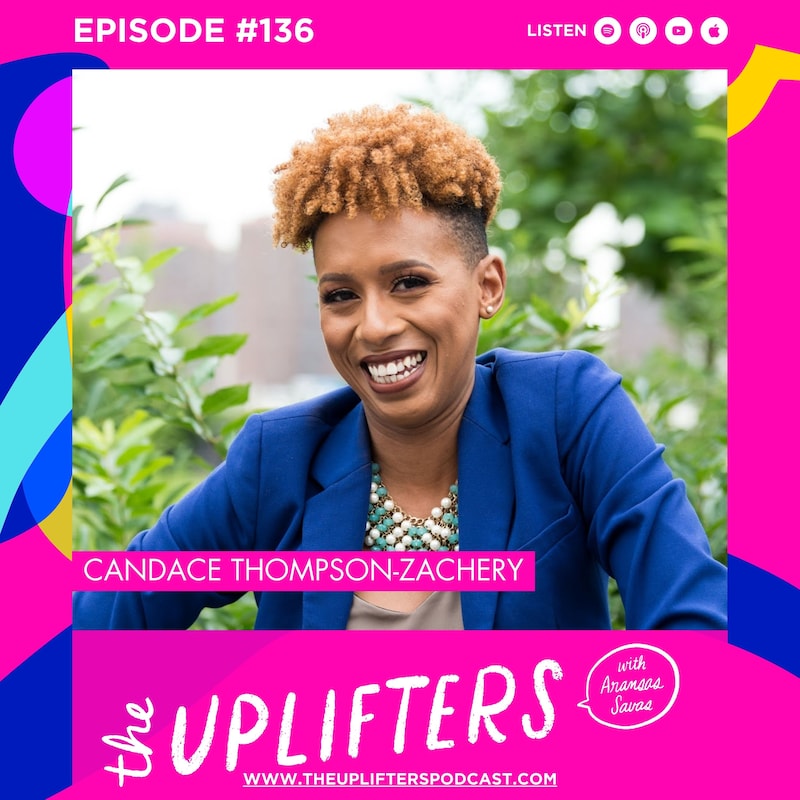
Shownotes
Former Dance/NYC co-executive director Candace Thompson-Zachery shares her journey from 20 years in arts advocacy to launching a menopause and wellness coaching practice at age 40. This episode explores career transitions in midlife, building courage capital through curiosity, and why women's growth mindset peaks in their 40s. Candace discusses her path from founding Dance Caribbean COLLECTIVE on a $20K budget to getting six certifications in two years, including menopause coach, wellness coach, and Clifton Strengths coach. Learn how she developed "yearning" for her work, why she views her gray hair as earned badges of honor, and practical strategies for pivoting careers without having all the answers first.
What You'll Learn
- Career pivot strategies for midlife including how to leverage 20+ years of experience in a new field
- Menopause and perimenopause support for women maintaining high performance during hormonal transitions
- Building courage capital at 40+ by developing yearning instead of waiting for readiness
- Overcoming perfectionism and the delayed tactics of collecting endless certifications
- Strengths-based leadership approaches for artists, creatives, and organizational leaders
- Network as insurance - how relationships built over decades become your safety net
- Growth mindset in midlife - why women's learning capacity peaks in their 40s
- Executive wellness strategies encompassing movement, nutrition, mindset, and hormonal health
- How to start before you're ready using beta testers and small experiments
- Reframing time after 40 - why five years feels manageable instead of daunting
Timestamps
00:00 - Introduction & Nutrafol sponsorship message
01:00 - Nomination from Charisma J
02:00 - Welcome & intro to Candace Thompson-Zachery
04:15 - 20 years in NYC's dance and arts ecosystem
05:30 - Evolution from dancer to arts advocate
06:45 - Founding her own dance collective on $20K
08:00 - Navigating doubt vs. curiosity in career evolution
10:15 - Motherhood as a catalyst for new confidence
11:30 - Reframing time and readiness at 40
13:30 - Career coaching and six certifications journey
14:15 - Becoming a menopause coach
15:00 - Community support during transitions
16:30 - Network as insurance and resource inventory
18:00 - Starting without all the data
19:15 - Developing "yearning" for the work
21:30 - Analysis paralysis vs. energizing vision
23:30 - Lowering the perfectionist voice through doing
24:30 - Hustle as insurance
25:30 - Beliefs about aging from first to second half of life
27:30 - Gray hair as earned authority
29:00 - Feeling groundedness and calm at 40
30:15 - Advantages of doing brave things as we age
31:45 - Diminished self-consciousness about others' perceptions
33:00 - When did you think you'd feel like an adult?
34:00 - "It's never too late" - reframing possibilities
35:30 - Finding the essence beneath the dream
36:30 - What yearning feels like in daily work
38:00 - Who inspires you: Sydney Mosley
39:00 - How to support Candace's work
40:30 - Executive wellness and menopause specialization
41:30 - Closing thoughts
Key Takeaways
On Career Pivots:
- You don't need all the data before making a change—you've never had all the data
- Start with a beta tester or willing friend before launching publicly
- Your network from decades of work becomes your insurance polic
- Hedge your bets: build the new thing while staying open to full-time work
- Five years of doing anything will make you better at it—focus on what you want to learn
On Menopause & Midlife:
- Perimenopause and menopause require specialized wellness support often missing from standard programs
- Women's growth mindset peaks in their 40s—this is prime time for learning
- At 40+, you develop a stronger sense of self that can't be easily shaken
- Self-consciousness diminishes, allowing for bigger risks and more authentic presentation
- Groundedness comes from deeper relationship with yourself
On Building Courage:
- Develop "yearning" for preparation rather than treating learning as a barrier to action
- Name doubts out loud to people who love you to reduce their power
- Inventory resources you have rather than cataloging deficits
- Time after 40 feels different—deadlines seem less daunting, which enables bigger thinking
- Evidence from past pivots builds confidence for future ones
On Getting Started:
- "You have a hundred times more information than the person who needs you"
- Use study as enhancement, not delay tactic
- The feedback loop between learning and serving strengthens with practice
- Visualization energizes; analysis paralysis depletes
- Just get started—even if you feel you're winging it forever
Connect with Candace:
- Services: Executive wellness coaching and strengths-based leadership coaching
- Specialization: Menopause/perimenopause support for high-performing leaders, artists, and creatives
Connect with Host Aransas Savas:
- Instagram: @aransas_savas
- Podcast Instagram: @the_uplifters_podcast
- TikTok: @theuplifterspodcast
- Facebook: Aransas Savas
- LinkedIn: Aransas Savas
- YouTube: @theuplifterspodcast
- Website: TheUpliftersPodcast.com
Guest Bio
Candace Thompson-Zachery is a wellness and leadership coach specializing in menopause support and strengths-based leadership for artists, creatives, and high-performing professionals. After 20 years building platforms for underrepresented voices in dance—including serving as co-executive director of Dance/NYC and founding the Dance Caribbean COLLECTIVE—she pivoted at 40 to focus on executive wellness.
Drawing from her extensive arts leadership background and certifications in wellness coaching, menopause coaching, HR, Clifton Strengths, and breath work, Candace brings a holistic approach to helping clients build sustainable practices encompassing movement, nutrition, mindset, social habits, and hormonal health. She named her practice after her grandmother Merle and is passionate about supporting women navigating perimenopause and menopause while maintaining high performance in their work. Based in New York City, she continues to dance 20 years after that first company member made her realize 30 wasn't old at all.
Host Bio
Aransas Savas is a wellbeing and leadership coach, researcher, and host of The Uplifters Podcast. With over two decades of experience conducting behavioral research for major companies including Disney, Best Buy, and Weight Watchers, she brings both empirical rigor and deep empathy to her work supporting women through major life transitions. Aransas is currently writing a book called "Courage Capital" exploring how women build the inner resources needed for brave action.
The Uplifters Podcast serves as a platform for sharing stories of women doing courageous work and navigating change, particularly in midlife. Through series like "Late Bloomers" and "Midlife Mindset," the show challenges the myth that major life changes require perfect timing or complete readiness. Each episode offers what Aransas calls "permission slips"—evidence that transformation is possible at any stage, that our accumulated experience enriches rather than limits our possibilities, and that sometimes our most authentic selves emerge only after we've tried on many different versions of who we might become.
Keywords
menopause coach, career pivot at 40, midlife career change, perimenopause support, Dance NYC, arts advocacy, wellness coaching for women, menopause in midlife, career transition strategies, executive wellness, hormonal health coaching, women over 40, second act career, dance industry careers, arts administrator turned coach, Clifton Strengths coaching, Brooklyn dancer, career change without safety net, building courage in midlife, women's leadership coaching, growth mindset in 40s, Dance Caribbean Collective, professional women transitions, high performing women wellness, menopause and career, starting over at 40, arts to wellness pivot, strength-based leadership, midlife transformation, women's health advocate, creative professionals coaching, sustainable wellness practices
Listen to The Uplifters Podcast wherever you get your podcasts. New episodes drop weekly featuring midlife women doing big, brave things in the world.
Transcripts
Aransas Savas: [00:00:00] Hey Uplifters. I wanna take a minute to talk about something personal to me. In my forties, I started noticing my hair was shedding more so a couple of months ago I [00:00:15] started using Nutrafol. I'm already seeing so much less shedding and my teenage daughter who notices absolutely everything keeps commenting on how thick my hair looks.
As someone who's built my career around [00:00:30] rigorous science, I super love that Nutrafol was the first brand to clinically study hair thinning on menopausal women, which is why I am so proud to have them as a sponsor. Nutrafol takes a whole body approach to [00:00:45] hair health supporting you throughout your life stages.
You can see thicker, stronger, faster growing hair with less shedding in just three to six months. For a limited time. Nutrafol is offering our listeners. $10 off your first month [00:01:00] subscription and free shipping when you go to nutri fold.com and enter the promo code. Uplifters.
Nomination: One of my really good friends, Candace, because she puts like the multi and multifaceted.
[00:01:15] And she is an advocate for artists and herself and her friends, her family, her child, and her children to come. Her husband, like I just watch her do so many things and, and also bring so many forward. She brings my [00:01:30] name up in ways. I didn't even imagine. She brings me up in rooms I'm not in all the time, and she does it without needing any recognition.
Sometimes I don't even know she genuinely believes in me. [00:01:45]
Aransas Savas: Welcome to the Uplifters podcast, where every week I get the bonkers awesome privilege of talking to an inspiring woman who is doing big, brave things in the world. This week I am [00:02:00] talking to somebody who really embodies everything that this show is about.
Courage, transition, change, embracing our obstacles and, and using them as leverage into our dream making. Today you're gonna meet [00:02:15] Candace Thompson Zachery. She was nominated for the show by Charisma J, who you met on an earlier episode, who was also wildly inspiring and wonderful, and with whom I formed just most beautiful friendship after meeting her [00:02:30] on the podcast, and so it's extra special to get to talk to the woman who inspires her.
Candace has spent her career really nurturing artists, building organizations, I think mostly nonprofits. And creating [00:02:45] platforms that amplify underrepresented voices, specifically in dance, but also in many other creative categories. We're gonna talk to Candace about her big career pivot that she recently made, leaving in some [00:03:00] ways, but probably also I'm guessing, carrying with her 20 years of investment in learning and teaching in the dance world to launch a coaching and consulting practice, specifically designed for women in menopause and second [00:03:15] half of life.
Somebody whose life was deeply influenced by my grandmother. I'm so moved that she named her practice after her grandmother Merle. And after being the executive director of [00:03:30] Dance NYC, founder of the Dance Caribbean Collective, she has now built a new chapter. My goal in this for all of us, is to really understand her mindset through that shift.[00:03:45]
The thoughts, actions that she employed in order to keep herself moving and motivated and build some momentum. And what's still tricky, because I think we all need to hear that just as importantly. So Candace, thank you [00:04:00] so much for taking time out of everything that you're doing to hang out with us, share a little bit about your journey to help us do bigger, braver things in our own lives too.
Candace Thompson-Zachery: Thank you and for that amazing introduction. I so appreciate it.
Aransas Savas: You make [00:04:15] it so easy. You've uh, been busy in this lifetime.
Candace Thompson-Zachery: Totally. I have been.
Aransas Savas: So, you've had a really rich career in dance and arts advocacy. What was driving you and giving you energy in [00:04:30] those 20 years? In the in arts,
Candace Thompson-Zachery: what I would say was driving me wasn't a curiosity about how the arts ecosystem worked in New York City.
Aransas Savas: Mm-hmm.
Candace Thompson-Zachery: This is my 20th year in New York. And so I moved [00:04:45] here 20 years ago to go to Adelphi University to do my BFA and dance, right? So the US was new, New York was new. Long Island was new. BFA was new. So there was a lot of figuring [00:05:00] out how things were, what the rules were, where the opportunities were, what were the unsaid practices or norms of a space.
And then once I graduated. Like every other dance graduate, or most of them, you're [00:05:15] looking for work. You're like, where can I be nurtured? Where can I find opportunity? And so that 20 years is really my journey through the arts ecosystem also because it started with me as a student. A [00:05:30] pre-professional and ended with me as the co-executive director at this dance service organization that I helped to run.
And so it's also an evolution of the different roles that I played in the ecosystem. And I think it's also what strengthened [00:05:45] my leadership at the organization because I had played so many roles. I had been the dancer who was in a company. I had been the dancer who had done freelance gigs. I had been.
The dancer who had dancer 5, 6, 7, 8, [00:06:00] 10 jobs to be able to pursue a life where she could take contract dance work. I had been an arts administrator on the side for independent choreographers and then for friends and then in festival [00:06:15] management. So I had played a lot of roles, and then I founded my own thing, and then I had to figure out how to get funding, how to attract people to the mission, how to get people to volunteer.
How to put on a three day festival on 20,000. So I did that.
Music: Amazing.
Candace Thompson-Zachery: That [00:06:30] section of my journey was really wanting to bring people in community who shared cultural heritage background and get them all together in front of art that spoke to them, that was made directly for them. [00:06:45] And then going into the work in arts advocacy more specifically.
It really was about how do all of the systems work? Why is it so hard? Like, can I figure out what are the levers that people are pulling? What are the barriers that [00:07:00] they're running into? Why is it so hard to get your work up on a stage? Why is it so hard to get funding for what you're doing? Why is it so hard to earn a living wage for what we do?
And so really, I would say the most important driver was just curiosity. [00:07:15] Trying to figure it out. Yeah. Trying to peel back each layer. And then how to play a role in making things a bit different, a bit better.
Aransas Savas: I love that. I think for a lot of us, our careers are evolutions and we can look back [00:07:30] and see them and be like, all that illogical stuff actually sort of makes sense.
But as we're going through those changes, we feel a lot of fear about our readiness, our credibility, [00:07:45] our capability. And so we tend to go one of two ways. We either focus on, oh my gosh, here's all the things I haven't done, all the things, I dunno, or we focus on, and I [00:08:00] heard you do this already a little bit.
Here's all the things I did that are actually making me uniquely well positioned to do the next thing. Do you notice either or both of those tendencies strongly in yourself?
Candace Thompson-Zachery: Yes. And this is actually one of the things that I've [00:08:15] reflected on at 40. Is I reflect on the moments where I made a different choice because I felt like a certain path would take too long, would be too daunting, would take too much effort, [00:08:30] right?
Like I reflect on those moments because at 40 your sense of time is different, right? Three years, that's nothing. But at 33 years feels like, oh my God, like going into the void, right? And [00:08:45] so. I have reflected on those small moments where I've chosen X instead of Y because of feeling daunted by how much something would take, or that I wasn't ready for something.
Mm. I [00:09:00] would say, however, that my curiosity also most times overrode that tendency. Not every time, but most times Uhhuh, because I was so determined to figure things out. [00:09:15] So. And I can see it kind of allowed me to bypass some of the plateaus that I could have hit had I just been like, Ugh, this is too hard.
It's too daunting. I could never kind of thing. I think two things also helped to shift [00:09:30] me out of that, and I'm, I've heard it in other people's stories, which is one, becoming a mom. It's kind of like Uhhuh. The kid is staring at you in the face. They're like, listen, we gotta make this work. I'm hungry.
Where's the food? Mm-hmm. Where am I gonna school? Who's gonna take care of [00:09:45] me? So like you have this, again, like to your point earlier, this increase in responsibility that forces you into a new level of confidence that if you don't have it, you find it, you walk it until it [00:10:00] becomes real. 'cause you just have to.
So I'd say that's one. And then two, just like with anything with time, you just realize, oh, right, I'm 37. Wait, I have career pivoted, right? Like I went from [00:10:15] being a freelance dancer to, to being a studio manager. Oh, I did pivot. I went from being mostly a personal trainer to doing more arts administrator work.
Well, I have pivoted. So you kind of start to see your ability to overcome [00:10:30] things. Deal a change differently so that when those moments come up of doubt, like you have evidence to back up you moving forward. I'll also say that I think the thing about how to [00:10:45] think about time really helps you in terms of especially at 40, what's next because.
Time doesn't feel so large and gargantuan. Right? So if you're embarking on something [00:11:00] that is gonna take five years to build, it's just five years. So it changes, to me at least. It changes what readiness feels like because you have five years to get it done. Done. If you're not ready, you'll [00:11:15] get ready.
You'll be ready in five years doing anything for five years, you're gonna get better at it.
Aransas Savas: That's so true. And the time is gonna pass anyway.
Candace Thompson-Zachery: Yeah.
Aransas Savas: So you might as well be doing what you wanna do with it instead of just staying in what you've been doing because it's a comfortable [00:11:30] seat at a comfortable table,
Candace Thompson-Zachery: or you're afraid of what might happen or you're afraid of.
If people see you falling in your face, what will ha? You know what I mean? Like there's so many fears that kind of keep us stuck in where we are and, [00:11:45] and prevent us from moving to where we want to be. Mm-hmm. Mm-hmm. Time does help put those into better perspective.
Aransas Savas: I love that. And by time here specifically, you mean?
Yes. Age? Yes. Like number of years of living. Right. [00:12:00] There is research that was done recently that says that women's growth mindset actually peaks in our forties. And I think we have walked around believing that everything is gonna start fading because we've heard about brain fog and we've heard about all [00:12:15] of these hormonal changes that happen, but actually we become better learners.
Better experimenters and explorers, and that curious learner mindset actually starts to kind of explode during [00:12:30] this chapter if we allow spaces for ourselves to get curious about things we're actually interested in. And so you just turned 40 as you are entering this new chapter [00:12:45] and making this.
Significant pivot from what would seem on the outside. A more certain maybe comes with insurance. You know your schedule, you know where your [00:13:00] paycheck is gonna come from. Career to this big, wide open view. What was scary for you and what did you say to yourself? What did you do? What support did you [00:13:15] lean on?
You either wade in or jump in head first.
Candace Thompson-Zachery: Lots of different things. Where do we begin? I did work with a career coach.
Aransas Savas: Smart.
Candace Thompson-Zachery: Just [00:13:30] to understand like what would it mean to look at new career opportunities, new career options, what the market is like now to just help me navigate 2025. Two, [00:13:45] I leaned really heavily into learning.
In the last two years, I've gotten like six new certifications, like
Music: Wow.
Candace Thompson-Zachery: Oh yeah. I became a certified wellness coach through nasm, the National Academy of [00:14:00] Sports Medicine. I became a menopause coach in that time and did some continuing ed on hormonal health. I got certified as an associate HR professional.
I became a Clifton strengths coach. I became a breath [00:14:15] coach, coach, so I really lean into learning. Oh my gosh. And one thing kind of leads you to the next thing. It's like, uh, you get one layer and then I'm like, this layer has opened up this horizon. Now I wanna go in this direction. And so I kind of [00:14:30] kept doing that as time went on right as my building blocks towards what could be next.
I also leaned on my small community of friends and family. They were with me. They were there like motivating me. And also they were the people who, when I [00:14:45] was like, did I really do this? What's happening? They were like, yes, you can.
Aransas Savas: Yeah,
Candace Thompson-Zachery: you, you've, you've done more with less. Yes you can.
Aransas Savas: And yay, you first asking that question.
Just to pause there for one quick moment, because I think [00:15:00] we have this tendency to keep those doubts inside, hoping that they will become less real. The more quietly we say them to ourselves, but then we repeat them so many thousands of times that they become deeply real. But by saying that you let the people who know you and love you be [00:15:15] like, are you freaking kidding me, Candace?
Yes. You can do anything. And that helped you probably shift that conversation with yourself.
Candace Thompson-Zachery: Yeah, seeing them out loud. Yeah. Because then they reduce their power.
Aransas Savas: Yes.
Candace Thompson-Zachery: Yeah, they're real. [00:15:30]
Aransas Savas: Let them out in the open. Let's see if they're true.
Candace Thompson-Zachery: Totally. The other thing I would say is that I hedge my bets, right?
Like for instance, I'm building this consulting practice bit by bit, but I'm also looking for another job. So [00:15:45] I'm likely gonna work another full-time job for a few years with skills that I already have, or ones that I'm continuing to develop as the on-ramp, right? So there's that, right? Right. There's also uhhuh.
I think the other big like sense of [00:16:00] insurance I had was my network. I was like, there's so many people that I'm in relationship with. There's so many people that I've supported. I'm like, work will find me. I truly believe that work will find me. And [00:16:15] so that was also the other insurance. I'm like, there's so many people who know and have worked with me and know what I'm capable of.
They will be my advocates.
Aransas Savas: Mm. Love that. Another thing that I think we have a tendency to do is to [00:16:30] downplay our resources. Like, I don't have enough money. I don't have enough time. I don't have enough energy. I'm too tired to do this, and instead what I hear you doing, which I think is a massive [00:16:45] mind shift, is inventorying the resources you do have available to you, because I'm sure you did not have an infinite amount of money or an infinite amount of time, or an infinite amount of energy.
You looked at, okay, what do I have [00:17:00] and how do I invest that to give myself that confidence?
Candace Thompson-Zachery: Yeah, correct. Correct.
Aransas Savas: You talk about all these different certifications that you gained and it feels like it was really [00:17:15] energizing to you and activating to you for a lot of people. I also see the opposite happening, which is I need one more certification before I can get started.
And it becomes a bit of a delay tactic. Mm. A way of [00:17:30] postponing, taking risk. Yep. Or being brave and stepping into what we want because we step in, there's a chance that we might be rejected, we might be unsuccessful. What made it feel safe enough to take action?
Candace Thompson-Zachery: One of the coaches I was working with really kind of helped [00:17:45] me get past that first barrier.
When I started, started, I like relaunched my wellness coaching, uh, at the top of 24. She was just like, you need to just get started. You need to start. She's like, it doesn't matter. Just get started. Even if you feel like there's more [00:18:00] information that you need, you have a hundred times more information than the person who needs you.
Just get started.
Aransas Savas: That's great advice.
Candace Thompson-Zachery: And then two, I also, I have a good friend who is like my, my perennial beta tester. So [00:18:15] anything I wanna try, she, I was like, Hey, you wanna be my, my Guinea pig, my test client? She's like, absolutely, sign me up.
Aransas Savas: I love her.
Candace Thompson-Zachery: Right. So, yeah. You know, it's like I just started putting things in practice, started putting it in practice.
[00:18:30] And the other thing I, I think that was like, especially to get off that, that first, to get that first lift off, I think those two things were really key. What then happens with time is. [00:18:45] You start to develop a yearning for the work it takes to get to where you wanna be.
Music: Mm.
Candace Thompson-Zachery: So,
Music: mm-hmm.
Candace Thompson-Zachery: It could feel daunting.
All the study that you have to do for the certifications [00:19:00] or as you serve your clients, but you develop, at least this is what it, it was for me. I developed a yearning for the preparation for my client sessions. I developed a yearning. For the reading and the study that I had to do for certifications because I [00:19:15] knew how it would apply to how I would be able to serve my clients.
And so that feedback loop kind of starts to get strengthened. But you do have to, to your point, you do have to get started in some fashion and not use the study [00:19:30] as a delayed tactic.
Aransas Savas: Uhhuh, and it's there is where you start to understand the connective tissue. As well.
Candace Thompson-Zachery: Yeah.
Aransas Savas: Right. So I'm sure in one area of study, as you embarked on the next, you were like, oh, that's what that meant in that other [00:19:45] thing I was looking at or Or that's how strengths and breath work together.
Candace Thompson-Zachery: Totally, totally.
Aransas Savas: And if we're just sitting around thinking in theory, I think it can feel like [00:20:00] activity and there's actually research that's shown that. Our brains when we spend a lot of time thinking about things, that delay tactic actually tricks our brains into thinking We've done the things. Yeah.
And feeling the exhaustion of having done them. [00:20:15]
Candace Thompson-Zachery: Yeah. I think I've, I've read that. I've read that though. I feel like some people use that as evidence that you shouldn't. Do things like visualize where you wanna be or [00:20:30] visualize success. Do you know what I mean? I feel like I've heard people use that research study or that finding as a
Aransas Savas: interesting
Candace Thompson-Zachery: means to also not develop a sense of the future or develop hope for the future.
[00:20:45] So I just wanted to put that in there.
Aransas Savas: That's fascinating. I would never have put those together, but I totally see it now that you say it. And I like, I just have so much evidence in my own life and my own work. That getting really clear about what we want is extremely [00:21:00] energizing and extremely activating, and it's like, I don't know, how am I gonna get from here to Australia without a map?
Like if I don't know I'm going to Australia, I'm probably gonna end up on the other side of the [00:21:15] planet. We end up saving an enormous amount of energy by knowing where we wanna go. Yeah. I think it's more about the. Belaboring. Yeah,
Candace Thompson-Zachery: correct.
Aransas Savas: And analysis paralysis and [00:21:30] the hazards of perfectionism. Mm-hmm.
That wear us out. Whereas visioning energizes us and actually replaces energy that is depleted. Right. By worrying, I think though you [00:21:45] actually are demonstrating another way of doing that that is incredibly powerful, which is you were talking about. Developing yearning. Mm-hmm. And what a delicious word that is, number one.
And what a delicious [00:22:00] image. It's to think that when we go out and do things, we can figure out what we might or might not fall in love with. And it's like, instead of treating this as I have to go into [00:22:15] my career change or my new exploration, knowing everything about what I love and what I don't and what I wanna design it for.
Instead of sort of imagining that I'm gonna go live it and discover what's true [00:22:30] for me, and then design for what's true for me.
Candace Thompson-Zachery: Yeah, no, that's,
Aransas Savas: that's really powerful.
Candace Thompson-Zachery: Yeah. The yearning piece I've found is it really takes the, to your point, it [00:22:45] takes the, a lot of the exhaustion out of the work. It makes it seem more daunting just because the yearning gives you energy.
And for people who are taking this in, I know that sounds like some woo woo [00:23:00] stuff. Like, what do you mean? And like, if you're in a burnt out exhaust seat, you're, you can't even imagine what that feels like. But it is possible. It's possible,
Aransas Savas: but probably not if we're just sitting around thinking about it.
Candace Thompson-Zachery: [00:23:15] Yeah,
Aransas Savas: I think we have to go into experience.
Candace Thompson-Zachery: Yeah, it's the and
Aransas Savas: feel
Candace Thompson-Zachery: benefit. It's the balance of doing and building mastery and learning from failing in some areas and [00:23:30] continuing to get clear on what that vision is that you have for yourself and figuring out how, to your point about that, that's this perfectionism and how that like really depletes us figuring out how to lower that voice, that perfectionist voice.
And [00:23:45] again, like by doing you, you automatically lower it because you have evidence.
Aransas Savas: Yes, yes. Just like you had evidence as you made this shift of all the things you were capable of, all the things you've been able to figure [00:24:00] out without all the data, to be able to walk into this chapter and say, no, I don't have all the data.
I've never had all the data. No one's ever had all the data and walk in and say, but I'm gonna figure it out. And I know that I can.
Candace Thompson-Zachery: Yep. The other [00:24:15] thing I might mention is also that, you know, I, before I transitioned into working at the, the nonprofit full time, I was a freelancer, freelance, like professional freelancer.
I had all the jobs. And so the other [00:24:30] insurance that I had was that if none of this works out, I can go back to hustling, like. That is always available, I believe, in my ability to hustle. So I think that's the other thing. I was not afraid of my own hard work.
Aransas Savas: Mm-hmm. [00:24:45] And I think that's a huge advantage that all of us really have available to us in the second half of life is that we have seen some things.
We have done some things, and we know that we can figure things out. Like if we have survived to [00:25:00] this point, again, we have a wide body of evidence that. We will figure it out that there is not just a single road, but that we constantly have choices available to us. You just turned 40, as you mentioned, [00:25:15] and I think there are a lot of belief systems out there about what we're capable of in the second half of our lives, and so I'm curious for [00:25:30] you how you would describe.
Your belief system about the second half of your life in the first half of your life and what it looks like now?
Candace Thompson-Zachery: That's funny. When I got into my first dance company right outta college, [00:25:45] there was a woman in the company who was 30, I was 23 I think, when I graduated. And to me she was old, not like old and a bad, but I'm like, oh my God, she's 30 and she's still dancing.
Like, like that blew my mind [00:26:00] because I dunno what ha, like in my mind I had this sense that like, I'll dance alone like 28, 29 and then you know, I'll get married and have a kid and be regular. Now I was doing nothing to like [00:26:15] further that actual dream, but like in my mind it was some kind of cutoff. At 28, something else would happen.
There was a void they like. Mm-hmm. So there's that. As like my perception of what old was. Mm-hmm. [00:26:30] And now of course I'm 40 and I'm still dancing and I'm like, I laugh at me remembering that because it's like so ridiculous. But I think coming from the culture I come from and the family I come from, eldership is also revered, [00:26:45] right?
Like our grandmothers were everything in our lives. So I don't think I ever necessarily had a fear of growing old. It's more that I. You know, I just couldn't see it yet because you're so young. Mm-hmm. You're just like, that's like something that'll [00:27:00] happen like eons from now. But I will say as I got later in my thirties and like, I started to go gray.
I mean, I, I got my first gray hair. I think I was like 25. My sister's also like, why don't you dye your hair? I'm like, why would I, [00:27:15] I earned these gray hair. I want people to see that I'm, I have some age on me. They should respect that.
Aransas Savas: Mm-hmm.
Candace Thompson-Zachery: So please know how old I'm,
Aransas Savas: I actually really love that and I was, was thinking about that [00:27:30] very thing this morning because there is so much talk about like, women should hide their age.
Maybe it was because I was raised with my grandmother and my great-grandmother. My great-grandmother [00:27:45] were all very present in my life growing up, and they were all amazing and inspiring and adventurous and brave. And I always thought being older was the goal, right? So [00:28:00] you know that like 13-year-old thing that you feel, you're just like, I can't wait to grow up vibe.
I never lost that. I never was like, okay, like, okay, now let's get younger. Because I just thought it gave me more [00:28:15] authority to be myself, more authority to like be trusted and credible if I got older. And I kind of hear an echo of that in your gray hairs.
Candace Thompson-Zachery: Yeah. Just like, I earned these things.
Aransas Savas: Yeah. Thank you very much.[00:28:30]
I know some things,
Candace Thompson-Zachery: how I think about it now is more just like. One about, back to this thing about time
Aransas Savas: Uhhuh,
Candace Thompson-Zachery: I am in a hurry, in a sense,
Aransas Savas: Uhhuh,
Candace Thompson-Zachery: right? I'm just like, I have things to do, [00:28:45] like we gotta get this moving, even though I'm also willing to take the time. But I also, it does start to put, things become more finite in terms of getting to where I wanna be.
But then I, it also feel like [00:29:00] how I'm envisioning it right now is like I have a pretty steep hill to climb. And at some point I'm gonna enjoy the plateau for a bit and then I'll figure out what's next.
Music: Mm-hmm. Mm-hmm.
Candace Thompson-Zachery: So that's how I see it. And I [00:29:15] also feel you do feel this, or at least I feel this really deep sense of groundedness, you feel your age.
It's not that I don't, and you know, perimenopause is a whole other story, but you also do [00:29:30] feel this sense of calm. Because you're re, you have a much clearer or deeper relationship with yourself, like you're not afraid of yourself anymore.
Aransas Savas: Mm-hmm. [00:29:45] Yeah, that's a beautiful way of saying it. And so as I'm listening to you, I'm trying to sort of synthesize what I'm hearing in your story as the advantages of doing big brave things as we age.
And one of them of [00:30:00] course is that growth mindset that we talked about. Another is a, a stronger sense of self. What else would you say are the advantages?
Candace Thompson-Zachery: Yeah.
Aransas Savas: I guess I should add evidence for sure. Right.
Candace Thompson-Zachery: I think the stronger sense of self really then [00:30:15] enables so many other things, because it means if you can't be shaken as easily, right?
Your confidence is less threatened by people challenging you, people throwing obstacles in your way, people doubting you, like those [00:30:30] things no longer take up so much space or have so much weight anymore, like you put them in their correct perspective. So. It gives you a sense of, yeah, there's like, there's life on the other side of a [00:30:45] conflict.
There's life on the other side of a challenge. Like you know that you're not going to like dissolve just because you are running into a really sub situation. So I would say that's one of the benefits. [00:31:00] The other benefit, I think, again, that goes along with this like stronger sense of self is a diminished sense of.
Self-consciousness around.
Nomination: Mm-hmm.
Candace Thompson-Zachery: How people perceive you. [00:31:15] Mm-hmm. Right? Like you just, uh, you know, you don't care what people think. You know, that's that, like, that kind of, you know, people make jokes around that, around like women, A 40 a you, you don't give, you have no more Fs to give.
Aransas Savas: Right.
Candace Thompson-Zachery: Which means that,
Aransas Savas: do you believe that,
Candace Thompson-Zachery: that you have no more [00:31:30] Fs to give?
Aransas Savas: Yeah,
Candace Thompson-Zachery: partially. Yeah. Partially.
Aransas Savas: Yeah.
Candace Thompson-Zachery: I, again, I think you put things in their correct perspectives. So you don't have Fs, you do have them, but you just give them out, sparing me.
Aransas Savas: Mm-hmm. You
Candace Thompson-Zachery: give them out, sparing me.
Aransas Savas: Mm-hmm.
Candace Thompson-Zachery: And when you do, [00:31:45]
Aransas Savas: not everybody,
Candace Thompson-Zachery: when you do, it's a message. It's a signal. It's like, huh, that touched a nerve.
What does that nerve say about me? What's the value that's being crossed that, so yeah, it's like your, [00:32:00] your self-consciousness is lowered, so it means that you try new things, transition it, it meant presenting myself, myself differently to my community, which felt
Music: mm-hmm.
Candace Thompson-Zachery: Very vulnerable, right? [00:32:15] Like, mm-hmm.
What would people say? Oh, who does she think? She's like, but I also, I felt it got to a point where I felt I was doing my community, my network, my commun my people around [00:32:30] me a disservice by not showing them all of me.
Aransas Savas: Mm-hmm. Mm-hmm.
Candace Thompson-Zachery: I wasn't giving them good information to base their interactions with me on
Aransas Savas: their perception.
They weren't receiving the whole picture.
Candace Thompson-Zachery: Correct. [00:32:45]
Aransas Savas: Yeah. When did you think you would feel like an adult?
Candace Thompson-Zachery: Like at 23 that Marco was 28. And then in my late twenties, I think the Marco was like 35.
Aransas Savas: Mm-hmm.
Candace Thompson-Zachery: And then after 35 I stopped.
Aransas Savas: So roughly every five years.
Candace Thompson-Zachery: After 35, I stopped trying [00:33:00] to, it was like we're out here.
There is no age. We just all it out forever.
Aransas Savas: I think that's right. That's my feeling too, like expecting ourselves to have all the answers or be done growing. [00:33:15] Super limiting and what a waste of a life to limit ourselves in that way. So for the folks who are listening who maybe think they wanna make a big change and be seen [00:33:30] differently in the world and do different things in the world, but whether they're in their forties or fifties or sixties or seventies are sitting around thinking it's too late, what would you want them to know?
Candace Thompson-Zachery: Number one, it's never too late. [00:33:45] It's never too late to make a decision that is in alignment with your true self. Mm sure. Maybe if you wanted to be an Olympian and you're [00:34:00] 75, maybe that's not an option for you anymore, but maybe there's another Olympics you could join, I dunno.
Music: Mm-hmm.
Candace Thompson-Zachery: So, yes, being older does.
Make certain things less realistic, but the [00:34:15] essence of the thing is probably still within reach.
Music: Mm-hmm.
Candace Thompson-Zachery: So for instance, if your goal, if you are like, oh my God, I always really wanted to be an singer, and you're like 65.
Aransas Savas: Mm-hmm.
Candace Thompson-Zachery: What's to stop you from going to an open mic? [00:34:30] Maybe you're not putting on Grammy award-winning albums, but could you sing at the community fair?
Probably.
Aransas Savas: Yeah. And you're certainly a lot closer to that Grammy. By singing, by then sitting around thinking about singing.
Candace Thompson-Zachery: Correct.
Aransas Savas: You're [00:34:45] building a creative community around singing. You're learning about singing. Right, right.
Candace Thompson-Zachery: And then maybe, yeah. By performing at the community fair and the open mic, you realize that actually I don't care about the Grammy.
What I really care about is being in community with people who see me in my true essence.
Aransas Savas: Mm-hmm. [00:35:00]
Candace Thompson-Zachery: Maybe you actually realize that what you like is the songwriting part of. Singing and not the actual delivery. You know what I mean? There's also like what you learn on the journey to the thing that you think you want versus the thing,
Aransas Savas: right?
It's that idea of [00:35:15] getting in there and discovering the yearning.
Candace Thompson-Zachery: Yeah. Yes.
Aransas Savas: What is the feeling you most yearn for in your work now that you have been so many places and tried so many things?
Candace Thompson-Zachery: Two, two [00:35:30] things come to mind. One is. That moment where I read something that illuminates another piece of information that I found somewhere else.
Aransas Savas: Mm-hmm.
Candace Thompson-Zachery: Where like all the pieces just kind of [00:35:45] come together and I'm like,
Aransas Savas: you are such a learner.
Candace Thompson-Zachery: No, seriously. It's, it's like ridiculous really. It's deep. So there's that, like that is, that's my battery. Mm-hmm. And then the other thing is to see it in other [00:36:00] people, to be honest. And so when I coach my clients and they have a discovery about something that they didn't consider before, or their eyes light up with possibility because they're like, right now I have the key to unlock [00:36:15] what's been blocking me.
Right? Like that moment when their eyes light up is what is the other yearning that I have. And so it makes the things that I have to do to prepare for that easier.
Aransas Savas: Mm. [00:36:30] Yeah. And I think there's so much power naming those. Yeah. Yearnings.
Candace Thompson-Zachery: Yep.
Aransas Savas: This has been so beautiful, Candace. I'm so grateful that we got to talk and to see where your journey takes you next at 40.
There are [00:36:45] so many chapters ahead, and I suspect we're gonna talk again in 10 years and be like, wow, who knew that that step would take you to this place? Yep. So who inspires you? [00:37:00] Candace,
Candace Thompson-Zachery: my friend Sydney Mosley, who is my New York bestie, and also a dancer, choreographer, consummate artist in the world. I danced with her [00:37:15] company for a number of years in her building phase, and it's also one of the places where I rehearsed my leadership because at some point I was the associate director.
And she inspires me just because of [00:37:30] how clear she is on her vision and how disciplined she is with her vision and how clear she is about what she's saying no to, to stay true to that vision.
Aransas Savas: Mm. [00:37:45] We have so much to learn from her.
Candace Thompson-Zachery: Oh, yes.
Aransas Savas: All of us. That that is in so many ways, the hardest part. What do we say no to in order to say yes.
To what we want more of. More. So as Uplifters Candace, we [00:38:00] live to uplift other uplifters. So how can we best support you and your work?
Candace Thompson-Zachery: Thank you so much for that offer. You can support me by finding me on Instagram. Can dance create?
Aransas Savas: Which [00:38:15] is so cute. It really stuck in my head now. I actually had trouble calling you Candace 'cause I wanted to call.
You can dance.
Candace Thompson-Zachery: I know, I know. I know. It came about because people would often mix them up. They would just call me can dance. Like so I was like, why? I keep it, [00:38:30]
Aransas Savas: why not?
Candace Thompson-Zachery: So you could follow me on Instagram where I share a lot of my thoughts on leadership, on wellness, on the work that I do, running programs and nonprofits and you can also.
Sign up to talk to me to think about [00:38:45] working together if you have big wellness goals that you want to bring into your life. I am specifically interested in working in with leaders, artists, and creatives. And the way I'm thinking about it now is really as executive [00:39:00] wellness, because it's for people who need to be able to perform at a high level, but it's also.
In the sense all encompassing, right? Because it's about how to incorporate movement. How to incorporate and how to corporate nutrition and lifestyle [00:39:15] changes, how to incorporate a positive mindset. So looking at the full gamut of the person to help them build a sustainable life and lifestyle that gives them the wellness that they wanna experience.
And that also includes things like. [00:39:30] Your social habits and how you work in communities. So it's like this total wellbeing approach to wellness. So I would love to work with you if you're interested in any of that. And then the other way is [00:39:45] through strengths based coaching for leaders, artists, and creatives.
So it's how do you tap into the strengths that you have. To build your leadership skills. And I feel like artists are leaders because they have to lead a vision [00:40:00] and bring it into the world and work with collaborators and work with performers. So that is a form of leadership that's often under considered.
And also leaders who work in organizations, really helping them to clarify like what their leadership approach is [00:40:15] and build a lifestyle also that supports them to be the best leader that they can be.
Aransas Savas: Yes, and those are so. Interconnected, aren't they? Yep,
Candace Thompson-Zachery: it is. And then the menopause aspect is within any of that.
Right? Because [00:40:30] one of the aspects that we have to tend to is our hormonal health, right? And I feel like that is often overlooked in other wellness programs and sure, some of the typical lifestyle change habits do help, but you really do have to know how [00:40:45] to address those for people experiencing perimenopause and menopause.
So. I'm glad that I have that information to share with people at this point in their lives.
Aransas Savas: Absolutely. Yes. And that understanding gives you such an advantage as you help people [00:41:00] diagnose underlying issues and tackle what's really driving the obstacles that they're facing.
Candace Thompson-Zachery: Yeah, totally.
Aransas Savas: Well, I'm so glad we met.
I can't wait to see you somewhere in Brooklyn [00:41:15] soon. I hope you'll join us next year at Uplifters Live in March. We'll celebrate our birthdays together.
Candace Thompson-Zachery: Hey,
Aransas Savas: hey, and Women's History Month. Thank you for listening to the Uplifters Podcast. If you're getting a [00:41:30] boost from these episodes. Please share them with the uplifters in your life and then join us in conversation [email protected].
Head over to Spotify, apple Podcast or wherever you [00:41:45] get your podcast. And like, follow and rate our show. It'll really help us connect with more uplifters and it'll ensure you never miss one of these beautiful stories. Mm. Big love [00:42:00]
Music: painted water sunshine with Rosemary Anton. Dwelling. Not perplexing though.
You find it flexing. Toss a star in for be around best love for [00:42:15] relish in a new prime and a tree in springtime dance. With that all hindsight, bring the sun to twilight. Lift you up. Whoa.
[00:42:30] Lift you up.
Lift you up. Whoa. Lift you up.
Lift you up.[00:42:45]
Lift you
lift.[00:43:00]
Um, beautiful. I cried. It's that little thing you did with your voice, right? In the pre-course, right? Uhhuh. Uhhuh. I was like, [00:43:15]
Aransas Savas: mommy,
Music: quiet
Aransas Savas: mommy. Stop crying. You're disturbing the peace.