Shownotes
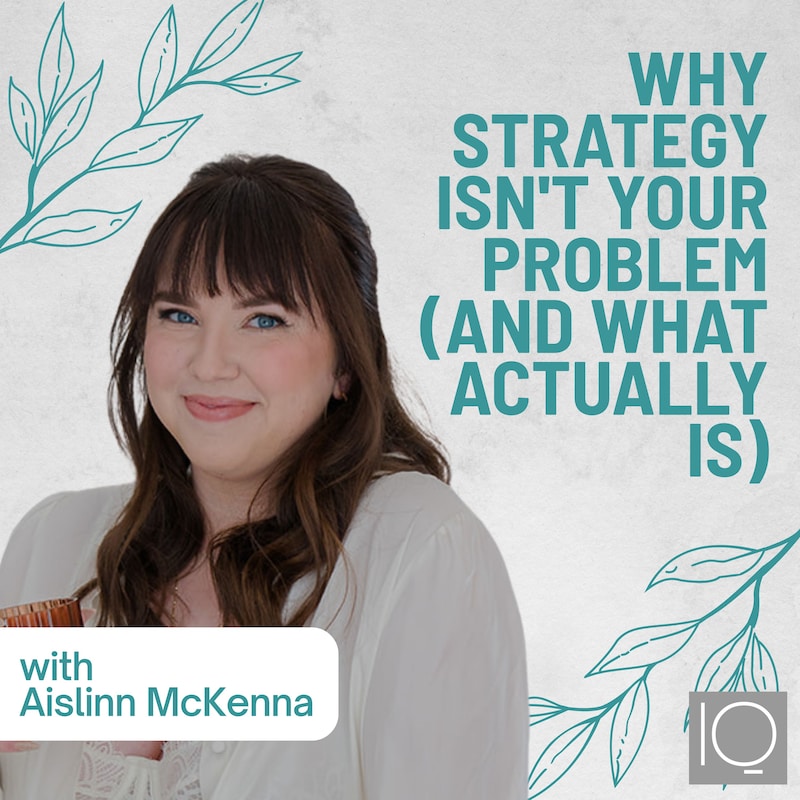
In this episode of Mind Your Wedding Business, Kevin Dennis sits down with business coach Aislinn McKenna to talk about why strategy isn’t actually the problem for most wedding pros and what’s really holding them back.
With so many professionals consuming endless content on marketing, pricing, and systems, Aislinn explains why the issue often isn’t a lack of knowledge, but the mindset patterns running in the background. Together, they unpack how overthinking, comparison, and waiting to feel “ready” can keep you stuck even when you already know what to do.
Kevin and Aislinn dive into the difference between facts and feelings in your business, why tracking your data matters more than chasing more inquiries, and how small mindset shifts can lead to major changes in results. Aislinn also shares practical ways to break out of inaction, build momentum, and stop getting in your own way.
The conversation explores how perfectionism, people-pleasing, and constant consumption can slow your growth and what it looks like to actually execute with clarity and confidence.
If you’ve ever felt like you’re doing everything “right” but still not seeing results, this episode will help you refocus, simplify, and take action.
Aislinn McKenna is a business coach and former luxury wedding photographer with over 14 years of experience running multiple businesses. She has been featured in publications like Brides, Martha Stewart Weddings, and Southern Weddings, and has since scaled her coaching company to multi-six figures. Aislinn helps wedding professionals build sustainable, profitable businesses by combining proven strategy with powerful mindset work so they can create more freedom, confidence, and impact.
Highlights
• Why mindset (not strategy) is often the real bottleneck
• The difference between facts vs. feelings in your business
• How overthinking and comparison keep you stuck
• Why tracking data matters more than chasing inquiries
• Breaking out of perfectionism and taking faster action
• Simple ways to build momentum and get out of your own way
Mentioned Links:
Grounded Tier 2 (Mindset & Business Strategy)
Connect with Aislinn:
Connect with Kevin:
Transcripts
All right, folks, welcome to another episode of Mind Your Wedding Business. I'm here with Aislinn today, and we're going to be talking about why your strategy isn't your problem and what actually is. So before we jump into the topic, I'm really excited to get into it. Can you tell us a little bit about yourself and how we got you here today?
Aislinn (:Yeah, absolutely. Kevin, thank you so much for having me on the podcast. I'm really happy to be here, happy to have this conversation. So if we've never met before, my name is Aislinn. I also go by Ace. I was a luxury wedding photographer for 14 years. So if anybody wants to do the math on that, I started my business when I was 16 years old, shot my first wedding at 17. And I actually retired from that career a few years ago. So I retired right before I turned 30.
Kevin Dennis (:Of course.
Hmm.
Hehehehehe
Aislinn (:And I was blessed to work with some of the best clients and some of the best vendor partners across the country. I was also blessed to be featured in a lot of different publications, Brides, Barthes Stewart, Southern Weddings, Salome Pretty, pretty much any big publication somewhere. I was probably in there at some point. ⁓ But one of my favorite things is just that I got to meet so many people throughout my career. And I am still just incredibly grateful that like I chose a career that
was so people oriented because it's just, I don't know, if you're in the wedding industry, you know, like the people in there are just so, so special.
Kevin Dennis (:it's funny you say that because we really feel that way. It's the community, you know, and these are all our friends. And but they're almost like family the way we get into, know, it always, you know, like, we're very fortunate that weddings go year round where I am. You know, so we, you know, we have weddings, but, know, it's all the outdoor venues start coming on. Like, we're recording this at the end of March right now. ⁓ But like, this is when the outdoor venues start coming on the scene. And then all of a sudden it's
Aislinn (:Mm-hmm.
Kevin Dennis (:like you start seeing everybody more frequently and it just, you're right. There's something special about it and I don't think people know about it until they actually, they do it. all right. So as we, before we jump in, Aislinn, so give us ⁓ the quick version of who you help, what problems you solve for wedding pros.
Aislinn (:Yeah, absolutely. So I was a wedding photographer for 14 years. So it's really interesting because I don't actually teach technical skills. Like I'm not going to teach you, like, sorry, I love you guys, but like, I'm not going to teach you how to turn your camera on. I'm not going to teach you how to edit stuff. What I'm going to be teaching you is much more of the soft skills and the skills that are going to help you be a phenomenal business owner. And when I say phenomenal business owner, what I mean by that is that you create a business that feels like a win for you and a win for your clients.
Kevin Dennis (:No, I love that, okay.
Okay.
Mm.
Aislinn (:And there's so many wedding professionals out there who are building businesses that it actually doesn't feel like a win for you. It only feels like a win for the clients. And what I like to help my clients do is not only get to whatever their monetary goals are, but also to build that internal like self-trust, self-confidence, self-talk, all of those things that really support you in building what you really see as successful and also actually feels really good to run.
Kevin Dennis (:I can kind of relate to the people because there's times where I'm like, it's a win for the clients and we're killing ourselves, but it's not a win for me right now. And then sometimes I'll do a countdown in my head. right. You know, how many more weeks until vacation or how many times until this? It's always kind of fun. All right. So you say strategy isn't your problem. What do you mean by that?
Aislinn (:Yeah.
Right. So I think a lot of people think if I can just figure out what the next social media strategy is, or if I can just figure out the next strategy for networking, if I can just figure out the next strategy for getting that planner to notice me, then that's when I'm going to feel successful. That's when things are going to work out for me. But the truth is, is that I could give you, remember this, 14 years in the industry. I could give you every single strategy it would take for you to get, let's say a six figure business or a multi six figure business. If that's what you're pursuing.
I could give you the strategy, but if you do not have the mindset to back it up, you don't have the self belief. You don't have the self trust, the self talk, the confidence, the like actual business acumen is also going to be like an important factor here as well. But if you don't have those things, the strategy just isn't going to work because either you're not going to follow through on it or it's, I have so many people who are like, yeah, but like things aren't working right now. And I'll be like, give me your numbers, like tell me your data. And I'll be like, what do you mean it's not working? Like.
Kevin Dennis (:Mm.
Aislinn (:The actual facts are that it is working, but your mind is making up stories that it's not. So that's what I like to help my clients with is really the stories you're telling yourself and the mindset side of things so that the strategy actually works.
Kevin Dennis (:Mmm.
You're almost like a therapist to them.
Aislinn (:I do love my therapy.
Kevin Dennis (:Alright,
so why do so many wedding pros feel like they're doing all the right things but still not seeing results?
Aislinn (:Yeah, I think the first thing when it comes to like, if you don't feel like you're seeing results is actually look at the facts versus the feelings. The facts versus the feelings are, is it actually factual? Like if you put this in front of a judge and jury and you're like, tell, here's the truth, what's the factual truth? What are the facts, the data, the spreadsheets, like, like results actually telling you versus what are the feelings telling you?
Kevin Dennis (:Okay.
No, no, no.
Okay.
Aislinn (:The feelings might be telling you things are slow or I haven't had enough inquiries or X, Y, Z over here. But the facts could be that you are actually on track for the number of inquiries that you need in order for you to book the amount that you need in a year. But you're over here telling yourself a story that it's not true. So that's, that's what I would say when it comes to you. Like if you feel like it's not working, I would actually question, it actually working or is it, because if it's actually not working, then yeah, we need to look at your sales strategy and your.
Inquiry process, your marketing, messaging, all of those different things, of course. But actually, if you can separate the facts and feelings first, it's really going to help you.
Kevin Dennis (:Now, do you think people get that way by not looking at the numbers and following that kind of stuff? is that where the feeling part of it comes in? They're not really looking at the facts, and they're just like, it feels slow. But meanwhile, they're up on their inquiries than they were the previous year, any of those scenarios.
Aislinn (:Yeah, I I love the clients who come to me because they're usually data nerds. Or if they aren't initially when they come to me, that's what they become because it's something that I talk a lot with my clients about. But yeah, I'd say a lot of people don't actually know the answer. Like they don't actually know. Okay. Well in March, typically over the past three years, I've gotten an influx of inquiries. Okay. It's 2026 this year. Like based on the previous years, I've got a like,
Kevin Dennis (:okay.
Aislinn (:less inquiries this month than I normally get. Okay, has there been anything that I haven't done recently? Have there been places that I pulled back? Have there been changes in the market? And not just like stories about changes in the market, but actual changes in the market? Are there planners who moved to a different state? Are there venues that closed down in the past year that you normally would get inquiries from? So if you're just making up stories based on like feelings, that's not something that you can actually
Kevin Dennis (:Hmm.
Aislinn (:versus if you're making up stories based on actual like data and actual like trends over time, that's something that you can act on a lot easier.
Kevin Dennis (:Mm-hmm.
Yeah, but in that scenario, I was wondering when you were saying that too, is they're worried about inquiries, right? But what if their booking numbers are still the same and they're getting less inquiry? You know what I'm saying? So there's so many things, I guess, there's so many variables there to look at when they're going through it. And I can see how people, I don't know why in the winning industry we're so worried about how many inquiries you get instead of the booking. Yeah, it really is.
Aislinn (:Yeah.
Kevin Dennis (:A lot of conferences I go to are different things. You go to the sales class and everyone's like, it's about the book. Remember, it's about the book and everyone's so focused on the inquiry side of the whole process and not so much on the bookings itself.
Aislinn (:Yeah, there was a year when I was a wedding photographer that I had 209, I think it was 209 inquiries in a year. It was a lot. Yeah, it was a lot. Yeah, I want you guys to sit here and like ask yourself if you had 209 inquiries this year, what would break in your systems?
Kevin Dennis (:Wow, that's a lot to ⁓ just manage.
Yeah.
Aislinn (:That right
there, because like we think in these like onesies and twosies of like, well, if I just had like one or two more inquiries, then I would be happy. And it's like, okay, but like what happens when we turn on the marketing machine, we turn on the messaging machine, we turn on the networking machine, and now you have an overflow of inquiries coming in. Can you actually discern if these people are your ideal clients? Can you actually handle the amount of inquiries and follow-up and all of that kind of stuff? So like, I want you guys to be prepared for overflow because
Kevin Dennis (:Yeah.
Mm-hmm.
Aislinn (:we can always turn on the marketing machine. We can always turn on the networking machine, the reputation machine, all of those things. We can like pull those levers, but are you actually prepared when it works? And I think a lot of people aren't.
Kevin Dennis (:Yeah,
no, and it's funny. Yeah, it's funny that you said that. Yeah, it just it makes me you know, like again, they're so focused on the amount. But what if, like you go to these conferences and so many people don't even put their pricing on their website, you know, so that, you know, that's one filter already you can get rid of if you have some kind of pricing on your website, because if someone can't afford you, then they're going to move on. And why are you going to waste your, you know,
Aislinn (:Mm-hmm.
Kevin Dennis (:You have 209 people that are gonna come to you and they can't afford you. That's not a good system anyway. Yeah.
Aislinn (:Yeah. The
year that I had 209 inquiries, I only took, I think, 10 weddings that year. So like, I heard no so many times. I had to say no so many times. And I think a lot of people just like don't even think about like, you know, how to actually discern like, who is your ideal client? Like I had to know who my ideal client was. It wasn't just whoever walks through the door first. It's literally like, well, who am I a good partner for?
Kevin Dennis (:Holy cow.
Yeah, and I think that's a good point too is like not every client is your client and I think In the wedding industry we forget that like we're all about booking booking if someone reaches out to us We have to book them, but not everyone is your client So you got to you know, like I guess it comes with does it come from social media? Does it come from marketing? You know website No, just like attracting the people that are your clients
Aislinn (:Mm-hmm.
that not everybody's your client.
Yeah, I think it should come from multiple places. The clients that I have who are making 200K years, the clients who are having like 20K bookings, they are the ones who have multiple sources of people speaking their name in rooms that they're not seeing again. So like they have planner referrals, they have venue referrals, they have vendor partner referrals, they also do social media, they also, some of them do ads if they feel like that's a good fit for them. I'll say right now, if you're listening to this, maybe I should do ads. Your stuff should be working organically before you put...
Kevin Dennis (:Mm-hmm.
Aislinn (:it. Your messaging should be on point before you put ads behind it because if you get 50 leads in a month and it's like only one of those was actually a qualified lead, you're going to feel awful because you're going to hear no so many times that month. Your messaging has to be like on
Kevin Dennis (:Okay.
⁓
that's good. That's probably a whole nother podcast we could probably dive into right there. So, all right. You were talking about mindset earlier. So what are the most common mindset patterns you see holding people back?
Aislinn (:What?
Yeah, I think the first thing I just want to say is like with mindset, a lot of people say things like, I'm a perfectionist or I know my limiting beliefs and it's like, okay, like good job. But also like your beliefs that you have are just habits. They are thoughts that you keep thinking over and over to yourself. They are thoughts that you keep gathering proof for, but they are just habits, which means at any point you can decide I'm going to believe something different about myself.
Kevin Dennis (:Mm-hmm.
Mm-hmm.
Aislinn (:Regardless of the evidence out there, regardless of the past proof or the past misunderstandings or the past ways that I've thought about myself, I'm going to choose something different. So with mindset, a lot of people have these beliefs where they're thinking, I can't charge that in my market, or I'm not popular enough to get those kinds of weddings, or ⁓ I'm not good at networking. Every single one of those is a limiting belief, and it is a choice.
Kevin Dennis (:Mm-hmm.
Aislinn (:Now that you've heard me say this, it is a choice for you to continue to put effort and focus behind that belief.
Kevin Dennis (:Well, and I think that comes in everyday life and everything you do. It's a mindset thing. You know, do you choose to get out of bed, you know, at a certain time in the morning? You know, a lot of things that we do a choice, but it also it's a mindset thing. So and if you're in the wrong state of mind, you're going to probably make some bad decisions in your business, unfortunately. So kind of love it.
Aislinn (:Yes!
Yeah,
and I would say too, like if you feel like you're in the wrong state of mind and like you're in an emotional state, it's very likely you've got some regulation things that need to get looked at. So like nervous system regulation, which is a very hot topic these days. But if you're like making a lot of decisions from a reactive state, it's probably because like your day to day needs to get looked at and like be more intentional around like what you're allowing when it comes to like your nervous system.
Kevin Dennis (:Mm-hmm.
Yeah. Yeah.
Well, I think a lot of people in our industry, we are people pleasers. And so we don't set boundaries with clients, with staff, with you name it. there's like times where you have to, I'm a big time block person. So it's like, I need two hours to get this done here and I'm not going to deal with anybody else. I'm not going to look at my email. I'm not going to look at my phone. I'm going to get what I need to get done. And I think time blocking is, you know, having stuff in your day to day, you know, week to week and
Aislinn (:Me too.
Kevin Dennis (:You know, like you were mentioning your different, how you do different things, different weeks and you know, all that kind of stuff. You have to have systems in place.
Aislinn (:Mm-hmm.
Yeah, and I think there's always like an opportunity to look at where the friction is in your life and like where you could be like helping yourself more basically and like setting up these systems to work within. So one of the things Kevin and I were talking about like before the podcast episode is that I have A and B weeks. So my A weeks are the weeks that I have most of my calls. And during those weeks, I'm not doing as much like creative.
maker work. I'm doing a lot more like manager work and a lot more like in my business work. And then on B weeks, I don't have calls. So that's what I'm doing. Like for me personally, like I'm making trainings or I'm taking podcasts episodes, like guest episodes, or I'm editing things like that's going to be like, I'm not on zoom calls during that time. So like my focus and attention is different. So even something as simple as that could help support you with your mindset.
Kevin Dennis (:Mm-hmm.
Yeah, it's well, I was gonna say that's probably a big mindset thing because it gets you in the right frame of mind what what you're doing. And I do something similar in my work where, like, I only do podcasts on certain days, I only do client meetings on certain days, ⁓ you know, and, you know, and then like, like Tuesday, example is like, that's just like a staff, you know, day that we do schedules, we do staff meetings, we do
Aislinn (:Mm-hmm.
Kevin Dennis (:Like all the clean and it's been so helpful to have these kind of time chunk blocks and it gets you like, you know, I wake up, I'm like, I kind of feel better and know what I'm getting myself into that day, you know, having that situation and I feel like it's a better mindset to be in.
Aislinn (:Mm-hmm.
Yeah, the brain loves repeatability. The brain really loves efficiency. If you think about your brain like a computer, like being able to give it like a Tuesday template of Tuesday's our staff meeting day. So I put my little hat on and that hat is the hat of making sure I'm delegating the things that I need to do because it's a Tuesday. If you like set that self, like set yourself up for that every single week, like you would give yourself a lot more like stability.
Kevin Dennis (:Mm-hmm.
you
Aislinn (:the board versus like, today's an editing day and a staff day and I also have to be on site and I have to be over here. I think a lot of people think that they can't actually change their schedules to like a more like structured system, but I promise you I've worked with so many people you absolutely can.
Kevin Dennis (:Well, and it's funny you say that because I was one of those people for a long time. And then it was, I went to a conference and listened to, I don't even remember who the speaker was, but that's someone was like, they were talking about boundaries, time blocking and having time for yourself. I mean, it was this whole thing and it was like the in the head, mind blow, you know, like I was like, Oh my God, this sounds amazing. But I was afraid to do it because I was all, you know, being a people pleaser, hospitality people that we are, we got to please everyone.
Aislinn (:Hahaha
Kevin Dennis (:⁓ But it just it made everything better, know, like it just it was in the end but it took like almost a year I would say to really go through it and really where I felt comfortable with my decision and and it would just you know, because there were days where you know, like the emails are blowing up or so I need to meet you on a Tuesday Tuesday is the only day I can meet I find that you know clients that's a that's a bunch of BS you know, they there's multiple times they can be not
you know they're just trying to be a pain.
Aislinn (:Yeah,
I'm definitely of the belief that nobody gets to run my calendar but me. So that means that I need to have blocks where people can like fit within that block. So like if clients are trying to get on my calendar for like, let's just say like a one-on-one call, okay, the only blocks that I have available are these days and these days between these times and these times. If they can't do it this week, okay, they can fit in next week. If they can't do it next week, okay, they can fit in the week after.
Kevin Dennis (:Yeah.
That's
Mm-hmm.
Yep.
Aislinn (:I think you'd be really surprised, and I'm sure you've experienced this, that people actually like to work within the system. We just have to be the one creating it. otherwise, people are just going to run your calendar for you.
Kevin Dennis (:Yeah. Yeah.
Yeah, and that's not a good place to be. No, not at all. Not at all. All right. So we're kind of talking about the day to day. So how do overthinking and comparison actually show up in someone's day to day business?
Aislinn (:Yeah, absolutely.
If you guys are listening to this, bet you could tell me exactly how those things show up for you. Yeah. So I'd say like comparison really comes in because people don't have parameters around their like comparison consumption basically. So like if you think about your social media consumption right now, how much of it is consumption versus creation? How much of it? Yeah, go ahead.
Kevin Dennis (:Hehehehehe
Mm-hmm.
it's. Yeah, I
was going to say it's more consumption than creation by far, so.
Aislinn (:Yeah.
Okay. I'm to give you guys something that like I tell almost all of my clients. So there's two different ways to do this. And one of them is free and the other one's not free. So there's an app called Opal. It's completely free. You can install it on your phone and you can tell it, I want to have access to these specific apps during these specific times. So you will start to train yourself to not be on social media because you literally cannot click it on your phone.
The other one is not free, it's called Brick. And this is the one that I use, my clients all use it as well. ⁓ It's literally a little like ⁓ square. I have it on my fridge, but you have to tap your phone on it for it to unlock the apps that you've told it that you don't want access to during certain times. So when you're thinking about like social media consumption, right now you're just giving your brain like free access to dopamine and then expecting it to restrict itself. You might need the extra support.
Kevin Dennis (:Mm-hmm.
Aislinn (:Opal is completely free. Brick is I think $60 or something like that. ⁓ I use ⁓ brick basically every single day. Like I brick my phone usually like 12 to 14 hours a day, which means that I get on social media intentionally. So I get on for like an hour and then I get off. So it's really helpful because it really like just doesn't mean that I have to like, you know, tell myself I can't be on social media. It's like, well, my phone is bricked. I guess I can't do that right now.
Kevin Dennis (:Wow.
Aislinn (:So when it comes to consumption and it comes to like comparison, make it easy on yourself. Take the assist if you can take it.
Kevin Dennis (:Mm-hmm.
Yeah, I love that. And then we will put both of those ⁓ apps in ⁓ the show notes. So I want to make sure. And just the whole time I'm thinking about it, I'm like, I probably need brick. Because I'll be anywhere. And the first thing I do is hit the Instagram button. If I'm in line or waiting for something, and then I go down a rabbit hole, and next thing you know, I probably shouldn't do that.
Aislinn (:Yeah.
Yeah, with Brick, you can actually have like different modes basically. So like I have one for like when I need to have access to my email, but I don't want to have social media access. And then I have one. So at 5pm every night, my phone goes on a charger and I Brick it, which means that during that particular mode, I don't have email, I don't have Slack, I don't have Telegram, I don't have social media on there. So if I pick up my phone at 6pm,
Kevin Dennis (:Mmm.
Aislinn (:I can't do anything with it other than call my mom or text my husband. But it's really, it's been so good for my sanity. And every time I share that with my clients, they're like just mind blown at how it feels to kind of be like not comparing themselves nearly as much.
Kevin Dennis (:No, and it's probably like such a stress relief. It probably gets you in the right state of mind. There's probably so many million things out there. think I'm not going to say I have a middle school kid that I'm going to immediately buy this brick for.
Aislinn (:Yeah, there's ⁓ sorry, go ahead.
⁓
So there's neuroscience and psychology behind this, but ⁓ it takes, I think it's 23 seconds for you to refocus after a distraction. So every single time you pick up your phone or every single time you open your email tab, if you were in a flow state and you were working on, let's say, editing a wedding and you're like, okay, I want to edit this wedding and I want to finish it in the next hour, like I want to do the final edits on it, and you decide to open your phone,
Kevin Dennis (:Mm-hmm.
Aislinn (:or you decide to open your email tab, it takes you 23 seconds for every single distraction. So if you're doing that every single minute, you're never really getting into flow state and you would do things so much more efficiently and so much faster if you were in a flow state. So I teach my clients about focus work ⁓ as well as the brick and all of that kind of stuff too, because it really supports getting stuff done in a shorter period of time so you can go live your life.
Kevin Dennis (:Wow.
Yeah.
Well, and I've been big lately on shutting down notifications on my phone because I'm always like, yeah, notify me. Yeah, notify me. But then all of a sudden it's like, bah, da, da, and it goes like that. when you use the brick, does it stop the notifications from that app as well?
Aislinn (:Yeah, so I don't get any notifications on any of the... So like I have Telegram, Slack, Gmail, and Instagram all bricked during the time that I'm supposed to be doing focus work. So I don't get any notifications from those. Yeah.
Kevin Dennis (:Mm-hmm. That's smart. Smart, All
right. How can someone tell if they truly need a new strategy versus just not executing the one they already have?
Aislinn (:Yeah, so this is always gonna be kind of individual to the person and individual to the circumstances. But I would say when you need a new strategy, the first thing I want you looking at is have I actually been 100 % doing the strategy that I know works? And have I been doing it for a long enough period of time? Because if you tell me that you don't think social media works for you and you're only posting once every two weeks,
And you're telling yourself, but I have a strategy of posting four times a week, but you were only posting once every two weeks. You have not actually done the strategy. You're just telling yourself that you're doing some things that you can feel like you're doing something. So I would say first, like, are you actually doing this strategy is the first thing. The second thing I would look at is like the actual data points. So like I talked to clients about this. Sometimes they'll be like, yeah, you know, I've, I've heard no a lot lately and I've had like,
⁓ lot of nos lately, I must need to change my pricing. And I literally, I'll usually tell them, I'll be like, give me the numbers, give me the numbers, because I can tell you whether or not we need to shift something based on the numbers. Because if you tell me that you've had, let's say 20 inquiries in the past month, and you had out of those 20 inquiries, only eight of them got on calls with you. And then only let's say one of them said, yes, you.
Kevin Dennis (:Mm-hmm.
Aislinn (:that is information that we can act on. That tells us we might have a problem with the them getting from inquiry to the call process. Like that, part of the process may need to get looked at, or it might be telling you that your system is working because let's just say that you are someone who only takes on 10 weddings a year. If you are going from 20 people down to eight people getting on calls down to one person booking, that actually could be a
Kevin Dennis (:Mm-hmm.
Aislinn (:like correct trend for what you're trying to book in a year. We don't want to book four people out of the eight that got on a call if you're not trying to book a volume of people. So that's usually what I would say with like strategy is like, we kind of need the data in order to make decisions. And the data can tell you different stories. Like it can tell you, yes, we need to change your inquiry process or maybe we need to change some of the template emails, or it could tell you you're actually on track. It depends on your goals.
Kevin Dennis (:Yeah.
Yeah.
Hmm.
Yeah, and everyone that's the thing. Sometimes you'll talk to you. You'll go to a networking event and everyone's like, whoa, is me. And then then you're talking to someone. Business is up and great. And, so it's just like and I think it comes down to goals, you know, like I think everyone has a different, you know, goal. And so therefore you can't compare, you know, apples to apples. So ⁓ I was going to say you mentioned seeing if the strategy takes long enough. How how long should you
Aislinn (:Mm-hmm.
Yeah, exactly.
Kevin Dennis (:does it take for it to really set in, I guess.
Aislinn (:Yeah, I'd say it kind of depends on what the strategy is. So for example, with like, let's just say you change your content completely and you're like, okay, I'm going to start doing this style of content and I'm going to have this type of call to action and I'm going to do this many stories like in a week or whatever, or I'm going to have this style of content here and then I'm also going to have this style of content that I've never done over here as well. Give it eight weeks.
eight weeks of actually trying the strategy. So like for me, for example, I started doing something new with my content back in January. It's March. It's the end of March. Just right now is about the time that I need to be looking and looking at the data, looking at the trends, looking at the sales and seeing, is this working for me or do I need to make tweaks to the strategy? If I was two weeks in, no, absolutely not. That's not enough time to say it's working or not working.
Kevin Dennis (:Mm-hmm.
Yeah.
All right, makes sense. So be patient, I guess, is what it comes down to.
Aislinn (:Yeah, be patient,
but also be willing to actually execute the strategy more than once.
Kevin Dennis (:Okay, I love that. All right, what does getting in your own way actually look like in a wedding business?
Aislinn (:Ooh, getting in your own way. ⁓ I would say if there's anything that you sit on, if you say, for example, I want to work with these particular wedding planners, or I want to work with these particular wedding venues, and you sit on that for six months, you're getting in your own way. You could make a decision, I want to work with a certain set of planners.
Kevin Dennis (:Mm-hmm.
Aislinn (:And you could go out today and go email those planners, or you could go out today and figure out who your warm handshakes are with those planners or those venues or whatever it is. So I would say one of the ways that you are getting in your own way very likely is if you're sitting on anything. And I want you to like ask yourself right now, is there anything that I've said I'm going to do, but like the action isn't actually there yet? Or is there anything that I've said is important to me, but I'm actually not showing up like it's important to me? I think those are the big things to kind of.
Kevin Dennis (:Mmm.
And I think if anybody's saying ⁓ no in their head, they're they're silly because I think there's I think I think all of us are there's things that you Yeah, yeah, no. Yeah, no, it's just like in there's that Yeah, I can think of like four things right now that I'm like, I'm gonna get that done. And I haven't got it done. So anyway.
Aislinn (:There's even- I have things that I haven't acted on, like...
Yeah, the question
I like to ask myself is like, okay, if I got to the end of tonight and I was like getting ready for bed and I could have taken action earlier in the day on something I said is important to me, but I haven't taken action on yet, am I gonna be happy with myself at the end of the day? And that's literally what I think about. And I know things take time, but is there something small that you could take action on today?
Kevin Dennis (:Yeah.
Yeah.
Well, and yeah, that will help you that'll take like a little piece of something that will get you down the road. You know, it's it's I was at conference one time and a speaker said, you know, can you paint a wall tonight instead of painting your whole house? You know, and if you do a wall tonight, another wall tomorrow night before you know it, your whole house is painted, you know, and I think it like breaking it down into little small little chunks is really good. And then another friend that would do.
Aislinn (:Yeah.
Kevin Dennis (:⁓ She had a 30 minute playlist a 45 minute playlist and a 60 minute playlist that she would play and she would go work on something and she would decide I'm gonna work on it for 60 minutes so she'd play and when the playlist was over she stopped and then if she whatever she didn't finish she'd schedule you find a Hole in her schedule and schedule to come back to work for that and I was like, that's a good idea, too She was yeah, it was very she was very loved music. So and yeah, and learned that a long time ago and it's a good good, you
Aislinn (:I love that.
Kevin Dennis (:30, 45, 60, it's a real simple thing to do.
Aislinn (:Yeah, I've done a lot of focus work in my lifetime and I teach my clients this too. But one of the things I've been doing since I think probably like December or so, so like not quite like three or four months at this point, is I will monotask and then I have a consequence if I don't finish the task or if I don't make effort on the task. So lately what I've been doing is I set a timer for 30 minutes and let's just say it's a task that I think will take me 30 minutes. That's the other thing too, is if you can estimate the amount of time you...
Kevin Dennis (:⁓
Be real. Yeah.
Aislinn (:Be real with it. If you're like, I want to redo my entire website and you give yourself 30 minutes, like, no, that's, you know that that's not the amount of time it takes. But if you're like, okay, I want to make this weeks of content and I want to get one of them done in 30 minutes, that's reasonable for most people. So what I've been doing is if I set myself a goal and then I set myself a timer of 30 minutes and I don't finish the task or I got distracted or I went off and read my email or I scrolled or whatever.
Kevin Dennis (:No.
Mm-hmm.
Aislinn (:I have to do 10 pushups. So it's, and I hate pushups like so much. So no, I hate them. And it's one of those things I told my clients this and they're like, wow, that sounds terrible. And I'm like, it is. And it motivates me to actually get my work done.
Kevin Dennis (:I was going to say, do you like them?
Yeah, that's good. It would motivate me. So all right, we're talking about taking action. So why do people keep consuming more education content and strategies instead of taking action?
Aislinn (:Yeah.
Yeah, I think that there is very likely a hidden belief of I'm not ready yet. So if there is a belief of I'm not ready yet, yet you might be thinking like, I need more information before I act. But you can have the information that you have right now and already take action. can implement while you're learning something. I tell all my clients this like when they get into like my programs and stuff is like, you can absolutely implement while you're like learning at the same time. Like you can take action while you're listening to a trading.
Kevin Dennis (:Mm.
Aislinn (:So what I would say is instead of buying another course or instead of listening to another podcast, also instead of like talking to another vendor friend, ask yourself like, okay, what actually could I take action on right now? And if there's any fears or beliefs coming up around like why you can't ask yourself, is that actually the truth? Or is that just a fear that's trying to keep me in my comfort zone and keep me like where I've been because very often that's what it is.
Kevin Dennis (:Mmm.
Yeah, no.
Yeah.
⁓ It all back to the mindset thing again, I think. Yeah. All right. So how does perfectionism slow down the growth in a wedding business?
Aislinn (:All of it, yep.
Yeah, perfectionism is one of those things that people will ⁓ tout as an identity, like, I'm a perfectionist. If you put any of the words I am before something, you're doing identity things. So be really, really mindful of I am X. So I am a perfectionist because when we have identity, we don't want things challenging identities. So we will protect those things at all costs. So if you are saying I am a perfectionist,
Kevin Dennis (:Mm.
Aislinn (:You're going to really want to be mindful because it's going to keep you from doing a lot of things. It's going keep you from, uh, it's going to have like fear of being seen is definitely going to come up for you. It's going to have fear of being a beginner is also going to come up for you. If you're a perfectionist, you're also going to not take action until it's perfect. So like not take action until it is done or past done. And it's also going to keep you from actually experiencing the things that you want because you will not do them.
Kevin Dennis (:Mmm.
Okay.
Aislinn (:until they're perfect, which means you will never go through the beginner stage for them to get to perfect. So if you think about it this way, if like somebody says I have a perfectionist, they are basically guaranteeing the outcome because they can always control the outcome versus if they say I am willing to try or I am willing to be seen trying or I am willing to be a beginner, you cannot control the outcome in that scenario. So a lot of it kind of comes down to like,
Kevin Dennis (:Mmm.
Mm-hmm. Yeah.
Aislinn (:the control side of it. And like, I'm sure a lot of people are like, what do you mean? But when it comes to ⁓ identity things, especially when you say, am something, identity work and like ego will try to protect that. So be really mindful of what you say I am X with.
Kevin Dennis (:Hehehehehe
Mm-hmm.
I love that. Good advice. All right, how can someone start making decisions faster instead of second guessing everything they do?
Aislinn (:Mm-hmm.
How can they make decisions faster? Hmm. I think it's funny because like my first thought is do it before your brain comes online. The reason I say this is because I wake up those mornings around like five in the morning. I work out and I like do like my mobility or I like will go on a walk or I'll like we have a home gym down in our basement. So I'll like go work out for a little bit. If I were to
Kevin Dennis (:Mmm.
Damn.
Aislinn (:give myself the amount of time to think about working out, I would never do it. Never, ever, ever, ever do it because I would think my way out of it. I would second guess like, I'm not an athlete. Like, I'm not good at working out, blah, blah, blah. I do it before my brain comes online. So if you can give yourself tasks that you might currently second guess yourself on and do it before your brain comes online and before you can like fight yourself basically, then I think that could be a really, really good way to move faster.
Kevin Dennis (:Mm.
Aislinn (:I think also if you can take it out of the public eye. like if you are second guessing yourself by texting your vendor friend and asking if they think it's a good idea to do this thing, stop doing that and do it within the own bubble of like, okay, but this is my business. These choices are my choices because I am the CEO of this company, which means that I have to choose for myself. I don't need the validation of somebody else before I go take the action. So I would be kind of questioning like,
Kevin Dennis (:OK.
Mm-hmm.
Aislinn (:what is making you move so slowly? So like for me, like with like working out, it was that I knew I would resist it if I was awake enough to resist like actually like being somebody who works out. So otherwise like I would just never do it. But yeah, I would take it out of like the ability for other people to give you validation from it. And then would also just like remove the friction to it.
Kevin Dennis (:That's funny. Yeah.
Yeah, and I think friction is the big, yeah, there's always, and that slows people down when there's friction. So yeah, it really does. So all right, what's one mind shift that creates the biggest change in results for your clients?
Aislinn (:Yes, yeah, absolutely.
and shift the changes. I think I would say...
It's remembering that your beliefs are thoughts that you keep thinking and that at any point you can change and at any point you can choose a different thought and you can play with that thought and being so incredibly curious. Why not you? if you're someone who's like, like I'm not good at networking, well, why not you? Why can't you be good at networking? Who says you can't be good at networking? If you have proof in the past that you
Kevin Dennis (:Yeah.
Aislinn (:aren't good at networking, is that even true? Or is it just something you're telling yourself so that you don't have to do the uncomfortable thing of being uncomfortable? ⁓ I think the other thing I really like to talk to my clients about too is just like, we have to train ourselves that there's going to be discomfort. Like if you're growing in any capacity, there's going to be discomfort. So it's actually okay. And like discomfort and pressure are not actually a bad thing. They are showing you your patterns. They are showing you the behaviors that
might need some like work. So if you can get comfortable with putting yourself in scenarios where you're like, oh, this is new for me, you're going to train yourself to be like, this is new for me is actually exciting, not something that's scary. So that's a lot of what I do with my clients. They'll be like, but I don't want to email this planner. Like, what if they don't like me? And I'm like, what if they don't like you? What if? So what? There's thousands and thousands of them.
Kevin Dennis (:Okay.
Yeah, yeah.
You gotta learn that you're not for everyone. It goes back to the clients, you know, just, and you can't, not every vendor's right for you, and that's okay. Yeah, yeah.
Aislinn (:Yes.
Yeah. But your
people are out there. Your people are out there and like they are waiting for you to put yourself out there. I think that's another thing I talked to my clients about too is just like, if you are not currently at the table that you want to be at, build the table, invite people to it. Like be willing to do that.
Kevin Dennis (:Mm-hmm. 100%.
Mm. That's a good that's
good advice right there. So all right. So someone's been listening to us, ⁓ you know, the whole episode here and they feel stuck right now. What's the first thing they should do this like week or right now to get some momentum?
Aislinn (:I would say if you're feeling stuck right now, I would sit down with a journal and I'm sorry guys, I'm going to tell you to sit down with a piece of paper and a pen and actually do this. If you are feeling stuck right now, I want you to name the stuck desk because that is something that people are so often unwilling to do is actually name what is making them feel stuck. So right now you might be feeling stuck because you aren't having the validation of people saying yes to you in the consultation calls. Okay.
Kevin Dennis (:Mm-hmm.
Okay.
Aislinn (:That's perfectly fine. You've named it now. What do we want to do with that? Maybe for example, you're feeling stuck because you haven't done anything creative in a while. You haven't had a wedding in like six months and you're like, I am going out of my mind. I feel stuck. Okay, cool. What do we want to do that's creative this week? What do we want to do that is filling our artist cup this week? So the first thing I would have you do is name the stuckness and then name the belief that's attached to it. So
Kevin Dennis (:Mmm.
You can.
Mmm.
Aislinn (:There's a model out there where like you name the circumstance and then you name the thought that is attached to that circumstance and then you name the feelings that are attached to that circumstance and then you name the actions that you would take because you believe that thought and the results of those actions and then you choose a new model. You choose a new thought. You choose something believable to you and you go take different action. So yeah, that's what I would tell people.
Kevin Dennis (:Mm-hmm.
Mm.
Hmm.
Okay. ⁓ Okay.
I love that. That was good advice. All right. So what does a wedding pro who is executing well actually do differently on a daily basis?
Aislinn (:Generally what I see the ones who are doing really really well are willing to look at their numbers and not make up stories about it. I was there too guys like I was not a person who was willing to look at my numbers because I made it mean so many things about myself. But if you are willing to look at your data and your numbers I think that's the first thing. The second thing is focus work. If you are one of those people who does not have a systemized schedule that is one thing I would definitely look
Kevin Dennis (:Okay. Okay.
Aislinn (:is like, how can I start to stack different tasks that are similar in a day? How can I make sure that I am not getting distracted when I actually have to do focus work, that kind of stuff? And then I also would be looking at like with people who are doing really well, they are willing to look at any thoughts or beliefs that are coming up or any actions that they have and actually make changes. Even if it takes a little bit of time, like I've had clients who come to me and they were making like they were charging like
Kevin Dennis (:Yeah.
Aislinn (:six K for weddings. And by the time we were done, they were like 12 K for weddings. And you don't just get there overnight. Like you have to be willing to look at your thoughts and your beliefs and your mindset in order for the strategy to work for that kind of thing. So I'd say the people who are doing well, like, or are doing like the things that they want to in their business are willing to look at their thoughts and they're willing to basically say, okay, this is needs shifting. We're going to shift it.
Kevin Dennis (:wow. Wow.
No.
Mm-hmm.
I love it. And then I think you need a brick too after hearing everything. So all right. All right, Aislinn, thank you so much for everything. Where can our listeners find you, get in touch with you?
Aislinn (:Mm-hmm.
Yes, yeah absolutely, 100%.
Yes, absolutely. So you guys can find me on Instagram at Aislinn Eileen Coaching. That is where I live and breathe. So if you want to come say hi to me over there, please do. You can also go to my website, aislinnileen.com. And this is all going to be the show notes in case you cannot spell that for the life of you. But those are the two main places and I help all kinds of creatives. I do have a really cool space called grounded and there's tier one and tier two and grounded tier one is all about mindset.
Kevin Dennis (:That was my line. You took my line away from me.
Aislinn (:Anything that we talked about today that was mindset related, it's going to be in grounded tier one. And then grounded tier two is both strategy and mindset. So a lot of these systems and the content things that I talked about and the ⁓ basically like how to level up your business are going to be in that space as well.
Kevin Dennis (:Mmm.
Hmm.
Yeah, so you got to get your mindset right. You got to get in the right frame of mind in order to start executing all the strategies. I love it. All right, Aislinn, thank you so much for being here today. We can't thank you enough. ⁓ And folks, thank you for listening to another episode of Mind Your Wedding Business. We'll see you next time. Bye.
Aislinn (:Yes, exactly.
Bye guys, thank you.


