Shownotes
Did you know you're paying a hidden "scroll tax" every day and it’s costing you more than money?
In an age where social media is always within arm's reach, many of us unknowingly trade our attention, emotional well-being, and identity for endless scrolling. If you've ever felt drained, distracted, or disconnected after time on your phone, this episode offers eye-opening insight into why—and what you can do about it.
- Learn the three hidden ways the "scroll tax" affects your attention, emotions, and sense of self.
- Discover small, actionable steps to reset your relationship with your phone and reclaim control.
- Explore how building real-world connections can reduce digital overwhelm and help you feel whole again.
Listen now to uncover the cost of your scroll tax and start taking simple steps to reclaim your time, attention, and emotional health today.
Receive one of my FREE Pause Breathe Reflect Stickers via this link sticker.
Sign up for My RIPPLE EFFECT newsletter by clicking Ripple Effect or finding me on Substack.
We can also connect on LinkedIn.
Download the Pause Breathe Reflect App with Microdose EQ by clicking App on your smartphone.
Subscribe to be sure you don’t miss any of the micro-meditations, wellness tips, and guidance that I publish every Monday, Wednesday, and Friday at 7:11 am.
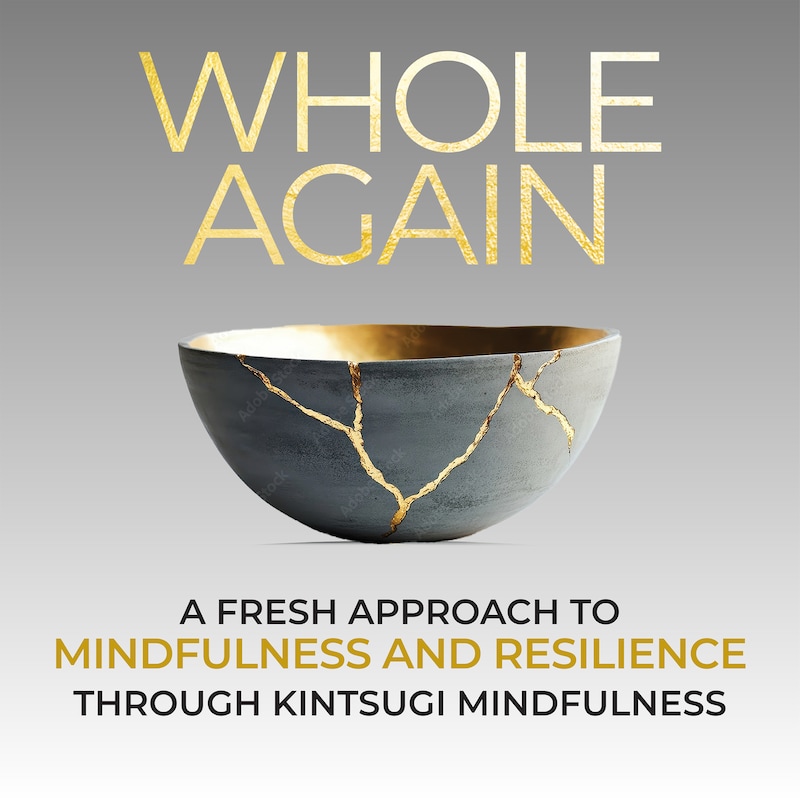
With Whole Again: A Fresh Approach to Healing, Growth & Resilience after Physical Trauma through Kintsugi Mindfulness, listeners explore resilience through personal stories of trauma, scars, and injury while learning to overcome PTSD, imposter syndrome, self-doubt, and perfectionism with self-compassion, self-love, and self-worth. Through insightful discussions on building resilience, fitness, and stress management, as well as mindfulness practices and digital wellness, the show offers practical tools such as breathwork, micro-dose meditation, grounding techniques, visualization, and daily affirmations for anxiety relief and stress reduction. Inspired by the art of kintsugi, the podcast embodies healing as a transformative process, encouraging a shift in perspective from worry and overwhelm to gratitude and personal growth. By exploring the mind-body connection, micro-dosing strategies for emotional well-being, and holistic approaches to self-care, this podcast empowers listeners to cultivate emotional resilience and live with greater balance and intention.
Transcripts
Hey there, it's Michael. Welcome to Whole Again, A show about helping us embrace life with mindfulness and resilience through the wisdom of tsui. I hope you love listening to this podcast as much as I love sharing it with you three times a week. This is a passion project for me. I so want people to feel safe, to feel healthy, to live more mindfully, and with more resilience and strengthen our ability to persist and to endure as we travel together through a period of time that feels uncertain, that feels chaotic, but with all of our wisdom together, our collective wisdom, we can figure out how to.
As I would say, pedal forward with more grace so we can create a powerful ripple effect that not only changes our lives, but changes all the lives we ripple into. And today, get ready for an awkward segue right now. I wanna talk about taxes with you. I know. Weird transition. Michael, you probably loved what I was sharing earlier.
And now we're gonna talk about taxes. What gifts, well, before we get into it. As we do, let's take a nice, healthy breath in. Nice full breath in. Breathe up through your nose. If you can breathe deeply down into your belly. And now release the breath. Give yourself permission to settle into the moment.
Perhaps relax your shoulders if that felt good. You may wish to take a few more. As I continue to talk about taxes, I actually think Ben Franklin said that the only two certainties in life are death and taxes. Now, today, we don't have time to talk about death, which might make you happy, but we are going to talk about taxes.
I think most people don't like to pay taxes. They don't wanna pay any more tax than they have to. Of course we love all the services, but we don't want to pay the tax. But that's for again, another day. But taxes come in many forms here in this country. In the US there's the federal income tax, there's state tax, there's an estate tax.
There's capital gains taxes. There are consumption taxes like sales tax, property tax. There are a lot of taxes out there. Politically, there's always much debate on taxes. It always seems though, that the little guy in gal, and I'm a big fan of the little guy in gal, they tend to hold more tax rocks in their backpack than the wealthiest among us.
But we'll save that topic for another episode. But there is one tax, one tax that 97%. Which is a number I just made up, but 97% of people who have smartphones pay and we never talk about it until now. It's your scroll tax. You might be thinking, scroll tax. I've never heard of the scroll tax. And I would say, yeah, I know.
That's why we gotta talk about it. I'm not sure if you ever watched that movie, I forget when it was made, but it was made years ago, called The Social Dilemma. In it, they talked about how if the product is free, you are the product. Well, when it comes to social media, guess what? All those apps are free unless you decide to do the premium membership on LinkedIn, which is probably not worth it.
But again, I digress. We are paying. For social media through our scroll tax. It's the tax we pay indirectly when we scroll our time away on social media. And it has three components. Yes. This is a complicated tax people. The first component is about the tax on our attention. It's the endless micro switching the mental residue.
That comes from scroll from our shallow focus. So you might find yourself in line at Starbucks or wherever you get your latte on and you grab your phone or you're working on a task. You come into a challenging moment on that task, and you grab your phone. Whenever you hit a bump, you grab your phone.
When you're at a stoplight, you grab your phone. So instead of staying in the discomfort of that moment in line waiting for coffee or on a work task or whatever, we grab our phone and we scroll our discomfort away, and it zaps our attention. It kills our ability to focus and get things that really matter done.
The second way the scroll text works is that there is an emotional component. Our feeds get amplified by that algorithm, and the amplification just gives us more anger, envy, fear. It can feel like our nervous systems are always on. They're always on high alert waiting for breaking news, and when we spend so much time in that mode, our nervous system depends on it.
That becomes the new normal. So when things get quiet and they slow down, it can almost feel like it's flat and we can feel restless. So we grab our phone 'cause we need more of that juice, more of that candy. Our nervous system is crying out for it even though it's not healthy. The third way the scroll text works is through an identity text.
That's the text. They collect when we place our identity in how many likes we get or how many followers we have. So when our sense of worthiness starts with numbers, with stats from social media that is driven by the algorithm, then we drift away from who we are becoming. Now, to be transparent, there are other components to this text, this scroll text as.
All of the other taxes, they're all pretty complicated. For example, there is a physical component of the scroll tax that we won't get into today, but basically it goes like this. If we find ourselves scrolling before bed, it reduces the quality of our sleep or the hours we sleep, we wake up tired, we chase our tiredness with caffeine, red Bull or coffee, and.
Carbohydrates, then we have a crash. So we chase it with more carbohydrates and more caffeine, and that cycle continues throughout the day. Then we don't move as much because we're tired. And since we don't move that much, we start to gain weight. And when we gain weight, that impacts our overall health and we're less likely to sleep well and we're less likely to move.
So we keep on scrolling away as a way to cope. And you can see how the cycle goes. Scroll Tax is wicked expensive, and it's something that we all pay if we have a smartphone with social media accounts on it. Now, I'm not saying we should get rid of social media altogether because it can deliver education and entertainment and can connection.
Some of my closest friends right now started or were formed through social media, so there's value there. That said, there's still a scroll tax that we all pay when we use our phone. So this is really about how do we change our relationship with our tech, with our phone, and what we happen to be scrolling on our phone.
Because I do believe if we're not intentional with how we use tech. In this case, how we use our phone and what we put on our phones, the net. Net is more harmful than good, but we can take a different approach and use our phone as a tool in our toolbox to bring us more connection and greater health.
While we don't have control or power over the algorithm, we do have a lot of say we can do things to reclaim our time. Gain more power over the algorithm, and we do so in our way here at Pause, breathe, reflect, and hold again by taking small steps consistently over time. Here are three ways we can actually change our relationship with our phone and social media.
First step, look at all your social media accounts and select one that you feel you can delete. For the next 30 days, start off easy. It doesn't have to be the one you use all the time, but delete one and see how that feels. Reflect on what emotions pop up. You can always access it through your desktop or laptop, but see if you can take it off your phone and in time you may wish to add another one, but start slowly, take small steps.
That's the first step. We start to change what's on our phone. The second step is to change our feeds, so you can go into any of your social media accounts, pick one again. We start small, we go slow, and we begin to curate our feed by looking at who we're connected to and what they post. So if they don't post things that align with our values.
Then we may wish to delete them, remove the connection. If they're posting things that bring up emotions like anger and fear or anxiety, they may not be people you wish to follow. And I know these first two steps are challenging. Much easier said than done because the whole idea of pulling back on something that's so commonplace today, well.
It can feel a little scary because ultimately we all want to feel like we belong. And social media can do that for us, that we belong to something because we follow a certain account, even though that account may not make us feel good inside, mentally, emotionally, or physically. So as I mentioned, all of this can feel scary.
It's natural to wonder, what if I miss out? That whole fear of missing out. FOMO is real. It drives a lot of behavior. Or what if I feel like I'm being left behind? I don't know what's happening in the world. All that makes you so human and our brain and our body will sort of resist this because it's so used to the constant scrolling.
So that's why we start with a small step and we go slowly as we make this change. Now the third thing you can do, and this is all around building community and connection. We talk about it all the time that there's no connection in the world anymore, that we're all divided and there's a loneliness epidemic.
And the data suggests that that is indeed true, but the only way we can build connection or rebuild connection and community so we can feel whole again, much like how Kintsugi teaches us. By putting in the effort, community and connection ain't going to appear at our doorstep. It's gonna take some sweat equity on our part, which means coming off a social and stepping into real life and reaching out to three people a week, which you can do on a walk.
You can even do it driving if you're not too distracted. Reach out. Reach out. Conversations don't have to be long, but it's a simple check-in to build connection to build community. But here's the pro tip, as you do, 'cause you're on your phone, let's not be one of those people that starts to scroll as we're talking to other people while we're on the phone.
Because we all know when someone's scrolling, not really paying attention. So let's do this a little bit differently and really build connection. Now, there is a fourth thing that we can all do, and to be transparent, it can be perceived as being self-serving. But when we created our Pause, breathe, reflect app with Microdose eq, we did so to help people scroll less and live more.
And what we have found is that people are now reducing their unproductive screen time. By up to an hour or more a day. And they're using that time to take better care of their health, to spend it with friends and family to get outside into nature. And some are simply just using it to do nothing, which is something, it's called recovery.
It helps us feel whole again, and it works by creating just enough friction on apps. You select those most distracting apps and websites. So if you're gonna use them, you can be more intentional in your use. Dr. Casey Holmes, who I interviewed back when the show was the Kazuki podcast, shared with us in her research that happiness is driven by our ability to set intention and where we place our attention.
So when we intentionally use social media and we don't let it tax our attention too much. It leads to overall greater happiness. So our app allows you to do that, reduce the amount of phone time so you have more time for other things. Plus, within our app there are over 700 meditations and breath work exercises you can do to help you navigate today's uncertainty with a bit more grace.
And we do live practices throughout the week, which can help you build more community. So I hope you'll check it out in Apple's App Store or Google Play. It's got a 4.9 rating, and I know based on the letters I get, it has changed lives. In fact, it has saved lives, and now we're helping people change their relationship with their phone and their tech and social media.
We're not deleting social media, but we are using it in a different way. In a way that can help us feel whole again and take better care of our mental, emotional, and physical wellbeing.
Well, we covered a lot in the last 15 minutes, including introducing you to a new tax, which you're probably not all that stoked about, but remember, awareness is the first step towards change. Before we go any further and move into the next part of our day, let's take another healthy breath in. Breathe in deeply down into your belly and release the breath slowly again, inviting the body to relax.
So yes, you are now aware of the scroll tax and there are ways you can reduce it. Your attention. Your emotional health, your physical health, your identity isn't taxed at the same rate it used to be taxed at. You can take the step in taking off one social media app from your phone today, trying it out for 30 days.
You can also curate your feed. You can connect with three people a week on the phone or in real life. And the bonus one. A bit of a plug for my pause. Breathe, reflect app. Now I have a list of other ways you can change your relationship with social and with your tech. If you wanna talk further, you can always reach out.
Again, this is a passion of mine. I want us to feel whole again. I want us to create more connection and social media. If we do it with intention, can help us build connection. But when we're not intentional with our use, our scroll tax can get expensive. But remember, you've got this. You have the power to make change happen.
As always, thanks for being here. Thanks for being part of our community. And if you haven't yet signed up for the free no tax here, free inspirational text messages I send out a few times a week. Simply text Whole again to 8 6 6 6 1 2 4 6 0 4. I'll set you up
and if you wish to learn more about creating beautiful ripples and how to prevent a bad moment from turning into a bad day, please visit my website, Michael O'Brien schiff.com. And sign up for my newsletter called The Ripple Effect, and join us each Monday, Wednesday, and Friday here at Whole Again, and discover how you can heal, grow, and become more resilient and celebrate our scars as golden symbols of strength and resilience.
Until then, remember, you can always come back to your breath. You've got this. And. We've got you.