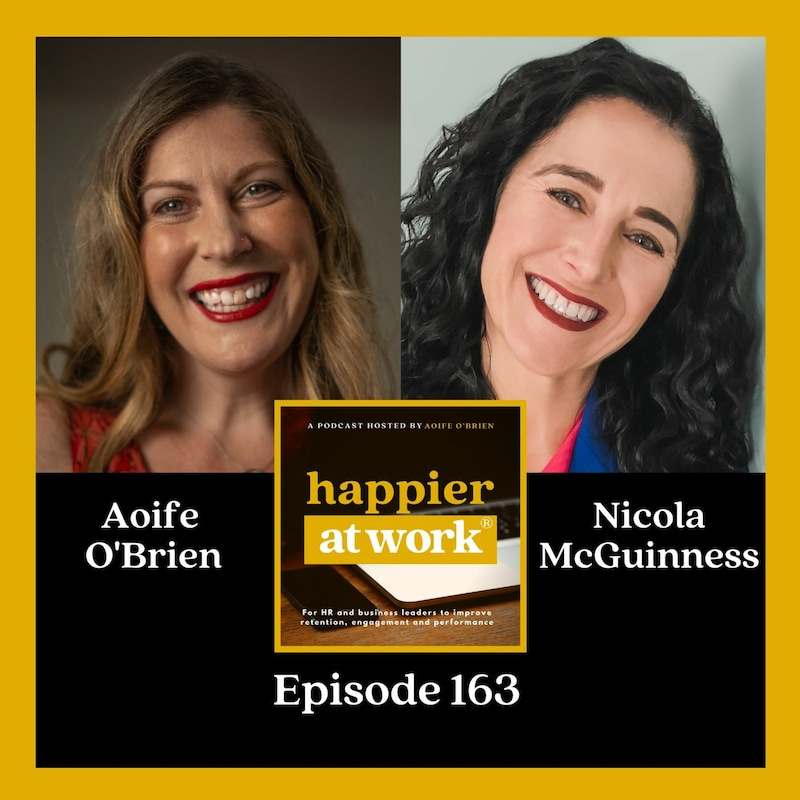
Shownotes
Are you hesitant to showcase your accomplishments? Join the conversation as we delve into the intricate world of self-promotion, with a particular focus on the challenges faced by women. Nicola sheds light on the biases and barriers that often undermine women's confidence in highlighting their achievements. Aoife and Nicola share personal experiences and discuss the societal expectations and cultural norms that contribute to this phenomenon.
Furthermore, Aoife and Nicola offer practical strategies to empower women to overcome these obstacles and thrive professionally. They emphasise the importance of leveraging platforms like LinkedIn to amplify one's voice and build a strong personal brand. By embracing self-promotion and owning their successes, women can break through the glass ceiling and pave the way for gender equality in the workplace.
This discussion serves as a call to action, urging individuals to recognize the significance of self-promotion not only for personal growth but also for achieving a more inclusive and equitable society. Together, we can challenge the existing narratives and create a supportive environment where women feel empowered to celebrate their accomplishments and contribute to their fullest potential.
Further points throughout include:
- Self-promotion creates opportunities and connections.
- Self-promotion is confidently expressing your unique perspective.
- Own your achievements and let your authentic self shine.
- Self-promotion celebrates your journey and invites others to join.
- Recognize and embrace your worth without self-effacement.
- Overcome fear and share your unique gifts with the world.
- Self-promotion empowers you to make a positive impact.
- Embrace self-promotion as an act of self-love and inspiration.
“I think self-compassion is quite a loaded word in terms of females … because we have been traditionally taught to put other people first, and then if we put ourselves first, put our own needs first. It's kinda seen as selfish or we feel that it's selfish. And so then when it comes to self-compassion, it doesn't sit quite naturally with us and it's really about changing your perspective around that insofar as if you want to have a self-compassionate nature to others, you must. Have it to you first. It's not selfish. It's not about complacency either. In fact, it's actually coming from a place where you're acknowledging that things are okay. You don't always have to be the best at everything.”
THE LISTENERS SAY:
Do you have any feedback or thoughts on this discussion? If so, please connect with Aoife via the links below and let her know. Aoife would love to hear from you!
Connect with Nicola McGuinness:
Linkedin - https://www.linkedin.com/in/nicolamcguinness/
Facebook - https://www.facebook.com/nicolamcguinnesscoaching
Instagram - https://www.instagram.com/nicolamcguinnesscoaching/
Connect with Happier at Work host Aoife O’Brien:
https://www.impostersyndrome.ie/
Linkedin - https://www.linkedin.com/in/aoifemobrien
Twitter - https://twitter.com/HappierAtWorkHQ
Inst - https://www.instagram.com/happieratwork.ie/
Facebook - https://www.facebook.com/happieratwork.ie
Youtube - https://www.youtube.com/channel/UCm0FKS19I5qSlFFmkx1YGqA
Transcripts
I have a question for you what are you doing to support women to leadership positions in your organization? From all of the work I have done with both individuals and organizations, I have compiled my learnings on this issue in my new guide, 15 Ways to Support Women in Leadership. You can download it for free at Happier at Work ie resources. The guide addresses us not only the individual responsibility of us as women looking to get to those leadership positions, but also the challenge of creating a supportive environment. A reminder of that, address happieratwork. Ie resources you're listening to the Happier at Work podcast, and I'm your host, IFA O'Brien. Through a combination of solo episodes and interviews with some incredible guests, we bring you the insights and practical tips to create happier working environments for you and your teens. If you enjoyed today's episode, consider sharing it with a friend or a colleague and leaving a rating or review on your favorite platform.
Nicola McGuinness [:I think acceptance passion is quite a loaded word in terms of females, for an example, because we have been traditionally taught to put other people first, and then if we put ourselves first, put our own needs first in a scene as selfish, or we feel that it's selfish. And so then when it comes to self compassion, it doesn't stick quite naturally with us. And it's really about changing your perspective around that so far as if you want to have a self compassionate nature to others, you must have to have it to you first. It's not selfish. It's not about complacency either. In fact, it's actually coming from a place where you're acknowledging that things are okay. You don't always have to be the best at everything.
Aoife O'Brien [:Hello and welcome to this week's episode of the Happier at Work Podcast. My guest today is Nicola McGinnis, who is a career and confidence coach, and we cover a wide range of topics relating to self promotion and how to promote yourself better at work. We start by talking about thinking, limiting beliefs, and how we change our thinking and steps to challenging those limiting beliefs that we have about ourselves. We talk about the inner critic versus the inner coach, showing ourselves some more self compassion, the good girl conditioning, and getting gold stars, and getting all of this positive reinforcement as children and what that does to our careers in the future. And then we talk about the art of self promotion and the importance of our tribe. So I really hope you enjoy today's episode. As always, I'll be doing a synopsis at the end of the key points and I would love to know what you took away from today's episode. Connect with me across social media. My links are all found on Happier at Work Ie, and I look forward to hearing from you. Hi Nicola, you're so welcome to the Happier at Work podcast. I know we've been talking about doing this episode for a while. So I'm really pleased to have you as my guest today. Do you want to let people know a little bit about you, your background and how you got to where you are?
Nicola McGuinness [:So delighted to be here, Garifa. Thank you so much. Yes. So I am currently a career and competence coach, working mostly with women and also a leadership consultant, doing a lot of training in the leadership space for corporates and organizations. However, I didn't naturally fall into that space. I have 20 years of a public sector background behind me, a role that I absolutely loved until I didn't. That was a role that I had said to myself, oh, they're carrying me out of here in a box. Great flexi tying, we've got retirement policies, great pensions, all of that. And then I just kind of felt flared, I suppose, in my work. It felt that I didn't have that impact, no sense fulfillment. In a sense, I grew the road and didn't want the next step up. So that left me in a position of I'm really stuck here, kind of institutionalized, lost my confidence through that whole 15 to 20 year career journey. Didn't even know what I wanted, no clarification around what I could possibly do or what I wanted, which is something I see in most of my clients today. And with that, I knew no one was going to come along and say, nicole, here's your dream job, and you assigned to me to do something about that. And I was very lucky to have the opportunity then to work with a coach. And that was the total transformation for me. He held up the mirror to me and he allowed me to see the strength and the experience that I had that I could use and build up that self belief that was so low, really, on the floor at that stage. And from there it was these small steps, small actionable steps. And COVID was quite beneficial to me in a way, in that, unlike many people, made me reflect on that feeling of looking back on either my deathbed or retirement and saying, why didn't you do something about this 20 years ago? Because it's so easy to sit there and spend another 20 years very comfortably going through the motions. And that driver was what made me take the actions for change. And that's when I started to train as coach and set up my own business. And it has just been an amazing roller coaster from there on in.
Aoife O'Brien [:It sounds like it there's so much there that I am exactly the same Nekula. So I loved what I did until I reached a point where I just didn't love it anymore. I love the career, I love the industry I was in. I'm still interested in that industry. I'm still nerding out. I kind of reading what's going on in fast moving consumer goods, that feeling of feeling a bit deflated, not having the impact that you want to have on the world, being in a career so long that you've kind of lost all of your own confidence in yourself and your own abilities. And I love this, working with a coach to hold up that mirror to you, to show you how brilliant you actually are and what you could potentially do. Retirement is only a mere 20 years away. What's the harm in sticking it out for another 20 years? And when I was chatting with this guy a few years ago, this would have been pre covered in person and again, held a mirror up to him a little bit where he was saying, oh, well, I know what I really want to do, but where my experience lies over the last 20 years is this, this and this. And it was like, okay, so how old are you now? And how old do you want to retire at? And he realized he was only halfway through his career. When you're in your really are only halfway through your career, so there is that opportunity to change if you want to. And equally, if you're in your 60s, there's nothing to stop you then either going out and kind of doing what it is that you really want to do. I'm hoping that I love what I do so much for as long as I can that I don't want to retire. I don't ever see myself retiring. I see myself having the impact that I want to have and really enjoying the process and not thinking I'm going to get to a state hopefully in the near future where I'm going to enjoy it then. It's not about that. It's about enjoying what you're doing now and taking that all the way to retirement, which maybe I don't want to get you more, but so I won't mention what I was thinking in my head, so it's all about that. But let's come back to this idea of career and confidence, because I know Nicola, there's a lot of kind of alignment between what you do with clients and what I do with clients. So do you want to kind of talk to me about what you see as the big issues out there in relation to confidence in particular?
Nicola McGuinness [:Yes. And suppose with my journey I'm able to say that I'd walk the talk as such. I came from that place of low confidence to a place where I know a confidence coach. And if he had to say that to me five, six years ago, I would have thought you were totally crazy. But I could possibly know me. And that featured that whole idea of where we already foreclosed so early on who we are, foreclosing on our identity. I'm not that type of person. I could never do that, no good at this. That's not something that I could do. And so I would have said all of those way back then and there's no easy way around this idea, around confidence. It's all in the action, you know, that just ate fast. And so everything that I've done from this stage to now is around taking those small, really scary steps. Because as humans we are cognitively lazy. So we like staying where we are because it's too hard to think about what we want to do and we'd fall back what we're always doing because that's the easy space to be, even though it's not serving us. And we're really scared about the future because we can't measure it with nothing to measure it against. But we do measure against what's happened in the past and inevitably we will pull up all the bad things that's happened or the negative things that are feeding into that bias that we have, that confirmation bias of unlocked this. And she remember the time I did that and growing up, I could never do this. And so it is really our confidence is about well, we look at ourselves through our own limiting beliefs. And when you are able to tack on that limiting belief, get up to the root cause of it. What is that emotion? What is that feeling that's coming up every time you go to do something that's knocking your confidence? Until you get to that, no amount of affirmations are going to kind of plaster over the fact that that feeling, that emotion is going to come up. So it's really a lot of internal work in terms of the confidence first before you can start that longer term career journey as to where you want to get to. So that's what I do with my clients. It is about working internally first. That type of work is not something you do on a day to day basis. You're so busy with all the roles that we have playing those out and it's not something you want to stop and say, you know what, I'm just going to start working on limiting belief today. Exactly what we're back and these are so you, like me, got an opportunity to work with a coach to make you pause and to do that reflection so that you have the time and the support and the accountability to change and take the actions and grow your confidence.
Aoife O'Brien [:This is it. But the terrible thing to kind of build on that point as well. Nicola the terrible thing is that we're not taking action on our limiting beliefs. We're not even aware of them, but we're behaving in line with what our limiting beliefs are. So even though we're not taking action on them on a day to day basis, how we show up in the world is based on what we believe, essentially what we believe about ourselves.
Nicola McGuinness [:That's so true. And there's a wonderful book, I'm not sure where you've referenced at any time in any for podcasts by Adam Grant that Think Again, have you read I'm.
Aoife O'Brien [:Actually listening to that book right now. Yeah, I'm currently listening to that on audio and loving it so far. I'm near the end, actually. But yeah, just think, challenging our thinking, how to think, how to kind of have constructive arguments. And for me, I've always been the kind of person who likes to throw in the devil's advocate. I don't necessarily believe that. But what if you consider another perspective and there's a lot of people who don't like that, they don't like that sort of challenge. It challenges your own self identity. And maybe we kind of talk about that, is that it's more comfortable, we are more comfortable feeling right about ourselves when we have these limiting beliefs and say, I was never good at that or I could never possibly do that. We're more comfortable feeling right about ourselves rather than our entire identity being challenged by saying, well, what if I could do that?
Nicola McGuinness [:Yeah, but our brains don't like to be rolled. Sure, they don't rely on those stereotypes. Whenever you see, for example, women pushing back on stereotypes, that's why they get that backlash, because you're not behaving the way you're supposed to behave. And so similar to us and our beliefs. And that's why I referenced Adam Grant in that he was saying that a lot of the that we've been brought up on were based in very shaky grind. And if you really went to investigate the evidence underneath that, it would make you think again. And we don't like to do that. And so when we start to investigate the evidence that's upholding our limiting beliefs, again, very shaky grind, very little evidence to uphold that. Even that little small piece of evidence, that's the piece that we cling to and confirm all that knowledge that we believe about ourselves. And it is you mentioned that perspective and reframing. So first, the first step is the awareness. That takes time to go internal, to listen to the stories you're telling yourself and then you can question it. And only then can you start to take action against that or to prove that that's wrong. And that's hard work. Like I said, we are busy as such, only have that motivation and it gets to stage where the circumstances are no longer acceptable. And I think by the time people come to me as a coach, they no longer want to accept those circumstances. They want to feel or be in a different place in sex or in your string.
Aoife O'Brien [:Yeah. So it's so interesting going back now, this I can assure you, listeners, whoever tuned in today, this is not an ad for Adam Grant's. Think again. But I just want to illustrate something. He very powerfully, has the use of stories throughout that book. But one that really stuck in my mind was we laugh at people who use Windows 95 software, but you may still have beliefs, whether they're beliefs about yourself or beliefs about the world that you formed in 1995. And so why aren't you kind of questioning those beliefs that you have? So I just thought that was a really powerful image of, okay, so we laugh at some people who are using this old operating system, but what if your brain is on this old operating system believing thoughts or behaviors from as a way of illustrating that? I just thought it was very powerful for me is something that really resonated.
Nicola McGuinness [:Brilliant analogy. I mean, that book, again, like, not an advertisement, but I used to go walking to listen to it, and I never wanted to come home. And then when it ends, I was really sad.
Aoife O'Brien [:Yeah. And that's the same. So I'm out for my walks, listening to it at the moment, and I'm kind of like, I need to walk for a little bit longer so I can listen to more of this. But it was interesting as well. Nicola coming back to kind of the work that you do with clients, this idea of awareness, and that's something that's always the first step for me when I'm working with clients on impostor syndrome. It's how do you become aware that this is the area that you're kind of stuck in and acknowledging it as impostor syndrome? Like, this is something that you need to acknowledge and that I need help with sometimes. Sometimes you don't realize that they're the beliefs that you're kind of coming from. So I'll give an example. Like, I was going to apply for an award I was to a friend of mine about it, and I said, I'm not sure if I'm going to apply for that award if I'm good enough. Whatever script I was running in my own head. And I call my impostor Sandra. So when I told my friend about it, she said, is that Sandra speaking or is that IFA speaking? So Sandra speaks from a place of fear and abandonment and not good enough, whereas IFA will be speaking from a place of how can I better self? And even if I don't win the award, then how can I learn from this experience? So it's really interesting that you say it is just about noting and becoming aware. And like you say, sometimes this takes a long time. The work is really hard to do. We feel a little bit lazy, and so we don't do encounter resistance. And we tell ourselves, actually, I think things were better the way they were before, but maybe it's those people who have reached this where I just can't the way things are anymore, and I'm going to make a change, essentially.
Nicola McGuinness [:Yeah. And essentially to get to that stage, to get to put the work in. I love what you said about Sandra. And IFA we have so many voices inside of us, but the voice that we take the lead from the most of the time throughout our life is your Sandra, for example, that inner critic. And yet we have a wonderful inner coach, but we don't even know who he, she, or whatever they may be because we don't listen to them enough. And their voice is very soft and low and not as light and harsh as that inner critic. So part of my work is to help bring out that inner coach and that's all around that course awareness and then the self compassion and treatment as your own best friend. We've heard all these things before. They're all underpinned by evidence and all the little small steps. When people said to me, confidence, tell me, tell me about confidence, I have no big golden nugget to say, here's how I'm going to give you confidence, here's how you're going to grow your confidence. It's all the little small tips and tricks and techniques that build incrementally on each other for you to show up as a confident person.
Aoife O'Brien [:Yeah, I love that. And what resonates with me there is this idea of self compassion. We think for a long time in business we've always been taught to kind of identify what our weaknesses are, overcome our weaknesses, which makes it really hard, I think, to be our attention is drawn to whatever it is that is not great about ourselves or areas that we're not particularly strong in. Can you talk a little bit more about self compassion and how people can build that sense of self compassion? I know this is kind of for me personally, I would love to know more about that, but also, I think for people listening, they would value understanding more about how to be more compassionate towards themselves.
Nicola McGuinness [:Yeah, and I think self compassion is quite a loaded word in terms of females, for an example, because we have been traditionally taught to put other people first, and then if we put ourselves first, put our own needs first in a scene as selfish, or we feel that as selfish. And so then when it comes to self compassion, it doesn't sit quite naturally with us. And it's really about changing your perspective around that so far as if you want to have a self compassionate nature to others, you must have to have it to you first. I remember I had a period one time and we were going through where she was in her career, in her life, and I said, oh my goodness, you're really not you're definitely the bottom of your own list. She said, Nicola, I'm not even on that list. And that was really saddening to hear that. So it's self compassion, it's not selfish, it's not about complacency either. In fact, it's actually coming from a place where you're acknowledging that things are okay. You don't always have to be the best at everything worse. When I wait and says there's always going to be someone better, always, so it allows you to stop that comparison, then it gives you that motivation to try at something and so it's back to this idea of treating yourself as your own best friend. I'll say to my kids, don't be afraid to let people die if it means that you're letting yourself die. Even if it means letting me or your dad dying. Be true to yourself. You're number one. And I think when we remember that, there's a lovely thing that I tell my clients today, and I'm a brilliant fan of Mel Robbins, and, you know, she's written a whole book around how to give yourself a high five, which seems mad, but it's another bit. Because women, I say, you know her, find yourself in the mirror as if you are your own best friend. It works for some other people, just can't that's a stretch too far for them. But I say at the very, very least you're putting a smile on your face. So those small little things of self compassion to grow your motivation to change or to make that move that you need to get yourself unstuck, that's the foundation so that you yourself belief on.
Aoife O'Brien [:Yeah, I mean there's a few things that are coming up for me when you talk about that Nicola. And the first one is fill your own cup first. And I'm sure people have heard this term before but it's about looking after yourself, filling your own cup and doing the things that are important to you and getting yourself on that list. I'm very conscious of using the word guilty because I think there's associations with that. But I'll use it in this just because I think it's an evocative word, it gets the point across. But I'm guilty of doing that as well where I'll put clients or I'll put the business before I'll put myself. So there's days I always commit to getting out for a walk but there's some days where I haven't had time. But then I have to think, well how did I prioritize my time today and why didn't I get on that list and why didn't I get to go out for that walk? So that's the kind of the first area I suppose is the filling your own cup. The other thing that strikes me with this idea of not being on your own list or putting other people's needs and desires ahead of your own and not wanting to let other people down is people pleasing. Do you see a lot of that coming up?
Nicola McGuinness [:Oh my goodness, there's so much in that whole good girl conditioning.
Aoife O'Brien [:Yeah.
Nicola McGuinness [:And you think about the way that we've been traditionally taught in our education system. We go to school and there's a correct and an incorrect answer and we work really hard and we do well, and we make it a Go star, we make it an A grade. And so that approval is pleasing to us. And so we continue to work through that or seek approval and we fear this idea of disapproval or failure and then we go into the big bad world of work and it doesn't work way. And we have to work through a lot of different unconscious biases inequalities working with our own confidence and we then don't take risks. And when I say we, I'm talking about the females here in terms of their careers because that's who I mostly work with. So we won't take risks or we underestimate our achievements. We play small because we want to be liked and all of that like ability bias and so that people pleasing for everyone except for ourselves puts us at the bottom of the list and it feeds into so many elements of our lives and in careers, it is around being nice, remaining sticking to the stereotype of how you should behave, rocking the boat and not speaking up and challenging people who are maybe of more experience or at a higher level than you. And that does you absolutely no favors in your career. And so this is why a lot of the work that I do is all around getting visible and breaking, dying. That's a sad condition in high self promotion which starts from such a young age. So when you think about a young child, for example, of age four or five, who's maybe got a new pair of shoes or maybe they've won a competition at school and they can't read and they run in through the house and say look at my new shoes, or look at I won. And you just want to share in their joy, which is brilliant. And that's where you high five them. And by the ages of nine or ten, you start to see the societal conditioning around. That where they kind of hold back, talking about what they have, what they've gained, what they've won, for fear of that pushback or backlash from their colleagues and are their friends. And I've seen that in action. And so that builds, and it's their sight from everything that you hear as a child. And I'm sure you've all heard things like self praise is no praise. I know I did all through my life and listened to you on who does she think she is? And all of that. And so we don't self promote or we don't speak up, we put her head dying back to this conditioning of work hard and you'll do well, which is a fallacy really. There's so much evidence out there to show that regardless of what we think about, our hard work will be seen, it won't, our accomplishments will not speak for themselves and we need to be this we're twice as likely to move through our careers and get promoted as opposed to those who don't self promote. So it's really uncomfortable and it's really epic because we've been addition to think that way. Yeah, and the bias is then the pushback that we get both and I'm saying this from statistics that I know, from a program that I work on called I Am Remarkable the Google Initiative. I know you know about it effects.
Aoife O'Brien [:I do, yeah.
Nicola McGuinness [:It's. Both men and women don't like women to self promote. And sometimes I think that as women, we think we shouldn't be biased against our own gender, but we absolutely are, because we're all humans, we all have biases. And that initiative actually stemmed from the fact that Anna, who started it, had a bias against a woman who was set promotion. And she wanted to figure out why she had that and all the supporting evidence to that. And she wanted to challenge that. And this is what that initiative does. And I love it because it is so impactful. It's in your face. Here's what happens, here's why you don't set promote, here's what happens you don't and here's why you have to and here's what happens every day.
Aoife O'Brien [:Yeah, I'd love to come on to that in a second Nicola, but I want to pick up on some of those things. So I love this idea that being the best and you can't be the best at everything, the gold star like I think there's so many people, myself included, I love that gold star. Oh wow. If I could get a gold star for everything I do in my work now as well. It's that external validation, the recognition, wanting to be them, but this likability bias as well, wanting to be liked and how that gets in the way, not rocking something else that sprung to my mind. I don't know if it's a widely used term, but certainly in Australia it's used. It's called the tall poppy syndrome. When the tall puppy grows higher than the other poppies around. People just want to chop it down. Basically, you want to chop it down to sign. And I think this idea exactly as you said, who do you think you are saying that? Self praises, no praise. These are all messages that we initially would have heard externally, but now we're telling ourselves internally that's what's going on in our heads when we start to self promote. So maybe we can talk about what happens when we don't self promote, how do we self promote and what happens when we do.
Nicola McGuinness [:Yeah. So when you just don't self promote and you look around you and I'm sure maybe your listeners could think about my colleagues who are self promoting and doing very well and maybe not as competent as they are, confidence does not equal competence. So it's great to be confident and have that humility, but not with the arrogance that comes with it. And so your self promotion peers will get on better. That is a simple fact. And so we have to push through that uncomfortableness. And there are ways that you can do it that you don't feel icky. The idea being that you can tell stories so use and see every opportunity that you can to speak about your work and. What I will say is that you're either working for yourself so you have customers that need to know what you do, your CEO or your director needs to know what you do. But they're all very busy. So you need to bring yourself to them. They will cite your customers, your CEO, your director, your manager. They will cite you for bringing the good news stories, for showcasing your work because they are busy enough that they can't come and seek it a lot of the time. Brand additionally, they're busy self promoting for themselves, probably the reason why they are in the position that they're in. And I think self promotion is becoming more acceptable with social media. So if you are a wedding photographer, then you want to put out your words out there and you want people to see your work and so we can do it that way. The other thing I'd say is when you self promote, what we tend to think as with part of our human nature is we go to the extreme negative and think oh my God, what are they going to think about me again? That's who does she think she is? And we fear that judgment, but we never start to think this is really beneficial. People want to know about this, this grow mind and all the good positive things that come out of it. And it is so surprising to many to know that that feedback is almost always positive. So when you are surrounding yourself by the right type of people who are there to support your career growth, your business growth and support you as an individual, you will hear back and people want to know what's going on in your life. Get my husband to set promote war on LinkedIn and he's cringing back. People want to know what you've been doing. They want to see involved in your life and so you're doing him a favor, getting noble back judgment.
Aoife O'Brien [:Yeah. And you're so right Nicola, in that there's a lot of people out there who support us. Someone said to me a few years ago, people out there want you to succeed. You do realize that, don't you? Rather than coming up against this fear of oh, people are going to judge me, they're going to say all of these things when I start talking about myself. But the people who do judge you or the people who do try and take you down, they're not the supporters that you want in your tribe. Can we touch on this idea of maybe women specific tactics that people can use to promote themselves without feeling icky and then we go on to talk about the tribe and the people that you surround yourself with.
Nicola McGuinness [:Yes. One of the key things that really underpins confidence and this ability to self promote is to know who you are in terms of your values. And again, I know you value known your values as well if I haven't listened to your podcast, and I know you, I cannot stress enough the importance of that. I was just doing training yesterday in Dublin with a room full of executives, and I always say this, and it always reinforces this idea that not a lot of people do work on their values. So I'd say, who hears their work on their values? A room full of people and not one hand went up. My wish was that everyone think, yeah, and all their hands went up, which it didn't. When you know your values and what's important to you, you stop that comparisonitis. You understand that what other people think is really not any of your business and shouldn't impose in the actions that you take. And that's when you can grow that confidence to start speaking up about your achievements. The other thing is, and again, this is underpinned by the Iron Remarkable program, is to acknowledge your achievements. We're so busy. Back to this idea of being busy. So you might pull up a fantastic project, you might win a new contract or get a big promotion. Ask. Bin, bin, bin, bin, bin. Right, what's next? Without stopping to acknowledge that and let that sink into your subconsciousness, to binge on that self confidence, to own it so that you can speak about it and to celebrate it. Again, back to that self compassion. We have to celebrate our successes because when we come to speaking about them, we'll only underestimate them and we'll overestimate what everybody else does. So we need to acknowledge it, to build upon it, so that's the premise, if I am remarkable, is to say to yourself, I am remarkable because a name X-Y-Z every day in the mirror, talking to your dog in the car, whatever it may be, so that when it comes to speaking up, you've already done it. You believe it first and then that allows other people to believe what you say. Ultimately, people will believe what you say, but you need to believe it first.
Aoife O'Brien [:And Nicola, like, we touched on this idea of the supporters versus the people who maybe want to cut you down to size. Can we talk a little bit about the importance of having that tribe? Maybe how to find them, how to be on the lookout for them if you don't have them already, and the benefits?
Nicola McGuinness [:Yeah, I mean, I wouldn't be where I am for today if I didn't realize the importance of my network and value it above everything else. If I'm honest, IFA when I worked in that 20 year career in the public sector, it was very much head down do the hard work. And I didn't realize that I should have been out there thinking long term about my career and networking and growing the tribe. When they started a business, they had absolutely no choice to do that because it very quickly materialized that I needed to be visible I was lucky in a way because I am also, I found in and I am the leader of a lean in network in Yuri. So we've over 400 members. So I was growing my network. That was done in an effort to find that sense of fulfillment outside of my day job, which has immersed itself into what I do on a daily basis, working with women. So I was already growing that network. What that network did to me begin with was to open my eyes to the fact that there was a whole world outside of the public sector body I was working for and women were out there living their best lives. So initially that's what it did. Secondly was I find the value and the joy from being surrounded by people that wanted to support you. And that trying to describe that feeling is very hard for me because it really feels like it just thins up my heart having that support, knowing that you could do anything with the type of the people behind you. And when I work with my clients, we work on long term goals and what is their goal and how they want to get there. And very often we get caught up in the high. But how am I going to do that? Or I don't do this and they don't have that. Back to that negative vice and this limiting belief. And I say it's not about the who sorry, it's not about the high, it's about the hey, who do you know that has done this before that you can contact? Who do you know that can support that? Who do you know that can open those doors? Who do you know who knows someone who can? And so it's even about those loose connections. Sometimes our network can be very modernous. People like us, people in a similar industry. It's really important to get that diverse network because you just don't know when that next opportunity, what that conversation might lead to. That person in the airport that you're sitting beside, talking to, has a whole other network that you would never be able to tap into. Or if you're looking for a job, you're in an industry where you are in an area, in an environment, we want to hear about similar jobs because all your people around you are in those similar industries and you need a step away from that and widen that whole network. And like I said, the opportunities are immense and LinkedIn is amazing for that. I know I have created some of the most wonderful relationships from LinkedIn.
Aoife O'Brien [:I'm sure we must have met on LinkedIn, nicola, we are whenever years ago, whenever we connected, there must have been LinkedIn.
Nicola McGuinness [:Yeah, totally. And so it is like those loose connections. And again, I'm talking about visibility and self promotion and putting yourself out there. And I will say that LinkedIn is the most wonderful tool for self promotion and when you understand that for 90% of the time people on there are self promoting, that's okay, promoting, but there's a lovely element of relationship building and supporting each other too. So again, where's the means to do it? Get Ike from behind your laptop and chaffed have a client who doesn't like networking. We talked about going to networking events and remain in silent for a period of time. Being the nature, soaking it all up and being making your presence known. If your presence isn't known, there's not much value in you being there to be visible in some way, shape or form. But that's a process. You're not going to just jump into your TV and be the most visible person and feel comfortable about it.
Aoife O'Brien [:This is it. I also love the idea that networking and I learned about this a few years ago, we always associate networking with being getting out there and meeting people in groups, but it's also meeting people one to one. So if there's someone you particularly resonate with, you can reach out to them and connect with them on a one to one basis. I like that type of networking. For me it feels a bit more authentic. You get to know the person on a human level, whereas sometimes when you go to those networking events, it is a little bit too much. What's in it for me and how can I self promote? Whereas when there's two people coming together on a call, it's more about how can we make this mutually beneficial? How can we work together for the greater good? That's going to be a win situation for all.
Nicola McGuinness [:Yeah. And the idea being, when it comes to your career, you want to be the person that's front of mind when someone's thinking, who do I know that can do X, Y and Z or who do I know you know someone. And that's not going to be you if your head's dying, working away, being maybe boxed in in that role that you're really, really good at and really appreciate it for that organization, but not good enough for your growth.
Aoife O'Brien [:Yeah. It makes me feel better for promoting myself on LinkedIn because I do try and promote myself. I do try and let people know what I'm up to. But equally, if someone is at a corporate role, they should be promoting themselves on LinkedIn as well. So that when it comes to whether it's internal job opportunities or whether it is an external move that you're going to make that you're top of mind when it comes to that type of work that you're talking about, that you're doing in the kind of day to day stuff that you're doing. I'm reading a book at the moment as well and it kind of ties in with what you were saying about the diverse network. It's about the different types. Well, sorry, the book isn't about this, but a part of it touched on the idea that it's the different perspectives that you need. So you need those supporters, but you also need people to challenge you and to tell you the truth and to kind of you I was going to say keep you down, but I mean, like maybe keep you grounded. Not to kind of let you go away with the fairies and to challenge some of the thinking that you have and maybe be a bit of a sparring partner. And then you need people who are kind of more loose connections as well. So there's all of these different types of people that we need if we can only strategically form that network around us and that tribe around us.
Nicola McGuinness [:Yeah. And sometimes it happens naturally because you gravitate those people are they gravitate to you. Again, back to knowing your values and what's important to you. And if you live in that, you'll find those people and it can be one person who's maybe three of those roles in one. What you do need to be aware, make a conscious effort to say, right, okay, I quite got quite a homogeneous network. I need a challenger, I need a motivator, I need a coach, I need a sponsor. Now let me start getting aware of who I have around me and who knows someone. But you have to be conscious. That stage, it's not going to come or fall in your lap like that.
Aoife O'Brien [:Yeah, because it's something certainly I'm becoming more aware of and definitely having that challenge. Like I said earlier in the conversation, I feel like I can be that devil's advocate and I'm happy to play that role. Sometimes people don't like that, they're not very receptive to it. But I would love someone to do that for me as well, to be honest about what's going on. Nicola I can't believe how quickly the time is going, but we've been talking for quite a while already. Is there anything else that you want to get across? Is there anything else that you'd like to share on the podcast today?
Nicola McGuinness [:Well, I suppose a lot of my background and when I started the Lean In organization was all around gender equality. And so when I work with women, I know a lot of your podcast, podcast guests have covered all of that areas in terms of inequality and the bias that we face from work. And one of my passions, and I just literally had this conversation before we started our podcast today, was that I wish women were educated in the early days of their education about the pitfalls or the challenges they're going to meet when it comes to their careers. So we come out and we come out with these wonderful grades and we're really confident and we maybe have a degree and we want to conquer the world and yet then all of a sudden we are challenged with inequalities and bias and that pushes against our confidence. But if we were made aware of that at the state of the world as it is, instead of the workplace as it is, we could be better equipped to deal with that and not set us back so many years. Or not settle for where we are, or not make decisions based on what might happen to us in the future. And that I have a passion for are working with children at confidence so that they have the right tools and techniques to manage that and so that women don't come to me in their early to mid, late forty s and fifty s with that lack of confidence. So essentially and stop in my old.
Aoife O'Brien [:Pipeline but it's for the greater good. I think it's a sign of a job really well done at that level that if you can stop people who need your services and that's similar. When I think about happiness at work, if you can get those early career people to understand more about what their values are, what their strengths are, and to build a career around something that lights them up rather than getting to mid career and thinking, I'm going to stick this out for another 40 years, or I need to really change what I'm doing here in order to feel much more fulfilled with a sense of meaning and purpose. So really interesting. Nicolette, the question I ask everyone who comes on the podcast, what does being happier at work mean to you?
Nicola McGuinness [:I suppose we've already touched upon it. When I talk about new things in my life is my tribe. It is the people around me. No one I have that support when I move from the public sector to start my own business and many, many people would find this you're lonely, it's really hard. You don't know enough a lot and you're learning on the job I could not and I did refer to start I could not would not be where I am if it wasn't for the people that I had surrounded self with people that I could pick up the phone and say this has just happened. I feel rubbish. What did you do? Or they said no you're a coach. What would you tell your clients? You know better than that. And I often laugh. Coaches, eight coaches.
Aoife O'Brien [:Part of being human, isn't it?
Nicola McGuinness [:Yeah, that's it. We're just naturally going to the negative. We have to pull ourselves right back out of it again. It's just haven't I have a wonderful tribe always women and to have new people in that tribe as well. I love meeting new people but very, very thank that I have that I didn't know I needed when I had that kind of public sector job and I was just doing as I do, shrapnel let it all happen. And then whenever I came to that stuck position in my life would have truly benefited for pavnaps network which I didn't have at that stage very important to be open to that.
Aoife O'Brien [:Love that. And if people want to reach out, if they want to connect with you, what's the best way they can do that?
Nicola McGuinness [:So I'm on all social media platforms under Nicola McGinnis Coaching and my website Nickel McGinnis Coaching. And I also if you go through my website you can sign up and I send a weekly Sunday emailer. I set you up for a competence tip for the week ahead.
Aoife O'Brien [:Love it. Thank you so much for your time today on the podcast Nickel. Absolutely loved our chat. Loads of kind of golden nuggets there for people to take away and take action. I'm always like starting today, what small action can you take? So really appreciate your time today. Thank you.
Nicola McGuinness [:My pleasure. Thanks so much Issa.
Aoife O'Brien [:That was Nicola McGinnis from Nicola McGinnis Coaching. And I really hope you enjoyed today's episode. Before I go on to summarize, I want to remind you of how to connect with me and get involved in the conversation yourselves. Head on over to Happier at Work Ie and you'll find all of my social links there. Now we started the conversation talking about our own limiting beliefs. So when we tell ourselves things like I couldn't do that, or I was never good at insert, whatever that means for you, because there's likely some way that you're holding yourself back from your own limiting beliefs. And how we live our entire lives through the beliefs that we have. Oftentimes the limiting beliefs that we have about ourselves. Nicola shared about doing the internal work and how it's actually hard to do that internal work and sometimes we feel a little bit too lazy to invest in ourselves to take that time, but we just go on living in those beliefs that we've created ourselves. Now sometimes we try and do that work and we meet resistance as well. So we think, I'm much more comfortable where I am, or I can do this on my own, whatever it might be. But we all need that external support at times and we tend to listen to those voices in our head as well. We talked about the inner critic versus the inner coach and how the inner critic tends to have the louder voice and that's the one we listen to. But being your own best friend, being your inner coach and supporting yourself is so much more important to be able to achieve what it is that you want to achieve, to become more competent and more confident. So self compassion looks like putting our own needs first. Stop people pleasing and being afraid of letting people down. And it's really about focusing on ourselves and what we need and then confidence, and I talk about this all the time, confidence comes from taking action and it's those small actions that build up over time and that's how we build our confidence. There's no silver bullet to I want to be more confident overnight. It's those little actions that we take on a day to day basis. We went on then to talk about self promotion and how both men and women don't like women who self promote. I thought that was quite interesting and I'm sure I have heard about that before. But just as a reminder that it seems that nobody likes women who self promote, so we tend to not self promote. And we talked about the difference between confidence and competence. So there could be people who you're working alongside who have a lot of confidence and are happy to promote themselves, but they don't necessarily have the competence to back it up. And I'm sure as a listener to the Happier at Work podcast, you are very competent at your job. Perhaps you're not promoting yourself as much as you need to and you need a little bit more confidence. So some tips then, that Nicholas shared around promoting ourselves. It's become a little bit more acceptable with social media. We talked about LinkedIn as being a really great tool to use to promote yourself. And I know, certainly I do, that I post quite regularly on LinkedIn promoting myself and my business. The reason that people do it is it's beneficial for their career and themselves. People want to know about it, they want to know what you're up to and then you get that positive feedback which reinforces that you're on the right path. So the key to self promotion is, first of all, knowing what your values are, which enables you to stop comparing yourselves to others, to realize that what other people think of you is none of your business and you need to stay in your own lane. Self promotion also enables you to acknowledge your achievements. It's a way of acknowledging what you have actually achieved in your career as well. And I love this phrase that Nicola used from the I am remarkable program. It's I am Remarkable because and don't forget to tell yourself that as well. Now, something that sprang to my mind as I was taking notes from this episode is this idea of having unshakable confidence. And when you're doing that, it seems like you will have unshakable confidence by knowing what your true values are and being able to acknowledge the achievements that you've had to date. But the key thing is that you need to believe what you say first. We then kind of finished the episode talking about our tribe and our network and the joy of being around people who want to support you and who have similar values. This is something I'm adding myself. But people whose values align, people whose goals align with your own as well, and the vision for the world that they have. So being around those kind of people and the different types of people that you need. So you need coaches, you need people who can challenge you, you need people who can support you, there's lots of different roles that people can play when they are in your tribe. And don't forget to build up quite a diverse network of people around you as well. Sometimes we get a little bit caught up in the how and how would I build my tribe? But the most important thing is who? Who can support you? Who can open doors for you? That's it for today's episode. Hopefully you walked away with the very least one action that you can take to build up your career, to promote yourself, to become more visible at work or through the work that you do. I would absolutely love to know what that one thing is that you're going to do differently. Do get involved in the conversation on social media. Head over to Happier at Work Ie, and I'll be back next week with another episode. That was another episode of the happier at work podcast. And if you've made it this far, well done you. Thank you so much for taking the time out to listen to today's episode. If you did enjoy it, please consider leaving a rating, a review or share it with a friend. I would love for you to get involved in the conversation. And also, if you'd like to know more about how I can help you or your business, head on over to Happier At Work Ie.






