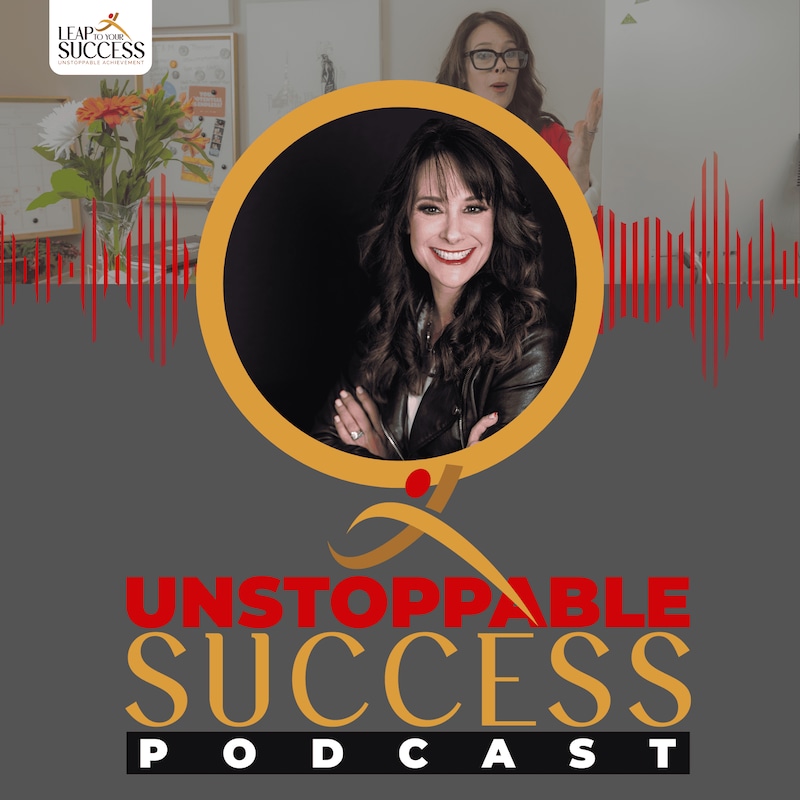
Shownotes
Today, we dive into the world of rapid growth with Dr. Joseph Droll Shagen, also known as Dr. J. He brings over 28 years of experience in corporate America and has a knack for turning struggling businesses into profitable ventures. Our conversation highlights the importance of mindset, particularly the role of the subconscious in shaping our perceptions and actions. Dr. J shares insights from his new book, which guides readers through his unique SMT method—Subconscious Mindset Training—designed to help individuals identify and shift their internal programming for better results. Join us as we explore how to break free from the patterns that hold us back and embrace a life of purpose and success.
Dr. Joseph Drolshagen, known as Dr. J, joins us in this enlightening episode where we dive deep into the concepts of rapid growth and success. With over 28 years of experience in corporate America and a background in psychology, Dr. J shares powerful insights on how individuals can unlock their potential and achieve remarkable transformations in their personal and professional lives. He emphasizes the importance of becoming teachable and recognizing when traditional methods aren't yielding results. The conversation explores the common pitfalls of doing the same thing repeatedly and expecting different outcomes, a definition of insanity that many entrepreneurs face.
Dr. J's approach revolves around understanding and reprogramming our subconscious minds. He introduces the SMT method, which stands for Subconscious Mindset Training. This method focuses on identifying and shifting the subconscious programming that often holds us back from achieving our goals. He stresses that success is not just about following a one-size-fits-all strategy but finding one's unique path. Throughout the episode, he shares personal anecdotes and lessons learned from his journey, highlighting that even the most successful individuals have faced obstacles and moments of self-doubt.
Listeners will be encouraged to reflect on their experiences, shift their perceptions, and embrace their uniqueness as they work toward their goals. Dr. J's insights into the power of perception and the importance of slowing down to notice opportunities around us are not just motivational; they are actionable takeaways that can lead to profound changes. Whether you're a business leader or simply someone seeking personal growth, this episode is packed with valuable nuggets to help you steer your life toward unstoppable success.
Takeaways:
- Rapid growth often starts from a place of frustration and feeling stuck in life.
- Shifting your perception is crucial for success; it allows us to see opportunities.
- The subconscious mind plays a key role in shaping our actions and beliefs in life.
- Learning to embrace discomfort can lead to significant personal and professional growth.
- Success is not a linear journey; it involves zigzagging through life's challenges and changes.
- Identifying and reprogramming negative beliefs is essential for unlocking your true potential.
Links referenced in this episode:
- coachwithjoey.com
- https://www.josephadrolshagen.com
- Reprogramming Your Subconscious Mind: The SMT Method for Rapid Growth https://amzn.to/4nut5BR
Companies mentioned in this episode:
- Fox
- NBC
- CBS
- USA
- New York City Journal Disruptors
- Enterprise World
- Pfizer
Transcripts
Well, hello everybody and welcome to another amazing episode of Unstoppable Success. I am your host Jaclyn Strominger.
And as you know, on this podcast we hear from amazing people in the world who have had amazing success and are great leaders and have amazing ways that you can learn and have nuggets so that you can go from unstoppable success to truly amazing growth and even more success and keep that momentum going. So let me introduce you to our guest today. It is Dr. Joseph Drolshagen.
And I keep wanting to say it the German way because I pronounce it so many times. So but let me tell you a little bit about and as I'm going to call him Dr. J.
s magazine and as of February:Dr. J is the Rapid Growth Specialist.
He has over 28 years in corporate America from VP of Sales up to, and his doctorate in psychology with extensive studies and knowledge of mindset and, and he has assisted multiple organizations experiencing bankruptcy back to into profitability along with creating innovative systems that bring about massive results both personally and professionally. And right now he also is going to share his wisdom and he has a great new book out which he will talk about as well.
So anyway, Dr. J, welcome to the show.
Dr. Joseph Drolshagen:Oh, it's great to be here with you. I'm glad that you have to do all that bio stuff and I don't.
Jaclyn Strominger:Know.
Dr. Joseph Drolshagen:You did great. Yeah, I'm really excited to be here.
Jaclyn Strominger:With you, Jacqueline, you know, so first of all, I, I love your energy which is so important for people to have. And what I would love for you to share is you, you know, you are talking about rapid growth and we're talking about success.
So how, how do people have rapid growth?
Dr. Joseph Drolshagen:Yeah, that's as far as the energy. I don't rarely meet people that top my energy. But you, you've got that, you've got that going for you.
Yeah, rapid growth is usually something with inside of us that stirs it a bottoming and upset struggle for so too long and things like that. And we just can't stand living that way anymore. And that's, I know how it happened for me as well. And once, once.
So what I say is we become teachable at that point because up until then we're laying out our pathways, our strategies, our to do lists and you know, if it's not working. We put more hours, more effort, more time into it and such, but then we get to that place where it's like, man, it's just not working.
And, and it's usually not long before the effort. I give up, I quit and I do something else. Yes, yes. To tab out. But yeah, that's, but yeah, it's usually not much before that.
And then when we, and what happens in that process is so we're doing everything we can think to do. We're, we're going about the way we think we're supposed to, right.
And, and so we're investing in things that are telling us do A, B and C to get D. And we do it, we do it more, we do it more and we do it more, but we're not seeing the changes in the results. And so we just get to that point of frustration, fed up and all that stuff.
And the moment we go, I don't know how to do this, we literally unlock a vault to be shown the pathway of how to do it.
Jaclyn Strominger:So you just described the definition of insanity, correct? It is, right?
Doing the same thing over and over and over again, thinking that you're going to try to get the same results and you keep doing more different results.
Dr. Joseph Drolshagen:Yes.
Jaclyn Strominger:You're not gonna, you think I'm gonna get different, I'm gonna get different results and you don't. And you hit that point.
Dr. Joseph Drolshagen:Yeah, yeah. People with addiction, I mean, it's so, so widespread.
You know, people with addiction go through the same thing, you know, where they keep using and using and there's that, that almost like with our, with our trying to be successful in business or entrepreneurs, you know, and, and, and all in. A lot of entrepreneurs don't even live as entrepreneurs. They try to figure out the systematic way of doing it. That's not an entrepreneur.
An entrepreneur goes with the flows and they go with the stream, you know, and the creativity and all there.
When you start implementing too many systems into it, you take that away from it and that's no longer what, that's what I call old corporate, because that's what corporate America was like, you know, and so when we're going through this, when we just get it, but when we get into that flow, all of a sudden, you know, we all talk about coincidences, right? Every, you know, we overhear something that we need to hear.
I Woke up at 5 o' clock this morning with a thought of on my mind and I literally sprung out of bed, came in here, didn't even make my Coffee or use the, you know, bathroom or anything. Came in, fired up my computer and everything.
I'm sitting there for about a minute going, okay, I gotta slow down a little bit, go get some coffee on, you know, and. But so much stuff flows like that. And so we'll overhear something or somebody will say or read something or, or see something, whatever it is.
And we hear this thing and it answers exactly what we want. But when we're in that mode of pushing, pushing, pushing, trying to make it happen, we don't even notice those things are going on all around us.
And what I do, what I've experienced, what my clients experience, what tied throughout the SMT method is that we can utilize those so called coincidences, which I don't really call them coincidences. We can utilize those as the system to know they will show up, to know they will guide our pathway.
And so we can focus much more on what it is I want to achieve and expanding that. You know, I'm really big into asking for the impossible.
You know, so many people are going through this process of life and they're trying to get there, and it's not their own fault, but they're trying to get there and they end up living on minuscule scraps of what's available to them. And they, honestly, when I talk to people, they don't know why.
And so when you can help somebody open that up and understand that now all of a sudden we can, they can start shifting and all of a sudden they'll start seeing things happening.
And as things happen and we start growing in our mind and the possibilities and, and all of that, you know, when you see it expand and, and ultimately what I do is I help people take the conscious mind, which is what we're focused on. The words we use, thoughts, we entertain the words, the way we talk about ourselves, you know, who we hang out with, watch all that stuff.
But the knowing of what we want is in our conscious mind. And one of my mentors, late Bob Proctor, taught me this. And then we have the subconscious mind, and all the subconscious mind does is absorbs.
But it's really important to understand there's this, what I call a motherboard in our subconscious that hosts all of our programming, our patterns, our paradigms, our experiences, even experiences. Maybe we didn't have Jacqueline, but somebody told us about, and it gets embedded into that network.
Well, the why that's important is because that subconscious is what triggers brainwaves to the actions we take or don't take. So you have the knowing of what you want, and you can have all kinds of clarity on that.
But if your programming is working against you, and this is exactly how I went into adulthood, experiencing it doesn't trigger the brain waves to the actions that will help align those two.
So what we do is we identify what those are, shift those things, and all of a sudden we start noticing we're more in alignment with what we want and the actions we're taking. And all of a sudden we start noticing the huge changes on our exterior.
Jaclyn Strominger:You know, there's. As you're talking, like, you know, I. I love what you're talking about because the mind is so flipping powerful, right?
And we forget that we, you know, it's, you know, we all have all these lenses that we have developed from our experiences in life, and we have to sometimes learn to shift the color of the lens and see what we're seeing so that we could see things differently. And it is truly amazing that when you can go from that point of.
Of having everything turned off because you're so focused, because you're so almost like busy with whatever the busyness is, and you haven't slowed down, but when you can slow down and you can sort of like, almost like smell the roses, it's amazing what comes to you. As you were saying, it's like you can start hearing those things.
The creativity comes back, you know, when you can take these lovely instruments and put them away, you know, and you just can sit there and be.
Dr. Joseph Drolshagen:Yes, absolutely. Absolutely. You know, I'm fortunate. I get to live in the. In the mountains, South Carolina, all the way to the west side of the state.
And so I spend a lot of time just walking in nature, sitting in nature, trout fishing on beautiful trout streams, or not even fishing, just sitting there and stuff. And the more time I do that, the more lines.
And almost every business owner I work with, I have to get them to throttle back a little bit from what they're doing to get into alignment with this stuff, to even. Even just to notice what pro. You know, what they're being triggered from their subconscious mind so they can be aware of it. So in. In doing that.
And you said something absolutely beautiful when you talked about that. The color of the lens. You know, I call that perceptions.
And if we want to change our results in what we're experiencing in life, we have to shift our perceptions.
The only way I know to do it, let alone quickly and long term, is we have to identify and shift the programming that's leading to those perceptions, that's leading to our Experience.
Jaclyn Strominger:Yep. Okay, so I want to share about, share something. But this is when I keep thinking about lenses and changing our perception. It's so important.
So the movie. Oh my God. Treasure. Whatever.
Dr. Joseph Drolshagen:Indiana Jones.
Jaclyn Strominger:No. Nicholas Cage.
Dr. Joseph Drolshagen:Oh, oh, I remember the movie. Not the name.
Jaclyn Strominger:Oh my God, I love the movie.
And I cannot think of it anyway, but he's like at, you know, he's in Philadelphia and they're, they get Ben Franklin's glasses and they're looking at the declaration of Independence and it's like, oh.
And they start to shift the lenses and they see the different patterns and that's what like I love that, that you can people see things through different lenses and change that perspective. Because it does. All of a sudden the whole world, you know, opens up.
Dr. Joseph Drolshagen:Yes. Changes. It does, absolutely. It shifts, you know, an example of that. And our programming is unique to the individual.
So that's why I'm not a big advocate of one size fit. All programs do A, B and C and get to D because we're all unique individuals. I have four siblings.
Whenever we've gotten together or get together and talk about like the camping trips and the different vacations we've been on together as a family, there's five different stories of that. Because we all have our own unique programming which leads to our own unique, you know, the way we see it and stuff. Perceptions of how we see it.
Jaclyn Strominger:It is so true. It is so true. Is so. That is so true. Because it's, it's also like, you know, you could say like two, two people grow up in the same household.
How can they be so different? It's, it's every, you know, you're in the same household, but you're experiencing. Think things differently.
Dr. Joseph Drolshagen:You're see things because we're processing them differently. Because we're unique.
Jaclyn Strominger:Yeah.
Dr. Joseph Drolshagen:So that's why like I've really been a huge advocate as I started learning and understanding.
The whole thing about the subconscious and things like that is that whatever I do, I want it to be because I used to take those one size fit out programs like the ABC to get to D and I'd walk away going, man, there must be something the matter with me. Because I didn't get near what they talk about people getting out of it.
Well then once I started understanding, I needed something that worked for me and my uniqueness. I don't, I had to quit caring what everybody else does and look at me and what do I need.
And as I start doing that, so I start forming and that's what I help clients do today is let's identify. There is no one pathway that works for everybody. It's impossible for that to happen.
So let's find your unique pathway that just fricking rockets you into the results you want to get and beyond. A lot of times.
Jaclyn Strominger:That's awesome. So what is the smart T Because method.
Dr. Joseph Drolshagen:It was hard to finish that, wasn't it?
Jaclyn Strominger:Before we.
Before Dr. J and I were talking before show and I. I added a letter in there because, you know, if you do any, you know, email programming stuff, there's another letter in some of that stuff. So I thought I was stopping.
Dr. Joseph Drolshagen:Probably really, really wrong of me to just let you hang with that too, wasn't it? But it was fun, Jack. I had a good time there. Thanks for the trickles. So SMT method stands for subconscious mindset training.
And it's all about identifying the programming that's going on under the surface within that subconscious motherboard.
And once we identify it, now with the SMT method, we have tools to quickly shift that which then quickly change perceptions and then open up avenues to achieve greater results for the same amount of efforts or less.
Jaclyn Strominger:Oh, that. Okay, so I like that. So for same amount of efforts or less, people like that. So your new book, reprogramming your subconscious mind. The smtp. Smt.
I just said it. The SMT method. Sorry, SMT method. This is what happens the. You know, for rapid growth. So will the. If I.
We grab the book and people get the book, will they be able to walk themselves through the method so that they can. They can sort of reprogram their subconscious themselves?
Dr. Joseph Drolshagen:So. So that I designed and wrote the book. It explains the method, but it's. It's literally what I take my clients through.
Jaclyn Strominger:Okay.
Dr. Joseph Drolshagen:Is the process. My hopes in the book is that it opens up blinders for a lot of people just to realize there's something going on. They're not aware.
So they can start noticing that and start bringing about changes. And one of the things that was important for me to do in this book is I have.
It's not included in the book, but I have a link that's at the end of every. Almost every chapter that you can go to. And there's exercises to practice so you can start seeing change happening in those areas.
You can start noticing it. You can start, you know, walking through some tools as far as shifting those perceptions and start noticing a change.
Jaclyn Strominger:I like that.
So I like the fact that you have that the book comes with exercises because that, I think is one of the things that happens with a lot of books that you will read something and they'll be, you know, it'll say, okay, now get out a piece of paper or there you need to do this. But people don't necessarily always do it because they, you know, but being able to give them the actual exercise to do it.
Dr. Joseph Drolshagen:Yeah.
Jaclyn Strominger:Is really great.
Dr. Joseph Drolshagen:Yeah. Yeah.
I actually thought about writing in the book and like the beginning of chapter three, like before you read this, please show me your works in chapter two.
Jaclyn Strominger:Accountability. Right. It's. It's that accountability part, right? Yeah. Prove it.
Dr. Joseph Drolshagen:But yeah, it is. And it's a way of doing it and it's not really exhaustive and, but it really pointed to help focus in this. Find that item and then focus on the item.
What's going on in your thinking about that item and that right away. And then I help them to see, to point out how, how is it working for you or against you?
The ones that are working against you is programming you don't need anymore.
Jaclyn Strominger:Right. So you. And that's true. Like once you've gotten some, when you've moved to one place, you can keep moving on, but you don't have to go back.
Dr. Joseph Drolshagen:Yes.
Jaclyn Strominger:You know.
Dr. Joseph Drolshagen:Yes.
Jaclyn Strominger:So. So you have had amazing success. You know, you started in sales, you were. So how did you, how did you become the success and drive your growth?
Dr. Joseph Drolshagen:It's, this is the whole thing with anybody's pathway. It's not a, it's not really a logical process. Like, honestly, Jacqueline, I, I shouldn't be here talking with you today.
I shouldn't be doing the things I've done. I shouldn't have been on magazines, I shouldn't have wrote a book. I shouldn't impact people's lives. I shouldn't have.
Because when I grew up in a very low income family in Detroit, Michigan, watching struggle in everything, I didn't, I was told growing up numerous times from numerous people, there's. People meant to work their head and people meant to work with their hands and you're going to work with your hands.
So I never really applied myself in school.
As soon as I graduated high school, I went to a factory and got a job cleaning out old mucky oil from, from machines and things like that and stuff, you know, and I thought that was my lot in life and I was just going to do that. And when I was 22 years old, I had a gentleman approach me. He was kind of a mentor I saw much, much higher than I would ever go and stuff.
But he was getting ready to retire. And he owned a multimillion dollar construction company and he wanted me to take over the business.
He wasn't going to sell it to me so I didn't have to come up with a loan and stuff like that.
He knew me well in my situation, so I was going to take it over and over a seven year period, share residual, you know, revenues as they come in with them for seven years. And that was the most exciting day in my life. Like I felt like somebody believed in me beyond what I ever thought possible.
Three days later I told him I can't do that. And I probably should have explained it because he could help me see a different.
But the reason I said that is because I felt so much guilt going through my whole being that I didn't work hard enough to earn that. So I don't deserve it.
And that's at the point when I said that and a couple other things happening is when I said, man, there's something really wrong with me and I don't know what it is, but I so badly want to find it out. And it's been a four decade journey into leading to all this stuff.
Jaclyn Strominger:So did you, so what happened after that? Did you decide, I'm going to go to school, I'm going to.
Dr. Joseph Drolshagen:No, no, I was lost, completely lost. And then I started out getting counseling, trying to figure out what it was and they didn't hit on that core of things like that and stuff.
And, and I did that for a few years and, and then from there I, I ended up meeting a guy who was a very wealthy person and he grew up around where I did, you know, same kind of neighborhood and stuff and, and similar to how I did. And he was a multi millionaire in the pharmaceutical industry.
A very high level, I won't say his name, a very high level person in Pfizer and places like that and stuff.
And we just got to know each other and he's not somebody I would have picked to hung around with because I thought they were so high above me and such.
But we hung out and stuff and over a matter of about five months or six months, he saw again somebody, he saw something in me and so he would just start talking about, man, you could have any job or if you had, you know, a job, you know, and, and he wanted me to go in sales and it's the last thing I ever wanted to do was go into sales because I had that view of the, you know, reception of a used car salesman and something. So, so anyway, so he ended up Talking me into interviewing and stuff like that.
And what hooked me is when he got me to say if I ever got into White collar America, I would love to have a company car and a laptop computer. My first corporate job had a company car and a laptop computer. And then that got me started.
Then I went into sales and I never expected to do, even struggled in that for a long time. And then I started diving deeper and deeper and deeper.
And at some point I came across the subconscious mind and all the studies I was doing, you know we talk about with books, I used to read a book all the way through and then I would go back and create experiments to do with that book. But all of it was trying to figure out why what was the matter with me, you know. So that added another level of complexity to it.
So then as I started doing sales and I went from barely getting by traveling 3,000 to 5,000 miles a week building the territories to understanding this, to identifying it and then going out find somebody who could help, which was very difficult to find somebody who had the understanding of, I mean he had to Neville Goddard and you know, Bob Proctor is, and things like that stuff, but there wasn't many of them.
And so then as I started learning that within a year I went from barely getting by to landing 18, 22, $25 million year over year contracts for companies and doubling company sizes and things like that with what I was doing. So that moved me, that ended up elevating me up into a vice, into director, you know, sales manager and vice vice president positions and stuff.
And then later on I would help organizations in bankruptcy get back to profitability. And that was a 28 year period that that happened. And I've always had this desire in.
Jaclyn Strominger:My heart to help out because you don't really look like you're that old.
Dr. Joseph Drolshagen:Thank you. I started when I was 2.
Jaclyn Strominger:That's what I thought. Okay. Yeah. Thought you were lying.
Dr. Joseph Drolshagen:Yeah, thank you for saying that.
So, but, but then I then, so as I, as I did that and stuff and then in the corporate job, the last organization that was in bankruptcy and I was part of the team to bring back profitability and such, my dad had passed away of cancer. And then A year later, 56 years of marriage, my mom passed away. She just natural causes. She just didn't want to be alive without him.
And I found myself an orphan with this big desire on my heart to help people. And I knew I was in that way, but it wasn't, it wasn't, it didn't match the size of, you know, what I felt, what my purpose was.
And, and I just said, you know, I, I don't know exactly how I've already. Now at that point, I had two certifications into what I do today, and I was going through the education stuff and things like that.
And I just, I said, when we get new owners in this organization, I'm done. And so we got new owners.
A week later, I resigned, moved down here to South Carolina and I started going out, giving out five business cards a day with introducing myself to people. That's how I started this build.
Jaclyn Strominger:That's awesome.
Dr. Joseph Drolshagen:I shouldn't be here, but look at statistics.
Jaclyn Strominger:But you should be there because the way. And you say you shouldn't. That's in your brain. You're so. You should be. Because, you know, you know what I.
Dr. Joseph Drolshagen:Said a few minutes ago, Jacqueline, that doesn't make logical sense, right? That's the shouldn't be here part. Because logically, if you look at only logic, it doesn't make sense.
And so we have to step outside of logic to achieve what we really want to achieve, what we truly desire in our heart to achieve and the level we desire to achieve it. It's not going to come from logic. It's not going to come from strategy alone. It's not going to come from to do lists.
It's not going to come from following what Pete down the street did or anybody else. It's not going to be a logical pathway.
Jaclyn Strominger:You know, the word logic is kind of an interesting word too, right? Because when I hear, when I hear it, like you think it, it's, it's true. It's like it doesn't take a lot. It's not a logical pathway to.
Because a pathway is never a straight up. It doesn't just go. We don't always, you know, you don't, you still don't start here and go from point A to point B as an upline.
It is, you're zigging and zagging and it's up. And it's the intermoving of, of your journey that happens to take you, you know, up and down mountains, up and down stairs, zigging and zagging.
And I was listening to a book this morning, you know, it's the book, you know, impossible.
And one of the things that the author was saying was also is that, you know, successful people, you know, have not, don't have a linear and logical journey. And it is that they have to explore and kind of come to where they are. They find what they truly love.
And, and are passionate about where they can then go and take the direction. But it's never. But you don't think about it like, as a. It. It's true.
It's not, it's not the path where we think, oh, he's going to go from point A to point B. Logical. He. He became a doctor, so he's going to obviously practice medicine and see patients logically thinking, but maybe they don't.
Dr. Joseph Drolshagen:You know, if you look at the fact of going like, and this is one of the things I work with my clients on, and anybody listening to this, this is, this, like, has had a huge, profound impact in my life. And I know people I work with is, is, you know, when we look at something and, and we go, that's, oh, that's good, man. And I excited that happened.
Yeah. Oh, that's terrible. God, I can't believe that happened. If I live by the judgment of that within myself, I wouldn't be here.
Because that judgment, when I say that's bad, everything stops. It can't go any further.
But when I look at giving up that construction company and years later, I looked at that construction company and I went, man, that was a good thing because that helped build the desire and the passion in my gut to break whatever that was to fix that thing.
Jaclyn Strominger:Right?
Dr. Joseph Drolshagen:And so, so what I tell people is, you don't. This, you, you don't know where this is going to end.
But I believe, based on my life and my walk in this world is everything ends up leading to something bigger and better for me, even if it's just a life lesson. And that's with relationships, finances, you know, what we do business wise, like across the board, you know, when we put that judgment on there.
I wrote another book called Life's Lessons, and in there I state very clearly, before it was popular is when I took the judgment out of what was happening in my life. Like, it's not good or bad, right? Wrong, fair, unfair or anything else.
And if I take on a belief that life happens, happens for me and not to me, then I could start seeing what the lessons were in that. But as long as I had judgment, I could never get through that. Because if something happened bad to me, that means I'm a victim of something.
And if I'm a victim, I got nowhere to go.
Jaclyn Strominger:Right? Yeah. You know, it's. And what you just said is as is.
And I think this is listeners, I think this is something that is really, really important for you to have unstoppable success. You have to make your life happen. Life doesn't happen to you. And it's really important to be able to know that distinction. You don't. You want to.
You don't want to just exist, but you want to live with purpose and you want to understand that things, you know, happen. Things are not happening. You can make your life happen. They don't happen to you.
I mean, if something happens that you don't, like, find the good in it, find the lesson, find the learning. It's.
And I'll share this story, which is, you know, one of the things that made a huge change in my life was I was taking my kids to school one morning and. And I was on the east coast and I'm driving and I.
It was amazing that I got to where I was going because it was the car thing, you know, it was not a self driving car, but it almost was that day because I was like, something is not right. Something is missing. Like, I literally said to myself, jacqueline, you have started a point in your life where you are just existing.
You're not living. You're not living with purpose. And I remember coming home that day. It was major, huge shift in my life.
I remember coming home that day and writing out, like, rewriting my purpose and rewriting out my mission and what do I want? And not just, not just the need, but what do I want in my life? And telling my husband, I'm like, we're going to move. And he's like, what?
I go, I'm done with this. Like, I'm done. Like, we're going to move and we're not going to stay where we are because this is not. We are. We are existing and life about existing.
Dr. Joseph Drolshagen:Yeah, you just motivated me.
Jaclyn Strominger:Right, right.
Well, and, and which, yeah, I'm glad I motivated you, but the point is, like, what you're doing too, like Dr. J, what you're doing is so important to help people because so many of us do go through life existing, and we need to live knowing that even whatever, you know, if you've had baggage. Baggage, yeah, you'll see some lenses through there. But, you know, guys, go get the book and rewrite.
Rewrite the lenses that you're seeing and reprogram your mind because you have to be able to say, you know, draw the line in the sand, say, uncle, whatever, do the taps, you know, and say, today's the day. Yes, we're making a shift. I'm going to live with purpose. And you know that you're going to wake up every single day living with purpose.
And being unstoppable and have it.
Dr. Joseph Drolshagen:You don't have to have. You don't have to have the full roadmap or plan or action plan or all that to do that.
You just got to make a choice and those things will start showing up for you. And that's how I help companies, organizations, rapidly scale. I don't have every answer for them.
As far as you're going to do a B, and then you're going to do this and then you're going to do that, and you're going to do this, this long and that that long. I don't. But what we do is we open up that possibility of that.
And as we do, all of a sudden things start showing up and things start flowing and everything else. I love that story you shared because that's that unconscious. That day. You.
We live unconsciously, and as we live unconsciously, that pattern that programming in our subconscious displays over and over and over, almost like on autopilot, and we're just following it. I had a guy one time that said to me, I don't have any patterns. I don't have those things. And I go, really?
Okay, here's what I want you to do tomorrow when you. And I just thought, top of my head. When you shower tomorrow, I want you to lather 12 times and be done and then rinse.
He called me back the next day and call me an mf, but he used the real words. And he goes, you know, I did it 12 times, and I stopped and he said, I couldn't do it. I had to go back and finish my pattern.
And so even in things that small, it helps us to identify. We have patterns. And then when I could see one of them, then I become more attuned to, well, what else am I saying? What else am I doing?
What other things am I doing without even fully realizing, like driving, realizing. And I'm doing it fully conscious of it. And we can start noticing those things, right?
Jaclyn Strominger:You know, it's so true that you just said it, because I'm thinking when you're talking about the, the washing of the hair, you know, so many times people like, you know, you know, you, you subconsciously do a pattern in the shower because you've been doing it for so long, right? It's like brushing our teeth. Same thing, right? You, you do it. You, you just do it.
And, and it's the days that something goes maybe a little awry, where you're like, you know, you don't have the same amount of time or something. Happens or as, and as you said, there's a, there's an instance that somebody experiences something. Right. Like, and embrace it. And you're like, oh.
And then maybe you might even feel weird. You're like, I didn't get to do the whole thing. And I. You don't feel right. You feel like a little funny because something shifted in the.
Dr. Joseph Drolshagen:Yes. If you really track that, Jacqueline, if you track that throughout that day, there's other things that will follow that once we open that door.
Depending on how unconsciously somebody's living, they may not even notice that stuff. But there'll be other things like that where it's like, okay, you know, we'll start noticing changes in those patterns.
And the way it shows up is discomfort. It feels uneasy. It feels like, well, that's not right. But that's exactly how to get to that other side.
Jaclyn Strominger:Right.
Dr. Joseph Drolshagen:So like I told you, as far as like throttling back business owners, when I work on them and they have such a hard time if people are going, I don't even know if you're the right guy for me. I go, just try it. If I'm not, then you can leave and you know, whatever and stuff like that.
But everybody who does it in a very short period of time sees the benefit of doing that.
Jaclyn Strominger:Yeah. You know, and it's, and it's, it's fascinating.
And I think that, I think more listeners, you take the steps to get outside what you do on a day to day and get, and take what you do unconsciously and break the habit and break the pattern so that you can start being open to new things coming in and flowing. So I, I, you know, I think it's so important. Okay, so Dr. J, tell everybody how they can connect with you. Get more of all the greatness.
Dr. Joseph Drolshagen:Anybody can go to coach with Joey.com, set up a 50 minute call.
There's something that we talked about here, you know, and I tell people whether, whether it's something that you're like, okay, well how would I apply it here? This or that, that's what the phone calls for. It's not sales pitch. I don't talk about my programming or anything.
I do, I might reference the book because it's new, I'm really, really excited about it stuff. But it's not a sales pitch or anything. And it's really just to serve people so people can go to coachwithjoey.com and schedule a time with me.
Jaclyn Strominger:Okay, so we're going to put in the show notes, coach with Joey.com. yes, we will also have a link to your book so people can grab the book. Please, please, please, please listeners, grab the book.
I'm going to go grab the book because I haven't read it yet and I wish I had. But I will read that book and I will do the exercises. Anybody want to do them with me just let me know. But please also do me a favor.
Connect with Dr. J on socials, go to his website, get that appointment with him so you can have that deeper connection. And listeners, do me one other favor.
Please hit subscribe and share this episode because I will guarantee you when you share this episode you are going to help more people than you know. So I really appreciate it. Thank you for listening.
I'm Jacqueline Schomager, the host of Unstoppable Success and thank you Dr. J for being a great, amazing guest. Thank you.
Dr. Joseph Drolshagen:Absolutely.


