Shownotes
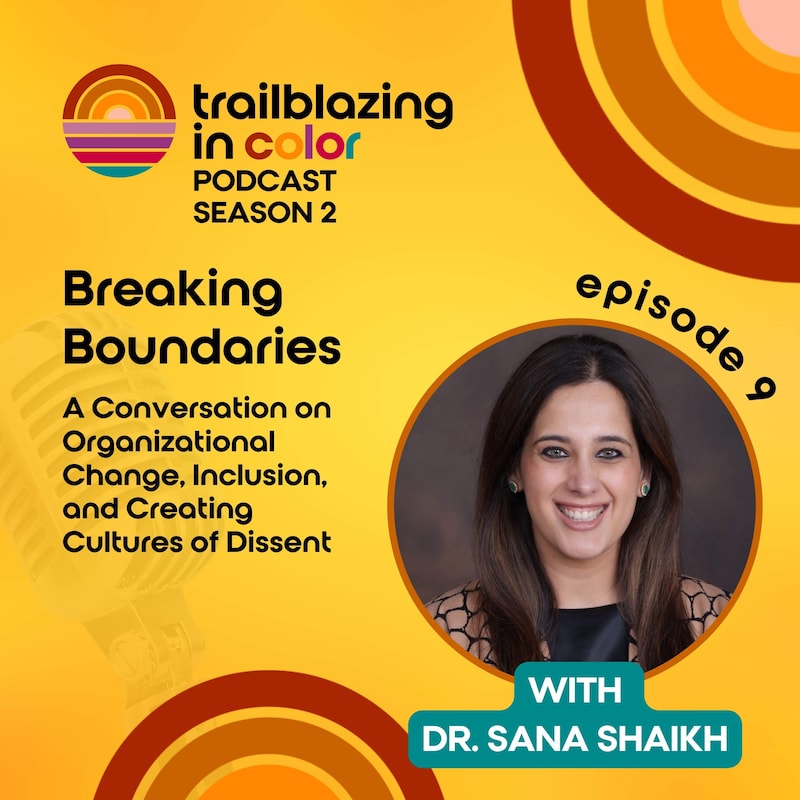
In this episode, we have the privilege of hosting Dr. Sana Shaikh, an expert in organizational change management, culturally responsive organizational practices, and diversity, equity, and inclusion programmatic initiatives. With over 14 years of experience in operations and policy research, Sana is the founder of TimeED, a company that focuses on developing anti-racism and anti-bias learning solutions for national non-profits, parent-teacher organizations, and school districts.
Sana's research has centered on the intersection of racial identity and relational coordination in cultivating culturally responsive classrooms. She has had the privilege of presenting her research both domestically and globally, participating in relational coordination roundtables from Portland, Oregon, to Copenhagen, Denmark.
Our conversation delves into the significance of relational coordination in creating inclusive environments. Sana emphasizes the importance of slowing down to clarify the "why" behind change initiatives, the roles and responsibilities of each stakeholder, and the incorporation of identity and experience into the equation.
We also explore the common pitfalls of DEIB initiatives, and the need to shift away from the mindset of external saviors. Sana emphasizes the importance of creating a partnership approach that integrates external consultants as team members.
Sana shares insights into making data-driven decisions that promote equity and inclusivity. She highlights the importance of humility, courage, and an organizational culture that embraces dissent, as organizations navigate the complexities of transformation in pursuit of more equitable and inclusive practices.
Thank you for joining us on this episode of Trailblazing in Color!
Finally, we’d love to hear from you: What are you celebrating? What support do you need? Reach out at sarah@trailblazingincolor.com to share with me and let’s stay connected.
As always, thank you for your ongoing support and commitment to knowing better and doing better. (Thank you, Maya Angelou, for this endlessly useful sentiment.)
Carry on, trailblazers and equity warriors.
If you want to tune into the conversation, be sure to hit Subscribe wherever you get your podcasts. You can also subscribe to our newsletter to make sure you don’t miss an episode. Thanks, Trailblazer!
A Podcast Launch Bestie production
Transcripts
sarah_chapman_bacerra-oal8ixhq4__raw-audio_sarah-chapman-bacerra-sana-shaikh_2023-oct-20-0621pm_trailblazing_in col:
I want to leave space for really
2
:people sharing what's really going
on and creating that safe space for
3
:vulnerability about the actual things
versus wanting to put a shiny bow on.
4
:And how we think this should look.
5
:Welcome to the trailblazing and
color podcast, where we talk to
6
:change makers and innovators focused
on upending systems, not designed
7
:by or for them to create a more
inclusive and equitable world.
8
:I'm your host, Sarah Chapman Becerra.
9
:Welcome to the show.
10
:sarah_chapman_bacerra-oal8ixhq4__raw-audio_sarah-chapman-bacerra-sana-shaikh_2023-oct-20-0621pm_trailblazing_in col:
welcome, welcome everyone the
11
:Trailblazing in Color podcast.
12
:Our guest today is an expert in
organizational change management,
13
:culturally responsive organizational
practices, and diversity, equity, and
14
:inclusion programmatic initiatives.
15
:With over 14 years of experience in
operations, policy research, and Sena
16
:Shaikh is the founder of Timeud, which
focuses on developing anti racism,
17
:anti biased learning solutions.
18
:For national non profits, parent teacher
organizations, and school districts.
19
:A 2011 Teach for America Corps member,
Sena spent two years teaching 11th
20
:grade English in Baltimore City.
21
:She later joined Teach for
America's staff, serving in
22
:various capacities on the National
Operations and Admissions team.
23
:Her experience has ranged from
policy to non profit, and has
24
:taken her from Denver, Colorado,
working with Senator Mike Johnson.
25
:The New Orleans, Louisiana for AmeriCorps
partnerships to Ghana to help steward
26
:positive social change with a Ph.
27
:D.
28
:in social policy and management
and assets and inequalities.
29
:Sunna's research has focused on analyzing
the intersection of racial identity and
30
:relational coordination in cultivating
culturally responsive classrooms.
31
:She has had the privilege of
presenting her research both
32
:domestically and globally.
33
:and relational coordination roundtables
that have taken her from Portland,
34
:Oregon to Copenhagen, Denmark.
35
:Svena has obtained numerous
fellowships throughout her career.
36
:She was the recipient of the Harvard
Kennedy School Rappaport Fellowship,
37
:a Leadership for Educational Equity
Fellowship, the Inspired Fellowship
38
:through the Department of Elementary and
Secondary Education, and more recently
39
:serves as a 50Can National Voices Fellow.
40
:In all of these spaces, Sunna is
committed to using data to create
41
:meaningful programmatic initiatives and
quantifiable and equitable policy change.
42
:In 2022, Sunna presented at TEDxNewHaven
with her talk, Building Bridges,
43
:Not Bias, Navigating Relationships
in Uncertainty, unveiling the
44
:extraordinary power of relationships.
45
:In dismantling biases, stereotypes,
and misconceived first impressions.
46
:Sana has been a thought partner
and facilitator for Achievement
47
:First, Civitas, Immersion, the
Ghana Health Education Initiative,
48
:and The Collective, among others.
49
:Sana lives in Connecticut
with her husband, Dr.
50
:Rehan Shaikh, five year old twins Amal
and Amin from five month old Azan.
51
:Welcome Sana.
52
:I'm so happy to have you on the show.
53
:I mean, listen to that bio.
54
:There's so much to unpack.
55
:I'm so happy you're here.
56
:Me too.
57
:Well, let's start with a little
bit more about you and your origin
58
:story and how you came to this work.
59
:Tell us a little bit
about Sana as a person.
60
:It's so wonderful to hear that part
because then you, you reflect on your bio
61
:and your story and your career journey.
62
:And it just makes so much sense that
education has been the anchor and equity
63
:in education has been, has been the
focus of your efforts in so many ways.
64
:So maybe we could start by going back
to your time as a Teach for America core
65
:member and working for the organization.
66
:Thinking about your experiences there.
67
:What were some of the things that
inspired your work and your focus now?
68
:Yeah, we look at, I think your, your
perspective and you said, even back
69
:then, I had to really think through
that, the answer to their question
70
:around, can this ever really be solved?
71
:And I remember in our, in
our previous conversation.
72
:You were talking about how systems
are fundamentally imperfect.
73
:And so there's always going to be
imperfections in our systems based
74
:on who's in charge, who's got power.
75
:Policy is really what makes that
change and creates that sustainability.
76
:And we're always reevaluating, but
maybe you could talk a little bit more
77
:about the research you've done and the
policy work you've done around this.
78
:So you've worked in various
capacities, policy to nonprofit.
79
:Talk a little bit more about
systems change and policy as it
80
:relates to, meeting those core
needs of inequitable practices.
81
:Yeah, because it is, it is the thing
and what I appreciate about your
82
:work and the intersectionality of
how you I mean, to me, this concept
83
:of relational coordination was new.
84
:So I want to hear a little more
about what that looks like.
85
:And also this idea at trailblazing
and color, we work a lot with clients
86
:around following a more human centered
design process around creating systems
87
:change when it really is about having
those who were serving at the center
88
:and not just assuming what their
needs are, but going out and asking
89
:and thinking critically around.
90
:How do we source this information?
91
:So we have a really clear picture on
what being seen, heard, and valued
92
:looks like for each individual,
because it looks differently.
93
:So I wanted to hear maybe a little more
around how does this look in practice?
94
:What strategies do you, do you engage
to bring this concept of relational
95
:coordination into organizations, or
even just talking a little bit more
96
:about that concept and what that means?
97
:Yeah.
98
:So what I'm hearing is.
99
:That opportunity to really slow down,
especially in the beginning to get super
100
:clear on the why, because we so want to
jump into the how we want, , we're, we're
101
:fast moving our society like technology
has made things happen so rapidly
102
:that it feels like everything should
be able to be accomplished right now.
103
:And I think that that's a lot
of the, the work we're all up
104
:against in the D and I space.
105
:The EIB belonging space is this work
takes time because transformation takes
106
:time because systems change takes time
and often what we're doing when we're
107
:rushing is we're solving the wrong problem
or yeah we're solving the thing that we
108
:think is going to fix it but we haven't
asked the people who we're trying to solve
109
:for what's really getting in the way.
110
:So if we're not taking the time to really
understand that and that's why I really
111
:like how you talk about Relationships
being at the center of these conversations
112
:with the learning and the listening
because we don't know what we're missing.
113
:And so we have , these conversations.
114
:And so before diving into anything,
really getting clear on the why, getting
115
:clear on the roles and responsibilities
of each stakeholder and what are
116
:we bringing and what are we doing.
117
:And layering in identity and
experience in over all of it.
118
:I took my girls to a museum in San Diego
last night called the Wonder Museum.
119
:And there, it's, there was
all kinds of fun stuff.
120
:But on one of , the exhibits,
there was a quote that said, how
121
:we see shows us what we've seen.
122
:I think that it's just, it's really
sat with me since yesterday is
123
:because we're not all coming neutral.
124
:Like you said, we're not coming
to the table, neutrally open
125
:to whatever's being suggested.
126
:We're coming with what we've
seen and there's richness there.
127
:There's.
128
:I think it's learning is there
we can all tap into and leverage,
129
:but only if we're having these
conversations only if we're building
130
:these relationships intentionally.
131
:Gosh, you you articulated that so
well around why these efforts fail or
132
:the mindset coming in can fail either
from the side of the practitioner
133
:coming in as an external consultant.
134
:Or from the expectations of the internal
team that this person who we've hired
135
:is going to solve every problem that
we have just because they're there.
136
:Well, it's about interweaving them into
the community, into the fabric of the
137
:organization and, and taking that hat off
of I'm, As a practitioner, like I know the
138
:answers, I, I come into every conversation
like, I don't know what's going to
139
:happen here, where we're going to go.
140
:I've got some outcomes that we're driving
towards, but I want to leave space for
141
:really people sharing what's really
going on and creating that safe space
142
:for vulnerability about the actual things
versus wanting to put a shiny bow on.
143
:And how we think this should look.
144
:And so that idea of the, the savior piece
on both sides, like one person can't
145
:come and save your entire organization.
146
:And me as the practitioner shouldn't
assume that either, but really being
147
:intentional with, the ecosystem
around the creation of the solution
148
:or the engagement, like, what does it
look like to be an ongoing partner?
149
:That's, that's more over how I think.
150
:We think about it , is partnership
like we're really, we're coming in
151
:and we're a part of your organization.
152
:We're a team member and we're
brought in for a specific purpose.
153
:I think that is , the risk and , you
named it so well of bringing someone in
154
:and hoping that everything's going to
be fixed just because we had one session
155
:or we did a couple of, of workshops.
156
:Well, I want to dig into that a little
bit more because your expertise is
157
:so much steeped in data and people
analytics and strategy behind that
158
:centered around around outcomes.
159
:And what are we driving towards?
160
:Let's really get clear.
161
:And I think that is something that
still is really difficult in this field.
162
:To get people on board.
163
:So how, how do you work with organizations
or how can organizations ensure that
164
:they're making data driven decisions
that promote equity inclusivity,
165
:rather than perpetuating system
biases, system, systemic disparities,
166
:and just continue the cycle.
167
:How do we leverage data
and analytics in this work?
168
:We wish that there was, you know, the
handbook to organizational transformation.
169
:Here's exactly how you do it, but really
the skills of this work fundamentally
170
:are humility and courage and letting go
of ego and letting go of this idea that
171
:we know anything for certain at all.
172
:Maybe we do for a time, but it's
going to change and I love how you
173
:name it as a culture of dissent.
174
:I've heard that before.
175
:It kills.
176
:I love it being able to have the
safety because you use safety and
177
:we're thinking about psychological
safety to say this isn't working and
178
:the courage to push back from that's
a practice and it has to be modeled
179
:at every level of the organization.
180
:So maybe we could talk a little bit about,
you know, where have you seen wins in
181
:this work because there's so much to do.
182
:What have you seen in your work that
has been a positive example of, of this
183
:culture of and creating that safety?
184
:That's huge to have had that
influence modeled for you.
185
:I think of the old adage, or
maybe it's not that old, but
186
:we can't be what we can't see.
187
:So if we don't see that modeled, it's
way scarier or even impossible to
188
:figure out what it might look like in
practice around dissenting to people
189
:who don't look like you have have.
190
:a lot more perceived power than
you and show up and take up space
191
:so much more easily than you do.
192
:So it's one thing to be vocal in a
meeting, looking one way, having one
193
:lived experience, and it's entirely
different to ask someone to be vocal when
194
:that hasn't been their lived experience.
195
:So just getting that advice,
advocate for yourself, be more vocal.
196
:it only works when we're able to
see it modeled for us and I'm so
197
:glad that you had that experience
because now we have the privilege of
198
:getting your voice added to the table.
199
:So, I wanted to talk a little bit
about your personal brand and on
200
:time ed too around where you're,
you're headed with this work.
201
:So, where you sit right now.
202
:One, how have you.
203
:built and effectively
maintained your personal brand.
204
:You did a TED talk last year.
205
:That's huge.
206
:Um, so, so what does that process
look like for finding your voice
207
:and putting yourself out there
in more bold, courageous ways?
208
:And then what's next for
where you go from here?
209
:So beautiful.
210
:And I think I know that's what's going
to keep you relevant and, and rising
211
:to the top in this work is because you
are so comfortable with uncertainty
212
:with change because you're so grounded
in these foundational practices.
213
:And you apply to whatever the situation,
whatever the challenge, we are anchored
214
:in these behaviors, these human centered
behaviors around people and understanding
215
:unique lived experiences, and how do we
relate to each other to get things done.
216
:In a way that meets the needs
of, of the people that we serve.
217
:So I remember in our, in our previous
conversation too, you had said something
218
:about responding to the moment in time.
219
:And I think the only thing with all
of this that's constant is change.
220
:It's always going to change.
221
:And so knowing that what worked
five months ago was not going
222
:to work exactly the same now.
223
:It's not going to work a year from now.
224
:So being able to pivot and use.
225
:our understanding of human behavior
to know what's going to make
226
:those pivots most successful.
227
:It's listening, it's empathizing, it's
being able to hear their stories and
228
:really ground into what their experience
is and then leveraging that information
229
:to connect everyone and move forward
together to co create something that
230
:really is measurable and impact driven.
231
:I am so grateful that you are in
this space and that the work you do
232
:really is pushing the limits and the
boundaries of how we've historically
233
:thought about diversity, equity
and inclusion as this boss center
234
:as this nice feelings based work.
235
:No, it's really about the outcomes
and the measurement and the long
236
:term goals of the business and how
this absolutely intersects with it.
237
:Beyond.
238
:Thank you, Sana, for being such a
model trailblazer, modeling in terms
239
:of those vulnerabilities, those
courageous behaviors of saying, hey,
240
:I don't know all the answers, but I
sure am going to work towards getting
241
:us where we need to go, and in a way
that's, that's collectivist and not
242
:just focused on our individual selves.
243
:So, as a trailblazer, I know
that there are people who
244
:have paved the path for you.
245
:I want to.
246
:Close out by asking, you know, who
have been some of the trailblazers
247
:in your life that have helped
save where you are headed?
248
:And what is your mother's name?
249
:Sana Usla.
250
:We honor all of the, the hardships and
the things that she had to navigate
251
:to get you all here, to get you to
where you are now and doing the work
252
:that you love and are so dang good at.
253
:Where can people follow you and stay
in touch with all that you're doing.
254
:That's the best way.
255
:Thank you for being here.
256
:Thank you for coming on the show.
257
:This has been fantastic.
258
:I'm so appreciative of you.
259
:Thanks everyone.
260
:Thank you for tuning in to this episode
of the Trailblazing in Color podcast.
261
:If you enjoyed this episode, please
rate and review the podcast on Spotify,
262
:Apple Podcasts, or wherever you listen.
263
:Don't forget to hit subscribe
for future episodes.
264
:You can also follow us on Instagram
at at trailblazingincolor.
265
:and@trailblazingandcolor.com
slash podcast.
266
:The Trailblazing and Color Podcast
is created and executive produced
267
:by me, Sarah Chapman Becerra.
268
:The trailblazing and color podcast,
season one production team includes
269
:Alicia Archer and the podcast Bestie
Team, led by Angie m Jordan, and
270
:supported by Jean Credit and Sarah Decker.
271
:Our theme song was
composed by Troy Chapman.
272
:Thanks dad.
273
:Welcome to the trailblazing and
color podcast, where we talk to
274
:change makers and innovators focused
on upending systems, not designed
275
:by or for them to create a more
inclusive and equitable world.
276
:I'm your host, Sarah Chapman Becerra.
277
:Welcome to the show.




