Transcripts
Sonia Kampshoff
Welcome to Working With Languages. My name is Sonia Kampshoff - I’m your host and a multilingual digital marketing consultant.
On this podcast I talk to people like us who use their language skills in the work they do in the widest possible way.
Together with my guests I will discuss why languages are even more valuable in the age of AI and how we can all make languages a meaningful part of our career journey.
Let’s dive in.
In today’s episode we talk about language as a means of communication, and we explore how words and lived experiences can help us be better leaders - in business, in life and in our relationships.
My guest Maria started her own journey when she realised there was a disconnect between her and her firstborn child. By addressing her parenting misconceptions - and finding the words to fully understand them - she tuned into the human side of communication and relationship building.
In her own words: Maria helps leaders navigate the human side of leadership so they can communicate clearly, build trust, and lead in a way people respond to in a positive and engaging way.
She works as a leadership mentor with a deep interest for how we can communicate, to strengthen the relational and human side of leadership, whether we are a parent, a partner or a professional within a business.
I hope you enjoy this conversation as much as I did.
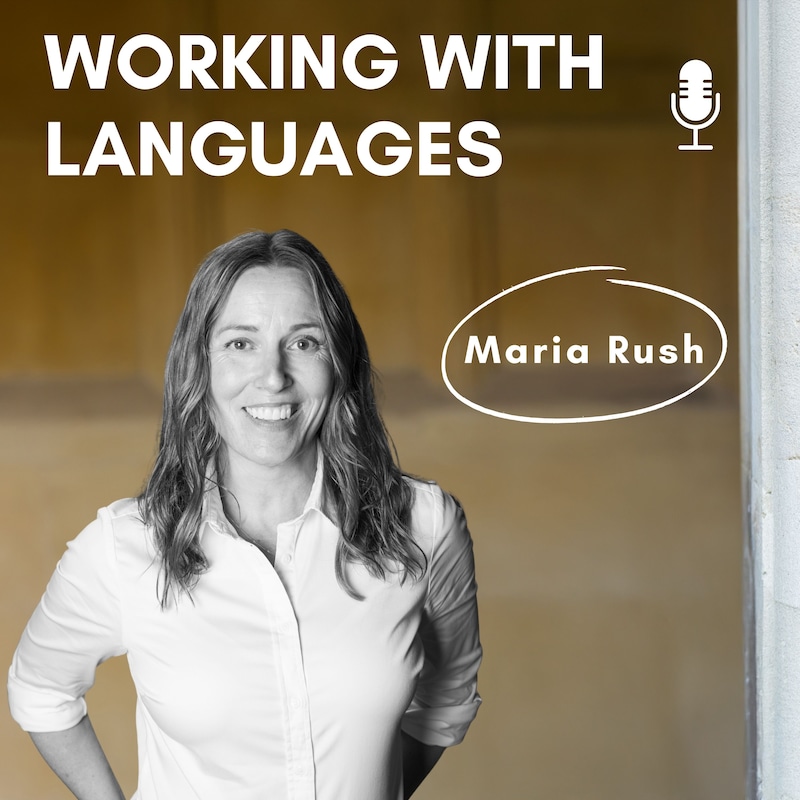
My guest on the podcast today is Maria Rush. Maria Rush has a very interesting background. I would say a nonlinear career path full of twists and turns that include languages, design, and a few languages. But first of all, hello, Maria, and thank you so much for coming on the podcast.
Maria Rush
Hi Sonia, thank you so much for having me. I'm really excited to be here today.
Sonia
Likewise. So shall we start with my first question that is the same for everyone on the podcast? What is your favorite word or phrase in a language that you speak?
Maria Rush
I love this question and it brought me a lot of joy thinking about it and the word that I've chosen is a Swedish word and it's skare. Skare describes the specific texture of snow that has slightly thawed and then refrozen. So it's that crusty harsh surface of snow.
And the word in fact is a perfect anomatopoeia, meaning that the word matches the meaning. So it's short and sharp. And this word means so much to me because I grew up in the north of Sweden above the Arctic circle. So snow in itself means a lot to me.
And I can almost feel the pain that this scar can actually cause you when you are walking slowly or even skiing on top of the surface. And then you go through and it can literally make a sharp indent on your ankles because it's that sharp. So it has a special meaning in the sense that it evokes a lot of memories, but it also has a very strong sensory meaning to me.
The texture, obviously the soft underneath, the harsh on the outside, the fragrance of snow, the quiet and the feel of it. And it has created a very deep muscle memory for me and growing up that way. So to conclude the word is that snow can be very soft, but it can also be very hard.
Sonia Kampshoff
That is very true. I would have simply called it, icy snow, but I think that's...
Maria Rush
Yes.
Sonia Kampshoff
What you refer to is much more specific than just ice and snow.
Maria Rush
Mm, mm. But it was interesting, Sonia, because it made me think a little bit deeper about the way I visualized this word as well of that, what we're gonna talk more about today about the, just the human side of things, how snow can represent the softness inside us, but also perhaps a harsher or harder surface which could be a facade on the outside. So it brought me lots of reflections and it was a really nice opening. Thank you.
Sonia Kampshoff
So you grew up in Sweden, you said, but not just anywhere in Sweden, really in the north. Can you tell us a bit more about that?
Maria Rush
Yeah. It's a very unique experience. I was born up in a place called Kiruna where the summers are endless. We've got midnight sun, so the sun never goes down. And the opposite in the winters is that the sun never rises. You have something called polar nights during December and January where the sun never rises above the horizon. So it's pitch black 24 seven.
So the environment is quite extreme, but amazingly beautiful. And I grew up wearing reindeer boots because it was minus 30 and we were still outside playing. And equally in the summers you're out picking cloud breeze and fishing and hiking and it's quite a unique environment and it has some, yeah, I think it's shaped me the way I am and I really like obviously nature and I've spent a lot of time in that.
Sonia Kampshoff
Was it a small community you grew up with?
Maria Rush
Interestingly enough, at the time, I believe, without checking this reference, but I was always told that the town that we lived in on a surface level is like a really, really big city, like one of the biggest cities in the world. But physically, it was a very small community and it was actually built around a mine, iron ore mining that still goes on today. And they have actually physically moved the town center as we speak like just last year in order to do more mining. So it's a small community, but obviously very thriving and world renowned because of it.
Sonia Kampshoff
So interesting. And you spent all your childhood and teenage years there.
Maria Rush
Yeah, so we moved. The reason we were there was because my dad was in the army. So he was located there and then his job moved. So we moved sort of halfway down to Sweden, but that's sort of counted as north of Sweden. So I've always grown up in the north of Sweden. And it's, yeah, always lived by the mountains and the forests and then enjoyed all that, you know, all the things that come, come with that.
But then I did leave home quite soon after that and moved to England when I was 18.
Sonia Kampshoff
And what did you do in England?
Maria Rush
I took a gap year from college because I did not do very well academically, so I needed to do something else. So I took a gap year and spent a year just outside London as an au pair and to learn English and I had a most wonderful time. And then I came back two years later to go to university to study international relationships and Italian.
Sonia Kampshoff
Interesting. Did you manage to spend some time in Italy then?
Maria Rush
I did as part of my third year at uni. I spent a year at Padova University and lived there for that year.
Sonia Kampshoff
Yes, very nice. And what did you think while you were at university that you would do afterwards with your degree and your languages? Did you have a clear idea of what you wanted to do or did you go with the flow?
Maria Rush
I really went with flow. I had no idea. It was one of those things I just followed my heart and a passion that I'd always wanted to learn another language. And Italian was my top language that I wanted to learn. I, looking back, yes, perhaps I would have liked to have a straight career path, but it was one of those passion projects that I wanted to have experienced in life more than thinking about a career in languages.
Sonia Kampshoff
Yeah, interesting. So did you then stay in London or did you sort of follow your passion for nature and move somewhere else?
Maria Rush
Yeah, we've, I met my husband at university and he's, he's from England. So we've taken turns over the years, living in the UK and various places and also taking turns living in Sweden. So that has really been a privilege of ours to be able to enjoy two, two different countries and two different cultures.
We've always lived close to nature in one way or the other, mainly by the sea in both countries. And I do miss the mountains sometimes, but the sea is a good alternative for me as well. So yeah, we've enjoyed several years in both countries and currently we do live in the UK again. yeah, yeah.
Sonia Kampshoff
So throughout the years you worked, I know you worked a little bit with languages and you worked within the field of Scandinavian design. Tell us more about that, how that progressed.
Maria Rush
Yeah. So I've always had an interest and a need for variety. My, correctly as you say, my career path has been quite, it's been quite varied. I've tried different professions within state organizations, private companies, both in the UK and Sweden. And I've, when I look back, I really do see that what's driven me to these different jobs have always been the connection with people and the way we communicate. So whether that is in different languages like Swedish, Danish, English, it has also always had to do with how we communicate in those languages.
So throughout my career, I have always put people first and that in itself has developed into a deeper interest in understanding people. But also foremost, it has given me the experience of experiencing my own leadership and my own way of communicating and actually getting to know me as a person and what's important to me.
And what I do today is that I work as a leadership mentor with a deep, deep interest for how we can communicate to strengthen the relational and human side of leadership, whether we are a parent or a partner or a professional within a business.
Sonia Kampshoff
Okay, before we go into that, something that I realized today, preparing for this conversation, I realized that I'm not too sure about the difference between mentor and coach. I was thinking of you more of a coach, but you use the word mentor. Can you help us understand the difference?
Maria Rush
I do. Yeah, absolutely. I think you can interpret this in different ways. The way I look at the two words differently is that a coach is someone who have perhaps studied coaching and knowing the theories and the strategies and the practices behind it.
I look at mentoring as a lived experience. So the way I mentor and help people is very much based on my own life experience. And I can then help people through that lived experience. If that makes sense.
Sonia Kampshoff
Very interesting, very interesting. And that probably also has a direct reflection of the people that you work with in a way that the background and passions, if you like, are similar. Is that right?
Maria Rush
Yes, it can be. I think what appeals to me so much is that I can relate to having worked in so many industries and have had so many different types of jobs, I have met a lot of different people, both different cultures, but also different positions within organizations. And therefore, I have real references to where I know people find themselves in certain situations. So as I said, it can really be parents who seek me out in order to improve or strengthen their relationships with their children, or it could be a partner who wants to have a better communication with their husband or wives or partners.
And equally important, you know, through organizations as well, whether we lead a team or whether we are part of a team, whether we work in customer service, we all have different relationships in everyday situations. And that's, that's what I'm so passionate about, of finding the, the communication that engages people willingly in a positive way. In all the day-to-day situations that we live.
Sonia Kampshoff
Do you find that there are common themes or challenges or things that people want to talk about?
Maria Rush
Yes, yes, I do. I think one of the biggest challenges that people come to me about, and again, it can be in any situation, whether you're a parent or a leader, but it is about the connection or perhaps lack of connection.
We have a deeper sense that we are doing everything we know. We're doing everything we can, but there's still a sense of friction in our connections. We may feel that we repeat ourselves time and time again saying the same things, but very little changes. We may feel that people disengage or disagree and we don't know what to do about it.
And of course, this causes internal stress and it causes, sometimes it can affect our confidence. And we often go to the only thing that we know how to is to work even harder, is to trying to convince people even further to get through this.
Whereas the way I work is, we work very much with self-awareness, emotional intelligence and solution focused communication. So we can really reduce all these potential frictions and be authentic leaders that people really want to connect with. Because the theme today I see more and more is that the gap that we are feeling or sensing is that almost the old way of leading and communicating does not work anymore.
But it's finding that understanding and finding that bridge on how we can communicate to make this work for everyone involved. And that is the leadership that people are really looking for today. And that's what I help with.
Sonia Kampshoff
So do you think, why do you think the leadership has changed? Is it cultural or is it maybe people just wanting different things? Where do you think it really comes from?
Maria Rush
Yeah, yeah, it's a good question. And this is something I'm sort of reflecting over a lot. I can only speak for myself, I think, and I think it goes into the wider community as well. But I have an experience of growing up with a type of leadership. And when I say leadership, I do include parental leadership. I include, it could be teachers, it could be leaders in our community.
But the way that we've been brought up is to be assertive. You do what you're told. We don't talk about emotions and connections, but it's the doing that we are used to. And we are very good at doing, but what's happening now is that more and more individuals are seeking an alternative. And I think that's what's changed is that we are becoming more aware of that this way of leading does not sit well with us as leaders, but it also is not received well by those that we lead. And therefore it has created a gap.
And I truly believe that it's a human need to feel connected. And that's what's being highlighted today. I think that that's the missing key, if you like, that people want to feel connected. People want to feel included. People want to feel trusted with responsibility. But we also want to have that human side of relationships and leadership that makes people feel valued for who they are.
And thus, I think that the trick here is that perhaps leaders feel that if we're going down that path, it's going to weaken their leadership, for example, but it is the opposite. It's really gonna strengthen the leadership. It's gonna strengthen the cultures within organizations. And I can also, from experience, say that organizations with this more people led approach and culture will do better.
They are doing better in so many ways in the sense that they can retain stuff, you know, there's less stress. Therefore people take less time off. People feel more motivated and included. People become more creative, et cetera, et cetera. And we can understand what that leads to in the end.
Sonia Kampshoff
Absolutely. It does remind me a little bit of the leadership style of Jacinda Ardern. And I'm currently reading her autobiography, which is, the title of her book is a different kind of, I think it's a different kind of power. And that reflects exactly what you're saying that it's leadership nowadays.
Nowadays, not only the, you know, I am strong and I am powerful kind of leadership, but it's more like the hard led and empathetic kind of leadership. And it doesn't make you less of a leader to lead this way.
Maria Rush
The opposite I would say and there's so many positive benefits from this way of leading. Obviously we're seeing on the receiving end as I just explained but also for leaders themselves is that we can experience much more calm and less stress and we can actually find more time to do the things that we really enjoy as well other things.
We create trust, we create connection. And at the end of the day, it's from people that I speak to, what people want most, or what people want more of in life, I should say, is that they want peace and calm, and they want more joy. And this is exactly what it creates, because it sort of peels away all the things that we are being told perhaps to do and how to lead, we can peel those things away and bring people together. And that in itself creates amazing work environments, it creates happier families.
And again, we can talk about mental health, overall wellbeing. It's something that people are really longing for, but I think the thing perhaps right now is what I'm trying to do is really vocalizing this and putting words onto it. Because I know deep down and perhaps subconsciously, this is what people are looking for, but it's important to talk about and to describe in words so people can recognize it.
Sonia Kampshoff
Absolutely. You say that we all want this human connection and I agree with it. Do you find having an international background and working with a wide variety of people, also with different backgrounds, do you find that certain cultures are more inclined, are more open to this way of thinking and feeling and working?
Maria Rush
Yeah.
Sonia Kampshoff
And do you find that there are cultures or countries or even languages that are less open to this? Not only on a sort of generational and age level, but literally the culture and the language where people that people grew up in.
Maria Rush
That's a really good question. I can obviously just speak from my personal experience from the countries that I work in at the moment. They are Scandinavian countries. They are the UK and the US. I feel really positively about that change is coming and that there's an openness and willingness to change.
However, I know that there's currently perhaps a limited vocabulary around it. Not that it's not there, but it's more that we are not used to it. We need to expand our vocabulary. We need to expand our repertoire of words I find that we use on a daily basis to describe our needs.
But also our emotions. And that in itself is a, and I know you and I talked about this previously, Sonia, but that for me in itself is a type of language. It's a human language that actually goes over physical boundaries and language barriers. It's almost like a universal language of empathy that you mentioned, compassion, but also being able to name all those words.
And when I started this work about 15 years, like properly when I did all my inner work myself, I literally had to create a list of words because I found myself using the same words every day and my children picked up on it. So I had to extend my vocabulary and I still do that today to really vary things, to really be, to fine tune how I describe what I feel and what's important to me.
And when I'm able to do that, people respond in a positive way. So I hope I answered your question there, but that's how I see it as more of a universal language that we can all learn with quite simple means actually.
Sonia Kampshoff
So when you were looking back, when you had to learn a new vocabulary and you drafted a list of words, did you draft it in English or in Swedish? And which did you did you find it easier in one language or the other?
Maria Rush
Yeah, that is such a good point. And I was going to say, can't remember, but I do remember I did it in English actually. I did it in English because those words came more naturally to me. Over the years, I've obviously made a Swedish list as well, but they don't quite sit as smoothly with me. So that's a really good point actually that you're making.
I think you could do whatever suits you best, obviously, but for me, it was the English one that, that I've used and that I'm expanding on. Yeah.
Sonia Kampshoff
You know, I have a similar experience when I think even of words like mindfulness or mindless actions, which in a way is the opposite. I find that it carries so much more meaning when I say it in English than in any other language. It just doesn't sound quite the same. And I find that
Maria Rush
Yeah.
Sonia Kampshoff
I don't have an answer to why that is, but it feels like in a certain way, the English wordings and the English vocabulary is, it feels better. It describes things better when it comes to empathy and so on. And maybe it's because I...
Maria Rush
Yeah.
Sonia Kampshoff
…read about these things more in English and I listen to podcasts about this in English and it feels like maybe there's more conversations about this in English. But I still feel like whenever I talk about these things in German or in Italian, languages that I speak to a native level, I still find that I throw in English words.
Maria Rush
Yeah, that's interesting. Do you also find that your Italian and German native language have changed? Because I can definitely see that with my Swedish, that more and more English words are creeping into the Swedish language. Quite specific ones, perhaps like you mentioned mindfulness, whether that's a universal word these days. I don't know whether German and Italian has been influenced as much as Swedish has with English.
Sonia Kampshoff
Yes, think the word mindfulness, for example, is used also in German and in Italian. But I don't think it should in a way, because there's always people who are not quite as fluent or don't know English quite as well. And then if they don't understand the correct meaning of mindfulness, does it actually carry the same meaning in Italian or German?
Maria Rush
Yeah, yeah, yeah, that's true.
Sonia Kampshoff
Are they using an English word more as a filler rather than really conveying the meaning of what is being said?
Maria Rush
Yeah, I suppose from from my point of view, Sonia, has like, I've probably chosen English because it is my working language, if you like, mostly, not always, but for the wider, for my wider audience. And but equally, I also know that there are so many Swedish words that describe things just in one word that in English I have to translate it to half a sentence. So it really, really depends. But I see the beauty in all the languages that both you and I, well, you wouldn't like to hear my German, but I did study German as well. Yeah, that's a really good common ground that we have, that we both work in English as well.
Sonia Kampshoff
Yes, my working language is also English. Yeah, that's interesting.
Maria Rush
Yeah.
Sonia Kampshoff
Do you have any anecdotes that you can share with us about the work that you do?
Maria Rush
One of the things that I really, really appreciate is that I work with people from different backgrounds, different age groups, but something that really relates to everyone I speak to is, and we have mentioned it before, is that deep wish for connection and understanding our relationships on a day-to-day basis.
And what surprises me is perhaps that when I work with someone who's 25 compared to someone who's my age of 52 is that we still have very similar wishes, but also perhaps situations that we need help with, even though they may sound a little bit differently and obviously based on the life experience that we have.
What really again positively surprises me is that there are more and more young people who want to do this work now in their 20s compared to my personal experience. I perhaps started when I was 35, 40. So that is a really positive development.
And something else that perhaps surprises me is that when clients come to me, have some sort of idea of what they want to improve on and what they want my help with. More often than not, however, is that we tend to dig deeper on so many other aspects in their lives that they may not have been prepared to, like they didn't expect that, but that it slowly leads to back to the main question.
But there's often layers and layers and layers of things that we need to talk about first, rather than just fixing that particular one situation. So that's something that's really, really rewarding in my work.
Another side of the rewards of my work is really that everyone that I speak to, I also learn something from, which makes me grow and expand and reflect on all sorts of things and also my own development. So that is something I'm so grateful for to have that opportunity, that shared space where, safe space where we can share things and develop together. So that's something I really, really value.
Sonia Kampshoff
It's very encouraging and positive that you say younger people are wishing to learn that. Where do you think that comes from? Do they start thinking about it at school or is it more through their private time, maybe online? Where do think that comes from?
Maria Rush
Yeah. Yeah. I think it's probably all of those things. I do believe that there's, again, from my personal experience, I got into this specific work through our oldest son who's now 17. And he's shown me the way that he really needed me to let go of old ways of being a parent, old ways of leading. So I had to look inwards to change my ways in order to be the parent that he needed.
And his needs were really the same as my needs when I was a kid, but I was not able to express that the way he was. So that's how my, my sort of journey started on this. And I do believe that that generation, they are interested by they also expecting better from us and they expecting a different way. So, and that's what I can see with someone who's perhaps 25 today that they, there's a totally different acceptance, but also a willingness and an openness to seek help, whether it's through therapy, mentoring,
It could be anything to develop themselves and to get more clarity, more calm, more confidence. And they know that they don't have to figure it out all by themselves. It's more acceptable, I think, to seek help these days.
Sonia Kampshoff
That is so positive. And I think the UK, where we both live, is a very good example in that. People talk openly about mental health. Men are not shy about saying they cried about something. And that is something
Maria Rush
Yeah.
Sonia Kampshoff
that in a way I find surprising, but I'm very glad to say I'm starting to find it less surprising. And I think it's great that it is being normalized. I think the UK is really leading on this front of the countries that, at least the countries that are most familiar with. I see it less so on the continent, on the European continent.
Maria Rush
Right. Yeah.
Sonia Kampshoff
And I'm very happy about it because it should be normalized. Should be mental health or mental unhealth can affect anyone and also maybe later in life. But if you learn how to deal with it, it can only be of advantage to you and anyone around you in your private life and professional life. I think it's
Maria Rush
Yeah. Yeah. Yes.
Sonia Kampshoff
It's very good. I'm very happy that the UK are very open about it.
Maria Rush
Yeah, absolutely. And think also another point is that this sort of work is never too late. It's whether you start when you're 20 or whether you start when you're 45, it will have such beneficial effects on you and the people around you. It, and I find that is encouraging that just because things have been in a certain way previously, or generationally, we can change that now. And quite easily.
Help is available. And, as I said, the willingness and the openness and also the curiosity is there. So I look at things really positively going forward and I do appreciate the openness around it.
Sonia Kampshoff
Do you find through your work that you work more with women or more with men and do you find that there is a difference between the two?
Maria Rush
I do work more with women because perhaps I've been in my messaging until quite recently. That's what I've been focusing on because I'm also a woman and I have my own experience to share. But the more I look at this and that was just a choice that I did because I have worked a lot with parents, women in leadership, et cetera.
But I have my basic and ground focus has always been that it's not about women and it's not about men, but it's about both. It's about all of us. The more balanced and calm women can be, the better off men are going to be.
And the better off men can be open and communicative, et cetera, the more help women will have. So it's about the balance that I am always trying to create in our society or community or family unit. And it's not about being for or against anything, but it's finding what works best for everyone. And that means that we need to find a way to communicate that everyone understands that covers everyone's needs and wishes.
Yeah, so that I think for me, that's the most important thing. And interestingly enough, more men are coming my way now as well, because there is an interest to also being able to communicate in relationships, for example, to communicate differently with your children, with your teenagers, with colleagues at work. So it's a mix. So I'm really, really excited about this.
Sonia Kampshoff
I'm very glad to hear that, that's very positive. And we all have, I think, this picture of a different way of parenting, different way of being a father in Scandinavian countries, much more starting from the fact that they get a more generous parental leave, paternity leave. So they can be with a newborn child for a more extended period of time than in other countries.
Maria Rush
Yeah.
Sonia Kampshoff
But I think they do have a different way of parenting. And I think it's very positive that this trend is coming also to the UK and to other English speaking countries.
Maria Rush
Yeah, absolutely. Now you're quite right and my husband and I have been privileged enough to experience that as well for ourselves in our family having lived in Sweden when our children were young. So, and I know that that has created just that physical time that he's been able to spend with our children has created a really good relationship.
But again, on top of that is that personal responsibility, whether we have the time off from work, like you mentioned or not, but it's finding that courage and the curiosity again, to find ways to communicate with the people that matter the most. It's what's for me is what's pivotal in life, definitely.
Sonia Kampshoff
I find it interesting that you use the word curiosity because people who are curious want to learn new things and they are willing also to
When you learn new things, sometimes you have to ask questions that, you know, we say that there's no stupid question, but sometimes you feel stupid for asking certain questions. people who are curious have the openness of asking all questions that they wish to know an answer for. And that is so important that, you know, the willingness of being…
Maria Rush
Mmm.
Sonia Kampshoff
…open and honest that goes hand in hand with creativity and curiosity.
Maria Rush
Yeah, yes. Absolutely. And it's also a very vulnerable position to be in. But I have also through my experience very much can confirm that the vulnerability of wanting to change is always welcomed. It's always met with interest and gratefulness, I believe. So it's having the courage to be vulnerable and to find new ways. And that takes, it takes practice and it, course it takes, I always encourage people that I work with to, and that's why I, you know, it's important to have it in a safe environment when you start this work to like take small steps.
Sonia Kampshoff
So, let's go.
Maria Rush
Be vulnerable with people that you trust, that you feel safe with. Test things out. Be open about what you're trying to achieve. And people are more than ever, I think, so willing to listen and so willing to help when you can explain where you're going. So it's, yeah, encouraging more of these conversations, absolutely.
Sonia Kampshoff
The people that you work with, how long do you work with them for? Is it a couple of sessions? Is it over many months?
Maria Rush
Yeah, it varies. So I have different ways of working with this. I do, for example, a group program, which is shorter. So I do like four sessions, an hour, an hour and a half each session. And this, uh, this, uh, sort of training in this, but also mentoring at the same time, we do them in small groups of like max 10 people. So it's sort of a safe space to share and to reflect.
And whether that is in a private setting with private people, or it could be within an organization as well. And then I do longer one-to-one mentoring, normally, know, spread over about six months, where we go a lot deeper. It's still, you know, training and very practical tools, but really looking at deeper conversations, deeper sort of practical day-to-day situations that someone needs help with. So.
It varies the way I work depending on what your needs are and what your aim is, of course, as well.
Sonia Kampshoff
Do you work also in person with people or is it only online?
Maria Rush
It's mainly online so I can reach as many people as possible, but I do also work within physical organisations. Or it could be that I have a retreat with someone or that I go to a company and do a seminar or public speaking. So it does vary.
Sonia Kampshoff
Brilliant. I think the work that you do is really important and is going to help people both in their personal and professional lives over the long term.
Maria Rush
Thank you Sonia, that means a lot.
Sonia Kampshoff
Is there anything else that you would like to say that I haven't covered maybe about the work you do or anything else?
Maria Rush
No, think that's, I think we've covered lots of different points, lots of good questions and reflections. So I feel really happy with that. Yeah.
Sonia Kampshoff
Brilliant. So thank you so much for coming on the podcast and I'll put all the links on how to get in touch with you, how people can work with you. I'll put all of that in the show notes. And thank you again for coming. It's been a wonderful conversation.
Maria Rush
Thank you, Sonia, for having me. And I love your podcast and you're doing such an important work that the listeners would really enjoy. So thank you for having me.
Sonia Kampshoff
Pleasure.
Maria Rush
So if you’d like to find out more about what I do, you can visit my website mariarush.co.uk where you can find details about my group programmes and 1:1 mentoring. I would also love to connect on LinkedIn under Maria Rush and you can also tune into my podcast called Women Don’t Rush on Spotify, Apple Podcasts.
p Programme starting in April:Sonia Kampshoff
I love Maria’s positivity and her values that come from lived experience.
We - people - are changing all the time and she gives us ways to shift our communication and forge a better version of ourselves, for us and for those around us.
If you enjoyed this episode, please give it a 5 star rating on Spotify, Apple Podcasts or any other platform where you listen to your podcasts.
And if you have a comment, simply leave it below.

