Shownotes
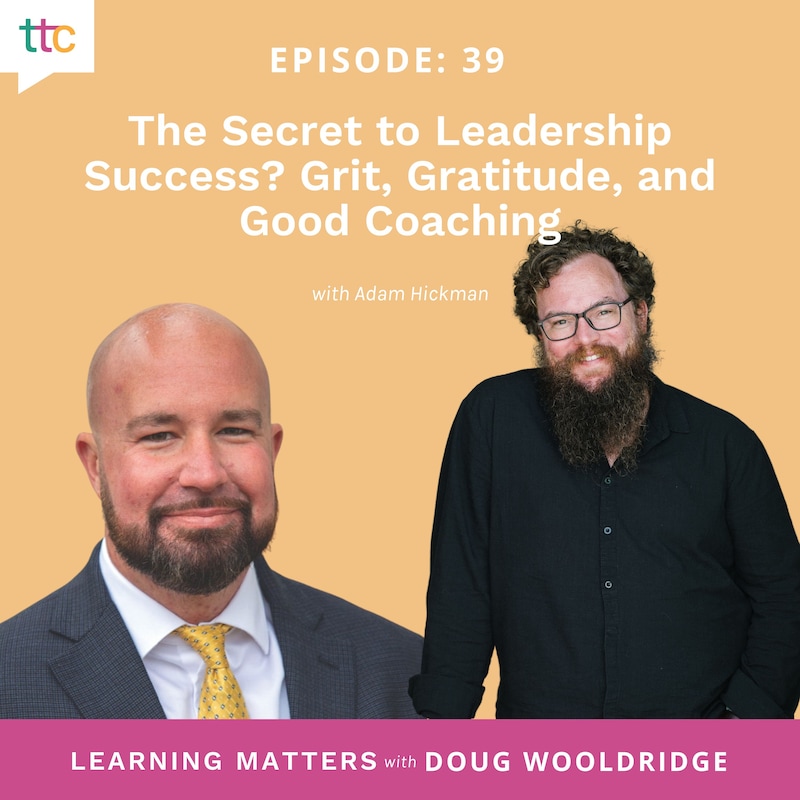
In this episode of Learning Matters, we sit down with Adam Hickman, VP of Organizational and Employee Development at Partners FCU, to explore what truly makes a great leader in today’s workplace.
From his early days cleaning flea markets to leading L&D strategy for a Disney-affiliated credit union, Adam shares his real-world insights on leadership transitions, practical applications of AI in learning, and why grit and gratitude are the keys to long-term success.
We discuss:
✔ What separates good managers from great ones
✔ The overlooked skill of decision-making in leadership
✔ Practical ways AI is transforming L&D today
✔ The truth about hybrid work and generational myths
✔ How to build career pipelines that actually work
✔ Why “coaching” should be at the core of every leadership role
Plus, Adam gives us a behind-the-scenes look at his book Grit and Gratitude and shares advice he’d give his younger self. Whether you're in HR, L&D, or just trying to grow as a leader, this is an episode you don’t want to miss.
Connect with Adam Hickman on LinkedIn: https://www.linkedin.com/in/adamghickman/
Check out his book: Grit and Gratitude: The Science and Art of a Successful Career Life
Catch up on Adam’s writing with Gallup: https://www.gallup.com/people/198032/adam-hickman.aspx
Stay locked in to Adam’s articles with HR Grapevine: https://www.hrgrapevine.com/us/search?keywords=Adam+Hickman
At ttcInnovations, we help businesses create lasting change with immersive learning experiences. Through instructional strategy, design, and content development we empower employee confidence, performance, and results.
💡 Looking for custom learning experiences without licensing fees? Contact us for a free consultation! https://bit.ly/4aOhPKq
🤝 Need extra hands fast? Try staff augmentation! Click here to get matched with experts in 48 hours - no job posting needed. https://bit.ly/3RiEfLT
🚀 Simplify outsourcing with our subscription plans - predictable pricing and limitless innovation. Book a meeting for your free first week! https://bit.ly/3RiEfLT
🎯 Boost results with serious games for optimal retention and results. Contact our Sales team to learn more: https://bit.ly/3RiEfLT
Transcripts
It's not AI for the sense of AI. It's AI for the sense of the practical uses of it. But I always say like, where's the session where I don't want to hear the theory of it how great it's going to be. I just want someone to say, when you're writing a job description, use this software for this reason. I found one reason I will drop my names here, but I found a software recently that builds PowerPoint decks and outlines for courses better than I've ever seen anybody else do it.
and I'm a stickler for you build it in the box before you build it in PowerPoint. We've adopted it through our work streams and the way in which that it goes out to the, and pulls back things to build. I mean, it just accelerated our build time overnight. Something that would take us a week to do takes us maybe two hours at this.
Global L &D Professional in: ining and talent champion for:No thank you, great to be with you today.
(:Well, as always, we'll be discussing the latest and greatest developments in the world of L &D. I'd like to start off with this, Adam. What strategy matters most in learning and development today?
The things that I think we're most focused on is the transitional points of your career. So too often you see competency work and behavior work, you fill in the blank, what do want to call it? But it's when somebody jumps from individual contributor to manager. And when I say we, I'm talking for a lot of people, hang in here with me. The general, we, I would say, we got to get better at making sure people are ready for that transition. Either we're assessing against it, we're putting the development dollars behind getting them ready for that. And then it's not a surprise we're in that role.
When we were, when I was at Gallup, we would say,
You own up to 70 % of your team engagement, every single interaction, things that you do. That's not by surprise that some people just innately get it. So we don't have Ted Lasso walking around the world. We got a few of them. So how do you find a coach that can inspire like that, that's in a manager role? That's the aim for what it is that we're after. It's the stoic ways of command and control. It does work in certain industries, I would think. I spent some time in the energy world. I get it. You don't want to have the hard check in when someone's at risk of safety. You got to jump right in to do what you got to.
But for, again, the greater we've got to look for those that have the innate talent to lead people. that's, to me, that's the most critical aspect of things.
(:are you looking for in a leader or a potential leader? Is it just with the work ethic or is it how they brighten a room? What's the start?
or easy answer that I would say is if they woke up today without the desire to coach and develop their employees, I'm always a little skeptical about why do you want the role? That's the basis of the work. So what do you do? Well, you coach and develop, you coach and develop. The big thing. Now, if we want to take it a step further, there's really categories, domains, whatever you want to call them, that when I'm hunting for a manager on my team specifically, I'm looking for how do you motivate.
Do you have the assertiveness or courage? All over and I have some tough conversations and I'm like, why is it tough? Why does it always have to be tough or challenging? No, if you do it with the intent to develop, it's not tough. You're just holding up the mirror to something they probably already know. So the assertiveness or courage to have the conversation in the moment down the road from when no one remembers it anymore. that piece, the accountability of the next thing I'm looking for is are you self accountable to what's.
required of you and your team, or do you wait for someone to hand you a magical sheet of expectations that says, you know, is, we hired you for the role. I don't want to manage your calendar. I don't want to manage your time. I want to trust. I hired a talented person to lead people on a team and you know your expectations, but if you don't, it's a phone call at the end of the day, or it's a team's message. Speak up to that. It's, know, don't sit and wait. the next is, is around relationships. You know, by no surprise, I think if you read the first.
fill in the blank 30, 60, I don't know what days they might. I always want to write something like the first 42 days. That's just completely changer. You got to have the ability to build and make relationships more than just the surface level. What are you saying? Like, you know, the sentence off, don't say you can count on me for well, until you say that they don't know they're guessing. just be clear on, you know, if you had a Venn diagram that you overlaid with one another.
(:You know, what are your needs? What are their needs? And then how do you make the most of it? It's right in the middle. That's what I mean by don't just make relationships for the sake of it. That's great. But we're also here to work to accomplish towards the same mission and goals. One of the best mentors I had at Gallup, Joe Strewer, just a qualitative genius. And, know, Joe, if I ever asked a question of some sort, he always sent me down the path if I had to go watch a movie first. I remember him saying one of the early studies he led was what's a missing skill in schools? I this was going to be like the home run.
you know, thing that we would change the world on and how they would change curriculum. he said, never really took off. And the skills decision-making to me, if I had to define it, it's around how do you analyze information? How do you evaluate options? How do you make choices? How do you make sense of experiences? But it was all around good decision-making skills. And, know, especially in HR, if there's a policy, it's really clear what it is. If there's not, it's really clear it is.
What I look for in the high talent are those that are comfortable in the gray. Because if you're comfortable there, then your decision-making skills are pretty sound on how did you gather feedback? How did you, what listening posts do you have out there? You'll talk me through how you made that decision. And what's been fun from that is, know, channeling Joe is even in with my kids, when they come home from school.
Hey, how was your day? Cause you know, can get a visual how the day went, but I'll say things like, was the hardest decision you made today? And sometimes it's like, well, what do I eat for lunch? Or, you know, should I have this before that? But as I've asked that repeatedly, we get into some pretty good conversation that I'm hearing the mechanisms on how they made and arrived at certain decisions that were tough. And my hope is over time that transfers to the workplace that, know, from a small upbringing till now, I've been pushing them on. Okay. So you happy with that decision? Like, yeah.
And then we move on. you're not, talk me through where were the pivotal moments that you could have made a different decision. doesn't matter if it was lunch or, you know, a math equation, whatever the case may be. I just think move that into what I'm looking for is that type of an ability to hear how did you get to the decision? And most importantly is, you know, what was the pathway you got to it?
(:What's amazing about that is because to me, every decision in your life, no matter how big or small, leads us to this point that we are right here right now. So the idea of challenging even your children to really think about decisions, whether that be what they're having for lunch or whatnot, I think that's incredible. Has this always been your mindset or have you had to develop this over time and what?
What led to not just with your children, but in the career that you've had as well.
And no, always has. was the late bloomer going to college of any sort. I actually didn't want to go to college. I had no desire. I didn't like the courses that made no sense to me, not to pick on any of them that I'm going to. I remember I had to sit through oceanography and I just thought, what a complete waste of time. The water is wet and it's blue. Do I pass? And the course came with this inflatable globe. I thought, well, that serves some purpose. At least I can.
entertain myself at some extreme, but no, I had no desire. It wasn't really I got into first master's degree that was very narrowed to human development, human capability. And what it came from is wicked addiction to studying just the gurus of the space. So pick a topic and who's the guru and then what do they do that's so different from other because there's could be genetic. could be the there's just a million things that could be. And so I just, I started down the path of studying, you know, the, the extremist of the world.
And, you know, are they faking it? Are they not? Where is their upbringing come from? What's similar to them? I used to follow comedians for quite a while because I think they got one of the hardest jobs in the world, but so beneficial. But as I'm sure others would say, you dig into their past, not always is it a great past. there's help that make them old to where they're at. Successful runners. David Goggins, probably my favorite study of all time. So I'm so dialed in and so particular in his, he's a great read, but unbelievable upbringing on how it
(:made him to what he is and how he motivates himself. It's those more of those things I'm looking for in a manager. That's really where it got tuned into when I jumped aboard at Gallup. their whole premise is studying excellence and then how do you replicate it? But sunlight to that through assessments, through coaching, so on and so forth. And I think that was just another accelerator to now we're pointing it at businesses and organizations and
all different types of clients that we were working with to hear that. And then jumping aboard with it at Partners through Disney is, I don't know another place that can replicate the experiences that are created. You know, we're an entity of a credit union that the things that I get to see us do, and if you've dug into financial wellbeing, mean, there's other elements of wellbeing that are great, but when you can change lives due to finances, I don't, have, mean, I've yet to steal a high from anywhere else. That's amazing to see what that looks like.
Once you get to a point of financial stability, it seems like all the other stressors just wash away or at least wash over you. Thank you for that incredible insight. What's your biggest application for the strategies and how are you measuring the success of the applied efforts?
You could throw a lot of metrics and engagement levels, culture survey, risk indicators, turnover. mean, just ask Chad's UBT, which is the best one, and you can chase after it. I think those that are theorists will always stick to the percent, the practitioners and those that have been in it for quite a while and to the thick of it. Would you walk into a workplace if you're tuned in well enough?
You can feel the vibe from the start, but you also can see it in people's non-verbals conversations that are happening. It's just a different workplace. And I think there's enough movie clips out there that you can definitely get the sense of this. It's the Will Smith Pursuit of Happiness. Did you ever see that? So the interview, right? He walks in street clothes. He sees the office. That's just nuts. Sits down for the interview. You got four white guys on the other side of table, suits.
(:Yes.
(:And to me, beautifully written, but was also like, yeah, that's the same thing of when I know we've got great managers walking around and leading every day. You feel it from the start and it's, you almost don't need a metric, not saying you shouldn't have one because you can just hear it in people's voices and why they, you know, are they stressing Sunday nights come to work on Monday? Are they looking forward to the relationships they've built, the development they get, and they've got a great Ted Lasso coming to work more.
Awesome. know folks are always looking to showcase ROI to their organizations when it comes to L &D. It can be a big expenditure, big time sink. How are you showcasing the importance of training learners, especially because they've got a full day of work on their plate already, and now they're working on training as well.
If you know the big rocks that we're trying to move five to 10 years out, dial it back. That to me is what we're doing, but the how is where we come into play. So you can roll out a new software and just hope that people get it. But L &D is an accelerator to business results. The best organizations get it. Those that see it as an expense, we're not coming to work for you. Those that have figured it out, best of luck.
Those that understand the human side of we're going to make a change. We want to do this. We want to do that. again, that's the what you forget the how the how is the people and we're the people division. So if you want to behavior to change, if you want an adoption of something, if you want an accelerator to what it is that you're doing, then you've got to involve. Well, here I wear this shirt for everybody today. I'm calling HR.
Because we'll be the ones that help you move through the on ramp, the highway, the off ramp of it. And L &D is definitely a part of that process.
(:top trends are you most excited about in our ever evolving world of learning and development?
It's not AI for the sense of AI. Sure. It's AI for the sense of the practical uses of it. as much AI, a couple of conferences I've gone through, everybody's talking about it. But I always say like, where's the session where I don't want to hear the theory of it how great it's going to be. I just want someone to say, well, you're writing a job description, use this software for this reason. Now that's practical use. If you, found one reason I won't drop any names here, but
I found a software recently that builds PowerPoint decks and outlines for courses better than I've ever seen anybody else do it. And I'm a stickler for you build it in the box before you build it in PowerPoint. We've adopted it through our work streams and the way in which that it goes out to the and pulls back things to build. I mean, it just accelerated our build time overnight. Something that would take us a week to do takes us maybe two hours at this point. Now you still need, it's unbelievable.
It's you still need a human to validate what you have and what you say. Cause AI is pre-programmed to sound smart. Uh, but to me, the practical uses for this is where our biggest lift and opportunities at, and we're still figuring it out. We're not going to throw a ton of money in a certain direction of something just for the sake of it. But you know, those that have figured out what their sweet spot is, what's most impressive to me. And I mean, anybody listening, you can do this when you meet with an AI vendor, you ask the one question, what are you better at than nobody else?
when you get varying answers, I always say, well, then you haven't figured it out yet. Because that should be your, you know, fast pitch down the home plate that you knock out of the park every single time. I just too often do I hear, well, we're great at everything.
(:top of your head, are there any initiatives that you guys are working on this year that you're most excited about?
It's going to be July soon. So I was like, well, there goes the first seven months. Initiative-wise, I'd say there's really two big ones that we're often interested in, which is the amount of generations in the workplace where I think companies have gone wrong. This is my point of view is we spend too much time on what's the differences between them and how are we going to figure that out versus why don't you chase after what's similar?
Because I've never been in a room where I've said, start talking about what we want from a workplace. Everybody lists this. And then I'll say, is there anybody on in here that doesn't want this? And nobody says no. said, so great. So can we stop trying to figure out where y'all are different? We all want the same thing. So how do we unfold the similarities to say, let's explode that. The other one, my partner in crime, Crystal, is just building the talent pipeline that we have. And we've got great pipelines as it is. When we post for a job.
How do we ensure the right talents in the right seat at the right time coupled with, where are they at career wise? And then if we've got them, how do we keep them in sense of, there a career path? Is there, you know, transparency of pay and what's the next seven years look like? All of that. It's an immense amount of work with a lot of people involved with it. But I think when someone joins a company, I'm curious though, from podcasts you've done, are there certain trends that you're hearing so far?
I think a lot of folks, not necessarily any of the guests that we've had on, but I think a lot of folks are on that mindset of like, Gen Alpha, Gen Z different and stuff. And I really do think that you've nailed it, which is there really isn't much of a difference besides just the time that they grew up in. They still want the same things when they go to work and they always find that they want the same things that any of the other generations had. So if I don't have to read another think piece in the New York Times about
(:what makes Gen Z the most difficult folks to bring into a team, then I will be a happy man.
I'm a geriatric millennial, I think is the way I've been categorized. And it used to be our fault everything was broken. I think we've moved on now. We've retired. And I don't know what the next I stopped paying attention to the names that come out anymore. When you said what was the alpha one? But yeah. Anytime I hear alpha, there's another one I've heard my kids say where I'm like, is that a thing now? Am I hitting the age where I don't know what they're called?
Gen out.
(:But it's another trend that I see that's just super aggravating to me that it's into the manager talent piece. I don't know. Do you want to go there? Can we talk about it? The headline of the story is, hybrid still isn't working. And it's from a pretty reputable publication, I would say. I have spent, I don't know how many years now, in a remote or hybrid situation. I live outside of Cleveland, but my team's in Orlando and Anna Hyman at Burbank. So I traveled with me. I was remote at Gallup. I mean, just so on and so forth.
Would we make sweeping statements that are speaking for the greater mass? I don't understand why it's allowed. The article is written beautifully. I'm not knocking the writers to it. They both have really impressive Ivy league backgrounds with a great study.
they have stocks in corporate real estate? That would be my question.
I didn't explore that. I like to believe not, but maybe, but if you're just researching a topic and blasting out something isn't working, you're doing a disservice to those that are in the thick of it. Because that's not true. That gave us the insights to two things. Remote hybrid work. Number two, if you're a crappy manager, you were really crappy during that time period because you couldn't do the old school management by site. And every time I've seen.
Pretty big organizations make the mandates to return and you must this and you must that. I don't ever hear the other side of that, but I have heard this one. Well, we're more collaborative. No, you're not. you come in, you shut your office door, you maybe come out for lunch, you go back and you shut the door and then you go home. And I love, when I see certain workplaces that they'll still take zoom calls and teams calls from their office while they're in the building being collaborative.
(:You know, I'm not looking to pick an intellectual argument war, but my dissertation was on remote working. I've wrote a ton for Gallup on that. Sure. You can have one study that says you should tie your shoes on Wednesday, but more than Thursday. Those that are in the thick of having remote and hybrid teams, it works and it can work and it has worked. NASA, his name is Jack Nils was the first reported remote worker that took his work home with him. And that's, it's his fault. blame him. It's not new to the.
your mail carriers, your trash collectors, your safe light for peace, take auto workers. They meet the definition of remote worker, but we don't consider them remote. All those that are just like, well, this won't work. I'm like, it's not new, ladies and gentlemen, with the jury. It's been around for quite a while. And if you want to, if you want to make the mandates, the tax that you pay is there's certain talent that's just not interested because we don't have to be, because there's many as those things that I see out there that are remote. They're not.
low level positions anymore. People have tuned into this can work and you got to mismatch the expectation of that in your organization. There's a recruiter sitting in their inbox waiting for them.
TTC Innovations has been 100 % remote ever since its founding 24 years ago. So I just think it allows folks to have the freedom of, well, one, not having to do the transit. mean, I used to live in Los Angeles. It could take an hour. could take two hours to get just across town. The idea that not only are you spending eight hours of your day in the office, which can be fine and can be fun and
can allow for relationships to develop in ways that remote doesn't allow it to develop. But the idea of then spending an extra hour or two hours of your day not living your life, not being with your family, not being able to make a decent meal, just, people have gotten to the point of where they're like, what type of life is worth living at that point? We need to have some freedoms here. So yeah, I think that's great. What was the response from folks on LinkedIn?
(:Sometimes I miss on social media where you can have a, not an argument, but a good back and forth with people with experience that click into it. I've got a great network of individuals through LinkedIn and because I will spend nights getting in back and forth and conversations, or sometimes I'll just, I'll give you a number. Hey, just call me because I'd rather hash it out there and love to hear the experience. Then if you had to put it on a scale, 99 % of the people get it. They understand what I'm saying.
those that want to challenge it to me, um, either closed off to the possibility or you've got a flavor and style that, if it works for you, I'm not telling you don't do it. What I'm saying is you've got to put some thought and perspective to, this work 99 % of the time it could, anytime I hear this job, it's gotta be in person. I don't say yes or no. I have a bias towards, I doubt it, but
I'll go right to show me the job demands. where in the job demands requires you to sit in an office with this? And if it does require you, by all means, I, I hundred percent agree with you. Like daycare worker got to be there. Right? Yep. police officers firemen, like you can't now are there parts of the job that could be done remote that are administrative? Maybe, but that's, that's your call about mine. I just, especially in HR and other things, I just, question it when there's such a definitive, this must be, it's almost a hobby of me to ask, well, why?
You know, convince me it does. not telling you, no, it doesn't, but I'm just curious on you've got a really hard bend on this has to be in person because of something. What is that?
If that works for you, great, but that's not 100 % of the rest of the workforce. And again, really can't be talking in absolutes when it comes to the vast majority of people. It just doesn't work. Are there any challenges that you and your team have had to overcome recently that you're most proud of?
(:Well, I would say challenges. was more of a opportunity that I think we're doing okay. We were absent of a chief people officer for about a year and because we were being very specific to who's the next one. And what do we need from that? But in terms of things, my partner in crime crystal, that's actually not her title, but it is for today. But what we had to get ready for is we were in the Philistines Center later and we did, it was, I think two weeks, two or three weeks ago, Patty joined us.
But yeah, it's been a while since I've had to work through onboarding a chief people officer to like, how do we set her up for success even before she begins? Which means we've got to get the team ready. Like what reports and metrics does she want to look at? What's the scoreboard going to look like when we get here? And then when she gets here, we can't throw in a fire hose on. Like we've got a slow drip campaign on the things that you need to be involved with at thinking through, you know, what's the first hundred days look like for her and her seat?
How do you support in the team? And we've got a great team that we gel well. And how do you fit that into a new CPO coming in that has been great with relationships? And she was with Disney before she joined us. So we kind of had some snapshots of where her strengths were coming into things. And by no surprise, she hits the ground here in quick adoption. And it's been great. I don't see anybody writing articles on how do you onboard a CPO. They might be out there, but I haven't seen that. We're still picking on hybrid work.
doing it right, that it's in service of her, but also for our team and organization. How do we treat that as, you know, specialties? I think we did really well in the kickoff of things and how do we keep the pulse for her as she gets on boarded and the more executive long-term work of things that happens, always the challenge. Because communication's free, I would say, but it's one of the most taxing things that if we don't do it right, we'll completely miss. like I said, not so much challenge. It's just knowing the right.
lever to pull when we can and then you've got vacations and all the other things that fold into time just gone.
(:Well, I'd like to get a little to the more personal side of things. tell me, tell me a little bit more about you, Adam. Take me back to the little Adam days. What led you to the world of learning and development and HR and how did you become the VP of organizational and employee development here at Partners FCU?
Well, I never thought I was ever going to be, let's just say college material. I actually was told that in high school that, yeah, good on our guidance counselor. was, I know, well, and then it got worse. So I thought, okay, I really know desire to, like, I didn't really love high school in the sense of the academic side of it, the social piece to it. Military I thought was going to be my thing. I had a desire to get into law enforcement.
He's a counselor.
(:And so I always thought state patrol in Ohio was going to be my path. I had worked just various jobs. started working when I was 15, 15 and a half, think it was. If anybody knows listening, I would say, you know what I mean? It's a huge flea market in Ohio that I was on Saturday morning cleanup, 4 a.m. before the sun came up because it's stuck so bad. just imagine rows and rows of trash cans. I was emptying those out. That's where I could get, start making money when I was that young.
And it was great. the, I mean, just the experiences I got from there started to crystallize on, think who created what you got today. I worked in a restaurant, worked at a paintball field. If I didn't have like three jobs going once, I thought I was, I thought I was fucked. So actually tacked on one midnight job working for a recycle factory where I would, all I had to do was take cardboard, put it in the machine and hit the button. But it was, it was so gross. So I left, I quit doing that.
No. Previously held some type of food good and it just melted right into it.
There was a reason why it was a midnight shift. And it was just me. So I was like, well, I can throw headphones in and just jam and work. And when I'm tired, I'll go home. But that didn't last long. I worked at McDonald's for a day. I mean, it was my first indication of a bad boss. just was wise enough and dumb enough to just walk off the job on it. But I showed up. Horrible experience right from the start. And at lunch, I'm like, forget this. I'm out of here. So I just never came back.
And that was the times you could walk across the street literally and pick another job at another restaurant. So that's what I did.
(:What was the other restaurant?
The Dutch house. If you ever in this neck of the woods, you got to check it out. It's an experience. I'll just say, and it's clean. have hundred percent doorstep ventured into their work like crazy. Started to get more. I worked for the airport, Pittsburgh airport for a little bit for a PSA, which was America or us airways when they were in existence. And then jumped over to, wow, that's that's showing age. There's not, there's not even an airline there. It's how old I got. Then jumped over to Delta and
The Dutch House.
(:That was a great job, loading luggage at that age and pushing back planes. I had a couple of my friends with me, so it was more fun than it was work. But I was also involved with the union there. I had some great leaders there that were more or less teaching me things. had no idea that I was getting taught. I had some cool experiences at a young age and left the airport. And that's when I jumped on. I had a couple side hustles there. Then I jumped in with AT &T. And AT &T was...
I didn't even know why it weren't where I think it was just close proximity, but I was just your regular run of the mill call center agent. And I'd say if you have not had call center experience, that will teach you things that you can't get ready for anywhere else. Just one call after another and nobody calls in to say you're doing great work. They always got a problem. So you kind of build out your, yeah, problem solving skills quick. And there was a job that opened up in training department. And all I was attracted to was if you were at that time, if you were in that field.
They traveled to all over the place, Youngstown area. we didn't really leave that area because we didn't have enough money to do any of that. So this was my ticket out, so to speak. And I took it, jumped on and did all sorts of trainings from different facets, AT &T went to Texas, went to, I mean, just they started to move me around a certain, it was cool. So I, but it didn't feel like work, which I thought was interesting because it was fun to me to be totally comfortable in front of a crowd and it didn't matter.
The topic was always fun because there was a gadget, so you had to play alongside work and it was all great. The gift of doing great work is you get more work. I kept getting thrown into other projects and other things that cemented this was a spot that I like. Then my wife had talked about, why don't you think about going back to school? I still wasn't wild about it, but the way I went and that brought me to leading. I had a great career at AT &T, nothing but great things to say about them.
left there and was hired on to run an L &D division for an energy company in Michigan that we had to relocate for. So now we're literally on our way out. And the energy world was completely different to me. I never thought about anything public utility other than just paying them. It was a great team, nothing against them at all. Just I couldn't get fired up about the product. You know, those that are struggling at work, that's usually the first question I ask is, you care enough about the product?
(:And if you don't, it's just, you're just faking it, which do what you got to do.
Well, there's nothing you can do if you don't care about it. You can fake it all you like. You're still going to be probably fairly miserable in your position.
So I made the most of it and got some great experiences. then in somewhere in the degrees I was going through, I had learned about Gallup and just their practice of workplace stuff and thought, why not? So threw an application in on a random Friday night. And then about six months back and forth, we got to a pretty good spot where I said, yep, let's do this. And we truck it out to Omaha and lived in Omaha area for a while. Had a great eight, nine year run at Gallup and all different.
spectrums of what the work that they do and exposure. But the thing that lit me up the most is what we started talking about first, was you had access to some of the smartest minds in the world on things that were very positioned at the work that I do now. So, you know, was just an amazing run with the brain power that was there and the connections made that I have kept over the years. You know, when partner showed up, Disney thing showed up, hit a spot at Gallup that I had the
One of the greatest managers I've ever had, Scott, if you're listening, I just said, I can't expect anything more from you because there's a ceiling here and I'm okay with that. But you know, I've got an opportunity to go do something big again and I'm going to take it and go. And that's what brought me over to here. And so the 20 some years of bouncing all over the world literally and the experiences just is a huge blessing in disguise on. I don't think we ever get rattled. It's kind of one of my first principles on my team is we don't panic.
(:because they're just people, so we'll figure it out. And that brought me to here. So I've got a great team now that we're, we always say we work in seasons. I think it's a busy season all the time, but my one of my players on the team, Brian, would tell you he's got a really good way of doing it. can't do it justice for him, but never a bad day coming to work.
If you could go back in time and have a chat with yourself, let's say when you were slinging all of those gnarly cardboard boxes into the machine to crush, what type of advice would you need to hear back then?
understand I'm a pretty direct radical candor person. So I think I probably would have said, you need to listen more than talk. I heard somebody say recently, I don't know where we're at, that has the same letters as silent. So you can't really listen unless you're silent. That's pretty good. Maybe that would be my advice, I'd say. Some of my dumber moves in my career has been, I was really clear on what needed to happen. I knew the deadline. I knew what was required. So we're just going to go, actually,
You can't see in scope here. have a image of there's a toy up here. It's a bulldozer because that's what I was known for for quite a while. If there was a mess, just yes, I got it. And not that it was bad because we got to the outcome, but relationships and listening would have paid off even greater than what it was. And I think too often those that have probably similar talents as me.
Yeah, the bulldozer, Great nickname.
(:We don't listen because it's once the expectations clear, I'm done listening. It's now go get it done. And I wish I would have listened more earlier on and pre-built that into me rather than having to relearn it down the road.
You wrote the book, Grit and Gratitude, the science and art of successful career life with grit being the relentless drive that fuels us when the path ahead becomes steep and unclear and gratitude as the quiet force that helps us recognize the value in the present moment. Can you tell our audience just a little bit about the book and what was the driving factor that brought it to fruition as well as what you hope folks take away from the read?
The premise of this really is the years of just following the gurus and seeing what they do. The real gurus out there probably aren't ever seen or heard because they embody both of those grit and gratitude pieces. And actually, when I was doing the book, was trying to interview people. I wanted to interview at least four people to put them in. And two of the people that I asked had an appreciation of being asked, but they didn't want anything to do with their name being called out.
no surprise because they were legit pros in the space of what this is. But how it came to Fristian was I was asked to do a commencement speech, Hiram College, where I went to college at. And yeah, sure, great. What do want me to talk about? And they said, well, can you talk about what's helped you be successful to where you're at? Because it's Hiram, which is a small college in Hiram, Ohio. It's pretty intuitive. And they've had their heroes that came out of there and moved on. And I've always run with just the guy from
Dunkstown, right? Nothing more, nothing less. Sometimes I crack up on what some people ask me to do. So I'm like, what do want from me? We graduated 64 in our high school, but okay. and so I had to, boil it down to those two things. Now I have a different, more explicit way I would say those two words, but it was, you know, work, work so you can't work anymore and pay a forward more or less. And so I, went on and did the men's men.
(:about, you've got to, sometimes I feel like anytime that's a college graduate, you're not going to go into the next CEO role. Maybe if you create your company, but put your head down, get your war stories in, get your experiences, build your relationships. It will come in time. And I hated hearing that that age because I knew what I was going for. But that was the grit part, which was take on the work that nobody wants. Be thankful for it. And along the way, don't be a jerk.
pay appreciation and recognition to those that have enabled you and those that have helped do the work. And those are the two keys. So when we got done, I came off, a lot of parents kept asking me, what else do I have? I know I was like, well, what do you want? I just, I can't rewind on that. I don't know. So they just said, well, if you ever come out with a book, you know, let us know. We'd love to, you know, love to read anything more in it. Then following the week, I was headed to.
I guess I had it in Saudi Arabia for a keynote there. And I was like, well, I got two 28-hour flights. I guess I can go ahead and do that. So I wrote the bulk of it on the flight there and the flight back. My co-author, Lin-Anne, she's a, she's a marketing guru, a great consultant that I'd met along the way, had the same kind of burn and passion for this. So I asked her to jump in and she's added great perspective to it as well. But it's the quickest read. I hate, you know, the books that are ginormous because no, I don't think anybody, so it's more or less.
coffee table book, pick it up, click in where you want to. There's some great stories of people along the way that I highly respect that are the gurus of one or the other. And there's one that I tie together that's kind of pulled both of them all straight through. But yeah, that was the whole premise to it. you know, everyone always says, well, what are you going to market? And I said, I'm not going to market it. I'm going to put it out there and those that find it because they want to, they will. Those that don't, I'm okay with it, but it's not a retirement package here. I just wanted to put.
tend to pay prong what I was thinking.
(:Thank you for putting that together and sharing your insight with us today. Before I get you out of here, where can people connect with you?
Yeah. Well, LinkedIn, especially join the conversations on hybrid work. I thoroughly encourage either if you're for, it doesn't matter. Love to hear perspective. I don't do the Instagram thing. I don't get it. I really was horrible at Twitter to the point where I got suspended for non-use. So I'm not, I don't think I'm able to play anymore. It's totally possible. And that's it. I'm really highly active on there just because I've got a great network of, you know, thoughtful people through there. And as long as it's not a sales pitch for a product, I will a hundred percent respond back to you.
Possible.
(:Well, thank you so much for joining us today and sharing these great stories and really incredible advice, Adam. So I really appreciate it. If you learned something new or how to laugh, share the show with someone you know. Thanks again. And this has been another episode of Learning Matters. As always, like and subscribe wherever you get your podcasts. And don't hesitate to reach out to us here at TTC Innovations to see how we can assist you with all your training needs. See you next time.


