Shownotes
Send me at text to 866-612-4604 to receive my text messages to help you feel Whole Again.
Still trying to do it all on your own? What if the real strength lies in asking for help?
So many survivors feel guilt or shame about needing support. In this episode, Michael shares a mindset shift that helped him—and might help you—reframe connection as strength, not weakness. You’ll explore the "C" in his GRACE model and learn why healing happens not in isolation, but through intentional relationships.
- Learn why independence is often misunderstood in recovery—and how to redefine it.
- Discover a powerful proverb that will rewire how you think about asking for help.
- Reflect on your self-talk around support, and practice a simple shift in perspective that brings more grace into your healing.
Take a deep breath and stop retreating, start connecting, and lean into the community that’s ready to carry you further than you could ever go alone.
Discover how to scroll less and live more by taking my Free Smartphone Wellness Audit by clicking phone.
Did you know that stickers are wonderful visual cues to help you create healthy habits? You can get one of my free Pause Breathe Reflect sticker by clicking sticker.
To discover more and sign up for My RIPPLE EFFECT newsletter by clicking Ripple Effect.
We can also connect on LinkedIn. or at [email protected]
Subscribe to be sure you don’t miss any of the micro-meditations, wellness tips, and guidance that I publish every Monday, Wednesday, and Friday at 7:11 am.
If you feel you need more mental health support, please contact NAMI.
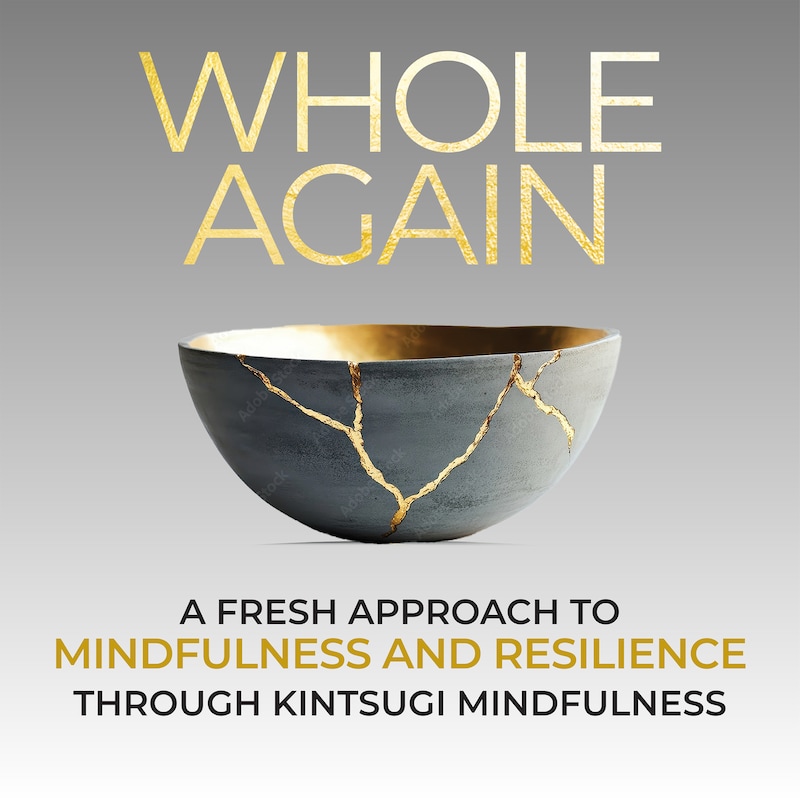
With Whole Again: A Fresh Approach to Healing, Growth & Resilience after Physical Trauma through Kintsugi Mindfulness listeners explore resilience through personal stories of trauma, scars, and injury while learning to overcome PTSD, imposter syndrome, self-doubt, and perfectionism with self-compassion, self-love, and self-worth. Through insightful discussions on stress management, mindfulness practices, and digital wellness, the show offers practical tools like breathwork, micro-dose meditation, grounding techniques, visualization, and daily affirmations for anxiety relief and stress relief. Inspired by the art of kintsugi, the podcast embraces healing as a process of transformation, encouraging a shift in perspective from worry and being overwhelmed to gratitude and personal growth. By exploring the mind-body connection, micro-dosing strategies for emotional well-being, and holistic approaches to self-care, this podcast empowers listeners to cultivate emotional resilience and live with greater balance and intention.
Transcripts
In this episode, you'll discover a mindset shift that can take your recovery as far as possible. Hey there, it's Michael. Welcome to whole again. A show about helping survivors of physical injury and trauma reclaim their strength and resilience through the wisdom of Kazuki on Fridays. I love sharing a microdose of wisdom with you to help you become whole again and step into the person you're becoming.
ke across the country back in:I hit pause on them several months ago, but I'm excited to share with you today that I'm bringing them back. So if you would like to get just that perfect message at the perfect moment from me, you can send me a text to 8 6 6 6 1 2 4 6 0 4. I'll put this number in the show notes and all you have to do is text me whole again and I'll set you up.
And with that, let's dive in to this week's episode all this month. I've been sharing my Grace framework with you. We've already discussed gratitude, reframing, acceptance, and now we've reached the C, which stands for community. And if you caught Wednesday's episode, we talked about how community can help strengthen our recovery, and I used a cycling metaphor, a Peloton, if you will.
As a way to think about how we move forward with the right people around us, the type of people that will bring out the best in us. And today I wanna share a mindset shift because when I talk to people about recovery, when I talk to survivors out there like you and like me, most of us will say. I don't wanna be a burden.
I don't need any help. I can do it. And I love that independence. And when I hear people share what they share, it sounds a little bit like how I was in the early stages of my recovery. I wanted to do everything by myself. I wanted my independence. I didn't wanna seem weak as of today, as I record this, actually, this all goes back to the beginning of June.
As I work with my sister and my dad on his journey to feel whole again, and we're trying to get him some care to make sure that we don't burn out as caregivers. And he will often say to us, I don't need any help. Why are we hiring these people? Costs so much money. But the reality is we need help. He needs help.
He wants to remain independent, so he is pushing back on accepting this help. And the thing is, there's a quiet isolation that can sneak in when we go through something, as we go through an injury or an illness or even trauma, and our bodies are changing. Each and every day it's something new. Actually, it can change hour to hour.
Well, actually, the body's changing all the time, every minute. Our bodies are different right now than when you first start listening to this episode. And as our bodies are working over time, it's easy to feel tired like all the time. And healing can feel like it takes much, much longer than what's desirable or what's expected.
And when all this happens at what it feels like all at once, it's easy to feel like the best thing to do is to retreat, to disappear. To grit our teeth and just grind our way or push our way through it alone. But here's the mindset shift that I wanna share with you. Healing doesn't happen in isolation.
It happens in relationship. It happens in community. Through our connection. Nobody was built to carry all of this, not me. And I will say, not you. Community doesn't mean a whole bunch of people and a bunch of crowds and just a lot of like people in your business. Because as we heal, we do wanna have some privacy.
What I mean by community in our grace model is connection. That connection that helps us feel whole again. That connection that makes our cons. Sugi art, our cons, Sugi Art. It could be anyone. As I shared on Wednesday, there are different people who ride in our Peloton, different people who bring out the best in us.
It could be a colleague, it could be a neighbor, a family member, a friend, or a complete stranger. And heck, it could even be a podcast episode that reminds you that you're not alone in all of this. In fact. If you want to, you can even reach out to me this week. Here is what I invite you to pause, take a few deep breaths and reflect on what does your self-talk sound like.
When you think about asking for help, does it equate to weakness? Do you feel guilty about asking for help? Do you feel like. You are gonna be a burden. Reflect on that and now try shifting that narrative. You can even think about someone you care for who might be going something like you're going through right now.
What advice would you have for that person to shift their narrative around asking for help? There's a proverb I like. It's if you wanna go fast, go alone. If you wanna go far, go together. And as a cyclist, I'll tell you that when we go together, we actually go faster and further. There's value in connection, so give yourself permission to reach out and to ask for help and see that in the power of your community.
There's a pathway to feel whole again.
As always, thank you for being here, and thank you for being a fellow survivor. And don't forget about my free text messages. Simply text whole again to 8 6 6 6 1 2 4 6 0 4, and I'll set you up. In today's episode, you discovered a mindset shift around community. The See In My Grace model that can help.
Your recovery go faster and as far as possible,
and if you wish to further enhance your digital health, I'll invite you to take my smartphone wellness check and you can access it through the link in the show notes. Or you can visit my website, which is Michael O'Brien shift.com, and it's absolutely free. And it will help you scroll less and live more.
And of course, I hope you'll join us here on whole again every Monday, Wednesday, and Friday, and discover how to heal, grow, and become more resilient and celebrate our scars as golden symbols of strength and resilience. Until then, remember, you can always come back to your breath. You've got this. And we've got you.