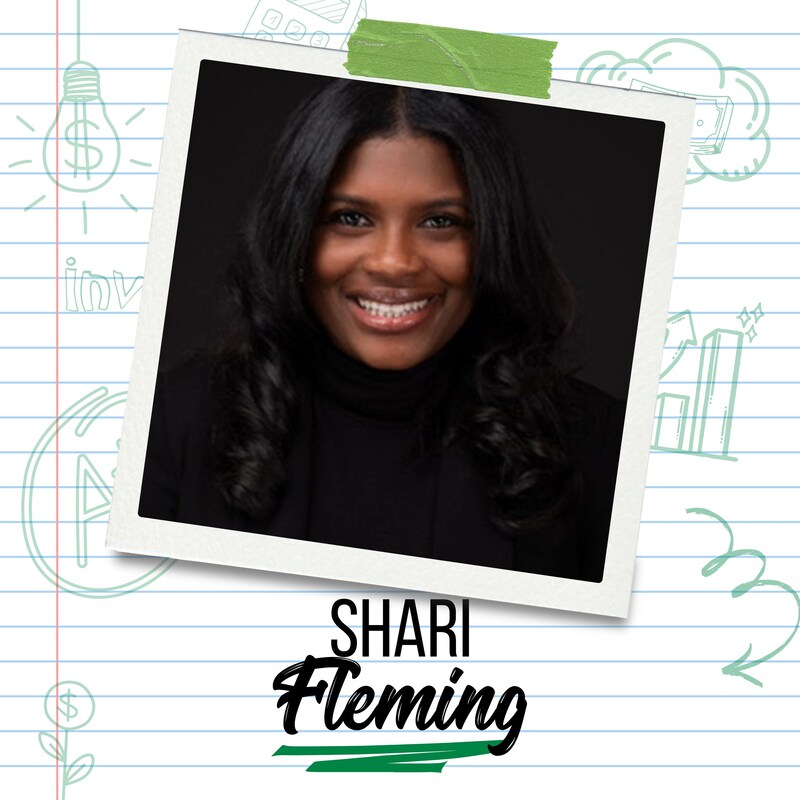
Shownotes
- Philanthropy Is Personal: Shari emphasized that charitable planning always begins with the client’s unique intent and dreams—never just the technical tools. Professionals must listen deeply to turn intentions into meaningful strategies.
- Bridging Community Gaps: Recognizing the disconnect between the professional estate planning world and communities of color, Shari founded “Our Legacy Matters” to provide a safe, educational space and bridge miscommunication with accurate, accessible information.
- Mentorship Matters: A pivotal relationship with her mentor, Aquanetta Betts, shaped Shari’s career and underscored the value of seeking (and becoming) lasting mentors, especially for those without inherited networks or practices.
- Redefining Generational Philanthropy: Philanthropy in underrepresented communities often centers more on service, time, and talent than on financial gifts—yet these are powerful forms of legacy that deserve recognition and strategic support.
- The Power of Joyful Reflection: Success isn’t just about relentless achievement. Shari’s decision to pause and intentionally reflect—to “let the sun shine” and dream anew—shows how purposeful rest and pursuit of joy are essential for continued growth.
Shari Fleming is a Maryland licensed attorney with a sincere desire to help individuals and families preserve and pass generational wealth while also supporting the causes they love. She is Principal of the Law Office of Shari Fleming, which is a law firm geared towards helping individuals and businesses build, protect, and preserve their wealth and legacy. The firm’s areas of legal practice include business formation and succession planning, real estate, estate planning, and estate administration (trusts and probate).
Transcripts
Welcome to Don't Retire Graduate, the podcast that asks you what you want to be when you grow up so you can graduate into retirement with a purpose and a passion. I'm your host and valedictorian Eric Brotman, and this is the sixth season of our show. Every other Thursday, we'll be bringing you interviews with amazing guests and on alternating weeks we're hosting our Diary of a Financial Advisor segment where we interview financial advisors about their professional journeys and their passion for helping others succeed. So please take a moment to subscribe so you never miss an episode. Today I'm pleased to be joined by Sheri Fleming. Sheri received a Bachelor of Science in History and a Bachelor of Science in Black Studies and graduated Magna Cum Laude from Lincoln University in Pennsylvania. After graduation, she attended University of Maryland School of law, received her J.D. and was admitted to the Maryland State Bar in 2008.
Eric Brotman [:Her post law school education includes achievement of the designations of of Accredited Estate Planner and Chartered Advisor in Philanthropy. In addition to practicing law, Sherry serves as Plan Giving Officer for Bowie State University and is responsible for the cultivation and solicitation of gifts involving estates, trusts, and other gifts that reflect deferred giving opportunities. In 2020, Sherry founded the Our Legacy Matters community with the purpose of advancing the concepts of ownership, wealth maintenance, and wealth retention within communities of color. And in 2021, she was named one of the Daily Records Leadership and Law Generation JD Honorees due to her dedication to the practice of law and her community. Sheri, welcome to Don't Retire Graduate.
Shari Fleming [:Thank you for having me.
Eric Brotman [:So your bio is incredibly impressive. It's difficult to decide where to begin, but I think it would be appropriate to start with. Why law school? Why was that your path? And did you know you wanted to be a lawyer when you were a young woman?
Shari Fleming [:No, I did not know I wanted to be a lawyer. Law school was process of elimination. I was always trained to do everything while I was young to work hard and get it done. And I knew I have a new degree, PhD, MD, JD and I seem to argue about so law school was the path. It wasn't any science behind it, any true passion other than that.
Eric Brotman [:Well, I'll see if I can get you to be argumentative today. That sounds like a challenge. We could have a whole lot of fun and go viral that way just by having a really good debate. So your passion is charitable planning? Philanthropy, Right? I mean, you're an estate planner by trade and you do that by day. But am I correct that philanthropy is really the thing that gets you going Every day.
Shari Fleming [:Honestly, if I had to sum it up, my passion is really helping individuals reach and accomplish their goals while supporting the causes that they love. That's my bio. And so anything that involves strategic planning to help individuals reach their goals, either through estate planning or charitable advising, that really is what I love to do.
Eric Brotman [:So charitable planning is becoming more complicated. And a lot of times, you know, we have conversations with clients on a regular basis, and a lot of planners get lost in the tools. And I would contend, and we can argue if you'd like, but I would contend that the tools don't matter as much as the intent and what someone is trying to create. If they're able to articulate what they'd like to do, then professionals like yourself can find ways to create the tools to make their dream a reality. Is that a fair way to start that? You start with donor intent and desire and then work the tools into it rather than saying, look at all these tools unless you help.
Shari Fleming [:That is absolutely true. Most individuals don't care about the tools. They don't know about the tools. All they know is their desire and what's driving them and the passion that they have and the goals that they want to reach. And so nine times out of 10, I am sitting down with individuals, allowing them to dream and allowing them to cast all of their dreams and thoughts upon me to develop a strategy and identify tools to help them help them build their home. That's what I like to call the tools. Tools that are helping them build their home, which could be philanthropic in nature or just securing the wealth that they have for their families.
Eric Brotman [:Now. You started our legacy matters, and I can't. One side of your bio and the other side are inextricably linked, Without a doubt. So tell me about that and why that was such a passion project for you.
Shari Fleming [:Yeah. So our Legacy Matters is really personal for me. I found being in the professional world of estate planning and then charitable planning, I have one foot in that world and another foot in the community that raised me, with my family, my friends, the people that I worship with. And I felt that I having my feet in these two different worlds, they weren't connected, they weren't aligned In a lot of ways. I felt pulled apart. I felt at one point that I was being split because these two worlds weren't really going in the same direction. And what that means is that I found that most professionals weren't looking to serve individuals that fall within my communities. I found that the individuals in my communities weren't looking to be served didn't have an expectation and simply was doing a lot of research and things on their own.
Shari Fleming [:And it was filled with so much misinformation. And so our legacy matters was birthed really as a space, a safe space to provide accurate information and really bridge that gap.
Eric Brotman [:Now, philanthropy, charity begins at home, right? That is a cliche for a reason. And it's a cliche because there's some truth to it. Right? If philanthropy begins at home, you need one generation to teach the next, to teach kids or grandkids why it's important. Do you feel sometimes that the community in which you were raised has less of that generational transfer of philanthropic intent? There's just. Those conversations aren't happening in the same way, or are they happening and just the professional community is missing them?
Shari Fleming [:I think that the conversation is different. I think. Not that I think. I know it looks different. For perfect example, philanthropy is leading with love, giving with charity. And so I was built to serve. I was raised in a community who served. My grandparents served.
Shari Fleming [:Given their time, talent, and treasure, philanthropy is happening all of the time at high rates. And again, it's not just giving financially, but giving time and talent, professional skill for a specific goal. What I found was that that didn't always translate. You really couldn't. When I got into charitable advising, there wasn't a complete focus on how to identify those people who are giving up their time and their talent, and then having that translate to say, okay, well, let's put your money here as well, if you have money to support this. So it's not that the conversations weren't happening. It was almost as if they were two different languages.
Eric Brotman [:Interesting. Interesting. So I know you and I met through the Baltimore Estate Planning Council. We were both on the same dais at Stevenson University talking to a packed house of students who were interested in getting into this field, which was great. And what was nice about the packed house of students is it was. It was a extraordinarily diverse group. The Estate Planning Council historically is not a particularly diverse group. In fact, as a financial advisor, you know the vast majority of people in the financial space.
Eric Brotman [:Well, they look a lot like me, Sherry. And it's not to disparage. It's just to say that it is a tough world to break into when there aren't role models that you can lean on who have come from a similar background. So do you think the pendulum is swinging? Do you think the fact that we had a packed house at Stevenson with a very diverse audience means that. That the message is getting out there that this is not only a good career for all different kinds of people, but that it can be a wonderful life for all different kinds of people. And maybe that message is a little new.
Shari Fleming [:I think the message is getting out there. For one, I would have never known that you could have a career in philanthropy. Actually, I did not know, even as a lawyer in law school or a student, when a practicing attorney, I did not know that you can have a career in philanthropy or charitable advising. And so I think the messages there, I think the biggest gap when building a business in philanthropy, when building a business in financial planning, even estate planning, as you mentioned, are having those natural mentors, but also having that sphere of influence. Where are you going to get clients from? How are you going to build your business? And so it does require a lot of sharing and a lot of everyone breaking out of their boxes to come become comfortable with one another.
Eric Brotman [:So let's go back to 2008. 2008, the Great Recession was on the horizon. You didn't know it when you passed the bar, I assume, but it was coming. And the world was about to be financially strapped for a year, year and a half. Take us back to the very beginning of your career. You hang a shingle. Were you working with a different firm or did you hang your shingle right away? What did that look like?
Shari Fleming [:No. For my first six years of practice, I work for what is now called disability rights. Mary and I represented individuals who are really children, young adults up to the age of 21, who needed medically necessary services under the Maryland Medicaid program and through the Developmental Disabilities Administration. And through that work, which was great work, I learned and discovered special needs trust. Some of it was me encountering who I thought, and you know, we can title low income, we can put a picture of face on it, But I would pull up to homes that was cost way more than the one that I lived in at the time. And I would have to ponder how, how was the individual I representing to receive services through Medicaid able to have Medicaid? And so it went down a rabbit hole. I was very good at my job and advocating for my clients, but it did make me see how a lot of the tool are available to everyone are being used. And so I got into special needs trust, I got into more into estate planning, and I just jumped.
Shari Fleming [:That's the true millennial in me. I just, I just jumped from, from one to, to another.
Eric Brotman [:So you, you mentioned a couple minutes ago that the challenge for new practitioners, whether it's Finance or law or what have you is where, where are your clients going to come from, who you're going to. You didn't face that because of your role. I assume there was more need that could even be served in that community. And so you were busy, I'm sure.
Shari Fleming [:Well, I did face that. So I had a number of clients who knew of the work that I already did. And so they started my practice and they helped me. They were the foundation. But then there was a lot of marketing and running a business that's required. And so I did face, you know, trying to figure out where my clients are going to come from. I didn't inherit a practice. All of the other solopreneurs that I knew inherited their parents practice or they were a small firm and someone was retiring.
Shari Fleming [:I honestly, and I mean this, I think I know of maybe one other solopreneur in Maryland who really started with not much and maybe I don't know a lot of people, but so I.
Eric Brotman [:I'm sure, I'm sure you know a lot of people. I'm sure you know, a lot of.
Shari Fleming [:People spend a lot of time, you know, marketing and really studying to show myself to be an expert because at the end of the day, that is what people come to me for, because they know that I'm an expert in the field and they also know that I lead and practice with compassion that they don't always see.
Eric Brotman [:So. But this was 2014, right? So for the first six years of your career, you were bombarded with opportunity. You didn't have to find clients right out of law school, you had to find them when you hung your single, started your firm. And now it's like, who do I represent? So at least the good news, if there's good news, it's that you were a little bit older and had a little bit more experience, even though you didn't necessarily have the natural market. You got to do it as a, as a 30 year old. Not that I'm. Not that I'm, you know, but you got to do it as a 30 year old, not a 24 year old. Is my point, plus or minus.
Shari Fleming [:Yes, I, yeah, I did have confidence in myself as a practitioner by the time I left, which is a major deal. And just to clarify, Disability Rights Maryland did not, I don't know what they do now, but at the time they did not do special needs trust work. It was pretty much ancillary research that I did at the time to determine how my clients were able to be my clients. So when going into estate planning. I did not start an estate planning practice with that legal services organization. So I wanted to clarify that.
Eric Brotman [:Did you at any time in your career have a true mentor? Someone or an accountability partner or a mentor or somebody who you could look up to who was helpful to you on your journey?
Shari Fleming [:Yes. When you say career, start as a student. I've always had mentors. I believe in mentorship and really partnership. When I started my practice, this is. And everyone who knows me knows the story. When I started my practice, I was a member of the bar. I sent an email to the Estates and Trust listserv that was very straight to the point.
Shari Fleming [:I am starting Estates and Trust practice. I need a mentor. I don't want someone who it's not going to be in continuous contact with me. I want someone who is going to be up to having a long term relationship with me to see this through. And I had three individuals respond, two of which I already knew and we remain connected, and then one that responded. Who has been the most pivotal part of the success of my practice is my mentor, Aquanetta Betts, who you may know.
Eric Brotman [:I do know. I know I know her well. And she's amazing.
Shari Fleming [:Yeah, she is phenomenal. And I will say hands down that I would not be able to. Wouldn't really have been able to make it as a solo practitioner without her assistance. She has been, you know, if we were in a firm, she would be, you know, the managing partner and I would be an associate. She has been completely critical and just navigating me through the tough spots, both professionally and personally. And I hope one day that I can serve in that capacity for someone else.
Eric Brotman [:Well, and that was going to be my next question, but now that you mentioned Aquanetta, you guys have parallel careers in that you're both doing estate planning and philanthropic planning. You're at Bowie and she's at George Mason, if I'm not mistaken. And so you guys are doing some of the same stuff and you're still very much active with her and with, with your ongoing conversation.
Shari Fleming [:Yes, yes, yes. Not as active. I think our lives are a little busy. I think I've jumped out of the nest a little bit. A lot of it. And so. But yes, we do remain.
Eric Brotman [:So the next question, which was the first thing that came to mind when you, when you said that you hope you could pay this forward at some point, I was going to ask, have you found a mentee? Is there someone out there who looks to you the way you look at Acquanetta?
Shari Fleming [:Well, I do have a number of mentees through the Estate Planning Council, through colleges. I do connect with a number of colleges. So I do have a few people who I connect with and mentor. And, you know, every relationship is different. I, and I could be a little Jade. I. Aquanetta is, is. I can't describe in words how I really feel about her.
Shari Fleming [:I love her. And so I don't know if my mentees feel that about me. Hopefully one day they will. But I do mentor. I absolutely.
Eric Brotman [:It can be hard. It can be hard to have several. I mean, you went out and posted on a listserv. I would like a long term relationship that's not for those people in the dating pool. I don't think that's the way it works most of the time. So professional dating, I guess is different than personal dating. You can ask for that. But if you have a handful of mentees, is that, is that more of being sort of advisory coaching rather than that one on one relationship? And is that something you're seeking at some point in your career?
Shari Fleming [:Well, it's three of them and I think our relationships are different and I think it's really driven by their need. Right. And of the three, there is one that, that pulls on me a little bit more. But for the three of them, we meet pretty much quarterly, in person or virtually check on not just their professional lives, their personal lives. And again, they're all, they're at different walks in their careers. So the pull on me is a little different from the three of them. So I do think that we have quality relationships. I wouldn't water down my relationship with either one of them.
Eric Brotman [:Well, that's, that's good. I, I didn't mean to do that for sure. Now we're going to argue. I didn't mean to do that. And, and I did promise the audience there'd be at least one argument. So I'm still looking for the opportunity. I'm still looking for the opportunity to see if you're actually good at that because I was told as a kid I was good at arguing also and wound up not going to law school. So I have to, I have to get this in somewhere.
Eric Brotman [:So in terms of, in terms of the work you're doing, you said that you were driven really as a, by service and by making a difference. And that means clearly you've had over the course of your career some unbelievable wins, some unbelievable experiences. And, and I know you have to be covetous of the personal stories of clients. You can't, you know, Violate the trust there. But have there been some experiences that were life changing, game changing that, that keep you going? Kind of like golfers say, if you get that one good shot, it keeps you coming back. Have there been those moments where you're like, there's a reason why this is my calling and I just changed somebody's life?
Shari Fleming [:Yeah. And my. You may hear different things from different attorneys, but I actually have a former client. She was my client years ago. She's a much older woman. By older I mean she's within her 90s. And she's become a pen pal of sorts. We write letters to one another, we send one another cards.
Shari Fleming [:And the reason why I consider that a win is because I wouldn't have suspected that little old young me would have such an impact on someone who's been here so long and who has seen so many things. And she wrote me first, she wrote me a sincere letter of thanks and gratitude for helping her make tough decisions through a very tough time. She's had many tough times. So I wouldn't think that me coming in would make a big difference. And so she wrote me a letter years ago and it just really, really touched me. And so we write one another. Still pen pals, no emails. I don't actually write.
Shari Fleming [:She handwrites. I type my letters because my handwriting is awful. But I consider that a win because she is very reflective of a lot of the individuals that I deal with or not deal with, but represent where they, they leave with a sense of accomplishment but also gratitude. And they don't go anywhere. They come, they, they invite me to all kind of family events. I don't go, but they send letters and they send cards and they reconnected and they send people as well. And so I would say my, again, my practice and leading with compassion in a way that I estate plan is the one thing that I'm most proud of.
Eric Brotman [:So what's, what's next for you professionally? What is the next. I mean, you, you're, you've been in constant education. You've got a wall of diplomas behind you that would put most to shame. What's next? I mean, you still thinking PhD? Do I have to call you doctor at some point?
Shari Fleming [:No. Well, technically you can call me doctor with my JD because it is a Juris Doctor.
Eric Brotman [:But fair, I'm not doing that. I know too many lawyers who I will not call doctor. I'm not doing it.
Shari Fleming [:My honest truth is that I'm figuring it out because I was taught to do it. While you're Young and I had so many goals that I've already accomplished. I think this is a point of rest for me a little bit, just to kind of rest and dream again to figure out what's next. I honestly don't know. There may be a book coming. There will be a book coming at some point. Will it be a professional estate planning related book or personal book? I don't know. I'm working on it.
Shari Fleming [:I think for me this is a season to just sit back and rest. I've worked a lot. I work really, really hard, as most do. And when you work and you are constantly achieving, it can become difficult to just sit back and reflect on what you have done, why you've done it. And again, I just want to dream again to really figure out what, what am I doing that's. That's going to be next. So right now I am doing what brings me joy and that's helping people, walking with them through the harder parts of their lives, helping them reach their goals, either through estate planning or through charitable advising. And I'm going to see where this goes.
Shari Fleming [:But mostly I'm. I'm taking the time to let the sun shine on my face, smell the flowers and, you know, hear the ocean. And I don't know that I'll be here long because I do dream quickly and so I'll be ready to execute. And so I don't know that I'll be here long, but that's where I currently am.
Eric Brotman [:So is that a millennial thing or is that adhd? Like, how do we, how do we determine that?
Shari Fleming [:Might be a combination of both. Honestly, it just might be a combination of both.
Eric Brotman [:I'm not ADHD clinically, but I am h. So I have that going for me. I have the hyperactivity without any question about it. So you said, number one, you said that a book will be coming. So I'm holding you to that and excited to participate in any way I can with that. Because having done three books, it's a lift, it's a major undertaking, but wonderfully rewarding.
Shari Fleming [:You're on my list for assistance other than writing, but I, you know, the substance. I really don't know where to go. So you're on my list to say, how did you do it? You, you might be on a mentor list. I. Yeah, maybe tapping you to be mentor.
Eric Brotman [:Okay, well, I can tell you all the mistakes that I made so that you don't have to make those. We can make all new mistakes together. But, but the, the ones that I've made are epic. In fact, I've done public, public talks about how, how my first two books really went wrong. And finally I think we got it right with this one. And I, I may never write another book. If I do, it's going to be a Roman fun, you know, no more financial planning books. Do something fun.
Eric Brotman [:So you mentioned one of my favorite words in the world. It's a three letter word, not a four letter word. It's a three letter word and it's joy. Finding joy in our work and in our lives has never meant more to me. And I've got a number of years on you. I know that I'm not going to date myself here, but I have a number of years on you. And the older I get, the more seasons I get professionally, the more I realize that joy is the most important driver for me. And so I undertook an exercise and I'm going to give you homework.
Eric Brotman [:And actually you and I are going to be doing a webinar together. So I know we're going to be seeing each other in October and we'll tell everybody a little more about that. But prior to then, I'm going to give you a homework assignment and we'll see if you do your. This is your homework assignment, okay? And you can take a sheet of paper or if your handwriting's really that bad, you can use a spreadsheet. I would say that people who have terrible handwriting are the smartest people on the planet. I don't know if you knew this, but people with bad handwriting, it's because their brains are faster than their hands. So now you know. And of course that means my penmanship is also terrible because I fancy myself as being bright.
Eric Brotman [:But here's your assignment. Take four quadrants. Four quadrants. It can be a, it can be a yellow sheet, it can be a four quadrants of a spreadsheet, whatever you want. And on one axis you have joy, high joy to low joy. And on one axis you have either revenue or success or whatever you. However you're going to define professional success, this isn't for personal things. This is for professional things.
Eric Brotman [:So that what you wind up is you have four quadrants, the high joy, high success or high joy, high revenue. That's where the things that you do professionally that also make you financially successful, that's where you want to spend the vast majority of your professional time. You then have the spot that's high joy, that's lower success, where you want to make sure you carve out enough time in your life for those things. Those are the things that matter. It might be volunteer work, it might be just passion projects that you're doing, but they're things you. That bring you joy that you don't want to give up, that you want to make sure you have time for in your life. Then we get to the low joy. Two quadrants, right? The low joy, high success.
Eric Brotman [:That's the grind, that's the stuff you're doing, that's paying the bills, but it's not a whole lot of fun for you anymore. In a perfect world, that's what you delegate. That's where you find somebody within your team and say, listen, I can find somebody who is. Who is more joyful because of this project that doesn't bring me any, but will bring him or her joy. And then you have the last quadrant, the quadrant which is. These are truly the drags. This is. It doesn't make me happy.
Eric Brotman [:It doesn't make me more successful. Why am I doing this? Some of them are have to's. You have to do certain things, but a lot of them are things we just. We cling to and we can give up. And so when I went through this exercise myself, because I'm in a process of trying to figure out how to. How to recreate myself professionally. And it sounds like for you to say it's a. It's a pause, it's a period of rest, it's a period of thinking, it's a period of introspection.
Eric Brotman [:This project, as simple as it sounds, made a huge difference in deciding how I should spend my time, where I should spend my energy, and it's working. So you have a homework assignment. If you're going to handwrite it and I can't read it, you only get partial credit. You know, if I can't read it, I can't read it. But if you're willing to share that with me transparently, we won't put it on the air or anything. We don't have to tweet it out. But if you're willing to share it with me, I would be delighted to walk you through that because it was an amazingly impactful exercise for me.
Shari Fleming [:I am going to do that. I'm going to actually start today. And full disclosure, I am going to write it, and at some point, I am going to type it as well, because my handwriting is so awful that if I don't type it immediately, I won't recognize where I wrote. And so it's really that bad.
Eric Brotman [:You can't read your own handwriting.
Shari Fleming [:After a while, after A while. If I leave it too long after a while. Yes.
Eric Brotman [:Wow.
Shari Fleming [:And I can say that in an open and honest fashion. I'm not ashamed.
Eric Brotman [:I will tell you that, that most of our co workers, there's 21 of us here, the people who've been here long enough have already gotten a master's degree in my handwriting. They have figured it out because it requires some extra, extra time to just look at that and go, what in the world is that? And I'm like, oh, of course, it's this. This. Usually I can read it though.
Shari Fleming [:Same. And I have the greatest support staff where if I do handwriting notes, I have to, say, scan it immediately because again, if it's fresh, then everyone gets it. They can read in between the lines. But if there's a delay, none of us gets it. So for the most part, I have an iPad. I try to type all of my notes, but yeah, plus I type faster than I write.
Eric Brotman [:So tell, tell me about your team. Tell us about your, your firm now that it's. It's not just you anymore. Right? You've got a nice team there.
Shari Fleming [:No, no, no. Yeah. So I. It's a, it's a, it's kind of. It's. Again, I have the ability to rest. I have the ability to rest. And so I have my paralegal that's been with me since 2020, hired her off of Upwork.com just at 2:00 clock in the morning, writing down where I needed help, where I needed help and what I could delegate.
Shari Fleming [:And I made a job description and I had three people apply and I was just like, oh, this is happening. And so she's been with me 2020. We have our office coordinator who is an individual who's retired, and she is just as sweet as pie. Her command or her charge is for my firm to be the Chick Fil a of legal services. And that's what she does. She is our frontline person who answers the phones and responds in such kindness. And then I have two interns, one in college, one in law school, and they are really going to be ready to take off their, their amazing young woman. Surprisingly, I do work with all females.
Shari Fleming [:That's not intentional. That's just kind of who comes to me. And so, yeah, that's, that's who we have. And we're steady and easy and I'm. I'm able to rest. And I'm thankful because I have what a lot of practitioners don't have. I have people who are understand the charge to work in excellence and nothing lasts. And who also are really committed to the goal of serving our clients.
Shari Fleming [:I have some of the most compassionate staff who just want to be good people. And so I'm grateful because a lot and they stay. My law school student was a college student. She started out in college. And so again I'm very fortunate. I know that's not the story for most, but I'm very fortunate in those who work well.
Eric Brotman [:I'm sure that the energy you're putting out in the world is what is attracting those people to you. I mean it makes sense that, that you know, you would create like a magnet. You would create the energy that you're surrounding yourself with. It makes, makes a ton of sense for you to say you want to be the Chick Fil A of. Of means one of two things to me. It means either every. It's. Everyone's going to say my pleasure where it means you're closed on Sundays and your clothes on Sunday.
Eric Brotman [:So there's that. Okay, well then you are in fact Chick Fil A. And I love the waffle fries. So we are running out of, we're running out of time. I've got to ask you. And, and it sounds like this is the perfect time to ask this question because you can't get off the show without answering this. And that is what do you want to be when you grow up?
Shari Fleming [:So I thought about this question and it particularly because I have a 17 year old preparing for college and a 15 year old right behind her. And we talk about this all the. And the answer is not a professional answer or an answer in, you know, I want to be X essentially I want to be who I am. I am a person who has dreamt really, really big dreams that at the time seem insurmountable and I reach them. And so I want to be exactly that. I want to be a dreamer who's able to plan and execute to reach those dreams. But more than that, once I reach those, I want to be able to live in contentment and be happy there and again dream again, dream yet another dream. And to accomplish that so that that's who I am and that's who I want to continue to be.
Eric Brotman [:I love that answer and it reeks of authenticity. I mean, and that ultimately, ultimately being your own authentic self, being for all of us to be our authentic selves is just priceless. How can folks who either need or want some special needs planning, estate planning, or want to talk philanthropy or just want to get to know an awesome human, how can people get in touch with you.
Shari Fleming [:Yes. So the best way is through my website is sherry fleming.com if someone is in need of legal services, they can call the office. They can always complete the contact form, which is quite frankly the quickest way to get to get to someone in my office. Yep, that's the form right there. Or just give us a call. We do answer the phone.
Eric Brotman [:Thank you. Thank you for being here. Thank you for sharing with us. Thank you for being so transparent. And you've made me hungry. Now I need to get some, some chick fil a, I think. Sherry, it's been a pleasure. Oh.
Eric Brotman [:October 7th. October 7th, 10:30am Eastern Time. You and I will be sharing this dais once again. We'll be doing a program on charitable giving and philanthropy. And we'll make sure that in, in our show notes today there's a registration for the, for the October 7th event because I know that's going to be very informational and hopefully entertaining, too.
Shari Fleming [:Yes, I'm excited about it and I'll have more Energy on October 7th. I think I'm a little sleepy today.
Eric Brotman [:Well, you know, I, you, you've got a lot of homework in front of you. You know, I don't usually assign homework, so let's call your assignment Extra Credit. Okay. It's extra time.
Shari Fleming [:Okay. What does it do? I need a due date. Is it due October 7th?
Eric Brotman [:It well, is absolutely due by October 7th because we're going to be live that day. And if I don't have that's a lot of time. I'm going to out you for that, though. I'm going to be like, she did not do her assignment and you don't want that on on air. But I'll do it.
Shari Fleming [:I, I, if you cannot tell if you have, if you know nothing else about me, know that I am an overachiever. I'll do this assignment and do it excellently.
Eric Brotman [:Well, then I want this before October 7th. That sounds absolutely. Thanks for doing this and for being here and you don't seem sleepy to me. Thanks again.
Shari Fleming [:Thanks for having me.
Eric Brotman [:I'd like to thank everyone for listening and watching today. If you enjoy our show, please be sure to share it with friends and family so they can join you on your journey to financial freedom. And please take a moment to leave us a review or a rating on your favorite podcast platform. Those are priceless to us. We'll be back next week with another entry in our diary of a financial advisor and in two weeks with another engaging guest. For now, this is your host, Eric Broughton reminding you don't retire. Graduate securities offered through Kestra Investment Services, llc. Kestra is member FINRA SIPC Investment Advisory Services offered through Kestra Advisory Services, llc.
Eric Brotman [:Kestra as an affiliate of Kestra is Kestra IS or Kestra as are not affiliated with Brotman Financial or any other entity discussed.

