Shownotes
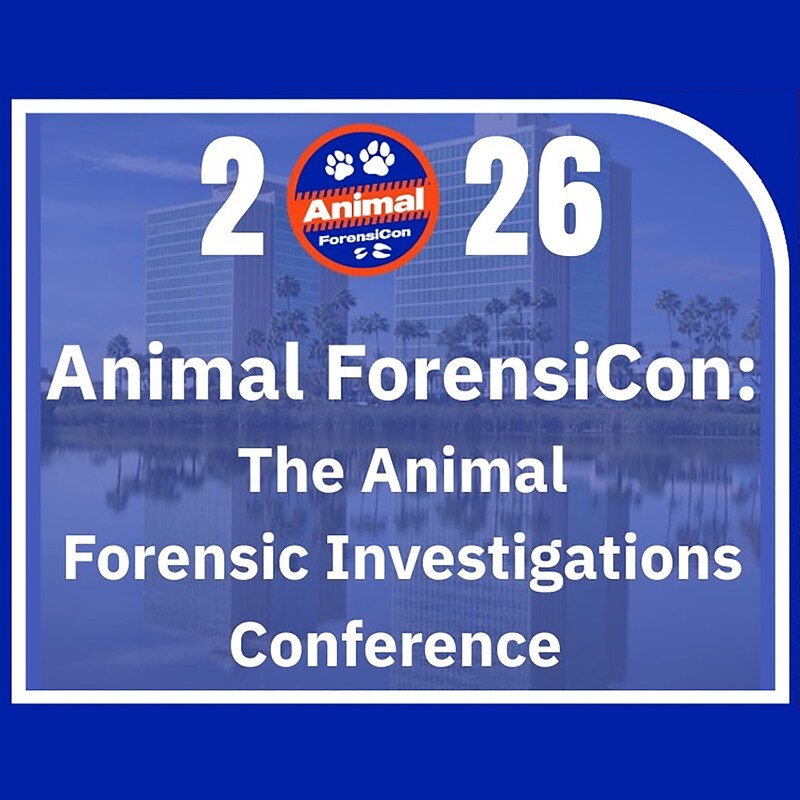
The 2026 Animal ForensiCon in Orlando, Florida
Dr. Rachel Sheffler shares information on the use of toxicology for the identification of substances that may be present in an animal victim of crime.
Transcripts
Dr. G:
2
:Alright, so excellent discussion
about toxicology, and here to
3
:let us know about it is Dr.
4
:Rachel Scheffler.
5
:Welcome to the junction.
6
:Dr. Rachel Sheffler:
7
:Hello.
8
:Thank you so much for having me.
9
:Dr. G:
10
:So can you start by letting our
audience know what's your background?
11
:Dr. Rachel Sheffler:
12
:Yes.
13
:And so I am a veterinarian.
14
:I did my, uh, veterinary education at
Michigan State, and then I stayed on for a
15
:formal residency in veterinary toxicology.
16
:Um, that's pretty unique.
17
:There are not a lot of residency
programs for veterinary toxicology.
18
:Um, and then I also did, at the same
time, a PhD in, uh, toxicology, and
19
:specifically having a focus on food
safety and ingredient toxicology.
20
:Um, so with that, I've had a
diverse background of experiences.
21
:Um, my primary interests are food
safety, agricultural terrorism, um, and
22
:ingredient toxicology, uh, as far as
what my graduate education is focused on.
23
:Dr. G:
24
:Awesome.
25
:So a lot of...
26
:I'm sure that you hear this a lot, too,
as a veterinarian, I get the people that
27
:say, you know, "Test it for poison."
28
:So what...
29
:why can we not do that?
30
:Dr. Rachel Sheffler:
31
:Right.
32
:And so that's an excellent question.
33
:So testing for poison,
there are so many poisons.
34
:There are more poisons than you or
I can even memorize, even in the
35
:most, uh, studious of people, and
we're always discovering new ones.
36
:Even some have been yet
to be characterized.
37
:You know, a, a very classic example is
we still don't know what the toxin is,
38
:uh, in lilies that causes the renal
failure in cats or, or the kidney damage.
39
:Um, and so with that, there's a large
diversity of chemical compounds.
40
:There are things that are
very, uh, soluble in fat.
41
:They like fats.
42
:There are things that, um,
readily move into water.
43
:There are things that
break down very quickly.
44
:There are things that stick around.
45
:Um, you know, one of the examples
that people are familiar with is
46
:PFAS or those fluorinated compounds.
47
:Uh, they don't degrade very easily.
48
:And so with that diversity, we have to,
uh, have multiple areas where we can have
49
:different extraction protocols to purify
those samples, um, as well as different
50
:technologies that we actually utilize.
51
:And so we have a specific instrument
called an ICP-MS that we use for metal
52
:and mineral analysis, whereas our
organics or, or like our carbon-based
53
:large molecule toxins or toxicants,
um, will be better suited for like gas
54
:chromatography or liquid chromatography.
55
:So with that, certain things play
really nicely on one instrument,
56
:other things don't, um, and need
to have a different technology.
57
:So there's not one size fits all for
toxicology testing or for that approach.
58
:Dr. G:
59
:So if, uh, an investigator or
veterinarian is sending you a sample,
60
:what kind of information should
they include to help narrow down
61
:what it is that you're looking for?
62
:Dr. Rachel Sheffler:
63
:Yes.
64
:And so that's, uh, a really good point,
and there are a lot of times where I
65
:get, "Found dead, test for poison."
66
:And that is- I use the analogy a
lot of the time, it's like throwing
67
:darts at a dartboard blindfolded.
68
:I'm hoping I hit a bullseye, but more
than likely, I'm probably throwing it way
69
:over onto the other corner of the room.
70
:I'm not very good at darts.
71
:But, um, as much historical information
as you can provide is really
72
:helpful to guide the toxicologist.
73
:Believe it or not, I spend quite a bit
of time trying to convince people that
74
:something is actually not a poisoning
based on, um, either the, the exam that
75
:was performed on the animal or the,
the necropsy or post-mortem findings.
76
:Um, so like a really good example
is there's a certain type of cancer,
77
:it's called a hemangiosarcoma.
78
:It affects the spleen.
79
:It can also affect the heart.
80
:It can spread to the lungs,
or what we call metastasis.
81
:And so with those animals, they
can have massive bleeding events,
82
:and that may put you down the path
of anticoagulant rodenticides.
83
:Bleeding and jumping straight to
anticoagulant rodenticides may not be
84
:the most appropriate test in that case.
85
:We may wanna characterize the cancer and,
and look for that cancer because it is far
86
:more common, um, as a cause, especially
in an older dog with a hemoabdomen.
87
:So clinical context is key.
88
:The more information you can give
your toxicologist, the better that
89
:we can help you, um, for those cases.
90
:So, um, physical exam findings, necropsy
reports, historical information,
91
:all of that can be really important.
92
:Dr. G:
93
:Yeah, I can definitely relate.
94
:I had a cat that was brought to me
for potential antifreeze poisoning,
95
:and then during the necropsy, the
cat actually was a blocked cat,
96
:and it's similar clinical signs.
97
:Dr. Rachel Sheffler:
98
:Right.
99
:Dr. G:
100
:But immediately the, the owners have
this propensity of just jumping into the
101
:neighbor poisoned my, my animal, right?
102
:Dr. Rachel Sheffler:
103
:Yes, and that is so common.
104
:Um, again, , it's a lot of times, you
know, "My neighbor poisoned my dog.
105
:It's the pet food company that, you
know, put poison in my dog's food."
106
:Um, so there are- A lot of cases, you
know, where we take those types of
107
:consultations and we have to be delicate
in the way that we work through them
108
:'cause those cases certainly do occur.
109
:I don't wanna dismiss someone's concerns.
110
:Mm-hmm.
111
:But if there's more information that
we need to be seeking or additional
112
:context, that can be ex- extremely
important, and those, those conversations,
113
:uh, can be delicate to, to manage.
114
:Dr. G:
115
:Mm-hmm.
116
:And I suppose also in trying to figure
out what compound it was, not every organ
117
:or tissue or sample fits all, right?
118
:Like there's- Mm-hmm ... a difference on
what you can get from one versus another.
119
:Dr. Rachel Sheffler:
120
:Yes, absolutely.
121
:And, and time is kind of
the forgotten variable here.
122
:And so if...
123
:And the animal is having clinical signs,
um, you know, it comes in with a seizure.
124
:Um, blood can be really helpful in
those animals because we can correlate,
125
:uh, drug concentrations to what is an
established or toxic dose, um, because
126
:particularly for pharmaceuticals when
they're going through safety testing,
127
:a lot of those, uh, studies or what we
call pharmacokinetics or toxicokinetics
128
:studies, um, have published literature
that I can reference back to.
129
:Whereas, you know, something like a
liver, it can be much more difficult
130
:for me to extrapolate what is a toxic
dose versus what is, you know, just
131
:an accidental incidental exposure,
um, that might not mean intoxication.
132
:And to your point, uh, as far as tissues
being not one size fits all, again,
133
:getting back to this idea of chemical
behavior, some things really like fat.
134
:They stick around in fat
for a very long time.
135
:You know, THC from marijuana is
an example, or, uh, some of these
136
:persistent organic pollutants like,
uh, PCBs or polychlorinated biphenyls
137
:that are environmental contaminants.
138
:They accumulate in fat versus
things that are very water
139
:soluble or are eliminated quickly.
140
:Um, those wouldn't be found
in that specific tissue.
141
:And so it can be very tricky.
142
:A lot of times I need much more
context to be able to tell you what
143
:sample is best for a specific case.
144
:Dr. G:
145
:So in preparation, if a veterinarian is
going to be looking at a case, doing a
146
:necropsy or even if it's a live patient,
prior to obtaining the samples, where can
147
:they find this information as far as what
they should collect, and more importantly
148
:too, how they should collect it?
149
:Dr. Rachel Sheffler:
150
:Yes, absolutely.
151
:And so not every veterinary school, um,
has specific training in toxicology.
152
:As far as specific toxicology sample
handling or, uh, you know, the
153
:advanced diagnostics of toxicology.
154
:We get basic training, you know,
what are the common intoxications
155
:we have to know for our board exam.
156
:Um, but beyond that, not every
veterinary school has a veterinary
157
:toxicologist nor a toxicology laboratory.
158
:So, um, one of the things that can
be really helpful is calling your
159
:friendly neighborhood toxicologist.
160
:I love getting on the phone with
veterinarians to talk about their cases.
161
:I am so willing to help you.
162
:Um, so it's never, it's never a
harm to pick up the phone and call
163
:your diagnostic laboratory and see
if there's either a pathologist,
164
:a toxicologic pathologist, or a
toxicologist who's available to help you.
165
:Dr. G:
166
:Excellent.
167
:Well, thank you so much
for this information.
168
:I think it is extremely useful and
helpful, and congratulations on your
169
:recent graduation with your PhD.
170
:Dr. Rachel Sheffler:
171
:Thank you.
172
:Thank you.
173
:It was so nice to, to meet you
and to be here at this conference.
