Shownotes
What if the path to healing isn’t about finding the right answers—but asking the right questions?
In this deeply inspiring conversation, Michael reconnects with Brianna Greenspan—author, advocate, and chronic illness warrior—who shares how powerful self-reflective questions can create radical shifts in our healing journeys. Through her new book, The Book of Questions: Living with Chronic Illness, Brianna offers a compassionate framework for building identity, resilience, and hope—even in the face of long-term adversity.
- Discover how asking better questions can help you navigate uncertainty, pain, and personal growth.
- Learn why self-compassion and internal dialogue matter more than external validation when healing.
- Hear Brianna’s incredible journey from chronic illness and shame to strength, clarity, and purpose.
Listen now to learn how curiosity, courage, and the right questions can help you (or someone you love) feel whole again—even while living with chronic illness.
Discover more about Brianna: https://thebookofquestions.com/
Receive one of my FREE Pause Breathe Reflect Stickers via this link sticker.
Sign up for My RIPPLE EFFECT newsletter by clicking Ripple Effect or finding me on Substack.
We can also connect on LinkedIn.
Download the Pause Breathe Reflect App with Microdose EQ by clicking App on your smartphone.
Subscribe to be sure you don’t miss any of the micro-meditations, wellness tips, and guidance that I publish every Monday, Wednesday, and Friday at 7:11 am.
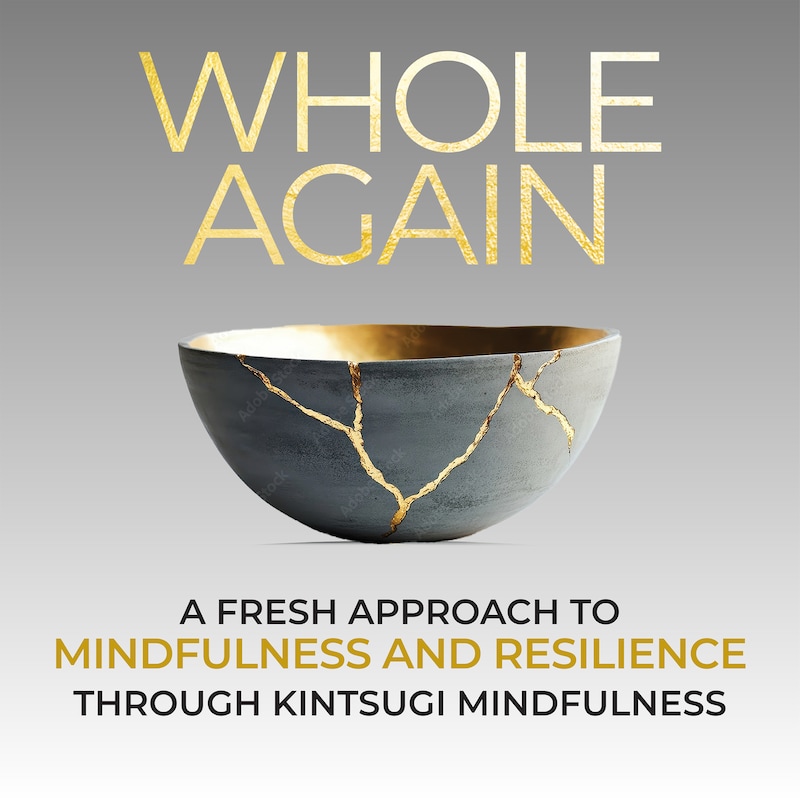
With Whole Again: A Fresh Approach to Healing, Growth & Resilience after Physical Trauma through Kintsugi Mindfulness, listeners explore resilience through personal stories of trauma, scars, and injury while learning to overcome PTSD, imposter syndrome, self-doubt, and perfectionism with self-compassion, self-love, and self-worth. Through insightful discussions on building resilience, fitness, and stress management, as well as mindfulness practices and digital wellness, the show offers practical tools such as breathwork, micro-dose meditation, grounding techniques, visualization, and daily affirmations for anxiety relief and stress reduction. Inspired by the art of kintsugi, the podcast embodies healing as a transformative process, encouraging a shift in perspective from worry and overwhelm to gratitude and personal growth. By exploring the mind-body connection, micro-dosing strategies for emotional well-being, and holistic approaches to self-care, this podcast empowers listeners to cultivate emotional resilience and live with greater balance and intention.
Transcripts
Hey there, it's Michael. Welcome to Whole again, your home for discovering how to navigate today's uncertainty with more mindfulness, resilience, and grace. Every now and again, I like sharing stories with you that are inspiring. And today I'd like to reintroduce you to Brianna Greenspan. I say reintroduce because Brianna is one of the few people who has been on this podcast more than once.
She joined me when Hooligan was known as the Cons Sugi podcast. She's back because she has a new book. The book E Questions, living with Chronic Illness. It's fantastic and it speaks to what we're trying to do here at Whole. Again, find a way to heal, find a way to come back home and step into the person we're becoming in our kgi spirit.
How can we feel whole again? When it comes to healing, and I can say this from my own particular experience, the questions we ask ourselves are essential. It was the spark that led to pause, breathe, reflect, as you'll hear in our interview, when I was trying to recover, I was looking for answers, but I knew that I first had to ask myself better questions.
Life was going so fast, so I knew to slow the game down, call a timeout much like we do in a sporting event. Hit pause, slow my breath. And in that space I could reflect, I could ask myself better questions, and those better questions led to better answers that eventually helped me get out of the hospital.
Back home. Home and on this journey of now helping other people feel the same way. Brianna's new book that she co-authored is an excellent resource with brilliant questions. So without further ado, let me reintroduce to you Brianna Greenspan and her amazing story of resilience.
So let's talk about your book. I love the fact that you wrote it, uh, the Book of Questions, living with Chronic Illness. One of the things I'm always curious about when a new book comes out, if I could talk to all authors since I wrote a couple books myself. I asked myself this very question, or maybe it's two questions.
Uh, why this book and why now?
Well, first and foremost, I just love and adore you and I'm excited to answer questions and have a conversation that probably no one else has brought forward. There's been a lot of the same questions and same conversation, and nobody's asked me why this book and why now, so thank you so much for bringing that forward, because this book has been something that I've been working on in my mind for decades.
Sharpening the questions that I ask myself as a vehicle to take action when I feel stuck. And the collaboration with Dr. Gregory stock has been going on for years as well. We have literally been writing this book together, the entire pandemic. Um, and now we're in this post pandemic season where people are suffering.
At the greatest levels that I've ever seen in my lifetime when I was a child, chronic illness was not something that people were like, let's talk about it. Let's put on the internet and let's show our struggles. Like it was not cool or trendy at all. To talk about anything you suffered with. And now we're in this season where not only are what used to be taboo topics brought to the forefront, but there's more prevalence with people that are suffering at greater propensities.
And so every day I see someone mentally or physically in a space where they don't know where to turn they're, they're in a cycle of hopelessness and despair. In their mind, you know, locked in their room. And, and, and, and so why this book? Because I actively have been utilizing self-reflective questions to move me through hard moments.
And Dr. Gregory stock is like the king of questions. He wrote the original book of questions in the eighties, which was, you know. Went global and really brought questions to the world as a vehicle for finding meaning and purpose in interpersonal relationships. And so we came together. Why now To invite people who are sitting in a cycle of hopelessness and despair, to see themselves for the first time, to meet their hard moments, and to know that there are choreographies that they could introduce into their mind, and that that could.
Help them in ways that I didn't know in the midst of my darkest suffering. So that's, that's, that's why and why I love your answer and I'm with you. I think going collectively, we, we all suffered a lot through the pandemic and. There is a, um, long tail of suffering from that and also just more exposure to all the different ways that we are, we are hurting.
Uh, we feel it, we, we take on. We take on each other's energy when we see hurt in the world, uh, in addition to the hurt that we are shouldering. 'cause we're all going through something. And I, I just, I love this whole approach about questions. Obviously you're a fan of, uh, pause, breathe, reflect. And so for me, this goes back now two decades.
It was, it was the reflect piece and you know, in a, and there there have been people who have told me like. Pause, breathe, reflect is too long. Like, you know, it's like it's too long. It's like, you gotta shorten it. And I said, no, no, no. You, you can't, you can't shorten it. Because the reflect piece, the reflect the, the reflect of pause, breathe, reflect is the most important part.
So pe you know, it's like, yes, we wanna pause. Yes we wanna breathe, but the reason why. The practice I created is different than most other practices. It is that space we create to sit in, sit in it, and, and reflect and be curious and ask questions and, and see where we can find gratitude even when we are suffering.
Uh, so I, I would love for you to share with the folks who are listening, like the importance of questions as we go through something. Because in today's world, there are plenty of gurus and experts. In fact, I have a book right here. I'm not gonna mention the author, but it's all about, um, it doesn't have to hurt, it's by someone really sort of famous and he's prescribing answers.
All the gurus and experts up there, you know, on the internet or wherever on stages, uh, will all come out con with confidence and with swagger and with the right, uh, hand gestures and, uh, vocal inflection points and all that, with all this certainty and. It seems so like, like almost rebellious on your part, not to give answers in a day of age where everyone wants certainty.
So tell us more about the value of questions and reflection as we go through something as opposed to just giving someone the answers. Well, I have a lot of certainty that looking within is the answer, that the answers come from within. And I have a lot of data to show that when we look within and we take action surrounding the things that come up in a prompted way, we will move the needle on our experiences.
And so for myself personally, that has been, um. The way that I've been able to build my toolbox and access my toolbox. I know you're like a Swiss Army knife toolbox. I know. We have the whole language conversation. We we got, we got toolbox. Yes. Listen, listen. What's in my back pocket is not the same. That's in my bag.
And for me, I really do have a bag. So like I am a toolbox language kind of girl. But either way. Yes. Yes. I, I, I, but I, but I do not, I don't even carry a wallet. So for me, we're lighter. So sorry. Carrying a Swiss Army knife is about as much as I'm carrying at any given point in time. So, but, but I, but I, I give you your bag in your toolbox.
Yes. Thank you. And thank you. And ultimately, you know, when I ask myself questions like, what are the tools and resources that best support me in my time of need? I'm now building my list and where can I place them so that they're accessible when I need them. I'm now setting my future self up for success.
And so when we talk about this reflect piece, um, reflection is the only way that, that I, I'm gonna going to use your language that I have found to unpack the rocks in my backpack. And my life is so much lighter because I've been able to remove some of the emotions that are tied to the. Traumas that came forth from living with a chronic illness and being in the world, and it has been the gift and privilege of a lifetime to be able to pause, breathe, and reflect.
It's a good phrase. I don't know why anyone would wanna shorten it, because all three components are essential. And when we talk about the book of questions living with chronic illness, I actually have a whole prescription for how to look within and part of that. It comes from being honest with yourself and being honest with yourself can only happen when you are inviting incoherence in your body so that you have a lot of love and compassion for yourself with whatever comes up.
Because ultimately, we either are gonna be honest with ourselves and then use that honesty and that foundational awareness to take strides to best support our wellbeing. Or not. We can live in any reality that we want, but ultimately, we're the only one in our mind. So like, I'm not, I'm, I'm the only one in my mind, and ultimately every person is the only one in their mind.
So they're the only one. We're the only ones that know what's happening in our mind. And the moment that I learned that there was certain language that I could insert. In my mind, every time a symptom presented itself, I was able to start to reorient the ways that I experienced those symptoms and the ways that I address those symptoms and the ways that I navigate through and mostly, um, mitigate or versus meet and exacerbate.
And that's part of the reason I love you with all my heart because. I didn't know when I was a child that pausing, breathing, and reflecting were essential to addressing symptoms in a way that doesn't make them much bigger. And it's the greatest gift I ever gave myself. All of that learning and then all of that practice, like funny, if you have a lot of symptoms, you have a lot of opportunities to practice, you'd show up in your hard moments.
So ultimately, despite not choosing to have so many reps, you know, they say you need to say or read something 10,000 times to create a new neural pathway. I have had so many experiences that I've been able to. Really meet moments in ways that my younger selves are quite impressed and proud of. I love that.
So that gets me to the whole question around like identity and self-talk. 'cause when we go through chronic illness, we can go through, uh, physical or emotional trauma. We can. We can get into that rabbit hole of, uh, blame of, of shame. A lot of unpleasant emotions, I would say, and a feelings. And we can also just question like our identity.
I know when I was coming into the early stages of, of my recovery, as my doctors shared what happened and their prognostication of my future, which was really bleak and quite scary. I know I was trying to put on my body armor and my brave face 'cause you know, I was the dad and the husband and you know, I'm going to show up, man.
When the hospital got dark and all there was, were the beeps from my machines, I really, I, I was lost. I was so lost. I didn't know, like, who am I gonna become? Like, I felt like my whole. My whole identity got crushed by that SUV, uh, in addition to my body. But really, like one of the most painful, painful injuries I experienced initially was, oh my God, who am I going to be?
And I. It wasn't until I've, you know, a few hospitals later and developed this whole ability to hit pause, to breathe and reflect and start asking questions where I could start seeing that I could actually shape a new identity. So can you, can you share more Brie about like, how questions can really help us with stepping into who we're, who we are becoming, um, through, through our illness and trauma?
And in addition, I, I think you'll probably speak to our self-talk is such a, a, an essential or vital component to how we see ourselves and who we are. Yes. Well, I will start with the identity piece. I didn't have that situation because I was born ill, so I was always sick and I'll get sicker and I thought I was just.
That was that. And actually it wasn't until, this is like a crazy story. It wasn't until like first or second grade that I learned that I discovered that not all people suffer in the same way all the time. Like at one point there was this thing called perfect attendance records, and by first grade school mattered.
So when I learned what perfect attendance was, I had an actual, I like, like a shocking realization. But how did the other kids go to the doctor? If they're at school, how would they, how would they still fit in physical therapy if they were, because doesn't every kid have to go to the doctor? Because, yes.
Also, I took medicine at the school nurse at like at certain times and there were other kids that did too. So there were a couple of us, and I didn't realize that that was different until, uh, I was in about third grade. And, um, kids started an I hate Brianna Club, letting me know that sick was not well received.
That is so awesome. In a very sarcastic way. Yes. Well, actually it was fascinating because when we talk about the identity piece and the mindset piece, that was pivotal because it created the identity and the very strong, uh, confidence that everything was wrong about me. I was very, um, confident in that because I saw a lot of reinforcing every evidence.
I was dyslexic and dysgraphic and so like reading and writing and math were challenging and I struggled In school. Kids weren't nice. My body hurt all the time. Doctors had weird answers. Everything was kind of chaotic and I. Ultimately incredibly dysregulated, which caused a lot of challenges for my family.
I'm my poor family that help that witnessed the chaotic spiral that I was for so many years. So when we talk about mindset and I identity, um, I had. An I, an identity that like I was sick and I didn't want people to know it. So I'd rather be hide that and be any other girl in the whole world than that.
And that all kind of came to a head when I lost the ability to walk after a failed L five S one fusion surgery when I was 19. And it was. Supposed to be the answer to the challenges, and so not only was it not the answer, but I was then in the state that you were in, I was now in a cycle of hopelessness and despair.
You know, I thought I tried everything and nothing had ever worked, so nothing would ever work. I was a hundred percent confident that I'd always feel this way and that that. Was it well received? So I didn't see myself well and I didn't, wasn't received well. And when we talk about mindset, I was very confident.
I, I said that a couple times because I really felt at my soul that it was very black and white, and that there were, there was no other possibilities. And what's so fascinating now, I see so clearly that I had built a concrete wall. Between myself and anything else out there that in the entire world, because I was so deeply tied to my narrative that those children were right, that everything was wrong about me and that, yeah.
So to circle it back, friend, um, it wasn't until I had lost the ability to walk, I had flown home from college to as a follow-up appointment with my neurosurgeon. Um. I had said to my parents that night, if the neurosurgeon doesn't have any good answers, do I even wanna live anymore? It hurts to breathe. It hurts to move, it hurts to exist.
I'm not like those other girls. I was sick my whole life and it only got worse and worse and worse. And now it's the worst that's ever been. After the thing you guys said was gonna be the best thing to stop. All the things I'd experienced and ultimately, like my identity is very rooted in ouch, that it would be better if I wasn't here.
I was very, um, clear and matter of fact, like I hope he has it some answers, but if not, like I'm complete on this, this and, uh, the next morning I woke up and I got a phone call from my roommate in college that our best friend had and died that night. He had failed a test. He had gone out partying. He had taken some kind of prescription medication and he did not wake up.
And now I am in the darkest space of my life. I've now heard this, which is like the cherry on top of the emotional hell and physical crisis that I was in. And then I went to the neurosurgeon and he. I really don't have any good answers for you. I can upgrade your handicap placard from a temporary one to a permanent one.
I can up, you know, like up your steroid shot. And then he prescribed me the medication my friend died from. And right there I asked a different question and it shaped my entire identity. I said, is there anything else out there that can help me with the way that I'm suffering? And if so, where can I find it?
And that was the first expansive question that I think I ever asked myself in my entire life. It's literally the moment that I can see that my, um, my mind had opened. To, I don't want that. And for sure that's the, that's the path if I don't have this moment. And so I always say that, that that question was the catalyst from my illness to wellness journey.
And shortly after, tools and rituals and frameworks and habits and modalities and practices, and the best of the best in the world, including the Michael O'Brien's of the world presented themselves to me. Like literally I said that and it was as if my mindset. Was now one where I knew that symptoms could potentially be addressed by many things that I hadn't found yet.
And that was that and a whole new world. And I could tell you like, and I will pause 'cause I could tell you 10 stories that all tie together. But then that would be the whole podcast. Thank you for that. I, when you mentioned your childhood. It made me, um, think about the current day and social media. Do you ever think about how things would've been for you if you were dealing with that in this day of age with social media and knowing how?
How one, how it can be a, a point of connection, but it can also be quite harmful. And it's just, it's just more images and more accounts that we can use to compare ourselves to, uh, to some, in a lot of ways very inauthentic. Ideal. So do you, you know, as you, you know, if, uh. If Bri from third grade was in third grade or middle school now, uh, how, how do you think she, she would be?
Well, you're really going there, Michael. I love everything about you. Thanks for being such a real one in so many authentic ways. You invite me to say things that I would never say to someone else. And I remember, not third gate Brianna, but high school, Brianna. I switched to a new school, um, and I did not know until later that I was the butt of the joke amongst multiple schools.
My school had a sister school in Dallas. And apparently some of the girls in my grade learned that I was sick. When I leave school, I go to the doctor, the the OR therapy. And like I had a pass for certain required classes. 'cause I'd go to physical therapy four days a week in the morning, and then I'd, I'd, I'd go at 7:00 AM so I'd be a little late to the first period.
with a digit off. So this is:And everyone in the school knew except for me. So we're now gra, we now graduate. And one girl writes me a letter. She is remorseful and she tells me in this letter, this whole thing, and I have no idea what they're talking about. This is like, this is a true story, Michael. So flash forward. You know, I have, I had a lot of experiences that are so interesting related to the internet, but this one really stuck with me.
So flash forward, I start mentoring kids in teens with chronic and terminal illnesses. A lot of them are being bullied, A lot of them need a lot of support. A lot of them are younger, and as a result, the internet is significantly more prevalent and they have a lot of depreciating mindsets. And there's a movie that I watched with one of these girls, and it's literally the exact story I just told you.
And I said to the girl I'm mentoring, that happened to me, that happened to me. And, and she went to bed. This is Michael. This is like the Serendipitousness of the world. She, she went to bed and I got a message on Facebook and it's from the ringleader of this at the other school in Dallas. Oh yes. It's now like 12 years later.
We're now, I'm an adult. I'm saving children's lives, and this guy has now written me a full on apology. And I think to myself, I haven't thought about you in so many years, and I literally referenced you tonight in a, in a teaching moment to a child that I'm, that I mentor. And now here you're, and I literally said, you know, like, what inspired you to reach out now?
He says, I'm getting married tomorrow. Tonight we had the rehearsal dinner and we all talked about our biggest regrets from childhood, and I'm still mortified by how I made you the joke of my whole childhood focusing on how your suffering was hilarious to all of us. This is what he said. Yeah, Michael, and I've never told this story publicly on the internet, ever.
I, uh, yeah. I have, uh, a lot of thoughts. I have no, I have no, I have no, no. Words. Words. I have no words. I am, I'm also thinking like that is one hell of a rehearsal dinner where everyone's just sharing all their greatest regrets. I'm, I'm, I'm. I, yeah, I am blown away. I blown away. So I just said like, I hope you have a wonderful life and marriage.
Thanks so much for your apology. Because ultimately what transpired is that I have grown into someone that has the tools and resources and and and capacity to love myself, to meet myself in my moments, and to not allow the external noise of other people hating themselves to affect how I feel about myself.
And this individual is still carrying around the rocks in his backpack of the ways he showed up that he's not proud of. So I had already like forgiven the whole incident before it transpired yet. What? Your question friend was about third grade Brie. So to get back to that, this incident happened. You and I meet on the internet and I met a whole bunch of principals and superintendents and school board leaders and educational consultants, and I said to all of them.
What are you doing about the mindset of children who are being bullied in class and on the internet? What are you doing to program children to know that everything is right about them? To know that they can believe in themselves? How? How are you arming children with the tools to pause, breathe, and reflect?
And I kept asking and I kept asking, and you know, when you open a door, like when you looking for a blue car, you magically see a lot of that. Well, I was looking for people in educational positions of power, and I started to meet incredible school leaders and community leaders and stewards of change and.
What I learned is that there wasn't anything that was supporting this at a consistent level in the ways that would've met third grade Brianna and I. Really started to think about how I might be a steward of support in that, in, in that way. And as a result, you know, I have created a lot of what they call culture and climate supports, elevating the culture and climate of spaces that can invite people that are in their rumination, mind hurting to meet their moment, unpack some of the rocks in their backpack and support themselves.
And so it has been like a fascinating one to see. Me asking myself, what would third grade Brianna do? I would've lost it. I've, I now hear of children every day that don't have the emotional tools that they need in order to meet their hard moments. And every story is more tragic than the next. And so I'm grateful to be alive.
I'm grateful that that wasn't my situation because I didn't have any of the right tools then. And you know, there's so many tools and resources and programs and, and things that I have started to learn of and support others with to address that exact thing. You present today with a great deal of energy and you've written this great book.
So there's, there can be a takeaway of like, you were once sick and ill and, and desperate and wondering if you wanted to still be here. Mm-hmm. To someone today that is, you know, coming out of the speakers with energy and passion and purpose, what do you still carry from all this? Because, you know, like with my, with my stuff and your stuff is different than my stuff, which is different than everyone else listening and their stuff.
But I, I often get asked almost every week, like, are you like, uh, how are you back? Are you, are you, nor are you normal? Like you, are you, are you back? Is, are you all like. You're all better. And, and I'm like, uh, I, and I don't sometimes know how to answer it because I don't necessarily want to, um, open an entire rabbit hole, go deep and share with a random person on the street.
You know, it just, so I, I to Can't imagine why, to the extent that you wish to share, um, what do you still have to face day in and day out? Um. With, um, with your, with your condition. Thanks so much for asking. Well, every day's different, but I have a lot of situations that present themselves that are highly nuanced and highly complex, and I am so incredibly grateful that for a lot of those things.
I have a tool or a modality or a ritual or a therapy or a something that can help. Uh, but there's a lot of situations and, um, I've been telling this story for the last two weeks, so I'm gonna go with this one. It's my favorite, it's my momentary favorite. Okay? So, uh, I've started out my whole life. It's just a thing I used to throw up a lot more, and actually a really fun byproduct of me learning to walk again.
The therapy that helped me learn to walk again, the byproduct was I stopped throwing up. It was amazing. So like, I used to throw up 3, 4, 5, 6, 10 times a week. Um, and now for many, many years it's been like 3, 4, 5, 6, 10 times a year. So it's like radically different anyways. Still happens. Um, and often, very quickly and often.
Um. In complex ways. And so, um, I preface that with saying that my new book, the Book of Questions living with Chronic Illness is just like, I really wrote it for myself. Honestly. If all I did was use these questions on myself regularly, like. I've already hit the jackpot for what happened in my life. And a perfect example, the first question in the book, which is arguably my favorite, is despite how I'm feeling in this exact moment, what can I do to best support myself starting now?
So I have four daily questions and I like to talk about micro massive action. So micro micromass of action for me related to the symptoms I experience all the time are like, what can I do to best support myself in the moment? So like before this podcast, I had a little bit of a headache, so I got some water with electrolytes, very clear, and then I got more water with electrolytes and I put it on my desk so that I had some, and then I had more if I needed it.
But a few weeks ago I was on the phone, I was parking in a parking lot and getting in a friend's car. And the moment I get in her car, I realize I'm gonna throw up. I have about 12 seconds, and I immediately ask myself the question, despite, despite how I'm, like, I'm literally, I'm just, I'm hearing this person talking.
My friend is talking, and I'm like, despite how I'm feeling in this exact moment, what can I do to best support myself starting now? I say, hold on. Oh, stop the car. I grab my hair and I just start, I, I throw up on the side of the road. Okay. That's that. And then I ask myself the question again, despite how I'm feeling in this exact moment, what can I do to best support myself starting now?
Then I turn to my friend, I'm like, do you have a napkin? And then I get some water with electrolytes, which is in my bag, which I call my toolbox because obviously, obviously I would have all my things accessible. And then this miraculous thing happened. We went on about our day, and I tell you that because picture me as a child.
I've now thrown up, I'm in class, I've thrown up on myself, I'm in carpool. I throw up on, you know, someone else's backpack. I throw up on my way to the trash, can I throw up in the hallway? I throw up in the whatever it is, and the whole time I'm thinking about what's she gonna think and what's that? What are they gonna think and what's happening?
External my mind. What's wrong with that? What's wrong with that woman? Yes. My mind is, was focused. Focused on whether they may think or not think, and now I have this deep confidence. They're not even in the picture. I didn't actually care what my friend or my friend thought they were. Irrelevant, and ultimately, the thing that would've been the symptom, that would've been the day.
I would've then felt mortified. I would've wanted to detail her car. I would've needed to change clothes. Our whole conversation would've been about. That I wouldn't have wanted to go out the next time a friend invited me because what if and what if narrative? And so these questions have been a vehicle for me to navigate the symptoms that come up in ways that they used to get so much bigger.
And still a lot of challenges that come with having a progressive genetic condition. But, um, there are a lot of ways that. I was unaware of as a child that I've now made my lifestyle like IPVR 80 a hundred times a day. Like, guys, I clearly having you, you and both you and me, both sister. We're in in the hard moment and we're navigating the hard moment with the tools.
So like, that's the thing. People are like, oh, you're so vibrant. I'm like, well, first of all, you only saw me for five minutes. Thank you. And second of all, I work at it. Not like today, but I made it my entire job for the last 17 years to support my wellbeing so that I could support others and. Every time a new symptom or challenge arises, I now have like this.
I'm like a detective guys, and this is like a really OG detective skill. If you guys are interested in supporting your wellbeing in ways that others like physicians might not have been able to meet those needs. So when I have new symptoms that come up, I am like a support group girl. So I'm gonna hop into like 50 support groups and I'm gonna be like, hi friends, this new thing is coming up.
Anyone know what it is? What kind of doctor should I see? Oh, I was just diagnosed with this. Anyone know a tool or a resource or a therapy? And what happens is that people who experience what you experience also have a lot of knowledge and they're like, oh, my daughter had that and we, so I was diagnosed with something 'cause some woman said, go to an electro physiatrist and have a tilt table test and they'll be able to understand what type of autonomic dysfunction is making you faint.
Lemme tell you how many times. I haven't fainted as a result of that information and diagnosis and treatment. That's why I talk about electrolytes. I really love buoy electrolytes. They like literally, they're easy. I use them all the time because I used to have real challenges until I got the support and support and support that I needed.
And so I use places of support, like support groups just as my own personal scavenger hunt. Then I start to like, take in a lot of information and then I start to disseminate if that information is helpful for me now or later. And that's that. And so symptoms that used to be detrimental and all consuming and exacerbated and deeply complex have, um, found a silver lining.
Because of this, the way I meet my current known symptoms and the confusing, oh shit, more things are coming. Symptoms. So yeah, that's my answer. That whole notion of, oh my God, what will my friend think and we, and how we can. Whether we're going through something or not, but as I mentioned up front, we're all going through something we can beat ourselves up pretty fiercely.
I was just having this conversation with one of the executives I coach, and she asked me, she said, why am I so self-critical, but like, so nice to complete, like to my friends and complete strangers and it's, it's so human to just get in our head and then. Think other people are thinking about the worst in us.
You know, like and a good friend or a good person to have, as I would say in your Peloton, would, would just extend care and compassion. And you know, normally, you know, someone would say, oh God, I'm so sorry. I'm so sorry I did that. And the response usually is, don't worry about it. It's all good. We're, we're good.
I'm glad. You know, I'm glad you were glad we're, pull over. We, if God, if we can only get to a point where we can be more self-compassionate with ourselves and change that dialogue, man, that would change. Is that why you sent every conversation? Is that why you sent me a Choose Compassion sweatshirt? It's not why I sent you, that's not why I sent you.
I could be the billboard I, it wasn't like some like secret message. It was just more about giving you the sweatshirt, but I, yeah. Well, it's interesting that you say that because I do wear that sweatshirt a lot and people have said to me, you give a lot of compassion because I have this phrase. You're perfect.
Everything is right about you, or it's all good. Everything is right about you. And that is my knee jerk response to anyone who screws up or apologizes because what I've learned is if you screw something up. You already are talking about it in your head. Trust me, I already know, so I don't need to talk about it to you or reinforce that your narrative continues to ruminate because yeah, I don't need to beat you up any further I than you.
I don't. I'm beating yourself up already so my team, like my actual team knows that like I have this Choose compassion narrative that no matter what's happening. It's all good. Everything is right about you. We'll find a path. You're, it's all good. Take a deep breath. Everything is right about you. You're perfect.
Everything is right about you. And most people are so startled because they're in there like they're Canadian. I'm sorry, I'm sorry. I'm sorry. I'm like, why are you apologizing all the time? Like what is happening? Like, so it's a true story. Like the country of Canada, they're constantly apologizing for, well, they very, things that are not theirs.
They're, they're very nice, very, they're nice, they're very, they're very nice people. I like, we, we love, we love Canada here. Yes. On whole again. So we have they, but they are, they are compassionate, kind people. Overly apologetic is what it is. And that's the thing. Most people, and I'm just saying it. You listening, you know what I'm talking about.
Most people are not that nice in their head and No, no. I'm just curious. Are you attempting to be your biggest cheerleader or are you attempting to be your worst critic? And no matter what. Is happening in your subconscious Now that I've, now that we've posed this, now you get to CLO check in, now you get to evaluate in your pause, in your breathing and in your reflecting, like, was that kind?
How might I have served that moment better? How could I be a steward of support to myself? What can I do to best support myself starting now because. I have this phrase, be kind for everyone you meet is fighting a hard battle because you are always fighting a hard battle. So why are you trying to be a hard battle in your mind, in the middle of you fighting a hard battle?
The neuroscience, yeah. We could have a whole, we could have a whole other podcast about the voices in our head, the neuroscience of wellbeing. Are you a steward of support in your mind or not? It's the common denominator with everyone I coach and interact with. It's just the common denominator of all humans.
Like we are, we, we are all talking to ourselves. The the question is, is what does that conversation sound like? And that's where we have agency and we have choice. Speaking of choice, where can people pick up this awesome book of yours? People can check out the book of questions. Living with chronic illness everywhere books are sold.
Wow. Like on the internet? On the internet everywhere. On the internet, yes. You could just find us if you're like, oh, I want more than one book of questions. Dot com. There you go. But basically anywhere on the internet, the book is there. Well, I'll put the link to you in the show notes because Thank you.
This is a podcast and every podcast from what I've been told by the experts, requires show notes. Yes. Where people put links and Yes. You can go into the link in the show notes and echo you directly and what, you know, what my favorite question is? What? Tell me. Number 17, tell me what does it say during, um, during your worst moments?
It say it's a, during your worst moments. How, how have you been able to, uh, find. Gratitude during your worst moments, what, if anything, have you been able to feel grateful for? And how, if at all, did those feelings help sustain you? That's my favorite question, and I encourage people to buy your book and select their favorite question, and then let us know what your favorite question.
Can I tell you a story actually? Sure. I, I, I, I. This is a first Michael. There's a lot of firsts happening with us. A first I have, I have rarely have ever felt compelled, uh, to answer any of these questions. Um, but you just said something and it unlocked something that unlocked something and I was like, I have an answer.
Once upon a time, I used to have a neck brace. True story. Uh, my C one would, would, would come out. Sub blacks, they have a lot of narratives for what's going on over there, but ultimately I had a neck brace and I had a lot of deep shame surrounding having a neck brace, and I had a lot of narrative about my identity.
Before you couldn't see my illness. Remember? I was like, I wanted you to, I wanted to be any other girl than illness girl. And with almost all my other braces, I could theoretically hide them. Like I had the back brace that went down the leg. But you could wear, you could wear sweatpants. Yeah. You ain't hiding a neck brace.
No. Well, actually you can with scarfs and things and stuff, which I did for a moment. There was a moment that I was like, they can't see it. They just think it's like big and puffy. It's popular. No, no. Okay, so what is your question? Number 17. During your worst moments, what, if anything, ha. So this was a time I had a handicap placard needed.
This was a time that my neck would tilt and I'd immediately throw up. This is a time that sometimes I wouldn't be able to see or speak. This was a time that driving. Also eating, also therapy. Let me tell you how hard physical a therapy were. Were so hard. So there were a lot of hards that I'd already learned to walk again.
I had gone back to college when I was 24 to get my degree, and about a year into second round of college, I'm now the oldest kid at college by far. And now I'm the kid with a neck brace. Anyways. During your worst moments, what, if anything, have you been able to feel grateful for and how, if at all, did that?
So there was a moment where I felt all those things I was saying to you and I felt them for a long time. A lot of shame and anger and confusion and what the heck. And like a lot of that and what do they think? And a lot of external judgment and internal criticism. And then there was a moment that I dropped into gratitude.
And I was like, oh my gosh, I'm so grateful for this assistive device. If I didn't have it, I wouldn't be able. And then I started filling in the blank of like. I am so grateful for all the assistance that I've ever gotten for any hard moment and oh my gosh, why would I ever be ashamed of that wheelchair?
Or why would I ever be ashamed of that for? And then I just, what is this and how, during your worst moments, what, if anything, have you been able to feel grateful for? My neck brace then? And how, if at all, did those feelings help sustain you? It actually became a gratitude tree surrounding a new narrative surrounding all assistive devices.
So it rippled into all assistive devices that I've had since. Love 'em, grateful for 'em. Happy that they exist. 'cause otherwise that was not good before. So. I like your question. I like it too. Thanks for bringing it forward and for making me feel so safe about identity and weird bullying and other weird, ridiculous stories that this story would've emerged.
You're welcome. That's a great story. Good one to end on, everyone go pick up her book, the Book of Questions, living with Chronic Illness, and then let us know what your favorite question is. I appreciate you, love you, appreciate you.
I so love Brianna's energy, her compassion, her service, her resilience, of course, and her new book. The one thing that she said that really stuck with me is how she's been working on how to show up with energy in her given moments, and I could so relate. In each of our moments, we have a choice in how we show up, and I really appreciated what Brianna shared about all of her practice in helping her show up for her moments.
Like this podcast. I could so relate because I've been practicing this for close to the last 25 years myself. If you're going through something and I think we're all going through something. Or know someone who has, I'll recommend that you pick up a copy of her book. I'll put the link, as I mentioned in the show notes, and as you go through all of our questions that can support healing, definitely let me know what one really resonates with you.
And as always, thank you for being here and thank you for being part of our community. If you haven't yet signed up for the free text messages, I send out three times a week to support your healing and growth. You can do so by texting whole again to 8 6 6 6 1 2 4 6 0 4, and I'll set you up
and if you wish to learn more about creating beautiful ripples and how to prevent. A bad moment from turning into a bad day. Please visit my website, Michael O'Brien schiff.com and sign up for my newsletter called The Ripple Effect. And join us each Monday, Wednesday, and Friday here at Whole Again, and discover how you can heal, grow.
And become more resilient and celebrate our scars as golden symbols of strength and resilience. Until then, remember, you can always come back to your breath. You've got this and we've got you.