Shownotes
*** Help shape the future of Made For Us! Take our quick listener survey for the chance to win a $25 Amazon Gift Card and get instant access to our curated reading list of every book ever recommended on the show: https://forms.gle/pNyrCooa23oYsaVk7
---
In this episode:
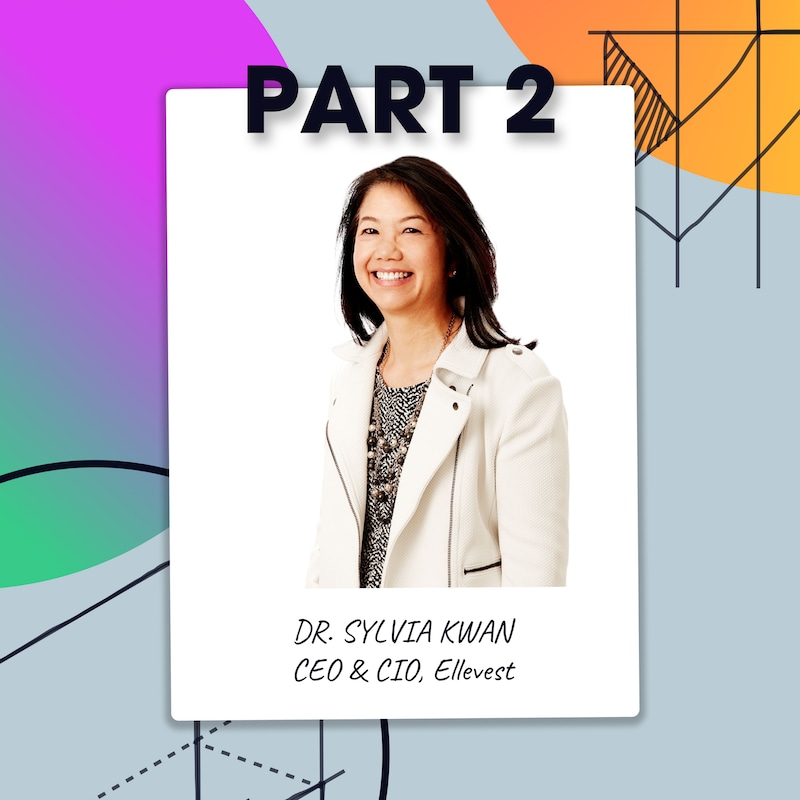
What does the world look like when women control more wealth than ever before? In part two of our conversation with Sylvia Kwan, CEO and chief investment officer of Ellevest, we discuss the “feminization of wealth” and why many companies are unprepared for this shift.
Kwan makes the case that financial power isn't just for the wealthy: every woman with capital, no matter how small the sum, has the power to create change.
Catch up on part 1 here:
The women finance forgot: Ellevest CEO Sylvia Kwan on closing the gender wealth gap
In this episode:
- How the Great Wealth Transfer is driving the feminization of wealth
- Why women invest differently and what that means for society
- How Ellevest is preparing for a “seismic shift” in spending and investment
If you enjoyed this episode, don’t forget to leave a rating or review on Apple Podcasts or Spotify. Send questions for our guests or any feedback to: [email protected]
You might also like:
Where is the female crash test dummy?
---
About Sylvia Kwan
Sylvia Kwan is the CEO and Chief Investment Officer of Ellevest, a women-founded and women-led financial services firm dedicated to closing the gender wealth gap. Prior to Ellevest, she founded SimplySmart Asset Management and held senior portfolio management positions at Financial Engines and Charles Schwab. A Chartered Financial Analyst with more than 30 years of industry experience, Sylvia serves on the Board of Exit 182, the investment committee that oversees the endowment of Grinnell College.
Learn more about Ellevest: https://www.ellevest.com/
Sylvia’s Monthly Market Insight (Sept. 2025): https://www.ellevest.com/magazine/2025-september-market-insights
Follow Ellevest on LinkedIn: https://www.linkedin.com/company/ellevest/
Follow Ellevest on Instagram: https://www.instagram.com/ellevest
---
Connect with Made for Us
- Show notes and transcripts: https://made-for-us.captivate.fm/
- LinkedIn: https://www.linkedin.com/company/madeforuspodcast
- Instagram: https://www.instagram.com/madeforuspodcast/
- Newsletter: https://madeforuspodcast.beehiiv.com/
Transcripts
What we're also trying to do at Ellevest is really help women recognize the power that they have in their capital. And I'm not talking about large sums. mean, every woman who has capital, no matter how big or small that sum is, has power.
TS:This is Made For Us, the show where we explore how intentional design can help create a world that works better for everyone. I'm Tosin Sulaiman. Last week, Ellevest CEO Sylvia Kwan told us about their mission to close the gender investing gap. This week, we look at a big shift that is taking place, the feminization of wealth. Women have very different priorities when it comes to spending and investing. So what does it mean for society when women have more financial power than ever before. We'll hear how Ellevest is preparing for that future and why it could catch many companies by surprise.
Here's part two of my conversation with Sylvia Kwan. We start with how Ellevest's strategy has changed over the years.
TS:If we could talk about the early days of Ellevest and what's changed in the past decade or so, because initially Ellevest offered a digital investing service. You've since pivoted to focus on wealth management and financial planning. Could you talk us through how that strategy has evolved and the reasons for the pivot?
SK:So ten years ago, I would say there really wasn't a good automated investing platform for women, which is why we built one that was goals-based. I think fast forward ten years, as others have kind of entered into this space and certainly become very successful, I think two things have kind of led to our pivot. One, it takes a lot of volume to make this business sustainable. And second, what we found is, and this is obviously public information, is we sold that part of the business to Betterment. The Betterment experience, I think, had come a long ways from where they started, where they also had goals-based investing and also had options to invest with impact, two very important things that we heard from our clients.
SK:And so we felt that our clients would be very well-served at Betterment and they would not be losing some of the things that we initially had originally built because there wasn't a solution in place. And so as a company with obviously limited resources, we wanted to kind of focus on things that we felt we did uniquely while finding what we think is a wonderful home, obviously for our clients, know, Betterment is also led by a woman. And so that led to that decision and that allowed us to completely focus on wealth management and financial planning.
Financial planning, we believe, is very important to Ellevest as well, especially for younger women that are getting started, you know, trying to juggle all of the different financial pieces of their life and helping them kind of really figure that out so that has no kind of asset minimum. And once they reach that asset minimum, helping them to continue to build their wealth on the wealth management side.
TS:Can you paint a picture of who a typical Ellevest client is?
SK:I don’t know if we have a typical, I would say one of the things that is common amongst our clients is that they really want to invest alongside their values. And it's what I call kind of an invest with intention. In some sense, you know, all investing has some kind of an impact. Every investment you make has an impact. But the idea is, you know, thinking about does it have the impact that you want it to have and being intentional about what that is. So both men and women, families, we have generations, have this mindset that they not only want their investments to generate robust returns, but they also want to be able to use those investments and the power of their capital to close a lot of the gaps that we have today, whether that's environmental, gender, racial, economic, really to help lift others up.
SK:And so I would say that is the common thread through all of our clients, you know, certainly we have clients who are entrepreneurs themselves, who built businesses. We have a lot of women who came from the technology world, very successful people who are in the industry as well, and certainly men as well in that category. So it's a very wide range from very young actually to kind of more retirement age. But I would say the ideal client is really the client that really wants to, you know, invest with returns and attention.
TS:So how does Ellevest think about impact, impact investing in particular?
SK:We think about impact investment very broadly. I would say when we started, there was a heavy emphasis on gender and closing the gender, all the gender gaps, I should say. But since then, I would say while we still have that focus, we have a lot of clients who are very environmentally conscious and want to invest in that way.
We have a lot of clients who are very broadly want to close sort of the economic gaps that we have here in the US investing in communities that have been under-resourced to really give them the economic opportunities to lift themselves up. If you think about things like affordable housing, for example, that is not specific gender specific, but it's really more broad, you know, has broad economic impact. So now we have opportunities to invest across all of those elements.
SK:I would say that the gender focus is obviously still there and it's not just investing in say other women founders, but also as we think about the industry and how the industry is so male dominated, how can we help more women asset managers? We have a lot of women, really, really brilliant women who are managing money and who are starting funds of their own. How do we help support them as well? Because often they may be for the first time launching a fund. And we know how difficult that is when you don't have, you know, a track record of three funds to raise money. So really trying to support so that we can have more representation in the financial industry as well.
TS:So looking to the future, I'd love to talk about what actually happens when women have more money. You've coined this phrase, the feminization of wealth. It's a trend that you and the team at Ellevest have written a lot about based on what you're observing in the US. And part of what is driving that is the Great Wealth Transfer, which you alluded to earlier. So could you tell us a little bit about that and what that means for women, for men, for society as a whole?
SK:Yes. So the great wealth transfer, you haven't, if your listeners haven't heard of it, I think most people have, but it is really the shift of wealth, right, from the older generations, the baby boomers, the silent generation to younger generations, particularly millennials, Gen X, Gen Z, et cetera. And we are literally talking about trillions of dollars that are being passed down through inheritance. I think what's very interesting that is in many ways kind of missed in the financial engine, everyone's kind of focused on that next generation. How do we engage that next generation? But before that next generation gets it, actually women get it first, because in many cases women live longer. And so that inheritance is actually passed to women first as widows and then passed to the next generation. So there are some statistics that I've seen that by as early as 2030, roughly two thirds of private wealth will be held by women.
SK:And in many cases, this may be the very first time a woman has complete independent agency over a fairly large amount of money. And as we've heard before, women make very different decisions when it comes to money, whether that's spending, investing, et cetera. And so we at Ellevest believe that when women have more capital, they make different decisions that can really have significant impact. We think there could be a seismic shift not only in terms of investments, but also even on spending. And I think that companies that are not paying attention to this will run into some, you know, some headwinds with respect to that. So we're excited. We think Ellevest is in a great position to really help those women. We've already seen it, a number of our clients, are beneficiaries, and they are really thinking differently about how they want to invest.
TS:To follow up on that, some of the developments that we're seeing now in terms of the anti-ESG movement in the US, the rollback of DEI initiatives, how do you see that impacting this trend, the feminization of wealth and the great wealth transfer?
SK:We're doubling down. I think that, you know, no matter what the sentiment is, and I do think it is unfortunate, whatever the sentiment is, the money will go where it goes. And so there's no stopping. I think when women have more money and when, and what we're also trying to do at Ellevest is really help women recognize the power that they have in their capital. And I'm not talking about large sums. I mean, every woman who has capital, no matter how big or small that sum is, has power. So helping women understand that, realize it, and help them use the power in the way that they want to use it.
SK:And so whether you like it or not, right, in the US, money is power. And the people who have the money make the decisions and have the power to make the decisions. And so when there's a shift in that power, because money is flowing, there's no, you can be against DEI, you can do all these things, but there's really not much that you can do if you don't have that power. So I think that shift is going to, it's obviously going to take place over time, but I think it's gonna take a lot of people by surprise. And so I'm, while it's a little bit discouraging, I would say about what's happening, but I am still very, very optimistic.
There are still many, many people who believe that investing to close gaps is not only kind of the right thing to do, but from a financial perspective, there's actually a significant opportunity because the areas where you have the largest gaps are often the areas that are overlooked. And so people aren't looking over there. So that's where I think a lot of the opportunity is. And so why not invest for financial returns as well as impact.
TS:And if we could briefly talk about AI, this is another big trend that we can't ignore. And you actually wrote about this just a few days ago. Could you share the story about how you’ve used AI recently and how you're thinking about investing in AI and what it means to you personally?
SK:Sure. Yeah, so I wrote about this recently because my mother just turned 92 and she has a genetic eye disease that basically rendered her legally blind starting in her teens. Not completely blind, but she's lived with it for a very long time. But she is just unstoppable. Like you wouldn't know if you met her. Like nothing stops her. She loves to learn. She loves to travel even at 92. And so she's been literally all over the world. And I was trying, you know, obviously these days she can't travel by herself. And so I try to take her on trips when I can. And I was trying to figure out, where could I go given her limited eyesight? You know, she can't, you know, for example, see small things in a museum or, or, you know, animals that are way out on sea, right? She loves like big scenery, like waterfalls, for example, you know, how do I find a place that would, that she would enjoy given her limited eyesight as well as her limited mobility? So she now walks with a walker.
SK:And I was like, oh, you know, I can do some Googling and do some research. I'm like, well, let me just ask, ask ChatGPT. And so, you know, I gave the criteria, you know, here's my mom's situation. And I was really astounded by how good the results were. You know, I got all different kinds of destinations and the, kind of the rationale was what I was most impressed with. You know, here's the reason why I recommend this. And so, you know, I learned a lot of interesting things about countries and which are, you know, have more services for travelers like my mom. And so it really opened my eyes to what is kind of possible, certainly, with AI. And it literally, I feel like, saved me probably hours of research on my own to kind of figure some of these things out.
SK:So I think AI is at the very beginning stages. I think it has a very long tail, but of course everybody is pouring trillions and billions and et cetera, dollars into this. And just like with the internet, there's gonna be winners, there's gonna be losers, things have take time obviously to shake out, right? But where I see a lot of the promise of AI is actually in a couple of sectors, particularly in healthcare and also in environment. I think actually AI has the potential to really help serve kind of the underrepresented groups.
SK:So when I think about personalized medicine, for example, right, all the dosages are all, if you're 12 years or older, all adults take the same thing, right? But I'm like two thirds the size of my husband. And so sometimes I wonder, it's like having the two dosage as much as, or should he have three? There are other differences obviously than just size. And I think the personalization of everything, I think there's a lot of potential for AI there. So it's something that we're obviously helping our clients to navigate. We do have investment and funds that kind of focus on applications like that and companies that are using AI to generate better outcomes, whether that's health or environment or otherwise. So excited about that. Obviously there's a darker side of AI too, so a lot to unravel there. I tell all of my clients, don't be in a rush. Don't feel like, I'm going to miss out if I don't get in now. There's going to be a very long, I think a long cycle here of investing.
TS:So as you think about Ellevest mission and you look back over the past 11 years, what stands out most to you in terms of the impact that you've had? And are there areas where you think, I wish there'd been more progress?
SK:The thing that I'm most proud of that the Ellevest team has accomplished is really the tremendous impact that we've made on individual women's lives. We get emails all the time about women who they're the first time they ever invested for their whole family, or I didn't think I could achieve X, Y, and Z, and here I am buying my first home. It's hearing those stories that make the biggest difference and make this all worth it. I would love to obviously have made even twice as many people to be impacted.
SK:But I think the other thing is really, and we're not done here at all, but really normalizing conversations around money. Not making that something that women need to be ashamed of or women need to be embarrassed about, but really normalizing that and say, hey, talking about money is actually really important to your economic wellbeing. And so encouraging those conversations, that's something that I wish we could lean more and more into. There's obviously a lot more work to be done, but I think we're off to a good start. And I think what really makes me just so thrilled is really knowing the impact that we've had on so many women.
TS:And how can people learn more about Ellevest? How can they follow you?
SK:Yeah, so I'm on LinkedIn. You can follow me on LinkedIn. And then of course, if you are interested in learning more, please come to our website, Ellevest.com. There's a lot of free resources there. We have a lot of articles. Everything is free. And if you want to learn more, you can certainly speak to one of our wonderful financial advisors.
TS:Sylvia, it's been a pleasure having you on the show. Thank you so much for this conversation. I really enjoyed it.
SK:Thank you, as did I. Thanks so much for having me on the show.
TS:If you'd like to learn more about Ellevest and read Sylvia's note about AI, I've included links in the show notes. Later this season, we'll speak to investors closing the racial and disability wealth gaps. You won't want to miss those conversations.
If this episode resonated or changed how you think about where your money goes, share it with someone. And if you're enjoying the season, a rating or review helps more people find us. You can also send questions or feedback to madeforuspod at gmail.com.
Next week on the show.
EP:We forget sometimes how much of education is psychological. And I went through this a bit as well. You start to say, I'm just not a reader. And from an identity perspective, that becomes really central. And so we really put accessibility first. And what does it take to make sure that every student is able to understand that content and fully participate within the classroom and get back on that journey.
TS:Ethan Pierce, founder and CEO of Adaptive Reader, on making books accessible to every learner. I'm Tosin Sulaiman, thanks for joining me on Made For Us.







