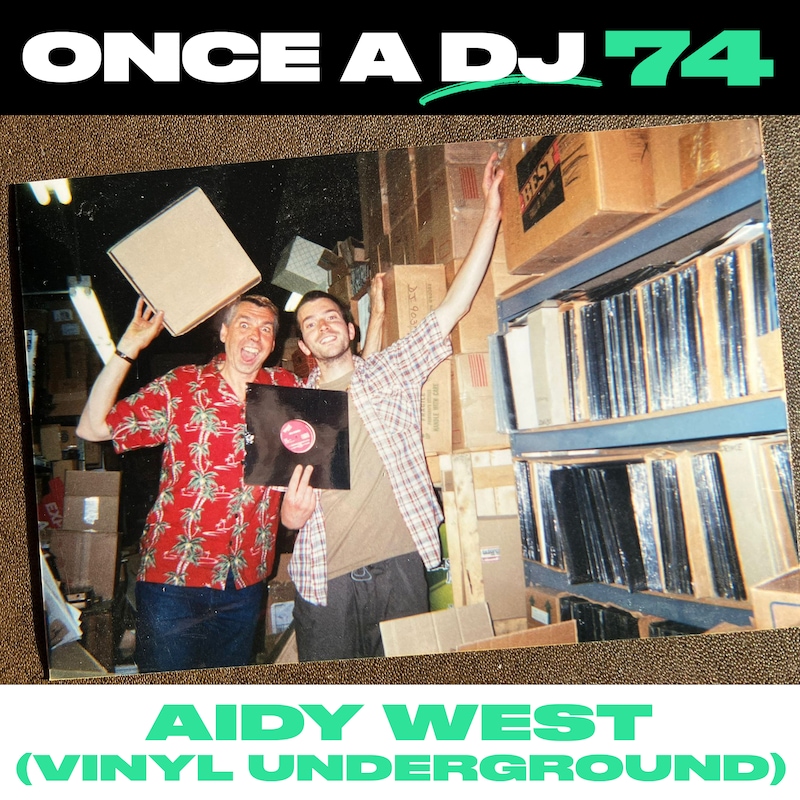
Shownotes
Paths of Rhythm is brought to you with support from vinylunderground.co.uk - take 10% off your next order with the code POR10 and free UK shipping on orders over £100
Paths of Rhythm is a Remote-CTRL production. If you're looking for audio or video production, then check out https://remote-ctrl.co.uk to see how they can help.
Other ways to support the show
- Follow the show on Spotify or Apple Podcasts
- Any feedback or questions? Hit up https://www.instagram.com/pathsofrhythmpodcast/
Aidy West, owner of Vinyl Underground for over 30 years, shares his journey from breakdancing kid to underground record dealer. From attending Fresh '86 at age 14 to shipping directly from Detroit, surviving vinyl's dark days, and witnessing the Record Store Day boom - this is the story of passion over profit in the record game.
Chapter Markers
Part 1: Musical Origins (00:02:03 - 00:17:45)
- 00:02:03 - Introduction
- 00:02:41 - Growing up with Madness and two-tone
- 00:04:16 - First records: Buggles and WH Smith Saturdays
- 00:05:09 - The Jam's "Going Underground" changes everything
- 00:06:36 - Breakdancing and electro: "Oral sex spelled A-U-R-L"
- 00:09:33 - Fresh '86: Afrika Bambaataa and the Wembley pilgrimage
- 00:13:21 - The legendary Hammersmith Public Enemy gig at 14
- 00:15:24 - Record shop culture and getting ignored in London
Part 2: Hip Hop & Early House (00:17:45 - 00:30:26)
- 00:17:45 - Northampton's healthy hip hop scene
- 00:19:23 - Hip house and Doug Lazy's "Let It Roll" obsession
- 00:21:12 - First DJ experience at college parties
- 00:22:13 - A-level results and joining the family business
- 00:24:54 - Buying Technics with summer warehouse job money
- 00:26:17 - Meeting Alton and discovering Chicago/Detroit
- 00:26:51 - Yorkshire Bleep: The origins of UK bass music
Part 3: Building Vinyl Underground (00:30:26 - 00:48:13)
- 00:30:26 - ESP/Dreamscape and early rave scene
- 00:33:12 - Moving to Brighton and the scene there
- 00:38:09 - The Orbital "Chime" hunt across London
- 00:40:44 - Adam Naked: "Talk about giving up food for funk"
- 00:42:33 - The NEC record fair that started everything
- 00:46:10 - "I'm gonna start a shop" - birth of 80s Vinyl Underground
- 00:47:11 - First advert in Echoes magazine
- 00:48:13 - The first customer: Stevie from Birmingham
Part 4: Going Direct to America (00:48:13 - 00:59:12)
- 00:48:58 - First Underground Resistance record and Submerge
- 00:50:56 - Calling Detroit on expensive international rates
- 00:53:04 - Why London couldn't get the records Aidy wanted
- 00:56:28 - Passion first, business second
- 00:57:14 - Eddie Richards buying records in Aidy's parents' bedroom
- 00:59:01 - Specializing in what others ignored
Part 5: The American Dream (00:59:12 - 01:13:11)
- 01:00:16 - The 1997 American buying trip
- 01:01:50 - £5,000 cash in a bum bag
- 01:04:05 - Walking into Guidance Records Chicago
- 01:06:35 - Meeting Mike Banks at Underground Resistance
- 01:07:48 - The Detroit tour that never happened
- 01:09:11 - Getting tracked down in Kalamazoo
Part 6: Growth & Technology (01:13:11 - 01:29:25)
- 01:13:11 - Early website in 1998
- 01:15:22 - The rush to get new releases online first
- 01:20:46 - Tech house boom and expanding the shop
- 01:22:57 - The Moody Man effect: Bridging hip hop and house
- 01:25:11 - Mathematics and "coming full circle" in 2009
- 01:28:34 - Dark days: Moving to London during the crash
- 01:29:25 - The Saturday pilgrimage when he came back
Part 7: Vinyl's Death & Resurrection (01:29:25 - 01:37:36)
- 01:31:06 - Limited 300-copy pressings save the scene
- 01:33:02 - When did vinyl come back?
- 01:33:28 - Record Store Day: Love it or hate it
- 01:34:55 - Too many record shops now?
- 01:36:42 - 30 years to learn the DJ craft
- 01:37:36 - Working with NRK and Dimitri from Paris
- 01:39:20 - Driving American house legends
- 01:40:59 - Angel Moralez and the Paradise Garage
Transcripts
Welcome back to Once A dj, the show where we look at what brings us together and what also sets us apart. I'm here with owner of vinyl underground, over 30 years in the game, referred to by other people as a DJs. DJ, Mr. A.D. west. How you doing today?
Speaker B:Good, how you doing?
Speaker A:Yeah, I'm good, thank you. I'm good. So, as we've just been discussing, let's just get straight into it and. Oh yeah, thanks for having us in the shop, by the way.
Bit of a different scene scenario in the back room.
Speaker B:The only warm room in the building at the minute.
Speaker A:The only one without the condensation. Yeah. If you just want to get straight into it, let's look at like sort of where music and the love for music started for you.
Speaker B:So earliest memories of maybe dancing to music, I think would be like my mum used to say when she first heard madness. One step beyond coming from upstairs and she'd be bouncing around the room.
Speaker A:Was there a lot of two tones? I was speaking to someone the other day that mentioned madness and they're from Kettering, I think it is. So is it?
Cause we're not massively far from Coventry, are we? Which is where a lot of two tone came from.
Speaker B:Yeah. Obviously back then I didn't think that, but there must have been a strong connection because we're, you know, literally 45 minutes down the road.
So it was a UK thing, but, you know, I was just like an eight year old kid, you know. So, yeah, hit me as a sound, as a kid.
Speaker A:Were records a thing for you back then? On that.
Speaker B:Come later, no records. That was it. Records, you know, every Saturday, you know, maybe me and my sister, we could go to WH Smith, to the basement.
WH Smiths on two levels and downstairs, all vinyl. Because obviously back then records were in Woolworths. W.H. smiths, you know, it's back when records was just a thing to buy.
So, yeah, we used to be able to buy each by a 7 inch on a Saturday. But I mean, it's classic question, everyone's, what's the first record you ever bought?
And I kind of think the first record I brought myself, or I remember having was Biggle's video Killed the Radio Star, which is a bit of a cool record to say, oh, it's my first record. But I do kind of remember that was. But it was probably a pinky and perky album.
Speaker A:Yeah, yeah. So where did it go from there? Because there's, I mean, Scar and stuff like. That's not really something that you're associated with necessarily.
Speaker B:No, it's like mods were a thing. I remember, you know, when you first start getting into youth culture and fashion and stuff.
I remember, you know, having a pair of Farah trousers and everything.
And, you know, my older mate from down the road, I think he played me the Jam going underground and that was funny enough, going underground and if that means anything. But that. That record was. Was. I really. No, I vividly remember hearing that record and something happened. I was like, that's really cool.
And then it was. Yeah, the Jam and Adam and the Ants were huge with their two drummers.
Remember doing the drumming in the lounge because they had two drummers and they were on Top of the Pops with two drummers and it was crazy. And I was like, wow. As a young kid seeing that.
Speaker A:Yeah. Like, I don't really know anything about them, but the name pops up now and again.
Speaker B:Just classic 80s, unique pop music.
Speaker A:Were they classed as new wave or New romantic or anything?
Speaker B:Yeah, I guess so, they came from that. But, you know, they were huge and, you know, everyone's into them as kids and, yeah, it was cool.
Speaker A:So did you then gravitate to people at school and based on music.
Speaker B:In the senior school or whatever that was like. That's when I started getting into music very much. I was the outcast into breakdancing. Everyone else.
Everyone else was into U2, U2 and Goths and I was into. I was into break dancing and electro and stuff. And obviously from that hip hop, yeah, everything came.
But hearing the electro albums, which I think a lot of people from on my age were just. It was just groundbreaking, like.
But I can remember hearing a cassette, electro cassette, you know, and it was like, almost like a naughty thing, because obviously one of the adverts, it was advertised on TV even, but advert said electro is oral sex, spelled A U R L. So I always thought it was. I always thought, oh, something rude. What's going on? And my friend played me before school one day and I can remember.
I can remember sitting in my garden listening to a cassette on a Walkman and going, oh, wow, what is this music? Wow. Yeah, this is something, you know.
Speaker A:So what were your first kind of. What was your first exposure to break dancing, then?
Because you just, like, over here, you just get it odd bits on telly here and there, wouldn't you?
I mean, there was someone I had on that talks about going to some sort of like BMX and monster truck festival or something like that, where they had break dances.
Speaker B:Yeah, it was. I Mean, obviously it was huge. Is in the 80s.
I can't remember where it was when youth culture or how you heard about it, but obviously you had things like Blondie and Chaka Khan that featured rapping and breakdancing. And it was like. When it was on tv, it was like, oh, my God, did you see it?
They had some breakdancing on tv, but where we'd heard about it as kids, I don't know. Wasn't like there was any magazines or fanzines that all came later. Yeah, you just saw bits of it on TV and just.
Yeah, great dancing and then hip hop culture and the music. Electro.
Speaker A:Yeah. And did you go to Fresh Fest?
Speaker B:So, Yeah, I was 14, I think, so I went to Fresh 86, which Morgan Khan put on the street. Sounds guy. Right, right. And obviously that was advertised on the radio. Because that's what it is.
We listen to radio, basically, and whatever radio stations you could pick up wherever you were. It was Mike Allen, National Fresh, really famous radio show that was. I'm not sure which.
Station it was on, but it was, you know, syndicated to different areas or maybe on different times. But you could pick it up maybe Eastern FM or whatever. Wasn't necessarily like North Ants fm. And. And that was. And he was the host of Fresh86.
It was advertised on there and it was advertising all the records, buying all the records. And Fresh 86 was like, you know, the biggest thing that happened in probably Europe, but definitely the uk.
Like everyone came over from America and there was an afternoon show, an evening show at Wembley arena and I went to the afternoon show and that was my first exposure to anything like that. And it was absolutely. For me as a kid, it was insane. Never heard anything so loud or seen so many people.
Breakdancing was still a massive thing because I remember everyone was breakdancing at the back. There was a massive, like, ring of people, hundreds of people watching.
Probably all the London crews were all breakdowns together, which I didn't know anything about, but. And I remember they were dancing, but on stage you had like Africa, Bambata and Shango, just like in the films.
Just like out of beach street on the stage and it's like Shantang, people like that.
And I'm like, what are you doing break dancing when you know you got Roxanne, Shantae and Captain Rock, DJ Cheese Houdini, all those sort of people which were grown up on through all the Electra albums, doing life. Yeah.
Speaker A:It must be a pretty sort of bold move to be. To bring a load of Artists from what's.
I guess you'd call it, like, over here would have been like an underground genre at the time and putting something on at a venue the size of Wembley Arena.
Speaker B:Yeah, I'm sure. I mean, it wasn't. The afternoon show wasn't that busy. It wasn't empty by. Anyways.
But like, you know, I guess the evening show was packed and the afternoon was. Definitely. Could have a few more people there. I don't know. It's weird because they.
The artists would have been so big in America because obviously America's huge and rap was massive and it wasn't. Not that it wasn't big over here. Sold a lot of records, but it was still very much a. Yeah, would have been a lot of their first time over.
86, I guess.
Speaker A:Yeah. So what was digging like then at that sort of era in Northampton?
Speaker B:I was. You just went to record shops. I was too young to. Do any sort of digging.
You just went to the record shop and you bought, what, the latest records, if, you know, if you could afford two records on a Saturday. But even like, you know, Woolsworths and stuff had records that you wanted. But most towns had a shot. We had Spinner Disc in Northampton and. Yeah.
And you get a few imports in there, so you'd be there every week. And that's where, you know, record shop culture began. You know, for us, just.
You're hanging around in record shops and that's where you meet people, your friends, pick up flyers and that's all it was.
And then if ever I could get a lift to London, say my family was going to London, I'd always be like, oh, can I go to, you know, go to this record shop or that record shop? I'd try and get.
Speaker A:Yeah.
Speaker B:And then obviously, what we didn't have here, we didn't have the London Pirates. Yeah. Which is important. So anytime I'd be in London, I'd just.
I'd take a portable radio with me and stick an area out the car I was driving in the, you know, backseat. And maybe record it as well.
Speaker A:Yeah. Which is really important.
Speaker B:And bring the tapes back. But there's always a lot of tapes coming. London pirate tapes were a massive thing, you know.
Speaker A:Was there particular shops you were going to or was it just going. Was it more a case of, oh, if they're going there, then maybe I can go there?
Speaker B:Yeah, it was that. But the ultimate was groove records in Greek Street.
Speaker A:Yeah.
Speaker B:Which is. Yeah, amazing shot. I remember. Yeah. I remember Vape shop now, I think, is it I think so.
Speaker A:Something like that.
Speaker B:Terrible. I. I remember, like, we were in my family, we were in central London for some reason, and my mum, she.
She stood on the corner and I said, oh, please, I want to go in there. So I walked in. It's like a. I don't know, 13, 14 year old kid.
I walked into this groove record shop, all these DJs and all these clubbers in there, and I went and bought Poetry Boogie Down Productions on.
Speaker A:Was it. Was it intimidating at that age, or were you too young to be intimidated?
Speaker B:Yeah, there's definitely that. Too young to be intimidated. Because when I used to think back, oh, how did I go to fresh 86 when, like.
Because London's a totally different thing, you know, when you're not from London.
And I went to fresh 86 and even more so, I went to the big Public enemy gig in 87, Hammersmith, which obviously again was advertised on national radio. But like, me and a friend got permission from my parents to go.
They took us down to London for the gig or got a lift with somebody's parents that were going there. And it was. It was cool. And that was. Yeah, I mean, yeah, when you get to. I guess when you get to 17, 18, unless you. Unless you're with your.
Your friends, you. You wouldn't probably go, but at 14, 15, we just went and didn't think anything of it. And. And yeah, it was. LL Cool J was headlining, actually. It was.
Right. Eric B and Rakim, Public Enemy and LL Cool J, who came down in the big boombox from the ceiling.
Speaker A:Oh, amazing. Some lineup that is.
Speaker B:Yeah, it's the one. It's a famous show. It's the one that got. It's the one that's on Public Enemies. The recording the whistles. It takes nations, millions.
I think it's the recording of that. That was the first gig I was there. It was put back. I mean, it was. It was hairy because it was right in London and it was like. Yeah, it was.
Yeah, it was pretty hairy. But got lucky. Sat next to some. Some other guy I remember from Cambridge, St. Neots or something. And like, we were from Northampton. I must.
I remember he looked after us. Yeah, it was. It was roaring there. It was crazy. It was. Yeah, it was a. Yeah, because I'd.
Speaker A:Imagine as well, when. When people are young and they've got this shared interest, there might almost be a bit of sizing each other up as well.
And I don't mean necessarily in like a, like an aggressive way, but maybe in terms of, like, are they as big a fan as me.
Speaker B:Mm.
Speaker A:Do I. Like, I remember when I was. I DJ'd at a party at someone's house in Manchester and someone came up to me and started talking to me about some.
Some record that I didn't know at the time and I didn't want to admit I didn't know what they were.
Speaker B:Oh, yeah, I know what you're saying. Yeah, that came later, basically. Yeah, totally. Like going to a record shop. Yeah.
Like, you know how many records, when you first started to go to London record shops, you went there and you stood there and you could just get ignored.
Speaker A:Yeah.
Speaker B:You know, when I was really young, I used to make sure you go on a quiet day and it was all about seeing a guy and maybe getting a rapport with a guy.
But you go on a busy day, say a black market records or something, and like, I think people would just stand at the counter and then you couldn't even get to the counter to buy a record. Right. Yeah, it's a hierarchy and like a thing and that's. They were. They were so moody. The shots, you know, as a kid, it's not good, but. No, but.
So, yeah, that, that sort of came after. But early on, the gigs and some parties. No, it's more about now. You just got mugged. Little white kid there just got mugged. That's what happened.
Speaker A:It was normal ranks of passage still.
Speaker B:Yeah, it was just in. Yeah, it was, it was, you know, it was street music and, you know, it was, it was. It was a scene.
Speaker A:Yeah.
Were you starting to get the itch to play it and at any point to DJ out or anything or were there any DJs that you were listening to that you thought, I kind of want a bit of this?
Speaker B:No, it was literally just into it. Just bought records because it was natural and just being into it and then. And like, the hip hop scene in Northampton was really good.
We had parties at the. At the Road Mender. Various people like Jungle Brothers, DJ Pogo was up all the time.
Speaker A:Oh, wow.
Speaker B:Moni love and 45 king came once. Demon Boys. That was good. It's always difficult to know because whatever the flyers said, they didn't turn up, but other people turned up.
It was like just.
Speaker A:Yeah.
Speaker B:Generally hip hop scene. It was. Yeah. That was like what, 80, 88, 87, 88 sort of thing.
Speaker A:I wonder why it had such a healthy scene here then.
Speaker B:Northampton's big town, everything. I mean, you know, Bob Marley played here, Stone Roses played here. Later years.
It's famous, you know, back Then we're, you know, you on the, you're on the tour list, right, and all you need is one decent promoter. And there's a, you know, there's always been a really healthy scene here, just, you know, big West Indian population.
It's a reggae scene, particularly in the 80s. And Northampton's always a bit of an odd, odd town and people kind of.
I always felt that people mixed a lot more here and we had a bit of an interesting scene. I thought Chris Harrison was the guy, big guy. Just see around town he'd put on all the hip hop dues and yeah, they'd be packed, you know, amazing.
Eight hundred to a thousand kids. But everyone would go and everyone you'd meet from town or the record shops, you know, that's when you'd all see each other.
Oh, you went to that, you went to, are you going to this?
Speaker A:And.
Speaker B:And that's when, you know, friendships or people, you know, started and yeah, in the scene. So basically what you said about record, I just went, I was buying records, just had to go. It was what I was really into.
And they were amazing nights.
It's a shame thinking about it now but like, yeah, every couple of months a life changing night happened because it was all brand new, it was all just fresh and it was, yeah, really, really good times.
Speaker A:So what was your entry point into dance music then?
Speaker B:Well, it was all dance music back then. So that's the thing I always say, like if you grew up in the 80s and you went out before rave happened and drugs, it was a different thing.
Like say so when I was 16, I'd want to go to nightclubs. So you had the ritzy nightclubs. Just like every town had a ritzy nightclub. But you'd have proper DJs.
There were proper nightclubs, wooden floors, good sound system, light show and all that. And a DJ and it's Saturday night, it'd be on the mic a bit and doing whatever, you know.
But the music back then, it was music, soul, reggae, house, hip hop, you know, because it just played, it was just black dance music and it was all played next to each other and house music started to come in, you know, 86, 87. And it was just another form of dance music. It wasn't like a separate thing.
So you heard stuff, stuff like Nitro Deluxe, you know, freestyle house mix and then early tracks, records.
But then I did my A levels at College in 88 and I remember like having a smiley Acid House T shirt and obviously I was into the music generally and but then house music really kind of started hitting home then and like, I guess, you know, been into hip hop for ages and buying all the albums and always looking for something new because everything was new and exciting and. Yeah, that's when I guess I started searching out and buying more house based records and stuff.
Speaker A:I suppose there was the hip house kind of crossover story.
Speaker B:Yeah, that was massive. And I love hip house.
I've always got a soft spot for it and I'm always playing it nowadays, just recently pulling out Fast Eddy records and stuff and it's going down well. Like Doug Lazy Let It Roll was probably the record I was most obsessed with in my whole life. Just.
Yeah, and those records that they got, they got into the charts, they were good records. But to hear them properly you'd have to go to the nightclubs and where literally when I first went to Ritzy, I'd wear a suit to get in, right? Wow.
Because 16, you know, 16, I went for older mate and said, okay, but like you walk to the door and you had to wear suit and shoes to get in. You couldn't get any jeans and stuff. Yeah, that came later. And it was like you'd wear whatever clothes to get in because the music was good.
But it was like, you know, Shaka Khan and classic disco and so just nightclub music, just.
Speaker A:Yeah.
Speaker B:And then there was more underground. Like the hip hop dudes were obviously a lot more underground at community centers and that sort of thing.
And then by, you know, by 88, I guess 88 other clubs were opening which were a bit more, you know, a bit more casual and things started moving in that direction and then. Yeah, so that's it. And it was my friend Hassan from college met him and he fancied himself as a bit of a promoter.
So he started putting on a party and I had records. So he goes, come on, I need you to DJ. And I hadn't thought about DJing, I just had records, right. I was like, okay.
So I went and collected loads of other records together, you know, some indie records and a bit of everything. It was a college party, borrowed some speakers and this and that.
And then I was suddenly a mobile DJ for a couple of college parties that we did, which was quite funny. And that was my first DJ experience.
Speaker A:Did you enjoy it?
Speaker B:Didn't know what I was doing, but yeah, just people were dancing and I was playing the music I liked. And then I suppose it was difficult when I tried to play. I felt like I had to play a bit of indie stuff and a Bit of this.
I didn't really know what I was doing with borrowed records.
Speaker A:I think that sort of thing's even harder now because people expect to just get this massive diversity of stuff.
I think it's probably so easy when you're playing digitally to end up playing stuff that you don't necessarily know how to play and don't really want to play either.
Speaker B:It's a tricky one, different levels of DJing, isn't it? If you're DJing, if you're entertaining the crowd or you know, is it playing the music you want to?
I mean even the most underground DJing, it's a balance, you know, between educating, playing what you want, playing what you think should be heard and playing what's right for the environment and for the crowd, you know.
Speaker A:So at that, at that point, what did you study at college?
Speaker B:That was just my A levels. Luckily I left school.
I could have stayed on at school, but I'm so happy I left school and went to college, did just A levels like geography, economics and something. And I wasn't really, I mean I did okay at school and I would have done my A levels right.
But I was, the music bug had hit me and I was, yeah, just meeting people at college, meeting friends, going out loads, getting records and I didn't, I didn't study that well for my A levels.
Speaker A:And had you had any sort of like quote unquote career plan of what you thought you should be doing because there's what you want to do and then there's what you kind of think you should be doing?
Speaker B:No, I guess my parents were asking that question a bit. But. Obviously, you know, I come from a family of retailers, seven generations of retailers. So.
Speaker A:Right.
Speaker B:I'm used to, you know, my family working for themselves and my dad, you know, managing a furniture store and, and we had a toy shop at the time as well. So.
All right, I didn't and, and I worked at British Home Stores part time myself and then, and then, and then later on I started working part time work at the family business.
So I think, yeah, I think actually when my dad got the A level results he was like, oh well you better, better come into the business then, which he still asking to this day.
Speaker A:So what was then next from there? Because that wasn't kind of. You didn't kind of immediately set up the shop, did you? What was your, what was your kind.
Speaker B:Of journey into that around that time? Just absorbing all the knowledge about records.
There was some great people in town, people like Adam Naked, the local Break legend, you know, just got all our knowledge and information from him. He was always digging in charity shops. So you're just learning from people like that. And there was loads of us.
It was quite a good, healthy competition between all of us. Have this record, this, you know, you have to be first in the queue for the imports and stuff like that.
And who's got this record, who's got that record. And you only find out about records by going around people's houses. They'd show you a record, record and all that sort of stuff.
So knowledge was something you got from being out and about in the scene. And I remember at college I was just buying, kind of started buying some house music and I think maybe then my first tape myself. So I got decks.
Yeah, I kind of had one turntable and then I borrowed my. My dad's turntable belt drive and I was mixing that. But I remember doing. Yeah, that was.
I worked a warehouse job all summer one summer once, warehouse job all summer and I bought Technics.
Speaker A:Nice.
Speaker B:And it's like, wow. I bought them when. When the black ones came out.
I bought the silver ones because I remember I bought them off some guy who was selling them to get the black ones and I got the silver ones. So obviously I wanted decks. Still didn't want to be a dj. I just. I don't know, I didn't think so.
But had to have decks because, you know, that's, you know, two turntables and a microphone and. Yeah, just. And wanted to mix. That was it more like. Wanted to get into mixing. Yeah. Because that's what you. You'd see. So I did that.
And then when I got to college, I was into house music and stuff. Or just. Yeah.
And I remember I was at the student union playing a video game and one of my friends must have told someone else that I was into house music. And then. And then this guy coming up to me goes, are you into house music? I was like, yeah, that was my friend Alton.
And, like, listened to that and it was like. And it was very much like Chicago, Detroit stuff. And what he'd learned from people he'd been influenced by. Yeah. Locally. And then. And that was it.
I was like, oh, yeah, I got this. Got this. And just sharing knowledge and him giving me loads of knowledge and stuff like that.
And then that probably set me on a course to Chicago, Detroit, acid. Because acid house was such a. A big thing. You know, you'd read in the magazines this and that, this and that.
But, you know, the good music was There as well as the. With the hype, you know.
Speaker A:Yeah, yeah. You said about the sort of hip hop scenes and stuff here. Was there we having to go far to get more access to the Chicago and Detroit stuff?
Speaker B:Yeah, I mean, it's really difficult to think of the timescale, so everyone on.
Speaker A:Here gets the timings wrong.
Speaker B:Yeah. So I went to college in 88, 89, so we were starting to go out to clubs.
You can always think about it because you were going to clubs from 16, 17, but you should have been 18 to get in. And then when I could drive, then I was driving. Let's go somewhere. Let's go to London.
Speaker A:Yeah.
Speaker B:And stuff. Because we were. We were all really into BLEEP Yorkshire. Bleep, you know, from. From Bradford, Leeds.
Speaker A:So what's that then? I don't. Never heard of bleep.
Speaker B:Bleep, really. The origins of bass music in this country. Just. Yeah, just. You read the book, Amazing book that was written by Matt Amos, I think. Fantastic.
Yeah, amazing book. And it's history where it starts in Bradford and Leeds, then obviously Warp Records, Sheffield took it on.
But yeah, that music was just it because it was like when that came along, it was. It was British street music, but it was bass and BLEEPS house music, which was like uniquely British and uniquely northern as well.
Not that we're in the north, but we didn't consider ourselves London, but it stretched down to the Midlands, so there was a. Definitely a connection here.
The same sort of things were going on in Northampton that were going on in a lesser level, going on in Leeds, Bradford and Sheffield. And yeah, that music was just it, like Unique three the theme and stuff.
Again, some of it got into the charts, but it was like a more raw street music. Yeah, but it was house, it was electronic, it was like. Yeah, it was something else. And we'd be searching for the BLEEPS in the clubs.
But by then 89, everything had gone rave and we'd say be going to Leicester, even Sheffield, driving up and trying to find what we heard about that was going on. But I think we're maybe a year too late. Right.
There's amazing clubs like Jive Turkey or there's things like occasions in Sheffield when it was good and they're the things we kind of knew about. But we were too young and by the time we went up to Sheffield and checked those things out.
Kind of rave had happened and which was cool because it's a whole different thing, but it's a whole different club and everything. Rave music Started happening when we were just into. We just wanted Chicago, Detroit, BLEEPS bass lines, serious, that sort of sound. And I was quite.
I was quite. I guess I was quite a purist for many, many years, which I think is really good. You know, just like. That's all I wanted to listen to and stuff.
Speaker A:So were you able to scratch that itch elsewhere, then?
Speaker B:What's that? The.
Speaker A:For the bleep and stuff. The things that you were saying that you. You were a bit too late on. Were you able to find it elsewhere?
Speaker B:We did find pockets, certain stuff. I remember going to Luton and hearing some good, good stuff and just catching a club. But, yeah, it was always really hard to find. And at this.
But at the same time, maybe some other mates. I was going out and seeing the early rave scene, which was. Yeah. Which is crazy, you know, like. Yeah, the Dungeons, Lee Bridge Road in London.
Even the Astoria, where loads of people from Northampton would always go to the Astoria on a Saturday. And that was the beginnings of, you know, hardcore break beats that obviously developed into drum and bass and all that.
But in:And then they all kind of came up here and started to get big legal ones. I think Northampton had the biggest legal one at Braefield in 91 or something. So kind of the whole rave scene kind of happened.
But that was quite interesting. In Northampton we had esp, which then turned into Dreamscape.
Speaker A:Oh, yeah.
Speaker B:And then moved to Milton Keynes. But before it was Dreamscape, it was ESP at the Road Mender and they'd done a couple of them. I think I went to one of the small ones then.
I think it was at the second or third one, Craig, the guy that put ESP on, I remember he. They needed some decks and I was like, I've got decks. So that. That. So he goes, okay, use your decks and you. You can DJ. So I was like, okay.
Speaker A:So DJ'd one of the first ESPs. ESP?
Speaker B:Yeah, there was like, Neil Parnell, a couple of people, some live acts, and then some of my best friends that I met at the end of college, Carl and Lex were Rhyme and Reason, some rappers. And they were doing. They did live things. So I helped them out with live shows. Maybe just pressed a few buttons for them or something.
Speaker A:Yeah.
Speaker B:And, yeah, so we kind of started to get involved. So I've Known people. So, yeah. So esp. So when they did the bigger ESPs, use my decks. And I was DJing. I remember that was my first.
I guess that was my first proper DJing experience. Which is quite funny because there wasn't a thing called rave music. There was just music that you played at raves.
But I seriously only wanted to play Chicago, Detroit.
Speaker A:Yeah.
Speaker B:Serious stuff. And. But it went down. It went down really well because back then, that's what did get played.
And you could play things like, you know, Doug Lazy, Let It Roll and Big Shot Records and all the Transmat records that I used to like. But I do. I remember playing. I remember playing, playing an album. There's a track on a Techno two compilation.
I remember playing it, but it all went really quiet because the album pressing was much quieter. I didn't really. There you go. I didn't really know what I was doing. And I remember the promoter was like, what's going on?
And shouting at the sound guy. And I was like. And. But then I was like, oh, yeah, I'm playing an album. Whoops. I should have realized.
Speaker A:Yeah, that's what I was gonna say. Like, when I think of, like, the hip house, I think of, like, the commercial.
So, like, the cool tempo and stuff, and some of that's really badly pressed.
Speaker B:Yeah.
Speaker A:Yeah, it's about 19. 19 tracks on the side or something.
Speaker B:Yeah. And we grew up on all them upfront compilations. That's what we got. Yeah, Street. Yeah.
Electro albums, street sounds albums, upfront compilations, all that stuff, like. Yeah, you just, you know, that was up here. That was the only things you could get, really.
Speaker A:Yeah.
Speaker B:Unless there was a really cool import store, you couldn't. As a kid, you couldn't afford import. So you go to Our Price Records and buy upfront. 1, 2, 3. Which were.
Which were great because that's where you learn about all the music and the producers and the labels. Then you can go search out the originals when you get a bit older or got a bit of money.
Speaker A:Yeah.
Speaker B:And that's when I started going to London and trying to just write. I need everything I need. I need all the tracks, records, and Transmat.
All the Detroit and Chicago stuff that, you know, that I knew about, but I didn't have copies. And you could still pick up, like, copies in shops back then, along with anything else that was going on.
Like Orbital, you know, Orbital Chime was a massive record for me. Yeah. I just lived in record shops, you know, and then I moved to Brighton.
Speaker A:What took you there?
Speaker B:I think with Khan And Lex, my friends, because musically they had some music connections down there from some gigs or something, went down there to go and start DJing and. And they were DJing and rapping and stuff and I was just their mate, but I was a DJ as well. So I used to DJ a bit. We did a few things, it was cool.
But then we. Carnival music in some, you know. People in different ways. They did stuff with the shaman and then Lex went on tour.
I moved back to Northampton and Carl stayed there. We kind of went, but kind of separate ways as things happened.
But things happened just really fast, you know, in a whole year I can think of being at college then going out to some first parties and suddenly the end of the year I've moved to Brighton and searching for whatever and it was. I remember up here in Northampton it was getting really busy, raves everywhere.
And if I stayed here and I wanted to, I could have just become a rave DJ. Yeah, been one of the first rave DJs and. But I just wasn't really into that music because it always all got a bit silly.
Rave stabs and break beats and stuff. But that was what was going on up here.
Speaker A:How was the scene in Brighton then, music and record shop wise? Because it's pretty good for record shops now.
Speaker B:Yeah. When I was living there, yeah, Records really good. There's my Price records which was.
There was one in South London thing and one in Brighton and I think Luke Slater worked in there and I remember going in and hearing a record on the turntable and I was like, oh my God, I forgot that. But I didn't have it. I had it on a. Again tapes which were really important. So you'd hear.
You go to record shops and you just hang around, you'd hear music. I've heard that on a pirate tape, I've heard that on this.
But there was a quite a well known record that had just came out actually BFC on Fragile, which is a Transmat Detroit offshoot. And they just got it in that day and they were playing it. But I knew it because I had. I had Derek May tapes from Detroit.
Yeah, Music Institute when he, Derek May played at the Music Institute and I think we got them through.
Yeah, Neil in Northampton, who's really hot on the scene, you know, doing things first he got a job at Black Market and through Black Market in Soho he, you know, got some tapes and they filtered the way up here in Northampton. I remember listening to tape all the time. It was amazing for about a year and then a year later I'M standing in my price in Brighton.
And then this record comes on and it's a record from that tape that obviously Derek May was playing. Offer.
Speaker A:Yeah.
Speaker B:You know, and that's the tape. But what I'm saying is just lived in record shops and that's where you absorbed all the culture, all the knowledge and met friends and connections.
Speaker A:Was there like a sort of prestige getting a job at somewhere like black market at the time? Because it's quite like.
Speaker B:Oh, totally, yeah. Like I said before, like London particularly, you go to London and it seemed fine for the shop staff to ignore you and do that.
And like, you know, it was all, yeah, very male, who's the big dj, bravado type, you know, like, sort me out with the DJs had their own bags at the back. It was quite a moody scene in some ways. But, yeah, that's why you just travel around to all record shops all the time.
And I used to love going to London on a Tuesday or Wednesday.
And then you just get there, meet a guy that kind of is okay with you and into what you seem to know what you like, and then they just pull records out for you, just.
Speaker A:Cause it's a bit quieter.
Speaker B:Yeah, I don't know. That's when I used to, like, going. Used to go every couple of weeks around that time, just in London, Red Records, black market. Loads of them.
You go to Soho and there's like six or seven.
Speaker A:Yeah.
Speaker B:And it was just the culture of going down record shopping and just. But you didn't know what you were getting. This is when the first time you'd hear about the records was in the shops.
Sometimes there'd be like, fanzines and magazines. They'd be here. This is coming out. This is coming out.
I knew the artists, but, like, you'd walk into a record shop most of the time not knowing what you were gonna get, which is obviously a completely different experience now with Internet and information. But like, yeah, you go to a record shop to be turned on to music.
And like, you go to the particular record shops because they had the particular sound. Or that guy worked there and he really good. Or this DJ worked there and that's what you liked.
And like, you know, each record shop had their own sound and stuff. So I always remember when you're searching for a record, like a. Like Orbital Chime. I'd heard Orbital Chime on the.
On the pirate tapes and probably got the pirate tapes, you know, a few weeks late and worked out what it was and Orbital Charm. And it was just A massive record. And I was like, I need to get that record on, on Ozone Records and put out by Jazzy M from his record shop.
And I remember rigging up that record shop. They're like, no, no, I haven't got any of them. That's long gone.
So, like, I remember traipsing around London and you all took it and everyone's like, no, sold out sort out. It was that quick, you know.
Speaker A:Yeah.
Speaker B:You know, the vans would have like a thousand copies and they would just go. And I remember getting my copy from the Soul to Soul Shop on Tottenham Court Road, right? And I. Yeah, and like, just things like that.
I can just vividly remember standing in the shop and go, if you got Orbital Chime. And he's like, yeah, like. Like he's doing me a favor. Like, yeah, go on in, like. And here you go. And I'm like, oh, yes. It's like, you know, just.
And like, memories like that just stick with me. I can remember where I was when I heard that or where I bought that record.
Speaker A:Yeah.
Speaker B:And things like that. So, yeah, just living in record shops all the time. And then I was just surrounded with records. Just records, records, records.
Spent, you know, any money I had on records all the time. And I used to get records for people, friends, you know, you started doing a bit of.
Bit of hustling, this swap you have you got that and all that sort of thing. Like I say in Northampton, there's a lot of us, a bit of. A little bit of a competition with some people of getting stuff.
But then, you know, as I say, I was just into what I was into. And we were just me and my friends, mainly Alton and Jay and a couple of people.
We were just like this track, that track, and getting all the best music.
Speaker A:Did you have anyone in town who was like a super serious sort of collector who kind of. Lacked interpersonal skills and was just literally like, it's records and like, relationships don't matter.
And, you know, do you have any of those sorts of obsessives?
Speaker B:Well, everyone's like that. But, yeah, I guess I have to quote, I've mentioned earlier, there's probably, you know, there's probably.
Musically, there's two people that help shape Vine Underground in a way, and that's Adam Naked and Alton Bailey, two local guys and Adam Naked. People think he was called Adam Naked because naked breaks, you know, like when a hip hop break, they call it a naked break.
You know, strip all the music down and everything like this. And it wasn't. It's literally because he was quite often naked and he didn't have any money for clothes or anything like that.
But Adam was just like talk about giving up food for funk. Adam was that he'd be in charity shops and like it'd be like, you know, maybe staying at some.
I remember him staying at various houses and bed sits and whatever but he'd always have a chunk of James Brown records and this and that and have you heard the break on this? And he was just searching for breaks and he, he was the guy that just dished out all the information and guess he was, you know.
Yeah, you knew him through friends of friends but we knew each other from the early hip hop dues. You know everyone got to know each other and from the record shops and talking about records and it's got this. And he was just like.
Yeah, so he was, yeah he was, he was the one, he was the record observer. Every day he was looking for records. Yeah, every day.
Speaker A:So when you started doing the sort of dealing and the trading with people and stuff like that, did that start you thinking about setting up the shop?
Speaker B:No, literally never had any, any thoughts about that. It was more of a case of just buying records, just surrounding myself with records, searching for records all the time.
And then I can remember, remember what happened. It was so we used to go to the NEC record fairs because they were big.
So I'd be going around buying new stuff in London and stuff and then, and then with friends like Adam and that and that kind of crew, they'd be looking for old funk records and old hip hop records as well. Still like collecting all that sort of stuff.
And so we're up at NEC record fair and I came to this, I remember coming to this stall and there was just loads of U S imports like overstocks like and. And there was a woman called Jackie and I was like what's going. I think they were all like, I think they were two pounds each. So this is what, 92.
They were like two pounds each or maybe a pound each or their pound there two pounds.
And later on I found out it was her partner at the time, Ron, quite a well known guy, ran a company called Record imports which was a massive record distribution, importing distribution, ran vans around London. That sort of thing was to do record labels and stuff.
rly on, you know, up to about: Speaker A:And in terms of the popularity of records, do you mean dips?
Speaker B:I think just recession, was it. Yeah, it was like, it was 80s was tough, wasn't it? And then it was like 89, 90 all timed in.
So, like, maybe it didn't survive that period or whatever reasons. But anyway, so met Jackie and Ron running a stall and I just looked at these records and I was like.
And I just found loads of records I wanted, but mainly I found a load of records that I got, but I'd been looking for for ages and took me a long time to get. Like, long time.
It's not a long time, but everything happened so fast, you know, it took me a year or so to find out and track down it was some more prized. Oh, yeah, I got this one, got this one. And then they were just all there, like £2 each, like loads of things.
And I was like, I can't leave those records. I just saw these records. I was like, I have to buy them all. And I bought about 70, 70 or 80. And just like, you know, had them in a massive stack.
And I remember. So obviously I need what I'm going to do with these. I literally, I think I was on the train and I was like, what am I going to do? And that's it.
I probably. Yeah, I went. I went and asked. I went and asked them. Adam was there with. There's a whole load of people there, but Adam.
Adam naked was there with John Morrow. Foul play. And well before foul play, that was. And then I think Waggy.
And then John was driving and I checked with Adam earlier and it would have been 92, because that's when John had his yellow Datsun. Always remember that. And I think I probably said, john, can I get a lift home? Lift back to town, because I've got a lot of records. And he said, yeah.
And then. So I remember sitting in the back of John's car and with all these records, and I remember he said to me, he goes, what are you gonna do with those?
You know, thinking, oh, everyone's like, what have you got? You know, everyone's trying to get the rarest records. And he's like, what are you gonna do with those records?
And I literally said, oh, I'm gonna start a shop. And I said it not because I wanted to start a shop, because I had to say something.
I remember just thinking, I look a bit stupid just buying all these records. What am some crazy hoarder, which obviously I am. And you have to be if you run a Record shop, I think.
But I just saw those records and there was just like, I just wanted to have them and share them and just be, oh, my God, I can't believe I'm seeing, like, was it Joe Beltram on Alibi Records, like, Blue Label thing, really? All the obscure things like that that I was getting at the time, like New Groove records, all that underground kind of New Yorky stuff.
I found loads of that stuff, big shot records. And I was like, I couldn't believe I was seeing it. I just couldn't leave it. Yeah, I bought it all and I was like, oh, I now have stock.
I better do something with this. So there was literally no plan. It was just like, I love records.
And then kind of cleared out my collection and a mate's collection, he had a bit of a clear out. So I got a stock of about 500 records together, maybe, and then typed up a. Typed up a list, you know, just written down on a bit of paper, really.
Just typed up, not on a computer program or anything. And then advertised in the back of Echoes magazine. Just said, do you know what? Need to find the. I bet I've got the advert somewhere.
We'd love to find that. Just said, you know, Chicago, Detroit, Underground house music. Send SAE to this address. And. It was called, yeah, Send SAE to AVU.
And I called it 80s Vinyl Underground. Don't know where that came from.
Speaker A:How much would the advert have cost you?
Speaker B:No idea. You place the advert in the back of these magazines and you place like three, you know, one every two weeks or.
Don't know, it's probably seems to have £15 or something or.
Speaker A:Right, so nothing too, too.
Speaker B:No, no. Yeah, but it was quite a bit, you know, it seemed quite a bit, you know, it was a risk and. And then, yeah, then started sending out. Just waiting.
A lot of waiting back then, waiting to see if anyone would. Would send a stamp to a Somblo thing. And it was at the very start of mobile phones. So I had a mobile phone quite early on. That was good.
I had a reason to get a mobile phone. So I was like, yeah, that's it again, that's quite expensive. Next wave of adverts, probably put a mobile number in there, ring this number.
And then I took people's addresses and I wrote down, send people off. Send them off a catalogue of all the stuff I had. And yeah, and then I sat at home waiting for the phone to ring and it rang.
Speaker A:So how long did it take for it to become right, this is A business.
Speaker B:Now, I really don't know because it was just. I just. I just lived in records and it was just so natural and it was so. Obviously it was natural.
I see a lot of people ask me advice about, oh, how do you, you know, work for yourself and do this? But because my family, we just were, you know, family of shopkeepers, it was natural just to, you know, work for yourself and to sell things.
It was just a natural thing to do. It just felt normal to me. So there was no plan or decision to do it. I just had all these records and I just was like, let me start selling records.
And it was great. Phone rang and, you know, someone. Someone called Stevie in Birmingham rang up. And. It'S quite emotional actually.
He rang up and he bought some echoes and he still buys records this day. Oh, very first customer. Yeah.
Speaker A:That's awesome.
Speaker B:Yeah, he's good. I text him earlier, actually. He's good. So. Yeah, so.
And then I found those people that was just desperate to get this music that they couldn't get and that, you know, because I'd been through it, I've been going to London trying to find these records and find this. And it was like, yeah, there's this. All this music that I wanted to share. And it was like.
And then suddenly, you know, I was like, no, pretty, look, I specialize in this stuff. Like, forget about the rave or the house that's going on a minute. This is the stuff I do. And if you want this stuff, come to me.
And so they built up a real, you know, level of people that wanted that sound. And then. I was buying Detroit Records and bought the first Underground Resistance record.
Speaker A:All from the guy that you mentioned before.
Speaker B: this is what, you know, from:I can't remember when the first one was, but. So probably 93. You bought underground Resistance record. And. They had inside it there was promo sheet with load of information on.
I think I've got one up there, Tom. It's get it, is it?
Speaker A:No, no, no, don't worry about that.
Speaker B:We'll show you it in the thing.
Speaker A:I don't think there's enough people watching.
Speaker B:Advertising. And it was, yeah, just advertising. Submerged. Submerged Underground Railroad Detroit. Selling Detroit music to the world.
So I looked at it, I was like, listen, this music's amazing. That I was buying. And I was like. So I rang the number, probably spoke to. Mike or his sister Bridget at the time, I think.
And yeah, didn't actually Ship from them much. I got the information, then I started.
Then I contacted Record Time in Detroit, which was a record shop and distribution, but it was a little bit more of a one stop.
So I kind of bought submerged stuff from Record Time and other stuff from Detroit because they're a record shop and they had a dance department and it was. So I'd ring them up and it was Mike Holmes, the boss of Record Time. I remember that.
And I remember that recently because I ordered some records off Discogs and it was somebody called Mike Holmes in Detroit. And I was like, that name rings a bell. And I messaged him, I said, you're not Mike from Record Time, are you?
And he's like, yeah, I am long retired, shop shut and all that. Because, yeah, records. He said, records keep following me around. And he was selling records on Discog still somehow. And that was like. I was like.
I told him, yeah, I started my business when I shipped from you in 93.
Speaker A:So yeah, so like. So relationships with people like that are important, right?
When you're having to pay God knows how much per minute on the phone to people like, what's. How do you manage life?
Speaker B:Honestly, there wasn't a lot of calling. You called it when you could. And then, then it was all fax machines, right? It's all fax machines. And so I was. I was working from home.
And the fax machine was in this building we're in now. We had a furniture shop downstairs where I still worked. I worked part time in the office. So I used that fax number there.
And God, was I just like, you know, at night sometimes I'll just come in to see if the fax had arrived.
I'm waiting for a fax, you know, waiting for that new release fax where they just write it out and then you get a fax, then you could fax them back with your order.
And yeah, when we look through the officer, we got old faxes from, you know, anyone Underground, Resistance and Axis and all the Detroit labels that we did and all that. And yeah, that was a. That was a funny time. And then, yeah, and I literally. And yeah, shipping the records was crazy.
You shipped it and we had to get it through. I got it. I didn't really know what I was doing, so I got it through customs myself, which was.
I think you could pay someone to do it, but it seemed a bit of an expensive way around. But like, yeah, so. And I used to go down to the airport to pick them up and stuff like that. And yeah, that was great. So, yeah, just establishing.
And you were still relying on them to tell you what was what. So, yeah, yeah, it was like, what? So you had to ring them up sometimes. You know, what's out there. We got this, we got that, we got this.
Everything was just done on the phone. And, you know, they'd sell to all the shops in America. But then you. So I was. I was doing a bit of that and faxes going back and forwards.
And then it was. It was Dan Bell who was working at Record Time, so he was my guy at Record Time. So I used to ring him up and he'd be like, yeah, this and that.
And, yeah, have you got this? You've got that? And I'll be asking these records.
Speaker A:And so were you the only one doing the sort of music that you were doing over here?
Speaker B:No, this is the thing you could. Yeah, that's weird with distribution. It's. London, I found, or uk, obviously. There'd be shops.
There's probably amazing shops I didn't know in Manchester getting stuff.
But most people shipped from New York and from Watts on the east coast and records from Chicago and Detroit took a while to get to New York distributors, to then get sold on to London distributors. That's what I found. And they were possibly sometimes ignored by some of the American distributors and ignored by some of the London distributors.
And that's why they were so hard to get, you know, at the start when they came out, the guys in Chicago, Detroit were desperate to sell their records, but, you know, they were selling them to the New York distributors and then the London distributors and then the London shops. So you had to have someone who, I don't know, because it was quite specialist music and it was coming through.
I think you had to have someone new that was into it in the shops and then the distributor in the. In the chain. You had to have people in the chain that were really into it. And that's why you go to shops.
And I couldn't get the stuff that I wanted because London was selling whatever was flying out. But I wanted these, you know, slightly weirder, more underground records. And it was either, oh, no, they've gone.
They didn't restock them, or just the people that knew they kept them under the counter, whatever, you know, there's no. Like, they just weren't. They were specialist records, so they weren't the ones that were selling.
And now you work it out now it's like, of course they weren't distributed as well because they just were too specialist and people didn't know about them. So yeah, so there was other people. Of course there was other people shipping, you know, but I couldn't find it.
So I just went straight because that's all I wanted. I wanted the Chicago, Detroit stuff. So I went to Chicago and Detroit and we shipped. It's like casual distribution as well. We.
I was shipping from there and I know that because at the same time I'd.
I'd moved back to Northampton, obviously only about a year in Brighton and then that's when I was really getting into music, buying records, blah, blah. And that's all I was doing, you know, not so much DJing really, because I didn't. The scene wasn't really for me.
And I used to the Brighton Record Fair still. So we did the Brighton Record Fair because it was really good for dance music. So if I was selling records, do the Brighton Record Fair.
So as soon as I started shipping and I had some new stock, I used to go down to the record fair and there was a lot of collectors there and a lot of guys from London would come down and I always remember some guys, some serious record buyers in London. I was. I was showing them new Chicago records and they were like, where'd you. How. Where have you got this from? How come you've got this?
They knew about the record but they hadn't. They go, it's not in the shops yet. How have you got it here? And I was like, oh, just got a shipment last week, you know, there was a.
It took probably three weeks just from how nature, you know. But I was getting like the early prescription records, casual record stuff and like when I was at the record fair, some of the guys there.
These aren't in London yet, you know, because. But I was just bothering to do that stuff. I think that's all it was. I was just. That's the main stuff I did.
Speaker A:Yeah.
Speaker B:So, yeah, so I got a bit reputation from down there and like loads of people started, you know, connecting with those people in Brighton.
Speaker A:Yeah. So maybe it's like it's passion first, business second rather than business first.
Speaker B:100 yeah, never had any, you know, business was obviously in me. I'm being a, you know, a retailer and you know, knowing what was doing.
But I just wanted to sell records just like, you know, just share them and find them and buy them and sell them and keep buying them, selling them, you know. So that was just. Yeah, it's just a passion of.
Speaker A:So did the early days of the shop kind of. Spread out and increase your sort of community? Did it Bring you like a new, a new circle and stuff.
Speaker B:Yeah, completely. So, so from by the end of 93 I was, you know, running out of my spare room in my parents house. Literally records on my bed.
Literally had to move records at night, put them on the floor to go to sleep. It was, it was good. Then all day just like playing records down the phone to people, you know, just like people would ring up and.
And I used to have customers. One customer, I can't remember his name, literally worked in Soho and that just explains my point. He worked in Soho. Yeah.
Like within five minutes of six coolest London record shops.
Speaker A:Yeah.
Speaker B:But he rang me for his records to be sent to him because he couldn't get the records he wanted in the Soho shops. They might have had them but it was too much hassle. But then Rings of Iron Underground and I've just, that's all I did.
I just did that stuff, you know, that specialist underground techno and house and that's, you know, just did what I was into. All that deep stuff and. Yeah.
So just all day playing records down the phone, people trying to get through on the phone and everything and, and yeah, the, the early mailing lists or kind of end up being a bit of a who's who. Like now loads of like in. When I started I must have started sending abroad quite early.
Because there's a lot of people that run labels and distribution places that I deal with now to this day. And I, I just, even though, even if I didn't know them personally, I remember their names.
Speaker A:Yeah.
Speaker B:Remember their names. Oh yeah.
I used to be an old school vinyl and going customer like, you know, so when they were just like 17, 18, getting into it, I was their source for music.
So that, you know, so we must have been one of the first to be doing it and definitely maybe one of the only ones that actually just specialize in just that stuff because I was just a kid in my bedroom.
Speaker A:Yeah.
Speaker B:You know, like, you know, I'm very much supporter of retail but I did start just doing specialist mail order.
Speaker A:Yeah.
Speaker B:But that's because it was so specialists. I didn't want to sell the popular music. I was only into, you know, doing what was specialist and what was difficult to get hold of.
Speaker A:Yeah.
So just for a bit of context, then Darcy, who's part of the shop team now, he kind of put this together and he was the guy at the record shop in Derby that was putting me onto stuff.
Speaker B:Right.
Speaker A:Oh, did you not.
Speaker B:Yeah, yeah, no, he did work there. Yeah, yeah. That's what he tells me.
Speaker A:Yeah, so that was my thing. So he was the one that, like his boundless enthusiasm and stuff. Like, he was. He was one of my favorite two record sellers.
Speaker B:Yeah.
Speaker A:Of. Of all time. You know, there's. There's him and there's a guy in Huntersfield that.
They're just that push the right stuff to you with the right sort of energy to him.
Speaker B:So you go to see him in the shop.
Speaker A:Yeah.
Speaker B:And you'd be like, what's he got for me this week?
Speaker A:Exactly. Yeah, yeah, yeah. So he's one of those.
But he sort of gave me some notes on, on things about you and he mentioned the, the trips going over to America to go buy in and stuff. So can you talk a bit about those?
Speaker B:Yeah, that was, that was, yeah, that was obviously. It was always. I guess it was always going to happen.
So 93 started selling properly out my bedroom mail order lists and then I was doing the Brighton Record Fair all the time. And then I met, met loads of people down there. But one of the other dealers was Chris. Chris Pure pleasure music. Chris Galloway.
And he, he just said to me one summer, hey, do you want to go to America?
Because obviously we were the younger traders and obviously all the older traders, your traditional soul disco guys, particularly soul guys, they've been going to America for years, you know. Hadn'T really heard of anyone going over there to buy house music and stuff. Yeah. In the record dealing side, it was like all the soul guys all went.
That's traditionally been done. And so he was like, do you want to go to America? I've just, you know, I think he just had a divorce or something.
He got married young and then they sold the house and he goes, I've got some money and go to America. And I was like, okay, sounds like a good idea. And, and I could meet the people that I, you know, connected with and stuff like that.
And yeah, I literally. I cashed in all the money I had and. Yeah, I think at about 5,000 pounds, which is quite a bit, you know, sold anything and just everything.
And I literally had it in cash in a bum bag and went up to America.
Speaker A:Bloody hell.
Speaker B:And yeah, Chris did similar. Chris was more of a dealer, buying all albums and stuff and stuff. I wasn't really on that so much, but just like, yeah, I mean, trouble.
I was just buying so much for myself, like, because then you go around all the shops in 97, went all around, all over the place. We flew into Chicago, Chicago, Detroit, Dallas, San Francisco. Then I stayed on a bit Longer And I went to Toronto to stay with.
Stay with Nick Holder, DH Records, go see him. And. Yeah, we just, we just got there, didn't know what we were doing.
And I remember first night we got the Chicago, we kind of drove out and then we driving. Driving to Detroit straight away, I think maybe. And then we just, yeah, had to hit some, some motel. It was a.
And it was at night, the dodgiest motel off the motorway. It was like Bates Motel, like ringing a bell. Someone, yeah, what do you want getting out? And truck drivers there. And I think.
And I literally remember sleeping in the bed holding my, my bum back. This is all the money I had. And then, yeah, then we went to Chicago and.
And then you realized how small it was because everyone we met was just like connected to everybody in like Chicago. And the only address I had in Chicago was. Was Guidance Records, which started by the guys that used to work at.
Used to be work at Casual doing the distribution Guidance Records. And they'd been over to the UK a year before and they, and they'd released a couple of my friends records on Guidance.
And so they knew of me, even though I've not met them and knew of me and, and everything. And I went to their door, I got the address on their label and we just went to the door and just rang the buzzer.
It was above a pizza place, I think when their family had a pizza place or something and they were upstairs and I buzzed it and I was like, I was like, hello? And I was like, yeah. So AD from Vine Underground uk and like, hey, what, what are you doing here? Hey, come up. And I said no.
And I walked in, he goes, we were just listening to one of your tapes. So my friend had been sending my tapes over to them.
Speaker A:Oh, amazing.
Speaker B:And they were like, we just had your tape on. And I said, because I used to just do bedroom tapes.
Speaker A:Yeah, yeah.
Speaker B:And so I was like, oh, wow. And then from then it was just like, wow. Everyone.
We let me ring this guy and go see him and went see him and everyone seemed to know each other and it was great. And so I was there buying.
Speaker A:Well, it's like someone I know from America came over to the UK a month or so ago and they were like, right, we need to get some. Get some production done over here of some bags. So they were like, right, we need to go to Walsall.
We've researched Walsall is the capital of leather in Northern Europe. I was like, all right, okay, I'll drive you around.
And it was so interesting watching someone just we started off at like, the leather museum, and then they were like, gave us a list of people and then we just drove around to different people. And it's amazing what you can do and how, like, expedient it is. Just going, Just going, right, we'll go there. We'll see what they say. Right?
We'll go to where they say, you know.
Speaker B:Yeah, it's the old. I mean, it still is the way, like you say you've done it recently, it still happens, even though people don't even think that now with the Internet.
Speaker A:I'd never think to do that.
Speaker B:Yeah, well, that's how it was. You had to. We went to. So I was at Guidance Records and he's like. And I was like, oh, yeah, I heard. Is there. Is there. Is there like a.
You know, there's a warehouse. Any warehouses to buy. Because we just wanted to go to a Chicago warehouse to buy records. We knew they existed, but we didn't know what they were.
And he's like. And they're like, okay, let me. He was like, yeah, let me. Let me ring Walter around the corner. And it was like, okay.
I was like, oh, yeah, I heard of that. He was like, yeah, and it was Walter Pass, and he was a massive exporter in Chicago.
And so, yeah, we turned from the guidance office buying a load of records, and they had a load of records in their office. Hey, you want to buy it? It's like, brilliant. First day I got there, it's like, great. Yeah, buying records. That's what we come to do.
And then they said, yeah, go around, see, they rang up. The guy said, are these guys from the UK are over. They're going to come around. Went around, see him. Bang. He had a warehouse. So we, we could.
We could leave stuff there and ship from there. He said, yeah, you can. You can consolidate there. And then we drove to. That was Chicago. Yeah. Then we drove to Detroit. And.
Started hitting Detroit record shops. And then obviously the ultimate. Which is to go to underground resistance, which is where it all began for me.
Seeing the submerge mail out their distribution company. And yes, that's. That's like, you know, that's a bit of a. The Holy Ghost, the Holy Grail trip, anyway.
Speaker A:Pilgrimage.
Speaker B:Yeah, it's a pilgrimage. But like, we didn't arrange anything. Oh, can we just go? Like, let's see. So we just went and we went and. Yeah, that was cool.
That was submerged and Mike bank was in there and again, maybe got lucky. It was a quiet day and we were just hanging out and don't know, seems to take a liking to us. And he says his pictures up there, top of the shop.
See, look, always looking over us. Underground resistance, where it was started, really their influence seemed like us. Sold us some records, chatted to us, showed us around a bit.
And then. Yeah, we were hanging out there and in Detroit, but we had to get back to Chicago because we're on a bit of a.
We got flights booked, a couple of fights, but that was it. Yeah, on a bit of a whirlwind mission.
And that was a real shame because it was a bank holiday weekend and we were in the submerge and Mike Banks said to us. Are you around for the weekend? And he said, come back tomorrow and I'll give you the tour. Which. Which I'd heard about.
Which obviously Mike Banks driving you around Detroit, showing you, you know, the real Detroit, you know, because he's looking to educate, you know, Europeans about where it's from and what it is and. Which is something we respected and did it for those reasons.
And we had to get to back Chicago and he, I'm coaching some baseball game, but I can give you the tour. And we. We couldn't. Couldn't get back.
And that's probably the biggest regret in my life, not being able to go back and, you know, get the tour, the Detroit tour. We had to get back to Chicago and we were late getting back there. Anyway, guys tracked us down and back in those.
Like you say, we went from Detroit, we went to Kalamazoo, which is halfway. And we must have mentioned to someone in Detroit we were going there and.
Because we got a phone call from the guy in Chicago when we were in Kalamazoo. And he basically trying to track us down because he had to leave and he ran Kalamazoo.
And I said we were in this random record shop in the middle of the Midwest, halfway between Chicago, Detroit and then, hey, when are you called AD and Chris? Like, yeah, I've got this guy on the phone and he tracked us down because that's.
So that's what I'm saying, you know, you go to one place, next place, everyone connected. And he tracked us down and said, yeah, you guys gotta get back here quick because I need to pack up. Yeah, that was funny. And then.
Yeah, and then we went straight down to Dallas and they knew the people from Guidance, Fair Park Records and stuff like that.
Speaker A:So what sort of stuff was coming out of Dallas?
Speaker B:They had a house scene. Dallas. Yeah, they had a. They had a scene. There was younger kids at Fair Park Records. A guy called J.T. donaldson, I think Dallas, he was there. And.
Yeah, there was these little things, but then it was 97, so, you know, there was. There was stuff everywhere, right. And. But, you know, Chicago, Detroit were the powerhouses. But then you had.
Yeah, Dallas, obviously, New York, but, you know, on the underground scene, Dallas coming up and then Midwest towns, and then Dallas seemed to be quite connected with San Francisco, where we went afterwards, because San Francisco was very much house, west coast, loads of it. A lot of all the guys, all the old original DIY guys from Nottingham, they all moved over. Yeah, when the scene got.
When the scene in:That's why you've got all those. That's where the whole West Coast, San Francisco house sound, which was. Which was big for us in the shop, that was like, kind of.
That was the beginnings of all the tech house stuff. Merge of all the tech house stuff and all the stuff comes to San Francisco.
But they were like, connected with the guys in Dallas and everyone knew each other because it was just pretty small. Because even though America's huge, the SC was pretty small out there. And you got to remember they.
Those underground records, by then they might be selling, pressing, you know, whatever, 500 or thousand, but most of them would sell in the uk. Yeah, there was a. You know, so.
Speaker A:When did you go online with the shop and like, what was involved and what were the limitations?
Speaker B:So. It was. We were really early. So we moved into this office here in 97.
I finally moved out my bedroom, which was needed because it was like, during the day. I'd be getting courier deliveries during the day and there'd be boxes everywhere and everything.
And I think my mum was a school teacher, so, like, I, you know, I could never know when she was going, but normally about half four, maybe five o' clock she'd come home and yeah, I'd like. I was having to, you know, at 3 o' clock it was a mess.
There was boxes everywhere and the deliveries and I was getting ready for the post office around the corner, luckily, and. And then tidying everything up. So that was quite funny. And then by the time people come home, they didn't know what went on. And. And then.
So this office, 97, and then a friend of mine, Dean Slidell from Synchrojack, some of the UK underground records, that we used to sell. He came up. And he. I'm pretty sure, yeah, pretty dean. He wrote me a rudimentary website in like 98, maybe 98. About that. Is that, is that early?
I mean we weren't online shopping then but it was a website where you could look and you could do it. It's quite difficult because you had to keep the website going.
But then we still did the mail order lists which, yeah, we had mail order lists with our top tens and all the latest records. So we had to send all those out all the time and then.
Speaker A:So was the website static or were you updating it?
Speaker B:Can't remember. Must have been updating it. Yeah, we were adding stuff all the time. The website was like my mail outs.
I remember because we stopped doing the mail outs pretty quickly, maybe too soon. But we couldn't do. But I couldn't do both.
Couldn't do the website and the mail outs and people were ringing up from the website and obviously emailing then. But seriously, I cannot remember.
Yeah, email must have come in and I literally, I cannot remember email coming in and that must have been crazy because I remember faxes and stuff.
Speaker A:Yeah.
Because it's weird like you think about like how, how easily or theoretically easily everything integrates between like shop back end systems and websites and all this sort of thing now.
Speaker B:Does it?
Speaker A:But yeah. So yeah, okay. But then you think about where things were at that point.
Speaker B:The amount of. It's just natural. Maybe that's why I'm such a mess now because I'm still, my brain is still like that and I don't haven't.
It's not that this whole systems thing is not natural to me but yeah, but yeah it was, it was all manual and it was all just typing in. And then I remember, yeah later on doing website then adding sound clips and that was funny. That was good. That was like back to the old days of.
By then I was doing new stuff so I was sort of like becoming, I was becoming a shop and there was other people doing it. So like. And I, I didn't want to start.
I remember always resisting kind of using the main distributors because I was always just looking for the just underground supply, just being the specialist supply stuff. But I remember, you know, when I was using the main distributors and everything, I started doing records.
I'm thinking, oh right, I'm running a business now. So like you'd. I'll be, I'll be sitting at, sitting a desk over there and you wait for the box to come in the box would arrive.
And as soon as the box would arrive, you'd open it and then you get the. I get the record straight on the turntable.
And then whilst I was sound clipping the record, you'd be writing the, you know, Review John Smith EP799 Record Label Catalog number. You'd be entering it into the website whilst you're recording the sound clip on the. On the deck, on the desk. And then.
And then you could upload it onto the website and people were waiting to see your latest records. And then the phone would be going and I'd be like, oh, just wait for the website. We're doing the website.
And like, so you wait for the boxes to come in. And it was a rush to get them online and who could be the first to get them online or the first shop to get them up online?
And yeah, that was funny times. And there's no. Yeah, there was no emailing files before or you still ordered everything on the phone with your distributors.
The guy, you know, every district you had a guy at the distributor and then he'd send you the box and when you got the box then you'd. It was only shops, a few shops that were doing websites.
Speaker A:So at that. Was that the point then that you started having like more of a. More of a diverse.
Stock genre wise and stuff, because you have like a bit of more Main Street.
Speaker B:So yeah, when I was.
When I was at my house, so between 93 and 97 it was very much underground, so I was doing a little bit of secondhand stuff, but I was more interested in getting all the new. So all the Chicago Detroit stuff would ship over and then there was really important underground channels.
Like there was a company called UAD in Cornwall or down near Cornwall somewhere. Paul. Uad, Paul. And he was obviously with. He was part of or mates with Global Communications, that lot.
So basically he distributed all global communications records, which was Mark Pritchard and before, and then all Aphextreme records. Aphextreme was down there. So we obviously knew. He knew all those guys. And so he was there distribution source.
But he'd also ship from Detroit and stuff. So that's the first time I'd be using an importer of specialist stuff.
But he'd be shipping the really underground stuff because this seemed to be really specialist. Weird. You know, John Peel was playing a bit of it at the time and.
But yeah, I remember buying all the early Apex Twin records from him and then some limited Detroit imports and stuff like that. And it was only later than Aphex Twin got so big, his stuff started getting distributed by people like Vital and stuff, which you probably remember.
But. Yeah, so that was at my house and so getting records like that.
And then started using a few new distributors and then hooked up with all the people through. Through the Brighton Record Fair. After the Brighton Record Fair, I'd always go to see Tony at Ugly Records. And he was. I mean, he had an actual shop.
That was crazy. He was Brighton. They had an actual shop and they were just Chicago specialists, which was cool.
Now he was just really into all the Chicago sounds, like, from Dance Mania to the more soulful stuff to all that stuff. And that's. That's kind of mainly all he did. It was fair play. They just mainly specialized in that. And, you know, Brighton had a good scene.
They could kind of keep going with that. And then. So I used to. I used to swap up all my Detroit stuff with him and I get all the Chicago stuff from him after the Record Fair.
So we'd be doing, you know, always swapping up. We used to be great and everyone, you know, quite friendly. Underground scene. Then, you know, kind of in competition again.
And I was selling it in his town at the Record Fair. But then I'd always go see him at the end and we'd swap up stock and great for business. And he introduced me to.
He gave me Mark's number on the Isle of Wight, which was Mark and Josh on the Isle of Wight, who Mark ran. Was. And was just starting to run as it is, distribution out of their shop on the Isle of Wight, which I can't remember the name.
And as soon as I met those guys, we just linked straight away because we were. Oh, yeah, you're into this stuff that. We're just into all the underground stuff, you know, because the scene was huge.
You know, the house scene was massive. Massive rave scenes was going off. And then when you met people that was into the underground stuff, that stuff you knew, like, it was like. Yeah.
And so I started selling records mainly to those guys because they didn't have the shop. And then friends of theirs and then he started distributing.
And not only were they importing, like, weird stuff from America and Sweden and Germany and all the early clone stuff and stuff like that. And he was. They started to release their own records, like the early. Early Aubrey Records in the south coast. So.
And a bit of a. Yeah, a real bit of a community. Came up on the phone. On the phone. Mainly it was like people like Paul Mack in Brightling Sea, Colchester, Steve O' Sullivan.
People like Russ Gabriel, then the sinker Jack guys, Portsmouth area. That area was really strong. Yeah, they were ringing up all the time.
I was supplying all the records, just sharing knowledge and they were just buying load of records for me. And then Mark and Josh were distributing, getting all this stuff.
So I started getting more good, a really good selection of underground records and not necessarily records I thought was going to get in because I was just buying whatever they had as well. Yeah, like some weirder house stuff and this and that and some food specialist thing.
So yes, I was selling records on the phone and on mail order but then local people, mates mainly were coming to see me in my house and everything. And then. And then who's it then, Then Eddie Richards from Milton Keynes rang up because I kind of met him before.
He did some work with mates Carl and Lex when they're, when they're rapping and stuff with the Shaman and Orbital. And he rang up, said, I heard you doing some records, can I come over and buy some records? I'm like, yeah.
So I had had this like legendary DJ in my mind coming over to my parents house on a, on a Wednesday afternoon when I rang him up and I said, yeah, I've just got a box of new imports coming over to my house. And I was like, this is just not, you know, so he's in my bedroom buying really underground records. They didn't care.
He just wanted good music and like. And he got it and yeah, but I was like, hold on, this is, this is outgrowing my bedroom.
Speaker A:Yeah, yeah.
Speaker B:You know, having distributors come around to the house and it's just getting a bit, whoops, what's going on. And so in, yeah, in 97 moved here in fact. What? That American trip I spoke about, I, I planned that and this office was made available.
It's in the building where my family's business was. And I literally thought, well, I might as well go there.
Yeah, because it was a free space and I was like, well, pay them money rather than go rent something. But it was a very temporary. It was like, yeah, just get here to somewhere. And then I went to America and my friends painted it.
I remember my friends are friends.
My friend Butch, who was working for me at the time, he came in and painted it whilst I was American, I came back to America and then that's when we started trading, trading here.
And then we could turn into a bit of a shop and yeah, the record rack wall probably still there was good and that's when we started selling a lot More, let's say, tech house to DJs. So we're selling all the underground stuff and it murdered. They were all making a lot of other tech house stuff and that stuff was growing.
So we had a lot of DJs coming in. But then I still. But then in here mainly, so it was that stuff, which is DJ fodder.
But then all the people I knew, all my mates in town, we were all still into, you know, hip hop, soul funk. So I was doing a lot of. Yeah, a lot of beats you sort of stuff. But there was other shops, you know, Spinny, this was just across the road.
So I was still just looking to do just the special stuff that I wanted to do. Just filling in the gaps and just doing the stuff. I was into that what it was all about.
But we just started doing more and more people liked coming up here and. And then we found that because I was selling, you know, a bit of the beats, this sort of stuff, Mo Wax, that sort of gear.
UK hip hop, early UK hip hop, all of that. And like jazz, jazzy beats and which were a lot again, by then. There was DJs, vinyl DJs in the bars around town and they were playing a lot of.
It was like hip hop, beats and stuff. So they'd all come see me and they were my friends and we, you know, played music and so, yeah, so we had a bit of a. A good selection.
Becoming a shop.
Speaker A:Yeah, yeah. So. How was it then, what. What was it like for you, the kind of dark days of vinyl then, to say, like.
What would you say, like late: Speaker B: to: Speaker A:Yeah.
Speaker B:Partying in, living a kind of student type life, but working long hours and really hard and setting records and. And what time is. Yeah, nights. Yeah, and like. Yeah, it was getting to stages like that time.
And when Knights of the Jaguar, the massive underground resistance record came out, we were like, oh, my God, we're selling 100 copies all of a sudden, you know, just out of here and. And then artists like Moody man came along.
Yeah, now that's really interesting because I was buying direct from Detroit and like, I'd ring up Dan Bell at record time and I say, you know, I've always. If you got is anything else, what else have you got?
Is anything, you know, like, desperate for like, you know, the odd Detroit White labels or something, like. Yes. Searching out the specialist stuff. And I remember he Goes, yeah, there's this stuff, but this guy, I don't know, you know. You know, he's.
He's underground Detroit. So, you know, you don't push it. It's like, if you like it, you like it. So he was like, yeah, you might want to try some of this. And I was like, okay.
And I think he played it to me down the phone or something. I was like, yeah, that sounds really cool. I liked it. And I got, like, the first Moody man records in, and I was like, oh, he's really into it.
These are great. But I. I probably thought they were too underground for my customers even. Right? Yeah. And then I would get. Maybe. So when I.
So I'd order like, yeah, 20 that, 10 of that, 15 of this. But then the Moody man would be like, yeah, yeah, give me five of those. Yeah, we'll try it. And then I'd. And I'd. And I'd test it out with people like.
Like Dean Sinkajack and Josh Shat Trucks and like, yeah, what'd you think to this? I'm really into it. Are you into it? Yeah, yeah. So, you know, I just thought it was just for. Just for my mates who.
Who got it, and just maybe that underground mentality, you know, not trying to keep it from anybody, just thinking artists, you know, not everyone's gonna be into this. This is way too underground.
Speaker A:Well, yeah, you just got to think, can I sell these or not?
Speaker B:Yeah, I guess there was that as well, but. And then there were kind of limited copies, so I just, you know, they were my under the counter jobs, I guess, to sell. Everyone's like, nah, this.
I want more of that. Really. Okay. Everyone's, like, loving it. And then we found that all the.
All the beats, guys that are into hip hop and jazzy stuff progressed Mo Wax and Giles Peace. And the same time, he was, you know, playing that stuff from early on.
And suddenly those guys, through Moodyman, the guys that were buying hip hop and beats, progressed into house music. Not house music, but just, you know, the people that were open minded. You know, you had a lot of people that only bought hip hop, and that was it.
And then, you know, people that only bought house, but then Moody man bridged the gaps. It was like jazzy, loopy, housey. And then when a lot of those guys heard Moody man, they were like, yeah, this is getting really good.
So suddenly we're, like, racking up Moody man records. And, like, when Black Mahogany came out, I remember us, Yeah, I remember getting 75 copies straight away, which was Huge for me.
It was like at the time, just little place here and that was, you know, selling a hell of a lot of copies locally of that as well and that was great.
So it was local DJs and then still sending records all over Europe and you know, to my regular customers that are ringing up from everywhere and then coming in now. A lot of people made their pilgrimage to Vine Underground because I've been speaking to them on the phone for like three or four years.
So I had somewhere I could invite them to come, which was nice and yeah and it was.
Everything was really busy, really good and connecting with people at the time I worked a bit for NRK Records because they had a DJ agency so I'd work for them at the time.
Nick and Reg again, Reg would be ringing up every week buying records and we're just similar age, connecting, starting our businesses at similar times, you know and just. And then you'd meet loads of DJs and hustling records and everything and that. That was really, really busy time. And then it wasn't until.
Yeah, until: guy. So I think, yeah, by, by:It is almost like it was the end of vinyl and I was, I was running it on my own part time definitely. I seemed we're turning over like turnover was 50 grand, you know. So. Yeah, and there wasn't much margin in records, you know. So it was like.
Yeah, I was just doing it again, doing it for the love. Couldn't stop doing it. I got involved in a. I got involved in the clothes business with.
With a girlfriend at the time and that was great because we went to America to buy clothes which is. So I did exactly the same as I used to do.
Buying records but buying clothes and it was so much better because obviously like knowledge, getting the knowledge was more difficult for me. But then I got into it quite a bit and learned it and was ended up being a vintage clothes buyer for like.
Yeah, eight years, you know, going twice a year. But it got me to America where I could still do a bit of record hustling out there, but not a lot because records just. Everything just died.
Speaker A:Yeah.
Speaker B: I was part time on my own in:Moved the whole warehouse and set up a little warehouse in Stoke Newington. But it was really tough times, business wise and personal times as well. And I only lasted about just under a year.
A few people came up but like, if I'd stuck that out then I probably would have been doing it in London, which would be in a whole another world.
Speaker A:Yeah, yeah.
Speaker B:For some reason I'm always drawn back to Northampton.
So I came back here and it was nice actually, because I was coming back to Northampton every two weeks on a Saturday and all the regular customers from Northampton used to meet me.
And even though business trade here got quiet as well, apart from the hardcore regulars, maybe they realized what they were missing and everyone was just looking forward to when I was coming back and it. And it did so much business up here again. I was like, oh wow, this is what we're doing. This is my main place where I'm doing business.
Speaker A:Yes.
Speaker B:Like it was good, you know, just turning up every week or every two weeks. And then Saturdays here were great. I turn up back from London, car full of records and then everyone be coming in. Ah. So it just seemed right.
And so, yeah, so. And that's. And at that time a lot of the labels we were selling was strictly 300 pressings, you know, like.
And we were back doing the, you know, more specialist underground stuff because digital went digital.
Speaker A:Yeah.
Speaker B:So I didn't have to sell vinyl so I could. So we went back to be more underground specialists because we were just doing.
We're just vinyl obviously and the whole digital scene was just whatever. And they just stopped selling 10,000 copies of record because they could just do it digitally.
And so those labels that were selling 300 copies, like mathematics from Chicago, who was like a new wave label but doing old school attitude stuff, you know, there was. They were doing 300 copies and we were doing like, you know, 10, 15, 20 copies and they were only doing 300 worldwide. Yeah.
So then you're like, hold on, you're part of a thing here. There's like how many shops?
There's like, you know, maybe 15 shops worldwide selling these records, these specialist records and we're one of them and just say, you know, so you get involved in a, a bit of a bit of a scene.
And I remember then all the music started getting retro and like through things like Mathematics that were making old style Chicago but you know, new way but with all analog equipment and stuff. And then I remember thinking to myself, ah, it's come full circle, you know, I'm back selling old school Chicago sounding records.
Just the sort of music the bassline Tracks that got me into the whole thing in the first place.
Speaker A:Oh, nice.
Speaker B: And: Speaker A:So what. When did you notice things start to pick up with vinyl?
Speaker B: Yeah. Then it's like:Then it just slowly started because the records, because they only sold 300 copies, so records became very wanted again and there wasn't many shops selling them, so they became scarce and the rarity. And it's like, you know, like, people talk about rare records now and like, go on Discogs, there's a record selling for 60, 60 quid or something.
You know, like, it's like there might only be 10 or 20 people after that record.
Speaker A:Yeah.
Speaker B:The price can go crazy. And so they're not repressing. They're not going to repress 100 copies or 300. They probably have to do. They're not going to repress.
They've done 300 copies. That's it. When they ran out, that was it. So records became quite wanted.
So the hardcore base, your collectors and my vinyl DJs and the hardcore bass, but they never left and they got stronger and stronger because they were getting records. And very much a new wave of collecting started. And that tied in with Discogs building up and everything.
I don't know when Discogs marketplace started. No idea, because we're all on Discogs before Marketplace. There's quite a decent community on Discogs. A lot of people knew each other.
I didn't get into it too much. It was way too. Bit too geeky for me. Adding records was crazy. But yeah, then Marketplace came along and that started it.
But yeah, so the records were scarce and they got a bit of a buzz about them because people were looking for records that you couldn't get and it was difficult to find them.
Speaker A:Yeah.
Speaker B:And that started.
Speaker A:What was the catalyst then for, you know, record shops can go again now. Maybe not so much because of the specialist stuff, but because people have kind of fallen back in love with vinyl as a mainstream.
Speaker B:So. Yeah, so basically vinyl never went away. Wasn't going to go away. You always had a new generation getting into it. There's always kids, I want vinyl.
Then you had things like Record Store Day as well.
Speaker A:Yeah.
Speaker B: s a bit strange, but by then,:You just generally, you know, record dealing, you know, just doing whatever you can to keep going.
Speaker A:Yeah.
Speaker B:And. Record store day comes along. And we started doing some dance music, picking some dance music. Then did that. Then everyone starts.
Then people start coming in, going, have you got this? You've got that, what? And like, okay, next year, got a bit of this, a bit of that as well. Just to service the people that were coming in.
Because I was like, can't you go? You know, it's spun out in town and this and that. There's people, but, you know, there's just so much demand for that stuff.
And, yeah, even love it or hate it, which a lot of people do, definitely on both sides of it in this underground industry.
s well. And then from, was it:Yeah, vinyl just seemed to get busy and busy and now you've got stage where there's record shops opening everywhere and labels popping up everywhere. There's even. There's too much, you know.
Speaker A:Yeah. So did that. Did it get to a point where you could kind of think more about and do more DJing?
Speaker B:Oh, myself, DJing kind of went hand in hand. I. I never. I never want to be a DJ or anything like that, you know, I just like.
Yeah, I'd get gigs and we'd do parties, like all through the 90s we were doing good parties here.
So I was DJing and always learning about music and DJing and just sharing the influences that I get from seeing all the people in London and across the UK and going to America and hearing the greats when they dj, if I was lucky enough to catch them. Yeah. So there's always the underground parties and good gigs and stuff.
But, yeah, I used to do quite a bit of, you know, decent bars around town as well, because it was the kind of scene and that was cool. But they did get, you know, sometimes it gets a bit of a job when you start doing regularly. So I've never really got into that sort of. Never.
Never DJ'd as a job. Never, never. I want to be A dj? There's nothing like that. I just had records, I played records and yeah, I enjoy it and yeah.
And nowadays I think I can do it.
It's taking 30 years but honestly always learning and like, and like fair play to the people that learn to be a DJ now and I'm going to be a DJ and they start DJing and they're suddenly quite big.
After a few years I'm like, nah, it's taken me 30 years to I think, learn the craft and I'm still learning now and you know, things I did back then, you know, now about work in a crowd and playing the right records and blending and it's, I just, I'm still learning like, you know, just. It's a natural thing for me. It's just.
Speaker A:Yeah, yeah, I've learned a lot more in the past two and a half, three years of doing this than before. And I've also learned how much I would have to do to improve, you.
Speaker B:Know, I mean, yeah, the level of people nowadays, particularly in the, when you're using like your digital world and hip hop DJs, it's crazy.
Speaker A: mmitment and the, the kind of: Speaker B:Yeah. When I don't have, I don't have 10,000 hours for this place. But maybe next year.
Yeah, things are freeing up a bit and like, maybe I will get back into. Yeah, getting out there. But then the whole, the whole scene thing, it's like, you know, if you want to be a dj, you got to get out there. A lot.
A lot of my friends and peers that I came up with, yeah. All very well known DJs doing things and everything and I'm, I'm happy doing what I'm doing and. But if it's right, I'll do it.
Just like selling records, you know. Yeah, if it's right, we'll do it.
Speaker A:Amazing. Great stuff. I think that's, that's about COVID Is there anything else we've not mentioned? What about Dimitri?
Speaker B:Dimitri? Oh, so yes, I mentioned he used to work with NRK records.
Speaker A:Yeah.
Speaker B:And they were just like young kids like me setting up business, I was saying. And they set up a DJ agency and they, they expanded again. They were dealing with Chicago quite a bit like Derek Carter, people like that.
And they had Dimitri from Paris on the book.
Speaker A:Yeah.
Speaker B:So I used to be that when they used to ring me up, I'd be one of their drivers. I pick up people from airport, I'd pick them up from the airport. So every. Every other weekend when I wasn't going out.
So it's a busy life, selling records during the day, then going out to London, you know, to clubs, whatever. And then every other weekend I'll be going to the airport, picking up Lenny Fontana, Derek Carter. And we were driving around the uk, right.
So I've worked for them and then. And then. And then by working, I did. Yeah. I was driving Dimitri quite a bit and then. But then. So that all stopped in whenever it stops and everything.
But then Dimitri rang me up, I've been a 10. 10 years ago or something, and said, are you still around? Because I need. I need. I need a tour manager now, you know, for the UK festival, festivals.
Because he was getting a lot of work over here, so that was nice. So connected from back in the 90s and now I still help out a bit and some jobs like that.
Speaker A:So with that driving, someone I was speaking to not too long back as well was saying, they're a promoter and they said when they promote and book DJs. For their experience, it's not the person playing the set that's the real exciting sort of bit of it, it's the hanging out outside of that.
So, like, whether it. Was it quite a nice experience, driving and just chatting to these guys.
Speaker B:Yeah, of course. Because they're like, you know, most well, because who. I was driving original American house music guys. So we had a lot of.
I had a lot of history to learn from them.
Speaker A:Yeah.
Speaker B:And ask them, you know, like. Yeah, people like. Yeah. I was always, you know, I was obviously very professional, did my job.
But then, you know, when you get on with some of them, you can just ask, chat to them and everything. And Angel Moraise, rest in peace, he's passed away now, but I remember him, like, I'd just come back from New York and I was like.
I was like, oh, man. I went. I went to Club Vinyl, I went to Shelter. And the sound, I was like, I feel like I've been looking for it all my life.
This club, the sound, the music, the people, the floor, everything. And he was like, what, Vinyl? He goes, oh, man, that sound system stinks.
He was like, you know, he was like, you know, because he went to the garage, you know, the Paradise Garage. Yeah. He goes, oh, that's the sound system. And I'm like. And I'm like, wow. Hold on.
I've just been to New York and I've heard just incredible sound and an incredible room. Yeah. And obviously we had the Ministry over here and. And all that with the Richard Long sound system.
But going to New York and hearing, like, the clubs are just so much better. Attention was just done properly. And then him just saying, oh, man, that was nothing compared to what he used to, you know, so there's always like a.
You know, there's education to pass on and knowledge to pass on. So, yeah, the hanging out and doing that. But then, I mean, it was crazy club times. There was a lot of. A lot of partying, but I wasn't.
I wasn't into the partying or drugs and. And nor were the DJs, so we got on quite well, you know, most of the DJs anyway.
Speaker A:Yeah.
Speaker B:Because I was, you know. But then if I'm driving, doing a job and managing them and collect the money, like. Yeah.
Collecting boards of cash and stuff like that, you know, so I'd be. I'd have to be the. The straight one.
Speaker A:Yeah, keep it. Yeah, keep it.
Speaker B:Business. But then it was cool because I was just about music anyway, so. But yeah, funny times, great stuff.
Speaker A:Where can people find vu online?
Speaker B:So, vineunderground.co.uk. And we're here in Northampton and I do believe we've got an advert on your podcast.
Speaker A:You do?
Speaker B:See, this is totally paid and set up because we're paying for it. Not really.
Speaker A:So. Yeah, so I think it's 10% off with the code. Once a DJ, 10.
Speaker B:Yep. Seeing some orders come in. Thank you very much. That's.
Speaker A:Yeah, no problem. If anyone else wants to advertise, just hit me up. I have no principles, so I'll do anything.
Speaker B:Yeah. I can't afford this much longer, but.
Speaker A:Yeah, all right, mate. Well, yeah, pleasure speaking to you and learning a bit more and all the best with it.
Speaker B:Thanks a lot. Oh, that was nice.
