Shownotes
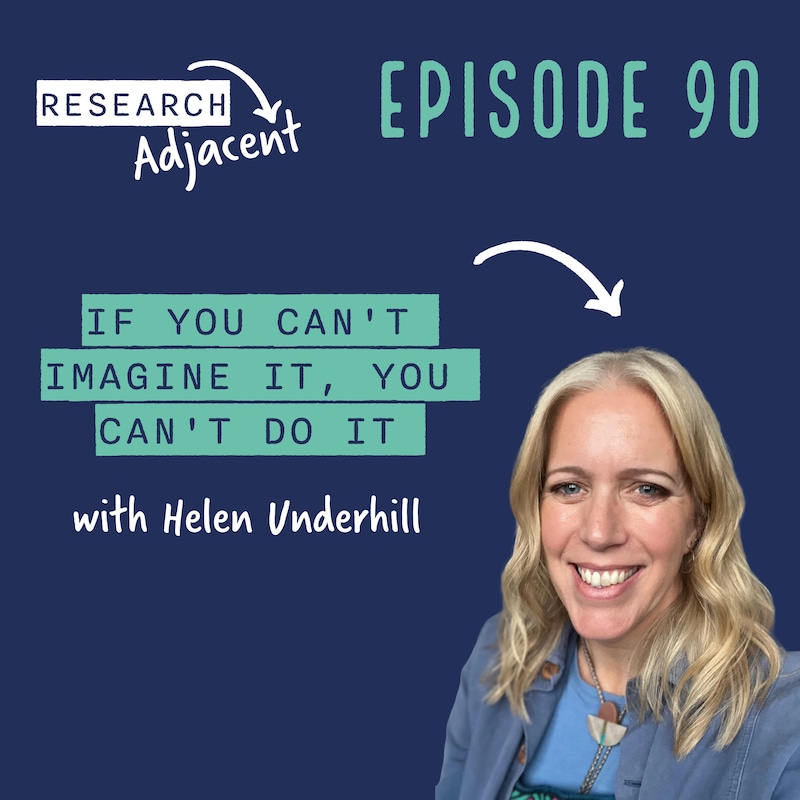
Helen Underhill is the manager of the Research for Transformation Lab at the University of Manchester’s Global Development Institute. She is also an independent researcher working on a variety of social justice and international projects from fire safety in refugee camps to young people and museums.
Sarah and Helen talk about
- What it means to do research for transformation and why it’s a slow process
- Power and politics in global research partnerships and why we still have a long way to go
- Her ‘portfolio’ career which meandered through computer programming, adventure travel and school teaching before landing in social justice research
- How she fell in love with the idea that knowledge can be a pathway to creating change
Find out more
- Find full show notes, the transcript and timestamps on the episode webpage
- Connect with Helen on LinkedIn
- Find out more about the Research for Transformation Lab and Global Development Institute at the University of Manchester
About Research Adjacent
- Follow Research Adjacent on LinkedIn
- Email a comment, question or suggestion
- Leave a voice note
- Post a review on Podchaser
- Sign up to the Research Adjacent newsletter
Mentioned in this episode:
Research Adjacent Directory Member of the Month: Clare Jonas, That Thinking Feeling
What do you get if you cross an academic psychologist with a research communicator? Some amazing skills training workshops! Clare offers workshops which support researchers to develop knowledge and practical skills in three overlapping areas: research communication, taking care of ourselves and each other, and career skills for academia and beyond. They’re based on Clare's professional expertise, lived experience, evidence from psychology and related fields... and love of dad jokes! Find out more at https://www.thatthinkingfeeling.co.uk/
Transcripts
You cannot expect to have transformative impact based
Helen Underhill:on a 12 month research project.
Helen Underhill:That's not how change happens.
Helen Underhill:I just fell in love with the idea that knowledge can be a
Helen Underhill:pathway to creating change.
Helen Underhill:In every single role I've had, it has ended up somehow with me supporting
Helen Underhill:others to bring them up in really achieving what they want to do.
Helen Underhill:It is unconscionable to me that we are so far down the line of knowledge creation
Helen Underhill:and we still confine knowledge to certain identities at the exclusion of others.
Sarah McLusky:Hello there.
Sarah McLusky:I'm Sarah McLusky and this is Research Adjacent.
Sarah McLusky:Each episode I talk to amazing research adjacent professionals about what
Sarah McLusky:they do and why it makes a difference.
Sarah McLusky:Keep listening to find out why we think the research adjacent space
Sarah McLusky:is where the real magic happens.
Sarah McLusky:Hello and welcome to a fresh episode of Research Adjacent.
Sarah McLusky:Today my guest is the remarkable Helen Underhill, who has so many strings to
Sarah McLusky:her boat that I secretly wonder if she has one of those Harry Porter style time
Sarah McLusky:turners, because otherwise I do not know how she is managing to fit it all in.
Sarah McLusky:Helen's research adjacent role is his manager of the Research for
Sarah McLusky:Transformation Lab at the University of Manchester's Global Development Institute.
Sarah McLusky:Here, she's working across a range of projects to explore what truly
Sarah McLusky:transformative research might look like.
Sarah McLusky:Then Helen is also an independent researcher working on a variety of social
Sarah McLusky:justice and international projects.
Sarah McLusky:These range from her specialism of fire safety in refugee camps
Sarah McLusky:to young people and museums.
Sarah McLusky:In our conversation, we talk about how on earth she ended up where she's now
Sarah McLusky:given she started out as an IT programmer at the time of the Y2K millennium bug.
Sarah McLusky:We also explore power and participation in global research partnerships, why real
Sarah McLusky:impact takes time and how change happens through how we connect with people.
Sarah McLusky:Listen on to hear Helen's story.
Sarah McLusky:Welcome along to the podcast Helen.
Sarah McLusky:It is fantastic to have you with us.
Sarah McLusky:I wonder if you could tell our audience a little bit about
Sarah McLusky:who you are and what you do.
Helen Underhill:First of all, thank you so much for welcoming me into this
Helen Underhill:lovely little research adjacent tribe.
Helen Underhill:Every time I put that word out there, people are like, oh,
Helen Underhill:that sounds really exciting.
Helen Underhill:I am just meeting nothing but really lovely, grounded,
Helen Underhill:inspiring, creative people.
Helen Underhill:So I'm very honored to be
Sarah McLusky:Oh, thank you so much.
Helen Underhill:joining you today.
Helen Underhill:So yeah.
Helen Underhill:I'm Helen Underhill.
Helen Underhill:I am based 0.5 in terms of my job at the moment 0.5 of it at
Helen Underhill:the University of Manchester in the Global Development Institute.
Helen Underhill:And I'm leading a new initiative called the Research for Transformation
Helen Underhill:Lab which I'm sure we'll get into.
Helen Underhill:When I say that's my 0.5, it's because like you my week can be
Helen Underhill:very varied exciting, exhausting in all of the good ways.
Helen Underhill:So the rest of my week is freelance.
Helen Underhill:And I make up that kind of time, whether it's through
Helen Underhill:continuing to be a researcher.
Helen Underhill:So I have a fellowship at the moment again through the University of Manchester.
Helen Underhill:I am involved in different projects, so I've just had funding to do a project
Helen Underhill:around participation and moving from participation to global partnerships.
Helen Underhill:I just finished an Impact Accelerator Account.
Helen Underhill:I do, I have a project coming up with Manchester Museum
Helen Underhill:funded by the British Academy.
Helen Underhill:So all of these projects I'm leading, which is really exciting.
Helen Underhill:And then I also do, in my freelance time, I continue my research on fire risk and
Helen Underhill:fire safety from a justice perspective.
Helen Underhill:And that's based on work that I started in 2017 around fire in
Helen Underhill:informal settlements and refugee camps.
Helen Underhill:And from a, yeah, justice oriented and gendered lens across the world.
Helen Underhill:And then I, the other part, I still do lots of mentoring, coaching, ad
Helen Underhill:hoc lectures, supervision support for PhD candidates and things like that.
Helen Underhill:So in any given week, there can be a lot going on.
Sarah McLusky:It definitely sounds like it.
Sarah McLusky:And you really are straddling this boundary, aren't you between research
Sarah McLusky:and research adjacent, and some of the work that you do might fall into
Sarah McLusky:one camp and some of what you do might fall into the other camp, and it just
Sarah McLusky:makes it really clear how tricky it is sometimes to try and put people into
Sarah McLusky:particular categories and job families.
Sarah McLusky:And I know that's a whole saga that goes on in universities at the moment.
Sarah McLusky:So yeah.
Sarah McLusky:Tell us then about, first of all, this Research for Transformation Lab.
Sarah McLusky:What does that role entail?
Sarah McLusky:What sorts of research are you helping to transform there?
Sarah McLusky:Yeah.
Sarah McLusky:Yeah.
Helen Underhill:So within the Global Development Institute we have around
Helen Underhill:70 academics who work on issues of global development, poverty, inequality,
Helen Underhill:sustainability everything from tax in Ghana to agrarian calendars in Kerala.
Helen Underhill:Around informal settlements and urban development through
Helen Underhill:to the charities and NGOs.
Helen Underhill:It's really exciting.
Helen Underhill:And then we have the kind of more theoretical work around the second
Helen Underhill:Cold War and my role, so it's a new initiative that was started
Helen Underhill:just under a year ago on a 0.5.
Helen Underhill:And my role has been to help shape how GDI as an Institute is thinking about our
Helen Underhill:research having an impact in the world.
Helen Underhill:So our slogan is where critical thinking meets social justice.
Helen Underhill:And what's so exciting about that is having been very much grounded in that
Helen Underhill:kind of social justice work, whether when I was a teacher, back in my days when
Helen Underhill:I was an adventure travel tour guide, I like started to see these development
Helen Underhill:issues in practice when I was working in Egypt or working in Libya or Ethiopia.
Helen Underhill:And issues of social justice.
Helen Underhill:And working across the spectrum of GDI with researchers and fully
Helen Underhill:independently getting to think about what critical approaches we can
Helen Underhill:bring to the idea of research impact.
Helen Underhill:It's incredibly exciting.
Helen Underhill:For the first, so for the last year, so it started end of February, 2025.
Helen Underhill:We were really looking internally and I was hosting conversations around what do
Helen Underhill:we mean by research impact what does it mean to do research for transformation?
Helen Underhill:So really interrogating the role of research in illuminating
Helen Underhill:structures and conditions.
Helen Underhill:How should research be contributing to those conversations?
Helen Underhill:How do some of our researchers do that.
Helen Underhill:How have they done that?
Helen Underhill:And the internal conversation culminated in what I call transformation lab week
Helen Underhill:in November last year, where we looked at storytelling, the unintended consequences
Helen Underhill:of the research impact agenda, how you build partnerships and the different
Helen Underhill:roles and personas that academics get into, and a really strong theme.
Helen Underhill:And we actually did a session on it, but really strong theme was
Helen Underhill:about how impact happens slowly.
Helen Underhill:You cannot expect to have transformative impact based on
Helen Underhill:a 12 month research project.
Helen Underhill:That's not how change happens.
Helen Underhill:If we're really talking about transformation being structural and
Helen Underhill:systemic change in complex systems, it doesn't happen in a 12 month project.
Helen Underhill:That was very much the first year and this year we are looking to, I'm
Helen Underhill:currently in a process of consultation of how we build that outwards and how
Helen Underhill:that will help shape GDI's strategic direction for the next few years.
Helen Underhill:So it's really exciting.
Helen Underhill:The fact I get to play around with ideas, I get to have conversations
Helen Underhill:with people across the university and beyond the university and they've really
Helen Underhill:allowed me to embrace taking a much more critical and holistic approach
Helen Underhill:to what research can do in the world.
Helen Underhill:Yeah.
Helen Underhill:So it's been great.
Sarah McLusky:Yeah, it's sounds really interesting.
Sarah McLusky:And it sounds like on paper your job title is like manager, but
Sarah McLusky:that sounds like quite a strategic role that you've got there?
Helen Underhill:Yeah, I think I could have I think we could have
Helen Underhill:gone in and just made it about okay take some of the researchers
Helen Underhill:work and help them to amplify it.
Helen Underhill:But we already have a brilliant comms team, a comms and impact team that I
Helen Underhill:get to sit alongside and work with.
Helen Underhill:They already do amazing work, and it felt like actually this role
Helen Underhill:should be something more than that.
Helen Underhill:I've made that myself.
Helen Underhill:And, because of the various roles I've had before that have been very strategic
Helen Underhill:leadership roles I couldn't, it didn't feel right to me to just sit and go,
Helen Underhill:oh, I'll do something little about this project when actually the remit was run
Helen Underhill:with it and see what what could happen.
Helen Underhill:And I'm hopeful that it will, that, that taking time over really interrogating what
Helen Underhill:transformation means and what the role of research in that then hopefully it can
Helen Underhill:be more and it can have a much more of a strategic contribution to the institute
Helen Underhill:because in this age of global development and the reduction for those people that
Helen Underhill:don't know or have been living in a bucket for the last few years, the reduction
Helen Underhill:in ODA and the reduction in funding available for both projects and research
Helen Underhill:in global development, it's really important that our work does something.
Helen Underhill:At least that for me was a driving question.
Helen Underhill:It's one of the reasons I decided to leave being leave the traditional
Helen Underhill:academic track was that I kept on saying, so all this money and so what.
Sarah McLusky:Yeah.
Helen Underhill:Is all this money spilling around the kind of
Helen Underhill:research world and so what, because I could see some amazing academics
Helen Underhill:working absolutely relentlessly to make small, incremental change.
Helen Underhill:And if we can just amplify and learn from what they do, then that's, we could
Helen Underhill:possibly change things for the better
Sarah McLusky:on a much bigger scale.
Sarah McLusky:You've said.
Sarah McLusky:The institute it's quite new.
Sarah McLusky:Your role's still quite new there, and as you said, this real
Sarah McLusky:transformative change takes time.
Sarah McLusky:But are you starting to see any shoots of what you think are
Sarah McLusky:gonna be really valuable ways of working, ways of collaborating?
Helen Underhill:Yeah.
Helen Underhill:So GDI as an institute has been around for decades.
Helen Underhill:Okay.
Helen Underhill:The Researcher Transformation lab is literally just me
Sarah McLusky:Okay.
Helen Underhill:Sitting within that institute and we, so I, it,
Helen Underhill:we, singular very new, but GDI is a leading kind of voice in global
Helen Underhill:development in terms of its academic and practitioner kind of work for decades.
Sarah McLusky:Yeah.
Helen Underhill:In terms of the shoots that the lab is having.
Helen Underhill:So it's interesting you bring it to collaboration because that's the area of
Helen Underhill:focus that I'm, I am looking at for 2026.
Helen Underhill:All this work internally and the conversations that I've been having
Helen Underhill:within GDI, within the University of Manchester and beyond, it all centers to
Helen Underhill:how change comes down to relationships.
Helen Underhill:That echoes my own research.
Helen Underhill:Echoes, whether it's been in fire, whether it's been in social movements,
Helen Underhill:whether it's in change making and young people, whether it's been in schools,
Helen Underhill:change happens through how we connect with people, and that is the area that
Helen Underhill:I'm really hoping to focus on for 2026 is to really understand the processes
Helen Underhill:and systems that allow for change, that constrain, change that, the way that
Helen Underhill:connections can be used and abused.
Helen Underhill:We have to look at the unintended consequences.
Helen Underhill:We have to look at the ethics and the values of how we create relationships.
Helen Underhill:So one of the pieces of work that I've just received funding for is
Helen Underhill:a project all around moving from participation to co-created partnerships
Helen Underhill:within the global research context.
Helen Underhill:And that is gonna take me into work around co-production, co-creation,
Helen Underhill:equitable partnerships and we have some, we have researchers across the university
Helen Underhill:and within GDI that are leading some really important work in that area.
Helen Underhill:And I'm hoping that through this project we can support them, amplify what
Helen Underhill:they're doing and also extend it into some some work to support people working
Helen Underhill:across the university that are perhaps looking at doing research in global
Helen Underhill:context, but have no idea how to do it.
Sarah McLusky:Yeah.
Helen Underhill:And they need to be doing it right from the start.
Sarah McLusky:Yeah.
Sarah McLusky:Yeah.
Helen Underhill:So equity and the values of how we do that work
Helen Underhill:has to be done from the start.
Helen Underhill:And so I'm hoping that there, that's just one of the shoots that we're working on.
Helen Underhill:Yeah.
Helen Underhill:Very much builds on collaboration.
Sarah McLusky:So Yeah maybe just to expand on that a little bit, for anybody
Sarah McLusky:who's listening who doesn't know much about research as it's done in a global
Sarah McLusky:context, there has been this real pushback in recent years hasn't there around
Sarah McLusky:kind of helicopter, parachutes, whatever language they use, research where you
Sarah McLusky:go in research a community and then the community and then nothing changes.
Sarah McLusky:And the community goes, what was the point of this?
Sarah McLusky:Why should we help you when it doesn't benefit us?
Sarah McLusky:What you're talking about there is this shift towards genuine,
Sarah McLusky:equitable partnerships, but I know that's not without its challenges.
Sarah McLusky:What are some of the big issues there?
Helen Underhill:Oh that's a whole other podcast.
Helen Underhill:There are so many challenges.
Helen Underhill:You go you could go from the kind of macro and it's in how the systems
Helen Underhill:and structures of funding are set up.
Sarah McLusky:Yeah.
Helen Underhill:Where the money sits and resides, how it's released, and
Helen Underhill:then follow that, that through to a community organization that you as
Helen Underhill:a researcher have kind of say that you are partnering with and yet, how
Helen Underhill:long does it take them to get paid?
Helen Underhill:What do they have to do in terms of the bureaucracy to get paid?
Helen Underhill:We have to think about how our systems and structures within the UK
Helen Underhill:institutions that hold all the money, whether it's the university or the
Helen Underhill:donors, the funders, whatever kind of institution it is that holds the money,
Helen Underhill:how they release that what does that say for the relationship and the power
Helen Underhill:structures and the imbalances there?
Helen Underhill:It says a lot about where knowledge resides.
Helen Underhill:And
Helen Underhill:for people that haven't done research in a global context, you have to
Helen Underhill:be much more critically engaged.
Helen Underhill:And this goes back, 30, 40 years really interrogating where you
Helen Underhill:hold meetings when you hold them.
Helen Underhill:Who does it constrain in being part of a project?
Helen Underhill:When are you actually opening up the conversation?
Helen Underhill:We hear a lot of people talk about co-production.
Helen Underhill:But is it actually co-production?
Helen Underhill:When are you actually starting the conversation?
Helen Underhill:Some funders are being much more open to getting that seed funding
Helen Underhill:that allows you to co-produce properly projects and research where
Helen Underhill:the partners define the problem.
Helen Underhill:The partners define the way of working.
Helen Underhill:The partners lay out what for them are the kind of ethics and the concerns.
Helen Underhill:There's been some really important work that takes us there, but
Helen Underhill:we've still got a long way to go.
Sarah McLusky:Yeah.
Sarah McLusky:Yeah.
Sarah McLusky:Are there any examples you can think of, projects that you've
Sarah McLusky:been involved with, where you feel it's just been done really well?
Helen Underhill:It's more the projects that I see within the institute.
Helen Underhill:So, one of our, key researchers Professor Diana Mitlin has done so
Helen Underhill:much work over the last 30 years around really highlighting the kind
Helen Underhill:of power structures involved in work around informal settlements
Helen Underhill:and informal settlement upgrades.
Helen Underhill:The partnerships that have been developed with SDI, so Slum Shack
Helen Underhill:Dwellers International, for example.
Helen Underhill:Where, this is now, the partnership over 30 years has actually
Helen Underhill:led to really mutual learning.
Helen Underhill:Yeah.
Helen Underhill:Mutual respect.
Helen Underhill:But still the university system doesn't get that right.
Helen Underhill:Yeah.
Helen Underhill:And still there are still structures that mean that there is a certain
Helen Underhill:amount of power held within the global north institutions, within the higher
Helen Underhill:education institutions in the UK.
Helen Underhill:No matter how much an individual academic, or a group of academics are
Helen Underhill:really trying to push against that.
Helen Underhill:And that's, yeah.
Helen Underhill:There's still work to be done, but there are people many people working within
Helen Underhill:the academy and with partners that are really trying to do it differently.
Sarah McLusky:Yeah.
Sarah McLusky:It's fantastic to hear that there are people working on figuring it out.
Sarah McLusky:It's very similar people, anybody listening who is in the engagement
Sarah McLusky:world and even within a UK context will recognize the challenges
Sarah McLusky:that you're talking about there.
Sarah McLusky:Yeah, this power dynamic between the big powerful universities,
Sarah McLusky:and I know that when we work in universities, we don't always feel
Sarah McLusky:that we've got that much power, but trust me, within society it's huge.
Sarah McLusky:Yeah.
Sarah McLusky:So clearly the way you're talking about this, something that
Sarah McLusky:you're really passionate about.
Sarah McLusky:How did you find yourself in this work?
Sarah McLusky:You've hinted adventure travel and teaching and all kinds of things.
Sarah McLusky:How did we end up where we are?
Helen Underhill:Oh, crikey.
Helen Underhill:So I guess what I would say is for anybody listening who's at the start of their kind
Helen Underhill:of career and thinking, I really like the idea of continuing to learn, but is the
Helen Underhill:kind of traditional academic route for me.
Helen Underhill:I would say I have what I like to call a portfolio career.
Helen Underhill:Everything I have done has, to me, given an additional layer to
Helen Underhill:all of the things that I have done previously and where I am now.
Helen Underhill:And
Helen Underhill:So when I was my first job as an IT programmer, what?
Helen Underhill:Yeah.
Helen Underhill:And then pretty soon I was headhunted into a role that allowed me to work
Helen Underhill:with the technical teams that supported people on the ground to show them how
Helen Underhill:to relate to people and the actual people who use computers and just to
Helen Underhill:show my age, this was in the Y2K bug.
Sarah McLusky:Oh my goodness.
Helen Underhill:Supporting people who thought that their computers,
Sarah McLusky:everything was the world was gonna end.
Helen Underhill:Yeah, exactly.
Sarah McLusky:So yeah, for anybody who wasn't around at that
Sarah McLusky:time, people genuinely thought like the world was gonna end.
Sarah McLusky:It was a bit mad,
Helen Underhill:they genuinely thought that their computers were going to
Helen Underhill:just explode and turn off as, as soon as we went from 1999 to 2000.
Helen Underhill:So that was like my first job.
Helen Underhill:And then I went backpacking for a year through East and Southern Africa and
Helen Underhill:then along, you know, the Antipodes up through China, Mongolia, et cetera.
Helen Underhill:And I really started to see the kind of inequalities that I knew about
Helen Underhill:and that I had been thinking about.
Helen Underhill:My granddad did a lot of work around the kind of, trade union movements.
Helen Underhill:But it was when you see it.
Helen Underhill:And so that was a decision to make that took me into teaching.
Helen Underhill:So after doing six years doing where I got paid to travel and do that and create
Helen Underhill:those relationships and do the adventure travel stuff, I went into teaching and
Helen Underhill:I started to again, see these structures that when you have a student who's
Helen Underhill:worked and worked and worked and was told that the best they could get was an F.
Helen Underhill:They come out with two D's and the system says, yeah, but
Helen Underhill:you've not got your C have you?
Helen Underhill:And I'm like, but that boy has achieved everything and it's incredible.
Helen Underhill:So again, questioning the structures and the systems and I decided to
Helen Underhill:go out, do my Master's, stayed to do my PhD in learning for social
Helen Underhill:change and social movements at GDI.
Helen Underhill:Absolutely.
Helen Underhill:Just what a privilege to be able to study and learn like when you are older.
Helen Underhill:It's such a privilege and I just fell in love with the idea that knowledge
Helen Underhill:can be a pathway to creating change.
Helen Underhill:I knew quite quickly that the traditional academic route was not
Helen Underhill:really, I am much more somebody who I'm at home sitting in my bank of desks
Helen Underhill:with people not in a closed office.
Sarah McLusky:Yeah.
Helen Underhill:I wasn't gunning to be a professor.
Sarah McLusky:Yeah.
Helen Underhill:There was something just holding me back.
Helen Underhill:I moved to Manchester Met Uni because I was offered a, I got a permanent
Helen Underhill:post, which in academia is elusive.
Helen Underhill:And I carried on my kind of research work around fires because I was, I was asked
Helen Underhill:to go and support a project in Lebanon because of my background in education.
Helen Underhill:And the fire world was new to me, but that was so incredibly interesting,
Helen Underhill:seeing the gender and power and knowledge play out in how people experience
Helen Underhill:access to fire safety knowledge when you live in a refugee camp.
Helen Underhill:That I got to, I really, something hit me to the core, and that's been the area
Helen Underhill:of work that I was developing since 2017.
Helen Underhill:Got a small grant from British Academy, then COVID happened, decided
Helen Underhill:that the, I wanted to take a leap, a risk, and I guess that would
Helen Underhill:be something I would always say.
Helen Underhill:Follow the things that interest you, so I followed that and worked when
Helen Underhill:I worked in humanitarian development practice, both as a researcher
Helen Underhill:and practitioner for two years.
Helen Underhill:And then I saw this job to set up the Transformation Lab and it just
Helen Underhill:felt like it was bringing everything together my interest in research, the
Helen Underhill:global development, the kind of, how do we make research shape, how does
Helen Underhill:research support what practitioners do?
Helen Underhill:Well I was just doing that for the last two years.
Helen Underhill:What role does research have in shifting knowledge and how
Helen Underhill:knowledge can create social change?
Helen Underhill:That was my PhD and my time in education and it all came together.
Helen Underhill:And then one of the organizations I do a lot of work with now is called One
Helen Underhill:World Together, which is re-imagining how global development, charity can actually
Helen Underhill:shift power to community organizations.
Helen Underhill:So I do a lot of stuff with with them, which is all around
Helen Underhill:learning for change making.
Helen Underhill:That's taken me back into schools and it's just everything.
Helen Underhill:You just have to believe that if you keep connecting with people
Helen Underhill:that all of the skills you build over your career, they can, if you
Helen Underhill:want them to really be, rewarding.
Helen Underhill:And hopefully create some kind of positive impact in the world as well.
Sarah McLusky:Yeah.
Sarah McLusky:Yeah.
Sarah McLusky:It certainly sounds like you've pulled all the threads together there,
Sarah McLusky:but goodness me, what a journey.
Helen Underhill:I know.
Helen Underhill:Sorry, that was very long.
Sarah McLusky:No, that's okay.
Sarah McLusky:I love it.
Sarah McLusky:I think it's it amazes me, and this again, is why I think these stories are
Sarah McLusky:so powerful and why I encourage people to share them on the podcast is because
Sarah McLusky:people think they need to have everything all mapped out and often, like very rarely
Sarah McLusky:that I think in the whole time I've been doing the three years I've been doing
Sarah McLusky:the podcast now over three years, I think I've had three guests who had a plan and
Sarah McLusky:followed it through and everybody else has just made it up as they went along.
Sarah McLusky:Yeah.
Sarah McLusky:But it sounds like there that you've been to some amazing places,
Sarah McLusky:worked on some amazing projects.
Sarah McLusky:Are there any that really stand out in your mind as ones that
Sarah McLusky:you're really proud to be part of?
Helen Underhill:There's a lot, but I guess there's a moment that for me, that
Helen Underhill:drives me, it's the reason that I will take my annual leave to do the work.
Helen Underhill:And that is when I was asked to support this work with Save the Children
Helen Underhill:Lebanon and UNHCR, and an amazing organization of volunteer firefighters
Helen Underhill:from the UK called Operation Florian.
Helen Underhill:And so my now friend and colleague Steve Jordan was doing a project
Helen Underhill:with Save the Children Lebanon.
Helen Underhill:That was looking at a train the trainer kind of approach to getting
Helen Underhill:more fire safety knowledge out to different camps across Lebanon in 2017.
Helen Underhill:And I went out to help support them on designing some of the curriculum.
Helen Underhill:To basically try and, look at all the pedagogically how could you
Helen Underhill:actually, 'cause train the trainer models is, they're used a lot
Helen Underhill:within the humanitarian sector.
Helen Underhill:Partly for simply the capacity.
Sarah McLusky:Yeah.
Helen Underhill:It's, you've gotta be able to do more, but in order to do that,
Helen Underhill:you really have to make sure that the knowledge and the understanding is much,
Helen Underhill:much deeper than just impart it and gone.
Sarah McLusky:Yeah.
Helen Underhill:As we know can happen with so much training.
Helen Underhill:So I went out to support them and as we were actually there, there were two fires.
Helen Underhill:We, one destroyed an entire camp.
Sarah McLusky:Oh goodness.
Helen Underhill:And in order to try and understand what had happened, we
Helen Underhill:went to that camp and we were talking to some of the women and it was a very
Helen Underhill:informal conversation, but it became very clear through a translator, one of
Helen Underhill:the people from Save the Children that we were working with, one of the women
Helen Underhill:said the men decide what we need to know.
Helen Underhill:And it really stuck with all of us on that trip because it made,
Helen Underhill:I already, you know, I'd been thinking about gender and knowledge.
Helen Underhill:I'd been thinking about power and who gets to decide who's
Helen Underhill:part of conversations and things.
Helen Underhill:But you saw the very real effects of this in this particular setting.
Helen Underhill:Where these women felt that they were not able to be part of making decisions
Helen Underhill:about fire safety, despite the fact that they were the ones in the home.
Helen Underhill:And that moment is what, every time I think, oh, I've
Helen Underhill:still got stuff I need to do.
Helen Underhill:That's what I go back to.
Sarah McLusky:Yeah.
Helen Underhill:It's about justice.
Helen Underhill:And the gendered racialized and all of the complexities around different
Helen Underhill:social identities and what that means for how fire risk plays out.
Helen Underhill:And when you are thinking about people who have already been through
Helen Underhill:displacement over and over again, and then you lose everything in a fire it
Helen Underhill:really adjusted how I thought about what fire safety education should be doing.
Helen Underhill:And it is about the systemic, it's not about just going in and saying we'll
Helen Underhill:do sessions to teach the women then.
Sarah McLusky:Yeah.
Sarah McLusky:Yeah.
Helen Underhill:It's not about that.
Helen Underhill:It's about looking at the systemic nature of why certain people are more at risk.
Helen Underhill:And that includes why some, in some contexts, men young men, able
Helen Underhill:bodied men may be more at risk because there's an expectation that
Helen Underhill:they should go and fight a fire.
Sarah McLusky:Yeah.
Helen Underhill:Without the, equipment to do so and why certain features within
Helen Underhill:a camp might mean that certain people are more at risk because they don't want
Helen Underhill:to move in to a particular area to do their cooking because of the other risks.
Helen Underhill:So I think it's finding a moment.
Helen Underhill:For me, that still hooks me onto why I do that work in my own time.
Sarah McLusky:Yeah.
Sarah McLusky:And that's a really powerful example, and I think it just shows how everything,
Sarah McLusky:these things, it's very, it is very easy from the outside of any situation,
Sarah McLusky:whatever it is, to just be like, oh, why don't they just teach the women
Sarah McLusky:about fire safety, but then you realize how embedded it is in the culture and
Sarah McLusky:the norms and the way that they live.
Sarah McLusky:And it's only when you really take the time to understand it
Sarah McLusky:that those things become clear.
Sarah McLusky:And I think that applies in lots of different contexts, doesn't it?
Sarah McLusky:But yeah.
Sarah McLusky:Fantastic.
Sarah McLusky:That it still keeps you hooked in, as you say now.
Helen Underhill:Yeah.
Sarah McLusky:So as you know, I like to ask all of my guests what they
Sarah McLusky:would do if they had a magic wand to change the world that they work in.
Sarah McLusky:What would you like to use your magic wand for?
Helen Underhill:Oh, crikey.
Helen Underhill:In terms of a magic wand, I've gone the whole like,
Sarah McLusky:oh, go for it.
Sarah McLusky:It's magic.
Helen Underhill:Oh.
Helen Underhill:So we're actually gonna dismantle the whole system.
Helen Underhill:Okay,
Sarah McLusky:fantastic.
Helen Underhill:And we're gonna rebuild the entire kind of knowledge
Helen Underhill:production, dissemination, creation thing, holding this lens of gender.
Helen Underhill:From a critical perspective.
Helen Underhill:So we're looking at all of the different intersecting social identities.
Helen Underhill:And we're gonna rebuild the system with that at its heart.
Helen Underhill:Okay,
Sarah McLusky:Love it.
Helen Underhill:So if you think about.
Helen Underhill:I still cannot compute that we, in the UK, less than 2% of professors
Helen Underhill:in this country would describe themselves as a black woman.
Helen Underhill:It is unconscionable to me that we are so far down the line of knowledge creation
Helen Underhill:and we still confine knowledge to certain identities at the exclusion of others.
Helen Underhill:So I would dismantle, start again and make sure that all of the different ways.
Helen Underhill:So we need a place for theory.
Helen Underhill:Yeah.
Helen Underhill:Okay.
Helen Underhill:We absolutely need to help retain that space for thinking and deep thought.
Helen Underhill:But we need to look at the way that publishing happens, the way that
Helen Underhill:editorial decisions happen, the way that citations happen, all of that
Helen Underhill:kind of traditional academic outputs.
Helen Underhill:We need to have buildings that allow for connection.
Helen Underhill:I love that I sit in an open plan.
Helen Underhill:Love it.
Sarah McLusky:Yeah.
Helen Underhill:Because I still get a kind of water cooler moment.
Helen Underhill:I don't believe that many academics get that so often.
Helen Underhill:And that's really sad.
Helen Underhill:I'm really glad that I relinquished any of these kind of attachments
Helen Underhill:to a hierarchical title.
Helen Underhill:Manager, director, doesn't matter to me.
Helen Underhill:What's the work I'm doing?
Helen Underhill:So I would, if I could, my magic wand would be to dismantle and start
Helen Underhill:it again and co-create what kind of system we actually need that
Helen Underhill:would allow us to enable critical thinking to meet social justice.
Sarah McLusky:Yeah.
Sarah McLusky:Oh, it sounds fantastic.
Sarah McLusky:I would like love to see it in reality.
Sarah McLusky:Maybe you can create just like a tiny little bit of that.
Sarah McLusky:And then see how it goes.
Helen Underhill:If I can if I can just, so two of the projects
Helen Underhill:that I've got at the moment are all about future imaginings.
Sarah McLusky:Oh, nice.
Helen Underhill:And if you can't imagine it, you can't do it.
Helen Underhill:So it's a fantastic project with Manchester Museum.
Helen Underhill:It's just a tiny little project with the British Academy, but it's all around
Helen Underhill:working with young people and allowing, giving space to imagine the future through
Helen Underhill:what that museum would look like, and it builds on the Carbon Ruins work, but we
Helen Underhill:are doing it from a social relationship.
Helen Underhill:What would the world look like if the things that are wrong in how our social
Helen Underhill:relations are at the moment we're put in a museum because they no longer exist.
Sarah McLusky:Mm-hmm.
Helen Underhill:Can't imagine it.
Helen Underhill:We can't be it.
Helen Underhill:We can't create it.
Sarah McLusky:No, I think that's it, isn't it?
Sarah McLusky:It's these projects, they can feel a bit like pie in the sky.
Sarah McLusky:But actually, unless somebody at some point has an idea of how things could
Sarah McLusky:be different, then nothing changes.
Sarah McLusky:Yeah.
Sarah McLusky:Yeah.
Sarah McLusky:Fantastic.
Sarah McLusky:Oh definitely magic wand granted for that one.
Sarah McLusky:If people wonder if only it was real, I've said that so many times, if people
Sarah McLusky:want to get in touch with you or find out more about the work that you do, where
Sarah McLusky:is a good place for them to find you?
Helen Underhill:So the Research for Transformation Lab is going to have
Helen Underhill:a page within the Global Development Institute at the University of Manchester.
Helen Underhill:You can find me on LinkedIn.
Helen Underhill:I'm very sporadic on there, but I am on LinkedIn, Helen Underhill.
Helen Underhill:And I have a website that is supposed to go live, but that's one of the things
Helen Underhill:that yeah, so with my amazing colleague, Laura Hurst called Looped Learning,
Helen Underhill:and that's all about how connection and looping back and building forward.
Helen Underhill:So I'm hoping that'll go live pretty soon.
Sarah McLusky:Fantastic.
Sarah McLusky:Oh we'll get all the links and put them in the show notes.
Sarah McLusky:People can find them there.
Sarah McLusky:Thank you so much, Helen, for coming along and sharing your story.
Helen Underhill:Thanks so much for having me.
Sarah McLusky:Thanks for listening to Research Adjacent.
Sarah McLusky:If you're listening in a podcast app, please check your subscribed and then
Sarah McLusky:use the links in the episode description to find full show notes and to follow
Sarah McLusky:the podcast on LinkedIn or Instagram.
Sarah McLusky:You can also find all the links and other episodes at www.researchadjacent.com.
Sarah McLusky:Research Adjacent is presented and produced by Sarah McLusky, and the
Sarah McLusky:theme music is by Lemon Music Studios on Pixabay and you, yes you, get a big
Sarah McLusky:gold star for listening right to the end.
Sarah McLusky:See you next time.
