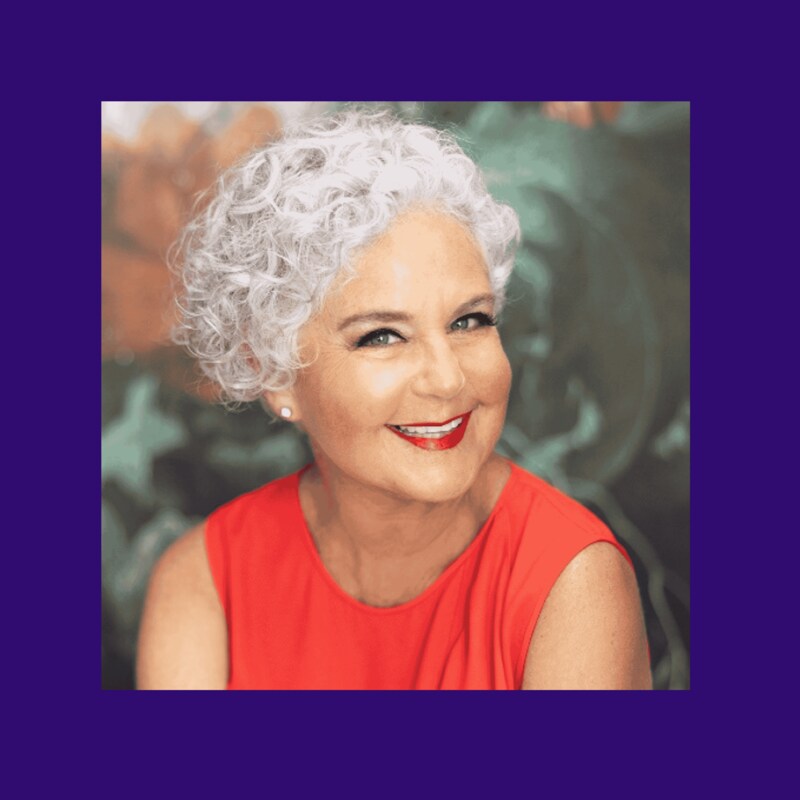
Shownotes
Our discussion centers around the transformative power of personal responsibility and brand leadership, as exemplified by our esteemed guest, Judy Winslow, a renowned figure in the realm of branding and business transformation. With over thirty years of experience, Judy advocates for the critical importance of owning one's journey, emphasizing that personal accountability is foundational to both individual growth and effective leadership. Throughout the episode, we delve into the intricate interplay between art and science in brand creation, exploring how these elements coalesce to foster not only compelling brands but also enriched lives.
Judy's insights are not merely theoretical; they are grounded in a wealth of practical experience, including her successful collaborations with Fortune 100 companies and her role as a three-time bestselling author. Join us as we unpack Judy's innovative 6M model, which serves as a roadmap for individuals and organizations striving to clarify their unique brand identity and achieve meaningful impact in their respective fields. Judy Winslow, a formidable figure in brand leadership and transformation, graces the podcast with her wealth of knowledge and experience. This episode captures Judy's evolution as a brandologist, highlighting her unique approach that merges artistic creativity with scientific rigor.
Throughout the conversation, Judy emphasizes the critical importance of personal responsibility in shaping one's brand narrative. She articulates how embracing accountability can liberate individuals from the shackles of victimhood, allowing them to craft a compelling personal and professional identity. The dialogue further explores Judy's 6M model, which serves as a foundational framework for understanding and developing a brand.
This model encourages individuals to examine their mindset, clarify their mission, articulate their message, explore monetization strategies, define their business model, and ultimately identify their unique magic. Each component is interdependent, creating a holistic approach to branding that empowers individuals and businesses alike.
This episode not only serves as a masterclass in brand development but also inspires listeners to reflect on their personal journeys and the impact of their choices on their branding endeavors.
Takeaways:
- The podcast features Judy Winslow, an esteemed brandologist with a wealth of experience in brand leadership and business transformation.
- Judy emphasizes the importance of personal accountability in one's journey, advocating for individuals to take ownership of their lives and decisions.
- The conversation delves into the intricate relationship between art and science in branding, highlighting how creativity and analytics can effectively merge.
- Judy discusses her unique 6M model, which encompasses mindset, mission, message, monetization, model, and magic, providing a holistic approach to business success.
- Through personal anecdotes, Judy illustrates how her initial aspirations evolved into her current role, showcasing the significance of adaptability in one's career.
- The episode underscores the value of assessments and feedback in understanding personal brand attributes, suggesting that external perspectives often reveal strengths we may overlook.
Transcripts
Welcome back to Trailblazers and Titans, the show where we sit down with disruptors, innovators and leaders who are shaping the world in bold and meaningful ways. I AM your host, Dr. Keith Haney and today's episode is one you will definitely want to lean into.
Our guest today is an absolute force in the world of brand leadership and business transformation. She is known globally as a brandologist, someone who fuses art and science to build not only powerful brands but but also powerful lives.
With over three decades of experience, a 93% success rate, multiple industry awards, and a client roster that includes Fortune 100 companies all the way to visionary startups, she has truly done it all. She is co founder of a marketing firm in New York City, founded TEDx Sarasota, and is a three time international bestselling author.
She's featured on ABC TV, Smile, Jamaica TV and countless podcasts. Please join me in welcoming Judy Winslow to the podcast. How you doing today, Judy?
Judy Winslow:Thanks so much Keith for that beautiful intro. That was very kind. Thank you.
Dr. Keith Haney:No problem. You checks in the mail, so I'm sure that I'm looking forward to talking with you and have a good conversation.
I'm going to ask you my favorite question. What's the best piece of advice you've ever received?
Judy Winslow:I think the best piece of advice I ever received actually it had to hit me over the head more than once and the first time I heard it was many lifetimes ago and it kind of shook me up. So it was that it's time for you to own and take responsibility for your life and your journey like it's all yours all the time.
And the first response was like yay. And then the second response was sort of like oh dang. So I sat with that for a while and then it came up again many years later.
And it now is something that I speak to very often with my people as the first place to start because we have to own our journey or we can't. Then we're being victimized and martyred and we're not really owning what's is and to come.
Dr. Keith Haney:But I like to blame other people for my problems.
Judy Winslow:Exactly. Yeah, I know. That's kind of. That was the O day.
Dr. Keith Haney:I wanna own my mistakes.
Judy Winslow:Like my first, like oh, you mean it's not my parents fault but everything's their fault. What do you mean?
Dr. Keith Haney:That's right.
Judy Winslow:Yeah.
Dr. Keith Haney:Or my best friend who was my best friend till I blame him for it.
Judy Winslow:That's another story, isn't it?
Dr. Keith Haney:That's right.
Judy Winslow:Yeah.
Dr. Keith Haney:So you've Been reputation as being a brandologist. I love that title. Take us back to. How did you discover your gift for merging art and science?
Judy Winslow:I think it's just an evolutionary thing for me because I started out wanting to be a hippie. So I'm a failed hippie. I flunked hippie school. And that's its own little story, which began in university.
I had this idea that I was gonna be a hippie. Cause I wasn't allowed. My parents were very controlling. And so I was gonna be a hippie who made pots. And they went out into the universe.
And somehow that's how I made money. Because money was a big point of arguing and power in my family. It was very traditional.
So my mom had to ask my dad for money, which I found humiliating for her. I have no idea how she held it, but I found it humiliating for her. And it didn't work out because I was lousy at ceramics and making pots.
And that whole dream just. I would say it crumbled, but it never got built in the first place, so it didn't crumble.
But then when I took this design class in college, which was a pretty prerequisite, I got super excited about, oh, my God, everything in our world is designed. Like I.
It just had this complete shift of focus and awareness that I could participate in this world that I was rejecting by going off into this hippie dom and I could actually impact it and influence others through design. And that got me super excited. So that kind of was like the inception of my awareness that art could be applied to all the things.
And then the science has come as my beliefs, if you will, have been repeatedly backed up by science, although not always in the moment, like, we didn't know what we knew, what we now know about quantum field and energetics and the field and just so many things that we just had neural pathways, neuroscience. We didn't have access to any of that. But somehow I had this inner knowing that there was science.
I could feel we were living it, but we couldn't really explain it. And now we can.
And so, because I started out in that area of visuals and graphic design, branding, it had me see that we were consciously creating, designing, deciding what the brand, the business would look like. And I realized that really at the heart of it, we do that with everything.
We do that with what we decide to wear, what side of the bed you sleep on, all the things that we may not consciously do, but we're still actively participating.
And so this whole idea of the art and science, which I came up with many moons ago, which I feel like I need to change because now it's become rather ubiquitous, is something that came to me a really long time ago because it really kind of is this. It doesn't collapse. It's a constellation that works around one another. They're in the same orbit, although they're different planets.
Dr. Keith Haney:I get that.
As a podcaster and content creator, along with my other many roles in life, we always hear that if you want to be good at this particular part, you need to have. You need to clarify your brand. But it's really kind of hard to. I love what you said. Talk about. It's kind of a.
Kind of combining couple things together. But how do you discover what your unique brand is? I mean, I can think I know what my brand is, but how do I know if I'm just like, not sure?
Because it's like it's not a. You can't just like sit down or ask, AI, give me my brand. You have to kind of discover it.
So how do you help people discover what their unique brand is?
Judy Winslow:I love that. So you and I were talking about this before. So both of us are fans of assessments, which is kind of a super quick way to get to some of this.
But I have a number of exercises and processes that I'll take people through that will help us start to get our arms around the language, the values, your personal strengths, how those are infused into your business. So what you just shared about having. Yes, you're a podcaster and a content creator and you have all these other gigs and wear various hats.
I would say that you bring the same brand attributes to all of those. How they're expressed and applied show up differently. But at the heart, you're still at the heart of all of that. Right?
You are the heart of all of that. So what we would look at and what we do look at is what are those attributes that you are infusing into all the things?
And one way to quickly navigate and identify some of those are through things like Gallup Strength Finders via character, Marty Seligman's character strengths, which to me are more values then Gallup strands. Colby, There's a lot of kind of funky, weird assessments that help you with that.
And then I've created some fun, easy ways to also do that for people to identify very quickly what their brand attributes are. And one of them is to ask other people, because often we can't see our own fabulosity. Right. We don't see it.
Dr. Keith Haney:That's true. We don't always see ourselves as fabulous, do we?
Judy Winslow:No, we don't. Very few people do.
Dr. Keith Haney:Tell me, take me back to maybe one of the proudest moments or maybe one of your. You think your greatest achievement, helping someone discover their brand.
Judy Winslow:Mm. Wow. Gosh.
There's been so many stages to that because when I was doing design, it's very different than the way I work with people now to grow and scale.
So it's not that I wasn't helping people before grow and scale, but the emphasis was on their margins, marketing, their structures, the lanes of business that would directly impact their day to day sales numbers.
What I include now that I didn't then as powerfully and as much as part of the overall strategic planning is the leaders, values, beliefs, vision, intentions, strengths, weaknesses, opportunities of the marketplace.
Currently, it's a much more holistic view that when we weave it all together, it allows not only the business to grow, but also the leadership to grow. And one thing that's become extremely obvious to me as I work with companies on the grow is, is how critical their culture and team building is.
So I didn't used to address any of that. So back then, like one of my great. One of our first wins. This is a million. I was like a child when this happened, okay.
But Elizabeth Taylor was my first celebrity client.
And when we helped Elizabeth and her team understand how to launch their perfume and how we could help them, it never occurred to me that like I had something to add to that conversation. So it was very exciting. That was very exciting. It was very exciting to be a part of, to watch it unfold.
Now, I think what's most exciting for me is as I work with people, and I often work with people for longer periods of time, I can see this more obviously than if it's a shorter engagement, is to really see them get it and to see it sink into their bones, into their DNA, so that they not only are expressing differently, but they're more confident, they're more curious, they're more excited, they're more connected to the work. Again, like, to me, that just gets me super pumped up and that gets reflected in their numbers, which of course is always great.
Dr. Keith Haney:Of course. Right.
We were talking about before we came on about different assessments and I have taken so many assessments and I keep looking for one that's going to tell me something different about myself, but it's just basically the same versions of different assessments. And so I'm never surprised by the results. But I am curious for people who just really, I know people who Take assessments and they keep.
Either they don't know how to answer the questions honestly, or they just don't get a clear picture, or they have. They're across so many different places that the assessments aren't really accurate.
Have you run across people who just have a hard time critically answering those assessments because they don't really seem to know who they are? Maybe because they're indecisive about. You know, I like this. But, you know, they ask you something like, do you like doing a lot of tasks?
Oh, yeah, I'm very task oriented. But are you also people. I'm people oriented, too. So it's like you.
Either one or the other, they're kind of like, well, I kind of like a little bit of both. And so if you run across that as you're dealing with somebody with a brand.
Judy Winslow:Yeah, I mean, I run into it, too. I can't remember which assessment. I recently did an assessment, and almost every question I felt like my answer was, it depends.
And I had to say, I don't know what possessed them to word it that way, but I kept thinking, well, it depends. And then I would answer it because it depended. So I don't know.
Normally what happens is kind of what you're saying, that a lot of it is a reinforcement. Like, oh, yeah, I knew that about myself, but I didn't know that about myself.
And then not only did I not get it, but the connecting of those dots to how it impacts how your work life is unfolding, how that applies to you as a parent was not necessarily obvious. Or how you're imposing your beliefs onto your team or children was not so obvious. Like, things like that.
I find that more often than people not understanding how to answer the question, although when they. Oftentimes.
I don't know if you've ever seen this, but I know with Colby, for instance, they say that when you're in that space, that oftentimes it indicates that you're in a transition, so that they suggest that you come back in a few months and take it again when you're more solid. Because we all go through phases where we really don't know. We're just. We're being the goo of the butterfly. We don't have any wings yet.
Dr. Keith Haney:Right.
Judy Winslow:So they're like, come back when you get your wings.
Dr. Keith Haney:So let's talk about your 6M model. I ran across that on your website, and I'm just curious. I love models. I love the things that people do to help people get better at what they do.
So describe for us. What inspired you to create this 6M model?
Judy Winslow:Well, after a few, you know, couple minutes, a few years, a couple decades, I started to notice all these patterns and I feel like they're really. If you. When I started to take my work apart, I was actually at the time building out a year long program because most of my work is very bespoke.
It really depends on the person, where they are, what their goals are, and then that allows me to sort of step in very particularly. But what I wanted to do was build out 52 weeks of content and I started to break down all of these different elements.
And what I found was they all started to fit into these different boxes. And I realized that there was emerging from this, a particular model that when we dug into any one of those silos, we could really have some impact.
But when we looked at how those wove together, how the tapestry was really being created and we employed aspects of each of those different elements, that, that's when we got really powerful. So if somebody has an incorrect mindset, it will greatly impact their marketing, their messaging, right?
Their, how they're monetizing their model probably will not be unique.
They're going to borrow someone else's so that we weren't able to really break through anything until we were able to take on, I mean, most people who are Even in their 10th, 15th year of business are still wrestling with their mindset because oftentimes our mindset reflects who we were, not who we are or even our future self. Right. So if we don't acknowledge that, we are sort of destined to repeat the past.
So for leadership, it's a very big deal to really be conscious of your mindset, always working on your mindset, curious about your mindset, and looking at how can I be and stand firmly in that space. Like I had a client say to me last week, I know we always talk about this stuff and we've worked together for a very long time.
And he said, and I wanted you to know that I can feel the shift. I can feel that I am some of the challenges that are coming up and a lot of people are going through quite a few challenges right now.
The world is chaotic, to put it mildly. And leadership is not easy. It's not easy to run a business.
You have all these creatures, also known as teammates, hold the space for, hold the space for, you know, culture and their stuff and then go home and manage all those personalities and energies. It's not easy. So he, he said, I just want you to know that I, I am noticing That I am different. I am more solid, I am more able.
I am not as stressed out. My heart rate and blood pressure and all the. Like, I can feel in my body that I am coming from a different place. And I can hear it in his voice.
A lot of my calls are not. I know a lot of people are doing zoom calls with their clients around the world and country. A lot of my calls are not on zoom. Kind of 50, 50.
,:And I remember getting on a call and half the people on the class, I had no idea what they were saying. Their Italian accents were so thick or their, you know, Egyptian. I just was like trying to hear every syllable.
It was very challenging, but, boy, did it teach me a lot. Yeah.
Dr. Keith Haney:Wow, that's amazing.
Judy Winslow:So I love it.
Dr. Keith Haney:It makes. You have to listen.
Judy Winslow:It makes me.
And it's kind of like, you know, we think it's so hard, but then think about your best friend or your mom calling and they say, hello, and you say, what's the matter? Like, you knew, right?
Dr. Keith Haney:You could hear things.
Judy Winslow:Same thing. I can hear when my people are stressed. I can hear when they're not in their body.
I can hear when they're freaking out, and I can hear when they get it, when they're solid and when they've shifted. And it's just. Nothing makes my heart happier.
Dr. Keith Haney:Yeah, I do think we lose something in video calls. Cause I think we're. We're distracted by the fact that someone's in front of us.
And I think I got used to the idea that, well, the video kind of replaced the in person thing because calls were different. You're right. When you're on a phone call with someone, you have to be more intentional in listening.
But if you're on a screen like you are all day long, your mind wanders, or you open another window, it's so easy to just check out and, well, I'll record this later and I'll go back and see if I missed something. So I can see how it makes a difference if you're not watching someone face to face.
Judy Winslow:But it's all sorts of things. Like, I'm like, oh, who's that guy? And who's that cute little person in that picture back there? Like, oh, is that dirty laundry I see?
Or you Know, oh, their dog just walked in or whatever. And. Yeah. And there's something about having to tune into someone's voice.
I also find that for a lot of us, I don't know if you're like this, but I am. When I'm on a call and I get really in it, I start to pace and I just put my head down and I just tune in.
You can't do that on a zoom call because that's disrespectful.
Dr. Keith Haney:Yeah, it is.
Judy Winslow:It's just a different. It really is a different behavior and it asks something different of us as a result.
Dr. Keith Haney:Interesting.
Judy Winslow:It is interesting.
Dr. Keith Haney:See, I learned something new just talking to you today. So walk us through briefly each of the six M's and how are they connected to one another?
Judy Winslow:All right, so we just sort of touched on mindset. Yes.
Dr. Keith Haney:Yes.
Judy Winslow:Okay, so which one would you like to do next?
Dr. Keith Haney:You pick.
Judy Winslow:So for me, it's mindset and then mission. I'm just going to list them out. Then it's your message. Right, but then how are you monetizing that? So that's one.
And then what is the business model for you to express that? Because doing it the way it's always been done is not necessarily the way to the finish line for your business.
And so many of the businesses now that we're exploring, there is no precedent. We are kind of creating, I call them peanut butter cups. A really awesome coach. Her name is Andrea J. Lee, and she used to work.
Oh, God, she's fabulous. But a million years ago, there was this guy named Thomas Leonard, and he's kind of attribute attributed with coining the term coaching.
And Andrea used to work with him. I love her. She's amazing. So what do we not have on here? So she spoke about that. So it's chocolate and peanut butter, and then we make something new.
It's a peanut butter cup. So are you able to do that? And then how are you going to market that? And then the last bit, that is your magic.
So we can talk about all of these items, but when we add in your magic, that's when it really reveals your recipe for success.
Because when we're not working with your strengths and your magics and your point of view and the breadcrumbs from your journey, we don't really have the full picture. And a lot of that spice, if you will, is infused through your magic. So that's your magic. So now I'm going to go back to mission.
So that's really your. Why, like, why are you Doing this.
So I already shared with you that one of the things that was a big turn on for me is oh my gosh, this is how I'm going to change the world. This is how I get to lift humanity and make a difference. And impact, which was always a big deal for me, was making a difference and having impact.
No idea why. It's just like.
But now actually with things like astrology and human design and enneagram stuff, all of those woo woo things, it actually I'm wired for that. I'm wired to contribute and make a difference.
So I think that's hysterical because I didn't know that your message, your message is really important for your brand. Some people will use it as a tagline, but it's more than that. It's more than that message. It's not what's under your tagline?
How do you connect your message to your why to your client, to your model? Like it's job. It's quite heavy lifting.
So as we build out your messaging, one of the things I would have people do if they, let's say you had to go to a BNI meeting every week, which by the way to me are so boring. I do not like them. However, a lot of us are doing that sort of thing, right?
We're networking and we're meeting people and you can't say the same thing to all the people. So I would have people come up with 52 ways to share about their business and I would share it like this. If you're, if I, I used to go skiing a lot.
I love skiing. I live in Florida now so I don't ski too much.
But when I would get on a ski lift and some, you know, inevitably people would say, hey, what do you do? Where are you from? What do you do?
Well, I'm going to answer a 10 year old differently than I am going to answer a guy in their 40s than I am going to answer a grandmother in her 80s. Like we don't to just whitewash that. Everybody's going to be the same all the time in all the situations. That's not fair. So we have to get.
That's part of your creativity. How can you creatively share what you do so that it lands with the listener? Because that's really our job.
Our job isn't just to speak, it's to be heard. So how will our messaging do that,.
Dr. Keith Haney:I wonder?
As I look at your list of M's here model, is your model kind of like the skeleton of what you're Doing what you're trying to monetize, because that seems like that's the. The bare bones of what you are.
Because it's not your magic and it's not your message, but your model may be the delivery mechanism that you use to get your message out. Am I?
Judy Winslow:Yeah. So in. In the law business, right, how you interact with an attorney is something we've all come to expect. But how could we.
My question is, how can we change that? How can we make it more fun, more inviting? There are places where I remember there's a man named Dan Kennedy who was like an OG marketing guy. Very.
I call him curmudgeonly. He was kind of like this grumpy old man kind of guy. But he was very well respected in the marketing world.
And one of the things, like I remember very clearly him sharing about, he would create. He was one of the first to come up with a premium model. So, for instance, there's a pizzeria down the street and they serve pizza. Is it amazing?
It's pizza. We actually have an amazing pizza place here.
But I don't mean that he came up with a way, and this is back in the day when pizzas were like seven bucks, they might have even been less. They were not expensive, which is why everybody was always buying pizza. Super affordable way to eat.
He came up with a pizza club for this really far out pizzeria in like the outskirts of Syracuse, New York. Right. So it wasn't in some metro area. It's like in the burbs. Not very well positioned. Anyway, he came up with this premium pizza club.
And to join the pizza club was like 50 to 100 to 150 bucks a month for pizza. That was like seven bucks. And people were like, that'll never work. You can't do that. Well, they did it. They had this premium offer.
And for that you would get like the pizza of the month or you would get. I don't even remember. But he came up with these. It was basically a membership before, memberships were memberships and as ubiquitous as they are now.
So he created this model using pieces from other industries to create something very powerful in an industry not known for that sort of model. And so that's what we look at, is how can we make your model so unique? Because there's so much now where people are doing price comparisons.
So it's very important, I believe, to create a space where there is you. There is no way to do that. It's apples and horses. There's just. There's no Way you can't. So you don't want to be.
Because if you were just saying it's this or that, now you've become faceless and nameless and not special. And I believe that every business is special.
We just have to figure out where is your specialty, and then how do we convert that into a model that serves you and serves the client and serves all your mechanisms so that everyone wins and you're providing a service that no one else is. That's what makes your brand stand out.
Dr. Keith Haney:As I look at these, it doesn't seem like there's a particular order of the M's. Would you say there's an order that you need to follow to do this, or it just kind of depends on your personality, your brand, your magic?
Judy Winslow:Yeah, I mean, just like you just said. So we may start with the monetizing or modeling, you know, the model and monetizing a lot of times.
So I remember working with someone and they had this particular financial goal they wanted to reach. Okay, so how many sales? So most people, they come to me because their sales have gone flat or they've fallen off.
They're just messy, and they think they either need a rebrand or there's something not right with their brand. But when I ask them about, okay, well, let's look at, how's this sales stacking up? What do the numbers tell us? They want to focus on the numbers.
And the first thing I do is we will assess the numbers, we will look at the numbers, and we will see what the numbers are telling us. But it's not where our focus is. By that I meant he said, I think if we got another 12 to 14 sales this year, we would meet our numbers.
And I said, really? What's your average sale? And he told me, I said, well, have you. This is a really smart person, by the way. Really, really, really smart.
I said, have you done that? If we do this times that it does not equal what you're saying. We would need actually 64 sales, not 12. And he was like, oh, that's the reality.
So then we have to look at, okay, what are we offering that will start to either increase our average sale, right? We start to look at all these different aspects so that now we know, okay, this is what we really, really need. Am I the person?
A lot of times when I work with founders, I work with a lot of founders. So they're the person that came up with this great idea, and they started doing the great idea, and everything was great until it wasn't.
And Then they're like, oh, what happened? Like this worked last year.
But because everything changes so quickly in today's world, we really have to be quite fast on our feet and flexible, which is why I like small businesses, because they can be. And he realized, wait a minute, I'm not really the person. I have my own sort of ceiling. Like, can I ask for a $5,000 sale?
Can I ask for a $10,000 sale? What will happen when I'm in a room? And really what they need is a 20k solution. Can I speak that? And the answer was actually no. So he.
His first hire was a salesperson. Changed everything.
Dr. Keith Haney:Wow, that's smart. As you think about implementing this in an organization, what's the most challenging things organizations face? Implementing the model,.
Judy Winslow:I think the most challenging. Oh gosh, they're all challenging for me.
They're actually come a bit out of this in that when I speak about market and marketing, we have our market that is our end user, right? But we also have our market, that's our team. And then we have marketing that is to our end user, but then we also have marketing that's to our team.
Because if we can't have everyone inside buy into whatever it is we're up to, we've already kind of lost the battle. So there's different ways to play with this.
One of the things I love to do, and culture is such a big deal because it's very challenging to build a team. It's very challenging to manage humans. We're not easy creatures.
And it's very challenging to do all of that while you're trying to grow your business. So I think empowering our team is such a critical aspect for them to be in touch with.
What is their mindset, what are their values, what would actually fuel and feed them? Because we're now here asking them to feed and fuel you and your vision. Well, what's their vision?
So doing some of this deeper work with them is very useful and keeping that team as a cohesive unit, to me, that's the hardest part of larger entities is really how are we enrolling and establishing self leadership within our own teams. Like years ago, I worked for a restaurant. Actually, I had never.
My ex husband owned a restaurant, but I had never really been a part of it except for like parties and off items that I would assist with. I would work the door or take money or I don't know, whatever. And I worked for a couple restaurants down here, which I had never done.
And the restaurant that was the most successful treated Everyone inside. As an entrepreneur, we all had authority over our tables. If someone complained, we could decide how to rectify that.
Buying them a drink or a dessert or whatever it was. And I found that the way they empowered their employees really made a difference for the energy, the.
The way that people were welcomed into the restaurant versus other places where I had worked, where we had no authority, where we were treated like children, where we were.
The expectations were very specific and measured, and it really kept people very stuck and kind of kept their wings clipped and didn't acknowledge them for the power, the influence, and the. The beauty that they were as first line for the humans to encounter. So there really makes a difference when you empower your employees.
And so we use this to empower them as well and include them.
Dr. Keith Haney:Interesting. So I'm gonna ask you this question. What's your why? What wakes you up in the morning?
Judy Winslow:Well, that's what I said earlier, like, making a difference. I don't know where I got this, but somehow making a difference to me is, like, a really big deal. I feel like if everyone on the planet.
This is so Pollyanna, so excuse me in advance.
Dr. Keith Haney:Well, you are. You are a recovering hippie song.
Judy Winslow:That's true. T7. Rock and roll. But it's true.
Like, if everyone on the planet really made that their mission, like, okay, I am here to make a difference and lift others, I think the world would be a really different place, and I'm here for it.
Dr. Keith Haney:There you go.
Judy Winslow:That is my. Why.
Dr. Keith Haney:So your dream person to collaborate with would be who if you had that.
Judy Winslow:I love that you asked that.
Dr. Keith Haney:Dream collaboration.
Judy Winslow:I don't know, but I'd really like to find out. Like, I would like to collaborate with everyone. I think collaborations are so fun. I am not that person on, like, I'm not competitive.
I am not like you. I want everyone to win. I think we should all be happy. I don't think everyone should get a trophy. I am not in agreement with that.
But I do think that we should work together to make things better. And, like, whatever that is. Whether, are we having a better dinner party? Are we having a better tennis game? I don't want to crush anyone at Monopoly.
I don't care. But I would like to collaborate with everyone. And I don't know. I don't know who it would be.
It might be someone honestly in fashion or the interior design world, because I just. I love beauty and I love impacting spaces. I just think it's so cool. So if I could come together with all of that, that Would just be mondo fun.
Dr. Keith Haney:I'm okay if people finish second. I really am.
Judy Winslow:No, but I don't want to finish second, by the way. Hello. And I want to win. I just don't want to compete to get there. I just want it to occur. I don't know.
Dr. Keith Haney:There you go.
Judy Winslow:I don't know how that works.
Dr. Keith Haney:So on the show, we have a new thing, a surprise question. Pick a number between 1 and 10 for your surprise question.
Judy Winslow:5.
Dr. Keith Haney:All right, let's see what you got here.
Judy Winslow:Drumroll.
Dr. Keith Haney:Would you rather have unlimited sushi for life or unlimited tacos for life?
Judy Winslow:Oh, that's so hard. I would like both, please. Is the sushi going to be fresh every day? I have to pick one. Can we have sushi tacos? Yeah.
Dr. Keith Haney:No, you have to.
Judy Winslow:This is the world I live in. We are making stuff happen, and it's just going to be how we like it. Sushi tacos? Yes, please.
All right, I'm going to say tacos because I make them at home. Apple toy.
Dr. Keith Haney:Okay, there we go. If you could coach someone who's younger but wants to get into what you're doing, what advice would you have?
Judy Winslow:So somebody asked me this a couple years ago. I was at a party, and I was talking to a younger person, and she asked me what I did, and then she said, well, how do you do that?
Like, how does that even happen? And I said, first of all, it's a surprise. Like, I had no idea I would be doing this in my life. I wanted to be a hippie, remember?
But it really is evolution.
So where I started as a graphic designer and where I am now, where I'm not physically really much designing, I do some of my own graphics, but mostly I'm in the advisory, strategic planning space and creating culture. I would never have imagined I'd be doing this. So my advice is really, do you pay attention to the clues? Because universe is always sending clues.
And look at what are the. And this is part of the process I do with my people. What are the opportunities right now? Opportunities are always coming and going.
What are the opportunities right now that will help move you into the direction of your dreams? Which, PS Are usually not static.
For most of us, we don't think when we're little and we're five and we want to be a fireman, that we always want to be a fireman or a doctor. By the time we're 10 now, we want to be a vet, right? By the time we're 15, we only want to work with dogs by the time we're 25. Right.
So can you see there's an evolution. So part of it is, how are you leaning into your evolution? I am someone who. I follow my heart. I really can't say that any of this was.
I wouldn't not say call it strategic, but planned. What I do is I try to make the most of where I am currently, which is, I think, different from. How do you get to do that?
Dr. Keith Haney:Right, Exactly.
Judy Winslow:Yeah. Well, I would love to hear how you would answer that, sir.
Dr. Keith Haney:Well, you know, for me, because I felt I had a calling to do this, and it wasn't something that I had ever planned to do. So I say, listen to your calling.
And like you just said, ask people around you, do you see this gift in me or these certain gifts that I possess, and how do I best use those gifts and those abilities to make a difference in the world?
Judy Winslow:So, yeah. And honestly, that's how I don't try.
Dr. Keith Haney:To plan out life. Yeah, that doesn't work well.
Judy Winslow:It doesn't work well. I did not know anything about the word coaching or the world of coaching or consulting or any of this stuff.
And many years ago, it was around 98, 99, I was sharing with one of my. At that time, I had like all these different jobs. And one of them was I was a receptionist. Like, good morning, abc. How are you?
How may I direct your call? And one of my clients used to take me out to lunch, which was very kind. He knew I didn't have a lot of money.
And he started sharing with me something very personal, which he had never done before. And I helped him with it. And at the end, he said, you know, you're really good at this. You should do this for a living. And it was interesting.
Cause that day I had a list of, here's what I think I should be doing with my life. And I wanted to get his opinion. Cause he was a very successful businessman.
And I wanted to get his opinion on which direction he thought I should pursue. And that's what came out at the lunch. And just like the week later, I was telling that to someone, another friend. And she said, you know, you're so.
You are. You're so. You help me all the time. I think you should become a coach. And I said, what's that? And I went online and I found out what it was.
And I was enrolled in coaching school the following week. It turned out that a guy that owned one of the largest coaching schools at the time lived in my town.
And I reached out and I got to meet him and I just signed up.
Dr. Keith Haney:Wow, that's amazing. Where can people find you and connect with you on social media?
Judy Winslow:So I am mostly I'm on Facebook Judy Wins. I am on insta@jwinsceopro. You can always DM me and I'm on LinkedIn a lot so I'm also Judy wins on there and I'm always available to chat.
I love meeting new people and I invite anyone to reach out.
Dr. Keith Haney:Well, Judy, thanks so much for sharing your story, your bright shining light in the world and making a difference. So we encourage people to reach out to Judy and really listen to get some help for her and all that she can provide.
It's been an honor having you on Trailblazers and Titans. Your insights into brand leadership, your decades of wisdom and the heart behind everything you do truly elevate our conversation for our listeners.
If you want to connect with Judy, work with her or dive deeper into her books, talks or brand leadership programs, check out the links that'll be in the show notes. Today's episode inspired you. Please subscribe, leave a review and share with someone who is building something meaningful.
Until next time, keep blazing trails. Keep building boldly. Keep stepping into a life that you were meant to lead. Judy, thanks so much.
Judy Winslow:Thank you for having me. Keith.





