Shownotes
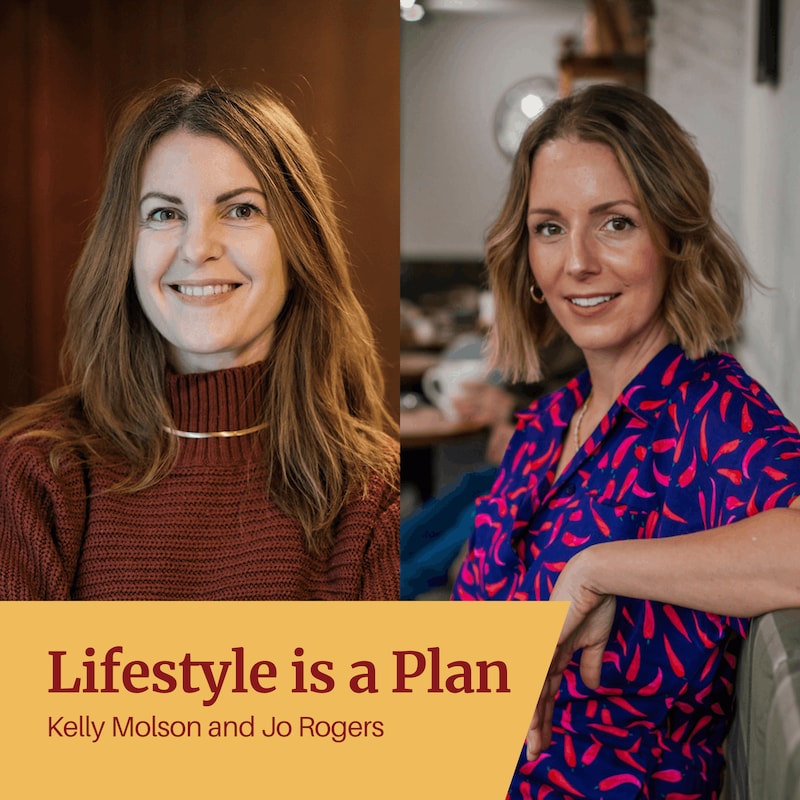
In this episode of Lifestyle is a Plan, Kelly Molson is joined by Jo Rogers, founder of Client Success Matters.
Jo Rogers brings over two decades of experience across agency and client-side roles, helping agencies strengthen client relationships, retain and grow accounts, and build high-performing Client Services teams. She has led the growth of two major independent agencies and built a Client Services department from the ground up.
Through consultancy, training and mentoring, Jo works with agencies and Client Services leaders to elevate the role of client service from reactive delivery to a strategic growth driver. She designs and delivers practical training programmes that help teams become more commercial, proactive, strategic and confident in how they manage and grow client relationships.
Alongside working directly with agencies, Jo also supports Client Services Directors through consultancy and one-to-one mentoring, helping them sharpen their leadership, elevate their teams and navigate the pressures of the role with confidence. Jo’s approach combines practical agency experience with a strong focus on long-term client partnerships, commercial growth and creating client experiences that make agencies difficult to leave.
Now, some of you listening may not have dedicated account managers - don’t let that put you off.
The advice in this episode has been tailored for if you as the founder carries out that role, or you have team members that have been hired with a particular skillset, but also need to account manage clients alongside.
Your client has 8% of their working week to spend with you, so what are you doing with that time?
You’ll discover:
- The first aspects to consider before mapping out a client success process
- What a great onboarding process looks like
- How we show clients consistent value and impact
- The best way to move to a trusted advisor / partner role
- How to grow an account without over-delivering
- Ways to teach your team to spot opportunities
- Retention strategies - how to track client health and pre-empt churn
- Jo’s advice for hiring your first dedicated account manager
Guest details
Website: www.clientsuccessmatters.co.uk
LinkedIn: www.linkedin.com/in/jorogers-marketing-consultant
Podcast recommendations:
Confessions of an Agency Owner
Discussion points:
www.uptothelight.co.uk/what-clients-think-report
www.thewowcompany.com/benchpress
Brought to you by:
Lifestyle is a Plan is brought to you by me, Kelly Molson - an agency advisor on a mission to support solo founders build the agency they want. I’m here to show the agency world that ‘lifestyle agency’ is not a cop out. It’s the future of our industry’s sustainable growth.
You can join my Lifestyle is a Plan newsletter at kellymolson.co.uk
Subscribe wherever you get your podcasts, leave a glowing review and share it with your founder friends.
Edited by Steve Folland. stevefolland.com
Transcripts
Kelly Molson
Jo, thank you for coming to join me on the podcast today. I'm so excited to talk to you.
Jo Rogers
It's a pleasure. Thank you very much for having me.
Kelly Molson
Super welcome. Right, we're going to start with a couple of icebreakers. I want to know, what is the best holiday that you've ever been on that we should all go to?
Jo Rogers
Oh, that's such a good one.
Jo Rogers
It probably was a safari in Kenya. We did the proper safari in the cars, but actually we also did a safari on foot where we camped, and that was super cool. So, we obviously had a little team around us, but we had one guy taking us through, so we were on the level of the animals walking around. And then in the evenings, you camp in your tent, and then you could hear them all around the tent and things like that. So, that was very cool. It was a real experience. It was that mixture of adventure, but also something lovely to do because I love being around animals. So yeah, that was probably my most amazing, but yeah, I've done a lot of traveling and backpacking and all of that sort of stuff. So yeah, that was probably it.
Kelly Molson
That sounds incredible actually. The idea of being on foot, that takes it to a whole different dimension, doesn't it?
Jo Rogers
Yeah, it was. And actually, in fact, one night, we stayed on top of a huge rock and slept outside, but they put down a mattress, and we slept underneath the stars on top of this rock, which was incredible. Yeah.
Kelly Molson
My God, that's like once in a lifetime kind of thing, isn't it?
Jo Rogers
Yeah, it was incredible.
Kelly Molson
All right. Good. Okay. Holiday, tick-
Jo Rogers
chuckles
Kelly Molson
... on my list. When you were at school, can you remember what you wanted to be for a job?
Jo Rogers
God, I don't. Do you know, it's so funny you say that. I've been talking to my son about that, and I think back to my time at school, and I'm like, "I don't know what I wanted to be." I think my dad was, although he had a steady job, he was very entrepreneurial, and he always had little businesses. He always had little things going on, and I think that was just always something that I just knew I was going to do, have businesses. I've had loads of businesses through my years of working. I actually dropped out of uni after two years because it just didn't work for me personally. I was so desperate, which is so ironic, so desperate to work. And as soon as I came out, I set up a tennis coaching company.
Kelly Molson
Oh, completely different. Wow.
Jo Rogers
Yeah, completely different. So I just wanted to go, that was just always in me. I just knew it from early on. I just watched my dad do little things. And none of the stuff that he did, bless him, was ever particularly successful, but he just had that entrepreneurial spirit about him, and I've taken that through. And yeah, loads of little businesses along the way that I've done, alongside, obviously, the work, the marketing that I've done.
Kelly Molson
Yeah. I love it. I genuinely didn't know that about you.
Jo Rogers
Yeah.
Kelly Molson
So this is what my next question is. Tell me what your agency experience is and how that's brought you to what you do now, which is Clients Success Matters. But it feels like you've been on a bit of a wiggly journey. I love it.
Jo Rogers
Well, not really, because I always did them alongside it. So I have actually been in marketing agencies for 20 odd years now. So that's always sort of been my stable, always worked in that. Sort of fell into it, to be honest. I didn't really know what I was doing, and someone said, "Oh, look, there's an account exec role in my marketing agency that I'm working at. Do you want to come in?" And I was like, "Well, why not?" And actually, I stayed in that agency for seven years, and I loved it. It was an events and marketing agency, and I was flying around the world, and Oracle was my biggest client, and I grew it from a single stakeholder to a multimillion-pound global account. I just thrived in that sort of environment. It was amazing.
Jo Rogers
So yeah, so 20 years doing that. And in that was a mixture of agency, and I went and did self-employment for a while and actually wanted a little bit more grassroots marketing experience of working with smaller companies. And then back to agency again. And then I actually went client side for a few years over at Fujitsu to kind of get, kind of as everyone does, try the other side of the table, see whether I enjoy client side. I'm personally an agency person. I sort of did default back to it. But it was a very good experience for me to be able to see what it was like from the other side of the table, build a lot more empathy for clients, and also see what it was like to receive things like pitches and proposals from agencies, and actually see what we actually really want to see and understand, and what really feels like a very templatized... a proposal being sent over and things like that. So it gave me a really great perspective, being able to be on the other side of the table.
Jo Rogers
And off the back of a redundancy, which I think sometimes is the thing that always kicks people. A lot of people get to that point, and like I said, I've been doing this for 20-odd years, and in the agency that I was in before, they didn't have a client services department. I'd been brought on to set it up and decouple what was the strats. The strats were doing a hybrid role. And one of the process of going through that, I had to audit what was going on within the agency itself, why there was churn within the agency, and looking at the processes, et cetera. And I really loved that.
Jo Rogers
So when the redundancy came, it gave me a point of just stopping and going, "What do I really want to do?" Because I want to add value to every interaction that I go into, and where do I thrive and where do I get that enjoyment? And actually, it's that first initial bit, that first piece where I go into an agency and actually look at that client experience, look at how they're set up, look at the team, how can I support the team, how can we upskill them? Because the reality is, is that 20 years ago when I started this, all the client services people were marketeers. They were CIM qualified, their marketing degrees. I didn't. I came in at the bottom, but because I was working in and amongst them, none of this remote working anymore, I learned by osmosis. I had time to go to conferences. I learned everything on the job. Whereas we're not in that situation anymore, unfortunately. We're in a situation where the client services team are so dragged into delivery that they are not either being given the tools, the frameworks, the training to actually step into what needs to be a more strategic marketing role. And I think that what happens in a pressurised industry, which is what we're under now, if you lose a couple of clients, there becomes this very high pressure to sort of push on that team to then sell, and that horrible word of selling and pushing without actually realizing whether there's need there in the first place.
Jo Rogers
So I set up Client Success Matters to start to educate agencies and to support agencies on setting that function up correctly. And whether you have that function or you don't have that function, equally for smaller agencies as well, it's still equally important, even if you don't have a team, to be able to know how to retain those clients, how to grow those clients, what are the steps that we need to take, and how to move yourself away from being seen as a very transactional agency. Because it's those agencies that are going to struggle in the industry that we're in at the moment.
Kelly Molson
Yeah, I totally agree. I think client retention is key right now with the current economic climate that we're in. I really love how you frame that, actually, Jo, because that's what we're going to talk about today. So we're going to talk about retaining and growing client accounts, but we're going to talk about it from the perspective of the smaller agency. And I think why this is important is that, one, our audience does consist of kind of lifestyle agencies, often on that smaller side, some of which are not going to have dedicated account managers.
Jo Rogers
Mm-hmm.
Kelly Molson
And I think in some cases, that role is either still going to be the founder, or they might have team members that have been hired as something, you know, a brilliant copywriter, but they also need to manage client accounts as well. And so I think that it's important to kind of frame that that's how we're going to address answering some of those questions today with that in mind.
Kelly Molson
Because I think sometimes account management can be seen, especially by the smaller agencies, as a bit of a luxury, a luxury role that we can pull in eventually, when we're big enough. But that role still has to be addressed regardless of size, right? Somebody still has to take some level of ownership of it.
Jo Rogers
Yeah, absolutely. I think people forget that we talk about account management, and an account manager could be a hybrid role. And it has to happen, whether it's just the founder or whether it's passed to someone who's doing the technical and the account management, but someone's got to do it. So it's really important. Whoever it is needs to understand what it is that they need to be doing to satisfy those clients effectively.
Kelly Molson
Yeah. And the first part of that is, what does that client success process look like? So what are the kind of first aspects a founder needs to consider when they're starting to map out their client success process?
Jo Rogers
Yeah. So I think the important thing is to not straightaway overcomplicate it in the first instance. It's very easy to start putting processes in place, and actually, particularly for smaller agencies, you can overcomplicate a little bit. But equally, clarity is also really important. So then the first thing that you've really got to do is understand actually what it is that your clients are wanting from you. What are they actually buying from you? What are the pressures that they've got internally? What does a great relationship look like from their perspective?
Jo Rogers
The reason why I say that is that I've got certain agencies that I work with, smaller agencies that I work with, and actually the clients see them as partners, but they just want them to be what I would consider transactional. I need you just to deliver on what I ask you to deliver, essentially as an extension of the team. Deliver on what I ask you to do it within a certain timeframe. You're super agile, you're super nimble. That's why I love you.
Jo Rogers
So I think that for those nano agencies, those smaller agencies, it's being able to be really clear on why have you been chosen over other agencies, and why are clients staying with you over other agencies? Because it could be some of the things that I talk about and you're going, "Well, that's disparative to what my clients seem to love from me." So don't get too caught up in what the bigger agencies need to do and have to do because there is probably a reason why they've gone for you as a smaller agency in the first place.
Jo Rogers
So important to really understand that piece so that you can set up your client's success based around what it is that your client actually wants and needs from you. Now, I'm always going to caveat that with, don't step into a transactional mindset with them. Just because you are an extension of the team or you're delivering on deliverables doesn't mean you can't add value, it doesn't mean you can't be strategic. But it's being clear on what it is that the client is buying from you and how they want you to work with them.
Jo Rogers
And then you need to think about who owns that relationship. So is it you? Is there another person? Who owns that delivery? Who owns growth? Who owns that communication with the client? Be really clear on that. It's also really important to think about your clients as well and segmenting them. So it might, again, seem a little bit too much, and again, it will depend on your agency and how many clients you've got, but not every client needs the same level of attention that other clients do. So if they are a big growth client for you, there's business units or regions or opportunity there for you to grow into, then they obviously require a different level of servicing. And then those smaller clients of yours that maybe they're maybe a family-run business, or just smaller, they're still important to you, but they don't need the full big client experience.
Jo Rogers
So just really understanding your clients, understanding what they need from you, and understanding how to segment them in the first instance is the most important thing to do. And then you want to start mapping out what that client experience looks like. And always think about your client experience from their first impression of you. So that means your website and when they're looking at your socials, making sure that everything completely aligns. Because I think a lot of people think about it from the time that they signed the contract, but it's not. It's all the way in what we call initiation, through that whole process, that sales process, and then into onboarding, and then through delivery, and then even into off-boarding as well. People always forget about off-boarding, how important it is, because they then just turned into lapsed clients that you can reengage with later on down the line.
Jo Rogers
So it's the thinking about each of those touchpoints and then thinking to yourself, "Where do we typically find there's quiet spots or disengagement, or when our client doesn't seem to..." And I'll tell you, most of the time it is between contract signing and starting the project. Most of the time, there is this big gap where everyone is in delivery mode, or they're in discovery mode, and they're off researching their clients, doing lots of work behind the scenes. Client hasn't got a clue, and the client's sitting there going, "Okay, so what's going on? What's happening?" That is usually, and then that's where buyer's remorse starts to kick in, and everyone gets a little bit uncomfortable.
Kelly Molson
Oh, wow. That's so interesting. Because I was going to ask you, what's the bit that you think that agencies kind of miss out? But I'm thinking it's probably that first step, and they jump straight to onboarding. Onboarding is where the client relationship starts. That feels like the natural place to start. But actually, it's so much further before that.
Jo Rogers
Well, yeah, it is and isn't. Onboarding is fundamentally the most important thing that you can do. Fundamentally. But obviously, setting the precedence of how you show up as an agency is really important in all of your marketing material, how you speak, even in your contracts and your statements of works, all of that's super, super important.
Jo Rogers
And always be thinking, one of the other thing which I find that smaller agencies have a tendency to not do is to not present their proposals. There's a real tendency just to send over a proposal, hope that they understand all the context behind that proposal, and you know they don't. The client will just go straight to the budget, and then you don't have an opportunity to answer any questions, et cetera. Always present proposals. But once you have got the client signed off and into that, onboarding is really fundamentally important, is actually the bit after onboarding. So you've got the client excited. You've set the tone. Everyone knows what they're doing, and then you go off to do the bit that you think is the next bit. And then there's this little lull that ends up happening where the client sits there going, "Well, what now?"
Jo Rogers
Yeah. And that's a really important bit, and that's the bit where we look at things like surprise and delight moments. We look at getting into the depths of speaking to some SMEs and really deep-diving into their business. The client, at that point, is open for you to ask questions. They're expecting you to deep dive into their world. Use that opportunity to do it. Whatever's going to be behind the scenes.
Kelly Molson
Let's go back one step then. What does a great onboarding process look like? And then what does the next step, a great process for that look like?
Jo Rogers
Yeah, totally. And again, this will obviously depend on your agency and how it's set up, but typically, probably in a smaller agency, there would be someone in the sales process that will talk to the client, get the client signed off, and then will be passing it on to someone else. If that's the case, if you're being passed on to someone else, a nice welcome email is the first thing you should do. "Hi, just wanted to introduce myself. I'm going to be your lead. This is who I am," blah, blah, blah. "I'd like to set up a call with you to take you through our onboarding, get that set up. We also have cadence of status calls, and then we'll also like to set up a client QBR," or whatever it is. But you send out a nice just welcome, "Hi, this is who I am," so they're clear, and then set up your onboarding call.
Jo Rogers
And this, to me, is one of the most important bits, as I said earlier, because this is the bit where you are establishing, one, that that handover process from someone else to you has gone well, but also you're double-checking with your client that nothing's changed, because as we know, things in clients' worlds change all the time. So you're just re... basically playing back what you've heard. So this is, "I've heard these are the challenges you're facing, this is what we're trying to do. And essentially, this is the response to what you've said and what we're going to do. Is this still okay? Are we still aligned? Great. We all are. Great, we move forward."
Jo Rogers
Then you want to be talking about ways of working. So establishing those communication channels, how are you going to communicate with each other? There's a list of them I can send to you afterwards, actually, if you want to, and you can put it in the notes. But there's communication, how to get hold of someone, your client, if you've got an urgent question, invoicing, who to speak to through invoicing. So it's a lot of like housekeeping stuff. What you're doing here is you're always thinking to yourself, "What are those frustrating points that I have with clients down the line that cause a problem that I want to front-load?" Because this is the time when you can have those conversations. You don't want to be having them midway through your working. So as an example, I was working with an agency that needed tech access, and they kept asking the client for tech access when they needed it. And that went off to someone, and then they had to pass it to someone else, and someone else, et cetera, et cetera. And it was two weeks later, and it delayed everything by two weeks. Bring it into onboarding, that conversation can start. If it's two weeks, doesn't matter, because you don't need it for three months. Do you know what I mean?
Jo Rogers
So it's really important to think about those sticking points and how can you bring them upfront to get them established. And what you're also trying to do in this process is, again, move yourself away from talking transactionally. So you want to be talking about impact. You want to be talking about value. You don't want to be talking about hours. You don't want to be talking about money. You want to be talking about how you are going to make a difference to their business. And that's really important, because if you set that standard early, that's the standard that the client is going to expect it, and therefore, the client will also communicate with you in the same respect.
Jo Rogers
It's also an opportunity for you to show things like these are the other services that we do. So again, to reiterate, to remind them that you don't just do this, there's other services that you can offer. So that whole onboarding process is so important for you to set the standard of how that interaction's going to be for the rest of...
Kelly Molson
There's a little aspect of exciting the client as well, isn't there? Like, they've made the right decision. This is going to be a great project. We're really looking forward to getting stuck into this.
Jo Rogers
Yeah. So if you look at the client sentiment, there's a little client sentiment chart, and that is exactly it. They start off going, "Are you the right agency?" Kind of like not so sure. And then they get wowed by your presentation, like, "This is quite cool. Actually, this could be really good." Then again, you're keeping that up, and you get to that onboarding and you're like, "Do you know what? They are great people. They really understand us. I'm excited about this. I'm excited about what's going to happen." And that's what I mean about the lull afterwards. Because if that suddenly drops, then you have this sort of like, "Oh." And the first 90 days of a relationship with your client is the most critical time, and that's where buyer's remorse kicks in. When that drop goes, and they go, "Oh, that's not quite what I was expecting," or, "I kind of thought it was going to be different to that," or, "I got sold this in the sales process, but now..." And that's why what's being sold in the sales process has to align with what you're delivering on, because that buyer's remorse will come in so quickly if none of that is aligned as well.
Kelly Molson
How do we stop them going, "Oh..." Jo? How do we stop them feeling sad about this decision?
Jo Rogers
Exactly. And that comes down to, as I said, the making sure that the alignment is there early on, making sure the handover between-- I'll always say that someone from client services or doing that role should be in the sales call. Appreciate the smaller agencies and stuff, that's not necessarily always so easy. But making sure that handover is slick as anything, but it's why it's important to double-check with the client so that everyone is clear on what is going to happen. And then just making sure that that piece after onboarding, you do things like arrange a call with subject matter experts. I've known of agencies going in and seeing the client offices. If you work with a food and beverage company, go in and see their factories. Go and do things. See your client face-to-face. Have interaction with them. Show that you really care about the work that you're working on, because that is so important. You've got your client just open and ready to answer anything at this time. You won't have your client feeling so open and ready six months down the line when you're going, "Actually, I really wish I should've asked them this," because they'll be thinking to themselves, "Well, why didn't you do that six months ago?" So this is that opportunity, and this is the time that the clients will appreciate and see it, and makes you look good and builds that trust, because ultimately, that's what you're trying to do, build trust with your clients really quickly and early on.
Kelly Molson
It's visibility, isn't it? So even though there's stuff going on in the background that they're not aware of, you've got other members of the team that can build that visibility with them.
Kelly Molson
So I'm thinking back to my own agency experience, because we worked in the visitor attraction space. Some of that first visiting, even if we were pitching for something, we would want to go and experience what that attraction was like before we pitched, right? Because you've got to kind of get a feeling for the place. So you'd have gone and done that, but then the second part would always be, "Right. Okay. Yep, great, we've won this project. We've got to get the team there now," because it might have been me and one other that have gone to experience this. Well, they're the ones that are going to be working on the project, so then... the rest of the team will get taken. And we had a relatively small team. Even if that takes half the team out for a whole day, that's the best thing that you could do at that point.
Jo Rogers
100%. If you look at the Up to the Light report that's just come out, one of the things there that it literally says, I can't remember the percentage now, but it was high. It was like 60% or something, or 70% of clients going-- Actually, I think it's 70% clients saying, "I want our agency to know our brand and our market more." And what better way of knowing a brand and knowing the products and services that you're going to be talking about than going and experiencing it. So absolutely, that sort of stuff, clients are going to be very, very open to. And it shows that willingness and commitment to them as well.
Kelly Molson
Yeah. I love that. Okay. So we've won the client. The client have been onboarded. We've worked out this lull. We're not going to let that lull happen because we're doing all of the things where we're visible, we're making sure we understand their brand, we're getting the team members involved. What's the next bit? How do we, I guess, get to the point where we're more than just a supplier and we're moving into that kind of trusted partner role that we really want?
Jo Rogers
Yeah. And typically what ends up happening is that we do a great job of that, do a great job of what you're just talking about there, and then we go, "All right. We're into delivery." And then we just end up every interaction starts talking about how do we get this done? How do we hit this timeline? That's what the conversation becomes about. And actually, that's the bit which you're really starting to take yourself back into that transactional mindset with your clients.
Jo Rogers
So you need to be thinking about how do I bring value to every interaction that I have? And actually, to quote another Up to the Light stat, it says that marketing directors only spend 8% of their time with agencies. So if you think about that 8%, that's a tiny amount of time. So the value and impact that you're having on that organization needs to be shown and explicit on every interaction that you have with them. And it's really important to think about that. So yes, you might have a list of things that you need to cover with your clients, but what can you do at the beginning?
Jo Rogers
So obviously, the niceties and stuff. Have you had a nice weekend? Ask them questions and things like that. Then give some time to blue sky thinking. So what's been going on within your business at the moment? Is there anything that we should know about that will impact the work that we're doing at the moment? Set up things like, you can do Google Alerts, you can do ChatGPT that has alerts. Get some recent news articles on them, their competitors, the market. It doesn't matter if they know it. It just makes you sound like you understand what's going on in their business. So you saw that their competitor has got a new CMO. That's interesting. I saw such and such got a new CMO. How do you reckon that's going to have an effect on their marketing? Do you think they'll take a pause? Do you think they'll go in a new direction for their mark? Whatever it is, it doesn't matter. It starts a conversation, and it opens the client up to talking beyond just the transactional work that you were doing.
Kelly Molson
Yeah.
Jo Rogers
Really, really important.
Kelly Molson
That is so insightful. So I'm just thinking about something that I do from a sales perspective. I talk to my clients about having something called an insight bank, and the insight bank for me is where I collate all the things that would be really useful and interesting for them to understand or them to know about the sector that they operate in.
Kelly Molson
Like I do it now for my own clients, like with the reports. The Wow Bench Press report has just come out. I'm like, oh, there's loads of stats in there that would be really useful for that person, or a podcast or something that I've listened to that would be useful. But it's the same approach, isn't it? But just from an account management perspective.
Jo Rogers
Absolutely. Completely that. And that's when the importance of knowing your client, so you need to know your client from a personal perspective, and you need to know your client from a business perspective. So what are their aspirations? Do they want to change jobs? Do they love speaking? Can you help them get on a podcast? Can you help them getting a speaking gig? All of these other things, value adds, and I think people think about value from a monetary point of view. It's not. Value is about the other things that you can bring to them that makes either their life better, that helps them, that they can do something with it. So as you say, I do exactly the same thing. Send out reports to your clients. Like, what have you seen, what have you heard? What do you share? I had a client of mine that loved Wimbledon. I sent her a link to when the ballot opened. I don't need to buy her a ticket. I just need to let her know that the ballot's open. She loved it. It's like those little moments, they're called surprise and delight moments, but those little moments where you can add additional value to the work that you're doing and show that you understand their business, you understand their true, genuine business success metrics. That's when you start to change that conversation. That's when you start to be seen in a different way.
Jo Rogers
And that does not matter what size agency you are. That is what everyone should be doing when they're interacting with their clients. Because that's where you will be seen as, I say, like, if you think about your client, most people will say, "Oh, yeah, my clients are happy," and I can put money on it that 90% of them are satisfied clients. Yeah, it's a great relationship. We get on well. But a satisfied client will have a competitor come in and offer to do things cheaper, and they will turn their head. You're trying to create loyal clients, and loyal clients are those clients that see you as indispensable. "Well, wow, they know the business so well. They know all of our nuances of how we work. They've got access to everything. They're always bringing us little things, and it's not gifts, it's like insights. They're giving me insights. They're always telling me what's going on in, I don't know-"In the world of creative or digital or whatever, they set up education sessions for us. That's loyal, and that's what you need to be creating because a happy client is not a loyal client. And I think people forget that. They sort of ride on the wave of, "I get on really well with my clients."
Kelly Molson
Jo, you're so good at this. laughs I'm just like, I'm nodding along and smiling to every-
Jo Rogers
laughs
Kelly Molson
... because she's so good at this. She's so good.
Kelly Molson
laughs
Jo Rogers
laughs
Kelly Molson
Okay. I love that. I love the value approach, and I know that that will have given the audience so many things to think about in terms of how they build out those relationships in a really trusted way. How do we grow an account without over-servicing, though? So how do we keep that balance of, oh, these clients are brilliant, and we love what we're doing with them. We're in this great trusted kind of partner role. How do you keep that from tipping over into a, oh, we'll just do that extra thing for them. It's fine. It's them. We'll just do it.
Jo Rogers
So there's a really clear distinction here between over-servicing and over-delivery, and I think the problem is that people group that together.
Kelly Molson
Ah, okay.
Jo Rogers
Over-delivery is where you are saying yes to, "Oh, could you just quickly make this amend for me?" That's over-delivery. Over-servicing is, I've seen some insights that I'm going to share with my client, or I'm going to take my client out for a drink, or ... Do you see what I'm saying?
Kelly Molson
Yeah. Okay.
Jo Rogers
Over-servicing is not the issue. Over-delivery is the issue, and that's the important point. So that's where you've got to be really clear on your scopes of work. So many agencies, particularly in retainer-based work, they are not clear enough on what they're delivering, and not just what they're delivering, but what they're not delivering.
Jo Rogers
I can't tell you the amount of times that I've looked at statement of works which say 'social assets', brilliant, or 'video production'. Okay. So how long is that video? Do you need to get actors? Do you need to get location? You open yourself up to the client going, "Well, you said it was going to cost 10 grand. Well, I expected within that 10 grand to have us in our location and have some actors, and to X, Y..." And you're left in a situation going, "Well, I didn't actually mean that. That's on top." But you haven't said that. And then even if you manage to claw that back, you've pissed a client off because the client's expectation hasn't been met.
Jo Rogers
So it's super, super important to be making sure that your statement of works, and I know that the pushback I get sometimes from agencies is that in the moment of putting the scope of work together, we don't know what deliverables we're going to be delivering on. We have to go through discovery first before we can do that. And I say to them, that's absolutely fine, but you have to let the client know that you need to re-scope. And that doesn't necessarily mean re-scoping as in the budget's going to wildly change. That just means I need to re-scope so that I can tell you what those deliverables are going to be.
Jo Rogers
Or you could do a phased approach. Phase one is discovery. We can invoice you for that phased approach. The likelihood it's going to come in at ballpark this. Once we've done discovery, we will re-scope and give you the accurate and what deliverables. Because otherwise, you're just falling into their situation of doing what you're talking about. That's slightly different. That's when everyone just feels that they should say yes to their clients. And I could pull out another stat, but I can't remember the percentage, but there is also another stat in Up to the Light that talks about how agencies need to be challenging and pushing back more on the clients. And that's from the client saying that, because I think the agencies sit there going, "Oh, but our job is to say yes and to make our clients happy," and no. You are the experts. You are the people that they come to because they want your expert opinion. Majority of clients are marketing generalists, and if they're not marketing generalists, they are time poor. So most of the times that the request comes over to you, that is not probably a well-thought-out request, and that's not being derogatory on the client. That is time pressures, and again, stats are in there again about the pressures that they are under is really, really high. It is your job to interrogate that brief. It is your job to push back on your clients if you think that you're not going in the right direction.
Jo Rogers
So that 'yes' thing, the can you just make a quick amend can be all right, but the majority of time, you need to build that credibility within your client to be able to say no.
Kelly Molson
Yeah. Is that something that currently agencies are struggling with in your experience?
Jo Rogers
Yes, because they're scared of losing clients.
Kelly Molson
Yeah.
Jo Rogers
And clients are taking advantage of that. And if you think about it, clients are under way more pressure. They are under pressure to prove the value of the money that they're spending, and the budgets are going down. And they're putting more pressure on their agencies. They're wanting more from their agencies. So that pressure's going onto the agencies, and the agencies are buckling underneath it.
Kelly Molson
Isn't that interesting then, that stat in that report... We will link to this report. We'll also link to the brilliant report that Jo produced earlier this year as well. It's interesting then that they're saying that they want that pushback, even though they are slightly taking advantage of the situation.
Jo Rogers
Yeah. I think there's always going to be people that are going to take advantage of a situation because it presents itself. But I think that actually, if you push back on your client to say, like I said, a one little amend is one thing, but if they're asking for something literally for free... that's when you can step in and push back and go, "That doesn't fit within the current retainer." And you just literally say, "It doesn't fit within the current retainer. I'm more than happy to bill that separately, if that's easier for you." You give the option to the client in that respect. You have to go back and be able to say that. But I do think that what happens is, particularly in client services people, we kind of fall into this, "But I'm supposed to make the client happy, and I'm scared to push back because then I'm not making the client happy." And that's the fundamental problem, and how you push back is the important bit.
Kelly Molson
Retention strategies is the next question that I want to talk about. How can we track client health, and how can we kind of preempt when they're starting to not feel happy for whatever reason, and we preempt that inevitable churn?
Jo Rogers
Yeah. So there's two things that I like to look at when I'm looking at what I call red flags with clients. So things that might happen, like one thing might happen, but if you build a picture, it's a worry. So from an internal perspective, things that you can feel from your clients are obvious things like negative feedback or criticism, a decrease in client engagement. So if they normally come to weekly meetings, but they seem to keep pushing them, I'd start to worry about that. If they start to micromanage you, particularly if that's not something that they've done previously, I'd be like, "Okay, there seems to be a bit of a trust issue going on here." Slower response times means that they don't value the work that they're doing with you. Now, obviously, within context, if it's summer holidays, they've got kids, it's a particularly busy period of their work, then that's one thing. But if it's become sort of a bit of a pattern, then you need to be aware of that. A real increase in that scrutiny of that time, cost, and outputs, that can again see that the value that they're seeing in the work isn't quite there. They're sort of questioning why they have you. Any focus on what are we getting for this, and then that sort of if they were letting you behind the scenes, and that seems to have closed, those curtains seem to have closed and less transparent, that's when I would start to go, "Okay, why are we being kept away from something? There's something doesn't feel right here." So from an internal perspective in terms of your client working with you, they're the things that I'd be looking at from a risk perspective.
Jo Rogers
Now, something that you can't control, but you have to be aware of, is things that go on inside your clients as well. So things like frequent changes of day-to-day contacts on the client side. This is why expanding what I call your sphere of influence is so important. Do not be reliant on one person within your client, because if that person leaves, you've got no one else there to back you up, and someone else will just come in with their own agency. It's really important to think about that. Any senior leadership changes. CMOs coming in, they're so disruptive, and they're only in for 18 months, typically, at the moment. CMOs coming in disrupt lots of things. Typically, the main one is that they want their own strategy. So the strategy that has been put in place will typically get stopped, ripped apart, and a new one put in, which could have a result on the work that you do with them. So if you know a CMO's coming in, be expecting to see your work paused or changed.
Jo Rogers
So that's really important to keep an eye on. Some of these things you've got to really be, this is talking about insights. You've got to be aware of what's going on inside your client's business. So financial challenges. So you've got to be keeping an eye on how are they actually doing. Because if you start to see a downturn, I tell you what, expect to see marketing being wiped out first, budgets being cut first, because that's always the first place that goes. Any industry changes or changes in regulations within their industry can have an impact. Sometimes they can have a positive impact, but it can have a negative impact as well. Being acquired or acquiring a business, again, can be positive or negative for you, because what that could mean is that they're going to bring in new people, and they could end up swapping out your contact. Competitors, as we talked about before, knocking at their door. And then obviously the inevitable supplier review, which again, is not something you can necessarily change, but you can set yourself up for success for supplier reviews. So they're things to be really mindful of.
Jo Rogers
When I look at measurement, I like to look at measurement beyond revenue. Because I think a lot of people look at is the account growing rather than is the account healthy. And it's really important to have to retain be your primary goal and then to grow be your secondary goal. Because if you try and grow, but you don't retain it, chuckles obviously you've lost your client. That's never a good place to be. So I like to look at it in different metrics like that. So financial metrics should be, and I include this in account development plans. So your financial metrics should be obviously your client revenue growth, your average order size to see whether that's increasing, and then the percentage of services adopted. So how many services are they working with you on? Is that increasing?
Jo Rogers
Then you've got your engagement metrics. So this is one where you can start to see whether you're actually progressing that account. So say you had one key stakeholder, but the next month you made a real conscious effort to start to engage with other stakeholders, so the number of stakeholders you're engaging with. And then what about the meeting cadence with them? Now, not your normal weekly status calls. I'm talking about, are you doing QBRs? Are you going along to their planning sessions? Are you doing annual reviews with them? What are you doing in terms of those big business-level meetings? And then what about any events and activities that you're running? So do you run webinars that they're coming along to? Do you run workshops for them, and you've got stakeholders coming in that way as well.
Jo Rogers
And then looking at sentiment and retention. So looking at NPS or CSAT scores, seeing whether that's trending. And I'm going to make a point here that NPS is not your metric to whether your client's satisfied.
Kelly Molson
I was going to ask you about that because everyone hangs their-- "Yeah, NPS. NPS is great." But it's so... for me, it's so low level, it doesn't really give you anything.
Jo Rogers
So NPS should be your measuring stick on the person that you're talking to as to whether that number has changed, I don't know, if you do it every six months, every three months or six months. What you cannot do is compare that number to anybody else.
Jo Rogers
And I'll tell you why. So I did some listening interviews for an agency of mine, and within that, I will have NPS scoring within the conversation, within the questions to get the context, and one of the questions was, "Would you recommend them?" And this lady gave a six. Now, I had an opportunity to be able to say, "Why six? Why not higher?" And she said, "Oh, no, they're great, but they're just new for us. So right now, I wouldn't refer them, not because I'm not happy with them, but because they haven't kind of proven themselves enough." Now, everyone else would've looked at a six and gone, gasps "They're not happy with us. What are we going to do?" If you just looked at that metric. So context is absolutely everything.
Jo Rogers
So yes, so when you look at NPS and CSAT scores and stuff like that, it very much is your base level. There's many more things that need to go around that to give you a clearer picture of what's going on within your account.
Kelly Molson
So many things to think about.
Jo Rogers
So many things to think about. But when you go back to what you were saying before about processes and stuff, it's those sort of things. If you can just have some clear documentation that you're working towards, and I do think that every agency should have this, whatever size you are, just having some standardized documentations that everyone works with, it makes it so much easier. If you're just haphazardly doing it constantly, it's going to feel really inefficient.
Kelly Molson
If you make it like a tick box exercise, then things become more straightforward for people.
Jo Rogers
Yeah. That's what I think about. That's why I do a lot of client experience mapping, so you can sit there and go, "Right, what does the client experience? What do they get?" So that everyone goes, "Okay, that's the way that we work. We do these things." The deliverables will probably be different, but from what the client sees and experiences, this is all the same.
Kelly Molson
I want to go back to just that question that we talked about, about tracking the client health. Those things where the client has sort of, they've disengaged a bit, you're not speaking to them as frequently, they've stopped coming to meetings. Is any of that rectifiable? What's the best approach? I guess it is client-dependent and situationally dependent, but in those circumstances, what could you do?
Jo Rogers
It is client-dependent and situation-dependent, and it will also depend on level as well. So I will always, in those type of situations, try and go higher. So go a level above if you've got the relationship there to try and understand whether there is an issue. So say, for example, you've got someone who's playing a hybrid role, creative person or a technical person, whatever, and they've said, "This is what's happening with the person I'm working with." I'd then get the founder to go and have a conversation with their boss, the most senior person, to check in and see how things are going.
Jo Rogers
So, there's so much information that I could impart on this podcast and stuff like this, but the importance of continuation of relationships. So when we talked about the sales process and talking about being handed over to the person doing the delivery, that relationship shouldn't stop. So the senior relationships that were built through the sales process should still happen. And going back actually onto that onboarding process, I'd say 30 days after you're in that process, the most senior person in the business should have a call with the most senior person they've been connecting with to check in to make sure that they're happy and everything's aligned and everything's okay. And then they have that sort of like every quarter, they have that call, and it's on a business level. It's not like a, "How's my team doing? Are they doing a good job?" It's a, "Are we as an agency delivering on your expectations?" It should be that level of conversation.
Kelly Molson
I think it's the right place now to say Jo teaches agencies to do this stuff, and she is, as you've heard, bloody brilliant at it.
Jo Rogers
laughs
Kelly Molson
Last question before I ask you about your podcast recommendation. And I will link to all of Jo's contact details, so you can go and see exactly what she does in the show notes. But I want to know what advice that you would give to someone who is starting to hire their first dedicated account manager. They're in that position where they're going, "This has to be a dedicated role now." Where do they start?
Jo Rogers
Yeah, it's a really good question. And I probably pull on what I've seen not working. And what doesn't work is when you have a bit of a knee-jerk reaction to a need. So you go, "I just can't keep doing deliverables anymore. I'm just going to get project manager in just to get that done." And then the result is that you go, "I'm now still constantly pulled into client problems, but I can't afford someone to take over client stuff because I've now got a project manager in." And I think that is the tendency that I find with smaller agencies, is that they get a project manager in because they want to get rid of the delivery part.
Jo Rogers
And actually, and this is my personal feeling, is that most agencies do not need project managers. It's very agency-dependent, but most agencies don't need project managers, they need account managers. Account managers have project management skills. A project manager, a Prince 2 project manager is not a client-facing person. I don't mean that derogatorily, they've got amazing skills to do what they do. But what you need is a client-facing person that is capable of delivery as well. So my question to you is don't think about what you immediately need right now. It's what do you need for your business to move forward? And that's the thing that I would say to you.
Jo Rogers
So because a lot of people sit there and go, "I just really need someone that's able to have more of those strategic conversations." And I appreciate that they probably can't afford an account director at this point. But think about the person that you're employing. Don't think about them being great delivery people. Think about them being great people in front of people, great person to ask strategic questions to, because that is going to be the thing which is most important to you.
Kelly Molson
That line was great. That think about the... Oh, God, I've lost it. laughs
Jo Rogers
laughs
Kelly Molson
That line was brilliant, and it's instantly gone out of my brain. laughs
Jo Rogers
So good. It seeded in my brain, and then went...
Kelly Molson
laughs
Kelly Molson
It was about putting them in front of people. It was that bit. I was like, "Yes, exactly that." You as the founder, you naturally become that person that has those really strategic important conversations, and that can be too much sometimes. Somebody else that could do that role, my God, that would be the dream, wouldn't it?
Jo Rogers
Particularly if you're set yourself where you are a smaller agency where you've got some technical people and you're just trying to get that person in to do some of that account management, really think about what you actually need within the business. And also, as you well know, when you're in a business like that, you really need someone to bounce off as well. You really need someone to take a load of being able to step up and have some of those conversations or have some of those important conversations. So, like I say, I don't think about the, because some people will disagree with me on this, but I think it's the right... the immediate pain. It's the what does your business need to move forward, not the I just don't want to do delivery anymore, that kind of decision.
Kelly Molson
That's really good advice, Jo. Thank you. I would love you to share a podcast recommendation with us. So something that our audience would find interesting, something that you enjoy or keeps you creatively inspired in some way.
Jo Rogers
Yeah. And I don't know if you've been told this person already, so you might already had this one, but there's a podcast called "Confessions of an Agency Owner".
Kelly Molson
Oh, no. Oh my God, this sounds good.
Jo Rogers
Yeah. So it's by Chris Aley, and it's actually a new discovery for me, so I'm still working my way through some of his podcasts. But he has agency owners on as guests, and they talk about all the challenges that they face in their agency. So I think for those obviously in the smaller agencies, or not even just smaller agencies, any agencies, it's just nice to hear directly from other agency owners the challenges. We all know that we just like to be able to share with each other and like to be able to go, "Yeah, okay, we're all in the same boat-
Kelly Molson
Oh, that happened to you too!
Jo Rogers
... we're all paddling-
Kelly Molson
Okay
Jo Rogers
... on this side." laughs
Kelly Molson
laughs That is brilliant. I have never heard of that podcast before. All right, that's going to go straight on my list.
Jo Rogers
chuckles
Kelly Molson
Jo, you have been amazing. We are going to link to all of Jo's contact details within the show notes, but clientsuccessmatters.co.uk is where you will find her, and often hanging out on LinkedIn. As I said, Jo trains account management teams, founders to do this role, and all of the things she talked about today will be included in her training courses, and they are phenomenally good value, so do go and check them out. Thank you so much for coming on, Jo. Absolute pleasure and delight.
Jo Rogers
Pleasure. I really loved it.
Kelly Molson
outro music Thanks for listening. I'd really love to know what you think. If you've enjoyed this episode, then there's a few ways that you can support it. Subscribe wherever you get your podcasts, leave a glowing review, and share it with your founder friends. You can even sign up for my Lifestyle Is a Plan newsletter at kellymolson.co.uk. This podcast is hosted by me, Kelly Molson, and edited by the excellent Steve Folland. Have a brilliant week.
