Shownotes
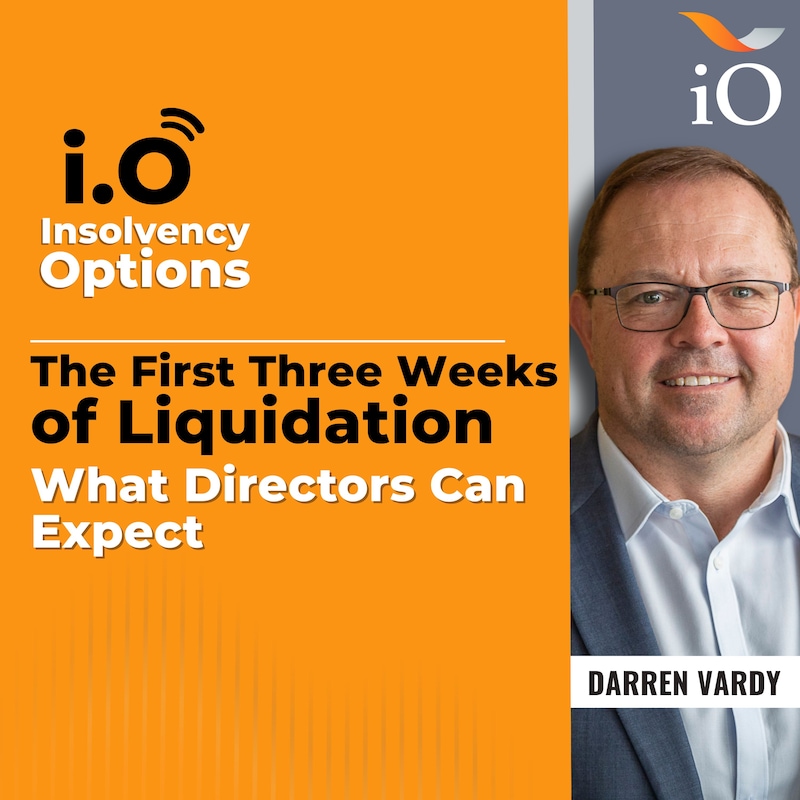
What really happens in the first three weeks of liquidation? In this revealing episode, Darren Vardy walks you through the chaos of the initial period, explaining why creditor calls stop immediately, how directors experience relief despite the circumstances, and what the typical 6-9 month timeline looks like. Learn about personal guarantees and how to minimize exposure, understand why most directors move into PAYG employment afterwards, and discover how liquidation provides clarity and closure. Darren shares insights on asset realization, going concern sales, and why directors often say the weight lifted was worth the process.
KEY TOPICS COVERED:
• Why the first 2-3 weeks are described as 'chaos' • What happens to creditor calls after liquidation appointment • The immediate relief directors experience despite the circumstances • Understanding personal guarantees and exposure • The typical 6-9 month liquidation timeline • Why directors have minimal involvement after the first few weeks • Asset realization strategies and going concern sales • What happens to directors after liquidation - employment vs new business • How liquidation provides clarity about personal financial impacts • Why most directors only want to see the liquidator once
KEY TAKEAWAYS:
✓ The first 2-3 weeks are chaotic as liquidators gather information and secure assets ✓ Creditor calls stop immediately after appointment - massive relief for directors ✓ Directors experience weight lifted off shoulders despite business failure ✓ Personal guarantees on leases and vehicles are often unavoidable in practical terms ✓ Typical liquidation takes 6-9 months from appointment to deregistration ✓ Directors have minimal involvement after the first few weeks ✓ Most directors move into PAYG employment rather than starting new businesses ✓ Liquidation provides clarity about personal exposure and next steps ✓ Going concern sales are less common than asset-only sales ✓ Directors who care about outcomes stay engaged and want to maximize creditor returns
Who Should Listen: Business owners, company directors, lawyers, accountants, and anyone wanting to understand financial distress warning signs.
About the Host:
Darren Vardy - Managing Director of Insolvency Options and Registered Liquidator with over 30 years of experience in business recovery and debt solutions. Darren has helped thousands of businesses and individuals navigate financial distress and find practical solutions to complex problems.
Connect With Us:
• Website: insolvencyoptions.com.au • Phone: 1800 463 328 • LinkedIn: https://www.linkedin.com/in/darrenvardy/
Subscribe & Follow:
Don't miss future episodes! Subscribe to i.O. - Insolvency Options
Like this episode? Please leave a review and share with colleagues who might benefit from these insights.
Co-host: Anthony Perl
Produced by: Podcasts Done For You
Transcripts
The first three weeks of liquidation what directors can expect.
2
:Welcome to IO Insolvency Options
with Darren Vadi, the Managing
3
:Director of Insolvency Options and
a registered liquidator with over
4
:30 years of experience helping
businesses and individuals.
5
:Navigate financial challenges.
6
:In today's episode, Darren walks
you through the first three weeks
7
:of liquidation revealing why he
describes this period as chaos.
8
:And when directors finally experience
relief, he explains what happens
9
:to creditor calls, how long the
process typically takes, and why
10
:most directors say the weight lifted
off their shoulders was worth it.
11
:You'll learn about personal guarantees,
the typical six to nine month
12
:timeline, and what life looks like
for directors after liquidation.
13
:I'm your co-host, Anthony Pearl.
14
:Let's dive into unlocking
more about insolvency options.
15
:Darren, we've touched on this subject
of liquidation a few times in previous
16
:episodes, and I think it's an important
one that we could have further discussion
17
:a little bit and understanding what those
initial first three weeks might be like of
18
:going through this process and maybe talk
us through what it is when you get to that
19
:situation, how you find the business that.
20
:Right.
21
:And have that initial conversation
and say, we are going down this path.
22
:Darren Vardy: Sure.
23
:So look, the first couple of weeks
after our appointment, as I say to most
24
:directors, they say, what can we expect?
25
:And my general response is chaos.
26
:What you'll expect as from myself is that
I need to get my head around this entire
27
:business, whether it's trading or not.
28
:If it's trading, I need to get on
top of the trading of the business.
29
:In the short term, we need to
implement some immediate strategies
30
:as to what is gonna happen with the
business, if it's trading, or what
31
:is gonna happen with the assets.
32
:If it's not trading, how
are we gonna realize?
33
:So for the first sort of two or three
weeks, we are going to be gathering.
34
:Asking for the provision of a lot of
information to enable us to work out
35
:what the position is, to then work out
a strategy to deal with that position.
36
:One thing that the directors don't then
deal with is the phone calls from the
37
:creditors because they all then go through
the insolvency practitioner's office.
38
:So quite often, whilst we get
through that chaotic period of
39
:the first two to three weeks.
40
:In the information gathering and
dealing with securing assets and
41
:looking at strategies to realize
those particular assets thereafter.
42
:The directors then tend to
have a very small role with.
43
:The liquidation moving forward, and
you know, quite often I get comments
44
:from directors saying, for the last
six months I've been fielding calls
45
:and avoiding calls from creditors.
46
:But as soon as you got appointed,
Darren, the phone call stopped.
47
:So, you know, there's been a
weight lifted off my shoulders.
48
:You know, I'm no longer in fear
of the phone ringing because some
49
:directors leave it that long where.
50
:They become anxious.
51
:That really stops them from living
by virtue of what's going on.
52
:So quite often, a lot of the directors
then get that little bit of breathing
53
:space, then just sit back and take time,
work out what's going on, and work out
54
:what their life is gonna be like beyond
the business that they've spent their
55
:entire life or the, at least the last
sort of decade, working on an end.
56
:Anthony Perl: Yeah.
57
:And I imagine that's huge, right?
58
:That huge sense of relief.
59
:But is it a bit of a calm
before the storm again?
60
:Darren Vardy: Generally there's no more
storm, and this is where the sort of
61
:clarity starts to come in, is that, you
know, once we get appointed, once we
62
:get through that period and work out
what the position is, we can then go
63
:back to the directors and stakeholders
and say, well look, this is the reality
64
:of what we are faced and this is what
the likely outcome is going to be.
65
:Now that may or may not have a
personal financial impact on the
66
:directors, and if it doesn't.
67
:Well, then that's probably
a good thing for them.
68
:If it does, it then gives them the focus
on the issues that they need to deal with
69
:with clarity as opposed to not knowing.
70
:And quite often not knowing is one of
the major issues, whereas we can say from
71
:what we identify, here are your issues
that you're gonna have going forward.
72
:And it might be you've
got inso trading exposure.
73
:It might be you've personally
guaranteed some motor vehicle leases.
74
:That need to be properly and
appropriately dealt with.
75
:It might be that you've provided personal
guarantee to a number of creditors,
76
:so therefore you need to look at your
personal financial position as to how
77
:you're gonna deal with those personal
guarantees outside of the company.
78
:Because whilst they're a creditor
of the company, they're also a
79
:accreditor review personally.
80
:Quite often providing that clarity
is what the directors need to
81
:enable them to get on with it and
deal with things and, and move on.
82
:Anthony Perl: One of the things
that you mentioned there is the
83
:difference between whether there's
a personal liability or not.
84
:Are there some rules that people should
follow to make sure that they're not gonna
85
:find themselves in that situation where
they're not gonna be personally liable?
86
:Or is that just difficult
to avoid at times?
87
:Darren Vardy: Sure.
88
:Look, in an ideal world as a director
of a company, you don't wanna sign any
89
:personal guarantees, whether that be
property leases, motor vehicle leases,
90
:supply of product from creditors.
91
:However, in a practical
world, they're unavoidable.
92
:Every lease for a motor vehicle requires
a personal guarantee, a property lease.
93
:You may be able to negotiate out of
a personal liability by providing
94
:a greater security upfront.
95
:Suppliers they may insist
on you providing a.
96
:Personal guarantee to
get supply from them.
97
:So your alternative there is, well, do
I seek other parties to supply that or a
98
:similar product to my business that won't
require, or do I just make sure that I
99
:know who my personal guarantees, who I've
provided personal guarantees to, and make
100
:sure that they're paid every month on
time, every time, so there is no exposure
101
:if something unforeseen did happen.
102
:Anthony Perl: Let's get back to
the liquidation process itself,
103
:Darren, and talk me through then
getting through to the other side.
104
:What does that look like in most
cases, and perhaps gimme some
105
:examples one way or the other,
106
:Darren Vardy: getting through to the other
side, depending on the length of time
107
:in which it takes to realize a company's
assets, depending on whether or not there
108
:are any other claims that a liquidator.
109
:May or may not have against various
parties pursuant to the Corporations Act,
110
:but generally a liquidation generally
only takes six to nine months to complete.
111
:Once a liquidator is finished their job,
the companies then do registered by ASIC
112
:automatically three months thereafter.
113
:So the whole process in most instances.
114
:Particularly with small business
matters, and it could all be dealt with
115
:and wrapped up within a 12 month mark.
116
:And as I said earlier, other than
the first few weeks after the
117
:appointment, the directors have very
little to do with the liquidation
118
:process unless they're assisting
with the asset realization process.
119
:So from a director's point of view,
within a month after the appointment of
120
:a liquidator, they're really, you know,
free to, for want of a better term, move
121
:on and look at what they're going to do.
122
:With their life going forward to, you
know, earn an income and put food on the
123
:table, which is sort of what I try to
tell directors, you know, their focus
124
:is whilst they've gotta be compliant and
respond to all of our queries and provide
125
:all the information, they also need to
look after the family unit and just get
126
:back to earning an income in living.
127
:And the sooner they can do that,
the easier it's going to be on
128
:everyone, even if they're still
involved in the liquidation process
129
:going forward to assist a liquidator
in the asset realization process.
130
:Anthony Perl: And how
difficult is that process?
131
:Because imagine a lot of people,
this is their business, right?
132
:That they may not have anything else.
133
:So how do you actually turn that around?
134
:Darren Vardy: That's the thing, is that
where there's a liquidation and there's
135
:no business as a going concern, and my
role is just simply to realize its assets.
136
:The involvement of the director ceases.
137
:At the date of my appointment.
138
:So yes, it's probably may come as a bit of
a shock, but to a degree it comes at a bit
139
:of a relief because they don't have the
pressures of running the business anymore.
140
:The creditors making the phone calls,
the constant concern of having enough
141
:cash to pay the wages week in, week out,
or month in, month out as it may be.
142
:So quite often you find that
that pressure valve is released.
143
:And it actually allows the directors
to think clearly or more clearly,
144
:and then they can focus on, you
know, what is the future gonna be?
145
:Because they don't need to focus on
anything to do with the business because
146
:it's no longer under their control.
147
:Anthony Perl: So when you have that
sort of situation, do you find that
148
:most of these people very quickly find
some alternative sources of income?
149
:Are they finding work easily enough?
150
:Is is it the job?
151
:Is it another business?
152
:What's the mainstay?
153
:Darren Vardy: Yeah, and suggest
that the majority of people that
154
:I've dealt with go into some form
of PAYG full-time employment.
155
:They don't want to be business
owners anymore as a result of the
156
:turmoil that they've encountered.
157
:And they just want to get back to living
and spending time with the family and
158
:you know, putting food on the table
and getting back to living for want
159
:of a better term, because they've
been all consumed by the business.
160
:Generally in the months, years
leading up to my appointment.
161
:So quite often we will find that the
directors of the companies will prosper
162
:personally, mentally from appointing a
liquidator to then put that chapter behind
163
:them, which enables them to move forward.
164
:Anthony Perl: And do you get much
opportunity to monitor some of these
165
:people and how they've done in the past,
and then mostly they stay employed?
166
:Is that generally the rule versus do
you see them starting businesses again?
167
:Darren Vardy: We don't generally
monitor the whereabouts of
168
:directors going forward.
169
:Quite often I say to these directors,
you know, don't take offense,
170
:but I only wanna see you once.
171
:And that's just to do this liquidation.
172
:Most people, it depends on
their financial position.
173
:Obviously, if they've got the financial
where we've all personally to go,
174
:again, the majority of people go back
into some full-time employment, at
175
:least for a couple of years until
they get their feedback on their
176
:ground and save up a bit of money.
177
:But no, there's no real
recording or monitoring of people
178
:going forward in that regard.
179
:Anthony Perl: The liquidation
process itself, what does the
180
:business look like at the end of it?
181
:What do you see happening?
182
:And, and indeed, you know those
directors, once you're in and you are,
183
:and they're focusing on their new life,
do they even care monitor what happens
184
:at that process and what does the
business look like at the end of it?
185
:Darren Vardy: Look, the majority
of genuine directors care about
186
:the outcome because they wanna see
that where possible they maximize
187
:the return back to their creditors.
188
:And what I find is that whilst they
don't have an active role, you know, from
189
:time to time the directors are ring up.
190
:How's it all going?
191
:What does a return look like?
192
:Do you need any assistance with anything?
193
:But generally, we're there if business
will even get sold as a going concern.
194
:Or we'll realize the assets as best we
can, and any surplus funds you use to pay
195
:the cost of the process and then filter
down through the priority of creditors.
196
:So I think most directors want to know
what the final outcome is because the
197
:genuine ones care about not leaving anyone
out of pocket or minimizing the loss.
198
:So yeah, that's sort of my experience with
the people that I've been involved with.
199
:Anthony Perl: And the businesses
themselves at the end of the day,
200
:once you finish with the process, is
there one way or the other, do they
201
:typically end up in the hands of someone
else and realize in a different way?
202
:Or is it generally just dispersing
the assets and it's kind of,
203
:that business is no longer.
204
:Darren Vardy: Majority of the time,
it's the business ceases to trade.
205
:It's because it's not a type of
business that is of value as a
206
:going concern, in which case then
it comes just down to an asset sale.
207
:So I'd say the majority
of time the business.
208
:We'll cease and the assets will
be sold as opposed to a business
209
:sale as the gonna concern.
210
:Anthony Perl: And that's all we
have time for in this episode.
211
:But next time on IO insolvency options,
we'll explore the three critical questions
212
:Darren asks Every business owner.
213
:When they're seeking help,
Darren will reveal why.
214
:Understanding why you are here is
more complex than it seems what your
215
:ideal outcome should be and how to
create a realistic plan to get there.
216
:It's a masterclass in strategic
thinking for struggling businesses.
217
:For details on how to get in touch
with Darren and his team on insolvency
218
:challenges, please consult the show notes.
219
:This podcast is produced by my
team at podcast done for you.com
220
:au helping professionals
share their expertise through
221
:powerful podcast content.
222
:If you found value in today's
episode, please like, comment and
223
:subscribe to IO insolvency options.
224
:Until next time, remember, there's always
a way forward when you know your options.

