Shownotes
"Architects design things we can't actually build."
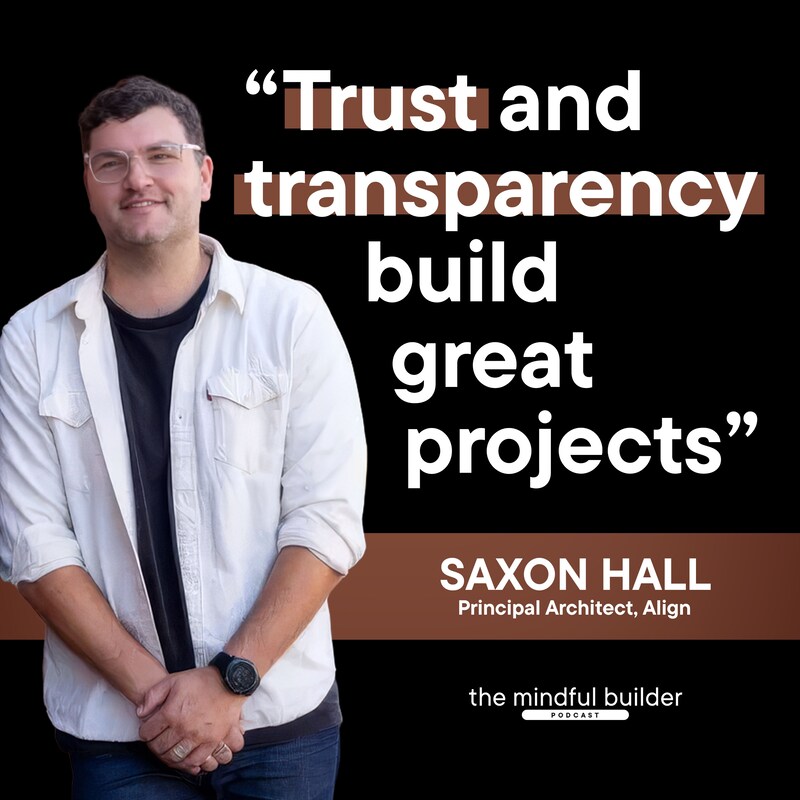
We sat down with Saxon Hall, Principal Architect at Align Architecture, to tackle the age-old tension between architects and builders. Saxon's unique perspective as a carpenter's son gives him insight into both sides of this divide.
In this episode, we explore why communication breaks down between architects and builders, and more importantly, how to fix it. Saxon shares his 'Align Build Collaboration' method that brings builders into projects from day one, the debate around tender vs negotiated contracts, and why energy-efficient design doesn't have to sacrifice aesthetics.
Saxon's diverse experience across residential, heritage, and sustainable projects proves that when architects understand building practicalities and builders appreciate design intent, everyone wins.
Key topics:
• Why early builder involvement saves headaches
• Tender processes vs negotiated contracts
• The poetic nature of architecture meets practical building
• Climate-adapted, sustainable design solutions
• Balancing collaboration with contractual obligations
👇 CHAPTER MARKERS 👇
00:00 Introduction and Saxon's Background
01:52 Unique Projects in Tasmania
04:13 Path to Architecture
05:54 Builder-Architect Relationship
07:57 Early Contractor Involvement
09:30 Negotiated vs. Tender Contracts
16:03 Cost Estimation Challenges
30:13 Understanding Builder Transparency
31:45 The Importance of Real-Time Costing
33:47 Educating the Broader Community
34:08 Passive House Design Challenges
36:57 The Poetic Nature of Architecture
42:10 Collaborative Construction Processes
47:53 Balancing Tradition and Innovation
53:20 Engaging with Align Build
LINKS:
Align Build:
https://align.build/
Connect with us on Instagram:
https://www.instagram.com/themindfulbuilderpod/
Connect with Hamish:
Instagram: https://www.instagram.com/sanctumhomes/
Website: www.yoursanctum.com.au/
Connect with Matt:
Instagram:
https://www.instagram.com/carlandconstructions/
Website: www.carlandconstructions.com/
Transcripts
as Matt said, I've got my sexy voice on today just for you.
Speaker:how do you activate that?
Speaker:is how he actually always talks to me on the phone.
Speaker:By the way, he always puts this on
Speaker:this sexy voice is care of my four month old who came home
Speaker:from Canberra with a cold.
Speaker:And I thought I dodged it.
Speaker:Um, but apparently not.
Speaker:Here I am.
Speaker:today we are joined by Saxon Hall, who is the leading architect
Speaker:Yeah.
Speaker:Lead, architect, principal, architect, whatever title you wanna gimme.
Speaker:Really?
Speaker:Precious.
Speaker:at, at
Speaker:Matthew.
Speaker:get Hamish going.
Speaker:so I'm gonna excuse my friend, Matthew Saxon.
Speaker:He, um, he likes to poke the bear whenever he's talking about
Speaker:architects and I don't agree with him.
Speaker:we'll see if we can enlighten him,
Speaker:Well, I actually want to get to the first, so I read your form and I want
Speaker:to get to the point because the way you explained what an architect should know
Speaker:about a builder and what a builder should know about an architect is perfect.
Speaker:I can't even quite remember the questionnaire that
Speaker:I actually submitted, so
Speaker:Well,
Speaker:Your memory, it's the builders are always right.
Speaker:Hey guys.
Speaker:Axon, why don't you start off by, uh, introducing yourself to the audience.
Speaker:my name's, uh, Saxon Hall.
Speaker:I'm located in, um, yeah, Hobart Tasmania.
Speaker:I lead an architectural practice down here called, um, a Align
Speaker:architecture, um, a few years old.
Speaker:And, um, yeah, we service the whole, the whole state of Tasmania
Speaker:and, uh, starting to double in.
Speaker:Some New South Wales and Victorian, um, clients as well.
Speaker:So that's, uh, me and yeah, this is, look, this is my first, this is my
Speaker:first rodeo, first, first ever podcast.
Speaker:So, hopefully you've had a, you've got a good producer who can, uh, do some good
Speaker:editing skills and as IFU way through it.
Speaker:We don't edit any.
Speaker:We don't edit anything.
Speaker:We want it be natural.
Speaker:Absolutely.
Speaker:you've got some cool project locations.
Speaker:You talk about Tazzie, you're building or you've designed a
Speaker:house on an island off an island.
Speaker:yeah, we've got a, we've got a project under construction at the moment,
Speaker:um, uh, with the Zeno builders, um, on the east coast of Tasmania.
Speaker:yeah, it's called Picnic Island.
Speaker:Um, it's located in the Reay area and it's a. 40 square meter micro build, um,
Speaker:in an extremely remote, remote location.
Speaker:Um, we've got helicopters involved and, and all those nitty gritty
Speaker:things to try and get a building built in the middle of nowhere.
Speaker:And, uh, yeah, you can sort of, it's pretty unique.
Speaker:Um, very, had to adapt very quickly to doing a construction project
Speaker:on, on a small little island.
Speaker:But yeah, you can find it online and um, and have a squeeze.
Speaker:It's pretty interesting.
Speaker:I've.
Speaker:Following that one, um, pretty closely.
Speaker:And, and I don't know, you know, where, whether Carl was just more excited
Speaker:about the potential, like social media, like potential for this project or, you
Speaker:know, he actually was like in, with the actual build, but the stuff that him
Speaker:and Matt longer been doing, um, with the helicopters and stuff like that.
Speaker:It's been pretty epic.
Speaker:Like I've
Speaker:I thought it was Kyle just being Kyle, just getting a
Speaker:helicopter for the fun of it.
Speaker:No,
Speaker:The first discussions around the helicopter situation was like, okay, who's
Speaker:jumping out this thing into the water?
Speaker:They were pitching stuff like swimming to shore, like with the
Speaker:architectural plans and all kinds of wild stories, but I think, um, yeah.
Speaker:Oh, HS stitched 'em up a bit.
Speaker:So those plans got scrapped.
Speaker:I, it does look like a pretty epic, um, pretty epic project, but, so you guys,
Speaker:I mean, I'll tell you what, if I wasn't.
Speaker:Like if I didn't have a, you know, pretty, pretty good business set
Speaker:up in Victoria already, I'd be moving down to Azzie in a heartbeat.
Speaker:'cause some of the locations you guys build on are just incredible.
Speaker:Yeah.
Speaker:It's um, I saw you, I did see you lurking around down here.
Speaker:May maybe, was that like 12 months ago or something like that?
Speaker:I've been down there, I've been there a couple of times.
Speaker:Yeah, a
Speaker:Yeah, yeah, yeah.
Speaker:And um, yeah, we, we, we've got, definitely got the
Speaker:luxury of, um, nice locations.
Speaker:Um, these sort of just random projects pop up where.
Speaker:People have purchased, you know, properties or, or land
Speaker:in real remote locations.
Speaker:I did another one down to Tasman Peninsula, again, had
Speaker:to crane stuff in from Victoria transportable modular set up.
Speaker:And it was just the same kind of challenges, but
Speaker:super rewarding at the end.
Speaker:So yeah, we do have that luxury.
Speaker:So let me ask you, um, you are the son of a builder.
Speaker:How did you get into architecture and, and did you ever consider like
Speaker:going down, you know, the hands-on tools path like your father?
Speaker:Yeah.
Speaker:Yeah.
Speaker:So that, that is correct.
Speaker:Um, the old man's a, a carpenter and still is like one of those classic
Speaker:carpenters that's just like still driving around and a clapped out Navarro
Speaker:that's never been cleaned with like two old toolboxes strapped to the back.
Speaker:I grew up in a lot of construction sites from a young age just.
Speaker:Just hanging out and, you know, just seeing what's going on before,
Speaker:um, building sites got a little bit more, um, tight regarding OHNS,
Speaker:but, um, I was definitely exposed to a lot of carpentry and, and,
Speaker:you know, timberworks and all that.
Speaker:And I kind of had this a bit of artistic sort of side to me as well.
Speaker:So I was kind of always sitting in that cusp of like, creativity
Speaker:versus like, you know, building.
Speaker:And I ended up sort of slotting into a housing and design course in college
Speaker:and then kind of just rolled straight into, um, you know, environmental
Speaker:design, which then rolled straight into a master's of architecture.
Speaker:And it kind of just, but um, you know, dad was always onto me.
Speaker:Like, he was just like, you know, if you, if you're gonna go to architecture school,
Speaker:you know, you, you know, you've gotta have at least minimum two years on the
Speaker:construction side or, you know, working for a builder to know what you're doing.
Speaker:I was like, yeah.
Speaker:Right, right.
Speaker:Yeah.
Speaker:And I never really.
Speaker:I jumped on board probably that as early as I should have.
Speaker:But I did get to the point where I was like, you know, I'm gonna, you know,
Speaker:spend some time working under a builder.
Speaker:And I did that, but that's kind of how I landed in it.
Speaker:Um, never
Speaker:Tell me more about that.
Speaker:I wanna know more about working for a builder because Liam from Hit Be Height
Speaker:made the comment when he come on that too much time with architect courses are
Speaker:spent on random architects and whatnot.
Speaker:The be not enough time he spent on site.
Speaker:And I feel like that is so valuable, especially when we talk about respect
Speaker:and we'll get that the conversation.
Speaker:Builders and architects probably love each other but hate each other.
Speaker:It's a bit of a weird relationship, but I feel like that bridges the gap so much.
Speaker:yeah, it did.
Speaker:Um, it was a pretty mind boggling experience.
Speaker:Um, and, you know, I'm not saying in a sense that I went and like,
Speaker:you know, strapped on the tool belt and attempted to construct anything.
Speaker:I was more sort of slotted into the, um, you know, learning estimation and
Speaker:project management side of things.
Speaker:It was real eyeopening.
Speaker:I actually chose to do that.
Speaker:I, I came outta working for a more of a, a sort of high-end, um, sort of level
Speaker:residential architectural firm, which a, with a, with a traditional architectural
Speaker:process straight into like dabbling in, in experience with a builder for two
Speaker:years, right at like that tail end of like coming off COVID, where like in
Speaker:Azzie and probably Victoria as well, like the building market and the cost
Speaker:of everything were just skyrocketing and they were just out of control.
Speaker:And I was like straight into the, the crux of like learning, estimating and
Speaker:project management, um, right on the tail end of the, the COVID situation.
Speaker:And just seeing prices just skyrocket, trying to manage clients and
Speaker:budgets and actually contract jobs.
Speaker:Um, it was, it was, it was a wild experience, but, um.
Speaker:Yeah, definitely the ease into it.
Speaker:But yeah, learned a lot at the estimating thing was probably the
Speaker:biggest thing I took away from it.
Speaker:Getting a really good understanding of like how things are costed and,
Speaker:and those things that, um, if you, if you haven't got estimating experience,
Speaker:you kind of, and you're just doing architecture, things might slip over.
Speaker:You think things cost X amount of dollars, but you're not considering sort of A, B,
Speaker:and C. So I reckon the estimating thing was the biggest thing I took away from it.
Speaker:That helps me in today's process, um, here at all.
Speaker:Align, I reckon.
Speaker:Do you still comment on the bill cost when you're involved in a project now,
Speaker:or you leave that up to the builder?
Speaker:Oh, no, definitely not.
Speaker:So, um, our, our process that we've developed here at all Align,
Speaker:which we continually, um, sort of refining, um, as we're moving along.
Speaker:Um, we use like a, a different kind of a, a sort of process of
Speaker:bringing builders on in projects.
Speaker:And we, we bring builders on a lot earlier in our projects, really from day.
Speaker:We actually get, um, our builders in through like a negotiated contract process
Speaker:as opposed to like a tendering process.
Speaker:So we find a suitable builder for our client, um, basically on on day one
Speaker:before we've even put pen to paper.
Speaker:And they're involved in, um, three critical, um, estimating
Speaker:processes through the project.
Speaker:One right at the start, sort of one after the concept is developed, and then right
Speaker:at the end before we contract the job.
Speaker:So, um, we basically do that estimation process with our builder.
Speaker:We, we sit down with our builder and we go through the detailed estimate before
Speaker:we've met with that client and make sure that we've fleshed out any, um, ideas for
Speaker:cost savings or swapping things around.
Speaker:And I think, yeah, that process has like literally given us the best results.
Speaker:I haven't been in the industry for a whole lot of time, like, you know, 10 to
Speaker:12 years in the architectural profession, but I can safely say the process that
Speaker:I'm doing now with early contractor involvement and negotiating contracts is.
Speaker:Has paid off hugely for us, um, in the last few years.
Speaker:Why do you think there's still resistance against the negotiator tender model?
Speaker:Tasmania is especially hard.
Speaker:We're, we're in a very small community down here and I, I have
Speaker:seen a lot of, um, sort of people stuck in their ways in terms of
Speaker:going down a tendering sort of path.
Speaker:Um, and I think that it's been hard for people to break away and really
Speaker:see the value in, in just, you know, working with a builder that, that's
Speaker:transparent, that everyone can trust and that that can work together from day one.
Speaker:And they've got the, the catalog of data to be able to
Speaker:understand costs from day one.
Speaker:And I dunno if I've got an answer for you, um, Matt, in, in sense of why.
Speaker:Other people haven't jumped on as quickly as I can, but, uh, you
Speaker:know, as, as I think they should.
Speaker:But, uh, maybe it's just, they can't sort of see that, you know, if you, if
Speaker:you can compare apples with apples and show like the process, the time and
Speaker:the cost associated with the tendering process versus a negotiated contract
Speaker:and you put 'em side by side, like a case study, I think that would, you
Speaker:know, show a bit more transparency that it, that it can pay off.
Speaker:I really wanna see the whole industry in Tasmania really level up, um, in
Speaker:terms of how they're working through their design process and their
Speaker:contract negotiations with clients first, the traditional processes.
Speaker:But yeah, if anyone's out here, out there and wants to, you know, ever pick
Speaker:up the phone and talk to me about it, I'll chew their ear off about, yeah.
Speaker:How it's worked good for us.
Speaker:'cause they've had the most success, um, yeah, doing that process.
Speaker:The same can be said for, you know, me and Matt might ask the question of.
Speaker:Probably most of the builders in Australia and why they aren't
Speaker:building, you know, durable, healthy homes that are also energy efficient
Speaker:and, you know, beautiful to live in.
Speaker:You know, we've drunk the Kool-Aid because we've chosen
Speaker:to take, to go down that path.
Speaker:Um, I actually think it comes down to the fact that people just
Speaker:don't know, you know, if you look at, and again, this is absolutely
Speaker:just my opinion on the situation.
Speaker:If you look at what architects are taught at school, they're taught design.
Speaker:Like the first, and again, correct me if I'm wrong, but this is my understanding
Speaker:of it, the first two or three years, it's all about just design with no limitations.
Speaker:You know, just, just design.
Speaker:Don't think about what councils are saying, don't think about
Speaker:things structurally, just have that freedom of designing and it's,
Speaker:you know, and they're told, uh, well, I don't think they're taught.
Speaker:How to cost projects or understand really how things go together
Speaker:and actually the value of the things that they're designing.
Speaker:So I personally don't blame architects or if there is a, if there is, you
Speaker:know, a blame to be put somewhere.
Speaker:I don't necessarily blame architects for not knowing what things cost because
Speaker:they're not taught how things are cost.
Speaker:But just in that right there, if you think about what we do as builders,
Speaker:we cost projects all the time.
Speaker:So we have an idea of what things cost.
Speaker:And I think like my biggest beef of the whole thing is when I get told by
Speaker:someone that, that's too expensive, when all I really wanna say is no my, I'm not
Speaker:expensive, the design's expensive 'cause I'm just quoting what I'm looking at.
Speaker:And again, I'm absolutely not blaming the architect for, or architectural
Speaker:designers or whoever that prices are outside of what the client wants to spend.
Speaker:I just think everyone needs to understand where their
Speaker:inputs required in the process.
Speaker:So maybe that's just my roundabout way of kind of segueing into, you know, the, the,
Speaker:the builder that, so the architect that you work for and the company you work for.
Speaker:'cause you are owned by a builder.
Speaker:You know, aligned architecture is owned by a builder.
Speaker:mate, could you just talk to us a little bit about, um, aligned architecture
Speaker:and it's set up, um, and, and just, just for the record, if no one has
Speaker:seen a line projects before, I've been watching these guys for a few years
Speaker:now and, you know, I've been following Luke Davies for a, for a while.
Speaker:Like, we're not talking about builder design homes, we're talking about
Speaker:architecturally designed homes.
Speaker:So they are beautiful homes to, to look at and living.
Speaker:Yeah.
Speaker:So, um, that's correct.
Speaker:The, the company was founded, yeah, by a builder.
Speaker:and Luke sort of, you know, evolved the business off the back of, I
Speaker:suppose, frustrations and things that he'd learnt, you know, mistakes that
Speaker:have been learn, um, along the way.
Speaker:So he basically wanted a solution where.
Speaker:The architectural process, um, you know, was, was basically focused, not just
Speaker:on the client relation, but integrating the builder, in at the same time.
Speaker:and it's, it's gone through a lot of different, a few different variations
Speaker:before it's got to where it is now, but, um, essentially it's, it's about,
Speaker:you know, it's called the a BC method, so it's a bit corny, but it's called
Speaker:the Aligned Build Collaboration method.
Speaker:So it's having, you know, the homeowner, um, the builder and the architect,
Speaker:sort of all in the one mix of the sort of one time, um, and the builder
Speaker:being involved, um, from as early on in the design processes as possible.
Speaker:So, yeah, to answer the first part of your question, that's
Speaker:sort of, where it stemmed from.
Speaker:kind of forgot the second part of your question already, but Yeah.
Speaker:I kind of went on a bit of a ramble there for a bit, but I reckon I've
Speaker:been watching Matt something un.
Speaker:I kind of want to go back to the whole negotiated tender.
Speaker:I, I have a few problems with it that the, from a builder's
Speaker:perspective, and I'm gonna talk only from a builder's perspective here.
Speaker:The issue I hate is when you get a, you get an architect question, the
Speaker:fee to be involved in the project.
Speaker:Like, or why are you charging?
Speaker:Or does, do you give it back if the project goes ahead?
Speaker:And my response at the moment to that is, do you give your money back if
Speaker:the design doesn't go ahead because it's over budget didn't really sit
Speaker:well with the person I said that to.
Speaker:I won't lie,
Speaker:No, I couldn't imagine.
Speaker:but that's the reality.
Speaker:Like I, I, I have, and I'm, because I'm gonna ask questions
Speaker:that they're kind of loaded.
Speaker:But it's good to get an architect's perspective on it because for some reason
Speaker:architects listen to architects and most, and builders listen to builders.
Speaker:And some builders listen to architects, and some architects listen to builders.
Speaker:But I wanna get an architect's perspective on it.
Speaker:Yeah.
Speaker:Well, I suppose my perspective on it is like, because again, I came, came
Speaker:back to that experience of that couple of years working in the, in the,
Speaker:in the pressure cooker estimating, project management management.
Speaker:I, I saw firsthand how long it took for, for a builder to be
Speaker:involved early in the project.
Speaker:Um, and the amount of time that I had to personally sink, um, into,
Speaker:you know, estimating projects.
Speaker:And so it was, it was at that, that point I was like, ah, I understand now.
Speaker:Like this takes a lot of time.
Speaker:So like, I'm starting to work with a few other builders in the Hobart area
Speaker:that are just starting to come on board the process and a few of them.
Speaker:Yet they, you know, we do what's called a pre-build feasibility.
Speaker:At the very, very first part of the project before anyone signed any
Speaker:agreements, anyone's put any pen to paper and it just outlines all the
Speaker:costs associated with all the, the, the architectural design, the interior
Speaker:design, the council, the consultants and fees from builder builders.
Speaker:And, um, you know, I actually encourage any of the new builders
Speaker:that come on board this process.
Speaker:I'm just like, yeah, you guys have gotta charge a fee for your time.
Speaker:You've gotta charge it, um, at the, the concept design stage when you
Speaker:take away the drawing set to do an estimate and you need to charge for
Speaker:it at the end because time's money.
Speaker:And there's no way that the fee that's put forward covers off the amount of
Speaker:time that you guys have gotta sink into trying to get a job contractor.
Speaker:But at least it does two things, that it covers off a lit on
Speaker:a little bit of that time.
Speaker:It actually just shows a financial commitment, um, from the owner to the
Speaker:builder that, Hey, these guys are serious.
Speaker:We we're all in it to, to go through to the end and to get a project
Speaker:built for you, you know, on budget.
Speaker:So the small financial commitment shows that hey, you know, the
Speaker:owners, the owners and clients, um, keen the builder's serious.
Speaker:And if you ever get a client that's turns their nose at like a, you know, whatever
Speaker:the fee is, it's quite a small amount.
Speaker:You probably know, oh, we could be in for a little bit of a rough
Speaker:trot here if they're, they're not wanting to pay a builder a small
Speaker:fee to spend their time estimating.
Speaker:So I've got a quite a positive, um, spin on it.
Speaker:But I have heard within the industry down here that there is a few other
Speaker:architects that are, uh, are starting to become aware of the, the fees that, um,
Speaker:estimating fees that builders are sort of charging to cover off in their time.
Speaker:'cause time is money.
Speaker:You know, like you can't expect people to work for free.
Speaker:I'm not gonna work for free.
Speaker:Um, you guys aren't gonna work for free, so,
Speaker:We still are, we're still not charging what it costs, and this is what I'm
Speaker:gonna say to Ham, how many hours do you think you put into a project from the
Speaker:start to the end before it gets to site?
Speaker:So I can speak to this because we've just done a whole bunch of,
Speaker:um, uh, data collection on it.
Speaker:Dan and Robert would spend about 200 hours, um, doing the
Speaker:pre-construction phase to get to the point where we're delivering a price.
Speaker:And then there's usually another 40 to 60 hours from the moment we give a price to
Speaker:the, to the time we actually get to site.
Speaker:'cause that might involve a little bit of, um, contract, uh, sorry, value management.
Speaker:Uh, we might need to be assisting the design team with report and consents
Speaker:or building permit considerations.
Speaker:We might need a construction management plan, et cetera, et cetera.
Speaker:And I'm also spending about 16 hours in our, what we call our feasibility phase.
Speaker:So that's where I'm actually involved with, um, getting some quick build
Speaker:estimates together for the client.
Speaker:So what are we up to about, you know, two hundred and fifty, two eighty six hours?
Speaker:Quick mass.
Speaker:what, what,
Speaker:what?
Speaker:bucks would be a very low amount for a consultant in
Speaker:let's do a, let's, let's do one 50.
Speaker:And I think that that's on the low side.
Speaker:That's 42,900.
Speaker:And a builder's gonna change charge.
Speaker:Maybe 10 to 12 grand.
Speaker:Maybe maybe 15,
Speaker:yeah,
Speaker:so a small portion, um, and like I
Speaker:but not, not small, more than half.
Speaker:I have heard a lot of people, or a lot of builders down here is.
Speaker:Just starting to get to that point where they're, they're just like, we only
Speaker:do negotiate a contract, um, process.
Speaker:Um, we are not, like, if they have tender to land on their desk,
Speaker:they're like, no thanks, because their chances are, are significantly
Speaker:dropped to winning the project.
Speaker:Where if they're doing, yeah, if they're doing a negotiated
Speaker:process, their chances are higher.
Speaker:If they, if they do our process where we're bringing 'em on from
Speaker:day, do their chances of signing on that job are extremely high.
Speaker:So, um, yeah, it's pretty interesting and it's, it's hot discussion down here at the
Speaker:And the build price at the same, the tenant to negotiate tenant
Speaker:is probably the same price.
Speaker:I mean, yeah.
Speaker:Yeah.
Speaker:I think I, I can understand, intellectually understand why someone
Speaker:would want to go to Tender because they'd wanna see a spread of prices.
Speaker:Like I totally understand that we're actually encouraging clients
Speaker:to, at our feasibility stage, chat with two or three builders.
Speaker:You know, they might talk to Matt, they might talk to Mark from MBH.
Speaker:And I'm like, look at this stage, expect to pay between 500 and $1,500 to get
Speaker:someone to give you an opinion of cost.
Speaker:At that point in time, it's at that stage maybe spread, you know,
Speaker:head your bets a little bit there.
Speaker:You might be spending a little bit more money now, but you're getting a spread
Speaker:of where the industry is saying that your project is gonna be benchmarked at.
Speaker:We've, in our, at sanctum homes, we've kind of shortcut that a little
Speaker:bit by doing an in-house costing, and we're also sending it out to
Speaker:price of plan to do a QBE as well.
Speaker:So we are getting two independent prices, one from us and one from outside.
Speaker:But we're we're encouraging clients to talk to builders and get them,
Speaker:you know, and, and we're, I guess we're, we're suggesting talk to
Speaker:builders of the level that we're.
Speaker:The product that that, that we're, you know, gonna be delivering.
Speaker:So let say talk to Matt, talk to Mark, talk to Dylan, talk to these
Speaker:guys because they're gonna deliver a similar product to us and see where
Speaker:they think the project's gonna land.
Speaker:But, you know, once we go into that pre-construction phase where
Speaker:we're spending those two to 250 hours, like that's when we wanna
Speaker:make sure that all the time that we're putting into this project is
Speaker:actually resulting us delivering you a project on budget or what you wanna
Speaker:spend, but also getting it to site.
Speaker:But we also have passive house knowledge, ham, like you've built a hemp creek house
Speaker:that if someone's coming to you for a hemp coat house, they need your expertise.
Speaker:That project most likely doesn't go ahead correctly or well without that.
Speaker:And the fact that, let's just call it $150, if you went that to
Speaker:an open market, someone's gonna charge three, four, $500 an hour.
Speaker:I know you guys are supposed to be asking me questions, but my kind
Speaker:of question on this is if there's, I suppose if there's any other
Speaker:architects that are watching this.
Speaker:I don't know if you have many architects that watch this podcast.
Speaker:It's just like, they're probably thinking, um, well, what about, you
Speaker:know, what about a quantity surveyor or an external cost, um, consultant?
Speaker:Why, why can't we just use, you know, a consultant like that at those
Speaker:same points to get the same result?
Speaker:And I'm always intrigued to know from other people in the industry, how, how,
Speaker:how does that slot into the process?
Speaker:Is it.
Speaker:Does it work?
Speaker:Is it just something that's not ever acknowledged?
Speaker:Is it, does it, is it ever accurate?
Speaker:a quantity surveyor bases their data off historical values.
Speaker:That's how they get their numbers.
Speaker:So by the time that they quote the project at the start, it's usually
Speaker:confirmation bias for everyone to be like, yeah, it's, it's validated so
Speaker:we can go ahead and charge our fee.
Speaker:But the thing is, when the builder quotes, it's an estimate based on the real cost
Speaker:at that real time, based on that job specifically, and a lot more detailed.
Speaker:So from that, it it, it's like, it's like they give the recipe, but
Speaker:you are the checkout at the, at the checkout counter at this grocery
Speaker:store, getting the real amount of what it's gonna cost kind of thing.
Speaker:my thoughts are that I think quantity surveyor and cost planners, you know,
Speaker:they have a, have a space and, you know, I think it's valuable, but
Speaker:I also know that, you know, being part of, you know, future builder.
Speaker:Every single one of us, and even talking to my network, every
Speaker:single one of us has a, has a break even point for our overheads.
Speaker:It might be between 12 and it might have been at 70%, 17% markup.
Speaker:So how, and then obviously from there, we then need to make money.
Speaker:So our market might be 25, 30%.
Speaker:Now, is that being taken into consideration when someone's coming
Speaker:in and not knowing the spread of builders, they're gonna gonna be
Speaker:involved in the project to cost them.
Speaker:So I think the fairest way to do it would be to get cost planned,
Speaker:but take out supervision, take out project management, take out contract
Speaker:admin, and then take out any markup.
Speaker:And then you get builders come in and then say, well, my business
Speaker:structure needs X, Y, and Z and I'm thinking that we need a supervisor on
Speaker:it 50% of the time, so I'm gonna be allowing X amount for that project.
Speaker:And I know my markup needs to be 25% before I even start making money.
Speaker:So that's where I think you can see some, some, some variance in when you get a cost
Speaker:planner or a quantitative owner involved.
Speaker:And then you might get two or three builders, quote the job.
Speaker:So I
Speaker:historical data though, so that project might not go ahead for 18 months.
Speaker:They're basing their data at that point on only 3-year-old data.
Speaker:Yeah, my experience, 'cause I've obviously used quantity surveyors
Speaker:and cost consultants prior to using, um, this process that we're
Speaker:talking about now with the align.
Speaker:But my experience has been that when I've had quantity surveyors do
Speaker:estimates on jobs, they're just a document that arrives in your email.
Speaker:They're usually coming in pretty hot early on in the project.
Speaker:And what I've had is you present that to the client and what I've seen is
Speaker:just instant freakout, pull the pin on the job, there goes my work, there goes
Speaker:any future builder's work, whatever.
Speaker:And, and they, they, they've sort of storm off pretty frustrated with where it is.
Speaker:What if fine with working one-on-one with a builder negotiating a price?
Speaker:Okay.
Speaker:We still have some prices coming that are not aligned with the
Speaker:client's budget, but at least.
Speaker:I do this with, um, you know, the guys from into construction
Speaker:down here in Hobart all the time.
Speaker:If we have something that's coming a little bit hot, we'll sit down
Speaker:the week before we'll go, okay, it's coming in a little bit hot.
Speaker:Um, what's our, what's our strategies?
Speaker:What are we gonna do to try and go into this meeting with solutions early on?
Speaker:And we can, we can literal 'em, put 'em side by side and actually develop
Speaker:a strategy and go into solutions and then come outta the meeting
Speaker:with a client that's feeling okay, that we've got it under control.
Speaker:Um, where the cost consultancy documents, you don't have that, that personal
Speaker:connection and, and relationship and that you can actually pull that off.
Speaker:Um, so yeah.
Speaker:I was, I was about to use a really crude, um, analogy here,
Speaker:but I'm gonna use it anyway.
Speaker:I kind of feel like, um, like a cost consultant or a, or a feasibility study
Speaker:is like making love with no foreplay.
Speaker:'cause it's just like banks.
Speaker:There it is, you know?
Speaker:Um, like it or lump it.
Speaker:Whereas I kind of feel like I see you laughing about it.
Speaker:I kind of, I I love, I love what you're saying there.
Speaker:Like, we're literally going through a process at the moment where we've done
Speaker:feasibility on a job and we're now sitting quite high where we want it to be.
Speaker:And now Dan and I in Precon, we're actually come, we, we want a list of items
Speaker:that we can go back to the client with.
Speaker:Um, you know, and this is in consultant with the designer and architect as well.
Speaker:Go, Hey, we, we know we're over.
Speaker:We're not just gonna say, well like it or lump it.
Speaker:We're like, well, this is how we're proposing to bring it back down.
Speaker:You don't have that same relationship when you are using a cost planner
Speaker:or, or a, or a, um, or a quantity surveyor, because I kind of feel
Speaker:like they're just checking boxes.
Speaker:All right, another job come in, here's the number.
Speaker:Next job.
Speaker:Come in.
Speaker:Here's the number.
Speaker:There's no, there's no emotion attached to it.
Speaker:Like, I know for me, like I've got a lot of integrity in what we do.
Speaker:So if.
Speaker:My original feasibility is lower than what that cost is.
Speaker:Like you bet your bloody ass that I'm working really hard to get that pro
Speaker:that down or come up with solutions.
Speaker:But this is where that like true collaboration comes into it.
Speaker:Like, like all the things that you are saying right now just ring so true to, to
Speaker:Say, Hey, what's your, what's your go to saying?
Speaker:Ah, well, the go-to saying is the architect gets their project
Speaker:built, the client gets a beautiful home, and the builder makes money.
Speaker:That's a successful project.
Speaker:back to what you said earlier, um, Hamish, about, I think you might have
Speaker:said like, you know, tendering a project, like you don't, you don't blame the
Speaker:client for wanting to tender a project.
Speaker:That's really valid point.
Speaker:And I kind of put myself in those shoes.
Speaker:If I was a client and I was doing my own home, I'd probably
Speaker:think about that as well.
Speaker:But I think what's important here is that.
Speaker:We're only sort of working with builders that we know, that are, that are
Speaker:honest and, and and super transparent.
Speaker:And, you know, between myself and, and Mitch, who's also in the business,
Speaker:who actually was an estimator for multiple years and our builders being
Speaker:fully open book, like they're getting to the point now where they're just
Speaker:laying all costs out the table.
Speaker:Like we're talking about a nine 12 page document, which literally shows every
Speaker:single cost associated with every single fix fixing, finish labor, the whole lot.
Speaker:It's like, what's all out on the table there?
Speaker:There's nothing to hide.
Speaker:We can all see it.
Speaker:We've got the experience behind us to be able to break down those costs,
Speaker:ask the questions that we need.
Speaker:The client's got it, they get emailed it after the meeting with all those figures.
Speaker:But you get it
Speaker:gonna,
Speaker:though.
Speaker:The issue
Speaker:full extent of, of showing their, showing their up mark, you know,
Speaker:it's getting pretty, pretty good.
Speaker:So there's no excuse.
Speaker:Like if it's all out at the table, no one's hiding anything.
Speaker:That's what it
Speaker:but you, you get it 'cause you've been on the backend.
Speaker:The issue that we have is like, oh, but this other builder did it.
Speaker:Instead of $80, he was doing it.
Speaker:75. Can you do 75?
Speaker:Yeah.
Speaker:Yeah, we, um, oh geez, Mitch, Mitch in the business also has this comment.
Speaker:He says like, all builders cost the same.
Speaker:It's just like how transparent a builder and how much they wanna show early on.
Speaker:Like, at the end of the day, whether you pay for it, um, honestly and
Speaker:openly in a, in a, in a lump sum at the start, or whether it's undercut
Speaker:and you pay for it in variations, they're gonna end up at the same price.
Speaker:It's just where you pay it and how much frustration you have to deal with,
Speaker:um, from a client's point of view.
Speaker:So, yeah, look how you get that message through to the broader communities.
Speaker:Uh, that's, it's gonna, it's gonna be a big thing when someone can
Speaker:pull that off on a broader scale.
Speaker:I certainly don't want, you know, any architect listening to this to think
Speaker:that, you know, we're right and there wrong, like, and I certainly don't wanna
Speaker:be coming across like that to you either.
Speaker:Um, but I guess what I will say is like, we're the one.
Speaker:They're on the ground executing it, we are building it.
Speaker:We're actually seeing the real time cost of what things, uh, cost us.
Speaker:And, you know, what if, if at the end of the
Speaker:we hold the risk?
Speaker:We hold the risk
Speaker:too.
Speaker:and, and, we hold the risk to you know, and this is a recent thing for
Speaker:us at Sanctum Home, the last couple of years, like we've been really trying
Speaker:to dial in our, like, actual category costing in our, in our projects.
Speaker:Like, so we can actually see, you know, where we're winning and
Speaker:where we're losing or where we need to, to adjust our, um, costing.
Speaker:And that's feeding back into real time.
Speaker:'cause we might have four projects on at once, but then we might be costing another
Speaker:wave of projects at certain stages so we can actually, we're constantly feeding
Speaker:that data back into what we're doing.
Speaker:So, I mean, I think, I personally feel there's real, real value in that.
Speaker:'cause like, look, as a, as a, as an architect or a client, the
Speaker:last thing that you want to happen is you build it to go broke.
Speaker:Because that is an absolute shit show.
Speaker:Like you want the builders to make money.
Speaker:So my question to you, Saxon, like how do we solve this problem?
Speaker:Like I and, and I think the problem being that the default
Speaker:for architects is to go to tender.
Speaker:we've gotta educate the broader community, and I'm on the same page ish.
Speaker:I'm not saying that this is, you know, I'm not gonna sit there and preach that
Speaker:this is the only way to do something.
Speaker:It's, it's like there's, there's many ways to skin a cut, as they say.
Speaker:This is just a process that I've sort of fallen into that works for
Speaker:me and works for the team, and we've had quite good success through it.
Speaker:and I'm not making those comments out of what I think, like I know it was
Speaker:only two short years that I was in that building industry, but I was in
Speaker:the position where I was working for a builder in the same city I'm designing
Speaker:in and I'm seeing inquiries and projects come in from external designers.
Speaker:Right.
Speaker:And I'm assessing and estimating those and I'm seeing 'em fall over in front of me.
Speaker:So it's not like, yeah, this is, this is off my personal experience,
Speaker:but how we teach people, um, that wanna know about this process and,
Speaker:and sort of stepping, stepping into this new kind of negotiated style.
Speaker:Um, it's just about educating.
Speaker:We've gotta, um, just educate anyone out there.
Speaker:I, I encourage 'em to always pick up the phone and have a chat
Speaker:to me about how we're doing it.
Speaker:The education's there though.
Speaker:I think people also turn a blind eye to it, like they come on, like everyone's
Speaker:on social media these days or can pick up a blog or listen to a podcast.
Speaker:The information's there.
Speaker:They choose not to listen to it.
Speaker:It's like, let's, let's look.
Speaker:Let's go to passive house for an example, or high performance building.
Speaker:Building.
Speaker:Tell me what part of it doesn't make sense that people continually
Speaker:choose not to go down that path.
Speaker:Yeah.
Speaker:Um, that's a good one.
Speaker:I think what I've seen in the design industry for passive houses, this
Speaker:perception that if you are going down the passive house direction, you, it,
Speaker:it like eliminates that opportunity for those higher end poetic architectural
Speaker:concepts that, that might have a negative effect on, on the performance of the home.
Speaker:Does that kind of make sense?
Speaker:Like I've just got some comments from.
Speaker:though, hasn't it?
Speaker:Surely.
Speaker:It's just like, I think pe some PE people's perception is like if you are
Speaker:gonna build a passive home, it's just gotta be like a square or rectangle
Speaker:with like a simple roof and some windows slapped on the side of it.
Speaker:And then that, like anything that you try and do out of that is going to
Speaker:cause problems for, for certification.
Speaker:my take, my take on that is like, yes, some buildings are a lot
Speaker:easier to certify than others.
Speaker:That's, that's true.
Speaker:That is a a hundred percent truth.
Speaker:But my challenge that I'm throwing out to architects is use passive house
Speaker:as just a another site constraint.
Speaker:Like if you've got a building over here or tree there, or you can't build
Speaker:to the boundary or you've got certain setbacks or whatever, these are all site
Speaker:constraints that you need to then apply to your response to the, to the design.
Speaker:Passive house is just another constraint, so it should be up to the designer to then
Speaker:come up with a solution of how do you then layer this thing called passive house,
Speaker:this constraint called passive house into the design and make it beautiful.
Speaker:Like don't blame don't, don't blame passive house for not being able to
Speaker:deliver a beautiful architectural project.
Speaker:It is just another, you know, challenge that you've gotta work your way through.
Speaker:Um, I'm doing a pretty big passive house down here in Hobart, which
Speaker:I can comfortably say is the most architecturally concept driven,
Speaker:poetic project that I've ever done in my short career, 10, 12
Speaker:years, whatever we wanna call it.
Speaker:it's got all those conceptual ideas that you see, you know, in
Speaker:quite rich architectural projects, but they're going for the highest
Speaker:level of passive certification.
Speaker:Um, you know, possible.
Speaker:And, you know, I hope that when that gets done, we, you know, that could be
Speaker:used as a bit of a case study to the community to say, Hey, you know, that
Speaker:passive house thing you're scared about?
Speaker:No, you can still do this style of design.
Speaker:You can still have these crazy concepts or whatever you want in this home.
Speaker:Um.
Speaker:Still pull it off.
Speaker:so you, you've actually, you've, you've, you've mentioned it a couple of times
Speaker:as we talk today, and you've, it's also come up a couple of times in the, um,
Speaker:in the form we got you to fill out.
Speaker:But you refer to poetic nature of architecture, and I like, I love
Speaker:those words put together like that.
Speaker:Could you maybe explain what you mean when you say, uh, never lose sight
Speaker:of the poetic nature of architecture?
Speaker:when you talked about architecture school, um, earlier on, it's just like the
Speaker:purpose of what architecture school is.
Speaker:it's all driven around creativity and design, and it's a, it's an artistic form.
Speaker:It's an artistic creation.
Speaker:All those basic things about learning about.
Speaker:Costs and council and consultants, that all comes after the fact and it's
Speaker:kind of sometimes half people to grasp.
Speaker:But if you apply those really artistic, conceptual, poetic, um, ideas to a
Speaker:home, so say whether it's some kind of, um, idea that's driven by a
Speaker:connection to the landscape we're in.
Speaker:So, um, you know, for example, the Hillcrest Rise project that I'm
Speaker:doing, which is the, the, the passive house one on in Tolman's Hill, which
Speaker:is not too far from where we are.
Speaker:I've connected the whole idea of the form and the materials and everything to do
Speaker:with the building has this real strong connection to the organ pipes and the
Speaker:stone formations on the mountain behind.
Speaker:So that's like an example and I, I, whether it's like a material I'm, I'm
Speaker:picking or the, the shape of bathroom joinery or the proportions of windows,
Speaker:all those like fluffy things that you might think are not important.
Speaker:If you apply that thinking to the whole design process from the bigger, broader,
Speaker:conceptual ideas right down to the kitchen joinery and the shape of the
Speaker:handles and the material that you've picked, what you end up with is this,
Speaker:this sort of project that has an end result that, um, it, it, it flourishes
Speaker:in a way that it, it, it provides these opportunities for the client that
Speaker:they, that they'd never thought of.
Speaker:Whether it's a space they're sitting in, drinking a cup of tea in the morning
Speaker:and they're getting filtered light through windows and they just have a,
Speaker:a sense of calm, like capturing those things in the design and, and, and
Speaker:hanging onto 'em all the way through.
Speaker:Just, you know, it, it creates this like amazing, amazing thing.
Speaker:And that's what I'm sort of trying to grasp is they're the things
Speaker:that architects love because they're creatives and they're,
Speaker:they're artistic and those things.
Speaker:And passive house, high performance can go hand in hand and I'm out to prove it.
Speaker:Um, so that the community down here can see that, yeah, we wanna get on
Speaker:board this and, and how do we do it?
Speaker:But that's what we want.
Speaker:We want architects to be architects and be creative.
Speaker:Leave the building and costings to us.
Speaker:Go, go be even more creative and we'll deal with performance side for you.
Speaker:We'll deal with that side of things for you, um,
Speaker:and make.
Speaker:before we go too, before we go too further on that point, Matt, I, I actually think
Speaker:that that, and sorry to interrupt for a second, but s your explanation of why.
Speaker:We need to not lose sight of the poetic nature of architecture.
Speaker:I think how you explained that was so beautiful, by the way, even though that
Speaker:Slow poetic.
Speaker:poetic nature of architecture, I think is the most wanky architect thing
Speaker:to say, I bel, I, I actually believe in everything that you've just said,
Speaker:because that becomes the narrative for when their client's friends come over
Speaker:and you're pointing all that stuff out.
Speaker:And these things really shouldn't be, in one sense, they should be really obvious,
Speaker:but in another sense, they should just make sense when you go into a home.
Speaker:And the, and it might just be a bit of a side comment saying, oh
Speaker:yeah, that's really drawing on, you know, the flutes of, of that
Speaker:particular, um, mountain range behind.
Speaker:Like that should just be a side comment.
Speaker:But you should go into a home that just feels right and without architectures.
Speaker:We don't have any of that.
Speaker:We have just boxes on a block land, and then we just rin.
Speaker:To tie this together, Matt?
Speaker:Um, I think your comments very valid in, um, in saying that like, we need
Speaker:to constantly, and I'll do this and I remind the team of this to tap in.
Speaker:To the experts that know what they're doing.
Speaker:So whether it's the builder that's managing cost and buildability,
Speaker:whether it's, you know, the team at Harvey Norman that know their stuff
Speaker:about appliances, whether it's the joiner that knows how joinery goes
Speaker:together, or the lighting supplier.
Speaker:Use those people that are experts in that field to bring it all together.
Speaker:Because a lot of people, I think, try and take all that on themselves to
Speaker:try to be the experts in everything, whether it's sanitary wear, whether
Speaker:it's estimating construction costs.
Speaker:But there's other people out there that can do a 10 times better than you.
Speaker:So don't be afraid to, to, to jump on 'em and, and, and use 'em as you need.
Speaker:it's real important.
Speaker:Where do you think builders go wrong with architects?
Speaker:I sit here and Jo, like jokingly take the piss out of architects.
Speaker:I find it fun and it seemed to poke the bear.
Speaker:And get 'em going.
Speaker:But let's go to the flip side.
Speaker:Where do you think builders go wrong?
Speaker:there's a few projects where unfortunately we don't get the opportunity to
Speaker:be involved in the construction process for whatever reason it is.
Speaker:It might be a contractual thing, a mechanism that doesn't allow
Speaker:us to be heavily involved.
Speaker:It might be a finance thing where maybe the clients have just, they've
Speaker:spent a fair bit of coin and they're not ready to pay an architect for 12
Speaker:months or eight months to be involved.
Speaker:So in that situation, we, we stepped back and maybe we might only turn
Speaker:up for a couple of site visits to view progress, but where I think
Speaker:builders sometimes go wrong is they were taken into their own hands to.
Speaker:Swap or substitute something, thinking about the compounding
Speaker:effect that it has on something.
Speaker:So say for example, I'm real like notorious for, um, you know, swapping
Speaker:out, uh, for using like a, a, a timber cladding profile, which is,
Speaker:I call it inverted board and batten.
Speaker:So rather than than a, the sort of a traditional board and Batten process,
Speaker:you've, you've flipped it on, its on its back so that you've got the
Speaker:wider covering board at the front and the shallower, um, backing board.
Speaker:And, um, I actually grasp hold of that from my, my previous architectural
Speaker:office at Morrison and Braden Buck where I, where I learned that
Speaker:technique and they taught that to me.
Speaker:And it, it increases the, the airflow, um, behind all the cladding.
Speaker:It gives more distance for, for movement in, in this climate where.
Speaker:We have extreme colds and super hot, hot summers.
Speaker:Um, and this is just one example, but then like a builder would, would,
Speaker:would go out in the limb and say, oh, we're gonna swap that out for a
Speaker:shiplap v roof cladding because it, it costs x amount of dollars less.
Speaker:But then I've seen firsthand that in this environment, like shiplap
Speaker:doesn't track well in this environment.
Speaker:The, the secret fixings don't have as much room to move.
Speaker:We've seen, um, shiplap popping out, um, you know, window flashings and
Speaker:doing all kinds of crazy stuff and it's probably gonna, you know, that could have
Speaker:a, a ramification down down the line.
Speaker:So like, there's a reason I specified that inverted board and Batten, just
Speaker:'cause it looks similar to shiplap.
Speaker:Don't just go swap without to save someone $6,000.
Speaker:Like it's, I've put it there for a reason.
Speaker:So there's probably heaps of different examples.
Speaker:Um, but that's just one that I've seen happen a few times
Speaker:on a few different projects.
Speaker:It's like, get rid of the inverted board and Batten just.
Speaker:frustrating.
Speaker:Shiplap that I got on special from 10 at the time.
Speaker:I think the conversation still exists though, like that as a
Speaker:builder in that pre-construction process, like I think we should have
Speaker:agency to say, Hey, you know what?
Speaker:I've got this other cladding option.
Speaker:Particularly when we're going down that value management path, I, I think
Speaker:that conversation should still exist.
Speaker:However, it needs to be respectful and then you need to understand
Speaker:why that particular cladding was sought out in the first place.
Speaker:But that's where that.
Speaker:That's where the true collaborative process comes into it.
Speaker:It's not just the builder going, Hey, client, I can save you six grand.
Speaker:It's like, Hey, let's all have a conversation here around why this cladding
Speaker:exists as it is now, and what are the ramifications, what are the pros and cons
Speaker:of maybe switching to a different one?
Speaker:And I think one, you can't get that if you just did that typical, you
Speaker:know, bid build kind of process where it's going to tender.
Speaker:But you can actually have these conversations along the
Speaker:way before you get to site.
Speaker:So by the time you get to site, everything's resolved, you as the
Speaker:architect is really happy with the end outcome, the client's happy with
Speaker:the end outcome and the builder's comfortable where the price sits.
Speaker:I don't, I can't get my head around sopping out without asking the question.
Speaker:And I know the architect I share in office with, she's had that problem
Speaker:multiple times and I'm like, I'm confused.
Speaker:Like the, it's on the documentation, the contract.
Speaker:Um, why is it changing the buildings?
Speaker:They should also pull 'em up on
Speaker:Yeah, that's another good point.
Speaker:We, we've, we've building surveys have really been tightening their belt here
Speaker:in Tassie over the last few years.
Speaker:Um, Well, from what I heard, there's quite a big claim situation on a certain
Speaker:project, you know, that that caused a bit of an insurance hike for everyone in
Speaker:the industry and it, it took a few out.
Speaker:And then the others that have remained of are, are being a
Speaker:lot more cutthroat with things.
Speaker:So if something's changing from the building approval docs, we are now
Speaker:having to go through the process of updating the architectural documentation,
Speaker:recertifying the drawings, and resubmitting it back for approval.
Speaker:Where, you know, five, five years ago, builders could swap things out in site.
Speaker:It'll get inspected and it gets signed off and on your merry way.
Speaker:So people need to be aware of that.
Speaker:As soon as you are, like Matt said, as soon as you are changing something on
Speaker:those documents, you could be opening up.
Speaker:Like, and then who's paying for that?
Speaker:Who's paying for, for, for us to readjust the drawings recertify.
Speaker:Um, so it can cause a few headaches.
Speaker:I actually on my own house, um, I shrunk my deck by 200 mil, so I
Speaker:went to the billing surveyor and I had to go back and get a report and
Speaker:the secondary consent from council, 'cause they needed to approve it,
Speaker:which I was like, this is ridiculous.
Speaker:Like, we've got, like, I slightly off topic, but the NCC isn't a problem.
Speaker:Why?
Speaker:Things take forever, it's cancels.
Speaker:Um, but I agree we've gotta have somewhere to, go back and, there's
Speaker:gotta be a good train to keep everything moving as per the drawing at the start.
Speaker:sorry, I've got a crying baby here in the background,
Speaker:hear, I,
Speaker:can hear Matt's crying baby in
Speaker:yeah, but I want to go, I want to look back to the start a little bit too.
Speaker:Um, going back to your dad being a carpenter, when you told him about
Speaker:passive house, what did he say?
Speaker:Oh, this is the fuel you're looking for.
Speaker:Look, I find, um, with a lot of those.
Speaker:Builders that are out of the, the city and you know, they're out the sticks
Speaker:or they're in, out the east coast.
Speaker:I talk, I talk a lot about like, you know, even the discussion around,
Speaker:um, cav, you know, vendor, vendor cavities and cavity batten systems.
Speaker:You get the old, oh nah, what do you, what do you, what do you mean?
Speaker:No, we've been doing stuff like this for 20, 30 years and you don't need that.
Speaker:And then the time that I told dad, I was just like, oh, claddings like,
Speaker:not your weatherproofing, like your weatherproofing is your WIB, like I I I
Speaker:said the claddings just the rain screen.
Speaker:He lost it when I said that.
Speaker:He was just like, what do you mean the claddings of brain scream?
Speaker:Couldn't understand it.
Speaker:So I haven't even gone down the path of passive house discussions
Speaker:Does he get it yet?
Speaker:nah.
Speaker:I, I talked to him about air tightness and uh, and, and mechanical ventilation
Speaker:and he is like, oh, I dunno about that.
Speaker:You know, I think you just need to your windows,
Speaker:my favorite was you asked them why, and it just unravels 'em.
Speaker:Like, why don't you need the ventilator cavity?
Speaker:Oh, cause,
Speaker:Yeah.
Speaker:Yeah,
Speaker:cause, cause, why?
Speaker:But,
Speaker:I actually, I actually wanna get your dad on Saxon.
Speaker:I'd love to get like just someone else.
Speaker:I mean, obviously like right now, the three of us are just yelling
Speaker:into an echo chamber, right?
Speaker:Like we're, we're all agreeing with what everything's saying and you know,
Speaker:we're gonna walk away from this feeling that we solved all the problems.
Speaker:But the reality is, there are builders out there who think differently to us.
Speaker:There's architects out there who think differently to us.
Speaker:There's old chippies who just want to keep doing it the same way that they're doing.
Speaker:I don't really know where I'm going with this, but it'd be great to
Speaker:get, you know, some guests on here that are actually challenging.
Speaker:What we're thinking because we could just, you know, get so focused on well, how
Speaker:we're doing, it's the right way to do it.
Speaker:It is, I think it is good to get challenged sometimes.
Speaker:yeah, yeah.
Speaker:Um, I'll just, just a side note on that, back to the Picnic Island project, It's
Speaker:a cabin on an island, off an island.
Speaker:that client, specifically when I talked about passive house and, and mechanical
Speaker:ventilation, they were, they, they kind of said, you know, like we're building a,
Speaker:a, a shack, you know, a cabin on Tasmania.
Speaker:Like, we, we want to open the windows.
Speaker:We want to feel that cool breeze.
Speaker:We wanna experience that being in a remote location and, and
Speaker:feeling those kind of elements.
Speaker:And that's a very valid point of itself coming back to the poetic
Speaker:nature, that that's a conceptual poetic comment that a client's wanting to
Speaker:feel and experience a certain, you know, a certain thing on that project.
Speaker:And I, I think that has its place, you know, you
Speaker:but you can open your windows.
Speaker:You just get to choose when you want to open them.
Speaker:I had mine right behind yesterday.
Speaker:This is gonna be certified very shortly.
Speaker:I, I literally had a. Been all day yesterday.
Speaker:Yeah.
Speaker:Yeah.
Speaker:so at the start you said you worked, you had a project with Kyle at the moment,
Speaker:Yeah, we've got, um, a couple, uh, under construction and,
Speaker:and some coming up as well.
Speaker:Yeah.
Speaker:and you obviously work with Luke with his Davies construction as
Speaker:Yep.
Speaker:Had some projects with Luke.
Speaker:We've got some projects with into Constructions with Peter and Jason down
Speaker:here in Hobart, and Zach Haley compatible construction down here in Hobart as well.
Speaker:We've got a handful of builders that, you know, come, come to us and,
Speaker:So who's more fun to work with?
Speaker:Kyle or Luke?
Speaker:oh, that's a good question.
Speaker:Luke's that busy.
Speaker:I don't, I don't actually talk to Luke that much because he's so busy,
Speaker:obviously with future builders and, um, he's been away a fair bit this year.
Speaker:So there, look, there's, I think Kyle.
Speaker:And Matt, you know, Pierce, who's down here in Hobart.
Speaker:We, we do have a laugh.
Speaker:We, we, we do have a laugh.
Speaker:They're, they are, they are fun.
Speaker:Um, sometimes have to pull 'em back in, in line here and there, but, um,
Speaker:they're, they've been, they've, they've,
Speaker:shocked.
Speaker:Shocked.
Speaker:Wow.
Speaker:Do you know, do you know what, having, having been mates with
Speaker:Luke and Kyle independently for a couple of years, I think that both
Speaker:businesses are great builders.
Speaker:It was a loaded question.
Speaker:I didn't think you're actually gonna answer it.
Speaker:oh yeah,
Speaker:have, they definitely have different personalities, so that's for sure.
Speaker:And I'm sure if your clients were coming to you, whether they went Davies or
Speaker:because they're Netto builders, they're gonna get a great result, that's for
Speaker:sure.
Speaker:They just, they need to realize just finally that Yeah.
Speaker:That there's, sometimes they, I, I catch 'em a bit off guard
Speaker:where I'm just like, yeah, okay.
Speaker:I've taken off my fun hat now and I've, I've actually put on my contract hat.
Speaker:So, um, let's, let's be serious for an hour and then I can put
Speaker:back on my fun hat after that.
Speaker:And I think that's.
Speaker:That's real important.
Speaker:Builders being able to put on different hats when they need to step out of
Speaker:their contractual obligations and talk about something else, and then
Speaker:put that contractual, you know, hat back on, that's, uh, that's
Speaker:I had that conversation with James from Tico today, and I said, the reason I
Speaker:love working with him is that we can have a really hard conversation and then
Speaker:two seconds later, it's not personal.
Speaker:It's just we both want the same outcome.
Speaker:So we, it's to the point conversation.
Speaker:We want to make sure the project's viable, so we have the very hard,
Speaker:difficult, straight conversation.
Speaker:And then two minutes later we're talking about what we do on the weekend.
Speaker:Exactly.
Speaker:And that, that's, that's such an important skill set for architects,
Speaker:um, and builders to be able to know when to take off one hat, put on
Speaker:another and, and everything's okay.
Speaker:Now, even though you are not, uh, you know, you guys are placed down
Speaker:in Tasie, um, you are starting to service the mainland as well.
Speaker:And I know we've, um, you know, we've been, we've been pretty keen to get a, uh,
Speaker:a line and Sanctum Homes project together.
Speaker:And I, and I reckon that'll happen, you know, not in the
Speaker:two, near two distant future.
Speaker:So if you are around Australia wanting to engage a really great architect, how
Speaker:could people get in contact with you guys?
Speaker:Yeah, they can just, um, jump online and, um, just punch in Google, um, align build
Speaker:and they'll probably find their website.
Speaker:You've got an inquiry form there and you can just submit away.
Speaker:We're registered in, um, Victoria, um, and New South Wales, and I think
Speaker:we're pre-qualified, pre-qualified, um, in, in Queensland as well.
Speaker:So,
Speaker:you able to call yourself an architect in, in Melbourne or Victoria because
Speaker:builder's not like the director.
Speaker:How does that, I know how that works because isn't a little bit tiptoe
Speaker:with that sort of side of things.
Speaker:Um, so in terms of, you mean in terms of working in Victoria, is it a
Speaker:problem or,
Speaker:you gotta be very careful who calls who an architect is that, am I
Speaker:oh, yes.
Speaker:Yeah, yeah.
Speaker:No, you actually do, yeah.
Speaker:Yeah.
Speaker:That's, that is a, a thing that's always a hot discussion is I look,
Speaker:basically, to cut a long story short, if you are, if you haven't studied
Speaker:architecture and you haven't been registered by a board, um, which is a
Speaker:pretty hard process to do, then yeah.
Speaker:You can't go around calling yourself an architect, otherwise
Speaker:you get slapped with a 20,000 fine.
Speaker:So, um, true fact.
Speaker:Yeah.
Speaker:I wasn't just giving a shout out to homeowners then.
Speaker:I was actually giving a shout out to builders as well because, um, I know
Speaker:you guys also, you know, uh, really encouraged builders sort of partnering up
Speaker:for that kind of DC process process too.
Speaker:So it was actually a shout out to.
Speaker:And homeowners, um, wanting to, you know, catch up with you guys.
Speaker:'cause I know we've kind of explored a couple of different options and,
Speaker:you know, both have, you know, great outcomes in my opinion.
Speaker:So, you know, if you are a builder or a homeowner, you know, no matter where you
Speaker:are in Australia, like I'd, I'd strongly encourage you, reach out to align.
Speaker:What else you got, Maddie?
Speaker:Um, no, I'm trying to work on my PR to repair my relationship with architects.
Speaker:Sorry.
Speaker:I, I did speak to Hamish about a series on, um, like honest truths and
Speaker:we're just gonna go very open book on.
Speaker:What we think builders doing wrong, architects, building surveyors,
Speaker:interior designers, and just, it's not from a negative place.
Speaker:Some will take it from a negative place.
Speaker:It's actually to help the industry improve and just do this whole, you
Speaker:are doing this wrong and you need to change this because this isn't
Speaker:working.
Speaker:We've got, um, a bit of a joke in the office whenever someone
Speaker:gets in a debate about some building science related question.
Speaker:Um, we had one in the office a few months ago, treated pine
Speaker:verse standup, pine batoning.
Speaker:I was just like, you know, Hey Sarah, send, send Maddie a
Speaker:message on Instagram and ask him.
Speaker:Just hoping that I just throw a hand grenade into Instagram
Speaker:and just explode the chat group.
Speaker:But, um,
Speaker:I
Speaker:dunno further about.
Speaker:taking the piss outta the steel building industry too.
Speaker:They, they really buy it.
Speaker:They, they get so defensive and that's the best one to ask.
Speaker:Why, why?
Speaker:And they have nothing.
Speaker:Hey, I've got a meeting, I've got, I've got a meeting after this
Speaker:and I'm about to lose my voice.
Speaker:So, um, it's really been great, uh, chatting
Speaker:Saxon and,
Speaker:sexy voice on ham.
Speaker:I'm actually catching up with an architect after this, so hopefully I
Speaker:can, um, woo them with my sexiness.
Speaker:Make sure you put your turtle neck sweater on too.
Speaker:yeah.
Speaker:Thanks guys.
Speaker:Thank you
Speaker:Thank.
Speaker:you.
Speaker:Cheers.
