Shownotes
Are your conversations too polished to be real? What if embracing a little mess is the key to deeper connection and healing?
In today’s fast-paced world where text bubbles, AI prompts, and meetings replace meaningful moments, it's easy to forget how much small, intentional words matter. Whether you're a leader, parent, or friend, this episode will help you re-learn how to really connect—even when life is messy.
- Discover seven short phrases that strengthen bonds and leave lasting emotional fingerprints.
- Learn why saying “I’m sorry” or “I hear you” can rebuild bridges—personally and professionally.
- Gain practical, compassionate language to navigate tough conversations, show appreciation, and lead with humanity.
Take a deep breath and discover how simple words and authentic moments can help you—and those around you—feel more seen, heard, and whole again.
Receive my free text messages by texting Whole Again to 866-612-4604
Did you know that stickers are wonderful visual cues to help you create healthy habits? You can get one of my free Pause Breathe Reflect stickers by clicking sticker.
To discover more and sign up for My RIPPLE EFFECT newsletter by clicking Ripple Effect.
We can also connect on LinkedIn. or at [email protected]
Subscribe to be sure you don’t miss any of the micro-meditations, wellness tips, and guidance that I publish every Monday, Wednesday, and Friday at 7:11 am.
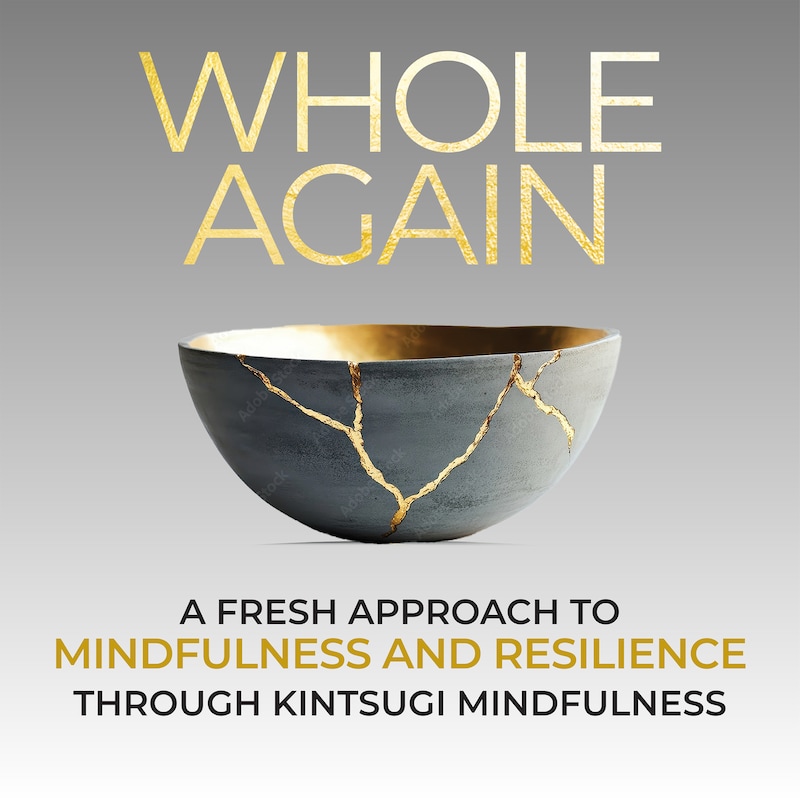
With Whole Again: A Fresh Approach to Healing, Growth & Resilience after Physical Trauma through Kintsugi Mindfulness, listeners explore resilience through personal stories of trauma, scars, and injury while learning to overcome PTSD, imposter syndrome, self-doubt, and perfectionism with self-compassion, self-love, and self-worth. Through insightful discussions on building resilience, resilience building, resilience and fitness, fitness and resilience, stress management, mindfulness practices, and digital wellness, the show offers practical tools like breathwork, micro-dose meditation, grounding techniques, visualization, and daily affirmations for anxiety relief and stress relief. Inspired by the art of kintsugi, the podcast embraces healing as a process of transformation, encouraging a shift in perspective from worry and being overwhelmed to gratitude and personal growth. By exploring the mind-body connection, micro-dosing strategies for emotional well-being, and holistic approaches to self-care, this podcast empowers listeners to cultivate emotional resilience and live with greater balance and intention.
Transcripts
In this episode, you'll discover that you have permission to be messy.
Hey, there, it's Michael. During the early days of my recovery, when I was still in the hospital, my wife would bring me lemonade with lunch. Besides being super delicious, it was a reminder that we can take lemons and make lemonade. And we are gonna do just that over the next seven weeks on our Friday episodes.
During this period, I'm going to be helping one of my family members recover to help them feel whole again. That's the lemon part of it. The lemonade is, it gives me an opportunity to reintroduce to you some of the amazing guests I had on the podcast when it was known as the Kintsugi Podcast. And in this episode, I'm so happy to share one of them with you.
But before we get to the episode, I first wanna say thank you for being here, and thank you for being a survivor. And as I've mentioned over the last couple weeks, if you wish to receive those great text messages that are just the right message at the right time, and they're all free. Well text me whole again to 8 6 6 6 1 2 4 6 0 4.
sat down at the beginning of:You'll also get that permission to be messy as we all try to figure this out and how being seen changes everything. And I will add also feeling heard and. Being appreciated. It's why I end all my meditations, especially our love and kindness ones with that phrase. So if you're ready to meet Kristin Graham, our favorite word nerd.
Take a healthy breath in and a slow releasing breath out breath and get to know Kristen and how language can change everything.
Hey Kristen. Good to see you.
Hello, friend. Good to be seen.
So how is the west coast on this day today?
It's lovely. It's lovely. The sun is out. It's crisp, but it's beautiful. I grew up in Phoenix, so when I see fall leaves and bright sky just makes me happy.
That's really cool. So people on YouTube can see this, but people listening can't.
But your windows behind you are littered or plastered or sprinkled with Host-It notes.
Yes. Colored post-it notes.
Yeah. So what say they like? What are those for?
Yeah, so the short answer is that. It's my cognitive confetti that it's just up there. So most of them are podcast episodes that I've already recorded.
Thematically, things that have come up. What you can't see over here is ideas for other ones that I might do. And it's not just podcasts, it's, it's like marinating in words and having them around. But it wasn't some intentional design strategy during COVID when we all shifted home, I was still in a corporate role and I was working on a project.
And so I was just organizing some thoughts related to the strategy of this project. I took a break. I was in the other room and my dog comes walking by and she has a post-it on the bottom of her foot. It's like, what's that? And it turns out that post-its don't stick to paint and wallpaper very well.
No, they don't
COVID things that we learned.
So while I was working, I put them up in the window. 'cause that's one place that they're always gonna stick. And then it just has become. This really fun experience behind me, and it's something people comment on a lot, either in a good way or more. Oh, that's itching my brain, which is perfect since that's a lot of the work I do.
I love it. So it doesn't itch my brain at all. It lights my brain up. I have my own version of that. I have a whole bunch of paper and when I hear an idea or an idea pops into my noggin, I write it down, I sit with it. I go back to it Many times, I can't remember what I wrote down 'cause my penmanship is horrible.
I do the same,
although I am working on that, trying to improve in all areas of my life. So I love. All right, so here's how I would like to begin as we get to know you. Okay, obviously we know each other, but people listening might not. So what's one good thing that's already happened for you today before our little sit down here?
What a great question. I got a hug from my 20-year-old son, and as a parent, I never take those for granted, especially when they get older into young adults. So I will always heart emoji on getting hugs from my children. And then I have a rescue dog and she had dental surgery yesterday, and so just sitting and cuddling with her and just holding this sweet little soul, so I got some soul love and that already makes it an amazing day.
That is an amazing day. You cannot underscore the awesomeness of a hug.
That connection and the physical expression that just we're gonna talk words, I have no doubt. But there's something about exactly what you just said. The tangible love through the skin.
Yeah. The feeling. And when someone holds a hug for just that beat or two longer.
Yeah.
But not so long. It gets a little weird. Yeah.
Not the creepy hugs,
because there's a little fine line there. I think that's one of the things that we missed during the pandemic, is just that hug. And I know there's great debate as to whether we're gonna return to the office and how we're gonna do it.
And I've been to some conferences. I was at one last week in Chicago. I know you've attended many this year.
Yep.
And we're still trying to figure it out, like how do we greet each other? But there is nothing when it's appropriate and welcomed and all that jazz. There is nothing like a hug.
I agree. And in those more professional or newer acquaintances, even the handshake, there's this element of a connection.
And especially to your point about how we've had this actual distance. There's a bit of social atrophy that's come from that, and I feel like we're all kind of relearning how to engage and connect in a way that feels appropriate and welcomes, but not ruling out those elements where we can physically connect.
Yeah, I agree and we'll get into this here in a bit, but I think there were like hairline cracks in our ability to connect. I'm not gonna put it all on social media, but we'll put some on social media where we feel connected but we're not really connected and we losing the ability to really like deeply connect with each other.
So there was just like weathered airline cracks in our pottery, if you will, to use the tsui metaphor, and then the pandemic came and broke it apart.
That is such a beautiful way to talk about the fractures that were there, that we can't just put it on an event or time periods. I worked a long time in tech and I think we're all familiar with algorithms.
Sure, yeah.
And one of the things that happens with news and social media is it distorts the DNA of our connections because it eliminates breadth and depth and feeds you, curated connections. Just going along with that and our world gets more narrow and that definitely is something that takes a lot of intentionality.
And also to the Kintsugi element too, is what are we sealing ourselves with and is it serving us or isolating us? So I think that there's a lot of beauty in acknowledging that the cracks were there and, and then how taking care to take good care.
Absolutely. I love that. Alright, so we're gonna take what you do professionally.
We're gonna put it off to the side 'cause people can check out LinkedIn to get all that stuff. So if we take what you do professionally to the side, how would you describe yourself?
I am a professional nerd. No, I'm not even a professional. I'm a personal one. So I guess I would say it this way. I nerd out loud.
I am a curious student and a learner, and I'm also so enthusiastic that I love to share the thought bubbles and the learnings. So I'm a curator of curiosity. You and I share a good friend and Teresa Salvado Go and that whole curiosity conversations and just being interested in the world and the people, and I hope I am forever an amateur at that.
Were you always a nerd? Oh yes. Did you grow up as a nerd and then you just carried the nerdiness all the way through your adulting days?
So I was always curious. Nerd is a word I think that we're socially adopting and turning into a positive one.
Yes, of course.
So just acknowledging that. I've had a few people be like, wait, is that a good thing?
And
it's a good thing. I
affirm that. Yes,
I totally own the nerdy mood. Yeah,
we all get to have our reactions to things, but I was the youngest and only girl in a military Catholic family, so there was a lot of structure and rules that came with kind of the social ecosystem that I grew up in. And I was curious in terms of saying, why can my brothers participate in Sunday mass, but I can't.
Early roots of feminism, please make note. Or just different elements of, what does that mean? Both my brothers are over six feet tall and I was just, I wanna find a way to go up that thing too. But I thought that curiosity was part of my personality part. It wasn't until later that I understood that it was a strength and the rigid academia in a lot of ways, public schooling anyway, I believe stifles us into the law of averages.
So curiosity was maybe an extra credit thing, but not necessarily rewarded. It was more like check the boxes and go along. So I think I saw those as extensions outside of the daily structure and more of who I was as a person. Always curious. And my mom, we would do a fun thing. We would walk into a convenience store.
Let's say we got gas in the convenience store. We'd come out and we would quiz each other and she would say, what color shirt was that guy wearing? And that really helped me imprint on the Polaroids around us. And then that led to more curiosity. And now my kids will tell you, we can't get anywhere. 'cause mom's always, oh, I love your bow tie.
What's the story with that? And they're like, can we move along? And, but that, we just said it earlier, we haven't been seen for a long time. And so making little conscious connections. It really matters to people when you comment on their hat they're wearing, or you and I were just talking about stickers and there's so many signals we give to the world that says, please see me.
And when somebody listens, it's just a delight in the day. I
completely agree. Last night I was at an event and this woman had an orange, but a light in terms of weight and material, cardigan, sweater. And so orange is my color. And I do think if you're wearing orange, you're screaming out to the world to say, notice me.
Yes, totally
agree. And it's one of those colors, it's, hello, I'm here. And I didn't know where people were networking, but also getting ready to come into the main event. So they were ringing the bell and herding the cats into the arena. I was like, great color. She was like, oh wow, thanks. It's my favorite color.
And it was a little bit of a interaction, maybe 15 seconds long in that moment. We both got to hear and see and appreciate each other. I was not wearing orange. I brought my corporate uniform to the event. Event, uh, blue blazer with some like color in it, but wasn't orange. But to your point, Kristen, I do think like we all thirst to be seen and heard and appreciated.
I agree. And to feel connected to something. So now you might have already answered this question with that example of you and your mom going to get gas or going to a convenience store, but I am curious about is there anything from your childhood that your parents would say or maybe do that is still with you today and impacts the way you show up?
Today? Today.
Oh goodness. I feel like we can go in a lot of directions with that. I'm looking above my door to my office. I think it was maybe my 25th birthday. My parents gave me this framed quote and it says, let your life speak.
Oh, nice.
And to get that from your parents, that means a lot. I was the first female on either side of the family to get a college education.
And it was challenging Growing up, we didn't have economic means. Once my dad left the military, we were really paycheck to paycheck and I saw my dad go from a, an officer in the Air Force to a blue collar worker with a van parked in our driveway. And I really spent too much time with shame as a companion and trying to make sense of the world through socioeconomic comparisons.
And that stuck with me. And I tried my best to have life mean more than status. And as a Gen Xer, I really only achieved that meaning the awareness and the understanding after I went and checked all of the good girl boxes that I thought I was supposed to do. It was in that journey of conformity that I realized that fulfillment and achievement are not the same thing.
Yes.
And that happiness belongs to no association or academic institution. It is an inside job. And that was the cracking open of really caring less about the external and caring so much more of the intrinsic.
Totally agree. Totally agree. So just for the sake of completeness, can you share your examples of the good girl boxes that you thought you had to check?
Happy to. And a lot of them were privileges to do and I'm glad that I did them, but so college was a first and a big step.
Check the box of college,
but it was, I wanna go back to that though, because there's stories that we tell ourselves or stories that are told to us that we adopt as truths. And when I was growing up, my older brother was smart and I was cute and whether those were my words or everybody else's words, it just became part of my story.
He got an academic scholarship and I didn't really try very hard in high school, but I had fun. I joined all the clubs and I was just curious. 'cause somehow when you think of refrigerator poetry, somehow we take words off of our own refrigerator. And so when I didn't think that I was smart, but that I was clever, street smart versus book smarts, things like that, I just left smart off the refrigerator.
So going to college was serendipitous on a lot of levels and it was the first of how. I saw that the world could crack open in this beautiful way that dreams can happen, bigger than you can even imagine. And smart was one of them. It was in going to college, which really was being sponsored by a college scout who saw me and took a chance on me and changed the entire trajectory of my life.
So back to one conversation can change everything. That has absolutely been a philosophy I've been under. To answering your question, going to college, completing college, I had to drop out for a year and a half and go to community college because we ran outta money. And so working two jobs, I worked as a secretary, which was the name of it at that time, and really seeing the humility of hard work, right?
And I watched my, both my parents do that. They were hustlers and my dad working 10, 12 hour days in Arizona Sun. But really that privilege doesn't always mean easy. Getting that college education was not just this, you land at college and poof, you get your diploma. I almost flunked out. I had to drop out for school for financial means, and then to come back later and graduate with honors.
It's the broken road that leads to opportunity. So that was one achievement. And then after that, as a good nerd, I went on to get to master's degrees and loved it. But at the time, even getting through an undergrad was a real challenge on a lot of levels. But when I turned 25, I finally realized that I was smart.
And once I put that magnet on my board, nothing stopped me since. But man, I didn't have that adjective for a while.
Wow. Coming back to that point, that one conversation, I believe like people show up in our lives all the time. Right now, we just have our, we have our heads in our phones or down at our computers, and we're busy rushing off to something else, and we hardly see the people who come into our lives.
And I believe people come into our lives all the time. Maybe not for a particular reason that's known. I don't necessarily believe that there's a program out there that our whole life is like, yeah, it's inputted on a, a computer card. But if we can slow down just a bit and notice going back to something you learn from your mom, you notice, you get curious as to why people are showing up in your life and step in or lean into those conversations, we, we might find something really special on the other side of it.
I love that about that story. Just opening the door to a new possibility for you and then that changes how you see yourself. It changes your.
It does. We leave fingerprints on each other, but we also receive fingerprints from all those interactions. Even the woman whose cardigan you mentioned, my 20-year-old son who I said earlier, he loves to wear like really goofy t-shirts or he'll wear like a shirt and tie, but they don't match.
And at the end of the day, he'll come home because I know this about him. And I'll say, did anybody comment? And he'll say, only two people. And it's such a thing that we go out in the world and we're trying to express ourselves and it matters when somebody notices. And it's just those 15 second interactions.
And you're right, we're so honed into a screen that we forget the humans on the other side.
Yeah. And I think going back to what you mentioned earlier, Kristin, I think our ability to interact has atrophy.
Oh yeah.
Because now we might see someone with she or he or they or wearing something interesting.
And we don't know how to start that conversation. I think a lot of us like don't have the conversation 'cause we don't wanna say it in the wrong way as well.
Sure.
And you're like, is that gonna be weird? Or am I gonna get blow back and, but I think it's really cool, but should I say something? Should I not say something?
And then we end up not saying something and we miss this opportunity to connect and then the atrophy gets worse because we're not exercising the muscle on how to interact with each other and not be socially awkward as we are today.
Do you remember the movie Wally? The Disney movie?
Oh yeah, that's one of our favorites.
My wife's favorite. Like she loves Wally.
I love that. And watched it a lot with my kids when they were younger. But there's this whole element of the robots who have been here to serve and that humans actually forget what their legs were for.
Yes.
And I feel like there's a bit of that happening in terms of we have a deficit in our currency of connection.
One of the best ways I think we can make deposits in other people is in those compliments or those acknowledgements, those elements of I see you, and it doesn't even have to be words sometimes, just that I'm on a lot of airplanes, as I'm sure you are. Just the kindness, the smiles, the eye contact. There's a lot that we can reintroduce.
Yes, I was at Costco, this goes back a couple months ago. I usually don't go to Costco. My wife does the Costco run 'cause it links up with something else she has to do. And so it makes for an efficient trip. She was away. So I went on a Saturday, which I don't recommend to anyone anywhere. And the wines were crazy and people were bumping into each other trying to get a free sample of s sausages or whatever.
And I probably did have a look of overwhelm on my face and I was wearing one of my paws, breathe, reflect t-shirts. And this older guy looked at me, he is like, that's a good idea. And at first I had no idea that I was wearing the shirt, right? I forgot what I was wearing, right? Which I think is not uncommon.
I don't think I'm that weird, but I am a little weird, but not that weird. And I looked down my shirt, I was like, yeah, it's probably a good thing. And so it was so simple. I don't know his name. He doesn't know mine, but it was that three seconds of humanness that made the situation feel less overwhelming and less chaotic.
And we were able to laugh about just how crazy people are.
Yeah.
So it was beautiful.
Yeah, I love that.
So let's talk about connection a little bit further. So you've had your professional career and then the pandemic hit, and so you decided, hey, this might be a good time to be an entrepreneur during the whole time.
So knowing that the only thing really truly to expect in life is the unexpected. I was hoping you could share a little bit about that part of your journey, leaving this small Seattle startup that some people might know about to this life that you have now, really helping people unlock their minds. And what I see when I see your work is.
Helping people connect not only with themselves, but with each other. So I was hoping you could share a little bit more.
Thank you for that reflection. I really appreciate it. I think for me, I mentioned earlier I am a constant student, and so really finding the space of the intersection between neuroscience and habits and psychology and how those are ingredients to use your word, how they can blend together and enable us to do fewer things better, which is one of my mantras, but also to liberate us from those old, dusty stories.
So when you can have data or science and say, oh, that's why I walk into the kitchen and forget what I'm doing here. It's not just some. Deficiency because we go often psychologically and research shows, we go to negatives. If anything falls out of order, it becomes a failure on our part, or we're looking for blame, right?
There's a lot of ways that the brain fight, flight, all of that works. So for me, I check the boxes, as I mentioned, and always had this itch inside. I enjoyed going through the boxes because it was a privilege, but I get bored easily. And when I turned that around, it was like, I'm curious. Frequently when I reframed it to say, you don't have to say in the same cubicle for three years.
You get to have an And one of my favorite things is the ampersand. It's a yes. And I'll go back to childhood since you had asked that question earlier. I was a voracious reader. My mom owns a small used bookstore up in Northern Arizona, so books were my companion. And one of my favorite series was the Choose Your Own Adventure.
Oh yeah.
Love those. Where you can choose different decision points and then it, and then you can go back and be like, oh, what if I went back to page 35? And that to me has really become part of, you get to have options. Sometimes we can't go back through the doors, but we don't have to stay in a story that we've either outgrown or somebody else told for us.
So that was a huge framing. And then when I became a storyteller, professionally versus a journalist and then corporate, the beauty of being a storyteller is that there's usually an audience, even if it's written, there's feedback and there's testing, and then the internet booms and all of the different ways of connection.
And I went from being rigid in learning how to have words be pretty, to having words land. And that was a fundamental shift into understanding an audience. Instead of having something shiny up in lights, something that is digestible and accessible so that people can make their own determination of value.
So can I play that back to you? Just that transition from words are beautiful to words that can land. Was it pretty large vocabulary? You can talk about a lot of different things you can use. All your education, your career as a journalist and really wow people with how much of an active vocabulary you have.
But it may not have landed completely with the audience in such a way where they could take action from it. Do I have that right or is there certain more to that?
Well, lemme stand upon it because I like how you frame that to allow me to give a little bit more color. In the nineties when I was really coming out of it and writing either for a daily newspaper, a magazine, and later in corporate on behalf of a brand, on behalf of an executive, wasn't necessarily my words, but they were words.
And the assembly of them was a skill that I had. But back then, words were curated and offered as a push. Here's a book, here's an annual report, here is your newspaper. And it was like, here, you may receive this. There wasn't the two-sided arrow of then, Hey, what did you think about that? Did you understand that it really was.
Given. And as the communication and as the world continued to change, you had a chance to see whether those seeds that you planted actually took root. And for me, that's when the dynamic nature of what I saw as possible changed.
The seeds are planted and then a little nurturing, some watering, some fertilizer, and now we're developing something.
Yeah. And the words that we have now planted are starting to change worlds in the whole notion that words can change worlds and different action taking place. Yeah.
We've moved from communication being a monologue like the old radio shows and just this, I am Dan rather here to give you your news to a dialogue.
And that's a lot of voices. It's a lot of being in the middle of Costco sometimes, but words don't belong. I went to Northwestern to get a journalism degree, which at the time was one of the best journalism schools. And the very first thing they had us do is take an ethics class, which I love about that whole approach and philosophy of this isn't just about facts, it's about informing and educating and carrying that responsibility.
And so while we've allowed so many more voices. It has allowed different dimensions.
I also think the whole notion, which is fact that there are more voices that's legit. We see that like anyone with a phone now can express a point of view on a number of different platforms.
Yep.
I do think that's a beautiful opportunity that is presenting itself to sharpen our ability to use words with precision.
And you add in AI and chat GPT, and it's the early days, no doubt. And there's a lot of hedging. And the reality is I don't think anyone really knows what's gonna happen. We
never do. So
we hedge our bats, it's gonna be the best thing ever. It's going to cure disease, it's gonna be the worst thing ever. It's gonna kill us all.
But meanwhile, how people are using it is to write
yes.
Blog post and. Prompts and what have you. And here we are. We're already somewhat fragile when it comes to connection because of the pandemic. And now we're handing over our agency to use words in our own way, with our own energy, our own soul, our own fingerprints to some chat bot, which I think, and I'd love to get your take on, this is just my thinking right now.
I think it further atrophies our ability to connect and dare I say, we might end up all like Wally, but like I'd love to get your just reaction in your thoughts about that. And our ability to, to use words in a way where we can build connection and just the nature of AI coming into it and how we seem now, at least in some circles, outsourcing this ability that we have to choose really cool words to share a perspective.
Oh, I'm happy to weigh in on that. And I've spent decades, obviously in the space and place of words, but also similar to you having been a speaker and a trainer, I've had closer seats to watch where words take root and where they don't. What I would offer as an additional view to what you just said about it, just being a little more distant in terms of connection is a concern I've long had with connection that I believe that AI or chat services might be helpful in is I think the larger danger and the larger lack of connection is in words left unspoken.
So if there's a tool that helps people start a conversation or get a draft or find words, because back to our social atrophy, and you mentioned it too, we have these. Moments that kind of pass us by. 'cause we're in our heads overthinking. Should I say something? Should I not say something? How will they take it?
And then we're just constantly tell ourselves stories instead of having conversations. If there's an element in AI or different tools that allows people to start a conversation, I would use that as an amplifier. It doesn't replace authenticity and it does not replace ownership for how your words land.
We still have that intention versus impact. We see that in the world stage. But if it's a choice between, I don't know what to say and there's no Hallmark card for that, and coming forward and saying, I didn't know what to say, but I at least wanted to send you a note. If there's some of that Kickstarters, then I think that tool could end up helping people connect more.
I can see that. I think that's a really good perspective that you added, so thanks for doing that. I do agree that we're in our heads so much that we don't have some conversations that we could potentially have, and so yeah, a whole bunch of words are left unsaid because we don't know how to begin.
And we, we see all the limits too, right?
You add in multilingual elements, you add in NeuroD diversities and abilities. You add in kind of socio components, and that overthinking is pretty loud and pretty resilient. And then you wanna go back to social where everything is liked or disliked by buttons that it's no wonder that we've gotten a lot more conservative on our conversations.
One of my hopes is that we get a lot more open to having messy conversations instead of perfect ones.
So can you tell me more about that? Because I agree with you like having a messy conversation where we don't get it totally right. Part of the Kintsugi spirit is embracing our imperfections, embracing our scars, so we're not gonna get it right.
We're all perfectly imperfect. So in your opinion, Kristin, how do we move from? We're gonna be really conservative. We're just gonna try to have a perfect conversation to feeling more comfortable having a messy one.
I spend a lot of time in the corporate side of clients teaching how to write better, faster.
It's one of the offerings I do and I did in-house and now I do in my own space. And the first thing when I'm getting in front of people, 'cause they're coming in expecting a template, tell me exactly how to write this email and just tell me the things so I can bake this thing, right? It's permission to have a draft, permission to not have to finish something as soon as you start it.
And then leading with that and saying, Hey Michael, I wanted to share this draft with you and get your thoughts. And when we use the messy language, say This isn't finished, this isn't perfect. I'm not looking for this or this. What are your thoughts? It's funny because people will say to me, you're the word nerd.
Tell me what to say. I'm like, why don't you just say that? Hey, I don't know what to say, but I was thinking of you and wanted to connect. And when things get harder, especially in terms of strife. The larger elements in the world that are heavy. Just even acknowledging that. And we saw a lot of that during COVID, during divisiveness, during elections and wars and circumstances, and natural disasters and manmade ones of being able to hold space and say, it's a really messy time right now.
And I was just thinking of you sometimes just that start, just that acknowledgement without having the perfect words.
I think we're gonna have to use that a lot this coming year as we head into in election year and in a world that seems more complex every day and more uncertain and with more insecurity, just that could be a go-to statement for all of us to say, Hey, I was just thinking of you.
I don't know what to say, but I just wanna say that I care about you. I'm grateful for you. And maybe just that opens the door for a longer conversation.
I hope so. And even the moment you mentioned like at Costco, just the quick acknowledgement speaks volumes. And I remember years ago when my dad passed away, when you are in the middle of your personal grief, words may not always penetrate what you're saying, meaning what you're able to recall and remember.
But silence was a stronger message and unintended, and I'm using grief as an example here because there's a lot of dynamics that go into kind of world politics and elements. And COVID was the first time we all had a shared experience versus we all experienced it differently in threads, but we were under an umbrella of recognition that there was disruption.
But when we have our own worlds of grief or concern or worry, it is hard to try to offer something, especially in the spirit of respect. We want to not offend or we want to not say the wrong thing. And so we end up being more conservative and not saying something. What I recall from the biggest broken pieces of my life weren't the words that were given to me.
It was the extension of their hand proverbially. And I remember getting a card from a colleague I wasn't necessarily close to who just said, there are no words for these times, but I just wanted to offer you my condolences. That meant more to me than finding the perfect. And so I borrowed that. That's the beautiful thing of words when you find ones that feel right to you, use them.
And as you just said, being able to say, Hey, this is messy, or this isn't the right time. Oh, and the other beautiful thing that we can offer people sometimes is no response needed. And we give them the gift of it not being a dialogue. 'cause there's times where That's right too.
So what you're saying there is you send a note, it doesn't have to be long, and then you just type in no response needed and just say, Hey listen, just putting this in your inbox, just thinking of you, you matter.
I see you.
Yes. Because even responding might be a heaviness. So being able to say, I'm thinking of you, I'm holding space for you. No response needed or expected. However that feels right because then it'll, it becomes the choice of the other person instead of something we put on their doorstep, so to speak.
But that I've seen you.
Yeah. So when you think about these small little steps we can take and you think about just where we are in the world, where we are in corporate life, are there other things that you would recommend to people to do to help build more connection? So as we think about Kintsugi, we have the ui, which is the lacquer, and we talked earlier that we all have like different ingredients to that.
And so one powerful way of doing it, mixing up our lacquer is through our words, but as you think about the complexities that we will no doubt face in the upcoming year, do you have other tips or other bits of advice that you would recommend?
Yeah, thank you for that question. I did an entire podcast one time on seven words that can change your life, so I'll share those with you.
Oh, cool. Yeah. All right. Do tell
before I step into that though, on the, what we were just talking about with sharing words, another one, both from a professional and a personal one, is it's okay for all of us to, you know how on your phone, sometimes you have to shut it down 'cause a new software update has come out.
So we can do that with our vocabulary because when we know better, we do better as the great Maya Angelou said. And I'll just say, as a Gen Xer, there's language that's now outdated and there's a responsibility of us to acknowledge that we used outdated language. And so to ask, what's the right way for me to say that, whether it's with pronouns, whether it's with a lot of different things, just saying, what's the wording that feels comfortable to you?
Help me understand, help educate me. And leading forward with our ignorance, instead of trying to be like, I'm not gonna say anything. That's one thing that we gotta give ourselves permission to be messy and just be like, I'm not sure what the right word is here. What's one that you use? It's totally okay to just be like, and as leaders sometimes too, to stop in the middle and be like, oh, I'm not sure I should use that word.
Talk to me about that. That's such a wonderful signal of inclusion. The other thing for all of us to upgrade to, it's very natural from our empathy to wanna say, I totally understand, Michael. I know what you mean. One of the subtle shifts that we could do because there is a defensiveness sometimes, right?
Of you don't actually know and listen, I raised teenage boys believe I got that one every day.
No, you don't. No, you So yeah. You don't get it, mom. You don't get it. You don't understand. Yes. Yeah, you don't get it.
One of the shifts that was helpful, so I'll offer it here, is to just say, I hear you. It's an acknowledgement and even saying, thank you for sharing that.
That's another one you can add or use independently. It's saying, I understand that impacted you without saying, I know what you mean. Or another one similar is to say, I can appreciate that. Again, it's not stepping in onto them, but it is just saying, I received what you said. So those are a couple things that they're small, but they mean something.
And I think in this world of like constant media and monologues and not dialogues, one of the things I learned as a journalist that I've then put into active listening sometimes, it's truly not what we say, it's what we don't say, meaning we just pause. There's a great word called seila, S-E-L-A-H, and it's just that reverberation pause.
It's in music, it's in the Old Testament, but it really is just space for the music to fill that. Or for the experience too. And so one of the things we were taught in journalism school is pause after somebody's done speaking. It's strategic because people will then keep talking, especially teenage boys.
But it's also a sign of respect. It's letting their words wash over and we're not waiting to speak, we're listening to hear. So those are a couple of tips. Questions on that before I share the seven words?
I'll just say that I love all those tips, especially the first one. 'cause I think the first one you shared gets to a space of vulnerability for a lot of leaders.
A lot of leaders today are Gen Xers or younger boomers, and there are a lot of millennials in say, middle management, but maybe in some circles reach executive leadership, knowing that some roles in executive leadership come with age and just come with experience. So you have here we are, gen Xers. We're both proud Gen Xers and there's a lot, what I have found at this time in my life is that I'm unlearning as much as I'm learning.
Yes.
Beautifully said. Yes.
I'm also getting comfortable with not knowing, just like I, I don't know. I was having this conversation with someone the other day. I was like, the moon can move the oceans, like the moon can bring the tides in and bring the tides out. And so I don't know if it has an impact on us and I'm okay with it, just letting it be and being in that wonderment that it just might.
But I don't know. And I'm okay with that. 'cause what I've found as I've gotten older is that when I talk to people who are so certain, I. They can speak with such authority about some things. Like this is the way I find I am getting more of an allergic reaction like I break out in hives. It's quite unpleasant.
But that whole unknowing and unlearning and learning, but that unlearning piece is, I don't understand this concept. Can someone share with me what this is all about or I'm not sure of the best way of saying this. How can I say it? I've had to do this with our girls. 'cause there are some things from a social level where.
give me like a dictionary for: and:and there, something happened. Once COVID hit there, a whole new alphabet soup has come to the world, and I don't completely understand all of it.
I'd love to get up there and be like, yes, I know exactly what it is, but there's a lot I don't know. And I'm okay with it as I get a little bit older. So I love what you share, Kristen.
It's very liberating when you accept that you're not cool or educated because then everything gets to just be new information, at least for me.
Yeah.
And I think it, there's an approachability and excitedness to your energy when you can show up that way, because we're all faking it a bit, right? Like we're all, we're all trying to get through this life. We don't have all the answers and we're trying to figure it out. And we feel sometimes compelled to like have all the answers because they're still part of business and society that seems to reward the people with the answers, even though they don't have all the answers.
But if they speak with such authority, they're rewarded. So we have all these pushes and pulls. Meanwhile, we're all trying to figure it out and we, we just don't know. And if you can interact with other people and say, you know what? I don't know either. What a big collective deep breath out we all take.
That's a beautiful thing. It liberates us all to learn better too.
Yeah. And then, okay, now that we've had our breath out, let's figure it out. Now we can crowdsource some wisdom and let's figure this out. Now that we can stop pretending that we all know everything and we're all that in a bag of chips, and we might be all that in a bag of chips in a different way, but it's okay that we don't necessarily know.
And I think companies could do a lot just reinforcing that to say it's okay that we don't know we're heading into uncharted waters. No one has this playbook. No one has all the answers. It's okay. So let's just be honest with each other.
I love how you said crowdsource. I love that. Yeah.
It's just like there is so much wisdom all around us.
The thing is that many people, they go into work, they go into their cubicle, they jump on Microsoft teams, or they jump on Zoom and no one acknowledges them. No one says, Hey, Amanda, or Hey Anthony, they're on the Zoom of 30 people and no one says hi to them. And I can only begin to imagine. They're like, why am I here?
Does this matter? And we could, to your tips and what you've shared earlier, if we could just say, Hey, I see you. Thanks for showing up. Like then we start to change the conversation.
You reminded me of a couple of other things I've seen be successful in either collaborative or community settings like that, or even in hierarchical ones.
Again, back to signals. One is that pause. We do get into this just automatic monologue and this efficiency, and even just taking that beat and saying, I think I did it to you earlier. What are the thoughts or questions before I move on to the next topic? But that just gives people space. 'cause otherwise they're showing up and just being like, I'm just in the audience instead of at the table.
Yeah. Yeah. I love it.
The other one is when anybody contributes, and it's just being able, and I think I mentioned it earlier, is to say, well, thank you for sharing that. But when we put that into kind of a professional or academic environment, doesn't mean I agree with you necessarily, but it acknowledges the risk that the person took to even be part of the conversation to offer a different point of view or even an interpersonal relationships.
If there's a discussion or a debate, you may not happen to agree, but just saying, thank you for sharing that, thank you for sharing that perspective. Doesn't necessarily mean I'm gonna change my decision or my mind, but there's that acknowledgement of just you contributed and I acknowledge that. And then the last thing from a influencer perspective, if you're somebody in the room who is delivering or leading, is to pause and say, what questions am I not asking?
Because that's where you open the door for people to say, what don't I know? Or What's another way I could look at that? But saying, what questions am I not asking that can liberate a conversation and a lot of different angles.
That's juicy. That's a good one, Kristen.
And to kids, or not kids, but just to family members too.
It's just to say, what don't I know? What am I not asking? And 'cause a lot of people, I think naturally defensively are like, they don't care or they didn't ask. I love that one. You didn't ask. Okay, so what should I be asking? It's strategic. And it's inclusive. Yeah,
I know. I love it. I think it's great. I'm gonna put that into my, I like to say I put it on my Swiss Army knife because I don't believe anyone carries around a toolbox for them.
'cause it's way too heavy. So I like things that are more compact, so I'm putting that one on the Swiss Army knife.
I love it. Our little snacks.
All right, so now we can get into the seven words.
Seven words. Okay. So the first two is, I'm sorry. It is one of the most underutilized and most impactful phrasing in language.
And because I love neurolinguistics, that imprints and can change a lot, both from a physicality perspective, the releasing of a lot of the adrenaline and so I'm sorry, is one of the most impactful when authentic elements of release. And it's often the longest short bridge between reconnection. So there was a conversation I heard one time that said, what's the most expensive land in the world?
And the answer, 'cause everybody had this different real estate stuff, was a cemetery. 'cause it's the land of regret.
Oh wow.
And it's typically what I'm gonna share with you, these words are the ones that if given an opportunity, should not be taken or not shared. So, I'm sorry. Is such a gauntlet for a lot of people.
It's the key that unlocks a lot of doors and whatever that, sorry, is even back to our, I don't know what to say, conversation. One of the elements of having that in a phrase versus I understand because there's a lot of things we won't, is to say, I'm sorry, that was your experience. I'm sorry that happened to you.
It doesn't wash away. It doesn't try to understand in a different, but it's just saying, I'm sorry that you're going through that Michael. What a powerful thing to just be acknowledged without having somebody feel sorry for you. 'cause we're so defensive about that too. But just saying, I'm really sorry that you experienced that.
I had a friend the other day who got into a car accident. Those things happened, but just saying, I'm really sorry that happened. And it was like, oh yeah, me too. So even the acknowledgement that aren't those heavy, I'm sorrys, but just sometimes just saying, yeah, I'm really sorry you're going through that.
I'm sorry, just two of those words.
What I love about what you just shared is that additive phrase that you put onto the, I'm sorry, now includes the other person. So if we just stop it. I'm sorry. There's still a little bit of attention on ourselves. Two key words. No, no doubt about it. But when you said, I'm sorry that you're going through that, or you're experiencing that for me, what landed was, now I've just included you in into this dialogue or my offering to you.
To me, it landed in such a way that it was a little bit more inclusive.
That's an important reframing. I love how you called that out because there is something to the I and the you.
Yeah, the way you said it, Kristen, it's just like one small step,
subtle signals,
but it brings us together. 'cause now we're in this phrase together, this energetic exchange together, and now we're starting to sync up.
We're starting to build that connection. Yeah, I love that.
Even the ability to say, I'm so sorry to hear that. Thank you for letting me know. Putting those two together, it's saying, I know there's probably nothing that I can do, but I appreciate knowing, and maybe this is our version of ai. Just the starter words can have a lot of meaning without requiring a ton of words.
Yeah, no, I see that. Yeah. 'cause it can just be, we just need a couple things to get us going, to get past that resistance. 'cause we have the resistance for a variety of different reasons. What do I say? Because when I do coaching and imagine you as well, when you do your work, many people ask me, how do I say that?
And we play around with it and we workshop it and we role play it to find the words that they would use. 'cause I would, I tell them, I share with them like, listen, do not say this the way I would say it, 'cause it's gonna come across is, is not you. It's not gonna feel authentic to you. And it's not gonna land that way either.
So many of us are just looking for, just gimme the first few words. Or like in music, just gimme the first few notes and I can name that tune.
Exactly. Or just saying, what are the conversational appetizers?
Yes. I like that. Yeah.
Years ago, I think it was Tim Ferriss did an entire episode on how to say no, how to say no professionally, because that's such a hard thing.
And I wrote those phrases down and I had them in a draft folder because exactly what you said. You can take that and then use it, but it's just that framing because our intention almost always is to be respectful. But then we stumble on it. So having those starters, that just gives you that first step, especially a few moments of awkwardness in saying no or saying yes can save us hours of time, but also of mental anguish.
And so embracing the awkward by having a starter. It's a gift. It's a gift.
I like that. I think I heard the same Tim Ferriss podcast, 'cause I still use those today.
Me too.
Yeah. Like when someone will ask me, Hey, can you do this? I'm like, I would love to, but right now I have a few other priorities upfront so I can get to it.
Can we talk about when is a good time for me to get to this? Or different variations thereof? We try to create a little bit of openness when we say no as opposed to a hard line. No. Like a heck no.
It's fair
for me, just with my personality, I want to keep, I wanna keep the conversation at least open and see what we can find out from each other.
Explore a little bit before I give a final No,
that's interesting how you said that because I think that to double click on it, a really effective way is to have the acknowledgement, but then give the answer. Because a quick no is better than a long, maybe in a lot of circumstances. And we're trying so hard, but just saying, Hey, I really appreciate you inviting me.
I really appreciate you asking me. I really appreciate you thinking of me for that opportunity. Unfortunately, my schedule doesn't allow me to participate. But again, thank you, because we wanna put in excuses. I have to travel. I have another, we wanna explain and really the person just wants to know, did you hear my offer?
And what's your answer? And if we can do that quickly and clearly, instead of them being like, I had four paragraphs of how she's so busy. Was that a yes or no? I it, we end up being squishy. And clarity is kindness in a conversation.
Oh yeah.
They may not always like your answer, but they will respect that you gave them an answer.
Clarity is kindness. I love that. I might have to grab that as a great Kristen quote.
Ah, by all means.
Yeah. You know who's really good at this one show? We watched during the Pandemic, the early days of the Pandemic as a family. I think that gave us all hope because the economy was shutting down, right? We remember like supply chain and the whole thing.
So we would watch Shark Tank all the time because it was like, look at all these different entrepreneurial ideas like we can rebuild the economy. That's how I felt about it. But Mark Cuban on the show is really good at, Hey, I heard you and X, Y, and Z and this is the reason why I'm saying no. So he gave a firm, no, at the end he gave a little bit upfront as to the rationale behind his no.
People were really clear how he stood on a particular pitch. And so I always appreciated how he said no. And to your point, yeah. When we are wishy-washy and was that a yes? Was that a no? That lack of clarity can be really stressful to everyone.
Yeah. People respect a decision even if they wished it was different and it's a sign of respect.
Yeah. We're gonna have to get you a lot of Swiss Army knives.
Yeah. Now I might open up to this whole toolbox thing. I might have to go to Home Depot or wherever.
Maybe just a little quick little backpack.
Nothing too heavy. I still don't wanna weigh myself down.
No sir. No, because these words should liberate.
Absolutely. Alright, so we have two of them.
We got through, I'm sorry, that's two of them. So I'm gonna move us into I love you.
All right, cool.
Which that's equally heavy for a lot of people and. The impetus behind that is back to that graveyard setting. There's always that opportunity to say that again.
And there's also that instinct of they know I love them, I show them, and lots of the, if you go into the love languages and all the other areas, the words matter. The words matter. And it matters that they know too. It matters that they're told. So if someone matters to you, it will matter to them that they know that you love them.
Whatever that type of love is. We really put too much pressure on the words instead of letting them put the value of it. And I love you should be some of the most frequent words that are strung together for a lot of different things. Because as we've experienced, you never know when the last time is that you have a conversation with someone.
And ever since my father died, the rest of our family, we never in a conversation without saying it 'cause he died suddenly. And that it shouldn't have taken an event like that to bring it forward. But it is a sprinkling in the world that will never be saturated.
So true. As a family, we say right before every trip when we, sometimes it's through text, sometimes it's through phone.
We'll write Precious cargo. Xo. Xo, I love you. Oh. Because obviously you know my story. I went away to a company offsite. Everyone assumes dad's gonna come back. And I almost didn't come back. And to your point, you really don't know when. Will come. So you better say it now. It's so powerful. I am curious though, the word love as it sits in a corporate environment.
How do you discuss these three words in a business context?
Beautiful question, and it's a quick flip to say, I appreciate you.
Okay. Yeah. I'm tracking with you. Yeah, that's good.
It's another element of signaling respect, signaling the value and the contributions and that element of it matters, the effort that is being given.
Yes, there's a paycheck. Yes. There's a whole lot of other things. Appreciation is not something that I think people have an abundance of. So just with saying, I hear you in other circumstances, that's another way to say I obscene, I appreciate your contributions to that mean, I appreciate what you were, I appreciate that you helped on that.
So from a corporate perspective or just where the word love wouldn't necessarily, there is still that honoring of what the person offered.
No, I like that. I think that's an easier word for people to digest to, because love can be so much
for sure,
for so many people. And we wanna make sure work is safe.
We also wanna make sure work is brave. And for some people, some words don't land in the same way as we intend them to. So having the word appreciation or another word that popped up as you were sharing was, I'm grateful for you. That gratitude and appreciation I think can be really powerful. And to your point, Kristen, not set enough in work.
Yes, we could do such a better job at just acknowledging people, even when they fall short of the desired target to say, Hey, I appreciate your effort here and here's a couple different things that we can do as we go forward to bring it up a level or make sure that we hit the target the next time. We can appreciate the effort, even when the effort maybe misses the mark.
You reminded me of a corporate example. This was about a year ago in the middle of the great resignation.
Oh, yes.
I was talking a concept. I was talking with a company about retention, wanting to keep more of the people, and they were looking at the exit surveys and a lot of the data that comes from corporate of why people were leaving.
So I asked what I thought was just a standard question and I said, so how often are the people, managers or the leaders telling them, we really hope that you stay? And so that led into a whole conversation about why would we tell people? And like just because you have them doesn't mean you keep them. And there's great value in saying, Hey, I know there's a lot going on at work.
I know this was right with a lot of different, less people working and o burnout and overwhelm, and just saying, I'm sure there's a lot of choices, but I really hope that you stay with our company. And that could come from the CEO, it could come from the head of hr, it could come from the direct people manager.
But when was the last time somebody said, really glad you're here. Really hope that you stay and that costs $0, but it's probably one of the most impactful investments. And back to corporate, and I know you do a lot of this too, and coaching is just saying, we're spending all this money on consultants and learning and the rest of it, but we're not investing in words and trust, earned trust.
It's gonna come down to the exchanges that you have versus we value diversity, but we're not taking questions at the end of this meeting. We all have what we say and what we mean and sharing just those elements of, I really hope you stay with this company. We value you here. That could be a multimillion dollar investment because people stay where they're respected and they definitely stay where they're
appreciated.
Without a doubt, no. Like key words to share again. Most companies don't share these words often enough. Here's one theory I have for another day, we can kick it around. But I think a lot of managers feel, if I tell them I appreciate them and I want them to stay, especially as it relates back to the great resignation in air quotes or not, who knows that they're gonna ask for more money.
If I start giving them a lot of kudos and letting them know how much they're appreciated, they're gonna ask me for more money, which for me is should they be asking you for more money? How well are you paying them? I
feel like that's a different meeting. Yeah.
Yeah. That's a different meeting. So maybe if that's your first worry that's telling you something that they're probably underpaid, but we'll handle that on another podcast.
Yeah, completely agree. I did a lot of work in the recognition space too, and the first thing is. Ask them what they actually value instead of giving them a mug.
Yes. Yeah. We don't note to corporate officers. No more mugs.
No more mugs.
No more mugs, no more fleeces, no more pens, no more stuff. Just treat people with dignity as a human.
Yes. I think that choice is the best benefit you can give people. I always love where it's like we're gonna have an appreciation happy hour, so everybody stay two hours late and don't go home to your family. Just like, can you just, can you not spend that money and let me take an afternoon off. Thanks.
So this is a really cool, I'm glad you brought that up.
We're going on all these beautiful thread, Kristin, I just love, I'd love it. So last night I was at a event, the woman in the orange sweater. Yes. Great sweater by the way. But the CEO, the new CEO of this company. One of the world's largest companies. And he said, listen, there's all this microaggressive tactics playing out every day here in companies all around.
And he specifically mentioned that, Hey, let's go out for dinner type of thing. Hey team, let's great meeting. Let's continue this over dinner or over drinks. And we're, the event was a diversity, equity, and inclusion themed event. And he said, Hey, listen, for a lot of guys, they're like, all right, let's go out.
We're gonna go get, we're gonna go to get a steak or wherever you go, right? He said, for. Parents that is a pain in the rump. Oh, it's
stressful
because now it's all great. I've worked all day long and now I gotta go for extracurricular activities, which means that I have to figure out my whole home life and how do I set up a sitter or have my partner watch our kids or all that.
So this little simple, Hey, let's continue it over. Drinks becomes a big thing for me. And I have no choice. I feel like I can't tap out of this because I will be labeled as not being a team player.
Absolutely.
And it's, I loved what he said because it's bringing awareness to these little things that we think nothing of because we've done it for eons, and eons is just, it's what we do, and we have an opportunity now to unlearn some of that behavior and step into a different conversation.
I
love how you brought back unlearn. It's those elements too of same with 7:00 AM 8:00 AM meetings with caregivers in general. Right. Not just necessarily appearance, but different elements of that. And in the global, we're working on such a thing. And the other thing too is all of the bringing lunch in, forced comradery and no good deed goes unpunished.
I spent a lot of time working with HR organizations, but we keep giving people what they didn't ask for instead of asking for what they would like to be given.
Yes, the forced fun aspect of it. Yes.
We're going to celebrate you, dammit.
Yes. So we're gonna go to a safe house at night. That sounds like a really great time.
Or we're gonna go axe throwing. What are we doing people? Yeah, come on.
That's not weird. Oh my goodness. It's,
yeah. That's so weird.
Oh, okay. Future side topic. All about how corporate can stop employee appreciation events and just make their culture a little bit more. Accessible.
Absolutely. All right, so we're down to two more words.
Two more words, recapping for the folks at home. We had, I'm sorry, in the beginning we had, I love you slash I appreciate you based on the circumstances. And the last two are, thank you in all the variations for sure. But never missing out on. Thank you.
And say it like you mean it.
Yeah. And if you want, what are you thanking them for?
But it goes back to the I'm sorrys the thank you ZI love you. That's the stuff that is in front of the comma and a lot of us cut that off and just say. Here's the sentence. Instead of starting with, I'm sorry. Thank you, I love you. Those matter, those are the headliners of it. And we just gave examples.
Incorporative, just the simple elements of have you been acknowledged? And all of those in different facets are really deep acknowledgements that get remembered. 'cause a lot of people will go back to their own mental replay and be like, I said that. I told them that. But if you read the transcripts, friends, sometimes those two and three words that were missing are the ones that will stick.
You can talk for 10 minutes and leave. And people say, what? What was that meeting about? I don't know. Kristen was just talking instead of, thank you. They'll remember the shortest words and those are the words that matter.
Going back to Maya, people remember how you made them feel?
A hundred percent.
All right, we'll wrap up here.
That was awesome, Kristin. So well, I'll ask it this way. What are some favorite words of yours that we haven't already discussed?
Goodness, we've discussed so many of them. Gosh, I just wanna repeat everything that we've said. I think I would put in there, joy.
Oh, cool. Yeah,
I love that word. What brings you joy in that space?
And then I mentioned Seila earlier about the sacred space, and then I just love the sizzle of happy. Just the, I'm so happy to see you. I was happy to spend time with you. That's a lovely sentiment. That elevates just the acknowledgement.
I like that. The sizzle of happy.
Yeah. And same with joy. But it was such a joy to see you and I was just happy.
'cause it's one thing to be like, Hey, thanks for lunch. Oh. I said thank you like Kristen said, and just say, I was really happy to spend that hour with you, Michael. Thank you.
It's a different sizzle.
It's a different sizzle.
Is there something that I should have asked you but didn't?
Gold star friend. Gold Star.
How about
that? I'm a quick learner.
You are indeed. I'll answer that with a very quick story at the end. I, years ago, I had a chance to be in Africa and in Swahili there, which is a common language across the different provinces. In, in Africa, there is a phrase called Salama, and it is basically a good night wish.
But one of the things I got to experience was around the table at meals, they would share reflections of what went well in the day, but they did it through acknowledging what they witnessed in other people. So one of my highlights of the day, Michael, is when I saw you. Doing this. And it was such a beautiful way to shine a spotlight of what was observed.
And so my family has adopted, it's a little out of order, but we call it, what are your Lalas Today? And it's a chance to acknowledge what was seen and witnessed. And there's times where you're like, I didn't even know you noticed that. So it's opening that space so that we can share on with others how we've been received.
And that is the gift of reflection of ourself. And you've done it so much with me today in our conversation is truly a reinforcement. But it is. It's an opportunity. To say, I'd like to reflect back to you, or I'd like to share an observation I had when you were talking about your girls, Michael, and how you lit up.
We don't get to see ourselves in that window of the world, and sometimes the best gift we can give each other is just pausing and saying, I really enjoyed how you did that. It was an opportunity to share. So thank you.
Yeah, thanks for sharing that. That's awesome. So do you know the show inside the Actor studio?
Sure. Yeah.
All right. So James Lipton is famous for when he was hosting the show of asking a series of questions at the end on his blue note cards. One question that I like to ask people who come onto our show is one of those questions. It is this one. Let's assume that heaven and God exist. So when you arrive at the pearly gates, what would you like God to say to you?
Thank you.
Great answer. Great answer. One last one. When I do a love and kindness meditation, this is perfect. A perfect tie in to what we talked about today. There are three lines from that meditation that I share, and they are, may you feel heard, may you feel seen, may you feel loved. So where would you like people to go so they can hear and see your work so they can love you more?
Where I collect a lot of words that are for the taking is on my podcast. Fewer things, better, they're all 10 minutes or less, and just little thought bubbles and brain snacks. So it would be a great opportunity to select what might mean something.
Perfect. And I would say if you're not listening to the Kintsugi podcast, you should listen to Kristen's podcast 'cause it's really good
both.
That's a yes and
yes. Yeah. Yeah. You can do both. You can do both in a day.
Absolutely. And Michael, thank you for the space that you opening it back up and reestablishing a podcast. It is Seeds for Future inspiration and I honor you for that.
Uh, thank you. And right back at you, like you truly embrace. What we're trying to do here in Katsuga is build connection.
And so you do it so beautifully with the words and your teaching and your wisdom that you share with others, and you are, yeah, just as you said, you're a seed planter and putting beautiful ripples out into the world and on behalf of the world. I will just say this. Thank you for rippling what you ripple into it.
That is my heart emoji to you, friend.
I love you.
I love you.
I just love Kristen. I hope you enjoyed this conversation from our archives when Whole again was known as the Kazuki Podcast. In it, you discover that small words can have huge impact. There's truth to that and that can build connection and you have permission to be messy. To draw outside the lines. We can all give ourselves, as I like to say, a little grace as we all try to figure this out.
'cause everything's changing and changing even more quickly than we can evolve thanks to technology and. The importance of being seen and heard and appreciated, especially as we go through recovery, sometimes we can feel invisible, so if we wish to be seen, sometimes it's up to us, even though we are going through our healing process to go first, to let other people know that they're also seen, heard and loved.
And I love the fact that you're part of our community. So thank you for being here. Thank you for being a fellow survivor and if you wanna get those really cool text messages, I keep talking about, you know, the ones, the ones that land with the perfect message at the perfect time, well send me a text, just text whole again to 8 6 6 6 1 2 4 6 0 4, and I'll set you up.
And if you wish to further enhance your digital health, I'll invite you to take my smartphone wellness check and you can access it through the link in the show notes. Or you can visit my website, which is Michael O'Brien shift.com, and it's absolutely free and it'll help you scroll less and live more.
And of course, I hope you'll join us here on whole again. Every Monday, Wednesday, and Friday, and discover how to heal, grow, and become more resilient and celebrate our scars as golden symbols of strength and resilience. Until then, remember, you can always come back to your breath. You've got this and we've got you.