Shownotes
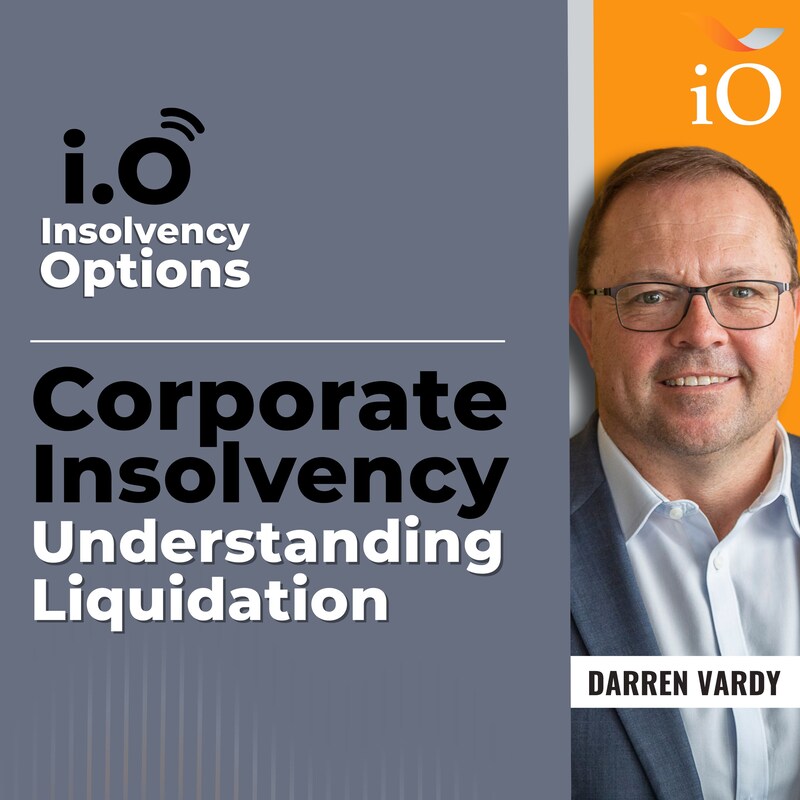
Demystify the corporate liquidation process with insolvency expert Darren Vardy. Learn about different types of liquidation, what happens to company assets, creditor priorities, and what directors can expect throughout the process.
Key Topics Covered:
- Types of corporate liquidation (voluntary vs. compulsory)
- The role of the liquidator
- Asset realization and distribution process
- Creditor priorities and payment order
- Director responsibilities during liquidation
- Timeline and key milestones in the liquidation process
Key Takeaways: ✓ Voluntary liquidation allows more control over the process ✓ Liquidators have specific duties and powers under the law ✓ Asset distribution follows strict legal priorities ✓ Directors must cooperate fully with the liquidation process ✓ Early voluntary action often leads to better outcomes
Who Should Listen: Business owners, company directors, lawyers, accountants, and anyone wanting to understand financial distress warning signs.
About the Host:
Darren Vardy - Managing Director of Insolvency Options and Registered Liquidator with over 30 years of experience in business recovery and debt solutions. Darren has helped thousands of businesses and individuals navigate financial distress and find practical solutions to complex problems.
Connect With Us:
• Website: insolvencyoptions.com.au • Phone: 1800 463 328 • LinkedIn: https://www.linkedin.com/in/darrenvardy/
Subscribe & Follow:
Don't miss future episodes! Subscribe to i.O. - Insolvency Options
Like this episode? Please leave a review and share with colleagues who might benefit from these insights.
Co-host: Anthony Perl
Produced by: Podcasts Done For You
Hashtags: #CorporateLiquidation #Insolvency #BusinessRecovery #Liquidator #AssetRealization #CreditorRights #CompanyDirectors
Transcripts
Introduction to Insolvency,
understanding the basics.
2
:Welcome to our first episode of IO
Insolvency Options with Darren Vadi,
3
:the managing Director of Insolvency
Options, and a registered liquidator.
4
:With over 30 years of experience
helping businesses and individuals
5
:navigate financial challenges.
6
:In today's episode, Darren shares
his journey into insolvency.
7
:Explains what insolvency actually means
and reveals the warning signs every
8
:business owner needs to recognize.
9
:We'll explore when to seek
help and the difference between
10
:corporate and personal insolvency.
11
:You'll understand the
fundamentals of insolvency.
12
:Know when to seek professional advice.
13
:Learn why acting early
gives you the most options.
14
:I'm your co-host, Anthony Pearl.
15
:Let's dive into unlocking
more about insolvency options.
16
:Darren, let's focus a little
bit on corporate insolvency.
17
:I think it's important.
18
:That we start off with just simple
terminology because I think a lot
19
:of people hear these words and
maybe don't fully understand it.
20
:They think they know what it means, but
they don't really know what it means.
21
:So just unpack the idea
of liquidation first.
22
:What does that actually mean?
23
:So liquidation is where a company
is essentially a wound up, A
24
:liquidator is appointed either.
25
:Voluntarily by its directors and
shareholders, or by the court.
26
:Now, the purpose of a liquidator is
to secure, protect, and realize a
27
:company's assets, then in accordance
with the priority set out in the
28
:Corporations Act, distribute whatever
surplus realizations are available
29
:back to the company's creditors.
30
:So on a liquidation, a business
will, if it hasn't already prior to a
31
:liquidator appointment, a business will
cease to trade upon the appointment
32
:or shortly thereafter the appointment.
33
:It is possible for a liquidator
to continue to trade the business
34
:for a short period of time for the
purposes of realizing the most out
35
:of a company's assets, but generally
that trading on period will generally
36
:only go for weeks, not months.
37
:Despite the fact that we seem to
see some of these retail outlets
38
:that have liquidation sales that
seem to last for years, right?
39
:That's a little bit of marketing
that goes on there I think.
40
:I think it's fair to say that the
liquidation sales that you refer to relate
41
:to liquidation of stock as in sale or
realization of stock sales as opposed
42
:to liquidation of company, correct.
43
:I do recall, and I hope this is a true
story 'cause I want it to be, there was
44
:someone that tried to register, at least
operate under the name closing down sale.
45
:And I think that got pulled, I think
it was the, so the story goes that they
46
:weren't allowed to continue to do that,
but that was the name of the shop and
47
:that was where it was going on for a
few years until people kind of went,
48
:hang on, this is not really right.
49
:You're not really closing down, are you?
50
:One would suggest there may
have been a little bit of
51
:misleading advertising there.
52
:It's uh, just a, just a tad.
53
:Just a tad, but I think in all
seriousness, I mean, what does, what are
54
:the implications of someone going into,
or a corporate going into liquidation?
55
:'cause that's what we're
focused on at the moment.
56
:Does it mean that for that person
that's, you know, whose business it is,
57
:is that's the end of the line for them?
58
:No, it doesn't.
59
:It's the end of the line for that
entity and it can be the end of
60
:the line for that business, but.
61
:It is possible for the business to be
sold by the liquidator to another party.
62
:That is one of the outcomes which can
achieve a greater return than simply a
63
:breakup of the assets and a realization,
say, via an auction basis on the assets.
64
:So quite often a sale of business
will provide for a better return
65
:in a liquidation scenario whilst
it's arable that goodwill.
66
:There may not be that much
goodwill attached to the business.
67
:Simply having the business in situ and
operating can provide a better return than
68
:ceasing the trade, sending all the assets
out to auction for realization basis.
69
:As for a director, a director
can be a director of another
70
:entity post liquidation.
71
:The only way a director is prohibited from
being a director is if they themselves
72
:become personally bankrupt or if as ASIC
deemed that they, they are not a fit and
73
:proper person to be a director and ban
them from being a director of a company.
74
:So how common is it for someone for
a corporate structure to go into
75
:liquidation, then find themselves bought
out by the people who were really running
76
:it before, just set up under a new entity?
77
:Look, it can be common.
78
:Absolutely.
79
:You know, the directors of companies
who, where the company has been
80
:placed into liquid liquidation,
they still have to earn a living.
81
:And it might be that the business
in which they have operated is an
82
:industry, which is what they're either
licensed to do or they have education
83
:in, and that that is their vocation.
84
:So at the end of the day.
85
:Those directors still need to
work and put food on the table
86
:is obviously frowned upon.
87
:If these directors are being seen to
be doing this on a regular occurrence.
88
:That certainly would be frowned upon and
that would certainly be looked at by the
89
:statutory bodies, however, you know where.
90
:A business owner has traded a business
and for one reason or another has incurred
91
:an event which has had a fi adverse
financial impact on the uh, company.
92
:It may be that they place the company
into liquidation, set up a new
93
:company, and then look to buy the
business back, or buy the assets to
94
:enable them to operate a business.
95
:And in those circumstances, again,
that could provide a greater return.
96
:Into the liquidation from the
realization of the assets, then simply
97
:breaking the assets up and sending
'em to auction, because at the end
98
:of the day, it's all about maximizing
the value of the company's assets
99
:to then repay those two creditors.
100
:And I imagine in a lot of cases there
aren't a lot of assets in the business.
101
:I mean, if people are renting
a space that's not an asset.
102
:If it's largely service driven or if
it's even, it is driven by product that
103
:is, you know, coming and sitting on a
shelf and then going out straight away.
104
:There's not a lot of, there can
be a lot of businesses that don't
105
:have a lot of assets in them,
particularly in the service industry.
106
:Yes.
107
:And particularly with small, a lot of
small businesses, we are finding that
108
:even with the change in the manner in
which people do business these days, you
109
:know, there is less need to warehouse
stock with the advent of drop shipping
110
:and third party logistics where it's more
of a just in time type of sale than it
111
:is, you know, gone are the days where
there were warehouses full of stock.
112
:Ready for the sales to come through.
113
:You know, now a lot of people drop ship
where the stock is held, manufactured,
114
:and held by the manufacturer, and then
delivered direct to the customer, which
115
:makes sense because again, that one way
of reducing the cost of a business is
116
:to reduce the stockholding and reduce
the warehousing costs of savings.
117
:As businesses have grown, they've
found more inventive ways of
118
:actually doing business to keep
those costs down, to increase margin,
119
:which has been been a positive.
120
:And just while we're on the subject of
liquidation as well, I mean, I guess the
121
:question is, is do people see liquidation
as particularly in compared to something
122
:like, you know, bankruptcy and the
like, is liquidation a valid tactic?
123
:To put a business in a better
situation and it's a reset.
124
:I mean, things like, you know, they're in
a lease that just isn't right for them,
125
:and is it the best way to get out of that?
126
:Or other arrangements and things
that sometimes it's a good
127
:business tactic to reconfigure?
128
:Not really, because
liquidation is the end.
129
:Generally.
130
:There is, once a company goes into
liquidation, there is actually no
131
:coming back out of liquidation it.
132
:May be that a cause of liquidation
could be a lease contract with which
133
:the entity is no longer able to afford.
134
:Therefore, its only alternative is that
the use of voluntary administration
135
:and deed of company arrangement and
the use of a small business restructure
136
:could in fact be a strategy to
attempt to deal with some of those
137
:onerous contracts such as a lease.
138
:Those particular avenues or alternatives
to liquidation are probably best suited
139
:in dealing with things such as that.
140
:Mm-hmm.
141
:Certainly stuff that you hear all
the time, and there's a number,
142
:particularly in the retail sector, I
would imagine, where people are, you
143
:know, they're on a high, that there's
an opportunity to get into a shopping
144
:center and they think by being in the
shopping center is going to increase
145
:traffic, increase sales, et cetera.
146
:And then they're whatever period
of time down the track when they
147
:might realize that has not achieved
the same levels that have hoped
148
:and knee starting to go backwards.
149
:One of the major issues with those
types of leases is the personal
150
:guarantee component that goes with them.
151
:The majority of those, for want of a
better term, shopping center leases,
152
:unless negotiated out, will have a
standard personal guarantee clause.
153
:So what you quite often find is that
whilst the business was unable to be
154
:profitable and ends up getting wound up.
155
:With a significant debt owing
to, in respect to its suppliers
156
:and creditors and maybe some tax.
157
:Quite often we find that the landlord
is generally paid up to date because
158
:the business owners want to ensure
that they can open the doors on
159
:a daily, weekly, monthly basis.
160
:Mm-hmm.
161
:But when the company is placing the
liquidation mid lease, it doesn't
162
:end there because the leasing owner.
163
:He's able to make a claim for the balance
generally for the balance of the lease for
164
:which not only the company is personally
liable for the balance, despite being up
165
:to date with it's rent and not in arrears.
166
:A claim he is made against is often
made against the company and then also
167
:made against the director's personally
pursuant to the personal guarantees.
168
:And quite often we found in
those types of scenarios that.
169
:The company will go into liquidation,
and then depending on the financial
170
:circumstance of the business owner
personally, the business owner may then
171
:have to look at a personal insolvency
alternative, if not bankruptcy,
172
:as a result of that ancillary
debt owing pursuant to the lease.
173
:I imagine that's not an easy thing
to negotiate out of a lease for
174
:people listing in and contemplating
signing a lease at the moment.
175
:You know, those kinds of personal
guarantees might be the difference
176
:between someone agreeing to lease
a space to you and not correct.
177
:Now, there is an obligation on
the landlords and the light to
178
:mitigate their any loss, but if
after a company is wound up and the
179
:space is vacated, if the landlord.
180
:He's unable to relet the space for
whatever reason, for a significant
181
:period of time to the end of the lease,
well then that liability still stays
182
:with the business owner personally.
183
:A lot of for people to consider
in this kind of situation.
184
:And I think it's important that we go
back to also talking about the different
185
:kites of liquidation because we've got.
186
:As you mentioned earlier on, there's
the, there's a situation where you've
187
:got the court winding it up versus
creditors and, and the voluntary style.
188
:So obviously I imagined that you don't
want to end up in a situation where
189
:you've got the court winding you up.
190
:Is it better to jump before you're pushed?
191
:It depends on the
circumstances, absolutely.
192
:But what we often find is that if it
gets to a court winding up, really the
193
:business owners had exhausted all avenues.
194
:They're really left with nothing
in the business to enable them
195
:to deal with the issue at hand.
196
:And that issue is being a creditor
who is pursuing for a debt owing
197
:and rightfully petitioning the court
to have a liquidator appointed.
198
:And whose decision is it
about which liquidator to use?
199
:The petitioning creditor is the
person who obtains a consent from
200
:a liquidator should be appointed.
201
:So the decision as to.
202
:The liquidator who will be used is that
of the creditor pursuing the debt out.
203
:And I guess that's a, that in itself
is a difficult thing to see, you know?
204
:Is it, how do you find that
people make that decision?
205
:Is it based on just someone they know?
206
:You know, what is the criteria for people
choosing someone to fall into that spay?
207
:Sure.
208
:Well, for someone to be a
liquidator, they need to be a
209
:registered liquidator with acid.
210
:And what you often find is that the.
211
:Winding up process is a legal process
and the firm of lawyers that is attending
212
:to the winding up process on behalf of
the creditor generally has relationships
213
:with one or a number of insolvency
professionals who they will refer the
214
:matter to and obtain a consent from.
215
:There's a lot for people to
unpack and work that out.
216
:I think, you know, it's, it seems simple,
but it's not a straightforward decision
217
:to make because I imagine different.
218
:People in that space have different
approaches as well, and a lot,
219
:I imagine as well has to do with
the people arrangements and how
220
:you get on with people because it
is such an emotional environment.
221
:Yes, it is.
222
:As we've, everything irrespective of the
type of appointment being a, a voluntary
223
:appointment or a court appointment, you
know, as insolvency practitioners, we
224
:need to approach these matters with a
certain amount of empathy, but at the
225
:same time, we're also there to do a job.
226
:We are there to.
227
:Investigate the company's affairs,
determine why it has failed, make
228
:sure that there's been nothing
untoward that has occurred,
229
:and report back to creditors.
230
:So irrespective of whether the
appointment is via the court
231
:or done voluntary, you know.
232
:Really as a liquidator, we act
for the creditors and we are there
233
:to provide them with a report as
to why they're not getting paid.
234
:Well, that's it for this episode of
the IO Insolvency Options Podcast.
235
:I hope you've got plenty of valuable
knowledge and practical steps for whatever
236
:your situation is from Darren today.
237
:And if you need guidance on
insolvency matters, contact Darren
238
:Vadi [email protected]
239
:au or call 1804 6 3 3 2 8 or of course
you could connect with Darren on
240
:LinkedIn details in the show notes below.
241
:With over 30 years of experience,
Darren and his team provide
242
:personalized solutions.
243
:For both personal and corporate
insolvency challenges.
244
:This episode was produced by my
team at podcast done for you.com
245
:au helping professionals
share their expertise through
246
:powerful podcast content.
247
:If you found value in today's episode,
please like, comment and subscribe
248
:to the IO Insolvency Options podcast
wherever you are listening to this.
249
:Your engagement helps us
reach more business owners who
250
:need these crucial insights.
251
:Until next time, remember, there's always
a way forward when you know your options.

