Shownotes
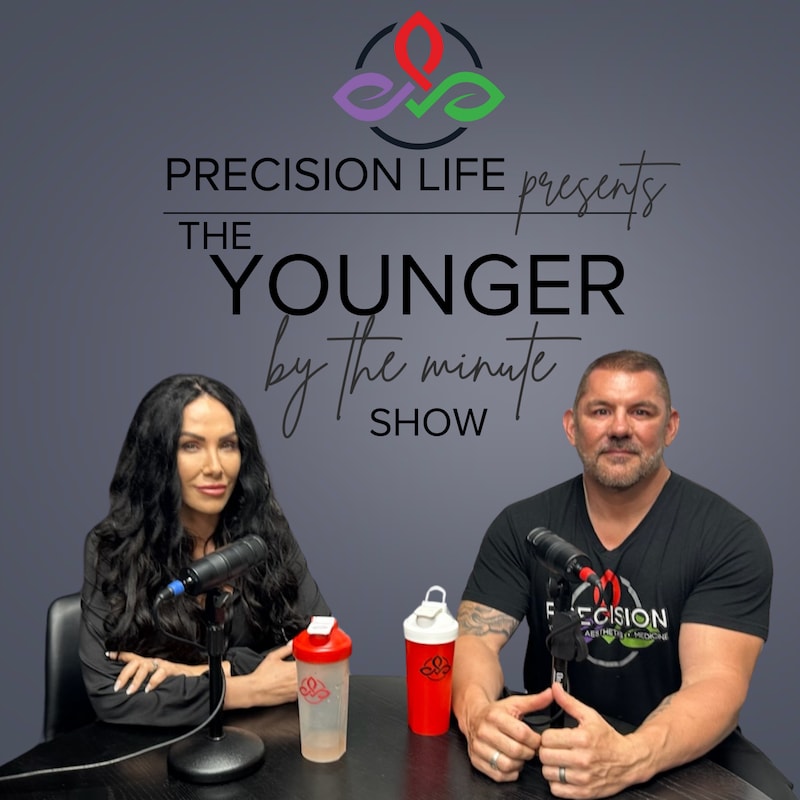
In Episode 10 of Younger By the Minute, Jamie and Jennifer Speiser unpack the biggest takeaways from the A4M Longevity Conference and explain why Precision Medicine is no longer the future, it’s the standard.
This episode dives deep into how gut health, inflammation, hormones, peptides, GLP medications, CGMs, and metabolic health are all interconnected. Rather than chasing symptoms, Jamie and Jennifer explain why long-term health, performance, and longevity depend on identifying and fixing root causes first.
They explore why hormonal imbalance is rarely the primary issue, how gut dysbiosis fuels inflammation and disease, the proper way to use GLPs and peptides, and why data-driven tools like continuous glucose monitors (CGMs) are essential for personalized care. This conversation is a masterclass in understanding how the body functions as a system and how small daily choices compound into long-term health outcomes.
If you’re interested in longevity, hormone optimization, metabolic health, or truly individualized medicine, this episode will change how you think about health and aging.
⏱️ Episode Chapters
00:00 – Welcome & Why This Conference Was Different
01:17 – Precision Medicine Becomes Mainstream
02:08 – Why Gut Health Comes Before Hormones
03:09 – Gut Health, Serotonin & Mental Wellness
04:19 – Inflammation, Detoxification & Hormone Clearance
05:06 – Precision Testing & Personalized Treatment Plans
06:17 – Gut Microbiome, Stress & Chronic Disease
07:17 – Vagus Nerve Dysfunction & Digestive Shutdown
08:58 – Estrogen Recycling, Constipation & Hormone Risk
09:47 – GLPs, Protein Digestion & Inflammation
10:18 – Why PPIs Make Gut Health Worse
11:28 – Hormones as a Downstream Issue
12:01 – Treating Symptoms While Fixing Root Causes
13:17 – Peptides as Messengers (and Why Environment Matters)
15:30 – Inflammation as the Driver of Aging
16:24 – Precision vs Symptom-Based Medicine
17:13 – Health Tech, Wearables & Data Without Emotion
18:41 – Taking Autonomy Over Your Health
19:23 – Biological Age vs Chronological Age
20:13 – GLPs, CGMs & Using Data to Prevent Damage
21:30 – Protein Intake, Muscle Loss & Ozempic Face
23:08 – How to Calculate Protein the Right Way
25:42 – Micronutrient Deficiencies & Chronic Disease
27:45 – The Future of Precision Medicine at Precision Life
29:38 – Why Everything Starts With Precision Medicine
30:16 – The Evolution of Healthcare & Final Thoughts
🔑 Key Takeaways
- Hormonal imbalance is rarely the root cause. Gut health, inflammation, and detoxification come first
- Chronic inflammation accelerates aging, disease, and metabolic dysfunction
- GLP medications and peptides require a healthy internal environment to work properly
- Protein deficiency leads to muscle loss, metabolic damage, and accelerated aging
- PPIs and appetite suppressants often worsen long-term gut health
- CGMs provide objective data that removes emotion and guesswork from health decisions
- Precision medicine adapts as the patient evolves. It’s not a one-size-fits-all approach
- Longevity is about slowing damage, not chasing youth
- True health optimization requires treating the entire system, not isolated symptoms
Sponsors / Mentions
Precision Life • Precision Fitness • Precision Aesthetics • Precision Medicine • Trueline Media Group
If this helped, like, subscribe, and share with a friend who’s ready to design their next chapter.
About Precision Life:
We integrate training, nutrition, functional medicine, and regenerative aesthetics for results that look natural and last.
Our goal is to help you live your best life.
Find out more about Precision Life at https://precisionlife.io/
Follow us at :
Jamie:
Facebook: https://www.facebook.com/jamie.speiser.5
Instagram: https://www.instagram.com/thejamiespeiser/
Jennifer:
Facebook: https://www.facebook.com/jennifer.hollow.9
Instagram: https://www.instagram.com/thejenniferspeiser/
Precision:
Facebook: https://www.facebook.com/precisionlifestl
Instagram: https://www.instagram.com/precisionlifestl/
Trueline Media Group
https://www.truelinemediagroup.com/
Transcripts
Hey. Hello and welcome to
another episode of Younger by the Minute.
2
:One of your host, Jamie Speiser.
3
:And I'm always here with my other host.
4
:Jennifer Speiser.
5
:and we have a lot of exciting things
to talk about.
6
:Yeah, we just came off the A4M
Longevity Conference in Las Vegas.
7
:And, you know, it was a really good
conference first and foremost.
8
:I love going to these things.
9
:You said you get to learn you protocols.
10
:You get to see all the new devices and
techniques and stuff that's coming out.
11
:And I think for us, this weekend
wasn't just about trends.
12
:I think it was more about confirmation
that medicine is finally shifting towards
13
:finding, finding and fixing the root
14
:cause versus just addressing the symptoms.
15
:It's about us, about resilience
and just about long term vitality.
16
:Yeah, I mean, our philosophy for over
a decade has been starting with
17
:really nutrition and fitness
and then expanding
18
:into athletics and growing into,
I should say, more than a decade.
19
:But growing into the full
precision medicine.
20
:And what's crazy is when we
when you created
21
:precision, you had no idea that
this is where we would end up.
22
:And this is also where medicine would end
up. Yeah.
23
:Yeah. It's 2011.
24
:Oh, yeah.
25
:Precision medicine,
though, is actually now a term.
26
:And it's something
that we've been focusing on.
27
:And, you know, really
they've really dove into
28
:gut health
and how muscle equals on gravity.
29
:And those are the things
30
:that we've been saying all along,
which it was really cool because it's
31
:it was very validating.
32
:But then we also took
some really key pieces away
33
:that are going to help us yield
even better, better patient outcomes.
34
:Yeah, we always walk away some really good
nuggets, you know, on there.
35
:And like you said, it's
a lot of the stuff.
36
:It's it's really good to see the emphasis
and how they are talking about
37
:the importance of gut microbiome,
its importance of it adrenals and the fact
38
:of how much stress really correlates
into everything, and that these things
39
:need to be looked at and addressed before
really even getting into sex hormones.
40
:And it's something
41
:I know I've been talking heavily
on, on our social, on my social media page
42
:for a good three plus years, and it's been
43
:ever since we've created,
44
:like incorporated precision
medicine into our practice.
45
:It's been the root of it is addressing
the gut, addressing the adrenals,
46
:going after the thyroid, optimizing
those things re checking it
47
:and getting new, levels on blood work
and then going after sex hormones.
48
:Yeah, because if the gut's off
or the person is systemically inflamed,
49
:mostly probably because the gut is off,
50
:they're not going to become
metabolically optimized.
51
:Like you've got to almost like clean out.
52
:Now you're the mechanic here.
53
:So I'm going to probably butcher this,
but it's like you got to do it.
54
:Engine cleaning or an oil like what
would you do before you put fresh oil in.
55
:You got to like clean it out, right?
56
:They popped the drain
plug and ran the oil off.
57
:But if you have dirty oil, it's
really hard to get the engine to crack.
58
:Yeah, right. Yeah.
59
:There's other things
you need to do to get all the
60
:the grime out of the lifters and,
and and all that stuff.
61
:But you know, it's even like, even when
you, you know, we talk about gut health.
62
:Right. And we know that, that
the gut is the second brain.
63
:We know that it produces
a lot of serotonin.
64
:So then when you look
at the advertising of testosterone,
65
:one of the symptoms of low
T is depression.
66
:Well so is poor gut health.
67
:You know depression
because you're not you're not producing
68
:this serotonin and that you would
if your gut was optimized.
69
:So you know you're fixing a symptom
with one thing.
70
:When it could be completely
something different.
71
:Well yeah.
72
:And also you know
you have your four organs of excretion.
73
:So if the gut's off which is an organ of
excretion, the liver's off and the liver,
74
:the liver being dirty,
for lack of a better word or term,
75
:if that's off, you're not going to be able
76
:to break down things
that you put in your body correctly.
77
:And so then you're really going to end up
just doing yourself a disservice.
78
:You can actually create
an influx of those hormones.
79
:Or if the patient has MTHFR
and they can't genetically breakdown
80
:certain medications,
81
:they can start to have
a surge of those hormones
82
:and then they're going to have less
than desirable outcomes.
83
:And so I think that's really what,
you know, it was really cool.
84
:Like and
85
:where it seems like the medical world
is really the path that they're paving.
86
:And why it feels different is because
that focus on precise medical treatment.
87
:So you're looking at the individual
and you are getting to the root cause,
88
:and then you're having all these
to look at all of these
89
:different puzzle pieces to then
put that specific puzzle back together.
90
:Your pieces are different than my pieces.
91
:And so on and so forth.
92
:So being able
to do some specialized testing,
93
:which is what we're going to now offer,
or even be able to utilize
94
:things that can truly have real time
data on someone's
95
:blood glucose when we're utilizing certain
peptides, it's really important
96
:because we're making a very precise plan
for their specific puzzle.
97
:Right.
98
:You know,
99
:even when they get into inflammation,
you know, again, we've talked heavily
100
:on inflammation and what is causing
inflammation within the body.
101
:Dietary choices.
102
:Alcohol,
not optimizing your sleep, stress.
103
:Unresolved stress
like you're not managing your stress.
104
:Like I said, alcohol.
105
:But there's several factors
that go into that.
106
:But the thing you have to remember is that
107
:that's all change in the gut microbiome.
108
:And also the gut microbiome is a cause.
109
:It's not just a consequence disease
and not just a genetic, hormonal or
110
:immune disease is not often the downstream
result of microbiome imbalance.
111
:But think of it
in terms of prebiotic forces,
112
:which support life
diversity and regulation.
113
:It's also like an antibiotic force
which kills, suppresses, and fragments,
114
:sorry, ecosystems.
115
:So every choice of food that you eat
has an impact.
116
:Every time that you eat changes
the gut microbiome.
117
:Every, every time with that stress, sleep,
118
:timing and medication
to all have impact on this.
119
:Yeah.
120
:And if you try to just go ahead
and fix it on your own,
121
:sometimes the microbiome already has such
its own network of its own personality,
122
:like you have you as a being,
but then you also have
123
:this other living entity inside of you,
which is your gut microbiome.
124
:And so then if you're overloaded
with Candida or Sibo or CFO
125
:and you keep feeding that bad
bacteria, it's really impossible.
126
:And they have a conscience, as do
parasites.
127
:Parasites have their own conscience.
128
:So, you know, it's interesting,
but we're not alone in our own bodies.
129
:And we have to remember that.
130
:And unfortunately, the stripped soil
and the lack of nutrient dense food
131
:and all these other things
are absolutely killing our gut microbiome.
132
:And then it's causing a cascade effect.
133
:You know,
you have uncontrolled inflammation,
134
:you have endocrine disruption,
135
:you have a variety of other things
that then also feed mental
136
:wellness and mental vigor.
137
:And just in the decline, like we're going
to have a rebound effect of what's
138
:going to happen later if people don't
really understand what they're doing now.
139
:Right now.
140
:I sat out on one of the lectures, too,
and the one they really tapped into again,
141
:which is something we've talked
about, is the vagus nerve.
142
:And that's
kind of like the missing therapy,
143
:which you are seeing a lot of stuff
come out on now
144
:you're seeing more and more, more
and more on social media.
145
:You're seeing more and more ads,
seeing more.
146
:It's just being
talked about more in general.
147
:But you know, you got
148
:to understand that it's the most powerful
microbiome intervention.
149
:It is going to cause chronic stress.
150
:It turns off digestion.
151
:It reduces microbiome diversity,
and it promotes inflammation.
152
:Well, just think about it.
153
:So now we're all pretty much
we all have some sort
154
:of vagal tone dysregulation.
155
:As someone that has had severe
consequences
156
:to having their vagus nerve go haywire,
I understand that.
157
:I mean, the gut dysbiosis is insane
to the point of constipation, for days.
158
:And so what happens is the vagus
159
:nerve is also partly responsible
for gut peristalsis.
160
:And when we shallow breathe
and we're not getting enough breath
161
:and we're not oxygenating,
but also expanding our diaphragms,
162
:it starts to dis
regulate that vagus nerve.
163
:So the now combine that with someone
who's finally had enough,
164
:and now they're on too high
of a dose of a GLP one.
165
:What's their food doing?
166
:It's literally
sitting inside of them and rotting.
167
:It's not you know, it's becoming
these issues and they're becoming toxic.
168
:And so a lot of people
169
:don't realize that when we're constipated,
you're recycling bad estrogen.
170
:So while the whole topic of HRT
being bad for so long
171
:and how detrimental it was
to the female population in medicine
172
:because they completely halted
all research on women's health
173
:due to these black
box warnings that were false?
174
:We now have recycled estrogen.
175
:It's just a mess
and it becomes a situation where unopposed
176
:estrogen can really be detrimental
to breast tissue, ovarian tissue
177
:and things like that.
178
:And unfortunately,
that estrogen is not even the estrogen
179
:that's going to keep your heart
or your brain safe.
180
:Right?
181
:You know, I'm
182
:you brought up a good point about
just food just sitting the digestion,
183
:because as humans,
we're not designed to ferment protein
184
:and fat and bone,
protein should be digested.
185
:That should be absorbed,
186
:and it should be metabolized
before ever reaching the colon.
187
:Undigested protein in the colon equals
inflammation.
188
:Some people will feel better
on a carnivore diet at first,
189
:but then over time
they start to feel worse,
190
:especially if they're on a GLP two
or GLP three,
191
:which sometimes in some cases,
they'll be better on a GLP one.
192
:Like semaglutide,
Ozympic when it's when it first phase.
193
:But the important thing with that
is, again, we come back to the gut
194
:and having a healthy gut all starts
with having the proper amount of,
195
:stomach acid in the stomach to break down
and digest the food so it doesn't
196
:sit there and ferment
and turn into Sibo cf0,
197
:which then turns into what everybody knows
mainstream or doctors
198
:diagnosed with as reflux, Gerd, leaky gut,
or IBS.
199
:Well, and the thing is, is
200
:the biggest thing that people want to do
when they start to have acid
201
:reflux is turn to a PPI
or proton pump inhibitor.
202
:And what that actually is doing
is making a bigger situation,
203
:because now you're suppressing
even more of the abilities.
204
:the body's ability to produce stomach acid
so becomes this vicious cycle.
205
:And the thing is, is I think this is what
why A4M felt different
206
:this year was because they had lectures
on how bad PPIs can be.
207
:They had lectures on how to do things
a safe way, and if we aren't
208
:educating other physicians this way,
then who's going to help patients?
209
:And then how do we get there?
210
:Because we are in a country where we have
we're we're kind of run by big pharma
211
:in general and not, you know, people
they the health care
212
:system makes more money off sick
people than healthy people at this time.
213
:Right.
214
:And there one one other lecture too,
that I, you know, I just really wish
215
:I could have been live on social media
and I would just love around and say it.
216
:But, you know, they were talking
about hormones and the microbiome
217
:and hormonal imbalance is rarely primary.
218
:You know, it's rarely the primary cause.
219
:It's it's estrogen, Thyroid,
cortisol issues often stemmed from micro
220
:microbiome imbalance
impaired detoxification and inflammation.
221
:Examples of that
when it comes back to painful,
222
:heavy periods
PCOS, Hashimoto's and endometriosis
223
:by by improving the microbiome, diversity
often reduces
224
:these menstrual pains, improves
ovulation, and lowers autoimmune markers.
225
:So again, coming back to
226
:you can't
227
:really properly prescribe sex hormones
if you haven't fixed the other things
228
:first that are down regulating the number
on the blood panel that you're
229
:now prescribing the HRT with.
230
:Or at least or at the very least,
which is what we do if you are
231
:that symptomatic
that you are having insomnia
232
:or vaginal dryness, and it's affecting
your marriage and all of these things,
233
:you can treat the symptoms
while you treat the root cause.
234
:You can do it in at the same time,
but you have to do both.
235
:And then you have to watch the doses
that you started that patient with,
236
:because they end up not needing
237
:that high of a dose
once everything else does fall into place.
238
:And as someone who has been dysregulated,
I do believe that it probably
239
:all happened with my gut first,
and then it got worse
240
:because I was prescribed
241
:birth control pills, and then I completely
went into adrenal fatigue.
242
:I mean, that's the point
that I'm trying to say, though
243
:some people do have a good microbiome
and they need something else fixed, right?
244
:But at the same time, it's
245
:what is the root cause
and how are we getting to the root cause?
246
:And how does your assessment address
the root cause?
247
:You know, some people,
because they're so adapted to their gut
248
:dysbiosis, they don't even realize
that they are having gut issues.
249
:I can't tell you
how many patients are like,
250
:no, I don't get bloating,
distention or anything.
251
:And then as I dig in a little bit more,
they're like, oh, well,
252
:actually that food bothers me or that food
bothers me, you know, they don't.
253
:They're just so used to it, right? 100%.
254
:And I think that even you know what you're
talking about, what that even correlates
255
:into, something that's really trending
right now is just peptides in general.
256
:You know, peptides are not
they're new to social media.
257
:There are new to the public, but
they're not new to is being is how long
258
:you've been around because some of them
been around for over 50 plus years.
259
:But also, you know, you got to remember
peptides are messengers.
260
:But in order for them to work,
then it needs to be in the
261
:in the right environment, like the,
the gut.
262
:And everything needs to be prepared
in order for the messaging
263
:to be clear, you know, think of like
like a bad telephone game, right?
264
:You know, you keep going to eventually
gets the original message, gets lost.
265
:Well, if your body's completely inflamed,
if the gut by is off and this
266
:then the peptide as a messenger
can't really there's.
267
:Nowhere to go. Right.
268
:You know, it's it's it's bouncing.
269
:It's like what fires bigger?
Where do I need to go?
270
:Bouncing off several versus
what it's supposed to be
271
:as a direct pathway
to the problem it’s just getting
272
:bad Intel along the way.
273
:The good news is, is though, because they
they do treat systemically
274
:and very safely, like with a very low side
effect or adverse event profile.
275
:In some cases, there's zero adverse
event profiles like with BPC 157,
276
:which like you said,
277
:I mean, it's been around
since the Cold War,
278
:which actually is made up
of gastric juices and
279
:and these peptides that come from I mean,
peptides are small chains of amino acids
280
:that come from protein that are actually
naturally occurring in the body.
281
:So the body recognizes them very well.
282
:And so unlike medications that you take,
you're not trading one thing for another.
283
:You're not like if you listen
to all the fast
284
:talkers at the end of the commercials,
it's like, here,
285
:this might help you
with your erectile dysfunction,
286
:but you could drop dead of a heart attack
at the same time.
287
:Like you're not training,
you're not trading one thing for another
288
:that could actually be
289
:significantly worse than what it is
that you're trying to treat.
290
:So it's nice because they do go in there.
291
:But what is cool
about what you're talking about is yes,
292
:it might not know where to go.
293
:The patient is still going to feel better
because they
294
:if it is the gut, it's going to bring down
systemic inflammation, which therefore
295
:will help increase
feeding time of healing time
296
:and then also help with pains
or whatever that they might have.
297
:Because again, back to what
we've been talking about.
298
:Systemic inflammation
is honestly the root cause.
299
:And it's inflammation
is also what causes aging.
300
:So when you look at the disease
process of aging. Resistance.
301
:It's all these things.
302
:Well then insulin resistance
also accelerates aging.
303
:It's like everything it's it's
just you end up creating
304
:a whole systemic trash can fire
that you can't get out.
305
:And you are right.
306
:It's like they will still work, right.
307
:But for the cost,
you're going to spend on that.
308
:You know, it's
not going to be a quick fix.
309
:It's not the end all be all,
but the maximize ROI.
310
:Make sure that when you're using them
or going to start using them,
311
:that you put yourself and your body
312
:in a good environment to properly absorb
and utilize them to the max
313
:100%.
314
:You know, and I
think that's the thing, like, I think what
315
:really providers
need to really pay attention to
316
:and what patients need to look for
when they're looking at providers is,
317
:are you treating my symptoms or are you
trying to look more at the systems?
318
:And you know what?
319
:You can't just treat them
and it's not just
320
:the precision
medicine, preventative medicine,
321
:whatever you want to call it,
functional medicine.
322
:It's not just this woowoo thing,
it's it's a real thing
323
:that needs to be talked about.
324
:Because if you go back to the grass roots
of, you know, making sure
325
:that you're eating super foods,
making sure
326
:that you're getting plenty of sleep,
making sure that you're hydrating,
327
:if you do all those things,
you're going to be far more ahead
328
:than other people around you,
or even what you could be yourself.
329
:I mean, you're going to create issues
if you don't eat right or sleep well.
330
:Correct.
331
:And I think another big part of the
the conference too, was the trade show.
332
:You know, the amount of technology
that's out now, I.
333
:Know I wanted everything.
334
:Yeah.
335
:So, you know, pan fed,
336
:but hydro, not hydrogen but oxygen.
337
:H Bots.
338
:H Bots and.
339
:Red lights.
340
:Right? Is it was all awesome.
341
:You know, you just got to remember, you
know, even, like, with the stellar program
342
:that I've created,
you know, the precision technology,
343
:it gives you insight, it gives you data,
and the data has no emotion.
344
:It's kind of like
when you run a business and stuff,
345
:like when you look at numbers,
numbers are factual.
346
:There's no emotion behind it.
347
:The issue comes with some technology
like what was it, the Wolf
348
:and Apple Watch and stuff like that.
349
:Just like the scale.
350
:People get obsessed, you know, with it,
and they truly don't understand the data
351
:that's coming back out of it.
352
:So make sure that when you're using
these things that the data
353
:that you're that you're getting
and the information
354
:that you're getting out of it,
they're you're making decisions.
355
:The right decisions.
356
:But most importantly, like,
don't get anxious about it.
357
:You know, it's yeah,
358
:easier said than done, you know.
359
:Well, but you're right.
360
:Go ahead. You're right.
361
:Because if you're stressing about that,
you're still stressing your body out.
362
:Right?
363
:So it's like, you know, I mean, sometimes
I have to tell myself that, like,
364
:okay, like if you really want to, like,
you're creating your own stress here
365
:and that's the thing
I want people to understand.
366
:Take the power back.
367
:You have the power to have full autonomy.
368
:And you know,
when you go to the doctor's office,
369
:you have the power to to ask the questions
and to not allow
370
:the paternal relationship that happens
with some patient provider relationships.
371
:They’re are a doctor, and yes,
they went to medical school,
372
:but medicine is forever evolving,
and if they're not open minded enough,
373
:they've lost track of what they signed up
for from the beginning.
374
:Because this is the evolution of medicine
it's been since day one.
375
:We did, you know, when we made penicillin,
you know that. Yeah.
376
:It's all these different discoveries
and that's what makes it fun.
377
:And there are so many things out there.
378
:And, you know, I said earlier
that aging is a disease process.
379
:And you were talking about measurables.
380
:One of the really cool things to do
is to test your biological age.
381
:You know,
you can be chronologically in age,
382
:but that doesn't mean
that your body is that age.
383
:Whether it's good or bad.
384
:It could be older or not as old.
385
:Right? So, you know, there's are
they are these things.
386
:And so that is just the number.
387
:And longevity comes from slowing down
the damage, not just chasing youth.
388
:And that even comes
from mitochondrial dysfunction.
389
:And really understanding that metabolic
dysfunction is one of those drivers,
390
:along with inflammation
being the accelerator of degeneration,
391
:because that's what's going to break down
telomeres.
392
:That's what you're going to shorten them.
393
:So then your lifespan
is going to be shorter.
394
:That's what's going to cause you
to be fatigued at a cellular level,
395
:which is going to then cause you
to have thyroid issues and other issues,
396
:which then you start to drink more energy
drinks and take things to wake up,
397
:and it becomes this vicious cycle
that you have to get out of.
398
:Right.
399
:And then, you know, another big topic out
there was about GLPs
400
:and where they're at.
401
:And it is awesome to hear so many of these
402
:people speaking highly about them.
403
:But again, they always came back
to properly using them properly
404
:being educated on getting the right
blood work and stuff like that,
405
:and utilizing a CGM, which is one of the
things that we've done.
406
:Because what I realize, you know,
that the GLP's are not going anywhere.
407
:People are.
408
:They're here, people want them,
they're going to use them.
409
:So the best thing we can do
is educate them.
410
:And instead of going at it and arguing,
411
:I shouldn't say arguing,
but trying to do it's it comes across.
412
:This is my opinion of this
and my opinion of that.
413
:The CGM gives you
factual gives us factual data.
414
:So if someone is on a GLP
and they don't want to listen thinking
415
:that, well, I can still eat 1
or 2 meals a day and I'm fine with that,
416
:that Stello is going to come out
and show them that
417
:how low they're actually running, and then
we can correlate to them like you are.
418
:The data is showing you
you're running too low for too long
419
:and you're creating damage because now
we can see it in your blood work too
420
:can can you explain really quickly
also so people understand
421
:because you brought it up earlier,
422
:protein is supposed to be absorbed
and digested right away,
423
:and your entire body is made up of like
water and protein and yes, some fat.
424
:But like you need protein.
425
:It's the building block of everything.
426
:A lot of times
when people are not getting or anytime
427
:someone's not getting adequate nutrition,
whether they're out training it,
428
:whether they're starving themselves,
whether they're
429
:whatever they become,
what's known as catabolic.
430
:And that's why people are getting
ozempic face and ozempic butt
431
:because they're actually their body
is smarter than they are, or all of us
432
:is, it's your body will always do
whatever it needs to do to survive.
433
:So instead of burning fat,
you start to burn muscle.
434
:Correct. And like I said before,
435
:there's no
436
:difference between someone
being on 90mg of Adderall
437
:as someone on phentermine or on the
the billion dollar industry of fat burners
438
:where their
everything is an appetite suppressant,
439
:where people are eating one number, 1
or 2 meals a day,
440
:they're not hitting
their protein requirement,
441
:but they're still weightlifting
30 minutes to an hour.
442
:They're still doing 30 minutes
to an hour of cardio.
443
:The outcome is going to be the same
whether they're on the GLP
444
:or on the Adderall, they're on
the phentermine they're, on a fat burner
445
:or they have an eating disorder,
the outcome is going to be the same.
446
:And, Doctor Gabrielle
Lyons Lyons brought up something.
447
:I've the way I've been doing nutrition
for the longest time is
448
:whenever I look at someone's
caloric intake needs,
449
:you know, it's a it's
a multiplier times their weight.
450
:And that's where you.
I'll get the caloric intake need.
451
:But I never look at protein
as a percentage
452
:because what's what they teach you in
dietary.
453
:It's, you know, point
eight kilograms per pound of weight.
454
:Well that by by that standard
that's the minimum.
455
:That's the thing
that people didn’t realize
456
:that's the that's a minimum number.
457
:Kind of like when you drink
half your body weight in ounces of water
458
:that well, that's
the minimum requirement of water.
459
:That doesn't mean
you shouldn't be drinking more.
460
:That's just a good basis to figure out
what's the minimum amount
461
:you need to function for the day,
462
:the way I've always done it, and it's
exactly the way that she described it.
463
:It's it's one gram to 1.25g per
464
:lean body mass, not weight,
but per lean body mass.
465
:That is your number.
466
:Then you can take that number times four.
467
:So like if you figure out that your lean.
468
:So like say I'm 138. Sorry.
469
:But then I'm really like 124.
470
:Let's say yeah
471
:you're 138 and weight then cause lean body
mass is probably see around 110.
472
:We'll just do it two times the one.
473
:That's 110.
474
:Take that times four.
475
:Well, that's 440 calories.
476
:Now I can subtract that out
from, say, an:
477
:calorie diet or a 2200,
whatever the number is.
478
:Now I can do a percentage based on fat,
based on carbs, based on body
479
:type, based on activity, based on insulin
resistance or insulin sensitivity.
480
:Our hormones, thyroid, what is all that?
481
:Is that optimizer your unoptimized,
you know, am I building them up
482
:from one meal a day
to four meals a day or three meals a day?
483
:You know what?
484
:That plays a factor on how I figure out
the rest of that caloric intake.
485
:But for protein, I've always never done it
486
:as a percentage of 15 to 25% of the diet.
487
:I've always done it at a gram, 1.25g
488
:per lean body weight,
and then I adjust the the fat
489
:and the carbs based on the energy
expenditure on the individual.
490
:Well that's the thing I think that people
aren't getting like they,
491
:they're only looking at calories,
492
:they're not looking at
what's going to sustain them.
493
:And so then they're just not still not
eating right for whatever their plan is,
494
:whether they're on a GLP or not.
495
:And that's what we
496
:so I've said before like, you know,
if you're just going to count calories,
497
:well, you could hit your caloric intake
with two slices of pizza in a day,
498
:but that ain't going to get you towards
a goal.
499
:No. Yeah, I ain't going to lean you out.
500
:That isn't going to build muscle.
501
:But you but you hit your caloric intake.
502
:You know, making up
your macronutrients is important.
503
:But like we've said in previous episodes,
really
504
:honing in and making
sure your micronutrients are getting hit
505
:along with your macronutrients
and are being adjusted
506
:based on how you lean out
and how your activity is.
507
:And then based on your labs and how they
improve or wherever they're setting that.
508
:Well, the other thing.
509
:So micronutrients are lacking in
almost every person's diet
510
:at this point due
to the quality of food in this country.
511
:And those micronutrient deficiency over
time is
512
:what's leading to hypertension
to a whole bunch of other things,
513
:because we need those minerals
and the things that come from that,
514
:and we're inadequate in them.
515
:So that's where the slow like the slow,
slow, slow
516
:increase of disease processes comes from.
517
:And, you know, and that's the other thing
I want to make it known like Precision
518
:Medicine, part of the definition is,
is that it adapts as the patient evolves.
519
:So you start, you know, you might
start here even with your meal plans.
520
:They change.
521
:And so everything's customizable
and everything is starting
522
:with the root cause.
523
:And then it's
going to become more foundational.
524
:And that's the thing that I really want
listeners to know.
525
:Like when we do labs, for example,
I'm excited for January's labs
526
:that I'm going to do, I'm
527
:actually going to pull serum, salivary
and urine and put my panels up
528
:and do a video of them so people can see,
because you have to utilize
529
:different measurables and different ways
to really get a true understanding.
530
:Like with glucose, you know, it's
there's a short window of time which.
531
:So when you get a glucose on a serum
blood panel, it's very variable.
532
:So insulin is much more reliable
than glucose.
533
:But when you're wearing a continuous
534
:glucose monitor, you get that snapshot
of how you're moving through the day.
535
:So you got to hone in on your yeah, hone
in on what foods are spiking.
536
:You have stress is spiking you.
537
:Or when you get too low.
538
:But you know they have to.
539
:Or like if you ate a really fatty meal
and then got your lipids down,
540
:your, your triglycerides.
541
:So you've got to take into consideration
the variables when you get those labs.
542
:And for females, a lot of people
don't know that you really need
543
:to go on day between 19 and 22
to get an accurate progesterone level.
544
:Unless you're on contraceptive
or your postmenopausal.
545
:So it's just, you know,
you're just going off of these ranges.
546
:And then a lot of times
they're not looking at the symptoms
547
:and they're just like, oh, well, you're
ranges are normal and you're fine, right?
548
:I think that's some of the new stuff
that's coming.
549
:You know,
550
:we're bringing back a lot to precision,
which is
551
:why I love going to these conferences
because, you know,
552
:there are things we learn,
there are things that are validated
553
:that we've been doing that validate,
we've been going the right direction.
554
:We've been teaching our clients
the right way.
555
:And, you know,
556
:we're going to be doing a deeper dive
into some genetic testing and integration.
557
:We're going to be comparing
those genetics with blood work, gut
558
:testing, the CGM testing,
obviously looking at clinical response.
559
:But we're very excited going into 2026
560
:and all the new things that we can bring
and offer our clients and better us
561
:as providers
and give a better service to our clients
562
:and really be a platform to help people
advocate for themselves and be a resource
563
:for them to to learn something,
maybe to do it a different way.
564
:Absolutely.
565
:Because even for like the precision
medicine is actually now the root of
566
:like the tree trunk
or the roots of our entire practice.
567
:Because if you're
568
:if you're a
569
:physiology is in alignment
and you're, you know, everything's working
570
:the way it should,
571
:then your esthetic outcomes are going to
be even better because you have the things
572
:that you need to support, you know,
whether it's from cellular nutrition.
573
:So when you do procedures
like regenerative injectables
574
:or microneedling or anything
that you're doing to try to provoke
575
:new cells
to form and grow by the wound response,
576
:you have to have cells
577
:that have proper nutrition or they're not
going to do their job effectively.
578
:Or if you're
579
:somebody that is too catabolic and you're
trying to put filler in somebody,
580
:or if they are postmenopausal
and you're trying to stimulate collagen,
581
:you're just going to keep
hitting your head against the wall
582
:just on the other side of that,
the fitness if you're too catabolic,
583
:if you are postmenopausal,
if you're not hormonally aligned,
584
:then your results are going to take longer
or just not get there.
585
:So in order
for everything to be in alignment
586
:and for you to get the best results
and to have the the life that you want
587
:for as long as you want, you have to start
with precision medicine 100%.
588
:Now, let's say as we wrap up
today's episode,
589
:you know, I would
I know you're in the same boat.
590
:I just want to say how grateful we are
for spaces like A4M, AMMG
591
:spaces that bring together
people who are like minded
592
:asking better questions about health
593
:and how they can do better
within their practice.
594
:I will say like when we sort of go on this
like five, six years ago,
595
:like 2 or 300 people
I know in that one lecture
596
:we where in probably
to:
597
:That’s wild.
598
:So it was really great to see that people.
599
:From other countries,
600
:like I met a doctor from Mexico
and it was just it was cool to see.
601
:Yeah, it's
602
:it's really growing some legs and it's
really and I'm really happy to see that.
603
:And I will say,
we've been building precision
604
:with this philosophy
for well over a decade.
605
:Starting started with fitness
when it was just me
606
:and then and we fitness and nutrition,
I should say.
607
:And then we expand that.
608
:When we opened up in 2014
into the aesthetics.
609
:And then we've grown in this
610
:into a full precision medicine,
as you put it, on that part of it.
611
:But as we call it, it, call it now
and everything, it's precision life
612
:because we really are trying to coach
and teach
613
:people a long term lifestyle
that's doable.
614
:That is not just a cyclical diet
or a cyclical thing that you do
615
:just because you got some bad news,
or just because you have some form of an
616
:event coming up.
617
:Well, no.
618
:And that's why our logo is the way it is.
619
:It's all connected,
every piece is connected
620
:and it's all encompassing,
621
:and it's because it is, you know,
we're working on mind, body, spirit.
622
:We're working on the physiology
from the inside out
623
:and really trying to help
people live their best life.
624
:Right.
625
:All right.
626
:Well, that wraps up another episode.
627
:We appreciate you tuning in. As always.
628
:I'm Jamie Speiser, I'm out.
629
:I'm Jennifer Speiser, and thank you. Hey.
