Shownotes
In this week's Wildlife Matters podcast, I finally reveal the iconic wild animal that approached me at the end of the last episode, as I continue exploring Scotland's ancient temperate rainforest. Before this exciting moment, I discussed urgent wildlife and natural issues, including the serious problem of illegal wildlife persecution and the ongoing delay in implementing the peat ban, even though most politicians agree it's needed. I also discuss the concerning decline in butterfly numbers in Britain and explain how Butterfly Conservation is working to address it. To enhance your listening experience, I include a peaceful "Mindful Moments" segment, recorded along the calm shores of Loch Barnluasgan, so that you can enjoy the relaxing sounds of nature. As I go deeper into the rainforest, I look forward to discovering more wonders on my way to the Crinan Canal.
This episode of Wildlife Matters takes you into Scotland's ancient temperate rainforest, where I set out on an exciting adventure full of wildlife encounters. As I move through the forest, I keep up the suspense about a special Scottish wild animal, following up on the previous episode's cliffhanger. Before diving into the main story, I cover key wildlife news, including ongoing illegal persecution in the UK.
I share my hopes for justice and stronger laws, and I stress the need for everyone to help protect local wildlife. The episode also talks about the stalled peat ban and why stopping peat extraction is important for the environment. You can enjoy a calming segment recorded by Loch Barnluasgan, which sets the mood for the main adventure. Later, I reveal the white-tailed sea eagle, a symbol of strength and resilience, soaring above the landscape.
I describe its large wingspan and its role in Scotland's coastal ecosystem, and I highlight how conservation efforts have helped this species recover after it nearly disappeared in the early 1900s. The episode ends with a look at the wider importance of the temperate rainforest and the many forms of life it supports, leaving you with a new appreciation for this special place. I say goodbye with a reminder of the beauty awaiting in Scotland's wild places, and I encourage everyone to stay curious and engaged in wildlife conservation. I appreciate your support, and I look forward to the next episode, which will feature a winter wildlife walk in Southeast England, highlighting the importance of everyone helping to protect nature.
Takeaways:
- The podcast stresses the urgent need for strong legal action against illegal wildlife persecution, making it clear that this serious crime must be addressed.
- The long delay in implementing the peat ban has raised concerns about environmental damage and the effects of ongoing peat extraction.
- The continued decline in butterfly numbers in Britain is worrying and requires focused conservation efforts to address this serious problem.
- Listeners can enjoy the peaceful sounds of nature in the Mindful Moments segment, which helps people notice how calming wildlife can be.
- The episode introduces the white-tailed sea eagle and explains why it is a key icon of Scotland's temperate rainforest.
- Exploring Tanish Nature Reserve shows the wide variety of life and the history found in Scotland's temperate rainforests, which are key to protecting nature.
Links referenced in this episode:
Transcripts
Hello and welcome to this week's Wildlife Matters podcast Podcast.
Speaker A:Today we'll continue our adventure in Scotland's ancient temperate rainforest and finally reveal which iconic wild animal was approaching us at the end of the last episode.
Speaker A:But first, let's dive into the wildlife and nature stories that have caught our attention on this week's Wildlife Matters Nature News.
Speaker A:Foreign.
Speaker A:Welcome to this week's Wildlife Matters and Nature News, where we bring you the wildlife stories that have caught our attention this week.
Speaker A:Our first story today comes from the Isle of Wight, where police are investigating another case of illegal interference with a badger set, this time so someone filled it with concrete on Friday, January 30, someone filled a badger set with concrete on an unmade road in West White.
Speaker A:According to the Isle of Wight Badger Trust, the set has collapsed and the incident was reported to the police as a wildlife crime.
Speaker A:The local ecology officer has also been informed.
Speaker A:Residents who notice any suspicious activity related to a badger set or who have concerns about wildlife protection can report it the Hampshire and Isle of Wight Constabulary via their non emergency number or online reporting system.
Speaker A:You can also reach out to wildlife protection organizations for advice.
Speaker A:This helps everyone in the community protect the local environment.
Speaker A:Graham Lee from the Isle of White Badger Group said this comes just five months after a police investigation at this same site set when two entrance holes were deliberately filled in badgers and their sets.
Speaker A: Protection of Badgers act of: Speaker A:Anyone caught filling in badger sets could face a prison sentence and an unlimited fine, Graham said.
Speaker A:A licensed contractor is needed to install a large metal plate over the road.
Speaker A:This would protect the badger set and allow residents to keep using the road.
Speaker A:However, because of the breeding season, that license work cannot take place until after the first of July.
Speaker A:Another issue is that the unmade road has no registered owner, so residents are reluctant to cover the costs of the licensed work.
Speaker A:Although they can still use the road, there are worries about safety and whether it is legal to use without an owner.
Speaker A:It remains uncertain whether future restrictions will be imposed to prevent further damage or unauthorized access.
Speaker A:While it's a tough situation for residents, there has been ample time to resolve it legally rather than continuing to interfere with the badger set.
Speaker A:A spokesperson for Hampshire and Isle of Wight Constabulary said, We've received reports around 9:13am on Saturday of a badger set being filled with concrete in the freshwater area.
Speaker A:Inquiries are ongoing to establish the circumstances of the the incident.
Speaker A: an, which was first agreed in: Speaker A:Peat extraction destroys ancient habitats, releases thousands of tons of carbon back into the air and leaves behind dry, barren land that can't protect communities from extreme weather.
Speaker A: In August: Speaker A:Last year, the current government renewed its promise in the new environmental improvement Plan.
Speaker A:However, despite years of pledges, there is still no legal ban on purpose peat use in horticulture.
Speaker A:Delaying the ban on peat use in horticulture harms the environment.
Speaker A:Government figures show that UK horticulture uses 760,000 square meters of peat each year, which is enough to fill more than 300 Olympic sized swimming pools.
Speaker A:Peatlands are as important for carbon storage in Britain as the Amazon rainforest is for.
Speaker A:Globally, Peatlands store 3.2 billion tons of carbon, so protecting and restoring them is vital in the fight against climate change.
Speaker A:Healthy peatlands do more than help the climate though.
Speaker A:They store and slow water, reducing flood risk and help stop wildfires from spreading.
Speaker A:They also provide homes for wildlife like curlews and large heath butterflies.
Speaker A:All these benefits disappear when peat is used for horticulture.
Speaker A: In: Speaker A:This process also damages peatland habitats and weakens their natural defenses against flooding and wildfires.
Speaker A:Some horticultural business have adopted alternatives helping peak use in the sector drop by more than 50%.
Speaker A:However, progress has stalled and retail compost peat use fell by just 1% between 22 and 23.
Speaker A:A mandatory ban as described in the EIP is needed to complete the shift to peat free products.
Speaker A:A ban would encourage businesses to invest in peat free methods.
Speaker A:By delaying the peat ban, the government is undoing progress in sustainable horticulture and making things harder for businesses that have already invested in peat free practices.
Speaker A:Major horticultural businesses and the Peat Free Partnership highlighted this in an open letter to the government.
Speaker A:You can support peat free business by choosing products from companies that are committed to sustainable practices.
Speaker A:The new horticultural sector plan offers a chance to give the industry more certainty and support businesses already transitioning to peat free.
Speaker A:Growing public support is overwhelming.
Speaker A:Recent polls showed 94 of the public in favor of banning retail use of peat.
Speaker A:On a similar climate change related theme, our final story this week comes from Butterfly conservation, which says that even the hottest British summer hasn't stopped the steady decline in butterfly numbers.
Speaker A: In contrast,: Speaker A:You might expect butterfly numbers to rise.
Speaker B:But it didn't happen.
Speaker A:The annual big butterfly count in August showed numbers stayed steady, but the long term decline continues.
Speaker A: ers are a vast improvement on: Speaker A: But: Speaker A:DEFRA states that butterfly abundance has declined by 18% across all species in the UK and 19% in England over the longer term.
Speaker A: people took part in the: Speaker A:This was the highest in the event's 16 year history.
Speaker A:On average, each 15 minute count recorded 10.3 butterflies.
Speaker A:Large, white and small white butterflies had the highest overall counts.
Speaker A:However, small tortoise shells had a below average year and have dropped by 60%.
Speaker A:Holly Blue had its second worst count ever.
Speaker A:Common Blue had its third worst and Meadow Brown had its fourth worst after the Two Whites.
Speaker A: h is down from first place in: Speaker A:The Red Admiral moved up to fourth from sixth with 166,000 sightings.
Speaker A:Meadow Brown dropped from second to fifth with 130,000 3,000 sightings and the Peacock fell from fifth to sixth with 96,000 sightings.
Speaker A:Speckled Wood comma, common blue and green veined White made up the rest of the top 10.
Speaker A:You can help butterflies and moths with simple garden changes.
Speaker A:Plant more flowers, let your grass grow a little longer, especially in May.
Speaker A:Avoid pesticides and leave the dandelions because they're important food sources, not just for butterflies, but for many other wild animals.
Speaker A: first butterfly sightings of: Speaker A:A Red Admiral in Swansea on 2 January, a peacock in Bedfordshire on January 12, and a brimstone in London just two days later.
Speaker A:And that has been this week's Wildlife Matters Nature.
Speaker A:It seems that hardly a week passes without news of illegal wildlife persecution, from fox hunting and raptor poisoning to attacks on badgers and their sick sets.
Speaker A:And these are serious crimes, and we hope police find those responsible and bring them to justice.
Speaker A:That is the best deterrent to stop future attacks.
Speaker A:The peak ban has been stalled for almost four years, despite agreement from all political parties and support from Both previous and the current government progress remains elusive.
Speaker A:It's baffling why action has not been been taken.
Speaker A:Butterfly decline in Britain remains deeply concerning and well documented.
Speaker A:Butterfly conservation continues working tirelessly to highlight the problem and find solutions.
Speaker A:And we'll keep following the story to bring you the updates.
Speaker A:This week's Mindful moments was recorded on the shores of Loch Barnlushkan in Scotland.
Speaker A:Sit back, relax and let the calming sounds of nature wash over you.
Speaker A:In this week's Wildlife Matters Mindful Moments.
Speaker A:It's.
Speaker A:I hope you enjoyed those peaceful sounds from Loch Barnlushkin.
Speaker A:It is the perfect lead in to part two of our adventure through the stunning temperate rainforest of Scotland's northwestern coast.
Speaker B:So get ready for the second part.
Speaker A:Of our epic adventure, starting on the.
Speaker B:Shore of the loch as we reveal.
Speaker A:Which iconic Scottish wild animal is heading towards us right now.
Speaker A:And stay with us as we adventure from here to the start of the Crinun Canal on this week's Wildlife Matters main feature.
Speaker B:Welcome back to Scotland's ancient rainforest.
Speaker B:The shadow passed over me before I saw it.
Speaker B:Massive, silent, impossible to ignore.
Speaker B:In the sky above me, something was circling overhead.
Speaker B:Well, some people call them the Flying Barm Door.
Speaker B:Because they are so big, it's hard to find the right words to express how you feel.
Speaker B:Something very primeval, a sense of danger, but also something deeply inspirational and completely majestic.
Speaker B:With wings stretching to nearly two and a half meters, these incredible birds glide effortlessly, riding invisible currents above the sea as they hunt for their next meal.
Speaker B: eagle in Scotland was shot in: Speaker B:More than 50 years later, people started bringing them back and now There are about 150 pairs living in Scotland.
Speaker B:When white tailed sea eagles soar, their huge wings look almost like rectangles.
Speaker B:That's why people call them the Flying barn d'.
Speaker B:Or.
Speaker B:Unlike golden eagles, white tailed eagles catch fish.
Speaker B:You can often see them flying low.
Speaker A:Over sea or lochs, ready to swoop.
Speaker B:Down on any fish that they notice.
Speaker B:White tailed eagles are flexible hunters and they will also eat carrion.
Speaker B:Sometimes they'll steal food from other birds and even from otters.
Speaker B:They eat mainly fish, but take other seabirds such as gulls and geese and ducks.
Speaker B:And on land, they'll target rabbits and hares.
Speaker B:Summer pairs have been known to feast on fulmars, which are thought to be the source of the DDT and the PCB chemicals recorded in eagle eggs.
Speaker B:During the breeding season, an adult sea Eagle requires 5 to 600 grams of food daily whilst rearing young, but this drops to around 2 to 300 grams per day during the winter when the birds are less active.
Speaker B:Hunkered down on this gravel beach, I am spellbound by the wild world unfolding all around me.
Speaker B:Sensing danger, the otter abandoned its crab feast and slipped beneath the waves quietly.
Speaker B:When I turn to see where the seals usually bask, the water is deserted.
Speaker B:Such is the silent command of a white tailed sea eagle.
Speaker B:These are the UK's largest birds of prey and from where I'm sitting, they're powerful.
Speaker B:Heavys forms are unmistakable.
Speaker B:Not long ago I watched golden eagles soar, but the sea eagle's wings stretched even wider, each feather splayed at the tips like outstretched fingers.
Speaker B:The sea eagle glides past my spot on the beach, following the curve of the coastline.
Speaker B:Even from 150 meters below, I can admire the pale head and neck feathers melting seamlessly into the deep brown of its bright body.
Speaker B:All without the help of binoculars.
Speaker B:As it sweeps by, the unmistakable flash of pure white tail feathers stands out in sharp relief.
Speaker B:Its bright yellow beak stunning, bold and powerful, shaped perfectly for tearing flesh.
Speaker B:This impressive beak is the unmistakable hallmark of these magnificent birds.
Speaker B:Suddenly, the sea eagle's bright yellow legs stretched out as it turned sharply, rising in a tight cur before circling back towards me.
Speaker B:Its long yellow legs stretched out as it plunged towards the sea and I squinted to catch a glimpse of the bird skimming the water's shimmering surface.
Speaker B:With binoculars in hand, I watched in awe as the sea eagle burst from the water, its wings radiating with raw power.
Speaker B:Heavy with water, its wings beat fiercely, lifting the eagle skyward before it swept back toward the open sea.
Speaker B:It gripped a big fish tightly in its long yellow talons.
Speaker B:I saw its wings stretched out flat, not in a V like the golden eagles and its ice blue eyes shone in the morning sun.
Speaker B:White tailed sea eagles will always fill me with awe.
Speaker B:They evoke a primeval feeling deep inside me, like the one I felt when I first first saw a wild lion, heard a tiger roar and looked into an elephant's eye.
Speaker B:Today the white tailed sea eagle joined the select few wild creatures that have truly stirred my soul.
Speaker B:And I've not even reached the Tanish Nature Reserve yet.
Speaker B:What a way to start a day.
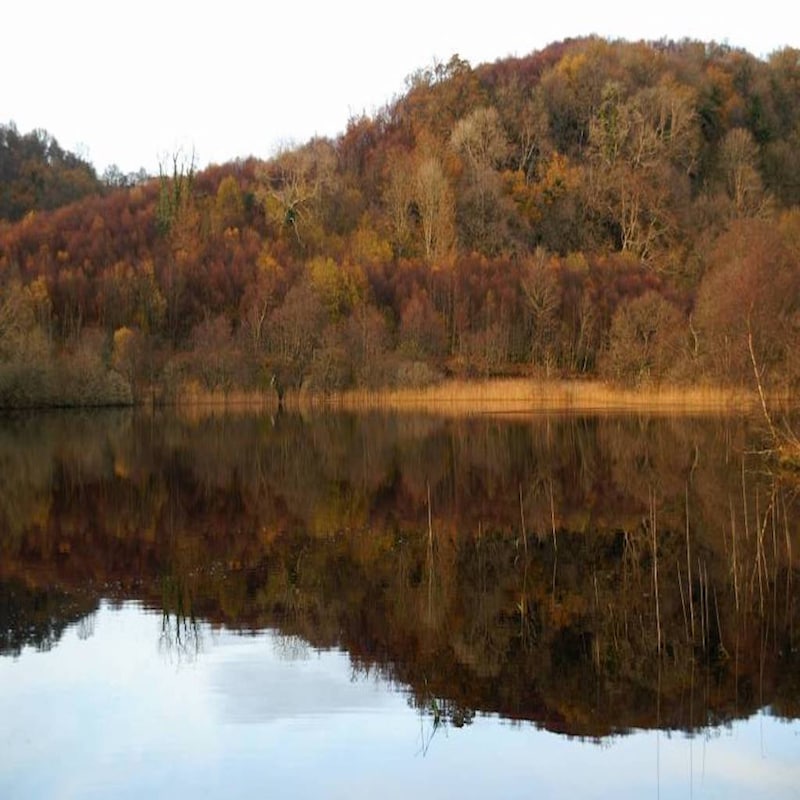
Speaker B:Arriving at Tanish, I set out from the car park into woodlands ablaze with ochre, russet and red and brown from oak, birch, willow, hazel and alder.
Speaker B:Autumn's palette fills me with inspiration.
Speaker B:I've decided that the Barmore Trail is good for today, but there are three with a delightful woodland or mill trail to reach the Tanish National Nature reserve.
Speaker B: You take the B: Speaker B:You can walk to the reserve from the car park just south of Tavalik Village.
Speaker B:I did this as the track that gets you closer to the start of the trails is very rugged and I'm in my camper van.
Speaker B:The Barmoor trail is a 3 kilometer or 2 mile trail that takes you up the Barmoor, which is Gaelic for big top, from which you will have superb views over the surrounding woodlands, coastlands and islands.
Speaker B:You'll also need to be reasonably fit to reach the viewpoint at the top.
Speaker B:There are steep paths that climb through the stunning woodland, but there are many steps to help your ascent before you finally emerge from the tree cover and onto the top of the hill.
Speaker B:Nestled in the heart of Argyll, Taenish offers a feast for the senses at every turn.
Speaker B:The fresh air and damp west coast climate create a great home for lichen, liverworts, fungi, mosses, ferns and wildlife, all in the old Atlantic oak woods.
Speaker B:The damp woodland is home to around 250 types of moss and liverwort.
Speaker B:Taenish has about a quarter of all the bryophyte species that are found in Britain, including seven that are rare across the country.
Speaker B:Some of the unique ferns here are the delicate, see through filmy ferns that grow on rocks and tree trunks.
Speaker B:The reserve is also home to about 500 types of lichen, including 91 that are classed as rare in the UK.
Speaker B:Tate Nish is home to more than 300 types of flowering plants.
Speaker B:These range from the rare sword leaved hellaburine to the colourful spotted heath orchid which grows here in prolific numbers.
Speaker B:The woodlands and their sunny clearings are full of butterflies, moths, beetles, dragonflies and many other insects.
Speaker B:Some of these are rare and found in only a few places in this country.
Speaker B:Tanish hosts a lively cast of mammals, birds, amphibians and reptiles, from playful otters and darting spotted flycatchers to the delicate marsh fritillary butterfly.
Speaker B:The Nature Scott website says this temperate rainforest is overseas, 6,000 years old, which makes it an incredibly valuable habitat.
Speaker B:Much of the reserve at Taenysh is cloaked in oak woodland, where the moist, pure air nurtures lush lichens and mosses on ancient trunks beneath the oaks.
Speaker B:Holly and birch weave through as the understory.
Speaker B:In autumn, the woodland erupts in a dazzling display of russets, reds and ochres as oak, birch and willow and alder all ignite the landscape with their autumn colour.
Speaker B:Bracken and ferns layer the ground with soft browns and golds, completing the Woodland's breathtaking autumn palette.
Speaker B:As autumn fades into winter, the woods transform again.
Speaker B:Old man's beard lichen dusts the branches in pale green grey, while holly berries punctuate the scene with their pops of red.
Speaker B:Taenysh is one of the few places thought to have had woodland cover ever since the the Ice Age.
Speaker B:Soil pollen records show a dip in the Iron Age when we first felled some of the trees, and again from the 18th to the early 20th century, when the woodland was heavily, albeit largely sustainably coppiced.
Speaker B:For more than 50 years, this woodland has been quietly healing, gradually returning to the untouched beauty it knew before the 18th century.
Speaker B:Tanish is celebrated as a temperate rainforest, a hidden gem in the uk, where some of the world's rarest and most unspoiled rainforests quietly thrive.
Speaker B:To shed some light.
Speaker B:There are two kinds of rainforests, tropical and temperate.
Speaker B:Both are precious, rare and increasingly endangered habitats worldwide.
Speaker B:Tropical rainforests grow in warm, humid areas near to the equator.
Speaker B:The Amazon in South America is perhaps the most well known example.
Speaker B:Temperate rainforests in the UK are cooler and very wet, with the rain, creating a lush, wet habitat.
Speaker B:These rare forests are found on the far western edges of the uk, from Cornwall up through Wales into Scotland, as well as along the west Irish coast.
Speaker B:Taenich gets over three times as much rain as London, has a mild climate and sits on a sheltered peninsula, making it a spectacular natural haven.
Speaker B:The Barmoor trail was just as steep as I had heard, but walking under the old oaks was magical.
Speaker B:I often stopped to look at the mosses and lichens, most of which I didn't recognize and found them fascinating.
Speaker B:These breaks were a welcome distraction for my tired legs.
Speaker B:Beneath the woodland canopy, a shaft of morning sunlight illuminated a small boulder.
Speaker B:There, basking in the gentle warmth, an adder lay perfectly still.
Speaker B:It was dark, almost black, with a distinctive zigzag pattern nearly as striking as its red eyes.
Speaker B:His tongue tasted the air as it sensed me weighing my threat against its energy levels.
Speaker B:To escape, the adder raised its head, not to threaten, but to acknowledge me.
Speaker B:For a moment we looked at each other with a sense of respect.
Speaker B:As the year was drawing to a close, this adder would soon be going into hibernation, just as its prey, such as lizards, amphibians, voles and rodents, became much harder to find and it became much slower.
Speaker B:I took a few pictures and then I left him in peace and kept wandering up the trail.
Speaker B:The climb is a bit challenging, but reaching the top makes it all worthwhile.
Speaker B:If you'd like to see some of the pictures, check out the article on the Wildlife Matters website and I'll share some on our social media.
Speaker B:From the top, I could look along the log and out to the open sea with the Atlantic Oak rainforest running along both sides of the peninsula right down to the coast.
Speaker B:I stood and soaked in that stunning view.
Speaker B:For some time I was lost in my thoughts while feeling a sense of integration with this spectacular landscape.
Speaker B:The time had drifted by unnoticed.
Speaker B:After half an hour, I brewed some coffee and enjoyed a snack, lingering another 40 minutes or so before shouldering my rucksack and starting the descent back down to the car park.
Speaker B:It was a Saturday and I hadn't seen anyone else all day.
Speaker B:Having this beautiful place to myself felt like a real privilege.
Speaker B:As I neared the car park, I chatted with a couple of locals who walk here most days.
Speaker B:They're so lucky, and they gave me a tip which I plan to follow this evening.
Speaker B:Acting on the earlier tip, I arrived at the given place.
Speaker B:The van was parked in a small lay by area and I set off with my camera and recording gear to sit quietly and wait.
Speaker B:Around 9:30, after a couple of hours of sitting and just enjoying the dark and stillness of the woodland, I got to see what I had come for.
Speaker B:Badgers I try not to pick favorites since I All wildlife is special, but badgers and foxes have always stood out to me.
Speaker B:No food was used to attract them.
Speaker B:This was simply a family of badgers emerging from their set.
Speaker B:Naturally, the first to appear were two young adults.
Speaker B:They started to play and tumble around together as badgers do.
Speaker B:Next came a large male.
Speaker B:He sniffed the air, sat down for a scratch, and then wandered off into the night to look for food.
Speaker B:A few minutes later, four more young adults showed up ready to play.
Speaker B:They joined the first two and all of them played rough and tumble together.
Speaker B:Then a female came out of the main entrance.
Speaker B:She yawned, sat back and scratched herself a little, lifting both back legs off the ground.
Speaker B:It always looks so funny, but it's really cute.
Speaker B:Two others soon joined her, gently grooming her with careful attention, most likely her daughters, and they tended to their mother with a quiet devotion.
Speaker B:Clearly she ruled the clan, and a sharp bark showed her authority whenever the young badger's play grew too wild.
Speaker B:That unique call, one I had only heard once before, instantly quietened the tumbling youngsters, who paused and then resumed their games with newfound restraint.
Speaker B:Eventually the entire family melted into the shadowy dark woods, vanishing to begin their nightly search for food.
Speaker B:I waited, filled with happiness and gratitude for a rare glimpse into their world.
Speaker B:As I walked back to the road, I heard a little rustle nearby.
Speaker B:I stopped.
Speaker B:I turned my head torch to him for red and held my breath in silence.
Speaker B:I'd sensed it was an animal, maybe one of the badgers, perhaps a deer, but the low, steady breathing close to the ground made me think it was something smaller and perhaps more secretive.
Speaker B:I was sure it could hear me and maybe even see or smell me.
Speaker B:Even though I stood completely still, I just waited to see what would happen next.
Speaker B:After a moment, the animals started to move, making the leaves and twigs crackle softly.
Speaker B:It wasn't running away, though.
Speaker B:I slowly lifted my head so the head torch would light up the area in front of me.
Speaker B:And there it was, looking right at me.
Speaker B:A pine marten stood in front of me, staring at me.
Speaker B:I didn't think I could see in the faint infrared light, which gave me a secret look into the hidden lives of these nocturnal animals.
Speaker B:We looked at each other for 30, maybe even 40 seconds.
Speaker B:It was a wonderful moment, and one that I will never forget.
Speaker B:Of course, I have no pictures.
Speaker B:My action camera was off and my phone was in my jacket pocket.
Speaker B:The pine martin would be long gone before I could have reached either.
Speaker B:Only after returning home did I realize my wireless mics had been recording, leaving me with an audio keepsake of the encounter to share with you on the Wildlife Matters podcast.
Speaker B:The next morning I woke up early, excited to visit Crinnon Woods, a Woodland Trust site known for its beautiful views.
Speaker B:Most of the trees here are oak and birch, but there are also patches of alder, ash, elm, hazel, holly, rowan and willow.
Speaker B:Today, the plan is to find some of the rare ferns that grow abundantly at Crinan Wood and enjoy the views over Loch Crinan Park.
Speaker B:From the woodlands.
Speaker B:It was a treat to see siskins, a bird I rarely see in the south of England.
Speaker B:They were busy eating seeds from the birch and alder trees.
Speaker B:There are 13 types of fern recorded at Crinham Wood.
Speaker B:I'm not an expert, but I'm always drawn to ferns when I'm outdoors, and I often take pictures because I enjoy looking at their shapes and colours.
Speaker B:Today I found two types of fern, missing a further 11, but the first was the hay scented fern, with fronds that can grow a foot wide and often they form large clusters.
Speaker B:When autumn comes, the ferns turn from deep green to golden yellow but stay just as beautiful.
Speaker B:The hay fern stands out for its height, sometimes growing over a meter tall, and for the soft, velvety feel of its fronds.
Speaker B:The Hay fern looks a lot like the lady fern, so it's easy to mix them up.
Speaker B:But to make sure I had the right one, I crushed a blade between my fingers and the strong scent of freshly cut hay told me that I had found a hay fern success.
Speaker B:My second fern discovery bought a quiet thrill.
Speaker B:This delicate beauty is called the Tunbridge Filmy fern.
Speaker B:These ferns are native to temperate rainforests, but a small group still grows near Tunbridge on the Kent Sussex borders.
Speaker B:I'd never seen them in the south, so finding them in western Scotland felt like discovering a rare treasure just for me.
Speaker B:The Tunbridge filmy fern is delicate and beautiful.
Speaker B:It grows in moist woodlands, temperate rainforests and misty mountain cloud forests, often clinging to acidic rocks and sandstone or resting on mossy branches.
Speaker B:The scientific name Hymenifolium, literally membranous leaf, refers to the many delicate fronds.
Speaker B:I was told to take a hand lens to see the natural beauty of the leaves, which is a great tip and one I am happy to share with you.
Speaker B:People often say its fronds look like a bird's ruffled feathers.
Speaker B:When the conditions are right, they shimmer in a beautiful blue green and each leaflet sparkles with droplets.
Speaker B:Another magical find, Crinan Wood sits next to both the Atlantic Ocean and the Crinon Canal.
Speaker B:The nine mile walk along the Crinan Canal, which connects Ardreshag to Crinan along the Sound of Jura, stretched out ahead.
Speaker B: It was a vital route in the: Speaker B:But for me, that is an adventure for another day.
Speaker B:But I knew this wasn't really an ending.
Speaker B:These ancient rainforests have stood for thousands of years, sheltering life in all its forms and patiently waiting for the next visitor to discover their magic.
Speaker B:Some adventures don't end, they simply pause, holding their breath until you return.
Speaker B:I hope you have enjoyed the story of our first adventure into Scotland's ancient rainforest, shared with you here on the Wildlife Matters podcast.
Speaker A:And that wraps up our Scottish Rainforest Adventure adventure.
Speaker A:It's a remarkable place that will capture your heart from the moment you first visit.
Speaker A:There's still so much more to explore and I know I will be back, so make sure you like and subscribe so you don't miss any of our wildlife adventures.
Speaker A:I do hope that you get to experience this extraordinary corner of northwest Scotland.
Speaker B:It absolutely belongs on your must see list.
Speaker A:Wildlife Matters will return in two weeks on March 11 with a winter wildlife walk through one of our favorite woodlands in southeast of England.
Speaker A:As always, thank you for your time in listening to us today.
Speaker B:Until then, stay curious, wild ones.
Speaker A:This is Wildlife Matters signing off.
