Shownotes
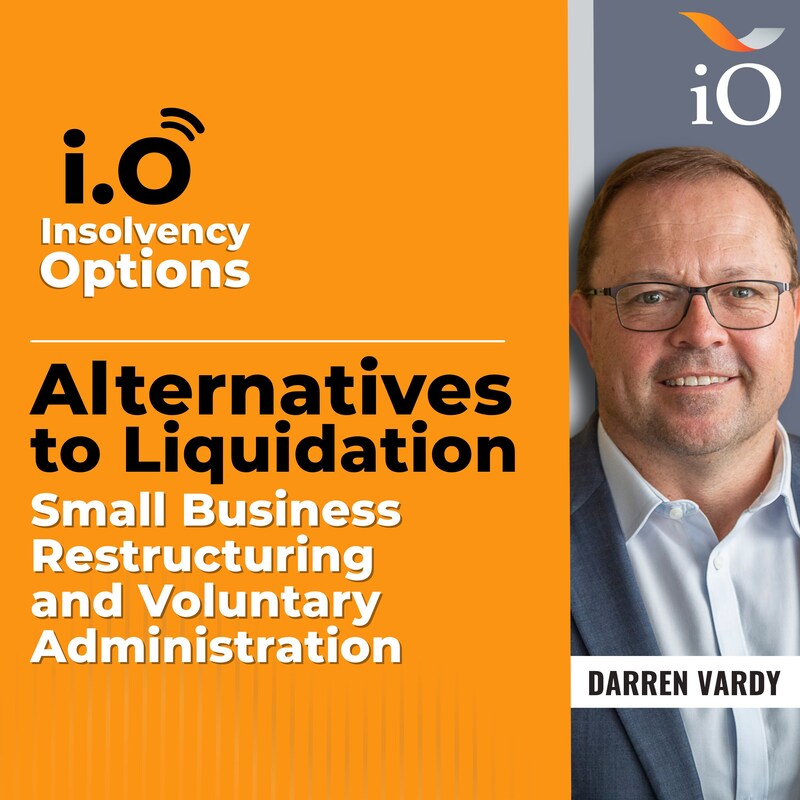
Before considering liquidation, explore your alternatives. Darren Vardy explains small business restructuring and voluntary administration - two processes that can save businesses and provide better outcomes for creditors. Learn the eligibility criteria, processes, and why timing is absolutely critical for success.
Key Topics Covered:
• Small Business Restructuring Plan eligibility and process
• Voluntary Administration and Deed of Company Arrangement
• Key differences between restructuring options
• Eligibility criteria and timing considerations
• How these alternatives provide better creditor returns
• Real examples of successful business restructures
Key Takeaways:
✓ Small business restructuring requires debts under $1M and current compliance
✓ Voluntary administration involves external control but can save businesses
✓ Both alternatives aim to provide better returns than liquidation
✓ Early action is crucial - waiting reduces available options
Who Should Listen: Business owners with financial difficulties, professional advisors, lawyers specialising in corporate recovery, and accountants with struggling clients.
Who Should Listen: Business owners, company directors, lawyers, accountants, and anyone wanting to understand financial distress warning signs.
About the Host:
Darren Vardy - Managing Director of Insolvency Options and Registered Liquidator with over 30 years of experience in business recovery and debt solutions. Darren has helped thousands of businesses and individuals navigate financial distress and find practical solutions to complex problems.
Connect With Us:
• Website: insolvencyoptions.com.au • Phone: 1800 463 328 • LinkedIn: https://www.linkedin.com/in/darrenvardy/
Subscribe & Follow:
Don't miss future episodes! Subscribe to i.O. - Insolvency Options
Like this episode? Please leave a review and share with colleagues who might benefit from these insights.
Co-host: Anthony Perl
Produced by: Podcasts Done For You
Transcripts
Introduction to Insolvency, understanding the basics.
2
:Welcome to our first episode of io
Insolvency Options with Darren Vadi,
3
:the managing Director of Insolvency
Options, and a registered liquidator.
4
:With over 30 years of experience
helping businesses and individuals
5
:navigate financial challenges.
6
:In today's episode, Darren shares
his journey into insolvency explains
7
:what insolvency actually means.
8
:And reveals the warning signs every
business owner needs to recognize.
9
:We'll explore when to seek
help and the difference between
10
:corporate and personal insolvency.
11
:You'll understand the
fundamentals of insolvency.
12
:Know when to seek professional
advice and learn why acting
13
:early gives you the most options.
14
:I'm your co-host, Anthony Pearl.
15
:Let's dive into unlocking
more about insolvency options.
16
:Darren, I guess what we should
look at is in terms of liquidation.
17
:What are the alternatives?
18
:Because that's where
you want to be, right?
19
:You want to be looking at the alternatives
before you get to that situation.
20
:Speaker 2: Correct.
21
:And you know, there are two main
alternatives to liquidation.
22
:The first alternative is a
relatively new regime called
23
:a small business restructure.
24
:The small business tree structure is where
an insolvency practitioner is appointed
25
:for the purposes of developing a plan.
26
:Of repayment to its creditors and
that plan of repayment is based
27
:on the affordability of, of the
business to be able to continue to
28
:trade profitably into the future.
29
:Or it may well come from any, uh, a
further injection of funds by the business
30
:owners to discharge some debt, restructure
that debt position to then put 'em into
31
:a profitable position going forward.
32
:Now that being said, you know, there
are some eligibility criteria that needs
33
:to be met, but at the end of the day,
it's all about providing a better return
34
:to creditors than what creditors would
ordinarily get in a liquidation scenario.
35
:Speaker: How easy is that to achieve that,
to satisfy the creditors that you're going
36
:to be in a better situation by doing this?
37
:Speaker 2: What it comes down to
is as the insolvency practitioner,
38
:putting the plan forward.
39
:We would do an investigation into the
company's affairs, not dissimilar to what
40
:we would do in a liquidation scenario, to
then determine what return would in fact
41
:be available in a liquidation scenario.
42
:And then based on that, we would
then look at the affordability of
43
:the business to make an offer to its
creditors, to provide the best return
44
:possible, and then compare the two.
45
:And if the.
46
:Return that is affordable to the
business is greater than a return
47
:in the liquidation, then the plan
would be submitted and put forward
48
:by the insolvency practitioner and
who would then recommend the plan.
49
:Commonly, when people think
50
:Speaker: of the term restructure, they
usually think about shifting departments
51
:around, shifting personnel around.
52
:Is that much of a factor when it comes
to this area, or is it really, it doesn't
53
:really come down to people as much.
54
:It can
55
:Speaker 2: come down to people.
56
:Absolutely.
57
:However, what we find is, you know,
it is a small business restructure.
58
:We are dealing with small businesses
who don't necessarily have the size and
59
:structure of what you're referring to.
60
:Really, it's about, in my view, from
what we've seen, the reorganization of
61
:debt and getting the working capital
right for the business moving forward.
62
:You know, there are some circumstances
where I have seen that there was a
63
:pivot in the type of business, and
as a result of the pivot in the type
64
:of business, there has been a change
of staff within the business that
65
:will then lead to profitability.
66
:Or there may be a change of
product, or there might be a whole
67
:product range that's been dropped
because of the, the low margin.
68
:Which then results in because of those
sales not being there, it may result
69
:in some retrenchments being required.
70
:However, every business is
different and every business needs
71
:to be looked at on their merits.
72
:I mean,
73
:Speaker: is there merit then
in the concept of bringing
74
:someone new into the business?
75
:It could be in an advisory capacity.
76
:The problem being of course, that you're
talking about spending money when, at
77
:the very point when you don't have money.
78
:But can new people coming in be a
critical factor in determining the
79
:success, or is it too far gone at that
point to really consider that properly?
80
:Speaker 2: Yes, they can, and all
that will be assessed as part of.
81
:The affordability of the plan
going forward and the profitability
82
:of the business going forward.
83
:Speaker: And it's too, you know, it's
interesting, isn't it, with a lot of
84
:small businesses, they revolve around a
person or two, and the success of that
85
:business hinges so completely on those
people that whether you find yourself
86
:in a situation where you might be
looking at a restructure or liquidation.
87
:Or even if you wanted to sell the
business, you know, and it was going
88
:okay and you wanted to sell the business.
89
:Being revolving around one or two
people that are so intrinsic to the
90
:success of a business can make that
incredibly difficult, I would imagine.
91
:Speaker 2: Yes, it can make it difficult
and yes, it's a big risk for business.
92
:You know, and we all talk
about the, the bus analogy.
93
:What happens if the owner
gets hit by a bus tomorrow?
94
:Then what?
95
:And this is where you get into
your risk management and having
96
:a risk management strategy.
97
:In respect of the likes of that.
98
:But what we quite often find is that
when a business owner is knocking on our
99
:door to have a chat about the adverse
financial position their company's in,
100
:quite often we find that those business
owners having fact been a roadblock to
101
:the business in the past, and therefore,
given the financial position it's in
102
:with, we find that the business owner
is actually quite receptive to plans.
103
:Being put in place to return the business
to profitability and to move it forward
104
:because that then allows them A, to
continue to operate the business, earn
105
:a living, but it also provides for
the business to also potentially bring
106
:in another partner to share the load,
to then return it to profitability.
107
:So the outcome of financial
distress is awareness.
108
:Awareness of what's going on
and what they need to do to
109
:actually succeed into the future.
110
:Speaker: How common is it that
that scenario where they're in
111
:this situation and they find a new
partner to bring into the business
112
:that's gonna help turn things around?
113
:Is that a common
occurrence or is that rare?
114
:Speaker 2: We are finding it more
common at the moment, given that
115
:we're sort of coming into a bit of a
generational change within business.
116
:You know, there are a lot of.
117
:Older generational business owners that
are looking at their younger staff,
118
:middle management coming up and through
the business, and the business owners
119
:are looking for some succession, and
therefore they have to be looking at who
120
:is coming up and through the organization
who can take the lead to enable them
121
:to, for want of a better term, retire.
122
:Yeah.
123
:So what we are finding, as I said,
with that generational change.
124
:Finding that baby boomers are now getting
to that age where they're looking to
125
:retire and they're actually looking,
what is going on with my business?
126
:And am I maximizing profitability?
127
:And if I'm not, what do I need
to do to maximize my exit?
128
:So what you often find is that where
a business has gone through an adverse
129
:financial situation, those business
owners become more focused on that.
130
:Which is a positive that can
come out of the position Mary.
131
:Speaker: Hmm.
132
:Speaker 2: And what about,
you know, the whole area
133
:Speaker: of mergers and acquisitions
and is that, you know, are businesses
134
:that are in this kind of financial
stress, they're looking at a restructure,
135
:is it viable pickings for other
businesses to come along and say,
136
:right, we can see an opportunity here?
137
:Yes, it can be,
138
:Speaker 2: you know,
strategic acquisitions would
139
:be more so where it's at.
140
:If there is a business out there which
is generating sufficient sales, but
141
:with its current staffing level is not
profitable, and then you have a key
142
:competitor who could quite easily absorb
the staffing cost because they have
143
:capacity within their own business to do
so, and maybe at a small additional cost,
144
:obtain the revenue that comes with that.
145
:Certainly the strategic acquisition
on behalf of the competitor.
146
:Yes, they can to be an
outcome of the process.
147
:Speaker: I'm intrigued as well.
148
:When you're going through this kind of
process, does it immediately send alarm
149
:bells out about that particular business
in a way that isn't helpful in that kind
150
:of situation to maximize the sale price
of merger price to whatever it might be?
151
:Does the minute that we start talking
about these kinds of things just
152
:trigger too many alarm bells for people?
153
:Speaker 2: Look, by its very
nature, insolvency is is not nice.
154
:It does and can trigger alarm bells.
155
:However, I think the people that
work in the various industries, the
156
:economy is more sophisticated these
days and those that, for want of a
157
:better term, cashed up, they will
be looking out for opportunities
158
:and opportunities to acquire.
159
:So on the one hand, there is a
negative connotation that goes with
160
:insolvency, but on the other hand.
161
:The positive outcomes that can
come from that for the right party
162
:generally outweigh the negative.
163
:Speaker: Talk to me a little bit
about voluntary administration
164
:as well, because that is another
alternative to the liquidation path.
165
:Speaker 2: So voluntary administration
is a, a regime that came back
166
:in, into forcing 1993, shortly
after I came in, in the industry.
167
:So it's been around for a
long time, as have I, and.
168
:You weren't responsible for
bringing it back though.
169
:No, I wasn't responsible
for bringing it in.
170
:But the beauty about a voluntary
administration is that through a
171
:deed of company arrangement, again,
a company can provide a return to
172
:its creditors that would be greater
than say, a liquidation scenario.
173
:That's one of the purposes of
a voluntary administration.
174
:The other purpose of a voluntary
administration is to enable.
175
:The company to continue to trade.
176
:So that being said, the difference
between voluntary administration
177
:and small business restructure,
however, is that with a small business
178
:restructure, it is for want of a
better term, a debtor in possession.
179
:The director is still in control of
the business on a day-to-day trading,
180
:whilst the small business restructure
is going through its plan phase.
181
:And going through the entire phase.
182
:However, with a voluntary administration,
once an insolvency practitioner is
183
:appointed as the administrator, they
are actually in control and responsible
184
:for the operation of the company.
185
:And what also comes with that
is everything to do with the
186
:risk of running that company.
187
:Though as an insolvency practitioner
being appointed as voluntary
188
:administrator, uh, generally I'm
personally liable for all the debts
189
:incurred from that point forward.
190
:Throughout the period with which the
voluntary administration had continues,
191
:Speaker: I mean, that's a difficult
situation to be in, isn't it?
192
:Because you are going into a business that
you don't necessarily know the business.
193
:Speaker 2: Correct.
194
:So quite quickly we need to come up
to speed with the business, come up
195
:to speed with its financial position,
do some very quick forecasting to
196
:ensure that we are able to trade
the business at worst breakeven.
197
:Even if we operate at a small loss,
because it may be worthwhile operating at
198
:a small loss to at least get the business
sold as a going concern, which will
199
:provide a greater return than breaking
it up and selling the assets piecemeal.
200
:So it can get very hectic in a
very short space of time, but this
201
:is what we are educated to do.
202
:Is that a
203
:Speaker: position that you.
204
:Enjoy being in, if that's the right term.
205
:You know, because taking on that
kind of personal liability is,
206
:is a huge thing to be able to do.
207
:So how easy is it just for you personally
to make that decision to take that on?
208
:Speaker 2: Look, everything
that we do is calculated.
209
:We have our systems and processes in place
to enable us to determine whether or not
210
:we can operate this business profitably.
211
:And it's part and parcel of attempting
to get the best return to creditors.
212
:Then the other scenario, which is
liquidation, worst case return,
213
:been doing it for 35 years.
214
:It sort of comes of second nature.
215
:Now, you know, if we are unable to
trade to business profitably, well then
216
:it's highly unlikely that the business
owners will be able to continue to
217
:trade it profitably into the future.
218
:Therefore, any deed of company arrangement
proposal is unlikely to be successful.
219
:Though there's, it's an extra level,
in my view of due diligence as to the
220
:ability of the business to be able
to trade into the future profitably,
221
:because if the insolvency practitioner
is unable to do it during the 35 days
222
:of their appointment, then it's highly
unlikely that the business will be
223
:able to do it, do that in the future.
224
:Speaker: It's quite a short period of
time really to have to turn things around.
225
:Speaker 2: It is, it is
a short period of time.
226
:However, you know, that can be extended
in various different circumstances.
227
:But at the end of the day, the idea
is also not for the practitioner
228
:to be there for too long,
because that also adds to cost.
229
:And sometimes the cost of the
process may be the very reason why.
230
:He's unable to succeed in a
deed of company arrangements.
231
:So there is a, there is a fine line
there that we need to be operating
232
:on to ensure that there is the best
return and best outcome for the
233
:company and the best return for credit.
234
:Speaker: I imagine you also have
to know your own limitations
235
:when you go into that scenario.
236
:I mean, your background's in accounting
and there are many facets to a business.
237
:The financial side is one part, but
you know, there are the ins and outs
238
:of different businesses, but there's
the marketing, there's the sales,
239
:there's other lots of bits and pieces
and components that make it up.
240
:How important is it to be on top of
all of those elements very quickly
241
:and know what's working, what's not?
242
:What needs to go where you might
need to make personnel changes?
243
:Does all that happen in
relatively quickly in that space?
244
:And do you have to have
good people around you?
245
:'cause it's not to be able to advise
you on those different elements?
246
:Speaker 2: Yeah, look, generally those
sorts of things happen within the first
247
:seven to 10 days prior leading up to
the first meeting of, uh, of creditors.
248
:So then you can explain to creditors, you
know, what you've done and what direction
249
:the business is going in and why.
250
:And that is the key because
you know, creditors.
251
:Are all keen to understand the why.
252
:And so that's certainly
an important aspect.
253
:So in regard to determining, you know,
who should stay, who should go, that'll
254
:be determined by the analysis of,
you know, the staffing levels, their
255
:capacity, the nature of the business,
what staffing levels are required,
256
:in what areas, so on and so forth.
257
:And it also comes down to, you
know, industry experience as well.
258
:I.
259
:Tend to do a lot of work in the
construction industry around construction
260
:contracts, around completion.
261
:Quite often have gone in and completed
construction contracts during the
262
:period of time and you get to know
what can be done, what can't be done,
263
:and whether certain projects can
be completed or whether there's no
264
:chance of them being completed at all.
265
:And it all depends on the ability
for everyone to work together.
266
:The administrators and their staff with
the current management and their staff
267
:and the creditors 'cause to be successful.
268
:The creditors need to be on board.
269
:You know, if, if we are operating on a
project and despite creditors being owed
270
:money up until the date of my appointment,
you know, without those particular
271
:creditors to assist in finishing a
project, the project won't be finished.
272
:So there's a lot of work that needs
to be done by all parties pulling
273
:together to get a successful outcome.
274
:Speaker: Well, that's it for this episode
of the IO Insolvency Options Podcast.
275
:I hope you've got plenty of valuable
knowledge and practical steps for whatever
276
:your situation is from Darren today.
277
:And if you need guidance
on insolvency matters.
278
:Contact Darren Vadi
279
:au or call 1804 6 3 3 2 8 or of course
you could connect with Darren on
280
:LinkedIn details in the show notes below.
281
:With over 30 years of experience,
Darren and his team provide
282
:personalized solutions.
283
:For both personal and corporate
insolvency challenges.
284
:This episode was produced by my
team at podcast done for you.com
285
:au helping professionals
share their expertise through
286
:powerful podcast content.
287
:If you found value in today's episode,
please like, comment and subscribe
288
:to the IO Insolvency Options podcast.
289
:Ever you are listening to this, your
engagement helps us reach more business
290
:owners who need these crucial insights.
291
:Until next time, remember, there's always
a way forward when you know your options.

