Shownotes
About This Episode
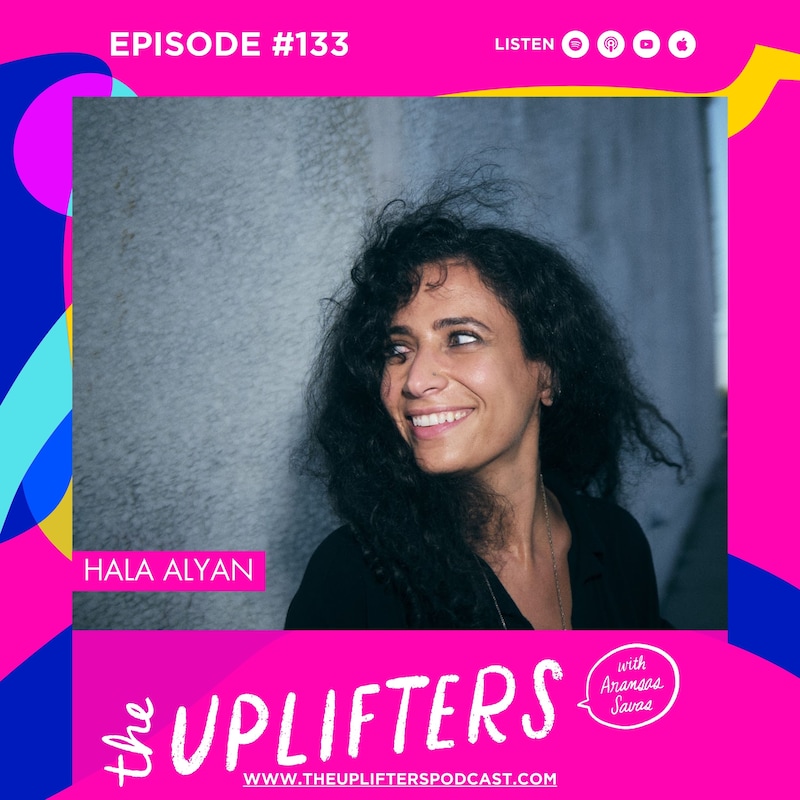
Join host Aransas Savas in a powerful conversation with Hala Alyan, a Palestinian-American poet, writer, clinical psychologist, and mother, as they explore the intersections of identity, motherhood, creativity, and social engagement.
Key Topics Discussed:
- Navigating multiple identities as a Palestinian-American
- The role of motherhood in understanding personal and collective experiences
- Creative writing and storytelling as forms of witness and resistance
- Accountability, personal growth, and social responsibility
Timestamps
00:00 - Introduction to Hala Alyan
01:09 - Exploring Personal Identities
03:20 - The Complexity of Cultural Identity
12:35 - Motherhood and Storytelling
25:32 - Raising a Child with Awareness and Compassion
34:05 - The Power of Mundane Moments
40:10 - Building Supportive Relationships
42:11 - Creative Pursuits and Learning
About Hala Alyan
Hala Alyan is a Palestinian-American poet, writer, clinical psychologist, and mother based in Brooklyn. She is the author of a memoir and continues to explore themes of identity, displacement, and resilience through her writing and creative work.
The Uplifter Thread
Did you know that every woman on the Uplifters podcast is nominated by a former guest or audience member? This means you and I get to chat with the most inspiring women -- the ones who inspire the women who inspire us!
Our current thread:
Julie Fleischer → Susan Jaramillo→Kate Tellers from The Moth→Cleyvis Natera→ Deesha Philyaw → Mahogany Browne → Hala Alyan → who nominates Sahar Delijani and describes her as, “A remarkable human and artist, a beautiful writer, a fearless advocate for Iranian human rights.”
Lift Her Up:
Support Hala’s Work:
- Buy or borrow I’ll Tell You When I’m Home from your local bookstore or library
- Attend KAN YAMA KAN if you’re in NYC—it’s a beautiful reading series that combines poetry, fiction, memoir, and music while raising funds for monthly mutual aid causes. You can learn more about it by following Hala’s IG.
- Share her work with book clubs, writing groups, or friends who appreciate literature that grapples with identity, displacement, and belonging
Support Palestine:
- Hala emphasizes that witnessing and being moved by what you see is transformative—educate yourself about what’s happening in Palestine
- Support mutual aid organizations working on the ground
Support the Podcast
- Subscribe to Uplifters Podcast
- Leave a Review
- Share with a Friend
#Uplifters #HalaAlyan #Motherhood #CreativeWriting #PalestinianAmerican #Podcast
Transcripts
TUP EP 133
Aransas Savas: [00:00:00] Hey Uplifters. I wanna take a minute to talk about something personal to me. In my forties, I started noticing my hair was shedding more so a couple of months ago I [00:00:15] started using neutrophil. I'm already seeing so much less shedding and my teenage daughter who notices absolutely everything keeps commenting on how thick my hair looks.
As someone who's built my career around [00:00:30] rigorous science, I super love that Nutriful was the first brand to clinically study hair thinning on menopausal women, which is why I am so proud to have them as a sponsor. Nutriful takes a whole body approach to [00:00:45] hair health supporting you throughout your life stages.
You can see thicker, stronger, faster growing hair with less shedding in just three to six months. For a limited time. Neutrophil is offering our listeners. $10 off your first month's [00:01:00] subscription and free shipping when you go to nutri fold.com and enter the promo code Uplifters
Nomination: Hala Alyan. She writes about the atrocities and the dreams [00:01:15] deferred from love torn relationships as a mother, author, curator, anthropologist, and psychologist, she's a cultural worker who remains a beacon of resilience to us all.
I love how she does not must or [00:01:30] fuss over genre, which is to say our stories belong everywhere.
Aransas Savas: Welcome to the Uplifters podcast, where every week I get the great privilege of talking to woman who's doing [00:01:45] big, brave work in the world and who generously. Shares her process and mindset with us so that we can all do big, brave things in our worlds too.
Today I'm talking to [00:02:00] Hala Ian. She's a Palestinian American poet, writer, professor, and clinical psychologist based in Brooklyn. Yes. Thank you for taking time outta your busy [00:02:15] world to hang out with us today. It's my pleasure. Thank you so much for having me. Such a joy. I'm so excited about this. You too.
You wear a lot of hats. A poet, a novelist, a [00:02:30] memoirist, a clinical psychologist, a mom, a Palestinian American identity, a Brooklynite identity. You've lived between so many different places. You've spoken so many different languages, had so many different [00:02:45] experiences. So if you were to introduce yourself,
Hala Alyan: that's good.
That's good. How would you do that? There's actually an exercise that I'll sometimes given the cross-cultural therapy class that I, [00:03:00] that I teach, that's like you write the five identifiers that you most strongly connect to at this moment in your life. And that's like really crucial because that highlights positionality and how what's essential for us changes over time.
[00:03:15] And then you cross out one of them and then you're left with the top four. And that we, I should make you do it. And then you cross out another one, and then you left with three. Then you cross out another one, and then you're left with one. And usually it's the three to two and two to one that are the hardest.
And so as [00:03:30] you were saying that, that's what I was thinking of because I was like, I don't, I think in this moment, in this moment, I think. My role and capacity as a mother feels really central. I think that's kind of been taking central center stage and as a Palestinian. [00:03:45] Mm-hmm. And which that, I mean, that has obviously everything to do with the circumstances and, and I think, you know, the roles of like writer and, and professor and teacher are like, you know, community member, all of those things, those feel kind of like they've been evenly.[00:04:00]
Consistent in terms of like where they are in my life for the last however many years. But I definitely think the last few years 'cause also the, like both Reza and my daughter's birth were not, I mean they didn't overlap exactly. My, my [00:04:15] daughter was like a year and a half when October 7th happened. But like, it's that role of like really gelling into what it means to be a mother has not felt separate from Palestine for me.
Aransas Savas: And so that's been
Hala Alyan: really interesting, like to mother while [00:04:30] watching and witnessing and like trying to understand how as a member of a diaspora with all these privileges, what can I do? How can I be, you know, of service? It's been so salient because I think in a lot of ways Palestine has been superimposed on everything I've done eternally too, for good and for [00:04:45] bad, you know?
And so yeah, those are the two that I, I would be like, I, I think I would say those, those have felt really central
Aransas Savas: in this day. It was so fun. Maybe it's not the right word. Watching your process through that, [00:05:00] because it, it seemed as though the distinction was the degree of change and transformation that was happening.
Hala Alyan: I think like the Palestinian ness in general, and I think people. People of color, like Bipoc folks, people that belong [00:05:15] to marginalized ID identities. This is true for all. Like I don't think this is just a Palestinian thing, but is that you? I mean, there is something about the salience of that identity that has a lot to do with the urgency of the moment.
Right? So like I, I would love [00:05:30] to, this is a big, larger conversation about identity politics, but it's like my identity is foregrounded not by myself necessarily. You know what I mean? Like it's the thing that is, it's also like. Put upon mm-hmm. Given [00:05:45] where we live and given like, you know, political structures and power structures and whatever.
And so it's interesting too to have to kind of continuously renegotiate what it means to be stepping into an identity that you're also, there's, there's [00:06:00] also all of these like presupposed. Projections onto, you know, that are like not necessarily coming outta. So it's like my relationship to my Palestinian is something that has been really complicated and changed depending on whether I'm living in Beirut or [00:06:15] living, you know what I mean?
Living in the Arab world, living here, if I'm traveling to Europe, like it really shifts and it's salience of course, which is, I mean, tragic has been made so visceral in the last like couple of years. But even before that it was the, that's what's interesting about positionality, like. [00:06:30] Change depending on where, where my feet happen to be touching on this earth.
Aransas Savas: That word sence is so rich. What does it mean to you? It's so rich.
Hala Alyan: It's like how relevant, how, again, like visceral, how [00:06:45] embodied it's, you know, how much it's something that I'm thinking about on a day to day, but there is not, I mean, every day, multiple times a day. I am thinking about, because in particular Palestine in general, what it means for me [00:07:00] to inhabit this identity.
Am I doing it right? Am I doing it enough? Like, so I think there's, like, that's the salience, whereas mm-hmm there, there have certainly been years and eras of my life, particularly what I lived in the Arab world, where I didn't really, and that's not to say it wasn't a [00:07:15] complicated identity there in many ways, but it was like.
It was different. It wasn't something I was having to negotiate in the same way, similar with motherhood. Like I don't, I think about mothering in some capacity, or my daughter in some capacity. I mean, on an hourly, multiple [00:07:30] times an hour basis, even if I'm not next to her. And that has just become, that is so infused in my being at this point.
Aransas Savas: Mm-hmm. Yeah. The four words that came up as I, as I heard that were urgency and importance. Playing a, a huge [00:07:45] factor in, in that, but also interdependence.
Hala Alyan: Yes, totally. Yeah, yeah, yeah, a hundred percent. And really negotiating what that interdependence looks like in actually in both of the roles,
Aransas Savas: you know?
Yeah, I bet. [00:08:00] And in terms of being so deeply engaged in both of those mm-hmm. And actively engaged. Mm-hmm. While at the same time trying to just survive as a human. Totally. And that starts to [00:08:15] feel, I mean, those things feel
Hala Alyan: inter right? So like survival as a human on a day-to-day basis, watching. Eradication and erasure of Palestinians.
Mm-hmm. That is the, the, the stakes of that change. You know what I mean? Mm-hmm. 'cause then you're, and then there mm-hmm. There also isn't a day that goes by that you're [00:08:30] not like, my brand of existence is relatively unruffled. You know what I mean? Like, it's, it's, it's like there's a fair amount of ease in it.
I am not living in mortal terror on a, on a, like an hour to hour, [00:08:45] minutes, minute basis. And so that also. Yeah, there's something about the fragmentation I think of, of the identity that's also just, I mean, it's, it's not a coincidence, it's, it's intentionally done. But I think that's something that comes up for me too a lot is like to think of [00:09:00] the ways to like keep reasserting existence and presence in the face of these larger erasure that are happening.
And then like what do you do once you've reasserted that? Like how are you then being a val? Like how do you know? I mean, I think this is like, it comes up in my writing. I mean, I have never. The [00:09:15] last year and a half, I've engaged in kinds of writings that I've never engaged in because I've never had interest in, there was never any need for, it's not, I'm not a journalist, I'm not, you know, an op-ed nonfiction kind of person, but that's what like the moment called [00:09:30] for.
And so that's also really, you know, like then you're like, okay, guess this is what I'm doing now. Like,
Aransas Savas: that's so interesting. Yeah. And I, as I was listening to you, I was thinking about the first chapter of Salt Houses. Mm-hmm. And how. We begin by looking at [00:09:45] how our circumstances define what living is. Yes, a hundred percent.
A hundred percent.
Hala Alyan: Yeah. And I think there's something in this idea of like really thinking about what it means [00:10:00] to, to. Who gets entitled to what kind of life and how. Yeah. You know, and then if you have the, if you have enough time and space to like navel gaze, like if you're even asking that question. Yes, yes.
You got a lot of privilege. Right? So it's like to have [00:10:15] this conversation, it's like, woo, we got, we got so much, not just like the ability of time or internet or access or whatever, but I mean even just like the ability to have enough. Stillness in [00:10:30] one's life internally and externally to be able to ponder aloud a.
That might be the biggest privilege of All right. Like to have enough space and capacity internally and externally to be [00:10:45] able to attend to your life
Aransas Savas: mm-hmm.
Hala Alyan: In that way is like, what
Aransas Savas: a, that's the privilege. Yeah. I, to be able to step back because I do, and I, this is totally my imagination. I do imagine that [00:11:00] my great-grandmother, who was a migrant farmer mm-hmm.
During the Dust Bowl, who was barely surviving. Sure. Who was literally creating a home every couple of months out of whatever little scrap she could find [00:11:15] as they moved from crop to crop as she was out there picking in the fields. Mm-hmm. She was pondering. She was contemplating like, how is my husband talking to me?
Yeah, yeah. Are my kids okay? [00:11:30] Right, right. Like,
Hala Alyan: like that is part of the human condition, right? Is to be like thinking and wondering and like storytelling. Yes. Yeah. You see that? I mean, that's very true. Yeah. Like the fact that like. It's not like oral tradition of storytelling or poetry or music or art stops.
Right. [00:11:45] In times of like oppression or despair.
Aransas Savas: No. Yeah. And the privilege to be able to step back and say, is this working for me?
Hala Alyan: Well, and also like, and, and the, I guess that you're right, it might be just more the step back and the ability to be [00:12:00] like, and if it's not, I can probably do something about that situation.
Yeah, yeah. I have some agency and authority here, you know what I mean? As opposed to like Yeah. The, like, you know, millions upon millions of people around the world where it's like that agency is continuously infringed upon. [00:12:15] And so when you have a, you know, like. Yeah, like someone like has the, where it's like been besieged for, you know, 18 years where it's like,
Aransas Savas: you know, free.
Hala Alyan: Like there's no freedom of mobility, like where a body goes, what you have access to, what you're able to do, your, the regulations. I mean things like, [00:12:30] you know, it's like illegal to collect rainwater. You know, it's illegal to go fish. It's illegal to like things where it's like your access to be able to like choice to govern the ungovernable is like such a [00:12:45] tenet, I think of like oppressive forces, you know, to like find ways to be like even rainwater.
We can have policies about like, whatcha talking about? Right. Yeah, but you're right. It is, it's the stepping back and then being like, I have, you know, we were just talking about this before we started recording, where it's like, so [00:13:00] what are we gonna do? What are we, you know, like, where do I wanna live?
Where do I wanna raise my daughter? Leave? Where do I wanna, whatever. Yeah. Where do I wanna raise a kid like that? Presuppose to even have that conversation presupposes that I have the freedom of mobility and enough access to resources and it enough access to [00:13:15] internal resources to be like, and if I, if I wanted to go somewhere, I could figure it out.
Aransas Savas: Mm-hmm.
Hala Alyan: That is not something to take lightly.
Aransas Savas: It's freedom.
Hala Alyan: It's freedom. it's a kind of freedom, absolutely.
I love this as an [00:13:30] intro to your memoir.
Hala Alyan: You really just what? Yeah. We don't like, really, I mean, and yet it's all connected.
Aransas Savas: It's all connected. Yeah. Yeah, yeah. Yeah. You're right. And so interestingly, your book is called, I'll Tell You When I'm Home. Mm-hmm. Um, [00:13:45] and you've said that motherhood has felt like a kind of home for you and I just.
Interview for the show very recently, Christina Jimenez, who wrote the book, dreaming of Home. Yes. With very, very [00:14:00] similar and yet different, I say incredibly similar themes. Yes. Yeah. Yes. And so Home as somebody who recently moved, has been on my mind a lot. The person who most felt like home for me recently [00:14:15] passed.
And so, oh, I'm sorry. All of these themes are so meaningful to me. Yes, yes. Right now. And your family history has directly been marked by displacement. Totally. And exile. And now you are making [00:14:30] a home for your daughter. Trying to, yeah. Yeah, yeah,
Hala Alyan: yeah. First of all, I'm really sorry for your loss. Thank you.
Especially, especially to. People that feel like landing like that, they're just like, shelters is really [00:14:45] devastating. Yeah. Yeah. Thank you. Yeah. I think there is something about the, like writing the book, I think, right? It was an interesting experience in that I have never written something while it was happening, [00:15:00] like.
I think in general the advice we give writing students and ourselves and whatever is like you weigh a beat. You have, you give your system a chance to like process that a thing has happened, you know? Or like teach from your scars, not your wounds experience. Exactly. [00:15:15] If it's too raw, you can't get a little bit of distance from it.
And I think this was one of those situations where just because of the demands of, like I had sold a book on a partial, a nonfiction project. It was supposed to be essays. It kind of started morphing into something more memoir. I was [00:15:30] on a deadline. I moved the deadline once. I just couldn't do it again. It was became clear what I was.
Currently living in was going to make a compelling narrative, and that I thought was kind of the primary thing. And then that became secondary because the primary [00:15:45] thing became that it was also incredibly powerful to write through it. So that's what it was. It wasn't even like writing to writing in hindsight to process a thing.
It was like literally writing to walk my way, my walk myself through a thing.
Aransas Savas: Mm-hmm.
Hala Alyan: Which is a very particular [00:16:00] kind of experience and yeah. That became a sort of homemaking in and of itself because to be able to find a coherent narrative of what my life has been, you know, andwhat I wanna take of it for [00:16:15] my daughter, and how I wanna be able to pass along, and what I want to retain and what I wanna discard, that's such an emotional kind of nesting,
Aransas Savas: you
Hala Alyan: know, like for trying to, you know, trying to get ready to welcome a new life in.
Is like to really think about things like inheritance and [00:16:30] what we wanna keep and what we wanna leave and, and how did we get here and what have we learned and like that. So it's, it's like I didn't do any of that stuff physically, you know, because I was like in the same apartment and Williams are the same one I'm in right now, like the whole time.
But I think there was definitely a, [00:16:45] a real kind of like taking stock and like excavation and like, what is going to stay here on these larger scales? And, and that ended up including questions of like. The marriage that I was in, you know, like, what is gonna stay, what is gonna go? But I, there's [00:17:00] no way to know that that was happening while it was happening.
Aransas Savas: Mm. Because
Hala Alyan: at the time I was just like, I gotta get a draft in. I need to find a cool structure for the story. Like, okay, my daughter's been born. I wouldn't be able to write about that. Like, so it was just such a, yeah, I, this, this book has been [00:17:15] so interesting because it was such a pain in the ass to write because if for so long I couldn't figure out what it was gonna be, and I just felt this, the TikTok of like, you know, I'm running outta time.
And then it was really interesting to launch because I was so dissociated, which was like kind of the [00:17:30] perfect head space to launch a book incidentally is like what's happening right now because it's, the stakes feel like nothing, right? Yeah. Like it's if the, if the, you know, if the, if the stakes a book launch
Aransas Savas: in another
Hala Alyan: time
Aransas Savas: would've felt like the biggest craziest, whereas now I'm just.[00:17:45]
Hala Alyan: People are being like, there is a famine stage five famine forcibly imposed on 2 million people like that. Like there's, the stakes are so different right now that it really put things in perspective. Actually, it was kind of like. You know, if someone likes it, they like it. If they don't like it, they don't like it.[00:18:00]
If I connect with someone over it, amazing. Like it's all like particularly the things that might have felt like bumps in the road have, have so easily been absorbed now, where I'm just like, well, it's what? It's, yeah. And so I think that. So just so [00:18:15] all this is to say like the creating process was really uncomfortable.
The launching and touring of it felt a little bit dissociated. You know, it was kind of outside of my body the whole time, but now it's been a few months and in the aftermath something interesting is happening where I'm like, [00:18:30] I'm starting to work on a new project and I'm just like, wow, that was really a gift, that experience like that.
That's really given me, like it was giving me clarity about things in my life without me realizing it and some things that didn't go [00:18:45] into effect for a while. 'cause if I wrote the first draft of the book, it was maybe four years ago, I wasn't even realizing what I had written towards, particularly in relationship to these larger questions of Palestinian ness.
Because I think then when October 7th happened, I was, I just [00:19:00] spent a couple of years really diving into like my family history. Asking myself these questions of like what it meant to be diasporic and what does it mean to be inside and outside of a thing. And yeah, so then like this, these, all of these things happened and I was like, oh, I've kind of been prepping for it.[00:19:15]
Aransas Savas: Yeah. It's interesting too because just before we hopped on to record, we were talking about these moments where we feel a sense of restlessness in ourselves, and the only certainty is that we are. [00:19:30] Not settled a hundred percent. Yeah. There's not gonna be like, yeah, and I hear that in this prior time too.
Mm-hmm. And so it's almost like you're back in that phase again. I think that's sort of where I [00:19:45] feel.
Hala Alyan: Yeah. And that's also part of like, that's also kind of what happens when you're. Starting a project. So also I think like creatively, I'm at the beginning of a thing again, and that's always like weird and kind of insecure and kind of cute and kind of, you know.
But I think there is something on a life level, given what [00:20:00] we were just talking about. Like, where do I wanna live? Where do I want to raise this child? Like where do you wanna, where do, where do I wanna take a, a child that is half Palestinian? Where do I want her to be able to have access to her? Both her culture and that culture means multiple things in this case, right?
Yeah. [00:20:15] Yeah, I'm sort of back to the drawing board, which I guess is the face, the core facet of what it means to be alive, right? Is to continuously be pulled back to the drawing board. Like I'm like back to not knowing. Yeah. And I'm like, I don't, and who knows what has been put into place in [00:20:30] terms of the book or in terms of conversations like these, or in terms, I mean, you can have a random conversation with a stranger and that will change the course of, I really believe that.
Right. And so it's like these are, I've been kind of more than usual trying to pay attention to. [00:20:45] The little, I don't know, like the, what would otherwise just seem as like chance encounters, but like now, so when you were telling me about your move, I was like, huh, that's interesting. Do you have a vision?
Like is there some, it doesn't have to be that clear, but what is it like, [00:21:00] if you could distill it into a moment or a sound or you know, a visual, like what would that be? Like two years ago, I would've just been like, oh, that's really cool. Now I'm like, huh,
Aransas Savas: huh,
Hala Alyan: interesting.
Aransas Savas: What
Hala Alyan: is the, I wanna sit with that.
Like everything feels more like [00:21:15] potent. Yeah,
Aransas Savas: yeah, yeah. It's like what we are tuned into.
Hala Alyan: Yes. With our
Aransas Savas: station. Yeah. I think too, our history teaches us so much about how much to weather these things, and so what I hear in your response that [00:21:30] I find so potent is this. Reminder that the not knowing isn't something to run from.
Exactly. Right. Because we can, I get think, get so scared of like not knowing that we just retreat back into the familiar. [00:21:45] And so what I hear you having done and now maybe embarking on doing again, is saying, I don't know. How exciting is that? Like I'm gonna wake myself up and start to pay attention [00:22:00] and find the little breadcrumbs that lead me.
I think there's something in.
Hala Alyan: Like it's not even trust it's data. It's like yes, because I'm not, I'm actually, yes, yes. Sometimes I'm not a great trust or faith-based person. Like I can get really like, [00:22:15] but how do you know? But also like, here's 10, 10 examples of times it didn't work out, you know? But I think there's something about like the older you get even in psych research there, there's a reason why people.
Commit suicide less in like [00:22:30] middle age. And then the caveat here would it spikes again, particularly for white cis men in sixties and seventies. So just caveat there. Interesting. But for like women for example, like, or you know, cis women or there's limited. You know, research is still being done on other [00:22:45] groups, but like for many other people, there's this risk that occurs in adolescence that then does start to go down a little bit.
Mm-hmm. Even in people that are prone to suicidality and one of the like theories of that is that you haven't [00:23:00] lived a lot of life yet. Yeah. You don't have evidence and so when something really painful happens, you don't have fucking evidence that it will end. Right. You know what I mean? You get your heartbroken at 14 or 15 or 16, you're like, this is the rest of eternity.[00:23:15]
Aransas Savas: Mm-hmm.
Hala Alyan: This is just it, man. You get your heartbroken at 39 and you're like, this fucking sucks. Mm-hmm. And now I'm probably gonna lose two years to this bullshit. And who knows how I'm gonna rebuild it. And I'm not, I don't even like who I am as I'm like dealing with this, whatever, you know what I mean?
Like, it's a different, like, but [00:23:30] it's not, but you, but you're not like, and I will never not feel this way again. Mm-hmm. And that ev it's exactly, it, it's evidence. And I think that evidence really, so there's, that's, that's a little bit of it for me is like mm-hmm. Uncertainty. I'm like, it's the evidence that like, there's nothing [00:23:45] that's permanent.
Right. Nor is uncertainty gonna be permanent. And so you're just kind of like, you know, honey, even if you do nothing at some point. An answer is gonna come along uhhuh. You know what I mean? It might take longer, you know, than if you're like mindfully, really [00:24:00] willfully in the world and like asking these questions of yourselves and having these conversations.
But even if you don't do nothing, eventually something will, you'll get like a random job offer, or you will get kicked out of a country, or you'll get invited to another one. Right. You know what I mean? Like something will happen. There will be a [00:24:15] forcing function, something will happen. Mm-hmm.
Aransas Savas: Yeah.
Hala Alyan: And so I think that's also one of the things that I have come to rely on where I'm just like, you know.
It can't, nothing can stay like this.
Aransas Savas: No, no. It's like what's the right thing for right now? [00:24:30]
Hala Alyan: Yeah. So be cozy. And the shittiness I like, I also am like, I'm kind of big on just like, just get cozy. Get cozy and the unpleasantness, it's fine. And again, like, you know, I wanna like o circle back to what we were saying earlier about privilege.
That's a super privileged [00:24:45] thing to say. Yes. And that was really within the context of like. Certain circumstances. Right, right. But like for the kind of circumstances that I think you and I are talking about, like I, you know, I have the capacity to get cozy and the not knowing, and in the kind of day to day achy discomfort of just being like, [00:25:00] what next?
Aransas Savas: Mm-hmm. Just can't,
Hala Alyan: just like buckle, you
Aransas Savas: know, buckle down. Interesting what you were saying too about that research, because I was just looking at research yesterday that theoretically, right, like they're still really, they're still digging into the [00:25:15] research, but there is an indication that women in their forties actually have a peak in their growth mindset capacity, I would believe that.
Hala Alyan: I think there is, and I think it's very much linked, connected to those two things. And I think also like perimenopause [00:25:30] and menopause, like there's, like mental health actually tends to improve after menopause. Like there's all these like physical discomforts and I think the, the road there can be rocky obviously for in different ways.
Yeah. With hormonal changes, but like, yeah, like women, and there's a lot of quote [00:25:45] unquote like DSM disorders, including things like, like dependent personality disorder or borderline personality disorder or whatever. Where, yeah, like the data shows like middle age, like a lot of those traits start to stabilize, you know, a lot of the, [00:26:00] well, because a lot of them intersect with social norms.
Gathered a bunch of data. Yeah. But also the inter, you know what I mean? So like if you're like, you know, if you're, if there's like a terror of abandonment or like a desire to be validated by people or whatever, like that's really backed up by being told that your worth [00:26:15] is, whether you have those things, you know?
Aransas Savas: Mm-hmm.
Hala Alyan: I think this kind of. Interesting talk about, talk about freedom, where it's like, yeah, I think like the older, the older women, I know we're speaking in the binary now, but like I think a lot of times there is kind of [00:26:30] a, yeah, I mean, whether you like to or not, the social norms shift for you, Uhhuh and what's expected for you shifts, uhhuh, you know, and that like, I think can be incredibly haunting and can, that can feel like a lot of grief for some people.
But I think it, it also [00:26:45] feels like liberation for some people.
Aransas Savas: It's
Hala Alyan: all
Aransas Savas: freeing. Which again goes full circle back to where we began. Yes. Yeah. So you are a storyteller. I would hope so. Like there's our unifying theme [00:27:00] across all domains. You are a storyteller. So as a mother, and you've, you've referenced this several times, and I just wanna dig into it a little bit.
You are very consciously right now making decisions [00:27:15] about what to tell your daughter. About her inheritance Yes. And her potential in the world. Mm-hmm. And so how are you thinking about that? What are you choosing to tell her? What do you [00:27:30] most want her to understand?
Hala Alyan: I mean, I will say that there's a, a, a little co cowardly part of me that has been so grateful the last two years that my daughter's too young to have.
Mm-hmm. Some of the conversations that I know friends of mine with [00:27:45] older kids are having about Palestine, about. Mm-hmm. But that will not last forever. And I think there. I'm not a big fan of doing too much editing or too much [00:28:00] sugarcoating. I think there's ways that if you keep things age appropriate, like you can be truthful with children, I think they deserve and can handle the truth.
And I think that, yeah, I don't want to pretend to her that the world is a just place and I don't wanna pretend to her. I don't wanna like feign a [00:28:15] sense of equity or downplay my or her privileges or the privileges of likely a lot of people she's gonna be in like, you know, daily contact with. I want her to be someone that thinks about service, and I want her to be somebody that thinks about how to show up [00:28:30] for people and I want her to be someone that, the, the flip side of that is like to, to not to know that, like there, like the antidote to that.
I think real deep existential loneliness that everybody feels at some point or another. Is in the [00:28:45] connections we make. Mm-hmm. You know, it's in being able to turn to each other. It's in being able to, like, everybody wants to be witnessed, right? Everybody wants to be seen, but like, I really believe that the act of witnessing and the act of seeing is just as, if not more transformative [00:29:00] for even for the person doing the witnessing.
Like it's, there's something in the, there's such a bidirectionality there. To look at something, to take in something and to be moved and changed by it. Like those are the moments that I feel most connected to humanity in general, you know? Mm-hmm. [00:29:15] Whether that's through art or through just like a conversation with somebody or whatever, like, so I hope to be able to give her enough experiences of that in her childhood, that it becomes.
It's like when a kid is, you know, adopted or in our case, like, you know, we, we used [00:29:30] surrogate. So it's like the, the ideal is that the kid never remembers being told that information. That's a lot of like the, the parenting advice is like that you're like, there isn't some big conversation where they remember being told that this huge thing, you know, it's just a part of their identity.
[00:29:45] That's It's a part of their, yeah, the mythology of the family. It's a part of their own mythos. It's a part of like just what it is and like, they just always know it and they've heard it in different ways. And did you say mythos? Yes. That's so cute. That's so good. I don't even think that's a [00:30:00] word. I like it.
It's funny because as I said it, I was like, I'm gonna just keep going. I'm just gonna keep it going because I don't think that's, that's actually a word that exists in any language. It's a missing word. It sounds like. It should. It really does. I was like. [00:30:15] Wait, I double down on my mistake. I'm like, and it should, should, and it's actually the world's fault that it doesn't exist.
I mean, I called it out not to say, oh no, it was an admiration, and I Wait.
Aransas Savas: Where is, have I been missing this word? All. [00:30:30] That's really funny. I hope that's in a book.
Hala Alyan: I do. But I think there is something where it's like similarly, like, you know, you want her to know where she's come from in all these different ways.
I want her to know these things and too it like I want her not to, it's not like I wanna take her at seven and be like, listen, you're part of the world and you gotta show [00:30:45] up for it. You know, like I want her to be doing and like engaging in the world and watching her caregiver do caregivers do that and watching people that she loves and the grownups around her like.
Already be doing that. Mm-hmm. So that it just intuitively makes sense that that's how one would move through life. [00:31:00]
Aransas Savas: Yeah. I it part of what underpins my question is I feel like you're helping us see the world, right? We were talking about this like great privilege to be able to choose and of course the other side of that is not being able to choose, [00:31:15] which is so linked up with like a victimization Totally.
And everything happening to us. And so I feel like given. Where your two core areas of focus are right now, there has to be an [00:31:30] inherent challenge in teaching your child. To be a leader in her own life.
Hala Alyan: Mm-hmm. Yeah. And to think about like the, and to, and to, it's like both to teach her how to be, it's almost like, like I almost push pull back on that word because it just [00:31:45] continues to play into like the individualistic, like mm-hmm.
Almost like the hero archetype that like something wise just on my shoulders. Like I, which also in terms of activism or how we show up for causes smart, it's like, it's idea that like, there's one person that's gonna be able to solve that, you know, [00:32:00] where it's like, no, that's not, you know, it's, it's, it's.
You know, it's like connected to the No Kings concept where it's just like, there isn't though actually. Mm-hmm. That's not how it works. Like we, like, we show up for ourselves, we show up for each other. We like, we, we protect us, you know, and I think it's like I would, I [00:32:15] really want her to be able to take agency for the things she can take agency for.
And the flip side of that is I want her to be able to take accountability for the things she needs to take accountability for. Mm-hmm. Because I think that has become, so if there's any kind of. Theme [00:32:30] that's really emerged in the last couple of years for me, kind of personally and like Sociopolitically.
It's this idea of accountability of how we, like societally suck at accountability, suck at the concept of like repair and amend making and how we [00:32:45] can allow people to do that. And like, you know, the idea that like to admit a wrong is not a sign of weakness. Like the idea that like, or badness. Yeah. And so if you can't present that coherently as a society, then you have what we're want, [00:33:00] which is like rampant.
Mm-hmm. Like misuses and like abuses of power. Power is not gonna be the thing that red lines itself.
Aransas Savas: Mm-hmm.
Hala Alyan: And so it, it gets, it gets punch drunk and it's like, I want more and I want more and I want more. And that's, I think, what we're [00:33:15] watching in, in like very intense detail right now. And so I, there's a lot of that that for me starts with, I mean, it starts with things as basic as like how we raise our children, you know?
I'm like, what are we modeling for our kids? About like, is this life just a zero sum game? And like, [00:33:30] if you have a piece of the pie, that means one less piece of the pie for me. So I want that piece of pie. Like, you know, like what we, what are we communicating to, to these little human beings that are eventually, this is their world.
Aransas Savas: Mm-hmm.
Hala Alyan: And so I think accountability has become, I think [00:33:45] I've always been sort of like an, like annoyingly kind of like justice oriented person in ways that make me insufferable, I think in interpersonal relationships. But like, I think like I've, it's become. I've become really like, it's, I'm really soaking in it, in it soaking it [00:34:00] end lately where I'm just like, this is, I think this is everything.
Actually. I think what we're talking about when we have these larger conversations is like how to be accountable for your life,
Aransas Savas: you know,
Hala Alyan: and accountable for the things you can be accountable for and to be unafraid to do that. And then [00:34:15] again, bidirectionally to be able to offer people the grace for them to be able to do it for their own lives and their own things, like that's so crucial.
Yeah. Otherwise,
Aransas Savas: absolutely, and I think it is, again, I go back to that word engagement. [00:34:30] Yeah. And I think we can get so overwhelmed by the size and scale of the problem. Yes. That we get a little too cozy. Hundred percent. Yeah. Yeah. We're like, I'm gonna go hide under the bed and hope it all goes away. [00:34:45] And that's really the danger.
And, but that can't happen when we are accountable. That's right. When we are present, when we are awake, when we engage and just dip our little toes in. That's right. Even just a slightly. That's right.
. It's interesting too, as I talked to you, I, I think about, I heard you once say that you were obsessed with the [00:35:45] mundane.
Yeah. And I certainly see that in your characters, that it's like through mundane moments and actions, we both see and feel our universality, but we [00:36:00] also find these, these bigger themes. Feel like I've heard you do this already 50 times in 37 minutes,
And you were of course nominated for this show [00:38:00] by the incomparable Mahogany Brown. I, I mean, I, I can't dream of dreams, literally. I just like
Hala Alyan: wanna swim just an in my God. And just like present, talk about presence. Talk about [00:38:15] like the. Consistent unflinching will willingness to just like attend to what's at hand like that is her.
And so unflappable. I mean, maybe, maybe she's flappable in, in certain times in her life. I haven't seen it. I've never seen her be fla, you know what I mean? Like she [00:38:30] just, so like my nervous system just fucking regulates when I'm around her. If I'm in the room with her, I'm like, I can. We got this. And that's really a powerful gift to be able to offer people.
It's like, calm a person's nerve. That's, I would [00:38:45] love to be able to do that, to calm people's nervous system when I enter a room. I don't think I have that effect.
Aransas Savas: And we need those mentors, and I think it's why we need stories. Yes. So desperately. Hundred
Hala Alyan: percent.
Hundred percent. Yeah.
Aransas Savas: So who would you nominate for the Uplifters podcast?
Hala Alyan: So I [00:39:45] nominated Saha. Dejani is a Iranian. I mean, she has done the most incredible what? She's a beautiful novel out. Gorgeous. Writer. Writer, but more recently has also been writing more nonfiction. And is [00:40:00] just this like fierce advocate, particularly, I mean, for human rights in general, but particularly for Iran and Iranian human rights and just has this way of, yeah, being able to kind of like has a similar thing as Mo, as Mahogany, where it's like [00:40:15] just is, is like, I'm gonna keep returning to this moment and I'm gonna keep returning to these causes that I care about.
As bravely as I'm flinching ly with as much courage and as much clarity in my voice and in my writing as I can. And so [00:40:30] she's also a good friend of mine. So it's like that, that again, that combo of like both friend and someone that you're like, yes, I love how you're moving through the world is really like beautiful.
Yeah.
Aransas Savas: I've made it a big commitment in my life to surround myself with people I admire.
Hala Alyan: [00:40:45] That's a wonderful, wonderful, like guide, guide, like guiding lights for friendship.
Aransas Savas: It really, it really, yeah. Makes for a clear filter.
. So you've done a lot. You're doing a lot. You're being a lot. Where are you investing your energy right now? Mm-hmm. That you want to invest more energy in? [00:43:30]
Hala Alyan: I think, well, so I think I'm investing a lot in mothering and I wanna kind of keep that going. Yeah. You know, I, I feel like I feel good about where I'm, where I'm, that's really been like the, that's the sort of compass these days.
And then I [00:43:45] do think there's something about like the creative work. Like I would really like to ritualize my writing again. I think I had a really nice. Routine for the longest time and I kind of lost it around COVID. I kind lost it when I was writing the [00:44:00] memoir. Difficult, have a routine around and I think now I'm like, I really invest in that.
And then I kind, I just, I'm like really excited about learning more about different art forms. Like I do a lot of collaging. I've been doing like [00:44:15] R of printing and playing around with different visual art stuff and like, I wanna, I'd like to try to take that a little bit more seriously.
Aransas Savas: Cool. Cool. Be a beginner.
So as Uplifters, we love to [00:45:45] lift up others.
Yeah. So how can we as a community support you and your work right now?
Hala Alyan: You know, I don't even know. Buy the book if you'd like. I'm notoriously terrible at [00:46:00] marketing. Like buy the book if you feel like it. No pressure. Yeah. And then buy for someone else. Or like take, like take it out at the library or something, you know,
Aransas Savas: or listen to it on Audible
Hala Alyan: and.
If you're in New York, give [00:46:15] my, I do like a reading, writing music series called Kenya McCann. Give that a follow. Ooh, if you follow me on Instagram, I, I always post about it, but it has also has its own Instagram and yeah, we bring amazing, we, we raise funds every time all the funds goes straight to [00:46:30] whatever mutual aid we're doing that particular month.
Um, we just did a beautiful fundraiser for Sudan. And yeah, it's really like lovely. There's an open mic and there's music and there's poets and fiction writers and memoirs and it's really lovely.
Aransas Savas: That's really lovely. I [00:46:45] want that in my life. I'm gonna go look at it right now
Hala Alyan: and I think, I mean, sort of like it's You should come.
You should definitely come. I'll, there's one on Friday, actually.
Aransas Savas: It was really great talking to
Hala Alyan: you,
Aransas Savas: hada. This was
Hala Alyan: a delight. Thank you so much for having me on. I really appreciate it. Thank [00:47:00] you. Thank you.
Aransas Savas: Thank you for listening to the Uplifters podcast. If you're getting a boost from these episodes, please share them with the Uplifters in your life and then join us [00:47:15] in conversation [email protected].
Head over to Spotify, apple Podcast, or. Wherever you get your podcast and like, follow and rate our show, it'll really help us connect with more [00:47:30] uplifters and it'll ensure you never miss one of these beautiful stories.
Music: Big love painted water, sunshine with rosemary. I dwelling, [00:47:45] perplexing. You find it.
Be around best love relish in a new prime, MA tree in springtime dance. With that all hindsight, [00:48:00] bring the sun to twilight. Lift you up,
lift you up,
lift you up,[00:48:15]
lift you up.
Lift you up.
Lift you[00:48:30]
lift.
Beautiful. I cried. [00:48:45]
Aransas Savas: It's that little thing you did with your voice, right? In the pre-course, right? Uh, Uhhuh. I was like,
Music: mommy, quiet mommy. Stop crying. You're disturbing the peace.