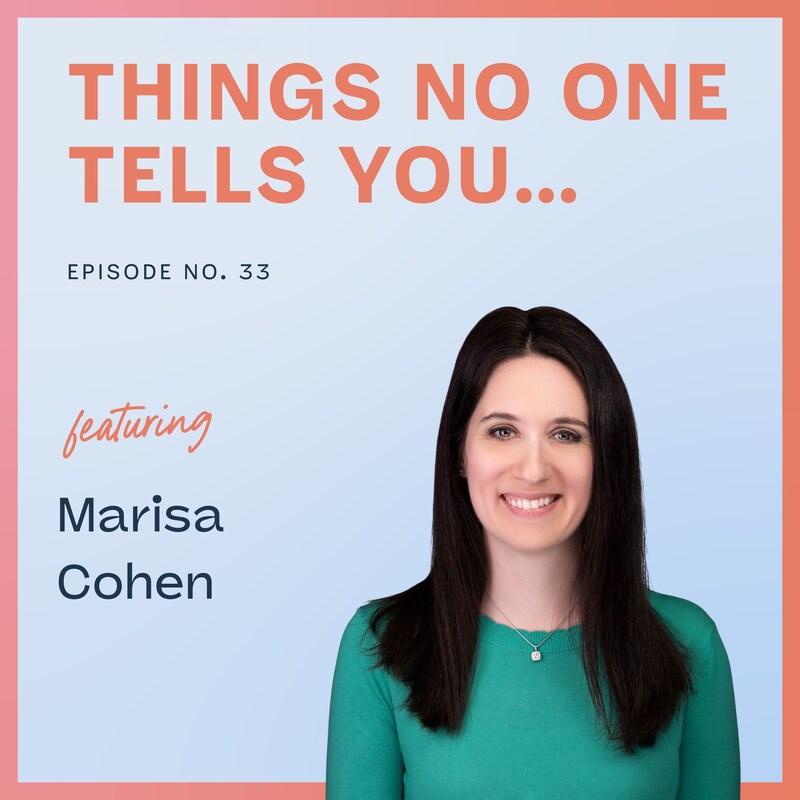
Shownotes
We love to talk about romantic love like it’s magic or fate. You either feel the spark or you don’t. But according to relationship science, attraction and long-term connection aren’t nearly as mysterious as we think.
In this episode, I sit down with Marisa T. Cohen, a relationship scientist and licensed marriage and family therapist, to explore what really drives romantic attraction, chemistry, and lasting connection. From why proximity matters, to how shared experiences and adrenaline can heighten attraction, Marisa breaks down the science behind love in a way that actually makes sense.
We also dive into one of the most common challenges couples face: communication. Marisa explains why so many disagreements escalate, what’s really happening beneath the surface, and how validation and timing can completely change the outcome of hard conversations.
What You’ll Discover:
- What drives romantic attraction and chemistry (05:53)
- Why shared experiences intensify connection (08:38)
- How communication patterns quietly erode relationships (21:57)
- Why validation matters more than being right (25:12)
- Tools for repairing conflict and emotional safety (38:41)
Whether you’re dating, married, or trying to reconnect with your partner, this episode offers insight you can actually use, especially with Valentine’s Day around the corner. If this episode resonates, I hope you’ll subscribe, share it with someone you care about, and come back each week for more conversations like this one.
You can watch this interview on YouTube: https://youtu.be/84_Y6RU59Yg
For a full transcript and more, check out our blog post: https://www.lindsaycz.com/show-notes/marisa-cohen-33
Check out more from Marisa Cohen:
Discover Marisa’s website: https://www.marisatcohen.com/
Follow Marisa on Instagram: https://www.instagram.com/marisatcohen/
Support this podcast:
Follow Things No One Tells You on Instagram: https://www.instagram.com/thingsnoonetellsyoupod/
Stay connected with Lindsay https://www.lindsaycz.com/ and follow her on Instagram https://www.instagram.com/lindsaycz/
Subscribe to my YouTube channel https://www.youtube.com/@lindsaycz
Transcripts
[00:00:28] Because what's happening is the sensations of when you fall in love with a person are all of those sensations. Same thing as when you get on a roller coaster ride, in a TV w,atch a show about them. Are you kidding? No. No.
[:[00:00:55] Imagine if you had a person at your disposal who could tell you about the science of love and maybe help describe why we feel the way we do, in different relationships. And maybe you're in a relationship where maybe you're married, maybe you're dating, maybe. Maybe you're divorced, maybe you're single, and you're out there on the market, whatever it is.
[:[00:01:41] I met Marisa because I was working on a project and we needed someone to talk about a relationship between two people. And when I sat in this room with Marisa and was asking her about, you know, what she could tell as an expert about this relationship, I was like. This woman, I wanted to literally put sandbags on her feet so she couldn't go anywhere.
[:[00:02:25] She's also a family and child therapist. She works with couples. She does all those things. But what I loved most was all of her. You know, advice is rooted in science. So it's talking to someone who's talking about different self-help tools, and everything that they have is backed up by legit stuff.
[:[00:03:12] Do you get a lot of people in life that just ask you questions because they know what you do?
[:[00:03:29] So even before I went into the relationship space, I think I'm just a very curious person. So I'm always open to getting involved in those deep conversations.
[:[00:03:49] Marisa: Yes
[:[00:04:11] Because I have seen in the short time that I've known you,e this is very much a passion. That has become a purpose.
[:[00:04:31] Couples, basically anyone that's in any type of relationship, romantic, familial, or just even a platonic friendship can use it to enhance their connection. So I wear many different hats. Some of them are academic. I teach about relationships, I speak about relationships, but also that clinical connection where I really work with couples to help them strengthen their bonds.
[:[00:05:00] Marisa: Yes.
[:[00:05:09] Marisa: Right. So there is a real science to it, and as magical and wonderful and exciting as love and romance and relationships are, there are scientific principles that we can essentially use to hack our love lives or improve our relationships.
[:[00:05:29] Marisa: Gosh, where do I start?
[:[00:05:50] But yeah, there's so much. So where would you begin?
[:[00:06:12] So what makes people actually want to form relationships with one another? What leads to a successful and happy relationship, and what leads some relationships to fall apart, and how might we be able to fix them, in the face of grief and losing a loved one? So there are principles that are kind of interspersed into all different parts of relationships.
[:[00:06:50] Marisa: Okay. So first, with the idea of attraction, I personally like to divide it into interpersonal attraction, or what makes us want to get to know another person on a deeper level.
[:[00:07:27] Lindsay: Wait.
[:[00:07:29] Lindsay: Propinquity.
[:[00:07:38] Lindsay: How do you spell that word?
[:[00:07:48] Lindsay: So it means how close I am to you
[:[00:07:53] Lindsay: Physically, when we're interacting.
[:[00:07:56] Really good example of this.If you go back to school and think about maybe like high school, middle school, or high school, who were your closest friends or the people that you bonded with first? Probably the people in your homeroom. And if it were a school like mine, probably people who had similar last names because of alphabetical order, like those who we sat next to.
[:[00:08:35] Marisa: Right. So
[:[00:08:37] Marisa: It's, yes, living on the same street.
[:[00:09:01] Married graduate students who came back post World War II to go to school, and he looked at the different buildings, and he asked people, who are your closest friends? And how many friends do you perceive that you have overall? Now, the interesting thing is with propinquity. People basically said their closest friends were those who were next door to them.
[:[00:09:44] And the reason for that was that when they would come in and out of their apartment, people were constantly passing by them. So they would start conversations with them and get to like build this momentum where it goes from acquaintance to friendship, to close friendship over time.
[:[00:10:06] That's so interesting. But it's so common sense.
[:[00:10:29] Lindsay: Okay. That's so, so. From that. Where do you go? Like what, how do you apply that? Because you have worked in many different fields, like what, do you do with that information
[:[00:10:53] So if you're, it's especially challenging to make new friends as an adult. 'cause we aren't in, we're not going through many life transitions where we're exposed to new groups of people. Yeah. So if you meet someone and you hit it off and you're interested in forming a connection with them, you really need to make sure that you're seeing them at a regular cadence.
[:[00:11:25] Lindsay: I know because you did a big study on that, where you like basically had an experiment with it.
[:[00:11:48] So what's like the least amount of time that you have scientifically seen work? How often are we talking?
[:[00:12:05] You need to not only see a person over time, but you need to have that vulnerability. Basically, you people are letting your guard down so you can become emotionally intimate with the other person. Feel truly seen, truly heard, and truly understood. So some people, and this also is the same thing in romantic relationships, you can go out and see one another for three or four months and feel like I don't really know anything about that person in other relationships.
[:[00:12:56] Lindsay: So when we, you and I were talking off, before we hopped on here and we were both talking about how we are avid viewers of the pit, and I really think that there is sort of this universal like appreciation, but also if we're being honest, like attraction appeal that comes along with the lead doctor, right?
[:[00:13:24] Marisa: No. No. And, my biggest crush right now, you know, former Dr. Carter, now, Dr. Robbie, Noah Wyle. So I think that there's. There are actually some principles of relationship science that can kind of explain what our attraction is.
[:[00:14:04] We get attracted to people when our physiological arousal level goes up. So basically, think like heart racing, sweaty palms, and it's basically the reason why all of those reality shows are about love. Have people riding ATVs on the beach or going to like, some sort of amusement park because it's increasing the physiological arousal, because what's happening is.
[:[00:14:49] Lindsay: Are you kidding?!
[:[00:14:56] 'cause I don't really love all the gory stuff. No, you're talking about the game. You love the show.
[:[00:15:00] Marisa: Yeah. So I'm watching it. My heart's racing, and my brain is interpreting it as if I'm attracted to him. I'm attracted to him also. He's just perfect.
[:[00:15:19] But the funny thing is, if we're really breaking this down, like good looking. Absolutely. Like, I mean, but in another scenario on the street, yes, but not like, oh my gosh, there goes Matthew McConaughey. Do you know what? Right. Or no?
[:[00:15:37] Lindsay: Oh, I know it's now this is, I don't even know.
[:[00:15:53] Marisa: people in the experience
[:[00:15:58] Marisa: Yes. That's crazy.
[:[00:16:03] Marisa: They should. That's a take-home message right there. What is that like for your first date? You should be like getting on a bike and like biking out in nature. Oh my god. Or going on a rollercoaster. So they've actually done studies, and you don't actually need to even be in the situation. You can be just approaching the situation.
[:[00:16:44] We know what greater attraction.
[:[00:16:54] Marisa: Like
[:[00:16:57] Marisa: You started talking about Kit.
[:[00:17:05] Does would Pilates fall in the middle range? Like it's not yoga, it's not cardio. It's probably, no,
[:[00:17:24] Lindsay: But that's so, okay.
[:[00:17:32] Marisa: I mean, I'm just trying to spread the word, but if you think about how people actually date, it's usually, and not that I'm knocking, like, you know, dinner and having a conversation 'cause that's how you really get to know another person.
[:[00:17:55] Lindsay: So what's interesting about that to me, too, is the fact that I have heard from therapists, if you're going to have a conversation that you need to have with your husband or significant other, don't sit across a table from him.
[:[00:18:29] Marisa: Absolutely.
[:[00:18:48] Together. Like you're in this, like you're, it's forward motion. Like, there's like a nice metaphor to that as well. But beyond that, it can be very disarming to, you know, look another person in the eyes. It also depends on what kind of information you're sharing, too, whereas sometimes, like having that ability to not stare face to face, makes you feel a little bit less vulnerable and more comfortable opening up.
[:[00:19:29] You know what I mean? Right. I know that sounds so weird. But
[:[00:19:36] Lindsay: Noo. But we're side by side. We're good. But no, I just think what's interesting also about that, so people did send in some questions for our conversation, and one of the questions was.
[:[00:20:01] Marisa: I mean, that may be the justification, and that may be what people are like, like, you know, going to, but there is really a science behind it.
[:[00:20:10] Lindsay: Yeah. And so we met on the TV set at our station, where we were doing the local news. I was doing sports, he was doing news, and we met in a commercial break. So the irony there is I had just come back from doing the Olympics. I did not know he was hired.
[:[00:20:50] And so it's funny because. Right. That literally was when I met him, like for the first time, kind of talked to him for a second before that happened. So it is always.
[:[00:21:02] Lindsay: But so it's like height, you know, like I,
[:[00:21:07] It's not like, you know, Hey, go out with a run. Go on a run with someone, and you're gonna instantly fall in love. It doesn't quite work that way. I mean, there was clearly like an initial. Spark that the two of you had through which a relationship develops. But for you, when you have that physiological arousal, it heightens everything.
[:[00:21:26] Lindsay: It's fascinating. I mean, and we had a couple different versions of our relationship. So, like it wasn't, it wasn't perfect from the start, but it was. That is so true. So I love all that background on like, on the environment and what leads to it, but okay, so then you're in it.
[:[00:21:57] Marisa: Yeah. So a lot of couples will come to therapy talking about communication as being the leading issue.
[:[00:22:27] So thinking about how we speak to our loved ones, really, great work out of the Gottman Institute by Dr. John Gottman. He focuses on something known as the four Horsemen, which are contempt, criticism, defensiveness, and stonewalling. Contempt is like the worst of all of them, but basically the worst.
[:[00:23:00] Lindsay: Okay, so where do we start?
[:[00:23:19] You just say, you're such a slob now. It's very. Easy, of course, to do that because you're frustrated. Maybe you're running late in the morning, and you just wanna say something and make a point. But if we can actually shift that into something known as eye language, where you're focusing on the problematic behavior and how it makes you feel, rather than just lashing out at your partner, that shifts things dramatically.
[:[00:23:56] Lindsay: So basically it's like, it's an what my mom used to call an iMessage.
[:[00:24:18] Marisa: Great question. if. Both people are just stressed, running around, or not fully present.
[:[00:24:43] So I would come from a place of calm to approach any sort of. Conversation about how you're feeling related to one of their behaviors.
[:[00:25:10] Marisa: Oh my gosh.
[:[00:25:12] Marisa: Yeah. Yeah, so the important thing to bring up there is that it is so, so important for partners to be able to validate one another. And when I say validation, that means acknowledging another person's perspective. When I bring this up in the therapeutic setting, sometimes people are like, no.
[:[00:25:47] Come from, you know, different families. So there's inevitably going to be certain things that we just simply don't see eye to eye on. That is okay, but we need to be able to validate or acknowledge our partner's perspective. So what I usually tell couples that find themselves in this situation is that you need to slow down the conversation.
[:[00:26:41] Lindsay: Yes.
[:[00:26:44] Lindsay: Have you thought of creating a workbook that we can all follow? That literally is a worksheet. Honestly, I'm telling you,
[:[00:26:56] Lindsay: I really think, I mean, if you would create a worksheet for our listeners slash viewers, I would love anyone who is listening and watching this to.
[:[00:27:27] I am that person you just described who's like, no, right, right. So I will. Wrap myself up in knots about whatever it is that I really want to go a certain way because I create this narrative that I think is gonna actually be the outcome. And then I like to avoid, and then it is partially my fault because I have always thought that, like, it would be so easy to just map out what the conversation, but I, as you're saying this, it's like.
[:[00:28:15] Marisa: And then, right. So you basically, not you, but the person that's like actively listening, they're just sitting there and really trying to take everything, which is hard because a lot of people wanna verbally spar with their partner, and they're building up the case like, how can I refute that? How can I refute that?
[:[00:28:50] Because a lot of where the arguments happen is in the misinterpretation. I think that you mean this, but it's not; I actually didn't mean that. People take their own message away and get angry when, if you were just able to like go back to the person and say, did I understand what you were trying to say?
[:[00:29:27] And a lot of times, because people feel uncomfortable in those situations, they will play out what could otherwise be just normal conversations and in their head, build it up, I don't know, tell things resonate. And then something that could just be an easy conversation in your mind plays out like this, really big blowout fight.
[:[00:29:58] Lindsay: Exactly what it is. Right. And especially 'cause, you know, sometimes then it's like you're trying, not, you don't want to do this, but you are sort of creating what their response is going to be.
[:[00:30:18] Marisa: I can a hundred percent this. So like, yes, this resonates with me. I am guilty of sometimes creating entire scripts for groups of people in my own mind, and I'm like, if I say this and it's all of those what ifs, and you're playing it out, it creates more anxiety for you.
[:[00:30:58] Lindsay: And what do you do if there's sort of an impasse? I've always wondered that. Right? But like if you're, if there is. If there's a thing, and if there's just not an agreement on it. You have to; something's gotta give. Right,
[:[00:31:15] Lindsay: What do you see with that kind of thing?
[:[00:31:22] I don't necessarily love that 'cause it implies we're both kind of abandoning our perspectives and maybe giving up things. I like to think of it in terms of collaboration. Collaboration in terms of, oh my gosh. Coming up with a path forward, a potential solution. So, what is a new avenue that we can take that we may not have thought about before?
[:[00:31:58] Lindsay: Love it.
[:[00:32:10] It is not going to necessarily be like, okay, I'm gonna just change this, and now our relationship is gonna be perfect. But I think that if you can slowly start to shift in a little bit of a positive direction. It's leading to growth over time, which is actually more likely to be sustainable and improve your overall relationship with your partner.
[:[00:32:43] Marisa: I think that is such an important,
[:[00:32:50] Marisa: I think that's a really great question.
[:[00:33:12] Lindsay: How do you spell that word?
[:[00:33:18] Lindsay: This is so educational. Okay, keep going.
[:[00:33:36] So you really are thinking about that person all the time in the early parts of the relationship. It's when the frequency of sex is often at an all-time high, and a lot of people, as we settle into a relationship, the passion starts to kind of fade. Dip a little and then level off. But the really amazing thing is that we're building something known as companionate love or friendship beneath it.
[:[00:34:03] Lindsay: I'm kidding. I know.
[:[00:34:07] Lindsay: I'm, I love my friendship and,
[:[00:34:23] Right. And I think like that for a lot of people become super, super disarming. But I'm sharing this because I just wanna normalize.
[:[00:34:31] Marisa: We don't necessarily wanna be chasing. That initial-like-new relationship energy is high, we can certainly bring back passion as we should, because I think that we should have, yeah, you know, a healthy intimacy between partners, but I don't want people to think or get scared where it's just like, it doesn't feel like that new relationship energy anymore. So when you start to feel it die down. Whatever that is. I think it's really important, and this is gonna be so uncomfortable for a lot of people.
[:[00:35:11] Lindsay: Okay?
[:[00:35:17] Is it just physical intimacy that's dipping, or is there something behind it? Is there like something that's not making you feel safe and secure in the relationship that needs to be addressed first? Or is it simply just doing something to bring back the spark and having something like a date night or talking about, you know, things that you wanna try in the bedroom or whatever it is.
[:[00:35:44] yeah, exactly. Where does it lie?
[:[00:36:15] Getting back at it. I don't know.
[:[00:36:32] I don't know how it's gonna go across. I tell people that as long as you can communicate with your. Partner, that's important. And if you can't do it in the beginning, face-to-face, staring in one another's eyes, which could feel really vulnerable, write a note to one another. You can do any sort of thing, like that's totally fine.
[:[00:36:56] Lindsay: That's fascinating. Okay, so this is another question that, okay. That someone sent in, which is, what percentages of marriages survive an affair? That's hard.
[:[00:37:18] And I'm sure you've probably heard that statistic of like half of all marriages end in divorce. That's not true. It's actually not 50%. The number is probably more likely in the high thirties. Not that I'm like, that's great, but it's not quite 50. We don't do a good job of We don't have a good repository of information, so we, we don't really like it.
[:[00:38:05] And it does take a lot of work, a lot of energy and time, and it incorporates things like acknowledging the affair and trust does need to be built back up. So it is not something that you can get through quickly, but it is absolutely something that people can work through.
[:[00:38:30] Okay. You mentioned the four horsemen, and I would love for you to just, you also have some stats. I know that Yeah. Come into play with some of them. Can you enlighten us with that? 'cause I think it's really relevant.
[:[00:38:50] and the antidote to that is really focusing on the behavior and using your eye language. You have contempt, which is criticism, but coming from a place of superiority. So this is there's that fine line between sarcasm and just being plain mean. This is when you cross over into mean. It's kind of like you figure out what your partner's Achilles heel is and then just go for it during an argument.
[:[00:39:38] Well, have you seen what you've done in the kitchen? You've left all your, you know, dishes in this thing.
[:[00:39:43] Marisa: That's never; that's like a tit for tat strategy. People are kind of like stacking up all the issues, and there are no winners there. If you do something wrong, own it. Own it, because then hopefully your partner will do the same in the future.
[:[00:40:22] So they're just not capable of being present in that moment. Antidote. Take a break, and I know there are a lot of people who are probably listening to this, and they're just like, no, when I'm upset with my partner, I wanna hash it out and get through it. The best thing that you can do is take a break, get that excitement level or that anger level down so that you can approach it from a calmer place and really have a constructive conversation at a later time.
[:[00:40:51] Marisa: Yes.
[:[00:40:53] Marisa: Exactly. So if you are fighting on a rollercoaster, if you're getting into an argument while on a rollercoaster, that is like the worst of all worlds, but you know, all of these things like criticism, contempt, defensiveness, and stonewalling, this is what leads to relationships kind of breaking down over time.
[:[00:41:40] Lindsay: Yeah.
[:[00:42:02] Don't erase it, 'cause we don't forget it. But to kind of come back to this, like that's how much more positive you need to tip the scale because that one negative thing really lasts, and that can really harm the relationship in happy relationships. Positive to negative, you need 10 to one or sometimes even 20 to one in really satisfying relationships.
[:[00:42:31] Marisa: Absolutely. Absolutely. Things like expressing gratitude for one another. Acknowledging, not just pointing out, what a person is doing wrong or falling short on, but engaging in conversation about it.
[:[00:42:57] Lindsay: That's really, I feel like that is a thing, and maybe I'm alone in this, but that you just sometimes don't think about, you know, like I, no, like I could definitely do a better job in that category, like just for no reason being like.
[:[00:43:14] Marisa: Yeah.
[:[00:43:38] The one where someone's using defensiveness like that. The tip for the ip.
[:[00:43:43] Lindsay: What can you do?
[:[00:43:53] And a relationship check-in can be anything that you and your partner want it to be. But the key here is that in regular intervals, you were doing something, just like pausing on the rest. And I know we all have a lot of things that are going on, so this can even be like. 20 minutes transitioning between different activities or different errands that you need to run, but it's something that the two of you are doing to just acknowledge the work that you're both putting into the relationship. Express gratitude towards one another, and if there's anything that's on your mind, this is a time to acknowledge it in a constructive way. You don't want this to be like the hour that you sit down and like. Air your grievances.
[:[00:44:55] Lindsay: I love that. Okay, let's move on to dating for those who are not yet married. I mean, I'm sorry if we've ostracized you, but those are helpful tips, too, for anybody who's dating, frankly.
[:[00:45:19] Lindsay: So dating, you know, you did a whole TED Talk and really did this fascinating breakdown on like percentages and basically like a dating app, like breaking it down. yeah. You have so much expertise in that area. Yeah. What are you seeing that are trends that you think are interesting for people to know?
[:[00:45:50] Marisa: Oh my gosh. Yeah.
[:[00:45:54] Marisa: Oh, absolutely. I mean, there was a study that was done where this was, now we're talking about attraction, but physical attraction, they had, they presented pictures to. Participants of this study and what they actually did in certain pictures, although the participants didn't know this, morphed their parents' photo in with the random photo that they showed them, and people rated those photos as more attractive.
[:[00:46:41] Lindsay: Why is it familiarity?
[:[00:47:04] So even though we are drawn to people who look like us, we don't wanna see, seem super vain about it.
[:[00:47:13] Marisa: Yeah.
[:[00:47:14] Marisa: Yeah. And then I once, I brought that up to someone recently, and then they just said, is that why, like, so many people look like they're pets? Which I was very fascinated by.
[:[00:47:32] Lindsay: So funny, the dating advice from someone who is out there, studies the research, does the things, what are you seeing?
[:[00:47:55] Ah, that's actually known as the paradox of choice. The more choices there are, the more difficult it is to make a decision. So they find themselves scrolling through profile after profile. And you know, I always just tell people that it's important to think about what it is that you want. Like pause before even like entering the dating space.
[:[00:48:31] Think about what you're looking for in a potential partner. What values are important to you, and then as you start to meet people, it's not necessarily going to be the first date that you go on, it would be. What would be wonderful is if all of a sudden you hit it off, and that becomes the relationship. But it's important to like reframe the way you think about it.
[:[00:49:09] If you think about it as basically just getting to know another person and learn about them, and just as a process, then I think you're going to be able to enjoy the journey a little bit more and you're, when you're not putting so much pressure on yourself.
[:[00:49:49] Marisa: Well, we covered a lot of ground today. I, so I think that it's important, just, you know, putting it out there again, that remember the interactions that we have with our partners matter, and not just our partners, our friends, our family members.
[:[00:50:18] Lindsay: And how often should we be going on date nights?
[:[00:50:36] Lindsay: I really feel like that's something too, that. The sooner we learn that, the better our lives, the richer and fuller our lives will be. And I speak from the perspective of a person, as I know you are, who's very, you know, career driven. And I, it's very easy to let that part just go by the wayside, whether you're, you know, on the younger side and you're coming up in whatever it is that you're trying to accomplish, or if you're even more seasoned, it's like sometimes that's the first thing to go.
[:[00:51:14] Marisa: Absolutely feed all of the important connections in your life.
[:[00:51:27] Marisa: Thank you.
[:[00:51:45] If you're interested in finding out more that Marisa has to share, you can find links to some of her work and other things in our show notes. You can find that on my website, lindsaycz.com. And of course, if there was something that really struck you from our conversation that you wanted to explore more or that you feel like is maybe beneficial for someone that you may know who's going through a similar thing, please share this episode with a friend.
[:[00:52:31] Listeners, we would love to grow this community. We are so grateful that you're a part of it. See you next time.




