Shownotes
Katherine is championing science communication for its own sake as Director of the historic Royal Institution
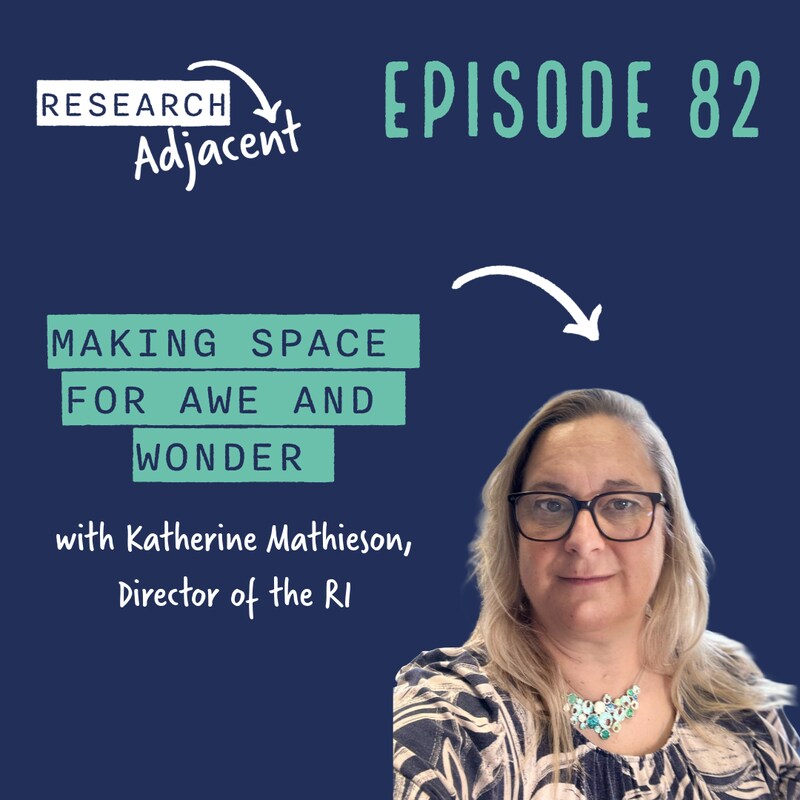
Katherine is the Director of The Royal Institution in London. The Royal Institution is the birthplace of science communication, having been founded in 1799 to 'introduce new technologies and teach science to the general public through lectures and demonstrations'. It is home to the iconic Christmas Lectures which celebrate their 200th year in 2025.
Sarah and Katherine talk about
- Why The Royal Institution means different things to different people
- The iconic Christmas Lectures
- How a phone-in science hotline kick-started her career in science communication
- Making space for awe and wonder, and why that might help tackle the anti-science narrative
Find out more
- Read the show notes on the Research Adjacent website
- Connect with Kathrine on LinkedIn or BlueSky
- Find out more about The Royal Institution and its history
- Check if you can watch the Christmas Lectures recording livestream near you
About Research Adjacent
- Where are you listening from? Share a pic and tag @ResearchAdjacent on LinkedIn, Instagram or BlueSky
- Fill out the research-adjacent careers quiz
- Sign up to the Research Adjacent newsletter
- Email a comment, question or suggestion
- Leave Sarah a voice message
Mentioned in this episode:
Member of the Month: Duncan Yellowlees, DY Training
Let’s put rubbish presentations in the bin – where they belong. Get in touch with Duncan for specialist research presentation skills training www.duncanyellowlees.com
Come along to our Manchester networking event
Join host Sarah McLusky and fellow research-adjacent professionals on Thursday 12 March 2026 at 5.30pm. Find out more and register here https://researchadjacent.circle.so/c/open-events/manchester-research-adjacent-community-networking
Transcripts
I think the Royal Institution building is a
Katherine Mathieson:bit like some kind of kaleidoscope.
Katherine Mathieson:Everyone comes in through the same door and they see the same things
Katherine Mathieson:and they go, oh, I know what this is.
Katherine Mathieson:And then they say something completely different.
Katherine Mathieson:Building a theatre before you've even started building your
Katherine Mathieson:laboratory, it says something about the ethos of the organisation.
Katherine Mathieson:I knew that I really loved science.
Katherine Mathieson:But I didn't want to be a scientist.
Katherine Mathieson:And I didn't know what the rest of that sentence was, but I was very sure about
Katherine Mathieson:that sentence from quite early on.
Katherine Mathieson:There are lots of ways of generating these experiences of awe and wonder,
Katherine Mathieson:and I think that is what brings us together as human beings who participate
Katherine Mathieson:in science, and that's what positions science as a shared endeavour.
Sarah McLusky:Hello there.
Sarah McLusky:I'm Sarah McLusky and this is Research Adjacent.
Sarah McLusky:Each episode I talk to amazing research adjacent professionals about what
Sarah McLusky:they do and why it makes a difference.
Sarah McLusky:Keep listening to find out why we think the research adjacent space
Sarah McLusky:is where the real magic happens.
Sarah McLusky:Hello there.
Sarah McLusky:I'm your host, Sarah McLusky, and welcome to Research Adjacent.
Sarah McLusky:Now, if you're listening to this episode around its release date, you are
Sarah McLusky:probably gearing up for Christmas, and perhaps one of your Christmas highlights
Sarah McLusky:is watching the Royal Institution Christmas lectures, which have been
Sarah McLusky:broadcast on BBC television since 1966.
Sarah McLusky:Well, today you're going to meet Katherine Mathieson, who is the current director
Sarah McLusky:of the Royal Institution and one of the people behind that iconic lecture series.
Sarah McLusky:I've known Katherine since we worked together about 15 years ago.
Sarah McLusky:She worked for the British Science Association and I ran unnecessarily
Sarah McLusky:large science education events for schools on their behalf.
Sarah McLusky:As you'll hear, Katherine first got into science communication in
Sarah McLusky:the late 1990s working for Science Line, a charity where people could
Sarah McLusky:phone in their science questions.
Sarah McLusky:Something that many of you listening probably can't even imagine being a thing.
Sarah McLusky:We talk about the 226 year history of the Royal Institution and
Sarah McLusky:why the building means different things to different people.
Sarah McLusky:It's not just home of the Christmas lectures.
Sarah McLusky:It's also an active research facility, an education space,
Sarah McLusky:museum and membership organisation.
Sarah McLusky:It's also a place for sharing the awe and wonder of science, something
Sarah McLusky:that Katherine is very passionate about, and we talk about why finding
Sarah McLusky:a bit more awe and wonder might help to address current challenges around
Sarah McLusky:misinformation and anti-intellectualism.
Sarah McLusky:Now I did try, but Katherine was careful not to share any spoilers of
Sarah McLusky:the upcoming Christmas lectures, but I can share that this year's presenter is
Sarah McLusky:space scientist, Maggie Aderin-Pocock, and that you can watch a live stream
Sarah McLusky:of the lectures being filmed on the 11th, 13th, and 16th of December
Sarah McLusky:in over 25 locations across the UK.
Sarah McLusky:I'll put a link in the show notes and you can check that to get the details and
Sarah McLusky:see if it's coming to a place near you.
Sarah McLusky:But for now.
Sarah McLusky:Listen on to hear Katherine's story.
Sarah McLusky:Welcome along to the podcast, Katherine.
Sarah McLusky:It is lovely to have you here and also to speak to you again.
Sarah McLusky:It's well over 10 years, I think, since I've last spoken
Sarah McLusky:to you so lots to catch up on.
Sarah McLusky:But for our audience who haven't perhaps met you before, could you tell us a
Sarah McLusky:bit about who you are and what you do?
Katherine Mathieson:Sure.
Katherine Mathieson:Sarah, it's great to be here and to talk to you again.
Katherine Mathieson:I'm really looking forward to this conversation.
Katherine Mathieson:I'm Katherine Mathieson.
Katherine Mathieson:My current role is Director at the Royal Institution.
Katherine Mathieson:And my background, my journey is very much through science,
Katherine Mathieson:communication and science education.
Katherine Mathieson:That's what I'm passionate about.
Sarah McLusky:Yeah, and that's very much where we know each other from in the past.
Sarah McLusky:So tell us a bit more about your current role, though.
Sarah McLusky:The Royal Institution, a very iconic organisation.
Sarah McLusky:Tell us what it, what does it mean to be Director there?
Katherine Mathieson:It's really, it's a joy to be Director, to be part of
Katherine Mathieson:the team at the Royal Institution.
Katherine Mathieson:We do such a wide range of science communication, and related activities that
Katherine Mathieson:I love being immersed in the day to day.
Katherine Mathieson:You know, we do something different every day.
Katherine Mathieson:There's always different people in the building or getting in touch
Katherine Mathieson:about projects and contents, and it feels really nice, really rewarding
Katherine Mathieson:for me to be so close to the audience that we're working with.
Katherine Mathieson:I can literally drop into activities that are going on in the building or in
Katherine Mathieson:schools around the UK or other partners.
Katherine Mathieson:And I just I. I've worked in a range of organisations that work in a, in
Katherine Mathieson:different ways to support this kind of activity, but it's really nice
Katherine Mathieson:for it, to feel, feel very tangible.
Katherine Mathieson:Like I can just go and talk to people, to young people or audience members
Katherine Mathieson:or whoever about what they liked about something or what they didn't
Katherine Mathieson:like, and so I'm really enjoying that being part of that kind of team.
Sarah McLusky:Yeah, so the Royal Institution Building now is, it's
Sarah McLusky:almost a bit like a science centre, would that be a fair thing to say?
Sarah McLusky:But a very historical one.
Katherine Mathieson:So I think the Royal Institution building is a bit
Katherine Mathieson:like, I dunno, some kind of kaleidoscope.
Katherine Mathieson:'Cause people come into the same building, they come through the same,
Katherine Mathieson:everyone comes in through the same door and they come into the same
Katherine Mathieson:building and they see the same things and they go, oh, I know what this is.
Katherine Mathieson:And then they say something completely different.
Katherine Mathieson:So some people come in and they go, oh, it's a centre for research because
Katherine Mathieson:we have researchers on the premises.
Sarah McLusky:Right.
Sarah McLusky:Okay.
Katherine Mathieson:Wet laboratories up on the third floor, we've got an
Katherine Mathieson:electron microscope under the stairs.
Katherine Mathieson:We've got, and we've got a team of researchers who are part of UCL doing
Katherine Mathieson:research on biomagnetic materials.
Katherine Mathieson:So they're like, they come in and they're like, oh, this is a research institution.
Katherine Mathieson:Great.
Katherine Mathieson:We've got researchers from the London Institute for Mathematical Sciences.
Katherine Mathieson:They're on the second floor.
Katherine Mathieson:They've got a lot of blackboards and chalk and very high powered
Katherine Mathieson:computers, and they're doing maths and theoretical physics.
Katherine Mathieson:And so for them it's a place to do original research on
Katherine Mathieson:maths and theoretical physics.
Katherine Mathieson:And then if you come in at about 10 o'clock in the morning you'll be
Katherine Mathieson:in the, by the door with a load of really excitable young people from a
Katherine Mathieson:school somewhere, probably in London, but sometimes further afield, and
Katherine Mathieson:they'd come in to do a workshop in the Urenco Young Scientist centre.
Katherine Mathieson:So they're really excited to be having a day trip and to
Katherine Mathieson:be in the Royal Institution.
Katherine Mathieson:And so for them it's a, it's an educational place.
Katherine Mathieson:And a quite an unusual looking one maybe.
Katherine Mathieson:'cause it's quite, it's quite a posh building, quite an elegant building.
Katherine Mathieson:And then, if you come in at seven o'clock in the evening that day, there'll be,
Katherine Mathieson:I dunno, 300, 400 people there who've come to listen to a talk by a cutting
Katherine Mathieson:edge researcher on some area of science.
Katherine Mathieson:And we cover the full range.
Katherine Mathieson:So for those people, they'll say, oh, it's a cultural venue.
Katherine Mathieson:It is a place I go to in the evening, like the cinema or the theatre or whatever.
Katherine Mathieson:'Cause we do have a gorgeous theatre and then we host lots
Katherine Mathieson:of external events as well.
Katherine Mathieson:So people come in for meetings, conferences, receptions, launch events.
Katherine Mathieson:For our members, it can feel like a place where it's part of their
Katherine Mathieson:identity and part of their life.
Katherine Mathieson:Some of our members, they're coming for the first time, especially our
Katherine Mathieson:family members, but some of our members have been coming for 50 years or 60
Katherine Mathieson:years, and they've seen it change over that time, and it feels very
Katherine Mathieson:much a place where they feel at home.
Katherine Mathieson:So for them, it's part of their family, maybe part of their family history.
Katherine Mathieson:And then there's loads more on top of that.
Katherine Mathieson:If you come on a Saturday afternoon, then we might be doing a show in the theatre
Katherine Mathieson:where we're like, we've turned all the smoke alarms off and we're blowing things
Katherine Mathieson:up, like extravagantly in the theatre or in any part of the building really.
Katherine Mathieson:We love a bit of that.
Katherine Mathieson:We're doing some kind of, our favorite demonstrations kind of show.
Katherine Mathieson:So a huge range of activities going on in the building every single day
Katherine Mathieson:of the week, which is really exciting.
Katherine Mathieson:And so it's a, it is a science centre to some of our visitors.
Katherine Mathieson:Yeah.
Katherine Mathieson:But there's lots of other things as well.
Sarah McLusky:Yeah.
Sarah McLusky:Really defies definition, doesn't it?
Sarah McLusky:And it is fantastic.
Sarah McLusky:I didn't realise you still had research going on on the
Sarah McLusky:premises, which is fantastic.
Sarah McLusky:Real original research, because that goes back, I. That really fits in with
Sarah McLusky:the history of the building, doesn't it?
Sarah McLusky:Yeah.
Sarah McLusky:So I was having a bit of a look before we came on the call and I knew it was
Sarah McLusky:old and I knew it was associated with all of these big names in science
Sarah McLusky:history, but I didn't realise it was, went back quite as far as it did.
Sarah McLusky:So will you tell us a bit about the history of the building.
Katherine Mathieson:So the building was purchased in 1799 to be a home
Katherine Mathieson:for science, and it would've been a a kind of a Georgian townhouse for
Katherine Mathieson:a wealthy gentleman at that time.
Katherine Mathieson:And and it came up for sale and the the founders of the Royal Institution bought
Katherine Mathieson:it and set about turning it into this kind of place for science, a home for science.
Katherine Mathieson:And the first thing they did, the first thing they started building within
Katherine Mathieson:that new building was was a theatre.
Katherine Mathieson:Because for them it was unthinkable that you could do, you couldn't really
Katherine Mathieson:do science even at that point, even it wasn't a professional activity.
Katherine Mathieson:What you were doing was natural philosophy.
Katherine Mathieson:And those natural philosophers that were saying what we need is a
Katherine Mathieson:theatre because this is how, this is what we want this place to be.
Katherine Mathieson:It's about communication with public audiences, including audiences who
Katherine Mathieson:wouldn't have been able to access science through other institutions at that time.
Katherine Mathieson:It was quite a kind of closed off activity.
Katherine Mathieson:And building, building a theatre before you've even started building
Katherine Mathieson:your laboratory, it says something about the ethos of the organisation.
Katherine Mathieson:And one of the things that's very special about the building is that
Katherine Mathieson:we've been doing the same kinds of activities on, in the same building,
Katherine Mathieson:on the same spot for 226 years now.
Katherine Mathieson:And there's still as much of a demand as there ever was to come and meet scientists
Katherine Mathieson:and find out what they're working on.
Katherine Mathieson:And the science has changed unbelievably, it's almost unrecognizable.
Katherine Mathieson:But the act of, of communicating with scientists as public
Katherine Mathieson:audience has not changed.
Katherine Mathieson:And so for some of the people who come through that front door
Katherine Mathieson:of the Royal Institution, it's not a science centre, it's not a
Katherine Mathieson:research institution, it's a museum.
Katherine Mathieson:Because we've got all these amazing objects and stories from the people
Katherine Mathieson:who've worked at the Royal Institution as researchers and over the 226 years.
Katherine Mathieson:People like especially let's say Humphrey Davy who discovered 10 different elements.
Katherine Mathieson:While he was working at the rural institution in between exploding
Katherine Mathieson:things, he was big fan of that.
Katherine Mathieson:People like Michael Faraday who have revolutionized the modern world, his
Katherine Mathieson:understanding of electromagnetism has absolutely paved the way for
Katherine Mathieson:the world that we live in today.
Katherine Mathieson:And his laboratory is still in the building, you can come and see it.
Katherine Mathieson:You can see the tables he worked on.
Katherine Mathieson:You can see the equipment he used.
Katherine Mathieson:You can see these ridiculously gigantic batteries that he had to use in order
Katherine Mathieson:to generate his electromagnetic fields.
Katherine Mathieson:You can see the solutions that were, that he made up.
Katherine Mathieson:Some of, you know, they're still there in the glass vials.
Katherine Mathieson:And and I think for people who are really really interested in the
Katherine Mathieson:history of the modern world and how we got to this place that we're in now.
Katherine Mathieson:Being able to come and look at that, look at those objects laid out in
Katherine Mathieson:the way they would've been laid out in the 1800s in the same space.
Katherine Mathieson:They haven't moved.
Katherine Mathieson:I think we put them somewhere safe during World War ii, but apart
Katherine Mathieson:from that, they've just been in that building this whole time.
Katherine Mathieson:And we've, we've got these lovely panels up on the wall, talking about
Katherine Mathieson:the research, and we've got some videos and we've got some explanations.
Katherine Mathieson:So I think that it, the museum exhibitions?
Katherine Mathieson:Mostly in the lower ground floor, but across in all parts of the
Katherine Mathieson:building, really try and tell the story so that people feel part of
Katherine Mathieson:that whole story, because that's.
Katherine Mathieson:That's what it has always been.
Katherine Mathieson:The stories have come from the people who've visited, lived, worked in the
Katherine Mathieson:building, and so if you visit the building, you're part of the same story.
Katherine Mathieson:You're part of that like really rich kind of thread that runs back to 1799.
Sarah McLusky:Yeah.
Sarah McLusky:What an incredible space to be the custodian of essentially.
Sarah McLusky:Yeah.
Sarah McLusky:As I guess you are now safeguarding it, keeping it going for the current
Sarah McLusky:generations, but also safeguarding it for the future generations.
Sarah McLusky:And one thing that I think a lot of people, when they think of
Sarah McLusky:the royal institution, they will think of the Christmas Lectures.
Sarah McLusky:It's almost inevitable that's one of the things that comes to mind.
Sarah McLusky:And when this episode comes out, it's, you're gonna be deep in
Sarah McLusky:Christmas lecture season, aren't you?
Katherine Mathieson:Yeah, we are definitely deep in Christmas
Katherine Mathieson:lectures planning, and it's.
Katherine Mathieson:And it's a, it's a wonderful project to be part of.
Katherine Mathieson:And this year is particularly special.
Katherine Mathieson:Every year is special because every lecturer and topic is a bit different.
Katherine Mathieson:We, you really get under the skin of a particular topic and how the lecturer
Katherine Mathieson:sees that topic and what they're passionate about and what they want
Katherine Mathieson:to pass on to the next generation.
Katherine Mathieson:The Christmas lectures were started by Michael Faraday for a, what he
Katherine Mathieson:called a juvenile audience, and we don't really use that term anymore.
Katherine Mathieson:We tend to talk about teenagers, 12 to 17 year olds and their families.
Katherine Mathieson:And so I think for the lecturer, it's an amazing opportunity to say what
Katherine Mathieson:they want to say about their subjects.
Katherine Mathieson:It doesn't matter about the curriculum, it doesn't matter about, it just matters what
Katherine Mathieson:they want to say, what they want to pass on, as it were to the next generation.
Katherine Mathieson:So it's a real joy, but this year is especially special
Katherine Mathieson:because it is 200 years since
Sarah McLusky:goodness
Katherine Mathieson:the Christmas lectures were founded.
Katherine Mathieson:Yeah.
Katherine Mathieson:Michael Faraday, he had a very busy 1825, Sarah, because he started the
Katherine Mathieson:Christmas lectures and he also started a program of Friday evening discourses
Katherine Mathieson:which were announcement lectures.
Katherine Mathieson:So when people have made a a great discovery, they discovered the electron,
Katherine Mathieson:or they want, they discovered how to record, sound, and play it back.
Katherine Mathieson:Or they discovered how to take photographs or whatever it was, they
Katherine Mathieson:would announce this to a public audience using a discourse, an invited discourse,
Katherine Mathieson:and we still run that program today.
Katherine Mathieson:So that's two of Michael Faraday's programmes that are still running 200
Katherine Mathieson:years later, which is really exciting.
Katherine Mathieson:And he also, in addition to doing that, he just casually discovered benzene.
Katherine Mathieson:So I said just
Sarah McLusky:all in a day's work.
Katherine Mathieson:Very industrious.
Katherine Mathieson:He did work really hard, actually.
Katherine Mathieson:He was very hardworking, but and also brilliant.
Katherine Mathieson:So that combination is great, but he cared as much about the
Katherine Mathieson:communication as about the discoveries.
Katherine Mathieson:So it wasn't and that's true of a lot of the researchers who work were,
Katherine Mathieson:have worked with us over the years.
Katherine Mathieson:Both the ones that have lived and worked in the building, but
Katherine Mathieson:also the ones who come to us for things like the Christmas lectures.
Katherine Mathieson:That the communication part of it is absolutely key.
Katherine Mathieson:So what they want to achieve in their lives in the Christmas
Katherine Mathieson:lectures helps us do that.
Katherine Mathieson:Now we keep all the content top secret, right?
Katherine Mathieson:So that when it
Sarah McLusky:Do we even, are you allowed to say, do you
Sarah McLusky:know who the speaker is yet?
Katherine Mathieson:I can tell you who the speaker is.
Katherine Mathieson:We're really delighted.
Katherine Mathieson:So this year we are working with Maggie Aderin-Pocock who is a space scientist.
Katherine Mathieson:Yeah.
Katherine Mathieson:Yeah.
Katherine Mathieson:And you might know her from Sky at Night . Or she does loads of
Katherine Mathieson:work of school visits as well.
Sarah McLusky:Yes.
Katherine Mathieson:So lots of young people have seen her talk
Katherine Mathieson:and she's totally inspirational.
Katherine Mathieson:And she's an absolute joy to work with because she's she's as
Katherine Mathieson:excited as we are, which is great.
Katherine Mathieson:Yeah.
Katherine Mathieson:So it's the 200th birthday of the Christmas lectures.
Katherine Mathieson:Fantastic.
Katherine Mathieson:This year we're gonna be talking about.
Katherine Mathieson:Space science and and we wanna talk a little bit about I say
Katherine Mathieson:we, Maggie and we'll have lots of guest lecturers as well, Sarah.
Katherine Mathieson:So we try and invite people who are, working on particular projects.
Katherine Mathieson:That'll be quite exciting to come in, if we want to cover that project or
Katherine Mathieson:that technology or that invention, we might see if we could invite
Katherine Mathieson:them in to tell us themselves.
Katherine Mathieson:So we have quite a lot of guest lecturers and that's a nice way
Katherine Mathieson:for us to showcase a wide range of science and technology careers.
Katherine Mathieson:Which I think is particularly important for that age group,
Katherine Mathieson:teenagers and their families.
Katherine Mathieson:It's really helpful to say well, you know, maybe you want to do some
Katherine Mathieson:A levels and do a degree and do a PhD, you know, obviously that's fun.
Katherine Mathieson:But there are lots and lots of other careers as well.
Katherine Mathieson:Yeah.
Katherine Mathieson:Where you don't follow that route and you don't need to be top of your class in a
Katherine Mathieson:subject, and all this kind of so yeah.
Katherine Mathieson:And I think we want to particularly focus on space technology.
Katherine Mathieson:So now I'm gonna, I can't spill any secrets 'cause I'll
Katherine Mathieson:be in so much trouble, Sarah.
Katherine Mathieson:I guess you'll have to wait until the end of December to watch the lectures.
Katherine Mathieson:But we want to make sure that we don't say, oh, astronomy well
Katherine Mathieson:we know all this cool stuff.
Katherine Mathieson:This is how the universe is.
Katherine Mathieson:Isn't that nice?
Katherine Mathieson:We want to say a little bit, Maggie wants to say a bit about how do we know that?
Katherine Mathieson:How do we come to understand the universe the way it is?
Katherine Mathieson:What's the technology that enabled us to see that?
Katherine Mathieson:Because one of the things one of the things I've noticed about astronomy
Katherine Mathieson:is that the projects are big now.
Katherine Mathieson:If you want to build a new telescope, it's probably going to take 20 years and then
Katherine Mathieson:another 20 years for a mission to get it to where it needs to be to do its job.
Katherine Mathieson:So you are creating equipment for the next generation of astronomers.
Sarah McLusky:Yeah.
Katherine Mathieson:To use and you are using the ones that you know, you do, you
Katherine Mathieson:worked on maybe the instruments you worked on at the very beginning of your career.
Katherine Mathieson:And Maggie has worked on some amazing kind of missions.
Katherine Mathieson:She's worked on James Webb Space Telescope, so I am hoping we
Katherine Mathieson:might be able to cover that.
Katherine Mathieson:There's a lot of scripting going on right now.
Sarah McLusky:I bet there is.
Sarah McLusky:I bet there is.
Sarah McLusky:Yeah.
Katherine Mathieson:Yeah.
Katherine Mathieson:But we'd like to showcase some of the kind of cutting edge of where
Katherine Mathieson:the mission planning is going and what the future of that will be.
Katherine Mathieson:Because I hope that some of the young people or or others who watch the,
Katherine Mathieson:these programmes on the BBC, on BBC Four will say, oh, there's a place for
Katherine Mathieson:me in that industry, in that sector.
Katherine Mathieson:That I could, that could be the thing I want to do.
Katherine Mathieson:Because we just love it when that happens, when we get a Christmas
Katherine Mathieson:lecturer who themselves watched the Christmas lectures back in the day
Katherine Mathieson:and found them really inspiring.
Katherine Mathieson:So I'm hopeful about that.
Katherine Mathieson:But yeah, it's, who knows what's gonna make it in Sarah 'cause it's
Katherine Mathieson:all a bit of a flurry at the moment.
Katherine Mathieson:The other thing we're doing is we're testing out lots of demos, yes, we
Katherine Mathieson:do loads of demos in the Christmas lectures as part of the kind of USP.
Katherine Mathieson:And so there's a lot of there's a lot of odd bangs going on in the back room,
Katherine Mathieson:frankly about, so we'll see what happens.
Sarah McLusky:But like you say, I'm sure that Michael Faraday and the
Sarah McLusky:previous inhabitants of the building would be delighted to know that sort
Sarah McLusky:of thing is still going on, yeah, we look forward to seeing and hearing
Sarah McLusky:more about that as it all becomes public knowledge later in December.
Sarah McLusky:So bringing it back then to you.
Sarah McLusky:How did you get into doing this kind of work?
Sarah McLusky:What's been your career journey?
Sarah McLusky:Tell us a little bit about that.
Katherine Mathieson:Sure.
Katherine Mathieson:Well, I was really, really lucky.
Katherine Mathieson:That's the first thing to say in that I knew very early I think
Katherine Mathieson:that I really loved science.
Katherine Mathieson:But I didn't want to be a scientist.
Katherine Mathieson:And I didn't know what the rest of that sentence was, but I was very sure about
Katherine Mathieson:that sentence from quite early on.
Katherine Mathieson:That a kind of career in scientific research would've been, it's,
Katherine Mathieson:it's, you have to be really focused on one topic for a long time.
Katherine Mathieson:And I'm a bit too flighty for that, and so I was, I knew I
Katherine Mathieson:was looking for something else.
Katherine Mathieson:And I was, and I went to university and I did a degree in
Katherine Mathieson:science, which I really enjoyed.
Katherine Mathieson:And then I went to work for a pharmaceutical company for a couple
Katherine Mathieson:of years which I didn't enjoy quite so much, but it did, some of the skills
Katherine Mathieson:that gave me have been incredibly useful.
Katherine Mathieson:And then a friend got in touch and said, oh, I've seen this this
Katherine Mathieson:course, Imperial College London, called Science Communication.
Katherine Mathieson:And my friend said, I think it's got your name on it.
Katherine Mathieson:And I was like, yes, it's got my name on it.
Katherine Mathieson:And I was very lucky and I applied to do that.
Katherine Mathieson:Master's course.
Katherine Mathieson:Taught Masters, and.
Sarah McLusky:That must be one of the first cohorts of that.
Katherine Mathieson:Yes.
Katherine Mathieson:Yes.
Katherine Mathieson:Without wishing to Yeah.
Sarah McLusky:Sorry if I've given, I, sorry if I've given away.
Katherine Mathieson:Yeah.
Katherine Mathieson:We're talking about the late nineties.
Katherine Mathieson:Yes.
Katherine Mathieson:Know it was an era.
Katherine Mathieson:Yes.
Katherine Mathieson:And so it was one of the first cohorts of that course, which is still running.
Katherine Mathieson:And a couple of months ago actually, I went to give a talk to the new intake
Katherine Mathieson:in that course which just feels like the most incredible privilege actually.
Katherine Mathieson:'cause I can tell 'em, I can tell all these amazing talented
Katherine Mathieson:science communicators who are gonna revolutionize our sector.
Katherine Mathieson:I'm like, oh, this course changed my life.
Katherine Mathieson:And it really did.
Katherine Mathieson:And they look at me like, oh, 'cause you're quite nervous when you start
Katherine Mathieson:something like that, aren't you?
Katherine Mathieson:But it was an amazing course and it really opened my eyes to the things, to
Katherine Mathieson:what science communication is and how you can think about it and the different
Katherine Mathieson:kinds of careers that could come into the umbrella of science communication.
Katherine Mathieson:And I, during that course, I started volunteering with a
Katherine Mathieson:charity called Science Line.
Katherine Mathieson:So this was a helpline for people with science questions.
Katherine Mathieson:And which probably wouldn't really exist now.
Katherine Mathieson:'cause you,
Sarah McLusky:I suppose you've got Google.
Sarah McLusky:It's like this is like prototype.
Sarah McLusky:Yeah.
Sarah McLusky:Yeah.
Katherine Mathieson:This was before Google, right?
Katherine Mathieson:Yeah.
Katherine Mathieson:Late nineties.
Katherine Mathieson:There's no Google, there's definitely no ChatGPT, right?
Katherine Mathieson:Yeah.
Katherine Mathieson:People.
Katherine Mathieson:And people still made phone calls and they would call up and they
Katherine Mathieson:would say, why is the sky blue?
Katherine Mathieson:Or, how do we know how big the universe is?
Katherine Mathieson:Or what, where do the, what are the tides, what are they or why
Sarah McLusky:There's something there's something so wholesome about that.
Katherine Mathieson:Yeah, it was very wholesome.
Katherine Mathieson:Some of the questions were bonkers, but the thing that I started to find
Katherine Mathieson:really interesting was like, how have you come to have this question?
Katherine Mathieson:What's prompted you to be so interested, so curious to find a
Katherine Mathieson:phone number and phone somebody and have a conversation about it.
Katherine Mathieson:And and I really enjoyed that experience.
Katherine Mathieson:And we developed some family workshops and we took them based on the questions
Katherine Mathieson:that people had asked, and we took them out on the road and we went to
Katherine Mathieson:kind of town centres and shopping centres and places where people were
Katherine Mathieson:anyway, and did these kind of shows.
Katherine Mathieson:And I can see a real, a strong thread.
Katherine Mathieson:I've done lots of other sort of jobs in the interim.
Katherine Mathieson:But I can see a direct thread between listening to those questions and having
Katherine Mathieson:those conversations, doing their shows, and then the kind of job that I do now.
Katherine Mathieson:Which is about recognizing that some people do are interested in
Katherine Mathieson:science and would they, they're not science, they're not scientists.
Katherine Mathieson:Maybe they haven't got any.
Katherine Mathieson:They might not have professional qualifications or professional membership
Katherine Mathieson:or a job in science, but they are interested in science as cultural
Katherine Mathieson:activity and they want to participate and let's find ways for them to do that.
Katherine Mathieson:And at the Royal Institution, we have this range of ways that people can be
Katherine Mathieson:connected to science and feel involved and meet scientists and do all those things.
Katherine Mathieson:And the roles I had in between taught me lots of other interesting things.
Katherine Mathieson:So I worked for a while in a government, the forensic science service, right?
Katherine Mathieson:Yeah.
Katherine Mathieson:Which is our most, but was part of the civil servant.
Katherine Mathieson:So that was a really interesting exercise in working very closely
Katherine Mathieson:with research scientists.
Katherine Mathieson:And trying to support them.
Katherine Mathieson:I worked for a funding body for a while, Sarah, which made
Katherine Mathieson:me feel extremely popular.
Sarah McLusky:I bet it did.
Sarah McLusky:Everybody's best friend.
Katherine Mathieson:I was.
Katherine Mathieson:Yeah.
Katherine Mathieson:It was a shock when that I stepped out of that job and realised it wasn't me,
Katherine Mathieson:it was my funding pot that was popular.
Katherine Mathieson:But that was great in terms of meeting loads of people, had great ideas and
Katherine Mathieson:we're really excited about the future.
Katherine Mathieson:And sometimes I think about that era.
Katherine Mathieson:Because sometimes it feels, you can feel despondent about the world.
Katherine Mathieson:Very easy at the moment.
Katherine Mathieson:Yeah.
Katherine Mathieson:And actually the things that change the world are come from people.
Katherine Mathieson:They come from the ideas and the interactions that people have.
Katherine Mathieson:And and I loved that kind of energy, that optimism that
Katherine Mathieson:came from that kind of period.
Katherine Mathieson:And then I spent a long time longer than I ever would've thought possible
Katherine Mathieson:'cause I was having so much fun, Sarah, at the British Science Association.
Katherine Mathieson:Yeah.
Katherine Mathieson:Which does loads of great science engagement work, particularly with
Katherine Mathieson:audiences who wouldn't step forward if you said the word science.
Katherine Mathieson:So particularly trying to find ways to help more people feel empowered
Katherine Mathieson:to participate in science, even if it's not what they would've
Katherine Mathieson:thought of as their thing.
Sarah McLusky:Yeah.
Sarah McLusky:And it was when you were at the British Science Association
Sarah McLusky:that you moved more from.
Sarah McLusky:Doing just 'cause I know this just 'cause that's where I know you from,
Sarah McLusky:from the kind of doing the science communication more into the management,
Sarah McLusky:the leadership roles, wasn't it?
Sarah McLusky:Yeah,
Katherine Mathieson:Yeah.
Katherine Mathieson:That's right.
Katherine Mathieson:So that's often, I think an inflection point for people in a science
Katherine Mathieson:communication career is, do you want to, do you love the thing that you are doing?
Katherine Mathieson:'Cause often science communication people got into it because
Katherine Mathieson:they just love doing it.
Katherine Mathieson:They like talking about science and calling it a job.
Katherine Mathieson:And, and if you want to, if you want to get promoted and get
Katherine Mathieson:more senior roles, you need, you end up doing less of that stuff.
Katherine Mathieson:That's what you really loved in the first place.
Katherine Mathieson:And there's a real inflection point for a lot of people.
Katherine Mathieson:And sometimes people go take, take one route and then decide it was
Katherine Mathieson:the wrong one and then go back to the other path or whatever.
Katherine Mathieson:Sometimes it's not a binary choice.
Katherine Mathieson:Sometimes you do we have careers, careers are long, right?
Katherine Mathieson:So you can do, spend 10 years.
Katherine Mathieson:Following one route and then do 10 years on others.
Sarah McLusky:That's true.
Katherine Mathieson:Yeah.
Katherine Mathieson:So there's no right or wrong answer even for an individual, but I found
Katherine Mathieson:that I did really enjoy managing teams, managing projects, thinking about the
Katherine Mathieson:fit between what's the project or program doing and what's the wider environment.
Katherine Mathieson:And what does that wider context need and getting very involved in.
Katherine Mathieson:When we worked together, Sarah, we were thinking a lot, weren't we, about
Katherine Mathieson:extracurricular opportunities for young people based around science, technology,
Katherine Mathieson:and engineering, and about how to properly organize that so that teachers and
Katherine Mathieson:young people can make the most of it.
Katherine Mathieson:And I've, I found I quite enjoyed that sort of thinking about that
Katherine Mathieson:rather than just doing the delivery.
Katherine Mathieson:But I do miss a bit of the delivery.
Sarah McLusky:It sounds like you get into the theatre and, get
Sarah McLusky:your hands dirty a little bit.
Sarah McLusky:So yeah, you still got a little, that, that side of things is still there.
Sarah McLusky:Yeah,
Katherine Mathieson:I do.
Katherine Mathieson:I get a bit of that and I sometimes I come up with ideas first.
Katherine Mathieson:Oh, we could do this, and my colleagues bless them.
Katherine Mathieson:They're like, yeah.
Katherine Mathieson:And then I go, it, okay, we'll do your ideas.
Katherine Mathieson:Your ideas are basement.
Katherine Mathieson:Just can't help it though.
Katherine Mathieson:Obviously it's.
Sarah McLusky:Oh, so it's interesting you said though, that you've done a talk
Sarah McLusky:recently to young people who are, or maybe not young people, actually maybe
Sarah McLusky:older people, but who've gone to do that Master's in science communication.
Sarah McLusky:And I think certainly the world of science communication, both you and
Sarah McLusky:I came into it about the same time is very different now and careers
Sarah McLusky:opportunities and things like that.
Sarah McLusky:What do you think are either, either the biggest challenges you faced
Sarah McLusky:or the sort of challenges that you think people are facing now?
Katherine Mathieson:I think in terms of challenges for science communication,
Katherine Mathieson:one of the biggest ones is the pace of change in the digital world.
Katherine Mathieson:So the ways in which digital platforms and digital audiences
Katherine Mathieson:are co-evolving very rapidly.
Katherine Mathieson:So splintering of different platforms, like we all learned how to use
Katherine Mathieson:Twitter and now it's unusable.
Katherine Mathieson:Or a lot of audiences on TikTok are only on TikTok, so if you're not on TikTok,
Katherine Mathieson:you don't, there's huge swathes of the population you're just never reaching.
Katherine Mathieson:And this retreat from platforms that most people shared into
Katherine Mathieson:smaller groups, maybe focused around newsletters or maybe focused around
Katherine Mathieson:I dunno, game streaming platforms.
Katherine Mathieson:T he online world is really splintering into smaller and smaller groups and that
Katherine Mathieson:makes it much harder to find audiences and to build relationships with them.
Katherine Mathieson:And I think that's a real challenge that if you're a science communicator
Katherine Mathieson:now you need to be across all of that.
Katherine Mathieson:Yeah.
Katherine Mathieson:I, ideally with experience of making content on different platforms to
Katherine Mathieson:different audiences I think it, I think when I was thinking about science
Katherine Mathieson:communication back in the late nineties, I was like I could do, maybe I'll do museums
Katherine Mathieson:or I could be a journalist, or I could do extracurricular work with young people.
Katherine Mathieson:And there was these pathways, you just chose one and you went down it.
Katherine Mathieson:And now that's much less common.
Katherine Mathieson:It's much more common to be across a wide range of formats.
Katherine Mathieson:And with experience of lots of different audiences.
Katherine Mathieson:And I think that's, in terms of career planning, that's harder 'cause you need
Katherine Mathieson:to try and pick up all these different skills at the same time in different ways.
Katherine Mathieson:So I think the career paths are less clear cut actually, although there's more of
Katherine Mathieson:them in a way and they're more blurred.
Katherine Mathieson:And I think in terms of the world that we are in the decline in
Katherine Mathieson:trusted institutions, which I don't necessarily think is a bad thing,
Katherine Mathieson:blind trust in institutions is not where we were I would like us to be.
Katherine Mathieson:But the loss of trust in institutions in general and the way that's affecting
Katherine Mathieson:science and the way that science is becoming, particularly at the
Katherine Mathieson:moment, and particularly in the US becoming politicised, I think is a,
Katherine Mathieson:is going to be a huge challenge for all of us who care about science.
Katherine Mathieson:And care about getting the best out of science for the future of humanity.
Katherine Mathieson:If that's not too grandiose, but all of us who care about that are gonna
Katherine Mathieson:have to grapple with this challenge.
Katherine Mathieson:I have no idea how we're gonna do that.
Sarah McLusky:No, I often hear people saying we need science
Sarah McLusky:communicators more than ever.
Sarah McLusky:And I think on the one hand that's true, but also as you say tackling the
Sarah McLusky:misinformation, the disinformation the, as you say, the splintering and how
Sarah McLusky:you actually connect with the people who need to hear that information.
Sarah McLusky:And I think the mistrust in organisations means that people are
Sarah McLusky:often less inclined to, to listen.
Sarah McLusky:And all of that just presents huge challenges for not just,
Sarah McLusky:there's the factual element of it is one side of things, but also,
Sarah McLusky:as you say just the joy of it.
Sarah McLusky:You that's something that's really come through in how you're talking
Sarah McLusky:is these things, how do you make it fun rather than just, I think
Sarah McLusky:this and what you think is wrong.
Sarah McLusky:So yeah.
Sarah McLusky:And often that I often think that's the secret to how you open the door, isn't
Sarah McLusky:it to start having these conversations?
Katherine Mathieson:Yeah, I think that's absolutely right.
Katherine Mathieson:And I think one of the things I think I've noticed in the UK sector at
Katherine Mathieson:least is that that we talk less about science communication than we used to.
Katherine Mathieson:And we talk a bit more about public engagement with science or
Katherine Mathieson:public engagement with research.
Katherine Mathieson:And that's partly I think because of the rise of the discipline and the
Katherine Mathieson:practice in the university sector which I think is a good thing just to be
Katherine Mathieson:clear, I think having public engagement teams in universities is great.
Katherine Mathieson:Let's do that.
Katherine Mathieson:I don't want to take anything away from that
Katherine Mathieson:But I think that approach, which is often about, so it might be
Katherine Mathieson:about work with local audiences.
Katherine Mathieson:Or it might be work, working with particular research topics or,
Katherine Mathieson:citizen science groups, or being a good civic citizen as a university.
Katherine Mathieson:So being a good employer, being a good neighbor, being a good, being
Katherine Mathieson:a, a place that students want to apply to, so like recruitment agenda,
Katherine Mathieson:the agendas that are very real and very important in universities
Katherine Mathieson:public engagement with research work has to tie into those agendas.
Katherine Mathieson:And that's completely right.
Katherine Mathieson:Often they are about the research sector and how that's leading
Katherine Mathieson:it or about a local, regional kind of place-based agenda.
Katherine Mathieson:And they, that's all great.
Katherine Mathieson:But I think science communication has a slightly different set of
Katherine Mathieson:agendas and topics of drivers and they have been a bit just been on
Katherine Mathieson:the wane in, I think with this rise in public engagement with research.
Katherine Mathieson:And I think we might be losing out, particularly when it comes to doing
Katherine Mathieson:science communication for awe and wonder and joy in our audiences.
Katherine Mathieson:The kind of as opposed to doing science communication because you want people
Katherine Mathieson:to have an informed idea to be an informed citizen, to make informed
Katherine Mathieson:decisions about their everyday life.
Katherine Mathieson:That's really important motivation for science communication.
Katherine Mathieson:Absolutely.
Katherine Mathieson:Sometimes we are thinking about decision making at a societal level.
Katherine Mathieson:That's a really important motivation for science communication completely.
Katherine Mathieson:Sometimes we want to a broader and more diverse group of young
Katherine Mathieson:people to consider science careers.
Katherine Mathieson:That's a really good motivation.
Katherine Mathieson:They're all really good motivations.
Katherine Mathieson:Awe and wonder and joy, I think is a motivation all by itself, with
Katherine Mathieson:just as much value and importance as all the other motivations.
Katherine Mathieson:But I think it gets a bit downgraded 'cause it sounds a bit fluffy.
Katherine Mathieson:Oh, you just wanna make a great like TV programme, like we're
Katherine Mathieson:trying to do vaccinations over here,
Sarah McLusky:yeah.
Sarah McLusky:Or also you just can't, you can't measure it.
Sarah McLusky:I think that's where some of these things get it's could you tell us your level
Sarah McLusky:of awe on a scale of one to 10, please?
Sarah McLusky:So that we can write a report and justify our existence.
Sarah McLusky:And as you say the, I think a lot of the research engagement and impact
Sarah McLusky:agenda has done a lot to make research better, make universities, like
Sarah McLusky:you say, accountable to the local communities and things like that.
Sarah McLusky:So I think that's all been good.
Sarah McLusky:But I do think as one of my previous guests Orla Kelly said, you don't
Sarah McLusky:make a pig fat by weighing it.
Sarah McLusky:And we just spend so much time measuring and quantifying and
Sarah McLusky:justifying that I think we do lose that sense of awe and wonder.
Sarah McLusky:Yeah.
Katherine Mathieson:I think often the awe and wonder is the bedrock
Katherine Mathieson:from which trust is developed.
Katherine Mathieson:Like when people watch David Attenborough on the TV they're
Katherine Mathieson:watching for the emotional impact.
Katherine Mathieson:Yeah.
Katherine Mathieson:Some people are memorizing wildebeest facts maybe, but it's the emotion.
Katherine Mathieson:It's not about education, it's not about learning per se.
Katherine Mathieson:It's about sharing with Attenborough the awe and wonder of the natural world.
Katherine Mathieson:And that is a really human experience.
Katherine Mathieson:And you get that with, you're lying on top of a hill in the middle of the
Katherine Mathieson:night with an astronomer looking up at the sky, learning about what's that?
Katherine Mathieson:There are lots of ways of generating these experiences of awe and wonder,
Katherine Mathieson:and I think that, that is what brings us together as human beings who
Katherine Mathieson:participate in science, and that's what positions science as a shared endeavour.
Katherine Mathieson:Something that we're all engaged with.
Katherine Mathieson:And that is a great basis from which to support people to make informed
Katherine Mathieson:decisions on vaccination or encourage young people to study science for longer.
Katherine Mathieson:Or, engage in a debate about wind farm, where it's gonna go or whatever
Katherine Mathieson:it is but without that, without those shared human experiences that kind of
Katherine Mathieson:bedrock for building trust, I think all of the other stuff is much harder.
Sarah McLusky:Yeah.
Katherine Mathieson:So I think that awe and wonder is as important
Katherine Mathieson:as all of the other motivations and doesn't always get as much of
Katherine Mathieson:the kind of attention or resource.
Sarah McLusky:Yes.
Sarah McLusky:Yeah.
Sarah McLusky:Oh well, a little bit more of that would be good.
Sarah McLusky:Well, I, I do like to ask my guests may, I feel like almost like I've
Sarah McLusky:led here, so you're very welcome to choose something different if you want
Sarah McLusky:to, but I like to invite my guests to wave a magic wand and change something
Sarah McLusky:about the world that they work in.
Sarah McLusky:So it doesn't have to relate to what we've just said, but it can
Sarah McLusky:of you want but yeah, what would you do with your magic wand?
Katherine Mathieson:I think the challenges that feel very spiky to me at
Katherine Mathieson:the moment are around resource, money.
Katherine Mathieson:Mostly money, sometimes time, but mostly money, resource and equity.
Katherine Mathieson:So I think, I know you only said one thing, but I'm gonna change two things.
Katherine Mathieson:I would like a more equitable society world and I would like more resource.
Katherine Mathieson:I think the, one of the reasons why the world feels a bit like a despondent
Katherine Mathieson:place at the moment is that there just doesn't seem to be enough resource,
Katherine Mathieson:time or money around to do all the things that are important and I
Katherine Mathieson:don't know how we got to that place.
Katherine Mathieson:There isn't less time and there isn't objectively less money really.
Katherine Mathieson:Yeah.
Katherine Mathieson:But it feels like it.
Sarah McLusky:Why does it feel that way?
Sarah McLusky:I don't know.
Sarah McLusky:I think partly the pace of life has really sped up, hasn't it?
Sarah McLusky:So that means there's almost like this expectation of you
Sarah McLusky:should be able to do more.
Sarah McLusky:It's always like more, more, do more, do more, do more, more people, more.
Sarah McLusky:And it also, because I think now we've got that awareness of where we sit in a global
Sarah McLusky:pool, a global situation that you're always aware that you could be doing more.
Sarah McLusky:You know, It just never quite anything never quite feels like enough.
Sarah McLusky:Yeah.
Sarah McLusky:Yeah, that sounds a very good use of the magic wand.
Sarah McLusky:So
Katherine Mathieson:Thank you for letting me borrow it, Sarah.
Katherine Mathieson:I'm looking forward to the future now.
Sarah McLusky:Oh, thank you so much, Katherine, for coming
Sarah McLusky:along and sharing your story.
Sarah McLusky:I, yeah, this is one of those things I feel like I could talk to you about
Sarah McLusky:the nuance of science communication for hours, but the listeners might not
Sarah McLusky:be quite so keen on listening to that.
Sarah McLusky:And if people want to find out more about you or the work they do, where
Sarah McLusky:is a good place to direct them?
Katherine Mathieson:So well, I am very happy to talk about science
Katherine Mathieson:communication with everybody because I just, it's my passion.
Katherine Mathieson:And I'm very happy to talk about the Royal Institution with everyone as well.
Katherine Mathieson:There's lots of info on the website rigb.org and you can find me either
Katherine Mathieson:through the website or on LinkedIn.
Sarah McLusky:Yeah, you're very active on LinkedIn, aren't you?
Sarah McLusky:Yep.
Sarah McLusky:I'll get those links and put them in the show notes.
Sarah McLusky:So thank you so much.
Sarah McLusky:It has been lovely to catch up and thanks for giving so much of
Sarah McLusky:your time, and clearly there's a lot going on in your working life.
Katherine Mathieson:It's been great talking to you, Sarah.
Katherine Mathieson:Thanks so much for the invitation.
Sarah McLusky:Thanks for listening to Research Adjacent.
Sarah McLusky:If you're listening in a podcast app, please check your subscribed and then
Sarah McLusky:use the links in the episode description to find full show notes and to follow
Sarah McLusky:the podcast on LinkedIn or Instagram.
Sarah McLusky:You can also find all the links and other episodes at www.researchadjacent.com.
Sarah McLusky:Research Adjacent is presented and produced by Sarah McLusky, and the
Sarah McLusky:theme music is by Lemon Music Studios on Pixabay and you, yes you, get a big
Sarah McLusky:gold star for listening right to the end.
Sarah McLusky:See you next time.
