Shownotes
What if success isn’t just about mindset—but about body intelligence, emotional awareness, and self-trust?
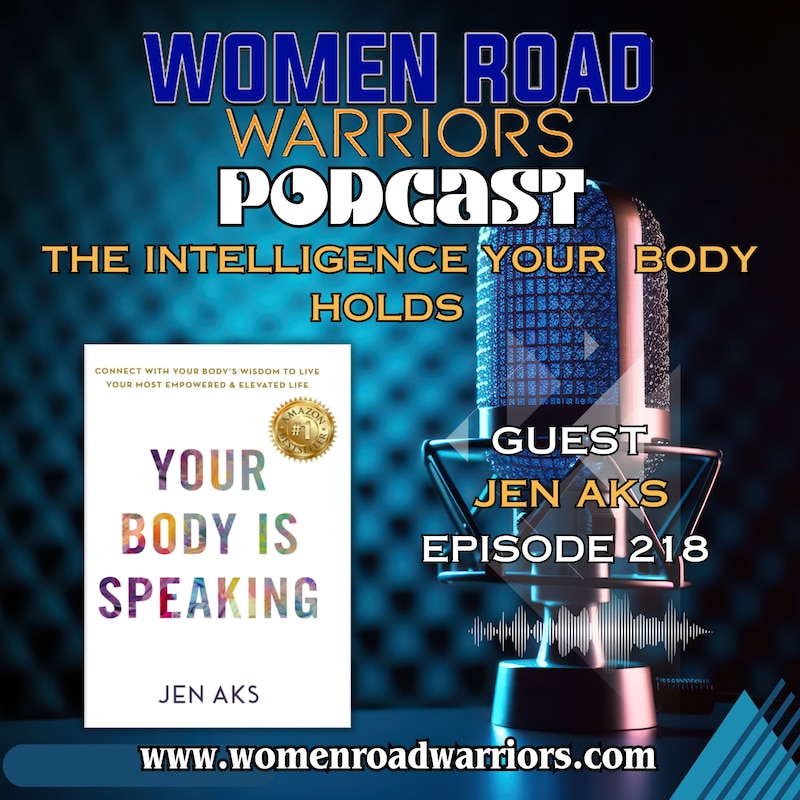
On Women Road Warriors, Shelley Johnson and Kathy Tuccaro welcome Jen Aks, TEDx speaker, leadership coach, and #1 bestselling author of Your Body Is Speaking.
Jen is the creator of the revolutionary Bodyset approach and reveals how your body holds intelligence your mind has been taught to override. Through her powerful 3 E’s Framework—Embody, Empower, Elevate—and her somatic method, The Power of Gesture®, she shows how to translate emotion into motion, reconnect to your truth, and lead with clarity and confidence.
Because mindset changes thoughts.
Bodyset changes lives.
Don’t miss this transformational episode of Women Road Warriors—where leadership and personal growth begin from the inside out.
https://womenroadwarriors.com/
https://womenroadwarriors.com/power-network
#WomenRoadWarriors #MindsetToBodyset #BodyIntelligence #SomaticWisdom #EmbodiedLeadership #PersonalTransformation #SelfTrust #EmotionalIntelligence #PodcastDiscovery #ApplePodcasts #SpotifyPodcasts #JenAks
Transcripts
This is women road warriors with Shelly Johnson and Kathy Tucaro.
Speaker A:From the corporate office to the cab of a truck, they're here to inspire and empower women in all professions.
Speaker A:So gear down, sit back and enjoy.
Speaker B:Welcome.
Speaker B:We're an award winning show d dedicated to empowering women in every profession through inspiring stories and expert insights.
Speaker B:No topics off limits.
Speaker B:On our show, we power women on the road to success with expert and celebrity interviews and information you need.
Speaker B:I'm Shelly.
Speaker C:And I'm Kathy.
Speaker B:For generations, we've been taught to rely on mindset as the ultimate key to success.
Speaker B:Think harder, push more, Override your feelings, Stay logical.
Speaker B:But what if we've been missing half the equation?
Speaker B:What if the real power, the clarity, the courage, the truth has been living in the body all along?
Speaker B:Our guest today is the woman boldly reshaping that paradigm.
Speaker B:Jenax is a TEDx speaker, author and leadership coach who's transforming how the world understands intelligence, healing and self leadership.
Speaker B:When she delivered her TEDx talk, you, Body's hidden intelligence from mindset to body set, she introduced a revolutionary concept that challenges decades of mindset only approaches.
Speaker B:Her debut book, you, body is speaking has become a number one best seller in the self help category.
Speaker B:And with good reason.
Speaker B:Jen teaches that your body has never stopped speaking to you.
Speaker B:It whispers, nudges, warns, protects, and guides long before your mind ever catches up.
Speaker B:Through her groundbreaking 3E's framework, Embody, Empower, elevate, and her signature somatic method, the power of gesture.
Speaker B:She helps people translate emotion into motion, reconnect to their truth, and reclaim the wisdom they've been taught to override.
Speaker B:She guides leaders of every kind to tap into embodied leadership, somatic intelligence, and the ability to communicate with unshakable authenticity and authority.
Speaker B:Jen is here with us today to help us understand a profound truth.
Speaker B:Mindset shifts how we think.
Speaker B:Body set shifts how we feel.
Speaker B:And transformation happens when the two work together.
Speaker B:Welcome, Jen.
Speaker B:Thank you so much for being on our show.
Speaker B:We can't wait to tap into your incredible wisdom.
Speaker D:Oh, my gosh.
Speaker D:I love your recap.
Speaker D:Thank you so much for having me here and I appreciate you so much.
Speaker D:I love your voice, too.
Speaker C:Thank you.
Speaker C:Welcome, welcome.
Speaker C:Like, thank God.
Speaker C:We're so honored to have you.
Speaker C:Thank you.
Speaker D:Thank you.
Speaker B:It's reciprocal.
Speaker D:Thank you.
Speaker B:This is wonderful.
Speaker B:Jen, I'm really impressed.
Speaker B:But before we launch into our discussion, I was wondering if you could give our listeners maybe a brief background of who you are and how you arrived at these extraordinary insights.
Speaker B:I mean, you're really knocking science off to the side and opening up a whole new doorway for people.
Speaker D:Yeah, I really feel like I am.
Speaker D:And at the same time, what I'm doing is so natural.
Speaker D:It's the most natural intelligence that we have.
Speaker D:It's the intelligence of our bodies, it's the intelligence that our ancestors relied on to survive and thrive.
Speaker D:But yet we've gotten so disconnected because of technology advancements.
Speaker D:And that as a result, as great as it is, it has really disconnected us from the wisdom within ourselves.
Speaker D:And so I'm just bringing us back to something that is so natural and ancient, yet familiar.
Speaker D:If we just tap in, which is what the work is all about.
Speaker B:That's very important.
Speaker B:Now, how did you evolve into doing all of this?
Speaker D:It really starts with my own struggle.
Speaker D:I had absolutely no idea the journey that my pain was going to take me on.
Speaker D:I'm thrilled for it and grateful because I've learned so much.
Speaker D:But it, for me, it really starts in the classroom.
Speaker D:When I was, let's say it was probably.
Speaker D:It began around 8th grade in middle school when I started feeling disconnected from how I learned.
Speaker D:It felt like everyone was learning and everyone was thriving around me in the classroom, but I just wasn't connecting to how the information was being presented.
Speaker D:And society during the time that I was in high school really measured intelligence by this mathematical and logical approach.
Speaker D:Everything was measured by the score that you got on your SATs or your IQ tests or even your grades.
Speaker D:And all of that is great.
Speaker D:But that traditional test taking never, you know, I just never did well with that.
Speaker D:And so I felt very disconnected.
Speaker D:I felt on the outside, outside of the box and no one was telling me anything different.
Speaker D:So I really developed a story about myself that I wasn't smart.
Speaker D:And I carried that for close to two decades.
Speaker D:And it was extraordinarily painful.
Speaker D:You know, I did not take a lot of opportunities that were in front of me because I just didn't think that I was worthy to, to take them.
Speaker D:But the one thing that really connected me, it, it really held me to my confidence or whatever confidence I had at that time.
Speaker D:And that was dance.
Speaker D:I was moving through life with dance.
Speaker D:I was expressing myself on stages and I was expressing myself and connecting with others through this non verbal exchange with movement.
Speaker D:And again, I didn't understand what was happening and how this was serving me.
Speaker D:And until my late twenties, when I had this rock bottom moment, I was actually invited to dinner with John F. Kennedy Jr. And his wife, Carolyn Bissette Kennedy.
Speaker D:My boy heard at the dining room.
Speaker B:Wow.
Speaker D:Exactly.
Speaker D:There's a lot of people that wouldn't even know who that was at this point, you know.
Speaker D:Cause it feels so long ago.
Speaker D:But yeah, I was invited because my boyfriend at the time was really good friends with him.
Speaker D:And so this was this intimate gathering, right?
Speaker D:It was like the four of us.
Speaker D:And I was so intimidated.
Speaker D:And I froze when we got the invitation to the point where I did not go.
Speaker D:I just was paralyzed.
Speaker D:And that night I was so disturbed at how I had allowed society to hijack my sense of worth so deeply.
Speaker D:And that night I really just had this rock bottom.
Speaker D:Like, who?
Speaker D:What are you doing?
Speaker D:I was so disappointed at myself, so angry at myself.
Speaker D:I mean, everything you can possibly imagine.
Speaker D:And so I decided it was that night where I was like, no, I'm done with this.
Speaker D:Like, I need to figure out who I am, how I learn what my intelligence is, how I'm gonna thrive in the world.
Speaker D:Like I'm more than this.
Speaker D:So it was that night that I made that decision.
Speaker D:And that's what put me on the path and, and helped me find the work of Howard Gardner, who was a Harvard professor and psychologist, and Daniel Goleman, a science journalist and psychologist.
Speaker D:Both who have done extensive research on two forms of intelligence that we all innately have.
Speaker D:Kinesthetic and emotional.
Speaker D:And when I found this research and I dove deeply into it, my sense of empowerment and connection and understanding of who I am was beginning to be restored.
Speaker D:And I went on a long journey.
Speaker D:And that is part of what led me to where I am now.
Speaker D:I feel like I've just non stop been talking, so I'm gonna just pause for a moment.
Speaker D:But the next chapter is pretty incredible also.
Speaker D:But that is the awakening that started to happen and give me that sense of connection and understanding of what is most natural to all of us.
Speaker D:Right?
Speaker D:Yeah.
Speaker B:Well, I know that in your book you talk about we disconnect from our body when we internalize.
Speaker B:And that's what you're talking about.
Speaker B:I mean, you had all these labels in your head, made you devalue yourself.
Speaker B:We all do this though, don't we?
Speaker B:I mean, we disconnect from our body when we think about the family expectations, what the schools say, the society standards, negative labels.
Speaker B:And you said that the body stores these messages and they shape the self perception for decades unless we address them.
Speaker D:That's right.
Speaker D:I mean, all of these, because these experiences are connected to emotions and when we are emotional and, and it really impacts the nervous system, these, these emotional experiences and memories create an imprint in our body and we don't forget them.
Speaker D:And they build and build and build.
Speaker D:And like you're saying, when society continues to tell us who we are, who we should be, we, what kind of box we should live in, what kind of relationships we should have, what kind of intelligence we are meant to align with.
Speaker D:Except, I mean, the list goes on and on and on.
Speaker D:It just continues to.
Speaker D:To create a divide within us.
Speaker D:And again, these memories are imprinted and just get larger if they're reinforced.
Speaker B:So when you say your body speaking.
Speaker D:Yeah.
Speaker B:What do you mean by that?
Speaker B:Is that the feelings that we tend to ignore, the creepy little.
Speaker B:Say you run into somebody that gives you the creepy crawlies, the hair that stands up on the back of your neck.
Speaker B:Is that our body speaking to us?
Speaker D:It is our body speaking to us.
Speaker D:Our body speaks to us through sensations and emotions.
Speaker D:Our bodies know what we feel before our mind does.
Speaker B:Right.
Speaker D:It's all those.
Speaker D:Those examples that you just gave about seeing someone on the street.
Speaker D:And we have a reaction or we walk into a room or a store or an event or a party, something, A gathering.
Speaker D:And our body tells us when we feel uncomfortable.
Speaker D:We know it, but we're.
Speaker D:We're not taught to listen.
Speaker D:We're not taught to pay attention to that immediately.
Speaker D:We go to the mind and think, why am I feeling this way?
Speaker D:What's wrong with me?
Speaker D:Why am I feeling nervous in this environment?
Speaker D:What.
Speaker D:Why am I feeling questionable in this relationship?
Speaker D:As opposed to listening to that initial message?
Speaker D:These are messages being sent to us about what feels safe, what's aligned, and what really needs our attention.
Speaker D:But again, we're not taught how to listen.
Speaker D:But that's the start.
Speaker D:Yes.
Speaker D:Those are messages being sent to us all day long.
Speaker D:When you think about.
Speaker D:It's happening constantly.
Speaker D:Yeah, go ahead.
Speaker D:What were you going to say?
Speaker C:A key.
Speaker C:A key would be.
Speaker C:Be kind of like fine tuning your awareness.
Speaker D:Yeah.
Speaker C:To like opening yourself up to what it is you're feeling.
Speaker C:Here at work, we are taught to stop and think.
Speaker C:So the minute you feel something is not right.
Speaker C:Because we operate such big equipment, we have to stop everything.
Speaker C:Take a moment, look around us, do an assessment and awareness.
Speaker C:Okay.
Speaker C:What is going on?
Speaker C:And I think the two.
Speaker C:What you're talking about is basically the same thing.
Speaker C:If only we would tune into ourselves and see what is going on and what.
Speaker C:Like.
Speaker C:I'll give you an example the other night, because we have to do this advanced assessment every couple years.
Speaker C:And so I had to do mine on the grader.
Speaker C:I've been operating it for six years, but it's hard when three pickups are sitting there watching you.
Speaker C:But so my.
Speaker C:Because I spent 40 years of intense trauma and abuse and all these God awful things and being told I'm never good enough and you know, blah, blah, blah, I'm useless, I'll never amount to nothing.
Speaker C:Even though I've done years of therapy and you know, I'm super confident and I know who I am, part of me, because it's almost ingrained in me for 40 years.
Speaker C:So started thinking, oh my God, what if I fail?
Speaker C:Like I'm not good enough.
Speaker C:I can't do this.
Speaker C:And I had to actually stop myself and say, kathy, just stop.
Speaker C:You are not.
Speaker C:That.
Speaker C:You are not.
Speaker C:And so I had to do that mindset shift.
Speaker C:And the minute I did that, everything changed.
Speaker C:I was like, ah, wait a minute, Right.
Speaker C:So I pulled myself out of that negative energy and flipped on that positive confidence, super powerful Cathy awesomeness.
Speaker C:And I was fine.
Speaker D:Yeah.
Speaker D:You know what's interesting?
Speaker D:I'm, I'm feeling with your story.
Speaker D:First of all, I, I get why you felt the way you felt because we are conditioned out of the truth of who we are.
Speaker D:You were told so many things and I'm so sorry for everything that you just mentioned, but we can, so many of us can relate in one way or another.
Speaker D:And it is that conditioning and it's that memory that was imprinted and that's why those reactions came up.
Speaker D:And so I love how you went into the mindset shift and what the, what I'm bringing to the world is the body set also right.
Speaker D:To meet the mindset because the two really need to work together.
Speaker D:And so what's interesting is you did so beautifully the mindset shift.
Speaker D:And now if we add the body set, which there I have this body set position where like the minute you feel something, whether it's angst or whatever you were feeling in that moment at work, it you body set hand on your heart, stomach and close your eyes to just tune in and pay attention.
Speaker D:And when we can take that moment and not just go to our mind to shift up there, but to really pay attention and listen to the angst, to the nerves, to the worry, to the question, whatever it is.
Speaker D:With curiosity we're able to listen to the information, the emotional experiences and sensations, the reactions when we lean in with curiosity as opposed to I need to shift so quickly sometimes that can create an elevated nervous system or more angst or more worry.
Speaker D:But if we lean into the parts that are concerning us with compassion and curiosity, it's almost like a child.
Speaker D:They just the parts of us just want to be heard.
Speaker D:So it would be interesting too to next time when something happens.
Speaker D:The mindset chip.
Speaker D:Yes.
Speaker D:And the curiosity as well, to get to know ourselves more deeply and understand where it's coming from.
Speaker D:And it's not to re traumatize or, you know, go back and relive.
Speaker D:It's really to understand so that we can use that intelligence to help us go deeper in whatever we're doing with our life.
Speaker D:Does that make sense?
Speaker C:Yeah.
Speaker C:Yeah, absolutely.
Speaker A:Stay tuned for more of Women Road warriors coming up.
Speaker B:Dean Michael, the tax doctor here.
Speaker B:I have one question for you.
Speaker B:Do you want to stop worrying about the irs?
Speaker B:If the answer is yes, then look no further.
Speaker B:I've been around for years.
Speaker B:I've helped countless people across the country and my success, success rate speaks for itself.
Speaker B:So now you know where to find good, honest help with your tax problems.
Speaker B:What are you waiting for?
Speaker B: -: Speaker A:Welcome back to Women Road warriors with Shelly Johnson and K. Kathy Tucaro.
Speaker B:If you're enjoying this informative episode of Women Road Warriors, I wanted to mention Kathy and I explore all kinds of topics that will power you on the road to success.
Speaker B:We feature a lot of expert interviews, plus we feature celebrities and women who've been trailblazers.
Speaker B:Please check out our [email protected] and click on our Episodes page.
Speaker B:We're also available wherever you listen to podcasts on all the major podcast channels like Spotify, Apple, YouTube, Amazon, Music, Audible, you name it.
Speaker B:Check us out and bookmark our podcast.
Speaker B:Also, don't forget to follow us on social media.
Speaker B:We're on Twitter, Facebook, Instagram, Pinterest, LinkedIn, YouTube and other sites and tell others about us.
Speaker B:We want to help as many women as possible.
Speaker B:For decades, we've been taught that success is all about mindset.
Speaker B:Think harder, push through, stay logical.
Speaker B:Override what the body is feeling.
Speaker B:But what if that's only half the equation?
Speaker B:Our guest today, Jen Axe, is reshaping how we understand intelligence, leadership and transformation.
Speaker B:In her powerful TEDx talk, your body's Hidden Intelligence From Mindset to Body Set.
Speaker B:And in her number one best selling book, your Body Is Speaking, Jen explains that the body's been communicating with us all along through sensation, emotion and instinct.
Speaker B:And when we learn to listen.
Speaker B:Mindset shifts how we think.
Speaker B:Body set shifts how we feel.
Speaker B:And that's when real, lasting change happens.
Speaker B:Our bodies know what's happening before our mind does, and we need to listen.
Speaker B:Jen, would you say that we should listen more to our body?
Speaker B:Obviously, when we're doing a mindset shift to achieve a goal or whatever else we're going to be doing.
Speaker D:Right.
Speaker B:We're doing that cognitively.
Speaker B:We're thinking that.
Speaker B:We're saying, this is my goal.
Speaker B:This is what I want to do.
Speaker B:If your body says don't, do we take a step back and listen?
Speaker C:Yeah.
Speaker B:Okay.
Speaker D:Yeah.
Speaker D:So the thing is, I think people are afraid, and I understand because our emotions are our truth, and they're connected to memories that some of us may not want to consider or bring in again.
Speaker D:But if we can restore this safety inside of ourselves and pause and listen, there's so much intelligence that comes out because it's not about just feeling better or calming our nervous system.
Speaker D:It's really about understanding, having that level of curiosity so that this is where the leadership piece comes in, so that we can lead more deeply and more authentic.
Speaker D:Authentically.
Speaker D:Because we're going to know ourselves better.
Speaker D:So if we pause and body set and really notice the angst, lean in with our mind and our body together, sort of supporting it with curiosity, asking ourselves some questions, we can then reveal some of the deepest truths about ourselves that we alone can only know because it's authentic to us and our life experience.
Speaker D:Experience.
Speaker D:And we can really use that to empower so many others.
Speaker D:And we can use that to design, you know, I think about curriculum for, you know, students or.
Speaker D:Or coaching or whatever we're running, whatever we're leading in our life, it will be so authentically based and inspiring because it comes from our truth, our desires, our pain, our purpose.
Speaker D:Yeah.
Speaker C:Yeah.
Speaker B:Well, your book teaches that your body holds the truth, memory, intuition, and guidance.
Speaker B:And people simply stop listening.
Speaker B:I think children are more in tune with it, aren't they?
Speaker B:Naturally.
Speaker D:I think so.
Speaker D:Absolutely.
Speaker D:Especially when we're first born.
Speaker D:I mean, there's nothing.
Speaker D:Right.
Speaker D:We have not been conditioned into anything.
Speaker D:And then as time goes on.
Speaker D:So it depends on the individual and what the stories are, you know, what stories they're told, what expectations are made in their own families, what.
Speaker D:What constraints they have, religious or other gender.
Speaker D:You know, there's.
Speaker D:Everyone is so individual, but I think it happens to everyone.
Speaker D:We get this.
Speaker D:There's this divide because of our experiences.
Speaker D:So, yes, I think later in life, because we've had that much More conditioning, that much more, you know, social expectations being put on us.
Speaker D:So the younger we are, the freer we are.
Speaker D:I absolutely believe that for sure.
Speaker B:So we're more in tune with who we truly are.
Speaker B:And well, when you think about it, children are pretty independent and that one of the first words they learn, probably because their parents say it, is the word no.
Speaker B:They want to do it their way and they kind of have a better idea of who they are in many ways.
Speaker B:Yeah.
Speaker B:So we basically become disembodied from our bodies.
Speaker B:And you have three pillars.
Speaker B:Embody, empower and elevate.
Speaker B:How do we get back into our bodies and reclaim our truth?
Speaker D:Yeah, such a good question.
Speaker D:The 3E framework.
Speaker D:What I love about this so much, and it really came from my own life experience, is that I feel like it mirrors everyone's life experience because at some point, to your point, we get disembodied and then we need to find that empowerment and then find that elevated state.
Speaker D:And it's cyclical and it can happen in an hour and it can happen over a lifetime and it can happen every year.
Speaker D:It's just a constant cycle that we're moving through.
Speaker D:So how do we get re embodied?
Speaker D:The first thing is to really body set right and lean in with that curiosity and that compassion to, to be open, to know that we are wise and that everything that has happened to us in our life, the reasons for this disconnection or disembodiment is here to serve us.
Speaker D:I do believe that it is our path.
Speaker D:We come out, like we were saying, with this alive energy, this free spirited soul uninhibited.
Speaker D:And then we slowly disconnect and then we find our way back to ourselves again.
Speaker D:This is the journey of all of us.
Speaker D:And, and so looking at it through this lens of curiosity that this is meant for us, can really open ourselves up to the power within all that's going to be revealed.
Speaker D:So when I work with people initially, everyone comes to me at different stages of where they are.
Speaker D:Some people are coming to me disembodied and feeling like they need to reconnect.
Speaker D:And some feel that they're strong there, but they're in that empowerment phase, but they haven't really elevated yet.
Speaker D:So everyone's on a different trajectory.
Speaker D:But if someone were to come and say, I feel completely disconnected, I don't even know how to listen.
Speaker D:We start with the body set practice and I teach them the power of gesture, which is my body set somatic based practice using the hands, so the hands are deeply connected.
Speaker D:To the brain.
Speaker D:The hands have approximately 40,000 neurons, nerve endings inside of them, sending signals to the brain all day long.
Speaker D:So they're really in partnership.
Speaker D:There's more storage space, if you think of it that way, in the brain for the hands, than any other part of our body.
Speaker D:Because gesturing is meant to help us learn.
Speaker D:That's the kinesthetic intelligence.
Speaker D:Learn, process and communicate.
Speaker D:So it's in real service to this connection between the brain and the hands.
Speaker D:So what I teach people is this practice, because this is what helps us go in and understand the emotions, the sensations, the intelligence within.
Speaker D:Within ourselves.
Speaker D:So the hands really are sort of the bridge to unlock this information.
Speaker D:And that is the beginning of the re embodiment, the connection.
Speaker D:So we kind of have this, this tool that we literally carry around with us all day long.
Speaker B:You call this the power of gesture.
Speaker B:And I was reading here that this was discovered during the pandemic.
Speaker B:You were working remotely with people?
Speaker D:Yes.
Speaker D:It's really just so incredible and like, divinely led.
Speaker D:I feel like, because I didn't think about this in advance, that I was going to create a modality, a somatic modality.
Speaker D:I just felt it and I allowed myself to be led.
Speaker D:So what happened was, during the pandemic, I had done so much research about kinesthetic and emotional intelligence, and I had been working with teachers and students all over the country for years, teaching them curriculum through the body.
Speaker D:I just basically understood the body so well and the potential and the opportunity that it is to help us reconnect and realign and heal.
Speaker D:So obviously we needed a lot of healing during the pandemic.
Speaker D:And I didn't know what I was going to do, but I knew I needed to start working with people and help them use their body as a catalyst toward getting re embodied and connection to their sense of self again.
Speaker D:Because we were so disconnected during that time.
Speaker D:So what happened was I would meet people, obviously in this rectangle, and as a dancer, I understood so much again about the body and the power of it.
Speaker D:But I wasn't going to make people get up and use their entire body.
Speaker D:So I wanted to really stay connected to them and see their eyes and feel their energy, yet move the body.
Speaker D:So I just started asking them to embody their emotions with their hands.
Speaker D:The fear, the doubt, the shame, the guilt, the worry, whatever it was.
Speaker D:So these gestures were being created and transformation was taking place and.
Speaker D:And I couldn't believe how the hands were transforming how people felt and help them deepen their understanding and calm their nervous system.
Speaker D:So I worked with several people until I started doing research and I realized the power of the hands and the brain connection.
Speaker D:And that's when I developed the power of gesture.
Speaker A:Stay tuned for more of women Road warriors coming up.
Speaker B:Industry movement Trucking Moves America Forward is telling the story of the industry.
Speaker B:Our safety champions, the women of trucking, independent contractors, the next generation of truckers, and more help us promote the best of our industry.
Speaker B:Share your story and what you love about trucking.
Speaker B:Share images of a moment you're proud of and join us on social media.
Speaker B:Learn more at truckingmovesamerica.com.
Speaker A:Welcome back to Women Road warriors with Shelly Johnson and Kathy Tucaro.
Speaker B:If you've ever felt stuck despite doing all the mindset work, this conversation's for you.
Speaker B:Our guest, Jen Axe teaches that your body holds critical information your mind can't access alone.
Speaker B:In her best selling book youk Body Is Speaking, she introduces her powerful three E's framework, Embody, Empower, Elevate.
Speaker B:Along with her signature somatic method, the power of gesture, Jen helps people translate emotion into motion, reconnect with their truth, and stop overriding the signals meant to protect and guide them.
Speaker B:This isn't about fixing yourself.
Speaker B:It's about finally listening to the intelligence already within you.
Speaker B:Jen, your power of gesture that you discovered during the pandemic is amazing.
Speaker B:We all use our hands and we all make gestures all the time.
Speaker B:If we were really emphatic about something, we're really, really using our hands.
Speaker B:And if we're angry about something, we might be pounding a fist into our hand, you know.
Speaker D:Yes, it's the most natural, innate tool that we have.
Speaker D:No one's just called attention to it before.
Speaker C:Speaking of this, I want to just share a quick story.
Speaker C: started giving talks back in: Speaker C:And I said, listen, let me come talk to some young girls and some of the classes about, you know, having a voice and speaking out and, you know, using your story to, to empower yourself to know, get out of your own head.
Speaker C:Well, I found at Walmart these two Hulk fists that are massive hands, okay?
Speaker C:For like, for 10 bucks, best 10 bucks I ever spent.
Speaker C:So I would bring these hands to the schools and when I'm, I'm talking, I said I would have a young girl come up and start, you know, kind of sharing.
Speaker C:Well, when she was having difficulties, I would sit here, put these hands on it, never fail, fail to.
Speaker C:As soon as they would put these big Fists on.
Speaker C:The courage, the confidence, the.
Speaker C:I am the biggest boxer in the world.
Speaker C:Nothing would touch me.
Speaker C:The transformation was unbelievable.
Speaker C:So that went from, from young girls to schools to, doesn't matter.
Speaker C:Women in, in shelters to people in recovery, to even women in, in big conferences that when I speak, as soon as they put on the hands, they.
Speaker C:The transformation is unbelievable.
Speaker C:So I 100% believe what you're saying.
Speaker D:Oh my gosh, I love that.
Speaker D:It's the embodiment, you know, it's the.
Speaker D:When we feel whatever it is that we're feeling, a lot of times we stay in our mind, right?
Speaker D:We stay inside, we stay in our mind and we try and make the shift with some mindset approach.
Speaker D:Maybe it's affirmations even that are beautiful or some other mindset tools.
Speaker D:But the reason what you're saying, the transformation, that sense of empowerment, that extra layer happens because we are embodying it.
Speaker D:It's one thing to think it, it's another to move it.
Speaker D:It's one thing to think it, it's another to feel it, right?
Speaker D:It's the feeling and the movement.
Speaker D:It's when we think about it, when we go to the gym, when we dance, when we walk and everyone's saying, move your body, move your body.
Speaker B:Why?
Speaker D:Because that is when the shift really happens.
Speaker D:That is when we open up.
Speaker D:So your story makes so much sense and I'm just like, yes.
Speaker D:I mean this tool is so simple because we, we don't need to move our entire bodies.
Speaker D:A lot of people in fact are not comfortable doing it.
Speaker D:That's why people seem to gravitate and like this practice so much because it's very, very accessible.
Speaker B:Well, what I'm seeing is it's.
Speaker B:You have a somatic hand based practice and it uses gesture to move emotional energy, translate feelings into physical form, create safety in the nervous system, bridge mindset plus body set and access deep self trust.
Speaker B:That's pretty heavy.
Speaker B:I mean what you're accomplishing here just with our hands.
Speaker D:Well, I so appreciate that reflection and you're absolutely right.
Speaker D:And I love the safety part because that is what allows for the awakening and the transformation to happen.
Speaker D:The safety.
Speaker D:Safety.
Speaker D:This is a very safe practice.
Speaker D:Pretty much anyone can do it.
Speaker D:And it, it doesn't require a lot, but yet we're dealing with something so heavy, we're dealing with our emotions.
Speaker D:And so it's this very interesting.
Speaker D:It balances it out and that creates the safety inside of themselves.
Speaker D:They know they can do it, they know they can transform it.
Speaker D:They know they can learn.
Speaker D:And that's the other thing about this.
Speaker D:I, I may have said this already, but I think it's worth saying again, if I did that the power of gesture and this, all of this work is not just to feel better, calm our nervous system, understand ourselves.
Speaker D:It's really to use it also to, I definitely said this to use it to create the life that we're meant to, to use it to lead our children, our teams, our friendships, ourselves, our relationships.
Speaker D:Right.
Speaker D:And that's a big difference because it's action oriented.
Speaker D:We are doing it so that we can rise, so that we can elevate and go to that third tier of my three framework.
Speaker A:Stay tuned for more of Women Road warriors coming up.
Speaker B:Industry movement Trucking Moves America Forward is telling the story of the industry.
Speaker B:Our safety champions, the women of trucking, independent contractors, the next generation of truckers and more help us promote the best of our industry.
Speaker B:Share your story and what you love about trucking.
Speaker B:Share images of a moment you're proud of and join us on social media.
Speaker B:Learn more at truckingmovesamerica.com.
Speaker A:Welcome welcome back to Women Road warriors with Shelly Johnson and Kathy Tucaro.
Speaker B:Today's conversation goes far beyond motivation.
Speaker B:It's about embodied leadership.
Speaker B:Our guest, Jen Axe, works with leaders, entrepreneurs and change makers who want to communicate with authenticity and authority that can be felt, not forced.
Speaker B:In her number one best selling book, your Body Is Speaking, Jen shows how the body whispers, nudges and warns us long before the mind ever catches up.
Speaker B:Her work bridges neuroscience, somatics and leadership development.
Speaker B:Because mindset may shape strategy, but body set determines presence, confidence and trust.
Speaker B:And transformation happens when the two finally work together.
Speaker B:This is really powerful.
Speaker B:Jen, your work embodies so much.
Speaker B:It covers all the territory.
Speaker B:You're using emotional intelligence and kinesthetic intelligence and I mean, those are two heavy concepts right there.
Speaker B:And certainly it seems like there are a lot of people today who are lacking in emotional intelligence and maybe if they're able to reprocess their emotions like this, they might be more sociable creatures too.
Speaker B:You know, we might get along better when you think about it.
Speaker D:Absolutely.
Speaker D:I think it's going to become more and more prevalent and more of a focus with AI coming in so strongly, we need our emotional intelligence now more than ever because AI will be able to do so much of that logical mathematical thinking and so, so much of the world is going to be automated.
Speaker D:But AI can never take away our emotional intelligence.
Speaker D:It's unique to us.
Speaker D:So, so this is the leadership that we need for our future.
Speaker D:We need people to understand what emotional and kinesthetic intelligence is, how to tap into it and how to use it for authentic leadership, powerful leadership going forward.
Speaker D:It's really what we need.
Speaker D:And I don't think that we have been conditioned to understand it in this way.
Speaker D:So it's a huge mountain that I'm climbing.
Speaker D:Yes, it is.
Speaker B:But, you know, I think you've got something there.
Speaker B:AI can be taught through machine learning to get a basic concept of emotions.
Speaker B:But human beings are just full of emotions and unpredictably so, you know, you never know how somebody's going to react.
Speaker B:And AI is logical.
Speaker B:So maybe the step up that we have on AI is the fact that we have emotion.
Speaker D:Absolutely.
Speaker D:And the thing is, it's more than emotion.
Speaker D:It's our life experience.
Speaker D:We are responding with our emotions from our life experience.
Speaker D:AI can never know our personal journey, only we can.
Speaker D:So that's the safety piece is going in is body setting, connecting to our truth, no one else's.
Speaker D:Our truth, our journey, our pain, our joy, our liberation.
Speaker D:No one could ever know that journey except for us.
Speaker D:So yes, emotions, we all share this same vocabulary and experience.
Speaker D:Experience it in different ways.
Speaker D:But also it's the journey that got us here that's completely unique to ourselves.
Speaker B:This is amazing that you've happened upon all of this and just in a few years you really.
Speaker D:Well, it really built on.
Speaker D:It really snowballed.
Speaker D:You know, when I look back, it really snowballed after that.
Speaker D:Rock bottom.
Speaker D:And then my.
Speaker D:My reentering to the truth of myself through the research of the intelligences of.
Speaker D:I did a. I found an organization that teaches curriculum through the arts and had been around for over 40 years.
Speaker D:So I joined them and I wound up teaching learning this methodology about teaching curriculum through the arts, through the body because it was the answer that I needed.
Speaker D:It is what I needed when I was a child.
Speaker D:And I never had access to anything like this.
Speaker D:So I looked at the classroom and I would think to myself, I. I don't want any child suffering the way I did.
Speaker D:So I poured my heart and soul into this methodology, mastered it and became one of their teachers and traveled all over the country teaching this to students and teachers everywhere because of again, my journey.
Speaker D:I say that because this is all in alignment.
Speaker D:This was a big snowball of, you know, struggle.
Speaker D:And then that re embodying.
Speaker D:And then the empowerment piece, people, because I taught for so many years and now this elevated piece where now I've created a practice that's accessible and that gets people there.
Speaker D:So it all kind of.
Speaker D:I just say all that because it really was more than just the three years.
Speaker D:I think that this whole journey is.
Speaker D:Is divinely led.
Speaker D:And I feel like everything has built on each other.
Speaker D:And I'm just so happy that I'm the one to bring all of this out into the world.
Speaker D:And I hope it's not too much because it's a lot of information and a lot of new concepts.
Speaker D:So I need to break it down.
Speaker D:That's why I appreciate this conversation so much, because you are reflecting back to me what I'm doing and the words that you're using and the structure that you're putting it in is very helpful, not only to the listener, but to me as well.
Speaker D:So thank you.
Speaker B:Well, I think that there's a lot here where we are depending on what people's goals are.
Speaker B:Everyone has a really good takeaway.
Speaker B:This is very empowering.
Speaker B:And getting back in touch with our bodies, because when you think about it, we really are.
Speaker B:And when we have a lot of chaos, we tense up and our body works against us and we are mad and we don't work, we don't breathe, we don't do the things.
Speaker B:Our body's fighting with us all the time.
Speaker B:The body is our temple, and we forget it.
Speaker C:It should be our number one priority, but we tend.
Speaker C:We forget it.
Speaker B:Yeah.
Speaker D:And that's okay, too.
Speaker D:That's the other piece.
Speaker D:And I talk about this a lot in my book is permission, you know, and forgiveness and acceptance.
Speaker D:Acceptance is really the word to accept who we are, where we came from, and it doesn't matter if we have not listened to our bodies.
Speaker D:The important thing is that we're starting to listen now and just meet ourselves where we are without any judgment, and now just opening our hearts to what it is our bodies are trying to tell us and really lead from that place.
Speaker B:So where do people find your book?
Speaker B:Where can they reach out to you?
Speaker B:I would assume you work with people remotely, because I'm sure that people who are reading the book are like, I want more of this.
Speaker B:This is really working.
Speaker B:What do we do?
Speaker B:How do I do this?
Speaker B:You know?
Speaker D:Yes, thank you.
Speaker D:Absolutely.
Speaker D:It was birthed during the pandemic.
Speaker D:So, of course, a huge part of my business is online.
Speaker D:A lot of my private clients are virtual, but I'm doing a lot more and more in person at speaking engagements and things like that.
Speaker D:So, yes, both virtual and in person.
Speaker D:And people can Visit my website, genaxe.com you can find me on Instagram LinkedIn, Facebook, YouTube, I'm everywhere.
Speaker D:I'm really looking at this as a movement way more than a message, you know.
Speaker D:So I'm trying to just spread it to all of the platforms and get people to join me in this movement so you can find me in any of those places and reach out to me anytime via email.
Speaker D:I also, I do have a free 30 minute class every Tuesday for.
Speaker D:At 11am Eastern Standard Time.
Speaker D:Every.
Speaker D:Every Tuesday at 11.
Speaker D:And it's a way to introduce people to the power of gesture because I'm very aware of that.
Speaker D:I'm bringing a lot of new things, not new things, but just bringing attention to things that are familiar but still need understanding.
Speaker D:So it's an opportunity for people to meet me and to learn the power of gesture.
Speaker D:And it's 30 minutes, so that's available for people all the time, which is great.
Speaker B:Yeah.
Speaker C:Cool.
Speaker D:Yeah.
Speaker D:Oh, my book, it's on Amazon.
Speaker B:Okay.
Speaker B:Wonderful.
Speaker B:Yes.
Speaker B:The power of gesture.
Speaker B:I think when people can actually reach out and touch something that they have to make the intangible tangible.
Speaker B:And I think using our hands gives us access because I'm reading that it's a somatic hand based practice.
Speaker B:It uses gesture to move emotional energy, translate feelings into physical form.
Speaker B:That's powerful.
Speaker B:I mean, there are times when we have emotions, we're not real sure what we're feeling.
Speaker B:You can be angry, but you're not really sure what you're angry about or.
Speaker C:When you're filled with love.
Speaker C:People do the hand gesture of the heart, right?
Speaker B:Yes, they do.
Speaker D:Yeah, absolutely.
Speaker D:There's a lot of times where people will start a session with me when they are feeling elevated and joyful and excited and they're not feeling any of the other stuff.
Speaker D:And that's great too.
Speaker D:And so we rise even higher.
Speaker D:We embody that joy, we embody that love.
Speaker D:Because there's never a ceiling, right, for this kind of thing.
Speaker D:So to your point, it, it can be any emotion that we, that we connect to and elevate and understand and unpack.
Speaker C:Yeah.
Speaker B:Well, what I like is what I read.
Speaker B:Gestures become a moving mantra.
Speaker B:The hands turn intangible emotions into something you can hold, reshape and release.
Speaker B:But a great treatment for trauma.
Speaker D:Yeah, absolutely.
Speaker D:It is really incredible to be able to kind of bring it out and look at it with our hands and shape it and embody it in this way.
Speaker D:It's like, you know, I talk about this in my book, that I feel that every emotion inside of us is like a child because all of our emotions are connected.
Speaker D:To some kind of memory like we've spoken about.
Speaker D:And so these parts of ourselves just want to be heard, just like children.
Speaker D:So we are, you know, embodying them, giving them a voice, giving them something.
Speaker D:It becomes tangible.
Speaker D:And so we're almost creating.
Speaker D:Creating some space between ourselves and this entity to say, who are you?
Speaker D:You know, tell me, what do you need right now?
Speaker D:And so when we can kind of separate these parts of ourselves, then we stop doing the, oh, my gosh, I'm so.
Speaker D:You know, I'm just so bad at that.
Speaker D:Or I'm.
Speaker D:I'm being.
Speaker D:I'm so impatient.
Speaker D:Well, you're impatient right now.
Speaker D:It's just a piece of you, a part of it.
Speaker D:Part of you.
Speaker D:It's not all of who you are.
Speaker D:It's just this moment.
Speaker D:So the more I can do to make these parts tangible, the more we can understand and separate and really gain a lot of wisdom from all of these voices because they have so much to say.
Speaker B:They really do.
Speaker B:And I think that our intuition.
Speaker B:You're able to tap into that.
Speaker B:I think we shut ourselves off over the years.
Speaker B:We're taught to do that if we've gone through extreme trauma.
Speaker B:I can see where there's disembodying.
Speaker B:You want to separate yourself.
Speaker B:And it's almost like we go to hide inside our bodies.
Speaker B:We're trapped instead of listening to our bodies.
Speaker D:Well, because a lot of that is connected to shame.
Speaker D:And people don't want to be associated with their pain and shame.
Speaker D:And I get that.
Speaker D:But if we.
Speaker D:I'm trying to shift that narrative a little bit, you know, shift the perspective and say, well, what if there's wisdom there that.
Speaker D:What if this is meant to teach us something?
Speaker D:How do we lean in?
Speaker D:How do we learn?
Speaker D:Because as a result of that, we're going to be better.
Speaker D:We are going to expand.
Speaker D:We are going to be able to serve and lead more deeply when we can understand these parts of ourselves.
Speaker B:Well, when you think about it, our bodies are impacted by whatever we go through.
Speaker B:It may not be a physical thing.
Speaker B:Like if somebody says something to us that's not a physical bruise.
Speaker B:If it's something that's a horrible thing to have been said, but our body reacts to it because we're reacting.
Speaker B:If we're hurt, our body's gonna internalize it, isn't it?
Speaker D:Absolutely.
Speaker D:Well, that's when we were talking about earlier.
Speaker D:Our bodies know our truth before our mind does.
Speaker D:In fact, our mind gets in there and hijacks us because it's all of that ego and all of that external pressure that really gets in there and, you know, takes us out of alignment.
Speaker D:The body knows.
Speaker D:Yeah.
Speaker D:So the body reacts.
Speaker D:That's wisdom.
Speaker D:So we need to lean in.
Speaker D:We need to really start listening to that, because that's gonna guide us into our truth.
Speaker B:What if you're afraid?
Speaker B:Have you run into people who are just genuinely, really afraid of what they're going to learn from their bodies?
Speaker D:100%.
Speaker D:All the time.
Speaker D:All the time.
Speaker D:And I get it.
Speaker D:So we move very slowly.
Speaker D:We move very slowly.
Speaker D:We meet ourselves where we're at.
Speaker D:We don't push, and it comes naturally.
Speaker D:It takes a little bit of time, but that's where the safety comes into play.
Speaker D:The safety is essential.
Speaker D:And we start.
Speaker D:The safety starts restoring itself when we stop judging ourselves, when we start leaning in with love, compassion, curiosity, then the voices calm the worry and the ambivalence and the fear of leaning in.
Speaker D:It calms down when we lean in with love.
Speaker D:So we have to do that restoration before we can really unpack.
Speaker D:I mean, again, it's so individual.
Speaker D:Everybody's at a different place.
Speaker D:But I've absolutely worked with people like that.
Speaker D:And that safety piece is essential at first.
Speaker D:It is essential, and it's such a beautiful thing when it's.
Speaker D:When it's, you know, really restored inside of ourselves.
Speaker D:So much unlocks.
Speaker B:Well, we have to have the safety.
Speaker B:When you think about it, I mean, when we're in your utero, when we feel safe, we feel cradled.
Speaker B:We're obviously not aware of the outside world.
Speaker B:Then all of a sudden, we're thrust out into this noisy, cold environment where nobody understands us and we don't feel safe, you know, and not everybody, when they're growing up, feels the safety that they should.
Speaker B:So that's so easy to become disembodied and not trust yourself too.
Speaker B:Yeah.
Speaker D:That's why the practice.
Speaker D:The key.
Speaker D:One of the key words for me that I'm constantly using is restore.
Speaker D:Because it was there.
Speaker D:It was there in utero.
Speaker D:It was there, and we just have to find our way back to it.
Speaker B:I love it.
Speaker B:Your Body Is Speaking is the name of the book, and you cover the three E's framework, embody, empower and elevate, as well as the power of gesture.
Speaker B:This is great.
Speaker B:I mean, they're gonna be.
Speaker B:You're gonna be seeing a lot of people using their hands, maybe more, you know.
Speaker D:Oh, yes.
Speaker D:Oh, it makes me so happy.
Speaker D:It makes me so happy.
Speaker D:I love that.
Speaker B:Yeah.
Speaker B:And I've heard people say, don't use your Hands.
Speaker B:Why not?
Speaker B:I mean, if you sit on your hands and you're trying to talk, it's really restrictive.
Speaker D:Yeah, it is, very much so.
Speaker D:And it impacts.
Speaker D:Right, it impacts your expression and your.
Speaker D:Like, my big fists.
Speaker B:Yeah.
Speaker D:It's such a support in.
Speaker D:In how we express and understand the world.
Speaker D:And I've worked with people that say, I was told to sit in my hands, not to take up space.
Speaker D:I was told not to gesture, not, you know, and I.
Speaker D:It kills me.
Speaker D:But I'm so glad that I'm here to help people guide, you know, to guide them back to this incredible tool that we have.
Speaker D:But I also do understand that in different cultures this varies.
Speaker D:It really, really does.
Speaker D:And so having the respect around that is really important.
Speaker D:And I definitely learned that early on that some people are told not to.
Speaker D:And so there's a fine line and a balance there.
Speaker D:But when again, that safety and that acceptance of where they are, once we kind of explore that, then the gestures start to open up more and more.
Speaker B:This is powerful mindset.
Speaker B:Body set.
Speaker B:You don't think of body set, but it makes total sense.
Speaker B:I mean, we're part of our bodies whether we like it or not.
Speaker D:Like I said, it's the most familiar.
Speaker D:Well, maybe not familiar, ancient, slightly familiar, but really just the most natural when we pay attention to it.
Speaker B:The ancients knew a lot more than we're paying attention to.
Speaker B:It's amazing how we've kind of tossed a lot of that stuff aside in the area of science.
Speaker B:It's like, oh, the rest of that was just bunk.
Speaker B:Well, maybe not, because it worked for thousands and thousands of years, so.
Speaker D:Right, exactly, exactly.
Speaker B:So where do people find your book again, Jen?
Speaker D:On Amazon.
Speaker D:And you can go to my website.
Speaker D:I have a.
Speaker D:You know, on the website there's a tab for book, and it's right there.
Speaker D:And there's so many bonuses, by the way.
Speaker D:So I hope when someone buys the book, they come back to my website or just start there initially because I have these incredible bonuses where I will take someone through a worksheet.
Speaker D:For example, the I did that game.
Speaker D:So the I did that game is just this great, easy way for us to get back into alignment and feel empowered.
Speaker D:You just write in.
Speaker D:It's all digital as well.
Speaker D:You can print it out and you can write it.
Speaker D:Some people enjoy that better and.
Speaker D:Or you can type it right in.
Speaker D:So it's just naming things.
Speaker D:I did that I did well today.
Speaker D:I led a group today.
Speaker D:I stood in front on a stage today.
Speaker D:I had whatever the things are.
Speaker D:I Made a great day.
Speaker D:Dinner today.
Speaker D:I, you know, meditated.
Speaker D:I did that.
Speaker D:I did that.
Speaker D:And so you type those in and I take you through.
Speaker D:There's a video of me taking you through the power of gesture, how to embody that celebration and, and just use that daily.
Speaker D:So there's the.
Speaker D:I did that game, Embrace the Nudge.
Speaker D:There's Flip the Switch.
Speaker D:There's a lot of really cool, very easy access, accessible tools that we can use on a daily basis combined with the power of gesture.
Speaker D:So there's the video and the worksheet.
Speaker D:Also inside the book, after every chapter, there's a QR code.
Speaker D:People don't realize this, and I really need to talk about it more, but there's a QR code where you click that and it takes you to a video of me taking you through the power of gesture based on whatever it was that you just read.
Speaker B:Clap.
Speaker B:The best.
Speaker B:Very cool.
Speaker B:So what is your website again, Jen?
Speaker B:It's jennaxe.com jennaxe.com Excellent.
Speaker B:This has been fabulous.
Speaker B:There is so much we can still unpack.
Speaker C:Yeah, absolutely.
Speaker C:Wonderful thing.
Speaker D:Oh, my gosh.
Speaker D:I'm so grateful to the two of you.
Speaker D:Thank you so much.
Speaker D:And if you don't mind me saying, can I mention one thing that I'm doing in January?
Speaker D:Well, I'm doing it three times.
Speaker D:So it's just.
Speaker D:It's a cohort where I'm going to take eight to 10 women through my book, through the journey, teaching them the power of gesture with the intention to really unlock all of this so that they can step into their embodied leadership in whatever form that looks like, you know, work or personal.
Speaker D:So I'm doing that cohort three times.
Speaker D:The first one does start mid January, but then I'll be following up with two.
Speaker D:Two additional ones.
Speaker B:So this is good to know.
Speaker C:Yeah.
Speaker B:I really appreciate you being available today.
Speaker B:This has been a great conversation.
Speaker B:I'm excited.
Speaker B:I know Kathy is, too.
Speaker C:Oh, my gosh, am I ever.
Speaker C:Thank you so, so, so much.
Speaker D:Oh, my gosh.
Speaker D:Thank you both so much for the work that you do in the world.
Speaker D:I love it.
Speaker D:I love the conversations you're having and the impact you're making.
Speaker D:So thank you for having me.
Speaker D:I appreciate you.
Speaker B:We appreciate you too, Jen.
Speaker B:Thank you.
Speaker B:We hope you've enjoyed this latest episode.
Speaker B:And if you want to hear more episodes of Women Road warriors or learn more about our show, be sure to check out womenroadwarriors.com and please follow us on social media.
Speaker B:And don't forget to subscribe to our podcast on our website, we also have a selection of podcasts Just for Women.
Speaker B:They're a series of podcasts from different podcasters.
Speaker B:So if you're in the mood for women's podcasts, just click the Power network tab on womenroadwarriors.com youm'll have a variety of shows to listen to anytime you want to.
Speaker B:Podcasts Made for Women Women Road warriors is on all the major podcast channels like Apple, Spotify, Amazon, Audible, YouTube, and others.
Speaker B:Check us out and please follow us wherever you listen to podcasts.
Speaker B:Thanks for listening.
Speaker A:You've been listening to Women Road warriors with Shelley Johnson and Kathy Takaro.
Speaker A:If you want to be a guest on the show or have a topic or feedback, email us at sjohnsonomenroadwarriors.
Speaker A:Com.




